Our Top Picks
What's inside
- Disclosure for This Guide
- Why the 25 Quart Size Works So Well
- How Our Research Was Organised
- The Three Lines at a Glance
- Igloo Trailmate 25 Qt: The Grab-and-Go All-Rounder
- Igloo BMX 25 Qt: The Rugged-Construction Option
- Igloo Marine Ultra 25 Qt Latitude: The Water-Focused Option
- Head-to-Head: Choosing Between the Three Lines
- How to Pack a 25 Qt Cooler So It Performs
- Carrying, Transport, and Safety
- Cleaning, Drying, and Storage
- 25 Qt Compared With Smaller and Larger Coolers
- Buying Checklist Before You Choose
- Common Questions
- Check prices on Amazon
- Our Verdict
As an Amazon Associate I earn from qualifying purchases. This post may contain affiliate links at no extra cost to you.
A 25 quart cooler sits in a useful middle ground that is easy to overlook until you have lived with both smaller and larger chests. It is big enough for a full day of food and drinks for a small group, yet still compact enough for one person to carry from a kitchen to a car, from a car to a picnic table, or from a dock to a boat without asking for help. For cottage weekends, beach days, tailgates, fishing trips, and long drives, that balance is often more important than maximum ice retention or maximum capacity on its own.
This guide focuses on exactly that size. Every model covered here is a hard-sided 25 qt cooler from Igloo, and there are three distinct product lines to understand: the Igloo Trailmate 25 Qt, the Igloo BMX 25 Qt, and the Igloo Marine Ultra 25 Qt Latitude. You will see seven listings in total, but they are not seven unrelated coolers. The Trailmate appears in three colours and the BMX appears in three colours, while the Marine Ultra Latitude appears in white. Treating colour variants honestly matters, because choosing between Carbonite and Bone is a style and visibility decision, not a performance decision, and the same logic applies to the BMX colourways.
By the end, you should know what each line is built to do, how the stated can counts and construction details compare, how to pack a 25 qt chest so the space works harder, and when this size is the right call compared with going smaller or larger. There is no single best choice for everyone here. There is a best fit for how you travel, what you pack, and where the cooler will spend most of its time.
Disclosure for This Guide
Cottage Verdict participates in the Amazon Associates programme. That means if you follow a product link from this page and make a qualifying purchase, this site may earn a commission from Amazon, at no additional cost to you. That relationship helps support the research and writing behind guides like this one. It does not change which coolers are included here, and the models in this article were selected because they match the 25 qt brief, not because of any commission consideration.
Why the 25 Quart Size Works So Well
Capacity labels can be confusing, so it helps to translate quarts into real use. A 25 qt hard cooler is a day-plus cooler for most people. In the models covered here, the manufacturers state can counts in the mid-thirties: the Trailmate is listed as holding 38 cans, the BMX as holding 37 cans, and the Marine Ultra Latitude as holding 36 cans. Those figures are useful as a relative guide between these three lines, but your real load will always be a mix. Cans, bottles, sandwich boxes, fruit, cheese, and ice all compete for the same interior, and ice itself takes a meaningful share of the volume.
Think of 25 qt as the size for two to four people for a day, or for one or two people stretching into a second day with careful packing. It handles a picnic lunch with drinks and snacks without forcing difficult choices. It handles a morning of fishing with drinks, bait kept separate, and lunch. It handles a beach afternoon where cold drinks matter as much as food. It also works as a secondary cooler alongside a larger chest on longer cottage stays: the big cooler stays closed and cold in the shade, while the 25 qt cooler handles the drinks and snacks that people reach for most often.
The other advantage is handling. A loaded 25 qt cooler is heavy, because ice and drinks are heavy, but it remains a one-person carry for most adults over short distances, especially with the handle designs covered below. A much larger cooler, once loaded, often becomes a two-person lift or needs wheels. A much smaller cooler is easier to carry but forces you to leave things behind or make a second trip to a shop. For many households, 25 qt is the largest size that still feels casual. You can grab it on impulse for an unplanned afternoon without turning the outing into a logistics exercise.
It also fits where larger chests do not. A 25 qt cooler generally slides into a car boot alongside bags, sits in a footwell or behind a seat on some vehicles, tucks under a boat seat or against a transom, and stores in a cottage cupboard, garage shelf, or utility room without dominating the space. Storage at home is an underrated part of cooler ownership. A cooler that is easy to store is a cooler that stays clean, accessible, and actually used.
How Our Research Was Organised
Our research for this guide started with the size, not with a brand. We checked listings that claimed a true 25 qt capacity, separated hard-sided chests from soft bags and smaller personal coolers, and then grouped the results by actual product line rather than by listing count. That grouping step is what revealed the clear structure in this category: three Igloo lines, with colour variants inside two of them.
From there, we checked the details that each listing itself states: stated can capacity, insulation description, wall and lid construction, handle type, latch type, and any use-specific features such as a tie-down loop on a marine model. Where a detail is not stated for a model, this guide does not invent it. You will not find unsupported claims here about drain plugs, hinges, or accessories for a specific model unless the general advice is clearly framed as general cooler care that applies to hard chests as a category.
Our research notes also paid attention to what cannot be compared from a listing alone. Ice retention, for example, depends heavily on how often the lid is opened, how much ice you start with, whether the cooler was pre-chilled, the temperature outside, and whether it sits in sun or shade. Rather than attaching a fixed number of days to any of these models, this guide focuses on the construction signals that are actually stated — foam walls and lid on the Trailmate, extra-thick foam walls and lid on the BMX, and THERMECOOL foam insulation on the Marine Ultra — and on the packing habits that make the biggest real-world difference for any insulated chest.
Finally, we considered ownership: cleaning, drying, storing, carrying, and living with colour choices in bright sun, on sand, and around water. A cooler is a simple product, but small details decide whether it becomes a favourite or a nuisance over several seasons.
The Three Lines at a Glance
Before the detailed sections, here is the honest short version of this guide.
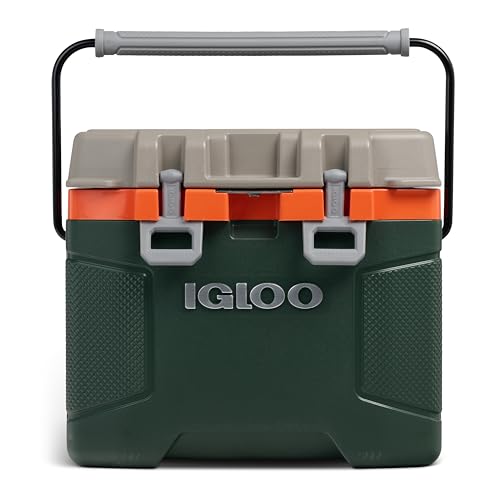
- Igloo Trailmate 25 Qt: Listed in Carbonite, Sportsman, and Bone. Stated to hold 38 cans, with 1.5-inch foam walls and lid, a swing-up bail handle, and Sure-Lock latches. The highest stated can count of the three lines, and a single bail handle that suits grab-and-go carrying.
- Igloo BMX 25 Qt: Listed in Celadon, Green and Orange, and Rugged Blue. Stated to hold 37 cans, with extra-thick foam walls and lid, blow-molded construction, and rubberized T-latches. The rugged-construction option of the three.
- Igloo Marine Ultra 25 Qt Latitude: Listed in White. Stated to hold 36 cans, with THERMECOOL foam insulation, swing-up handles, and a tie-down loop. The water-focused option, shaped by marine use.
Notice how close the stated can counts are. A difference of one or two cans should not decide your purchase. The real differences are construction emphasis, handle and latch style, intended environment, and colour. The sections that follow take each line in turn.
best beach chairs with canopy and cup holders
Igloo Trailmate 25 Qt: The Grab-and-Go All-Rounder
What It Is
The Trailmate 25 is the most straightforward day cooler in this group. Its listing describes an insulated ice chest that holds 38 cans, with 1.5-inch foam walls and lid. That wall thickness is stated plainly, which makes it the easiest insulation claim in this guide to picture: foam in both the body and the lid, at a defined thickness, working to slow the transfer of outside heat into the chest.
The carry system is a swing-up bail handle. A bail handle arcs over the top of the cooler and swings out of the way when you do not need it. In practice, that style suits one-handed carrying when the other hand holds a bag, a child’s hand, keys, or a fishing rod. It also keeps the carry simple. There are no separate side handles to coordinate, and the cooler hangs balanced from a single central grip when loaded evenly.
Closure comes from Sure-Lock latches. The name describes their job: keeping the lid positively closed rather than merely resting on the body. A lid that stays shut matters more than many buyers expect. It protects the cold seal when the cooler is jostled in a car, carried over uneven ground, or knocked at a crowded picnic site, and it reduces the slow leak of cold air that happens when a lid lifts slightly at one corner.
The Three Trailmate Colours
The Trailmate 25 appears in three listings, and they are colour options for the same model:
- Carbonite: A dark, modern finish that hides scuffs and everyday marks well and looks at home with vehicle interiors and contemporary outdoor gear.
- Sportsman: A colourway aimed at hunting, fishing, and general field use, where a cooler that blends with outdoor clothing and natural surroundings feels appropriate.
- Bone: A light, pale finish that reflects bright sun more than a dark shell and gives the cooler a clean, coastal look.
Choose between them on appearance, visibility, and setting. A light colour can be easier to spot in a dim garage and may show dirt sooner. A dark colour can hide marks but will feel hotter to the touch on its outer surface in direct sun, which is a comfort point rather than a verdict on insulation. The foam inside is the same story across the colour range as presented in the listings, so buy the colour you will enjoy using and can live with after a season of sand, grass, and boot floors.
Who the Trailmate Suits
The Trailmate suits buyers who want one versatile 25 qt cooler for mixed use: picnics, road trips, youth sports sidelines, beach days, and cottage weekends. Its stated 38-can capacity is the largest figure in this guide, its bail handle favours quick single-person carries, and its three colours cover dark, outdoor, and light preferences without changing the underlying cooler. If your outings vary and you do not have a single dominant environment like a boat deck, this is the natural starting point in the group.
It is also a sensible choice when the cooler will be carried repeatedly over short distances rather than strapped down in one place. Think car to shade, shade to table, table back to car. That rhythm is where a swing-up bail handle earns its keep, trip after trip.
Igloo BMX 25 Qt: The Rugged-Construction Option
What It Is
The BMX 25 is presented as the tougher build in this trio. Its listing describes an insulated ice chest that holds 37 cans, with extra-thick foam walls and lid, blow-molded construction, and rubberized T-latches. Each of those phrases points in the same direction: a cooler intended to be handled firmly, loaded into vehicles, set down on hard ground, and used in places where equipment gets knocked around.
Blow-molded construction, as a general category point, forms the cooler body as a molded shell designed for strength and consistency. Paired with extra-thick foam in the walls and lid, the emphasis is on a body that resists the bumps of transport while its insulation slows warming. For buyers whose cooler will ride in a truck bed, a work vehicle, a campsite with rocky ground, or a busy family car, that emphasis is easy to understand.
The rubberized T-latches are the other defining detail. T-latches pull the lid down onto the body and are operated by gripping and releasing the T-shaped handle. The rubberized finish gives grip, including when hands are wet, cold, or wearing gloves, and this style of latch is valued on rugged coolers because it applies firm, even closure pressure. If you have ever used a cooler whose lid felt merely perched in place, the appeal of a latch that actively draws the lid shut will be obvious.
The Three BMX Colours
As with the Trailmate, the three BMX listings are colour variants of one model:
- Celadon: A soft green tone that stands apart from the usual white and dark cooler palette and suits buyers who want their gear to be recognisable at a glance.
- Green and Orange: A bold two-tone combination with strong visibility, useful when a cooler needs to be spotted quickly at a campsite, on a sideline, or among other groups’ gear.
- Rugged Blue: A deep blue finish that matches the model’s rugged positioning and hides everyday wear well.
Again, colour does not change the cooler underneath. Visibility might genuinely matter to you — a bright cooler is harder to leave behind and easier for your group to find — or you may simply prefer a colour that matches a vehicle, a team, or the rest of your outdoor kit. Both are legitimate reasons. What colour cannot tell you is anything about insulation or build, so treat it as the final choice after you have chosen the line, not the first.
Who the BMX Suits
The BMX suits buyers who prioritise construction and closure. Campers, anglers who move between bank and vehicle, families whose cooler is loaded and unloaded constantly, and anyone whose gear travels in crowded or rough conditions will appreciate the logic of blow-molded construction, extra-thick foam, and rubberized T-latches working together.
It also suits buyers who open and close the cooler often. On a family day out, the lid may open dozens of times. A latch system that closes positively each time, and that small hands or gloved hands can operate with a clear grip, helps maintain the habit of actually latching the lid rather than leaving it resting ajar between uses. That habit, repeated all day, protects your ice more than most people realise.
Igloo Marine Ultra 25 Qt Latitude: The Water-Focused Option
What It Is
The Marine Ultra 25 Qt Latitude is the specialist in this guide. Its listing describes a hard cooler in white that holds 36 cans, with THERMECOOL foam insulation, swing-up handles, and a tie-down loop. The marine framing is not just a colour story. Each stated feature connects to use on or near water.
Start with the colour. White is the classic marine cooler colour for a practical reason: a white shell reflects sunlight rather than absorbing it, which helps the exterior stay more comfortable in the intense, reflected light you get on water and on pale sand. It also looks right on a boat, is easy to spot, and shows fish, bait, and general grime clearly, which encourages a proper wash-down after a trip rather than letting residue sit.
THERMECOOL foam insulation is the insulation system named in this model’s listing. As with the other lines, this guide does not attach an invented retention figure to it. Its role is the same essential job — slowing heat transfer through the walls and lid — and your results will still depend on pre-chilling, ice quantity, shade, and lid discipline.
The swing-up handles, plural in the listing, suit lifting the cooler in and out of a boat, onto a dock, or over a gunwale, where two grip points and a controlled lift are safer than a single swinging carry, especially when a deck is wet. The tie-down loop is the most distinctly marine detail of all. It gives you a point to secure the cooler so it does not slide or tip when a boat moves, when a vehicle brakes, or when a trailer bounces. A cooler that stays where you put it protects its contents, its lid seal, and everyone around it.
Who the Marine Ultra Suits
This is the obvious choice in the group for boat owners, dock and pier anglers, and anyone whose cooler regularly travels on water. It also suits beach-focused buyers who value the white finish and the ability to secure the cooler in an open vehicle or trailer.
If your cooler will live mostly at picnics and sports fields, the tie-down loop may never be used, and that is fine — an unused securing point costs you nothing. But if you have ever watched an unsecured cooler slide across a deck or a truck bed, you will understand why buyers in that setting look for exactly this feature first.
Head-to-Head: Choosing Between the Three Lines
Because the stated capacities are so close, choose on use pattern. Ask yourself four questions.
Where will it live? On water or in an open vehicle, the Marine Ultra’s tie-down loop and white finish answer real problems. In rough transport and campsite use, the BMX’s construction and T-latches answer real problems. In mixed everyday use, the Trailmate’s bail handle and colour range answer real problems.
How will you carry it? Frequent short carries by one person favour a bail handle. Lifting in and out of a boat or over obstacles favours swing-up handles at the sides. Neither is better in the abstract; they suit different movements.
How will you close it? If you want a latch that draws the lid down firmly and grips well with wet or gloved hands, the BMX’s rubberized T-latches are the distinctive option here. If you want a positive locking latch on a general-purpose chest, the Trailmate’s Sure-Lock latches are its stated answer. If your priority is securing the whole cooler in place, the Marine Ultra’s tie-down loop addresses a different and equally important kind of security.
What will you pack? All three are stated in the mid-to-high thirties for cans, so all three handle a day’s drinks and food for a small group. If you regularly pack bulky food boxes rather than cans, interior shape and your own packing order will matter more than a one-can difference in a listing. Pack your largest, flattest items first, and treat can counts as a comparison aid, not a promise about your exact load.
- Choose the Trailmate for the highest stated can count, a bail handle, and the widest everyday colour choice.
- Choose the BMX for blow-molded construction, extra-thick foam, and rubberized T-latches.
- Choose the Marine Ultra Latitude for boating and water use, a white shell, swing-up handles, and a tie-down loop.
How to Pack a 25 Qt Cooler So It Performs
Good packing is worth more than any single feature in this guide. A 25 qt interior is generous for a day but not unlimited, and the order in which you load it decides both how much fits and how cold it stays.
Pre-Chill Everything You Can
Start cold. Chill drinks and food in a refrigerator before they go into the cooler, and if you can, cool the cooler itself beforehand by leaving it in a cool room or briefly placing some ice or cold packs inside while you prepare food. Putting room-temperature drinks into a warm cooler asks your ice to do two jobs at once: cool the contents and cool the chest. Pre-chilled contents let the ice spend its effort on staying frozen.
Use a Sensible Ice Strategy
As a general rule for hard coolers, a substantial share of the interior should be ice or ice packs — many experienced users aim for roughly twice as much ice as contents by volume on longer or hotter days, and accept a lower ratio for a short, mild afternoon. Block ice melts more slowly and suits the bottom of the chest. Cubed ice fills gaps around cans and bottles and chills quickly. Reusable packs are tidy, avoid meltwater, and suit food-focused loads, though they do not fill odd gaps the way loose ice does. Many people combine approaches: a block or large packs at the base, contents in the middle, and cubed ice worked into the gaps and over the top, because cold air sinks and a top layer of ice chills what sits below it.
Keep the cooler full. Empty air space warms faster and lets contents shift. If your load is light, fill the gaps with extra ice, cold drinks, or a clean towel placed on top of the contents under the lid. A full cooler is a more stable cooler, in temperature and in transport.
Pack in the Order You Will Eat and Drink
Load in reverse order of use. Items needed last go at the bottom, items needed first go at the top. Put the afternoon snacks where a hand can find them without digging, because every minute spent rummaging with the lid open costs cold air. If you are packing raw meat or fish, seal it securely in leak-proof packaging and place it low, below and away from ready-to-eat food, with ice separating the layers. Keep drinks and food in zones where you can. On a long day, some households use the 25 qt cooler for drinks and a separate smaller container for food, or the reverse, precisely to reduce how often the food supply is exposed to warm air.
Keep the Lid Working for You
Open briefly, take what you need, and latch the lid again. Set the cooler in shade whenever you can, out of direct sun and away from a hot vehicle interior or engine heat. On sand, a mat or board underneath can help keep the base cleaner and the area around the cooler more organised. At a cottage, resist the habit of leaving the cooler open while people decide what they want. Decide first, open once.
Carrying, Transport, and Safety
A full 25 qt cooler deserves respect when you lift it. Bend your knees, keep the load close, and avoid twisting while carrying. On stairs, a dock, or wet grass, slow down and make two trips rather than overloading yourself with the cooler plus bags in both arms. The handle styles in this guide help, but they do not change the basic weight of ice and liquid.
In a vehicle, place the cooler where it cannot slide or tip: on a flat floor, wedged securely between bags, or strapped down where a securing point is available. This is where the Marine Ultra’s tie-down loop has value beyond boats. A tipped cooler can spill meltwater, lose its lid seal, and scatter glass bottles. Keep glass protected and cushioned, and never place a heavy loaded cooler where it could fall onto passengers or pets during a sudden stop.
On a boat, secure the cooler before you move, not after the first wake reminds you. Keep it low, keep the lid latched, and keep walkways clear. On a beach or at a park, position it where it will not be kicked over by games or backed into by chairs, and where children are not climbing on the lid. A cooler lid is not a seat unless a manufacturer explicitly says it is, and this guide makes no such claim for any model here, so treat every lid as a lid.
Cleaning, Drying, and Storage
Care for a hard cooler is simple, and doing it promptly is what keeps a cooler pleasant for years. Empty meltwater and leftover food as soon as you return home. Wash the interior with warm water and a mild detergent, using a soft cloth or sponge, and pay attention to corners, the lid underside, and any grooves where residue collects. Rinse well. For lingering odours, a solution of bicarbonate of soda in warm water, left to sit before rinsing, is a widely used household approach for plastic interiors. Avoid harsh abrasives that could scratch the inner surface, because scratches give grime more places to cling next time.
Dry the cooler thoroughly with the lid open before storing it. Trapped moisture in a closed chest is how musty smells develop. Once dry, store it with the lid slightly ajar if your storage space allows, in a clean, dry place out of prolonged direct sunlight. Check latches and handles as you put it away: clear away sand and grit, which work their way into moving parts at beaches and on boats, and make sure the lid closes evenly all the way around.
Before the next trip, give the interior a quick wipe and a sniff. Five minutes of care after each use prevents the unpleasant discovery, on the morning of an outing, that last month’s fishing trip is still present. That small routine applies equally to all three lines in this guide, whatever their colour or latch style.
25 Qt Compared With Smaller and Larger Coolers
Buyers often arrive at 25 qt after considering neighbours in the size range, so it helps to be clear about the trade-offs in general terms.
A smaller personal or lunch-size cooler is lighter, fits in tighter spaces, and is perfect for one person’s meal and a drink or two. It fails quickly, though, when the group grows, when the day lengthens, or when you need ice to share space with real food rather than a single sandwich. Many households own a small cooler and still find it is the wrong tool for a family beach day.
A larger family or multi-day cooler holds far more and suits a big group or several days away from shops. The cost of that capacity is handling and storage. Loaded, a large chest is often a two-person job, takes a large share of a vehicle, and needs a permanent home in a garage or store room. It can also perform poorly when half empty on a short trip, simply because there is more warm air inside to manage, unless you fill the spare space with ice.
The 25 qt size avoids both failure modes for day use. It is the cooler you can load for four people without editing the menu, carry alone without dreading the walk, and store without rearranging a room. If your typical outing is one or two people for a few hours, you may not need this much space. If your typical outing is a large group for a full weekend, you may need more, or you may need this size as the drinks cooler beside a larger food cooler. Honest sizing, based on your real group and your real day, is the whole decision.
Buying Checklist Before You Choose
- Confirm the size: Every model here is a true 25 qt hard cooler. If you arrived from a listing for a different capacity, pause and re-check, because similar model names are often sold in several sizes.
- Pick the line first: Trailmate for everyday versatility, BMX for rugged construction and T-latches, Marine Ultra Latitude for water use and tie-down security.
- Pick the colour second: Within the Trailmate and BMX lines, colour is a preference and visibility choice, not a performance upgrade.
- Think about the carry: Picture your actual walk — car park to beach, house to boat, vehicle to pitch — and match the handle style to it.
- Plan your ice: Decide whether you will mostly use block ice, cubes, reusable packs, or a mix, and leave room for that choice when you picture your load.
- Consider storage: Measure the cupboard, shelf, or boot space where the cooler will live, and confirm a 25 qt chest fits your home as well as your outing.
- Check the listing on the day you buy: Colours and availability change, so confirm the exact colourway and capacity on the listing before ordering.
Common Questions
Are the seven listings seven different coolers?
No. There are three product lines. The Trailmate 25 appears in Carbonite, Sportsman, and Bone. The BMX 25 appears in Celadon, Green and Orange, and Rugged Blue. The Marine Ultra 25 Qt Latitude appears in White. Colour variants share the model’s stated capacity and construction as presented in their listings.
How many people does a 25 qt cooler serve?
For a day outing, it comfortably serves roughly two to four people for drinks and food, depending on how much of the load is bulky food, how much ice you carry, and how long and hot the day is. The stated can counts here — 38 for the Trailmate, 37 for the BMX, and 36 for the Marine Ultra — describe cans alone, not a mixed load with ice, so plan more conservatively for real use.
Which of these is best for a boat?
The Marine Ultra Latitude is the line designed around that setting, with its white finish, swing-up handles, and tie-down loop. Securing a cooler on a moving deck is a safety matter as well as a convenience, and that loop is the feature the other two lines do not state.
Which is best for camping and rough transport?
The BMX is the line that emphasises that role, through blow-molded construction, extra-thick foam walls and lid, and rubberized T-latches that grip well and draw the lid closed firmly.
How long will ice last in these coolers?
This guide does not assign a fixed figure to any model, because real ice life depends on pre-chilling, ice quantity and type, outside temperature, sun and shade, and how often the lid opens. The packing guidance above — pre-chill, fill the cooler, use enough ice, keep it shaded and latched — will influence your result more than any other habit.
Can I use dry ice or loose ice packs instead of regular ice?
Reusable packs are a tidy option for food loads and avoid meltwater. Dry ice is a specialist choice that requires careful handling, ventilation awareness, and confirmation that a specific cooler is suitable for it, so do not assume compatibility for any model here. For ordinary day use, regular ice and reusable packs cover almost every need in this size.
Check prices on Amazon
Live listings for the shortlist in this guide are pulled from Amazon below, so prices and availability are always current at the moment you look.



Our Verdict
There is no weak option in this short list, because the three lines are not really competing on the same terms. They share a size and a brand, and then diverge on purpose. That makes your decision simpler than a long list of near-identical chests would.
Start with the Trailmate 25 if you want the default choice: the highest stated can count in the group, 1.5-inch foam walls and lid, a swing-up bail handle for easy one-person carries, Sure-Lock latches, and a choice of Carbonite, Sportsman, or Bone to suit dark, field, or light preferences. It is the cooler most households will use most often, in the widest range of places.
Move to the BMX 25 if your cooler’s life will be rougher: campsites, work and family vehicles, frequent loading, wet or gloved hands on rubberized T-latches, and a blow-molded build with extra-thick foam that matches that life. Choose Celadon, Green and Orange, or Rugged Blue on visibility and taste.
Choose the Marine Ultra 25 Qt Latitude if water is your setting. Its white shell, THERMECOOL foam insulation, swing-up handles, and tie-down loop form a coherent package for boats, docks, and open vehicles, and its stated 36-can capacity is effectively the same day-trip capacity as its companions here.
Whichever line you choose, buy the size honestly, pack it cold and full, keep the lid latched and the cooler shaded, and clean and dry it when you get home. A 25 qt cooler treated that way becomes one of those unglamorous pieces of kit that quietly makes every picnic, beach day, fishing morning, and cottage weekend easier — which is exactly what a cooler is for.