What's inside
- Key Takeaways
- Quick Picks
- How Did We Choose Detailing Towels on a Budget?
- How Should Towels Be Sorted by Job?
- Comparison Table
- How Do You Wash and Store Detailing Towels So They Stay Scratch-Safe?
- How Do the Same Towels Serve Leather and Wood at Home?
- What Mistakes Scratch Paint Even With Good Towels?
- How Does a Full Home Detail Run, Towel by Towel?
- Why Does Glass Deserve Its Own Towel Technique?
- What About Interiors, Screens, and the Small Surfaces?
- Does Dark Paint Really Need Stricter Towel Discipline?
- What About Motorcycles, Bicycles, and Everything Else With a Finish?
- What Does More Money Buy in a Microfiber Towel — and Where Does It Stop Mattering?
- How Should a New Set Be Broken In and Stored?
- How Do Towels Behave in Winter, Road Salt, and Rinseless Washing?
- Final Recommendation
- Frequently Asked Questions
- Related Guides
As an Amazon Associate I earn from qualifying purchases. This post may contain affiliate links at no extra cost to you.
cottageverdict.com is reader-supported. When you buy through links on our site, we may earn an affiliate commission.
Where to buy: Every pick below is sold on Amazon. Follow a linked pick name to its listing to check price on Amazon, confirm the GSM, size, and pack count, and read the washing guidance before ordering.
Detailing is the art of touching a surface a hundred times without leaving a mark, and the towel is the tool that makes that possible — or ruins it. The best affordable microfiber towels for detailing share a short list of virtues: plush fibres that lift dirt away from paint instead of dragging it across, edges that cannot scratch because they are not really edges at all, and prices, in tier terms, that let you own enough towels to use a fresh one for every stage. This guide covers the car first, because paint is the least forgiving surface most of us own, and then the leather and wood at home, which reward the same towels for the same reasons.
Two numbers organise the whole category. GSM — grams per square metre — describes how much fibre a towel carries: lower GSM towels are lean, grippy, and ideal for glass and product removal, while higher GSM towels are plush cushions that drink rinse water and buff wax with a deep, forgiving pile. The second number is invisible: the edge. A stitched border or a laser of melted fibre can scratch clear coat; an edgeless or borderless towel removes that risk entirely, which is why so many picks below make their edgeless construction the headline.
Everything below was assessed against real finishes — clear coat, chrome, glass, leather, and oiled wood — because microfiber quality is a behaviour under a hand, not a label claim. Two towels with identical GSM on paper can feel entirely different across a bonnet, and the reviews note hand feel, grip, and finishing behaviour alongside the numbers for exactly that reason.
Affordability in detailing is not about the cheapest cloth on the shelf — a scratchy bargain towel that swirls paint costs more in correction than it saves. It is about towels priced so that a sensible system is within reach: a drying towel, a set of all-purpose towels, a plush set for final buffing, and enough spares that a dropped towel gets retired to wheels instead of rinsed and returned to the paint. Every pick here sits in the budget-to-mid tier in words, because that is where detailing value actually lives.
Key Takeaways
- GSM is the map: lean towels around the mid-300s for glass and removal, plush towels in the mid-400s and above for drying and final buffing.
- Edgeless and borderless construction removes the most common source of fine scratches — the towel’s own stitched border.
- Sort towels by job and never let a towel move up the ladder: wheel and engine towels do not return to paint, ever.
- A dropped towel is a retired towel for that session; affordable packs exist so this rule costs nothing to obey.
- The same plush, edgeless virtues protect leather seats and polished wood at home, making one good set serve car and house.
- Wash microfiber separately, without softener, and dry it gently, or its split fibres clog and its scratch-safety fades.
Quick Picks
| Pick | Badge | Why it earns its place |
|---|---|---|
| CARCAREZ Plush Edgeless Microfiber Towels | Best all-round detailing set | 450 GSM edgeless plush in a six-pack that covers washing, drying, and buffing for most cars. |
| Chemical Guys Workhorse Plush Towels | Best brand-name starter | Black plush towels from a detailing household name, sized 16×16 for wash and dry duty. |
| Adam’s Borderless Grey Microfiber Towels | Plushest for final buffing | 480 GSM borderless grey towels built for wax and polish removal without a scratch in sight. |
| The Rag Company Edgeless 365 Towels | Best lean workhorse | 365 GSM Korean 70/30 blend, edgeless and tagless, in a ten-pack made for high-turnover jobs. |
| Edgeless Microfiber Car Towels 540 GSM | Densest small towels | 540 GSM plush in a handy 12×12 format for interiors, jambs, and careful drying in tight areas. |
| MR.SIGA Professional Microfiber Car Towels | Best large dual-sided option | Six big dual-sided towels that wash on one face and finish on the other, for cars and home alike. |
How Did We Choose Detailing Towels on a Budget?
We started with the failure mode: fine scratches and swirl marks that appear under petrol-station light weeks after a wash. Towels cause them in three ways — grit held at the surface and dragged, a hard edge or tag crossing the paint, and fibres too coarse or too clogged to lift particles away. Every pick here answers all three: plush or split-fibre construction to trap particles inside the pile, edgeless or borderless finishing, and a price tier that encourages using fresh towels rather than nursing one tired cloth through the whole car.
GSM guided the role assignments. We placed leaner towels — the Edgeless 365 above all — in the high-turnover roles: glass, interior plastics, product removal, and the first wipe after a wash. Plush towels in the 450-to-540 range took the roles where cushion is protection: drying, where a deep pile keeps any missed grit away from the clear coat, and final buffing, where the towel must glide over fresh wax without grabbing. Sizes and blends quoted below come from each listing as verified for this guide, including the 70/30 blend on the Rag Company towels, a ratio detailers favour for its balance of absorbency and durability.
Home use was judged with the same rigour. Leather — car seats, a sofa, a good jacket — wants a towel that lifts conditioner and dust without abrading the finish, and polished wood wants one that picks up dust instead of pushing it into the grain’s edges. Plush edgeless microfiber is the rare tool that serves all three materials, which is why this guide treats the car’s set and the house’s set as one purchase with two postings.
Finally, we counted. A detailing system needs more towels than a wash mitt ad suggests — realistically a dozen or more across roles — so pack counts and the tier each pick occupies weighed heavily. A superb towel sold singly at a premium tier can lose to a very good towel sold in a six-pack, because the system, not the single cloth, is what protects the paint.
How Should Towels Be Sorted by Job?
Keep the ladder physical, not theoretical: four stacks, four homes, ideally four colours, in the order you will use them on wash day. A ladder that lives only in your intentions dissolves the first time someone else washes the car, while a ladder that lives in labelled stacks survives holidays, helpers, and your own tired Saturdays.
Think of the set as a ladder with four rungs, and a strict rule that towels only travel down it. The top rung is final-touch towels: the plushest, cleanest cloths, reserved for buffing wax, removing polish residue, and the last pass over glass. Below them sit drying and washing towels, which meet the car wet and do the heavy lifting. The third rung is interior and jamb duty — door shuts, sills, dashboards, leather — where dust and grit are normal. The bottom rung is wheels, exhausts, and engine bays, after which a towel’s career on paint is over, however well it washes.
Colour is the ladder’s labelling system. Detailers assign colours to rungs so a glance replaces a decision: grey for final buffing, blue for general work, a bright colour for interiors, anything for the bottom rung. Several picks in this guide make that easy by offering a single strong colour per pack — black, grey, royal blue, gold — so a household can build the ladder from two or three packs without a spreadsheet. The rule that matters is not which colour means what; it is that everyone who touches the car knows the code.
Write the ladder down when you first build it — a card taped inside the storage box lid, listing which colour works which rung — because the system will be used by tired people, helpful partners, and teenagers earning pocket money, none of whom were present for your reasoning. Every professional valeting bay works from a posted version of the same card. The two minutes spent writing it protect the most expensive surface you own from the most avoidable accident in detailing: the right towel was in the box, and the wrong one was in the hand.
At home the ladder shortens but survives. The top towels polish wood and condition leather; the middle towels dust, clean glass, and wipe bathroom chrome; the bottom rung takes shoes, bikes, and the garage. A towel demoted from the car for a dropped-on-gravel incident often has years of honourable home service left, which is another way affordable packs pay for themselves twice.
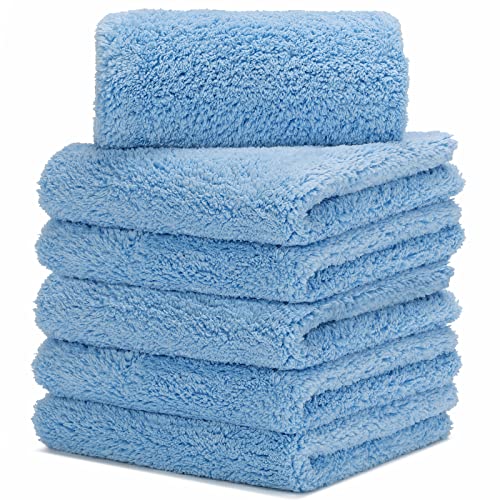
CARCAREZ Plush Edgeless Microfiber Towels — Best all-round detailing set
If a household buys one detailing pack, this is the shape it should take: six edgeless towels at 450 GSM, sixteen inches square, plush enough to dry and buff yet manageable enough to wash and rinse through a session. The edgeless cut is the headline for good reason — with no stitched border anywhere on the cloth, the towel can be folded, dragged, and flipped across clear coat with the scratch risk engineered out. Four folds give eight clean faces, and six towels give a full wash day enough faces to never reuse a dirty one.
In service these towels sit comfortably in the middle of the ladder: soft enough for final buffing on all but the most delicate show finishes, absorbent enough to dry a family car in a small number of passes, and priced in a tier that makes demoting a dropped towel painless. Home users will find the same cloth polishes a dining table and lifts dust from a leather sofa without drama. As an all-round foundation under more specialised picks, it is hard to fault.
- Size: 16 x 16 inches per towel
- Weight: 450 GSM plush microfiber
- Count: 6 towels per pack
- Edges: edgeless construction
- Care: machine wash separately, no softener
Strengths
- Edgeless design removes the border scratch risk across every panel.
- 450 GSM pile balances drying capacity with easy wringing and washing.
- Six-pack count supports a full session with fresh faces throughout.
Trade-offs
- One colour and weight; a full ladder needs a second, leaner pack for glass.
- Plush pile holds more water, so it dries slower between washes than lean towels.
- Serious enthusiasts may still add a dedicated waffle drying towel for large panels.
Best for: most car owners building a safe, simple detailing set. Not suited for: concours-level paint where a quiver of specialised towels is the norm.

Chemical Guys Workhorse Plush Towels — Best brand-name starter
Chemical Guys built its name on making detailing feel approachable, and the Workhorse plush towels carry that spirit: black, plush, sixteen inches square, sold in a three-pack for washing, drying, and general detailing. Black is a deliberate choice — it hides the staining that working towels collect, and it gives a starter set an unmistakable identity in the bucket, so nobody grabs the paint towel for the wheels by mistake.
The listing’s aside that these towels also serve home and pets is more honest than it sounds. A plush black microfiber is an excellent furniture-dusting and leather-wiping cloth, and households that detail occasionally may prefer a famous-name three-pack that doubles indoors over a larger anonymous set. The compromise is arithmetic: three towels is a starter, not a system, and keen users will add a second pack within the season. As a first step into safe towels, though, the Workhorse set is a confident one.
- Size: 16 x 16 inches per towel
- Count: 3 towels per pack, black
- Material: plush microfiber
- Best jobs: washing, drying, general detailing, home dusting
- Care: machine wash separately, no softener
Strengths
- Trusted detailing brand with plush, paint-safe hand feel.
- Black colour hides working stains and codes the set clearly.
- Versatile enough to serve home leather and wood between car washes.
Trade-offs
- Three towels is a starter count; full sessions want a second pack.
- Black shows dust and lint more than mid-tone colours do.
- Brand-name tier sits above the anonymous packs in this guide.
Best for: beginners who want a known name and a simple first set. Not suited for: high-volume users who need a dozen towels from one purchase.

Adam’s Borderless Grey Microfiber Towels — Plushest for final buffing
Adam’s built these towels for the last five minutes of a detail, and it shows. At 480 GSM they are the plushest full-size option here, borderless so nothing rigid ever meets the paint, and grey — the colour detailers traditionally reserve for final work, because it shows product residue honestly without showing every stain. Six towels per pack means the final-buffing rung of the ladder can be staffed properly, with a fresh cloth for each panel group rather than one towel loaded with wax by the bonnet’s end.
Buffing is a distinct skill from drying: the towel must glide, gather residue into its pile, and never grab or drag. Deep plush does that work by floating the hand’s pressure across thousands of fibres, and these towels perform the role with real polish — pun intended by every owner who has used them on dark paint, where every mark shows. They also make superb leather-conditioning cloths at home, spreading product evenly and lifting the excess without streaks. Buy them for the top rung and protect them from lesser duties.
- Size: 16 x 16 inches per towel
- Weight: 480 GSM plush microfiber
- Count: 6 towels per pack, grey
- Edges: borderless construction
- Care: machine wash separately, no softener, gentle dry
Strengths
- Deepest plush here for scratch-free wax and polish removal.
- Borderless build keeps every contact point soft on dark paint.
- Grey shows residue clearly, so you know when a face is spent.
Trade-offs
- Too plush to be the best glass towel; it can leave the surface over-buffed.
- Premium-leaning tier within this budget-focused guide.
- Wastes its talents on interiors and wheels — keep it on the top rung.
Best for: the final buff on cared-for paint, and leather conditioning at home. Not suited for: glass work or any rung below the top of the ladder.

The Rag Company Edgeless 365 Towels — Best lean workhorse
Every ladder needs its workhorse, and the Edgeless 365 is the professional’s version: 365 GSM, a 70/30 polyester-polyamide blend in Korean microfiber, edgeless and tagless, in royal blue, ten to a pack. The leaner pile is the point. It grips product residue instead of skating over it, wipes glass without the drag of deep plush, and turns over fast — wash, dry, back in the caddy — which is why working detailers buy this class of towel in the largest counts.
The 70/30 blend deserves its reputation: the higher polyamide share drinks more and feels softer than the common 80/20, while staying durable through constant laundering. Ten towels staff the middle rungs generously — interiors, jambs, glass, spray-wax wipe-offs — and the royal blue codes them at a glance. Households will find them equally handy indoors, where their grip makes short work of bathroom chrome and kitchen glass. If the CARCAREZ set is the foundation, this is the framing.
- Size: 16 x 16 inches per towel
- Weight: 365 GSM microfiber
- Blend: 70/30 Korean microfiber
- Count: 10 towels per pack, royal blue
- Edges: edgeless and tagless
Strengths
- Lean pile excels at glass, interiors, and product removal.
- 70/30 blend balances absorbency, softness, and wash durability.
- Ten-pack count suits high-turnover roles without rationing.
Trade-offs
- Less cushion for final buffing on delicate or dark finishes.
- Absorbs less per pass than the plush picks when drying a whole car.
- Royal blue is one strong colour; some will prefer subtler coding.
Best for: the middle rungs — glass, interiors, jambs, and spray products. Not suited for: serving as the only towel for drying and final buffing.

Edgeless Microfiber Car Towels 540 GSM — Densest small towels
Density is this pick’s argument: 540 GSM, the heaviest pile in the guide, packed into a twelve-inch square edgeless towel, six per pack. The small format with the deep pile is a specialist combination — it puts a thick cushion into the places a full-size towel cannot work neatly: door jambs, mirror housings, interior trim, motorcycle tanks, and the tight curves around badges and handles, where control matters more than coverage.
That density also makes these the most forgiving towels here for a nervous beginner. The pile keeps incidental grit buried far from the surface, and the small size encourages the short, careful strokes that good technique is made of. At home, the same towels are excellent for conditioning leather seats and wiping down oiled wood, where their size suits a chair or a side table better than a draping sixteen-inch cloth. They will not dry a whole car efficiently — that is not their post — but within their post they are superb.
- Size: 12 x 12 inches per towel
- Weight: 540 GSM plush microfiber
- Count: 6 towels per pack
- Edges: edgeless construction
- Care: machine wash separately, no softener
Strengths
- Densest pile here, burying grit far from delicate surfaces.
- Compact size gives control in jambs, trim, and interiors.
- Excellent for leather conditioning and small wood surfaces at home.
Trade-offs
- Too small for efficient whole-car drying.
- Deep pile rinses and dries slower than leaner towels.
- Easy to over-assign; it is a specialist, not the set’s foundation.
Best for: tight areas, interiors, and careful work on delicate finishes. Not suited for: large-panel drying or budget buyers needing one do-everything size.
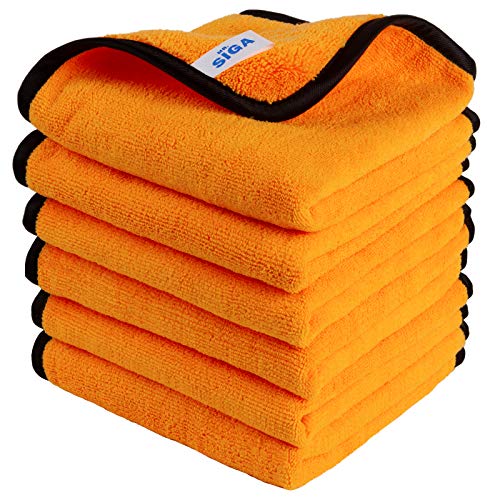
MR.SIGA Professional Microfiber Car Towels — Best large dual-sided option
MR.SIGA takes the opposite route from the small specialists: six dual-sided towels at forty by sixty centimetres — roughly sixteen by twenty-four inches — in gold, with one face for washing and drying and the other for finishing. The larger sheet covers a door or a bonnet section in a couple of passes, and the dual-sided design formalises a habit good detailers already have, working the thirsty side first and flipping to the finer side for the finish.
The gold colour codes the set instantly in a mixed bucket, and the size makes these the most home-capable picks here as well: a towel this large dries a dog, covers a worktop during a messy job, and polishes a full dining table in one circuit. The trade is handling — a big towel needs folding discipline to keep a clean face presented, and it is overkill for jambs and interiors. Households with large vehicles, or one set expected to serve car and home equally, will find this the most efficient purchase in the guide.
- Size: 40 x 60 cm (about 15.7 x 23.6 inches) per towel
- Count: 6 towels per pack, gold
- Design: dual-sided microfiber
- Best jobs: washing and drying large panels, home multi-use
- Care: machine wash separately, no softener
Strengths
- Large format covers big panels quickly with fewer passes.
- Dual-sided design separates wash work from finishing in one towel.
- Most versatile size here for combined car and household service.
Trade-offs
- Too large for tight interior and jamb work.
- Needs folding discipline to keep presenting a clean face.
- Gold shows dust readily between washes.
Best for: large cars, SUVs, and households wanting one set for car and home. Not suited for: fine interior detailing, where the 540 GSM squares excel.
Comparison Table
| Pick | GSM | Size | Count | Best rung |
|---|---|---|---|---|
| CARCAREZ Plush Edgeless Microfiber Towels | 450 | 16 x 16 in | 6 | Drying and general paint work |
| Chemical Guys Workhorse Plush Towels | Plush | 16 x 16 in | 3 | Wash and dry starter set |
| Adam’s Borderless Grey Microfiber Towels | 480 | 16 x 16 in | 6 | Final buffing |
| The Rag Company Edgeless 365 Towels | 365 | 16 x 16 in | 10 | Glass, interiors, removal |
| Edgeless Microfiber Car Towels 540 GSM | 540 | 12 x 12 in | 6 | Tight areas and interiors |
| MR.SIGA Professional Microfiber Car Towels | Dual-sided | 15.7 x 23.6 in | 6 | Large panels, car and home |
How Do You Wash and Store Detailing Towels So They Stay Scratch-Safe?
The wash is where detailing towels are made or ruined. Wash microfiber separately from everything cotton — cotton lint migrates into the split fibres and both absorbency and softness suffer — in warm water with a plain detergent and absolutely no fabric softener, which coats the fibres and turns a paint-safe towel into a smearing one. Towels that carried wax or sealant benefit from being washed promptly, before the product cures inside the pile, and heavily soiled wheel towels should run in their own load so their grit never meets the top-rung cloths.
Drying wants the same restraint: tumble dry low or line dry, because high heat can damage the fine fibres that make microfiber gentle. Hard water adds a slow complication of its own: mineral residue builds inside the pile over months and makes towels feel scratchy and drink less, even when they are washed correctly. If your towels decline together despite good care, an extra rinse cycle — or washing them once with no detergent at all to strip the backlog — often restores the pile’s manners. Towels revived this way return to paint duty only after the forearm test; towels that stay harsh after stripping are telling you their service is over. Fold and store towels in a closed box or cabinet, not loose in the garage where dust settles into the pile between washes — a towel can pick up its scratch load on the shelf, not just on the car. Before any towel touches paint, give it the hand test: run it across your inner forearm, and if you feel any grit or drag, it goes back for a wash, not onto the car.
A seasonal audit keeps the system honest: twice a year, lay the whole set out, run the forearm test on every towel, and reassign rungs without mercy. Towels migrate down, the top rung gets refreshed from the newest pack, and nothing stays on paint by reputation alone.
Retirement is part of the system. A towel that has been dropped on gravel, used on an exhaust, or torn through a season of wheels is done on paint, however clean it looks. Demote it in writing if you must — many detailers mark the corner of demoted towels — and let the affordable packs in this guide absorb the cost of honesty. The most expensive towel in detailing is the cheap one you kept using past its life.
How Do the Same Towels Serve Leather and Wood at Home?
Leather asks for exactly what paint asks for: a soft, edgeless cloth that lifts dust and spreads conditioner without abrading a finish that cannot be polished back. Use a plush towel — the Adam’s or the 540 GSM squares — slightly dampened for dusting leather, then a second dry one for conditioner, working product in small circles and buffing the excess so seats and sofas do not feel greasy. Keep a dedicated pair for leather, because conditioner residue in a towel will smear car glass for weeks.
Polished and oiled wood rewards the leaner towels. Dust sits on wood as an abrasive in its own right, so the first pass should lift it into the pile — an Edgeless 365 does this beautifully — rather than pushing it along the grain. For oiled tables, a plush towel spreads a thin coat of oil evenly and a lean one removes the excess before it turns tacky. Avoid using any towel that has carried silicone-based car products on wood finishes; cross-contamination is the quiet enemy of both crafts, and the colour ladder prevents it.
One adjacent tool deserves an honest mention so the set is not bought expecting it to do everything: the large waffle-weave drying towel, a specialist many detailers add for the first pass over big flat panels. None of the picks in this guide is that tool — the MR.SIGA set comes closest in size — and a household that details a large car weekly may eventually add one as a prose-level upgrade. It is a complement, not a correction: the ladder still needs its plush and lean rungs, and most owners find the sets here cover the whole car comfortably before any specialist joins.
Glass and chrome indoors belong to the lean rung for the same reason car glass does: grip without drag, and a finish without lint. A household that builds the car ladder thoughtfully discovers it has also, almost by accident, assembled the best home cleaning kit it has ever owned — which is the deeper sense in which these towels are affordable.
What Mistakes Scratch Paint Even With Good Towels?
The first is pressure. A towel should glide under the weight of a relaxed hand; pressing hard to chase a stubborn spot grinds whatever is under the pile into the clear coat. Stubborn spots want more product, more dwell time, or a fresh towel face — never more force. The second is the single-towel wash, where one cloth accumulates the whole car’s grit and redistributes it panel by panel. Fold to a clean face often, swap towels sooner than feels necessary, and let the pack counts in this guide do their work.
Third, people dry a car that is not fully clean. Drying is the highest-friction stage of a wash, and any dirt the rinse missed becomes the drying towel’s passenger. Rinse thoroughly, consider a final flood rinse that sheets water off the panels, and only then bring the plush towels out. Fourth, they wash towels with the family laundry — softener, cotton lint, high heat — and then blame the towels for the swirls that follow. The separate, gentle wash is not fussiness; it is the maintenance the tool’s safety depends on.
Finally, there is the dropped towel. On a clean indoor floor it may survive inspection; on gravel or a workshop floor it does not go back on paint that day, full stop. Affordable towels exist precisely so this rule never feels expensive. Detailers who obey it for a year own paint that still looks wet under street lights; detailers who negotiate with it own a polishing project.
How Does a Full Home Detail Run, Towel by Towel?
Start with the wheels, because they are the dirtiest and the towels are sacrificial: bottom-rung cloths, soap, and no regrets. Move to the wash itself with a mitt or a plush towel folded thick, working top-down so the cleanest panels are washed first and the dirtiest — sills, lower doors, the rear — come last with the most-loaded faces. Rinse constantly. The towel discipline here is folding: every panel gets a fresh face, and a face that has touched a sill never travels to a door top.
Drying is where the plush picks earn their keep. Lay a CARCAREZ or MR.SIGA towel flat on a panel and draw it slowly towards you, letting the pile drink rather than scrubbing back and forth; two towels rotated beat one towel wrung, because a wrung towel never quite returns to full softness mid-job. Chase the drips that escape from mirrors, badges, and fuel flaps with the 540 GSM squares, which fit where big towels bunch. Door jambs and the boot shut belong to the lean rung — the Edgeless 365 wipes them clean without wasting a plush towel on their grime.
Glass comes near the end, inside and out, with lean towels and a light touch: one to apply and lift the cleaner, a second dry one to buff, because a single towel doing both jobs smears by the third window. Interiors follow — plastics with a lean towel, leather with the plush small squares and conditioner — and the final buff, if wax was part of the day, closes the session with the Adam’s set and the car under the best light you have. Count the towels used honestly and a home detail runs through most of a well-built set, which is the surest proof the set was sized right.
Why Does Glass Deserve Its Own Towel Technique?
Glass shows every sin: streaks, lint, and the ghost of whatever the towel carried before. It also behaves differently from paint — it wants a towel with grip, used barely damp, in straight overlapping passes rather than circles. Lean microfiber like the Edgeless 365 suits it because the shorter pile wipes cleanly without leaving the fine haze that deep plush can deposit, and because a lean towel rinses free of glass-cleaner residue in the wash instead of hoarding it.
The two-towel method is the whole secret. The first towel, lightly misted with cleaner, does the lifting; the second, completely dry, does the finishing, and it must stay dry — the moment it dampens, swap it. Inside glass, where the windscreen’s lower corners collect a film that defeats long arms, fold the towel over a thin card or use the small 540 squares for reach. Households can steal this entire technique for mirrors and shower screens, where the same two-towel discipline ends the weekly streak battle in one round.
One warning travels with glass work: never use a towel that has carried silicone dressings or leather conditioner on glass, inside or out. The residue transfers invisibly and blooms into smears the next time the glass fogs. The colour ladder exists to prevent exactly this accident, and glass towels are the rung worth labelling most strictly of all.
What About Interiors, Screens, and the Small Surfaces?
Modern interiors are a museum of delicate finishes: piano-black trim that scratches if you look at it, touchscreens that record every fingerprint, matte plastics that shine unevenly under the wrong cloth. The small plush squares in this guide are the right citizens here — enough cushion to be safe on gloss trim, enough control to work around buttons and vents, and a size that keeps the towel in your fingers rather than draped across three surfaces at once. Dust first with a dry towel, because wiping dusty trim with a damp cloth makes mud at microscopic scale.
Screens want the gentlest version of the same care: a clean, lean towel, barely dampened with water, moved in light straight passes with no pressure. Anything that has touched wax, dressing, or conditioner stays away from screens permanently — another ladder rule, and another reason the ten-pack of lean towels gets used for far more than its car title suggests. At home, the same towels serve television screens, tablets, and the glass of picture frames, provided they are the clean ones from the top of the interior rung.
Leather interiors close the loop with the home section above: condition in small sections, buff with a fresh face, and keep the leather pair of towels in their own labelled home. An interior detailed this way, a few times a year, ages like a well-kept handbag rather than a taxi — and it is done entirely with towels from the affordable end of the market, which is the point of this guide.
Does Dark Paint Really Need Stricter Towel Discipline?
Yes, and it is not vanity — it is optics. Every colour of clear coat collects the same fine marks, but dark paint reflects light in a way that displays them, while silver and white hide all but the worst. Owners of black and deep-blue cars learn the ladder rules faster because the feedback is immediate: one careless drying pass with a loaded towel writes a visible signature across a door. If your car is dark, weight your purchases towards the plush, edgeless end of this guide and treat the lean towels as glass-and-interior specialists rather than paint towels.
Light matters as much as cloth. Work dark paint in shade, check your passes under the strongest light available before waxing, and let the final buff be judged by that light rather than by hope. The Adam’s grey towels earn their keep here precisely because grey shows residue honestly — on a black car, knowing a towel face is spent before it marks the finish is worth more than any marginal softness. Dark-paint ownership is where affordable-but-correct beats expensive-but-careless most clearly.
The consolation is that the same discipline makes every other surface in your life easier. A household trained by a black car handles its oak table, its leather sofa, and its television screens with an instinctive gentleness that no instruction sheet could teach. Buy the towels, learn the ladder, and the car becomes the strict tutor the rest of the house benefits from.
What About Motorcycles, Bicycles, and Everything Else With a Finish?
Motorcycles concentrate the detailing problem: chrome, paint, polished alloy, and leather in a small area, all of it close to road grit. The 540 GSM squares are the natural motorcycle towel — small enough to work a tank and a fender without draping onto the chain, plush enough to protect chrome — backed by lean towels for the screen and instruments. One rung rule matters above all here: nothing that has touched the chain or the lower engine ever travels upward, because chain lubricant is the most persistent contaminant in any garage.
Bicycles ask for a humbler version of the same kit: a lean towel for the frame after a wet ride, a sacrificial cloth for the drivetrain, and a plush one for anyone who keeps a good paint finish on a road bike. Boats, caravans, and garden furniture all submit to the ladder as well — gelcoat and acrylics scratch like clear coat and forgive like it too. The system in this guide was described for cars because cars are the strictest common case; everything else you own with a finish is an easier exam on the same syllabus.
That transferability is the final affordability argument. A household does not need a car kit, a bike kit, a leather kit, and a wood kit. It needs one ladder of honest microfiber, sorted by colour, washed with respect, and retired without sentimentality — and the six packs reviewed above are the most sensible building blocks for it at the budget-to-mid tier.
What Does More Money Buy in a Microfiber Towel — and Where Does It Stop Mattering?
Moving up the tiers buys fibre quality first: a higher polyamide share, more consistently split fibres, and pile that stays plush through years of washing rather than matting by the second season. It buys finishing second — cleaner edgeless cuts, no stray tags, dye that does not bleed into a wash load of lighter towels. And it buys quality control: the confidence that every towel in the pack matches the best one, which matters when a single bad towel can sign its name across a bonnet.
The returns diminish honestly, though. Beyond the solid mid-tier represented by most of this guide, extra money buys smaller and smaller increments of softness, while the system’s real protection — fresh faces, the ladder, the gentle wash — costs nothing but attention. A mid-tier set used with discipline will out-detail a premium set used carelessly every single weekend. That is the sense in which this category rewards the informed more than the wealthy, and why the guide’s recommendations cluster where they do.
Spend the savings deliberately: on a second pack for rotation, on a closed storage box that keeps the set dust-free, on the mitt and buckets the towels deserve. Detailing budgets leak into chemicals with exciting labels; the unglamorous truth is that towels, water discipline, and light decide most of the result, and those are the cheapest parts of the whole pursuit.
How Should a New Set Be Broken In and Stored?
Wash every new microfiber towel before its first use. Manufacturing and packing leave residues and loose fibre that a first wash removes, and a towel’s true softness only declares itself afterwards. Wash colours separately the first time — dark packs especially — use warm water and plain detergent, and dry gently. Then run the forearm test on each towel; any cloth that feels grabby or leaves fibre goes through a second wash before it is allowed near paint.
Storage is a system, not a shelf. Keep the ladder in a closed box or cabinet, folded by rung, with the top-rung towels in their own compartment or bag so garage dust never settles into the pile you will drag across a bonnet. Label the box if anyone else in the household details — most towel tragedies are committed by helpful people reaching for the nearest cloth to wipe a wheel. The five seconds it takes to fetch the right towel is the cheapest insurance in the entire hobby.
Finally, keep one sacrificial towel in the car itself, from the bottom rung, for the bird strike, the fuel spill, the child’s ice cream. Emergencies met with the wrong towel are how top-rung cloths get ruined; an old soldier in the boot means the emergency never reaches the good set. Replace it whenever it is used, the way you would a spare tyre, and the ladder stays intact through every surprise the road arranges.
How Do Towels Behave in Winter, Road Salt, and Rinseless Washing?
Winter is detailing’s hard mode. Road salt and grit load every panel with an abrasive film, cold water makes fibres feel stiffer, and the light that reveals your mistakes is at its weakest exactly when the risks are highest. The towel answer is volume and humility: more towels per wash, shorter passes, and a pre-rinse generous enough to float the salt away before any cloth touches paint. The big packs in this guide stop looking generous in January and start looking correctly sized.
Rinseless and waterless washing raise the stakes further, because the towel becomes the entire cleaning system rather than the finishing act. The method that keeps it safe is the fold-and-roll: a plush towel folded into eight faces, each face used for one gentle pass in one direction, then folded away forever for that wash. Plush edgeless towels — the CARCAREZ and Adam’s sets — are the right tools, used with far more solution than instinct suggests, because lubrication is the only thing standing between the grit and the clear coat. Anyone unwilling to spend towels at that rate should wait for a hose; the paint will thank them.
Salt deserves a final word of its own, because it hides. It lodges in jambs, behind badges, and along sill edges, then bleeds out during drying to streak a clean panel. The lean towels earn their keep here, wiped through every shut-line after the main dry, and they should be washed the same day — salt left in a towel’s pile keeps working on the fibres and on anything the towel later touches. Winter discipline is unglamorous, but it is the difference between a car that emerges in spring looking detailed and one that emerges looking defended.
Final Recommendation
Build the ladder in two purchases and most households are done: the CARCAREZ six-pack as the plush foundation for drying and general paint work, and the Rag Company Edgeless 365 ten-pack as the lean workhorse for glass, interiors, and removal. Add the Adam’s borderless set when waxing and final buffing become regular pleasures, the 540 GSM squares for interiors and leather, and the MR.SIGA set if a large vehicle or heavy home use argues for size. Start with the Chemical Guys three-pack if a trusted name helps you begin. However you assemble it, keep the rungs separate, wash the set on its own terms, and your paint — and your leather, and your oak table — will keep the deep, unmarked finish that made you care about towels in the first place.
Frequently Asked Questions
What GSM is best for drying a car?
Plush towels in the mid-400s and above give the cushion and capacity drying wants, keeping any missed grit buried in deep pile. Leaner towels around 365 GSM can dry, but they saturate sooner and offer less protection, so they shine in glass and removal roles instead.
Why does edgeless matter so much?
Because the commonest fine scratches come from the towel’s own border — stitching and melted edges are harder than the pile and cross the paint on every pass. Edgeless and borderless towels remove that hard line entirely, which is why most picks in this guide are built that way.
How many microfiber towels does a home detailer need?
A workable system runs to a dozen or more: several plush for drying and buffing, a larger lean set for glass and interiors, and sacrificial towels for wheels. The pack counts here — sixes and a ten — are sized to build that system in two purchases.
Can I use the same towels on my car and my furniture?
Yes, with the ladder respected: top-rung towels may serve leather and polished wood, but a towel that has done wheels or engine work never returns to paint or good furniture. Keep a dedicated pair for leather conditioner, since its residue smears glass.
How do I know when a detailing towel is worn out?
When it feels grabby on skin, leaves lint, or no longer drinks water after a proper wash, its fibres are clogged or damaged. Demote it to household rough duty and promote a fresh towel; keeping a tired towel on paint is false economy every single time it is tried.
Is a 70/30 blend really better than 80/20?
The higher polyamide share in a 70/30 blend generally absorbs more and feels softer, which is why the Rag Company towels use it for high-turnover work. An 80/20 towel can still be perfectly serviceable; blend is a refinement, not a pass-or-fail line.
Can microfiber towels be too soft for some jobs?
Yes. Very plush towels can skate over glass cleaner and polish residue instead of gripping them, which is why lean towels hold those rungs. Softness protects; grip removes. A complete set needs both, and the picks here are deliberately split between the two talents.
Should I use a separate towel for each panel?
Not a separate towel — a separate clean face. Fold plush towels into quarters for eight faces, move to a fresh face as each loads up, and swap the whole towel when the faces run out. On a normally dirty car that works out to two or three towels for washing and drying, plus specialists for glass and interiors.
Related Guides
The organic cotton route to a softer home is covered in Best Affordable Organic Linens and Towels, for readers balancing synthetic performance against natural fibres. Rustic interiors get their towel edit in Best Bath Towels for a Farmhouse Look, while heavy-duty cloth for the bench and workshop is rounded up in Best Shop Towels. For towels that survive bleach, pets, and hard household service, see Best Stain-Resistant Bath Towels.


