Key takeaways
- Belt-drive pressure washers slow the pump, cut vibration and extend service life. Compare pulley ratios, belt care, frames and output ranges.
What's inside
- What a belt drive changes on a pressure washer
- How pulley ratios slow the pump shaft
- Why slower pump speed extends pump life
- Vibration isolation between engine and pump
- Belt tension, alignment and replacement
- Slip under overload as a protective behaviour
- Typical pressure, flow and engine pairings
- Belt drive compared with direct drive, point by point
- Choosing a belt-drive machine for real work
- Belt construction and why material choice matters
- A maintenance rhythm for the drive side
- Ownership cost across a working life
- Safe working practice around an exposed drive
- Disclosure and how this comparison was assembled
- Check prices on Amazon
- Check prices on Amazon
- Final judgement on the belt-drive layout
As an Amazon Associate I earn from qualifying purchases. This post may contain affiliate links at no extra cost to you.
What a belt drive changes on a pressure washer
A belt-drive pressure washer separates the engine from the pump with two pulleys and a reinforced rubber belt, so the pump shaft no longer has to spin at full engine speed. That single mechanical decision shapes almost everything else about the machine: how hot the pump runs, how long its seals survive, how much vibration reaches the frame, and how the unit behaves when a nozzle partly blocks or a lance trigger snaps shut. Buyers comparing commercial machines for farmyards, rental fleets, masonry work or long driveway contracts usually meet belt drive at the point where a direct-drive unit starts feeling disposable, because the pump on a direct-drive model is bolted straight to the engine crankshaft and inherits every revolution and every shock the engine produces.
The layout is easy to recognise in photographs and on a showroom floor. A horizontal-shaft petrol engine sits beside the pump rather than behind it, both mounted on a common steel plate or rail frame, and a guard covers the pulley pair on the side. The larger driven pulley on the pump shaft is visibly wider in diameter than the smaller driver pulley on the engine shaft, and that size difference is the whole point. Guards are usually vented steel or heavy polymer, because the belt needs airflow and because a guard that traps grit becomes a grinding chamber. Machines built this way look longer and less tidy than compact direct-drive designs, and that extra length is not styling; it is the physical space the speed reduction occupies.
Nothing in this guide argues that a belt makes water pressure by itself. Pressure still comes from the pump forcing a measured flow through a small nozzle orifice, and cleaning power still depends on the pairing of pressure and flow. The belt sits upstream of that work and governs the conditions the pump works under. Slower shaft speed means each sealing surface travels less distance per hour, each bearing completes fewer revolutions, and the oil inside the pump crankcase gets flung around less violently. Those are cumulative effects measured over hundreds of operating hours, which is why belt drive matters far more to a contractor logging thirty hours a week than to a homeowner washing one patio each spring.
How pulley ratios slow the pump shaft
Speed reduction follows simple pulley geometry. If an engine governed at 3,400 revolutions per minute carries a driver pulley of 3 inches and the pump carries a driven pulley of 6 inches, the pump shaft turns at roughly half engine speed, near 1,700 revolutions per minute, minus a small allowance for belt creep. Swap the driven pulley to 7 inches and pump speed falls further, towards 1,450 revolutions per minute, provided the belt length and centre distance still suit the frame. Manufacturers publish the resulting pump speed in specification sheets, and that figure deserves more attention than the headline pressure number, because two machines with identical pressure ratings can run their pumps at very different speeds and therefore age at very different rates.
Torque moves in the opposite direction to speed. Reducing shaft speed through a pulley pair multiplies the torque available at the pump shaft, which suits a pump that must push plungers against thousands of pounds per square inch of water resistance. The engine does not work less hard overall; it delivers its power at a speed it prefers while the pump receives that power at a speed it prefers. This matching is the quiet engineering benefit of the layout. A petrol engine makes useful power high in its rev range and runs roughly if lugged down, whereas a plunger pump wears gracefully when turned slowly and steadily. The belt and pulleys act as translators between two components that were never naturally compatible.
Belt creep and slip deserve separating, because owners often confuse them. Creep is a tiny, normal speed loss, often around one or two percent, caused by the belt tightening on the driving side and relaxing on the driven side as it travels around the pulleys. Slip is different: the belt actually slides against a pulley face, usually under sudden load, and it wastes power as heat and rubber dust. A correctly tensioned belt on clean pulleys creeps slightly and slips almost never in steady work. A loose, glazed or oil-contaminated belt slips under ordinary load, and the symptom is a pump that sounds busy while delivering disappointing pressure at the lance.
Reading pulley sizes before purchase
Specification sheets sometimes list only engine speed, leaving the buyer to infer pump speed from the model family. When a listing gives both pulley diameters, the ratio can be checked with primary-school arithmetic: divide the driven diameter by the driver diameter, then divide engine speed by that result. A ratio near two to one is common on commercial petrol machines. Ratios much below that suggest a pump still turning quickly, which narrows the longevity advantage. Ratios far above that can starve a pump of the shaft speed its internal design expects, because plungers, valves and oil splash patterns are all designed around a target speed window rather than an assumption that slower is always better.
Pulley material also matters in ways listings rarely mention. Cast iron pulleys run true, resist groove wear and add flywheel effect that smooths the pump stroke, but they add weight high on the frame. Pressed steel pulleys are lighter and cheaper, and their grooves can bell out after seasons of abrasive dust. Aluminium pulleys appear on lighter commercial frames and dissipate heat well, though a gritty belt can score them faster than iron. Whatever the material, the groove profile must match the belt section exactly; a belt riding high or bottoming in the groove will either slip or overheat, and no amount of tension adjustment compensates for a mismatched profile.
Why slower pump speed extends pump life
Seal wear is fundamentally a distance problem. A plunger seal rubs against its plunger on every stroke, so doubling shaft speed roughly doubles the rubbing distance accumulated in each working hour. Halve the speed and the same seal pack covers half the distance in the same hour, while also generating less frictional heat at the contact face. Heat is the multiplier that turns ordinary wear into rapid failure, because hot seals harden, hot oil thins, and thin oil protects bearing surfaces less effectively. Belt-drive machines therefore tend to keep their original seal packs and valve sets through service intervals that would exhaust a faster-turning pump doing identical cleaning work.
Bearings tell a similar story in a different vocabulary. Rolling-element bearing life is conventionally expressed in revolutions, so a bearing asked to complete half as many revolutions per hour lasts roughly twice as many hours before fatigue spalling begins, all else being equal. All else is rarely equal, yet the direction of the effect is reliable. Valve springs also cycle once per stroke; fewer cycles per hour means slower accumulation of the fatigue that eventually leaves a valve seating late and pressure pulsing at the gun. Even the pump crankcase oil benefits, because slower churning entrains less air and holds operating temperature lower on long summer jobs where ambient heat already stresses every component.
There is a second, less obvious life benefit: slower pumps tolerate marginal water supply better. A pump turning at moderate speed draws water in longer, gentler gulps, giving a long garden hose or a gravity-fed tank more time to refill each chamber. Fast pumps on a weak supply cavitate sooner, and cavitation is destructive out of proportion to its cause, because collapsing vapour bubbles pit plunger and valve surfaces with a sandblasted texture. Belt-drive machines still cavitate if starved, and no buyer should treat the layout as permission to ignore inlet flow requirements, but the margin before damage begins is wider, and that margin is worth money on sites where water comes from a bowser rather than a mains tap.
Vibration isolation between engine and pump
A flexible belt cannot transmit vibration the way a rigid flange does. On a direct-drive machine the pump is hard-bolted to the engine, so every firing pulse and every imbalance in the crankshaft arrives at the pump crankcase undiminished, and the pump returns its own three-per-revolution pressure pulsation straight into the engine casting. A belt interrupts that two-way path. The span of belt between pulleys flexes microscopically with each pulse, absorbing high-frequency energy and converting a portion of it to negligible heat. The engine still vibrates on its mounts and the pump still pulses, but each component suffers mainly its own vibration rather than the combined output of both.
The practical consequences show up in fastener behaviour and in operator fatigue. Bolts on belt-drive frames still need periodic checking, yet the chronic loosening that plagues rigidly coupled pumps, where the whole assembly shakes as one excited mass, is reduced. High-pressure fittings weep less often when the pump head is not being rattled against its hose connections thousands of times per minute. Handles and lances feel calmer during long trigger pulls, which matters more than comfort alone suggests: a fatigued operator shortens passes, rushes rinsing and misses edges, so a calmer machine indirectly cleans better across a full working day than a harsher machine with identical paper specifications.
Isolation also protects the engine from the pump. A failing pump with a stiff bearing or a damaged valve can transmit destructive shocks backwards through a rigid coupling, scoring the engine crankshaft or stressing its output bearing. Through a belt, that same failing pump mostly just makes the belt complain audibly, squealing or flapping in a way that warns the operator before the engine is harmed. Experienced fleet managers describe the belt as a mechanical fuse in the vibration path as much as in the load path, and the description is fair. It is a cheap, replaceable component standing between two expensive ones, absorbing abuse that would otherwise be shared by both.
Frame design and the weight penalty
Because engine and pump sit side by side, belt-drive frames are longer, and because both components bolt to a shared plate that must resist belt tension pulling them towards each other, that plate is usually thicker than the mounting on a compact machine. Add a belt guard, larger wheels to move the mass, and often a handle arrangement designed for two-handed tilting, and a typical commercial belt-drive petrol washer lands somewhere between 55 and 85 kilograms. That is van-and-ramp territory rather than carry-it-up-the-steps territory. Buyers should read the dry weight figure carefully and then add fuel, oil, hose and lance, because the working weight is the weight that actually has to be loaded at the end of a wet day.
The weight buys stability that lighter machines cannot fake. A heavy, long frame resists the tipping tug of a high-pressure hose pulled at an angle, stays planted when the trigger is released and the unloader valve snaps the pump into bypass, and sits calmly on vibrating surfaces like block paving or steel decking. Wide pneumatic tyres common on these frames roll over gravel, kerbs and site debris that stop small solid wheels outright. Some frames add a lifting eye or a forklift-friendly skid base, details that signal the intended environment honestly. A machine designed to be moved by equipment is not pretending to be a consumer product, and its price, size and service expectations all follow from that admission.
Belt tension, alignment and replacement
Correct tension sits in a narrow band between two failure modes. A belt run too loose slips under load, glazes its sidewalls against the pulley grooves, and then slips even more because the glazed surface has lost friction; the end state is a shiny, cracked belt and a pump that never reaches full pressure. A belt run too tight overloads the pump shaft bearing and the engine output bearing continuously, even at idle, and those bearings wear in a pattern mechanics recognise instantly: brinelled races and a roughness felt when the shaft is turned by hand. Most manufacturers specify tension by deflection, commonly around 10 to 13 millimetres of movement at the midpoint of the span under firm thumb pressure, though the exact figure for a given model belongs to its manual rather than to habit.
Checking tension takes two minutes and should happen on a schedule rather than when symptoms appear. Stop the engine, remove the spark plug lead on a petrol machine, and open or remove the guard. Press the belt at mid-span and judge deflection, then rotate the assembly by hand and inspect the full belt length for cracks across the ribs, fraying at the edges, missing chunks, or a polished shine on the sidewalls. Spin each pulley and listen for bearing roughness. Sight along the belt run to confirm the pulleys sit in the same plane; a belt that climbs one side of a groove is announcing misalignment that will eat its edge within hours. Refit the guard fully before starting, because an exposed belt at full speed can catch clothing, hose or a carelessly placed hand.
Alignment errors usually trace back to a bent mounting plate, a pulley not fully seated on its shaft, or a missing key allowing a pulley to sit fractionally cocked. The correction is mechanical patience: loosen, seat, align with a straight edge laid across both pulley faces, then tighten fasteners in sequence while rechecking. A straight edge touching both faces of both pulleys at four points indicates coplanar alignment. One pulley standing proud by even two millimetres forces the belt to enter its groove at an angle on every revolution, and at seventeen hundred revolutions per minute that small angle becomes a relentless sawing action. Owners who replace belts repeatedly without checking alignment are treating a symptom while the cause keeps cutting.
When and how a belt gets replaced
Replacement intervals vary with dust, heat and load, but a commercial belt inspected monthly and replaced at the first sign of chunking or deep cracking rarely fails in service. The job itself is straightforward for a competent owner: slacken the engine or pump mounting bolts, ease the old belt off the larger pulley first, walk the new belt on without levering it with a screwdriver, restore alignment, set tension, and run the machine briefly before rechecking, because new belts seat into grooves and lose a little tension in their first minutes. Levering a belt on with a tool damages its tensile cords invisibly, and a belt damaged that way may snap weeks later under a load it should have handled easily.
Carrying a spare belt matched by section and length code is cheap insurance for anyone working away from base. Belt codes encode the profile and the pitch length, and a belt one size longer can sometimes be tensioned into service while a shorter one simply will not fit, which is why the spare should be the exact specified part rather than a near match from a general hardware shelf. Store spares flat, cool and away from sunlight and solvent fumes; rubber ages on the shelf as surely as on the machine, just more slowly. A spare that has hung in a hot van for three summers may look new and behave like an old belt within a week of fitting.
Owners weighing lighter equipment for occasional work may find that a guide to gentler machines suits their jobs better, since best 2000psi electric power washers covers a class where none of this belt routine applies at all.
Slip under overload as a protective behaviour
When a nozzle blocks suddenly or a pump valve jams, torque demand at the pump shaft spikes. A rigid coupling passes that spike straight into the engine, which either stalls abruptly or absorbs the shock through its crankshaft and bearings. A belt drive has a third option: the belt slips briefly on the pulley, capping the torque transmitted while the spike passes or the unloader valve reacts. That slip is not a design invitation to abuse the machine, and repeated slipping destroys belts, but as an occasional event it converts a potential mechanical injury into a squeal, a puff of rubber dust and a warning the operator cannot ignore. Protection that announces itself audibly is arguably better than protection that works silently until it is exhausted.
The unloader valve remains the primary pressure protection on any washer, belt driven or not, diverting flow back to the inlet or to a bypass line when the trigger closes. Belt slip is the secondary, cruder guardian behind it. Owners should therefore never respond to a slipping belt under overload by simply tightening it further and further; a belt tensioned until it cannot slip has had its protective behaviour adjusted away, and the next overload will find the pump shaft, the engine or a high-pressure fitting to damage instead. Correct tension preserves a small capacity for emergency slip while preventing slip in normal work, and that balance is precisely what the deflection specification encodes.
Thermal behaviour under overload also differs between layouts. A slipping belt converts the excess energy to heat in a component designed to be replaced in minutes for modest money. A stalled direct-drive assembly converts the same energy into shock loads inside castings and gear faces that cost serious money and days of downtime. Fleet accountants understand this instinctively: any design that concentrates unavoidable abuse into the cheapest part of the system lowers the cost of the worst day, not just the average day. Belt drive is one of the clearest examples in small machinery of designing the failure point deliberately rather than letting chance choose it.
Typical pressure, flow and engine pairings
Commercial belt-drive petrol washers cluster in a recognisable output band. Pressure ratings commonly run from about 2,700 to 4,000 pounds per square inch, with flow between roughly 11 and 21 litres per minute depending on market and model; North American listings express the same flow band as about 3 to 5.5 gallons per minute. Cleaning units, the product of pressure and flow, land far above consumer machines, which is why these washers strip paint, clean concrete plant and wash down agricultural buildings at a pace a small electric unit cannot approach. Buyers comparing headline pressure alone miss half the story, because a 3,000 psi machine delivering 15 litres per minute will out-clean a 4,000 psi machine delivering 9 litres per minute on most real surfaces, where flow carries the loosened dirt away.
Readers whose work sits squarely in that middle band can compare the focused shortlist where best 3000 psi pressure washers gathers the models built around that pressure class.
Engines paired with these pumps are usually single-cylinder petrol units of roughly 270 to 420 cubic centimetres, producing in the region of 9 to 14 horsepower, with Honda GX and Kohler Command Pro families appearing repeatedly in commercial catalogues alongside manufacturer-branded equivalents. Horizontal shafts are essential to the side-by-side layout. Larger twin-cylinder engines appear on the heaviest skid and trailer machines, where flow demands climb beyond what a single cylinder supplies smoothly. Electric belt-drive machines exist for indoor and food-industry settings, typically three-phase, trading the petrol engine for a slow-running motor and gaining quiet, fume-free operation at the cost of a serious power supply requirement.
Nozzle sizing ties the whole specification together and is frequently misunderstood. The nozzle orifice must match the pump flow at the intended pressure; fitting a smaller nozzle than specified raises pressure beyond the rating and loads the belt, the pump and the unloader, while a worn nozzle that has eroded larger quietly drops pressure and cleaning effect. Belt-drive machines, because they are expected to work commercially, usually ship with a nozzle chart in the manual and quick-change colour-coded jets. Treating the chart as optional reading is a reliable route to blaming a healthy machine for symptoms caused by a two-dollar jet.
What belt drive costs in size, noise and upkeep
The honest ledger against belt drive starts with bulk. The machine is longer, heavier and harder to store, needs a van or trailer rather than a car boot, and presents a bigger target for site damage. Noise is more nuanced: the pump itself runs quieter at lower speed, and the belt whine is modest, but the commercial petrol engines paired with these machines are not quiet devices, and the overall package at full throttle will still dominate a conversation at ten metres. Anyone expecting the belt to civilise engine noise will be disappointed; it civilises pump noise and vibration, which is a different and more limited promise.
Upkeep adds a belt inspection routine, occasional tension adjustment, pulley alignment awareness and a guard that must come off and go back on for access. None of it is difficult, but all of it is additional, and an owner who will not do it owns the wrong layout, because a neglected belt drive eventually underperforms a neglected direct drive: the direct-drive machine has no belt to slip, glaze or snap. The comparison therefore hinges on the owner as much as the machine. Diligent owners extract the longevity the design offers. Hands-off owners may be better served by a simpler machine they replace more often, and a candid dealer will say so.
Budget shapes that decision too, and shoppers working to a firm ceiling can start from the value-focused selection where best affordable pressure washers collects machines that cost less to buy into than commercial belt-drive frames.
Belt drive compared with direct drive, point by point
Pump speed is the founding difference: direct drive locks pump speed to engine speed, typically near 3,400 revolutions per minute on petrol machines, while belt drive commonly halves it. From that difference flow the secondary differences in seal life, bearing life, oil temperature and noise at the pump head. Direct drive answers with compactness, lower purchase price, fewer wearing parts and a machine one person can carry. Neither layout wins in the abstract. Each is a coherent answer to a different question, and confusion arises only when a buyer asks a machine the question it was not designed to answer, such as expecting consumer hardware to survive commercial hours or expecting commercial hardware to live in a cupboard under the stairs.
Service access tilts towards belt drive in a way rarely mentioned in sales material. Because the pump stands separately on the frame rather than hanging off the engine, its mounting bolts, oil sight glass, drain plug and head fasteners are reachable without separating the pump from a crankshaft flange. A pump can be unbolted, lifted away and sent for bench service while the engine stays on the frame, and a loan pump of the same footprint can be fitted in under an hour. On a direct-drive machine the pump and engine separate too, but the pump often carries the visual and mechanical identity of the whole unit, and its removal leaves a machine that looks amputated rather than serviced.
Heat management also diverges over a long shift. A direct-drive pump bolted to an engine receives conducted heat from the crankcase on top of its own friction heat, and its small crankcase holds little oil to absorb that load. A belt-drive pump sits in open air on its own rail, holds a larger oil volume in many commercial designs, and receives no conducted engine heat at all, since rubber is a poor thermal conductor. On a July afternoon of continuous trigger time, that thermal separation can be the difference between oil that ends the day serviceable and oil that ends the day oxidised and thin. Thermal headroom, like vibration isolation, is invisible in a showroom and decisive in August.
Gear drive and other neighbours in the family
Belt drive is not the only way to slow a pump. Gear-drive machines interpose a reduction gearbox between engine and pump, achieving similar pump speeds in a more compact envelope, at higher cost and with gearbox oil to maintain. Gearboxes tolerate neglect of tension and alignment better than belts, transmit no slip protection, and concentrate their failure cost in a sealed unit few owners open. Belt drive remains the most common reduction method in commercial washers because it is cheap, inspectable at a glance, repairable with hand tools in a car park, and honest about its condition: a worn belt looks worn, while a worn gearbox often announces itself only by failing.
At the opposite end of the market sit cordless machines for spot cleaning, and readers curious about that convenience-first category will find it mapped in the roundup where best battery powered pressure washers sets out what battery machines can and cannot do.
Choosing a belt-drive machine for real work
Start with the work, quantified. Estimate the hours per week the trigger will actually be pulled, the largest surface to be cleaned in one session, and the water supply available at typical sites. A machine bought for eight hours of weekly contract work justifies belt drive on arithmetic alone: the slower pump spreads its service intervals across more calendar time, and the frame survives transport that breaks lighter equipment. A machine bought for monthly use at one property may never accumulate the hours at which the longevity advantage repays the extra purchase price, weight and storage space, and the buyer would be buying theoretical durability that expires through rubber ageing and fuel staleness before it is ever used.
Check the specification for pump speed, not just pressure and flow, and treat a seller who cannot state the pump speed as a seller who does not understand the product. Confirm the belt section and length are standard codes obtainable from industrial suppliers rather than a proprietary part tied to one importer. Inspect the guard for ventilation and for fasteners that can be removed with ordinary tools rather than security fittings. Confirm the frame has a lifting point or a shape that ramps and straps can work with. Ask how the pump oil level is checked and how the belt tension is specified; the answers reveal whether the manufacturer expects the machine to be maintained by its owner or merely replaced by its owner.
Water supply planning deserves a paragraph of its own because commercial flow rates punish optimistic plumbing. A machine drawing 15 litres per minute cannot be fed indefinitely by a tap delivering 10, and the resulting cavitation will be blamed on the pump by anyone who has not measured the tap. Many commercial setups therefore run a buffer tank the pump draws from, with the mains filling the tank at its own pace through a float valve. Belt-drive machines with their slower, gentler suction stroke pair particularly well with tank feeding, which is one reason the layout dominates in mobile valeting and agricultural washdown rigs where a tank is already part of the vehicle.
Running habits that protect the whole drivetrain
Daily habits decide whether the theoretical advantages survive contact with real operators. Let the engine warm briefly before pulling the trigger, so oil reaches the pump bearings before full load arrives. Avoid running the pump in bypass for extended periods, because recirculating water heats rapidly inside the pump head and cooks the very seals the slow shaft speed was meant to protect; a thermal relief valve helps, but habits help more. Release residual pressure before disconnecting hoses, keep the inlet filter clean so the pump never strains against a blockage, and drain or protect the pump before frost, since ice expansion cracks pump heads regardless of how they are driven.
Storage behaviour matters for the belt specifically. A machine stored with the belt under tension in a hot shed ages its belt faster than one stored cool, and a belt that sits in one position for months can take a set, thumping faintly for its first minutes of running until it relaxes. Long storage also invites rodents, which find belt rubber and guard cavities congenial; a machine that will not start cleanly after winter deserves a guard-off inspection before any other diagnosis. Fuel stabiliser for the engine, fogging oil where the manual recommends it, and a notebook entry recording hours and belt condition round out a storage routine that takes twenty minutes and saves the first working week of spring.
Belt construction and why material choice matters
Modern washer belts are usually cogged or raw-edge V-belts built from EPDM rubber over tensile cords of polyester or aramid fibre. EPDM replaced older neoprene in most quality applications because it tolerates heat, ozone and oil mist far better, and a belt living inches from a hot engine and a splash-lubricated pump meets all three. The cogged profile, with notches cut across the inner face, lets the belt bend around a small driver pulley without the internal heating a solid belt generates, and it runs cooler at the tight radius where the driver pulley grips it. When a specification or a parts list names a belt, the code reveals its section, its construction and its pitch length, and substituting a smooth general-purpose belt of the same length invites exactly the slipping and glazing the correct part was chosen to avoid.
Tensile cords carry the actual load, and their material explains price differences that look arbitrary on a shelf. Polyester cord stretches slightly in service, which is why a new polyester-cord belt needs its tension rechecked after the first hours of running. Aramid cord barely stretches at all, holds tension through a season, and survives shock loads that snap lesser belts, but it costs more and can be damaged by being levered over a pulley flange during fitting. Glass-fibre cord appears in cheaper belts and dislikes tight bending radii. None of this is visible once the guard is fitted, which is why buying belts by code and reputable manufacture matters more than buying by appearance; two belts can look identical in a photograph and differ by a factor of three in working life.
Storage and handling quietly decide whether a good belt reaches the machine in good condition. Belts should never be hung on a single nail for months, because the tight bend at the contact point concentrates stress in the cords. They should not be coiled tighter than their natural loop, stored against a radiator, or kept in a cabinet with solvents and petrol cans whose vapours swell rubber. Fleet stores that rotate belt stock, fitting the oldest first, avoid the slow embarrassment of fitting a shelf-aged belt that cracks within a month. A belt is a perishable component with a long but finite life in every state, working or waiting, and treating it as permanent hardware is the root of many mysterious repeat failures.
A maintenance rhythm for the drive side
A workable rhythm for a commercial machine divides attention into daily, monthly and seasonal passes. The daily pass is visual and takes less than a minute: guard secure, no rubber dust accumulating beneath the pulley line, no belt flap visible at idle through the guard vents, no oil mist pattern suggesting a leaking seal is about to contaminate the belt. Rubber dust deserves emphasis because it is the earliest written record of slip; a clean machine that begins leaving a fine black deposit under the drive side is reporting a tension or alignment problem weeks before pressure at the lance changes enough to notice.
The monthly pass opens the guard. Tension gets measured against the manual figure rather than judged by feel, pulley grooves get wiped clean of compacted dust, and the belt gets rotated slowly through a full circuit while the inspector looks for cracks opening on the inner face as it bends around the small pulley. Cracks that appear only under bending are the ones that matter, since a belt can look sound lying flat and be failing in flexure. Engine and pump mounting bolts get a torque check in the same session, because a mount that has shifted a millimetre has also shifted alignment, and catching the shift at the bolt stage is cheaper than catching it at the belt stage.
The seasonal pass goes further. The belt comes off entirely so both pulley grooves can be inspected for the stepped wear pattern a slipping belt grinds into them; a groove worn to a visible step will damage a new belt quickly, and fitting a fresh belt into a worn groove is false economy. Pulley bearings and shaft play get checked by hand. The frame plate gets cleaned and examined for hairline cracks around the mounting holes, a known consequence of years of belt tension pulling engine and pump towards each other across the same four bolt holes. Any crack found at this stage can be welded and reinforced; the same crack found after it propagates becomes a frame replacement.
Diagnosing drive-side symptoms
- Squeal at start-up that fades within seconds usually indicates a slightly loose belt gripping as it warms; persistent squeal under load points to glazing, contamination or a worn groove.
- A rhythmic thump once per belt revolution suggests a damaged section of belt or a set taken during long storage, and the damaged point can be found by marking the belt and watching the mark pass.
- Pressure that pulses in time with visible belt flap indicates tension low enough for the span to resonate, a condition that also fatigues the belt cords rapidly.
- Rubber dust combined with a belt riding to one side of its groove is an alignment signature, not a tension signature, and tightening alone will not cure it.
- A belt that snaps cleanly across its width has usually suffered a shock load or cord damage from levered fitting, while a belt that shreds along its length has usually been sawing against a misaligned groove edge.
Each symptom narrows the search before a single bolt is loosened, and owners who learn the vocabulary save themselves the common ritual of replacing three components to cure one fault. The discipline is to change one variable at a time and record the result, because a machine whose belt, tension and alignment were all altered in one afternoon teaches its owner nothing when the symptom either vanishes or returns. Commercial workshops keep a simple log for each machine: hours, belt code fitted, tension setting used, and the symptom that prompted the work. That log, kept honestly, becomes the most valuable document in the machine’s file by its third year.
Ownership cost across a working life
The purchase price of a belt-drive machine is higher, and the honest comparison is against the total cost of delivering the same cleaning hours by other means. A contractor who would wear out a light direct-drive machine in eighteen months and buy a second, then a third, may spend more across five years than the single belt-drive purchase, before counting the downtime each failure caused or the jobs finished late. The belt-drive machine consumes belts, pump oil and service kits on a schedule, and scheduled spending is nearly always cheaper than emergency spending, because it happens at a chosen time with parts already on the shelf rather than at retail urgency in the middle of a contract.
Resale value reinforces the arithmetic. Commercial buyers recognise the layout and pay for remaining pump life they can estimate from the machine’s condition, whereas a worn consumer machine has almost no second market. A documented service history, a clean guard interior and a pump that reaches its rated pressure on a gauge are worth real money at resale. Even the frame contributes: a straight, uncracked plate with its original lifting eye intact signals a machine that was loaded carefully and stored indoors. Owners who maintain a belt-drive washer are therefore not merely preserving function; they are preserving an asset whose value a knowledgeable buyer can verify in ten minutes.
None of this arithmetic rescues a belt-drive machine bought for work that never materialises. Idle commercial equipment still ages: belts perish, fuel varnishes carburettor jets, pump seals dry against their plungers, and tyres flat-spot under a frame that never moves. The layout rewards use and punishes storage, which is the final reason the choice must begin with an honest count of working hours. A machine matched to its workload, driven slowly through its pulleys and serviced on rhythm, will still be earning when lighter equipment bought the same year is a memory and a disposal receipt.
Safe working practice around an exposed drive
The guard exists because a running belt is unforgiving of contact. A span moving at several metres per second will pull a glove, a rag or a loose sleeve into the pulley nip point faster than any reaction can withdraw it, and the injury mechanism is entanglement rather than cutting, which makes it particularly severe. Guards should therefore be treated as part of the machine rather than as packaging: a guard removed for inspection goes back before the engine starts, every time, without exception for a quick check. Machines offered for sale with missing guards should be priced as incomplete, and a replacement guard sourced before the machine enters service, not after the first near miss concentrates minds.
Refuelling and adjustment routines deserve the same discipline. Petrol goes into a cool engine, never one that has just stopped after an hour of work beside a hot exhaust. Belt checks happen with the ignition lead removed, because a horizontal-shaft engine can fire from a partial pull of the pump shaft while hands are inside the guard line. The lance gets pointed at the ground during start-up, the trigger lock gets used during any pause, and the machine gets chocked or braked on slopes, since a heavy frame on pneumatic tyres rolls more willingly than its mass suggests. None of these habits is specific to belt drive, yet the layout concentrates more stored energy and more mass in one place than lighter machines, and stored energy always collects its debt from the careless eventually.
Setting the machine up on site
Positioning decides how pleasantly the drivetrain spends its day. A level stance keeps pump oil covering the bearings it was designed to cover and keeps belt tracking centred in its grooves; a frame propped at an angle on rubble does neither. The exhaust should point away from the operator’s working side and away from any tank vent, and the inlet hose should arrive without a kink that starves the pump at full demand. Extending the high-pressure hose rather than dragging the machine closer is the habit that separates commercial practice from domestic improvisation, and long hose reels exist precisely so the heavy frame can stay planted while the lance travels. A planted machine vibrates less, tracks its belt truly and keeps its exhaust away from the surface being cleaned, where hot gas can mark fresh coatings and sealers.
Cold mornings reveal another layout trait. Belt rubber stiffens overnight, and a machine started at dawn in winter may chirp for its first minute until the belt warms and seats. That brief protest is normal; a belt that still complains after five minutes of running is not cold, it is loose, glazed or misaligned, and the distinction saves owners from dismissing real faults as weather. Pump oil also thickens in the cold, which is one more argument for the brief unloaded warm-up described earlier: thirty seconds of patience at idle costs nothing and returns bearings that begin loaded work already coated in oil rather than scraping towards that state.
A note on regional specification differences
Identical model families are sold with different pulley sets in different markets, because engine governing speeds and electrical conventions vary by region and because some importers specify a larger driven pulley to suit local expectations of pump life. A buyer comparing a domestic listing against a foreign review should therefore confirm which pulley pair the local version carries before assuming the review’s pump speed applies. The pressure and flow figures usually stay constant across those variants, since nozzle and pump displacement choices compensate, but the service rhythm underneath the figures changes with shaft speed. Two owners discussing the same badge online may honestly report different belt lives and different seal intervals, each describing a genuinely different drivetrain wearing the same plastics. Checking the parts diagram for the exact serial range resolves the argument instantly, and parts diagrams are public documents on most manufacturers’ support pages, free for any owner to read before money changes hands.
Documentation supplied with a commercial machine normally includes a drivetrain drawing, a belt code, a tension figure and a torque table for the mounting hardware, and the presence or absence of those four items predicts the ownership experience with surprising accuracy. Sellers of serious equipment publish them because their customers demand them. Sellers of equipment built down to a price often omit them, expecting the machine to be retired before anyone needs a drawing. Reading the support literature before the sales literature is therefore a sound habit: the manual reveals what the manufacturer believes the machine is for, long after the brochure has finished describing what the marketing department hopes it might become.
Disclosure and how this comparison was assembled
Readers deserve a plain account of how buying guides on this site are funded before they weigh any recommendation in them. As an Amazon Associate, this site earns from qualifying purchases. That arrangement means a purchase made after following a retail link from a guide may return a small commission to the site, at no additional cost to the buyer, and it is the reason the guides remain free to read. The commission structure does not alter the engineering criteria used throughout this article, which rest on published specifications, manufacturer documentation and established drivetrain practice rather than on retail margins.
The comparison deliberately avoids claiming workshop experience the site does not have. Statements about pulley ratios, bearing life and seal wear are drawn from the published mathematics of belt drives and from pump manufacturers’ service literature, and they can be checked against any mechanical engineering reference. Where figures are given as typical ranges rather than exact values, that is because manufacturers vary and because a range stated honestly serves a buyer better than a precise number borrowed from a single model and presented as universal. Readers who find a specification that contradicts a range here are encouraged to trust the specification sheet of the exact machine in front of them.
Check prices on Amazon
Live listings for the shortlist in this guide are pulled from Amazon below, so prices and availability are always current at the moment you look.
Check prices on Amazon
- Canpump Belt-Drive Gas Pressure Washer, 3600 psi @ 5 US gpm, 389 cc Engine | High Flow Triplex Pump, External Unloader, Electric Start, Commercial Grade
- Canpump Belt Drive Pressure Washer: 4000 psi @ 4 US gpm, 15 hp Loncin G420F Gas Engine, Triplex Plunger Pump, External Unloader with Extended Bypass, Plate Mounted
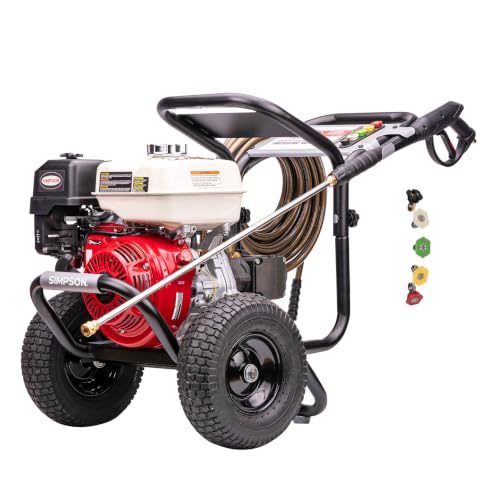
- Simpson SuperPro Roll-Cage 4400 PSI Gas Pressure Washer, 4.0 GPM, CRX 420 | Commercial gas power washer. AAA triplex pump, belt drive, 50' hose, 48" insulated lance. 49-State Compliant. SRC4440111
- Canpump Belt Drive High Flow Pressure Washer 1900 PSI, 9.2 GPM – Triplex Power Washer Pump, 13 HP Loncin Engine – Electric Start, Commercial Grade, Fully Serviceable w/External Unloader
- Kärcher – 4000 PSI Commercial Cold Water Gas Pressure Washers – HD Series GeB – Belt Drive – 4.0 GPM
- Simpson Water Blaster 4400 PSI Gas Pressure Washer, 4.0 GPM, CRX 420 Engine | Gas Power Washer For Professionals. AAA Triplex Pump, Belt Drive, 50' Hose, 48" Insulated Lance. 49-State Compliant. WB60824
- LSSOCH Pressure Washer Pump Belt Drive 5.6 GPM General Right Shaft 3500 PSI | IGN2185776
- Canpump Belt Drive Pressure Washer: 5200 psi @ 6.1 US gpm, 24 hp 764 cc Loncin Gas Engine, Triplex Plunger Pump, External Unloader, Plate Mounted
- for 3600 PSI 4.9GPM Belt Drive Pressure Power Washer Pump 24mm Solid Shaft
- Simpson Aluminum Series 4200 PSI Gas Pressure Washer, 4.0 GPM, Honda GX390 | Gas Power Washer For Professionals. CAT Triplex Pump, 50' Hose, Aluminum Frame, 5 Nozzles. 49-State Compliant. ALH4240
Final judgement on the belt-drive layout
Belt drive is best understood as a decision to spend money, space and a little routine attention in exchange for time: more hours between seal changes, more seasons from a set of bearings, more warning before a failure becomes expensive. The pulley pair slows the pump into the speed range where plunger pumps age gracefully, the belt span softens the conversation of vibration between engine and pump, and the same belt stands ready to slip once, loudly, on the day something jams. For a machine that will earn its living, those exchanges compound favourably year after year. For a machine that will wash a car twice a month, they mostly add weight to be carried. Match the layout to the hours, keep the belt tensioned and aligned, and a belt-drive washer becomes the kind of equipment a business stops thinking about, which is the highest compliment working machinery can earn.