What's inside
- Where to buy these enameled steel bathtubs
- Quick Picks
- How these picks were chosen
- The picks in detail
- Side-by-side: the six listings at a glance
- How do you choose an enameled steel bathtub that fits your alcove?
- Steel, enamel, and Americast: what the shell words really commit to
- Living with a sixty-inch alcove tub for the next twenty years
- Planning the remodel around a steel alcove tub
- Common mistakes
- Final recommendation
- Frequently asked questions
As an Amazon Associate I earn from qualifying purchases. This post may contain affiliate links at no extra cost to you.
As an Amazon Associate, cottageverdict.com earns from qualifying purchases.
Shopping for enameled steel bathtubs means accepting one honest fact before anything else: this is a narrow corner of the bathtub market. Type the phrase into Amazon and the results thin out fast, because most alcove tubs sold today are acrylic, fiberglass, or cast iron, and steel with a porcelain enamel finish survives mainly in a handful of long-running model lines. The six tubs gathered here reflect that reality rather than disguising it. Two are left- and right-drain versions of the same PROFLO Folsom alcove tub, a third PROFLO Folsom variant follows, one Bootz tub with a raised base joins them, and the list closes with two American Standard Cambridge tubs built from a material the maker calls Americast. Every one of them measures sixty inches long, because that is the standard alcove footprint in North American bathrooms.
That sameness of length is actually useful. It means the real decisions sit elsewhere: which side the drain falls on, how wide the bathing well feels, whether the front apron is part of the tub or added during installation, and what the shell is genuinely made of. Those distinctions sound small on a listing page and feel enormous once a tub is framed into a three-wall alcove, tiled around, and expected to serve for decades. A drain on the wrong side cannot be wished away after the walls close. A well that is two inches wider changes how shoulders settle during a soak. Reading the six listings side by side, with the drain orientation and the shell material kept front and center, is the whole job of this guide.
One caution deserves emphasis early. Not every tub in this roundup is literally enameled steel, and the listings themselves say so if you read them closely. The third PROFLO entry describes its shell simply as steel, with no enamel claim in the title at all. The two American Standard entries name Americast as their material, which is the brand’s own engineered material rather than porcelain enamel over steel. Rather than smoothing those differences over, this guide names them wherever they matter, because a buyer hunting specifically for an enamel finish deserves to know exactly which listings promise one and which promise something adjacent.
Steel tubs earn their following for practical reasons. The shell is rigid underfoot in a way thin acrylic often is not, the enamel surface shrugs off the abrasive cleaners that would dull a plastic finish, and the weight sits in a middle ground: heavier than acrylic, far lighter than cast iron, manageable for a two-person carry up a flight of stairs. Against that, enamel can chip if a heavy tool drops into the well during installation, and a steel shell transmits the sound of running water more than a cast tub does. Neither trait is a verdict by itself. Both belong in the decision, and both return throughout the reviews that follow.
The picks below are ordered the way the listings were verified, not ranked from favorite to least favorite. Drain orientation alone can disqualify half the list for a given bathroom, so treat the ordering as a reading sequence. By the end you should know which shell material you actually want, which drain side your plumbing demands, and which of these six sixty-inch alcove tubs fits the room you are rebuilding.
Where to buy these enameled steel bathtubs
The PROFLO Folsom with its drain on the left opens the list as the most straightforward expression of the category, an enameled steel soaker built for a three-wall alcove. Its right-drain twin follows immediately, identical in size and material, mirrored for bathrooms plumbed the other way. The third PROFLO, model PFB14CR, keeps the same footprint and a right-hand layout, though its title describes the shell as steel without adding the word enameled. Bootz breaks the PROFLO run with a right-hand tub whose title leads with a raised base, a construction detail none of the Folsom listings mention. The first American Standard Cambridge widens the well to thirty-two inches and builds its apron into the tub, in the maker’s Americast material with a right-hand outlet. Closing the list, the second Cambridge mirrors the first for left-hand drains and adds the only capacity figure in the roundup, fifty to sixty gallons.
Every name in the table links out to its own Amazon page, so drain side and dimensions can be double-checked at the source before any money moves. Anyone also weighing timber over steel will find the companion piece on Best Wooden Bathtubs a useful contrast.
Quick Picks
| Pick | Best for | Standout detail from the listing |
|---|---|---|
| PROFLO Folsom Enameled Steel Tub Left Drain | Left-drain alcove remodels | Enameled steel, 60 x 30, left-side drain |
| PROFLO Folsom Enameled Steel Tub Right Drain | Right-drain alcove remodels | Enameled steel, 60 x 30, right-side drain, white |
| PROFLO PFB14CR Folsom Steel Soaking Tub | Right-hand steel alcove installs on the Folsom pattern | Steel shell stated without an enamel claim, 60 x 30, right hand |
| Bootz Raised Base Enameled Steel Tub Right Hand | Installations that benefit from a raised base | Raised base design, enameled finish, 60 x 30, right hand, white |
| American Standard Cambridge Americast Tub Right Outlet | Wider-well alcove soaks with a built-in apron | Americast material, 60 x 32, integral apron, right-hand outlet, white |
| American Standard Cambridge Americast Tub Left Drain | Left-drain soakers who want a stated capacity | Americast, apron-front, 60 x 32, left hand drain, 50-60 gal, white |
How these picks were chosen
The selection started from a simple filter: sixty-inch alcove tubs, three-wall installation, sold under listings whose titles state the shell material plainly enough to quote. Anything with a vague material description was set aside, because a guide about enameled steel bathtubs has no business guessing what a tub is made of. What survived that filter is the honest shape of the market: three PROFLO Folsom variants, one Bootz model, and two American Standard Cambridge configurations.
Within that shortlist, variety was chased where variety genuinely exists. Drain side matters, so both left- and right-hand versions appear wherever a line offers them. Width matters, so the thirty-two-inch Cambridge tubs stand next to the thirty-inch models to make the difference visible. Installation style matters too: the Bootz entry raises its base, the Cambridge entries build the apron into the tub in two different ways, and the PROFLO entries follow the classic alcove pattern. Each listing title was read word by word, and every measurement or feature mentioned in the reviews traces back to words in those titles.
What could not be verified from a title was left out rather than filled in. Soaking depth, water capacity, weight, and warranty terms appear only where a title states them, which is why the sixth pick carries a capacity figure and the other five do not. That restraint keeps the comparison truthful: you are comparing what the listings actually promise, not what a reviewer assumed on their behalf.
The picks in detail

PROFLO Folsom Enameled Steel Tub Left Drain
This is the tub most people picture when the category is named: a steel shell carrying a porcelain enamel finish, sixty inches long and thirty wide, dropped into an alcove framed on three sides. The listing identifies it as the PFB16L within the Folsom line, and the L in that model string corresponds to the left-side drain placement spelled out in the title. For a remodel that keeps the existing plumbing rough-in untouched, that single letter can decide the purchase, because moving a drain across a bathroom floor costs far more than choosing the mirror-image tub.
- Length and width: 60 x 30 inches, per the listing title
- Shell: enameled steel
- Layout: three-wall alcove installation
- Drain position: left side
- Intended use named in the title: soaking
Strengths
- The title states the enamel finish outright, so there is no guessing about the surface
- Left-side drain suits bathrooms whose existing waste line already exits on that side
- The sixty-by-thirty footprint matches the most common alcove framing in older homes
Trade-offs
- Only the left-drain layout is offered in this particular listing
- The title gives no soaking depth, so tall bathers cannot judge immersion from the listing alone
- No capacity figure appears in the title either
As a soaking tub, the Folsom asks to be judged on the basics done well. Steel gives the floor of the well a firm, unyielding feel when you stand to shower, and enamel gives the surface its hard, glossy character, the kind that releases soap film with a wipe rather than a scrub. The thirty-inch width is the traditional alcove width, comfortable for showering and adequate for a reclined soak, though broader-shouldered bathers will notice the sidewalls sooner than they would in a wider well.
Consider this left-drain Folsom the reference point for the whole roundup. Every other pick earns its place by differing from it in some concrete way: a drain on the opposite side, a shell described without the enamel claim, a raised base, a wider body, a different material altogether. If your waste line sits on the left and you want the classic material pairing the category is named for, the search may honestly end here, and the remaining reviews become confirmation rather than competition.
One more practical angle on this left-drain Folsom: parts continuity. Because the Folsom line sells both drain orientations and has circulated for years, drain kits, overflow plates, and trim in standard finishes are easy to match to it. Owners replacing a failed steel tub from the same era often find the swap refreshingly undramatic: same footprint, same hand, same alcove, new surface. In a category where exotic shapes strand owners hunting for odd-sized trim, that ordinariness is a genuine feature, and it is a large part of why this listing leads the roundup rather than merely appearing in it.
Best for: remodelers whose drain rough-in sits on the left and who want a true enameled steel shell in the standard alcove size.
Not suited for: right-drain bathrooms, or anyone who needs published depth and capacity figures before committing.
Check price on Amazon — to confirm the left-drain configuration against your rough-in measurements.

PROFLO Folsom Enameled Steel Tub Right Drain
Everything said about the left-drain Folsom applies here with the plumbing flipped. This listing describes a sixty-by-thirty enameled steel soaking tub for a three-wall alcove, drain on the right, finished in white. That the manufacturer sells the pair as separate listings rather than a single reversible model tells you something about alcove tubs generally: the apron front and the drain position are fixed at the factory, and the bather’s job is to match the tub to the room, never the reverse.
- Length and width: 60 x 30 inches, per the listing title
- Shell: enameled steel
- Layout: three-wall alcove installation
- Drain position: right side
- Finish color named in the title: white
Strengths
- Mirrors the left-drain model, so the Folsom line covers both plumbing layouts
- Enameled steel is stated directly in the title, with the white finish named as well
- Standard alcove dimensions keep tile and surround planning simple
Trade-offs
- Choosing the wrong mirror image is an easy and expensive mistake, so the rough-in must be checked first
- Depth and capacity go unstated in the title, as with its twin
- Nothing in the title distinguishes its well shape from the left-drain version
Determining your drain side is simpler than it sounds. Stand facing the alcove as you would approach the tub, or imagine looking at the installed tub from the front: if the drain and overflow sit to your right, you need the right-hand version. In gut remodels the framing can sometimes be adapted, but in the far more common cosmetic remodel, where tile and a new tub replace old finishes over existing plumbing, the drain side is already decided by pipes you cannot see. Ordering the mirror image by accident is among the most common and most avoidable errors in this category.
Beyond the drain, expect the same ownership experience as its twin: a rigid steel floor underfoot, an enamel surface that tolerates ordinary bathroom cleaners, and a thirty-inch well that favors showering practicality over sprawling soaks. Households replacing a worn right-drain steel tub from an earlier decade will find this the most direct like-for-like candidate in the list, keeping the alcove, the surround, and the plumbing exactly where they already are.
The right-drain Folsom also benefits from being the configuration most showrooms and warehouses treat as the default. Right-hand alcove tubs dominate installed stock in many regions, which tends to mean shorter waits and easier exchanges if a unit arrives damaged. None of that appears in the title, and none of it changes the tub itself, but logistics shape real remodels: a tub that can be replaced in days rather than weeks keeps a one-bathroom household sane when freight damage strikes. Pair that with the stated enamel finish and the standard footprint, and this listing is the lowest-drama purchase in the set for right-drain rooms.
Best for: right-drain alcoves needing a faithful enameled steel replacement without replumbing.
Not suited for: left-drain layouts, or buyers hoping for a wider bathing well than thirty inches.
Check price on Amazon — and double-check the drain side shown matches the tub you are replacing.

PROFLO PFB14CR Folsom Steel Soaking Tub
This Folsom variant is where careful title reading starts to pay rent. The listing calls it a steel soaking tub, sixty by thirty inches, right hand, model PFB14CR. What it does not say, anywhere in the title, is the word enameled. That omission may reflect nothing more than a shorter title written by a different hand, but a buyer cannot spend money on an assumption. If the enamel finish is the reason you are shopping this category, this listing leaves the central question unanswered on its face, and that gap should be resolved on the full listing before money moves.
- Footprint, as the title gives it: 60 x 30 inches
- Shell: steel, with no enamel claim in the title
- Layout: right hand configuration
- Line: Folsom, model PFB14CR
Strengths
- Same trusted Folsom footprint, so it drops into the standard alcove framing
- Right-hand layout matches the more common drain arrangement in many homes
- The title is plain about the material, which makes honest comparison easier
Trade-offs
- The listing title does not claim an enameled finish, unlike the two Folsom tubs above
- No installation style is spelled out beyond the right-hand designation
- Finish color is not named in the title
Judged on what is stated, the tub remains a sensible object: the same dimensions as its siblings, the same line, a right-hand layout. It may suit a buyer whose priority is a steel shell in the Folsom pattern and who is less particular about how the finish is described, or a contractor replacing a like unit where the specification is already known from the job paperwork. Contexts differ, and a tub that is a question mark for a finish-focused homeowner can be a routine reorder for a plumber who has installed the model before.
Within this roundup the PFB14CR plays an instructive role even for readers who never buy it. It demonstrates how much weight a single adjective carries in this category, and why the two listings above it, which state enameled steel in full, give a finish-conscious buyer firmer ground. Keep it on the shortlist if the steel shell and right-hand fit are what matter; move on if the enamel claim itself is the point of the purchase.
For the PFB14CR, the most productive way to use this listing is as a prompt to ask one question of the full product page: what finish, exactly, does the shell carry? If the answer there satisfies you, the tub’s stated virtues, the Folsom pattern, the right-hand layout, the standard sixty-by-thirty size, stand on their own. If the answer is vague there too, the two explicitly enameled Folsom listings above remove the uncertainty for what is usually a modest difference in effort. Either way, the decision should be made on a stated finish, never on a hope carried over from a sibling model.
Best for: buyers who want the Folsom steel shell and right-hand fit, and who will confirm the finish on the full listing.
Not suited for: anyone who needs the enameled finish guaranteed by the listing title itself.
Check price on Amazon — and read the full finish description carefully before deciding.

Bootz Raised Base Enameled Steel Tub Right Hand
Bootz has made steel tubs for a very long time, and this model, the 011-2394-RH, leads its title with the feature that separates it from the Folsom entries: a raised base. In practical terms a raised base lifts the bathing well on a supporting structure rather than setting the tub floor close to the subfloor, a design associated with easier leveling and a well that sits higher. The title does not convert that into a depth figure, so the honest description is structural, not numerical: the base is raised, the tub is enameled, the drain hands right, and the color is white.
- Measures 60 x 30 inches according to the title
- Base style: raised base
- Finish described in the title: enameled bath tub
- Layout: right hand
- Finish color named in the title: white
Strengths
- The raised base is a genuine structural difference, not a cosmetic variation
- Enameled finish is claimed in the title, keeping it inside the category’s core promise
- Right-hand layout and standard footprint suit conventional alcove plumbing
Trade-offs
- The title does not state soaking depth, so the raised base cannot be translated into immersion numbers from the listing alone
- Only a right-hand version appears in this roundup
- The model designation is a long numeric string that is easy to mistype when reordering parts or checking stock
Why would a remodeler care about the base at all? Because installation day is where tub projects succeed or sour. A base design that helps the tub sit level and supported across its footprint reduces the hollow, flexing sensation underfoot that gives lightweight tubs a bad name, and it can simplify the bedding step that installers otherwise improvise with mortar. None of that is promised in so many words by the title, so treat it as the reason the design exists rather than a guarantee, and confirm the installation requirements on the full listing.
For the bather, the Bootz otherwise plays the familiar sixty-by-thirty alcove role: daily showers standing on a firm steel floor, occasional soaks in a standard-width well, an enamel surface that cleans without ceremony. It is the pick in this list most likely to be chosen by someone thinking like an installer first and a bather second, and there is nothing wrong with that ordering, since the bather inherits whatever the installer got right or wrong.
Installers who favor the Bootz often talk about predictability: a base that arrives as part of the design rather than a bedding problem to solve on site. For a homeowner hiring out the work, that can translate into a cleaner quote, because the crew prices a known installation instead of padding for unknowns under the tub. Ask any contractor bidding the job which base style they prefer to set and why; their answer will tell you more about the week your bathroom will have than any photograph of the finished room. The raised base is this listing’s argument, and it is an argument about the installation as much as the bathing.
Best for: right-hand alcoves where the raised base design appeals to the person doing the installation.
Not suited for: left-drain bathrooms, or shoppers who want depth and capacity printed in the listing title.
Check price on Amazon — to review how the raised base is meant to be supported and leveled.

American Standard Cambridge Americast Tub Right Outlet
The Cambridge changes the conversation in two ways at once. First, the well widens: sixty by thirty-two inches, the extra two inches running across the bather’s shoulders and elbows, where width is felt most. Second, the material changes. The title names Americast, American Standard’s engineered material, rather than enameled steel. This guide will not pretend those are the same thing. Americast tubs are built around a steel and enamel-style surface over a composite backing in the maker’s well-known construction, but the listing’s own word is Americast, and Americast is how it is described here.
- Size from the title: 60 x 32 inches
- Material named in the title: Americast
- Apron: integral apron, built into the tub
- Outlet position: right hand
- Finish color named in the title: white
Strengths
- Two extra inches of width over the thirty-inch models, noticeable across the shoulders during a soak
- Integral apron removes a separate finishing step at the front of the alcove
- Americast is named plainly, so the material difference from enameled steel is explicit
Trade-offs
- Americast is not enameled steel, so purists shopping strictly for enamel should look at the earlier picks
- The wider body needs the alcove framing checked, since thirty-two inches is not the default in every bathroom
- Capacity and depth are not stated in the title
The integral apron is the third distinction. On an alcove tub the apron is the finished front face that shows in the room, and an integral apron arrives as part of the tub itself, molded and finished at the factory. That removes the need to tile or panel the front, speeds the visual completion of the installation, and gives the front a single unbroken surface that is easy to wipe down. Bathrooms aiming for a clean, traditional front elevation get it here without extra carpentry.
Choose the right-outlet Cambridge when the drain sits right, the alcove can accept the wider body, and the priority is soaking comfort over material purity. It is the most comfort-forward of the six listings, and also the clearest example of why this roundup reads titles literally: a shopper who skimmed might file it under enameled steel, while a shopper who read knows exactly what material the maker claims and can decide whether that claim satisfies the project.
The right-outlet Cambridge rewards a moment of arithmetic before ordering. Thirty-two inches of width across a sixty-inch length changes the tiling plan at the alcove’s ends, the width of the shower door or curtain span, and the reach to a wall-mounted faucet from outside the tub. None of these are obstacles so much as measurements to take early. Bathers who split the difference, ordering the wider tub while planning the room around the old thirty-inch one, discover the gaps at the worst time. Ordered deliberately, with the room planned around it, the wider Cambridge is the soak-led choice of the six.
Best for: right-outlet alcoves that can take a thirty-two-inch tub and value the wider well and factory-finished front.
Not suited for: strict enameled-steel shoppers, left-outlet plumbing, or alcoves framed tightly at thirty inches.
Check price on Amazon — and verify the wider footprint against your alcove framing.
American Standard Cambridge Americast Tub Left Drain
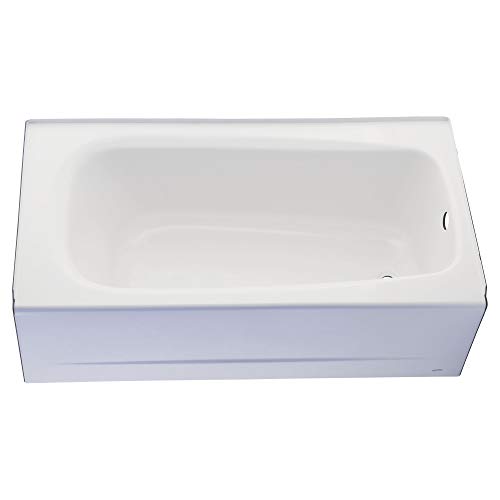
The second Cambridge mirrors the first almost point for point: Americast construction, sixty by thirty-two inches, an apron at the front, white finish. Two details separate it. The drain hands left instead of right, and the title carries a capacity of fifty to sixty gallons, the only volume figure anywhere in these six listings. That number matters more than it might appear, because capacity is the bridge between a tub’s dimensions and its running costs: it tells the household roughly how much heated water a full soak draws, and whether an aging water heater will keep up when baths and showers overlap on a winter evening.
- The title’s dimensions: 60 x 32 inches
- Material named in the title: Americast
- Front style: apron-front
- Drain position: left hand
- Capacity stated in the title: 50 to 60 gallons
- Finish color named in the title: white
Strengths
- The only listing here that states a capacity range, which helps estimate fill volume and water heating load
- Left-hand drain serves the plumbing layout its sibling cannot
- Apron-front styling and the wider thirty-two-inch body carry over from the other Cambridge
Trade-offs
- As with its sibling, the material is Americast rather than enameled steel
- The capacity is a range rather than a single figure, so it guides rather than settles fill calculations
- Soaking depth still goes unstated in the title despite the capacity figure
The front treatment is described as apron-front rather than integral apron, a wording difference between the two Cambridge listings worth noticing without over-reading. Both promise a finished front face from the factory; the phrasing simply differs, as listing titles often do across model years and sellers. What a buyer can rely on is the shared substance: a wide, apron-fronted soaking tub in a named proprietary material, configured here for left-hand drainage.
Set beside the left-drain PROFLO at the top of this guide, this Cambridge frames the category’s central trade in its purest form. The PROFLO offers the literal enameled steel shell in a thirty-inch body with no stated capacity. The Cambridge offers two more inches of width and a published capacity range in a material that is not enameled steel. Neither answer is wrong. The right one depends on whether the project’s first loyalty is to the traditional material or to the measurably roomier soak, and that is a decision only the person rebuilding the bathroom can make.
The left-drain Cambridge’s capacity range also helps size the bathing habits of a household honestly. Fifty to sixty gallons is the fill for a deep soak, not for the quick rinse most weekday baths actually are, and partial fills draw proportionally less. Households on well water or with septic considerations sometimes prefer a tub whose appetite is published, because the number lets them plan rather than discover. Combined with the left-hand drain and the apron front, that published range makes this the most fully described listing in the roundup, even though its material steps outside the category’s name.
Best for: left-drain bathrooms wanting the wider Cambridge well plus a stated capacity to plan around.
Not suited for: buyers committed to enameled steel specifically, or right-drain layouts.
Check price on Amazon — to confirm the left-hand drain and the capacity range for your heater size.
Side-by-side: the six listings at a glance
| Model | What the title states | Suits |
|---|---|---|
| PROFLO Folsom Enameled Steel Tub Left Drain | Enameled steel, 60 x 30, left-side drain | Left-drain alcove remodels |
| PROFLO Folsom Enameled Steel Tub Right Drain | Enameled steel, 60 x 30, right-side drain, white | Right-drain alcove remodels |
| PROFLO PFB14CR Folsom Steel Soaking Tub | Steel shell stated without an enamel claim, 60 x 30, right hand | Right-hand steel alcove installs on the Folsom pattern |
| Bootz Raised Base Enameled Steel Tub Right Hand | Raised base design, enameled finish, 60 x 30, right hand, white | Installations that benefit from a raised base |
| American Standard Cambridge Americast Tub Right Outlet | Americast material, 60 x 32, integral apron, right-hand outlet, white | Wider-well alcove soaks with a built-in apron |
| American Standard Cambridge Americast Tub Left Drain | Americast, apron-front, 60 x 32, left hand drain, 50-60 gal, white | Left-drain soakers who want a stated capacity |
Treat that middle column as the whole agreement between seller and buyer, since it confines itself to claims the titles genuinely make. A change of subject entirely, Best Stain Resistant Rugs, waits for readers whose remodel extends past the bathroom door.
How do you choose an enameled steel bathtub that fits your alcove?
Which side is your drain on, really?
Everything in this category flows from the drain. Before admiring finishes or widths, establish where your waste line sits relative to the alcove: face the tub as a bather approaching it, note whether the drain falls under your left or right hand, and buy that configuration. In a cosmetic remodel the answer is fixed by existing pipes. In a gut renovation there may be freedom to choose, but even then the joist layout and the run to the stack argue for keeping the drain where the floor already wants it. Three of the six listings here drain right, three drain left when the two Cambridge outlet descriptions are counted, so neither layout forces a compromise on material or width.
Does the title actually promise enamel?
Read the shell description word by word. Two listings in this roundup say enameled steel in full, one says enameled bath tub, one says steel alone, and two name Americast instead. Those are three different levels of promise. A finish-first buyer should treat the explicit enamel claims as the shortlist and everything else as a deliberate alternative, chosen for width, base design, or capacity rather than for the finish. Listings are contracts in miniature: what the title omits, the buyer cannot enforce.
Will thirty inches of width satisfy the bathers?
Thirty inches is the historic alcove standard and works well for showering, standing, and ordinary bathing. Thirty-two inches, offered by both Cambridge models, buys shoulder room that taller and broader bathers feel immediately during a reclined soak. The catch is the room itself: an alcove framed and tiled for a thirty-inch tub may not accept thirty-two without reframing. Measure the stud-to-stud opening, not the old tub’s rim, and let the framing arbitrate between the two widths.
What will the installation ask of the floor and the crew?
Steel tubs sit in the weight middle ground, light enough for two people to carry, heavy enough to demand a level, well-supported setting. A raised base design like the Bootz changes the support conversation, while apron-front and integral-apron models change the finishing conversation. Decide who is installing, confirm how the chosen model is meant to be bedded and leveled, and budget for the unglamorous parts: a new drain kit matched to the tub’s hand, shims, and a careful enamel-protection routine while tile work happens overhead.
Steel, enamel, and Americast: what the shell words really commit to
A porcelain enamel finish is glass fused to the steel shell at high temperature, which is why it feels hard and cool, resists staining, and can chip when struck by something heavy and sharp. The steel beneath gives the shell its rigidity and its relatively modest weight compared with cast iron. When a listing says enameled steel, that two-part construction is the promise. When a listing says only steel, the finish is unspecified in the title, and when a listing says Americast, the maker is naming its own engineered material, a construction American Standard has sold for decades as an alternative that aims for cast-iron-like solidity at lower weight. None of these is automatically the best choice. They are different wagers: enamel over steel bets on the traditional surface, Americast bets on the composite build, and the unspecified steel listing asks the buyer to do extra homework before betting at all.
Living with a sixty-inch alcove tub for the next twenty years
Alcove tubs are among the longest-lived objects in a house, and the ownership pattern is predictable. The tub showers far more often than it soaks, whatever the buyer’s intentions in the showroom. Its front apron collects scuffs from buckets and bath stools. Its enamel, if enamel it is, will meet dropped shower heads and the occasional wrench during faucet repairs, which is why many owners keep a soft mat in the well on plumbing days. Choosing between these six listings with that twenty-year view clarifies everything: drain side and footprint are permanent, width is felt daily, the base design is felt on installation day and in the floor’s firmness forever after, and the finish determines how the surface ages under two decades of cleaners and contact. Buy for the permanent things first.
Planning the remodel around a steel alcove tub
Sequence matters more than speed in a tub replacement. The sensible order runs: confirm the drain side, measure the alcove framing, choose the tub, order the matching drain kit in the same breath, and only then schedule demolition. Bathrooms fail their schedules when the order inverts, when tile is chosen before the tub’s width is settled, or when the drain kit becomes a weekend errand while an open alcove waits. Each of the six listings here can anchor that sequence, but only after the room’s two fixed facts, drain side and stud-to-stud width, are written down.
Budget honestly around the fixture. The tub itself is often the smallest large cost in the project; the surround, the valve, the drain assembly, the flooring patch at the apron, and the labor of setting a rigid shell level all gather around it. Steel and Americast tubs at least spare the budget one line item that cast iron imposes: structural worry about floor load rarely enters the conversation at these weights. Keeping a contingency for the surprises an opened wall always contains, a rotten stud, a drain arm corroded thinner than expected, is the difference between a project that absorbs news and one that stalls on it.
While the alcove is open, think about the bather of fifteen years from now. Grab bar blocking costs almost nothing to add inside an open wall and a great deal to retrofit later. A valve positioned where it can be reached without climbing into the well, and a handheld shower on a slide bar, both serve bathers of every age and the person cleaning the tub on Saturday. None of the six listings includes those decisions, yet the tub you choose frames all of them, which is why this guide keeps returning to the room rather than the showroom.
Finally, protect the finish you paid for during the messy weeks after installation. Tile setters, painters, and electricians will all work over the new well. A fitted piece of cardboard or a purpose-made tub protector, taped at the edges, keeps grout buckets and ladder feet off the enamel until the room is finished. The habit sounds fussy on day one and wise on the day a dropped tile is found resting harmlessly on cardboard instead of chipped into the surface of a brand-new tub.
Common mistakes
Ordering the mirror image
The single costliest error in this category is buying a left-drain tub for a right-drain bathroom or the reverse. The tub cannot be rotated, the apron would face the wall, and returns of freight-sized bathroom fixtures are miserable. Photograph your existing drain position before ordering anything.
Assuming every steel tub in the results is enameled
Search results blur material claims. As this roundup shows, one Folsom title omits the enamel claim and two Cambridge titles name a different material entirely. Read each title as written and let the words, not the search category, tell you what the shell is.
Measuring the old tub instead of the alcove
Rims overlap and aprons hide the true opening. The measurement that governs fit is stud to stud, along with the drain centerline. A thirty-two-inch Cambridge ordered into a thirty-inch framed opening turns a weekend project into a reframing job.
Ignoring capacity until the water heater complains
Only one listing here publishes a capacity range, fifty to sixty gallons, and it hints at the scale of a full soak. Households with small or aging heaters should think about fill volume before choosing the widest, deepest-feeling option.
Dropping tools into an empty enamel well
Installation and later faucet repairs put heavy metal objects over a hard, brittle surface. A folded towel or a piece of cardboard in the well during any overhead work is cheap insurance against the chip that owners then stare at for years.
Skipping the drain kit match
The drain assembly must suit the tub’s hand and overflow position. Ordering the tub alone and discovering the mismatch on installation day stalls the whole bathroom. Confirm the kit when the tub is ordered, not when the alcove is open.
Final recommendation
The honest summary of this small market is that fit decides first and material decides second. Establish the drain side, measure the alcove framing, and only then argue about shells. On material, the two Folsom listings that state enameled steel outright are the category’s center of gravity: standard width, classic construction, one for each drain side. The Bootz adds a raised base for installation-minded buyers on the right-hand side. The PFB14CR keeps the Folsom pattern while leaving its finish undescribed in the title, a homework assignment rather than a promise.
The Cambridge pair asks a different question: whether two extra inches of width, a factory-finished apron, and, on the left-drain model, a published capacity are worth stepping away from enameled steel to Americast. For comfort-led soakers with the framing to fit them, that trade can be the right one, made with open eyes. Whichever direction you go, the six listings here cover both drain sides at both widths the market offers, and the deciding measurements are already in your bathroom, waiting to be taken.
Before the order goes in, one graceful detour: Best Silk Rugs covers the softest end of the same renovation, for when the hard surfaces are settled and the floors want dressing.
Frequently asked questions
Are all six tubs in this roundup really enameled steel?
No, and the listings themselves make that clear. Two PROFLO Folsom titles state enameled steel, the Bootz title claims an enameled finish, the third PROFLO title says steel without the enamel claim, and both American Standard titles name Americast as the material. The roundup describes each shell in the words its own title uses.
How do I tell whether I need a left- or right-drain tub?
Face the alcove as you would approach the finished tub. If the drain and overflow will sit on your right, order a right-hand model; on your left, a left-hand model. In most remodels the existing plumbing has already made this decision, so match the tub to the pipes rather than planning to move them.
Is a thirty-two-inch tub always better than a thirty-inch one?
It is roomier across the shoulders during a soak, which many bathers prefer, but it only helps if the alcove framing accepts the wider body. A thirty-inch tub that fits the room beats a thirty-two-inch tub that demands reframing the wall.
Why does only one listing state a capacity?
Listing titles are written by different sellers with different habits, and most of these titles spend their words on dimensions, material, and drain side. The left-drain Cambridge includes a fifty-to-sixty-gallon range. Where a title omits capacity, this guide leaves it unstated rather than estimating it.
What does a raised base change on the Bootz tub?
The title identifies the base design as raised, which is a structural difference in how the tub body is supported and how high the well sits. The listing title does not translate that into a depth figure, so anyone comparing soaking depth should confirm the detailed specifications on the full listing.
Can these tubs serve as everyday shower bases as well?
Alcove tubs in this sixty-inch format are the standard tub-shower combination in most homes, and a rigid steel floor underfoot is one of the material’s traditional strengths for standing use. The listings frame them as soaking bathtubs for three-wall alcoves, which is the same installation that hosts a shower in daily practice.
A note on how these tubs age visually: white enamel and white Americast surfaces both start bright, and both reward prompt attention to rust-prone chips or scuffs at the drain. Owners of older steel tubs often describe the surface as the last part of the bathroom to look tired, provided abrasive powders were kept occasional rather than daily. That longevity is the quiet argument for the whole category.
Sound is a difference owners notice without expecting to. Running water striking a steel well rings more brightly than water striking cast iron or a thick acrylic shell, and a shower at six in the morning carries that ring through a quiet house. Some households never register it. Light sleepers in the bedroom adjoining the bathroom sometimes do. Enclosure doors, a shower curtain drawn during filling, and simply filling the tub before the household wakes are the usual accommodations, and they are worth knowing about before the first early bath rather than after.
Temperature behavior splits opinions in this category. A steel shell starts cold to the touch and warms as the water rises, drawing some heat from the first fill; bathers who pre-warm the well with a quick rinse of hot water from the shower head describe noticeably longer comfortable soaks. Americast’s composite backing is often chosen by people who dislike that initial chill. Neither behavior is measurable from these listing titles, so treat both as ownership folklore worth testing against your own habits: the household that showers daily and soaks monthly will weigh the chill very differently from the household built around a nightly bath.
Resale and renovation fashion form the last quiet consideration. The sixty-inch alcove tub-shower remains the configuration buyers expect in a secondary bathroom, and a sound steel or Americast unit in white rarely dates a room the way colored fixtures do. Choosing white, as most of these listings specify, and a standard footprint keeps the bathroom legible to the next owner. Exotic sizes and colors can delight the present household, but in this most standardized of categories, the standard choice is usually the durable one in every sense.
Freight is the unspoken line item in every tub purchase. A sixty-inch fixture travels by truck, arrives on a pallet or in a large carton, and should be inspected before the delivery driver leaves, because enamel chips and bent aprons are far easier to resolve at the door than after installation. Scheduling the delivery for a day when the bathroom is ready to receive the tub, rather than storing it in a damp garage for a month, protects both the finish and the schedule.
One last measurement habit separates smooth installations from fraught ones: check the floor for level before the tub arrives, not after. A steel shell set on an out-of-level subfloor rocks minutely with every step, and that movement works at seals and grout lines for years. Shimming and bedding are ordinary installer crafts, far easier to plan when the floor’s character is known a week ahead.
Storage, if the tub must wait, should be indoors, upright as shipped, and away from the traffic of other trades. Enamel’s enemy is not time but contact: a single dragged toolbox can mark a shell that would otherwise have served untouched for a generation. Keep the carton closed until the alcove is ready, and open it with the installer present, so any hidden freight damage is discovered while remedies are still simple and the schedule can still bend around a replacement.
And a last word on timing: order the tub early in the project, even before demolition if storage allows. Alcove tubs anchor the room’s dimensions, tile orders depend on the final width, and a delayed fixture idles every trade behind it. The households that finish bathrooms on schedule are rarely the ones that chose fastest; they are the ones that chose first.
Cleaning chemistry deserves a paragraph of its own. Enamel’s hardness tempts owners toward scouring powders, and occasional gentle use is the traditional practice, but daily abrasion eventually dulls any glossy surface. Most steel-tub households settle into a rhythm of a soft cloth, ordinary bathroom cleaner, and prompt rinsing, reserving anything stronger for the ring at the waterline after a long soak. The surface forgives that rhythm for decades, which is precisely why so many mid-century steel tubs remain in service while later plastic units around them have been replaced twice.
The alcove itself imposes a discipline worth respecting: three walls mean the tub is the room’s fixed geometry, and everything else, tile layout, valve placement, even the swing of the bathroom door, arranges itself around sixty inches of fixture. Designers sometimes chafe at that constraint, yet it is also what makes these bathrooms inexpensive to refresh. New tile and a new valve trim transform the room while the tub, if its shell and finish were chosen well, simply stays. That asymmetry argues for spending decision energy on the tub and saving the experimentation for surfaces that can change again cheaply.
A word about who should not buy from this list at all. Bathers dreaming of a deep, narrow soaking well in the Japanese style, or a sculptural freestanding centerpiece, will find nothing here, and should not talk themselves into an alcove tub out of category loyalty. These six listings serve the great mainstream of bathroom life: the family tub-shower, the guest bath, the rental refresh. Within that mission they are well matched. Outside it, no amount of enamel quality compensates for a shape the household never wanted.
Measure the alcove twice, trust the drain side the pipes dictate, and the right sixty inches of steel will serve quietly for decades.


