What's inside
- Where to buy these picks
- Quick Picks
- How these picks were chosen
- The picks in detail
- Side by side: capacity, functions and the job each pot does best
- How to choose the right multi-cooker for your kitchen?
- Pressure cooking, slow cooking and the space between
- Setting the cooker down: counters, cupboards and guests
- A week of dinners, mapped across the six pots
- Care, seals and the unglamorous ownership ledger
- What the function counts hide, and what to read instead
- Pressure cooking for people who are nervous about it
- A short note on lids, counters and where these machines live
- One last distinction: presets versus cooking
- Common mistakes
- Final recommendation
- Frequently asked questions
As an Amazon Associate I earn from qualifying purchases. This post may contain affiliate links at no extra cost to you.
As an Amazon Associate, cottageverdict.com earns from qualifying purchases.
Search for the best instapot multi cookers and you will notice the spelling first: plenty of shoppers type it exactly that way, and they all mean the same appliance family, the Instant Pot range of electric pressure cookers that also slow cook, steam, sauté and more. The naming quirk matters less than the real problem underneath it, which is that one countertop machine is being asked to replace a stockpot, a rice cooker, a slow cooker and sometimes an air fryer, and the listings blur together fast.
A household that cooks dried beans on Tuesday, soup on Thursday and a whole chicken on Sunday needs capacity and honest pressure performance. A couple in a small flat needs something that fits under a cabinet and does not sulk in a cupboard between uses. This guide separates those jobs. Every pick below was checked against its listing title, and only functions, sizes and materials actually named there are treated as fact; where a title stays quiet about a detail, the review says so rather than guessing.
Four of the six picks carry the Instant Pot name, and two rivals earn their place by doing something the home team does not: one cooks a main and a side in two separate pots at once, one leans hard on speed, and one stretches to sixteen functions at the largest capacity in the group. Read the per-pick sections for the trade-offs, because the right answer here depends on how many mouths you feed and how often the machine will genuinely run.
Where to buy these picks
The Dual Action opens the list because its twin pots solve the oldest multi-cooker complaint, namely that rice and curry finish in the same vessel whether you want them to or not.
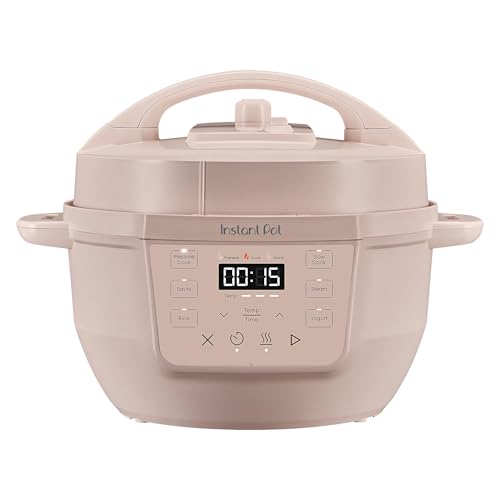
Rosewater pink and only four quarts, the Rio Mini is the small-household entry, built around rice, steaming, sautéing and yogurt rather than feeding a crowd.
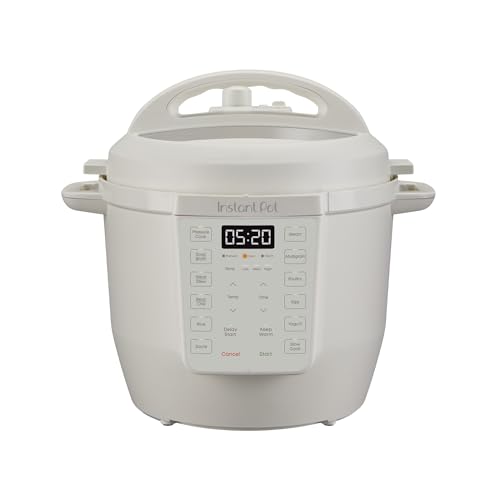
The RIO in Sea Salt is the straightforward six-quart workhorse, seven functions deep, aimed at families who want the classic routine without connected extras.
Wifi, an air-fryer lid and thirteen functions put the Duo Crisp Ultimate at the ambitious end, the one machine here that also crisps and dehydrates.
Ninja’s HyperHeat entry answers with raw pace, a serving pot that leaves the cooker for the table, and a PFAS-free cooking surface.
COMFEE closes the list with the biggest pot and the longest function list, sixteen modes across eight quarts for batch cooks and big gatherings.
Quick Picks
| Pick | Best for | What the listing title puts up front |
|---|---|---|
| Instant Pot Dual Action 8-in-1 | Households whose mains and sides always finish at different times | Separate 4 Qt and 2 Qt pots with a Serve Together Timer |
| Instant Pot Rio Mini 4 Qt Rosewater | One or two people cooking small batches most nights | 4 Qt 7-in-1 in Rosewater Pink, with yogurt and rice modes |
| Instant Pot RIO 6QT Sea Salt | Families wanting the classic six-quart routine, nothing more exotic | 6 Qt 7-in-1 covering pressure, slow cook, rice and yogurt |
| Instant Pot Duo Crisp Ultimate Wifi | One-appliance kitchens that pressure cook and crisp in the same pot | 6.5 Qt 13-in-1 with air fry, dehydrate, sous vide and wifi |
| Ninja HyperHeat PC201GY | Speed-first cooks who serve straight from the cooking pot | 9-in-1, 1200W, PFAS-free, with a removable SimpliServe pot |
| COMFEE 16-in-1 Pressure Cooker 8Qt | Batch cooking and big households that fill an eight-quart pot | 16-in-1 across 8 Quarts with a non-stick pot |
How these picks were chosen
Selection started with the function list in each listing title, because a multi-cooker earns its name only when the modes are named rather than implied. Pressure cooking had to be present in some form for most of the row, capacities had to be printed in quarts, and any claim about materials, such as a PFAS-free pot, had to appear in the title before it could be repeated here. Models that duplicated another pick in everything but colour were set aside, which is why the Dual Action appears in black rather than its alternate finish.
Capacity spread was the second filter. The row runs from four quarts to eight, deliberately, because the single most common buying error in this category is a pot sized for a household the buyer does not have. A four-quart machine that runs three nights a week beats an eight-quart machine that is too heavy to lift out of a low cupboard, so both ends of the range needed a credible representative.
The third filter was distinctiveness of job. Two picks handle sides separately or serve straight from the pot, one connects to wifi for remote control, one is a compact rice-and-yogurt specialist, and one simply offers the most functions per machine. If two listings promised the same week of cooking, only the clearer title survived.
The picks in detail

Instant Pot Dual Action 8-in-1
Most multi-cookers force a compromise nobody talks about: everything shares one pot, so the side dish either waits, reheats, or gets cooked somewhere else entirely. The Dual Action attacks that compromise directly. Its title describes separate pots of four quarts and two quarts, a layout that maps neatly onto how dinners actually happen, a main that needs time and a smaller side that needs less. The black finish is the version listed here; a paler variant exists in the catalogue but adds nothing to the cooking, so it was left out of this row.
- Functions: 8-in-1 multi-cooker
- Pot layout: Separate 4 Qt and 2 Qt pots
- Timer: Serve Together Timer
- Pot surface: PFAS-free pot
- Colour: Black
- Wattage: Not stated in the listing title
Strengths
- Two pots mean a stew and its rice cook side by side without flavour bleed
- The Serve Together Timer exists specifically to land both pots on the table at once
- PFAS-free pot is stated plainly in the title for buyers avoiding that coating family
Trade-offs
- Neither pot alone matches a full six-quart cooker for a big batch of soup
- Eight functions is the shortest list among the larger machines here
- Two vessels to wash on nights when both pots run
The Serve Together Timer is the detail that elevates the design from novelty to routine. Coordinating two pots by hand means starting the rice late by guesswork, and guesswork produces either gummy grains or a main dish cooling on the counter. A timer built for synchronised finishing removes that juggling, and for households that eat together at a set hour, that reliability is worth more than extra preset buttons. The eight-in-one spread covers the everyday ground the title claims, and the PFAS-free pot answers a question more buyers now ask before anything else. What the title does not promise is air frying, so crisp finishes still belong to another appliance. Capacity also needs honest reading: four quarts suits a family main, yet a double batch of chilli for freezing will strain it, and the two-quart side pot is for grains, vegetables and sauces rather than a second entrée for six people.
Picture a Friday night with chicken tikka in the large pot and basmati in the small one, both set to land together while a salad is assembled. That is the evening this machine was designed around, and it repeats well: pulled pork with slaw warmed separately, oats beside stewed fruit at breakfast, pasta sauce next to the pasta itself in smaller households. The cleaning ledger is the counterweight, since two pots and two lids join the washing-up whenever the full layout runs, though on single-pot nights the machine behaves like any ordinary cooker in this group.
Ownership details reward a thought before the first cook. Two pots mean two seals and two lids to keep track of, and the household that assigns them a drawer or a shelf will keep the system joyful, while the household that scatters them will spend evenings hunting the small pot’s lid. The four-quart main also changes recipe maths: most published multi-cooker recipes assume six quarts, so halving rich dishes and watching fill levels becomes a small habit. None of this diminishes the concept; it simply means the Dual Action rewards organised kitchens, the same kitchens that will exploit synchronised finishing most, since a Serve Together Timer only shines when the cook plans the meal as a pair from the start.
Best for: families who serve a main and a side at the same moment and are tired of reheating one of them.
Not suited for: batch cooks who need one uninterrupted eight-quart vessel, or anyone expecting an air-fryer lid in the box.
Check price on Amazon for the Dual Action twin-pot cooker
Instant Pot Rio Mini 4 Qt Rosewater
Small multi-cookers are often just shrunken versions of big ones, with the same compromises squeezed into less space. The Rio Mini reads differently: its title lists slow cooking, rice, steaming, sautéing, yogurt and keep-warm, a set chosen for the way one or two people actually eat across a week. Four quarts sounds modest until you translate it into two generous portions of soup with leftovers for lunch, which is precisely the arithmetic of a small household. The Rosewater pink finish is unapologetically decorative, and in a studio kitchen where the cooker lives on the counter permanently, that is a legitimate feature rather than a gimmick.
- Capacity: 4 Qt
- Functions: 7-in-1 electric pressure cooker
- Named modes: Slow cook, rice, steam, sauté, yogurt, keep warm
- Colour: Rosewater Pink
- Air fry function: None stated in the listing title
- Wattage: The title prints no wattage figure
Strengths
- Four quarts is honestly sized for singles, couples and small kitchens
- Yogurt making appears in the title, a mode budget minis often drop
- The Rosewater finish makes it the one pick here bought partly for looks
Trade-offs
- A whole chicken or a family stew will not fit its four-quart pot
- No air frying or dehydrating anywhere in its function list
- Pressure-cooking a large batch for freezing is beyond its brief
Yogurt is the mode worth pausing on. Many compact cookers quietly omit it, yet homemade yogurt is one of the strongest economic arguments for owning a small machine, turning a litre of milk into a week of breakfasts. Rice and steaming cover the weeknight bases, sautéing in the pot keeps browning and pressure cooking in a single vessel, and keep-warm forgives the late train home. The limits are equally clear in the title: nothing crisps, nothing dehydrates, and the four-quart ceiling is a hard wall rather than a suggestion. A household of four would outgrow it within a month. The title also gives no wattage, so comparisons of raw heating speed against the larger machines in this row cannot be made from the listing alone, and this review will not invent one.
Think of the Rio Mini as a weekday appliance for a flat where the kitchen is one wall of the living room. Steel-cut oats under pressure on Monday, a small dal on Wednesday, yogurt set overnight on Friday, steamed dumplings when friends visit and the pot still copes. It earns its counter space through frequency rather than spectacle. Buyers who regularly host, batch-cook for a freezer, or want one machine to pressure cook and air fry should keep reading down this list, because two later picks were chosen exactly for those households.
A word about the colour, because it will be the first thing guests say. Rosewater pink on a counter reads as a deliberate design choice in a way black never does, and in small homes where the kitchen is visible from the sofa, that deliberateness improves the room. The counter-argument is longevity of taste: a pink appliance is a commitment across kitchen redecorations, and buyers who repaint often should weigh it. Functionally the Mini’s small footprint also makes it the natural second cooker in larger homes, the rice-and-sides satellite orbiting a bigger main machine, a role its yogurt and steaming modes fill gracefully on feast days when every burner and pot is spoken for.
Best for: singles and couples who cook small, varied meals several nights a week and value a yogurt mode.
Not suited for: families of four or more, or hosts who need a pot that swallows a whole chicken with room to spare.
See the Rio Mini 4 Qt in Rosewater on Amazon
Instant Pot RIO 6QT Sea Salt
If the Rio Mini is the small end of the range, the RIO at six quarts is its centre of gravity. The title reads like a checklist of the modes families genuinely rotate: pressure cooker first, then slow cook, sauté, steam, a rice maker, yogurt and a warmer. Nothing on that list is decorative. Six quarts is the size that takes a whole chicken, a kilo of dried beans or a Sunday stew with leftovers, and it remains the capacity most recipes written for this appliance family quietly assume. The Sea Salt colourway gives it a calmer presence than the usual black and steel.
- Capacity: 6 Quarts
- Functions: 7-in-1 multi-cooker
- Named modes: Pressure cook, slow cook, sauté, steam, rice, yogurt, warmer
- Colour: Sea Salt
- Connectivity: No connectivity is claimed in the title
- Air fry function: None stated in the listing title
Strengths
- Six quarts is the family sweet spot for stews, curries and whole chickens
- Every core mode a household uses weekly is named in the title
- Sea Salt finish softens the appliance look on an open counter
Trade-offs
- No wifi, so no remote start or phone monitoring of a cook
- No air frying; crisping needs a separate lid or appliance
- Seven functions is a plain list beside the thirteen and sixteen elsewhere here
What distinguishes this pick is what it refuses to add. There is no wifi in the title, no air-fryer claim, no dehydrating; the machine concentrates on pressure and its neighbouring modes. For many kitchens that restraint is the point, because every connected feature is another account, another app and another thing to troubleshoot when dinner is already late. The trade is real, though: starting a cook from the train, or checking progress from the garden, belongs to the Duo Crisp Ultimate further down. Buyers should also note the warmer mode earns its keep in households where people eat in shifts, holding a curry at serving temperature while the second half of the family gets home. Yogurt at six quarts produces a serious batch, which suits families and frustrates nobody, since smaller quantities still work in jars inside the pot.
A typical week for this machine in a family kitchen: pressure-cooked rice for a stir-fry on Monday, a slow-cooked casserole started before school on Wednesday, steamed vegetables over the weekend, yogurt overnight. It is the pick for the buyer who read the flashier listings, felt tired, and wants the appliance that simply does the established job at the established size. Its plainness is also its risk; if there is any chance the household will want air frying within a year, the next pick folds that in now rather than forcing a second purchase later.
Long-term owners of six-quart machines tend to report the same discovery: the appliance fades into the kitchen’s furniture, used without ceremony for rice, eggs, stock and leftovers reheated under pressure. The RIO is built for that fate. Its lack of connectivity removes the slow software ageing that connected appliances suffer, since there is no app to be discontinued, and its mode list maps one-to-one onto the recipes this appliance family has accumulated over a decade of publishing. Buyers choosing between it and the flashier picks should ask which they value more in year four: a dehydrate mode used twice, or a machine whose every function still feels native. For many households the honest answer keeps the RIO at the top of their list.
Best for: families of three to five who cook the classic rotation of stews, rice and yogurt and skip connected features happily.
Not suited for: starting dinner from a phone, or expecting the same machine to roast and crisp — this title offers neither.
Check price on Amazon for the RIO 6QT in Sea Salt

Instant Pot Duo Crisp Ultimate Wifi
The Duo Crisp Ultimate is the maximalist of the group, and its title does not hide it: thirteen functions in a 6.5-quart, family-sized body, with wifi written into the name itself. Pressure cooking anchors the list, but air fry, dehydrate, roast, bake and sous vide all appear, which makes this the only pick here that can credibly claim to absorb the jobs of three separate appliances. That breadth matters most in kitchens where counter space, not money, is the binding constraint, and where every additional gadget has to evict something else.
- Capacity: 6.5 quart
- Functions: 13-in-1 pressure cooker and air fryer
- Named modes: Pressure cook, slow cook, steam, sauté, keep warm, air fry, dehydrate, roast, bake, sous vide
- Connectivity: Wifi
- Positioning: Family sized, per the listing title
- Second pot: None stated in the listing title
Strengths
- Air frying joins pressure cooking, so a stew can finish with a crisped top in one vessel
- Sous vide and dehydrate appear in the title, modes no other Instant Pot pick here lists
- Wifi control suits cooks who start dinner before leaving work
Trade-offs
- Thirteen functions means a learning curve the simpler RIO never imposes
- The air-fryer arrangement adds a lid to store between uses
- Buyers who never crisp or dehydrate pay for range they will not touch
The pressure-then-crisp sequence is the practical heart of it. A chicken can pressure cook until tender and then crisp under the fryer lid without moving to a tray or heating a full oven, and potatoes can par-cook under pressure before roasting in the same pot. Sous vide is the quiet surprise in the title, opening precise, low-temperature cooking that none of its Instant Pot siblings here offer, while dehydrate serves gardeners with gluts of fruit and herbs. Wifi divides opinion fairly: remote monitoring genuinely helps a cook who is out of the house, and it is dead weight for someone who cooks standing in the kitchen. The honest summary is that the function list is real and title-backed, but each mode beyond the core five needs a household habit to justify it, otherwise the machine becomes an expensive version of the RIO above.
Consider a keen cook in a flat with one metre of usable counter. This is the machine that lets that kitchen pressure cook beans, crisp wings, bake a small cake and dry apple slices across a single weekend without a second appliance appearing. Families who batch-cook will use the 6.5 quarts fully; a single person will find it oversized for nightly meals and should look back at the Rio Mini instead. Storage for the extra lid deserves a thought before ordering, since a lid without a home ends up living on top of the machine and gathering dust.
The wifi deserves one more angle: households with teenagers, shift workers or elderly parents often use remote monitoring less for starting dinner than for peace of mind, confirming a cook is progressing or has finished without a phone call. That reassurance is a real feature even when the cook is in the next room. The dehydrate mode, meanwhile, tends to become a seasonal ritual rather than a weekly one, herbs in autumn, citrus in winter, jerky before a hiking trip, and seasonal rituals are a legitimate reason to own a function. Judge the thirteen modes by whether two or three of the extras map onto your year’s rituals; if they do, the premium over the plain RIO buys memories, not specifications.
Best for: space-poor, gadget-rich cooks who will actually rotate through crisping, sous vide and dehydrating across a month.
Not suited for: minimalists who want five buttons and no app, or single cooks for whom 6.5 quarts is mostly empty air.
View the Duo Crisp Ultimate Wifi on Amazon

Ninja HyperHeat PC201GY
Ninja enters this row as the challenger, and the HyperHeat PC201GY makes its argument in the first line of its title: it claims to cook twice as fast. That claim belongs to the maker and is repeated here as a listing claim, not a tested result, but it signals the design priority clearly. Around it sits a nine-function spread across 6.5 quarts: sear, sauté, slow cook, steam, sous vide and yogurt among them, driven by a stated 1200 watts. The dark gray finish and the PC201GY model code mark it as a distinct machine rather than a trim level of anything else here.
- Capacity: 6.5-qt
- Functions: 9-in-1 pressure cooker
- Named modes: Sear, sauté, slow cook, steam, sous vide, yogurt
- Power: 1200W
- Pot: Removable SimpliServe pot for serving; PFAS-free
- Colour: Dark Gray
Strengths
- The listing claims cooking up to twice as fast, and speed is its headline argument
- A removable serving pot cuts the transfer-and-wash step after cooking
- Sous vide and yogurt both appear, matching the Duo Crisp on precision modes
Trade-offs
- The twice-as-fast claim is the maker’s, stated in the title, not a measured figure here
- No air-fry function is named, so crisping belongs elsewhere
- Nine functions trails the thirteen and sixteen of two rivals in this row
The SimpliServe pot is the idea that lingers after the speed claim. A removable pot that goes from cooker to table removes the ladling-into-a-serving-dish step and its washing-up, and for midweek meals eaten straight from the pot it changes the feel of the appliance from machine to cookware. PFAS-free construction is stated outright, matching the Dual Action on that front. Sous vide at this price of admission is notable, giving the Ninja a precision mode that the RIO and COMFEE listings do not name. Where it cedes ground is crisping: no air-fry function appears in the title, so the Duo Crisp Ultimate keeps that crown, and anyone whose week includes wings and roast potatoes should weigh that absence carefully rather than discovering it after the first Sunday lunch.
The household that fits this pick cooks under time pressure and eats casually: a curry seared and pressured in the same pot, carried to the table in that pot, with seconds served from it before it goes to the sink. Hosts who plate formally will not care about serving from the vessel; families who do will wonder why every cooker is not built this way. Against the Instant Pot loyalist argument, the Ninja’s case rests on pace and that serving pot, and it is a coherent case for buyers without a shelf of accessories already shaped for the other brand.
Brand switching costs deserve naming for readers arriving from the Instant Pot ecosystem. Recipes transfer freely, since pressure is pressure, but accessories do not: spare pots, lids and racks shaped for one system will not serve the other, and a household with a drawer of Instant Pot extras should price their replacement into the Ninja’s case. What the Ninja returns for that switch is a coherent alternative philosophy, pace claimed by the maker, a serving pot that behaves like cookware, and sous vide included without a second purchase. New buyers with no accessories to strand face no such toll, and for them the HyperHeat’s argument stands at full strength from the first cook.
Best for: busy family cooks who value the maker-claimed speed and serving straight from a removable, PFAS-free pot.
Not suited for: air-fry devotees, since no crisping mode is named in its title, and Instant Pot accessory owners starting over.
Check price on Amazon for the Ninja HyperHeat PC201GY

COMFEE 16-in-1 Pressure Cooker 8Qt
COMFEE closes the row by out-scaling everyone: sixteen functions and eight quarts, the biggest numbers in both columns of this guide. The title names yogurt, rice, slow cooking and steaming, then gestures at the rest with an and-more that this review will not pretend to itemise, because the listing itself does not. What is certain is the size. Eight quarts is the capacity for the cook who makes soup to freeze, chilli for a crowd, or stock from a whole carcass without splitting batches, and in this category that buyer is common enough to deserve a dedicated pick rather than a footnote.
- Capacity: 8 Quarts
- Functions: 16-in-1 electric pressure cooker
- Named modes: Yogurt, rice, slow cooking, steaming, and more per the title
- Pot: Non-stick pot
- Connectivity: None stated in the listing title
- Wattage: The title leaves wattage unprinted
Strengths
- Eight quarts is the largest capacity in this row, built for double batches
- Sixteen functions is the longest list here, covering yogurt, rice and slow cooking by name
- A non-stick pot eases the cleanup after rice and porridge
Trade-offs
- The full sixteen modes are not itemised in the title beyond the named few
- An eight-quart machine is heavy and tall for small kitchens and low cupboards
- No wifi or sous vide is claimed in its listing title
The non-stick pot deserves a balanced word. After rice, porridge and milk-based dishes, a non-stick interior genuinely shortens the soak-and-scrub cycle, and for a machine this size that is a weekly quality-of-life point. The counterweight is that non-stick surfaces ask for gentler utensils and handling than bare metal, a habit change worth naming before purchase. On functions, honesty requires a pause: sixteen is the maker’s count in the title, and only a handful are spelled out, so buyers choosing purely on the longest list should compare the named modes, yogurt, rice, slow cooking and steaming, against their actual week. Those named four already cover the core rotation. Nothing in the title claims wifi, sous vide or air frying, so this is a scale-and-breadth machine rather than a precision or crisping one.
Imagine a household of six, or a couple who cook once and eat four times. Sunday fills the COMFEE with a double batch of bean soup; portions freeze flat, weeknight dinners become reheats, and the machine sits quiet until the next big cook. That rhythm suits the eight-quart brief perfectly. The same machine in a two-person flat would spend its life a third full and dominate a cupboard, which is why this guide places it last rather than first: it is the right answer to a specific, large-scale question, not a default recommendation for everyone reading.
Storage is the final exam every eight-quart machine must sit. Measure the cupboard shelf height and the counter depth before ordering, and plan where the lid rests during serving, because a large hot lid needs a landing zone that is not your hand or the worktop’s edge. Households that solve those two logistics problems tend to love big cookers unconditionally; the freezer fills, the stock improves, the Sunday cook shortens. Households that skip the measuring tend to blame the machine for a kitchen it never fitted. The COMFEE also rewards a freezer-labelling habit, since its whole purpose is abundance, and abundance without labels becomes mystery soup by March.
Best for: large families and freezer-fillers who cook in double batches and want the longest function list attached to the biggest pot.
Not suited for: small households, low-cupboard kitchens, and anyone whose priority is sous vide or app control.
See the COMFEE 16-in-1 8Qt on Amazon
Side by side: capacity, functions and the job each pot does best
| Pick | Capacity from the title | Function count | Defining feature |
|---|---|---|---|
| Instant Pot Dual Action 8-in-1 | 4 Qt + 2 Qt separate pots | 8-in-1 | Serve Together Timer for mains and sides |
| Instant Pot Rio Mini 4 Qt Rosewater | 4 Qt | 7-in-1 | Compact size with a yogurt mode |
| Instant Pot RIO 6QT Sea Salt | 6 Quarts | 7-in-1 | The classic family rotation, unconnected |
| Instant Pot Duo Crisp Ultimate Wifi | 6.5 quart | 13-in-1 | Air fry, dehydrate and sous vide with wifi |
| Ninja HyperHeat PC201GY | 6.5-qt | 9-in-1 | Removable serving pot, PFAS-free, 1200W |
| COMFEE 16-in-1 Pressure Cooker 8Qt | 8 Quarts | 16-in-1 | Largest pot and longest function list |
Read the capacity column with your household in mind rather than your ambitions. The Dual Action’s split pots total six quarts but behave like two smaller vessels, which is either its genius or its deal-breaker depending on whether your dinners have sides. The COMFEE’s eight quarts only pay off when they are filled; a pot run half-empty all year is counter space spent on air. Function counts, meanwhile, reward scrutiny: the Duo Crisp names its thirteen modes’ highlights in its title, while the COMFEE names four of sixteen, so the honest comparison is between named modes you will use, not between two integers.
How to choose the right multi-cooker for your kitchen?
What capacity matches the household you actually feed?
Start with people, not recipes. One or two eaters live comfortably inside four quarts, and the Rio Mini exists for them. Three to five people land on six to six and a half quarts, the band where the RIO, Duo Crisp and Ninja all sit, because that volume takes a whole chicken or a family stew without crowding. Six or more people, or a deliberate freezer-filling habit, justifies the COMFEE’s eight quarts.
Then check the physical kitchen. An eight-quart cooker under a low wall cabinet may not open comfortably, and a heavy pot lifted from a low cupboard twice a week becomes a reason to stop cooking. Measure the cupboard or counter corner the machine will occupy, and be honest about whether it will live out permanently; appliances that live out get used, and appliances that get used justify their size.
Which functions will still be used in six months?
Every household has a core rotation, usually pressure cooking, rice, slow cooking and steaming, and all six picks cover most of it. The honest exercise is listing the modes you would use monthly, then matching that list against titles rather than against hope. Yogurt appears in five of the six titles here and is the most commonly underestimated mode, because it converts cheap milk into a weekly staple.
Beyond the core, each extra mode should have a named dish attached. Air frying on the Duo Crisp earns its place if wings, roast vegetables or reheated pizza happen weekly. Sous vide on the Duo Crisp and the Ninja earns its place if steaks and eggs are a ritual. Dehydrating earns its place in a gardening household. A mode without a dish is decoration, and decoration is what makes a sixteen-function list less useful than a seven-function list that fits.
Does connectivity or a serving pot change your evenings?
Wifi, offered only by the Duo Crisp Ultimate in this row, matters to a specific routine: loading the pot in the morning or starting a cook remotely so food lands as people arrive home. If your cooking happens with you standing in the kitchen, connectivity adds an account and an app without changing a single meal, and the unconnected RIO or Ninja will feel calmer to own.
The Ninja’s removable serving pot works on the opposite end of the evening, the serving and washing end. Meals eaten from the pot at the table, soups served where they cooked, and one less dish in the sink form a small daily dividend. Formal hosts will shrug at it; families eating midweek in the kitchen will not. Decide which end of the evening frustrates you more, the start or the finish, and let that answer rank these two features.
Pressure cooking, slow cooking and the space between
The two heat philosophies in every title here reward different temperaments. Pressure cooking compresses time: dried beans without an overnight soak, a stew that tastes like Sunday ready on a Tuesday. Slow cooking stretches time in the other direction, asking for morning preparation and repaying it with a house that smells ready by six. Most households discover they lean one way within a month, which is why every pick in this row offers both, letting the lean reveal itself rather than being guessed at purchase.
Steaming and sautéing are the supporting modes that quietly decide satisfaction. Sautéing in the pot before pressure cooking builds the browned base that separates a deep stew from a boiled one, and doing it in the same vessel keeps the flavour and saves a pan. Steaming handles vegetables, dumplings and fish with a gentleness pressure alone cannot, and the keep-warm modes, named on the Rio Mini and Duo Crisp titles, forgive the unpredictable evenings that real families specialise in.
If precise low-temperature cooking is the direction your kitchen is heading, the natural companion read is Best Sous Vide Cookers, which compares dedicated circulators, two of which share shelf logic with the sous vide modes named on the Duo Crisp and Ninja titles above.
Setting the cooker down: counters, cupboards and guests
A multi-cooker’s footprint follows it home. The Rio Mini disappears into a corner; the COMFEE announces itself. Before ordering, clear the intended spot and check the height with the lid open, because a cooker that cannot open under your cabinets will migrate to the hob and stay there, which helps nobody. Steam release also needs a home that is not directly under a wooden cabinet, a detail worth arranging on day one rather than after the first warped door.
These machines also change how a household hosts. A pot of curry holding warm frees the cook to sit down, and a second small cooker, the Rio Mini’s natural role in a bigger kitchen, handles rice while the main machine works. Readers planning for overnight guests on the sleeping side of the house as well as the eating side may enjoy Best Slippers for Guests, a companion guide to the disposable pairs hosts keep for visitors.
Finally, think about the rest of the home the cooker serves. A household equipping a car for the same family trips that big batch cooking supports might also browse Best Car Vacuums That Plug Into a Cigarette Lighter before the next long drive with children and crumbs.
A week of dinners, mapped across the six pots
Abstract comparisons sharpen when a real week is laid over them. Monday’s bean chilli for six belongs to the COMFEE or the RIO, with the COMFEE winning when half the batch is destined for the freezer. Tuesday’s rice-and-curry landing together belongs to the Dual Action alone. Wednesday’s small dal and yogurt for a couple is the Rio Mini’s home ground. Thursday’s chicken, crisped after pressure cooking, can only be the Duo Crisp. Friday’s curry served straight from the pot at the table is the Ninja’s signature evening. Saturday’s slow casserole, started in the morning and forgotten, is every machine’s job and therefore none of them in particular.
That mapping exposes the real buying question: which of those evenings happens most often in your house? The machine that owns your most frequent evening should win, even if another machine owns your most glamorous one. Glamour evenings happen monthly; the frequent evening is the appliance’s actual job, and buying for the monthly event while enduring the weekly mismatch is the category’s most expensive habit.
Care, seals and the unglamorous ownership ledger
Every pressure cooker in this row shares one maintenance truth: the sealing ring absorbs odours, and a ring that smells of last month’s curry will perfume this month’s rice pudding. Owning a second ring, one for savoury and one for sweet, is the oldest owner’s trick in the category and applies to all six machines equally. Lids want washing after starchy cooks, valves want checking before long ones, and the pot’s exterior wants drying before it returns to a cupboard, none of which appears in any listing title and all of which decide whether a machine still delights in year three.
Non-stick and PFAS-free surfaces divide the aftercare: the COMFEE’s non-stick pot asks for soft utensils, while the PFAS-free pots on the Dual Action and Ninja make their own material argument in their titles. None of the six listings promises dishwasher behaviour in its title, so this guide will not either; hand-washing the pot while the food rests is the rhythm most owners settle into, and it takes less time than the argument about it.
What the function counts hide, and what to read instead
Function counts are the shelf’s loudest numbers and its least informative. Sixteen modes that include four ways to make rice may serve a household worse than seven modes that map exactly onto its week. The reading habit that cuts through the inflation is to cover the count with your thumb and read only the named modes in each title, the ones the maker chose to spend words on: yogurt, rice, slow cooking and steaming on the COMFEE; air fry, dehydrate and sous vide on the Duo Crisp; the twin pots on the Dual Action. Named modes are commitments; counts are arithmetic.
Accessories and ecosystems hide in the same blind spot. A machine whose pot, lid and seals are easy to replace will outlive a marginally cleverer machine whose parts vanish from catalogues, and a brand with a decade of published recipes behind it lends its owners a library no preset menu can match. None of that fits in a title, which is why this guide’s verdicts weigh the shape of each machine’s life, not only the shape of its first week.
Pressure cooking for people who are nervous about it
Modern electric pressure cookers are not the rattling stovetop weights of memory, and every machine in this row is built around sealed, sensor-managed cooking with the lid locked while pressure exists. The habits that keep the experience calm are simple: never fill past the pot’s own guidance for foaming foods like beans and grains, let pressure release naturally when a recipe’s texture depends on it, and keep the vent’s path clear of cabinets and curtains. New owners should start with forgiving dishes, soups, braised meats, dried beans, where the machine’s advantages are obvious and its timing is kind.
Within a month, most households find the fear replaced by a different emotion: impatience with every other method. That conversion is the category’s real sales force, and it is why the sizing and function decisions in this guide matter more than brand loyalty. A first machine that fits the household gets used until the technique is second nature; a first machine that fights the household gets returned, and the technique is blamed for the mismatch.
A short note on lids, counters and where these machines live
Every machine in this row opens upward into the space beneath your wall cabinets, and that single measurement, counter to cabinet underside, has ended more multi-cooker romances than any specification. Check it with the lid’s full arc in mind, allow the steam vent its plume of clear air, and the cooker can live permanently where it works. A machine that lives out gets used on tired Tuesdays; a machine that must be fetched, unwrapped and plugged in gets used on occasions, and occasions do not repay a purchase the way Tuesdays do.
One last distinction: presets versus cooking
A preset is a guess the maker made about your dinner, and the cooks who thrive with these machines learn quickly which guesses match their kitchen and which buttons are simply decoration on their own unit. Keep a notebook, paper or phone, of the three settings your household actually repeats, and the machine’s real menu becomes that short list. Everything else, the long function counts and the rival claims, fades into what it always was: shelf talk. What remains is a pot that fits your people, your cupboards and your Tuesdays.
Common mistakes
Buying capacity for the party instead of the week
The eight-quart pot bought for one annual gathering spends fifty weeks oversized for ordinary dinners. Size for the household’s normal Tuesday, and borrow or batch in two rounds for the rare crowd.
Counting functions instead of naming dishes
A long function list impresses in the listing and fades by February. Attach a real dish to every mode before purchase; modes without dishes are weight, cost and menu screens you will scroll past forever.
Ignoring where the steam goes
Pressure cookers vent steam in a plume, and a plume aimed at a wooden cabinet or a smoke alarm creates problems no recipe mentions. Place the machine with clear air above it from the very first cook.
Expecting one pot to crisp without the right model
Only the Duo Crisp Ultimate in this row names air frying in its title. Buying a plain pressure cooker and hoping a standard lid will crisp a chicken leads to disappointment that the listings never promised to prevent.
Skipping the sauté step to save five minutes
Browning onions, spices and meat in the pot before the lid goes on is where the depth of flavour is built. Jumping straight to pressure produces food that tastes boiled, and the machine gets blamed for a shortcut the cook chose.
Letting the cooker live in a box
A multi-cooker stored in its packaging between uses will be used monthly at best. Give it a permanent counter or cupboard-front home, because frequency of use, not function count, is what repays the purchase.
Final recommendation
For most families, the Instant Pot RIO 6QT is the calm centre of this row: six quarts, the full classic rotation, no account to create. Households whose dinners always involve a side landing at the same moment should step sideways to the Dual Action and its twin pots, while the cook who wants one machine to pressure, crisp, dehydrate and take sous vide seriously belongs with the Duo Crisp Ultimate and its wifi.
Singles and couples should not let family sizing talk them out of the Rio Mini, whose yogurt mode and four quarts fit small kitchens honestly. The Ninja HyperHeat is the challenger worth choosing when serving from the pot and the maker’s speed claim appeal, and the COMFEE is the deliberate big-batch answer. Match the pot to the household you feed this month, and every one of these six will feel like the right buy.
Frequently asked questions
Is instapot the same thing as an Instant Pot?
Yes, in practice. Instapot is the common misspelling shoppers type when searching for Instant Pot multi-cookers, and listings, recipes and accessories all refer to the same appliance family. Four of the six picks in this guide carry the Instant Pot name; the Ninja and COMFEE are rival machines in the same category.
How many quarts does a family of four need?
Six to six and a half quarts is the comfortable band for four people, covering whole chickens, family stews and rice for a crowd. The RIO, Duo Crisp Ultimate and Ninja HyperHeat all sit in that band. Smaller households do better with the Rio Mini’s four quarts, and freezer-filling cooks with the COMFEE’s eight.
Can a multi-cooker replace an air fryer?
Only when the title says so. In this row, the Duo Crisp Ultimate names air frying among its thirteen functions; the other five picks do not claim it. A pressure cooker without an air-fry mode or lid cannot crisp food, whatever the product photos nearby might suggest.
What does PFAS-free mean on the Dual Action and Ninja titles?
Both listings state a PFAS-free pot, meaning the cooking surface is presented by the maker as free of that coating family. It is a listing claim repeated here as such. Buyers who prioritise it should note the COMFEE takes the opposite route with a named non-stick pot, so the row offers both philosophies.
Is sous vide possible in a multi-cooker?
Two titles here say yes: the Duo Crisp Ultimate and the Ninja HyperHeat both list sous vide among their modes. It will not match a dedicated circulator for bath size, since the pot is the bath, but for a couple of steaks or a small joint it puts precise low-temperature cooking inside an appliance you already own.
Whichever pot earns the counter, the first dried-bean stew that lands on a weeknight without a soak will quietly justify the whole search.


