Our Top Picks


What's inside
- What defines an OluKai slipper
- How to choose among the five designs
- The Moloa: one moccasin, four colors
- The Hamani Hulu: a wool mule for easy hours
- The Puku’i: fleece comfort with a leather backbone
- The Hanohano: shearling warmth, weather-ready canvas
- Check prices on Amazon
- The Ku’i: the women’s slip-on with wet grip soles
As an Amazon Associate I earn from qualifying purchases. This post may contain affiliate links at no extra cost to you.
OluKai occupies an unusual corner of the slipper market. Most house shoes are built as soft, disposable comfort: a plush upper, a thin foam sole, and a season or two of wear before the cushioning packs down. OluKai comes at the category from footwear instead. The brand builds slippers around structured footbeds, real leather and nubuck uppers, rubber outsoles borrowed from its shoe lines, and a signature collapsible heel that lets one design work as both a closed-back shoe and a slide-on mule. The result is a small, focused range rather than a wall of near-identical models, and that focus is exactly what makes choosing easier once the lineup is laid out honestly.
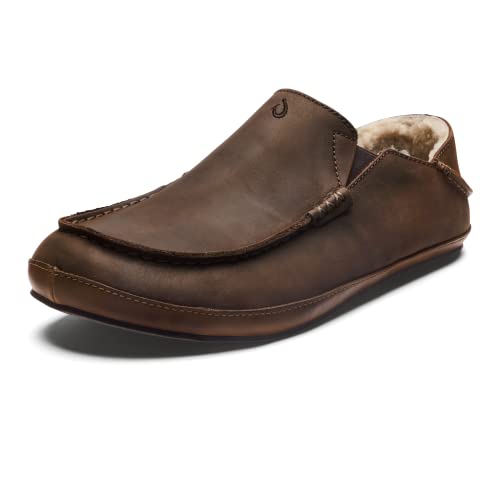
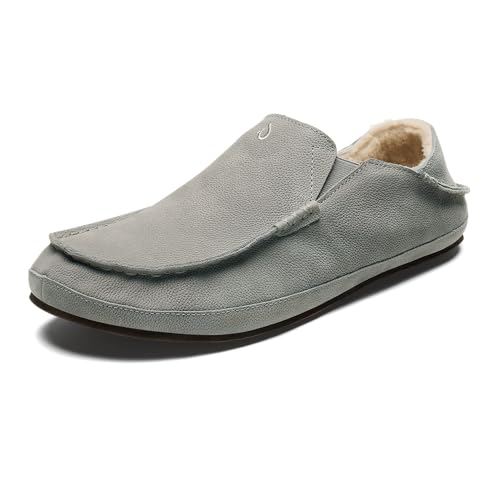
That honesty matters here, because the OluKai slipper range is smaller than a list of eight products suggests. Of the eight listings covered in this guide, four are the same slipper. The Moloa, the brand’s nubuck moccasin with a genuine shearling lining, appears in Dark Wood, Black/Dark Java, Kona Coffee, and Sharkskin. Those are color choices for one design, not four different slippers, and this guide treats them that way: one deep look at the Moloa, with the color decision handled as a color decision. The remaining listings are genuinely distinct models. The Hamani Hulu is a wool mule built with sheepskin shearling and Italian felt. The Puku’i pairs fleece comfort with full-grain leather. The Hanohano is a shearling slip-on wrapped in weather-resistant waxed canvas. And the Ku’i is the women’s entry, combining soft full-grain leather with a wool blend footbed and wet grip soles.
So the real choice is among five designs, each aimed at a different kind of wearer and a different kind of day. The Moloa suits someone who wants a warm, structured moccasin that can step outside without a shoe change. The Hamani Hulu suits someone who prefers an open-back mule and natural wool warmth. The Puku’i leans more casual and active, with jersey knit in the mix. The Hanohano is the weather-aware option, built for damp porches and quick trips out in poor conditions. The Ku’i brings the same indoor-outdoor thinking to a women’s slip-on with a softer, lighter profile. Everything that follows is organized around those differences: materials, warmth, heel design, soles, sizing, care, and the small daily habits that decide which slipper actually gets worn.
What defines an OluKai slipper
A few design ideas repeat across the range, and understanding them makes the individual models much easier to compare. The first is the Drop-In Heel, OluKai’s collapsible heel design. On the Moloa, the Puku’i, and the Hanohano, the heel panel is built to fold down so the slipper can be worn as a mule, or stand up so it wears like a proper shoe with the heel cupped and secure. It sounds like a small trick, but in daily life it changes how a slipper gets used. Half-asleep trips to the kitchen become slide-on trips. Stepping out to the mailbox, where a loose mule might slip on a wet step, becomes a heel-up trip with a more secure fit. One pair covers both habits.
The second shared idea is the footbed. Slippers are notorious for flat, unsupportive interiors, and OluKai’s listings call out a high arch footbed on the Moloa in particular. A contoured footbed matters most for people who wear slippers for hours on hard floors, where a completely flat foam base can leave arches and heels aching by evening. A shaped footbed spreads pressure more evenly and gives the slipper a shoe-like stance. It also changes the feel underfoot in a way some buyers love and others need a few days to adjust to, especially if they are used to sinking into unstructured plush.
The third idea is the outsole. Several models here use a non-marking gum rubber outsole or sole. Non-marking rubber is a practical detail for anyone with hardwood, tile, or pale flooring, because it grips without leaving dark scuffs. Gum rubber also tends to handle the transition from indoor floors to outdoor surfaces, such as patios, driveways, and garage concrete, better than a fabric or thin foam sole. The Ku’i takes the idea further with wet grip soles, which are designed for traction on damp surfaces inside and outside the home. Across the range, the message is consistent: these are slippers meant to leave the rug.
Finally, there are the materials. OluKai leans on natural, durable inputs: nubuck, full-grain leather, genuine shearling, sheepskin, wool, and felt, with waxed canvas and jersey knit appearing where a model calls for them. Natural materials cost more and ask for a little more care, but they also tend to age gracefully, resist the flattened, tired look that synthetic plush develops, and regulate temperature in ways that matter in a product worn against bare skin for hours at a time.
How to choose among the five designs
Start with warmth, because it divides the range cleanly. At the warm end sit the shearling-lined designs: the Moloa, with genuine shearling throughout its lining, and the Hanohano, a shearling slip-on built for cold floors and chilly rooms. The Hamani Hulu, with sheepskin shearling and wool felt, belongs in the same warm conversation, though its open mule back lets more air move than a closed design. The Puku’i, built around fleece, offers a softer, lighter kind of warmth. The Ku’i, with its wool blend footbed, sits at the moderate end: cozy underfoot without wrapping the whole foot in insulation. A buyer in a cold-climate house with tile floors will read that list differently from a buyer in a mild climate who mainly wants something between bare feet and a warm floor.
Next, consider the back of the slipper. Closed and collapsible heels, as on the Moloa, Puku’i, and Hanohano, give options: heel down for sliding in and out, heel up for stairs, steps, and outdoor errands. A true mule, like the Hamani Hulu, is always open, which makes it the fastest on and off and the airiest to wear, but also the easiest to shuffle in and the least secure on stairs. A clean slip-on like the Ku’i splits the difference, with a low, easy entry and a more held feel than a mule. Think about your own stairs, your own habits at the door, and whether anyone in the house tends to kick slippers off under the table and fish for them later by feel alone.
Then think about where the slippers will actually go. Purely indoor wear on carpet is gentle on any sole. Mixed wear, meaning hard floors inside plus a patio, porch, driveway, or garden path outside, rewards the gum rubber outsoles and the Ku’i’s wet grip design. Weather exposure matters too: the Hanohano’s waxed canvas upper is the only one in this group described as weather-resistant, which makes it the natural pick for damp climates and dewy morning routines. Leather and nubuck uppers handle dry outdoor trips comfortably but prefer to come back inside rather than stand around in rain.
Finally, consider upkeep and appearance. Nubuck and leather develop character and can look appropriate well beyond the bedroom, which matters for anyone who answers the door, hosts guests, or works from home on video calls. Wool and felt have a softer, more relaxed look and a wonderful hand feel, but they show lint and pet hair more readily. Fleece and jersey knit read as casual activewear. None of these is a flaw; they are simply different answers to the question of what a slipper should look like in a particular house.
The Moloa: one moccasin, four colors
The Moloa is the anchor of the OluKai slipper range and the model most buyers will consider first. Its full name in the listings describes it plainly: a men’s nubuck moccasin slipper with a genuine shearling lining, a high arch footbed, a collapsible Drop-In Heel, and a non-marking gum rubber outsole, offered in whole sizes from 7 to 16. Every one of those details earns its place. The moccasin construction wraps the foot in a single, classic silhouette with visible stitching, a shape that has survived in footwear for generations because it flexes naturally and avoids pressure points along the top of the foot. Nubuck, which is leather buffed to a soft, velvety finish, gives that silhouette a refined matte look that sits comfortably between a house shoe and a casual loafer.
Inside, the genuine shearling lining is the headline. Shearling is sheepskin with the wool left on, and it does three things synthetic plush imitates with mixed success. It insulates, trapping warm air in the wool’s natural crimp. It breathes, allowing moisture vapor to move away from the skin instead of building up into that clammy feeling fleece-lined slippers can develop by midday. And it cushions with a springy resilience that tends to last longer than foam-backed faux fur. For cold floors, draughty rooms, and anyone whose feet run cold in the evening, a shearling lining is the single most consequential material choice in this entire guide.
The high arch footbed gives the Moloa its structured stance. Where a flat slipper lets the foot roll and spread, a contoured footbed supports the arch and cups the heel, which many wearers find more comfortable across a long day of standing in the kitchen, working at a standing desk, or moving around the house. The non-marking gum rubber outsole completes the picture: grip on hard floors, no scuffs left behind, and enough substance to step onto a porch, a driveway, or a garage floor without tiptoeing. With the Drop-In Heel up, the Moloa reads as a shoe. With the heel folded down, it is a mule. That dual personality is the design’s real argument.
Now the colors, because this is where the four listings actually differ. Dark Wood is a deep, warm brown, the classic moccasin shade, and the easiest match for the way most people dress at home: denim, flannel, earth tones, and wood floors it blends with rather than contrasts against. Black/Dark Java pairs a black upper with dark brown tones, a slightly dressier, more urban combination that hides scuffs and everyday marks better than any other option and suits darker wardrobes. Kona Coffee is a rich coffee brown, warm and saturated, a good middle path for buyers who find Dark Wood too muted and black too stark. Sharkskin is the grey option, cooler and more modern in feel, pairing naturally with grey, navy, and black clothing and with contemporary interiors full of pale floors and metal finishes.
Choosing among the four is purely a matter of wardrobe, flooring, and taste. The construction, lining, footbed, heel, and outsole are the same across all four listings, so no buyer needs to worry that one color is secretly the better-built version. A practical tip: lighter and mid-tone nubuck shows water spots and wear patterns more visibly than dark shades, while black and deep brown forgive the marks of daily life. Grey sits in between. Anyone buying for a household with dogs, garden doors, and frequent trips outside may simply prefer the darkest color their wardrobe allows.
Sizing on the Moloa runs in whole sizes from 7 to 16, a wide span that covers most men’s feet, including larger sizes that many slipper brands quietly drop. Whole-size-only ranges always raise the half-size question. The general convention for slippers is that half-size wearers who prefer a snug, held fit start with the smaller whole size, while those who wear thick socks or prefer room to spread the toes start with the larger one. Shearling also compresses slightly with wear, molding to the foot, so a Moloa that feels snug across the top on day one will usually feel more personal by the end of the first week. A fit that feels loose on day one, by contrast, rarely improves.
Who is the Moloa for? It is the pick for the buyer who wants one serious slipper rather than a rotation: warm in winter, structured enough for long days on hard floors, presentable enough for guests and doorbells, and durable in concept from its leather upper to its rubber outsole. It is less suited to someone who wants the lightest possible summer house shoe, or who strongly prefers an always-open mule. For those wearers, the range offers other answers, starting with the wool mule below.
The Hamani Hulu: a wool mule for easy hours
The Hamani Hulu takes the opposite approach to entry and exit: no heel at all. It is a men’s wool mule slipper, listed in Dark Java, built with sheepskin shearling and Italian felt, and described by the brand in terms of softness, premium materials, and all-day wear. A mule is the slipper of least resistance. It waits by the bed or the door, takes half a second to step into, and asks nothing in return. For wearers who are in and out of their slippers constantly, kicking them off at a desk, slipping them on for every small errand around the house, that frictionless design is not a compromise. It is the entire point.
The materials give the Hamani Hulu its character. Wool felt has a dense, quiet softness quite different from plush fleece: it feels smooth and substantial rather than fluffy, it holds its shape, and it carries a tailored look that pairs well with a tidy home. Italian felt in particular is associated with a fine, even finish. Sheepskin shearling in the mix brings the warmth and moisture management discussed above, so the mule stays cozy without the stuffiness that synthetic linings can cause. Wool also has a natural talent for temperature regulation, feeling warm on a cold morning yet less stifling than expected when a room warms up, which suits a mule worn across a whole day rather than just at its cold edges.
Because the back is open, the Hamani Hulu breathes better than any closed design in this guide. That makes it a thoughtful choice for wearers whose feet run warm, who find fully lined closed slippers too much by mid-morning, or who simply dislike the feeling of a heel counter. The trade-offs are equally clear. A mule offers less security on stairs, less protection at the heel, and a tendency to shuffle if the fit is loose. Households with steep stairs, toddlers underfoot, or dogs that weave between ankles may prefer a heel that can be raised. For everyone else, the mule’s ease tends to win people over quickly, and many long-time mule wearers never go back.
Stylistically, the Dark Java colorway keeps the Hamani Hulu grounded and versatile: a deep brown that works with the wool’s natural, understated look and hides the dust and lint that felt inevitably meets in a lived-in home. Wool felt does attract pet hair and household fluff more visibly than smooth leather, so a lint roller or a quick brush now and then keeps it looking its best. That small chore aside, care is mostly a matter of keeping wool dry, airing the slippers out, and letting them rest between long wears so the natural fibers can release moisture and recover their loft.
The Puku’i: fleece comfort with a leather backbone
The Puku’i is the most casual and active-feeling design in the group. Its listing describes a men’s fleece slipper in Toffee, built with premium full-grain leather and jersey knit, a Drop-In Heel, and an emphasis on all-day comfort. Where the Moloa reads as a moccasin and the Hamani Hulu as a tailored mule, the Puku’i reads as comfortable activewear for the feet: softer in appearance, sportier in spirit, and aimed at wearers who move around a lot and want a slipper that feels like part of an outfit built for relaxing rather than a shoe borrowed from the wardrobe.
Full-grain leather is the quality signal in that description. Full-grain is the top layer of the hide with its natural surface intact, and it is generally regarded as the most durable and best-aging grade of leather, developing a patina instead of wearing out. Pairing it with jersey knit, the soft, stretchy fabric family familiar from t-shirts and athletic wear, gives the Puku’i a forgiving fit across the top of the foot. The knit can flex and breathe where a full leather upper would feel more structured, which suits feet that swell a little over the day or wearers who simply prefer a gentler hold.
The fleece element sets the Puku’i’s warmth profile. Fleece is light, soft against bare skin, and quick to feel warm, which makes it ideal for the morning routine and for milder cold. It generally does not regulate moisture quite the way shearling or wool does over very long wears, but for the pattern most people actually follow, slipping them on for a few hours at a time around other footwear, fleece comfort is immediate and easy. The Drop-In Heel adds the familiar flexibility: heel down while padding around, heel up for the school run door dash, the bins, or the dog’s quick trip to the garden gate.
Toffee, the listed color, is a warm mid-brown that leans casual and friendly, matching the design’s relaxed personality. The Puku’i makes the most sense for buyers who found the Moloa’s moccasin formality unnecessary and the Hamani Hulu’s open back too exposed, and who want something in between: a closed option that can still collapse into a mule, with softness up front and leather substance underneath. It is also a natural fit for travel within the home’s orbit, so to speak: weekend cabins, visiting family, and other settings where a slipper gets packed, worn on unfamiliar floors, and asked to handle a step outside now and then.
The Hanohano: shearling warmth, weather-ready canvas
The Hanohano is the outdoors-leaning entry in the men’s range. Its listing describes a shearling slip-on in black, built with a weather-resistant waxed canvas upper, a non-marking gum rubber sole, and the Drop-In Heel design, and it is positioned explicitly as an indoor-outdoor house shoe. Each element of that description points the same direction: this is the slipper for houses where the boundary between inside and outside gets crossed a dozen times a day, in all weathers, by someone who does not want to keep changing shoes.
Waxed canvas is a material with a long working history. Canvas treated with wax gains a surface that sheds light moisture, resists damp and drizzle, and shrugs off the kind of splashes and wet grass that would mark nubuck or soak through felt. It also develops a characterful, slightly rugged patina with use. For a slipper that will stand on wet porches, cross dewy lawns, and wait by a door that opens onto rain, waxed canvas is simply the most sensible upper in this lineup. The black colorway reinforces the practical streak, hiding the marks of outdoor life better than any pale shade could.
Inside, the shearling keeps the Hanohano honest as a winter slipper rather than a canvas shoe in disguise. The combination is worth pausing on: many weather-capable house shoes sacrifice interior comfort, lining a tough upper with thin synthetic material. Here the warmth story stays premium, with shearling’s insulation and moisture handling intact. The non-marking gum rubber sole then does the same job as on the Moloa, gripping hard floors without scuffing them and handling outdoor surfaces with more confidence than a soft sole. The Drop-In Heel completes the brief, worn down for indoor drifting and up when the weather or the terrain asks for a secure fit.
The Hanohano will appeal most to buyers in damp or changeable climates, to households with gardens, workshops, and woodpiles, and to anyone whose slippers effectively serve as their default footwear from breakfast to the last chore of the night. Buyers in dry climates who rarely take slippers outside may find its weather resistance more than they need, and the Moloa’s nubuck or the Hamani Hulu’s felt may suit their aesthetic better. But as a single answer to the question of what to wear on your feet around a busy home in poor weather, the Hanohano is the most purpose-built design in this guide.
Check prices on Amazon
Live listings for the shortlist in this guide are pulled from Amazon below, so prices and availability are always current at the moment you look.




The Ku’i: the women’s slip-on with wet grip soles
The Ku’i carries the OluKai approach into a women’s design, listed in Tan/Bone, and its description combines soft full-grain leather with a wool blend footbed and wet grip soles made for inside and outside wear, in a cute and comfortable slip-on shape. It deserves attention in its own right rather than as a footnote to the men’s models, because its material mix is genuinely different: instead of lining the whole interior with shearling or fleece, the Ku’i puts a wool blend at the footbed, where the foot actually meets the slipper, and keeps the rest of the profile lighter.
That choice shapes the wearing experience. A wool blend footbed brings wool’s temperature regulation and moisture management directly underfoot, cushioning the step and helping the slipper feel fresh across a day, while the overall design stays less insulated and less bulky than a fully lined winter model. For wearers who find shearling slippers too warm outside the coldest months, or who want one pair that runs from autumn through spring without overheating, that balance is attractive. The soft full-grain leather upper adds durability and a clean, versatile look, and the Tan/Bone pairing is a light, neutral combination that works with the pale, relaxed palette of many homes and wardrobes.
The wet grip soles are the Ku’i’s practical signature. Kitchen floors get splashed, bathroom tiles get damp, patios and pool decks are rarely bone dry, and a sole designed for traction on wet surfaces addresses exactly those moments. Combined with the slip-on shape, which keeps entry effortless, the Ku’i suits the rhythm of a household where someone is constantly moving between rooms and stepping briefly outside: letting the dog out, taking a coffee onto the deck, bringing in a delivery from a damp step. It is the design in this guide most clearly shaped around traction as a daily safety feature rather than an afterthought.
Buyers considering the Ku’i should think about warmth honestly. It is a comfortable, cushioned, leather slip-on with a smart footbed, not a deep-winter shearling boot of a slipper. In a cold house in January, the Moloa-style approach of full shearling lining, in whichever range a buyer shops, will feel warmer. In a moderate climate, a well-heated home, or for the long shoulder seasons, the Ku’i’s lighter balance may well be the one that gets worn most, and the best slipper is always the one that actually stays on your feet.


