Our Top Picks


What's inside
As an Amazon Associate I earn from qualifying purchases. This post may contain affiliate links at no extra cost to you.
A muddy paw print is charming in a garden and considerably less charming across a pale rug, a freshly mopped kitchen floor, or the pale upholstery of a car seat. Yet for most dog owners, mud is not an occasional event. It is a daily negotiation that happens at the back door after every wet walk, every rainy morning in the yard, and every enthusiastic dig in soft ground. The dog comes in happy, the floor takes the evidence, and someone ends up following the trail with a cloth, a mop, or a resigned sigh. A paw washer cup exists to break that sequence at the one moment when it is easiest to fix: before the dog crosses the threshold.
This guide is about one specific class of product, the dog paw cleaner cup, sometimes called a paw washer cup. It is a portable cup that you partly fill with clean water. You guide one paw at a time into the opening, and soft bristles or a brush lining inside the cup loosen mud, grit, road dust, and loose dirt from the paw, the pads, and the fur between the toes as the paw moves gently in the water. You lift the paw out, dry it, and move on to the next one. There is no hose to uncoil, no bathtub to fill, no sink to lift a heavy dog into, and no bucket sloshing across the porch. The whole job happens standing at the door, in about the time it takes the dog to wonder whether a treat might be involved.
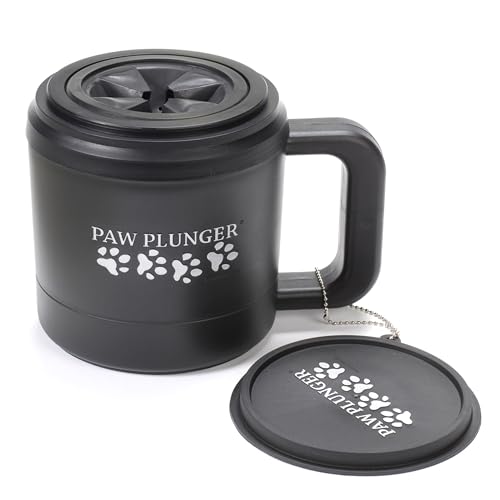
Our research for this guide focused on four distinct designs that cover the main ways these cups are built. The Dexas MudBuster is a manual cup lined with gentle silicone bristles, sold as one product line in Small, Medium, and Large sizes and in different colours. The Paw Plunger is a portable plunger-style washer, also sold as one line in Small, Medium, and Large versions matched to dog size. The Tinioey Dog Paw Cleaner Cup is a medium twist-wash cup with a removable silicone brush and three absorbent towels included. The fourth design is a rechargeable automatic paw cleaner, a powered cup with a soft silicone brush that does the rotating work for you. Between those four designs, most households will find the approach that suits their dog, their door, and their patience.
A paw washer cup is not a bath, and it is not meant to be one. It will not wash a belly splashed by puddles, clean a coat that has rolled in something memorable, or replace a proper wash when a dog is genuinely filthy. What it does, reliably and with very little fuss, is handle the most frequent and most floor-damaging part of the problem: four muddy feet at the door. Used as a habit rather than an emergency measure, it keeps the worst of the outdoors from being tracked through the house, which in turn means less mopping, fewer muddy prints worked deep into rugs, and a calmer routine for the dog, who learns quickly that the cup at the door is simply part of coming home.
How a Paw Washer Cup Actually Works
The basic method is the same across almost every cup in this category, and it is worth understanding before you compare designs, because the differences between products are mostly about how the brushing action happens. You add clean water to the cup, usually enough to cover the bristles inside without filling it so full that it spills when a paw goes in. You let the dog step toward you at the door, guide the first paw gently into the opening, and move the cup slightly up and down or twist it a little so the bristles pass over the paw from several angles. The water loosens dried mud, the bristles sweep grit out from between the toes and around the pads, and the dirt stays in the cup instead of on your floor. Then you withdraw the paw, pat it dry, and repeat for the remaining three.
The bristles are the heart of the design. In the cups covered here they are silicone, which matters for a few practical reasons. Silicone is soft and flexible, so the bristles bend around the contours of a paw instead of scraping against it, and they are gentle enough for the sensitive skin between the toes. Silicone also rinses clean easily, does not hold odours the way a fabric mitt can, and tolerates being washed, shaken, and left to dry by the door day after day. When our research compared designs, the recurring theme was that a cup succeeds or fails on whether its bristles reach into the natural grooves of the paw, because that is where grit lodges and where a quick wipe with a towel usually misses.
Technique matters more than force. The paw should move gently, not be scrubbed. A few slow passes are enough for everyday dust and light mud; heavier mud may need the water changed partway through, because once the water in the cup is thick with dirt, you are no longer rinsing the paw so much as soaking it in its own mud. Experienced owners tend to work front paws first while the dog is freshest and most cooperative, keep a towel ready under the dog to catch drips, and finish with a proper dry, since a clean but wet paw will still leave prints and can pick up fresh dust on the way across the floor. The cup does the washing, but the towel does the finishing, and skipping the drying step is the most common reason people conclude, unfairly, that a paw washer does not work.
It also helps to introduce the cup calmly. A dog that has never seen one may be suspicious of having a paw placed into a container, and forcing the issue at the end of an exciting walk rarely goes well. Let the dog sniff the empty cup first. Practise touching it to a paw without water. Pair the first few uses with praise and a small reward, keep sessions short, and stop before the dog becomes restless. Most dogs accept the routine within a few outings once they connect the cup with coming indoors, warmth, and whatever good thing happens next. Nervous dogs, very young puppies, and dogs with sore or injured paws deserve extra patience, and a paw with a cut, a cracked pad, or anything that looks irritated should be checked rather than washed by bristle and habit.
Check prices on Amazon
Live listings for the shortlist in this guide are pulled from Amazon below, so prices and availability are always current at the moment you look.


Choosing the Right Size for Your Dog’s Paws
Sizing is the single most important decision in this category, more important than colour, brand, or whether the cup is manual or powered. A cup that is too small will not admit the paw comfortably, and a dog that has to force a foot through a tight opening will dislike the process and resist it. A cup that is far too large is clumsy to handle, uses more water than the job needs, and lets a small paw rattle around without meeting the bristles properly, which means the dirt between the toes stays exactly where it was. The right size admits the paw easily, lets the bristles make contact all around it, and still feels stable in your hand.
The most useful measurement is paw width, taken while the dog is standing with weight on the foot, because a paw spreads under load and is wider standing than it is when you pick it up. Measure across the widest part of the paw, including the outer toes, with the dog standing on a hard floor. The Dexas MudBuster line states its fit ranges directly in its product names, which makes matching straightforward. The Medium MudBuster is listed for paws from 1.5 inches to 2.5 inches wide, and the Large MudBuster is listed for paws from 2.5 inches to 3.5 inches wide. The Small MudBuster is the portable size in the same line, intended for the smallest paws in the range. If your dog’s paw falls close to the boundary between two sizes, the larger size is usually the kinder choice, because comfort at the opening decides whether the dog cooperates.
Breed is a rough guide at best, and our research notes caution against choosing by breed alone. Two dogs of the same breed can have noticeably different paw widths, and a broad-pawed dog of a medium breed may need the size a slimmer large-breed dog uses. Young dogs complicate things further, since a puppy’s paws grow quickly and a cup bought for a four-month-old may be outgrown before the season changes. Households with two dogs of very different sizes sometimes keep two cups by the door rather than forcing one size to serve both, which sounds extravagant until you compare it with the cost of one dog refusing the routine entirely because the cup pinches.
The Paw Plunger line expresses its sizing differently, by the size of dog rather than by a stated paw width. Its three versions are described as ideal for small dogs, ideal for medium dogs, and ideal for large dogs respectively. That is a simpler way to choose, though it rewards a moment of honesty about your dog: go by paw size and build, not by the flattering description. A sturdy, broad dog that the family calls medium may be better served by the large version, while a fine-boned dog at the small end of medium may be happier in the smaller one. The Tinioey cup covered below is a medium cup listed for small and medium dogs, so it sits in the middle of the range rather than at either extreme. The rechargeable automatic cleaner is described as suitable for big dogs and also for cat grooming, which places it toward the larger end and makes it an interesting option for a household with more than one kind of animal.