What's inside
- Soft, chewable ice at commercial pace
- Where to buy these six nugget ice makers
- Quick picks at a glance
- How these picks were chosen
- The six commercial nugget ice makers, reviewed one by one
- Numbers in rows: output, storage and format compared
- How to choose a nugget ice maker for a restaurant or café?
- Ice quality, melt and the guest experience
- Installation day: plumbing, power and placement realities
- The economics of making ice instead of buying it
- Matching machine character to venue character
- Common mistakes when buying a commercial nugget ice maker
- Final recommendation
- Frequently asked questions
As an Amazon Associate I earn from qualifying purchases. This post may contain affiliate links at no extra cost to you.
As an Amazon Associate, cottageverdict.com earns from qualifying purchases.
Soft, chewable ice at commercial pace
Drinks live or die on their ice, and the best restaurant nugget ice makers exist because guests notice the difference between hard cubes and soft, chewable pellets before they notice almost anything else on the table. Every machine in this guide is a commercial-class nugget maker, producing between 70 and 100 pounds of pellet ice per day according to its listing, with one established undercounter name rated at 79 pounds a day. That output band defines the word “restaurant” throughout this page: not a badge, not a certification, simply a class of production and installation — undercounter or freestanding machines built to keep a bin full through a lunch rush, an office afternoon or a café’s iced-drink peak.
Nugget ice earns its following honestly. The pellets are compressed flakes, soft enough to chew, quick to chill a drink, and gentle in a glass. Producing them at scale, though, is a different discipline from freezing trays: a restaurant nugget machine needs a water supply, drainage thinking, ventilation room and a cleaning routine, and the listings here reflect that reality with self-cleaning cycles, timers, water filters and dual water inlets among their stated features. Storage matters as much as production — a bin holding 15 pounds behaves very differently from one holding 36 — because ice made at midnight must still be usable, dry and separate at noon.
One caution frames everything below. Local health and plumbing rules vary, and no listing title in this group should be read as a promise that a particular installation satisfies a particular inspector. Buyers fitting a machine into a licensed premises should confirm requirements with their local authority and installer directly; what this guide can do is compare the machines strictly on the figures and features their own listings state — daily output, bin size, installation style, cleaning features and voltage where printed.
Where to buy these six nugget ice makers
Each pick below links to its own Amazon listing, where the full specification and current configuration can be checked before ordering. The COSTWAY Commercial Nugget Ice Maker leads on storage-plus-output balance, pairing 90 lbs per day with a 15 lbs bin and a 23-hour timer. An unbranded commercial model follows with the joint-highest output here, 100 lbs a day, a 25 lbs bin and dual water inlets. The 70 Lbs commercial machine is the entry point of the group, with a 16 lbs bin in stainless steel. Hothope’s 100 Lbs unit stands apart as a countertop design that also dispenses water. EUHOMY’s 80 Lbs under-counter model adds a water filter to its stated features. Scotsman closes the list with the UN0815A, a 15-inch air-cooled undercounter machine carrying the largest bin here at 36 lb.
Quick picks at a glance
| Pick | Best for | Standout from the listing |
|---|---|---|
| COSTWAY Commercial Nugget Ice Maker 90 Lbs | Offices, kitchens and cafés wanting a timer | 90 lbs/24H, 15 lbs bin, 23H timer, self-cleaning |
| Commercial Nugget Ice Maker 100 Lbs Dual Inlet | High output with the biggest standard bin | 100 lbs/24H, 25 lbs capacity, dual water inlet |
| Commercial Nugget Ice Maker 70 Lbs 16 Lbs Bin | Smaller venues stepping into nugget ice | 70 lbs/24H, 16 lbs bin, stainless steel |
| Hothope Commercial Nugget Ice Maker 100 Lbs | Countertop service with water dispensing | 100 lbs/24H, 3-in-1 ice and water dispenser |
| EUHOMY Nugget Ice Maker 80 Lbs Under Counter | Under-counter installs wanting filtration | 80 lbs/24H, 15 lbs bin, water filter included in title |
| Scotsman UN0815A Nugget Undercounter Ice Maker | Established undercounter format, largest bin | 79 lbs/day, 36 lb storage, 15-inch air-cooled |
How these picks were chosen
Daily production set the entry bar: nothing under 70 lbs per day was considered, because below that line a machine serves a home bar rather than a service environment. Storage capacity was weighed alongside output rather than after it, since a fast machine with a thimble of a bin forces staff to harvest constantly, while a slower machine with a deep bin can bank ice overnight for the morning rush. Installation style formed the third filter — undercounter and freestanding designs dominate this group, with the Hothope countertop unit included deliberately as the exception for venues without a cabinet bay to give up.
Stated convenience features separated near-equals. Self-cleaning appears in most of these titles and matters enormously in machines that move this much water; a timer, dual inlets and a water filter each solve a specific operational headache, and each is credited only where the listing actually names it. Branding was treated neutrally: the Scotsman name carries a long history in commercial ice, but it earns its place here on printed figures — 79 lbs a day, 36 lb of storage, a 15-inch air-cooled format — not on reputation. Voltage is printed only in the Scotsman title at 115v, and the other spec boxes say so plainly where the figure is absent. Readers planning a broader equipment refresh may also find the Best Portable Espresso Machines guide useful, since cafés rarely buy ice and coffee equipment in isolation.
The six commercial nugget ice makers, reviewed one by one
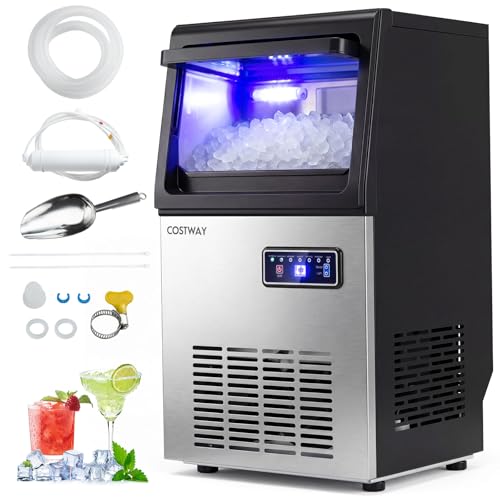
COSTWAY Commercial Nugget Ice Maker 90 Lbs
COSTWAY’s entry pairs a 90 lbs daily output with a 15 lbs storage bin, wraps both in stainless steel, and adds two features that shape daily operation more than raw production does: a self-cleaning cycle and a 23-hour timer. The listing positions the machine as an under-counter soft sonic ice maker for office kitchens and cafés, and that positioning rings true to the spec balance — enough production for a busy drinks station, a bin sized for hours rather than days, and a timer that lets the machine work overnight so the bin greets the morning shift already full. Pellet ice from a machine in this class comes out chewable and drink-ready, the texture that turns an ordinary soda into the reason guests ask where the ice came from.
- Production: 90 lbs per 24 hours, per the listing
- Storage: 15 lbs bin
- Cleaning: self-cleaning named in the title
- Timer: 23-hour timer stated
- Installation: under counter, stainless steel body
- Voltage: not given in the listing title
Strengths
- Timer lets production run ahead of opening hours
- Self-cleaning cycle reduces the maintenance burden
- Stainless finish suits visible under-counter positions
Trade-offs
- 15 lbs bin is mid-sized for a 90 lbs daily output
- Voltage is not printed in the listing title
- No water filter is mentioned in the title
Operational rhythm is where this machine makes its argument. A café that burns through iced drinks between ten and two can set production overnight, open with a full bin, and let the machine recover during the afternoon lull. Offices feel the benefit differently: a steady, quiet stockpile for meetings and lunches without anyone assigned to ice duty. The mismatch to respect is the bin-to-output ratio — at full tilt the machine can produce far more than the bin holds, so peak days need someone scooping into service regularly rather than treating storage as a warehouse. Judged as a balanced, timer-led all-rounder for office kitchens and cafés, the COSTWAY sets the tone for the whole group.
Consider the morning choreography in a café running this machine. Staff arrive to a bin already filled by the timer’s overnight work, the first iced lattes leave within minutes of the door opening, and production continues quietly beneath the counter while the room fills. That head start is worth more than a few extra pounds of theoretical output, because the first hour of service is when a drinks station either glides or stumbles. The stainless front also survives the visual test in open-plan spaces where the machine sits in guests’ sightlines, wiping clean between rushes without showing every splash.
Maintenance expectations should be set early. The self-cleaning cycle named in the title handles the internal routine at the press of a sequence, yet the bin still deserves a scheduled empty-and-wipe, and the scoop should live outside the ice, clipped or holstered, rather than buried in the pellets. Water supply planning matters as well: a machine producing 90 lbs of ice a day drinks a corresponding amount of water, plus whatever the cleaning cycle uses, so the feed line and drain deserve the same forethought as the electrical socket. None of these demands is unusual for commercial ice; they are simply the terms on which the COSTWAY’s convenience operates.
Best for: office kitchens and cafés wanting 90 lbs a day with a 23-hour timer. Not suited for: venues needing storage above 15 lbs between harvests — the bin caps at that figure.
Check price on Amazon for the COSTWAY listing and its full dimensions.

Commercial Nugget Ice Maker 100 Lbs Dual Inlet
The joint-highest production figure in this guide belongs to this unbranded commercial machine: 100 lbs of nugget ice per 24 hours, backed by a 25 lbs storage capacity — the largest bin among the standard-format picks — and a dual water inlet arrangement. The listing describes a self-cleaning, freestanding sonic pellet ice maker suited to home bars, restaurants and offices, and the dual inlet is its distinguishing engineering note, offering flexibility in how water reaches the machine where a single feed is awkward. Freestanding installation widens placement options for venues whose cabinetry is already committed.
- Production: 100 lbs per 24 hours, per the listing
- Storage: 25 lbs capacity
- Water supply: dual water inlet stated in the title
- Cleaning: self-cleaning named
- Installation: freestanding, under counter capable per the title
- Brand: no brand name appears in the listing title
Strengths
- Top-tier output matched with a generous 25 lbs bin
- Dual water inlet eases tricky plumbing layouts
- Freestanding format avoids cabinet modifications
Trade-offs
- No brand name in the title complicates parts research
- Voltage and dimensions require the full product page
- Water filter is not mentioned in the listing title
Volume venues will read this spec sheet with interest. A restaurant bar filling hundreds of glasses across a dinner service cares about two numbers above all — how much ice arrives per day and how much can wait in reserve — and this machine posts the strongest pairing of both in the group. The absence of a brand name in the title is a real consideration rather than a fatal one: support, spares and documentation should be investigated on the product page before committing, because a commercial machine is a years-long relationship, not a season’s purchase. For a home bar with genuine entertaining ambitions, the same figures translate into never rationing ice again, at the cost of giving a freestanding unit permanent floor space.
Throughput venues think in peaks, and the dual-inlet machine is specced for exactly that mindset. A 25 lbs reserve absorbs the first surge of a dinner service while production runs flat out behind it, and the day’s 100 lbs ceiling covers the long tail of a busy bar without rationing. The dual water inlet earns its keep during installation week rather than during service: premises where the obvious feed point is awkward, distant or shared gain a second route for water to reach the machine, and installers generally prefer options to improvisations.
Due diligence is the honest price of an unbranded listing. Before ordering, a careful buyer reads the product page for warranty terms, spare-parts availability, dimensions and the drain arrangement, and keeps screenshots of the stated figures. That homework is not a mark against the machine — its printed output and storage lead this group — but commercial equipment is bought for years, and the paper trail matters when a pump or sensor eventually needs replacing. Venues with an in-house maintenance habit will find that diligence easy; venues that rely entirely on manufacturer support may weigh the branded alternatives more heavily.
Best for: restaurants and busy bars needing 100 lbs a day and a 25 lbs reserve. Not suited for: tight under-counter bays — the design is freestanding first.
Check price on Amazon to review this 100 lbs machine’s full specification.

Commercial Nugget Ice Maker 70 Lbs 16 Lbs Bin
Entry point of the group does not mean token effort: this stainless steel machine produces 70 lbs of chewable pellet ice per day and stores 16 lbs of it, with self-cleaning on the stated feature list and a freestanding undercounter format. The listing addresses homes, bars and kitchens together, which matches the output honestly — a small café, a cocktail bar with modest covers, or a serious home entertaining setup all sit within 70 lbs a day, provided peak demand is spread rather than concentrated into one brutal hour.
- Production: 70 lbs per 24 hours, per the listing
- Storage: 16 lbs bin
- Body: stainless steel
- Cleaning: self-cleaning named in the title
- Installation: freestanding or undercounter
- Timer: not stated in the listing title
Strengths
- Lowest output here still sits firmly in commercial class
- 16 lbs bin slightly out-stores the COSTWAY’s
- Stainless build suits front-of-house visibility
Trade-offs
- Peak-hour demand can outrun 70 lbs a day
- No timer is named in the listing title
- Brand name does not appear in the title
Small venues stepping up from bagged ice will feel the change most. Buying bags is a recurring errand with recurring cost and a freezer full of compromise; a machine like this converts ice into a utility, produced on site and scooped on demand. The planning question is honest arithmetic: count the drinks served on the busiest day, estimate ice per drink, and see whether 70 lbs clears the total with room to spare. If the sum lands close to the line, the wiser move is stepping up to a 90 or 100 lbs model rather than hoping the rush forgives. As a first commercial nugget machine for a compact bar or kitchen, though, the balance of output, bin and self-cleaning is coherent and easy to defend. Venues furnishing beyond the bar can browse the Best Food Processors with Glass Bowls guide for the prep side of the same kitchen.
There is a particular pleasure in a machine sized exactly to its job, and small bars discover it quickly with a 70 lbs unit. The bin fills overnight, service draws it down through the evening, and the machine recovers by morning without ever dominating the room’s power or plumbing. Cocktail programmes built on crushed and pellet ice — the drinks where texture is half the recipe — benefit most, because fresh nuggets on site beat bagged ice that has fused in a freezer and must be attacked with a mallet before service.
Growth is the question to ask honestly before choosing this size. A bar planning to add seats, extend hours or launch an iced-drink menu next season may outgrow 70 lbs within the year, and stepping up now is cheaper than replacing later. A stable, intimate venue with predictable covers faces no such pressure and can enjoy the smaller machine’s proportionate footprint. The self-cleaning feature in the title keeps the ownership routine light, and the stainless body presents well if the machine ends up visible to guests. Sized with clear eyes, this is the group’s most economical route into genuine commercial nugget ice.
Best for: small bars and cafés stepping up to 70 lbs a day with a 16 lbs bin. Not suited for: high-volume service where daily demand passes 70 lbs.
Check price on Amazon for this 70 lbs model’s listing details.
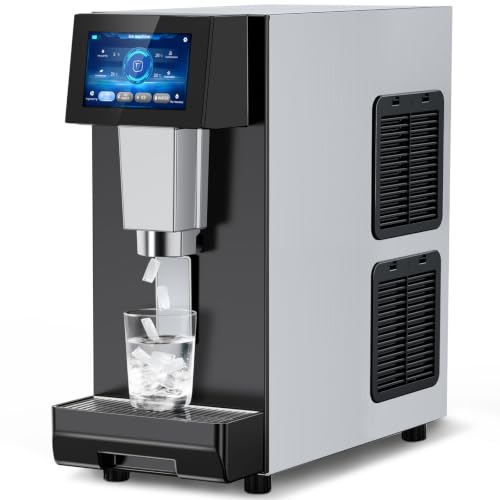
Hothope Commercial Nugget Ice Maker 100 Lbs
Hothope breaks the group’s pattern in the most interesting way: 100 lbs of pellet chewable ice per day from a countertop stainless steel machine that also dispenses water, billed in its listing as a 3-in-1 unit with self-cleaning, aimed at businesses, offices and parties. Countertop placement removes the cabinet question entirely — no bay to measure, no door clearance to negotiate — and the combined ice-and-water dispensing turns one appliance into a self-service station. For offices and break rooms, that combination is the entire argument: staff help themselves to chilled water and chewable ice from a single footprint on the counter.
- Production: 100 lbs per 24 hours, per the listing
- Format: countertop, stainless steel
- Dispensing: ice and water dispenser, 3-in-1 per the title
- Cleaning: self-cleaning named
- Bin capacity: not printed in the listing title
- Installation: countertop placement, no cabinet bay required
Strengths
- Only countertop design in this group
- Water dispensing adds a second station function
- Full 100 lbs daily output matches the largest freestanding pick
Trade-offs
- Counter space is consumed permanently
- Bin capacity goes unstated in the listing title
- Countertop height may crowd low wall cabinets
Party and event use sharpens the appeal further. A machine that lives on the counter can be carried to where service happens — a function room, a pop-up bar, a busy reception desk — in a way plumbed undercounter units cannot follow. The unstated bin figure is the detail to chase on the product page, since dispensing machines sometimes store less than they make, and a host planning a long event needs to know the reserve. Self-cleaning keeps the between-events routine simple. For a business that wants nugget ice without renovation, the Hothope is less a compromise than a different, legitimate architecture.
Break rooms reveal the Hothope’s logic fastest. Staff drift in across the day rather than in a service rush, each visit small — a bottle filled, a glass of pellets for chewing, a chilled can given company — and a countertop dispenser serves that pattern without anyone playing bartender. The water dispensing side quietly replaces the separate cooler conversation, consolidating two appliances’ worth of function into one counter position. For small businesses counting sockets and surfaces, that consolidation is a genuine operational saving rather than a gimmick.
Events stretch the format in a different direction. A machine that sits on a counter can be repositioned for a wedding bar, a conference break or a showroom launch, then return to its weekday post afterwards — mobility no plumbed-in rival in this guide can match. Hosts should still confirm the bin capacity on the product page and plan a harvest rhythm for long events, moving surplus ice to a cooler so production never stalls against a full bin. The 3-in-1 wording in the title bundles ice making, storage and dispensing into that portable proposition, and for venues whose calendar mixes quiet weeks with sudden crowds, the flexibility may outweigh the counter space it rents.
Best for: offices and event spaces wanting countertop ice plus water dispensing at 100 lbs a day. Not suited for: counters with low overhead cabinets — the unit sits on top, not beneath.
Check price on Amazon to see the Hothope dispenser’s full listing.

EUHOMY Nugget Ice Maker 80 Lbs Under Counter
EUHOMY’s under-counter machine produces 80 lbs of pebble ice per day into a 15 lbs bin, in stainless steel, and distinguishes itself with a water filter named in the listing — the only pick here whose title claims filtration. Water quality is the invisible ingredient in ice: scale shortens machine life and off-flavours travel straight into the glass, so a filter in the stated spec speaks to longevity as much as taste. The listing addresses homes, bars, cafés and restaurants, and the soft sonic ice wording matches the chewable pellet format running through this entire guide.
- Production: 80 lbs per 24 hours, per the listing
- Storage: 15 lbs bin
- Filtration: water filter named in the title
- Body: stainless steel
- Installation: under counter
- Self-cleaning: not mentioned in the listing title
Strengths
- Water filter stated, supporting ice clarity and machine care
- Balanced 80 lbs output for mid-sized service
- Under-counter format keeps counters clear
Trade-offs
- Self-cleaning is not claimed in the listing title
- Bin matches the group’s smaller 15 lbs class
- Timer features are not named in the title
Hard-water districts will appreciate the filtration point most, because nugget mechanisms — which shave and compress ice continuously — are exactly the machines that suffer when scale builds on working surfaces. A café pulling hundreds of iced coffees a week gets a double return: cleaner-tasting ice and a machine whose internals stay closer to their as-new condition. The trade-offs sit in convenience rather than capability; without a stated self-cleaning cycle in the title, buyers should check the product page for the cleaning routine and budget the manual effort if it is hands-on. In the middle of the output range, the EUHOMY is the considered choice for venues that think about water before they think about ice.
Filtration deserves a longer look than a single spec line, because ice is mostly water and water is mostly local. In districts where the tap supply runs hard or carries a noticeable taste, unfiltered ice quietly flavours every drink it touches and deposits scale on the surfaces that make it. The EUHOMY’s stated water filter intervenes at the source: drinks taste of their ingredients, and the machine’s internals face a gentler working life. Filter replacement becomes a calendar item rather than an emergency, which suits cafés that already run on maintenance schedules for grinders and machines.
The rest of the package is deliberately mid-pack, and that is a compliment in commercial equipment. Eighty pounds a day covers the broad middle of café and bar demand, the 15 lbs bin matches the group’s standard reserve, and the under-counter format preserves the counter for the theatre of drink-making. What the title leaves open — self-cleaning, timer behaviour — should be confirmed on the product page so the cleaning rota can be written accurately from day one. For a venue whose water is its weakest ingredient, this machine addresses the actual problem rather than the loudest one.
Best for: cafés and bars in hard-water areas wanting an 80 lbs under-counter machine with filtration. Not suited for: storage-heavy service — the bin holds 15 lbs.
Check price on Amazon for the EUHOMY listing and filter details.

Scotsman UN0815A Nugget Undercounter Ice Maker
The Scotsman UN0815A-1 is the specialist’s entry: a 15-inch, air-cooled nugget undercounter machine producing 79 lbs per day with a 36 lb storage capacity — by far the deepest bin in this guide — running on 115v. Where rivals chase headline output, this spec sheet chases reserve: more than double the storage of the 15 lbs class means ice banked overnight carries a venue deep into service before production must keep pace in real time. The 15-inch width suits compact undercounter bays, and air cooling avoids the additional water demands of water-cooled designs. The letters NSF appear at the end of the listing title; buyers should still verify any certification and local health-code requirements for their own premises directly, since compliance depends on the installation and jurisdiction, not on a product page.
- Production: 79 lbs per day, per the listing
- Storage: 36 lb capacity, the largest here
- Width: 15-inch undercounter format
- Cooling: air-cooled
- Power: 115v stated in the title
- Model: UN0815A-1
Strengths
- 36 lb bin dwarfs every rival’s storage in this guide
- Narrow 15-inch format fits compact cabinet bays
- Voltage is printed plainly in the title
Trade-offs
- 79 lbs a day trails the 100 lbs machines on output
- Self-cleaning is not named in the listing title
- Air-cooled units need ventilation clearance around the bay
Service patterns decide whether this trade delights. A bar with a sharp evening peak and a quiet afternoon can bank ice all day in that deep bin and spend the peak scooping rather than waiting, which is precisely the rhythm undercounter Scotsman machines have served for years. A venue with flat, all-day demand at high volume would instead feel the lower production ceiling and should look at the 100 lbs picks. Fit-out planners furnishing the rooms around the bar — including soft furnishings covered in the Best Micro Bath Mats guide for washroom spaces — will recognise the same principle at work: match the specification to the pattern of use, not to the biggest number on the page.
Storage-led design changes staff behaviour in ways output-led machines cannot. With 36 lb banked, the team stops rationing scoops during the first hour of the peak, ice buckets for tables get filled generously, and the machine’s production can be understood as a background refill rather than a lifeline. That calm is the real product here. The 15-inch width also solves a common fit-out problem: older premises and compact bar builds often have a narrow bay that standard-width machines refuse, and a purpose-built 15-inch undercounter unit turns that awkward gap into the ice station.
Air cooling carries one planning duty — the bay must let the machine breathe. Warm air expelled into a sealed cabinet shortens tempers and components alike, so vents and clearances belong in the joinery conversation from the start. The 115v figure printed in the title simplifies the electrical side of that same conversation, sparing the guesswork several rivals in this guide impose. Buyers should still verify certification and local requirements for their own premises directly, as with every pick here. On printed evidence — reserve, width, cooling, voltage — the Scotsman is the engineer’s choice in this line-up, built for venues whose rush arrives all at once.
Best for: undercounter bays 15 inches wide needing a 36 lb reserve at 79 lbs a day. Not suited for: sustained demand above 79 lbs daily — output, not storage, is the ceiling.
Check price on Amazon to confirm the UN0815A-1 specification.
Numbers in rows: output, storage and format compared
| Model | Output per day | Storage | Format | Notable stated feature |
|---|---|---|---|---|
| COSTWAY 90 Lbs | 90 lbs | 15 lbs | Under counter | 23H timer, self-cleaning |
| Commercial 100 Lbs Dual Inlet | 100 lbs | 25 lbs | Freestanding | Dual water inlet |
| Commercial 70 Lbs | 70 lbs | 16 lbs | Freestanding / undercounter | Self-cleaning |
| Hothope 100 Lbs | 100 lbs | Not stated in title | Countertop | Ice and water dispenser |
| EUHOMY 80 Lbs | 80 lbs | 15 lbs | Under counter | Water filter |
| Scotsman UN0815A | 79 lbs | 36 lb | 15-inch undercounter | Air-cooled, 115v |
Two philosophies stare out of this table. Output-led machines — the pair rated at 100 lbs — assume service keeps pace with production, scooping steadily through the day. Storage-led design, embodied by the Scotsman, assumes demand arrives in waves and banks ice against the surge. Neither philosophy is wrong; each matches a different service pattern, and misreading a venue’s pattern is the expensive mistake this table exists to prevent.
How to choose a nugget ice maker for a restaurant or café?
How much ice does a service day actually consume?
Estimate honestly before admiring any spec sheet. Count drinks served on the busiest recent day, allow roughly a generous handful of nugget ice per glass — more for blended or large-format drinks — and add a margin for staff drinks, ice buckets and melt. A total near 60 lbs points at the 70 lbs machine with little headroom; a total near 90 argues for the 100 lbs class or for the Scotsman’s deep-bin banking strategy. Seasonal swing matters too: a café whose iced drinks triple in summer should size for August, not for February, because a machine cannot be persuaded to hurry in a heatwave.
Undercounter, freestanding or countertop — which installation fits the room?
Cabinet bays decide the undercounter question: measure width, depth and door swing, and remember that air-cooled machines breathe through their surroundings, so ventilation clearance is part of the fit, not an afterthought. Freestanding units trade floor space for freedom from carpentry. Countertop placement, the Hothope route, suits rented premises and offices where modifying cabinetry is impossible or pointless. Water supply and drainage reach every format equally — all six machines need water in and meltwater out — so the location of existing plumbing often settles the format debate before aesthetics get a vote.
What should be checked about water, cleaning and local rules?
Water quality shapes both flavour and machine health, which is why the EUHOMY’s stated filter and the dual inlet on the 100 lbs machine deserve attention during planning. Cleaning routines deserve equal respect: self-cleaning cycles named in several titles reduce, but never abolish, the need for periodic manual attention to bins and scoops. On compliance, the only safe procedure is direct verification — local health and plumbing requirements differ by jurisdiction, and buyers should confirm them with the relevant authority and a qualified installer rather than assuming any product listing settles the question.
Ice quality, melt and the guest experience
Nugget ice melts faster than hard cubes, and in the right context that is a feature: drinks chill quickly, flavours dilute gently, and the pellets left in the glass remain chewable rather than hazardous. Soft drinks, iced teas and cold brews all suit the format; cocktails built around slow dilution are the exception where a venue might keep cubes alongside. Bin discipline preserves quality — ice should be scooped with a dedicated scoop stored outside the bin, the oldest ice used first, and the bin emptied and cleaned on a schedule rather than topped up forever. A machine’s self-cleaning cycle handles its internals; the bin’s hygiene remains a human routine, and guests can taste the difference when that routine slips.
Installation day: plumbing, power and placement realities
Delivery day rewards venues that measured twice. Undercounter machines need a bay that matches their width and depth with room for connections behind, plus a route for the drain that falls gently rather than climbing. Freestanding units need a level floor spot within reach of water and drainage, positioned so the bin door or lid opens without fighting a corridor. The countertop Hothope trades those questions for simpler ones: a sturdy surface, a nearby socket, and headroom beneath wall cabinets. Every format shares the water conversation — feed pressure, shut-off access, and filtration where the supply demands it — and installers consistently report that an hour spent on these details before the machine arrives saves a day of improvisation afterwards.
Power deserves the same plain treatment. Only the Scotsman prints its voltage in the title, at 115v; the remaining listings leave electrical specifics to their product pages, and a venue’s electrician should confirm circuit capacity before any machine is ordered, particularly where several appliances share a run. Heat is the forgotten output of ice making: a machine working hard through a summer service warms its immediate surroundings, and air-cooled models in enclosed bays feel that feedback loop first. Ventilation slots in cabinetry, honest clearances and a door that is not sealed airtight keep the machine’s environment closer to the conditions its output figures assume.
Commissioning habits set the tone for the machine’s whole life. The first batches of ice from any new installation should be discarded, lines flushed as the maker directs, and the bin cleaned before it enters service. Staff training belongs in the same week: who scoops, where the scoop lives, how the self-cleaning cycle is started on the models that offer one, and what the warning signs of scale or slow production look like. A laminated card near the machine, written for the actual venue rather than copied from a manual, turns those habits into routine — and routine, more than any single feature, is what keeps ice quality steady across staff changes and seasons.
The economics of making ice instead of buying it
Bagged ice looks cheap per bag and behaves expensively per month: repeated purchases, delivery or collection time, freezer space surrendered to storage, and the quiet waste of half-melted bags discarded after events. A commercial nugget machine converts that drip of spending into a single equipment decision plus water, power and maintenance. The break-even point varies with local bag prices and drink volume, yet venues serving iced drinks daily usually find the arithmetic persuasive within a surprisingly short horizon — and that is before counting the quality difference guests can taste between fresh pellets and bagged ice that has fused, melted and refrozen on its journey.
Reliability carries economic weight too. A machine with a reserve bin — the Scotsman’s 36 lb being the extreme example here — absorbs a busy night even if production hiccups, while output-led machines absorb a broken bag supply chain entirely by making the product on site. Maintenance spending should be budgeted honestly: filters where fitted, cleaning supplies, and an eventual service visit. Venues that treat those costs as part of the ice programme, rather than surprises, report the highest satisfaction with commercial machines, because the comparison that matters is not machine versus nothing — it is machine versus the endless, escalating errand of bought ice.
Matching machine character to venue character
Venues develop personalities, and ice machines succeed when they fit the personality rather than fighting it. A meticulous café with a maintenance calendar and a love of systems will extract full value from filtration and self-cleaning features, scheduling them alongside grinder care. A high-energy bar with a young team and a brutal Friday peak needs reserve and forgiveness — deep bins, simple controls, production that recovers overnight. An office has no service rhythm at all, just a tide of individual visits, and rewards dispensing convenience above production drama. Reading the six reviews above through that lens — character first, figures second — usually produces a shortlist of one, which is exactly what a good equipment decision should feel like.
Future plans belong in the same conversation. A venue negotiating a larger premises, adding a terrace, or building a delivery drinks programme should size for the plan, not the present, because ice machines are awkward to upgrade in small steps. Conversely, a stable neighbourhood spot with a settled menu gains nothing from surplus capacity idling in the bin. Suppliers and listings cannot make that judgement; only the people who watch the till on a wet Tuesday and a festival Saturday can. The figures in this guide — output, storage, format, filtration, inlets, timers — are the vocabulary for that judgement, and each pick speaks it with a different accent.
Noise rarely appears in listings, yet in small dining rooms the machine’s working sounds become part of the room’s texture. Under-counter placement muffles much of it behind cabinetry, one more argument for built-in formats in intimate spaces. Open-plan offices face the same equation and often solve it with distance — placing the station where conversation is already casual. None of the titles here publish sound figures, so venues for whom quiet is sacred should treat the product page and, where possible, an in-person demonstration as part of the buying process rather than an optional extra.
Common mistakes when buying a commercial nugget ice maker
Sizing by the average day. Machines bought for typical demand fail precisely when the venue succeeds — the hot Saturday, the event booking, the festival weekend. Size for the busy day and let quiet days bank surplus.
Ignoring the bin while admiring output. A 100 lbs machine with nowhere to put the ice is a part-time machine. Storage and production must be read together, as the comparison table above insists.
Assuming a listing settles local compliance. Health and plumbing rules belong to the venue’s jurisdiction. Verify them directly with the local authority and installer; no product page can do that work.
Forgetting ventilation and drainage until delivery day. Air-cooled undercounter units need breathing room, and every machine here needs meltwater to go somewhere. Discovering either fact with the machine on a pallet is the most avoidable headache in this category.
Neglecting the cleaning routine. Self-cleaning features help, but bins, scoops and water paths still need scheduled human attention. Ice is food, and it should be handled with the same discipline as anything else served.
Final recommendation
Balanced daily service in an office kitchen or café points first to the COSTWAY, whose timer and self-cleaning wrap a 90 lbs output in an easy routine. Raw volume with reserve belongs to the dual-inlet 100 lbs machine, the strongest output-and-bin pairing here. Smaller bars making their first move away from bagged ice will find the 70 lbs model a proportionate step. Offices and event spaces that cannot surrender a cabinet bay should take the Hothope’s countertop dispenser seriously, while hard-water venues gain the most from the EUHOMY’s stated filtration. Deep-reserve undercounter service, finally, is the Scotsman’s home ground, where 36 lb of storage out-argues a higher daily figure. Count the drinks, measure the bay, check the local rules directly — then the right machine chooses itself.
Seasonality deserves one more pass, because ice demand is the most weather-sensitive number in hospitality. A machine chosen in spring, when iced drinks are a garnish on the menu, meets a different business in August, when they are the menu. The listings here state daily output as a single figure, but real production also varies with ambient temperature and incoming water warmth — another reason to buy headroom rather than precision. Venues in hot climates routinely treat the printed figure as a fair-weather friend and size one class up, a habit worth borrowing wherever summers are serious.
Training the team around a new machine pays back within the first fortnight. Everyone should know how full the bin rides on a normal morning, what production sounds like when it is healthy, and who to call when it does not. New starters inherit habits from whoever trained them, so the venue that writes its ice routine down — scoop storage, bin cleaning day, filter dates, the discard rule after any maintenance — keeps standards steady long after the installation team has left. Ice is served to every guest and touched by every shift; treating its routine as shared knowledge rather than one person’s folklore is basic operational hygiene.
Waste is the quiet line item in bought-ice economics that rarely gets counted. Bags split, surplus melts, freezers run half-empty between deliveries, and staff time evaporates into collection trips. On-site production trims each of those leaks at once, and the bin reserve smooths the difference between a quiet Tuesday and a wedding Saturday without emergency shopping. Sustainability-minded venues make the same argument from the other direction: fewer plastic bags, fewer delivery miles, and ice made from the building’s own water supply. Either framing — cost or footprint — lands in the same place, which is that making ice where it is served is the grown-up arrangement for any venue pouring cold drinks daily.
Guests, finally, are the auditors who matter. They may never learn the machine’s name or its daily output, but they learn within one visit whether the ice in their glass is the soft, chewable kind that makes a drink feel considered. That judgement attaches itself to the venue’s reputation with surprising durability; people describe bars by their ice more often than owners expect. Choosing a machine from this class is therefore not merely an equipment decision but a small act of hospitality, repeated hundreds of times a day, one scoop at a time.
One practical ritual separates smooth openings from chaotic ones: the morning ice check. Thirty seconds spent confirming the bin’s level, the scoop’s place and the machine’s ordinary hum catches most problems while they are still small — a kinked feed, a bin left ajar overnight, a cleaning cycle waiting to be acknowledged. Venues that build that glance into the opening checklist rarely meet an ice emergency at noon, because ice emergencies almost always begin as quiet irregularities at dawn. It costs nothing, requires no training budget, and protects the one ingredient that appears in nearly every drink the house sells.
Resale and longevity thinking may feel premature at purchase time, yet commercial machines live long lives and premises change hands. A documented installation, kept manuals and a service history raise a machine’s value to the next operator, and brands or models with traceable specifications are easier to support years later. Keeping the original listing details — output, bin size, voltage where stated — in the venue’s equipment file takes minutes now and saves archaeology later. Good records are the least glamorous feature in this entire guide, and among the most useful.
Drink menus can be designed around the machine, too, once its character is known. A venue with deep storage can promote large sharing pitchers at peak times, confident the reserve will hold; a venue with rapid production but a modest bin does better pushing steady individual serves across the whole service. Frozen and blended specials consume ice at several times the rate of a standard pour, so a single signature blended drink can rewrite the daily arithmetic — worth modelling before the menu prints, not after the first sold-out Saturday. The machine, the menu and the marketing should meet on paper before they meet in the rush.
Water taste testing is the cheapest research in this whole category and the most neglected. Fill two glasses from the venue’s tap, chill one with ice from a bag and simply taste the water itself; if the supply carries flavours a guest would notice, filtration moves from optional to essential, and the EUHOMY’s stated filter — or an external unit feeding any of these machines — becomes part of the true purchase price. Honest arithmetic at the start beats disappointed drinks all season.
Keep the delivery packaging until the machine has run a full week. Commercial equipment occasionally arrives with transit damage that only declares itself under load — a vibration at full production, a slow leak at a fitting — and returns or exchanges move faster with the original box and inserts intact. Photograph the installed unit, its connections and its data label for the equipment file at the same time; if support is ever needed, those images answer half the questions before they are asked.
A final word on patience: give a new installation a week of ordinary service before judging its output against the listing figure. Lines settle, staff rhythms form, and the bin’s daily pattern becomes predictable only after the machine and the venue have learned each other. Most early disappointments trace back to installation details or harvesting habits, both of which are entirely fixable with patience, rather than to the machine itself in almost every case.
Frequently asked questions
What makes nugget ice different from ordinary cubes?
Nugget ice is made from compressed flakes, giving soft, chewable pellets that chill drinks quickly and are gentle to chew. Every machine in this guide produces that pellet style; the listings describe it variously as nugget, pellet, pebble or sonic ice.
How much ice does a small café need per day?
Demand depends on drink volume and season. The machines here span 70 to 100 lbs per day, plus the Scotsman at 79 lbs with an unusually deep bin; counting drinks on the busiest day and adding margin is the reliable way to land in the right band.
Do these machines certify a venue for health-code compliance?
No purchase can do that. Compliance depends on local rules, installation and inspection, so verify requirements with the local authority and a qualified installer. Listings state features and figures; they do not settle a venue’s regulatory position.
Which pick stores the most ice?
The Scotsman UN0815A, with 36 lb of storage in its listing — more than double the 15 and 16 lbs bins found elsewhere in the group, and ahead of the 25 lbs capacity of the dual-inlet machine.
Can these machines run in an office rather than a restaurant?
Several listings say so directly: the COSTWAY addresses office kitchens, the Hothope names offices and parties, and the dual-inlet model lists offices among its settings. The word restaurant in this guide describes the production class, not a restriction on where the machines may work.
Serve ice worth chewing, and the drinks carrying it become the ones guests describe to friends on the way home.


