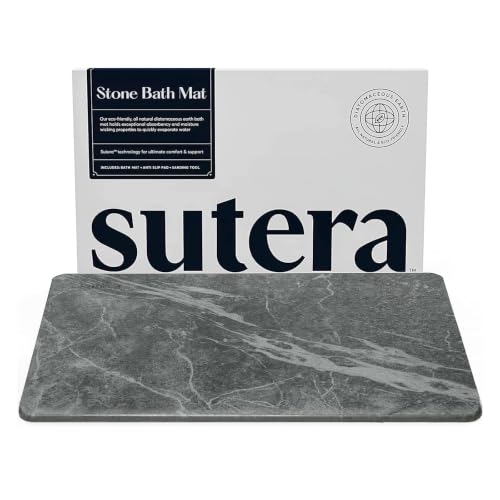
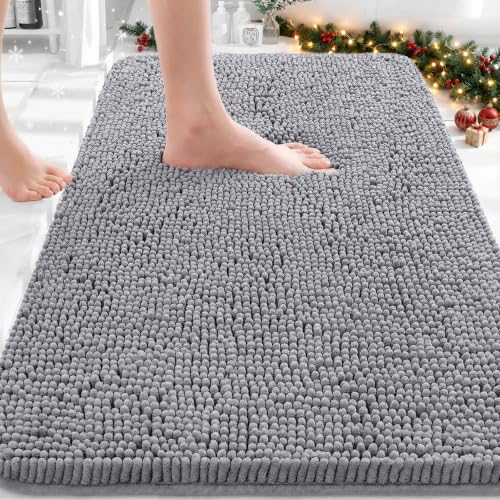
Our Top Picks
 COTTON CRAFT 2 Pack Reversible Bath Mat Rug17x24 Inches17 x 24 x 0.5 inches2.42 poundsCheck on Amazon
 Madison Park Splendor Reversible 100% Cotton Bath Rug1'5" x 2' (Rectangular)24 x 17 x 0.75 inchesCheck on Amazon
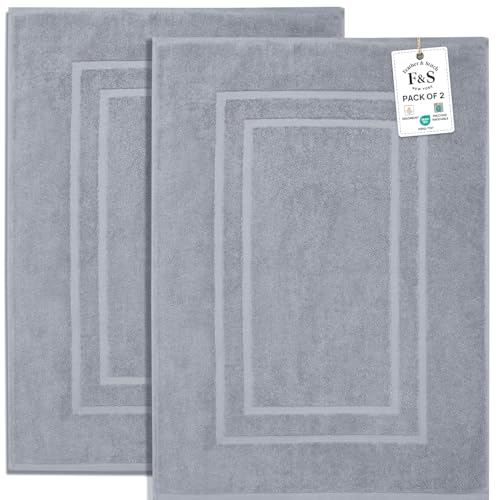 Feather & Stitch 100% Cotton Bath Mats 21'9" x 2'6" (Rectangular)11.82 x 11.47 x 2.92 inches1.4 poundsCheck on Amazon

What's inside
- What reversible means here, and what it does not
- The safety trade-off, stated before anything else
- The two faces: texture, colour and the seasonal flip
- Materials: cotton, chenille and microfibre under wet feet
- Flipping as a laundry strategy, not just a party trick
- Washing and drying, material by material
- Thickness, weight and the door that will not close
- Sizing for tubs, showers and small cottage bathrooms
- The underlay, chosen properly
- Archetypes of the reversible shelf
- Where the reversible idea struggles
- Colour, pattern and the small room that changes its mind
- Two mats, one bathroom: the rotation system
- Pets, children and the mat as claimed territory
- A care rhythm that fits on a calendar
- Edges, hems and the construction details that decide the lifespan
- Air, warmth and the drying half of the design
- When to retire one, and what its long life means
- Reversible or backed: a plain decision framework
- The first fortnight with a new mat
- A note on shared houses and rented cottages
- Questions people ask about reversible bath mats
- Check prices on Amazon
- How this guide weighed the evidence
As an Amazon Associate I earn from qualifying purchases. This post may contain affiliate links at no extra cost to you.
Here is the arrangement that keeps Cottage Verdict running: if you follow a link on this page and end up buying something, the seller may pass a small commission back to us, and those modest returns are what allow a small site like this to keep publishing careful, unhurried guides instead of following whatever happens to be loudest this week.
Every bath mat leads a double life of decline. The face you see starts out soft, bright and thirsty, and then, shower by shower, it flattens, dulls and absorbs a little less eagerly than it did. The underside, meanwhile, spends those same months pressed against the floor, protected from feet, light and wear, quietly remaining almost exactly as it was on the day the mat arrived. A reversible bath mat simply refuses to waste that second, sheltered face. When the first side tires, you turn the whole thing over and start again with a surface that looks, feels and behaves like the beginning of a new mat.
That is the whole promise, and it is a real one, but it comes with a condition that matters more than any other in this guide. A mat with two finished faces has, by definition, no rubber backing, and rubber backing is what keeps an ordinary mat glued to a wet floor. The reversible design trades built-in grip for its second life, and it asks you to supply the grip another way. This guide works through both halves of that bargain in full: the materials, the two faces, the washing rhythm the design makes possible, and the separate non-slip underlay that turns a clever idea into a safe one, drawing on published manufacturer descriptions and the accumulated experience owners report.
What reversible means here, and what it does not
A reversible bath mat is woven, tufted or looped so that both sides are finished, usable surfaces. In some designs the two faces are near twins, the same pile worked through a central core so the mat is effectively the same product twice. In others the faces deliberately differ: one side may carry a longer, plusher pile for cold mornings, the other a flatter loop that dries faster and feels cooler underfoot in summer. A third family differs mainly in colour or pattern, with a stripe on one face and a plain weave on the other, so flipping the mat also refreshes the room.
What reversible does not mean is a mat with a rubber or latex underside that you could theoretically stand on. That underside was never made to be a floor surface for feet; it grips, it sheds, and it ages badly in the open. Nor does it mean the thin, printed microfibre pads sometimes described with hopeful language in listings, where the reverse is merely the back of the print. The honest category, and the one this guide covers, is the fully textile mat, cotton, chenille or microfibre yarn worked all the way through, with no coating on either side.
The construction follows from that honesty. Without a backing to hide behind, the mat’s body has to do all the work: the yarn must absorb, the weave must hold together through hundreds of washes, and the edges must be finished to survive being the visible edge from both directions. Well-made examples bind or overlock their hems symmetrically and use yarn dyed through the fibre, so neither face looks like the wrong side of anything.
The safety trade-off, stated before anything else
Most bath mats stay put because a rubberised backing meets the floor with friction, and even then they can creep on polished tile. Remove that backing and the mat becomes, in effect, a thick towel with ambitions: on a smooth, wet floor it can slide under a stepping foot, and the moment it matters most is the moment you climb out of the bath with wet feet, full weight and half your attention elsewhere. Owner feedback for this category returns to the point constantly, and so will this guide: a reversible mat on a slick floor needs a separate non-slip underlay beneath it.
That underlay is a thin, grippy mesh or perforated pad, cut slightly smaller than the mat itself, which clings to the floor on one side and gives the mat’s textile underside something to hold on the other. With one in place, the arrangement is steady in ordinary use, and the mat lifts off it in one motion for flipping or washing while the underlay stays where it was. Without one, the same mat belongs only on floors with real texture of their own, such as rough stone, unglazed tile with wide grout lines, or the wooden boards of an old cottage bathroom, where the weave can find purchase.
Households with toddlers, older relatives, or anyone unsteady on their feet should treat the underlay as part of the product rather than an accessory, and readers furnishing a bathroom for small children will find the grip discussion continued in our guide to best bath mats for toddlers, where the same physics applies with even less margin for error. The reversible bargain is a good one, but only when it is bought whole: two faces, plus the layer that keeps them where you put them.
Floor types, honestly assessed
Glazed ceramic and porcelain tile, the commonest bathroom floors, are the slickest when wet and the least forgiving of an unbacked mat. Polished stone behaves similarly, with the added charm of being cold enough to make a thick mat feel necessary in the first place. Vinyl and lino sit in the middle: a dry reversible mat may hold acceptably, a wet one deserves an underlay anyway. Textured stone, slate with a natural finish, and sealed wooden boards offer the most natural grip, though wood brings its own consideration, since a mat left damp on boards for days can mark the finish, which is one more argument for the flipping and airing rhythm described later.
The two faces: texture, colour and the seasonal flip
Where the two faces differ in texture, the difference is usually a deliberate pairing. A long-pile face gives the deep, warm landing that makes winter mornings bearable in an unheated cottage bathroom. A looped or short-pile face gives a firmer, quicker-drying surface that feels right in warm weather and suits a bathroom that sees three showers a day, where the mat never quite gets ahead of the moisture. Owning both in one object means the bathroom can change its footing with the seasons at the cost of one flip, and owners in older houses with cold floors describe exactly that ritual, plush side up in November, loop side up in May.
Where the faces differ in colour, the benefit is partly practical and partly theatrical. Practically, a darker face hides the gradual greying that light mats acquire, so a mat with one pale and one deep-toned side can spend its tidy-looking months on the pale face and retire to the darker one later. Theatrically, flipping the mat is the cheapest redecoration a small bathroom can have: the room reads differently with a stripe where a plain field was, and in a rented cottage or a guest bathroom that small change does noticeable work.
Two cautions belong here. Yarn-dyed designs keep their pattern honest on both faces, while surface-printed designs can look washed out on the reverse, so published descriptions that specify yarn-dyed construction are worth more than cheerful photography. And a mat whose faces differ greatly in pile height will dry unevenly, with the deep face holding moisture long after the flat one feels dry, which shapes the washing and airing advice further down this page.
Materials: cotton, chenille and microfibre under wet feet
Cotton, the traditionalist
Cotton is the material this category grew up in, and it remains the reference point. A cotton reversible mat absorbs generously, feels natural and cool rather than synthetic underfoot, washes without ceremony and can usually tolerate warm water that would upset more delicate fibres. Its weaknesses are equally traditional: cotton is slow to dry, grows heavy when saturated, and in a damp bathroom that never quite airs out, a thick cotton mat can develop a stale smell between washes if it is left flat on the floor. Cotton also softens and thins gradually with age, so the second face of an old cotton mat is fresher than the first but not immortal. For a cottage bathroom with a window that opens and a rail to drape the mat over, cotton’s faults are manageable and its virtues are exactly the ones the room asks for.
Chenille, the soft landing
Chenille mats are built from short, dense, caterpillar-like tufts, usually of microfibre yarn on a woven core, and in reversible form both faces carry that tufted surface. The feel is the selling point: a deep, velvety give underfoot that makes hard tile forgettable. Chenille drinks water quickly at the surface, which keeps feet feeling dry during use, though the core beneath the tufts still needs air and time to give the water back. Reversible chenille tends to be the thickest option in the category, which delights bare feet and complicates two practical things: the mat may not clear a low bathroom door as it swings, and it takes the longest of the three materials to dry through after a full wash.
Microfibre, the quick worker
Flat-woven microfibre mats are the lightest and fastest-drying members of the family. Their fine split fibres wick water across a wide area and release it to the air readily, so a microfibre reversible mat can be washed in the morning and be back in service by evening in a ventilated room. The trade is cushioning: even a generously layered microfibre mat feels thinner underfoot than cotton or chenille, and on a cold floor that thinness reads as chill. Households that prioritise laundry speed, caravans, small flats and bathrooms with no outside window among them, tend to land here and accept the firmer footing as the fair price of a mat that is never damp for long.
| Material | Feel underfoot | Drying character | Suits best |
|---|---|---|---|
| Cotton | Natural, cool, moderately cushioned | Slowest; wants air and a rail | Ventilated cottage bathrooms, traditional care habits |
| Chenille | Deepest and softest landing | Surface dries fast, core slowly | Cold hard floors, comfort-first households |
| Microfibre | Light, flat, firm | Fastest of the three | Heavy use, small spaces, quick laundry turnaround |
Households running a bathroom at full stretch, with the mat in near-constant service, will find the durability angle continued in best bath mats for heavy use, where the emphasis falls on surviving that workload, and the comparison is a useful counterweight to the comfort-first thinking that reversible mats invite.
Flipping as a laundry strategy, not just a party trick
The most practical consequence of the second face is what it does to your washing rhythm. An ordinary mat announces its laundry day in stages: it looks tired, then it feels tired, then it smells faintly of the room it serves, and by then it has been overdue for a week. A reversible mat interrupts that decline at the first stage. Flip it, and the fresh face buys a genuine second interval, often as long as the first, before the wash can no longer be postponed. Owners who keep a simple rhythm, flip weekly, wash fortnightly or so, describe mats that look presentable almost all of the time rather than in a brief window after laundry day.
Flipping also evens out the wear in a way that extends the mat’s whole life. Feet land in roughly the same places every day, in front of the bath, beside the shower door, and on an ordinary mat those landing zones thin and fade while the edges stay new. Alternating faces spreads that punishment across two surfaces and both directions of the weave, so the mat ages as a whole instead of developing bald geography. Published care guidance from makers of woven cotton mats often suggests rotating and reversing for exactly this reason; the reversible design simply builds the habit into the object.
There is a hygiene footnote that deserves honesty. Flipping does not clean anything. The face that was against the floor carries the floor’s dust and whatever the bathroom air settled on it, and turning it up puts that side under your feet. In a bathroom that is itself kept reasonably clean, owners treat this as a non-issue, and the flip is a refresh of appearance and pile rather than of purity. In a household recovering from illness, or a bathroom shared with pets, the sensible rhythm tightens: flip for looks if you like, but let the wash come when hygiene, not appearance, says so.
Washing and drying, material by material
The great laundry virtue of the reversible category is the absence of rubber. Backed mats carry care labels full of warnings because heat and agitation crack latex and rubber coatings, which then shed flakes through every subsequent wash and lose their grip in patches. A fully textile mat has nothing to crack. Cotton versions generally tolerate a warm wash and can be tumble dried or line dried according to their labels, and they emerge without the curled edges that plague backed mats, whose two layers shrink at different rates. Microfibre versions prefer cooler water and no fabric softener, since softener coats the fine fibres and blunts the wicking that is the material’s whole reason to exist. Chenille asks for gentleness of a different kind: a wash that treats the tufts kindly, often in a bag or on a mild cycle, and patience afterwards while the core dries.
Two habits protect every material in the category. Shake the mat outdoors before washing, because a bath mat carries a startling amount of hair and grit into the machine if you let it. And dry the mat completely before it goes back on the floor, since a mat returned damp-side down will smell of its own shortcut within days. Between washes, the daily habit that matters most is also the simplest: lift the mat. Drape it over the bath edge, a rail or a chair back so air reaches both faces. A reversible mat left flat on a wet floor all week is being denied the airflow its design assumes, and most of the stale-smell stories in owner feedback trace back to exactly that neglect, in bathrooms where the mat never once left the floor between washes.
Colour care follows the two-faced logic. A mat with a pale face and a dark face should be washed with its own kind of load, and the first few washes of a deeply dyed cotton mat deserve a separate cycle, since loose dye leaving one face will happily settle into the other if they share hot water with lighter laundry. Readers choosing between palettes will find the fading and dye behaviour of bathroom textiles picked apart further in best bath mats colors, which covers the wider category.
Thickness, weight and the door that will not close
Reversible mats are, by construction, substantial. Two working faces and a core between them produce a mat noticeably thicker than a backed equivalent, and the published weights in this category reflect that, with cotton versions in the larger sizes growing genuinely heavy when wet. Thickness buys the cushioned landing and the insulation from a cold floor that cottage bathrooms, with their stone or tile over unheated voids, need more than most. It also buys three practical checks that are worth doing with a tape measure before ordering.
First, door clearance. Bathroom doors in older cottages often sweep low, sometimes because the floor has been tiled over an earlier surface, and a thick chenille mat placed in the swing path will be dragged, folded or quietly resented every day. Second, the bath edge: a mat that will live half under a freestanding bath’s rim or beside a low shower tray should be thin enough at its border to sit flat rather than ramped. Third, storage and handling: a heavy cotton mat, soaked, is an armful, and if the washing machine is a staircase away, the midweight microfibre or a smaller cotton size may serve the household better than the grand version that looks so appealing in a photograph.
Sizing for tubs, showers and small cottage bathrooms
The standard shapes in this category cluster around a few familiar footprints: a compact rectangle for beside a shower enclosure, a longer runner-style mat for alongside a bath, and a generous square for the middle of a larger room. The reversible design adds one sizing thought that backed mats do not raise. Because the mat will be flipped and lifted constantly, it should be small enough to handle without a wrestling match and large enough that its edges sit clear of the wettest zone, since an edge permanently in a puddle wicks water across the whole mat by the end of a shower.
Small cottage bathrooms, the kind where the bath, sink and door all negotiate for the same square metre, reward restraint. A single well-chosen mat in front of the bath, lifted onto the bath edge after the morning rush, serves better than two mats wallpapering the floor, and it dries in the room’s limited air far more reliably. Contour mats cut around a pedestal exist in backed ranges but are rare in reversible form, because a cut-out shape flips awkwardly and its two faces stop being interchangeable; households needing that shape should expect to give up reversibility or accept a plain rectangle placed close to the pedestal instead.
For a bath-side runner, length matters more than width: the mat should cover the stretch where feet actually land when climbing out, which for most adults is the middle two-thirds of the tub’s side, with a margin at the end nearest the taps where people stand to run the water. A runner that covers that ground in one piece also flips in one motion, which sounds trivial until the first morning you try to flip two small mats and a separate underlay in a cold room with wet hands.
The underlay, chosen properly
Since the underlay carries the safety case for the whole arrangement, it deserves the same care as the mat. The commonest form is a perforated or mesh pad with a tacky feel on both sides, sold in rolls or pre-cut sizes and trimmed with scissors to sit an inch or two inside the mat’s outline on every side, so none of it peeks out to collect dust at the edges. A second form uses a thin natural rubber sheet, heavier and steadier, better suited to a mat that will live in one place for months. A third, improvised school of thought reaches for shelf liner, which can work in a pinch but varies wildly in grip and tends to weld itself to some floor finishes over a long, damp season.
Whichever form you choose, three rules govern it. Keep it clean: an underlay that has gathered a film of soap and dust grips nothing, and it should be rinsed and dried whenever the mat is washed. Keep it dry beneath: after a bath that floods the floor, lift mat and underlay together and let the floor dry, because a permanently damp sandwich of layers is unkind to wood and grout alike. And replace it when it tires: the tackiness fades over a year or two of service, and the day the mat starts travelling again is the underlay asking, politely, to be retired.
Households that dislike loose layers altogether sometimes ask whether a reversible mat can simply be the top half of a two-mat system, with a backed mat beneath acting as the grip. It can, and some owners do exactly this, accepting the extra thickness in exchange for a bottom layer that can also be washed. The combination is at its best in a cold bathroom where the insulation is welcome, and at its worst where door clearance is already tight. Either way, the principle is the same and worth repeating: the reversible mat itself was never designed to be the thing that holds still, and something in the stack has to be.
Archetypes of the reversible shelf
Across brands and materials, the category resolves into a few recognisable shapes, summarised here at segment level from published descriptions rather than the claims of any single product.
| Archetype | Two faces | Character | Best home |
|---|---|---|---|
| Classic woven cotton | Same weave both sides, sometimes two colours | Heavy, absorbent, slow to dry, very washable | Ventilated bathrooms, traditional cottages |
| Dual-texture cotton or blend | Plush pile one side, flat loop the other | Seasonal flip between warmth and quick drying | Cold floors, year-round use |
| Reversible chenille | Tufted both sides | Softest landing, thickest profile, slowest core drying | Hard cold tile, comfort-first rooms |
| Flat microfibre double-face | Low woven faces, often two tones | Light, fast drying, firm underfoot, easy laundry | Small bathrooms, heavy rotation, caravans |
Notice that every row needs the same underlay conversation on a smooth floor. The archetypes differ in comfort, drying and laundry temperament, but none of them smuggles a grip layer into its construction, because a grip layer is precisely what a second face replaces. Choosing among them is therefore a choice about feel and care habits, made safely only after the floor question has been answered.
Where the reversible idea struggles
Honesty about the weak cases saves returns. A household that will never lift a mat to air it will get less from this design than from any other, because both faces depend on airflow the room must provide. A bathroom with no window, a weak fan and four daily showers can defeat even microfibre, and there the better answer may be two thinner backed mats in strict rotation, one in the wash while one works, accepting the rubber-care rules as the cost.
The design also struggles where the floor is both slick and busy: a family bathroom at the morning peak, with children climbing in and out and a mat being stepped on from three directions, is the hardest service any mat can draw. An underlay helps greatly, but a household in that season of life may reasonably decide that a backed mat with maximum grip is the right tool now, and that reversibility can wait for calmer years. Guest bathrooms sit at the opposite extreme and suit the design beautifully, since the mat rests between visitors, gets flipped and aired as part of the room’s turnaround, and greets each arrival with what looks like a new mat.
Finally, a word about shedding and lint, because new textile mats release loose fibre in their first washes and reversible ones, with two worked faces, can release it from both. Owners who prefer a mat that leaves no trace in the wash or on the floor will find the low-lint end of the wider category surveyed in best bath mats no fluff, and the practical advice transfers: wash a new mat separately at first, expect the early fluff, and judge the mat from its third week rather than its first.
Colour, pattern and the small room that changes its mind
A two-toned reversible mat is, in effect, two decorating decisions for the storage space of one, and small bathrooms benefit from that economy more than large ones. In a cottage bathroom the mat is often the largest single area of colour in the room, bigger than any towel display and more visible than the curtain. A pale face lifts a north-facing room through the bright months, while the deeper reverse, a sage, a rust, a slate blue, grounds the same room when the light turns thin and the floor turns cold. Owners who flip seasonally often describe the change as the bathroom equivalent of swapping cushion covers, a small ceremony that marks the turn of the year indoors.
Pattern behaves differently on each face in a way worth understanding before you choose. A woven stripe reads crisply from both sides, since the yarn itself carries the colour, though the reverse stripe order will mirror the front. A checked or bordered design can look intentional on one face and slightly unresolved on the other if the maker has not balanced it, which is why published photographs showing both faces are worth more than a paragraph of description. Plain mats sidestep the whole question and age the most gracefully, because there is no pattern to fade unevenly where feet land.
There is also the question of what the mat must live with. Bathroom textiles fade at different rates, and a mat flipped regularly fades more evenly than its towels, which spend their lives one way up. Pairing a two-toned mat with towels drawn from both of its colours gives the room a forgiving palette: whichever face is up, something in the room agrees with it, and the gradual softening of all the colours together reads as mellowness rather than decline.
Two mats, one bathroom: the rotation system
Households that fall for the reversible idea often end up going one step further, keeping two mats and rotating the pair. While one mat is in the wash or drying on a rail, the other works; each mat rests between tours of duty, and rest is the single kindest condition a textile can be given. The arithmetic is attractive: two reversible mats in rotation present four faces in sequence, and the laundry stops being an emergency with a deadline and becomes a background chore done when convenient.
Rotation also solves the guest problem elegantly. The resting mat, clean and fully dry, is the one that goes down when visitors arrive, while the working mat takes its turn in the wash. Holiday-let hosts running cottage bathrooms on a same-day turnaround describe a version of this system as the only way the room can greet every arrival with a mat that looks and smells genuinely fresh, without keeping a cupboard full of spares.
If you adopt the system, buy the two mats as a true pair or as deliberate contrasts. A true pair keeps the room’s look stable across the rotation, which matters in a photographed rental. Deliberate contrasts make the rotation visible and cheerful in a family bathroom, and children, who notice such things, tend to have opinions about which mat is theirs. Either way, keep the underlay singular and stationary; it is the rotation’s fixed point, and its stillness is what makes all the movement above it safe.
Pets, children and the mat as claimed territory
In many homes the bath mat’s hardest use has nothing to do with baths. Dogs claim them as beds, cats knead them with deep professional interest, and children treat them as islands, rafts and landing pads in games whose rules are never explained to adults. A reversible mat survives this second career better than a backed one for a simple reason: there is no coating for claws to shred or for repeated folding and dragging to crack, and when one face bears the marks of its service as a dog bed, the other face remains presentable for guests.
The care rhythm adjusts rather than changes. Pet households wash more often, shake the mat outdoors with real commitment, and favour cotton or flat microfibre over deep chenille, whose tufts hold hair with a loyalty that borders on archival. A mat that serves as the post-walk paw station by the bath, or under a pet’s own rinsing routine, earns its keep in a different currency, and its second face doubles that service as straightforwardly as it doubles the human one.
For children, the earlier safety discussion applies with doubled force and one addition. A mat that will be jumped on should be the heaviest the room can accommodate, over the steadiest underlay available, because jumping delivers sideways forces that ordinary stepping never does. With that foundation in place, the reversible design offers a quiet parenting dividend: the fun face, the striped or brighter one, can be the everyday surface, while the calmer face comes up for the evenings when grandparents visit and the bathroom pretends to be a grown-up room.
A care rhythm that fits on a calendar
- Daily: after the last shower, drape the mat over the bath edge or a rail so both faces meet the air.
- Weekly: flip the mat, check the underlay is still gripping, and shake both layers out.
- Fortnightly, roughly: wash the mat according to its material, rinse the underlay, and dry everything fully before it returns to the floor.
- Seasonally: make the deliberate flip, plush face up for the cold months, flat face up for the warm ones, and inspect the hems for wear.
- Yearly: assess the underlay’s grip and the mat’s absorbency honestly, and retire whichever has quietly stopped doing its job.
None of this is demanding, and that is rather the point. The reversible mat asks for small, regular attentions instead of the backed mat’s bargain of neglect punctuated by a coating slowly cracking in the wash. Households that keep a rhythm like the one above report mats that stay pleasant for years; households that want to do nothing at all should buy a different design and accept its terms instead.
Edges, hems and the construction details that decide the lifespan
Because a reversible mat shows both of its faces and all of its edges, its finishing is not decoration but structure, and it repays a close look in published photographs and descriptions. The strongest examples carry a woven selvedge or a bound edge that runs identically on both sides, with no raw turn-under waiting to fray once it becomes the visible side. Overlocked edges in a matching yarn are the next best thing, neat and honest. The construction to avoid is the one where the edge treatment clearly belongs to a single face, with the second face finished as an afterthought, because a mat flipped weekly will spend half its life displaying that afterthought to the room.
Inside the mat, the weave density tells the absorbency story more truthfully than any marketing word. A tight, heavy weave in cotton holds more water and survives more washes than a loose, lofty one, though it dries more slowly for the same reason. Chenille quality shows in the density of its tufts: sparse tufting over a visible core feels thin within months, while dense tufting keeps its velvet character through years of flipping. Makers who publish the mat’s weight for its size are giving you the most useful single number in the whole listing, since weight, in a textile with no backing to inflate it, is a fair proxy for how much fibre is actually there to drink, cushion and endure.
Seams deserve one specific mention. Larger reversible mats are sometimes woven in panels and joined, and a join that is flat and flexible on both faces is a mark of care, while a ridge on one side becomes a line the mat will fold along, a stripe of uneven drying, and eventually the place it wears first. If a published description mentions seamless construction for a large size, that is a genuine virtue in this category rather than a flourish, precisely because the mat will live half its life upside down by the standards of ordinary mats.
Air, warmth and the drying half of the design
Every bath mat has two jobs, and the second, giving the water back to the air, is the one that decides whether the first can be done again tomorrow. A reversible mat is unusually well built for that second job once it is lifted, because both of its faces are working surfaces with pile or weave that can release moisture, and draped over a rail it dries from two directions at once. Hung by one edge over a bath side, it dries more slowly on the folded face; spread over a rail or a wide chair back with air beneath as well as above, it dries at something close to twice the pace, a difference owners in small bathrooms learn to arrange deliberately.
The room’s ventilation is the other half of the equation, and it is worth being realistic about your own. A bathroom with an opening window can forgive a thick cotton mat almost anything. A sealed internal bathroom with a modest fan asks for microfibre, a strict lifting habit, and perhaps the two-mat rotation described earlier, so no single mat is asked to dry in hours it does not have. Heated towel rails, where fitted, are the reversible mat’s best friend in winter, with the caveat that the mat should drape the rail rather than be folded over it double, which traps the inner faces against each other and defeats the purpose.
Smell is the diagnostic that ties all of this together. A mat that smells stale within a day of washing is not usually a dirty mat; it is a mat that never fully dried, carrying a damp core beneath a dry-feeling surface. The remedies are environmental rather than chemical: more air, more warmth, more time off the floor, and in stubborn cases a thinner mat that the room can actually keep up with. Choosing the material your bathroom can dry, rather than the material your feet would vote for in the shop, is the single most reliable predictor of satisfaction in this category, and it is why this guide keeps returning to the room as much as to the product.
When to retire one, and what its long life means
A reversible mat announces its old age gradually. The pile lies flatter in the landing zones on both faces. The colours soften toward each other until the two sides are cousins rather than contrasts. Absorbency fades as fibres tire, so the mat feels wetter sooner during a morning’s use. None of these is a failure; they are the record of years of service, and the mat can usually be demoted rather than discarded, to the bathroom of a caravan, a utility sink, or the floor beneath a dog’s water bowl, where its remaining virtues still outrank most newcomers.
That long, demotable life is also the quiet environmental case for the design. One object doing the work of two, with no coating to shed fragments into the wash water and no sudden failure mode, asks less of the world than the cycle of cheaper backed mats it replaces. Cotton versions at the very end of their lives are simple textiles, fit for the rag bag and a final season of service in the garden or the workshop. It is not the reason most people buy one, the reason is a fresh face in February, but it is a respectable second line in the ledger.
Reversible or backed: a plain decision framework
Strip the choice down and it turns on three questions about your household rather than about any product. The first is the floor. If your bathroom floor is smooth and wet by nature, and nobody in the house will reliably manage an underlay, a backed mat is the responsible choice and this guide will not argue otherwise. If the floor has texture, or the underlay habit sounds like something your household would actually keep, the reversible design’s advantages are free to count.
The second question is laundry temperament. Reversible mats reward households that wash textiles willingly and often, and they punish, with slow drying and stale smells, households where a mat might sit unwashed for a month. The third is time horizon. A backed mat is a simpler purchase with a shorter, coating-limited life; a reversible mat asks slightly more of you each week and gives years in exchange. Households furnishing a room they expect to keep, a family cottage above all, tend to gain most from the second bargain, while a short let or a temporary arrangement may not stay long enough to collect it.
There is no shame in the mixed answer, and many homes run it: a backed mat in the busy family bathroom where grip is king at the morning peak, a reversible mat in the calm ensuite or the guest room where its freshness ritual can actually be kept. Matching the design to the room’s real behaviour, instead of declaring one design the winner for the whole house, is how the owners who write the happiest long-term accounts seem to have proceeded.
The first fortnight with a new mat
A new reversible mat deserves a deliberate start. Wash it once before use, separately, to clear the loose fibre every new textile carries and to soften the weave into its working character. Fit the underlay on a dry floor, trimmed inside the mat’s outline, and place the mat with the face you prefer upward, knowing the choice is temporary by design. Then live normally for a week before judging anything: new cotton feels stiffer and drinks less eagerly than it will after a few washes, chenille sheds its early fluff and settles, and microfibre reaches its stride almost at once.
Flip it at the end of the first week even if the top face still looks new, because the habit is the product as much as the textile is. Notice how the second face feels, how the mat handles, whether the underlay stayed put and whether the door still clears the pile. Those small observations, made once at the beginning, are the difference between a mat that becomes part of the room’s rhythm and one that slowly reverts to being a single-faced mat with an interesting rumour attached.
A note on shared houses and rented cottages
Where a bathroom serves people who did not choose each other, the reversible mat has one more virtue worth recording: it forgives irregular care. In a shared house, the mat that gets flipped by whoever happens to think of it still ages more evenly than one that depends on a single person’s routine, and its wash, when it comes, restores both faces at once for the next resident of the morning. In a rented cottage, the same property lets a host refresh the room between guests with a flip and a wash rather than a replacement, and the mat’s lack of a perishing backing means it survives the frequent laundering that letting demands, season after season, without shedding its grip into the machine, because its grip was never a coating to begin with.
Hosts also note a small presentational trick the design allows: keep the calmer face upward for the listing photographs and the brighter face upward for the guests themselves, so the room they enter feels warmer than the room they booked, a rare direction for a holiday let surprise to travel.
Questions people ask about reversible bath mats
Are they safe for older relatives?
They can be, with the underlay treated as non-negotiable and the mat sized so its edges lie flat and visible. An older person stepping from a bath needs the landing to be exactly where it was yesterday, and the combination of a grippy underlay, a mat heavy enough to sit still, and a floor kept dry around the edges delivers that. What should never happen is the casual version: a light reversible mat alone on polished tile in a relative’s bathroom, bought for its looks. The design’s safety is a system, and the system has to be installed whole.
How long does one actually last?
Longer than a comparable backed mat in most owner accounts, for two structural reasons: there is no coating to crack, which is the failure that ends most backed mats’ lives, and the wear is shared between two faces. Cotton versions eventually thin overall, chenille tufts can flatten in the main landing zone, and microfibre slowly loses its brisk wicking. All three endings arrive gradually and visibly, which is its own small virtue: a reversible mat rarely fails suddenly, and its decline gives fair warning.
Can I use one in front of a shower instead of a bath?
Yes, and the faster-drying materials suit the job particularly well, since a shower-only room often runs its mat through more wettings per day. Choose the compact footprint, keep the underlay under it, and favour the flat loop face upward during the busiest months so the surface gives its water back to the air between uses. In a wet-room layout with no threshold at all, place the mat just outside the direct spray zone, where it catches feet rather than weather.
Does flipping really double the life?
Doubling is the optimistic version. The fairer claim, and the one owner experience supports, is that flipping stretches both the interval between washes and the mat’s presentable life by a large margin, because appearance and pile wear are what retire most mats while their absorbency still works. A mat bought with two faces and flipped with any regularity will outlast its own first impression by a distance that a single-faced mat of the same material cannot match.
What about heated floors?
Underfloor heating is a friend to this category with one caveat. The warmth dries a lifted or even a floor-laid mat faster than any fan, which flatters every material here, and textile mats tolerate the gentle heat without the coating worries of backed designs. The caveat is the underlay: check its published heat tolerance, keep temperatures at normal bathroom levels, and lift the layers occasionally in the heating season so the floor beneath dries and the underlay does not bake itself onto the finish over a long winter.
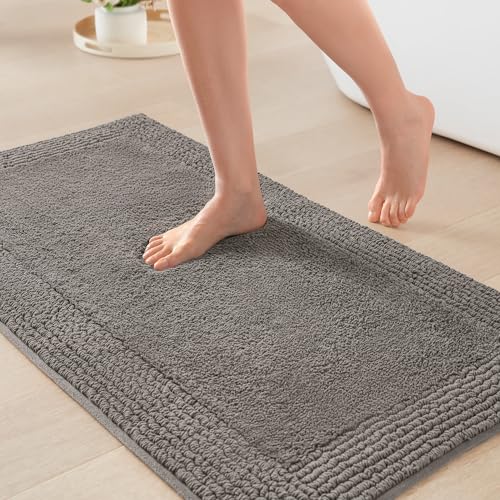
Check prices on Amazon
Live listings for the shortlist in this guide are pulled from Amazon below, so prices and availability are always current at the moment you look.


How this guide weighed the evidence
The judgements above rest on published manufacturer descriptions of materials, construction and care, read alongside the patterns in owner feedback for the category as a whole: the slipping stories that almost always involve a missing underlay, the stale-smell stories that almost always involve a mat never lifted, and the long, satisfied accounts that almost always describe a rhythm of flipping and airing. Where a claim belongs to physics rather than to any brand, such as a rubber-free mat sliding on wet glazed tile, this guide has stated it directly and built its advice on top of it.
Two limits are worth declaring. Materials vary within their families, since one maker’s cotton weave can be twice another’s weight, so the material sections describe tendencies to verify against a specific product’s published weight and care label. And floors vary more than mats do, which is why the safety advice in this guide is deliberately conservative: an underlay that turns out to be unnecessary on your textured slate has cost very little, while its absence on polished porcelain can cost a great deal.
Buy the mat for the face you will flip to on a grey morning in February, fit the underlay before the first shower rather than after the first slide, and the second face will still be there, patient and unmarked, when the first one has earned its rest.