Our Top Picks



What's inside
- Why a dedicated workout towel beats borrowing from the bathroom shelf
- Hand size, neck size, and the space between
- Suede microfiber: smooth, compact, and quick to wring out
- Cotton terry: loops, cushion, and a familiar feel
- How fast a towel actually takes up sweat
- Drying speed between sessions
- On benches, mats, and machine pads
- Odor: why it starts and how washing stops it
- How many towels a training bag really needs
- Durability after dozens of washes
- Comfort against skin, hair, and glasses
- Outdoor training, travel, and home workouts
- A calm buying checklist drawn from our research
- Questions readers ask most often
- Sport-specific notes that change the choice
- Small repairs and habits that stretch service life
- Reading the room: gyms, studios, and shared spaces
- Check prices on Amazon
- Bringing it all together
As an Amazon Associate I earn from qualifying purchases. This post may contain affiliate links at no extra cost to you.
Disclosure: Cottage Verdict earns a commission from qualifying purchases made through links on this page, at no extra cost to readers, and that support keeps our research independent and free to read.
A small towel earns its place in a training bag only when it solves several annoyances at once. It has to mop a forehead between sets without shedding lint across your eyelashes. It should drape over a bench, stay put on a treadmill rail, and still feel decent against your neck during a long walk home. Most people buy their first one almost as an afterthought, grabbing whatever sits near a checkout or at the bottom of a linen shelf. Then the flaws show up quickly: a fabric that pushes moisture around instead of lifting it, edges that curl after three washes, a stale smell that returns the moment damp cloth warms up again.
This guide slows that purchase down. Rather than treating a workout towel as a shrunken bath towel, it looks at the details that separate a handy square of cloth from a genuinely useful training companion. Size comes first, because dimensions decide where a towel can go and how often you will fold it. Fiber follows, since suede-style microfiber and looped cotton terry behave very differently once sweat, chalk dust, sunscreen, and repeated laundering enter the picture. Drying speed matters too, especially for anyone who trains before work and tosses the towel into a bag for hours afterward.
Nothing here requires exotic gear or a complicated routine. The goal is simpler: choose a size you will actually carry, pick a surface that suits your skin and your sport, wash it in a way that keeps odor from taking hold, and own enough pieces that a clean one is always ready. Along the way, this article covers bench etiquette, grip on vinyl pads, storage inside a crowded duffel, and the quiet signs that a towel has reached the end of its useful life. If you have ever finished a session with a soggy rag that felt heavier than your water bottle, the sections below are written for you.
Why a dedicated workout towel beats borrowing from the bathroom shelf
Bath linens are built for a different job. After a shower, you stand still, pat dry skin, and hang the cloth on a rail with plenty of air around it. During exercise, conditions reverse. You move constantly, sweat arrives in waves, and the towel gets stuffed into pockets, wedged beside shoes, or draped over equipment that dozens of strangers touched earlier that morning. A hand towel borrowed from home can cope for a day, yet its proportions and weight rarely suit that rougher routine.
Proportion is the obvious mismatch. Many bathroom hand towels are wide enough to cover a bench but so long that the surplus bunches under your shoulder blades when you lie back. Others are thick and plush, lovely after a bath, but slow to dry inside a locker. A purpose-chosen small towel trims away that excess. It covers the zone your head and shoulders actually contact, folds into a neat pad for wiping grips, and rinses out under a tap without turning into a sodden brick.
Hygiene habits also diverge. Towels that live in a gym bag should be washed far more often than decorative guest linens, and they benefit from colors or patterns that make it easy to spot which ones are clean. Keeping a separate set for training protects your nicer household stock from sunscreen stains, protein-shake splashes, and the gray cast that repeated hot washes can leave on pale cotton. It also builds a simple rule: bathroom towels stay home, training towels rotate through the bag, and neither set gets borrowed in a rush.
Readers who already think carefully about household absorbency will find familiar ground in our guide to best absorbent bathroom hand towels, although the priorities shift once portability and quick drying outrank spa-like softness. Think of the workout version as a tool rather than a luxury. Tools get chosen for fit, cleaned without fuss, and replaced when they stop performing.
Hand size, neck size, and the space between
Manufacturers describe dimensions loosely, so treat labels such as hand, sport, or travel as hints rather than standards. A compact hand format usually lands somewhere near the span of two open palms side by side. That footprint suits face wiping, grip drying, and tucking into a waistband or a bike jersey pocket. Because the cloth is short, you can refold it often, presenting a dry patch each time instead of smearing moisture from one end to the other.
Neck formats stretch longer and narrower. Their appeal becomes clear during steady cardio, outdoor runs in summer heat, or yard work squeezed between gym days. Draped around your shoulders, the ends hang within easy reach, and the middle section shields the back of your neck from sun and from the rub of a pack strap. A longer cut also spans the width of many benches, giving your head a clean layer without needing a second towel underneath.
Between those poles sits a middle category that many lifters quietly prefer. It is generous enough to cover a weight bench from top to hip, yet it still folds down to the size of a paperback book. If your training mixes floor work, machines, and short walks on a track, this compromise often feels right. The trade-off is bulk: inside a small sling bag, that extra cloth competes with keys, a phone, earbuds, and a change of socks.
Matching dimensions to your session
Start by picturing your busiest minute of exercise, not your calmest. A tennis player between games needs one quick swipe and a place to park the towel on a fence hook. A rower, by contrast, may want length to protect the seat and to handle a long, sweaty pull without pausing. Climbers tend to favor the smallest useful square because chalky hands need frequent, brief contact and anything dangling becomes a nuisance near ropes and carabiners.
Consider clothing as well. Shorts with shallow pockets swallow only the tiniest formats. Leggings with a waistband pocket can hold a folded hand towel flat against the small of your back, where it stays forgotten until needed. Cyclists often loop a longer piece through a handlebar or tuck it under a bottle cage strap, so reach and security matter more than absolute absorbency.
Finally, think about laundry rhythm. Two medium towels washed twice a week may serve you better than one oversized favorite that never quite dries between outings. Dimensions influence drying time almost as much as fiber does, because a big sheet of any material holds more water and needs more air to release it.
Folding patterns that extend a small towel
How you fold a towel changes how large it feels in use. A simple quarter fold creates four working faces, and flipping to a fresh face as each one dampens stretches a modest square surprisingly far. Rolling instead of folding suits neck wear, since a soft roll sits comfortably and unrolls to full length when you need to cover a bench. For bag storage, a flat fold slides beside a laptop sleeve or a change of clothes without creating a lumpy bulge.
Some people mark one corner with a stitch or a fabric pen dot to identify the face side. That tiny habit keeps the side used on equipment separate from the side used on skin, at least until the towel goes into the wash. It costs nothing, survives laundering, and removes a moment of hesitation mid-workout when you are breathing hard and not inclined to inspect your own gear closely.
Suede microfiber: smooth, compact, and quick to wring out
Suede-style microfiber feels almost like a chamois. The surface is flat, dense, and slightly grippy when damp, with none of the loops that give cotton its fluffy hand. Because the fibers are split into extremely fine strands, the cloth presents a huge amount of surface area to any moisture it touches. Water spreads through that network rapidly, which is why a thin sheet can pick up a surprising amount of sweat before it feels saturated.
Compactness is the headline advantage. A suede towel folds to a fraction of the volume of a terry towel with similar coverage, leaving room in a bag for shoes or a belt. It also wrings out well over a sink: twist it, and most of the collected water leaves at once, so the cloth restarts a session merely damp rather than dripping. For commuters who train at lunch and then ride a train home, that trait alone can justify the choice.
The smooth face has quirks worth knowing. On very wet skin it can feel draggy, almost as if it were sticking, and some users dislike the sensation across a sunburned shoulder or freshly shaved legs. It picks up lint and grit readily, and a grain of sand worked into the weave will scratch delicate screens if you absentmindedly polish a phone with the same cloth. Keep it dedicated to body and bench duty, and rinse it before folding if you trained outdoors on a dusty court.
Heat tolerance is another consideration. Many microfiber towels prefer cooler wash water and dislike high dryer heat, which can damage the fine filaments over time. Read the care label before assuming your usual hot routine applies. Treated gently, though, suede microfiber holds its shape beautifully, resists the frayed look that plagues looped fabrics, and rarely leaves fluff behind on dark workout clothes.
Cotton terry: loops, cushion, and a familiar feel
Terry cloth works by architecture rather than chemistry. Thousands of tiny loops stand up from the base weave, trapping water between them and offering a soft, textured surface that most people find instantly comfortable. Press a terry towel to your forehead and it feels like a miniature bath mat: cushioned, absorbent, and forgiving on skin that is hot or slightly raw from exertion.
That looped structure carries more total water than a flat suede sheet of equal size, which helps during long, humid sessions where sweat arrives faster than any thin cloth can clear it. Terry also tends to stay pleasant when fully damp, whereas saturated microfiber can turn clammy. If your workouts run long and you have space to carry the bulk, cotton remains a deeply satisfying option.
Weight and drying time are the costs. A soaked terry towel is heavy, and those same loops that hold water so well also release it slowly in still air. Left balled inside a bag overnight, cotton develops the classic sour towel smell faster than almost any synthetic rival. Loops snag on Velcro straps, watch buckles, and rough bench stitching, and pulled threads gradually thin the surface in patches.
Quality varies enormously within cotton. Long-staple fibers produce smoother, stronger loops that survive years of washing, while short-staple budget cloth sheds lint for months and goes thin at the center. Weight ratings offer a rough clue: very light terry feels flimsy and saturates in minutes, while extremely dense terry behaves almost like a bath sheet and dries just as slowly. The middle ground usually serves gym use best, a point our research also notes when comparing household options such as best 800 gsm towels for readers curious about how density shapes everyday drying.
Blends and waffle weaves worth a glance
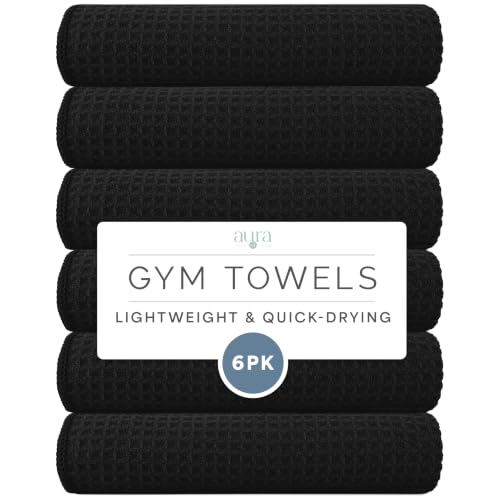
Not every towel sits neatly in one camp. Cotton blended with a modest share of synthetic fiber often dries a bit faster than pure cotton while keeping a familiar softness. Waffle weaves, with their recessed squares, shed water quickly and pack smaller than terry, though their total capacity is lower. Bamboo-derived rayon appears in some gym lines too, prized for a silky first impression, but it can lose strength when wet and demands gentler washing.
Treat novelty weaves as experiments rather than defaults. Buy one, put it through a month of real sessions, and judge it by whether you reach for it without thinking. A fabric that wins on a specification sheet but feels odd against your face will end up abandoned at the bottom of a drawer, which helps nobody.
How fast a towel actually takes up sweat
Absorbency gets quoted as a single number, yet in practice two different events matter. The first is pickup speed: how quickly the surface grabs moisture on contact. The second is total capacity: how much liquid the whole towel can hold before it starts leaving streaks behind. A towel can excel at one and disappoint at the other, and the balance you need depends on whether you dab often or wipe rarely.
Suede microfiber usually wins the pickup contest. Lay it on a wet forearm and moisture vanishes into the cloth almost instantly, because the fine fiber network pulls liquid inward by capillary action. Terry starts a fraction slower, since water must first fill the spaces between loops, but then it keeps accepting more. During a long run on a humid evening, that deeper reservoir can matter more than a snappy first touch.
Surface condition changes everything. A brand-new cotton towel coated in factory softeners may repel water for the first few washes, pushing beads around instead of soaking them up. Microfiber clogged with detergent residue behaves similarly. If a new towel disappoints, wash it several times before judging; our research consistently finds that early impressions improve once coatings rinse away and fibers open up.
Technique helps as well. Pressing and holding for a breath beats frantic scrubbing, giving capillary forces time to work and sparing your skin unnecessary friction. Blot the forehead, fold to a drier section, then move on. People who swipe once and toss the towel aside often blame the fabric for streaks that a slower, firmer press would have prevented.
Sweat is not just water
Perspiration carries salts, oils, and traces of whatever you applied before training, from moisturizer to insect repellent. Salt stiffens cotton as it dries, leaving a boardy feel that softens again only after washing. Oils coat microfiber filaments and gradually blunt their thirst, which is why a towel that once drank instantly may start smearing after a summer of heavy use unless it gets an occasional deep rinse.
Skin type adds another layer. Anyone prone to breakouts along the hairline should be especially strict about using a clean face side and laundering promptly, since a damp towel reused for days becomes a transfer surface for bacteria and old sunscreen. Sensitive skin may prefer the smoother glide of well-washed cotton over the grab of suede microfiber during repeated wiping.
Drying speed between sessions
A towel that stays damp becomes a problem long before it smells. Mildew finds moisture, zippers corrode near wet cloth, and anything stored beside a soaked towel picks up that unmistakable locker-room perfume. Drying speed therefore deserves as much attention as absorbency, particularly for early-morning trainers who hang their gear in a car or office between workouts.
Thin suede microfiber releases water fastest, especially when spread flat or hung by one corner with air moving past both faces. Under a ceiling fan or near an open window, it can go from wrung-out to usable within a short break. Terry lags, sometimes needing the better part of a day in a humid bathroom. Folding either fabric while wet defeats the purpose, trapping moisture in the inner layers where airflow never reaches.
Small habits speed things along. Shake the towel out before hanging so loops or fibers separate instead of clumping. Use a hook that holds the cloth away from the wall rather than a bar that presses half of it flat against tile. If your gym provides a spin dryer for swimwear, a brief cycle can strip surprising amounts of water from cotton, though check gym rules and fabric care labels first.
Travelers face the sternest version of this challenge. A towel rinsed in a hotel sink at midnight must be ready to pack by dawn, and that deadline favors thin synthetics almost every time. Cotton lovers who travel often sometimes carry a miniature terry piece for comfort plus a flat microfiber sheet as the dependable backup, rotating them so neither stays wet for long.
On benches, mats, and machine pads
Covering shared equipment is both courtesy and self-protection. A towel laid across a bench keeps your shirt off vinyl that may carry cleaning spray residue, chalk, and the previous user’s sweat. It also signals to others that the station is occupied, reducing those awkward negotiations when you step away for water. Choose a length that covers at least the area your torso contacts; a tiny face square leaves most of the pad exposed and defeats half the point.
Grip varies by fabric. Suede microfiber clings to smooth vinyl and rarely slides mid-set, which lifters appreciate during bench presses where a shifting layer feels unsafe. Terry can bunch or creep on slick pads, especially when damp, so smooth it flat and tuck an end under the pad if the design allows. On textured rubber flooring during floor work, either fabric stays put reasonably well, though terry offers more cushion under elbows and knees.
Machine rails and handles present a different task. Wrapping a small towel around a treadmill handrail gives you a dry grip and a ready wipe in one motion. Around a pull-up bar, a folded towel can soften the bite of knurling, but never let cloth compromise your hold on the bar itself; safety outranks comfort, and any wrap that can slip should be removed before heavy sets.
Wipe down equipment after use with gym spray and a paper towel where provided, rather than grinding your personal towel into the pad. Your towel is a barrier, not a cleaning rag. Keeping those roles separate preserves its absorbency, limits chemical exposure on your skin, and follows the etiquette most facilities expect. Our guide to best microfiber gym towels explores the equipment side of this balance in greater depth for readers who train mostly on machines.
Yoga, stretching, and floor routines
Floor work reveals another talent of the small towel: placed under hands or heels, it can either add grip or permit a controlled slide, depending on the surface pairing. On a yoga mat, a dampened microfiber layer helps palms stay planted during downward-facing poses. On smooth studio floors, a dry cotton towel under the heels lets certain mobility drills glide. Experiment during warm-ups rather than discovering the behavior mid-routine.
For stretching after a session, a rolled towel doubles as a prop. Tucked behind the neck it supports a gentle thoracic stretch; folded thickly under a knee, it cushions joints on hard ground. These secondary uses argue for choosing a towel slightly larger than your minimum, provided the extra size does not stop you from carrying it daily.
Odor: why it starts and how washing stops it
That sour, vinegar-like tang in an old gym towel has a biological origin. Warmth, moisture, and skin oils create a welcoming home for bacteria, and their waste products are what your nose detects. Once colonies settle deep into fibers and biofilm builds up, a quick rinse does little. The smell seems to vanish while the towel is dry, then blooms again the moment fresh sweat rewets the cloth.
Prevention begins before the wash. Hang the towel to dry as soon as you get home, even if laundry day is tomorrow. A towel left wadded in a bag for a weekend may never fully lose the odor it gained in those two days. Rinsing a heavily soaked towel under plain water and wringing it out buys time by removing salt and some surface grime before it sets.
When wash day arrives, separate gym towels from delicate clothing. Use enough detergent to handle genuinely dirty fabric, but resist doubling the dose, since leftover surfactant coats fibers and traps odor rather than removing it. Warm water suits most cotton and many synthetics, yet always defer to the care label. An extra rinse cycle helps households with hard water or high-efficiency machines that use very little water per load.
- Skip heavy softeners: coating agents smooth fibers by leaving residue behind, and that residue blunts absorbency on both cotton and microfiber.
- Dry completely: pull towels from the dryer or line promptly, and never fold one that still feels cool and damp at the center.
- Rotate ruthlessly: a towel that smells fresh from the drawer but turns sour within minutes of use needs a deep clean or retirement, not another hopeful cycle.
- Wash promptly after illness: any towel used while you were unwell deserves a thorough hot wash according to its label, or replacement if it is already worn thin.
Vinegar soaks and baking soda additions have devoted fans, and a plain white vinegar rinse can help dissolve detergent buildup for some loads. Treat such remedies as occasional resets rather than weekly rituals. If odor survives a careful wash, full drying, and a day of airing, the fibers themselves may be harboring more than home laundering can clear, and replacement becomes the honest answer.
Storage that keeps clean towels clean
Where a towel waits matters almost as much as how it was washed. Store clean pieces in an open basket or a ventilated shelf, not sealed inside a plastic bin while still faintly warm from the dryer. In the bag itself, a mesh pocket or a breathable pouch keeps a fresh towel apart from worn shoes and chalk bags. Some athletes keep a small dry sack purely for the used towel on the trip home, protecting everything else from its dampness.
Color coding simplifies the whole system. Assign one color to gym duty and another to household tasks, and the morning scramble becomes thoughtless. Families sharing a laundry room benefit even more, since a teenager hunting for a face towel will not accidentally grab the one destined for a weight bench.
How many towels a training bag really needs
One towel is a gamble. It assumes laundry happens on schedule, weather cooperates with drying, and no session runs longer or hotter than expected. Most regular exercisers land on a personal rotation of three to five small towels, a number that covers weekday training, a spare for double-session days, and a buffer when a wash gets postponed. The right count for you depends on frequency more than enthusiasm.
Count backward from your laundry habits. If you train four mornings a week and wash clothes every Sunday, four towels is the bare floor, with a fifth as insurance against a forgotten load. Someone who does laundry twice weekly can thrive with three. Daily trainers who favor cotton, with its slower drying, often need a deeper bench of options than microfiber devotees who can rinse and reuse a piece within the same day.
Keep one towel permanently in the bag and restock it during a fixed weekly reset rather than relying on memory each morning. A spare in the car glove box or desk drawer rescues forgotten days and costs almost nothing in space, especially in suede microfiber. Pairs sold together sometimes make restocking cheaper per piece, but only buy multiples after a single example has proven itself in your routine.
Season shifts the math. Summer heat and outdoor sessions saturate towels faster and may justify carrying two per outing, one for your face and a second for equipment. Winter indoor training in dry, heated air is gentler, and a single hand towel might finish a session barely damp. Review your rotation each season instead of treating the initial purchase as permanent.
When one session demands two towels
Certain workouts simply overwhelm a single small cloth. Hot yoga, indoor cycling classes under bright lights, and long summer runs all produce continuous sweat that saturates even generous terry before the final third. Carrying a second towel lets you retire the soaked one to a wet pouch and finish with a fresh surface, which feels better and keeps your grip safer on handles and weights.
Two-towel days also suit anyone sharing equipment in a circuit class, where a dedicated barrier towel for benches plus a personal face towel keeps roles clean and confusion low. Label or color-code the pair so the bench piece never migrates upward to your forehead in a tired moment near the end of class.
Durability after dozens of washes
A gym towel lives a harder life than almost any other textile you own. It is washed weekly or more, exposed to sunlight in car boots, dragged across rough flooring, and twisted hard during wringing. Judging durability means looking past the first soft impression in a shop and asking how the piece will behave in month six.
Edges tell the earliest story. Well-finished hems lie flat and keep their stitching, while cheap edges roll into tight cords that dig into your neck and refuse to spread flat on a bench. On terry, inspect the base weave between loops; a dense foundation resists thinning even as surface loops wear down. On microfiber, hold the cloth to the light: patchy thin spots suggest uneven fiber distribution that will worsen with use.
Fading is cosmetic, but uneven fading often signals uneven wear. Dark colors hide sweat stains and sunscreen marks gracefully, which is why so many long-serving gym towels are charcoal, navy, or deep green. Pale shades show cleanliness honestly, a virtue for face use, yet they demand prompt washing to avoid permanent graying at the center where contact is heaviest.
Expect gradual change rather than sudden failure. Cotton typically softens for the first dozen washes, holds a plateau for a long stretch, then slowly loses loft as loops break down. Microfiber keeps its shape longer but can lose pickup speed as filaments accumulate mineral deposits from hard water. A towel that needs noticeably more pressure to absorb, or that leaves your skin feeling filmed rather than dry, is announcing its decline.
Simple checks before you retire a towel
Try the puddle check on a countertop: lay the towel flat, pour a small splash of water in the center, and watch whether it soaks in promptly or pools on the surface. Pooling after a proper wash suggests coating buildup or exhausted fibers. Follow with the drape check over a bench corner. A towel that still spreads evenly and stays where placed remains useful even if its color has dulled.
Retired gym towels need not go straight to landfill. Demote sound but faded pieces to car duty, pet drying after rainy walks, or household cleanup where absorbency still counts and appearance does not. Cutting a large worn towel into smaller rags extends its service further, though keep those rags out of the gym bag to avoid mix-ups. Household guides such as best 3 fold hand towels show how older linens often find a second career around sinks and guest rooms once their training days end.
Comfort against skin, hair, and glasses
A towel touches your face more than any other training accessory, so texture deserves honest attention. Terry loops feel plush during a gentle blot but can feel scratchy when dragged repeatedly across a forehead already irritated by salt. Suede microfiber glides with less friction in short strokes, yet its grip can tug at stubble or dry skin patches. Neither is universally kinder; your own skin, and how you move the cloth, decides.
Hair changes the equation for many readers. Long hair worn loose soaks a neck towel from above, while a ponytail concentrates sweat along the hairline where a small hand towel earns its keep. Fine hair can catch in worn terry loops, and curly hair tends to frizz when rubbed, so patting rather than rubbing protects both hair and temper. Anyone who uses a separate hair towel at home already knows this principle; the gym version is simply smaller and tougher.
Glasses wearers learn to keep a corner of the towel reserved and dry. A damp, salty patch smears lenses worse than no wipe at all, and microfiber that has picked up grit can scratch coatings. If you train in glasses, consider a tiny separate lens cloth in a hard case and let the sweat towel handle everything else. Contact lens users face a simpler rule: handle lenses only after washing hands, never after gripping a towel that has been draped over shared equipment.
Sunscreen deserves a mention for outdoor athletes. Freshly applied lotion transfers to the first towel that touches your face, reducing its absorbency for the rest of the session and leaving residue that needs detergent to remove. Apply sunscreen early enough to settle before training, and accept that the towel used on a long sunny ride will need a prompt, thorough wash that evening.
Outdoor training, travel, and home workouts
Outside the gym, a small towel takes on extra jobs. Trail runners use one to clear dust from their eyes and to sit on damp logs during breaks. Gardeners training in all but name drape one around the neck for sun protection and mop up before handling tools. At outdoor courts, a towel hung on a fence marks your spot, shades a phone from direct sun, and dries a slick racket handle between games.
Travel compresses every requirement. The towel must pack tiny, dry overnight in a bathroom with no airflow, and handle both workout duty and small spills in transit. Suede microfiber dominates this niche for good reason, and many travelers choose a muted color that will not show the marks of a week on the road. Attach a small loop or clip if your routine involves hostel bunks or campsite lines, because a towel that falls in the dirt loses its appeal instantly.
Home workouts relax the rules. With a washing machine nearby and no commute, cotton terry becomes more attractive again, since drying space is plentiful and a fresh piece is steps away. A slightly larger towel can serve as a mat topper for core work, a pad under dumbbells to protect flooring, and a cover for a chair during cool-down stretches. Just keep home pieces in the same wash rotation so none lingers damp in a corner of the exercise room.
Cold weather and the forgotten towel problem
Winter brings a subtler set of needs. Indoor heating dries the air, sweat evaporates faster, and a large towel may feel unnecessary until you step outside with a damp neck into cold wind. A dry spare for the trip home is a small comfort that prevents that clammy chill. In unheated garages where many home gyms live, a towel also warms cold barbell steel briefly when draped over the bar before your first set, making early grips less shocking to bare palms.
Forgetting a towel altogether happens to everyone eventually. Borrowing a stack of paper towels is the usual fallback, and it works poorly: they shred when wet and create waste. A spare microfiber square living permanently in your bag, car, or locker ends that problem for good, which is why the spare may be the most valuable towel you own despite being used least often.
A calm buying checklist drawn from our research
Shopping becomes easier when you decide your priorities before comparing shelves or listings. Our research suggests ranking four questions in order. First, where will the towel mostly be used: bench-heavy lifting, cardio, classes, travel, or a mix? Second, which bothers you more, bulk in the bag or slower drying at home? Third, how does your skin react to smooth versus looped textures? Fourth, how many pieces does your laundry rhythm require?
- Size: pick coverage for your main activity, then confirm the folded size fits the pocket or bag section you actually use.
- Fiber: choose suede microfiber for compact travel and fast drying, terry for cushion and high total capacity, or a blend when you want a middle path.
- Edges: look for even stitching and hems that lie flat, since rolled edges shorten a towel’s useful life and comfort.
- Color: favor shades that hide training stains yet differ clearly from your household towels to keep rotations separate.
- Care: confirm the wash temperature and dryer guidance match the routine you will realistically follow every week.
- Quantity: start with enough pieces to cover your training days between washes, plus one spare that lives outside the main rotation.
Beware of miracle language. No towel stays fresh indefinitely without washing, none absorbs unlimited water, and none can compensate for a bag that seals damp gear in for days. Honest products do a modest job very well: they pick up sweat, dry in reasonable time, survive the wash, and feel pleasant enough that you keep using them. That reliability, repeated hundreds of mornings, is what you are really buying.
Price tiers follow materials and finishing more than magic. Very cheap bundles often skimp on hems and fiber quality, so their cost per month of service can exceed a mid-range towel that lasts several seasons. At the upper end, you may pay for softer long-staple cotton, unusually even microfiber, or thoughtful extras such as a hanging loop and a mesh carry pouch. Decide which extras you will use weekly and ignore the rest without regret.
Setting up your rotation in the first week
Wash new towels before the first session to remove factory finishes and loose lint, then assign each piece a place: bag, home hook, car, or drawer. After every workout, the used towel goes straight to an airy spot, never back into the clean pile on the strength of a hopeful sniff. At the end of the week, wash the whole training set together, dry it fully, and rebuild the bag in one deliberate pass.
Notice what happens during that first week. If you keep reaching for one size and ignoring another, trust that signal. If a texture irritates your face by day three, demote that piece to equipment duty and note the lesson for your next purchase. Small adjustments made early prevent a drawer full of almost-right towels later.
Questions readers ask most often
Can a small towel handle a full hour of cardio?
Yes, provided you fold it to expose fresh sections and wring it out during a water break if it becomes saturated. Steady cardio produces predictable sweat, so a neck-length piece in either fiber usually copes. Sessions in high heat or heavy humidity may still justify a second towel, and swapping halfway feels better than persisting with a dripping one.
Should face and equipment ever share one side?
Ideally not during the same session. Use the corner-marking trick described earlier, or simply dedicate the top half to your face and the lower half to pads and rails. Once the towel is washed, the distinction resets. This habit is less about fussiness and more about keeping whatever lives on shared vinyl away from eyes and mouth.
Why does a clean towel sometimes smell again so quickly?
Residual buildup is the usual culprit: detergent, softener, body oils, and minerals can coat fibers and shelter odor-causing bacteria from the wash. A thorough rinse cycle, complete drying, and an occasional soak aimed at stripping residue often restore a towel that seemed lost. When those steps fail repeatedly, the fabric has likely reached the end of its hygienic life.
Is thicker always better for heavy sweaters?
Not necessarily. Thickness adds capacity but also adds drying time and bag weight, and a very thick towel can feel oppressive around the neck. Many heavy sweaters do better with two medium towels used in sequence than with a single dense one carried all session. Match the system to your tolerance for mid-workout swaps.
Sport-specific notes that change the choice
Weight rooms reward coverage and stability above almost everything else. Your towel spends much of its life spread across benches, draped over incline pads, or folded beneath your head during floor presses. A medium length in terry or a grippy suede sheet both serve well, and many lifters keep a darker color purely because chalk dust shows less against charcoal than against white. Wipe chalk from your palms onto the lower edge rather than the center, preserving a cleaner zone for your face.
Studio classes move faster and offer fewer places to stash belongings. During Pilates, barre, or dance fitness, a towel lives at the corner of a mat or looped around a water bottle between tracks. Compact hand formats shine here, since anything larger trails across the floor and collects dust from neighboring mats. Quick pickup matters more than total capacity when you have ten seconds between songs to clear your brow and find your footing again.
Swimmers who add land training face a wetter baseline than most athletes. Hair and shoulders may already be damp before the first set begins, so a towel with genuine reserve capacity earns its space. Suede microfiber pulls double duty around pools, drying skin after a shower and then serving during dryland work, provided you rinse away chlorine promptly afterward. Chlorine left in any fiber shortens its life and dulls colors, whatever the label promises.
Racket sports introduce grip as a safety issue rather than a comfort detail. Sweat running onto a handle mid-rally changes how a racket or paddle behaves at contact, and a towel within reach during changeovers prevents that slide. Players often prefer a slightly rougher terry surface for hands, because the texture seems to strip moisture from palms more completely in a single squeeze. Keep that hand towel off the court surface itself, where grit would embed and later scratch skin.
Teen athletes and shared family bags
Households with school-age athletes face a logistics puzzle: towels vanish into lockers, team bags, and friends’ cars with remarkable speed. Buying a distinctive pattern for each child ends most disputes and makes the missing piece easier to describe when it turns up in a lost-property box. Expect higher loss rates at this age and choose accordingly; a dependable mid-range towel replaced once a season beats a premium piece whose disappearance stings.
Teach younger athletes the same hang-it-up habit you follow yourself. A towel rescued from a bag the same evening and draped over a chair back will smell fine after washing, while one excavated three days later may carry a odor that survives several cycles. Clear family rules about where used towels land, ideally a single ventilated hamper near the door, turn a recurring argument into a boring routine.
Small repairs and habits that stretch service life
A loose thread does not condemn a towel. Snip it flush rather than pulling, since tugging a loop in terry can unravel a whole row and leave a ladder of thin fabric. A dropped hem can be restitched by hand in minutes, and catching it early prevents the edge from fraying into a shape that no longer lies flat. Microfiber rarely frays in the same way, but a torn hanging loop can be trimmed cleanly so it stops catching on zippers.
Wringing technique matters more than most people expect. Twisting any towel into a tight rope strains fibers at the fold points, and doing so while the cloth is gritty grinds particles through the weave. Shake out debris first, fold the towel lengthwise, and press water out over a sink with flat hands before a gentle twist. That calmer method removes nearly as much moisture and treats the fabric far more kindly across hundreds of repetitions.
Sunlight is both friend and slow enemy. Brief airing outdoors after washing freshens fibers and helps stubborn smells fade, yet leaving colored towels on a line for entire summer afternoons bleaches patches and stiffens cotton. Bring them in once dry. In winter, a towel draped near, not on, a radiator dries overnight without the scorched stiffness that direct heat can cause.
Finally, keep gym towels out of jobs that ruin them for their real purpose. Bleach cleanup, shoe polishing, and car detailing all load fibers with chemicals or grit that later meet your face. A towel retired from training can take those tasks over, but a towel still in your rotation should stay in its lane. Clear lanes, simple washing, and prompt drying together explain why some towels last for years while others fade within a single season.
Reading the room: gyms, studios, and shared spaces
Every venue has unspoken customs about towels, and noticing them early makes you a welcome regular. Some facilities hand out their own cloth at the desk and expect that supply to handle bench coverage, leaving your personal piece purely for your face. Others provide nothing beyond spray bottles, so arriving without a towel marks you out quickly. Watch what experienced members do during your first visits, then adapt your kit to match local expectations rather than assuming one rule travels everywhere.
Noise and space etiquette apply too. A towel snapped loudly to shake out dust may startle someone mid-lift nearby, and a sprawling setup that claims two benches invites friction in a crowded room. Keep your towel folded when not in use, park it on your own station, and carry it with you when you move between areas. Small courtesies compound: wiping a pad you used, returning a borrowed hook space, and keeping damp cloth off shared seating all protect the commons that every member depends on.
Beginners sometimes feel self-conscious about bringing any gear at all, worried that a carefully chosen towel signals vanity. It signals the opposite. Arriving with a clean towel, a bottle of water, and a plan for wiping down equipment is the quiet uniform of someone who respects the room. Nobody remembers the brand or color a month later; they remember whether the bench was left dry for the next person.
Check prices on Amazon
Live listings for the shortlist in this guide are pulled from Amazon below, so prices and availability are always current at the moment you look.


Bringing it all together
A small sweat towel is humble equipment, and that is precisely why choosing it well pays off so often. The right dimensions disappear into your bag and appear in your hand exactly when needed. The right fiber balances pickup speed against comfort and drying time in a way that suits your sport, your skin, and your laundry habits. Good washing keeps the whole arrangement fresh, and a modest rotation means you never have to choose between training and doing an emergency load of laundry first.
Start with one honest assessment of how you actually exercise, then buy a small set that fits that reality rather than an imagined, more glamorous routine. Wash them before use, hang them after every session, and pay attention during the first fortnight to what your hands reach for without thinking. That quiet preference is the most trustworthy review you will ever read.
May your next session end with a dry forehead, a clean bench left behind you, and a towel that still smells like nothing at all. Pack it tonight, hang it by the door, and let tomorrow’s workout begin without a single small frustration.