What's inside
- Where to buy
- Quick Picks
- How these picks were chosen
- Six pads under the hand
- Specification ledger: every stated fact in one place
- How do you pick the right shammy pad for your game?
- Lane oil: the invisible opponent the pad exists to fight
- The ten-second ritual: wiping technique that actually works
- Matching the pad to the oil: house shots, sport patterns and long days
- Inside the bowling bag: the pad’s place in the ecosystem
- Pad materials in depth: flat microfiber, suede and waffle
- A season with a pad: week one to month six
- Buying for a team, a junior, or as a gift
- The hand side of the pad: grip, sweat and the tenth frame
- What a pad cannot do, said plainly
- Common mistakes
- Final recommendation
- FAQ
As an Amazon Associate I earn from qualifying purchases. This post may contain affiliate links at no extra cost to you.
As an Amazon Associate, cottageverdict.com earns from qualifying purchases.
The phrase bowling ball towels conjures a bath-sheet image that could not be more wrong for this category, because what bowlers actually carry is a shammy pad: a palm-sized square of microfiber or suede, roughly ten by eight inches, whose entire career consists of wiping lane oil off a bowling ball’s surface in the seconds before a shot. That film of oil is not dirt in the decorative sense. It changes how the ball grips the lane and where it begins to hook, so the pad in a bowler’s hand is closer to a piece of tuning equipment than to a towel, and this guide reviews the six below on those terms: oil removal, grip in the hand, washability, and how the pad survives a season in a bowling bag.
Six pads, three philosophies. TonGass and the bowlingball.com pack build grip into the pad itself with dots or a grip backing, so the pad stays planted in the palm while the ball turns against it. Lane Ghost and Storm sell the classic shammy proposition (oil removal, consistency, a trusted name in the Storm case) with minimal fuss. Mangrove wraps its microfiber in a polisher brief with reinforced stitching and a clean-and-carry design, while HunnmingRe goes furthest on construction, a dual-sided waffle suede in three layers, sold as a three-pack in three colours. Sizes cluster tightly around the hand (10×8, 10×7, 7.75 inches square where stated), because a pad is wielded, not draped.
Everything claimed here comes from the listings themselves, and the listings make performance claims (improved grip, improved precision, consistent hook, better ball reaction) that this guide attributes to their makers rather than endorsing as laboratory fact. What can be assessed from the titles is construction, dimensions, pack count and care, and those turn out to be the differences that decide which pad a bowler is still happy to own in month six.
Where to buy
Each pad is sold on Amazon, with its link waiting inside its review below. The TonGass leads as a single 10×8 microfiber shammy whose easy-grip dots aim at bowlers whose hands sweat under league pressure. The bowlingball.com entry triples the count, three 7.75-inch square pads in a Space Pyramid design with easy grip backing, built for rotation through a long night. Lane Ghost’s oil removing cloth keeps the brief minimal and washable. Mangrove’s polisher adds thickness, reinforced stitches and a carry-minded design. HunnmingRe’s three-pack brings dual-sided waffle suede in blue, purple and grey. Storm’s Premier Shammy closes the list as the established brand’s black 10×7 standard.
Quick Picks
| Pick | Best for | Điểm nổi bật theo title |
|---|---|---|
| TonGass Microfiber Bowling Ball Towel 10×8 Shammy | Bowlers who lose pads from sweaty palms | 10×8 microfiber shammy with easy-grip dots |
| bowlingball.com 3-Pack Microfiber Shammy Towel Space Pyramid | League players rotating pads across a night | Three 7.75in square pads, easy grip backing |
| Lane Ghost Bowling Ball Shammy Pad Oil Removing Cloth | Purists wanting a simple washable oil cloth | Oil removing cloth, washable and reusable |
| Mangrove Bowling Ball Polisher Microfiber Bowling Towel | Bowlers who polish as much as they wipe | Thick, fast-absorbing, reinforced stitches, clean and carry design |
| HunnmingRe 3 Pcs Bowling Shammy Towel Microfiber Suede | Players wanting two working faces per pad | Dual sided waffle suede, 3 layers, washable, pack of 3 |
| Storm Premier Shammy Bowling Towel Black 10×7 | Brand loyalists and league regulars | Storm Premier shammy in black, 10×7 inches |
How these picks were chosen
The category boundary was enforced first: a pick had to be a ball pad, sized for one hand and described for wiping a ball’s surface, not a general sports towel that a seller had merely photographed near a lane. All six listings pass that test in their own words (shammy pad, oil removing cloth, polisher for bowlers), and their stated dimensions, where given, confirm the palm-scale format that distinguishes this equipment from every other towel in a bowler’s bag.
Surface material formed the second pass. Microfiber dominates, as expected, since its split fibres lift oil rather than smearing it, but the HunnmingRe’s microfiber suede and waffle construction offers a genuinely different texture, and the guide keeps it for that reason. Claims language was recorded carefully: where a listing says a pad improves grip, precision, hook consistency or ball reaction, the review reports the claim as the maker’s and discusses the mechanism (a clean, dry ball surface behaves more predictably) without dressing the claim up as independently measured fact.
Grip engineering separated the field next. Two pads build traction into their backs (dots on the TonGass, easy grip backing on the bowlingball.com set), because a pad that slides in the palm while a fourteen-pound ball turns against it is a pad failing at half its job. The others rely on size, texture and the bowler’s hand, a legitimate older school that many league players still prefer.
Pack count and washability closed the selection. Oil-soaked pads degrade between washes, and a bowler with three pads rotates a fresh face into play while the others wait for laundry; two of the six sell exactly that system in a single purchase. Washable-and-reusable language, stated by Lane Ghost and HunnmingRe, was treated as a first-class feature rather than fine print, because a pad that cannot be washed is a consumable with a short and expensive life.
Six pads under the hand

TonGass Microfiber Bowling Ball Towel 10×8 Shammy
TonGass starts from the failure nobody advertises: the pad itself slipping. Its 10×8 microfiber shammy carries easy-grip dots on the hand side, so the palm holds the pad while the pad holds the ball, and the listing’s claims (cleaning dirt and oil to improve grip and precision) describe the intended chain of events honestly enough. A clean ball surface meets the lane the way the coverstock was designed to meet it, and a pad that stays planted makes that cleaning a two-second habit instead of a fumbled ritual performed while the lane waits.
- Size as listed: 10 x 8 inches
- Material as listed: microfiber
- Grip feature as listed: easy-grip dots
- Job as listed: cleans dirt and oil
- Claim as listed: improve grip and precision
Strengths
- The dotted grip answers the sweaty-palm problem that league nights in warm centres reliably produce.
- At 10×8 it is among the largest pads here, wrapping more of the ball per pass.
- Microfiber lifts oil into the fibre instead of pushing it around the surface.
Trade-offs
- A single pad means a single face rotation; heavy oil nights will saturate it before the third game.
- Grip dots add texture some bowlers dislike against the ball hand’s skin between shots.
- The listing claims outcomes (precision) that depend on the bowler as much as the pad.
In practice the TonGass suits the bowler whose routine is wipe, breathe, shoot, repeated thirty times a night without variation. The dots let the pad be held loosely rather than clutched, and a loose hold is a calmer hold, which matters more to scoring than any equipment claim on this page. Keep it draped over the ball in the rack between frames and it also serves as a dust cover, a second job pads quietly perform in every bowling bag.
Washing decides its lifespan. Microfiber that is washed with softener loses its oil appetite, so this pad wants a plain detergent wash and air drying, and it wants that wash often, because a pad carrying last week’s oil into this week’s first frame is redepositing the problem it exists to remove.
Best for: a league bowler with warm hands who wants the largest grippy pad in the guide and a simple one-pad routine. Not suited for: a high-volume player bowling long formats on oily lanes, who will saturate a single pad before the night ends. Check price on Amazon for the dotted-grip TonGass in its 10×8 format.

bowlingball.com 3-Pack Microfiber Shammy Towel Space Pyramid
Where TonGass sells one good pad, bowlingball.com sells a system: three microfiber shammy pads, each 7.75 inches square, with easy grip backing, in a Space Pyramid design, with listing claims about cleaning dirt and oil to improve ball reaction. The three-pack logic is the same rotation logic as a chef’s side towels (one in hand, one resting, one in the wash) and it solves the saturation problem structurally rather than by asking one pad to be heroic. The square format is smaller than the TonGass rectangle, which some bowlers will read as less coverage and others as a pad that disappears into the palm more completely.
- Pack as listed: 3-pack
- Size as listed: 7.75 x 7.75 inches
- Material as listed: microfiber
- Grip feature as listed: easy grip backing
- Design as listed: Space Pyramid
- Claim as listed: improves ball reaction
Strengths
- Three pads make rotation effortless across a long league night or a tournament day.
- Easy grip backing gives the same planted-palm confidence as the TonGass dots, in a square format.
- Spares forgive the classic disasters: a pad left at the centre, a pad dropped in a puddle of lane-side soda.
Trade-offs
- The 7.75-inch square covers less ball per wipe than the 10-inch rectangles here.
- A printed design face may matter to minimalists who want their kit invisible.
- Three pads still need washing as a set, or the rotation quietly collapses to one favourite.
The Space Pyramid artwork is worth a sentence because visibility is a feature in a bowling centre. Pads are borrowed, swapped and walked off with by accident constantly, and a pad with a loud, recognisable design comes back to its owner in a way that anonymous black squares do not. Tournament bowlers who spread kit across two lanes’ worth of seating learn this lesson expensively and then buy distinctive gear forever after.
Used as intended (fresh pad each game, the used ones aired on the bag rather than sealed inside it), the set also extends each pad’s working life, since microfiber rested between outings releases its grip on oil in the wash more completely than a pad used to exhaustion daily.
Best for: league and tournament bowlers who bowl long nights and want a fresh, grippy pad always in reach. Not suited for: a casual twice-a-month bowler, for whom three pads is inventory without a problem to solve. Check price on Amazon for the three-pad Space Pyramid set.

Lane Ghost Bowling Ball Shammy Pad Oil Removing Cloth
Lane Ghost writes the shortest brief in this guide and arguably the most confident one: an oil removing cloth that promotes consistent hook, helps maintain reliable performance, and is washable and reusable. No dimensions are trumpeted in the title, no grip gadgetry, no pack arithmetic. The proposition is the classic shammy proposition, that a ball wiped clean before every shot hooks the way it hooked in practice, because the variable of accumulating lane oil has been removed from the equation frame by frame.
- Type as listed: shammy pad, oil removing cloth
- Care as listed: washable and reusable
- Claim as listed: promotes consistent hook
- Claim as listed: helps maintain reliable performance
- Size: the title omits any measurement
Strengths
- Washable and reusable is stated outright, the care promise a pad’s whole lifespan hangs on.
- The consistency framing is the honest one: pads do not add hook, they stop oil subtracting it unpredictably.
- A gadget-free cloth folds into any bag pocket and offends no one’s routine.
Trade-offs
- Without stated dimensions, buyers must check the product page to confirm the pad suits their hand.
- No grip backing is claimed, so the pad relies on texture and the bowler’s hold.
- A single cloth inherits the saturation limit of every single-pad purchase.
There is a philosophy embedded in this listing that experienced bowlers will recognise. Ball reaction drifts across a night for several reasons (lane oil carries down, surfaces warm, the bowler tires), and the controllable variable is the ball’s surface at the moment of delivery. A plain, reliable oil cloth, used before every shot without exception, is how serious players have managed that variable for decades, and Lane Ghost is selling exactly that discipline in cloth form.
The washable claim also makes it the natural spare: the cloth that lives in the car or the second bag, ready when the main pad is in the laundry. Bowlers who travel between centres with different oil volumes will find a plain cloth’s neutrality an asset, since it asks for no adjustment of technique from house to house.
Best for: a disciplined bowler who wipes before every shot and wants a washable, no-nonsense oil cloth. Not suited for: ordering blind on size — the dimensions are not confirmed in the title itself, so check the listing before purchasing anything. Check price on Amazon and confirm the cloth’s size on the listing page first.

Mangrove Bowling Ball Polisher Microfiber Bowling Towel
Mangrove calls its product a polisher, and the word choice relocates the product’s centre of gravity: not just wiping between shots, but maintaining the ball’s surface as a small ritual of ownership. The listing describes thick, fast-absorbing microfiber that locks dirt and moisture, a clean and carry design, reinforced stitches, added protection, and a soft, lightweight build. Read together, that is a pad designed to live around the ball (carried with it, protecting it, polishing it) rather than merely visiting it between frames.
- Type as listed: ball polisher, microfiber towel for bowlers
- Build as listed: thick, fast-absorbing
- Stitching as listed: reinforced stitches
- Design as listed: clean and carry, added protection
- Hand feel as listed: soft and lightweight
- Dimensions: none stated in the listing title
Strengths
- Reinforced stitching addresses the edge fray that kills cheap pads first.
- Thickness gives the hand something to work with and the ball a cushioned wrap between games.
- The carry-and-protect brief suits bowlers whose ball travels in a simple tote rather than a padded roller bag.
Trade-offs
- A thicker pad absorbs oil well but also holds it, so it needs washing as faithfully as any pad here.
- No dimensions in the title means the in-hand fit must be verified on the product page.
- Polisher language may overshoot the needs of a bowler who only wants a quick between-shot wipe.
The protection angle deserves respect. A bowling ball’s surface is its performance, and a ball rattling unprotected against shoes, grips and bag hardware picks up the scuffs that a pad like this exists to prevent as much as to polish away. Bowlers who own one good ball and bowl everywhere with it are precisely the audience for a pad that doubles as the ball’s travelling coat.
Between shots, the thickness changes the wipe itself: more microfiber depth means more oil capacity per pass, so the Mangrove can handle a heavier oil pattern before its surface is loaded. On dry house shots it is more pad than the night requires, which is a pleasant direction for excess to lean.
Best for: a one-ball bowler who polishes, protects and carries with the same cloth and values stitched durability. Not suited for: a minimalist who wants the thinnest possible pad that vanishes into a pocket. Check price on Amazon for Mangrove’s reinforced-stitch polisher pad.
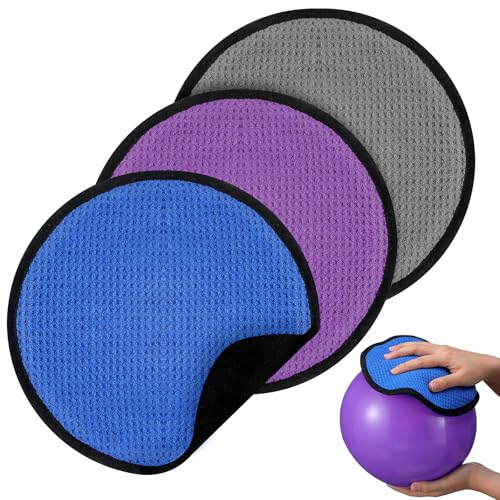
HunnmingRe 3 Pcs Bowling Shammy Towel Microfiber Suede
HunnmingRe builds the most engineered pad in the guide and sells it three at a time. The construction, per the listing, is microfiber suede with a waffle texture, dual sided, in three washable layers, in blue, purple and grey, for removing oil and dirt at the alleys. Dual-sidedness is the headline: two working faces effectively double each pad before it needs the wash, and combined with the three-pack count, a bowler owns six fresh surfaces before laundry day becomes urgent. The waffle suede texture also promises a different kind of bite on the ball, a gentle scouring action compared with flat microfiber’s glide.
- Pack as listed: 3 pieces
- Material as listed: microfiber suede
- Texture as listed: waffle suede cloth
- Construction as listed: dual sided, 3 layers
- Care as listed: washable, reusable
- Colours as listed: blue, purple, gray
Strengths
- Two faces per pad and three pads per pack is the deepest rotation system in this guide.
- Waffle texture gives the wipe a light scouring quality that flat cloth cannot match.
- Three distinct colours make ownership unmistakable in a shared bowling bag or a team’s kit.
Trade-offs
- Three layers make a thicker, stiffer pad that some bowlers will find less supple in the palm.
- Suede-style surfaces can feel grabby against a polished ball; bowlers with high-gloss finishes should test gently first.
- No dimensions appear in the title, so hand fit must be checked on the listing page.
The colour trio is doing quiet organisational work. Blue for league, purple for practice, grey for the car, or one colour per ball in a multi-ball bag: colour-coding is how bowlers with systems keep their rotation honest without thinking about it. It also solves the pad-ownership disputes of shared households, where two bowlers’ identical black pads would otherwise merge into one communal, oil-sharing pool.
For alley use specifically, the listing’s own framing, the waffle suede’s durability story is appealing. House centres are hard on cloth (lane-side spills, gritty floors, machine oil in the approaches), and a pad built in layers with a scouring face tolerates that environment better than a delicate single-layer cloth asked to do everything.
Best for: a system-minded bowler wanting maximum fresh surfaces, colour coding and a scouring waffle texture. Not suited for: a bowler who prizes a thin, supple pad feel above rotation depth. Check price on Amazon for the three-colour waffle suede set.

Storm Premier Shammy Bowling Towel Black 10×7
Storm is a name league bowlers already trust with their balls, bags and shoes, and the Premier Shammy is the conservative purchase of this guide: a black shammy towel at 10×7 inches from a major bowling brand, with a title that claims nothing beyond what it is. In a category full of dots, waffles and grip backs, that restraint is itself information. The Premier line exists to be the standard pad in a standard routine, bought on the strength of a brand whose other equipment the bowler already owns.
- Brand line as listed: Storm Premier
- Size as listed: 10.00 x 7.00 inches
- Colour as listed: black
- Type as listed: shammy bowling towel
- Material detail: the listing title does not specify one
Strengths
- The 10×7 format is the classic shammy footprint, large enough to work, small enough to palm.
- Black hides oil staining better than any colour in this guide, keeping the pad presentable for seasons.
- A major brand’s pad integrates with the bags, balls and accessories its owner likely already uses.
Trade-offs
- The title specifies no material, grip feature or washability claim, so the listing page must answer those questions.
- A single black pad is the easiest pad in bowling to lose or have mistaken for someone else’s.
- Bowlers wanting engineered grip help will find none claimed here.
There is a real argument for the standard. League bowling is a ritual sport, and equipment that matches the ritual (the same brand on the ball and the pad, the same black square in the same hand) removes micro-decisions from a night that should be spent reading lanes. Storm’s pad is for the bowler who has already decided everything else and wants the pad question closed by a name they trust.
Black’s practicality cuts both ways, as noted: it conceals oil beautifully and camouflages itself in a dark bag just as well. A stitched initial, a coloured clip, or simply always returning it to the same pocket are the veteran countermeasures, and they cost nothing.
Best for: a Storm-loyal league regular wanting the classic 10×7 black shammy from a known bowling house. Not suited for: a bowler who wants grip engineering or a multi-pad rotation in a single purchase. Check price on Amazon for the Premier Shammy in its standard black format.
Specification ledger: every stated fact in one place
| Pad | Stated size | Count | Signature feature from the listing |
|---|---|---|---|
| TonGass | 10×8 in | 1 | Easy-grip dots on microfiber |
| bowlingball.com | 7.75×7.75 in | 3 | Easy grip backing, Space Pyramid design |
| Lane Ghost | Not stated in title | 1 | Washable oil removing cloth |
| Mangrove | Not stated in title | 1 | Reinforced stitches, clean and carry |
| HunnmingRe | Not stated in title | 3 | Dual sided waffle suede, 3 layers |
| Storm Premier | 10×7 in | 1 | Classic black shammy format |
How do you pick the right shammy pad for your game?
How many games do you bowl in a sitting?
Count honestly, because pad saturation follows game count more than any other variable. A three-game league night on a medium house pattern is one pad’s honest workload, which makes any single pick here viable. Tournament days, marathon practice sessions and heavy oil patterns multiply the oil load, and that is where the three-packs (bowlingball.com, HunnmingRe) stop being luxuries and become the correct tool, since a fresh face in game five is worth more than a premium face exhausted in game two.
Do your hands stay dry under pressure?
Bowlers know their own hands. If yours stay dry, texture and habit will hold any pad in this guide, and the classic cloths (Lane Ghost, Storm) are wide open to you. If the tenth frame finds your palms damp, engineered grip is not a gimmick but a correction: the TonGass dots or the bowlingball.com backing keep the pad planted so the wipe stays a wipe instead of becoming a chase. Choose for the hands you have in the tenth frame, not the ones you have in practice.
Is your ball’s finish polished, matte or reactive?
Coverstock character changes what a pad should do. High-gloss polished balls show every smear and reward a soft, fine wipe; matte and reactive resin surfaces drink lane oil eagerly and reward absorbency and, for many bowlers, the light scouring bite of a waffle texture like HunnmingRe’s. The listings aim their claims accordingly (reaction, hook consistency, grip), and while those claims are the makers’ own, the underlying logic is sound: the pad is the last thing to touch the surface before the lane does, so its texture is part of the shot.
Will you actually wash it?
Every pad here lives or dies by laundry, and the washable claims in the Lane Ghost and HunnmingRe listings simply say out loud what all six require. A bowler who will wash a pad weekly can buy any construction on the page. A bowler who knows, in their heart, that washing will be monthly should buy the deepest rotation available (three pads, two faces each at the HunnmingRe extreme) so that neglect is absorbed by inventory rather than by ball reaction.
Lane oil: the invisible opponent the pad exists to fight
A bowling lane is dressed with oil in a pattern, heavier toward the heads and tapering downlane, and every ball that travels through it ferries oil back on its surface. That returning film does three unhelpful things: it fills the pores and texture that generate friction, it transfers to the bowler’s hands and then to everything else, and it makes the ball’s next journey start from a different surface than the last one. The shammy pad, used in the ten seconds before a shot, is the only point in that cycle a bowler fully controls, which is why a five-inch square of cloth carries an outsized reputation in a sport of heavy machinery.
Consistency is the correct word for what wiping buys, and the Lane Ghost listing uses it for a reason. A wiped ball does not hook more in any magical sense; it hooks the same, shot after shot, because its surface condition has been reset to a known state. Bowlers chasing a repeatable shape will always value that reset over any single spectacular strike, and it is why the pad ritual survives every equipment fashion the sport produces.
Oil also explains the pad’s own ageing. A pad’s fibres load with oil gradually, and a loaded pad starts returning oil to the ball instead of removing it, the exact inversion of its purpose. The signals are tactile (the pad feels slick rather than thirsty) and visual (a sheen on the ball after wiping). Washing resets the fibres; rotation delays the loading; neglect guarantees the inversion. Every care instruction in this guide descends from that single paragraph of physics.
The ten-second ritual: wiping technique that actually works
Technique is simple but not careless. Cup the ball in the pad, or the pad against the ball, and turn the ball through two full rotations with firm, even pressure, covering the track area where the ball actually contacts the lane rather than polishing the whole sphere like an apple. Two rotations take under ten seconds and suit the rhythm of a league turn; a frantic single swipe mostly redistributes the film. Between frames, the pad then rests somewhere it can breathe (draped on the ball, over the bag’s edge) rather than being sealed in a pocket with its oil load.
Watch a strong league bowler for one full game and count how little of the routine varies: the same steps to the ball return, the same two rotations of the pad, the same breath at the same dot on the approach. The pad’s contribution to that metronome is easy to miss precisely because it is the only element that never changes; balls rotate, lanes transition, spares demand arithmetic, but the wipe is always the wipe. Equipment writers chase novelty, yet the deepest value in this category is the opposite (a small, stable ritual object), and it explains why bowlers replace a beloved pad with the same model rather than shopping the field. Consistency of tool feeds consistency of motion, and the pad is where that chain begins each frame.
Hands matter as much as the ball’s surface. A quick pass of the pad’s clean face, or a separate hand towel, keeps oil off the bowling hand, because oil transferred to fingers changes a release as surely as oil left on a coverstock changes a hook. Several pads here are large enough at 10 inches to serve both duties in sequence (ball first, hands second, always in that order) which is a small operational detail that league regulars build into muscle memory within a month.
The same microfiber family that serves bowlers at this miniature scale serves travellers at full-towel scale, where quick drying and compact packing rule; the multi-packs compared in Best Boat Towels apply the same fibre logic to life on the water. Bowlers nursing the hands and feet that league nights punish may also appreciate the comfort-focused footwear reviewed in Best Massage Slippers, which examines textured massage soles in a strictly comfort frame. And for the summer months when league shoes give way to open footwear at home, Best Womens Open Toe House Slippers separates the airy warm-weather styles from the fuzzy winter ones.
Matching the pad to the oil: house shots, sport patterns and long days
Not all lane oil is created equal, and the pad that cruises through a house league can be overwhelmed by a sport pattern. House shots are dressed generously in the middle and forgivingly at the edges, and they still load a ball’s surface steadily across three games; that is the baseline workload every pad in this guide was implicitly chosen for. Sport and challenge patterns spread oil flatter and often longer, which means more of the ball’s surface returns wet per shot and the wiping ritual shifts from maintenance to necessity. Bowlers stepping up to those patterns should step up their rotation in the same week, which in practice means arriving with a three-pack rather than discovering the need for one in game four.
Practice volume is the hidden variable. A bowler drilling spares for two hours throws more balls than a league night contains, on lanes that may not have been re-dressed since morning, and the pad absorbs the difference. Coaches who run such sessions keep a pad per student for a reason, and the colour-coded HunnmingRe set reads, in that light, less like a consumer three-pack and more like a small coaching kit. Even solo practice benefits from the discipline of a fresh face per hour, because a saturated pad teaches the bowler to distrust a ball that is actually innocent.
Travel bowling adds the final wrinkle: unfamiliar centres, borrowed house balls for casual games, and oil whose volume nobody warned you about. A pad is the cheapest insurance in the bag for that uncertainty, small enough to ride in a shoe bag’s pocket, and the plain washable cloths (Lane Ghost above all) suit the traveller who may need to rinse a pad in a hotel sink and have it dry by morning. The pad that travels is the pad that gets used, and use, as this guide keeps insisting, is the entire point.
Inside the bowling bag: the pad’s place in the ecosystem
A bowling bag is a small civilisation of specialised objects (shoes with sliding soles, grip sacks, tape, cleaners, spare soles and heels) and the shammy pad’s citizenship in it is worth understanding. It lives closest to the ball because its job happens in the ball’s orbit, and veterans give it a fixed address: draped over the ball in the main compartment, or in the same side pocket every night, so the hand finds it without eyes during a match. Gear that must be searched for during a turn gets skipped, and a skipped wipe is oil’s opportunity.
The pad also mediates between the ball and everything else. Balls sweat oil in storage, and a pad draped over the ball in the bag absorbs the weep that would otherwise migrate to grips, towels and the bag’s lining. That quiet janitorial duty is one reason pads age faster than their lane use alone would suggest, and one more argument for washing on schedule even in weeks when the bowling itself felt clean.
Cleaners are the pad’s chemical cousins, and the division of labour matters. A pad handles the mechanical removal of oil between shots, in seconds, at the lane. Ball cleaners handle the deeper degreasing at home or between sets, resetting a surface that wiping alone can no longer restore. Confusing the two (expecting a pad to resurrect a saturated coverstock, or spraying cleaner mid-game where rules and time forbid it) disappoints in both directions. The six products here are all firmly on the mechanical side of that line, and they are reviewed as such.
Pad materials in depth: flat microfiber, suede and waffle
Microfiber earns its dominance honestly. Its fibres are split into microscopic channels that trap oil and dirt mechanically, lifting them off a surface rather than lubricating them across it, which is why a microfiber wipe leaves a ball feeling dry to the palm while a cotton wipe leaves it feeling merely rearranged. The TonGass, the bowlingball.com set and the Mangrove all build on that base behaviour, differing in grip engineering and thickness rather than in fundamental appetite for oil.
Suede, as in the HunnmingRe’s microfiber suede, trades a little of that slick efficiency for bite. A suede face grips the ball’s surface more assertively, which bowlers with polished or pearl finishes sometimes prefer for the final pass, and which can help a pad stay oriented in the hand without any backing at all. The waffle texture layered into the same pad adds channels that hold removed oil away from the contact face, a small engineering answer to the smearing problem that flat cloths solve only by being flipped or folded to a clean zone.
Thickness is the third variable, and it cuts both ways with unusual fairness. A thick pad (Mangrove’s polisher build, HunnmingRe’s three layers) holds more oil per session, cushions the hand and doubles as ball protection in the bag. A thin pad folds smaller, dries faster after washing, and gives the bowler a more direct feel of the ball’s surface through the cloth, which some players use as information, reading the tack of the coverstock through the wipe. Neither school is wrong; they are answers to different questions, and a two-pad household containing one of each is a more common end-state than brand loyalty would predict.
What no material survives is neglect in the wash. Microfiber’s channels clog with softener residue, suede mats down if it is dried against heat, and waffle channels hoard grit if they are never shaken out before washing. The care instructions scattered through this guide are not boilerplate; they are the difference between a pad that performs in month twelve as it did in week one and a pad that became a souvenir by spring.
A season with a pad: week one to month six
A new shammy pad is at its most absorbent and its least familiar. The fibres are fully open, the wipe feels almost grabby, and the bowler is still building the habit of reaching for it, which means its early scores owe as much to attention as to equipment. By week four the ritual is automatic, the pad has softened into the hand’s shape, and this is the honest peak of the relationship: maximum function, zero thought. Bowlers who want to preserve that plateau should start the wash rhythm here, not later, because oil loading is cumulative and invisible until it suddenly is not.
Month three separates the constructions. Edge stitching begins to tell its story, which is where Mangrove’s reinforced seams earn their mention; grip dots and backings either still grip or have quietly polished smooth; suede faces either still bite or have matted toward ordinary cloth. None of these are failures (they are wear, the receipt for work done) but they are the moment a second pad enters most bags, and the moment the three-pack buyers discover they already own the replacement.
By month six a well-kept pad is a veteran: slightly thinner, deeply habitual, and still fully functional if it has been washed and aired as this guide nags about. A neglected pad at month six is a different object (oil-logged, faintly sour, applying as much as it lifts) and the tragedy is that its owner usually blames the ball. The cheapest diagnostic in bowling is a new or freshly washed pad: if the mysterious loss of reaction vanishes with the wipe, the ball was innocent all along, and the season’s mystery was a five-inch square of cloth asking for a wash.
Buying for a team, a junior, or as a gift
Team bowling multiplies pads the way it multiplies everything, and colour becomes logistics. A team whose members carry distinguishable pads (the Space Pyramid design, the HunnmingRe trio’s three colours) spends less time on the small claims court of whose pad is whose, and a captain buying a set per player is buying peace as much as microfiber. Juniors deserve their own sentence: a young bowler building habits benefits from a pad sized to a smaller hand and owned outright, because the wipe ritual learned at twelve is the one still running at forty, and the classic formats here scale down gracefully in a junior’s palm. As a gift, a pad is the rare bowling present that cannot be the wrong weight, span or layout; pair the Storm with a Storm bowler’s existing kit or the grippy TonGass with the friend whose hands you have watched sweat through a tenth frame, and the gift lands as observation, not guesswork.
The hand side of the pad: grip, sweat and the tenth frame
Half of every wipe happens against the bowler’s own palm, and that half decides whether the other half happens at all. A pad that rotates, slides or bunches in the hand forces the bowler to squeeze, and squeezing introduces tension into a hand that is about to perform one of the most fine-motor acts in recreational sport. This is the unglamorous truth behind the grip features in this guide: TonGass’s dots and bowlingball.com’s backing are not decoration or upsell, they are attempts to let the pad be held at rest, so the bowling hand arrives at the ball already calm. Bowlers who have never thought about the pad’s back side should turn theirs over tonight and consider what their palm has been negotiating with.
Sweat scales with stakes, which is why the tenth frame is the correct test environment and the practice lane is not. A pad system that works in frame two and fails in frame ten has failed at the only moment that distinguishes league bowling from exercise. Grip-backed pads, a spare dry pad for the money frames, and the habit of wiping the bowling hand itself between shots are the three standard defences, and all three are cheaper than the spare ball many bowlers buy instead. The scoresheet cannot tell the difference between a hook lost to lane transition and a release lost to a damp palm; the bowler’s routine has to defend against both, and the pad is where those defences meet.
What a pad cannot do, said plainly
Honesty about limits keeps small tools useful. A shammy pad cannot restore a coverstock that has absorbed oil over months; that deeper saturation is the territory of home cleaning and, eventually, professional resurfacing, and no amount of wiping at the lane will substitute. It cannot correct a release, read a lane, or choose a line, and the listings’ claims about precision and reaction should be heard in that proportion: the pad removes a variable, the bowler supplies everything else. It cannot make a house ball behave like a fitted reactive ball, and it cannot rescue a night on which the lanes were never dressed at all.
What it can do, it does completely: present the lane with the same ball surface on shot thirty as on shot one, keep the bowler’s hands and the ball’s cover in a known state, and cost so little in money, weight and attention that there is no rational case for bowling without one. Tools that fully deliver a narrow promise outlast tools that half-deliver a grand one, and the shammy pad’s decades-long tenure in every serious bag is the market’s verdict on exactly that basis. Buy the pad whose construction matches your hand, your volume and your laundry honesty, and let it be narrow brilliantly.
Common mistakes
Wiping with a saturated pad. Once a pad is loaded with oil it applies as much as it removes. Wash it, rotate it, or retire it, but do not let it perform its own opposite.
Using fabric softener on microfiber. Softener coats the fibres that make microfiber thirsty. A plain wash preserves the very absorbency the pad was bought for.
Treating the pad as a hand towel first. Order matters: ball first with a clean face, hands second. Reversed, the pad carries hand sweat and lane-side grime onto the ball’s surface.
Buying one pad for tournament volume. Long formats on fresh oil will defeat any single pad by the middle games. Rotation is not upselling; it is arithmetic.
Storing the pad sealed in the bag while damp with oil. A pad aired on the bag’s edge between outings washes cleaner and smells better than one entombed with its load.
Final recommendation
Let your hand and your schedule decide. Sweaty palms point to the TonGass dots or the bowlingball.com grip backing, with the latter’s three-pack winning for long nights. Discipline-first bowlers who wipe before every shot will be happiest with Lane Ghost’s washable plainness or the Storm Premier’s branded standard, depending on whether a name matters to them. The Mangrove suits the owner who polishes and protects one treasured ball, and the HunnmingRe set is the maximalist answer (three pads, two faces, waffle bite, colour coding) for bowlers who treat rotation as a system. All six are small, cheap-in-spirit tools doing a precise job; the best one is the one still being used, washed and rotated, in the last month of the season.
FAQ
Why not just use the centre’s towel or my shirt? Because neither lifts oil the way microfiber or suede does, and both smear the film rather than removing it. A shammy pad is purpose-built for the ball’s surface; improvised cloth is how oil wins.
How often should a shammy pad be washed? After every few outings for a single pad in regular league use, sooner if it feels slick. Rotation packs stretch the interval per pad, but the set should still cycle through the wash together.
Does wiping really change ball reaction? The listings claim improved reaction, grip and hook consistency, and the mechanism is straightforward: a clean, dry surface meets the lane predictably, while an oil film makes each shot start from a different surface. The pad restores consistency rather than creating hook from nothing.
What size pad should a beginner start with? The classic 10×7 to 10×8 formats (Storm, TonGass) are the easiest to learn with, since they cover the ball generously while staying palm-sized. Smaller squares reward an established routine.
Can one pad serve two bowlers sharing a bag? It can, but it will saturate twice as fast and vanish into the other person’s routine. The three-packs exist partly to end that negotiation.
Are shammy pads allowed in sanctioned league and tournament play? Wiping a ball with a dry or plain cloth pad between shots is a standard, accepted part of the game; what competitions regulate is applying substances to the ball’s surface during play. A clean, dry pad used for oil removal is the routine every serious bowler performs in full view of opponents, but check your event’s rules for anything beyond plain wiping.
How do I know when a pad is finished and should be replaced? When a thorough wash no longer restores its thirst (the ball still feels slick after wiping), when edges fray into the working face, or when grip features have worn smooth. A pad that has been washed back to life several times has already paid for its replacement.
Should the pad touch the finger holes and grips? Keep the wipe on the coverstock. Oil inside finger holes is a separate, smaller problem best handled at home, and dragging a gritty pad across inserts helps neither the inserts nor the pad.
Do pads work on plastic spare balls too? Yes, and arguably they matter there in reverse: a spare ball’s value is its straightness, and an oil film can add an unwanted whisper of movement at the worst moment. A quick wipe keeps a plastic ball honest, which is why many bowlers wipe the spare ball as faithfully as the strike ball.
Should a pad be carried in the ball’s compartment or a side pocket? Either works if it is always the same place. Draped over the ball it absorbs storage weep and is impossible to forget; in a side pocket it stays cleaner of the pair. Pick one address and keep it for the season.
One habit separates pad owners from pad users: the post-night minute. Shake the pad out over a bin, drape it somewhere airy rather than sealing it in the bag, and drop it in the wash on the week’s laundry day without negotiating. That minute, repeated, is the difference between a pad that is equipment and a pad that is merely present.
And if the whole apparatus still sounds excessive for a square of cloth, bowl one night with a fresh pad and one night without, on the same lanes, and let the tenth frame of the second night make the argument this page has been circling.
Bring the pad to the first practice, not the first crisis, and the habit will already be yours when the games begin to count.
Wipe, breathe, bowl: the smallest square in your bag guards the biggest number on your scoresheet.


