Our Top Picks


What's inside
- What a welding blanket is built to do
- Fiberglass: the common workhorse material
- Silica fabric: for the highest published heat ratings
- Carbon fiber felt: light, soft, and resistant to burn-through
- How to read a published temperature rating
- Fabric weight in ounces per square yard
- Sizes, shapes, and planning coverage
- Grommets and hanging a blanket vertically
- Sparks, spatter, and slag are three different hazards
- Protecting floors, vehicles, and nearby equipment
- The boundary with fire suppression blankets
- Plumbing, soldering, and heat shielding at small scale
- Inspection, damage patterns, and when to replace a blanket
- Dry storage and everyday care
- Choosing by process: MIG, TIG, stick, cutting, and grinding
- Reading a listing and weighing user feedback
- Hems, stitching thread, and edge construction
- Fire watch, hot work permits, and workshop discipline
- Layering blankets and combining materials
- Home garages versus professional fabrication shops
- Terminology that misleads: fireproof, flame retardant, heat resistant
- Common selection and setup mistakes
- Working overhead, on ladders, and in confined spaces
- Vehicle exhaust, muffler, and underbody work
- How many blankets a workshop should own
- Questions to settle before ordering
- Seasonal work and outdoor fabrication
- What good documentation from a maker looks like
- Disposal and the end of a blanket life
- Check prices on Amazon
- Making the final selection
As an Amazon Associate I earn from qualifying purchases. This post may contain affiliate links at no extra cost to you.
If you choose a product through a link on this page, the retailer may pay this site a small commission. The amount you pay stays the same, and that commission supports the research behind these guides.
What a welding blanket is built to do
A welding blanket is a heat-resistant textile barrier placed between hot work and everything that should not be scorched, ignited, or pitted. Its everyday enemies are sparks that bounce farther than expected, grinding spray that travels in a bright fan, molten slag that drops and rolls, and radiant heat that quietly warms whatever sits behind the work area. The blanket absorbs, deflects, or simply endures that abuse so floors, walls, vehicle panels, and nearby materials do not have to.
Unlike a household blanket, softness and comfort are irrelevant here. The buying criteria are material, published temperature rating, fabric weight, size, edge construction, and how the blanket can be positioned or hung for a given job. This guide compares those specifications using manufacturer-published data, published standards information, and patterns in posted user feedback from welders, fabricators, and home workshop owners.
One boundary needs stating early, because confusing two product families can be dangerous. A welding blanket is a protective barrier for hot work. A fire suppression blanket, the kind marketed for smothering a small pan fire in a kitchen, is a different product with a different intended use. The final sections of this guide draw that line in detail, and no blanket discussed here should be treated as a substitute for a fire extinguisher or for emergency equipment.
Fiberglass: the common workhorse material
Woven fiberglass is the most widely sold welding blanket material, and its popularity rests on a practical balance of heat tolerance, availability, and cost relative to the alternatives. The glass fibers themselves do not burn, the weave can be made dense and stable, and the finished fabric drapes well enough to cover irregular shapes while staying put under its own weight.
Published temperature ratings for fiberglass blankets commonly sit in a middle band that suits general welding, cutting, and grinding protection. Those figures describe the fabric itself under the maker stated conditions, and buyers should read whether a rating refers to continuous exposure or brief contact, because the two numbers describe very different duties. A blanket that tolerates a short burst of extreme heat may still degrade if left pressed against a hot surface for an extended period.
Coatings change fiberglass behaviour significantly. Vermiculite, silicone, and acrylic treatments are applied by various makers to improve abrasion resistance, reduce fiber shedding, and help the surface shed molten material instead of letting it cling. Posted user feedback frequently distinguishes coated from uncoated versions, with coated blankets drawing praise for cleaner handling and uncoated ones criticised for feeling itchy against bare skin during setup.
That skin irritation point is worth planning around. Loose glass fibers can irritate forearms and necks when a blanket is shaken out or folded, so gloves and long sleeves during handling are a common recommendation in published workshop guidance. Storing the blanket rolled rather than stuffed also reduces fiber breakage, which is one source of the shedding users describe.
Silica fabric: for the highest published heat ratings
Silica blankets occupy the top of the temperature range in this category. Their fibers are engineered with a very high silica content, and makers publish ratings for them that exceed standard fiberglass by a wide margin, positioning them for heavy welding, torch cutting, and situations where molten metal contact is frequent rather than occasional.
The trade-offs are handling and price relative to fiberglass, discussed here qualitatively because figures shift constantly. Silica fabric can be less forgiving of abrasion and folding abuse, and published care guidance for high-silica textiles tends to emphasise gentle handling and inspection. Buyers who do not actually work at the temperatures silica addresses gain little from it, which is why most general workshops are well served lower in the range.
Where silica earns its place is sustained proximity to serious heat: protecting a surface directly beneath heavy cutting, lining an area where slag accumulates, or shielding equipment that cannot be moved away from a fabrication zone. In those roles the published rating is not a marketing flourish but the working specification, and matching the blanket to the hottest realistic exposure is the correct selection method.
Thickness and weight still matter within the silica family. A heavier silica blanket offers more insulation value behind the hot face, slowing heat transfer to whatever it protects, while a lighter one is easier to hang and reposition. The same weight logic that governs the rest of this category applies at the top end too.
Carbon fiber felt: light, soft, and resistant to burn-through
Carbon felt, sometimes listed as carbon fiber felt or pan felt, behaves differently from woven glass fabrics. It is a soft, flexible, almost cloth-like material that conforms closely to curved surfaces, which makes it popular for protecting vehicle panels, painted surfaces, and finished work near a weld zone. Makers publish high temperature ratings for quality carbon felts, and users value the material for resisting burn-through from direct spark and spatter contact.
Because felt has no woven structure, it drapes without the springiness of fiberglass and stays where it is laid on a contoured panel. That quality explains its following among automotive and plumbing workers, who often need protection on a vertical or curved surface close to the joint, including soldering work near finished materials where a stiff blanket would bridge and leave gaps.
The limitations are coverage economics and tear behaviour. Carbon felt is commonly sold in smaller pieces than fiberglass blankets, and while it resists heat superbly, it does not offer the same broad-area coverage for a workshop floor or a full curtain. It is best understood as a precision shield for the area immediately around the work, paired with a larger barrier when sparks travel farther.
Users comparing felt with woven options should also note how edges are finished. Some felt products are sold cut to size with raw edges that hold up well in service, while others are hemmed. Posted feedback suggests edge fraying is less of a concern with felt than with uncoated fiberglass, but repeated folding along the same line can eventually thin any of these materials.
How to read a published temperature rating
Temperature ratings are the most quoted and least carefully read numbers in this category. A responsible listing states a figure alongside the exposure type it describes, and buyers should look for whether the maker distinguishes between a working temperature, a melting or degradation point, and a short-duration peak. When a listing offers one dramatic number with no context, treat that number as incomplete information rather than as a promise.
Standards give some structure here. Published industry standards for welding protective materials classify fabrics by their ability to withstand molten metal splash, radiant heat, and flame exposure under defined conditions, and makers who test against recognised standards usually say so in their documentation. A blanket described with reference to a standard tells the buyer far more than one described only with adjectives.
Real exposure also depends on geometry. A spark landing briefly on a horizontal blanket is a light event, while the same blanket hung vertically with slag pooling against a fold experiences concentrated, sustained contact. Ratings assume reasonable use, and positioning the blanket to shed material rather than collect it extends the life of any fabric in this guide.
Finally, remember that the rating belongs to new material. A blanket that has served through many jobs, accumulated burn spots, and thinned at its folds no longer performs like the published figure, which is why inspection and retirement criteria, covered later in this guide, are part of safe selection rather than an afterthought.
Fabric weight in ounces per square yard
Welding blankets are commonly specified by fabric weight, expressed in ounces per square yard. The number works the way dozen weight does for moving textiles: higher generally means a denser, more insulating, more durable blanket, and lower generally means a lighter, more flexible, more easily hung one. Published ranges across the market run from light fabrics suited to spark protection up to very heavy fabrics built for slag and heavy spatter duty.
Light blankets have a genuine role. For grinding, where the hazard is a spray of sparks rather than molten pools, a lighter fiberglass blanket is easier to drape over nearby objects, quicker to reposition between tasks, and less tiring to hang overhead or vertically for a short job. Choosing heavy fabric for light duty mostly buys inconvenience.
Heavy blankets earn their weight where molten material is expected. Dense fabric resists burn-through longer, insulates the protected surface better, and lies still in draughty workshop conditions where a light blanket might lift at an edge. The handling cost is real, though: a large heavy blanket is a two-hand, sometimes two-person, positioning job, and it stores as a bulky roll.
Coatings complicate the weight reading slightly, because a coated medium-weight fabric can outperform an uncoated fabric of similar weight against abrasion and spatter adhesion. Read weight together with material and coating, never as a standalone verdict, and cross-check against the kind of hot work described in the sections above.
Sizes, shapes, and planning coverage
Blankets are sold from small pads sized for a bench or a single panel up to large sheets intended to cover a vehicle side, a work bay opening, or a section of floor. The correct size is the one that covers the hazard zone plus a margin, because sparks bounce and slag rolls beyond the point where they first land. Experienced users consistently describe buying larger than the immediate work area and folding the surplus to create a doubled layer where exposure is fiercest.
Folding deserves its own note. A folded edge or doubled section multiplies protection locally, but a fold can also trap molten material in its crease, concentrating heat on one line of fabric. Positioning folds away from the most direct spatter path, and shaking the blanket out after the job rather than leaving debris sitting in a crease, are habits that posted user accounts and workshop guidance both support.
Multiple smaller blankets sometimes serve better than one large one. They can be overlapped like shingles so spatter cannot find a gap, assigned to different stations in a shop, and replaced individually when one wears out. The overlap must be arranged with the upper blanket shedding onto the lower, never leaving an upward-facing seam that collects molten material.
Coverage planning connects to general workshop housekeeping. The area behind and beneath hot work often contains the very items a blanket protects, and related cleanup equipment matters after the job, a practical neighbour topic in best ash fireplace vacuums, where containing hot debris safely is also the central problem.
Grommets and hanging a blanket vertically
Brass or steel grommets along the edges let a blanket hang as a curtain, and a vertical curtain is often the most valuable configuration in a workshop. Hung between the work and the rest of the space, it intercepts the horizontal travel of grinding spray and welding sparks that a floor blanket cannot reach, protecting people, vehicles, and stored materials across the room.
Grommet spacing and reinforcement decide how well hanging works in practice. Closely spaced grommets distribute the blanket weight across many points, reducing the sag and the tear risk at each hole, while wide spacing on a heavy blanket concentrates stress and can distort the top edge. Listings that state grommet spacing give buyers a real basis for comparison, and product photographs usually reveal whether the grommet band is reinforced.
The hanging hardware matters as much as the blanket. Hooks, wire, or a curtain track rated for the blanket weight, mounted to structure rather than to anything flammable or heat-sensitive, complete the system. A curtain should hang with its bottom edge arranged so sparks striking it fall to a safe floor area, not onto a ledge of accumulated material at its base.
Orientation can rotate with the job. The same grommeted blanket that hangs vertically on Monday can lie horizontally under a cutting job on Tuesday, which is why many buyers prefer grommets on all four sides rather than along one edge only. That flexibility is worth checking before purchase, because retrofitting grommets into heat fabric is a poor substitute for factory-set hardware in a reinforced band.
Sparks, spatter, and slag are three different hazards
Buying well requires separating hazards that casual descriptions lump together. Sparks are tiny, bright, and mostly a surface and ignition concern; they cool quickly but travel far and can lodge in cracks, sawdust, and fabric folds some distance from the work. Nearly any intact blanket in this category handles spark duty, and coverage area matters more than exotic material for this hazard.
Spatter is molten metal ejected in small droplets that can stick, burn through thin material, and pit glass and paint on contact. Spatter resistance is where coatings, density, and material choice begin to separate products, and where posted feedback about pinholes appearing after jobs becomes a meaningful signal to read before buying.
Slag is the heavyweight hazard: larger masses of molten or semi-molten material that drop, roll, and sit radiating intense heat wherever they stop. Slag duty demands the heavy end of the fabric weight range, generous thickness, and positioning that lets material roll off to a safe area instead of pooling on the blanket. A blanket that performs beautifully against sparks may be genuinely unsuitable for slag, and honest listings say which duty they are built for.
Grinding adds a fourth pattern worth distinguishing, a sustained directional spray rather than falling material. Against grinding spray, a vertical curtain and eye-level coverage matter more than floor protection, and the blanket role is interception across a distance rather than endurance under a pool of heat.
Protecting floors, vehicles, and nearby equipment
Workshop floors vary in vulnerability. Sealed concrete tolerates abuse that would ruin a timber floor, an epoxy coating, or the flooring of a residential garage, so the blanket requirement rises as the floor finish becomes more valuable. A heavy blanket under the work, extended well beyond the drop zone, is the standard arrangement described in published fabrication guidance for finished spaces.
Vehicle work concentrates several needs at once. Paint, glass, trim, and interior materials all sit close to bodywork welding and cutting, and carbon felt often serves as the contact layer on the panel while a larger fiberglass blanket covers the wider zone. Protecting glass deserves emphasis, because spatter pits glass permanently and a windshield is an expensive lesson in blanket coverage.
Nearby equipment, from tool chests to compressors to the hoses and cables of the welding setup itself, benefits from a hung curtain or a draped blanket even when it sits outside the obvious spark path. Heat and spatter damage to a gas hose or a power cable is a safety problem, not merely a cosmetic one, and routing those lines away from the hot zone matters more than covering them after the fact.
Outdoor work introduces wind, which rearranges both sparks and lightweight blankets. Heavier fabric, secure anchoring at the edges, and awareness of where the wind carries the spark stream toward dry vegetation or structures are all part of outdoor setup, and posted accounts of blankets lifting mid-job almost always involve light fabric used unsecured outside.
The boundary with fire suppression blankets
This distinction protects readers, so it is stated plainly. A fire suppression blanket is designed to be placed over a small contained fire, typically a cooking pan, to cut off oxygen and smother the flames. It is stored for an emergency, deployed by hand at close range, and governed by its own product standards and instructions.
A welding blanket is designed to shield surroundings from hot work, not to be thrown over a burning object as a firefighting act. Its size, weight, coatings, and condition after workshop use all argue against treating it as emergency suppression equipment. A used welding blanket may carry embedded metal particles, damaged patches, and contamination that make it a poor and unpredictable smothering tool.
The emergency blanket family adds a third, unrelated product: the thin reflective sheet sold for warmth and signalling, surveyed in best mylar blankets. Despite sharing the word blanket, that product offers no meaningful protection against welding heat and must never be substituted near hot work.
Every workshop doing hot work should have a suitable fire extinguisher within reach, know its class and condition, and treat blankets strictly as prevention. Prevention and response are different layers of safety, and a buying guide serves its readers best by refusing to blur them.
Plumbing, soldering, and heat shielding at small scale
Not all heat shielding happens in fabrication shops. Plumbers soldering pipe near timber joists, finished walls, or insulation use small heat shields and pads for exactly the same reason welders use blankets: the flame is brief, but the material behind the joint cannot be allowed to scorch. Product listings for this niche emphasise compact size, flexibility, and resistance to direct flame contact for short periods.
Carbon felt performs strongly in this role because it conforms around pipes and sits flat against a stud or board without bridging. Fiberglass pads serve as well when the area is flat and the exposure modest. In both cases the published rating should be read against direct-flame duty specifically, since a torch flame held in place is a more concentrated exposure than drifting sparks.
Homeowners attempting occasional soldering should note the surrounding-material question before the product question. Removing or wetting down nearby combustibles where appropriate, keeping an extinguisher present, and shielding what cannot be moved form the complete setup, with the heat pad as one element rather than the whole plan.
The same small-scale logic applies to heat guns, brazing, and occasional torch work in home workshops. A modest blanket or pad, correctly rated and correctly placed, covers these jobs without the expense or bulk of heavy fabrication-grade fabric.
Inspection, damage patterns, and when to replace a blanket
A welding blanket is a consumable on a long timeline, and knowing its retirement signs is part of owning one. Hold the blanket up to light during inspection and look for pinholes, thin patches, and clusters of burn marks, especially along habitual fold lines and in the centre of the usual work zone. Damage concentrates where exposure concentrates, so the inspection should start where the sparks usually land.
Frayed edges and torn grommet bands matter beyond appearance. A fraying edge sheds fibers, catches more readily on rough surfaces, and signals that the weave is breaking down, while a torn grommet point removes a hanging option and concentrates stress on the remaining hardware during vertical use. Small edge wear can be monitored; a grommet band tearing away from the fabric is a replacement conversation.
Stiffness and brittleness are subtler warnings. Fabric that once draped and now crackles or holds a fold rigidly has likely suffered heat degradation through its thickness, and its remaining protective value is doubtful even if no hole is visible. Posted user accounts of blankets failing mid-job often describe exactly this history: the blanket looked intact but had quietly cooked through many sessions.
Contamination ends service too. A blanket soaked with oil, solvent, or other flammable material has been converted from a barrier into a hazard, and no cleaning assurance fully reverses that. Workshops should treat a contaminated blanket as waste, not as stock, and should store working blankets away from the chemicals that create this failure mode.
Dry storage and everyday care
Moisture is the quiet enemy of stored heat fabric. A blanket put away damp can mildew, degrade coatings, and corrode its own grommets, and a damp blanket deployed near hot work behaves unpredictably as the moisture flashes off. The care rule is simple and absolute: store dry, in a dry place, and let a blanket that has been exposed to rain or wash water dry fully before it is rolled away.
Rolling rather than folding for storage reduces the sharp creases where fibers break and where later burn-through tends to begin. Where folding is unavoidable because of shelf space, varying the fold lines between uses spreads that wear instead of concentrating it along one weakening seam of fabric.
Shake the blanket out outdoors after significant jobs, away from the work area, to dislodge embedded spatter and grit before storage. Material left embedded in the weave becomes the seed of the next burn spot and can scratch vehicle paint if the blanket is later draped over a panel. Gloves during shake-out protect hands from both fibers and sharp embedded particles.
Keep the blanket out of general household textile circulation. It should never be laundered with clothing, borrowed as a drop cloth for painting near ignition sources, or repurposed as a picnic or pet blanket after service. Its identity as workshop safety equipment, marked if necessary with a tag, protects both the blanket and the household. Related protective textiles for sound control are compared in best acoustic blankets, and the contrast is instructive: similar woven construction, entirely different duty and care rules.
Choosing by process: MIG, TIG, stick, cutting, and grinding
Different processes produce different hazard profiles, and matching blanket to process sharpens every earlier specification. MIG welding generates moderate spatter and suits mid-weight fiberglass for most shop work. Stick welding throws heavier spatter and more slag, pushing the choice toward heavier fabric and larger coverage beneath the work.
TIG welding is comparatively clean, with minimal spatter, and its blanket needs centre on radiant heat and the occasional spark rather than molten assault. A lighter blanket or carbon felt near the work often suffices, which is one reason TIG stations frequently use smaller, precisely placed shields instead of full curtains.
Plasma and torch cutting produce the most demanding common duty: a stream of molten material driven downward and outward. Heavy fabric under the cut, generous floor coverage, and attention to what lies below the cutting surface, including lower shelves and floor drains where sparks can travel, define a responsible setup for cutting work.
Grinding and sanding return to the curtain logic. The blanket here is a backstop, and its size and hanging arrangement matter more than its temperature class. Workshops that grind frequently often dedicate a permanently hung curtain to the grinding station, a pattern also seen around other fixed equipment such as the wash-down area served by best 3000 psi pressure washers, where containing spray in one zone organises the whole shop.
Reading a listing and weighing user feedback
A trustworthy listing states the material, the fabric weight, the dimensions, the grommet arrangement, and a temperature figure with enough context to interpret. Makers who test against published standards tend to reference them, and makers who coat their fabric usually name the coating because it is a selling point. Silence on several of those basics should lower confidence more than any dramatic headline number raises it.
Feedback reading in this category benefits from filtering by use. A complaint about a light blanket failing under stick welding slag describes a mismatched purchase, not necessarily a defective product, while praise from a grinder for the same blanket may be entirely deserved. Match each report to the duty it describes before letting it move your decision.
Repeated themes carry the most weight: burn-through at fold lines, grommets tearing out early, heavy fiber shedding, and blankets arriving smaller than the stated dimensions. Those patterns, appearing across many independent accounts, describe manufacturing realities that a specification sheet will not confess.
Also note feedback about handling comfort, because a blanket that irritates skin or sheds heavily will be used reluctantly, and safety equipment that people avoid deploying protects nothing. Coated fiberglass and carbon felt draw consistent handling praise in posted accounts, which is a practical point in their favour for shops where the blanket is repositioned many times a day.
Hems, stitching thread, and edge construction
Edge construction decides how gracefully a blanket ages. Better blankets are hemmed with heat-resistant thread, frequently an aramid thread of the family used in protective clothing, because ordinary thread would fail long before the fabric does. A listing that names its thread material is signalling that the maker thought about the whole assembly rather than only the headline fabric.
Double-stitched hems resist the fraying that begins when a blanket is dragged across concrete or caught under equipment. Buyers can assess this from photographs: look for parallel stitch rows, even tension, and hems that lie flat rather than puckering. Puckered hems suggest rushed manufacture and tend to worsen as the fabric flexes through repeated hanging and folding.
Grommets should be set into that hemmed, reinforced band rather than punched through a single layer of fabric. A grommet in single-layer material is a tear waiting for its first heavy hang, and feedback about grommets pulling out early usually traces back to exactly that shortcut. Rolled or folded hem bands distribute the load and keep the hardware seated through years of repositioning.
Corner construction concentrates all of these concerns. Corners carry hanging stress, collect dragging wear, and are the first place a blanket is grabbed during setup. Reinforced corners with dense stitching are a quiet marker of a blanket built for a working shop rather than for occasional light duty.
Fire watch, hot work permits, and workshop discipline
A blanket is one element in a hot work system that published safety guidance describes more broadly. Combustibles within the spark zone should be removed where possible rather than merely covered, because covering is the fallback for what cannot be moved. The blanket protects the immovable: the floor, the wall, the machine that cannot leave the room.
Many professional settings formalise this through hot work permits and a designated fire watch during and after the job, since smouldering material can declare itself well after the arc stops. Home workshops rarely adopt the paperwork, but the underlying habit scales down well: a deliberate scan of the area after work, attention to cracks and corners where sparks lodge, and a pause before leaving the space unattended.
That post-work vigilance interacts with blanket placement. Sparks that bounce off a curtain land somewhere, and knowing where the blanket directs them, toward a clear patch of concrete rather than toward a rack of offcuts, is part of setting up rather than an afterthought. Positioning is prevention aimed at a destination.
Extinguisher knowledge completes the picture. The correct class for the materials present, a current inspection state, and an unobstructed path to the extinguisher all matter more than any single blanket specification, and this guide repeats the point deliberately because buying research can crowd out the basics if nobody states them.
Layering blankets and combining materials
Layering is the experienced answer when a single blanket sits at the edge of its duty. A heavy fiberglass blanket as the outer, sacrificial layer over a second blanket beneath multiplies insulation and means the top layer can be retired without losing the whole system. Layering also lets a shop place carbon felt precisely at the hottest point while broad fiberglass coverage handles the wider zone.
Air gaps between layers add insulation value, because still air slows heat transfer, but loose layering can also let spatter slip between sheets at an exposed edge. Overlap edges generously and arrange the top layer to shed material outward, away from the seam, so the layered system behaves like one well-planned barrier rather than two casual ones.
Combining a blanket with a rigid barrier suits some stations. A steel sheet or welding table surface takes the direct abuse of cutting, while the blanket handles the irregular surroundings that rigid material cannot cover. Published fabrication practice mixes the two routinely, and home workshops copying that pattern get durability where it is cheap and flexibility where it is needed.
What layering should never do is rescue a contaminated or degraded blanket. A damaged blanket under a new one still contributes its weakness and its contaminants to the system, and retirement decisions from the inspection section apply regardless of how many layers sit above the failure.
Home garages versus professional fabrication shops
The home garage welder typically works intermittently, on vehicles, trailers, gates, and household repairs, in a space shared with storage, bicycles, and flammable household chemicals. For that setting, one mid-to-heavy grommeted fiberglass blanket plus a piece of carbon felt for panel work covers the realistic range, and the storage and contamination discipline matters as much as the specifications.
Professional shops multiply every variable: daily use, heavier processes, multiple stations, and formal safety obligations. Their buying emphasises standardised sizes, replaceable stock, and documented ratings that satisfy workplace requirements. A home buyer reading professional feedback should translate rather than copy, since a shop complaint about a blanket lasting only months may describe a duty cycle a home user would spread across a decade.
Shared and rental workshops sit between those poles. There, blankets suffer unknown histories and hurried handling, so inspection before each use is not optional, and personal ownership of a known blanket is a reasonable choice for a regular user of a shared space.
Teaching environments add one more consideration: visibility. A blanket in good condition, correctly hung, models the right habits for learners, while a scorched and torn one teaches that barriers are decorative. The state of the equipment in a training space is part of the curriculum whether anyone intends it or not.
Terminology that misleads: fireproof, flame retardant, heat resistant
Marketing language in this category deserves translation. No textile blanket is fireproof in the absolute sense the word suggests; every material here has limits of temperature, exposure time, and condition. Careful makers describe their products as heat resistant or flame resistant within stated ratings, and buyers should mentally convert any absolute claim into a request for the underlying number.
Flame retardant can describe a treatment applied to a base fabric rather than an inherently resistant fiber, and treatments can degrade with washing, abrasion, and age. Inherently resistant materials, glass, silica, and carbon among them, carry their protection in the fiber itself, which is one reason this category is built from those materials rather than from treated natural fibers.
Heat resistance and flame resistance are also not synonyms. A material may resist igniting while still transmitting enough heat to scorch what lies behind it, which is why insulation value, governed by thickness and weight, sits alongside the temperature rating in any serious comparison. The protected surface cares about the heat that arrives, not only about whether the blanket itself caught light.
Reading listings with those distinctions in mind turns vague adjectives into checkable questions, and makers who answer with specifications rather than slogans are usually the ones whose products perform as described in owner feedback.
Common selection and setup mistakes
The most common mistake is buying to the average job instead of the heaviest one. A blanket chosen for routine MIG work that later faces a cutting session is being asked to perform outside its selection basis, and the failure surprises only the person who forgot how the purchase was reasoned. Buy for the top of your realistic range and let lighter jobs be easy ones.
Undersizing runs a close second. A blanket that exactly covers the visible work area leaves no margin for the bounce and roll that real sparks and slag perform, and the scorch mark typically appears just beyond the blanket edge, in the margin that felt unnecessary at purchase. Margin is not waste in this category; it is the working part of the coverage.
Hanging a curtain and then ignoring its base is a setup error with a predictable result. Sparks intercepted by the curtain fall to its foot, so the floor at the base needs the same clearance and protection as any other landing zone. A small floor blanket or a cleared strip of concrete at the curtain line completes the geometry.
Finally, storing the blanket folded on top of the welding machine or beside chemicals, for convenience, quietly undermines it. Heat cycles from the machine, contamination from nearby containers, and crushing under stored items all shorten service life, and the blanket then underperforms on the day it is genuinely needed.
Working overhead, on ladders, and in confined spaces
Overhead welding reverses the usual geometry, sending spatter downward onto the welder, the floor, and anything stored beneath the work. Blankets in this setting protect lower surfaces and equipment, and their placement must account for material falling in a cone rather than landing in one spot. Coverage beneath overhead work should be the most generous in the shop, and nobody should treat a blanket below as permission to store combustibles under an active overhead job.
Vertical work on walls, vehicle sides, and structural steel sends material down a face, where a hung blanket directly beneath the work catches what a floor blanket set back from the wall would miss. Combining a vertical catch section with a floor section, overlapped at the base, mirrors the shingle logic described earlier and closes the gap at the wall line where slag otherwise accumulates.
Confined spaces concentrate every hazard and add ventilation and access concerns that sit outside blanket selection entirely. Published safety guidance treats hot work in confined spaces as a distinct discipline with its own requirements, and a buying guide should say clearly that a blanket is the smallest part of that preparation. Where guidance requires permits, attendants, or monitoring, those requirements govern, and the blanket simply performs its barrier role inside them.
Ladders and scaffolds introduce a housekeeping point: blankets draped over rungs or platforms become trip and slip hazards. Secure any blanket that shares a surface with feet, keep walkways clear of fabric edges, and route the protection around the access path rather than through it.
Vehicle exhaust, muffler, and underbody work
Exhaust work is a common home workshop job that places flame and sparks close to fuel lines, brake lines, underbody coatings, and interior trim above the floor pan. A small carbon felt or fiberglass shield positioned between the work and those components is the standard protective habit, and the shield placement deserves a deliberate pause before the torch or cutter starts, because underbody sightlines are poor once work begins.
Underbody coatings and accumulated road grime can themselves be flammable, which changes the risk calculation beyond the components list. Cleaning the immediate work zone where practical, shielding what cannot be cleaned, and keeping the extinguisher within arm reach are the layered habits that experienced mechanics describe, with the blanket as the middle layer rather than the whole answer.
Lift and jack safety sits adjacent to this topic and takes precedence over it. No blanket consideration justifies working under an improperly supported vehicle, and heat work under a car should begin only after the support question is settled to the standard that published automotive guidance describes.
How many blankets a workshop should own
One blanket forces constant repositioning and leaves the shop choosing which zone to protect when a job threatens two. Most working setups converge on a small set: a large grommeted blanket that serves as curtain and floor cover, a mid-size blanket for draping equipment and benches, and a small felt or pad for close work on panels and pipes. That trio covers the configurations this guide has described without turning storage into a problem.
Shops that cut frequently often add a dedicated heavy floor blanket that lives at the cutting station and absorbs the worst duty, preserving the general blankets for lighter service. Dedicating the sacrificial role to one blanket is economical in the long run, because burn damage concentrates on a single replaceable item instead of spreading across the whole set.
Rotation extends life in multi-blanket ownership. Alternating which blanket takes the primary position evens out the exposure that inspection later reveals, and marking each blanket with a simple identifier helps track condition history when several similar pieces share a shelf.
Whatever the count, every blanket in the set should pass the same inspection standard. A rarely used blanket stored badly can be the weakest piece in the building, and ownership numbers mean little if condition is assumed rather than checked.
Questions to settle before ordering
Confirm the material first, in the maker own stated terms, and be cautious with listings that describe a blanket only by colour or by a proprietary name that conceals the fiber. Confirm the fabric weight and the dimensions together, since a large blanket in a light fabric and a small one in a heavy fabric serve entirely different stations in the shop.
Ask how the temperature figure was determined and what exposure it describes, and give more trust to the answer that mentions a standard or a test method than to the answer that simply repeats a bigger number. Ask whether the fabric is coated, with what, and whether the thread and grommets are specified, because those details predict service life as reliably as the headline rating predicts heat tolerance.
Then picture the blanket in your own space. Where will it hang, what will it cover, where will sparks land at its base, and where will it live between jobs. A blanket that answers those four questions convincingly on paper will usually perform in the workshop, while one bought on a rating alone often turns out to be the wrong shape for the room it enters.
Seasonal work and outdoor fabrication
Outdoor fabrication in dry seasons carries a responsibility that indoor work does not: the spark stream leaves the property of the workpiece and enters grass, leaf litter, and timber fencing. A blanket under and behind the work reduces that travel, but wind can carry sparks beyond any blanket, and published fire safety guidance for outdoor hot work emphasises clearing the surrounding ground and having water or an extinguisher immediately present. On high-risk days, postponement is a legitimate professional decision that no blanket specification overrides.
Cold weather changes handling rather than hazard. Coated fabrics stiffen, grommeted curtains hang less willingly, and gloves that are already necessary for warmth also serve against fiber irritation during setup. A blanket stored in an unheated shop should be given a moment to relax into its drape before being trusted to lie flat over a panel.
Rain and outdoor work are poor partners for stored fabric. A blanket used outside should be dried before it returns to its shelf, following the dry storage rule, and outdoor users should expect a shorter inspection interval because grit, moisture, and ultraviolet exposure all accumulate faster outside a workshop.
What good documentation from a maker looks like
The strongest product documentation in this category reads like a small technical file: fiber content, weave or felt construction, fabric weight, finished dimensions, coating identity, thread and grommet materials, a temperature rating tied to an exposure description, care instructions, and inspection or retirement guidance. Each element answers a question this guide has raised, and their combined presence is the clearest available signal of a serious manufacturer.
Weaker documentation substitutes photography and adjectives. A dramatic image of sparks bouncing off fabric demonstrates almost nothing, because nearly any intact blanket in the category will shed a photographed spark. The numbers and materials are the product; the photograph is decoration, and buyers trained by this category learn to read past it quickly.
Keeping the documentation after purchase is a small but real safety habit. Ratings and care instructions stored with the blanket let a future user, perhaps a family member borrowing the workshop, make the same informed judgements the original buyer made, instead of guessing at the limits of an unlabelled piece of fabric. A simple tag tied to the rolled blanket, noting the material and the purchase date, achieves most of that benefit even when the original paperwork has long since been lost.
Disposal and the end of a blanket life
Retirement should end with deliberate disposal rather than quiet demotion into household use. A spent welding blanket carries embedded metal, degraded fibers, and possibly chemical contamination, so it belongs in workshop waste streams according to local rules, not in a charity bag, a pet bed, or a children play space. The demotion ladder that works so well for moving pads does not apply here, because the hazards embedded in this textile are different in kind.
Before disposal, a heavily used blanket can still teach the shop something. Noting where it failed, at a fold, at a grommet, or across the central work zone, informs the specification of its replacement: heavier fabric, different fold habits, reinforced hardware, or a larger size. Shops that record that observation buy better each cycle, and the final service of a worn blanket is the lesson it leaves behind.
Replacement timing should run ahead of failure rather than behind it. Ordering the next blanket when inspection first raises doubts, instead of after a burn-through during a job, keeps the workshop from facing the temptation to stretch a doubtful blanket through one more session, which is precisely the session in which neglected equipment tends to be found out.
Check prices on Amazon
Live listings for the shortlist in this guide are pulled from Amazon below, so prices and availability are always current at the moment you look.
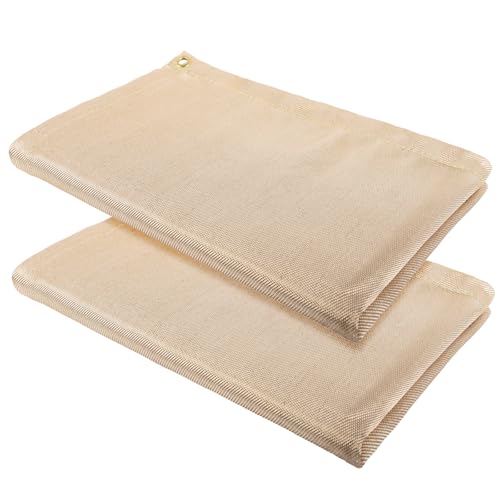

Making the final selection
Begin with the hottest, heaviest duty the blanket will realistically face, and let that duty set the material and fabric weight. Then size the blanket for the zone that duty creates, with margin for bounce and roll. Then decide the configuration: grommeted for hanging if spray travels horizontally in your space, plain for draping and floor duty, or one of each if the shop does varied work.
That order of decisions prevents the two common buying failures in this category: the impressive temperature figure attached to a blanket too small or too light for the actual job, and the heavy premium fabric bought for grinding duty it will perform no better than a modest curtain. Specifications serve the work, and the work should be described honestly before any product is chosen.
It also helps to write the decision down somewhere in the shop, even as a short note taped inside a cabinet door: which blanket serves which station, what duty each was bought for, and when each was last inspected. Workshops change hands, borrow helpers, and forget reasoning over time, and a few recorded lines preserve the thinking that made the setup safe long after the purchase itself has been forgotten.
A blanket chosen this way becomes unremarkable in the best sense: it hangs or lies where it is needed, takes the sparks and slag without drama, and comes down at the end of the job with the floor, the vehicle, and the rest of the workshop exactly as they were when the arc was first struck.