What's inside
- Key Takeaways
- Quick Picks
- How Did We Judge Affordability Without Printing Prices?
- How Do the Six Compare at a Glance?
- What Does Bagless Ownership Actually Cost over Five Years?
- How Do You Keep a Bagless Upright Suction-Honest?
- What Mistakes Do Value Shoppers Make?
- How Does Each Pick Suit a Different Kind of Saver?
- What Should Renters and First-Home Buyers Prioritise?
- How Do Pet Homes Change the Value Equation?
- What Does the First Month of Ownership Teach?
- How Do You Compare Two Affordable Uprights Side by Side?
- What Happens When an Affordable Upright Breaks?
- How Does the Calendar Change What Affordable Means?
- Why Do Corded Uprights Keep Winning the Value Argument?
- What Should a Second Vacuum Add to an Affordable First?
- How Do You Read an Affordable Listing with a Sceptical Eye?
- What Is the Environmental Side of the Ledger?
- What Should You Do in the First Hour with a New Upright?
- Final Recommendation
- Frequently Asked Questions
- Related Guides
As an Amazon Associate I earn from qualifying purchases. This post may contain affiliate links at no extra cost to you.
cottageverdict.com is reader-supported. When you buy through links on our site, we may earn an affiliate commission.
Where to buy: each linked upright below is sold on Amazon, where you can check price on Amazon at the exact moment you shop — the only honest way to price a category whose offers, bundles and seasonal promotions move faster than any printed guide can follow.
The search for the best affordable bagless upright vacuums is really two different searches wearing one slightly scuffed coat. The first is for a low purchase commitment: a machine that does not require a family meeting, a spreadsheet or a small loan to buy. The second, quieter search is for low ownership cost — no bags to reorder forever, filters that rinse rather than expire monthly, parts that survive the household and its dog. Bagless design serves the second search beautifully, because the dirt cup empties straight into the bin and the ongoing bill shrinks to filters, the occasional belt and ten honest minutes of care a month. Affordable, properly understood, is a five-year word, not a checkout word.
That is why this guide prints no prices, not one, anywhere. A figure captured today would mislead by spring, and affordability judged on a stale number is astrology with better fonts. Instead we argue in tiers — budget, mid and the premium that refurbished machines descend from — and in the arithmetic of ownership: how often the cup needs emptying, whether the filter washes or must be bought, how the machine treats the two surfaces most homes actually own, and whether its weight and steering make it a vacuum that gets used weekly or a vacuum that gets stored and apologised for. A cheap machine used daily out-cleans an expensive one avoided weekly, and it out-saves it too, because the avoided machine’s replacement is already quietly being shopped for.
The five linked picks are the current shape of value in this category: two Bissell CleanViews with different and complementary party tricks, two Eureka PowerSpeeds that make lightness their whole economy, and a Hoover whose whole-house stamina patiently amortises its higher tier across years of weekly tours. A sixth pick, in prose, makes the case for refurbished premium uprights — yesterday’s flagships at today’s budget tier — with all the cautions that route honestly carries and deserves. Every one of them is bagless, every one assumes pet hair and mixed floors as the default brief, and every one was chosen because its compromises sit where most households will never step on them. Read with your own ledger open beside you — your floors, your pets, your stairs, your tolerance for rinsing a filter in the sink while the kettle boils — because affordability is finally a biography, not a specification, and the right machine is the one whose costs, all of them, fit the life you are already living.
Key Takeaways
- Affordable means low cost across years: bagless cups, washable filters and parts that survive the household matter far more than a headline offer on the day.
- The Eureka PowerSpeed pair make lightness their value — full-size cleaning that smaller homes, tighter budgets and ordinary arms can carry every day.
- Bissell’s two CleanViews split the value argument neatly between swivel steering for furnished rooms and an extension wand with a 2-litre tank for longer sessions.
- The Hoover WindTunnel 2 costs a tier more at the till and repays it slowly, in whole-house stamina, filtration and cord management, across years of tours.
- Refurbished premium uprights, covered in prose below, can deliver genuine flagship cleaning at a budget tier, provided the buyer does the inspection homework attached.
- No prices are printed here on purpose; tiers and ownership arithmetic outlast any figure we could quote, so check the current tier position when you shop rather than trusting a number from print.
Quick Picks
| Pick | Badge | Why it made the list |
|---|---|---|
| Bissell CleanView Swivel Pet Upright 2252 | Value with steering | Swivel manners and a pet-ready brush at a tier that respects the household budget. |
| Bissell CleanView Upright with Extension Wand | Big-tank value | An XL 2-litre dirt tank and active extension wand stretch each clean further. |
| Eureka PowerSpeed Upright NEU181A | Lightweight bargain | Featherweight handling, a 2.6-litre cup and pet tools in one economical package. |
| Eureka PowerSpeed Bagless Upright NEU182B | Settings per tier champion | Five height settings at a budget address, in a body of around ten pounds. |
| Hoover WindTunnel 2 Whole House Rewind | Long-life investment | A tier up in commitment, repaid through years of whole-house corded stamina. |
| Refurbished Premium Uprights | Prose-only value route | Flagship machines renewed and resold, for buyers willing to inspect before they save. |
How Did We Judge Affordability Without Printing Prices?
We built a five-year ledger in words, the way a careful household would on the back of an envelope. Column one is the tier of the purchase itself — budget, mid or premium — read from each model’s position in its maker’s own range rather than from a number that would expire. Column two is consumables: bagless design zeroes the bag line entirely and forever, and washable filters convert a recurring purchase into a recurring rinse, so we favoured machines whose filters wash clean and whose cups empty without tools, shaking or drama. Column three is durability signals: corded simplicity where it serves the design, proven model lines over shiny novelties, and parts — belts, brushes, filters, wheels — that the aftermarket actually stocks in depth.
Column four is the one most value guides omit entirely: usability as an economic quantity in its own right. A vacuum that is light enough to carry upstairs gets used upstairs, weekly; a tank big enough to finish the house gets emptied half as often; steering that spares the shoulders extends the years an owner keeps cleaning with it rather than replacing it with something easier. Every avoided replacement is the largest saving in the whole ledger, dwarfing any difference between adjacent tiers at purchase.
Finally, we checked the compromises for honesty. Affordable machines cut somewhere — in filtration grades, in tool bundles, in the plushness of their plastics — and a good value pick cuts where its buyers will not bleed. The five linked machines cut differently, which is why this guide can recommend all five without contradiction: each is the affordable answer to a slightly different household’s question. One more discipline governed the selection: nothing here is recommended on the strength of a temporary offer. Offers expire, listings change their bundles, and a guide that chases them becomes a newspaper. Tiers, parts ecosystems and the physics of cups and filters change slowly, and a recommendation built on them can be read next season with the same confidence as today — which is, in the end, the only kind of value advice worth printing.
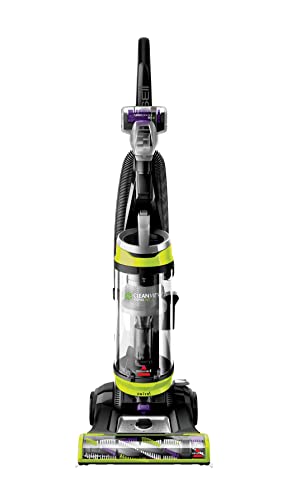
Bissell CleanView Swivel Pet Upright 2252 — Value with steering
Steering used to be a premium flourish; the 2252 is proof it has migrated into the value tier without losing its manners. Its listing promises swivel steering, a triple action brush roll and a large-capacity dirt tank, aimed at pet hair pickup — a specification that reads, in ledger terms, as three savings at once. The swivel saves effort in furnished rooms, which saves the machine from being avoided; the brush is designed for the debris pet homes actually produce, which saves the second vacuum many households otherwise buy; and the tank’s size saves interruptions, which saves the clean from being abandoned halfway and restarted tomorrow at double cost.
Bissell’s pet focus is an economic argument disguised as a marketing one. Pet households wear vacuums harder and judge them faster, so a model line built for that judgement tends to over-deliver on the parts that fail first — brush, tank, the path hair travels. The CleanView name has served across many seasons of this category, which matters to the ledger’s durability column: filters and parts for a long-lived line stay findable, and a machine you can maintain is a machine you do not replace.
The compromises are the tier’s usual ones, honestly worn. Filtration is serviceable rather than the sealed, top-grade story of premium machines; the plastics feel utilitarian; and the cord keeps it a room-to-room citizen rather than a whole-floor roamer without plug changes. None of those touches the core value proposition, which is that a pet household on a budget gets a machine designed for its actual life — fur, furniture and all — without paying for virtues it will never use.
- Type: corded bagless upright, swivel steering
- Brush: triple action brush roll per the listing
- Tank: large capacity dirt tank
- Focus: pet hair pickup on carpet and hard floors
- Ledger strength: proven line, findable parts, low effort per clean
Strengths
- Steering at this tier saves effort on every furnished clean.
- Pet-first design covers the debris that wears machines fastest.
- Long-running model line keeps filters and parts easy to source.
Trade-offs
- Filtration is practical rather than premium-grade and sealed.
- Materials feel workmanlike next to flagship uprights.
- Corded range means plug changes on larger floor plans.
Best for: pet households wanting designed-for-them value. Not suited for: buyers prioritising top-tier filtration above all else.

Bissell CleanView Upright with Extension Wand — Big-tank value
This CleanView variant spends its value on two unglamorous quantities: volume and reach. The listing specifies an XL dirt tank of 2 litres and an active extension wand, wrapped around Bissell’s OnePass technology, which aims to clean thoroughly in a single pass rather than billing you in repetitions. Translate to the ledger: a bigger tank means fewer mid-clean walks to the bin; a wand that extends means the stairs, edges and above-floor dust join the same session instead of waiting for a second tool; and one-pass intent means the clean itself — your time, the true currency — is spent once.
Time is where this machine’s affordability compounds. Households rarely resent a vacuum’s purchase tier after the first month, but they resent its demands weekly, and demands are measured in minutes and interruptions. A CleanView that holds two litres and reaches the skirting’s top edge asks for fewer of both. For larger or busier homes, that arithmetic can outrank a nominally cheaper machine whose smaller tank and shorter reach tax every session it performs.
Its compromises mirror its sibling’s with a different accent: the value sits in capacity and reach rather than in steering theatre, the build is utilitarian, and the cord defines its roaming. Owners of compact flats may also find the big tank’s benefit theoretical — a two-litre cup in a one-room home is capacity bought for a mess that never arrives. For the family house with stairs, though, this is the CleanView that prices its worth in finished sessions, and finished sessions are the only kind that count.
- Type: corded bagless upright with extension wand
- Tank: XL 2-litre dirt capacity per the listing
- Technology: OnePass, aimed at thorough single passes
- Surfaces: carpets and hard floors per the listing
- Ledger strength: fewer interruptions, more jobs per session
Strengths
- Two-litre tank stretches cleans across larger homes uninterrupted.
- Extension wand folds stairs and edges into the same session.
- One-pass intent respects the owner’s time as a real cost.
Trade-offs
- Capacity is wasted on the smallest flats’ modest debris.
- Utilitarian build matches its tier rather than disguising it.
- No swivel headline, so furnished rooms take more guiding.
Best for: larger, busier homes that clean in full sessions. Not suited for: tiny flats where tank size never becomes the limit.
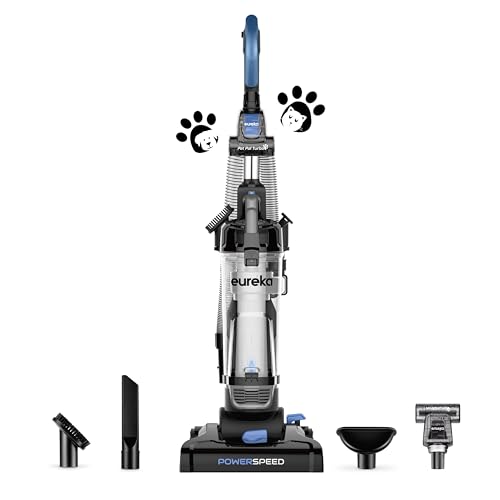
Eureka PowerSpeed Upright NEU181A — Lightweight bargain
The NEU181A’s economy begins in the arms. Eureka built the PowerSpeed line light, and lightness is a value feature with a long fuse: the machine gets carried upstairs without negotiation, brought out for small messes without ceremony, and kept in service by owners whose strength or patience a heavier upright would eventually defeat. Its listing adds a 2.6-litre dust cup — larger than the Bissell wand model’s tank, remarkably — plus a pet turbo brush with crevice and upholstery tools, so the lightweight bargain does not ask its buyers to accept a small cup or a bare bundle as the price of admission.
Run the five-year ledger and the pattern holds. Purchase tier: budget. Consumables: bagless cup, rinsable filtration in the PowerSpeed manner, nothing exotic. Durability: a simple, widely sold design whose parts circulate freely. Usability: the strongest column of all, because a vacuum this easy to move becomes the household’s default instrument, and default instruments get maintained, emptied and kept — the behaviours that stretch any machine’s life further than its specification promises.
The honest costs of the bargain are feel and finesse. A light body communicates more of the floor’s vibration and can feel busy on deep pile; the finish and plastics announce their tier; and the settings story is everyday rather than encyclopaedic. Households whose cleaning is a weekly deep campaign on thick carpet should look at the Hoover below or the five-setting sibling next door. Households whose cleaning is life happening daily, in sorties, will find this the most money-efficient shape an upright can take.
- Type: lightweight bagless upright
- Dust cup: 2.6 litres per the listing
- Tools: pet turbo brush, crevice and upholstery tools
- Surfaces: pet hair, carpet and hard floor
- Ledger strength: usability that keeps the machine in service
Strengths
- Lightness converts directly into years of willing use.
- Oversized cup contradicts the budget tier in your favour.
- Tool bundle covers stairs and sofas without accessory orders.
Trade-offs
- Light body feels less settled on deep, springy pile.
- Finish and materials are honest about the price tier.
- Settings range is practical rather than comprehensive.
Best for: smaller homes, stairs and owners who clean in sorties. Not suited for: deep-pile weekly campaigns wanting heft and range.
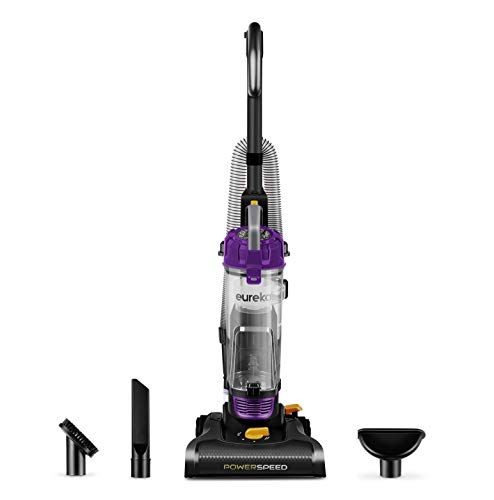
Eureka PowerSpeed Bagless Upright NEU182B — Settings per tier champion
If value means capability per unit of commitment, the NEU182B makes the boldest claim in this guide: a five-height brush roll adjustment — the specification shoppers usually climb tiers to find — delivered in a bagless upright of around ten pounds with a 2.6-litre cup, at a budget address. Homes with genuinely varied pile, the boards-to-shag journey that defeats fixed machines, normally pay a settings tax for the privilege of coping. This Eureka declines to collect it.
The rest of the ledger stays disciplined. It is bagless with the cup size already praised in its sibling; it covers pet hair, carpet and hard floor per its listing; its weight keeps it in the carried-willingly class that predicts long service. The five settings deserve one caution from the value perspective: a feature only pays when used, so this machine’s bargain is conditional on an owner who will turn the dial at thresholds. For that owner, the NEU182B is close to unbeatable in its tier. For the set-and-forget owner, its sibling’s simplicity may honestly be the better spend.
Compromises echo the family: utilitarian materials, a light body’s manners on the deepest pile, filtration that serves rather than stars. The purple finish is either a delight or a discussion, depending on the household. None of it dents the central fact, which is that the most common reason to spend more on an upright — real height adjustment for real pile variety — is present here at the tier where this guide’s readers are shopping. That is the definition of a value pick, and the NEU182B is this page’s clearest one.
- Type: bagless upright, purple finish
- Height adjustment: 5 settings per the listing
- Weight: around 10 pounds per the listing
- Dust cup: 2.6 litres
- Ledger strength: flagship-style adjustment at a budget tier
Strengths
- Five height settings remove the usual reason to spend more.
- Light weight and big cup preserve the PowerSpeed usability dividend.
- Bagless running costs stay at the category’s floor.
Trade-offs
- The bargain depends on the owner using the settings.
- Materials and filtration are tier-appropriate, not luxurious.
- Deepest pile still prefers a heavier machine’s planted feel.
Best for: mixed-pile homes shopping strictly by capability per tier. Not suited for: owners who never touch a dial and know it.

Hoover WindTunnel 2 Whole House Rewind — Long-life investment
The Hoover sits a tier above its companions here, and this guide includes it to make a point about the word affordable: sometimes the economical purchase is the one made once. The WindTunnel 2 Whole House Rewind is a corded bagless upright built for tours — HEPA media filtration per its listing, a cord that rewinds into the body at a press, and the stamina to clean a whole house’s mixed surfaces in one continuous session. Amortised across the years such a machine typically serves, its cost per clean undercuts lighter bargains that a large home wears out and replaces.
Its ledger columns differ from the Eurekas’ instructively. Consumables: bagless, with filtration a grade more serious, which suits homes where the air matters as much as the floor. Durability: a corded, full-size build from one of the category’s oldest names, designed for the weekly campaign rather than the daily sortie. Usability: the rewind cord is the sleeper feature — it converts the end of every clean from a winding chore into a button press, and small mercies at the end of chores are what keep machines in favour for a decade.
The counter-argument is equally clear. A small flat will never tour enough to amortise it; its weight asks more of the owner on stairs; and its tier, while modest beside flagships, is real money beside the Eurekas. Affordable is a relationship between a machine and a household’s workload, not a label on a shelf — and for the workload this Hoover was built for, few machines anywhere repay their tier as patiently.
- Type: corded bagless upright, whole-house brief
- Filtration: HEPA media per the listing
- Cord: automatic rewind
- Design intent: continuous multi-room, multi-surface tours
- Ledger strength: longevity that lowers cost per clean
Strengths
- Whole-house stamina suits the largest workloads in this guide.
- HEPA media filtration upgrades the air side of the bargain.
- Rewind cord removes a small chore from every single clean.
Trade-offs
- A tier above the Eurekas at purchase, by design.
- Full-size weight is felt on stairs and in storage.
- Small homes cannot amortise its tour-ready capacity.
Best for: larger homes buying once for years of weekly campaigns. Not suited for: small flats or buyers minimising the initial tier above all.
Refurbished Premium Uprights — Prose-only value route
The final pick is not a model but a market: premium uprights — the flagships with sealed filtration, metal brush housings and elaborate tool systems — professionally refurbished and resold at tiers their original buyers would not recognise. Discussed generically, the route’s logic is powerful. Vacuums are mechanically honest machines; a flagship whose motor, brush and seals have been inspected, whose filters and belts are renewed and whose body merely carries cosmetic history can deliver most of its original cleaning for a budget-tier commitment, while keeping a substantial machine out of landfill.
The homework is the price of the saving, and it is non-negotiable. Buy only where the refurbishment is described concretely — what was replaced, what was tested, what warranty stands behind it — and treat vague renewals as used machines wearing a costume. Inspect the brush roll and belt on arrival, wash or replace filters before first use for hygiene’s sake, and confirm that parts for the model remain available, since a refurbished bargain with an orphaned parts supply is a loan, not a purchase. Battery-free corded flagships refurbish most predictably; cordless flagships add a battery whose remaining life is the route’s one true gamble.
Judged with that discipline, the refurbished route belongs in any honest affordable guide — not as the default, because most households prefer a warranty’s clean simplicity, but as the connoisseur’s shortcut to a class of machine their tier would otherwise never meet. For a buyer willing to inspect, it can be the single largest saving in this entire category.
- Type: renewed premium uprights resold below original tiers
- Value logic: flagship cleaning, budget-tier commitment
- Homework: verify what was replaced, tested and warranted
- Best candidates: corded flagships with living parts supplies
- Watch-out: cordless battery age is the route’s true unknown
Strengths
- Access to sealed filtration and flagship builds at low tiers.
- Keeps durable machines in service and out of landfill.
- Corded flagships refurbish predictably and maintain easily.
Trade-offs
- Quality depends entirely on the refurbisher’s honesty.
- Warranties are shorter and narrower than new machines’.
- Hygiene preparation on arrival is the buyer’s responsibility.
Best for: diligent buyers wanting flagship cleaning on a budget tier. Not suited for: anyone who wants a sealed box and a long warranty.
How Do the Six Compare at a Glance?
| Pick | Tier position | Cup or tank | Value signature |
|---|---|---|---|
| Bissell CleanView Swivel Pet Upright 2252 | Budget to mid | Large dirt tank | Steering and pet design at a value tier |
| Bissell CleanView Upright with Extension Wand | Budget to mid | XL 2 litres | Capacity and reach per session |
| Eureka PowerSpeed Upright NEU181A | Budget | 2.6 litres | Lightness that keeps it in service |
| Eureka PowerSpeed Bagless Upright NEU182B | Budget | 2.6 litres | Five height settings at the tier |
| Hoover WindTunnel 2 Whole House Rewind | Mid | Bagless, whole-house sized | Longevity and filtration over years |
| Refurbished Premium Uprights | Budget for flagship class | Varies by model | Yesterday’s flagship, inspected today |
Read the tier column as a range of intentions rather than a ranking: every row is the cheapest honest way to buy a particular virtue, and the virtues differ — steering, capacity, lightness, settings, stamina, or yesterday’s flagship class at tomorrow’s tier. Two households can study this table, choose different rows, and both be right, because the table’s subject is not the machines’ worth in the abstract but their fit to six different versions of a sensible household.
What Does Bagless Ownership Actually Cost over Five Years?
The bag line is the famous zero: no proprietary sacks on a subscription of your own forgetfulness, no mid-clean discovery that the last bag was used in spring. In its place, bagless ownership charges in attention. The cup must be emptied before debris compacts past the fill line; the filter must be rinsed or replaced on its schedule; the cyclone shroud, where fitted, wants an occasional wipe. Owners who price their attention honestly still come out far ahead — the chores are minutes per month — but the saving is not free, and pretending otherwise is how bagless machines earn their clogged, neglected reputation.
Belts, brushes and filters form the real consumables column, and here the proven-line advantage compounds: a CleanView or PowerSpeed part is a commodity, stocked everywhere, while an obscure model’s filter can cost a season of searching. When you compare two affordable uprights, compare their parts pages as seriously as their listings. The machine whose wear items are cheap and findable in year four is, in the only sense that matters, the more affordable machine — whatever either of them cost in year one.
How Do You Keep a Bagless Upright Suction-Honest?
Empty the cup at the line, not beyond it; a cup packed past its mark strangles the cyclone and begins returning dust to the filter at double rate. Rinse washable filters fully and dry them completely — a day is not too long — because a damp filter turns the next clean’s dust into a coating that rinsing no longer fully removes. Tap or brush the shroud and check the airway at the head’s neck monthly; the blockage that forms there is the commonest cause of the mysterious mid-life suction fade that owners misattribute to the motor.
Give the brush roll its minute as well: hair wound at the ends taxes the belt and the motor together, and the pet homes these machines serve generate that hair industriously. None of this exceeds ten minutes a month, and it is the entire secret behind the affordable uprights that are still performing in year seven while their neglected twins were replaced in year three. Maintenance is not the opposite of affordability; it is the mechanism of it.
What Mistakes Do Value Shoppers Make?
Judging by the checkout tier alone leads the list, because it ignores the ledger this guide is built on — consumables, parts, usability and the replacement the wrong machine forces early. Its twin is chasing the longest feature list at the tier, which usually means paying for a settings menu or a tool bundle your floors will never meet, while the cup size and weight that govern your weekly life go unexamined. Features photograph well; ergonomics pay weekly.
Third, buyers skip the parts check and discover in year three that their bargain’s filter is a rarity. Fourth, they buy the refurbished route without the inspection discipline, converting a calculated saving into a lottery. Fifth, and most quietly, they buy a machine too heavy or too awkward for the person who will actually push it — and no tier is low enough to make a stored vacuum a bargain. Affordable is a property of the whole ownership, and the whole ownership is what to shop for.
How Does Each Pick Suit a Different Kind of Saver?
Some savers minimise the purchase; others minimise the decade. The first kind should be handed the Eurekas without ceremony, because their budget tier is genuine and their running costs sit at the floor — but they should be told, kindly, that the saving is completed by maintenance, not by the receipt. A budget machine rinsed and emptied on schedule is a triumph of the form; the same machine neglected is a down payment on its replacement, and the difference between those two futures is ten minutes a month.
The second kind of saver — the amortiser — should study the Hoover and the refurbished route, where money spent or homework done at the start buys down every subsequent year. Amortisers think in cost per clean, and by that measure a whole-house machine serving a large home for a decade can be the cheapest vacuum in this guide despite wearing its highest tier. Neither temperament is wrong; the error is shopping with one temperament’s criteria and the other’s household, which is how large homes end up replacing featherweights annually and small flats end up storing a tour machine they use twice a month.
Between the temperaments sits the pairing strategy: a budget upright bought new for the floors, and patience — watching the refurbished market for the day a flagship appears from a refurbisher you trust, as the stairs-and-upholstery second machine. Households are not obliged to solve every surface with one purchase, and the two-machine answer, assembled over time at bargain tiers, often out-cleans and out-saves the single mid-tier compromise bought in a hurry.
What Should Renters and First-Home Buyers Prioritise?
Renters own a special version of the value problem: the floors are temporary, the deposits are real, and the machine will move house at least once. Priorities follow from that. Weight matters doubly, because the vacuum will be carried down stairs and into a van, not merely around a landing. Versatility matters because the next flat’s floors are unknown — a machine with height settings, like the NEU182B, is a hedge against a future landlord’s carpet choices. And the tier matters because money spent on a vacuum is money not spent on the hundred other claims of a first home.
Deposit logic adds one more criterion: hard-floor manners. A machine that scatters grit or drags debris across a landlord’s boards risks marks that cost more than the vacuum; the lighter, well-sealed picks here behave politely on the surfaces renters most need to protect. Storage footprint closes the case — an upright that stands in a broom cupboard survives rental life, while an elaborate system with docks and attachments colonises the only wardrobe. The Eurekas were practically designed by this paragraph; the Bissells serve renters with bigger, pet-bearing flats; the Hoover waits for the owned house it was named for.
How Do Pet Homes Change the Value Equation?
Pet hair is not merely debris; it is a wear mechanism. It winds brush ends, mats in cups, coats filters and arrives daily in quantities that turn a weekly machine into a daily one. A vacuum in a pet home therefore lives a dog-year life — seven cleans for every one in a pet-free house — and the value equation tilts hard toward durability, parts availability and tools that address hair where it lands: the turbo brush for stairs, the upholstery tool for the sofa the dog has annexed, the cup size that survives a moulting weekend.
That is why three of the five linked picks carry pet briefs in their very listings, and why this guide treats that as an economic signal rather than a marketing flavour. A machine designed for hair tolerates the wear hair causes; a machine surprised by hair ages in public. Pet households should also budget their maintenance honestly upward — filter rinses at double frequency during shedding season — and should read the refurbished section with extra care, since a premium pet flagship, properly renewed, can be the route’s sweetest bargain of all.
What Does the First Month of Ownership Teach?
It teaches the cup’s true rhythm: how many days your household takes to reach the fill line, which is the number that decides whether a 2-litre tank or a 2.6-litre cup was the right economy. It teaches the filter’s personality — how quickly your home’s dust loads it, and therefore whether your rinse calendar is monthly or fortnightly. And it teaches the machine’s place in the house’s geography: the cupboard it actually lives in, the route it actually walks, the rooms it never reaches and must be deliberately taken to.
Owners who pay attention in that month make the small corrections that compound for years: the doormat upgraded so the hallway rug lasts longer between deep cleans, the charging of a household rota so the machine is not one person’s private burden, the note in a phone that turns filter rinsing from a memory test into a habit. Affordable ownership is not a purchase; it is this month, repeated with minor improvements, sixty times. The machines above were chosen to reward that repetition — to still be willing, rinsable and repairable when the sixtieth month arrives.
How Do You Compare Two Affordable Uprights Side by Side?
Ignore the adjectives and line up the ledger columns. Cup capacity first, because it sets your emptying rhythm; weight second, because it sets your willingness; height settings third, matched honestly against the deepest pile you own; tool bundle fourth, checked against your stairs and sofa rather than against a rival’s longer list; filtration fifth, weighted by your household’s lungs. Then — the step most shoppers skip — open the parts pages for both finalists and compare the filters, belts and brushes as purchasable objects. The comparison takes ten minutes and predicts five years.
Weight the columns by your own house, not by a reviewer’s. A household of hard floors and one rug should let weight and cup outrank settings; a household of wall-to-wall variety should reverse the order. This guide’s picks were arranged so that each column has a champion — the NEU182B for settings, the wand CleanView for capacity-and-reach, the swivel CleanView for furnished effort, the NEU181A for lightness, the Hoover for filtration and stamina — which means the comparison exercise usually ends not with a winner but with a recognition: your house has been describing one of these machines all along.
What Happens When an Affordable Upright Breaks?
Usually, something small happens: a belt snaps, a brush wears smooth, a hose splits at its cuff, a wheel surrenders. The affordable machine’s hidden virtue is that these failures are priced like groceries rather than like car repairs — the parts are commodities, the fixes are video-documented by a decade of owners, and the machine’s simplicity invites the repair instead of forbidding it. A vacuum that can be mended on a kitchen table with a screwdriver is practising affordability at the exact moment a sealed, complex machine is practising its replacement.
The discipline is to diagnose before discarding. Lost suction is a blockage or a filter until proven otherwise; a dead brush is a belt until proven otherwise; a smell is a cup and filter asking for soap. Owners who learn those three sentences keep affordable uprights alive almost indefinitely, while owners who treat every symptom as a death buy a new vacuum every few years and conclude, wrongly, that affordable machines do not last. They last exactly as long as their owners’ curiosity does.
How Does the Calendar Change What Affordable Means?
Pool-season logic applies indoors too: the same upright occupies different value positions across the year. Spring cleaning season and the big retail events compress tiers until mid-range machines wear budget badges for a fortnight; the post-holiday weeks flood the refurbished market with returned flagships, inspected and re-tiered. A buyer with a functioning old machine can afford patience, and patience is the value shopper’s compound interest — the willingness to let the calendar, rather than urgency, set the tier.
Urgency, conversely, is the tax on every emergency purchase: the machine bought because the old one died the day before guests arrive is the machine whose compromises get discovered slowly, at leisure, for years. If your current upright is ageing, the most affordable act available is to shortlist its replacement now — from this guide, at your leisure — so that its eventual failure is a plan executing rather than a crisis shopping. That is the final form of the lesson this page has taught in every section: in vacuums as in most of a home’s machinery, money follows the prepared.
Why Do Corded Uprights Keep Winning the Value Argument?
Every linked pick in this guide is corded, and that is not nostalgia — it is arithmetic. A battery is the most expensive wear item in any cordless machine, a consumable wearing a component’s clothing, and its replacement or decline writes the largest single line in a cordless ledger. The corded upright deletes that line entirely. Its motor draws from the wall at full strength in year seven exactly as in year one, its runtime is the length of your patience, and its purchase tier is not subsidising a lithium pack. For a machine whose job is to be cheap to own for a long time, the cord is not a limitation; it is the business model.
The cord’s costs are real but bounded: plug changes between distant rooms, a radius planned around sockets, the small ceremony of unwinding and rewinding — which the Hoover’s rewind mechanism exists to forgive. Households pay those costs in seconds per clean. They pay the battery’s costs in a lump, at the worst moment, or in the slow fade that makes a cordless machine feel tired long before it dies. Value shoppers who understand that trade choose cords for the main machine and, if they crave cordless freedom, add an inexpensive stick later for sorties — a pairing whose combined ledger still undercuts a premium cordless flagship asked to do everything.
What Should a Second Vacuum Add to an Affordable First?
Eventually many households discover that one vacuum, however well chosen, leaves a shaped gap: the stairs the upright climbs reluctantly, the car it cannot enter, the crumb emergency that does not justify its unwinding. The affordable philosophy answers with a specialist, not an upgrade — a small handheld or stick bought at a budget tier for the gap alone. Because the second machine’s duties are narrow, its compromises can be wide; because the first machine carries the deep work, the second can be judged purely on convenience.
The pairing also extends both machines’ lives, since each works within its strength: the upright stops being dragged into jobs that stress its hose and patience, and the little machine never faces a whole-house campaign. Total commitment across the pair commonly stays below a single premium all-rounder, while the coverage exceeds it. Affordable, in its mature form, is a fleet decision — and the uprights in this guide were chosen partly for how gracefully they anchor such a fleet: honest mains power for the floors, leaving the gaps to cheaper, smaller specialists.
How Do You Read an Affordable Listing with a Sceptical Eye?
Translate every superlative into a specification or discard it. Powerful means nothing until it is attached to a design you can inspect — cup size, brush type, height settings, cord length — and the listings of the five linked picks reward that translation because their makers state the inspectable things plainly: litres, pounds, settings, tools. A listing that offers adjectives where its rivals offer numbers is telling you where its money went, and it did not go into the machine.
Read the omissions as carefully as the claims. No cup capacity stated usually means a small cup; no weight stated usually means a heavy one; no word about the filter usually means a filter you will be buying rather than rinsing. Then read the model’s age in the line: a design sold for years has a parts ecosystem and a public record of its failures, both of which are worth more to a value buyer than a launch discount on an unknown quantity. Scepticism, applied this way, is not cynicism — it is how a budget defends itself.
What Is the Environmental Side of the Ledger?
A vacuum’s greenest feature is its lifespan. Every year a repairable upright stays in service is a year its replacement is not manufactured, shipped and packaged, and the affordable machines in this guide — simple, corded, parts-supported — are structurally long-lived in a way sealed, battery-dependent designs struggle to match. Bagless design removes a stream of proprietary bags from the waste column, at the honest cost of filter rinses whose water use is trivial beside a machine’s manufacture.
The refurbished route extends the argument to its logical end: the most sustainable flagship is the one already built, renewed and returned to work. Buyers who keep a machine for a decade, mend its belt in year four and hand it on when they upgrade are practising the only environmental strategy this category really offers — longevity, maintained. Affordable and sustainable, in the upright market, turn out to be the same purchase described in two vocabularies, which may be the most reassuring sentence in this entire guide.
What Should You Do in the First Hour with a New Upright?
Register nothing, photograph everything. Photograph the model plate, the filter’s part number and the belt specification, and keep the images where the household can find them; in year three, those photographs are the difference between a five-minute parts order and an evening of detective work. Note the filter’s rinse interval in a calendar with a repeating reminder, because the single most valuable act of affordable ownership is scheduling the maintenance before the machine has a chance to ask for it by fading.
Then walk the route. Set the height for each of your floors in turn — boards, the everyday carpet, the deep one — and note the settings on a card kept with the machine, so the second operator inherits the map rather than reinventing it. Test the hose on the stairs while the house is calm, learn where the body parks happily, and empty the cup once even if it holds only the first clean’s dust, purely to rehearse the motion. An hour spent this way converts a purchase into a system, and systems, as every section of this guide has argued, are what actually stay affordable.
Final Recommendation
Start with the Eureka NEU182B if your floors vary, because five height settings at a budget tier is the single most lopsided bargain in this guide; choose its NEU181A sibling if lightness matters more than settings, the wand-model CleanView if your cleans are long and stair-filled, and the swivel CleanView if furniture and fur define your rooms. Step up to the Hoover when the house is large enough to amortise it, and consider the refurbished flagships if you are the inspecting kind. Whichever you choose, empty the cup at the line and rinse the filter like you mean it — because the most affordable bagless upright is not the one with the lowest tier, but the one still earning its cupboard space in year five.
Frequently Asked Questions
Are bagless vacuums really cheaper to own than bagged ones?
Across years, generally yes: the recurring bag purchase disappears, replaced by filter rinsing and the occasional replacement filter or belt. The saving assumes the maintenance actually happens — a neglected bagless machine loses suction and can be replaced early, which erases the arithmetic entirely.
How long should an affordable upright last?
With its ten minutes of monthly care, a proven-line bagless upright should serve five years and often well beyond; the wear items are belts, brushes and filters, all replaceable. Longevity depends less on the tier than on the parts supply and the owner’s rinsing habits.
Is a refurbished vacuum hygienic to buy?
It can be, with the buyer’s help: choose refurbishers who state that filters are renewed, and wash or replace the filter and empty and wipe the cup before first use regardless. Corded flagships from reputable renewal programmes are the safest candidates on this route.
Do I need HEPA filtration at this tier?
Most households do not; standard filtration in a well-maintained bagless machine handles household dust responsibly. Homes with significant allergy concerns should weight the Hoover’s HEPA media more heavily, empty cups outdoors, and treat filtration as the one column where spending up has a daily return.
Which of these suits a home with mostly hard floors?
Any of them will serve, but the lighter Eurekas make the frequent, quick cleans hard floors reward, and their cups swallow the grit-and-hair mixture hard floors collect. Set the brush appropriately for bare floors where the model offers it, and the machine will not scatter what it came to collect.
When is the cheapest upright actually the expensive choice?
When it forces its own replacement: a machine too heavy to carry, too small-cupped to finish, or too orphaned to find filters for will be swapped within a couple of years, and two budget purchases cost more than one wise one — in money, and in the cleans that never happened between them. The tell is usability, not build: if the household avoids it, the tier was irrelevant. Buy the cheapest machine your household will genuinely use daily, maintain it like the asset it is, and the ledger will take care of itself.
Related Guides
Our batch’s home-improvement trail continues with Best 72-Inch Bathroom Vanities, Best Bathtubs and Best Air Whirlpool Bathtubs for readers renovating beyond the cleaning cupboard. For the dust that escapes every vacuum, our published guide to Best Air Purifiers for Allergies and Pet Dander covers the airborne remainder.


