What's inside
- Where to buy these platform slippers
- Quick picks in brief
- How these picks were chosen
- Six platform slippers, reviewed one pair at a time
- Materials and stated heights, compared
- How high a platform should a house slipper be?
- Platform slippers and cold floors: the insulation nobody advertises
- When a platform slipper is the wrong purchase
- Common mistakes when buying platform slippers
- The anatomy of a platform sole, in plain terms
- Caring for suede, leather, and fuzz house shoes
- The eight-hour slipper: working from home on a platform
- Sizing, taken seriously for once
- Each pair’s best season
- Giving platform slippers without giving a problem
- Memory foam, explained without the mystique
- Why chestnut owns this category
- Matching the pair to the house itself
- Two-pair rotations built from this list
- Proportion and posture: the quiet reasons people love the lift
- Final recommendation
- Questions about platform slippers
As an Amazon Associate I earn from qualifying purchases. This post may contain affiliate links at no extra cost to you.
As an Amazon Associate, cottageverdict.com earns from qualifying purchases.
A platform slipper is a house shoe with ambitions: the comfort of a slipper, the lift of a clog, and enough sole to cross a doorstep without a shoe change. The best platform slippers in this guide share a recognisable recipe — a raised sole, a warm lined upper in suede, leather, microsuede, or fuzz, and a memory foam footbed doing the cushioning — but they differ in the details a title can verify. Only two of the six listings print a platform height at all: the KIDMI at 1.4 inches and the DREAM PAIRS at 1.57 inches. The other four ask to be judged on material, shape, and lining rather than on a number, and this guide respects that silence instead of estimating heights nobody stated.
One more title habit needs flagging before the reviews: several listings headline a single size — a women’s 8, a 7, a European 39 — because that is the variant the listing page defaults to. Treat those numbers as the pictured variant, check the size selector carefully before ordering, and remember that a platform sole changes how a slipper fits, since your foot sits higher and the upper’s volume matters more than in a flat slipper.
Where to buy these platform slippers
STELLE’s black genuine suede slipper is the adaptable one, with a removable backstrap and memory foam under a fuzzy winter upper. DREAM PAIRS offers chestnut genuine suede with the tallest stated platform here, 1.57 inches, and a furry memory foam build for indoor and outdoor wear. Jessica Simpson’s entry is a microsuede clog, the fashion-label take on the shape, with the briefest title of the six. OOW’s fuzzy chestnut slipper keeps the description simple: a cosy platform house slipper for indoors and out. KIDMI’s genuine suede in chestnut, size 39, states a subtle 1.4-inch lift. PROJECT CLOUD closes the list with genuine leather, a shearling lining, and a water-resistant claim.
Quick picks in brief
| Pick | Best for | Verified detail from its title |
|---|---|---|
| STELLE Genuine Suede Platform Slippers for Women Black 8 | Wearers who want a strap option | Removable backstrap, genuine suede, memory foam |
| DREAM PAIRS Genuine Suede Womens Platform House Slippers Chestnut 7 | The tallest stated lift | 1.57-inch platform, genuine suede, memory foam |
| Jessica Simpson Womens Microsuede Clog Platform Slipper | A clog silhouette in microsuede | Microsuede clog; title states no height or size |
| OOW Fuzzy Platform Slippers for Women Chestnut | Pure cosiness in chestnut | Fuzzy upper, indoor and outdoor framing |
| KIDMI Genuine Suede Platform Slippers for Women Chestnut 39 | A measured, subtle lift | 1.4-inch lift, genuine suede, size 39 variant |
| PROJECT CLOUD Genuine Leather Platform Slippers for Women | Leather and shearling warmth | Genuine leather, shearling lining, water resistant claim |
How these picks were chosen
The entry requirement was the platform itself: every product here presents as a platform slipper or clog with a raised sole, not a flat house slipper wearing a fashionable name. Beyond that, selection weighed what titles can actually prove. Upper material came first, because it decides care, appearance, and how the shoe ages: genuine suede appears three times, genuine leather once, microsuede once, and a fuzzy textile once. Lining and footbed came second — memory foam is named by three titles, shearling by one — since the footbed is where a slipper succeeds or fails across a winter. Stated height came third, and the guide is strict about it: a height is only ever quoted where a title prints one.
Colour and shape finished the picture. Chestnut dominates this category the way grey dominates towels, appearing on three of the six, with black as the single dark alternative and the Jessica Simpson clog’s colour unstated in its short title. Shapes split between open slip-on mules and the clog form, with STELLE’s removable backstrap as the one convertible design. Indoor-outdoor framing appears in several titles and was taken at face value as the makers’ intended use, while remembering that a platform sole’s outdoor competence depends on the outsole, which titles describe only lightly.
Sizing honesty runs through the reviews. Where a title shows one size, the review says so and treats it as the listed variant, because platform slippers are bought by the size selector, not by the headline, and a reader burned once by a default variant learns to check. Where a title omits a detail entirely — the Jessica Simpson listing is the extreme case — the review works with shape and material alone and sends the reader to the listing for the rest.
Six platform slippers, reviewed one pair at a time

STELLE Genuine Suede Platform Slippers for Women Black 8
One feature separates this slipper from every other pair in the guide: the backstrap comes off. STELLE builds its platform slipper in genuine suede with a fuzzy winter finish, memory foam underfoot, and a removable backstrap that converts the shoe between two personalities. With the strap on, it is a secure house shoe that stays put on stairs, during quick garden trips, and on the school run’s doorstep shuffle. With the strap removed, it is a true slip-on mule for the sofa-to-kettle circuit. That convertibility answers the oldest argument in slipper design — security versus convenience — by refusing to choose, and it makes this pair the most adaptable purchase on the page.
Black suede is the other distinction. Where chestnut reads rustic and warm, black reads deliberate: it pairs with leggings, work-from-home tailoring, and the black-heavy wardrobe many women actually own, and it hides the scuffs that doorsteps and log baskets inflict. The listed variant is a women’s size 8, so treat the headline as the pictured size and use the listing’s selector for your own. Suede asks for a little respect — a brush now and then, no soaking — and in return it ages into softness rather than peeling the way coated materials can.
Spec snapshot — Upper: genuine suede, fuzzy finish. Footbed: memory foam. Feature: removable backstrap. Listed variant: women’s 8, black. Platform height: not stated in the title.
- Strengths: Removable backstrap converts mule to secure shoe.
- Strengths: Genuine suede in a versatile black.
- Strengths: Memory foam footbed named in the title.
- Trade-offs: No platform height printed to compare.
- Trade-offs: Suede needs brushing and dry care.
- Trade-offs: Headline size 8 is one variant; check the selector.
The strap deserves a practical footnote. A removable strap is only a benefit if its attachment is painless, and since the title cannot show you the mechanism, the listing’s photographs deserve a close look before ordering — check how it fastens and whether the shoe looks clean with it removed, because a convertible worn only one way is just a slipper with a spare part in a drawer. Worn both ways across a week, though, this design genuinely covers more of life than its rivals: secure for the bins and the garden path, open for the evening.
Best for: anyone torn between a mule and a strapped house shoe, and black-wardrobe households. Not suited for: buyers who want a stated platform height before they commit.
Check price on Amazon — open it to study the strap mechanism and confirm your size.

DREAM PAIRS Genuine Suede Womens Platform House Slippers Chestnut 7
DREAM PAIRS prints the tallest number in the guide: a 1.57-inch platform under a genuine suede upper in chestnut, with memory foam and a furry finish, sized here as a women’s 7. A platform of an inch and a half is a real lift — enough to change how trousers break, to keep hems and slipper toes out of wet doorstep puddles, and to give shorter wearers a small, daily pleasure. The title frames the shoe as lightweight despite the lift, and as a slip-on for indoor and outdoor wear across autumn and winter, which positions it as the pair you put on in the morning and legitimately forget to change out of.
Chestnut suede with a furry trim is the classic cold-weather clog look, the one that pairs with knitwear and looks intentional rather than accidental when a neighbour calls. Memory foam under a platform matters more than in a flat slipper, because the raised sole is firmer by construction and the foam mediates between foot and platform. The trade of any taller platform is a higher centre of gravity: wearers unsteady on their feet, or houses with steep stairs, should weigh the 1.57 inches honestly rather than romantically.
Spec snapshot — Upper: 100% genuine suede, per the title. Platform: 1.57 inches, the tallest stated here. Footbed: memory foam, furry finish. Listed variant: chestnut, women’s 7.
- Strengths: Tallest stated platform at 1.57 inches.
- Strengths: Genuine suede with a warm furry finish.
- Strengths: Lightweight claim despite the lift.
- Trade-offs: Tallest platform is not for unsteady wearers.
- Trade-offs: Size 7 headline is a single listed variant.
- Trade-offs: Suede and outdoor use need weather judgement.
Indoor-outdoor framing deserves its usual translation: the shoe is built to cross thresholds, pavements, and garden paths in dry weather, not to serve as a winter boot. Within that honest envelope, the tall platform is a genuine asset outdoors, lifting the suede upper clear of damp ground that would mark a flat slipper’s sides. At home, the same height keeps the wearer above cold floors, a small thermal luxury that platform sceptics underestimate until they have stood on January tiles in an inch and a half of insulation.
Best for: confident wearers who want the maximum stated lift in classic chestnut suede. Not suited for: anyone unsteady on stairs or seeking a barely-there sole.
Check price on Amazon — the tallest platform here, worth opening if lift is your headline requirement.
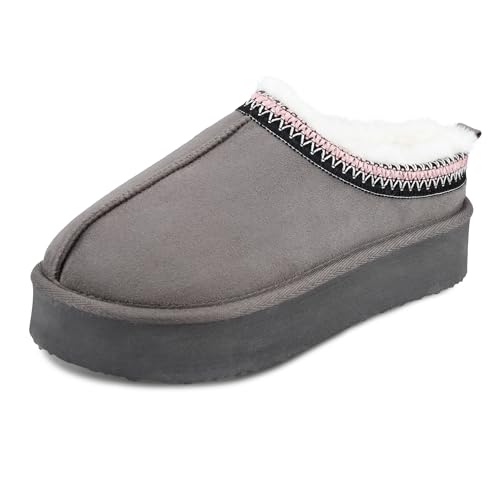
Jessica Simpson Womens Microsuede Clog Platform Slipper
Seven words make up this entire title — brand, audience, material, shape, platform, slipper — and the review must therefore be the most disciplined in the guide. What is known: this is a women’s platform slipper in clog form, with a microsuede upper, sold under the Jessica Simpson label. What is not in the title: any platform height, any footbed material, any lining, any size, any colour. Rather than invent a specification, this review works with the two real signals available — the clog silhouette and the microsuede — and treats the listing itself as the place where the remaining questions get answered.
A clog shape changes a slipper’s life in useful ways. The closed, structured toe and raised back rim of a clog make it the most shoe-like form in the category, the one that reads as footwear rather than loungewear when you answer the door or step into the garden. Microsuede, a finely woven synthetic with a suede-like nap, brings its own practical profile: it shrugs off light moisture better than genuine suede, asks for less delicate care, and keeps a uniform colour. For a wearer whose slippers meet wet grass, spilled tea, and muddy paws, that easier temperament can outweigh the genuine article’s prestige.
Spec snapshot — Upper: microsuede. Shape: clog. Platform height: not stated. Footbed and lining: not given in the title. Colour and sizes: check the listing’s selectors.
- Strengths: Clog silhouette reads as a shoe, not a slipper.
- Strengths: Microsuede is easier to keep than genuine suede.
- Strengths: A fashion label’s take on the platform shape.
- Trade-offs: The title confirms almost nothing else.
- Trade-offs: No stated footbed material to judge comfort.
- Trade-offs: Height must be verified on the listing.
The fashion-label angle cuts both ways and should be weighed plainly. A lifestyle brand’s slipper is designed to coordinate with a wardrobe and to photograph well, which suits buyers who care how their house shoes look with the rest of their clothes — a legitimate concern for a garment worn more hours than most outfits. The same buyer should verify comfort features on the listing with extra care, because the title’s silence on footbed and lining leaves the two most comfort-relevant questions open. If the listing answers them well, this clog is the style-forward pick of the six; if it does not, the suede pairs around it state their comfort credentials more completely.
Best for: clog lovers who prioritise an easy-care microsuede upper and a polished look. Not suited for: specification-first buyers who want height and footbed confirmed in the title.
Check price on Amazon — open the listing to fill in the height and footbed details its title omits.

OOW Fuzzy Platform Slippers for Women Chestnut
OOW’s title is nearly as brief as the clog’s, but it leads with the word that defines the product: fuzzy. This is a platform slipper whose upper is a soft, high-pile fuzz in chestnut, framed for women as a cosy winter house slipper for indoor and outdoor wear. Where the suede pairs sell structure and material pedigree, this one sells a feeling — the visual and tactile softness of a slipper that looks like it was knitted by the concept of warmth itself. No platform height is stated, no footbed material is named, and the review will not pretend otherwise.
Fuzzy uppers have a distinct user. They suit the wearer who feels the cold in their feet first, who works from home at a desk where feet sit still and chill, and who values the psychological warmth of a slipper that looks soft from across the room. The chestnut colour grounds the fuzz in an earthy tone that hides dust and pet hair better than pastel fuzz would. Against that, a fuzzy upper is the hardest in this guide to keep looking fresh: pile flattens at pressure points, picks up lint and crumbs enthusiastically, and cannot be brushed back to ceremony the way suede can.
Spec snapshot — Upper: fuzzy textile. Colour: chestnut. Platform height: none stated in the title. Footbed: not given. Stated use: indoor and outdoor house slipper wear.
- Strengths: Maximum visual and tactile cosiness.
- Strengths: Chestnut tone hides everyday dust and hair.
- Strengths: Simple, honest fuzzy brief with no gadgetry.
- Trade-offs: Pile flattens and gathers lint with wear.
- Trade-offs: No stated height or footbed material.
- Trade-offs: Least structured upper in the guide.
The indoor-outdoor claim should be read narrowly here, narrower than for the suede pairs: a fuzzy upper is a dry-day, doorstep-and-driveway proposition, since pile drinks moisture and holds it. Within the house, though, this is arguably the most inviting pair in the list to actually live in, the one that gets chosen on cold mornings by instinct rather than by specification. Buyers deciding between this and the KIDMI below are really choosing between two chestnuts — one soft and unstructured, one suede and measured — and the honest question is whether your feet want a hug or a shoe.
Best for: cold-footed home workers and cosiness-first wearers in dry indoor life. Not suited for: anyone whose slippers regularly meet wet ground or who needs structure.
Check price on Amazon — the fuzzy chestnut to open if softness is the whole specification.

KIDMI Genuine Suede Platform Slippers for Women Chestnut 39
KIDMI uses a word the rest of the category avoids: subtle. Its genuine suede platform slipper in chestnut, listed in a European size 39, states a 1.4-inch lift and calls it exactly that — a subtle lift — which is honest marketing worth rewarding with attention. At 1.4 inches, the platform raises the wearer enough to matter for hems, doorstep puddles, and cold floors, while staying below the height where balance and stair confidence become talking points. The upper is genuine suede with a fuzzy winter finish, the form is a classic slip-on, and the title adds all-day comfort language and gift framing to complete a measured, grown-up pitch.
The size deserves its sentence: 39 is a European size, roughly a women’s 8 in US terms, and its presence in the title signals a listing whose size selector may run in European units. Buyers should convert carefully and use the listing’s own size guidance rather than assuming their usual number transfers. That small diligence matters more in a platform, where a size too large lets the foot slide forward against the raised sole’s geometry.
Spec snapshot — Upper: genuine suede, fuzzy finish. Platform: 1.4 inches, stated in the title. Colour: chestnut. Listed variant: size 39 (European sizing).
- Strengths: Stated 1.4-inch lift at a confidence-friendly height.
- Strengths: Genuine suede with a warm fuzzy finish.
- Strengths: Classic slip-on form with no fuss.
- Trade-offs: European sizing demands careful conversion.
- Trade-offs: No footbed material named in the title.
- Trade-offs: Suede care rules apply as with its suede rivals.
Set beside the DREAM PAIRS, the KIDMI is the same idea at a lower altitude: suede, chestnut, fuzz, lift. The 0.17-inch difference between their stated platforms sounds trivial on paper and feels real on stairs, where the lower shoe is simply the calmer companion. Households with mixed confidence levels — one partner delighted by height, another wary of it — could rationally buy one of each and end the debate empirically, since the two pairs share a colour and a material story while differing in the one dimension that matters to the argument.
As a gift, which the title explicitly suggests, a measured lift in a classic colour is the safest platform present: noticeable enough to feel like an upgrade from a flat slipper, restrained enough not to alarm the recipient. The European sizing is the one trap to warn the giver about, ideally in the card.
Best for: wearers who want a real but modest lift in classic chestnut suede. Not suited for: anyone who skips size charts, particularly across sizing systems.
Check price on Amazon — convert your size carefully, then enjoy the measured 1.4 inches.

PROJECT CLOUD Genuine Leather Platform Slippers for Women
The final pair is the materials maximalist: a genuine leather upper, a genuine shearling lining, a plush memory foam insole, and a water-resistant claim, assembled into a platform slipper the title frames as a fall shoe for indoor and outdoor comfort. Leather and shearling are the premium pairing of the slipper world. Leather gives the upper structure, durability, and a surface that wipes clean; shearling — real sheepskin wool — regulates temperature in a way synthetic fuzz imitates but does not equal, warm in winter yet less clammy than polyester pile when feet run hot. No platform height is stated, so the lift must be judged from the listing’s images and details rather than from a number.
Water resistance on a leather house shoe is a practical gift for the doorstep economy: the bin run in drizzle, the garden path after rain, the doorstep conversation that lasts longer than planned. It does not make the slipper a rain boot, and shearling lining should still be kept out of soaking weather, but the combination of leather and water resistance gives this pair the widest honest outdoor envelope in the guide. The trade is care: leather rewards an occasional wipe and conditioner, and shearling wants airing rather than radiators when it gets damp.
Spec snapshot — Upper: genuine leather. Lining: genuine shearling. Insole: plush memory foam. Claim: water resistant, per the title. Platform height: not stated.
- Strengths: Leather plus real shearling is the premium build here.
- Strengths: Water-resistant claim widens doorstep use.
- Strengths: Memory foam insole stated plainly.
- Trade-offs: No platform height printed in the title.
- Trade-offs: Leather and shearling ask for gentler care.
- Trade-offs: The most constructed option for minimalists to maintain.
Shearling’s temperature regulation deserves emphasis because it extends this slipper’s season. Fuzz and fleece linings are winter-only for many wearers, becoming swampy by April; shearling’s natural fibres manage moisture and warmth across a broader range, which suits the fall framing in the title and the shoulder seasons generally. A wearer who keeps one pair of house shoes all year, rather than rotating by season, is exactly the buyer this construction serves — provided the unstated platform height, once checked on the listing, matches their comfort with lift.
Best for: materials-first buyers who want leather, shearling, and a memory foam insole in one pair. Not suited for: anyone who needs the platform height confirmed before they will consider a pair.
Check price on Amazon — verify the lift on the listing, then weigh the leather-and-shearling build.
Materials and stated heights, compared
| Slipper | Upper as titled | Stated platform | Signature feature |
|---|---|---|---|
| STELLE | Genuine suede | Not printed | Removable backstrap |
| DREAM PAIRS | Genuine suede | 1.57 in | Tallest stated lift, memory foam |
| Jessica Simpson | Microsuede | Not printed | Clog silhouette |
| OOW | Fuzzy textile | Not printed | All-fuzz cosiness |
| KIDMI | Genuine suede | 1.4 in | Subtle lift, European sizing |
| PROJECT CLOUD | Genuine leather | Not printed | Shearling lining, water resistant claim |
The table’s most honest column is the third: four blanks and two numbers. That is the true state of information in this category, and a buyer who accepts it shops well — choosing among the blanks on material and form, and between the two numbers on confidence. Readers whose feet want warmth without any structure at all will find the opposite philosophy in Best Sock Slippers, where gripper socks replace soles entirely; the two categories bookend the house-footwear spectrum, and many households own one of each for different hours of the day.
How high a platform should a house slipper be?
Use the two stated heights as your calibration
With only 1.4 and 1.57 inches printed in this guide, those figures become the reference points for the whole decision. Around an inch and a half, a platform is noticeable in the mirror, kind to hems, and insulating against cold floors, while still feeling like a slipper rather than a shoe with ambitions. Wearers who are new to platforms, who have stairs to negotiate nightly, or who have any balance concerns should start at the lower figure or below. Wearers who already live in heeled boots will find even 1.57 inches modest. When a title prints no height, use the listing’s photographs against a known reference — a door threshold, a step — and its stated measurements where given.
Let the upper material set your care budget
Genuine suede, three times over in this guide, wants a brush, a dry day, and no soaking; it repays that care by ageing gracefully. Genuine leather wants an occasional wipe and rewards it with the longest service life here. Microsuede asks the least and forgives light moisture. Fuzz asks only to be kept dry and accepted as a comfort-first material that will show its life honestly. None of these is the correct material in the abstract; the correct one is the one whose care routine matches the life your slippers will actually lead, including the dog, the garden, and the school-run doorstep.
Decide what your feet do all day
A desk worker’s feet sit still and get cold, favouring lining and warmth — shearling, fuzz, furry finishes. A homemaker’s feet climb stairs and cross thresholds forty times a day, favouring security — the STELLE strap, the clog’s structure, the lower platform. A creative who drifts between studio, garden, and kitchen wants the indoor-outdoor envelope and an upper that survives it, which points at leather. Naming your day’s dominant pattern chooses the slipper more reliably than any adjective in any title.
Platform slippers and cold floors: the insulation nobody advertises
The least discussed virtue of a raised sole is thermal. A platform lifts the foot an inch or more above tile, stone, and laminate, and still air trapped in the sole’s structure insulates in a way a flat slipper cannot match. In houses with hard floors and reluctant heating, that gap is the difference between feet that chill by ten o’clock and feet that stay neutral through the evening. The effect pairs with the flooring question on the other side of the equation: homes heated by underfloor systems choose their rugs carefully, and Best Rugs for Radiant Heat explores what actually sits on heated floors — mostly, as it turns out, heated products themselves — which makes a warm-soled slipper the simpler personal solution while you decide.
When a platform slipper is the wrong purchase
Honesty requires a paragraph of dissent. Anyone recovering from an ankle injury, managing balance difficulties, or navigating a home with steep, narrow stairs should treat a raised sole as a risk to weigh with care, and several pairs in this guide would be the wrong buy for them regardless of their charms. Likewise, a wearer who simply dislikes height in footwear will not be argued into enjoying it by a memory foam insole. The category’s other end — flat slippers, and beyond them the shoe-look styles in Best Slippers That Look Like Shoes, where sneaker-shaped and moccasin house shoes trade lift for a grounded, outdoor-plausible look — exists for good reasons, and choosing it is not a failure of ambition but a correct reading of one’s own feet.
Common mistakes when buying platform slippers
Ordering the headline size without opening the size selector. Several titles in this guide headline one variant — an 8, a 7, a European 39 — and a buyer who clicks through on autopilot can receive a beautiful slipper in someone else’s size. The selector is the product; the headline is a photograph’s caption.
Assuming every platform is the same height. Only two titles here print a figure, and they differ. A buyer with a firm ceiling in mind must verify height on each listing rather than trusting the shared word platform to mean a shared measurement.
Wearing suede platforms into wet weather because the title said indoor and outdoor. That phrase describes thresholds and dry pavements, not rain. Suede marks, fuzz drinks, and even the water-resistant leather pair has a shearling lining to protect. Match the pair to the day’s weather like you would any shoe.
Ignoring the stairs test. A platform that feels delightful on a shop floor can feel precarious on your own narrow staircase at midnight. New platform wearers should keep the first week’s stair trips deliberate, and households with difficult stairs should favour the lower stated lift.
Judging comfort by the upper alone. In a platform slipper, the footbed and the sole do most of the comfort work; the upper mostly holds the foot in place and sets the look. Titles that name memory foam are telling you the comfort story — weigh those words heavily.
The anatomy of a platform sole, in plain terms
A platform slipper stacks three layers between your foot and the floor, and each layer has a job. The outsole meets the ground and decides grip and outdoor tolerance; titles in this guide say little about outsoles, which is why the indoor-outdoor claims should be read as intentions rather than specifications. The midsole is the platform itself, the raised body that provides lift and insulation, usually a moulded foam or similar lightweight structure — the reason a tall DREAM PAIRS can still call itself lightweight is that platform midsoles are mostly structured air. The insole or footbed meets your foot, and it is where the named technologies live: memory foam in three of these titles, plush memory foam in the leather pair. When you judge a platform slipper, judge it in that order from the foot outward — footbed first for comfort, platform height second for feel, outsole third for where you may walk — because that is the order your body will judge it in.
Height distribution matters in a way titles never mention. A platform that is level from heel to toe feels like standing on a small floor: stable, calm, kind to calves. A platform with a heel bias feels like a shoe and changes posture. The clog and mule forms in this guide are generally level-platform designs, which is part of why the category reads as comfort footwear rather than fashion footwear despite the lift. If a listing’s photographs show a strongly wedged profile, expect a different walking feel from the level pairs reviewed here, and choose according to the posture you want to live in.
Caring for suede, leather, and fuzz house shoes
Three of these six pairs are genuine suede, so suede care deserves plain instructions. Keep a suede brush near where the slippers live and give the uppers a dry brush weekly; it lifts dust from the nap and restores the colour’s depth in thirty seconds. Treat water spots by letting them dry naturally, away from radiators, then brushing — never by soaking the shoe to even them out. A protector spray made for suede, applied before the first wearing and refreshed seasonally, is the difference between a doorstep splash that brushes away and one that moves in permanently. Leather, the PROJECT CLOUD’s upper, wants less: a wipe with a barely damp cloth, air drying, and an occasional leather conditioner if the surface begins to look thirsty. Shearling lining should be aired with the shoe open after damp wearings and never cooked dry on a heat source, which makes natural wool brittle.
Fuzz and microsuede sit at the easy end. Microsuede can usually be spot-cleaned with a damp cloth and mild soap, and it tolerates the small accidents of kitchen life that would stain genuine suede. The OOW’s fuzzy pile benefits from a shake outside and a gentle brush to lift flattened areas, and from being kept away from the tumble dryer’s high heat if the listing’s care instructions permit machine washing at all — when a title is silent on care, the listing’s own instructions govern, and the cautious default is hand care and air. Across all materials, the universal rule is rotation: a pair rested a day between wearings dries fully, smells fresher, and outlasts a pair worn sixteen hours daily, which is the quiet argument for owning two pairs from this list rather than one.
The eight-hour slipper: working from home on a platform
Home working created a new footwear category in practice: the shoe that is worn like an item of clothing, chosen in the morning, and expected to support a full working day that happens to occur at home. Platform slippers fit that brief suspiciously well. The lift gives the psychological signal of being dressed — posture changes, the day feels started — while the lined upper and memory foam keep the arrangement comfortable through hours of desk sitting and kitchen trips. The STELLE’s strap earns a special mention here, because the home worker’s day includes the doorbell, the bins, and the occasional dash to a neighbour, all of which punish an open mule. The clog’s shoe-like face serves the video-call test too: the pair glimpsed under a desk or at the door reads as intentional.
There is a counter-consideration, and it is the feet themselves. Any single footwear choice worn all day, every day, lets the foot settle into one posture and one pressure map. Home workers do well to alternate — platform slippers for the structured morning, something flat or barefoot for part of the afternoon — so the foot works through a range. That rhythm also extends the slippers’ life, since memory foam recovers its loft during rest days. The platform, in other words, is best used as the backbone of a small rotation rather than as a sixteen-hour uniform, and this guide’s six pairs divide naturally into that rotation’s personalities.
Sizing, taken seriously for once
Slipper sizing fails more purchases than any material defect, and platform slippers raise the stakes because a loose foot on a raised sole slides forward and crowds the toe. Start from the truth that the titles here show three different sizing dialects: a US women’s 8 on the STELLE, a US women’s 7 on the DREAM PAIRS, and a European 39 on the KIDMI, with the other three titles showing no size at all. Those are the variants the listings open on, not recommendations. Your job at the selector is to find your size in the listing’s own system, read any fit guidance the listing offers — platform styles are often cut with particular volume in the upper — and, when between sizes, think about socks: a slipper bought for bare feet in summer and worn over thick winter socks is effectively a size smaller by December. Lined and fuzzy models compress their lining over the first weeks, so a snug first fit in a furry pair often relaxes into the correct one, while a suede pair that starts loose will only loosen further. That asymmetry argues for snug in fuzz, exact in suede, and caution everywhere.
Each pair’s best season
Although all six are framed for cold weather, they peak at different moments of the year. The shearling-lined PROJECT CLOUD owns the shoulder seasons, when its temperature-regulating lining handles warm afternoons and cold evenings in the same day. The furry DREAM PAIRS and the fuzzy OOW belong to deep winter, when maximum pile is a rational response to the weather outside the window. The STELLE’s convertibility makes it the summer-evening pair of the group, worn open as a mule when the house is warm and strapped when the garden calls at dusk. The microsuede clog is the wet-season diplomat, least troubled by damp doorsteps and muddy paws among the six. The KIDMI, classic and measured, is the year-round default against which the seasonal specialists rotate. A household that buys two pairs from this list with seasons in mind will find each pair fresher for its rest, and the rotation logic from the care section completes itself.
Giving platform slippers without giving a problem
Slippers are a beloved gift and a sizing minefield, and platform slippers add height preference to the usual risks. The KIDMI title itself waves the gift flag, and its measured 1.4 inches is indeed the safest lift to give an unknown foot. The giver’s checklist is short and worth following: confirm the recipient’s size in the same sizing system the listing uses, warn them in the card if the sizing is European, choose suede or leather for a recipient who values materials and fuzz for one who values cosiness, and never give the tallest platform to anyone whose balance you have ever worried about. A gift receipt tucked into the box is not an insult; in footwear, it is a courtesy. Given well, a platform slipper is the rare present that gets used the same evening it is unwrapped, which is the highest compliment a gift can earn.
Memory foam, explained without the mystique
Three titles in this guide name memory foam, and the term deserves a demystifying paragraph. Memory foam is a viscoelastic material that softens under warmth and pressure, moulding to the foot’s shape and distributing weight across the whole sole rather than concentrating it at heel and ball. In a platform slipper it does double duty, because the raised midsole beneath it is comparatively firm: the foam is the comfort interface that makes the platform feel kind. Its limits are equally real. Memory foam compresses permanently over months of daily wear, faster under heavier use, so a pair worn sixteen hours a day will feel flatter by spring than a rotated pair. It also holds heat, which winter feet love and summer feet may not. None of this diminishes the three pairs that name it — the STELLE, the DREAM PAIRS, and the leather PROJECT CLOUD — but it sets the expectation correctly: memory foam is a comfort feature with a service life, and rotation is how you extend it.
Why chestnut owns this category
Three of the six pairs wear chestnut, and the colour’s dominance is not an accident of this shortlist. Chestnut sits at the exact intersection of warmth and practicality: brown enough to hide the dust, hair, and faint marks that house shoes collect, warm enough in tone to flatter the knitwear and wood floors it lives among, and traditional enough to read as a considered purchase rather than a novelty. Black, the STELLE’s colour, is the urban alternative — sharper, more deliberate, and better hidden against dark trousers. A buyer choosing between them is really choosing the slipper’s social register: chestnut for the cottage-hearted household, black for the tailored one. Either survives daily life far better than the pale creams and pastels that photograph beautifully and age in public, which is why this category, shopped by people who actually wear their slippers, has settled on the darker end of the palette.
Matching the pair to the house itself
Homes have footwear requirements as distinct as feet do. A flat with hard floors throughout and neighbours below rewards a platform’s insulation but asks for a quiet sole, since a hard platform can announce every step through a ceiling; lined, foam-cushioned pairs like these are kinder downstairs than wooden clogs would be. A cottage with stone flags, a log basket, and a garden door in constant use wants the strap or the clog’s security and an upper that tolerates splashes — the leather pair’s water resistance was practically specified for that doorstep. A house with a steep staircase wants the lowest stated lift and a wearer who has rehearsed the stairs in daylight. A home with underfloor heating inverts the insulation argument: the floor is already warm, the platform becomes pure preference, and the breathable or convertible pairs come into their own. Reading your own house before your own feet is the unglamorous step that separates a slipper that delights from one that merely fits.
Two-pair rotations built from this list
The care sections have argued for rotation; here is what rotation looks like in practice with these six pairs. Pair the STELLE with the OOW and the week divides itself: the strapped suede handles mornings, errands, and every stair, while the fuzzy chestnut owns the evening sofa hours, and each rests while the other works. Pair the KIDMI with the DREAM PAIRS and the rotation becomes an experiment in altitude, the same suede-and-chestnut idea at two heights, letting a wearer discover empirically which lift their knees and stairs prefer. Pair the PROJECT CLOUD with the Jessica Simpson clog and materials do the dividing: leather and shearling for the cold, dry days when the best pair should be worn, microsuede for the damp, muddy days when the best pair should be spared. Any of these couples costs less than a single pair of fashion boots and will be worn ten times as often, which is the arithmetic that makes platform slippers such satisfying purchases.
Proportion and posture: the quiet reasons people love the lift
Beyond warmth and security, a platform changes how clothes and rooms relate to the wearer, and it is fair to name that pleasure since it motivates many purchases in this category. An inch and a half of lift lets lounge trousers and long knit dresses clear the floor instead of pooling at the ankle, which keeps hems cleaner and makes home clothes look deliberate. It lengthens the leg line in the mirror by exactly the modest amount that flatters without transforming, and it raises the wearer in the kitchen to a slightly better working height at counters and sinks, a detail shorter cooks notice within a day. Posture follows subtly: a level platform encourages standing evenly on both feet rather than slumping into one hip the way a collapsing flat slipper invites. None of these effects is dramatic, and none should be oversold — but together they explain why platform wearers describe the experience as feeling dressed rather than merely shod, and why so many of them, having tried the lift at home, never return to flat house shoes. The two stated heights in this guide, 1.4 and 1.57 inches, sit precisely in the zone where those benefits arrive without the costs that taller fashion platforms charge.
Final recommendation
Choose the STELLE if one pair must do everything, since its removable strap adapts it to more of the day than any rival. Choose the DREAM PAIRS for the tallest stated lift in classic suede, the KIDMI for the same idea at a calmer 1.4 inches, and the PROJECT CLOUD if materials are your religion and you will verify its height on the listing. The Jessica Simpson clog suits easy-care, shoe-like looks, and the OOW is the cosiness extremist’s chestnut. In every case, check the size selector as if it were the product itself — because in this category, it is.
Questions about platform slippers
How tall are platform slippers, usually? In this guide, only two titles say: 1.4 inches for the KIDMI and 1.57 inches for the DREAM PAIRS. The other four print no height, so check their listings for measurements or judge from photographs against familiar references rather than assuming a standard exists.
Are platform slippers safe on stairs? They demand more care than flat slippers, particularly at the taller end. Confident walkers manage them happily; anyone with balance concerns should choose the lowest lift or a flat style, and every new wearer should take the first days’ stairs deliberately.
Can I wear them outside? Several titles here frame their slippers for indoor and outdoor use, which realistically means doorsteps, driveways, gardens, and short dry trips. They are not weather boots, and suede or fuzzy uppers should be kept out of rain regardless of the framing.
What does a removable backstrap actually change? Security. The STELLE’s strap converts an open mule into a shoe that stays on during stairs, gardening, and hurried errands, then removes for pure slip-on lounging. It is the single most functional feature in this guide.
Do platform slippers stretch? Uppers relax more than soles do. Suede and leather give a little across the width as they warm to the foot, fuzzy linings compress and create room, and microsuede changes least of all. The platform itself keeps its height and shape, so a pair that pinches at the toe on day one should be exchanged rather than endured in hope — length does not stretch.
How long should a pair last? With rotation and basic care, a suede or leather platform slipper should serve several winters before its footbed tires; a fuzzy pair worn daily will look and feel tired sooner, because pile and foam both age visibly. The honest signal to replace is not appearance but support: when the footbed no longer recovers its shape overnight, the slipper has finished its work.
Why do some titles show a single size? Because the listing page defaults to one variant — a women’s 8, a 7, a European 39 — and the title reflects that variant. Your size lives in the listing’s selector, and in the KIDMI’s case the sizing runs European, so convert before ordering.
Are platform slippers a passing fashion? The raised house shoe returns in cycles, but its foundations here are practical — insulation from cold floors, hems kept clear, a dressed feeling at home — and practical footwear outlives its fashion moments. Buy the pair whose height and material suit your house and your feet, and the question of fashion becomes irrelevant, because a slipper that works is worn regardless of what the season’s editorials declare.
Can platform slippers be worn with socks? Yes, and many wearers do exactly that in deep winter, adding a sock’s warmth to the lining’s. Allow for the extra thickness when choosing a size — a pair that fits perfectly barefoot may pinch over a chunky sock — and prefer the roomier, fuzz-lined pairs in this guide if sock layering is your plan from the start.
A platform slipper is a small daily luxury with a practical spine, so pick your height honestly, your material by the life it will lead, and your size from the selector — then enjoy being an inch and a half above the cold floor.


