Our Top Picks


What's inside
- What a liquid solar blanket actually is
- How much evaporation and heat it can realistically save
- Dosing by volume, step by step
- Compatibility with chlorine, salt and other systems
- What it cannot do: safety, debris and insulation limits
- The convenience argument, stated honestly
- Effects on water clarity and feel
- Using a liquid cover alongside a physical cover
- Seasonal use and when to start or stop
- Cost, consumption and judging value
- Troubleshooting when results disappoint
- Environmental and water-saving considerations
- Choosing between brands and formats
- Safety and storage around the home
- Check prices on Amazon
- Final thoughts
As an Amazon Associate I earn from qualifying purchases. This post may contain affiliate links at no extra cost to you.
Every pool owner knows the pattern: the water feels pleasant in the late afternoon, and by the next morning it has given back much of that warmth to the night air. Most of that loss leaves through the surface, carried away by evaporation. A liquid solar blanket promises to slow that process without a reel, without a sheet to drag on and off, and without anything visible on the water at all. It is an appealing promise, and also an easy one to misunderstand, so this guide explains carefully what the product is, what it does, where its limits lie and how to dose it properly.
The households that tend to value this product most are not necessarily those with the largest pools. They are the households that swim daily and will not realistically haul a cover on and off every day, the owners of awkwardly shaped pools, and the owners paying to heat water in a dry climate where evaporation is relentless. For a pool that sits covered six days a week, a liquid adds little. For a pool that is never covered at all, it offers a partial benefit that arrives with almost no effort, and that trade is the heart of the matter.
Information in this guide is drawn from manufacturer documentation, label directions and stated compatibility information, set alongside the recurring experiences of pool owners who have used these products across full seasons. Where claims and experience diverge, experience is given the greater weight, and the limits of the product are stated as plainly as its advantages.
Affiliate note: some links in this guide are affiliate links. If you choose to buy through one of them, Cottage Verdict receives a small commission that does not change what you pay. Information here is drawn from product documentation, label directions and pool owner reports, and it is offered for general guidance rather than as a substitute for the instructions supplied with any specific product.
What a liquid solar blanket actually is
Despite the name, a liquid solar blanket is not a blanket and nothing solid floats on the water. It is a liquid product, dosed into a pool, whose active ingredients spread across the surface and form a very thin, invisible layer, often described by makers as a monolayer. That layer slows the escape of water vapour, and because evaporation is the largest source of heat loss from an uncovered pool, slowing evaporation also slows cooling, especially overnight. The concept sounds improbable the first time a pool owner hears it, which is why the distinction from a physical cover deserves care.
A conventional solar cover is a sheet of plastic, usually with thousands of small bubbles, that floats on the surface, absorbs sunlight and physically blocks evaporation. It can be seen, touched, reeled in and folded. A liquid product does none of those things visibly. It offers no barrier to leaves, no safety function whatsoever, and no insulation beyond its effect on evaporation. Owners who expect a liquid to behave like a sheet will be disappointed; owners who understand it as a partial, always-on evaporation reducer judge it more fairly.
The chemistry most often cited in product documentation involves compounds related to calcium hydroxide and fatty alcohols, formulated to spread and to break down over time in treated water. Formulations differ between brands, dosing schedules differ, and some products are sold as single doses while others use a slow-release dispenser that floats in the pool or sits in the skimmer. Because the layer is disturbed by swimming, wind and vigorous circulation, makers generally describe performance as a reduction in evaporation rather than an elimination of it.
How much evaporation and heat it can realistically save
Evaporation accounts for the majority of heat loss from most outdoor pools, a point pool energy guides repeat consistently. A physical cover can cut that loss dramatically when it is actually on the water. A liquid layer works only when the surface is calm and undisturbed, so its effect is smaller and more variable. Manufacturer claims for liquid products commonly describe meaningful reductions in evaporation and noticeable overnight temperature retention, while independent pool owner reports range from a few degrees of retained warmth to barely measurable change on windy sites.
Expectations should be set by conditions. A sheltered pool in a warm, dry climate loses a great deal of water to evaporation and therefore has more loss available to save. A windy, exposed pool disrupts the surface layer constantly and may see modest benefit. A heated pool stands to gain more in running costs than an unheated pool, because every degree retained is a degree the heater does not have to replace. Owners of unheated pools may value the product mainly for water conservation and for taking the chill off early-season swimming.
Measuring the effect at home is possible without special equipment. A simple bucket test, comparing water loss from the pool with loss from a filled bucket placed beside it over several days, gives a rough sense of evaporation. Recording morning water temperature at the same depth and time for a week before starting a product and a week after creates a fairer comparison than memory. Weather will still vary, but a written record beats an impression, and several owners who kept such records report that the product performed better than their scepticism expected and worse than the boldest packaging suggested.
Related reading: best 24 ft round above ground pools solar blankets
Dosing by volume, step by step
Dosing is where careful owners separate themselves from disappointed ones. Liquid products are dosed according to the volume of water in the pool, usually expressed in gallons or litres on the label, with a stated amount per a stated volume repeated weekly, fortnightly or monthly depending on the formulation. Guessing the volume of an irregular pool is the most common source of under-dosing. Measuring length, width and average depth and using a standard volume calculation, or checking the builder’s documentation, takes ten minutes and determines whether the product ever had a fair chance.
Under-dosing leaves gaps in the surface layer and produces weak results that are then blamed on the concept. Over-dosing wastes money and, in owner reports, is associated with cloudy water or a filmy feel when the excess has nowhere useful to go. The label rate exists because the layer needs to be roughly one molecule deep in effect; more is not better in any simple way. A measuring jug kept with pool chemicals, marked for the correct dose, removes guesswork from a routine task.
Application method matters as well. Most labels direct the owner to pour the dose slowly in front of a return jet or into the skimmer with the pump running, so circulation distributes it before it settles across the surface. Applying on a calm evening, after swimming has finished for the day, gives the layer the longest undisturbed period to establish. Applying immediately before a pool party guarantees the layer will be broken up within minutes, and the dose effectively wasted.
Slow-release dispensers trade precision for convenience. A dispenser that releases product gradually suits owners who know they will forget a weekly routine, and it keeps a low level of coverage present more consistently. The trade-off is less control over timing and amount, and dispensers must be removed or accounted for when other treatments are performed. Owners who travel frequently often prefer this format, accepting approximate dosing in exchange for a pool that is never entirely untreated while they are away.
Compatibility with chlorine, salt and other systems
Chlorine pools are the setting most product documentation addresses first. Makers generally state that their formulations are compatible with standard chlorine sanitation and do not replace it in any way. The liquid layer is not a sanitiser, does not kill bacteria, and does not reduce the need to maintain a proper free chlorine level. Any suggestion that a surface product allows an owner to cut sanitiser use should be treated with suspicion, because water safety depends on sanitation, not on surface coverage.
Saltwater pools use a generator that converts salt to chlorine, so the sanitation chemistry is ultimately similar, and most liquid cover products state compatibility with salt systems. Owners should still confirm that a specific product lists salt pools as suitable, and should watch the generator cell and water balance after starting, as they would after introducing any new product. Salt systems are sensitive to overall water balance, and attributing every fluctuation to the newest addition is a common diagnostic error.
Bromine, biguanide and other alternative sanitation systems appear less often in product documentation, and owners using them have a stronger reason to check with the maker before combining products. The same caution applies to pools using ionisers or mineral systems. Compatibility statements are product-specific rather than category-wide, and a responsible guide cannot promise that every liquid cover suits every sanitation method. A short check before purchase is cheaper than a cloudy pool.
Filters interact with the layer in practical ways. Sand, cartridge and diatomaceous earth filters all pass pool water continuously, and the surface compounds gradually break down and are removed through normal circulation and filtration, which is precisely why re-dosing is necessary. Some owners report needing to clean cartridge filters slightly sooner when using a liquid cover regularly. Backwashing a sand filter shortly after dosing can waste product, so scheduling doses after routine filter maintenance is a small optimisation worth adopting.
What it cannot do: safety, debris and insulation limits
No liquid product is a safety cover, and this point cannot be overstated. It provides no support, no barrier and no protection for children or animals. A pool that needs a safety cover, a fence or an alarm still needs exactly those things, and a liquid layer changes nothing about supervision duties around water. Packaging for reputable products states this plainly, and owners should be wary of any marketing that blurs the line.
Debris is the second clear limit. Leaves, dust, insects and pollen land on a liquid-treated surface exactly as they land on untreated water, and they still need skimming. A physical cover keeps much of that material out in the first place, reducing cleaning and the organic load on the sanitiser. Owners whose pools sit under trees often find that debris control, not evaporation, is their dominant concern, and for them a liquid product solves the smaller problem while leaving the larger one untouched.
Insulation is the third limit, and it is a matter of degree. A bubble cover adds a physical insulating layer and also gains heat by transmitting sunlight into the water. A liquid layer only reduces evaporative loss; it does not add solar gain in the same way and does not insulate against conduction. On a cold night with a breeze, a covered pool will retain noticeably more heat. Comparing the two as if they were equivalent products with different convenience is therefore misleading, and honest comparisons describe the liquid as a partial alternative for owners who will not use a physical cover consistently.
The convenience argument, stated honestly
The strongest case for a liquid product is behavioural rather than technical. A physical cover only works when it is on the pool, and many owners, in their own accounts, admit that wrestling a large cover and reel becomes irregular within a season. A liquid treatment, once dosed, works every night without effort until it needs renewing. A modest saving achieved every day can rival a larger saving achieved only on the days a cover is used, and that arithmetic explains much of the product’s loyal following.
Pools with irregular shapes, rock features, raised spas or infinity edges may be genuinely difficult to cover with a sheet, and cutting a physical cover to fit can be expensive and awkward. For those pools, a liquid product may be the only practical surface treatment. Similarly, commercial and rental settings where guests cannot be relied upon to replace a cover find value in a treatment that requires no guest cooperation at all.
Related reading: best above ground pool robotic vacuums
Convenience has a recurring cost, however. A physical cover is bought once and lasts several seasons, while a liquid product is consumed and repurchased for as long as it is used. Over a few years, the cumulative spend on liquid can approach or exceed the cost of a cover and reel. Owners who track running costs sometimes move in the opposite direction, starting with liquid for convenience and later investing in a cover. Neither path is foolish; they simply weight effort and money differently.
Effects on water clarity and feel
Most owners report no visible change to the water when a liquid cover is dosed correctly, which is the intended result: the layer is meant to be undetectable. Reports of cloudiness, surface film or an oily feel tend to cluster around over-dosing, dosing into a pool whose water was already out of balance, or combining a new product with several other new chemicals at once. Introducing one change at a time makes the cause of any change identifiable, a principle that applies to pool care generally.
Swimmers occasionally ask whether the layer is noticeable on skin or in eyes. Product documentation generally describes the compounds as breaking down into harmless by-products and as being present at very low concentrations, and owner feedback rarely mentions irritation attributable to a correctly dosed product. That said, anyone with sensitive skin, and parents of young children who swallow pool water, may reasonably prefer to discuss a specific product’s documentation with the maker before use. Caution proportionate to the household is never wasted around water.
Water balance should be checked on the usual schedule regardless of surface treatment. pH, alkalinity and sanitiser level drift for reasons that have nothing to do with a liquid cover, and a treated pool is not a maintenance-free pool. Some owners confess that the appeal of an effortless product tempted them to relax testing, with predictable results. The product reduces evaporation; it does not supervise the pool, and the test kit remains the owner’s most important tool.
Using a liquid cover alongside a physical cover
The two approaches are not mutually exclusive. Some owners use a physical cover during the coldest months or while away on holiday, and rely on a liquid treatment during the busy swimming season when the cover would spend most of its time on the reel. Others use liquid treatment on a connected spa or water feature that their main cover does not reach. This hybrid pattern appears often in owner discussions and reflects a practical truth: different weeks of a season present different problems.
Combining both at the same time, by dosing a pool that is also covered, adds little, because the physical cover already blocks most evaporation while it is in place. Money spent dosing a covered pool is largely wasted. The smarter pattern is sequential rather than simultaneous, switching methods as habits and seasons change. Owners who think in those terms tend to report better value from both products.
Solar heating systems and heat pumps interact with surface loss in the same direction. Any reduction in overnight cooling reduces the energy a heater must supply the next day, so a liquid treatment can complement a heating system even if it would not, on its own, make an unheated pool dramatically warmer. Owners with heat pumps, who pay for every degree, are often the most careful measurers of overnight loss and therefore the most credible reporters of modest gains.
Seasonal use and when to start or stop
Starting a liquid programme in spring, as the pool opens and temperatures rise, gives the clearest view of its effect, because evaporation increases with warmth and long days. Owners in cooler regions sometimes use it specifically to stretch the season at both ends, retaining a little more heat in the shoulder months when a few degrees decide whether swimming is pleasant. In the height of summer, the water-saving benefit may matter more than warmth, particularly where water restrictions or high refill costs apply.
During winter closure, a liquid product is not a substitute for proper winterising, a winter cover or the chemical routine a region requires. Freezing conditions, in particular, are outside what a surface monolayer can influence. Owners who close their pools should follow their normal closing procedure and treat any remaining product in the water as incidental. Owners in mild climates who keep pools running year-round can continue dosing, adjusting expectations for stormy periods when wind and rain disturb the surface frequently.
Heavy rain dilutes and disturbs the layer, and a stormy week can effectively end a dose early. Owners in rainy seasons sometimes shorten the interval between doses or accept reduced performance until the weather settles. Similarly, a week of heavy use by visiting grandchildren, delightful as it is, will break up the surface repeatedly. Planning doses around predictable heavy use, rather than immediately before it, is a small habit that improves value.
Cost, consumption and judging value
Value calculations for a liquid cover depend on three local numbers: the cost of water, the cost of heating energy, and the pool’s actual evaporation rate. An owner with inexpensive water and no heater may find the product hard to justify on savings alone and may buy it, if at all, for comfort. An owner paying to heat a large pool in a dry climate can recover the product cost in retained heat within a short period, according to the arithmetic several such owners have shared. The product did not change between those households; the economics around it did.
Consumption rate is predictable once the dose and interval are known, so an owner can calculate a season’s cost in advance with unusual accuracy for a pool product. Comparing that figure with the price of a physical cover, a reel and the cover’s expected lifespan gives a fair long-term comparison. What the calculation cannot capture is the owner’s honest likelihood of using a physical cover daily, and that behavioural factor, as noted earlier, often decides the real outcome.
Buying larger containers usually lowers the cost per dose, but a liquid product stored through a hot summer in a shed may not be at its best the following year, and makers print storage guidance for a reason. Buying a season’s supply at a sensible size, storing it upright in shade, and keeping the cap sealed between uses protects both the product and the owner’s investment. Decanting into unlabelled containers is poor practice with any pool chemical and should be avoided entirely.
Troubleshooting when results disappoint
When an owner sees no benefit, the first suspects are volume and dose: the pool held more water than assumed, or the dose was measured casually. The second suspect is timing, with doses applied before heavy swimming or before backwashing. The third is weather, since a windy fortnight can mask a real but modest effect. Working through those three before abandoning the product mirrors how experienced owners describe eventually getting results they could measure.
Related reading: best 8×10 rugs
Cloudiness after dosing calls for a different response: stop adding product, check and correct water balance, run the filter, and allow circulation to clear the water before considering another dose at the correct rate. Adding further chemicals in a panic usually compounds the problem. If cloudiness repeats at the correct dose in balanced water, that specific product may simply not suit that pool’s system, and discontinuing it is a reasonable conclusion rather than a failure of effort.
A surface that feels filmy at the waterline or leaves residue on tiles is another sign to pause and reassess quantity. Gentle cleaning of the waterline and a return to the stated dose, rather than the generous pour, resolves most such reports. Owners who use a measuring jug from the start rarely encounter the problem, which reinforces the unglamorous central lesson of this guide: accuracy in a small weekly task determines whether the whole idea works.
Environmental and water-saving considerations
Saving water is a genuine benefit in regions where pools are criticised for consumption. Reducing evaporation reduces top-ups, and reducing top-ups also reduces the chemicals and energy that new water requires to be brought into balance and up to temperature. Owners who report their usage to water-conscious households or local programmes can include evaporation control in that account, while remaining honest that a physical cover saves more when used.
Breakdown products and environmental fate are described in product documentation in general terms, and owners with strong preferences on this subject should read the specific documentation for the product they are considering, including any statements about use in pools that are emptied to gardens or waterways. Regulations about pool discharge vary by locality and apply regardless of which surface treatment is in the water. A liquid cover does not change an owner’s obligations when draining or backwashing.
Wildlife considerations are modest but real. Birds and insects interact with a treated surface as they would with any pool, and no surface product should be presented as a deterrent. Owners who chose a liquid specifically because a physical cover trapped wildlife, a concern raised occasionally in owner forums, should still expect to rescue the occasional frog. The honest summary is that the liquid is gentler in this respect simply because it is not a physical sheet, not because it repels anything.
Choosing between brands and formats
Brand choice usually comes down to format, dosing interval and the clarity of the documentation. A maker that states the active approach, the exact dose per volume, the re-dose interval and the systems it suits gives an owner everything needed to use the product well. Vague promises of dramatic temperature rises, without dosing detail, are a warning sign in this category more than in most, because the underlying effect is real but bounded by physics.
Single-dose sachets suit small above-ground pools and owners who want simplicity, while bottled concentrates suit larger pools where measuring is easy and cost per dose matters. Dispenser formats suit absence and forgetfulness. Matching the format to the household’s routine is more important than small differences in claimed performance, because a product used consistently at the right dose outperforms a theoretically superior product used sporadically.
Owners of above-ground pools should check size guidance carefully, since many such pools hold less water than owners assume and are easy to over-dose with a quantity intended for a large in-ground pool. Conversely, owners of large or irregular in-ground pools should confirm their volume with a calculation or a water meter reading from filling, rather than relying on a guess that could be out by thousands of litres.
Safety and storage around the home
Like all pool chemicals, liquid cover products should be stored out of reach of children, away from food, and in their original labelled containers. They should never be mixed with other chemicals in the same container, and a spill on a pool deck should be rinsed away promptly because concentrated product can make a surface slippery. These are ordinary precautions, identical in spirit to those for any product kept in a pool plant area, and they are worth stating because familiarity breeds carelessness.
Swimming soon after dosing is addressed on labels, usually with a short waiting period while the product disperses. Observing that interval is easy if dosing is done in the evening, which is already the recommended pattern for establishing the layer. Households that dose in the morning should note the stated wait before allowing children in, and should treat the label, not habit, as the authority.
Finally, a liquid cover should never delay the repair of a leak. An owner who notices water loss well above evaporation norms has a different problem, and masking it with surface treatment postpones a fix while water escapes elsewhere. A bucket test that shows the pool losing far more than the bucket points to leakage, and that finding deserves a prompt investigation regardless of any product in use.
How the surface layer forms and breaks down
Once dosed, the active compounds migrate to the surface because they are less dense than water and are designed to spread rather than dissolve evenly through the whole volume. Sunlight, sanitiser and filtration gradually break the layer down, which is why protection fades over days rather than ending abruptly. Owners sometimes notice that a pool feels better protected in the first nights after a dose, and that pattern matches the chemistry: coverage is fullest early and thins as the compounds degrade and are drawn into the filter.
Swimming breaks the layer locally, but the compounds tend to re-spread across calm water afterwards, which is why makers describe the effect as self-healing to a degree. Vigorous activity such as a diving game or a pool vacuum with a lot of surface disturbance will still reduce coverage for a time. Understanding that rhythm helps an owner schedule doses and set expectations: the product is at its best on quiet nights, which happen to be when the greatest heat loss would otherwise occur.
Wind, the underestimated variable
Wind accelerates evaporation from any water surface by constantly replacing the moist air just above it with drier air, and it also ripples the surface in a way that disrupts a molecular layer. Two pools in the same street can therefore report different results from the same product if one is sheltered by fences and planting and the other is exposed. Owners considering windbreaks for comfort may gain a double benefit, since calmer air improves both the swimming experience and the performance of any surface treatment.
Geography shapes results in a similar way. Desert regions combine low humidity, strong sun and cool nights, producing very high evaporation and large overnight temperature drops, so the potential saving is large. Humid coastal regions lose less water to the air because the air is already moist, so the same product has less to save. Marketing rarely adjusts for geography, but an owner’s own climate is the context that decides whether the category is worthwhile.
Comparing running costs with heating methods
A pool heater replaces lost heat at the price of gas or electricity, and its running cost makes evaporation visible on a utility bill. Owners with heaters therefore tend to evaluate surface treatments in money terms and to notice changes quickly. Owners without heaters evaluate in comfort terms, counting extra weeks of pleasant swimming at the start and end of the season. Both evaluations are valid, and a product can fail one test while passing the other, which explains some sharply divided opinions in owner discussions.
Heat pumps, which move heat rather than generate it, are especially sensitive to overnight loss because they work slowly and steadily. Retaining a degree or two overnight can keep a heat pump within its comfortable operating pattern instead of forcing a long morning recovery. Solar heating systems benefit differently: they add heat during the day, and any surface treatment that protects that gain overnight increases the value extracted from a system the owner has already paid for.
Interaction with pool covers used occasionally
Many households own a cover that they use only for holidays and cold snaps. In that pattern, a liquid treatment covers the ordinary weeks and the physical cover covers the exceptional ones, and the combination is more rational than either alone. The owner should simply avoid dosing immediately before a period when the pool will be covered, since the cover makes the dose redundant, and resume dosing when the cover comes off for regular swimming again.
Automatic covers change the calculation again. A pool with a motorised cover that closes at the touch of a button is used consistently by most owners, because the effort barrier disappears. For those pools a liquid product has little role except during mechanical repairs or for separate water features. The general principle holds throughout this category: the value of a liquid treatment rises as the realistic use of a physical cover falls, and honest self-knowledge about habits is the deciding factor.
Above-ground pools and their particular habits
Above-ground pools lose heat through their walls as well as their surface, because the water is exposed to air on all sides rather than insulated by the ground. A surface treatment addresses only part of their loss, and owners of above-ground pools should keep that proportion in mind. At the same time, these pools are often smaller, so doses are small and cheap, and their owners are among the most satisfied users in feedback when expectations are set correctly.
Small pools also warm and cool faster, so a modest overnight saving is more noticeable in the morning temperature of a small volume. Parents who run a small pool for children often value that morning difference highly, because it decides whether the first swim of the day is inviting. Dosing accuracy matters even more in small volumes, where a casual pour can easily double the intended rate, so measuring remains the rule at every scale.
Spas, hot tubs and small water features
Heated spas lose proportionally more heat because their water is much warmer than the air, and some owners use liquid products in spas that lack a well-fitting insulated lid. Makers vary in whether they recommend their pool products for spa temperatures, and the label should govern. A proper insulated spa cover remains far more effective, and a liquid should be regarded as a supplement for a spa whose cover is damaged or missing, not as an equivalent.
Decorative water features and swim ponds fall outside the usual documentation for these products, and owners should not assume suitability. Products formulated for treated swimming water are not automatically appropriate for planted ponds or water containing fish. Keeping the category within its intended setting, a chlorinated or otherwise sanitised swimming pool, avoids harm to planting and livestock and keeps expectations aligned with the evidence available.
What installers and pool shops commonly advise
Pool professionals tend to be measured about liquid covers. Many stock them, recommend them for specific situations such as irregular pools or rental properties, and caution against expecting physical-cover performance. That professional consensus, neither enthusiastic nor dismissive, is probably the most reliable summary available. Shops that sell both options have little reason to favour one dishonestly, and their advice usually turns on the customer’s habits and pool shape rather than on the product itself.
Service technicians add a practical observation: pools on liquid treatments still need the same brushing, vacuuming and filter care, and owners who understand that from the outset remain satisfied. Dissatisfaction usually traces back to a sale that implied the product would reduce overall maintenance. It reduces water and heat loss. Framing it that narrowly, as this guide does, is what allows it to be judged fairly.
Reading product claims with a calm eye
Claims in this category are usually expressed as percentages of evaporation saved or degrees retained, and both figures depend on test conditions that may not resemble a given garden. A percentage achieved in a sheltered test pool under controlled conditions is an upper guide, not a promise. Degrees retained depend on pool size, starting temperature, night temperature and wind. A maker who publishes test conditions alongside a claim gives the reader the means to judge it, and that transparency deserves weight when choosing between products.
Independent comparisons are scarce because testing a surface layer rigorously requires controlled conditions over many nights. In their absence, the accumulated experience of owners who measured temperatures and water levels is the best evidence available, and it points consistently in one direction: a real, modest, variable benefit, largest in calm, dry, heated settings and smallest in windy, humid, unheated ones. A buyer who expects exactly that is rarely disappointed.
Record keeping for pool owners
A simple log transforms opinion into knowledge. Noting the dose date, the morning temperature, the weather and any water added to top up takes a minute and, over a season, reveals whether the product is earning its cost in that particular pool. Owners who keep such logs are also quicker to spot unrelated problems, such as a slow leak or a heater fault, because their baseline is documented rather than remembered.
Photographs of the water level against a fixed tile line, taken weekly, provide another effortless record. Combined with rainfall notes, they separate evaporation from other causes of level change with reasonable accuracy. This kind of household evidence is humble, but it is exactly the evidence that decides whether to reorder a product for a second season, and it costs nothing beyond attention.
Children, guests and explaining the invisible layer
Guests sometimes ask whether anything is in the water, and a straightforward explanation reassures them: a treatment that forms an invisible layer to slow evaporation, dosed according to its label, in a pool whose sanitation is maintained as usual. Households that rent out a property with a pool often leave such an explanation in their house information, alongside the important point that the treatment is not a safety feature and that normal pool rules apply to everyone.
For households with very young children, some owners choose to pause liquid treatments during the years when toddlers swallow the most water, resuming later. That is a personal judgement rather than a requirement of the documentation, and it illustrates a healthy pattern: owners adapting a product to their household’s stage of life instead of treating pool care as fixed forever. Products serve households, not the other way round.
When a physical cover is clearly the better answer
There are situations where the honest advice is to buy the sheet. A pool under heavy tree cover, a heated pool in a cold climate with high energy prices, a pool that must be kept warm for therapeutic exercise and a pool left unused for long stretches all favour a physical cover strongly. In those settings a liquid treatment may still help during the swimming season, but it should not be sold to its owner, or to oneself, as the main solution.
Safety-driven households form another clear case. Where a certified safety cover is part of a family’s protection plan, that cover will be on the pool most of the time anyway, and its evaporation benefit arrives as a by-product. Adding a liquid treatment to such a pool offers little, and the money is better directed to maintaining the cover and the fencing that together do the real protective work.
When the liquid is clearly the better answer
The reverse cases are equally clear. A freeform pool with rockwork that no sheet fits, a pool in daily use by a household that knows it will not manage a reel, a rental pool between guests and a pool in a water-restricted region where every top-up matters all favour the liquid strongly. Naming those cases plainly helps a reader locate their own pool in the picture, which is the purpose of a guide rather than a sales page.
Lap swimmers and early-morning swimmers form a small but definite group in this camp. Their pool is uncovered at dawn every day, a cover routine would be at its most burdensome in the dark and cold, and overnight heat retention is exactly what they value. Their feedback is often the most specific in the category, complete with recorded temperatures, and it tends to support continued use season after season.
Storage life and household chemical discipline
Pool chemicals share a storage area in most homes, and discipline there protects every product. Containers should stay sealed, upright, labelled and separated from acids and other incompatible chemicals, in a ventilated place away from children. A liquid cover product is comparatively benign among pool chemicals, but treating it with the same routine care as the rest builds habits that matter for the genuinely hazardous items beside it.
Disposal of empty containers follows local guidance for household chemicals, and leftover product at the end of a pool’s life should not be poured onto soil or into drains without checking that guidance. Owners who close a pool permanently, or who convert it to another use, sometimes discover a shelf of forgotten products; dealing with them properly is part of closing the pool responsibly.
A balanced summary from the evidence
Taken together, the documentation and the owner record describe a product that does a narrow job moderately well. It reduces evaporation when the surface is calm, retains some overnight heat as a consequence, saves some water and some heating energy, asks almost nothing of its owner beyond accurate dosing, and does nothing for safety, debris or sanitation. Judged against that description, it succeeds. Judged against the performance of a physical sheet, it falls short, as its makers’ own careful wording usually acknowledges.
The deciding question for any household is therefore not whether the product works in the abstract, but whether its particular benefit matches the pool, the climate and the habits in that garden. A reader who can answer that question with a measured volume, a realistic view of their cover habits and a fortnight of recorded temperatures has everything needed to decide well, and to keep deciding well in the seasons that follow.
Dosing after rain, refills and heavy use
Rain adds water, dilutes the pool and churns the surface, so a dose applied just before a stormy spell is partly wasted. Owners in unsettled climates learn to watch the forecast the way farmers do, choosing a calm evening after the weather has passed. A large top-up after a water fight or a leak repair has the same diluting effect, and a fresh dose after the level has settled restores coverage that the new water does not carry.
Backwashing and vacuuming to waste remove surface water directly, taking part of the layer with it. Scheduling routine maintenance before a scheduled dose, rather than after it, is a simple ordering change that costs nothing and preserves more of each treatment. Owners who run a fixed weekly routine often settle on a single pool day that combines cleaning, balance checks and dosing in that order, and the rhythm keeps every task from being forgotten.
Why some owners stop and others renew
Owners who stop using a liquid treatment usually give one of three reasons: they bought a physical cover, their pool use dropped so low that no treatment was worthwhile, or their expectations had been set by exaggerated claims and reality felt like failure. Owners who renew tend to describe modest benefits in modest language, which is itself a clue about who the product suits. Satisfaction in this category sounds undramatic, and that is a healthy sign rather than a weakness.
A trial season is the fairest test a household can give the idea. One season covers hot and cool months, busy and quiet weeks, and enough recorded mornings to separate weather from effect. Deciding after a single fortnight in unusual weather risks both abandoning a useful product and committing to a useless one. Patience, a measuring jug and a notebook are the whole method, and they are available to every owner regardless of budget.
The science in plain language
Evaporation happens because water molecules at the surface escape into the air, taking energy with them, and anything that makes that escape harder slows both water loss and cooling. A surface layer of larger, tightly packed molecules acts as a partial lid at a scale far below visibility. It is not magic and it is not a solid barrier, and its partial nature is precisely why its benefits are real but limited. Understanding that single paragraph of science protects an owner from both dismissal and hype.
Temperature retention follows from the same idea rather than from any heating effect. The product adds no energy to the pool; it merely reduces one route by which energy leaves. On a night when little evaporation would have occurred anyway, because the air is humid and still, the saving is small. On a dry, clear night, when an uncovered pool would have lost heavily, the saving is at its largest. That variability is built into the physics and no brand can repeal it.
Owners sometimes ask why the layer does not simply blow to one end of the pool. The compounds spread because of the way they interact with the water surface, and circulation from returns and skimmers continually redistributes them. Strong sustained wind can still push coverage unevenly, which is another reason exposed pools report weaker results. The behaviour is consistent with the chemistry, and recognising it helps an owner interpret a disappointing week correctly instead of blaming the measuring jug.
Planning a first purchase sensibly
A first purchase should be the smallest size that covers a fair trial at the correct dose, because an owner does not yet know whether the household will value the effect. Buying the largest container on a first attempt, purely for a lower unit cost, risks storing most of it while enthusiasm fades. If the trial succeeds, larger sizes make sense for the second season, and the owner will also know the pool’s true consumption, which makes the arithmetic exact rather than hopeful.
Keeping the receipt and the label information from a first purchase sounds trivial, yet it preserves the exact dose and interval that were used, which matters when comparing results across seasons or switching brands. Owners who switch products without noting the change sometimes attribute a difference in performance to a brand when the real change was a different dosing schedule. Careful notes make comparisons honest, in pool care as in everything else this guide has covered.
Related reading: best accent rugs
Households often discover this product while solving a different problem, such as a pool that cools too fast for evening swimming or a water bill that rises every summer. That accidental route into the category is harmless, provided the owner then learns the product on its own terms rather than on the terms of the problem they first had. A cooling problem, a water problem and a heating bill problem overlap, but they are not identical, and the liquid helps each of them only partly.
It also helps to tell everyone who uses the pool what has been added and why. A partner who does not know a dose was applied may add another, a house sitter may backwash at exactly the wrong moment, and a helpful relative may top up the pool and dilute the layer without mentioning it. A short note on the plant room door, with the dose, the date and the next due date, prevents most of those small accidents and keeps the household’s records honest without any fuss.
Check prices on Amazon
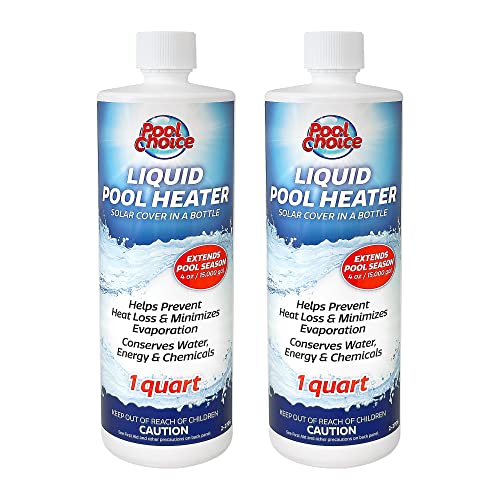
Live listings for the shortlist in this guide are pulled from Amazon below, so prices and availability are always current at the moment you look.



Final thoughts
Treat a liquid pool cover as one modest tool among several, dose it by your own pool’s volume, watch clarity and heat retention over a fortnight, and keep the physical cover for the jobs that only a physical cover can do.