Our Top Picks
 LINE2design-USA-EMS Mobility Chair-70002-Y Medical Emergency Patient Transfer400 Pound31 x 21 x 41 inches22 poundsCheck on Amazon


What's inside
- Why a House With Stairs Needs a Way Down That Does Not Rely on a Lift
- What an Evacuation Stair Chair Actually Is
- Who in a Household Might Need One
- How the Track Mechanism Controls a Descent
- Belts, Headrests, and Keeping the Passenger Secure
- Capacity, Seat Size, and Honest Weight Planning
- Folding, Storage, and the Cupboard Problem
- One Operator or Two: Matching the Chair to the People Available
- Stair Width, Landings, and Measuring Your Actual Staircase
- When a Stair Chair Should Not Be Used
- Building a Household Evacuation Plan Around the Chair
- Maintaining Tracks, Belts, Wheels, and Frame
- Transfers: Getting Into and Out of the Chair Safely
- Comparing Product Groups by Characteristics
- Common Mistakes Households Make
- Home Care Visits, Professional Carers, and Shared Responsibility
- Adapting the Plan as Needs Change Over Years
- Check prices on Amazon
- Pulling the Decision Together
As an Amazon Associate I earn from qualifying purchases. This post may contain affiliate links at no extra cost to you.
Why a House With Stairs Needs a Way Down That Does Not Rely on a Lift
Most homes are planned around ordinary days. People carry shopping up, children run down for breakfast, and an older relative manages the steps slowly with a hand on the rail. An evacuation stair chair belongs to the other kind of day, the one nobody schedules. A lift stops working during a power cut, smoke makes a hallway unusable, a flood forces everyone upstairs to leave quickly, or a person who normally walks with help suddenly cannot bear weight at all. In those moments the staircase stops being furniture and becomes the only route out, and it has to work for somebody who cannot use it on their own.
That is the honest starting point for this guide. A tracked transport chair is not a lifestyle upgrade, a convenience gadget, or a piece of equipment a household buys to feel modern. It is a contingency tool, closer in spirit to a torch kept in a drawer or a fire blanket mounted near a hob. It sits folded and unobtrusive for months, and then, on one difficult morning, it either performs calmly or it becomes another obstacle. Choosing well therefore means thinking less about appearance and more about friction, grip, body support, stair geometry, and the physical confidence of whoever will operate it inside a real home.
This guide explains how evacuation stair chairs work, which household situations they genuinely suit, where their limits lie, and how families can compare product groups by mechanism, restraint design, capacity range, and storage footprint without pretending any chair suits every staircase or every person.
The disclosure matters because the subject involves safety. Nothing in these pages replaces a risk assessment by a qualified professional, local fire guidance for a particular building, or instructions supplied with a specific chair. Homes differ in stair pitch, construction, occupancy, and the health of the people living there. Treat the comparison that follows as structured research to support a careful decision, not as a guarantee that a given model will perform in a given emergency. Where a household includes complex medical needs, the sensible step is to discuss the plan with clinicians, carers, and the local fire and rescue service before relying on any device.
What an Evacuation Stair Chair Actually Is
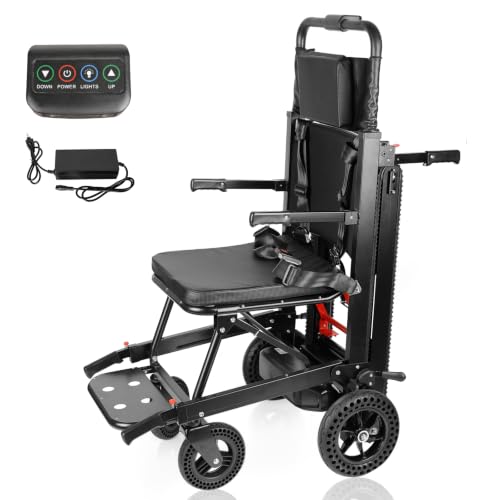
At its simplest, the device is a narrow, rigid chair mounted on a frame that can roll on flat ground and glide down steps on a continuous track. The seated person faces forward, feet supported on a rest, torso held by straps, while an operator stands behind and above, holding handles and controlling the rate of descent. Unlike a standard wheelchair, which is built for level surfaces and ramps, this chair is shaped around one task: moving a seated person down a flight of stairs in a controlled, repeatable way when walking is impossible and carrying would be dangerous.
The category overlaps with equipment used by ambulance crews and building evacuation teams, and the designs share a common ancestry. A typical group layout includes a tubular metal frame, a fabric or moulded seat, two small front wheels, larger rear wheels or a track assembly at the back, extending handles at the top, and a set of restraints crossing the chest, hips, and sometimes the shins. Some versions add a head support panel, others keep the profile minimal so the folded unit slips into a cupboard under the stairs. The variation is wide, which is why comparing shapes and mechanisms matters more than comparing colours or branding.
It helps to separate this chair from a stairlift, because the two are often confused and solve different problems. A stairlift is a fixed installation: a rail bolted to the staircase, a motorised seat that travels along it, and a person who transfers on and off at each end. It serves daily mobility, requires permanent alteration to the home, and depends on a power supply or battery backup. An evacuation chair is portable, needs no installation, can be carried to whichever staircase is usable, and is operated by another person. One is infrastructure; the other is emergency equipment. A household may reasonably have both, but buying one does not remove the need the other addresses.
Portability also changes the risk picture. Because nothing is fixed, the operator supplies the judgement: choosing the route, checking the track contact, deciding whether a landing is wide enough to turn, and stopping if something feels wrong. The chair itself provides friction and structure, yet the system only works when the human parts of it have been thought through in advance. That theme runs through every section below, from belt routing to rehearsal, because equipment stored without a plan tends to fail at the exact moment a plan was needed.
Who in a Household Might Need One
The clearest case is a multi-storey home where somebody cannot reliably descend stairs unaided. That might be an elderly parent who has moved in after a fall, a spouse recovering from hip surgery, an adult child who uses a wheelchair, or a family member with a progressive condition affecting balance and leg strength. In each case the daily routine may look manageable, with rails, patience, and help on the landing, while the emergency routine remains dangerously vague. If a fire alarm sounded at three in the morning, how exactly would that person reach the front door?
Temporary need is easy to underestimate. A broken ankle, a knee replacement, or a period of weakness after illness can turn a fit person into a non-weight-bearing passenger for several weeks. If their bedroom and bathroom sit upstairs, the household faces daily transfers as well as emergency ones. Some families hire or borrow transport chairs for recovery periods, others buy because the same vulnerability could return. Either way, the questions are identical: who operates it, where does it live, and does the staircase actually accommodate its turning circle?
Visitors count too. Grandparents who stay for holidays, friends with mobility impairments, or a home-care client visited by carers all change the occupancy profile of a house. A chair bought for one resident may also serve a guest, provided its capacity range and seat dimensions suit that second person and the plan is not built around assumptions. Households that regularly host people with limited mobility often fold this equipment into a broader welcome: step-free access where possible, a downstairs sleeping option during illness, and clear routes that never depend on one able-bodied person being present.
There is also the carer scenario, which runs in the opposite direction. Sometimes the person at risk is the one who would normally do the helping. If the stronger partner has a cardiac event upstairs, the smaller partner becomes the operator of any evacuation equipment in the house. Sizing a purchase only around the current passenger misses that reversal. Thinking through both directions, however uncomfortable, produces a more resilient household plan and often changes which chair design makes sense, favouring models whose descent control depends on track friction rather than operator strength.
How the Track Mechanism Controls a Descent
The defining feature of most designs in this category is the track: a loop of reinforced rubber or composite belt, toothed or ribbed on its inner face, running around a frame positioned at the rear of the chair. When the chair tips back slightly at the top of a flight, the track bridges several stair nosings at once. Instead of wheels dropping from step to step in a series of jolts, the belt spreads the load across multiple contact points and slides in a continuous motion. That continuity is what makes the ride calmer for the passenger and the effort steadier for the operator.
Friction inside the track assembly does the real work of speed control. As the belt moves around its rollers, resistance converts the pull of gravity into a governed glide rather than a runaway roll. Better-engineered groups tune that resistance so a laden chair descends at a walking-like pace without the operator hauling backwards with their full body weight. Cheaper or worn assemblies can feel grabby, surging and sticking alternately, which unsettles the passenger and tires the person behind. When comparing product groups, the smoothness and consistency of that resistance, described in manufacturer literature as descent control or braking effect, deserve more attention than cosmetic finish.
Track length changes behaviour on different stair profiles. A longer track spans more steps simultaneously, which helps on shallow domestic flights where each tread is deep, while a compact track suits steeper, narrower stairs found in older terraced houses. If the track is too short relative to tread depth, contact can feel intermittent; too long, and the chair becomes awkward on landings where space to tilt and level off is limited. Households should measure tread depth, riser height, and overall pitch, then compare those figures with the stair ranges manufacturers state for their track geometry, rather than assuming any tracked chair fits any flight.
Some designs supplement the belt with conventional wheels for flat travel, so the chair rolls across a hallway, then transitions onto the track at the stair head. That transition is a skill in itself. The operator approaches squarely, aligns the track with the flight, tips the chair to engage the belt, and only then commits weight forward. A hesitant half-engagement, with one side bearing on a nosing and the other floating, twists the frame and frightens the passenger. Clear hallway space before the first step, free of rugs and clutter, makes the manoeuvre far easier, which is one reason storage location and route preparation appear later in this guide as safety topics in their own right.
Belts, Headrests, and Keeping the Passenger Secure
A person being carried downstairs cannot brace, shift weight helpfully, or grab a rail. The restraint system therefore does the work their muscles would otherwise do. Most chairs in this category use a combination of straps: a lap belt anchoring the pelvis, a chest strap preventing forward pitch as the chair tilts, and sometimes a leg or shin strap stopping feet from sliding off the rest. The pelvis anchor matters most, because if the hips slide forward the whole body slumps, the centre of gravity moves, and the operator suddenly manages a very different load.
Strap quality is about more than webbing strength. Look at how buckles operate with cold or hurried fingers, whether adjustment sliders hold under load without creeping, and whether strap ends are managed so they cannot trail into the track or wheels. Cross-chest configurations can improve stability for passengers with poor trunk control, while a simple lap belt may suit somebody who can sit upright confidently and hold their own posture. The right arrangement depends on the passenger’s core strength, tone, and ability to follow instructions during a stressful descent.
Head support deserves separate thought. Passengers with limited neck control, certain neurological conditions, or a tendency to faint may need a padded headrest or an extended back panel that cradles the head against the frame. Without it, each small change in pitch whips the head, causing pain and panic. Some chair groups offer a head strap or cushion as part of the standard layout, others treat head support as an accessory, and a few low-profile designs omit it entirely in favour of compact folding. For a household where fainting is part of the risk picture, that omission should be a deciding factor rather than an afterthought.
Comfort under the straps influences cooperation. A frightened passenger who feels cut into by narrow webbing will struggle, and struggling shifts weight unpredictably. Wider straps, padding at contact points, and a seat that supports the thighs without a hard front edge all reduce distress. So does explanation: a passenger who knows the chair will tilt, expects the glide sensation, and trusts the person behind them stays stiller than one lifted without warning. Equipment choice and communication are not separate topics; the best restraint layout in the world performs worse on a terrified, uninformed passenger.
Blankets, cushions, and medical attachments complicate restraint routing. A catheter bag, an oxygen line, or a thick winter coat changes where straps sit and how they tighten. Households managing such details should practise routing belts around them during calm drills, noting which arrangement keeps lines free and dignity intact. Writing that arrangement into the household plan, in plain language near the stored chair, helps a less familiar operator, perhaps a neighbour or a visiting carer, reproduce it under pressure without improvising around medical equipment.
Daily life around the passenger matters when planning the wider room, and seating elsewhere in the house plays a part in transfers before and after any descent.
For relatives who spend long hours seated downstairs, supportive everyday seating is a separate decision covered in another guide.
best power lift chairs recliners
That topic sits apart from emergency transport, yet both choices shape how safely a person moves between sitting, standing, and being moved.
Capacity, Seat Size, and Honest Weight Planning
Every chair group publishes a maximum user weight, and across the category those limits commonly fall somewhere in a broad band roughly between one hundred thirty and two hundred thirty kilograms, with heavy-duty variants extending beyond that. Treat those figures as ceilings for the complete load, not targets. Clothing, a blanket, a small medical bag, and the passenger’s own weight all count, and a chair operated near its limit will feel heavier to control and show wear sooner. A sensible household leaves a comfortable margin between the passenger’s actual weight and the stated ceiling of whichever group it shortlists.
Seat width and depth matter as much as the headline limit. A narrow seat that technically supports a passenger’s weight may still pinch hips, dig into thighs, and make a ten-minute descent miserable. Conversely, an extra-wide frame may not pass through a slim hallway door or turn on a tight half-landing. Measure the passenger seated, including hip width with ordinary clothing, then measure the narrowest door and landing on the escape route. The chair has to satisfy both sets of numbers simultaneously, and the smaller constraint usually wins.
Weight distribution changes handling. A tall passenger with long legs moves the combined centre of gravity forward and upward compared with a shorter person of identical weight. Operators notice that difference at the stair head, where the chair balances before the track takes over, and on landings, where the load must be levelled and turned. Practising with the actual passenger, at a calm pace and ideally with guidance, reveals handling traits that no specification sheet conveys. Specification ranges start the shortlist; lived geometry finishes it.
Children and smaller adults raise distinct questions. A chair sized for adults may leave a small passenger poorly supported, with a lap belt riding too high and feet dangling short of the rest. Some product groups offer smaller frames or additional padding systems for petite users. Households where the likely passenger is a child should not assume an adult chair adapts downward safely; paediatric transport has its own guidance, and specialist advice is worth seeking before purchase rather than after a frightening first drill.
Folding, Storage, and the Cupboard Problem
Almost every household design in this category folds, because a rigid chair the size of a dining seat cannot live permanently in most hallways. Folding layouts vary: some collapse flat like an ironing board, others fold the seat up against the frame while the track stays fixed, and a few separate into two pieces for carrying. The folded footprint, often roughly the height of the frame by a depth of a few tens of centimetres, decides whether the chair lives under the stairs, behind a bedroom door, in a garage, or wall-mounted on brackets in a wide hallway.
Storage location is a safety decision disguised as a tidiness decision. A chair stored upstairs serves a passenger who sleeps upstairs, yet a fire may begin downstairs and block retrieval from below; a chair stored downstairs cannot help somebody trapped above. Many households resolve the dilemma by keeping the chair on the same floor as the vulnerable person’s bedroom, close to the stair head, so the route from bed to chair to staircase involves no fetching from another level. Where two vulnerable people sleep on different floors, some families keep two chairs, accepting duplication as the price of a workable plan.
Deployment speed depends on how the fold releases. Mechanisms that need two hands, a stiff pull, and a remembered sequence will slow a stressed operator. Designs that open with a single obvious action, and lock into shape with a positive click or pin, reduce fumbling. During drills, time the full sequence from cupboard to passenger seated and strapped, not as a race but as a diagnostic: any step that repeatedly causes confusion needs either a different routine or a note taped inside the cupboard door describing it in short, plain steps.
Dust, damp, and sunlight quietly degrade stored equipment. A garage that floods, a cupboard housing a boiler, or a sunlit porch all attack webbing, rubber, and lubricants faster than a dry indoor space does. Storing the chair inside the heated envelope of the home, away from radiators and leaks, preserves the materials the descent depends on. A breathable cover keeps dust off without trapping condensation, and keeping the chair visible enough to be noticed during routine cleaning means damage gets spotted early instead of during an emergency.
One Operator or Two: Matching the Chair to the People Available
Manufacturers often describe tracked chairs as suitable for a single operator, and for many combinations of passenger weight, stair pitch, and operator fitness that description holds. The track carries the friction load, the operator guides and steadies, and a controlled descent is achievable alone. However, single-operator suitability is a conditional claim. A slight operator moving a heavy passenger down a steep, narrow flight with a turn at the bottom faces a different task from a strong operator moving a light passenger down a straight, shallow staircase.
A second operator changes the geometry of help. Positioned below, facing upward, that person can steady the chair’s lower frame, watch foot clearance, guide the turn at a landing, and reassure the passenger face to face. The risks shift rather than vanish: the lower helper stands in the fall path if control is lost, and uncoordinated pushing or pulling between two people can destabilise a descent. Households planning two-person operation should assign roles explicitly, agree simple verbal cues, and practise who commands the movement, because shared equipment with unshared assumptions invites confusion.
Night-time reality should drive the staffing assumption. A plan that needs two operators fails if one adult works night shifts, travels for work, or is the passenger. The robust question is who is present at the worst plausible moment, not who is present on a Sunday afternoon when drills feel easy. If the honest answer is one person, choose and practise within that limit, and consider whether a powered-assist group, a different sleeping arrangement, or a downstairs bedroom conversion would reduce the load more effectively than optimism.
Operator health deserves the same candour as passenger health. Back problems, grip weakness, balance issues, or a recent injury all reduce somebody’s suitability to manage a laden chair on stairs. There is no shame in that assessment; there is danger in skipping it. A household plan that quietly depends on a grandparent with a bad shoulder performing the descent is not a plan. Naming a backup operator, perhaps a nearby adult child or a neighbour with a key, and giving that person a supervised practice session, turns a fragile arrangement into a layered one.
Stair Width, Landings, and Measuring Your Actual Staircase
Domestic staircases vary far more than product photography suggests. Victorian terraces hide steep, winding flights behind ordinary doors; modern builds offer straight, generous runs; conversions squeeze stairs into corners with winders and half-landings barely wider than the flight itself. Before comparing chairs, a household should record a small set of measurements: clear width between handrail and wall at the narrowest point, tread depth, riser height, headroom, landing depth at top and bottom, and the swing space where the chair must turn or level off.
Clear width is the figure people most often overestimate, because they measure wall to wall and forget the handrail, skirting, and the operator’s own body. The chair travels centrally while the operator stands behind it occupying the same corridor of space. If a rail projects into that corridor, handles may foul it at certain pitches. Walking the route slowly with a tape and a notebook, marking pinch points, reveals problems that a single headline measurement hides. Photographs of each pinch point help when discussing suitability with a supplier or an occupational therapist.
Landings decide whether multi-flight stairs are usable at all. At each intermediate landing the chair must come off the track, roll or be manoeuvred around, and re-engage with the next flight aligned correctly. A landing shallower than the chair’s length forces the operator to hold the load tilted while shuffling sideways, an exhausting and precarious position. Deep landings, by contrast, allow a pause: track disengaged, passenger reassured, operator’s grip reset, next flight checked for obstacles. When a household’s landings are marginal, that fact should weigh heavily in the decision, sometimes more heavily than any feature of the chair itself.
Surface matters along the whole route. Thick carpet softens track contact and can increase rolling resistance on landings; polished wood or tile reduces friction where the operator needs footing; loose runners are a hazard under both belt and shoe. Outdoor steps at the front of the house, often the final leg of an escape, bring rain, leaves, and frost into the equation. A plan that ends triumphantly at the bottom of the internal stairs but strands the passenger at a slippery garden path is unfinished, so the survey should continue to the pavement or to whichever safe assembly point the household has chosen.
Household routines around waking and sleeping intersect with evacuation planning more than people expect, especially for relatives who rise before dawn.
best alarm clocks for elderly people
A clear morning routine, audible alarms, and a practised route downstairs reinforce one another when the same people feature in both.
Stairs That Defeat Most Tracked Chairs
Spiral staircases are the classic exclusion. Their treads narrow toward the central pole, the pitch changes continuously, and a straight track cannot maintain even contact across steps that fan and twist. Winders present a milder version of the same problem, with tapered treads at the turn where the chair most needs stability. Some households have a straight main flight plus two winder steps at the bottom, and manage the winders by alternative means; others face a full turn of tapered treads and must accept that a tracked chair is the wrong tool, looking instead at relocation of the bedroom or a different evacuation strategy altogether.
Very steep stairs, open-riser stairs, and stairs with damaged or uneven nosings also undermine track contact. The belt needs consistent edges to bridge; a crumbling nosing or a gap between risers lets the chair lurch. Before purchase, inspect the flight itself as equipment. Repairing a loose tread, removing a frayed carpet edge, or refixing a handrail may do more for evacuation safety than upgrading to a premium chair group, because the staircase is half of the machine.
When a Stair Chair Should Not Be Used
Knowing the exclusions is as protective as knowing the features. A person with a suspected spinal injury should not be sat upright and carried downstairs on a standard evacuation chair unless directed by emergency professionals, because flexion and jolting can worsen the injury. The same caution applies after a serious fall where neck or back damage is possible, and to passengers whose condition makes sitting upright unsafe, such as certain fractures of the pelvis or hip where clinical advice has specified otherwise. In those situations the correct action is to call the emergency services, keep the person warm and still, and let trained crews bring equipment designed for immobilisation.
Severe breathlessness that worsens when seated upright, uncontrolled bleeding, or a passenger who is unconscious and cannot protect their airway all complicate any improvised move. There are emergencies where moving somebody is the lesser risk, particularly fire, and judgement in the moment belongs to the people present and the responders advising them by phone. The point of planning is to surface these dilemmas beforehand, discuss them with clinicians who know the passenger, and record decisions in the household plan so nobody is inventing medical judgement at the worst possible time.
Behavioural factors can also make a descent unsafe. A passenger with advanced dementia may become terrified, climb out of the straps, or strike at the operator mid-flight. Delirium during illness produces similar unpredictability. Households caring for somebody with cognitive impairment should discuss evacuation honestly with their care team, practise gentle familiarisation with the chair during calm periods, and consider whether familiar voices, a favourite blanket, or a particular sequence of reassurance keeps the person settled. If no strategy keeps the passenger safely seated, the plan must change, perhaps toward ground-floor living.
Finally, a chair should not be used when it is damaged, when its track or straps show wear described later in this guide, when the operator has never practised with it, or when the staircase is obstructed by the very emergency causing the evacuation. Smoke, water, or debris on the steps changes friction and visibility beyond anything a drill rehearsed. In a fire, the priority hierarchy is alarm, escape by the safest available route, and calling for help from outside; equipment serves that hierarchy and never outranks it.
Building a Household Evacuation Plan Around the Chair
A plan begins with roles rather than equipment. Who raises the alarm, who goes to the passenger, who brings the chair, who calls for help, and who accounts for children, pets, and visitors once outside? In a two-adult household several roles merge into one person, which is manageable if the sequence is simple and rehearsed. Write the sequence down in short lines, keep a copy near the chair and another near the main exit, and make sure every regular occupant has read it, including teenagers and frequent overnight guests.
Route choice needs a primary and a fallback. The main staircase may be compromised by smoke from a kitchen fire, while a rear staircase or an alternative exit over a flat roof or through a back door remains usable, depending on the building. Tracked chairs only serve routes with stairs they fit, so the fallback might involve moving the passenger to a refuge area, a fire-separated room with a window where they can wait for firefighters, a recognised strategy in larger buildings. Households should discuss refuge options with local fire professionals rather than improvising them, because a wrong refuge is worse than a prompt attempt at the stairs.
Communication equipment belongs in the plan. A charged mobile phone upstairs, a torch fixed near the chair, and a whistle or personal alarm for a passenger who may need to summon help all cost little and solve real problems. If the passenger spends time alone at home, a personal alarm service or a phone within reach of the bed changes the first minutes of any incident. The chair solves the stairs; it does not solve discovery, alerting, or the wait for responders, and a complete plan strings those pieces together.
Rehearsal converts paper into capability. Walk the route first without the passenger, unfolding the chair, positioning it, and miming each action while narrating aloud. Then practise on the stairs with an able volunteer of similar build before involving the actual passenger, whose first experience should be calm, partial, and reversible: perhaps seated and strapped on the landing, then a descent of a few steps with a second helper present, stopping whenever they wish. Confidence built gradually survives stress better than confidence demanded suddenly during a real alarm.
Review the plan whenever the household changes. A passenger gaining or losing significant weight, a new medication affecting balance, a different carer rota, building work altering the hallway, or a child leaving for university all invalidate pieces of the original assumptions. A brief review twice a year, tied to clock changes or another memorable date, keeps the document honest. Note the review date on the plan itself, because an undated plan quietly becomes folklore.
Floor coverings on the escape route deserve attention during that review, since loose edges and worn treads alter footing for everyone involved.
best stair runner rugs
Secure, well-fitted coverings are a separate furnishing choice, but their condition feeds directly into how predictable each step feels during a descent.
Maintaining Tracks, Belts, Wheels, and Frame
Maintenance for this category is mostly inspection, and inspection only works when it is scheduled rather than remembered. A monthly visual routine suits most homes: unfold the chair fully, check the track belt for cracks, fraying edges, embedded grit, or shiny worn patches, run a hand along its length feeling for cuts, and confirm it tracks centrally without drifting toward one side. Roll the chair across a floor and listen for grinding from wheel bearings, then examine each wheel for flat spots, hair, or thread wound around axles.
Straps and buckles need the same attention as the track. Webbing degrades through sunlight, abrasion against frame edges, and contamination with cleaning chemicals. Look for frayed edges, faded brittle sections, and stitching pulling loose at anchor points. Work every buckle several times, pull each strap firmly through its adjuster, and confirm nothing slips under a hard tug. A restraint that fails halfway down a flight offers no second chance, so any strap showing real deterioration should ground the chair until a proper replacement part is fitted.
Lubrication is a topic where manufacturer guidance rules absolutely. Some track assemblies are designed to run dry, and adding oil attracts grit that accelerates wear; others specify a particular lubricant at defined intervals. Guessing is the error. Keep the instruction booklet with the chair, follow its maintenance schedule, and record each check with a date on a card stored in the same cupboard. That small log becomes valuable evidence of diligence if insurers or care providers ever ask how the equipment was looked after.
Frame integrity is easy to overlook because tubular metal feels permanent. Check welds and joints for hairline cracks, especially where handles extend and lock, confirm locking pins engage fully, and look for corrosion where paint has chipped, particularly if the chair lives anywhere near damp. Tighten accessible fasteners to the snugness the instructions describe, without forcing threads. A chair that flexes or creaks in new ways during a drill is communicating something; retire it from service until the cause is identified, rather than reassuring yourself that it has probably always sounded like that.
Cleaning should be gentle and regular. Dust and grit in the track are abrasives, so a soft brush and a damp cloth after drills, plus a deeper clean if the chair has been used outdoors, preserve the belt surface. For fabric seats, follow the maker’s washing guidance, allow everything to dry fully before folding away, and never store the chair damp in a closed cupboard where mildew can take hold of webbing. Hygiene matters doubly when the passenger has fragile skin or a compromised immune system, since the seat and straps contact them closely.
Transfers: Getting Into and Out of the Chair Safely
More injuries in home care happen during transfers than during travel, and a stair chair is no exception. The riskiest moments are the sit-down at the top and the stand-up or wheelchair transfer at the bottom. Prepare both ends before moving: brakes or stabilising feet applied where the design provides them, wheels chocked by position against a wall if needed, the destination wheelchair or seat already placed, and enough floor space for the helper to stand beside rather than in front, where a falling passenger would land on them.
For a passenger who can partially weight-bear, a stand-pivot transfer with a helper’s steady arm may work, using a transfer belt if the household has been taught one. For a passenger who cannot stand, a slide board or a hoist may be part of the routine, and the chair’s seat height relative to bed or wheelchair height becomes a deciding specification. Seat heights vary across product groups, commonly within a modest range, and matching that height to the passenger’s usual chair reduces the vertical lift required during each transfer.
Armrests and footrests influence transfer safety in opposite ways. A footrest gives the passenger somewhere to place their feet so legs do not dangle into the track zone, yet it must swing or sit clear while they are getting in. Armrests offer pushing points for a partially mobile passenger, though fixed rests can block a sideways slide transfer entirely. Removable or folding rests resolve the conflict, and households should check how those parts detach, because a component that needs a tool will eventually be left off, lost, or forced.
Clothing and footwear are small variables with real effects. Long dressing gowns trail into wheels, slippery socks slide on footrests, and bulky coats prevent straps from cinching to the body. A drill performed in pyjamas at midday feels different from a real transfer at night, so at least one practice should mimic night conditions: passenger in sleepwear, lights low, torch in use, household half awake. The awkward details that surface during that rehearsal, a strap catching on a nightdress, a buckle hidden under a blanket, are exactly the details worth discovering early.
Comparing Product Groups by Characteristics
Because models change and availability shifts, the durable way to shop this category is by group characteristics. Start with mechanism: manual track, powered track, or simple two-wheel designs that tip and roll with small stair-climbing wheels. The last group costs less complexity but delivers a bumpier ride and demands more operator effort on each step, suiting short flights and occasional use. Manual tracked designs occupy the middle ground most homes need, while powered groups serve heavier passengers or operators who cannot supply sustained guiding force.
Next compare descent control descriptions carefully. Some manufacturers publish the angle range their chair is intended for, often covering typical domestic pitches, and the speed behaviour of the track under load. Treat any claim of effortlessness with suspicion; physics still applies, and the operator always manages momentum. What distinguishes stronger designs is predictability: a glide that starts smoothly, holds a steady pace through the middle of the flight, and slows in a controlled way as the operator levels the chair at the bottom.
Frame material divides the groups by weight and longevity. Aluminium frames commonly bring the chair’s own weight down into a range one person can carry between floors, often somewhere in the low-to-mid teens of kilograms for manual designs, while steel frames trade portability for rigidity and a lower purchase complexity. The chair’s own weight matters because somebody must fetch it, unfold it, and possibly carry it up before it can carry anybody down. A superb chair that the operator cannot lift to the passenger’s floor is a failed plan wearing good specifications.
Consider the warranty, spare parts route, and servicing network as part of the product. Tracks wear, straps fray, and wheels flatten; a group with obtainable replacement belts and buckles will outlast one whose parts vanished when a catalogue changed. Households buying for a decade of standby duty should ask how long parts remain available, whether a local mobility supplier can inspect the chair annually, and what the maker recommends as the service interval for low-use stored equipment, which ages differently from equipment used daily by professionals.
Questions to Ask Before Committing
- Stair fit: Does the stated track geometry match the tread depth, riser height, and pitch recorded during the home survey?
- Passenger fit: Do seat width, seat depth, and the capacity ceiling leave a genuine margin for the intended person’s size and clothing?
- Operator fit: Can the likely operator lift the folded chair, unfold it without confusion, and guide a full descent during a supervised practice?
- Restraint fit: Do the straps suit the passenger’s trunk control, and is head support present when fainting or weak neck muscles are part of the picture?
- Storage fit: Does the folded footprint live on the passenger’s floor, in a dry place, reachable without moving heavy clutter first?
- Support fit: Are replacement tracks, straps, and wheels obtainable, and does the maker publish a clear inspection schedule for stored chairs?
Any question answered with a shrug should pause the purchase. Suppliers who welcome measurements, photographs of the staircase, and a discussion about the passenger’s condition are signalling the right culture. Suppliers who push urgency, discourage professional advice, or describe their chair as suitable for absolutely everyone are signalling the opposite, and a household should listen to that signal even when the product itself looks impressive.
Cleaning equipment stored near the stairs raises a related practical point, because the same cupboards and landings serve several household jobs.
best cannister vacuums for stairs
Keeping that gear compact and its cords managed leaves the evacuation route clearer, which benefits every plan that depends on those steps.
Common Mistakes Households Make
The most frequent error is buying for the staircase the family wishes it had. People remember their stairs as wider, shallower, and straighter than measurement proves. The second error is storing the chair where it fits rather than where it is needed, usually a garage or a distant spare room, adding minutes and obstacles to the worst journey in the house. Third comes the untested plan: equipment still in its packaging months after arrival, straps unadjusted, operator untrained, passenger unfamiliar, a whole system of good intentions that has never once been assembled.
Overconfidence in a single strong relative is another recurring pattern. Strength helps, yet technique, footing, and calm sequencing matter more, and the strong relative may be away, ill, or the person needing rescue. Households also underestimate the return journey problem: after an evacuation for a false alarm or a minor incident, the passenger still needs to get back upstairs, and most manual tracked chairs are designed primarily for descent, with ascent requiring far greater effort or a different method entirely. Planning should include how the passenger returns, or where they comfortably wait downstairs, before any alarm forces the question.
Neglecting the passenger’s experience is a subtler failure. Being strapped into a tilting chair and slid downstairs involves surrendering control completely, and adults who value independence may resist the whole idea until it is framed respectfully. Involve the passenger in choosing, let them handle the straps, let them veto arrangements that feel undignified where a safe alternative exists. Cooperation during a real evacuation is partly manufactured during these conversations, long before the alarm sounds.
Home Care Visits, Professional Carers, and Shared Responsibility
Where professional carers visit daily, the evacuation chair sits inside a formal care landscape. The care provider’s own risk assessments may govern whether their staff may operate such equipment, and some agencies prohibit lone workers from performing stair descents at all. A family that buys a chair expecting visiting carers to use it should confirm that expectation in writing with the agency, clarify training requirements, and record the arrangement in the care plan. Assumptions across organisational boundaries are where otherwise sound equipment becomes unusable, because nobody present is authorised or trained to deploy it.
Documentation helps everyone. A simple folder near the chair can hold the instruction booklet, the household plan, the passenger’s relevant medical summary, mobility notes from therapists, and the inspection log. During a real incident, responders ask fast questions: weight, conditions, medications, allergies, and how the person usually transfers. Having those answers on paper, current and legible, saves minutes and prevents the operator from leaving the passenger unattended while searching for information.
Adapting the Plan as Needs Change Over Years
A chair bought for a parent recovering from surgery may still be in the cupboard a decade later, by which time the passenger, the operator, and the house have all aged. Equipment that suited a seventy-year-old operator may not suit the same person at eighty. The twice-yearly review should therefore ask an unfashionable question: does this arrangement still work, honestly, with the bodies and the building as they are now? Sometimes the answer prompts a different chair group; sometimes it prompts a bigger decision about ground-floor living that the chair had been postponing.
Children in the household grow into potential helpers, and their role should be formalised gradually: first knowing where the chair lives and how to call for help, later assisting with doors, torches, and reassurance, and only as adults taking any physical part in a descent. Grandchildren visiting overnight need a simpler briefing, essentially where to go, whom to follow, and a promise that adults will handle equipment. Clarity scaled to age prevents both panic and heroic improvisation.
Technology around the chair will keep changing, with alarms, sensors, and communication tools improving the discovery and alerting parts of an incident. The chair’s own job, however, remains stubbornly mechanical: controlled friction against gravity, a supported seated body, and a calm operator. Households that keep that mechanical core maintained and rehearsed can adopt new alerting tools as they wish without rebuilding the plan each time, because the descent itself stays practised and boring, which is precisely what an emergency procedure should feel like.
Check prices on Amazon
Live listings for the shortlist in this guide are pulled from Amazon below, so prices and availability are always current at the moment you look.


Pulling the Decision Together
A sound shortlist emerges from constraints, not enthusiasm. Measure the staircase, weigh and measure the passenger, identify the real operator at the worst hour, decide where the chair will live, and list any medical factors that limit sitting, strapping, or tilting. Then compare product groups against those fixed facts: track geometry for the flight, capacity with margin, restraint layout for the body, folded size for the cupboard, and parts support for the years ahead. Features that do not serve a recorded constraint are decoration, however attractively they are described.
Budget thinking should include the whole system rather than the chair alone: a torch and its batteries, a storage cover, possible replacement straps, an annual professional inspection if the maker recommends one, and perhaps training from a local mobility specialist. None of those extras is glamorous, and together they often decide whether the equipment remains trustworthy in year five. A household that stretches to buy a chair but leaves nothing for upkeep has inverted its priorities, since a modest chair maintained faithfully outperforms a neglected premium one.
Above all, keep the arrangement rehearsed, documented, and honest about its exclusions. Know which stairs defeat the track, which medical situations demand professional rescue instead, and which nights leave only one operator in the house. A plan that acknowledges its edges invites timely help; a plan that pretends to cover everything invites delay while people discover the gaps. When the survey is done, the drills are calm, and the passenger trusts the seat, a folded chair in the right cupboard becomes one of the quietest forms of care a family can arrange, ready on the landing long before the night it is finally needed and everyone discovers that practice, patience, and a well-kept track have turned a frightening staircase into a route the household already knows by heart.