Our Top Picks
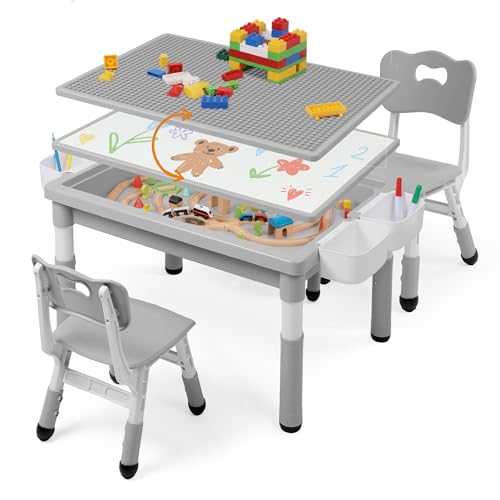 TODEFULL Kids Table and Chairs Set Large Storage34.6x24.8x24.4 inches34.6 x 24.8 x 24.4 inches30.9 poundsCheck on Amazon
 Kinder King Kids Table & 2 Chairs Set34.6 x 24.8 x 24.4 inches34.6 x 24.8 x 24.4 inches30.9 poundsCheck on Amazon


What's inside
- What a Duplo brick table set actually includes
- Large bricks first: why Duplo compatibility matters
- Sizing the table and chairs by age
- Storage that matches how children actually tidy
- Materials, edges, and everyday safety
- The reversible top: building surface on one side, everything else on the other
- Cleaning, hygiene, and the realities of sticky bricks
- Room layout: where this furniture earns its keep
- How the set grows with the child
- Choosing between plastic, wood, and hybrid builds
- Common buying mistakes in this category
- Activities that make the table more than a building surface
- Comparing sets: a structured way to decide
- Care over years of ownership
- Budgeting thoughtfully without pursuing the longest feature list
- Check prices on Amazon
- Final thoughts on matching the set to your household
As an Amazon Associate I earn from qualifying purchases. This post may contain affiliate links at no extra cost to you.
A brick table looks simple from across the room, yet the details decide whether a toddler settles in happily or wanders away after two minutes. The useful sets in this category pair a low table with studded building surfaces and child-size chairs, and they add somewhere sensible to put the bricks when play ends. For families shopping for a first building station, the real questions concern fit, compatibility, storage volume, and how forgiving the furniture feels during everyday spills, bumps, and enthusiastic rebuilding.
Parents comparing brick tables with matching chairs will notice that listings describe similar shapes in very different language, so this guide separates verifiable dimensions and construction details from vague promises. The comparison draws on manufacturer age guidance for large bricks, common size ranges published for this product group, and general toy safety principles rather than invented model claims. Nothing here assumes a child needs the biggest table or the largest brick bin, and no single layout suits every playroom corner.
What a Duplo brick table set actually includes
At its core, this product group combines three elements that are often sold separately elsewhere: a table frame, a studded building surface, and seating scaled for young children. Some sets include one chair, others include two, and a few bundle stools instead of backed chairs. Counting pieces before anything else prevents a common disappointment, because photographs staged with extra seating can make a one-chair set look like a complete sibling station when the box contents tell a narrower story.
The building surface itself may be fixed, removable, or reversible. A fixed studded top commits the furniture to brick play full time, which suits a dedicated play corner. Removable panels lift away to reveal storage underneath, turning tidying into part of the routine. Reversible panels flip between a studded side and a smooth side, so the same surface supports drawing, puzzles, snack-free craft work, and pretend play once the bricks go back into their bin.
Storage takes several forms across the group. Open wells beneath the tabletop hold a modest pile within easy reach. Lidded compartments hide visual clutter and keep dust off waiting pieces. Detachable side bins suit children who like sorting by colour or size, while a single deep central tub suits families who prefer one quick sweep at the end of the day. None of these arrangements is automatically superior; each trades tidiness, capacity, and independence differently.
Chairs in these sets are not shrunken dining chairs. Their seat height, depth, and back angle assume short legs, frequent climbing down, and a fair amount of sideways wriggling. A well-matched chair lets feet rest flat or nearly flat, which steadies a child who leans forward to press a large brick onto a stud. When feet dangle, posture drifts, and building sessions tend to end sooner than the child otherwise wanted.
Large bricks first: why Duplo compatibility matters
Duplo bricks are the larger format designed for younger hands, roughly double the linear size of classic small bricks in each direction. That scale changes everything about the table. Stud spacing on a compatible baseplate is wider, stud height feels chunkier under small palms, and a toddler can connect pieces with a straight downward press rather than precise fingertip alignment. A table marketed for building play but fitted only with small-brick plates will frustrate a two-year-old holding large bricks that simply cannot lock on.
Manufacturer guidance for large bricks generally places them from around eighteen months upward, with the exact starting point depending on the individual child and the specific set involved. That age framing reflects grip strength, mouthing behaviour, and the ability to separate pieces without biting or wrenching them. Parents should treat published age bands as a starting reference, then watch how their own child handles the pieces during supervised play on the floor before committing furniture money to a particular format.
Classic small bricks enter the picture later, usually once a child shows careful finger control and reliably keeps small objects away from the mouth. The two systems are designed so large bricks can sit on top of small-brick structures in certain combinations, yet the reverse fit does not work the same way, and baseplates are not interchangeable between formats. A table that only supports one stud spacing therefore makes an early decision on behalf of the family, whether the listing says so plainly or not.
Dual-sided baseplates address that fork in the road. One face carries the wide stud pattern for large bricks, while the reverse carries the tighter pattern for classic bricks. Families expecting a long service life from the furniture often favour this arrangement, because the table can follow the child from chunky first towers into more intricate small-brick builds without a replacement purchase. Checking which patterns a given panel actually carries matters more than counting how many panels the set contains.
Reading stud patterns without guesswork
Product photographs can mislead the eye, since stud spacing looks similar at thumbnail size. Better signals appear in written specifications: references to large-brick compatibility, named brick formats in the compatibility notes, and panel dimensions stated alongside stud counts. When a listing mentions only generic building bricks without naming a format, caution is sensible. Generic plates sometimes follow the small-brick standard while using artwork aimed at toddler parents, a mismatch that only becomes obvious when the first large brick refuses to seat.
Panel fit also deserves attention. Loose panels that shift under pressure make towers wobble for reasons unrelated to a child building skill. Snug panels with modest finger notches for lifting strike a better balance, staying put during play yet remaining removable by an adult at cleanup time. Warped panels, occasionally reported in this product group after heat exposure in transit, deserve a flat-surface check on arrival before the return window closes.
Colour plays a quieter role than most listings admit. Traditional green plates evoke a landscape, while grey, blue, or multicoloured panels may blend better with a living-room corner. More importantly, contrast between plate and bricks helps young eyes track pieces during sorting games. Very pale plates can make pale bricks hard to spot for toddlers still developing visual discrimination, a small detail that affects how independently a child can tidy up.
For seating that works beyond the brick corner once children outgrow this table, our research notes the neighbouring options covered in best chairs for kids play room as a useful next read for shared family spaces.
Sizing the table and chairs by age
Height is the dimension that governs comfort, and it is also the dimension listings state least consistently. Tabletop heights in this group commonly fall in a band roughly between seventeen and twenty-three inches from floor to building surface, with the lower end aimed at toddlers and the upper end suiting preschoolers who stand while building. Standing play changes the calculation, because a child who prefers to build upright needs the surface near waist height rather than seated elbow height.
Seat heights for matching chairs commonly sit somewhere around ten to thirteen inches, though stools and backed chairs differ in how that height feels in practice. A child whose knees bend at roughly a right angle, with feet supported, can shift weight safely and stand up without hauling on the table edge. Hauling on the edge matters for stability, since repeated pulling tests whatever anti-tip qualities the frame possesses, especially on smooth flooring.
Age bands printed on boxes are approximations built around average growth, and siblings routinely break them. A tall two-year-old may fit furniture labelled for older children, while a petite four-year-old may still prefer the lower setting of a toddler table. Measuring the child seated on an existing chair, then comparing inseam and popliteal height against published chair dimensions, gives a firmer basis for choosing than birthday arithmetic alone.
A practical measuring routine at home
Start with shoes off and the child seated on a firm surface, back supported, knees bent. The distance from the floor to the crease behind the knee approximates a comfortable seat height, allowing a small margin for footwear usually worn during play. Next, note seated elbow height above the seat, since the tabletop should sit a little above that line for building work, giving forearms room to move without shoulders creeping toward ears.
Standing measurements help too. Have the child stand beside a kitchen counter or low shelf and notice where hands naturally rest when pressing downward, because pressing bricks together is a downward task. If the building surface sits far above that natural press point, the child compensates by climbing, kneeling on the chair, or building on the floor instead, each outcome signalling a sizing mismatch rather than a behaviour problem to correct.
Growth rate argues for headroom without excess. Furniture bought with enormous clearance tends to spend its first year being awkward, and young children form habits around furniture quickly. A modest amount of growing room, perhaps an inch or two beyond current ideal measurements, usually serves better than sizing up dramatically. Some frames in this group offer adjustable legs, though that feature remains less common here than in dedicated study furniture, and adjustment mechanisms need adult tools in most designs.
Chair count interacts with sizing in a social way. Two chairs invite a sibling or visiting friend, which extends play value considerably for preschoolers. However, two chairs around a small tabletop can crowd elbow room, so tabletop area per seated child deserves a thought. Rectangular tops generally give each builder a defined territory, while round tops encourage shared central structures but blur personal space boundaries that toddlers guard fiercely.
Storage that matches how children actually tidy
Brick storage sounds like a solved problem until the first evening cleanup reveals the flaws. Shallow open wells look tidy in photographs but hold fewer large bricks than parents expect, because chunky pieces consume volume quickly and stack poorly when tossed in a hurry. Deep tubs swallow more, yet small arms cannot reach the bottom pieces, so favourite bricks migrate to the floor and stay there. Capacity stated in litres or gallons helps only when families picture their current brick pile in the same terms.
Lids change behaviour in subtle ways. A lidded well becomes a flat extension of the play surface once closed, which suits rooms where the table doubles as a general activity spot. Lids also discourage the gradual creep of unrelated toys into the brick supply, a real phenomenon in busy households. On the other hand, lids with tight fits challenge small fingers, and a lid that needs adult strength undermines the goal of independent tidying for preschoolers who are otherwise capable of putting pieces away.
Removable bins offer a middle path. A child can carry one bin to the floor, build beside it, then return it to its slot under the tabletop. That portability supports the way toddlers naturally play, which is rarely confined to the table surface itself. Bins with handles suit this pattern best, provided the handles fold or sit flush so panels above them still close properly. Bins without drainage or ventilation are fine for dry indoor bricks, but any pieces that get washed should dry fully before returning to a closed container.
Sorting deserves a realistic appraisal. Colour-coded bins delight adults planning the purchase, yet many toddlers sort enthusiastically for a week and then dump everything into whichever container stands open. Flexible storage that works for both sorted and unsorted collections ages better than rigid systems demanding a particular routine. Families who already own a large mixed brick collection should measure the pile loosely before choosing, because a table whose storage holds only half the collection creates a second storage problem elsewhere in the room.
Keeping bricks on the table instead of underfoot
Raised edges around the building surface, sometimes called lips or rails, reduce the number of pieces that slide onto the floor during vigorous play. A modest rim keeps rolling elements and partially built models contained without blocking forearm movement. Very high rims, by contrast, can dig into forearms during long sessions and make sweeping loose pieces into a hand or bin awkward at cleanup time.
Floor scatter still happens with any design, and it is worth planning the surrounding surface accordingly. A low-pile rug under the table softens landing noise and slows rolling pieces, while still letting chair legs slide when a child pushes back to stand. Deep plush surfaces trap small accessories and make chairs wobble, so texture choice around a building station leans practical rather than purely decorative.
When the play zone shares floor space with reading corners and soft furnishings, the rug guidance in best area rugs for toy rooms sits naturally alongside this table decision, since both choices shape how the room handles daily scatter.
A well-chosen rug and a well-sized table solve the scattered-brick problem from opposite directions during everyday play. The table contains construction while building is underway, the rug contains the overflow when pieces escape, and together they reduce how far bricks travel across hard flooring toward doorways, heating vents, and the undersides of sofas where retrieval requires an adult and a torch.
Materials, edges, and everyday safety
Most sets in this group use moulded plastic, engineered wood, solid wood, or a blend of those materials across frame, panels, and chairs. Moulded plastic keeps weight low and wipes clean easily, which matters when the table also hosts glue sticks or washable markers on its smooth side. Wooden frames feel sturdier to many adults and can suit rooms furnished mainly in timber, though they usually weigh more and may show dents from dropped bricks or chair knocks over time.
General toy safety standards in many markets address sharp points, sharp edges, small parts for younger age groups, and limits on certain substances in materials intended for children. Furniture marketed for play sits at the boundary between toy and furniture rules, so responsible makers state which standards their product meets rather than relying on reassuring adjectives. Parents can reasonably look for clear compliance statements, age grading, and care instructions, and can treat vague safety language without specifics as a prompt to ask the seller a direct question before buying.
Rounded corners are more than a styling preference at toddler height. Table corners sit close to face height for a child who trips near the furniture, and chair corners matter when chairs get carried, dragged, or toppled. Smooth moulded edges, sanded timber corners, and the absence of exposed fasteners at child height all reduce the chance that an ordinary stumble becomes a memorable injury. Checking undersides matters too, since children crawl beneath these tables constantly and encounter the surfaces adults rarely inspect.
Paints and finishes deserve calm, proportionate attention. Water-based finishes are common in this category and generally chosen for lower odour during unpacking and early use. A new-product smell that lingers strongly argues for ventilating the room and contacting the seller if it persists, rather than seating a toddler at the table immediately. Families with children who still mouth objects should be especially thoughtful, because chair backs and table edges within reach will inevitably be chewed during teething phases regardless of adult intentions.
Chair backs, weight limits, and tipping behaviour
A chair back changes how long a young child can sit comfortably, because it offers support during pauses and a handhold during the wobbly business of sitting down. Back height in this group varies considerably. Low backs suit children who perch briefly between bursts of standing play, while higher backs suit children who settle into longer building or drawing sessions. The back should meet the child behind the shoulder blades without pushing the head forward, a fit that is easy to check once the furniture is assembled.
Published weight limits for chairs in this group commonly fall in a range that accommodates toddlers and preschoolers comfortably, but the figures assume a seated child rather than a standing one. Children will stand on chairs despite every household rule, so frame rigidity and leg splay matter as much as the printed limit. Wider leg spacing resists sideways tipping, and chairs that rock noticeably under a shifting seated load deserve a cautious second look before they become daily furniture.
Table stability follows similar logic. A building table gets leaned on, bumped by ride-on toys, and occasionally used as support by a newly walking toddler pulling upright. Non-slip feet or pads help on hard floors, both by steadying the frame and by protecting the floor finish from scratches during the inevitable dragging. On carpet, broad feet prevent the slow sinking and tilting that narrow legs can develop in pile over a few weeks of use.
Pinch points hide in folding and lifting mechanisms. Tables whose panels lift for storage access should move without sudden drops, and folding legs, where fitted, should lock positively rather than relying on friction alone. Adult hands will operate these parts most often, but curious fingers explore exactly the hinges adults overlook, so a slow, deliberate check during first assembly is time well spent.
The reversible top: building surface on one side, everything else on the other
Two-in-one tabletops earn their popularity honestly. The studded face handles construction, while the smooth reverse handles drawing paper, sticker books, play dough tools, wooden puzzles, and board games with pieces too large to balance on studs. Families in smaller homes feel this versatility most, because a single piece of furniture covers several activities that would otherwise compete for floor space across the day.
How the reversal works affects daily friction. Panels that lift out and flip by hand suit most households, provided the panels are light enough for an adult to manage one-handed while holding a toddler back from the exposed storage well. Panels that slide or hinge avoid loose pieces leaning against walls, but their mechanisms add weight and occasionally stiffness. Either approach works when tolerances are decent; panels that need forcing will eventually be left permanently on whichever side was used last.
The smooth side quality varies more than photographs suggest. A genuinely flat, sealed surface takes crayon and washable marker without ghosting, and it gives paper enough grip to stay put under a busy hand. Textured smooth sides, sometimes moulded with subtle patterns, can interfere with drawing and make wiping dried paint slower. If the household expects heavy art use, the smooth face deserves as much scrutiny as the studded face usually receives.
Some tables split the difference with half-and-half layouts, where one section stays studded while another stays smooth. That arrangement lets two children pursue different activities side by side, a genuine benefit in sibling households. The compromise is that neither activity gets the full surface, so large collaborative builds spill onto the floor sooner. Thinking honestly about whether shared simultaneous use is likely helps families choose between split and full reversible designs.
Baseplate panels versus built-in studs
Removable baseplate panels and permanently moulded studded tops behave differently over years of ownership. Panels can be replaced if cracked, swapped for the other brick format, or taken to another room for floor play. Moulded tops cannot crack along panel seams and never get lost under furniture, but damage to the studded area is effectively permanent, and the format decision is locked in at purchase.
Panel-based designs also allow partial conversion. A child transitioning toward classic bricks might use one small-brick panel beside one large-brick panel during the overlap months, building simple mixed structures across the boundary where the systems allow it. That gradual shift mirrors how children actually change interests, which is rarely overnight. Families who value that flexibility should confirm that single replacement or additional panels are obtainable for the specific table, rather than assuming generic panels will match its recess dimensions.
Stud quality itself shows in how bricks feel when pressed and pulled. Well-formed studs grip consistently across the whole surface, so a tower base feels equally secure at the panel corner and the centre. Inconsistent grip, where some areas release bricks too easily, pushes children to build only in the reliable zone and abandon the rest of the surface. Published specifications rarely describe grip, so return policies and buyer protections carry extra weight for this particular characteristic.
Cleaning, hygiene, and the realities of sticky bricks
Building bricks attract crumbs, dust, and the residue of small hands that move directly from snack bowls to construction projects. A table that cannot be cleaned quickly will gradually become a table children are steered away from, which defeats the purchase. Smooth plastic panels generally wipe down with a damp cloth and mild soap, while timber surfaces prefer gentler treatment and prompt drying to protect their finish from standing moisture.
Studded surfaces complicate cleaning because debris lodges between studs. A soft brush kept near the table handles most daily dust, and tipping loose crumbs into a bin takes seconds when panels lift out. Dried spills between studs need patience and warm soapy water rather than harsh scrubbing that could dull the plastic. Panels that tolerate full washing under a tap offer an advantage after illness has passed through the household, provided the maker confirms water exposure is acceptable for that component.
Bricks themselves need periodic washing in most family routines, especially pieces shared between siblings or visiting friends. Large bricks generally tolerate hand washing in warm soapy water and air drying on a towel, though specific care guidance from the brick maker should govern temperature and detergent choices. Storage wells and bins benefit from the same wash cycle, since gritty residue accumulates in their corners and transfers back onto freshly cleaned pieces within days.
Chair cleaning is simpler but easier to forget. Seat surfaces collect marker, food smears from hands, and dust along the backrest joints. Designs with fewer seams and crevices wipe down faster, which in practice means they get cleaned more often. Removable fabric elements, uncommon in this group but present in some padded designs, should be checked for washing instructions before purchase, because a non-removable pad that stains badly in month two will annoy the household for years.
Managing noise, because brick play is not quiet
Pouring large bricks onto a hard plastic surface produces a clatter that carries through thin walls and floors. Households in apartments, or with a sleeping baby in the next room, may prefer timber surfaces or panel materials that soften impact sound slightly. Felt pads under storage bins and a rug beneath the whole station also reduce the percussive quality of enthusiastic tidying, where bricks are dumped rather than placed.
Chair scrape is the other recurring sound. Lightweight plastic chairs dragged across hard flooring announce every repositioning, and toddlers reposition constantly. Glide pads on chair feet, whether supplied or added later, tame that noise and protect flooring at the same time. Checking whether the chair design accepts standard adhesive pads is a small practical step that saves improvisation later.
Room layout: where this furniture earns its keep
Placement shapes usage more than most families expect. A brick table pushed against a wall gives a contained, calm station where a child can leave a half-finished build undisturbed. The same table in the centre of a room invites walk-around play and sibling collaboration, but exposed builds get knocked by passing traffic. Neither is wrong; the choice should follow how the household actually moves through the space during busy hours.
Clearance around chairs deserves measurement before purchase, not after. Children need room to pull a chair out, sit, push back, and stand without the chair striking skirting boards or nearby furniture. A modest margin on the chair sides, plus space for an adult to kneel beside the table during joint play, makes the station feel generous rather than squeezed. Kneeling space matters because adults join building sessions at floor level far more often than product photographs imply.
Light influences session length in a quiet way. Natural light near a window helps children distinguish brick colours accurately, which supports sorting games and following simple picture instructions for builds. Dim corners push children to carry pieces toward brighter areas, scattering the collection. If the only available corner is dim, a nearby lamp positioned so it does not cast the child shadow across the building surface solves most of the problem.
Proximity to other play zones cuts both ways. A brick table near a reading nook encourages mixed afternoons where stories inspire builds, while distance from television screens reduces the pull toward passive watching mid-session. Families designing a broader playroom scheme often place the brick station near open floor, because large bricks inevitably migrate outward during ambitious construction, and a nearby clear patch absorbs that spread gracefully.
For households also arranging a small work surface as children approach school age, the distinctions explored in best chairs for kids desk help separate dedicated desk seating from the lower, more relaxed chairs bundled with brick tables.
How the set grows with the child
The service life of a brick table spans several developmental chapters, and each chapter asks something different from the furniture. Early toddler play is mostly dumping, carrying, stacking two or three pieces, and knocking structures down with delight. At that stage the table functions mainly as a defined territory with reachable storage, and chair use may be brief or ignored entirely in favour of standing or floor sitting.
Preschool play looks different. Builds gain height and intention, children narrate what they are making, and sessions stretch longer as fine motor control improves. Chairs earn their place here, supporting seated concentration, while storage systems face their sternest test because collections usually expand through gifts and hand-me-downs during these years. A table whose storage felt generous at age two can feel tight at age four, not because the furniture changed but because the brick population doubled.
The transition toward classic small bricks usually arrives gradually, announced by a child lingering over an older sibling collection or managing small construction toys with new care. Signs of readiness include reliable non-mouthing behaviour, patience with pieces that require fingertip precision, and the ability to find a specific small piece in a mixed pile without frustration boiling over. Rushing this transition because a table panel exists helps nobody; the dual-format furniture simply means the option waits patiently until the child is ready.
Once small bricks dominate, the same table often continues as a building station for several more years, especially in its dual-panel form. Eventually height becomes the limiting factor, as school-age children outgrow low tabletops and prefer either floor building or a higher general-purpose surface. At that point the set may pass to a younger sibling, move to a grandparent home, or be resold, and durable construction with replaceable panels tends to hold up better through those second lives.
Hand-me-downs, spare parts, and resale sense
Families who expect a second child to use the table should weigh build quality more heavily than families buying for a single season. Moulded panels can fade or stress-whiten at flex points, timber frames can be refinished, and chair joints reveal early whether they will survive another toddler. Checking whether the maker sells replacement panels, bins, or chairs separately extends the useful life of the whole set considerably.
Storage of the set itself between children is straightforward when chairs stack or nest and panels stay with the table. Sets that disassemble flat suit households short on loft or garage space, though repeated assembly cycles can loosen some fastener types. Keeping the original fixings together in a labelled bag taped beneath the tabletop is an old household trick that prevents the familiar missing-bolt problem years later.
Choosing between plastic, wood, and hybrid builds
Plastic sets dominate the affordable and mid portions of this product group, and their advantages are practical: low weight, bright colour options, integrated storage mouldings, and tolerance for wet cleaning. Their weaknesses appear as flex in large flat panels, a hollow sound during play, and surface scratching that accumulates visibly over years. For a first table bought mainly for the toddler phase, those trade-offs are often acceptable and even sensible.
Wooden sets appeal to households prioritising longevity and a calmer visual presence in shared living spaces. Solid or well-made engineered timber frames resist flex, accept repairs, and feel reassuringly planted during boisterous play. The costs are literal weight when the table needs moving for cleaning, plus greater sensitivity to prolonged moisture in storage wells where damp bricks may sit. Timber also tends to pair with simpler storage, since complex moulded bin shapes are harder to produce in wood.
Hybrid designs mix the two, commonly a timber frame with plastic panels and bins. This combination places washable plastic where bricks and spills concentrate, while timber carries the structural loads and chair construction. Hybrids can inherit the weaknesses of both if executed poorly, with panel recesses that fit imperfectly in their timber frames, so fit and finish during first assembly tell the buyer a great deal about long-term satisfaction.
Colour and finish choices intersect with material in everyday ways. Bright plastic colours energise a dedicated playroom but can dominate a small living room where the table lives permanently in view. Neutral timber or muted plastic tones recede visually, which some families strongly prefer. There is no developmental evidence that brick tables need particular colours to support play, so households can choose on honest aesthetic preference without worrying that a calmer palette shortchanges the child.
Assembly reality: tools, time, and instructions
Most sets in this group arrive flat-packed or partially assembled, with assembly times that vary from a few minutes for snap-together plastic frames to considerably longer for timber frames with multiple fasteners. Instruction quality matters disproportionately here, because a misassembled chair joint may not reveal itself until it fails under a wriggling child. Clear diagrams, labelled parts, and a small surplus of fasteners signal a maker who understands home assembly conditions, which usually involve interruptions and a helpful toddler removing pieces mid-task.
Plastic snap-fit designs trade tool-free convenience against long-term tightness. Connections that feel satisfyingly firm on day one can loosen after repeated disassembly, so families planning to pack the table away between visits from grandchildren should consider how the joints tolerate cycles. Screwed timber joints generally tolerate reassembly better, provided threads go into solid material or proper inserts rather than soft board alone.
Two adults make assembly of larger tables noticeably easier, mainly for holding frames square while fasteners tighten. Working on a rug or blanket protects both flooring and the tabletop finish during the process. A final systematic check, wiggling each chair, pressing each panel corner, and testing each lid or bin, takes five minutes and catches most assembly errors while the tools are still out.
Common buying mistakes in this category
The most frequent error is buying for the photograph rather than the room, choosing a wide table that overwhelms the only available corner and then blaming the child for playing elsewhere. Measuring the footprint, including chair pull-out space, prevents that outcome more reliably than any other single step. Cardboard templates cut to the stated footprint and laid on the floor give a surprisingly accurate preview of how the station will feel in daily traffic.
Second comes format confusion, where a household with a large collection of big bricks buys a table whose plates only fit small bricks. The fix is unglamorous: confirm stud compatibility in writing before purchase, ideally against the brick maker own guidance on which plates suit which format. Third is overvaluing bundled brick counts. Sets that include starter bricks are convenient, but a modest bundle should not outweigh table dimensions, chair fit, or storage design, since bricks are easy to add later and furniture is not.
Ignoring the chair specification is another quiet mistake. Listings lavish detail on tabletops while describing chairs in a single line, yet children interact with both equally. Seat height, back presence, and chair weight all shape daily experience. A chair too heavy for the child to move fosters dependence on adults for setup, while a chair so light it slides away during sitting down creates a small recurring hazard that glide pads or a different design would solve.
Finally, many households underestimate how quickly collections grow and choose storage that is full on the first day. Headroom in the bin is not wasted space; it is what makes tidying fast enough that a tired child will actually do it. A bin at comfortable capacity lets pieces be swept in without arranging, and that ease sustains the tidy-up habit far better than a perfectly organised but crammed container.
Activities that make the table more than a building surface
A brick table earns daily use when families see it as a small activity hub rather than a single-purpose station. On the smooth side, it hosts colouring, sticker scenes, simple board games, threading beads too large to roll away, and pretend tea parties where the chairs finally seat toy guests. Rotating these activities keeps the furniture central to the playroom routine even during weeks when building enthusiasm dips, as it periodically does for almost every child.
On the studded side, simple prompts extend engagement without turning play into lessons. Building a garage for a favourite toy car, a fence for farm animals sized to the large-brick scale, or a tower taller than a beloved stuffed toy all give construction a friendly purpose. Sorting games, where bricks return to bins by colour or size, fold tidying into play so naturally that children often continue past the point where direct requests to tidy would have stalled.
Social play develops around the table in stages. Parallel play comes first, with two children building separate structures side by side, borrowing the occasional piece. Cooperative projects arrive later, usually with negotiation about who builds the base and who adds the roof. Furniture that gives each child a defined side and reachable storage reduces friction during the parallel stage, while a shared central panel supports the cooperative stage when it emerges.
Sensory variety is an underappreciated benefit of the format. Pressing studs together gives firm proprioceptive feedback through hands and shoulders, carrying bricks works grip strength, and standing-to-sitting transitions around low furniture rehearse balance constantly. None of this replaces outdoor play or other movement, but a well-placed table quietly accumulates physical micro-activity across an ordinary indoor day.
Introducing the table without overwhelming the child
Presentation influences first impressions. Setting up the table with a modest number of bricks available, rather than the entire collection dumped into the well, helps a young toddler focus and succeed quickly. Additional pieces can join gradually as attention and building ambition grow. A first session that ends with an easy tidy, because only twenty pieces were out, teaches the cleanup routine while success still feels effortless.
Adult modelling helps during the first days. Sitting on the floor beside the table, building something simple, and narrating choices casually shows the child what the station is for without formal instruction. Children copy the pressing technique, the bin use, and even the habit of returning stray pieces, largely through observation. Siblings often serve as the most effective models of all, which is one reason second children frequently adopt these tables faster than first children did.
Leaving a build standing overnight, when space allows, respects the child effort and creates a reason to return next morning. Tables with lids complicate that choice, since closing the lid means dismantling the creation. Some families designate one panel as the preservation zone, where finished work stays displayed, while the rest of the surface cycles through new projects. That small household convention prevents many tears at cleanup time.
Comparing sets: a structured way to decide
With several candidate sets in view, a simple written comparison prevents the blur that comes from browsing many similar listings. Record tabletop dimensions, height, panel format for each side, storage type and approximate capacity, chair count, seat height, chair back style, frame material, and stated age grading. Patterns emerge quickly on paper: one set wins on storage, another on dual-format panels, another on chair design, and the family priorities can then arbitrate honestly.
Weight the criteria by the child in front of you. A mouthing toddler elevates material and edge considerations. A tall preschooler elevates height and chair fit. Twins elevate tabletop area and chair count. A small flat elevates footprint, folding or compact storage, and the reversible top. There is no universal ranking hidden inside this category, only better and worse matches for particular households at particular moments.
Delivery and returns deserve a line in the comparison too, because large flat-packed furniture is awkward to send back. Clear return terms matter for characteristics that photographs cannot convey, such as stud grip, panel stiffness, and chair wobble. Keeping packaging until the assembled set has survived a few days of real play is a mundane precaution that experienced furniture buyers rarely regret.
For very young children still in the nursery phase, where soft surfaces and gentle colour dominate planning, the ideas in best baby kids educational rugs pair well with a first brick station placed nearby for supervised floor-to-table play.
Questions worth asking the seller
Specific questions extract more useful answers than general enquiries about quality. Ask which brick formats each panel side fits, what the seat height and tabletop height measure in stated units, whether replacement panels are sold separately, and which safety standards the set claims to meet. Ask whether the chairs are included or pictured for illustration, a distinction that still catches buyers out. Written answers also create a record if the delivered product contradicts the description.
Answers that arrive as precise numbers and named standards inspire more confidence than answers padded with superlatives. A seller who cannot state the panel format for a building table is telling the buyer something important about how carefully the product has been specified. In that situation, choosing a better-documented alternative is usually wiser than hoping the delivered item happens to match the household brick collection.
Care over years of ownership
Routine care for this furniture is light but not zero. A monthly wipe of storage wells, a check of chair joints each season, and prompt attention to any crack in a panel keep small issues from becoming failures. Cracks matter because a split panel can expose a sharper edge and because studs around a crack lose grip, quietly shrinking the usable building area.
Sunlight deserves a thought for plastic sets placed near bright windows. Prolonged strong sun can fade colours and, over long periods, make some plastics more brittle. Rotating the table position occasionally, or drawing a blind during the fiercest midday hours, reduces uneven fading that leaves one panel visibly different from its neighbours. Timber finishes also appreciate relief from harsh direct sun, which can dry and lighten exposed surfaces.
Moving the set between rooms or homes goes smoothly when panels and bins travel inside the table with lids secured, rather than loose in a vehicle where they slide and scuff. Chairs stacked and wrapped in a blanket arrive without the corner chips that bare stacking can cause. On arrival, a quick joint and foot check before children reclaim the station catches transit loosening while it is still a thirty-second fix.
When to repair, replace, or retire the set
Repair makes sense for loosened fasteners, missing glide pads, and scuffed finishes, all of which respond to basic household maintenance. Replacement panels make sense when the frame and chairs remain sound but the building surface has cracked or warped. Retirement is the right call when chair joints no longer hold firmly after tightening, when a frame develops a persistent wobble that adjustments cannot cure, or when edges become damaged in ways that sanding or smoothing cannot resolve safely.
Passing the set along carries a responsibility to check it as a recipient would. Clean storage wells, honest notes about any wobble or missing bin, and inclusion of all panels help the next family start well. A set that has served one child completely, then moves on in good order, represents exactly the durable value that thoughtful buying in this category aims for.
Budgeting thoughtfully without pursuing the longest feature list
Households approach value in this category from different directions, and none of them requires fixating on a particular figure. Some families prefer spending once on a sturdy frame that will serve siblings across many years, accepting a plainer finish in exchange for solid joints and replaceable panels. Others reasonably choose a lighter, simpler set for a single toddler phase, planning to pass it along while it still looks fresh. Both strategies succeed when the buyer matches durability expectations to the intended length of service, rather than expecting a short-service design to behave like a long-service one.
Hidden costs are modest but worth anticipating during planning. Replacement panels, extra bins, glide pads, and perhaps a second chair bought later all belong in the mental total, even when each item is small on its own. A set with readily available spares often proves gentler on the household budget over time than a slightly cheaper set whose panels cannot be replaced at all, forcing a complete new purchase after one crack. Availability of parts is therefore a value feature, not merely a convenience.
Gifts complicate collection planning in a pleasant way, because relatives love adding brick sets once they know a building table lives in the home. Mentioning the brick format clearly to gift givers prevents well-meant presents in the wrong scale, which either frustrate the child or quietly start a second collection needing its own storage. A short note about which format the table fits, shared before birthdays, keeps the growing collection coherent and keeps the storage system working as intended.
Secondhand purchases deserve the same checks as new ones, plus a few extras. Inspect panel grip by pressing a known brick onto several areas, confirm every chair leg sits level, and ask about missing bins or lids that photographs might hide. A used set in honest condition can serve beautifully, provided safety-related wear, especially around edges and joints, receives unhurried attention before a toddler takes ownership.
Check prices on Amazon
Live listings for the shortlist in this guide are pulled from Amazon below, so prices and availability are always current at the moment you look.


Final thoughts on matching the set to your household
The strongest choice in this category is rarely the set with the longest feature list. It is the set whose panel format matches the bricks already in the house, whose heights meet the child body as it is today with modest room to grow, whose storage swallows the real collection without cramming, and whose chairs support sitting as confidently as the table supports building. Those four matches, checked carefully, predict daily satisfaction far better than colour, bundled extras, or dramatic product photography.
Families should also trust the evidence of their own routines. A household that builds on the floor together every evening may need only a compact table as a home base for bricks. A household where a preschooler builds independently each morning benefits from a larger station with generous storage and two chairs for the friend who arrives every weekend. The furniture should fit the life already being lived, gently improving its tidiness and comfort, rather than demanding a new routine to justify its footprint.
Take measurements twice, confirm the stud format in writing, inspect edges and joints on arrival, and let the child’s first sessions be short, brick-light, and successful. Done that way, a modest piece of furniture becomes the dependable centre of years of towers, garages, fences, and imaginary towns, and the chairs beside it will hold a changing cast of builders, guests, and beloved toy passengers through every phase.