Our Top Picks
 Vifmy Metric Split Spring Lock Washer Assortment KitM-10003.94 x 5.32 x 0.71 inches0.6 poundsCheck on Amazon
 Flutesan 100 Pcs 3/8" Internal External Tooth Lock3/8"0.24 x 0.24 x 0.18 inches0.26 poundsCheck on Amazon


What's inside
- Why a small washer carries a large responsibility in grounding
- What locking actually means in an electrical bond
- The split ring, understood without folklore
- Tooth lock washers and the value of a deliberate bite
- Belleville washers, spring force with a memory
- Reading thread size the way a machinist would
- Standards that give these rings their shape
- Stainless steel, carbon steel, and bronze in plain language
- Galvanic corrosion, the quiet saboteur
- Torque, clamp load, and the myth of tighter is better
- Surface preparation that actually earns its time
- Choosing by location rather than by habit
- When a lock washer is the wrong answer
- Three field situations, and what each one teaches
- Common buying mistakes that waste money
- Inspection, replacement, and record keeping
- Cost, value, and buying enough of the right thing
- A decision path you can follow at the parts counter
- Frequently raised questions, answered directly
- Small hardware, long horizons
- Seasonal care for cottages that sit empty
- Check prices on Amazon
- Disclosure
As an Amazon Associate I earn from qualifying purchases. This post may contain affiliate links at no extra cost to you.
Why a small washer carries a large responsibility in grounding
A grounding connection has one job that never gets a second chance during a fault: stay conductive, stay tight, and stay intact long enough for protective devices to clear the event. The bolt provides clamping force, the conductor provides the path, and the surfaces provide contact, yet the washer sits between those elements and quietly decides whether vibration, thermal cycling, and minor settling will loosen the joint over the following years. That is why choosing a lock washer for grounding is not a matter of grabbing whatever bright ring happens to roll around a parts bin. Geometry, alloy, finish, and size all change how a joint behaves once the wrench leaves the room.
Homeowners usually meet this hardware while attaching a grounding lug to a panel enclosure, bonding a metal water pipe, securing a busbar, or fastening equipment frames in a garage workshop. Cottage electrical work adds its own complications, because outbuildings may see damp air, seasonal temperature swings, and long intervals between inspections. A washer that performs acceptably inside a dry utility closet can corrode, relax, or bite poorly in a pump house. Good selection therefore starts with the environment and the metals being joined, then moves to thread size and only afterward to the familiar question of split versus tooth versus Belleville.
Another point deserves emphasis before any catalog language enters the discussion. A lock washer is not a substitute for a properly prepared contact surface, a listed lug, correct conductor sizing, or torque applied with a calibrated tool. Published standards and manufacturer specifications describe assemblies, not isolated miracles. Paint, rust, oil, and loose scale can defeat even an excellent washer because electricity must cross real metal interfaces. The most reliable grounding joint is boring by design: clean surfaces, compatible metals, suitable hardware, verified tightness, and documentation that a future owner can understand.
What locking actually means in an electrical bond
Fastener loosening rarely happens because a bolt mysteriously unwinds in a single dramatic turn. More often, transverse vibration causes tiny slips at thread flanks and bearing faces. Each slip reduces preload a little, reduced preload permits more movement, and the cycle feeds itself until contact pressure falls below what the joint needs. Lock washers intervene in different ways. Some add spring pressure that compensates for small embedment losses. Others dig into mating surfaces and resist rotation mechanically. A few do both, though never without tradeoffs involving surface damage, reusability, and corrosion exposure.
Preload is the hidden quantity behind almost every recommendation in this guide. When a bolt is tightened, it stretches slightly and acts like a stiff spring pulling the joint together. That stretch stores energy and keeps faces pressed against one another. If external loads, gasket creep, or thermal expansion consume part of the stretch, residual preload drops. A Belleville washer can extend the elastic range of the assembly, while a split ring contributes a modest spring effect once flattened. Toothed designs rely less on stored spring travel and more on biting edges that discourage back rotation.
Electrical resistance across a bolted interface also depends on pressure distribution. Microscopic high spots carry most current at first, then deform under load and enlarge the effective contact area. Adequate clamping helps those spots form a stable network. Uneven pressure, by contrast, leaves portions of a lug floating and concentrates heating where contact remains. A washer with an appropriate outside diameter spreads load beyond the bolt head or nut face, reducing local crushing of softer conductors and plated terminals. Diameter selection therefore matters electrically as well as mechanically, even though resistance tables seldom mention washers by name.
The split ring, understood without folklore
The classic split lock washer begins life as a helical ring with one cut and offset ends. As tightening flattens the helix, its sharp edges press against the nut and the bearing surface, and its spring reaction opposes further loosening. In ordinary dry hardware joints this simple device has served for generations. For grounding, its virtues are availability, low profile, predictable sizing, and compatibility with many bolted lugs. Its limits are equally real: once fully flattened, available spring travel is small, and repeated removal quickly wears the biting edges that gave it grip.
Split rings work best where vibration is moderate, surfaces are hard enough to accept a bite without galling, and the joint can be inspected periodically. They are less convincing on soft copper or aluminum unless the assembly designer specifically calls for them, because the edge may gouge rather than support the conductor. Gouging creates bright grooves that look reassuring on day one, yet those grooves reduce cross section locally and can become initiation points for corrosion. A flat washer placed between the split ring and a soft lug often moderates damage, although any added interface should follow the lug maker guidance rather than improvisation.
Material choice transforms split ring behavior. Carbon steel versions offer strength and economy for indoor steel to steel joints, especially with a protective finish suited to the room. Stainless grades resist moisture better but bring galling risk and different torque friction. Silicon bronze, long favored around marine and electrical hardware, pairs more kindly with copper conductors and resists rust in damp locations. No single alloy wins everywhere. Matching washer metal to conductor, enclosure, and atmosphere prevents a cheap component from becoming the sacrificial weak point of an otherwise careful installation.
Tooth lock washers and the value of a deliberate bite
Internal tooth washers carry teeth around their inner edge, angled so they grip the bolt shank region and the surface beneath the head or nut. External tooth versions place teeth at the perimeter, giving a wider biting circle and often better resistance to rotation on larger bearing faces. Combination designs exist, yet grounding work usually favors a clear choice based on lug shape and available flat area. Teeth must land on sound metal all around; a washer hanging halfway off a narrow terminal cannot deliver uniform grip or pressure.
The appeal for electrical bonding is easy to see. Teeth can pierce thin oxide films and light nonconductive coatings at multiple points, establishing contact where a smooth washer might skate over contamination. That ability should never become an excuse to skip surface preparation on main grounding paths. Paint systems vary enormously, and some listed assemblies use specific paint piercing hardware evaluated as a complete unit. Treating every toothed ring as a universal paint cutter overstates what generic hardware can promise. Where codes or equipment instructions require bare metal, remove coating within the contact zone and protect surrounding edges afterward.
External teeth suit broad flanges, busbar overlaps, and enclosure bonding points where the perimeter has room to engage. Internal teeth fit tighter spaces and leave a cleaner outer profile, useful beneath small lugs or inside crowded enclosures. In both cases, teeth are single purpose deformation features. After removal, inspect them closely; flattened, chipped, or rust stained teeth indicate a washer that should be retired. Reusing a spent toothed washer saves pennies while surrendering the very mechanism that justified choosing it.
Star like geometry also changes how torque feels during installation. Initial resistance rises as teeth seat, which can fool an installer into stopping before target preload is reached if they tighten purely by hand feel. A torque wrench removes much of that guesswork, provided the specified value corresponds to the actual fastener, lubricant condition, and washer stack. Dry stainless threads behave differently from lightly oiled carbon steel threads at identical wrench readings. Friction consumes most applied torque, so small changes in surface condition produce surprisingly large changes in bolt stretch.
Belleville washers, spring force with a memory
A Belleville washer is a coned disc that flattens progressively under load, delivering a defined spring rate over a useful deflection range. Unlike a split ring, whose spring contribution largely ends once compressed flat, a properly selected Belleville can continue compensating as joint materials settle or expand at different rates. That quality makes it attractive for busbar joints, aluminum conductors, and assemblies exposed to repeated heating and cooling. Current flow warms conductors, aluminum expands more than steel bolts, and a rigid stack can lose or gain force across daily cycles.
Orientation matters. The concave side, convex side, stacking arrangement, and final deflection all follow manufacturer specifications for the particular disc. Placing one backward or stacking several without a plan can produce either excessive stiffness or almost no working travel. Series stacks add deflection while parallel stacks add force, language familiar to spring engineers but often omitted from retail packaging. For household grounding tasks, a single disc specified for the bolt size and target load is usually the sensible limit unless engineered drawings say otherwise.
Belleville hardware also invites a more honest conversation about maintenance intervals. Because the disc preserves preload through movement, it can mask early signs that a joint is shifting for other reasons, such as a cracked lug or deteriorating conductor strands. Preserved tightness is valuable, not magical. Periodic visual checks still look for discoloration, corrosion products, displaced strands, and witness marks that reveal rotation. Thermal imaging during normal load, performed by qualified persons where appropriate, can highlight a warming joint before failure becomes visible to the naked eye.
Cost is the obvious objection, and for a simple steel bonding jumper inside a dry panel, a Belleville may indeed be unnecessary expense. Value appears where dissimilar metals, outdoor exposure, or difficult access make rework expensive. A lakeside cottage subpanel feed, for instance, might justify discs on specific engineered connections because returning with ladders, opening sealed enclosures, and scheduling an electrician costs far more than the hardware difference. Judging value over the service life of the joint, rather than at the checkout counter, leads to calmer decisions.
Reading thread size the way a machinist would
Washer sizing starts with nominal bolt diameter, not with the hole you wish you had. A washer intended for a quarter inch fastener has an inside diameter slightly larger than the shank, enough clearance for assembly without sloppy lateral movement. Oversize holes let the ring wander off center, concentrate load on one side, and allow teeth to engage unevenly. Undersize holes tempt installers to force hardware over damaged threads, creating burrs that later masquerade as tightness. When a package lists metric equivalents beside inch sizes, compare actual measured dimensions rather than assuming close enough conversions.
Thread pitch matters indirectly because it influences how quickly preload develops as the nut turns and how sensitive the joint feels during tightening. Coarse threads tolerate dirt and field handling better, while fine threads offer finer adjustment and higher thread engagement strength in suitable materials. The washer does not care about pitch in isolation, yet the torque value printed for a coarse thread bolt cannot be casually transferred to its fine thread cousin. Always pair torque guidance with the exact fastener specification, grade, and thread series named by the equipment maker.
Thickness and outside diameter complete the dimensional picture. Heavy split washers carry more spring material and suit higher preload joints, whereas regular patterns fit crowded terminals. A wide outside diameter helps on slotted lugs and thin enclosure walls by bridging more surface, but excessive width can foul adjacent conductors or violate required clearances inside compact equipment. Measure the flat land available around the hole before ordering. Photographs taken beside a ruler help, though calipers give the trustworthy numbers that prevent a second trip.
Shoppers comparing laundry equipment for a cottage often pause over dimensions in a similar spirit, whether reading best 3 9 cu ft front load washers or checking a doorway width. Grounding hardware rewards the same habit of measuring first. A two minute check of bolt diameter, lug width, and enclosure clearance prevents the familiar drawer full of almost right washers that fit nothing critical.
Standards that give these rings their shape
ASME B18.21.1 covers helical spring lock washers, tooth lock washers, and plain washers in inch series, defining dimensions, materials, and finishes that let buyers compare products from different makers on common ground. When a supplier claims compliance, the claim should connect to measurable features: inside diameter, outside diameter, thickness, tooth form, hardness, and finish type. A vague label saying heavy duty carries no such discipline. Standards turn a commodity purchase into a specification, and specifications are what allow a replacement years later to behave like the original.
European practice references DIN 127 for spring lock washers, DIN 6797 and DIN 6798 for tooth lock variants, and DIN 2093 together with DIN 6796 for disc springs used in bolted joints. These documents are not interchangeable with ASME tables merely because the washers look similar on a screen. Metric bore sizes, thickness progressions, and material designations follow their own logic. Mixing a metric washer onto an inch bolt can appear successful while leaving excess clearance or binding at the threads, both of which undermine predictable clamping.
Disc spring engineering adds load deflection curves to the conversation. A Belleville catalog worth trusting publishes force at stated deflections, tolerance bands, recommended maximum compression, and guidance on stacking. Without a curve, a coned disc is just a hopeful shape. Grounding joints that rely on maintained preload deserve the documented version, especially where aluminum creep or temperature swings motivated the choice. Keep the datasheet with panel records so a future technician knows why that unusual disc belongs in the stack and in which orientation.
Electrical codes and listing requirements sit above washer standards in the hierarchy of authority. A dimensionally perfect washer cannot legitimize a lug used outside its listing, a conductor terminated under the wrong screw, or a bonding method the equipment instructions prohibit. Read the enclosure and lug documentation first, then select standard hardware that fits within those boundaries. When instructions name a specific washer type or forbid serrated hardware on a plated surface, that instruction governs the purchase, not a forum anecdote.
Stainless steel, carbon steel, and bronze in plain language
Carbon steel remains the workhorse for dry indoor joints between steel parts. It offers high strength, crisp tooth edges, and predictable spring behavior at modest cost. Its weakness is obvious the moment humidity lingers: unprotected carbon steel rusts, and rust at a contact interface is both a mechanical and electrical problem. Plated finishes delay that outcome but do not grant immortality, particularly where teeth scrape through the coating during tightening and expose fresh metal at exactly the points carrying contact pressure.
Stainless steel, commonly in 300 series grades for washers, resists red rust and suits damp interiors, coastal air, and enclosures that occasionally condense overnight. It is not maintenance free. Stainless threads can gall, a form of adhesive wear where sliding surfaces seize and tear, especially when stainless bolts meet stainless nuts under high friction and hurried tightening. Slow steady torque, clean threads, and any lubricant permitted by the assembly instructions reduce that risk. Also remember that stainless is less conductive than copper, although in a washer the main current path should remain through the clamped faces rather than through the bolt stack itself.
Silicon bronze deserves special attention around copper grounding conductors. Bronze resists corrosion in moist soil adjacent locations, pairs electrochemically more gently with copper, and avoids the rust staining that plagues steel near finished cottage walls. Its strength is lower than hardened steel, so torque limits and washer thickness need respect. Phosphor bronze appears in some spring applications, offering fatigue resistance, but buyers should confirm the exact alloy rather than treating every reddish ring as equivalent.
Brass shows up occasionally and confuses people because it looks friendly beside copper. Brass can dezincify in certain waters and may lack the spring properties required for demanding lock washer service. Unless a manufacturer specifies brass for a particular terminal, bronze or copper compatible hardware is usually the more defensible choice outdoors. Appearance is a poor proxy for alloy, and magnets will not settle the question either, since some stainless grades respond weakly while others do not respond at all.
Galvanic corrosion, the quiet saboteur
Galvanic corrosion begins when dissimilar metals touch in the presence of an electrolyte, even a thin film of condensed moisture carrying dissolved salts. One metal becomes anodic and corrodes preferentially while the other remains comparatively protected. The severity depends on the electrochemical distance between the pair, the relative surface areas, temperature, and how persistently wet the joint stays. A tiny washer made from an active metal sandwiched against a large copper plate creates an unfavorable area ratio, concentrating attack on the small part that can least afford material loss.
Pairing guidance therefore follows a simple discipline: keep metals close in the galvanic series for the actual environment, or isolate them with methods approved for electrical bonding. Isolation is tricky in grounding because the joint must conduct. You cannot slip an insulating barrier into the current path and still call it a bond. Compatible metals, protective compounds listed for the conductor type, sealed enclosures, and drainage that prevents standing water do the real work. Antioxidant paste on aluminum terminations, where specified, displaces moisture and helps break oxide, but it is not a universal glue for careless metal mixing.
Outdoor cottage locations intensify every corrosion mechanism. Rain driven under a meter base, fertilizer salts near garden walls, and road spray carried to a detached garage all change the electrolyte chemistry. Hardware that survives a decade in a heated basement may pit within two winters beside a shoreline. Inspect outdoor bonds for white aluminum oxide, green copper salts creeping beyond the lug, orange staining at steel edges, and powdery deposits under washers. Early cleaning and hardware replacement cost little compared with excavating a failed grounding electrode connection.
Coatings deserve a nuanced word. Zinc plating on steel offers sacrificial protection until consumed, hot dip galvanizing gives a thicker barrier for structural bonding hardware, and tin plating on copper lugs improves compatibility with aluminum conductors in listed designs. Each coating changes friction during tightening and therefore changes the torque to preload relationship. Substituting a bright zinc washer for a galvanized one, or a plain stainless ring for a tin plated component, alters more than appearance. Record finish alongside size in your maintenance notes.
Torque, clamp load, and the myth of tighter is better
Every bolted joint has a target zone. Below it, contact pressure is unreliable and loosening begins early. Above it, threads strip, lugs deform, washers crack, or conductors get nicked by displaced metal. Torque is the practical proxy installers use to reach that zone, but torque measures resistance to turning, not clamp load directly. Rusty threads, rough washers, lubricants, and plated finishes all shift the conversion. That is why published torque tables always assume a stated condition, and why mixing hardware casually invalidates the neat number printed on a chart.
Use a wrench that operates comfortably in the middle of its range, where accuracy is best, and pull smoothly rather than jerking through the final degrees. Small grounding screws in panel equipment often call for surprisingly modest values measured in inch pounds, while structural bonding bolts may require foot pounds. Confusing those units is a classic and destructive error. Set the wrench, verify the unit on its scale, tighten in a steady motion, then stop. Repeated clicking after the wrench signals target torque adds load rather than confirming virtue.
Sequence matters on multi bolt busbar joints. Snug all fasteners first so faces sit parallel, then tighten in a cross pattern in stages, allowing washers and conductors to seat evenly. A single corner driven fully home can tilt a bar, trap a tooth washer at an angle, and leave the opposite corner deceptively loose. After the final pass, mark each fastener head and nut with a torque seal line across the joint interface. A broken line during later inspection reveals rotation at a glance, turning guesswork into evidence.
Retorquing deserves restraint. Some assemblies specify a follow up check after thermal cycling, others prohibit disturbing a compressed joint because embedment has stabilized and additional turning would overstress the bolt. Aluminum conductors historically prompted retorque habits that modern listed lugs and Belleville equipped joints have largely revised. Follow the lug and equipment instructions for that exact assembly. If no guidance exists and the joint is critical, ask the manufacturer or a licensed electrician rather than inventing a schedule from habit.
Surface preparation that actually earns its time
Begin with power isolated and verified absent where the work requires opening equipment, and leave energized diagnostics to qualified professionals. Once safe access is established, cleaning becomes the unglamorous center of the job. Remove loose corrosion with a nonwoven abrasive pad or a brush appropriate to the metal, wipe away residue with a clean lint free cloth, and examine the surface under bright light. Deep pitting, cracked plating, or a lug barrel with green corrosion traveling up the strands signals replacement rather than polishing optimism.
Paint removal needs precision. Mask the contact footprint, strip coating only where the lug or washer must bear, and feather the edge so moisture cannot easily lift surrounding film. Bare steel exposed during this process needs prompt protection around, not under, the electrical interface, using products compatible with the enclosure finish. Overspray drifting onto cleaned copper ruins the effort. Keep solvents away from conductor insulation and respect drying times before assembly, because trapped solvent softens coatings and contaminates contact faces.
Flatness is easy to overlook. A lug bent during a previous removal rocks on its mounting surface, and no washer geometry can flatten hardened copper without excessive force. Lay suspect lugs on a known flat surface and sight along the edge. Replace distorted terminals instead of stacking extra washers as compensation. Similarly, enclosure walls dimpled inward around a bonding hole should be evaluated; a large diameter washer may bridge a shallow irregularity, but structural damage belongs in the repair column, not the hardware selection column.
Consider the workshop environment where this preparation happens. Grit from grinding, metal filings, and damp rags all migrate toward open panels if housekeeping slips. Cover nearby equipment, vacuum debris with suitable equipment rather than blowing it deeper into enclosures, and keep fasteners in a tray instead of on a dusty floor. The same tidy habits that protect a kitchen renovation, perhaps while comparing best 2000psi electric power washers for exterior cleanup, protect electrical joints from contamination that nobody notices until resistance rises.
Choosing by location rather than by habit
Dry indoor panels and enclosures
Inside a conditioned home, corrosion pressure is low and access is usually reasonable, so regular pattern split washers or internal tooth washers in carbon or stainless steel serve many steel enclosure bonds well. The decisive factors become lug instructions, available bearing area, and whether the surface is painted. Where a listed bonding screw with integral serrations is specified, adding a loose washer can actually conflict with the intended design. Simplicity wins indoors: one correct washer, clean metal, documented torque, and a dated inspection note inside the panel door.
Damp basements, crawl spaces, and pump rooms
Humidity changes the ranking. Stainless or silicon bronze hardware earns its premium where condensation forms on cold water lines and enclosure doors sweat during summer storms. Tooth washers should be inspected more often in these rooms because their many small edges create crevices where moisture lingers. A smooth split ring or Belleville with fewer crevices may age more gracefully, provided its spring function suits the joint. Ventilation and dehumidification help the whole electrical installation, not just the washers, by reducing the electrolyte film that starts corrosion.
Outdoor and outbuilding bonds
Exterior grounding connections face rain, ultraviolet exposure on nearby materials, insects, and temperature extremes. Enclosures rated for wet locations, drip loops, sealed entries, and corrosion compatible hardware form a system. Bronze against copper and galvanized or stainless steel against galvanized structures are common pairings, always subject to local code and product listings. Belleville discs can help where long conductor runs heat and cool across seasons, yet their datasheets must confirm outdoor material suitability. A washer marketed for machinery may use a coating that fails quickly under direct weather.
Vibration near generators and workshop machinery
Standby generators, well pumps, compressors, and woodworking machinery inject vibration into nearby bonding jumpers. Here tooth washers with full perimeter engagement or engineered disc springs outperform a tired split ring reused from a drawer. Flexible bonding conductors with adequate slack prevent the jumper itself from becoming a lever that works the terminal loose. Mounting the lug so vibration travels along the conductor rather than twisting the bolt also helps. After the first weeks of service, inspect witness marks and look for fretting dust, the dark powder that signals micro movement at a supposedly static interface.
When a lock washer is the wrong answer
Some joints need a different locking strategy entirely. Wedge locking washer pairs, prevailing torque nuts, thread locking compounds approved for electrical assemblies, and positive locking tabs each solve particular problems. Wedge systems excel under severe transverse vibration but demand specific installation orientation and surface hardness. Chemical thread lockers can contaminate contact faces if applied carelessly and may complicate future service. Safety wiring belongs to specialized equipment with drilled fasteners. Recognizing the boundary of ordinary lock washers is part of competent selection, not an admission of defeat.
Plain washers also have honorable work to do. They protect soft surfaces, span slightly enlarged holes within approved limits, and provide a smooth bearing face for nuts. Calling a plain washer useless because it does not lock misses its load spreading role. Many sound assemblies combine a plain washer against the conductor or enclosure with a locking element under the nut, exactly as the lug maker diagram shows. The order of the stack is functional, not decorative, and reversing it can place teeth against a surface they were never meant to bite.
Expansion and contraction joints on long bus runs sometimes require slotted holes and carefully controlled clamping so bars can move without buckling. Locking such a joint rigidly defeats the thermal design. Engineered drawings govern those cases down to washer type and lubrication. Household readers will rarely meet them outside large service equipment, but the principle travels: do not add locking aggression to a joint whose designer intended controlled movement. Read drawings before reaching for hardware.
Three field situations, and what each one teaches
Consider a copper bonding jumper attached to a galvanized steel enclosure in a ventilated garage. The lug is tin plated, the wall of the enclosure is moderately thin, and winter road moisture occasionally blows in under the door. A silicon bronze washer might sound ideal beside copper, yet the enclosure side of the stack is galvanized steel, so the pairing must satisfy both neighbors rather than one. In practice, following the enclosure maker bonding kit, which may specify galvanized or stainless hardware with a broad bearing face, protects the larger system. The lesson is that a washer has two faces and therefore two relationships to manage.
A second situation involves an aluminum feeder terminated in a listed dual rated lug bolted to a copper bus inside a dry subpanel. Load cycles warm the termination daily, and the owner reports a faint ticking as the building cools at night, probably from several materials moving at once. Here a Belleville disc specified for aluminum terminations can preserve preload across those cycles, provided the lug instructions permit it and the disc orientation is documented. Simply swapping in a toothed washer would attack the symptom with bite while ignoring the underlying differential expansion that keeps stealing clamp load.
The third situation is quieter: a homeowner finds a split washer under a bonding screw, flattened completely and split further at its cut end after years beside a water heater. Nothing has failed visibly, but the washer has clearly yielded beyond its intended spring range, perhaps from an earlier overtorque event. Replacing only the ring without checking bolt stretch, thread condition, and lug flatness would repeat the story. Hardware tells history to anyone willing to look. A cracked washer is evidence, not merely trash, and it should prompt a brief investigation before the new parts go in.
Common buying mistakes that waste money
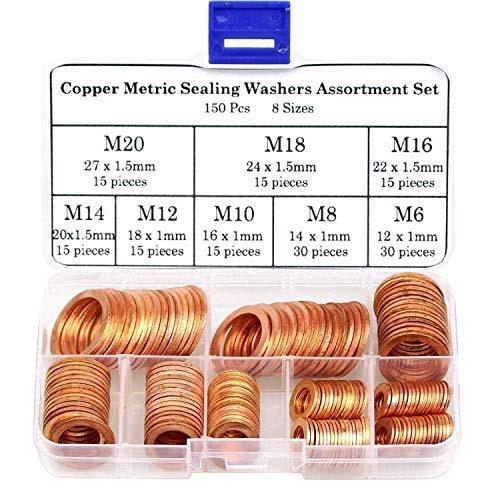
Bulk assortments tempt buyers with hundreds of shiny pieces, yet grounding work needs a narrow range of verified sizes and alloys. Assortment washers often lack grade markings, standard references, or finish information, leaving the installer to guess at hardness and coating. For noncritical shop fixtures that uncertainty may be tolerable. For bonding connections, buy documented hardware in the exact size, even if the package contains fewer pieces. Keep the label, photograph it beside the installed joint if helpful, and store spares in a closed container away from floor moisture.
Another frequent error is choosing by color. Yellow zinc, black oxide, bright zinc, and plain finishes all photograph differently, but color alone reveals neither alloy nor corrosion rating. Black oxide offers minimal rust protection despite its serious appearance. Yellow chromate finishes have largely shifted due to environmental rules, and modern substitutes vary. Read the finish specification and ask whether it suits wet, damp, or dry service. A supplier who cannot answer that question is selling decoration, not engineering.
Undersizing the outside diameter to clear a tight spot creates a subtler failure. The washer fits, the nut tightens, and the assembly looks neat, yet load concentrates on a narrow annulus and gradually embeds into the lug. Months later preload has fallen even though the nut never rotated. Embedding is a normal small effect that good design anticipates; excessive embedding from poor bearing area is preventable. When space truly cannot accommodate the correct washer, the answer is a different listed terminal or enclosure fitting, not a smaller ring forced into service.
Online listings add translation problems, where spring washer, lock washer, and wave washer get used interchangeably. Wave washers provide light axial pressure for bearings and switches, not the locking or preload retention expected in a grounding bolt stack. Nord style wedge pairs, serrated flange bolts, and conical washers each have distinct silhouettes. Compare the product drawing with a standard reference before ordering, and be suspicious of listings that show three different geometries under one title. A cottage owner planning laundry room work alongside electrical repairs, perhaps browsing best 24 stackable washer and dryers, knows how easily similar names hide incompatible dimensions; washers reward identical skepticism.
Inspection, replacement, and record keeping
A sensible inspection begins outside the enclosure. Look for damaged bonding conductors, missing clamps, corrosion at pipe connections, and vegetation or stored items blocking access. Inside, with safe procedures observed, examine lugs for heat discoloration, washers for cracks, teeth for flattening, and fasteners for rust bleeding from beneath heads. Gentle checks for conductor movement should never become an excuse to wiggle a live termination. If a conductor moves under light hand pressure on a deenergized system, the joint needs proper disassembly and evaluation.
Replacement washers should match the original specification unless an engineer or equipment maker approves a change. Photograph the stack order before loosening anything, lay parts out in sequence, and note which face of a Belleville pointed toward the nut. Memory is unreliable after a phone call interrupts the job. New washers go in when teeth are worn, split rings fail to spring back after removal, Belleville discs show cracks or permanent set beyond guidance, or corrosion has pitted any bearing face. Reuse limits exist because locking features consume themselves in service.
Records need not be elaborate. A panel notebook entry listing date, location, washer type, material, bolt size, torque value used, and any corrosion found will save the next person an hour of detective work. Photographs stored with house documents help even more, especially for outbuildings that change occupants or serve as rental cottages. When ownership transfers, those notes communicate that grounding was maintained deliberately rather than improvised. Good documentation is part of electrical safety culture, quietly linking one careful owner to the next.
Spare hardware storage influences future quality. Throwing stainless, bronze, and plated steel rings into one open coffee tin invites mix ups and moisture damage. Small labeled bags inside a sealed box keep alloys separate and preserve finish. Add a silica gel packet where humidity is a problem, replace it periodically, and discard any piece with unknown origin that somehow migrated into the grounding bin. Mystery metal has no place in a safety path.
Cost, value, and buying enough of the right thing
Price differences among washer types reflect material, forming complexity, heat treatment, testing, and documentation. A Belleville with a published load curve costs more than a commodity split ring because the maker controls deflection and verifies performance. Stainless and bronze carry raw material premiums. None of that means the priciest option belongs in every joint. Spending belongs where environment, access difficulty, and consequence of loosening justify it. Overspending on exotic washers while neglecting conductor condition or enclosure sealing misallocates the safety budget.
Buy a few spares of each specified size because washers roll, drop into wall cavities, and occasionally arrive with a damaged tooth or burr. Having the correct spare prevents the midnight temptation to substitute. Inspect new pieces before installation: edges should be consistent, teeth uniform, plating even, and split rings should show a clean helical offset without cracks at the cut. Reject hardware with stamped burrs tall enough to hold the washer off its bearing surface. Quality control at the kitchen table is cheap and effective.
Local electrical suppliers often outperform anonymous marketplaces for this category, because counter staff can pull the standard, alloy, and finish from a real catalog and order documented stock. That service matters when a project mixes inch and metric equipment or when a lug maker names an unusual washer. Bring the old washer, the bolt, and the lug instructions. A five minute counter conversation can prevent a week of returns. For rural cottages far from suppliers, ordering early and keeping labeled spares is simply prudent logistics.
A decision path you can follow at the parts counter
Start by naming the joint in ordinary words: what two things are being bonded, where does the connection live, and how hard will it be to reach again? Those answers narrow the field before any product names appear. Next, read the terminal and equipment instructions for prohibited or required washer forms. Then identify the metals on both sides of the stack and screen them for galvanic compatibility in the expected moisture conditions. Only after those steps should geometry enter: split for simple moderate service, tooth for rotation resistance on suitable hard surfaces, Belleville for preload retention across movement and temperature change.
Size the washer from the bolt, confirm outside diameter against the lug land, and check thickness against available thread engagement. A thicker Belleville or heavy split ring consumes thread length; the nut must still engage fully, and the bolt should protrude according to the assembly guidance. Short bolts hidden inside equipment can become marginal when a washer stack grows. Dry fit the parts without conductors first if access permits, verifying that teeth sit flat and discs orient correctly. Surprises are cheaper on the bench than inside a crowded panel.
Finally, match torque to the complete assembly and plan the inspection interval. A joint sealed inside a finished wall demands more conservative, documented choices than a bond in an open utility room. Where the consequence of loosening is high and your own experience is thin, hiring a licensed electrician for the termination while you handle preparatory research is money well spent. Expertise is not measured by willingness to tighten every screw personally. It shows in knowing which joints deserve professional hands.
Frequently raised questions, answered directly
Can a split washer and a tooth washer be stacked together?
Sometimes a manufacturer designs exactly that stack, but improvising the combination rarely improves a grounding joint. Extra interfaces add embedment, friction variability, and opportunities for misalignment. Teeth may bite the split ring instead of the intended surface, while the split ring may bridge over teeth and prevent them seating. Unless a drawing shows both pieces in a defined order, choose the single locking element the assembly calls for and invest effort in surface preparation and correct torque instead.
Does a lock washer carry fault current?
The intended fault path runs through conductors, lugs, enclosure metal, and clamped interfaces, not deliberately through a thin washer as a conductor of first resort. Nevertheless, every metal part in the stack sits at some potential during abnormal events, and a corroded or loose washer can impair the interface it touches. That is why material compatibility and contact pressure matter even though the washer is not sized like a grounding conductor. Treat it as a functional part of the bond, not as decorative hardware and not as a substitute conductor.
Why did a stainless washer seize during removal?
Galling is the likely explanation if threads tore or the nut froze partway. Stainless surfaces under high contact pressure can weld microscopically, then rip as rotation continues. Corrosion products and damaged threads produce similar symptoms, so inspect the bolt after removal rather than assuming one cause. Replace galled fasteners; following torn threads back into service invites repeat seizure and unreliable torque. During reassembly, keep threads clean, turn slowly, and use only lubricants or anti seize compounds the equipment instructions permit, remembering that lubrication changes required torque.
Are serrated flange bolts equivalent to tooth washers?
They pursue a related goal through integrated serrations under the bolt head, and in listed assemblies they can be excellent. Equivalence, however, is an engineering claim, not a visual resemblance. Serration diameter, hardness, tooth angle, and coating all differ from a separate washer standard. A flange bolt also changes bearing pressure and may be prohibited on soft lugs. Use integrated serrations where the terminal or enclosure maker specifies them, and do not grind off a separate washer requirement by substituting a serrated bolt that merely looks efficient.
Small hardware, long horizons
Grounding connections are expected to wait patiently for years and then perform instantly. That unusual duty cycle explains the tone of this entire guide: skeptical of shortcuts, respectful of standards, and attentive to slow chemistry. A washer chosen for its alloy, geometry, and documented dimensions becomes part of that patience. It resists the daily insults of vibration and temperature, keeps pressure on the interface, and gives inspectors something legible to evaluate. The work is humble, but humble work done correctly protects everything connected to it.
Readers planning a broader cottage utility refresh may find themselves comparing appliances in the same week, from dish cleaning options such as best 18 dishwashers to the bonding hardware discussed here. The shared discipline is to read specifications closely, distrust vague superlatives, and match the product to the room where it will actually serve. Whether the subject is a washer that tumbles clothes or a washer that clamps a lug, dimensions and materials decide real world performance far more reliably than shelf appeal.
Take one final practical step before ordering anything: write down the joint location, bolt size, metals involved, moisture exposure, and washer type you believe fits, then compare that note against the equipment instructions one last time. If a contradiction appears, the instructions win. If no contradiction appears, buy documented hardware, prepare the surfaces, tighten with care, and record what you installed. A grounding system built on that rhythm rarely asks for attention, which is precisely the compliment it deserves.
Seasonal care for cottages that sit empty
Seasonal properties impose a rhythm that year round homes never experience. Water gets drained, heat drops to a protective minimum, rodents explore quiet corners, and months pass before anyone opens the electrical closet again. Bonding hardware in such buildings should be chosen and documented with that absence in mind. Before closing a cottage for winter, walk the grounding path visually from service entrance to electrode connections, noting any washer with fresh rust, any conductor displaced by storage, and any enclosure door that no longer latches squarely. Distorted doors change how vibration reaches internal hardware, and a door left ajar invites the damp that starts crevice corrosion under toothed rings.
Spring reopening offers the natural audit moment. While water systems are being refilled and appliances coaxed back to life, give bonding joints the same daylight attention. Look for the white crust that signals aluminum oxidation, the verdigris halo that betrays copper salts migrating outward, and the orange weep beneath a steel washer that looked pristine in autumn. Photograph anything questionable beside a coin for scale, then compare with photographs from prior seasons. Change over time is the diagnostic gift that single visits cannot provide, and washers often show the earliest legible change because their edges and teeth collect deposits first.
Rodent damage deserves a specific mention, because nesting material packed around a subpanel traps moisture against hardware and can hold urine salts directly on metal surfaces. If evidence of nesting appears near electrical equipment, have the enclosure evaluated and cleaned safely rather than brushing debris deeper inside. Consider whether a different washer finish or a sealed bonding enclosure is warranted where wildlife pressure is chronic. Similarly, cottages that rely on volunteer caretakers benefit from a laminated note near the panel explaining that the unusual coned discs in certain joints are deliberate spring elements, not spare parts to be discarded during unrelated repairs.
Finally, coordinate grounding maintenance with other trades. Plumbers replacing a section of copper water line may disturb bonding clamps and their washers without realizing the electrical significance of what they removed. A brief conversation before pipe work, plus a post job check of every disturbed clamp, prevents the classic scenario where excellent plumbing quietly leaves a building with a compromised bond. Leave the plumber a labeled spare of the correct washer and clamp hardware, and note the exchange in the house log. Cross trade courtesy, backed by correct parts on site, protects continuity better than any lecture delivered after the fact.
One last habit separates careful owners from hopeful ones: keep a small envelope inside the panel door listing every bonding joint in the building, its location, and the date it was last examined. When a storm, renovation, or plumbing repair disturbs any part of that path, the envelope turns a vague worry into a short, checkable list.
Check prices on Amazon
Live listings for the shortlist in this guide are pulled from Amazon below, so prices and availability are always current at the moment you look.


Disclosure
Transparency about how this guide was assembled matters to us, so here is the plain account: recommendations rest on our research into published standards, manufacturer specifications, and established fastener practice, without any claim that a cottage panel in our care mirrors your installation. Local electrical codes, listing conditions, and a licensed electrician judgment govern work on service equipment. We receive no benefit tied to any particular washer brand named by type rather than by maker, and hardware should always be sourced through channels that can document alloy, finish, and dimensional compliance.
For a grounding joint beside a shoreline pump house, let the last check be a fingertip trace around the washer edge feeling for the lifted corner that eyes tired by lamplight so easily miss.