Our Top Picks
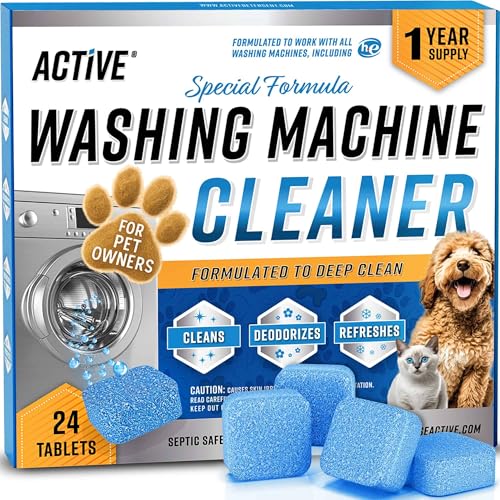
 Washing Machine Cleaner Descaler 24 Pack1 Count (Pack of 24)5.5 x 3.1 x 2 inches0.6 poundsCheck on Amazon
 ACTIVE Mold Stain Remover Gel Cleaner Heavy Duty7 Fl Oz (Pack of 1)4.92 x 3.14 x 2.16 inches0.5 poundsCheck on Amazon
 True Fresh Washing Machine Cleaner Tablets 25 Pack25 Count (Pack of 1)5.9 x 3.9 x 0.8 inches0.7 poundsCheck on Amazon


What's inside
- Why Front-Loading Washers Develop Odor in the First Place
- What a Front-Loader Cleaner Is Supposed to Do
- The Chemistry Inside: Active Oxygen and Its Rivals
- Running the Cleaning Cycle Step by Step
- The Gasket: Ground Zero for Mold and Odor
- The Drain Pump Filter and Other Hidden Zones
- How Often Should a Front Loader Be Cleaned?
- Detergent Habits That Make or Break the Cleaner
- Hard Water, Scale, and the Citric Acid Question
- Safety Rules That Should Never Bend
- Compact and Specialty Machines Need Adjusted Care
- Choosing a Cleaner: The Criteria That Actually Matter
- When a Cleaner Is Not Enough: Diagnosing Persistent Odor
- Household Alternatives and Their Honest Limits
- Building the Complete Monthly Routine
- Special Loads, Special Risks: Diapers, Gym Gear, and Pet Bedding
- What Service Technicians Wish Owners Knew
- Common Mistakes That Undermine Good Cleaners
- The Environmental Ledger of a Monthly Tablet
- How Water Quality Changes the Whole Equation
- Teaching the Household: Shared Machines, Shared Habits
- Looking Ahead: How Machine Design Is Responding
- Cost Perspective: Maintenance Versus Repair
- Putting It Together: A Sensible Buying Shortlist Method
- Check prices on Amazon
- Final Thoughts on Keeping a Front Loader Fresh
As an Amazon Associate I earn from qualifying purchases. This post may contain affiliate links at no extra cost to you.
Disclosure: Some links on this page are affiliate links, which means Cottage Verdict may receive a commission when readers buy through them, while the price paid by the reader stays exactly the same. Our research for this guide rests on manufacturer care manuals, detergent chemistry references, appliance service literature, and the accumulated repair experience published by laundry technicians, and the judgments below follow editorial criteria rather than any hands-on product trial.
Why Front-Loading Washers Develop Odor in the First Place
The front-loading washer earns its reputation for efficiency honestly: a horizontal drum tumbles laundry through a shallow pool of water, using gravity rather than a tall column of water to do the work. That same architecture, however, creates the conditions for the musty smell that eventually greets many owners when they open the door. A watertight rubber gasket seals the door against leaks, and its deep folds stay damp long after the cycle ends. Residual detergent, body soil, and fabric softener collect in those folds and in the outer tub that surrounds the visible drum, feeding the microbial growth responsible for the odor.
Top-loading machines dry out more forgivingly because their lids and vertical drums ventilate with less obstruction and their seals never trap a ring of standing moisture at working height. Front loaders concentrate every vulnerability in one neighborhood: the gasket bellows, the dispenser drawer, the drain pump filter, and the hidden surface of the outer tub. A cleaner formulated for this machine type has to address all four zones, or at least the ones its chemistry and the cleaning cycle can actually reach.
Households shopping for a replacement machine rather than a remedy sometimes consult capacity surveys such as best 3 9 cu ft front load washers to understand the drum sizes involved, and that context helps here too, because cleaner dosing and cycle selection both scale with the volume of water the machine uses during its self-cleaning program.
The Role of Low Water Volume
High-efficiency washers use remarkably little water per load, which concentrates whatever the laundry leaves behind. In a generous bath of water, soil and detergent disperse and rinse away; in a shallow pool, they coat surfaces. Modern detergents are engineered for that environment, yet overdosing—still the most common laundry error—overwhelms the rinse capacity and deposits a film that becomes microbial food. A dedicated cleaner periodically strips that film back to bare surfaces, resetting the machine’s internal environment in a way ordinary loads never accomplish.
Why the Smell Returns Even After a Good Cleaning
Owners often report that a successful cleaning buys only a few weeks of freshness. The relapse rarely means the cleaner failed; it usually means the habits feeding the problem continued unchanged. A door closed immediately after unloading, a dispenser drawer never pulled out to dry, and detergent measured by optimism rather than by the fill line will rebuild the same biofilm on the same schedule. The cleaner is best understood as one half of a system whose other half is daily ventilation and sane dosing.
What a Front-Loader Cleaner Is Supposed to Do
A well-formulated washer cleaner pursues three jobs simultaneously. First, it dissolves the greasy detergent-and-soil film clinging to the outer tub and drum. Second, it attacks mineral scale where hard water supplies deposit it, particularly around heating elements in machines equipped with internal heaters. Third, it reduces the microbial population living in the film and in the gasket folds, which removes the source of the odor rather than merely perfuming over it. Products differ mainly in which of those jobs they emphasize and which chemistry they trust to do it.
The cleaning cycle itself forms part of the treatment. Most front loaders offer a dedicated tub-clean program that fills higher, heats the water where a heater exists, and tumbles intermittently over an extended period so the solution contacts every internal surface repeatedly. Running a cleaner on a short normal cycle wastes much of its potential, because contact time and water temperature drive the chemistry more than the mere presence of the product in the drum.
Tablets, Powders, Liquids, and Wipes
Tablets dominate the category for convenience: a pre-measured dose drops into the empty drum, dissolves across the long cycle, and stores neatly without spills. Powders offer similar chemistry with easier dose adjustment for compact machines, though they can clump in humid laundry rooms if the container seals poorly. Liquids pour into the dispenser or drum and suit households that prefer to scale the dose precisely. Wipes serve a narrower purpose, scrubbing the gasket folds and door glass directly, and they complement rather than replace a full drum treatment because no wipe reaches the outer tub.
Compact machines in stacked laundry closets, like the configurations surveyed at best 24 stackable washer and dryers, often need the adjustable dosing that powders and liquids allow, since a full tablet sized for a large family machine can foam excessively in a small drum. Excess foam is not a trivial nuisance; it can escape through the dispenser, confuse pressure sensors, and leave its own residue behind.
The Chemistry Inside: Active Oxygen and Its Rivals
Most leading cleaners for front loaders rely on oxygen-based chemistry built around sodium percarbonate, a compound that releases hydrogen peroxide when dissolved in warm water. The peroxide oxidizes organic film and deodorizes as it works, while the soda ash component raises alkalinity so greasy deposits loosen from stainless steel and plastic surfaces. Citric acid frequently joins the formula to chelate minerals and dissolve the scale that alkalinity alone cannot move, giving the product a two-front attack in a single dose.
Enzyme packages appear in some formulations, targeting protein and starch components of the soil film. Surfactants—present in nearly every version—lower the water’s surface tension so the solution wets the gasket folds and creeps into seams instead of beading off them. Fragrance, where included, should be the least important ingredient on the label; a cleaner that smells strongly of perfume while leaving the film intact has inverted the category’s priorities.
Chlorine-Based Cleaners and Their Trade-Offs
Household bleach remains the traditional heavy artillery against mold, and many machine manuals still describe a bleach-based cleaning cycle. Chlorine kills microbial growth aggressively and bleaches visible staining in the gasket, yet it brings real cautions: it can degrade certain rubber compounds across repeated exposure, it corrodes some metals when misused, and it must never mix with acidic or ammonia-bearing products. Households choosing the bleach route should follow the machine manual’s dilution and cycle instructions precisely rather than improvising a stronger solution.
Reading an Ingredient List With a Skeptical Eye
Labels reveal priorities. A cleaner listing sodium percarbonate near the top delivers meaningful oxygen content; one burying it beneath fillers and fragrance offers mostly theater. Products that publish their full ingredient list, explain each component’s function, and specify water temperatures for best performance tend to come from manufacturers confident in their formulation. Vague promises about freshness without any disclosed active chemistry deserve the skepticism they invite, particularly when the price rivals that of fully specified competitors.
Running the Cleaning Cycle Step by Step
Preparation determines results. Start with a completely empty drum—no forgotten sock, no bath mat—because laundry absorbs the cleaning solution and shields surfaces from contact. Wipe the gasket folds first with a cloth to remove the loose, visible accumulation, pulling the rubber gently outward to expose the inner channel where dark growth concentrates. That preliminary pass lets the dissolved cleaner address the stubborn film rather than spending its strength on debris that a cloth removes in seconds.
Place the tablet or powder in the drum itself unless the product directs otherwise, since dispenser routing can dilute or delay delivery. Select the tub-clean program when the machine offers one; otherwise choose the longest hot wash available, with an extra rinse if the control panel allows it. Hot water accelerates percarbonate chemistry substantially, and machines with internal heaters hold that temperature through the cycle instead of letting it decay after the fill.
After the Cycle Ends
When the program finishes, leave the door wide open and pull the dispenser drawer out to dry. Wipe the gasket folds once more, because the cycle loosens material that a cloth can now lift away easily, and check the door glass for the streaks that reveal how much film had been circulating. The machine should smell neutral—not perfumed, not musty—when the treatment has done its work properly. A lingering chemical scent usually signals an overdosed product or an insufficient rinse, both correctable on the next round.
Cleaning the Dispenser Drawer and Housing
The dispenser deserves its own session at least as often as the drum treatment. Most drawers release with a firm press on a marked tab and lift free for scrubbing in a sink, where warm water and an old toothbrush clear the detergent crust from corners and siphon caps. The housing cavity behind the drawer grows its own film on the ceiling and walls, reachable with a cloth wrapped around a thin brush. Softener compartments clog earliest because the product itself is viscous, and a blocked siphon silently overdoses every load that follows.
The Gasket: Ground Zero for Mold and Odor
The door gasket—technically a bellows seal—folds into concentric channels designed to flex as the drum vibrates. Those channels hold water by geometry. After every load, a small volume remains trapped in the lowest fold, mixed with lint and detergent, in darkness and warmth. Mold colonies establish there first, appearing as dark speckling that spreads along the rubber, and they seed the odor that owners notice most strongly because the gasket sits exactly at nose height when the door opens.
Mechanical cleaning matters as much as chemistry for this component. A cloth or purpose-made wipe worked into each fold removes colonies that dissolved cleaner alone may only bleach pale without dislodging. Persistent black staining sometimes represents pigment embedded in the rubber rather than living growth; at that stage the smell may be gone while the discoloration remains, and households must decide whether the cosmetic issue justifies gasket replacement, a moderately involved repair that service literature documents thoroughly.
Daily Gasket Habits That Prevent Regrowth
Thirty seconds of attention after the final load of the day changes the gasket’s future: a quick wipe of the lowest fold, the door left ajar, and the drawer cracked open for airflow. Machines installed in humid climates or unventilated closets need that discipline most. Some households keep a dedicated microfiber cloth draped over the door for exactly this purpose, converting an intention into a visible routine that other family members can follow without instruction.
Manufacturers have begun answering the problem at the design level with antimicrobial gasket materials, drainage notches in the fold, and ventilation cycles that spin the drum slowly after loads finish. Shoppers comparing machines engineered against odor will find that theme explored across the models gathered at best front load washers that don t mold, though even the cleverest gasket design still benefits from periodic deep cleaning of the drum and outer tub behind it.
The Drain Pump Filter and Other Hidden Zones
Near the floor at the front of most machines, a small access door conceals the drain pump filter, a screw-out cylinder that catches coins, buttons, hairpins, and lint before they reach the pump impeller. A clogged filter slows drainage, leaves water standing in the system, and contributes a stale smell that no drum cleaner can fix because the offending reservoir sits downstream of the cleaning path. Checking it every few months—after placing a shallow tray and towel beneath, since residual water always escapes—belongs in the same calendar as the drum treatments.
The drain hose itself can harbor film along its corrugations, particularly where it sags into a low loop before rising to the standpipe. Ensuring the hose follows the manufacturer’s routing, without dips that hold water permanently, reduces both odor and the risk of siphoning back into the machine. The standpipe and house drain occasionally produce smells of their own that owners misattribute to the washer; a simple check—sniffing the drain with the machine idle and the room aired—separates plumbing problems from appliance problems before money goes toward the wrong remedy.
The Outer Tub Nobody Sees
Between the stainless drum that holds laundry and the plastic or enamel outer tub that holds water lies a narrow gap where film builds undisturbed for years. Only the cleaning cycle reaches it, which is precisely why dissolved chemistry and contact time matter so much in this category. Service technicians who split machines for bearing replacement routinely describe that hidden surface as the true reservoir of laundry odor, and their accounts explain why surface wiping alone never fully cures a neglected machine.
How Often Should a Front Loader Be Cleaned?
Manufacturer guidance clusters around a monthly treatment for average households, and that cadence suits families running several loads weekly. Usage patterns bend the rule in both directions. A single person washing twice a week in a dry climate may stretch the interval considerably, while a household processing cloth diapers, gym clothing, or pet bedding in a humid region may benefit from attention every two or three weeks. Water hardness adds another variable, since scale accumulates on its own schedule independent of microbial growth.
Seasonal rhythms matter as well. Summer humidity accelerates growth inside a closed machine, and winter heating dries laundry-room air in ways that sometimes mask the problem until spring. Households that travel frequently should run a treatment before departure and leave the door open during the absence, returning to a machine that smells as neutral as the one they left. A simple wall calendar or phone reminder anchors the routine far more reliably than the intention to remember, which every busy household overestimates.
Signs the Machine Is Asking for Attention
- A musty or sour note when the door opens, noticeable before any laundry enters the drum.
- Visible dark speckling or slime along the lowest fold of the door gasket.
- Freshly washed towels that smell stale within a day of use despite correct drying.
- Grayish film or flakes appearing on the drum surface or on dark clothing after a rinse.
- Slower drainage, gurgling sounds, or standing water discovered in the gasket channel.
- Detergent residue crusting inside the dispenser drawer faster than it used to.
Any single sign justifies an immediate treatment rather than waiting for the scheduled date, and several signs together suggest the machine has fallen far enough behind that two consecutive cleaning cycles, separated by a gasket scrub, may be needed to restore a neutral baseline.
Detergent Habits That Make or Break the Cleaner
No periodic treatment can outrun a daily overdosing habit. High-efficiency detergents are concentrated, and the measuring lines on caps assume soil levels that many everyday loads never reach. Using half the suggested amount for lightly worn clothing usually cleans perfectly well while halving the residue available to coat the outer tub. Pods remove the measuring decision entirely, which helps some households and hurts others, since a full pod in a half load of delicates delivers the same overdose as a careless pour.
Fabric softener deserves particular scrutiny in front loaders. The product coats fibers by design, and it coats machine surfaces by the same mechanism, leaving a waxy layer that microbes colonize enthusiastically. Households attached to softener can reduce the dose, reserve it for selected loads, or substitute dryer-based methods for part of the routine. Vinegar in the softener compartment is a popular household alternative for reducing residue, though machine manuals differ on endorsing it, and it should never be combined with bleach-bearing products in the same cycle.
Water Temperature and Everyday Loads
Cold-water washing saves energy and protects fabrics, yet an unbroken diet of cold cycles lets film accumulate faster because warm water dissolves detergent and soil more completely. A periodic hot load—bedding and towels tolerate it well—gives the machine a partial rinse-through between formal cleanings. This is not a substitute for a dedicated cleaner, whose chemistry targets deposits that hot water alone leaves untouched, but it stretches the interval during which the machine stays fresh on its own.
Hard Water, Scale, and the Citric Acid Question
In regions where the water supply carries heavy mineral loads, scale forms a rough, porous crust on internal surfaces, and that crust shelters microbial growth from both detergent and cleaner. Oxygen chemistry alone struggles against mineral deposits, which is why so many formulations pair percarbonate with citric acid: the acid dissolves scale and chelates the freed minerals so they rinse away instead of resettling. Households in hard-water territory should weigh the acid component of a cleaner as heavily as its oxygen content when comparing labels.
Standalone citric acid treatments, sold as descaling powders, suit machines whose primary problem is mineral rather than organic. Alternating a full-spectrum cleaner one month with a descale the next matches the chemistry to the deposit more precisely than doubling either treatment. A whole-house softener, where one exists, changes the calculation again by slowing scale formation at the source, though softened water can make detergent feel more potent and tempt overdosing in the opposite direction.
Septic Systems and Environmental Considerations
Rural households on septic systems reasonably ask what a monthly cleaner dose sends toward the tank. Oxygen-based products break down into water, oxygen, and soda ash, a profile septic guidance generally regards as benign at household quantities. Chlorine treatments in large or frequent doses can disturb the bacterial balance a septic tank depends on, which is one more reason the oxygen route suits routine maintenance while bleach stays reserved for occasional, well-diluted interventions. Phosphate content, once common in cleaning products, has largely disappeared from reputable formulations in this category, and labels confirm that progress for shoppers who check.
Safety Rules That Should Never Bend
Mixing cleaning chemistries is the one error in this category with genuine danger attached. Bleach combined with acidic products releases chlorine gas; bleach combined with ammonia-bearing cleaners produces chloramine vapors. A machine that recently ran a bleach cycle should run a plain rinse before any acidic descaler follows it, and products should enter the drum one at a time, never layered together in the dispenser. Households storing several laundry chemicals should keep the cleaner’s packaging, with its instructions and warnings, rather than decanting powders into anonymous jars.
Storage discipline matters where children and pets share the home. Tablets resemble sweets closely enough to demand a high shelf or a latched cabinet, and powders belong in sealed containers that small hands cannot open. During the cleaning cycle itself, the machine should run empty and undisturbed; interrupting it to add forgotten laundry defeats the treatment and exposes clothing to chemistry never intended for fabrics. Finally, anyone with respiratory sensitivities should ventilate the laundry room during a hot cleaning cycle, since the steam carries fragrance and fine droplets into the air.
Skin and Material Sensitivities
Residue from an incompletely rinsed cleaner can irritate sensitive skin when the next load absorbs it, which is why the extra rinse option earns its place in the routine for households washing infant clothing or bedding for allergy-prone sleepers. Fragrance-free cleaner variants exist for exactly this audience and perform their core chemistry identically; the perfume in scented versions contributes nothing to film removal. Checking that a product suits high-efficiency machines matters too, because a sudsing formula in a low-water drum creates the foam problems described earlier.
Compact and Specialty Machines Need Adjusted Care
Apartment-sized front loaders, including the small-footprint models collected under best small front load washers, run the same odor risks as their full-sized relatives while holding less water per cycle. Their cleaning doses should scale down proportionally, and their gaskets—often identical in design to larger versions—need the same fold-by-fold wiping. All-in-one washer-dryer units add a lint and moisture burden from the drying phase, and their manuals typically prescribe more frequent filter and condenser attention alongside the drum treatments.
Secondhand machines deserve a rehabilitation protocol before their first family load: two back-to-back cleaning cycles, a gasket scrub between them, a filter extraction and rinse, and a dispenser soak. That investment erases the previous household’s accumulated film and gives the new owners a known baseline from which their own monthly routine can proceed. Machines recovered from storage need the same treatment, since months of closed-door stillness let colonies flourish undisturbed.
Choosing a Cleaner: The Criteria That Actually Matter
Shoppers facing a shelf of near-identical boxes can sort the category quickly by asking five questions. Does the formula disclose a meaningful oxygen active, or does it hide behind fragrance language? Does it include an acid component for mineral control, or will hard-water households need a separate descale? Is the dose format compatible with the machine’s capacity, particularly for compact drums? Does the maker publish septic and material-safety guidance rather than leaving households to guess? And does the product specify the cycle and temperature it expects, evidence that its instructions were written from real formulation work rather than marketing habit?
Packaging format influences real-world compliance more than most buyers expect. A household that finds tablets effortless will actually run the monthly treatment; a household wrestling a clumped powder scoop in a humid closet will quietly skip months. The best cleaner for a given family is therefore partly a behavioral question, and honest self-knowledge about laundry-room routines predicts satisfaction better than any laboratory comparison of marginally different oxygen percentages.
Single-Dose Versus Multi-Packs and Refills
Buying patterns in this category reward a little foresight. A first purchase in modest quantity lets the household judge scent, residue behavior, and gasket results before committing to a year’s supply. Once a product proves itself, larger formats reduce packaging waste and the risk of discovering an empty box on the day the calendar reminder fires. Powders in refill pouches cut plastic further, provided the storage container at home seals tightly enough to protect the percarbonate from laundry-room humidity, which degrades its potency silently across months.
Storage location deserves more attention than the box usually receives. Keep each tablet sealed in its foil until the morning of the treatment, and move the carton away from the warm, steamy surface above the machine toward a dry hallway cupboard where temperatures stay steadier. Rotate older stock to the front whenever a fresh carton arrives, so no dose sits forgotten through a humid season. A tablet that feels soft, crumbles unevenly, or smells faint before use has likely absorbed enough moisture to weaken its oxygen release, and replacing it costs less than repeating an ineffective cycle.
What Marketing Language to Discount
Certain phrases on cleaner packaging carry little information. Freshness claims measured in weeks of scent say nothing about film removal. Botanical imagery on a conventional oxygen formula borrows virtue it has not earned. Even the word natural conceals more than it reveals, since the relevant question is always what the active chemistry does inside the machine, at what concentration, and with what residue afterward. Ingredient transparency remains the most reliable shortcut through the noise, and brands that practice it deserve the benefit of the doubt elsewhere.
When a Cleaner Is Not Enough: Diagnosing Persistent Odor
A machine that still smells after two properly run treatments is communicating something. The possibilities arrange themselves from mundane to mechanical. The dispenser housing may hold a mature colony the drum cycle never touches. The drain filter may be packed. The drain hose may sag into a permanent water trap. The gasket may be colonized deep within its fold layers beyond the reach of surface wiping. Working through that sequence methodically, cleaning each zone by hand where hands can reach, resolves the great majority of stubborn cases without a service visit.
Beyond those zones lie genuinely mechanical causes. A failing drain pump that leaves water standing after every cycle will defeat any chemical routine. A machine installed out of level can pool water in one gasket quadrant. Inlet screens clogged with sediment reduce rinse effectiveness across every load. When odor survives a full manual deep clean of gasket, dispenser, filter, and drum, the problem has likely crossed into territory where a technician’s inspection pays for itself in avoided guesswork.
The Towel Test for Locating the Problem
A simple diagnostic separates machine odor from laundry-habit odor. Wash a load of white towels with a measured detergent dose and no softener, dry them immediately and thoroughly, then smell them a day later. Towels that emerge fresh and stay fresh suggest the machine is clean and earlier problems lived in dosing or delayed drying. Towels that smell stale straight from the drum point back at the machine’s internal film, and towels that smell fine from the drum but sour on the shelf implicate the drying or storage stage instead—a distinction that saves households from treating the wrong appliance.
Household Alternatives and Their Honest Limits
Many households ask whether pantry staples can replace a formulated cleaner. Baking soda deodorizes mildly and adds gentle alkalinity, but it lacks the oxidizing power to dismantle established biofilm. Vinegar dissolves mineral scale effectively, yet it contributes nothing against greasy film, and repeated strong acid exposure concerns some gasket manufacturers. Borax offers moderate cleaning and deodorizing action and appears as an ingredient inside some commercial formulas, though as a standalone treatment it still trails a balanced percarbonate-and-acid product against the full spectrum of deposits a front loader accumulates.
The balanced verdict is that household staples serve maintenance between real treatments better than they serve as replacements for them. A household determined to rely on them should shorten the interval, scrub the gasket mechanically with greater diligence, and accept that a neglected machine will eventually need either a formulated product or a technician. There is no shame in the formulated route; the chemistry inside those tablets represents decades of detergent science aimed at precisely this problem.
Steam Cycles and Built-In Hygiene Programs
Some machines offer steam refresh or sanitize programs that raise internal temperatures high enough to suppress microbial growth on surfaces the steam reaches. These programs complement chemical cleaning by addressing the drum and gasket face, but steam does not dissolve the greasy film in the outer tub, and it cannot descale a heating element. Owners who treat the built-in program as one layer in a routine—alongside periodic dissolved chemistry and daily ventilation—get the best of both mechanisms without overestimating either.
Building the Complete Monthly Routine
Consistency beats intensity in this category, so the routine should be short enough to survive busy months. A workable monthly sequence runs as follows: wipe the gasket folds and door glass, pull and rinse the dispenser drawer, place the cleaner dose in the empty drum, run the tub-clean program with an extra rinse, then leave door and drawer open overnight. Every third month, add the drain filter check and a look at the hose routing. Twice a year, inspect the gasket closely under a bright light for the deep staining or cracking that signals aging rubber.
Anchoring the routine to an existing monthly event—a rent payment, a calendar flip, the first weekend—removes the decision fatigue that kills most maintenance intentions. Households with several adults should assign the task explicitly rather than letting it belong to everyone and therefore to no one. The entire sequence consumes less time than a single load of laundry, a comparison worth remembering when the reminder fires during a crowded week.
Keeping a Simple Machine Log
A few lines jotted after each treatment—date, product used, anything unusual noticed—build a record that pays off during troubleshooting and warranty conversations alike. Noting when the filter was last checked prevents the slow drift by which quarterly tasks become annual ones. If the machine ever needs professional service, that log tells the technician the household maintained the appliance properly, which colors every judgment call about what a warranty should cover.
Special Loads, Special Risks: Diapers, Gym Gear, and Pet Bedding
Certain laundry categories accelerate film growth dramatically. Cloth diapers bring heavy organic soil and frequent hot washes, a combination that cleans the drum during use yet loads the gasket environment with nutrients between cycles. Gym clothing carries body oils and the synthetic-fabric odor that clings stubbornly, tempting owners toward extra detergent and softener—the two inputs the machine least needs. Pet bedding contributes hair that mats into the gasket folds and the pump filter, physically sheltering microbial colonies from dissolved chemistry.
Households processing these loads regularly should shorten the cleaning interval and add one mechanical habit: a gasket wipe and filter glance after the heaviest laundry day of the week rather than waiting for the monthly date. Shaking pet bedding outdoors before washing reduces the hair burden substantially. Running an empty hot rinse after an unusually soiled session dilutes what the load left behind before it can settle into film, a two-minute intervention with outsized returns across the following weeks.
Allergy Households and Residue Awareness
Families managing eczema or respiratory allergies sit at the intersection of two needs: a machine free of microbial growth, and laundry free of chemical residue. The resolution is thoroughness rather than avoidance—full cleaning cycles followed by the extra rinse, fragrance-free formulations, and meticulous drying of finished loads. Skipping machine cleaning out of residue anxiety backfires, because the microbial alternative irritates sensitive skin and airways at least as reliably as any trace of a properly rinsed cleaner.
What Service Technicians Wish Owners Knew
Repair professionals describe the same pattern across countless house calls: a machine condemned as defective that recovers fully after ninety minutes of guided cleaning. Their collective advice, distilled from trade publications and service forums, is remarkably consistent. Measure detergent as if it were medicine. Treat the gasket as a surface that needs drying, not merely a seal that needs ignoring. Respect the pump filter as a maintenance part rather than a mystery compartment. And run the cleaning cycle the manufacturer built into the control panel, because its existence on the dial is itself an admission that the machine cannot stay fresh on ordinary loads alone.
Technicians also caution against a popular overcorrection: running bleach cycles weekly in pursuit of sterility. Rubber ages, finishes dull, and the machine’s sensors and seals pay for enthusiasm that monthly balanced chemistry would have rendered unnecessary. Moderation, applied consistently, outperforms intensity applied sporadically in nearly every corner of appliance care, and the front loader’s odor problem is the textbook illustration of that principle.
Warranty and Maintenance Records
Some warranty disputes turn on whether the owner maintained the appliance according to its manual, and cleaning neglect that corrodes or clogs components can complicate coverage for related failures. The modest log described earlier, together with retained product packaging or receipts, demonstrates the care pattern manufacturers ask for. Even absent any dispute, a documented routine raises the machine’s resale presentation when a household upgrades, because a fresh-smelling front loader with a maintenance history inspires confidence that a neglected one cannot.
Common Mistakes That Undermine Good Cleaners
The most widespread error is running the treatment with laundry still in the drum, sometimes deliberately, on the theory that the load will benefit too. It will not; fabrics absorb the chemistry, shield the surfaces, and emerge carrying residue meant for the outer tub. A second error is selecting a quick cycle to save time, starving the chemistry of the contact duration it needs. A third is closing the door immediately afterward, sealing warm moisture into the very folds the treatment just cleaned, which restarts colonization before the surfaces have even dried.
Dosing errors cut both ways. Doubling a tablet dose does not double the cleaning; it doubles the foam and the residue risk. Halving a dose in a large, neglected machine saves pennies while guaranteeing a disappointing result that unfairly condemns the product. Finally, many households clean the drum faithfully while never touching the dispenser or filter, then conclude the category does not work—an outcome comparable to washing a car’s body monthly while never changing its oil and blaming the soap for the engine trouble.
Expectations for the First Treatment of a Neglected Machine
A washer that has gone a year without care may need patience rather than a stronger product. The first cycle loosens the outer layers of film; flakes and gray water during that run are evidence of progress, not failure. A gasket scrub and a second cycle within the same week typically restore neutrality, after which the ordinary monthly rhythm suffices. Judging any cleaner by its performance against a year of neglect in a single pass sets a standard no formulation in the category could meet, and repeat treatments are the honest path back to baseline.
The Environmental Ledger of a Monthly Tablet
Periodic cleaning consumes water and energy, and environmentally minded households reasonably weigh that cost. The counterweight is machine longevity: a front loader kept free of corrosive film and scale serves years longer, and deferring the manufacture and disposal of a large appliance outweighs the modest resources a monthly hot cycle uses. Choosing concentrated formats, running the treatment during off-peak energy hours where tariffs reward it, and avoiding redundant double cycles all trim the footprint further without compromising the maintenance itself.
Disposal questions are simpler than shoppers fear. Spent cleaning solution exits through the household drain as gray water dominated by the same surfactant and alkalinity families as ordinary laundry discharge, in quantities a municipal system or a healthy septic tank handles routinely. Packaging remains the larger footprint for most products, which is why refill formats and recyclable cartons deserve preference when the chemistry inside them is otherwise equivalent.
How Water Quality Changes the Whole Equation
Municipal supplies differ enough that identical machines in different cities age on different schedules. Chlorinated city water mildly suppresses microbial growth inside the machine between loads, while untreated well water arrives without that residual protection and sometimes carries iron or sulfur compounds that add their own staining and odor dimensions. Households on wells should treat the monthly cadence as a floor rather than a ceiling and should watch the gasket for the orange-brown tinting that signals iron-loving bacteria joining the usual film community.
Softened water presents the opposite profile: scale nearly disappears, yet detergent suds more freely and rinses less completely at standard doses, so film from overdosing can actually build faster in a soft-water home that never recalibrated its measuring habits after the softener arrived. The lesson generalizes beyond any single supply type—whenever the water changes, whether through a move, a softener installation, or a municipal source switch, the household’s dosing and cleaning rhythm deserve a fresh look rather than inherited assumptions.
Seasonal Humidity and Laundry Room Ventilation
The room around the machine participates in its hygiene. A washer sealed in a tight closet in a humid climate lives in air that never dries its gasket, no matter how faithfully the door stands open. Louvered closet doors, a small exhaust path, or simply leaving the laundry room door open after wash days can shift the microclimate enough to matter. In arid regions the same closet arrangement causes no trouble at all, which is why advice written for one climate sometimes fails mysteriously in another, and why local conditions should arbitrate any disagreement between this guide and a neighbor’s experience.
Teaching the Household: Shared Machines, Shared Habits
In many homes the washer serves several adults, teenagers, and occasional guests, each with private theories about detergent quantity and door etiquette. A cleaner run monthly by one conscientious person cannot fully offset four other users closing the door wet every day. The practical solution is lightweight standardization: a small note near the machine stating the agreed detergent dose for a normal load, a reminder that the door rests ajar, and the date of the next scheduled treatment. Framed as household information rather than criticism, such notes quietly align everyone’s behavior within a week.
Rental properties and shared laundry arrangements add another layer, since no single user owns the machine’s long-term condition. Tenants who adopt the basic routine anyway protect their own laundry’s freshness during their tenancy, and a departing tenant who runs a final treatment leaves the appliance in the state they would hope to inherit. Landlords who supply a starter supply of cleaner and a printed care summary often find the gesture repaid in machines that reach their expected service life without odor complaints from successive households.
When Children Do Laundry
Young helpers bring enthusiasm and heavy pouring hands. Pre-measured detergent formats remove the overdose risk from their loads, and a family rule that only adults handle the monthly cleaner—stored out of reach between uses—keeps the safety profile clean. Teenagers old enough for the full routine can own the calendar reminder as a genuine household responsibility, and the visible result, a machine that smells neutral, gives that responsibility an unusually satisfying feedback loop.
Looking Ahead: How Machine Design Is Responding
Manufacturers have absorbed two decades of odor complaints into current designs. Gasket geometries now include drainage channels that empty the lowest fold instead of trapping its contents. Some drums run brief ventilation spins after cycles, moving air through the system while the door stands closed. Dispenser assemblies now detach without tools far more often, acknowledging that owners clean what they can easily remove. Self-clean programs have grown longer, hotter, and more prominently labeled on control panels, a quiet admission that the feature is essential rather than decorative.
Cleaner formulations are evolving alongside the machines. Concentrated doses reduce packaging, fragrance-free variants occupy more shelf space than they once did, and several makers now publish full ingredient disclosures as a selling point rather than a regulatory burden. The direction of travel favors the diligent owner: the information needed to choose well has never been more available, and the machines themselves have never cooperated more willingly with the simple habits that keep them fresh.
A Word on Scent as a Misleading Signal
Both product marketing and household intuition lean heavily on smell, yet scent is the least reliable instrument in this entire subject. A heavily perfumed cleaner can leave a machine fragrant and filthy underneath. A perfectly cleaned machine smells of almost nothing, which some owners misread as the treatment having done nothing. Training the household to judge by the gasket’s appearance, the towels’ freshness a day after washing, and the absence of visible film produces better decisions than any amount of sniffing at the drum immediately after a scented cycle ends.
Cost Perspective: Maintenance Versus Repair
Viewed across a machine’s lifespan, the arithmetic of routine cleaning is lopsided in the owner’s favor. The recurring expense is a modest consumable and one hot cycle of water and electricity each month. The expenses it forestalls are of another order entirely: a service call to dismantle and scrub a neglected outer tub, a replacement gasket colonized beyond cosmetic recovery, or the premature retirement of a machine whose bearings and seals suffered in a corrosive internal environment. Even the resale and goodwill value of a fresh machine, mentioned earlier, flows from the same small monthly habit.
Households tempted to economize by stretching the interval should recognize the false economy involved. Film growth compounds; a machine cleaned every month needs one ordinary dose, while a machine cleaned twice a year may need double treatments, manual gasket rehabilitation, and filter excavation to reach the same baseline. The total chemistry and labor consumed across the year end up higher on the neglectful schedule, quite apart from the months spent living with the smell. Regularity is not merely tidier—it is genuinely cheaper in aggregate.
Budgeting Attention, Not Just Money
The scarcer resource in most laundry rooms is not the price of a tablet but the attention to remember it. That is why this guide keeps returning to anchors, reminders, and logs: they convert a good intention into infrastructure. A household that spends its limited attention designing the system once—calendar anchor chosen, product stored beside the machine, cloth draped on the door—thereafter maintains a fresh washer almost on autopilot, while a household relying on memory alone will drift, relapse, and periodically repurchase the same lesson.
Putting It Together: A Sensible Buying Shortlist Method
Readers who want a concrete method rather than a verdict can apply this sequence. Confirm the water profile at home—hard, soft, city, or well—because it decides whether the acid component is essential or optional. Check the machine’s capacity and manual, because they decide dose format and any chemistry the manufacturer discourages. Decide the format the household will genuinely use monthly, tablet, powder, or liquid, without apology for the behavioral component of the choice. Then select, among products meeting those constraints, the one whose label discloses its actives most completely and whose instructions specify a real cycle at a real temperature.
Run the first treatment, scrub the gasket by hand, clean the dispenser and filter in the same session, and judge the result by towels a day later rather than by scent at the drum. Schedule the next treatment before closing the laundry room door. That unglamorous sequence, repeated without drama, is the entire secret that separates households whose front loaders smell perpetually stale from households that forgot the problem existed.
Travel, Absences, and the Returning-Home Routine
Extended trips create a predictable vulnerability: a machine closed up wet for three weeks will greet its owners with the strongest odor of the year. The preventive routine takes five minutes before departure—run a cleaning treatment or at least a hot empty rinse, wipe the gasket folds dry, empty and rinse the pump filter if it is due, and leave both door and drawer open for the entire absence. A machine left dry and ventilated barely changes during a month away, while one left sealed and damp deteriorates daily in the dark.
On returning, resist the urge to throw the accumulated travel laundry straight into the drum. A short empty hot rinse first confirms the machine smells neutral and flushes any dust or stagnation from the system, protecting the first real load from picking up odors the trip created. Households that make this pair of habits automatic—prepare before leaving, rinse before resuming—effectively delete vacations from the list of events that set their laundry routine back, which is one more small way a maintained machine fades into the background of a well-run home.
A Brief Note for Landlords and Property Managers
Those who maintain machines across several rental units face the same ecology multiplied by varied tenant habits. Standardizing on one disclosed-ingredient cleaner for every unit simplifies buying and instruction, and including the monthly routine in the move-in packet sets expectations while the relationship is still forming. A quick gasket and filter inspection between tenancies, paired with a double treatment for any machine that arrives back neglected, protects the appliance fleet far more cheaply than reactive repairs after odor complaints accumulate from incoming residents.
Check prices on Amazon
Live listings for the shortlist in this guide are pulled from Amazon below, so prices and availability are always current at the moment you look.


Final Thoughts on Keeping a Front Loader Fresh
The front-loading washer’s odor problem is neither a defect nor a mystery; it is the predictable ecology of a sealed, damp, nutrient-fed space, and it yields to a predictable counter-routine. A formulated cleaner matched to the household’s water and machine size, run monthly on the program designed for it, handles the hidden surfaces. Daily ventilation and honest detergent measuring handle the rest. Households that internalize that partnership stop shopping for miracles and start enjoying the quieter truth of laundry that simply smells like nothing at all—which, for a machine asked to keep a family’s clothing fresh, is the highest compliment its owner can pay it on an ordinary Tuesday morning.