Our Top Picks



What's inside
- What the device actually does, in plain terms
- Applicator shapes and what they suit
- Conductive gel: the consumable that runs the routine
- Intensity levels and session structure
- Treatment areas and glide technique
- Safety information, stated generally and taken seriously
- Battery, charging and travel
- Cleaning and storage, the sixty-second routine
- How a session fits into an ordinary evening
- Comparing models on paper before buying
- Common mistakes that shorten a routine’s life
- Skin types, seasons and small adjustments
- What the routine cannot do, and why that honesty helps
- Matching a device to a particular buyer
- Questions worth asking before checkout
- The short version for a busy reader
- Technique details that separate a calm session from a clumsy one
- Pairing the device with the rest of a skincare shelf
- Understanding output figures without overstating them
- When to pause a routine and reassess
- Buying second-hand, gifting and other edge cases
- How the category is documented, and why that helps buyers
- Check prices on Amazon
- A first fortnight, paced the way the manuals intend
As an Amazon Associate I earn from qualifying purchases. This post may contain affiliate links at no extra cost to you.
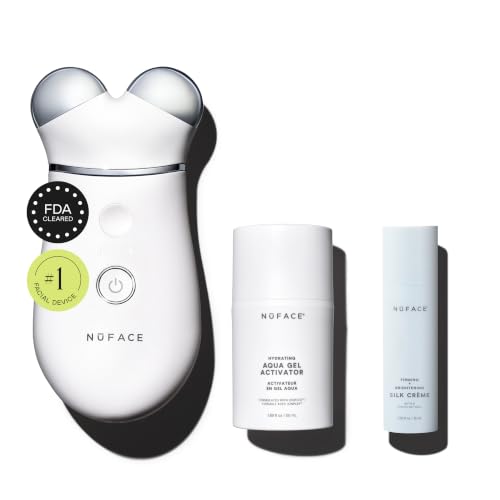
Home microcurrent devices are small handsets built for a cosmetic skincare ritual: two polished spheres or a pair of smooth plates, a tube of conductive gel, and a slow glide across the cheeks, jawline and forehead. They belong in the same conversation as gua sha tools and facial rollers, not in a clinic, and this guide keeps them there. What follows examines the practical details that decide whether a device fits a real bathroom routine: how its applicator is shaped, how much gel it goes through, how its intensity steps behave, where it may and may not be used, how long its battery lasts and how it should be cleaned. We compared published specifications, instruction manuals and safety leaflets across the category, and set marketing language about visible lifting aside, because cosmetic impressions are personal and cannot be standardised.
That framing matters. A microcurrent handset sold for home use is a cosmetic appliance, and no claim in these pages promises a medical outcome, a structural change or a substitute for professional care. Readers with a diagnosed skin, cardiac, neurological or other medical condition should follow the exclusion guidance in the manual for their device and, where the leaflet advises it, speak to a clinician before use. For everyone else, the buying task is refreshingly concrete: find a handset whose instructions are clear, whose lowest setting is genuinely gentle, whose gel is pleasant to use, and whose upkeep takes less than a minute.
What the device actually does, in plain terms
Microcurrent refers to a very low level of electrical current, measured in microamperes, delivered to the skin surface through the applicator heads while a conductive gel sits between metal and skin. The current itself is usually imperceptible or felt as the faintest tingle; the sensation most users notice is the cool glide of the spheres and the slight tackiness of the gel. Manufacturers describe the cosmetic purpose in terms of a facial routine that leaves skin looking refreshed and cared for, and that is the level at which a buyer should hold the category: a structured, unhurried way of applying attention and product to the face.
Because the current needs a conductive path, the gel is not an optional extra or a marketing accessory. Without a continuous film of gel, contact breaks, the device may signal an error or simply deliver nothing, and the spheres drag instead of gliding. This single fact shapes the whole ownership experience, from running costs in gel refills to the order in which a routine unfolds. Any shortlist should therefore be judged as a system, handset plus gel plus instructions, rather than as a gadget alone.
Applicator shapes and what they suit
The classic design carries two fixed spheres, each roughly the size of a large marble, set side by side on the head of the handset. Both spheres must touch the skin at once to complete the circuit, so the pair works best on broader, flatter areas: cheeks, forehead, jawline and the sides of the neck where permitted. The spacing between the spheres is fixed, which makes the gesture simple and repeatable. A beginner can learn the motion in one session, and the manual’s diagrams map cleanly onto what the hand is doing.
Variations multiply from there. Some handsets shrink the spheres for work around the brow bone and the sides of the nose. Others replace spheres with flat plates that cover more surface per pass and suit the forehead and cheeks, though plates feel less precise along the jaw’s edge. A third family offers interchangeable heads: a standard pair for the face at large, a smaller precision head for the lip line and eye surround, and occasionally a wider body head. Interchangeable heads add versatility and also add parts to wash, store and eventually lose down the back of a drawer, so the value depends on whether the smaller areas genuinely feature in the buyer’s routine.
Head material appears in the specification sheet as stainless steel, chrome-plated metal or, on some models, a precious-metal plating. For most users the practical differences are feel and care. Steel heads are cool to the touch, rinse clean and shrug off knocks. Plated heads can be gentler in appearance against reactive skin, according to their makers, but plating wears if abrasive cleaners touch it, and the cleaning instructions for plated models are correspondingly stricter. Weight matters too: a handset between 100 and 250 grams balances easily for a five-to-ten-minute session, while a heavier body can tire a wrist that works at the forehead angle.
Fixed heads versus attachments
A fixed-head device has one job and does it with the fewest decisions, which suits a buyer who wants the same routine every time. Attachments earn their place when two people share a device with different priorities, or when the precision head genuinely reaches the brow area the standard spheres bridge over. Check how attachments connect: magnetic fittings swap in seconds but can detach if a glide catches on dry skin, while bayonet or click fittings stay put and take a moment longer to change. The manual will also state whether each head carries its own intensity guidance, since smaller contact areas can feel stronger at the same setting.
Conductive gel: the consumable that runs the routine
Manufacturer gels are water-based, lightly viscous and formulated to stay wet for the length of a treatment section. The standard instruction is to apply a mask-like layer, thicker than a moisturiser, to one area at a time rather than coating the whole face at once. Gel spread over the full face at the start will have dried at the forehead by the time the handset arrives there, and dried gel does not conduct. Working section by section, cheek first, then jaw, then forehead, keeps every pass wet and smooth.
Quantity surprises new owners. A pea-sized dab is a moisturiser habit; a microcurrent session uses considerably more, closer to a teaspoon across a cheek and jaw section, and the tube empties faster than expected. Some brands sell an activator mist for re-wetting a section mid-pass, which stretches gel further and refreshes a glide that has begun to drag. Others permit reapplication of gel alone. The manual for the specific device governs here, because the circuit depends on the gel’s formulation, and substituting a random aloe product or a facial oil can break contact entirely; oils in particular are insulators, not conductors.
- Apply gel to one section at a time, in a visible, even layer
- Re-wet or reapply as soon as the glide starts to drag
- Keep oil-based products for after the session, never underneath the handset
- Store the tube capped and upright so the nozzle stays clean
- Patch-test a new gel on the inner forearm a day before facial use
Skin preparation is brief. Cleanse to remove makeup, sunscreen and surface oil, pat dry, and apply gel to clean skin. Jewellery near the treatment area, such as dangling earrings, should come off so the spheres do not catch. Hair needs tying back for the same reason; a strand trapped under a sphere pulls and breaks the rhythm of the pass. These small preparations take under a minute and are the difference between a calm routine and a fiddly one. A tidy shelf for the gel and handset helps keep that routine in one place. best bathroom storage cabinet over sink
Intensity levels and session structure
Home devices typically offer between three and five intensity steps, adjusted with a button or a dial and confirmed by lights, beeps or a small screen. The steps are relative, not standardised: level two on one handset may feel stronger than level three on another, because output, sphere spacing and gel thickness all interact. Every manual in the category gives the same opening instruction, and it deserves emphasis: begin at the lowest setting, complete several full sessions there, and increase only when the routine feels entirely comfortable. More sensation is not more benefit in a cosmetic routine, and a setting that makes facial muscles twitch visibly is beyond what home-use instructions intend.
Session length is guided by timers. Many handsets beep at intervals, commonly every five seconds during a glide sequence or at the changeover between sections, and switch off automatically after a set period, often between five and twenty minutes depending on the programme. Auto shut-off is a genuinely useful feature for an evening routine, since it removes the clock-watching and protects against absent-minded overuse of one area. Programmes, where offered, sequence the sections with prompts; a simple single-mode device with a timer is equally serviceable for a buyer who prefers to follow the printed diagram at their own pace.
Frequency guidance in manuals usually suggests several sessions per week during an initial period, settling to fewer for maintenance, always with rest days rather than twice-daily use. Skin that looks flushed and feels warm for a few minutes afterward is commonly described; skin that stays sore, develops a rash or feels irritated into the next day is a signal to stop and let the skin settle, and to reconsider the gel before blaming the device. Cosmetic routines are marathons of consistency, and a pace the skin tolerates calmly is the only pace worth keeping.
Reading the signals the handset gives
Indicator lights carry more information than their size suggests. A contact light or tone confirms the circuit is complete and the glide is delivering as intended; a flickering signal usually means the gel film has thinned. Battery warnings typically appear as a changed light colour or a double beep at switch-on, distinct from the session timer’s sounds, and the manual’s diagram of indicators is worth reading once with the device in hand. Vibration, where fitted, is a handling preference rather than a treatment feature, and models that allow it to be switched off suit users who find it distracting near the ears.
Treatment areas and glide technique
Manufacturer diagrams divide the face into zones and prescribe a direction for each. Cheek passes generally travel upward and outward from beside the nose toward the ear, repeated several times per side. Jawline work follows the bone from chin toward earlobe with the spheres straddling the edge. Forehead passes move upward from brow to hairline, or outward from the centre, depending on the brand’s chart. Neck guidance, where the device permits neck use at all, restricts passes to the sides and back, avoiding the front centre of the throat entirely, a restriction repeated in every safety leaflet in this category and one to treat as absolute.
Pressure stays light throughout. The spheres should glide on the gel film, not press into the tissue; the hand supports the skin with the free fingers below the pass, and the motion is slow, taking a few seconds per stroke so the timer’s beeps can pace it. Dragging, stuttering or a scratching feel means the gel has dried or the angle has tipped a sphere onto its edge. Lifting the handset, re-wetting the section and restarting the pass is the correct response, not pressing harder. Around the eye, home devices are used on the brow bone and the outer surround only where the manual allows, never on the eyelid itself or against the eye, and the lips and the skin directly over them are likewise excluded in standard instructions.
Skin should be intact wherever the handset travels. Passes skip over broken skin, active blemishes that are sore or weeping, moles the manual advises avoiding, sunburn and any patch still settling after a cosmetic procedure. That last point carries a timing element: safety leaflets commonly set waiting periods after injectable treatments, laser sessions, chemical peels and similar procedures, measured in days or weeks, and the treating practitioner’s own aftercare instructions take precedence over the device booklet where the two differ. A cosmetic handset will keep; there is no routine so valuable that it should crowd a healing area.
Safety information, stated generally and taken seriously
Every manufacturer leaflet in this category prints an exclusion list, and while the exact wording varies, the themes are consistent enough to summarise. Home microcurrent devices are not intended for people with implanted electronic devices such as pacemakers, because electrical stimulation equipment and implants are a combination the manufacturers exclude outright. Pregnancy appears on the exclusion lists as a precaution. Epilepsy and other seizure conditions are excluded, as are significant cardiac conditions and certain neurological disorders, because the device delivers an electrical stimulus, however small. Anyone who recognises their own situation anywhere on that list should not use such a device unless a clinician who knows their history has said otherwise.
Recent procedures form the second theme. Leaflets advise waiting after injectable treatments, laser work, deep peels, microneedling and facial surgery, and some exclude use over areas containing metal implants, plates or permanent fillers. Active skin conditions form the third theme: eczema flares, rosacea in an inflamed phase, infections, open wounds and unexplained lumps or lesions all belong in the do-not-treat column until a professional has assessed them. Cancer history, particularly skin cancer in the treatment area, appears in exclusion lists as well, with the instruction to seek medical advice first.
- Implanted electronic devices, including pacemakers
- Pregnancy, as a standard precaution in manufacturer leaflets
- Epilepsy or other seizure conditions
- Significant cardiac or neurological conditions
- Recent injectable, laser, peel or surgical procedures within the stated waiting period
- Broken, infected, inflamed or undiagnosed skin in the treatment area
- The front centre of the neck, the eyelids and the lips, for all users
Children and teenagers are outside the intended audience for these devices, which are designed and documented for adult cosmetic use, and a handset should be stored where small hands cannot switch it on. Users should also remove the device from the skin before answering a door or a phone mid-session; wandering around with gel on one cheek and a live handset in hand is how drops onto tile floors happen. Finally, a device that has been dropped hard, cracked, or exposed to water beyond its stated rating should be retired or assessed by the manufacturer rather than trusted, since the applicator circuit is not a component to improvise repairs on.
Battery, charging and travel
Rechargeable lithium cells power most current handsets, charged through a USB cable, a magnetic cradle or a proprietary dock. Specification sheets quote runtime per charge in minutes or in sessions; figures between roughly ten and thirty sessions per charge are common, because each session draws little power. Charging time runs from about two hours to overnight depending on the model, and indicator behaviour during charging, usually a pulsing light that turns solid, is described in the manual. A handset that will live in a travel washbag benefits from USB charging, since the same cable and plug already packed for a phone can serve it.
Battery care follows the familiar pattern for small rechargeables. Avoid storing the device fully discharged for months, keep it away from heat sources and steamy shelves, and recharge it when the low-battery signal appears rather than forcing a final session from a fading cell, because a device that dies mid-routine delivers an uneven session and tempts its owner to rush. Some older or simpler models use replaceable cells; those trade convenience for longevity, since a fresh set of cells restores the device completely, while a sealed rechargeable handset eventually reaches the end of its battery’s life and becomes electronic waste for disposal through the appropriate local channel.
Water resistance ratings, where quoted, usually describe splash resistance for cleaning rather than permission to use the device in the shower. The distinction matters: a handset rated for splashes can be wiped and rinsed at the tip if the manual allows, but it should not be submerged, held under a running tap unless the instructions explicitly permit it, or used on dripping-wet skin over a bath. Gel plus water plus a mains-connected charger is a combination to keep apart entirely; charging happens on a dry surface, away from the sink, with the device switched off.
Cleaning and storage, the sixty-second routine
Cleaning instructions across the category agree on the essentials. After each session, wipe the applicator heads with a soft cloth, slightly dampened with water, to remove gel residue before it dries into the seams around the spheres. Some manuals permit a cloth dampened with a mild alcohol solution for the metal heads; others, particularly for plated heads, restrict cleaning to water alone. Residue left to harden dulls the glide, harbours product build-up and can interfere with contact, so the wipe is part of the treatment, not an optional extra. Cotton pads shed fibres around sphere fittings, which is why the manuals specify cloth.
The handset body gets a dry or barely damp wipe, never immersion, and the charging contacts should stay dry and free of gel, since a film over the contacts is a common cause of a device that mysteriously stops charging. Storage is a dry drawer or the case supplied, out of direct sunlight and away from the steamiest part of the bathroom where possible. Gel tubes store capped at room temperature. A device shared between partners raises a hygiene point the manuals state plainly: these handsets are positioned as single-user items, and where sharing happens regardless, heads should be cleaned thoroughly between users and each person should use their own gel supply. Towels used for the preparatory cleanse belong in the regular wash like any other face cloth. best hair towels for fine hair
Replacing gel and other consumables
Gel is the recurring purchase, and its consumption rate depends on session frequency and how generously each section is coated. A buyer comparing two devices should compare the gel format alongside the handset: tube size, whether the formula is proprietary or whether the manufacturer approves generic water-based conductive gels, and whether a mist activator is part of the system. Proprietary gel locks the owner into one supplier, which is acceptable when the product is pleasant and readily available, and irritating when it ships slowly. Applicator heads on most models are not consumables, but the cloth, the mist and any replacement charging cable eventually join the list of small things to reorder before they run out entirely.
How a session fits into an ordinary evening
The routine has a natural order that most manuals share. Cleanse the face and pat it dry. Tie hair back and remove earrings. Apply gel to the first section, switch the handset to its lowest setting, and complete that section’s passes before moving on, reapplying gel section by section. When the timer ends or the chart is complete, wipe or rinse away the remaining gel as the gel’s own instructions direct, then continue with the usual evening products: serum, moisturiser and anything else in the normal sequence. Water-based gel residue generally absorbs or rinses without fuss, and applying regular skincare afterward is the standard closing step in manufacturer routines.
Timing the session earlier in the evening rather than in the last drowsy minutes before bed improves consistency, because a routine that requires gel, a mirror and both hands loses to tiredness most nights. Some owners anchor the habit to an existing one, after brushing teeth or before a regular programme, and keep the handset charged in its case beside the sink so starting takes seconds. A mirror with decent frontal lighting helps more than any programme on the device, since watching the spheres keeps the angle honest and shows immediately where the gel film has thinned. Hair towels and face cloths kept within arm’s reach complete a setup that never requires a mid-routine expedition to the linen cupboard. best towels to use for curly hair
Progress in a cosmetic routine is judged by feel and by habit rather than by measurement. Skin may feel smoother after the massage-like glides and the extra product attention, and many users value the enforced few minutes of slowness as much as any visible impression. Photographs taken monthly in the same light can help an owner decide whether the routine earns its place, provided expectations stay at the cosmetic level this guide has maintained throughout. A device that is used calmly three evenings a week for a year delivers whatever the category can deliver; a device abandoned in a drawer after a fortnight of twice-daily enthusiasm delivers nothing at all.
Comparing models on paper before buying
A specification sheet for this category is short, so every line deserves reading. Applicator type and head material come first, then the number of intensity steps and whether the steps adjust with buttons or a dial. Session timing follows: whether a timer exists, what its intervals signal and whether auto shut-off is fitted. Battery lines state the cell type, charging method and claimed sessions per charge. The box contents list reveals whether gel is included, in what quantity, and whether a case, a mist or spare heads come with the handset or sit behind further purchases.
Warranty terms for small beauty electronics commonly run one or two years, with the battery sometimes covered for a shorter period. Return policies matter unusually here, because comfort at the lowest intensity and the feel of the spheres on a particular face cannot be judged from photographs, and some sellers offer a trial window for exactly that reason. Keep the packaging until the first several sessions are done. A manual available to read before purchase, as a download from the manufacturer’s site, is a good sign in itself: brands confident in their instructions tend to write clearer ones, including an exclusion list that does not hide in small print.
- Applicator shape matched to the areas the buyer actually intends to cover
- A lowest intensity step described as the starting point for all new users
- Timer or auto shut-off fitted, with the interval signals explained
- Gel included in the box, with its size stated rather than implied
- Cleaning method stated for the specific head material
- Exclusion list printed in full in the manual or safety leaflet
Price positioning in this category spans a wide range, and the differences that justify the upper end are tangible ones: metal rather than plated-plastic heads, interchangeable applicators, a proper storage case, a longer warranty and clearer documentation. Features that add little include companion applications that duplicate the timer, decorative finishes and programme counts beyond a handful. A buyer choosing between two finalists does better comparing gel availability and head shape than comparing programme lists, because the gel and the glide are what the hands meet every session.
Common mistakes that shorten a routine’s life
The most frequent error is using too little gel, usually from a wish to make the tube last. The glide drags, contact breaks, the session feels scratchy and the owner concludes the device is unpleasant, when the actual fault sits in a film of gel spread too thin to conduct. The second error is seeking sensation, raising the intensity because a faint feeling seems more productive, against every manual’s instruction to stay at a comfortable level. The third is treating the whole face in one rushed pass with gel applied everywhere at once, which guarantees the last sections are worked dry.
Storage mistakes follow close behind. A handset left on a wet sink edge corrodes at its charging contacts; a device stored with gel still on its heads dries into a crust that the next session’s wipe struggles with; a tube left uncapped skins over at the nozzle and dispenses lumps. Each of these is a thirty-second habit rather than a character flaw, and the fix is procedural: wipe, cap, dry, put away, in that order, every time. Owners who build that closing sequence into the session itself rarely meet the problems that fill support forums for this category.
Expectation mistakes are quieter. Buying a cosmetic handset while privately hoping for a clinical result sets up disappointment that no applicator design can prevent, and it can push a user toward overuse, longer sessions and higher settings in pursuit of an outcome the category does not offer. The healthier frame, and the one this guide has used from its first paragraph, treats the device as a pleasant, structured skincare ritual whose value lies in consistency, product application and a few unhurried minutes of care. Judged on those terms, a well-chosen handset can earn its shelf space honestly.
Skin types, seasons and small adjustments
Dry skin drinks gel faster, so owners with a dry complexion should expect to reapply more often and may prefer the mist activator systems that refresh a section without another full layer. Oily skin needs a thorough cleanse first, because a surface oil film under the gel interferes with contact in the same way an oil-based product does. Sensitive skin calls for the patch test on any new gel, the lowest intensity for longer, and a willingness to skip a session on a day when the face already feels reactive from weather, a new cleanser or a long day outdoors.
Seasons shift the routine at the margins. Winter heating dries both skin and gel, shortening the working time of each section. Summer humidity keeps gel wet longer but adds sweat, which should be blotted before a session so the film on the skin is gel rather than a mixture. After sun exposure, skin that is pink or warm belongs in the rest category until it has settled, however mild the exposure seemed. These adjustments are ordinary skincare judgement applied to a device routine, and they ask for nothing more specialised than attention.
Facial hair changes the glide in ways manuals mention briefly. Spheres move against stubble with more resistance and consume gel faster, and a full beard blocks contact across the jaw and cheeks where it grows. Owners with beards typically confine the routine to the forehead, the brow area and the upper cheeks, accepting that the device’s map shrinks to the skin it can actually reach. That is a reasonable adaptation rather than a failure of technique, and it is another reason the applicator’s shape over the forehead deserves weight in the buying decision for bearded buyers.
What the routine cannot do, and why that honesty helps
A home handset does not replicate a professional treatment, does not diagnose or treat any condition, and does not permanently alter facial structure. Its current levels, session lengths and applicator sizes are designed for unsupervised cosmetic use by adults, which is precisely why the safety lists are conservative and the instructions emphasise comfort. Readers whose concerns are medical, such as sudden facial asymmetry, unexplained swelling, persistent lesions or post-surgical recovery, need professional assessment rather than a beauty appliance, and no section of this guide should be read as encouragement to self-manage such matters with a handset.
That honesty also protects the buyer’s wallet. A device understood as a ritual tool can be chosen calmly on ergonomics, gel and documentation. A device bought as a promise invites overspending on programme counts and finishes, followed by the particular disappointment of a promise-shaped purchase. The manufacturers’ own leaflets, read carefully, support the calmer view: they describe cosmetic use, list exclusions at length and avoid guaranteeing outcomes to any individual. A buyer whose expectations match the leaflet’s language is the buyer most likely to still be using the handset, contentedly and correctly, a year later.
Matching a device to a particular buyer
A complete beginner is best served by a fixed-sphere model with three intensity steps, a clear printed chart and gel included, because the routine can be learned without decisions about heads or programmes. A buyer focused on the brow and the area around the eyes, within the permitted zones, should look for a smaller precision head and confirm from the manual that those zones appear in its chart. A buyer who travels monthly should prioritise USB charging, a hard case and a handset at the lighter end of the weight range, and should check airline guidance on carrying rechargeable devices in cabin baggage, which is the standard arrangement for lithium cells.
A buyer with reactive skin should read the gel’s ingredient list with the same care given to any leave-on product, patch-test as described earlier, and favour the device whose gel is simplest and most fully documented. A buyer sharing a bathroom with teenagers should choose a model with a case that closes, store it out of casual reach, and treat the exclusion of younger users as a household rule rather than a suggestion. A buyer replacing an earlier handset already knows their gel consumption and preferred head shape, and can shop narrowly: same strengths, longer battery, clearer timer.
Storage furniture plays a small supporting role in all of this. A handset, its gel, its cloth and its cable kept together in one drawer or case start faster and end tidier than the same items scattered across a bathroom, and the routine’s survival across busy months often comes down to that friction alone. The wider bathroom can stay simple: good light, a mirror at the right height and uncluttered surfaces around the sink. best 800 gsm towels
Questions worth asking before checkout
- Which areas does the manual’s own chart include, and which does it exclude?
- Is gel included, how large is the tube, and what replaces it when it empties?
- How many intensity steps are there, and does the guidance start everyone at the lowest?
- Does the handset switch itself off, and what do its indicator lights mean?
- How are the heads cleaned, given their specific material?
- What does the warranty cover, and for how long, including the battery?
A seller or manufacturer who answers those six questions from documentation, promptly and without drifting into outcome promises, is demonstrating the clarity the owner will rely on for years. Vague answers about the exclusion list in particular should end the conversation, because that list is the one part of the paperwork nobody can afford to have summarised loosely. Keep the replies, the manual and the receipt together; small electronics have a way of needing their paperwork at the least convenient moment.
The short version for a busy reader
Choose the applicator shape that matches the areas you will genuinely cover. Budget for gel as a running cost, apply it generously and section by section, and keep oils for afterward. Start at the lowest intensity, let the timer pace the session, and give the routine rest days. Respect the exclusion list without exception, keep the handset away from the front of the neck, the eyelids and broken or inflamed skin, and stop for irritation that lingers. Wipe the heads after every session, charge on a dry surface, and store the kit together. Buy documentation quality as much as hardware, because the manual is the part of the product you will consult most.
Technique details that separate a calm session from a clumsy one
Hand position shapes every pass more than owners expect. Grip the handset low, near its base, with the fingers relaxed rather than wrapped tightly around the body, because a tense grip transmits tremor to the spheres and makes the glide uneven. The wrist stays neutral, neither bent sharply upward nor drooping, and the movement comes from the whole forearm travelling slowly rather than from flicking the wrist. When the chart calls for work along the jaw, the free hand draws the skin gently downward below the jawline to present a flatter surface, using fingertip pressure only; pulling the skin taut with force is neither necessary nor advised in manufacturer diagrams.
Breathing and pace sound like wellness decoration, yet they have a mechanical effect here. A slow pass of three to five seconds gives the timer’s interval beeps their purpose, and a user who rushes doubles the passes while halving the contact quality. Completing one side of the face fully before starting the other keeps the gel management simple and lets the user compare how each side feels at the same setting. Anyone who notices one side tolerating the routine better should not raise the intensity on the other side to compensate; symmetry of settings matters more than symmetry of sensation, which varies naturally across a face.
Mirror habits deserve a mention. Work facing the mirror squarely rather than at an angle, because an angled view distorts where the spheres actually sit relative to the jaw’s edge. Raise the mirror or sit on a stool so the elbows can rest lightly at counter height during forehead passes; unsupported arms held high for several minutes fatigue, and tired arms press harder without meaning to. A magnifying mirror helps with the brow area but should not become the main view, since its distortion exaggerates every minor redness and invites overworking a patch that looks worse through the lens than it does to the room.
Pairing the device with the rest of a skincare shelf
The session sits between cleansing and the leave-on products, and that position has consequences for the order of a shelf. Toners or essences that are water-based and fully absorbed before gel application cause no difficulty, while anything oily, silicone-heavy or still sitting wet on the surface belongs after the session. Retinoid and exfoliating products, which many adults use in the evening, are generally applied after the device routine rather than before it, both because the gel needs a clean surface and because freshly stimulated-feeling skin is a poor moment to layer strong actives. The gel manufacturer’s own guidance governs its product, and the skincare brand’s guidance governs the rest; where instructions conflict, spacing the device session and the strong active on alternate evenings is the conservative arrangement.
Morning use is possible for owners who prefer it, with two adjustments. Sunscreen goes on after the session and after any gel residue has been rinsed or absorbed, never underneath the handset, since a sunscreen film blocks contact much as an oil does. Makeup likewise follows the session. Some users find a morning routine harder to keep unhurried, and an unhurried session done three evenings a week serves the habit better than a rushed one attempted daily. The device does not care which end of the day it is used; the owner’s calendar is the deciding factor.
Other tools on the shelf should not be stacked into the same sitting without thought. A facial roller or a gua sha stone used immediately before the handset leaves the skin already worked and sometimes slightly flushed, making it harder to judge how the device itself feels. Manuals do not usually address tool stacking, so the sensible household rule is one modality per session, separated by at least a day from any other intensive treatment, and never on skin that is still tender from an earlier procedure of any kind.
Understanding output figures without overstating them
Specification sheets occasionally quote output in microamperes, sometimes as a maximum figure and sometimes as a range across the intensity steps. A higher maximum does not make a handset better for home cosmetic use, because the usable experience lives at the lower steps and because comfort, contact and consistency dominate outcomes at this level. Waveform descriptions, such as references to alternating phases or modulated delivery, are engineering details that a buyer cannot translate into a personal result; they are reasons a particular device feels the way it does, not grades to rank one model above another.
What a buyer can usefully compare is control resolution: how many steps divide the journey from the gentlest output to the strongest, and whether the lowest step is described as suitable for first sessions and sensitive areas. Five shallow steps give a cautious user more room to settle than three steep ones. Audible or visible confirmation of each step change also matters, because a user mid-glide, eyes on the mirror, should not have to guess whether a button press registered. These are usability judgements, grounded in the documentation, and they hold regardless of any laboratory figure printed beside them.
When to pause a routine and reassess
A routine should pause whenever the skin’s behaviour changes for reasons outside the device: a new prescription cream, a course of treatment from a dermatologist, an allergic reaction to an unrelated product, or an illness that leaves the skin unusually reactive. Restarting follows the same pattern as starting, at the lowest setting for a few sessions, because the skin’s tolerance after a break or a change is not automatically what it was before. Gel that has been open far beyond its stated period after opening, or that has changed smell, colour or texture, should be replaced rather than used up out of thrift; the face is the wrong place to economise on a doubtful tube.
Persistent problems have a short decision tree. Tingling that grows uncomfortable at the lowest setting, redness lasting hours, breakouts confined to the treated areas, or a device that signals contact errors despite generous fresh gel all justify stopping and contacting the manufacturer or a professional rather than experimenting further. Support teams for this category deal with these questions routinely and can distinguish a faulty handset from a formulation mismatch. Keeping the purchase date, the gel batch details from the tube and a brief note of settings used makes that conversation faster and more useful.
Buying second-hand, gifting and other edge cases
A pre-owned handset can be a sensible entry into the category, provided the inspection is strict. Ask for the original manual or download it before money changes hands, confirm the charger supplied matches the rating printed on the device, and run the handset through every intensity step with fresh gel to check that the indicators behave as the booklet describes. Battery health is the largest unknown: a unit that drops from full to empty within a few sessions is nearing the end of its useful life, and sealed models cannot be revived with a replacement cell. Hygiene argues for a thorough cleaning of the heads on arrival, following the material-specific method, and for a new tube of gel rather than the seller’s opened remainder, whose age and storage history are unknowable.
Gifting one of these devices requires more tact than technical knowledge. The exclusion list means a handset is unsuitable for some recipients outright, and the giver cannot know a recipient’s full medical picture. A gift receipt and a model chosen for its clear documentation are the thoughtful combination, allowing an exchange without awkwardness if the leaflet rules the device out. Wrapping the gel, a soft cleaning cloth and a printed copy of the treatment chart with the handset turns a gadget into a complete starting kit and signals that the routine, not any promise about appearance, is the actual present.
How the category is documented, and why that helps buyers
Home microcurrent devices sit in a regulatory space that treats them as cosmetic appliances, and their paperwork reflects that position. Manuals describe intended cosmetic use, print exclusion lists prominently and instruct users to discontinue and seek advice for persistent irritation. That conservatism is a feature for the buyer: it means the instructions were written to keep an unsupervised home user inside safe boundaries, and following them literally is the correct strategy rather than a timid one. Where a brand’s marketing pages sound grander than its own leaflet, trust the leaflet. The leaflet is the document the manufacturer must stand behind, and its language is the language in which the product should be judged.
Keeping that paperwork accessible closes the loop on ownership. Store the manual with the device or photograph its key pages, the exclusion list, the indicator diagram and the cleaning method, so the information survives a house move or a spilled tube. Owners who can check a detail in ten seconds tend to check it; owners who must hunt through a downloads folder tend to guess. In a category built on small, repeated, correctly bounded sessions, that difference in convenience quietly decides who uses their handset well.
Check prices on Amazon
Live listings for the shortlist in this guide are pulled from Amazon below, so prices and availability are always current at the moment you look.


A first fortnight, paced the way the manuals intend
New owners do best with a deliberately modest opening schedule. Session one covers only the cheeks and jaw, at the lowest setting, following the printed chart once per side, so the hands learn the glide and the gel quantity without the pressure of completing a full-face map. Session two, after a rest day, adds the forehead. By the end of the first week most users have settled the practical questions that no review can answer for them: how much gel their skin actually consumes per section, whether the interval beeps feel helpful or intrusive, and which mirror position keeps their shoulders down. Only after several comfortable sessions does the manual’s suggestion of stepping up one intensity level even become relevant, and many owners will find their preferred routine lives permanently at the first or second step.
Keeping a few lines of notes during that fortnight pays off disproportionately. Record the setting used, the sections covered, how the skin felt an hour later and the next morning, and any product layered afterward that coincided with irritation. Patterns that memory blurs, such as a flush that only follows sessions on exfoliating evenings, stand out plainly on paper. Those notes also give a manufacturer’s support team or a clinician something concrete to work from if a question arises later. After the fortnight, the notes can stop; by then the routine should run on habit, the gel quantity should be second nature, and the handset should feel like an ordinary part of the shelf rather than a project demanding attention.
One last practical check concerns the sink itself. Gel rinses from hands and spheres with plain water, but it leaves a slippery film on porcelain and on the tap handles, and a quick rinse and wipe of the basin after a session prevents the next person from meeting that film unexpectedly. Bottles and tubes stored at the basin’s edge should move back a few inches during the routine, because a handset set down mid-session, wet with gel, slides more readily than its owner expects, and a fall into a filled basin is the kind of accident that ends a device’s life in a second. A folded hand towel laid beside the mirror as a resting mat for the handset solves the sliding, the dripping and the counter marks in a single gesture, and it goes into the wash with the rest of the week’s towels without ceremony.
Before we finish: this guide is reader-supported, and when you buy through links on Cottage Verdict pages the site may receive a commission that helps fund our editorial work, at no extra cost to you. Those links never determine which features our guides tell readers to prioritise, and no manufacturer sees or approves this content in advance.
The right microcurrent handset is the one whose gel you will happily apply, whose lowest setting feels like nothing more than a cool, slow glide, and whose little closing ritual of wipe, cap and put away becomes as automatic as locking the bathroom cabinet at night.