Our Top Picks




What's inside
- How electrical muscle stimulation through the feet works
- The specifications that decide how a session feels
- Foot pad design, electrode layout, and contact quality
- Programs, timers, and the shape of a session
- Who these machines suit, and the seated hours they serve
- Contraindications and cautions that are not fine print
- How the category compares with other seated leg options
- Setting up: chair, posture, and the first session
- Building a routine that survives the first month
- Cleaning, electrode care, and storage
- Common problems and what they usually mean
- Power, controls, and the details of daily handling
- Reading the claims: evidence language and honest expectations
- A short buying checklist for this category
- Sizing, weight limits, and platform stability in real rooms
- Check prices on Amazon
- What ownership costs beyond the purchase
As an Amazon Associate I earn from qualifying purchases. This post may contain affiliate links at no extra cost to you.
A circulation booster machine, in the form most shoppers meet, is a low, oval or rounded platform that you rest both bare feet on while sitting down. Inside the platform, a set of electrodes delivers mild electrical pulses through the soles, and those pulses prompt the muscles of the feet and calves to contract and relax in a repeating rhythm. The best-known designs in this category are sold under the broad idea of electrical muscle stimulation, often shortened to EMS, and they are aimed squarely at people who spend long stretches seated: desk workers, frequent travellers, older adults who move less than they used to, and anyone whose lower legs feel heavy and restless by the evening.
This guide treats the category as household equipment rather than as medicine. It explains how the stimulation works according to published manufacturer documentation, which specifications change the feel of a session, how the automatic programs are structured, and where the hard safety boundaries sit. Those boundaries matter more here than in most home-product categories, because a device that passes electrical current through the body is unsuitable for some people outright, including many people with implanted pacemakers. Nothing in these pages promises that a machine will cure a condition, dissolve a clot, or replace walking, and any reader with a diagnosed circulation problem should treat the discussion that follows as background for a conversation with their own doctor, not as a substitute for one.
The appeal of the format is easy to understand. The machine asks for no floor space beyond a footprint roughly the size of a bathroom scale, no balance, no joint load, and no change of clothes. You sit in an ordinary chair, place your feet on the pads, choose a program, and read, knit, or watch television while the soles tingle and the calf muscles visibly twitch in time with the pulses. Sessions are typically timed at twenty or thirty minutes, and the device switches itself off at the end. For a household where one person cannot manage long walks in winter, or where a home worker wants something active-feeling during a sedentary afternoon, that low-effort routine is the whole point of the product.
Choosing well means looking past the headline promise on the box. Two machines can share the same category name and feel completely different, because intensity ranges, pulse patterns, electrode layouts, and pad sizes vary a great deal. A unit with ninety-nine intensity levels is not automatically gentler than one with twenty-five; what matters is how finely the low end of the range is graduated, since most users live in the first third of the dial. Pad width decides whether a larger foot makes full contact, program design decides whether the rhythm stays interesting or becomes monotonous, and the wording of the contraindication list decides whether the machine belongs in your house at all.
How electrical muscle stimulation through the feet works
Electrical muscle stimulation sends a controlled current between two or more electrodes, and when that current passes through muscle tissue at sufficient intensity, the muscle contracts. On a foot platform, the electrodes sit under the soles, arranged in zones beneath the heel, the arch, and the ball of the foot. The current path runs through the foot and, as intensity rises, engages muscles further up the calf. Manufacturers describe the resulting squeeze-and-release cycle as a way of imitating the pumping action that calf muscles perform during walking, when each step presses blood and fluid upward through the veins of the lower leg against gravity.
The sensation follows a predictable ladder. At the lowest settings most people feel a faint buzzing or fizzing under the soles, similar to pins and needles that never quite arrive. A few steps higher, the toes may curl slightly and the foot rocks a little as the arch muscles join in. Higher still, the calves begin a visible rhythmic tightening, and the feet may lift at the heel or press down in small pulses. None of this should hurt. A sharp, stinging, or burning quality usually means the intensity is too high for the contact quality that day, or that dry skin is concentrating the current into a small area instead of spreading it across the pad.
Pulse frequency and pulse width are the two technical values behind that ladder, and some manufacturers publish them while others keep the details inside program names. Frequency, measured in hertz, describes how many pulses arrive each second; low frequencies tend to produce distinct, separate contractions, while higher frequencies blend into a smoother, more continuous squeeze. Pulse width, measured in microseconds, describes how long each individual pulse lasts, and longer widths generally recruit muscle more strongly at the same dial setting. Shoppers do not need to memorise numbers, but a maker willing to publish a frequency range is giving a useful signal about how seriously the engineering is documented.
It is worth being precise about what stimulation does not do. The current does not scrub arteries, dissolve deposits, or repair valves in veins, and responsible manufacturer literature does not claim otherwise; it describes temporary muscle activity in the legs during use. The honest way to frame the purchase is as a seated activity device that produces repeated calf contractions for people who are sitting anyway, with comfort and routine as the realistic measures of success. Anyone hoping for a treatment outcome for venous disease, arterial disease, or persistent swelling needs medical assessment first, because those conditions change both the risks and the sensible options.
The specifications that decide how a session feels
Intensity range is the specification shoppers compare first, and it is also the easiest to misread. A dial running from zero to ninety-nine sounds precise, yet the usable band for most seated users sits between roughly the tenth and fortieth step, depending on footwear-free contact, skin moisture, and individual sensitivity. What separates a comfortable machine from a crude one is the size of the jumps in that lower band. If step eight feels like nothing and step nine suddenly bites, the graduation is too coarse where it matters. Published reviews of specifications and owner documentation consistently suggest choosing a model whose low settings are described as gentle and incremental, rather than one boasting the highest maximum output.
Maximum output itself, sometimes expressed in volts or in the current the device can deliver into a standard load, matters mainly for people whose feet are less sensitive, including some users with thickened skin on the soles. A stronger ceiling gives those users headroom to reach a clear contraction. For everyone else the ceiling is academic, and pursuing the largest number adds cost without adding comfort. The more useful question is whether the machine remembers the last intensity used, so a daily routine can resume at a familiar setting instead of being rebuilt from zero each time, and whether intensity for the standard program can be adjusted mid-session without restarting the timer.
Body pads and secondary channels
Many platforms include a second output channel with adhesive electrode pads on a cable, intended for placement on the thighs, calves, or lower back under the separate, more general heading of pain-relief stimulation. These pads use the same generator but a different waveform program, and the instruction manuals treat them as a distinct function with its own intensity control. Households comparing models should check whether the second channel can run at its own level rather than mirroring the foot program, whether replacement pads are sold in reasonable quantities, and how many uses a single set of adhesive pads is rated for before the gel loses its grip. Pad cost over a year of regular use can exceed the price difference between two machines.
Adhesive pads also introduce the clearest placement rules in the manual. They must never be placed on the front of the neck, across the chest near the heart, on the head, or over broken skin, and the two pads of a pair should not touch each other while the device runs. These are not decorative warnings; they follow directly from how current travels between electrodes. A machine whose manual states the rules plainly, with diagrams, is a safer household object than one whose documentation waves at the subject in a single sentence.
Foot pad design, electrode layout, and contact quality
The platform itself is usually a shallow moulded shell, somewhere around thirty to thirty-six centimetres across, with a textured top surface divided into left and right foot zones. Better designs mark the zones with raised outlines or contrasting panels so feet land in the intended spot without guesswork, and the surface often carries small studs or ridges that help a restless foot stay registered on the electrodes. Weight is modest, typically between one and a half and three kilograms, which makes the machine easy to slide under a sofa or carry to another room, but very light units can creep across hard floors as the calves contract, so a non-slip base or a low-pile mat underneath is worth planning for.
Electrode coverage decides how forgiving placement feels. Wide conductive areas tolerate a foot that sits a centimetre off centre, while small, separated electrode islands demand precision and can produce uneven sensation, strong under the heel and faint under the toes. Larger shoe sizes deserve particular attention: a foot that overhangs the platform at the heel or toes loses contact at the overhang, and the current concentrates in the area still touching. Shoppers with feet at the upper end of the size range should look for published platform dimensions and choose the larger format where a range exists, rather than assuming one size serves everyone.
Contact quality is the hidden variable in every session. Dry, hard skin resists current, which is why manuals advise clean, slightly moisturised soles and why many users keep a damp cloth or a tube of conductive gel near the chair. A thin film of moisture spreads the current evenly and usually lets the same contraction happen several intensity steps lower, which is more comfortable and kinder to battery charge. Thick socks block the current almost entirely, and thin socks merely blur it, so the category is fundamentally a bare-feet activity; households uncomfortable with that should look at the compression and movement alternatives discussed later instead of trying to defeat the physics.
Some platforms add secondary features around the edges: a tilting or rocking base that lets the ankles move through a gentle range between pulses, textured massage nodes in the centre of the foot zone, or low-level heat. Each addition should be judged on whether it can be switched off independently. Heat in particular is not suitable for users with reduced sensation in the feet, who cannot reliably judge temperature, and a machine that forces heat and stimulation together removes a choice that ought to stay with the user.
Programs, timers, and the shape of a session
Automatic programs vary the pulse pattern over time so the muscles are not asked to repeat one identical contraction for half an hour. A typical program library includes a steady rhythm setting, a wave pattern that builds and releases, a kneading-style alternation between feet, and a faster tapping sequence. The practical difference between programs is partly comfort, since varied patterns feel less monotonous, and partly fatigue, since a pattern with longer rest intervals lets the calves work for the full session without the contractions fading. Machines at the simpler end offer one program with adjustable intensity only, which many owners find perfectly adequate once they settle into a routine.
Session timers cluster around twenty, twenty-five, and thirty minutes, with automatic shutoff at the end, and some models allow the timer to be extended or repeated. A visible countdown display sounds like a trivial feature until the machine lives under a desk, where the user cannot see the top panel; at that point a remote control with its own display, or at least an audible end-of-session tone, becomes the difference between a relaxed routine and repeatedly bending down to check. Controls on the unit itself are usually a small cluster of buttons plus a dial or plus-minus keys for intensity, and large, clearly labelled buttons matter for users with limited dexterity or eyesight.
Remote controls in this category are infrared on many models, which means the handset needs line of sight to the platform, a small frustration when the unit sits under furniture. Radio-frequency remotes, where offered, work through a sofa’s shadow and are worth preferring for under-desk placement. Either way, the household should decide where the remote lives, because a circulation platform without its remote quickly becomes a device that only gets used at its default settings. A magnetic dock or a storage slot on the unit itself is a small design detail that prevents a disproportionate amount of annoyance.
Most manuals suggest one or two sessions a day, and they frame consistency as more valuable than heroics. The sensible pattern is to attach the session to an existing seated habit: the morning news, an evening programme, a daily call, or the middle hour of a desk shift. Readers comparing seated routines more broadly may also enjoy our guide to best foot soak tubs, since warm soaking and stimulation sessions are often alternated in the same evening routine, though never at the same time, because a stimulation platform must stay dry and well away from water.
Who these machines suit, and the seated hours they serve
The clearest use case is the long, unavoidable sit. Home workers describe lower legs that feel wooden by mid-afternoon, and a platform under the desk turns part of that dead time into repeated, gentle calf activity without meetings being interrupted or shoes being changed. Because the contractions are visible but quiet, the machine suits shared offices and living rooms; there is no motor hum of any consequence, only a faint click from relays on some models as programs change. For households where one partner works at a table and the other reads nearby, that near-silence is a genuine advantage over vibrating equipment.
Older adults who walk less in bad weather form the second core audience. The honest framing, again, is substitution for some muscle activity rather than for walking itself: a session does not train balance, load bones, or raise fitness the way a walk does, and no household should cancel walks because a platform arrived. What the machine can do is fill the gap on days when the pavement is icy, the rain is horizontal, or energy is short, keeping a daily leg routine alive through the worst weeks of winter. Families buying for a parent should prioritise simple controls, a stable platform that does not slide, and a manual the parent will actually read.
Frequent long-haul travellers form a third group, though with a caveat about size: a full platform is a home object, not cabin luggage, and the travel versions in this category are smaller, battery-powered pads or wearable calf units rather than the platform format covered here. At home after a long flight, a gentle session at low intensity is how many owners use the machine, and the same contraindication list applies with extra force, because a traveller who suspects a clot after a flight needs a doctor promptly, not a stimulation session. Swelling that affects one leg noticeably more than the other, especially with pain or warmth, is a medical symptom first and a shopping topic never.
People recovering from injury sometimes ask about these platforms, and the answer belongs to their treating clinician or physiotherapist. Stimulation is used in professional rehabilitation settings with assessed parameters, but a consumer platform is not calibrated to an individual’s surgical history, and using one over a healing leg, near metal fixation, or in place of prescribed exercises can interfere with a recovery plan. The same caution applies to anyone with a recent diagnosis they are still learning about. A short conversation before buying is cheaper than a machine that must sit unused because the clinic advises against it.
Contraindications and cautions that are not fine print
The single most important line in any circulation booster manual is the implanted-device warning. People with a pacemaker or an implanted defibrillator should not use electrical stimulation devices of this type unless their cardiology team has explicitly said otherwise, because externally applied current can interfere with how an implanted device senses the heart’s own rhythm. This is a hard exclusion, not a matter of turning the intensity down. Households where one person has an implant and another wants a platform need a clear rule that the machine is for the named user only, stored where a visiting relative with an implant will not casually try it.
A history of deep vein thrombosis or pulmonary embolism is the second hard stop commonly listed. The reasoning is mechanical: deliberately contracting the calf muscles around a vein that may contain a clot is not something to experiment with, and manufacturer instructions direct anyone with such a history, or with current symptoms suggesting a clot, to medical advice rather than to the product. The same applies to people taking treatment for a recent clot. This guide repeats the point plainly because marketing language about boosting circulation can sound, to a worried reader, like an invitation aimed at exactly the people the manual excludes.
Pregnancy appears on most contraindication lists, as do epilepsy, active cancer treatment in the area of use, and stimulation over varicose veins that are inflamed, over recent surgical sites, or over skin that is broken, infected, or affected by a rash. Reduced sensation in the feet, whether from diabetes-related nerve changes or another cause, is a caution of a different kind: the user cannot judge intensity by feel in the normal way, so the usual feedback loop that keeps a session comfortable is weakened. Anyone in that position should raise the idea with their clinician and, if they proceed at all, do so with agreed settings rather than by experimentation.
Children should not use these platforms, and the device should be stored where small children cannot switch it on and stand on it, both because the current is designed for adult physiology and because a platform that rocks or tilts is a tempting toy. Pets present a smaller but real issue: cats in particular like warm electronics and vibrating objects, and a cat settling on the pads mid-session interrupts contact and startles everyone. Finally, the platform must never be used in the bath, with wet feet fresh from a shower, or while sleeping, since sleep removes the user’s ability to notice a setting that has become uncomfortable.
When to stop a session and seek advice
A session should end early if the sensation turns sharp or burning, if one foot feels dramatically stronger effects than the other after repositioning, if dizziness or nausea appears, or if cramping outlasts the pulses instead of letting go between them. New or worsening swelling, redness, or pain in a calf in the days after starting a routine is a reason to stop and seek medical advice rather than to push through, because those signs deserve assessment on their own merits. Keeping a brief note of settings and session lengths for the first fortnight makes any conversation with a clinician far more useful than a vague memory of having used the machine a few times.
How the category compares with other seated leg options
Air compression leg massagers wrap the calves, and sometimes the feet and thighs, in chambers that inflate in sequence, squeezing the limb from the outside. They produce no electrical sensation, which makes them the default alternative for people excluded from stimulation, including many pacemaker users, though their manuals carry their own clot-related warnings and the same rule about medical advice applies. Compression sleeves are bulkier to store, take longer to put on, and involve a pump’s soft rhythmic noise, but the experience is closer to a firm massage than to exercise, and some users simply prefer being squeezed to being twitched.
Vibration plates occupy the opposite corner: the user usually stands, the whole body is shaken at a selectable frequency, and balance and joints are part of the experience. That is a poor match for the exact audience of a seated platform, since standing on a vibrating surface demands the stability and confidence that seated users may not have. Under-desk pedal exercisers and elliptical steppers ask for voluntary movement, which is genuinely valuable, and they cost little, but they depend on motivation in the moment, whereas the stimulation platform’s routine runs on a timer once started. Many households end up combining approaches across a week rather than crowning one winner.
Heated recliners and full massage chairs approach leg comfort from the relaxation side, with rollers, airbags, and warmth, at many times the price and footprint. Readers weighing that direction can compare our roundup of best electronic massage chairs for the powered end of the market, and best commercial massage chairs for heavier-duty designs, keeping in mind that a chair is furniture first and a leg routine second. The circulation platform’s case rests on being small, single-purpose, and easy to use daily, not on out-featuring larger equipment.
Plain walking deserves its sentence in any honest comparison. It remains the reference activity for leg circulation, it is free, and it loads the body in ways no seated device imitates. The platform’s role is for the hours when walking is not happening: the desk shift, the long evening, the convalescent afternoon, the winter week. Judged as a supplement for seated time it can earn its place; judged as a replacement for movement it will always disappoint, and shoppers should be suspicious of any listing that blurs that line.
Setting up: chair, posture, and the first session
Chair height decides the geometry of a session more than any setting on the dial. The user should sit with knees bent at roughly a right angle, feet flat and fully on the pads, and enough weight through the feet to keep contact steady without pressing down hard. A chair that is too low folds the knees sharply and changes how the calf responds; a chair or sofa that is too high leaves the feet dangling onto the front edge of the platform, concentrating contact under the balls of the feet. An ordinary dining chair is often a better starting point than a deep sofa, and a small cushion behind the lower back helps the user sit through a full session without slumping.
The platform belongs on a hard, flat floor where possible. Deep carpet insulates and can let the unit rock, thick rugs bunch under it, and a hard floor with a thin non-slip mat gives the steadiest base. Keep the mains lead or charging cable routed where it will not be tripped over or trapped under chair legs, and keep drinks on a different surface from the machine; a spilled mug is the most common household accident around any foot-level electrical device, and the manual’s instruction to keep the unit dry should be treated as absolute.
The first session should be deliberately unambitious: the gentlest program, an intensity that produces a clear but mild tingling, and ten minutes rather than the full timer. New users routinely overestimate the right level because the sensation is novel and interesting, then wake the next day with calves that feel as though they climbed stairs. Mild next-day awareness in the muscles is unsurprising after unaccustomed contractions; genuine soreness means the dose was too large. Building up over a week, in small steps of intensity and minutes, is the pattern every manual recommends and the one experienced owners repeat.
Bare feet should be clean and dry of bath water but not bone dry in texture; a small amount of ordinary moisturiser worked into the soles earlier in the day, or a wipe with a damp cloth just before the session, improves contact noticeably. Remove the platform from the routine entirely on days when the soles are cut, cracked, or freshly treated with medicated creams, both for comfort and because broken skin changes how current enters the body. Checking the soles briefly before each session is a ten-second habit that prevents most of the stinging complaints found in owner feedback.
Building a routine that survives the first month
Novelty carries the first week of almost any home device; routine design carries the second month. The strongest predictor of continued use is attachment to an existing habit at a fixed time of day, with the platform already positioned where the habit happens. A machine that must be fetched from a cupboard, plugged in, and arranged will lose to a machine that lives under the desk with its remote in the drawer. Households should therefore decide the machine’s permanent home before worrying about program libraries, and should treat the first placement as a furniture decision, not a storage decision.
Tracking helps in a modest way. A simple note of date, program, intensity, and how the legs felt that evening gives the user a way to find their effective settings and to notice drift; many people discover their comfortable intensity rises slightly over the first fortnight as the novelty fades and the muscles adapt, then settles. That settled level, not the maximum tolerated on an ambitious day, is the working setting. On tired or unwell days, dropping a few steps is sensible rather than weak, because the aim is a sustainable daily rhythm.
Sharing a machine between two people is common and works well provided each person keeps their own notes and the intensity is reset between users; the cost of forgetting is one startling first minute for the second user. Hygiene is simple: the pads are wiped down between users, and adhesive body pads, where used, are personal items that should not be shared. Families who expect heavy shared use might value a model with user memory presets, which store two or more preferred configurations and remove the daily negotiation with the dial.
Cleaning, electrode care, and storage
The foot platform needs little maintenance beyond a wipe with a slightly damp cloth and mild detergent, followed by drying, because sweat and skin oils gradually film the conductive surface and dull the sensation. Abrasive cleaners and solvents are off the list, since the conductive layer and the printed markings are both vulnerable to them. If the sensation grows patchy over months despite good skin contact, a filmed or worn surface is the first suspect, and the manufacturer’s cleaning guidance should be followed before assuming an electrical fault.
Adhesive body pads are the consumable heart of the second channel. Their gel layer picks up lint and loses tack; rinsing briefly under water and air-drying, where the manual allows it, restores some life, and storing them on their protective plastic sheets between uses slows the decline. A set is finished when it will no longer stay in place for a full session or when the sensation turns uneven and prickly, because poor pad contact concentrates current. Buyers should confirm the price and availability of replacement pads for the exact model before purchase, not after the first set wears out.
Storage is undemanding: cool, dry, out of direct sunlight, with cables loosely coiled rather than wound tight around the unit, which fatigues the conductors at the entry point. Rechargeable models prefer to be stored partly charged and topped up every few months if unused, a standard lithium battery courtesy that keeps capacity from sagging. Mains-powered models should be unplugged during electrical storms if the household follows that rule for other electronics, and all models should be kept away from heaters, which can warp the shell and dry out pad gel in its storage bag.
A brief word on footwear beside the chair: many owners pair a session with easy slip-on shoes for the trip back to the kitchen, and textured footbed footwear gets its own treatment in our guide to best cork footbed slippers, for readers who like the idea of passive foot stimulation continuing in a gentler form as they move around the house afterwards.
Common problems and what they usually mean
Feeling nothing at all has three usual causes, in order: the feet are not fully on the conductive zones, the skin is too dry to pass current comfortably at low settings, or the machine’s safety design has detected an open circuit and is holding output at zero because only one foot is placed. The fix sequence is equally ordered: reposition both feet, moisturise or damp-wipe the soles, confirm both foot zones are covered, and only then raise the intensity. A user who feels nothing at high settings with good contact should stop and contact the manufacturer rather than improvising, because a fault in the output stage is possible and the device should be checked.
One foot feeling stronger than the other is the most reported quirk in the category. Slight asymmetry is normal, since feet differ in skin thickness, moisture, and how much weight they carry, and it usually evens out when the user consciously settles their weight evenly and re-seats both heels. A dramatic, persistent difference can indicate a partially filmed electrode zone on the weaker side, which cleaning addresses, or a sole with a thick callus patch, which a foot-care routine addresses over time. Swapping which side of the chair the user sits on does nothing; repositioning the feet themselves does almost everything.
A sensation that starts pleasant and turns sharp mid-session usually tracks moisture: as the feet warm and the initial dampness dries or, conversely, as slight sweating changes the contact, the effective current density shifts. Dropping two or three intensity steps restores comfort in most cases, and re-wiping the soles at the halfway point of a long session is a legitimate technique rather than an admission of defeat. Sharpness that appears at the same spot every session points to a small area of broken or irritated skin at that spot, which should be inspected in good light.
Unexpected shutoffs are typically the timer, the auto-off after a period with no load detected, or, on rechargeable models, a battery that has reached its reserve level. Owners sometimes interpret the load-detection shutoff as a fault when they lift their feet to answer the door; the machine is doing what it was designed to do. Keeping the manual’s troubleshooting table, which is short in this category, in the same drawer as the remote saves the household a search through packaging that was recycled months earlier.
Power, controls, and the details of daily handling
Power arrangements split the category. Mains-powered platforms offer unlimited session length and consistent output, at the cost of a cable and a fixed home near a socket. Rechargeable models free the placement completely and are the natural choice for a chair in the middle of a room, but they add battery management to the routine and their output on some designs softens slightly as charge falls. Published battery figures usually quote a number of sessions per charge, commonly in the range of five to ten at moderate settings, and shoppers should read those figures as best-case estimates in the usual way.
Displays range from a simple ring of indicator lights to a full numeric panel showing program, intensity, and minutes remaining. For a device used at foot level, legibility from a seated position matters more than information density: large numerals, high contrast, and a display that tilts or repeats on the remote all serve the user better than a beautiful panel that must be read from directly above. Button feel matters too, because intensity is often adjusted by touch alone while the user’s eyes stay on a book or screen.
Noise, heat, and smell should all be near-absent in normal use. A faint relay click at program changes is normal; buzzing from the unit itself, a hot smell, or a shell that becomes warm to the touch are reasons to stop and contact the maker. Likewise, the platform should sit dead level and silent when idle. These baseline expectations are worth stating because a new owner has no reference for what the machine should be like, and the correct reference is: boring, quiet, and predictable, session after session.
Reading the claims: evidence language and honest expectations
Marketing for this category uses a vocabulary worth translating. Phrases about supporting or maintaining healthy circulation describe the intended purpose without promising treatment, and phrases about relieving tired, aching legs describe comfort outcomes that are inherently subjective. Shoppers should be wary of any seller, as opposed to a regulated manufacturer, who upgrades that language into promises about varicose veins disappearing, swelling being cured, or medication becoming unnecessary. The distance between the careful wording in a manual and the excited wording in an advertisement is itself information about the seller.
Regulatory status varies by country and by the claims a maker chooses to make; some devices in this family are registered or cleared as medical devices for specific stated purposes in some markets, while near-identical hardware elsewhere is sold as a wellness product. That distinction affects the wording allowed on the box more than the sensation under the feet, and it is one more reason to anchor expectations to the manual of the specific model in the specific market, and to involve a clinician when the goal is medical rather than comfort-based.
The realistic success criteria for a household purchase are plain: the machine is comfortable at a setting that produces clear calf contractions, it fits the intended chair and routine, it gets used most days without negotiation, and the user’s legs feel less heavy and restless on the evenings it is used. Measured against those criteria, a modest model used faithfully beats an elaborate one abandoned in a cupboard, which is the fate the routine-design sections of this guide exist to prevent.
A short buying checklist for this category
Work through the exclusions first: no implanted cardiac device, no clot history without medical clearance, no pregnancy, no plan to use the machine over broken skin or on a child. Any single failure ends the purchase conversation for that user, regardless of discounts or features. Next, confirm the fit questions: platform dimensions against the user’s shoe size, chair height at the intended spot, and a permanent home with a socket or a charging habit that suits the household.
Then compare the feel questions: fine intensity graduation at the low end, at least a couple of distinct programs, a timer with automatic shutoff, and controls that can be operated from the chair, by remote where the unit will sit under furniture. Check the running-cost questions: availability and price of replacement adhesive pads if the second channel matters, warranty length, and whether the maker publishes real specifications, including frequency range and pad dimensions, or hides behind adjectives. Documentation quality is a product feature in this category, because the manual carries the safety information the household will rely on.
Finally, buy from a seller whose returns policy tolerates a fair trial, since the one thing no specification sheet can predict is how a particular pair of feet will like electrical stimulation. Keep the packaging until the routine has survived two ordinary weeks, not two enthusiastic days. Readers who decide against stimulation entirely still have the seated-comfort routes covered elsewhere in this guide collection, from warm soaks to compression wraps to the simple discipline of a daily walk, and choosing none of the machines is a perfectly respectable outcome of good research.
Sizing, weight limits, and platform stability in real rooms
Every platform publishes a maximum user weight, and the figure deserves more respect than shoppers usually give it, because the user is not merely resting their feet on the shell; over months of sessions, body weight transfers through the feet whenever the user leans forward, stands up using the chair arms, or shifts position. Ratings in this category commonly sit somewhere between one hundred and fifty and one hundred and eighty kilograms, which covers most households comfortably, but a user near the boundary should choose a model with clear headroom rather than one they exactly meet. The rating also assumes the platform is used seated; standing on the unit to reach a shelf is outside every manual’s instructions and is the fastest route to a cracked shell.
Stability shows itself in small ways. A well-shaped base stays planted when the calves contract briskly, while a light, narrow unit can walk itself a few centimetres across a wooden floor during a strong program, gradually dragging its cable toward the chair leg. Rubber feet or a full rubberised underside are worth more than decorative styling here. On hard floors, the thin mat mentioned earlier solves both the creep and the faint tapping sound that some platforms transmit into floorboards, which matters in flats where the neighbour below hears what the user only feels.
Foot size interacts with stability too. A long foot that overhangs the front edge tends to press the platform’s nose down and lift the heel contact, weakening exactly the zone many programs emphasise. Some makers offer a single size and quietly design for the middle of the distribution; others publish a recommended shoe-size range. Taking ten seconds to measure the platform against the user’s actual foot length, using the dimensions in the specification table, prevents the most avoidable disappointment in the category, which is a machine that fits the chair, the routine, and the budget, but not the feet.
Households with more than one potential user should think about whose feet set the size requirement and whose medical history sets the exclusions, and should write the household rules on a card kept with the machine: who may use it, at what starting intensity, and who must not use it at all. That small piece of administration sounds excessive until a visiting relative, home for the holidays and curious about the gadget under the coffee table, tries it without anyone mentioning an implanted device. The card is the cheapest safety feature in this entire guide.
Check prices on Amazon
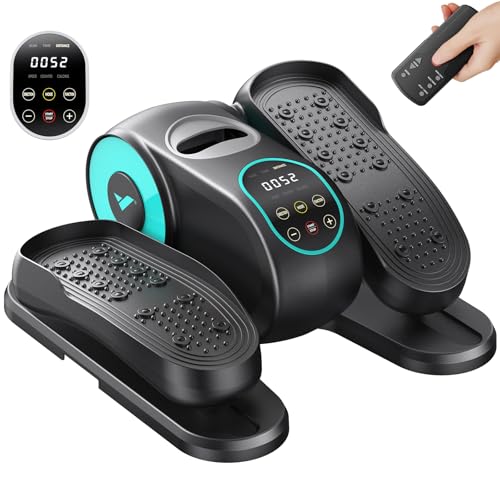
Live listings for the shortlist in this guide are pulled from Amazon below, so prices and availability are always current at the moment you look.

What ownership costs beyond the purchase
The purchase itself is only the first line of the budget. Adhesive pads for the secondary channel are the main consumable, and a household that uses them several times a week should expect to replace sets regularly through the year. Rechargeable models eventually need a battery service or replacement, which some makers offer and others effectively answer with a whole new unit, so the warranty terms and the maker’s spare-parts posture are worth reading before purchase rather than after a failure. Mains-powered models avoid battery questions but tie the machine to a socket, which can mean buying a longer lead or rearranging a room, small costs that belong in the same honest total.
Warranties in this category typically run one to three years, and the detail that matters is whether the electrode surface itself is covered or classed as a wear item. A platform whose conductive zones fade after eighteen months of daily use has a real cost even if the electronics are flawless, and owner documentation from established makers usually states the expected service life of the foot surface plainly. Extended warranties sold at checkout rarely add much in a category with no moving parts beyond buttons and relays; the money is usually better held against replacement pads and, eventually, a replacement machine.
There is also a time cost, small but real: sessions of twenty to thirty minutes, once or twice a day, add up to several hours a week. That time is not lost, since it overlaps with reading, screens, and conversation, but it is committed, and a household should be honest about whether the routine will genuinely attach to an existing habit. A machine used four times a week for years delivers whatever benefit the category can offer; a machine used daily for nine days and then stored delivers almost none, and the difference is scheduling, not engineering.
Questions worth asking the seller before ordering
Three questions separate a confident purchase from a hopeful one. First, what exactly does the manual list as contraindications, and can the seller show that page before purchase rather than after delivery? A maker confident in its documentation shares it, and reading the real list settles the eligibility questions for the whole household in one step. Second, what is the published shoe-size or foot-length range for the platform, and what is the maximum user weight? Both numbers should exist in writing; a listing that offers only adjectives in place of dimensions is asking the buyer to gamble on fit. Third, how are replacement adhesive pads priced and supplied for this exact model, and for how long does the maker commit to stocking them?
A fourth question concerns the household rather than the machine: where, precisely, will it live? Walk to the intended chair with a tape measure, check the distance to the nearest socket, look at what the cable would cross, and imagine the platform in place during an ordinary evening rather than a tidy one. If the honest picture involves moving furniture or stepping over the unit daily, choose the rechargeable format or a different chair before ordering, because placement friction is the silent cause behind most abandoned routines in this category, ahead of any question about programs or intensity levels.
Finally, decide in advance what success will look like at the one-month mark: sessions completed on most days, a settled intensity that produces clear contractions without discomfort, and legs that feel easier on the evenings the machine is used. Writing that standard down protects the purchase from both directions of self-deception, the urge to declare a miracle in week one and the urge to declare a failure because a comfort device did not behave like a cure. Judge the machine as the seated routine aid it is, and it can be judged fairly.
One last practical habit ties the whole routine together: keep everything the session needs within arm’s reach of the chair, the remote, a small cloth for the soles, the household rule card, and a notebook for the first fortnight’s settings. A session that can begin without standing up is a session that happens on tired evenings too, and tired evenings, repeated across a winter, are precisely where this unassuming category of machine quietly earns its floor space.
A note on how this guide was assembled and funded: the comparisons above rest on published manufacturer specifications, manuals, and regulatory wording for the category, read alongside general clinical guidance about electrical stimulation cautions, rather than on any maker’s private briefing. As an Amazon Associate we earn from qualifying purchases. That relationship does not change the exclusion advice in these pages, which would remove some readers from the market entirely, and it is stated here so the household can weigh the recommendations with full knowledge of how the guide is supported.
Choose the machine whose manual you trust, set it up beside the chair where your evenings already happen, and let the quiet, unglamorous rhythm of those small daily contractions become part of the furniture of your day.