Our Top Picks
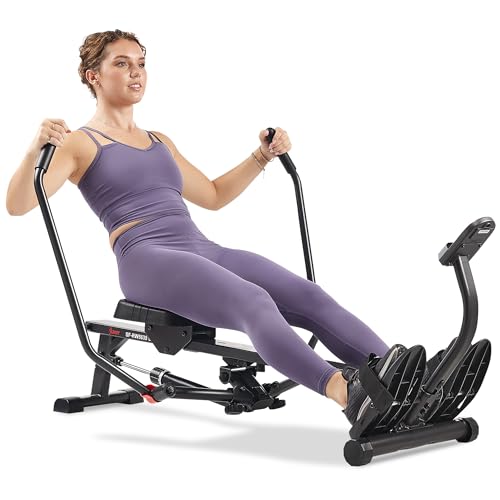
 Sunny Health & Fitness Smart Compact Hydraulic RowerStandard58.1 x 20.1 x 24.8 inches22.4 poundsCheck on Amazon
 Air Walker Exercise Machine23.62 x 34.25 x 57.48"34.25 x 23.62 x 57.48 inches31.97 poundsCheck on Amazon


What's inside
- The headroom formula, stated plainly
- Measure the room at its lowest point, not its highest
- Treadmills: step-up height, incline, and the running bounce
- Ellipticals: pedal rise, and front-drive versus rear-drive
- Vertical climbers: tall machines, honest arithmetic
- Rowing machines: trading height for length
- Recumbent bikes: the lowest-risk answer
- Other categories in a low room: steppers, ski machines, and hybrids
- Mats, flooring, and the inches nobody budgets
- Ceiling fans, lights, and the obstructions above the machine
- Doorways, stairs, and getting the machine into the room
- Reading specification sheets for low rooms
- A measuring and decision protocol
- Comfort, safety, and training quality once clearance is solved
- Workouts that respect a low room
- Two users, two heights: planning for the taller body
- Apartments, rented rooms, and ceilings you cannot change
- Children, supervision, and the family basement
- Maintenance access above and around the machine
- When the answer is to change the room instead
- Where the other equipment fits in the same room
- A note on used machines and inherited equipment
- Check prices on Amazon
- Bringing the decision together
As an Amazon Associate I earn from qualifying purchases. This post may contain affiliate links at no extra cost to you.
A low ceiling does not announce itself as a problem when you buy a cardio machine. It announces itself later, on the first hard interval, when your head rises closer to the basement joists than you expected and every stride becomes a negotiation with the room. The machine was fine. Your height was fine. The combination, plus the bounce in your running gait and the lowest duct you forgot to measure, was not. This guide exists so that the arithmetic happens on paper, before delivery, rather than above your head at speed.
Everything here is built from published manufacturer documentation, stated specification conventions for each machine family, and editorial research into how headroom is actually consumed during exercise. No individual model is named. Instead, each category gets its honest geometry: the treadmill’s step-up height and the vertical travel of a running stride, the elliptical’s pedal rise and the difference between front-drive and rear-drive layouts, the vertical climber’s folded and working envelopes, the rowing machine’s exchange of height for length, and the recumbent bike’s claim to be the lowest-risk answer of all.
The setting assumed throughout is the one that creates most of these problems: a basement or spare room with a ceiling around seven feet, which is eighty-four inches, sometimes less at the beams and ductwork. Eighty-four inches sounds generous until a six-foot user stands on a machine that adds eight inches of platform and then bounces. The sections that follow turn that vague anxiety into a formula, a measuring method, and a category-by-category account of where the inches go.
The headroom formula, stated plainly
Required ceiling height equals the height the machine adds beneath your feet, plus your own height, plus a safety margin for the vertical movement of exercise itself. That is the whole formula, and every dispute about whether a machine fits is a dispute about one of its three terms. The first term is published, though not always prominently: it is the step-up height for a treadmill, the pedal height at its highest point for an elliptical, the seat height for a recumbent bike, and effectively zero for a rower. The second term is yours and is not negotiable. The third term is the one buyers omit, and it is the one that matters most at the moment of effort.
For walking and gentle cycling, the margin can be modest, because the head stays close to standing height. For running, the body leaves the ground on every stride; the head rises several inches above standing height at the top of the bounce, and an honest margin for running is in the range of six to ten inches beyond the static sum. For elliptical training, the margin is smaller but real, because the pedal cycle lifts the body and most users straighten fully at the top of the stride. Treat any calculation that lands within two inches of the ceiling as a failure, not as a fit, because posture varies, fatigue changes form, and nobody exercises at their most compact when tired.
Work the formula in the direction of your own room. Start with the lowest ceiling point above the machine’s intended position, subtract your height, subtract the margin for your activity, and the remainder is the maximum platform height you can accept. That remainder, computed once, becomes a filter for every specification sheet you read afterward. A shopper who knows their allowable platform height in inches can dismiss half the market in minutes and focus entirely on the machines that respect the room.
A worked example at eighty-four inches
Take the common case: a basement ceiling of eighty-four inches at its lowest relevant point, a user who stands seventy inches tall, and a running margin of eight inches. The allowable platform height is eighty-four minus seventy minus eight, which is six inches. Many treadmills place their belt surface higher than that once incline is raised, which means this user, in this room, is shopping in a narrow slice of the treadmill market or should be looking seriously at the lower categories. The same user on a recumbent bike, whose seat might add roughly a foot of seated height but whose head sits far below standing height, has clearance to spare. The formula does not merely reject machines; it redirects the search.
Measure the room at its lowest point, not its highest
Ceilings in basements are not planes; they are landscapes. Joists, boxed-in beams, heating ducts, plumbing runs, and light fittings all hang below the nominal ceiling, and the figure that governs your headroom is the lowest obstruction inside the footprint where the machine will stand and where your head will actually travel. That last phrase matters. On a treadmill you move slightly forward and back on the belt; on an elliptical your head traces a shallow oval; the measurement zone is the area above the machine in use, not the area above its parked position.
Measure with a tape from the finished floor, meaning the surface the machine will rest on after any mat is laid, to the underside of the lowest obstruction in that zone, and write the number down rather than remembering it. Then measure again at the room’s corners to understand the landscape; sometimes moving a machine eighteen inches sideways escapes a duct run entirely and buys back four inches of clearance, which is the difference between a category being impossible and being comfortable. Room layout is a headroom tool, and it is free.
Do not forget the floor’s contribution. A thick exercise mat or interlocking foam tiles under the machine raise the entire apparatus, commonly by half an inch to a full inch for typical mats and more for heavy rubber flooring. That inch comes directly out of your margin. The mat still earns its place for noise and floor protection, particularly over hard basement surfaces, but it belongs inside the formula, counted on the machine side of the ledger. Households that measure the room before the mat arrives and never remeasure are the ones surprised by an inch they definitely used to have.
Treadmills: step-up height, incline, and the running bounce
A treadmill’s relevant dimension is the height of the belt surface above the floor, often listed as step-up height in manufacturer documentation. Across the segment it commonly falls somewhere between roughly five and nine inches for the deck itself, varying with motor size, deck suspension, and frame design. Folding models deserve a second look at this figure, because the hinge and lifting hardware can place the belt higher than a fixed frame of similar capability. The number to use is the belt height at the incline settings you will genuinely use, not merely the flat figure, because raising the front of the deck tilts the whole geometry and lifts the runner’s position at the front of the belt.
Incline changes the headroom picture in a subtler way as well. Running uphill shortens the stride and reduces bounce for most people, which claws back a little margin, while running at a decline, on machines that offer it, lengthens the stride and can add vertical travel. Walking at a steep incline, the use case many low-ceiling households actually care about, is the treadmill’s most forgiving mode: the head stays close to standing height plus deck, the bounce term nearly vanishes, and a machine that fails the running formula may pass the walking formula with room to spare. Be honest about which mode the purchase is for, because the two verdicts can differ by the full height of the bounce.
Suspension and deck flex add a final, small term. A deck that deflects underfoot lowers the runner slightly at foot strike and returns the energy as the stride lifts, which does not change the top of the bounce where clearance is decided. The practical conclusion is unchanged: measure from belt height, add your height, add a real running margin, and let the sum speak. Treadmills are the most demanding category in this guide relative to ceiling height, and also the category where the formula most often delivers an unwelcome answer in a seven-foot room.
Folding treadmills and the storage illusion
Folding designs solve a floor-space problem, not a ceiling problem. Folded, the deck stands nearly vertical and the machine’s stored height can exceed the room’s comfort in a different way, leaning against joists or ducts. In use, a folding treadmill obeys the same formula as any other. Buyers in low rooms sometimes choose a folding model expecting a general smallness that the design does not promise; what it promises is a smaller footprint between sessions, which is valuable, but the head above the belt at full stride is exactly as high as the arithmetic says.
Ellipticals: pedal rise, and front-drive versus rear-drive
An elliptical keeps the feet on pedals through the whole stride, so there is no flight phase and no running bounce. What replaces the bounce is pedal rise: the pedals travel on an inclined elliptical path, and at the top of that path the user’s body stands higher than at the bottom by the path’s vertical amplitude, on top of the pedal’s base height above the floor. Manufacturer documentation sometimes states a step-up or pedal height figure, but the honest clearance calculation needs the highest point of the pedal’s travel, which is the base height plus a share of the stride geometry. Where the documentation gives only one figure, assume the working height is several inches above it and test the assumption against the formula’s margin.
Drive layout changes the geometry in ways a low-ceiling buyer can use. Rear-drive designs place the flywheel behind the user and historically pair with longer, flatter stride paths; the pedal stays comparatively level and the body’s vertical travel is modest, which is friendly to low rooms. Front-drive designs place the flywheel ahead, often with pedals running on tracks or ramps whose incline can be adjusted, and the ramp angle directly sets how much the body rises and falls through the stride. A front-drive machine at a steep ramp setting is a climbing motion with a climbing motion’s vertical travel; at its shallowest setting it approaches the rear-drive profile. Adjustability is therefore a headroom feature, not merely a workout feature.
Centre-drive layouts, which bracket the user with flywheels on both sides, tend to be compact in length and upright in posture. The upright posture is the catch for this guide: standing tall and centred, the user spends the stride near their full standing height plus pedal height, with little of the forward lean that slightly lowers the head on other layouts. None of this makes one layout best; it makes the layout a variable in your formula. A tall user in an eighty-four-inch room will usually find the flatter rear-drive stride the easiest fit, while a shorter user may enjoy complete freedom across layouts.
Stride length and the tall user’s compromise
Stride length interacts with ceiling height through posture. A stride that is too short for the user’s legs forces a choppy, upright, bouncing gait that adds vertical movement the machine did not design in. A stride matched to the user allows a smoother, slightly forward motion with less wasted rise. Tall users in low rooms therefore face a compound problem: they need the longer stride and they have the least margin for its motion. The resolution is to prioritise the flattest stride path available at the needed length, and to accept a slightly shorter stride before accepting a steeper ramp, because vertical travel, not stride elegance, is the binding constraint in a low room.
Vertical climbers: tall machines, honest arithmetic
A vertical climber imitates ladder climbing: hands and feet move in opposition on a near-vertical frame, and the user’s head travels through a range set by how high the hands reach and how fully the legs extend. In use, the top of the head can approach the machine’s own upper working height, which makes climbers the category where the equipment’s stated height and the user’s clearance most nearly coincide. Published overall heights for the segment commonly sit in the range of roughly six and a half to seven and a half feet, and that range should immediately focus a basement buyer’s attention: a machine whose frame nearly touches an eighty-four-inch ceiling leaves nothing for the climber’s head at full extension.
The saving grace is that climbing motion is partly self-limiting. Users naturally shorten their stroke as they tire and rarely sustain the maximum reach of the first minute. But designing a purchase around tired form is poor practice. Use the full-extension case: your height, plus the modest rise of standing on the climber’s pedals, plus the margin for the head’s travel at the top of the stroke, measured against the ceiling at the machine’s position. If the sum fails, the category fails for that room, regardless of how compact the footprint looks in photographs.
Folding climbers complicate the picture helpfully. Many designs fold the mast down or collapse the frame for storage, which solves transport through low doorways and storage against a wall, and the folded height is often the figure that catches the eye in listings. The working height is the governing number, and it should be extracted from the documentation and compared against the room before the folded dimension is allowed to charm anyone. A climber that folds beautifully and cannot be climbed at full stroke in your room is a storage solution in search of a workout.
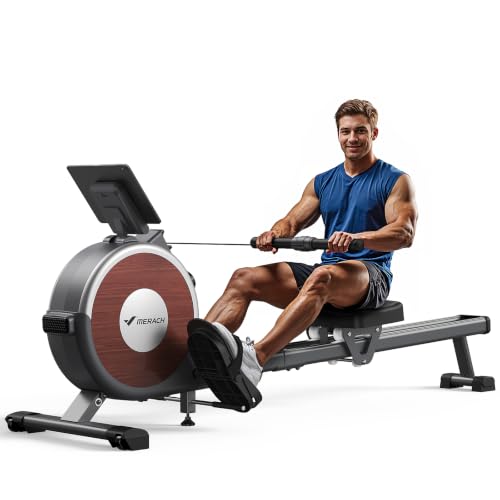
Rowing machines: trading height for length
The rowing machine inverts the low-ceiling problem. Seated low on a sliding seat, pulling a handle that travels at chest height, the user’s head never approaches standing height; the vertical demand is the lowest of any full-body category in this guide. A tall user’s head on a rower sits several feet below a seven-foot ceiling with clearance that no other machine family can match. For the strict headroom question, rowing is close to a solved problem, and households that have failed the formula on every standing category should look here early rather than last.
The cost is paid in length and in storage geometry. A rower in use occupies a footprint roughly eight to nine feet long for most designs, plus clearance behind for the flywheel or fan housing and in front for the user’s feet at the catch. Basements that are low are often also short or interrupted by support posts, so the rowing question becomes a floor-plan question: is there an unobstructed run of that length, ideally oriented so the user is not rowing toward a wall a foot from their face? Ceiling height stops mattering and room length starts, which is a fair trade only if the room can pay it.
Storage partially refunds the length. Many rowers stand on end for storage, at which point their stored height becomes the ceiling question in miniature: a machine that stores upright at around seven feet needs its storage corner measured like any other position, including the tilt path used to raise it. Others separate into two pieces or fold the rail. Each scheme should be checked against the room’s actual corners and doorways, because a rower that stores upright only where the duct hangs lowest has not solved anything.
Resistance types and their envelopes
Air, magnetic, water, and hydraulic resistance change the rower’s noise, feel, and housing size without changing its fundamental seated geometry. Water and air designs carry a flywheel or tank housing at the front whose height is still far below any ceiling concern. The distinctions that matter in a low room are practical: air rowers are loud in proportion to effort, which matters under bedrooms; water rowers carry weight that makes the stand-it-upright storage manoeuvre heavier; magnetic designs are quietest and often fold. None of these alter the headroom verdict, which remains the most forgiving in the guide.
Recumbent bikes: the lowest-risk answer
A recumbent bike seats the user in a reclined chair with a backrest, pedals ahead rather than below, and the head at a height closer to sitting in an armchair than to standing. The clearance arithmetic is almost embarrassingly favourable: even a tall user’s head, seated and reclined, sits far below a seven-foot ceiling, and the machine adds nothing above the user except, on some designs, a console mast that remains well short of the joists. If the formula has rejected every standing category, the recumbent is where the search usually ends successfully.
The trade-offs are elsewhere. A recumbent’s footprint is long, its seat is a piece of furniture that does not fold away on most designs, and the exercise position, while kind to backs and joints, does not load the body in the upright, weight-bearing way some users specifically want. Step-through access is the category’s quiet virtue: the low frame between seat and pedals lets users with limited mobility sit down first and swing a leg over a low rail rather than climbing onto a saddle, which matters in the multi-generational basements where these machines often live.
Upright exercise bikes sit between recumbent and elliptical in clearance terms. The saddle places the user’s head near standing height, sometimes above it for tall users on high saddle settings, and standing sprints on the pedals raise the head further. An upright bike can therefore fail in a room where a recumbent passes easily, and the saddle height at the user’s correct leg extension, not the machine’s frame height, is the figure to feed the formula. Semi-recumbent and hybrid designs split the difference and should be measured by the same rule: head height in the working position, plus margin, against the lowest ceiling point.
Other categories in a low room: steppers, ski machines, and hybrids
Compact steppers and mini steppers keep the user standing and stepping through a short vertical range. Their pedal heights are low and the body’s rise is small, so most pass in rooms that reject treadmills, though a tall user at full standing height plus a stepper’s base still deserves the formula rather than an assumption. Full-size stair-climbing machines with rotating steps are a different matter: the user stands high on a tall frame, the head position is elevated and continuously rising and falling, and the category is among the least suitable for a seven-foot ceiling despite its small footprint.
Ski-style machines, in which the user stands and drives handles and footplates in a gliding opposition, hold the head near standing height on a low platform, which is favourable, but the arm motion reaches overhead and the handles’ travel, rather than the head, becomes the clearance question. A ceiling fan or a low light fitting in the handle arc is a genuine hazard that pure headroom arithmetic misses. The lesson generalises: for any machine with moving parts above shoulder height, map the full envelope of motion, limbs and handles included, against the room’s obstructions.
Hybrid machines that combine elliptical and stepper or bike functions inherit the least favourable geometry of their combined modes for clearance purposes. Assess each mode separately with the formula and let the worst mode govern, because a machine bought for its elliptical mode and used only as a stepper, out of fear of the ceiling, is a compromise purchased at full size and full footprint.
Mats, flooring, and the inches nobody budgets
Flooring decisions quietly rewrite headroom. A typical puzzle-tile surface adds roughly half an inch to three quarters of an inch beneath the machine. Heavy rubber mats run thicker. A low platform built to level a sloping basement floor can add more than any mat. Each layer is defensible on grounds of noise, vibration, moisture, or floor protection, and each layer subtracts directly from the margin in the formula. The correct sequence is to finalise the floor stack first, measure from its top surface, and only then run the numbers for machines.
Noise travels downward as readily as heads travel upward, and the mat’s real job in a basement is often to keep the household above from hearing every footstrike. Treadmills benefit most and cost the most clearance; rowers and recumbents, with their smooth, low-impact motion, can often sit on thinner protection. Matching mat thickness to the machine’s actual impact, rather than buying the thickest tile in the shop, preserves both peace and headroom.
Moisture belongs in the flooring discussion for basements specifically. Machines should not sit directly on a floor that sweats or floods seasonally, and raising equipment on a moisture-resistant mat or low plinth protects it, at the price of the inches already noted. A room that needs a tall plinth for water reasons may simply be a room where the recumbent or rower, with their enormous clearance reserves, are the rational categories, and the formula will say so without sentimentality.
Ceiling fans, lights, and the obstructions above the machine
The lowest point in the measurement zone is frequently not the ceiling at all. A ceiling fan with a downrod can hang a foot or more below the joists, and its blades occupy a disc that no part of the user or machine should enter. Pendant lights, low bulkheads built around ductwork, garage-door tracks in converted garages, and the open edge of a staircase soffit all create local ceilings far below the room’s nominal height. Map them before choosing the machine’s position, and treat a fan above an exercise spot as a relocation problem for either the fan or the machine, never as a clearance to be estimated by eye.
Heat rises, and basement exercise areas accumulate it at the ceiling the user is trying to avoid. A fan is genuinely useful in an exercise room, which is why the conflict arises so often. The resolution is placement: fans belong over the room’s social area or its centre, machines belong where the ceiling is bare, and in small rooms a wall-mounted fan or a floor fan angled upward delivers air movement without hanging anything into the exercise envelope. Ventilation deserves planning precisely because a hot, still basement shortens workouts more reliably than any machine limitation.
Sprinkler pipes, smoke detectors, and pull cords for lights complete the inventory of small obstructions. None of them should be moved or obstructed casually, and detectors in particular must keep their required clearances. The measuring walk described earlier, tape in hand, should end with a written sketch of the zone: floor stack height, lowest obstruction, its nature, and the clear rectangle within which a machine can live. That sketch, kept with the household’s other measurements, settles every future equipment question in the room.
Doorways, stairs, and getting the machine into the room
A machine that fits the ceiling but cannot reach the room has failed by another route. Basement access is commonly a single stair with a turn, a low header at the stairwell, and a door narrower than the home’s main entrances. Published shipping dimensions and the size of the largest single component, which for treadmills is usually the assembled deck and for ellipticals the frame with rails attached, should be compared against that route before ordering. Manufacturers state carton dimensions and often the assembled footprint; the component question may need the manual’s assembly section, which reveals how far the machine can be broken down.
Weight is the second half of access. Cardio machines are heavy in the specific way that makes stairs dangerous: dense, awkward, and hard to grip. Two capable adults and a clear stair are the minimum plan for most categories, and some households sensibly pay for room-of-choice delivery where it is offered. The low ceiling itself plays a role here too, since a tall assembled machine being tilted through a low doorway traces an arc whose top corner needs clearance that a simple height measurement does not capture.
Recumbent bikes and rowers earn further credit on access. Rowers commonly arrive in two boxes with a rail that separates, and recumbents break into frame, seat, and mast assemblies that negotiate turns gracefully. Vertical climbers are light and narrow. The treadmill, again, is the demanding guest: the category most constrained by the ceiling is also the one hardest to deliver beneath it, a coincidence worth weighing when the formula’s verdict is marginal.
Reading specification sheets for low rooms
Manufacturers publish assembled height prominently, and for this purchase it is nearly the least useful number on the sheet, because assembled height describes the console or the frame, not the user’s head in motion. The figures to hunt are step-up height, pedal height, seat height range, stride length and path type, maximum incline, and, for climbers and stored rowers, working and stored heights respectively. Where a needed figure is missing, the manual’s dimensional drawing usually contains it, since installers need true dimensions even when marketing pages prefer flattering ones.
User height recommendations, where a manufacturer offers them, encode the same geometry from the other side and deserve attention. A machine recommended for users up to a stated height in a standard room implicitly assumes a standard ceiling; a taller-than-recommended user in a lower-than-standard room is stacking two optimistic assumptions. Conversely, a machine whose documentation discusses low-ceiling use directly, or publishes a ceiling-height requirement for a given user height, is doing the buyer the courtesy of the formula itself, and that courtesy correlates with careful documentation generally.
Treat photographs as unscaled. A machine photographed in a warehouse studio with a model whose height is unknown conveys proportions, not dimensions, and wide-angle lenses flatter compactness. The dimensional drawing, the manual’s clearance diagram, and your own tape measurements of the room are the three documents that decide the purchase. Everything else is atmosphere.
A measuring and decision protocol
The protocol, gathered into one place, runs as follows. Finalise the floor stack and measure from its top to the lowest obstruction across the machine’s intended zone. Record your height in the shoes you will train in, since cushioned running shoes add close to an inch that belongs in the calculation. Choose the activity margin honestly: generous for running, moderate for elliptical and climbing, small for seated categories. Compute the allowable platform or working height, and carry that single number through every specification sheet you open.
Then apply the category checks in order of your preference rather than the market’s. For a treadmill, belt height at working incline plus height plus running margin. For an elliptical, highest pedal point plus height plus a modest margin, with drive layout and ramp range examined. For a climber, full-extension head position against the ceiling at the frame’s location. For a rower, length and storage height instead of headroom. For recumbent and upright bikes, head height in the correct working position, which differs sharply between the two despite their family resemblance.
Finish with the access check: largest component against the stair and door route, and the household’s honest plan for moving the weight. A machine that passes the ceiling and fails the stairs is not a near miss; it is the wrong machine. When the protocol rejects a favourite category, let it redirect rather than merely disappoint: the same budget buys an excellent example of a lower category more often than it buys a compromised example of a tall one, and the workout that happens beats the workout that was imagined.
Comfort, safety, and training quality once clearance is solved
Adequate clearance is not merely the absence of contact. Exercising with inches to spare changes how a session feels; exercising with a ceiling close above the head produces an unconscious crouch, shortened stride, and guarded posture that degrade form and, over weeks, can create the neck and back complaints the machine was bought to avoid. The safety margin in the formula is therefore also a quality margin. If the arithmetic says a machine fits with two inches to spare, the truthful translation is that it does not fit the way exercise is actually performed.
Ventilation and temperature interact with low rooms in ways worth one paragraph of planning. A low ceiling concentrates the heat and humidity an exercising body produces, and a session that begins comfortably can end in a fug that shortens it. A small fan outside the motion envelope, a door left open to the rest of the basement, or a dehumidifier in damp seasons each protect the routine. None of them cost headroom when placed with the same care as the machine itself.
Floor protection returns as a training-quality issue as well as a clearance one. A machine that rocks on an uneven basement floor or creeps across tiles during intervals will be used less and trusted less. Levelling feet, where fitted, should be adjusted on the final floor stack, and the first sessions should include a check that the machine has stayed where it was placed. Stability is the foundation under every other quality the category offers, in low rooms and high ones alike.
Workouts that respect a low room
Programming can cooperate with geometry. On a treadmill in a marginal room, incline walking delivers demanding training with the smallest vertical travel of any mode the machine offers, and it is the mode around which many low-ceiling households build their entire practice. Intervals can be structured by incline and speed changes that keep the gait a walk rather than a run, preserving the margin while varying the effort honestly.
On an elliptical, favouring the shallower ramp settings and a slightly higher resistance over a faster cadence keeps the stride flat and the head’s travel minimal while the workload stays high. On a climber, deliberate stroke discipline, full but controlled rather than maximal, respects the ceiling without surrendering intensity, since resistance, not reach, is the variable that should carry the effort. On rowers and recumbents, the room imposes almost nothing, and programming can follow the training goal alone, which is the deepest sense in which those categories are the low room’s natural citizens.
Households sharing a room across different heights should set the machine by the tallest user’s formula and let shorter users enjoy the surplus. Where a machine offers user profiles, clearance is not among the settings, but incline defaults and ramp presets effectively are, and configuring them conservatively protects the tall user’s early-morning session from a well-meant adjustment made the night before.
Two users, two heights: planning for the taller body
Most home machines serve more than one person, and headroom planning must be done for the tallest regular user, not the average and not the purchaser. A partner who is four inches taller consumes four inches of margin on every standing category, and a machine that was comfortable for one user can be unusable for the other without anything about the room changing. Write both heights into the formula at the shopping stage, and if the verdicts differ by category, let the taller user’s verdict govern the purchase unless the machine is honestly intended for one person only.
Adult children visiting, guests trying the machine out of curiosity, and a teenager still growing all argue for headroom in reserve. The growing teenager is the planning trap: a machine bought to fit a fifteen-year-old’s current height may be outgrown in the vertical sense within two years, even though its mechanical life is far from over. Households in that position should weight the seated categories more heavily, because a rower or recumbent absorbs growth without penalty, while a treadmill’s margin is spent by it inch by inch.
Adjustable elements complicate the shared picture. Saddle heights get raised, elliptical ramps get steepened, treadmill inclines get left at the last user’s setting. A household rule that machines are returned to their lowest-profile settings after use protects the next user’s first minute, and a strip of tape marking the tallest user’s maximum safe settings on the console turns the rule into something visible rather than remembered.
Apartments, rented rooms, and ceilings you cannot change
Renters face the same geometry with fewer remedies: the ceiling cannot be raised, the duct cannot be moved, and sometimes the floor cannot even be drilled or heavily loaded. The formula is unchanged, but the category ranking shifts further toward machines that are light, quiet, and kind to floors, because the room’s other constraints compound the vertical one. A rower on a protective mat, used at hours the building tolerates, fits a rented basement room in every sense that matters, while a treadmill may fail on noise and vibration long before its headroom is even tested.
Sound deserves its own sentence in shared buildings. Footstrike on a treadmill transmits through structure in a way that a smooth elliptical or rower largely avoids, and a low ceiling often belongs to a room with neighbours above whose floor is your ceiling. The clearance that matters in such a home is social as well as spatial, and the quieter categories preserve both. Checking the machine’s stated noise figures, where published, and favouring belt and drive designs described as low-noise is part of reading the specification sheet honestly in a multi-unit building.
Portability becomes a planning value rather than a convenience. Machines that fold, separate, or roll on transport wheels let a renter reconfigure a small room between exercise and living uses, effectively borrowing space from the day’s other purposes. The headroom formula still applies in the exercise configuration, and the storage configuration needs its own quick check against doors and the storage corner’s ceiling, but a room that transforms is a room that can host a category its static dimensions would refuse.
Children, supervision, and the family basement
Basement gyms are usually shared family territory, and the safety conversation extends beyond the user’s head. Machines should be unplugged or locked against curious small children where the design allows, belts and rails should never carry a child passenger, and the low ceiling itself introduces a specific hazard: an adult lifting a child overhead in play, or a teenager jumping to touch the joists, in a room whose clearances were calculated for exercise alone. The room’s rules should be stated once, plainly, to everyone who uses the space.
For older children and teenagers who train legitimately, the formula applies with their current height and a growth allowance, and supervision expectations follow the machine: a rower is comparatively forgiving of imperfect form, while a treadmill at speed in a low room concentrates several risks at once. Households do well to introduce standing categories in rooms with generous clearance first, where such rooms exist, and to reserve the low basement for the seated machines until judgement and height have both settled.
Maintenance access above and around the machine
Clearance is needed on servicing days as well as training days. Treadmill belts need periodic adjustment and lubrication that require kneeling access at the rear and sometimes tilting the machine; ellipticals collect dust in their ramps and tracks at floor level; rowers need their rails wiped and their housings opened occasionally. A machine wedged into the only corner where it fits, with no room to kneel beside it or tilt it safely, will be maintained late and reluctantly. Leave working space in the layout, even at the cost of a less central position, and count that space as part of the machine’s true footprint.
The ceiling enters maintenance through lighting. Working on a machine beneath a low ceiling with a single dim fitting is miserable and occasionally unsafe, since manuals assume the user can see adjustment markers and warning labels. A battery work light kept with the household’s tools solves the problem without installing anything in the exercise envelope. Similarly, ventilation openings on motor housings need their stated clearance from walls and storage clutter; a machine pushed tight against boxes to save space may overheat in ways that have nothing to do with the workout and everything to do with the room’s improvisation.
Dust is the basement’s constant, and it settles on upward-facing surfaces, including the top of consoles and the inside of fan housings. A cover, where the manufacturer offers one, or a simple sheet over a stored machine, keeps the cleaning burden low. None of this appears in the headroom formula, and all of it determines whether the machine that passed the formula is still pleasant in its third year.
When the answer is to change the room instead
Occasionally the honest conclusion of the measuring protocol is that the desired category and the room cannot be reconciled, and the household faces a choice between a different machine and a different room. A garage with a higher ceiling but a door track crossing the exercise zone, a spare bedroom with full height and a floor whose load capacity and noise transmission need thought, or a covered outdoor space with weather limits each present their own version of the same calculation. The formula travels: lowest obstruction, floor stack, user height, activity margin, in whatever room is proposed.
Structural changes sit at the far end of this logic and should be approached with professional advice rather than enthusiasm. Removing a suspended ceiling can recover several inches where one exists over an unfinished space, and rerouting a duct is sometimes feasible, but joists, beams, and load-bearing elements are the room’s skeleton and not a headroom resource. Any household contemplating alterations for exercise equipment should involve a qualified builder, both for safety and because building rules in many places set minimum ceiling heights for habitable rooms that interact with exactly these decisions.
Most households, having measured honestly, find that the room was never the enemy. It simply had a ranking of machines hidden inside it, waiting for arithmetic to reveal it. Discovering that the basement prefers rowing to running is a smaller disappointment than discovering, at full stride in the first week, that the treadmill prefers a taller room.
Where the other equipment fits in the same room
A low-ceiling cardio corner rarely contains only the machine. Strength accessories share the room and obey simpler geometry, though not no geometry. If you are arranging a compact corner for bodyweight and core work alongside the cardio machine, our guide to best captain chairs for exercise covers a tall frame of its own, so measure its top rail against the same lowest point before assuming it can share the zone.
Flooring choices under and around the equipment deserve their own comparison, since a mat that protects a basement floor also consumes clearance, and best basement workout rugs looks at the thicknesses and materials that balance protection against exactly that cost.
Small textiles accumulate in any training corner and are replaced more often than machines are, which is why best workout towels is worth a look when you are stocking the room rather than furnishing it in a single purchase.
For households that prefer a softer, quick-drying option for face and hands during intervals, best microfiber gym towels covers the alternative fibre in the same role, and either choice leaves the ceiling arithmetic entirely untouched.
A note on used machines and inherited equipment
Second-hand purchases and hand-me-down machines arrive without the shopping stage in which the formula usually lives, and they deserve the same arithmetic before they are carried downstairs. Measure the machine itself where it stands: belt or pedal height from the floor it currently rests on, working heights where the design moves, and the largest component’s dimensions against your stair route. A free treadmill that fails the ceiling test is not a bargain; it is a heavy object that must be moved twice, once in hope and once in disposal, and the second move is always the worse tempered of the two.
Documentation for older machines is usually recoverable from manufacturers’ archives, and it is worth recovering before the machine is installed rather than after, because the dimensional drawing and the user height guidance settle the questions this guide has raised with the maker’s own figures. Where documentation cannot be found, the tape measure substitutes: platform height, plus the tallest user’s height measured directly beside the machine in training shoes, plus the activity margin, compared against the room’s lowest point. The method is cruder than a specification sheet and entirely sufficient to prevent the classic outcome, a machine installed, admired, and quietly avoided because every session happens under a ceiling that feels one stride too low.
Check prices on Amazon
Live listings for the shortlist in this guide are pulled from Amazon below, so prices and availability are always current at the moment you look.

Bringing the decision together
The low ceiling is not an obstacle to a serious home cardio practice; it is a specification for it. Run the formula before falling for a category, measure the room at its lowest honest point, count the floor stack and the training shoes, and let drive layouts, ramp angles, and seated geometries compete on the numbers. The likely outcome in an eighty-four-inch room is a clear ranking: rowers and recumbent bikes almost always fit, ellipticals fit when their stride path is flat enough for the user, treadmills fit walkers more readily than runners, and climbers demand the closest scrutiny of all.
What the formula protects is not really the head. It protects the habit. A machine that can be used at full effort, in good form, without a background awareness of the joists, will be used on the tired evenings and the dark mornings when routines are actually built. That is the purchase worth making, at whatever height the room allows.
One final habit protects every conclusion in this guide: remeasure after the room changes. A new mat, a replaced light fitting, a duct added during a heating upgrade, or a machine nudged sideways during cleaning each rewrite the numbers quietly, and the household that treats the original sketch as permanent will eventually train under different clearances than the ones it calculated. The tape measure takes two minutes, the sketch takes one line to update, and the formula does the rest, which is a small price for keeping the room and the routine in honest agreement with each other.
Keep the sketch and the formula’s result somewhere the household actually looks, taped inside the door of the room’s storage cupboard or saved with the machine’s manual, because the next equipment question in that room, whether it arrives in six months or six years, will begin from exactly those numbers, and the person asking it may not be the person who measured.
That small archive habit closes the loop between measuring once and living with the result for years, and it costs nothing beyond the minute it takes to write the numbers down while the tape measure is still in your hand and the room’s true dimensions are still fresh in mind rather than reconstructed later from memory.
Disclosure: This guide was prepared from published manufacturer documentation, stated specification conventions across the treadmill, elliptical, climber, rower, and cycle categories, and editorial research into exercise geometry and room measurement, with every formula and range presented as a planning tool for readers to apply to their own rooms. As an Amazon Associate we earn from qualifying purchases. That support does not soften the arithmetic in these pages, including where the arithmetic rules a popular category out of a particular basement.
Measure low, allow honestly for the bounce, and the ceiling you have will turn out to be enough for the training you actually want to do.