Our Top Picks
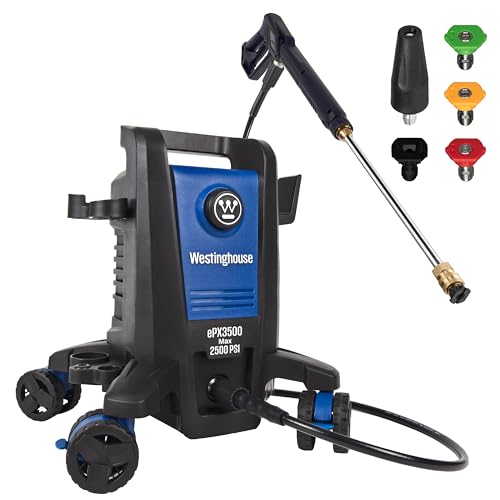 Westinghouse ePX3500 Electric Pressure Washer2500 Max PSI13.5 x 14 x 16.5 inches19 poundsCheck on Amazon


What's inside
- How to read this guide
- Where washer electricity actually goes
- How to read the numbers on an energy label
- Front-load and top-load machines, judged by physics
- Spin speed: the largest saving happens after the wash
- Choosing a cycle: time, temperature and chemistry
- Load-size maths: half loads, full loads and capacity
- Standby power and connected features
- Old machines versus new ones, in kilowatt-hours alone
- Check prices on Amazon
- Habits, maintenance and a decision checklist
As an Amazon Associate I earn from qualifying purchases. This post may contain affiliate links at no extra cost to you.
How to read this guide
A washer earns the description low electric usage only when the arithmetic is done per kilogram of laundry, not per cycle and certainly not from a badge on the fascia. A large drum that draws 0.9 kWh while handling nine kilograms of towels is, in the only sense that matters electrically, a lighter user than a compact machine drawing 0.5 kWh for a three-kilogram load, because the first machine spends roughly 0.10 kWh on each kilogram while the second spends close to 0.17 kWh. That single distinction runs through everything that follows. Whenever a figure appears in these pages, ask what mass of fabric it was moving, how much water it heated to get there, and how dry it left the load at the end. A number without those three companions is marketing, not measurement.
Electricity in laundry is also unusually lopsided. Unlike a refrigerator, which sips steadily around the clock, a washer concentrates nearly all of its demand into short, intense bursts, and most of that burst has nothing to do with turning the drum. Heating water dominates. Spinning fast at the end matters enormously, but indirectly, through the dryer. The motor that tumbles clothes back and forth for forty minutes is, by comparison, a modest consumer. Readers who grasp that hierarchy will find the rest of this guide straightforward, because every recommendation here is really about either heating less water, heating it to a lower temperature, moving it more efficiently, or extracting more of it mechanically before heat is applied again in a dryer.
One disclosure belongs at the start rather than buried at the foot of the page: this guide is reader-supported, and when you follow a retail link from one of its pages and place an order, a commission may come back to the publisher through the Amazon Associates programme, at no change to the electrical figures discussed here. That sentence is the whole of the commercial arrangement, and it has no influence on the thresholds used below. Models are compared on published energy data, on drum geometry, on spin performance and on the behaviour of their cycles, and a machine with an impressive headline rating can still be criticised here if its real-world pattern of use points the other way.
A note on vocabulary will help as well. Energy is expressed in kilowatt-hours, abbreviated kWh, which is the quantity a one-kilowatt appliance consumes in one hour, or a two-hundred-watt motor consumes in five. Power, expressed in watts or kilowatts, describes the rate at any instant; energy describes the accumulated total that a meter records. A washer may pull two kilowatts while its heater is on and barely eighty watts while tumbling, so quoting peak power tells you almost nothing about a wash. Only the integrated total across the whole programme, from fill to final spin, describes what a cycle actually used.
Finally, treat every annual figure in this guide as a model rather than a promise. Manufacturers and energy labels build their yearly estimates from an assumed number of loads, an assumed mix of temperatures and an assumed load size. Your household will differ on all three counts, sometimes dramatically. The useful skill is not memorising a label value but knowing how to rescale it, and a later section works through that conversion step by step so you can rebuild any headline number around your own laundry habits, your own water inlet temperature and your own balance between washing and drying.
Where washer electricity actually goes
Start with a bathtub-warm fact of physics: raising the temperature of one litre of water by one degree Celsius requires about 0.00116 kWh, a figure that follows directly from the specific heat capacity of water and never varies between brands. Warm fifty litres from a cold inlet at 15 degrees up to a 40-degree wash and the heating alone accounts for roughly 1.45 kWh before a single garment has moved. Lift the same volume to 60 degrees and the heating demand climbs past 2.6 kWh. Set beside those numbers, the drive motor of a modern machine, typically rated between 150 and 350 watts and running intermittently as it reverses direction, might accumulate only 0.05 to 0.15 kWh across an entire programme. The gap is not marginal. It is an order of magnitude.
This is why the question of who heats the water matters so much. Many European-style front-load machines carry an internal electric element, commonly rated around 1.8 to 2.2 kilowatts, and heat whatever they draw in to the temperature the programme demands. North American machines, by contrast, frequently have no element at all, or only a modest supplemental one, and instead rely on the household supply, mixing hot and cold feeds to reach the selected warmth. In the second arrangement the washer’s own metered electricity can look deceptively tiny on a warm cycle, because the energy arrived disguised as hot water rather than as current through the plug. The laundry still consumed that energy; it simply appears on a different part of the household’s energy picture, produced by a water heater that may be electric, gas-fired or heat-pump driven.
Honest comparison therefore asks where the heat originated. If your home heats water electrically, a washer without an internal element has not spared you the heating load on a warm wash, it has outsourced it. If your water comes from a heat pump cylinder with a coefficient of performance near three, that outsourced heat may have been produced far more efficiently than a resistive element inside a washer could manage, and the arrangement genuinely helps. If the cylinder is solar-fed in summer, warm washes in July carry a very different electrical footprint from identical washes in January. The machine on its own cannot tell you any of this; the plumbing behind it completes the story.
Beyond heating and tumbling, smaller draws fill out the remainder of a cycle. The drain pump, usually 30 to 90 watts, runs in short bursts and contributes only a few watt-hours. Inlet valves consume almost nothing. The control board, display and sensors together draw a handful of watts while active. The one phase that pushes instantaneous power back up is the final spin, when the motor must accelerate a heavy, waterlogged drum to full speed and hold it there against imbalance forces; even then, ten minutes at 300 to 500 watts adds roughly 0.05 to 0.08 kWh, a trivial sum that, as a later section explains, buys back far more energy downstream than it spends.
Water volume is the quiet multiplier behind the heating figures. Every extra ten litres admitted to the drum is another ten litres that may need warming, another ten litres the pump must expel and another ten litres partly retained in the fabric for the spin to remove. A traditional agitator top-loader might use 90 to 130 litres across fills and rinses, while a well-designed front-loader completes the same job with 40 to 60 litres, because its horizontal drum lifts garments through a shallow pool instead of submerging them in a deep one. Halve the water and, on any heated programme, you come close to halving the dominant energy term as well.
Cold programmes reveal the underlying machinery demand most plainly, precisely because the heating term falls away. On an unheated wash, expect totals in the region of 0.15 to 0.35 kWh depending on duration, drum size and spin speed, with longer eco programmes sometimes using slightly more motor energy than short ones while still using far less overall than any heated equivalent. That baseline is worth remembering: it is the floor beneath which no amount of clever engineering can push a full wash, and it shows how completely temperature choice, rather than brand choice, governs the upper end of consumption.
How to read the numbers on an energy label
Two different quantities share the label space on most machines, and confusing them leads to poor choices. The first is energy per cycle, a single programme’s consumption under defined conditions, expressed in kWh. The second is an annual estimate, which multiplies a per-cycle figure by an assumed number of cycles and presents the product as yearly consumption. The annual number looks authoritative but inherits every assumption baked into it: a set count of loads each week, a prescribed blend of full and partial loads, and a temperature mix that may bear little resemblance to a household that washes mostly in cold water or, at the other extreme, boils bedding weekly for allergy reasons.
In the United States, the label vocabulary centres on two ratios. IMEF, the Integrated Modified Energy Factor, expresses how many cubic feet of laundry capacity a machine delivers per kilowatt-hour consumed across washing and the energy attributed to removing remaining moisture; higher is better. IWF, the Integrated Water Factor, expresses gallons of water used per cubic foot per cycle; lower is better. The pair are worth reading together because they pull against each other in revealing ways. A machine can post a flattering IMEF partly by spinning exceptionally hard, which shifts the accounting in its favour, while a mediocre IWF warns that it still floods the drum on every fill. Conversely, a frugal water user with a lazy spin may look efficient at the plug and then hand the dryer a sodden load.
European labelling follows a different presentation, grading machines on a letter scale and quoting consumption per hundred cycles for the standard eco programme. That per-hundred figure is easy to divide down to a single wash, and the discipline of always quoting the same eco programme makes cross-brand comparison cleaner than a marketplace listing that cherry-picks whichever cycle flatters a particular model. Whichever system you face, anchor on the standardised programme figure for ranking machines against each other, then adjust for the programmes you genuinely run, because a household that never touches the eco setting will never see the eco number.
Rescaling an annual estimate to your own household takes three short steps. First, find the per-cycle figure, dividing the annual or per-hundred number by its stated cycle count if necessary. Second, count or honestly estimate your weekly loads over a fortnight, noting how many run warm or hot, since those cycles may use three to six times the electricity of a cold one. Third, rebuild the year as fifty-two multiplied by your weekly pattern, using the cold figure for cold loads and a heated figure for heated ones, rather than a single blended average. The result is still an estimate, but it is your estimate, shaped by your inlet temperature and your habits, and it will rank two candidate machines in the order that matters for your meter.
Beware one further subtlety: capacity enters the standard calculations, and a larger rated drum improves a machine’s ratios even if you habitually fill it halfway. Label mathematics assume the drum is used as intended. A household washing small, frequent loads should mentally downgrade a big machine’s published efficiency, because the water and heating behaviour of a half-empty large drum rarely scales down in proportion to the load. The ratios describe the machine at its design point. Your laundry basket decides how close to that design point you live.
Spin performance appears on labels in a quieter form, sometimes as a spin efficiency class and sometimes as a stated percentage of remaining moisture after extraction. That percentage deserves as much attention as the headline energy grade. A load leaving the drum at 44 percent remaining moisture carries far less water into a dryer, or onto an indoor rack in a heated room, than one leaving at 62 percent, and the energy consequences of that difference accumulate across every single load of the machine’s life, in every season, regardless of wash temperature.
Front-load and top-load machines, judged by physics
The geometry of the drum explains most of the efficiency gap between formats. A front-loader rotates on a horizontal axis, lifting garments with internal paddles and dropping them through a shallow reservoir of water held in the bottom of the tub. Because the clothes pass through the water rather than sitting beneath it, the machine can clean with a fraction of the volume, and less water means less to heat, less to pump and less detergent solution to rinse away. Typical full-load consumption sits between 40 and 60 litres, and the wash action, a repeated lift and fall, is mechanically gentle enough to permit higher spin speeds without punishing fabrics.
A traditional top-loader with a central agitator works the opposite way. The tub must fill deeply enough to cover the load so the agitator can drag garments through the solution, and that depth drives volumes of 90 litres and beyond, with older designs using considerably more. On cold programmes the penalty shows up mainly as water use, but the moment a warm or hot cycle is selected, the heating arithmetic from the previous section applies to nearly double the volume, and the electrical gap widens sharply. These machines remain simple, fast and tolerant of being opened mid-cycle, yet none of those virtues changes the litres involved.
Between those poles sit high-efficiency top-loaders, which replace the agitator with a low-profile impeller plate in the base of the tub and use load-sensing fills, recirculation sprays and shallower water levels. Their consumption, commonly 55 to 80 litres depending on load, lands closer to front-load territory than to their agitator ancestors, though the wash action needs the load distributed evenly around the impeller to clean well, and bulky items can float rather than circulate if the drum is packed carelessly. If your laundry room layout or your back rules out bending to a front-load door, readers comparing shallow-fill impeller designs can start from our roundup of shallow-fill top-load alternatives here: best economy top load washers
Cycle duration forms the other half of the comparison, and it is frequently misread. Front-load eco programmes often run two to three hours, which sounds extravagant until the power profile is examined: for most of that span the machine is tumbling at well under 200 watts, pausing, soaking and recirculating, with the heater, if used at all, firing in short controlled bursts. A brisk forty-minute top-load cycle that heats a full deep tub can consume several times the electricity in a third of the time. Duration is a convenience variable. Energy is the integral of power over time, and a long, low trace can enclose far less area than a short, tall one.
For readers who have already settled on the horizontal format and want the detailed model-by-model breakdown of drum sizes and spin figures, the dedicated front-load comparison sits here: best front load clothes washers
There are edge cases where format matters less than behaviour. A front-loader run half-empty on a 60-degree programme will use more electricity than a top-loader run full on cold. A household that line-dries everything in a dry climate cares less about the spin advantage that flatters front-load figures. Rental properties with a lukewarm water supply fed from a small cylinder may find any machine’s warm cycles constrained by supply rather than design. Format sets the baseline, often a difference of 0.3 to 0.6 kWh on heated loads, but the programme selector in a user’s hand can erase or double that baseline on any given day, which is why this guide treats format and habits as separate decisions of roughly equal weight.
Spin speed: the largest saving happens after the wash
Every litre of water still clinging to fabric when the washer finishes must be removed by something else, and in a home with a tumble dryer that something else is heat, the most demanding form of energy in the laundry room when measured in kilowatt-hours. Evaporating water takes roughly 0.63 kWh per litre in theory and more in practice once dryer inefficiency is counted, whereas flinging that same litre out through the drum perforations during a fast spin takes a tiny fraction of that energy, because mechanical extraction does not need to break water’s phase-change barrier. This asymmetry is the single most underappreciated fact in laundry energy, and it reframes the spin phase from a finishing touch into the main event.
Spin speed is quoted in revolutions per minute, but rpm alone is a misleading currency because the force doing the work scales with drum radius as well as speed. Physicists express it as G-force, the multiple of ordinary gravity acting on the load. A compact drum spinning at 1,200 rpm may generate around 400 G, while a wide drum at 1,400 rpm can exceed 530 G, and it is that force, pressing water out through the fabric and the drum wall, that determines how dry the load emerges. When comparing two machines with different drum diameters, a stated G figure or a remaining-moisture percentage is far more informative than headline rpm, and manufacturers who publish residual moisture are giving you the number that actually predicts dryer time.
The practical scale runs like this. Loads spun at around 800 rpm in an older or gentler machine commonly retain 65 to 75 percent of their dry weight in water. A competent 1,200 rpm spin brings that down to roughly 50 to 55 percent for cotton. A strong 1,400 to 1,600 rpm extraction can reach the low-to-mid forties. Translate those percentages into a five-kilogram cotton load: the difference between 70 percent and 45 percent residual moisture is about 1.25 litres of water that either does or does not need evaporating. Across a household running five loads a week, that difference compounds into hundreds of litres a year handled either by a few watts of centrifugal force or by a heating element running for many extra minutes per load.
Dryer behaviour magnifies the effect because dryers are timed or sensed around moisture removal, and a wetter load extends the heated phase almost litre for litre. Sensor dryers respond automatically, running shorter when the incoming load starts drier; timed dryers only reward the better spin if the user actually shortens the setting, which is worth remembering when a household upgrades its washer and notices no change. The washer created the opportunity. The dryer setting decides whether it is collected. Households that air-dry benefit too, though less dramatically: a better-spun load dries hours faster on a rack, reduces the damp burden released into indoor air and, in homes where a dehumidifier runs to manage that moisture, trims its running time as well.
- Prefer a published residual moisture figure at or below 50 percent for cotton when comparing otherwise similar machines.
- Treat 1,400 rpm in a full-size drum as a meaningful step up from 1,200 rpm, not a rounding difference.
- Rebalance an uneven load and respin rather than sending a heavy, dripping bundle straight to the dryer.
- Use the maximum spin the fabric tolerates; reserve reduced spin for delicate items that genuinely need it.
- After upgrading to a faster-spinning machine, revisit timed dryer settings instead of leaving the old duration in place.
Wrinkling and fabric wear are the legitimate counterweights. Very high spin can set wrinkles into linen and crisp cotton shirts, and delicate fibres should not be subjected to 500 G for anyone’s energy figures. The sensible pattern is selective: towels, bedding, jeans and everyday cottons take the full extraction they benefit from, while the small minority of garments that need gentleness travel through a separate, slower programme. Because those gentle loads are usually light, their higher residual moisture adds little water in absolute terms. Applying maximum spin where the mass is, rather than uniformly or never, captures most of the available reduction with none of the wardrobe damage.
Noise and vibration deserve a mention because they influence whether people actually use the fastest setting. A machine that shakes the floor at full speed trains its owner to dial the spin down permanently, quietly forfeiting the energy advantage every week thereafter. Installation quality matters here: a level machine, transit bolts removed, standing on a solid floor with its feet adjusted, will run a 1,400 rpm spin far more calmly than the same model wobbling on a suspended wooden floor. When reading specifications, an inverter motor and anti-vibration side panels are not cosmetic details; they protect the habit that makes the headline figures real.
Choosing a cycle: time, temperature and chemistry
Eco programmes achieve their figures through a deliberate exchange: they trade elapsed time for electrical input. Given longer contact between detergent solution and fabric, a machine can clean at 30 or even 20 degrees, recirculating a modest volume of water rather than heating a large one, and compensate with extended tumbling whose motor draw is small. The result, on many current machines, is an eco cycle using 0.4 to 0.7 kWh for a full load where the equivalent standard cotton programme at 40 degrees might use 0.9 to 1.3 kWh. The catch is purely human. A programme lasting three hours must be planned around, and households that routinely abandon eco because they need a particular garment quickly should count that behaviour honestly when estimating what a machine will use in their hands.
Cold washing deserves a fuller defence than it usually receives, because modern detergent chemistry has changed what cold water can do. Enzymes in contemporary formulations are selected to work at low temperatures, breaking down starch, protein and fat-based soiling in the 20-to-30-degree range, and cold-water-specific products add surfactant blends that disperse oils without thermal help. For everyday loads, lightly soiled clothing worn for a day, gym kit rinsed promptly, office wear and most synthetics, a cold programme with a suitable detergent cleans to a standard that satisfies hygiene for healthy households. The exceptions are specific rather than general: cloth nappies, bedding during illness, heavily soiled workwear and items where a care label or medical advice specifies heat. Reserving hot programmes for those defined cases, instead of running 40 degrees as an unquestioned default, is where the largest behavioural reduction in this entire guide is hiding.
Quick-wash programmes mislead in the opposite direction. A fifteen- or twenty-minute cycle feels frugal, and for a small load its total may indeed be modest, but the physics are unflattering: the machine must work a reduced volume of water hard and fast, often at a stated temperature it barely has time to reach, rinsing is compressed, and capacity is typically restricted to two or three kilograms. Normalise that consumption per kilogram and a quick cycle frequently lands worse than a full eco load, while cleaning less thoroughly, which invites a second wash that destroys the supposed saving entirely. Quick programmes have a genuine role, refreshing a small number of lightly worn items, but as a household’s default rhythm they tend to multiply cycles, and multiplied cycles multiply the fixed overheads of filling, draining and spinning that every programme carries regardless of load size.
Soak and prewash options should be used surgically. A prewash adds a fill, a tumble phase and a drain before the main wash begins, and on heated programmes may add its own warming demand; for genuinely ground-in soil it can prevent a repeat of the whole cycle, which is a fair trade, but as a standing selection it simply taxes every load for the benefit of a few. Similarly, extra-rinse settings serve households managing detergent sensitivity and are worth their water in that role, yet each additional rinse is another fill to be heated if the programme warms rinses, another drain and another increment of time. Read the programme chart in the manual, most publish per-cycle energy and water for each setting, and let those tables, rather than the reassuring names on the dial, decide which options stay on.
Delay-start features interact with energy in one specific way worth understanding: they allow a load to run when a home’s solar generation is producing, or during hours when a heat-pump water cylinder has recovered, aligning the washer’s demand with energy the household generates or stores most efficiently. The cycle itself uses the same kilowatt-hours whenever it runs, so timing changes the source and the household balance rather than the total. For homes without generation or time-varying supply arrangements, delay start is a convenience and nothing more, and leaving a finished load sitting damp while waiting for a convenient moment helps neither the fabric nor the figures.
Load-size maths: half loads, full loads and capacity
Every cycle carries fixed overheads that do not shrink with the laundry pile: the control system runs, the drum fills to at least its minimum working level, the pump drains, the spin accelerates the drum’s own mass. Spread those overheads across two kilograms and the per-kilogram figure looks poor; spread them across eight and it improves dramatically, even though the larger load’s total is higher. A representative front-loader might use 0.35 kWh on a cold half load and 0.45 kWh on a cold full load, which sounds like an argument for small loads until the division is done: 0.175 kWh per kilogram against roughly 0.056. Washing the same weekly mass in fewer, fuller cycles is one of the rare recommendations that asks for no purchase and no sacrifice beyond a little patience while the basket fills.
There are limits in both directions, and exceeding the upper one is counterproductive in a way that shows up electrically. An overloaded drum restricts the lift-and-drop movement that does the cleaning, traps detergent in folds, rinses unevenly and unbalances the spin, which the machine detects and corrects by redistributing and retrying, sometimes repeatedly, extending the programme and occasionally abandoning top speed altogether. The outcome can be a load that emerges both poorly washed and unusually wet, the worst combination available, and if items need washing again the household has paid two sets of overheads for one result. The manufacturer’s stated maximum is a dry-weight figure for cotton; bulky synthetics and duvets reach the drum’s volumetric limit well before they reach that weight, so judge fullness by space, a hand’s width of clearance above the load in a front-loader is a sound visual guide, rather than by scales alone.
Capacity choice at purchase time should follow the household’s genuine weekly pattern rather than aspiration. Drums are commonly sold from around 2.4 cubic feet in compact models up to 5 cubic feet and beyond in large family machines, with European-style capacity quoted instead in kilograms from five to twelve. A single person or couple generating modest loads will rarely fill a very large drum, and will therefore live permanently in the inefficient half-load zone that the big machine’s label never depicted. A family with bedding, towels and sports kit in constant rotation fills a large drum effortlessly and benefits from its better ratios. Households in the middle, weighing the versatile middle sizes, can compare the specific models gathered in our mid-capacity selection here: best 4 cubic foot washing machines
Sorting is the unglamorous discipline that makes full loads possible without compromise. Households that separate only by colour end up with many small, urgent loads; households that also group by fabric weight and temperature tolerance can consolidate, because a cold programme that suits most everyday items removes the temperature barrier to combining them. Keeping a divided basket, one section for cold everyday washing, one for items needing warmth, one for delicates, turns load-building into a passive process rather than a weekly negotiation, and the first section, being the largest, reaches an efficient full load soonest. Towels deserve their own grouping for a different reason: they are heavy when wet, dominate spin balance and shed lint onto darker garments, so their full loads are both electrically sensible and kinder to the rest of the laundry.
Partial-load programmes and load-sensing systems narrow the half-load penalty without abolishing it. Machines that weigh the load during the initial tumbles and adjust fill volume, programme length and detergent dosing prompts accordingly can cut a small load’s water substantially compared with a fixed-fill design, and some offer dedicated small-load cycles with genuinely reduced volumes. When comparing specifications, look for sensing behaviour described in operational terms rather than a bare claim of intelligence, and remember that even the cleverest sensing cannot reduce the fixed overhead of spinning the drum or running the controls, which is why consolidation still wins whenever the household can manage it.
Standby power and connected features
A washer spends almost its entire life doing nothing, and what it draws while doing nothing is the easiest figure to overlook because no single hour of it looks significant. A machine idling at 2 watts consumes about 17.5 kWh across a year of continuous connection. At 5 watts, a level reached by some models with bright displays and always-listening network radios, the annual total passes 43 kWh, which can rival the energy of dozens of cold washes. The individual numbers are small; the multiplier is the 8,700-plus hours a year the appliance sits waiting, dwarfing the few hundred hours it spends washing.
Regulators have squeezed these figures steadily, and many current machines drop below half a watt in a true off mode, with networked standby permitted a somewhat higher allowance because maintaining a Wi-Fi connection requires periodic activity. The distinctions that matter when reading a specification sheet are between off mode, standby mode with only a reactivation function, and networked standby, each of which may be quoted separately. A machine that returns to a deep low-power state shortly after a cycle ends behaves very differently, over a year, from one that holds its full display and wireless link awake indefinitely, and the specification, where published, will tell you which pattern applies.
Connected features should be weighed on their actual merits rather than accepted as free. Remote monitoring that warns of a leak, a blocked filter or an unbalanced load can prevent a wasted cycle or a damaging fault, and a notification that a load has finished prevents the damp, forgotten drum that ends in a rewashing. Those are genuine energy-relevant benefits when they fire. A connection maintained purely so an unused app can report that the washer is idle delivers none of them. If a household never opens the app after the first month, switching the machine’s wireless off, where the controls allow it, or using a switched socket for a machine in a utility room, converts a permanent trickle into nothing without changing wash performance at all. Compact households in flats, where the washer may share a small utility space and stay connected beside other appliances, can find space-appropriate models in the apartment-focused collection referenced here: best apartment washing machines
Displays and drum lights sit at the trivial end of the scale individually, a watt or two while active, yet they reveal a design philosophy worth noticing. Machines that extinguish their displays promptly, wake on a control touch and avoid decorative lighting sequences tend to be machines whose designers counted watts throughout, and that attitude usually extends to pump control, motor efficiency and programme calibration where the real quantities live. Treat the small behaviours as a character reference rather than a deciding figure, and reserve your decision weight for the per-cycle and residual-moisture numbers that dominate the annual total.
One practical check requires no equipment: return to the machine an hour after a cycle, when it should be fully at rest, and feel whether the area around the control panel is warm. Noticeable warmth at rest means current is flowing to do something, and the manual’s standby figures, or a plug-in energy meter borrowed for a week, will quantify it. Plug-in meters are also the honest way to verify any claim in this guide against your own machine, since they integrate real consumption across real cycles, including the heated programmes your household actually runs, rather than the standardised programme a label describes.
Old machines versus new ones, in kilowatt-hours alone
Deliberately setting money aside, the generational change in washer electricity is large enough to state plainly. A typical agitator machine from the early nineteen-nineties used around 90 to 120 litres per load, heated much of it with household hot water drawn liberally, spun at 600 to 800 rpm and left loads carrying close to their own weight again in water. Its electrical and water-heating demand per load, counted together, commonly landed between 1.5 and 2.5 kWh-equivalent for warm washing. A current front-loader performing the same wash in cold or eco mode uses 0.3 to 0.7 kWh at the plug, heats little or no water electrically, and leaves the load at under half its dry weight in moisture. The wash-day energy has fallen by well more than half; on cold programmes the reduction approaches three quarters.
Where the crossover thinking belongs is in cumulative terms. A household running six loads a week performs roughly 312 cycles a year. If replacing an elderly machine with a current one trims an average of 0.8 kWh per load across that household’s real mix of programmes, the annual difference approaches 250 kWh, and over a conservative ten-year service life the accumulated difference reaches about 2,500 kWh. Whether that justifies replacement depends on factors beyond arithmetic, the old machine’s reliability, the embodied energy of manufacturing its successor, and the household’s circumstances, but framing the question in cumulative kilowatt-hours at least makes the scale visible, and it explains why a machine that still functions can nonetheless be the largest single inefficiency in a home’s laundry routine.
Not every old machine is equally guilty, and age alone is a crude proxy. A well-kept front-loader from fifteen years ago with a 1,200 rpm spin and sensible water levels may sit within 0.2 kWh per load of a current equivalent on cold cycles, because the fundamental geometry was already right; its deficits will show in standby draw, in less refined load sensing and in a spin that leaves perhaps eight percentage points more moisture behind. The machines that stand furthest from modern figures are the deep-fill agitator designs and any model, of any format, whose spin tops out below 900 rpm or whose only warm programme fills the entire tub. Measure or look up your own model’s per-cycle and residual-moisture figures before concluding anything from its birthday.
There is also a point of diminishing returns at the modern end that honest guidance should acknowledge. The gap between a good current machine and the very best current machine, on identical programmes, may be 0.05 to 0.15 kWh per load, real but modest, and easily outweighed by choosing the wrong capacity, by a household’s temperature habits or by dryer behaviour after a mediocre spin. Shoppers sometimes agonise over the final label grade while overlooking drum size and extraction performance, when the arithmetic says those two choices will decide far more of the next decade’s consumption than the last increment of programme optimisation. Buy the right size with the strongest spin you will actually use, from the efficient end of the range, and the remaining differences are refinement rather than substance.
Disposal and embodied energy complete the picture in energy terms. Manufacturing a new washer consumes energy in steel, electronics, transport and assembly that a purely operational comparison ignores, and extending a reasonably efficient machine’s life with a pump or belt replacement can be the lower-energy path for years. The operational case for replacement becomes compelling when the existing machine combines several faults at once: deep fills, weak spin, heated programmes as its default and rising repair frequency. A single fault, on an otherwise sound and sensibly sized machine, rarely tips the lifetime energy balance on its own.
Check prices on Amazon
Live listings for the shortlist in this guide are pulled from Amazon below, so prices and availability are always current at the moment you look.

Habits, maintenance and a decision checklist
Habits compound quietly. Setting the machine’s default programme to a cold eco cycle, so that doing the efficient thing requires no decision at each load, changes a household’s annual figure more reliably than any resolution to choose wisely every time. Most modern controls remember the last programme or allow a favourite to be stored; use that feature deliberately. Keep the detergent that performs well in cold water beside the machine rather than in a cupboard, because friction, the small inconvenience at the moment of loading, is what quietly steers behaviour back toward warm defaults. Reserve deliberate thought for the minority of loads that genuinely need heat, and let the majority proceed on the efficient setting without ceremony.
Detergent dosing has an electrical dimension that surprises people. Overdosing produces excess foam, which the machine detects and answers with additional rinsing, longer programmes and sometimes a repeated drain-and-refill sequence, all of which consume water and energy to correct a measuring error. Underdosing leaves soil in the fabric and invites a second wash. Auto-dosing machines address this directly by metering from a reservoir according to load weight and programme, and households dosing by hand should measure against the product’s guidance for their water hardness rather than filling a cap by habit. Hard water areas genuinely need more product; soft water areas need markedly less, and using a hard-water dose in a soft-water home is a reliable way to purchase extra rinse cycles you never wanted.
Maintenance protects the figures a machine achieved when new. A partially blocked drain filter makes the pump work longer and can leave loads wetter when the spin is curtailed by poor drainage. A door gasket on a front-loader, left damp and coated in detergent residue, grows mould that eventually transfers odour to laundry and prompts hotter, longer hygiene cycles to deal with a problem that wiping the seal after the last load of the day would have prevented. Limescale on an internal heating element insulates it, slowing heat transfer and lengthening the heating phase; homes in hard-water regions should run the manufacturer’s recommended descaling or a periodic high-temperature maintenance programme with the drum empty, accepting that this occasional heated cycle defends the efficiency of every ordinary cycle around it. Leave the door and detergent drawer ajar between washes so the drum dries, and a whole category of remedial hot washes quietly disappears from the household’s year.
Reading your own meter before you replace anything
A plug-in energy meter, inserted between the wall socket and the machine for a fortnight, turns every general figure in this guide into a household fact. Record the reading at the start and end of each cycle, note the programme, the temperature selected and roughly how full the drum was, and weigh one representative load on bathroom scales so the per-kilogram division can be done properly. Patterns emerge within a dozen cycles. Many households discover that their warm programme uses less than feared because the inlet water arrives pre-warmed from a cylinder, while others find the opposite, a supposedly brief hot cycle drawing well beyond its manual figure because the element laboured against cold incoming water and a heavy, saturated load. Either discovery is more valuable than a label, because it describes the machine, the plumbing and the habits as one combined system.
Season changes the readings in ways worth anticipating rather than mistaking for a fault. Incoming cold water may arrive at 18 or 20 degrees in late summer and fall toward 6 or 8 degrees in midwinter in colder regions, so a programme that warms water to a set temperature must supply far more heat in January than in August, and the same machine on the same setting can legitimately record a winter figure a third higher than its summer one. Heated rooms also alter the second half of the story, since laundry dried indoors in winter releases moisture that the heating system or a dehumidifier must then handle, whereas a summer load on an outdoor line removes that burden entirely. Comparing a candidate machine’s label value against your own meter readings therefore works best when the comparison uses readings from the same season, or an average gathered across several months.
Inlet conditions explain another puzzle: two neighbours owning identical models can report quite different consumption and both be telling the truth. A flat fed directly from a cold mains riser, a house with a long pipe run from a cylinder, and a home where solar-heated water reaches the machine on sunny afternoons present three different starting temperatures to the same programme. Machines with both hot and cold inlets exploit a warm feed directly, while single-inlet models with internal elements ignore it and heat from cold regardless, a distinction that matters greatly in homes with abundant warm water and barely at all in homes where the feed is always cold. Checking which arrangement a model uses, and whether your plumbing can supply what it expects, belongs on the shortlist of questions alongside drum size and spin speed, because it decides who performs the heating work and with what equipment.
Water hardness leaves a slower fingerprint on the same readings. Scale accumulating on an element or inside a heat exchanger does not usually raise consumption dramatically in a single month, but across years it lengthens heating phases and can nudge sensors into extending programmes, so a machine whose metered figure has crept upward while habits stayed constant is often describing its own internal condition rather than a change in the household. That is why the maintenance steps below are framed as energy measures rather than housekeeping: they defend a measurable number, the kilowatt-hours a familiar load requires, and a meter reading that returns to its earlier level after descaling or a filter clean is the clearest confirmation that the work mattered.
A short checklist before choosing
- Write down your household’s real weekly load count and how many of those loads genuinely need warmth.
- Rank candidate machines by per-cycle energy on the standard programme, then check residual moisture after spin.
- Match drum capacity to the loads you actually build, favouring a size you will fill rather than admire.
- Confirm whether warm water heat comes from an internal element or the home supply, and which suits your water heating.
- Look for load sensing, an eco programme with published figures, and a stored-favourite or remembered setting.
- Check the standby and networked-standby wattage, especially if the machine will stay connected permanently.
- Plan the installation: solid level floor, correct feet adjustment and short, smooth drain routing for a calm full-speed spin.
Habits to settle in the first month
- Make cold eco the stored default and treat heated programmes as a deliberate exception for defined loads.
- Build full loads with a divided basket, grouped by fabric weight and temperature tolerance.
- Spin towels, bedding and heavy cottons at the highest speed their care labels allow.
- Shorten timed dryer settings once, after the first few loads, to match the drier output of a better spin.
- Wipe the gasket, leave the door ajar and clean the drain filter on a simple monthly rhythm.
None of these steps requires unusual discipline once the defaults are set, and that is precisely their strength. Laundry is a background process in most homes, repeated hundreds of times a year by people thinking about something else, so systems that make the low-energy outcome the automatic outcome outperform intentions every time. Choose the machine whose physics suit your household, arrange its settings so the efficient programme is the path of least resistance, keep its filters and seals in the condition its designers assumed, and the meter will register the difference without further effort on your part.
Judge any washer, in the end, by the damp weight it hands to the morning air and the modest figure it leaves on the meter after a cold, full, well-spun load, because a machine that excels on those two ordinary Tuesdays will serve your household’s energy quietly for a decade.