Our Top Picks

What's inside
- How to read this guide
- What upper body work at home actually involves
- The main machine families, explained without shorthand
- Starting weight and the smallest step upward
- Fitting the machine to a smaller frame
- Resistance systems and how each one feels
- Space, footprint, and the ceiling problem
- Noise, neighbours, and training at unsocial hours
- Assembly, cables, pulleys, and ordinary maintenance
- Joint awareness and sensible ranges of movement
- Building sessions around the equipment you chose
- Matching machine families to common priorities
- Three home layouts and what each one teaches
- Common buying mistakes, named plainly
- A decision checklist to work through slowly
- How cams, leverage arms, and cable paths change the feel
- Attachments and grips worth understanding
- Reading warranties and parts availability like an owner
- A short note on second-hand machines
- Check prices on Amazon
- Closing perspective
As an Amazon Associate I earn from qualifying purchases. This post may contain affiliate links at no extra cost to you.
How to read this guide
Home equipment catalogues often present upper body machines as if height, reach, hand size, and starting strength were identical for every buyer, and this guide begins by rejecting that convenient fiction. As an Amazon Associate we earn from qualifying purchases. Everything that follows rests on published specifications and manufacturer documentation rather than on promises about outcomes, so you will find dimensions, adjustment ranges, resistance steps, and maintenance duties described in plain terms that you can compare against a tape measure, a doorway, and the room where training will actually happen.
Read the sections in whatever order matches your uncertainty. Someone worried about a low ceiling should start with the clearance discussion, while a reader whose hands ache around thick handles should begin with grip diameter and padding. Cross references appear sparingly because each topic earns its own explanation. Where a range is given, treat it as a typical band for the product class, not as a guarantee attached to an unnamed model. Individual designs differ in small but consequential ways, and a single centimetre of seat travel can matter more than a long list of advertised exercises.
Terminology stays consistent throughout. Starting load means the lightest resistance the machine can deliver in normal configuration. Increment means the smallest repeatable jump between neighbouring settings. Reach describes the distance from a seated or standing reference point to a handle at the beginning of a movement. Travel describes how far a seat, pad, or arm can be repositioned. Keeping those four ideas separate prevents a common confusion in product literature, where generous adjustment in one place quietly compensates for a fixed, awkward geometry somewhere else.
What upper body work at home actually involves
Pressing, pulling down, pulling toward the torso, and raising the arms against resistance cover most of what these machines are built to do. Each pattern loads the shoulders, elbows, and wrists through a different arc, and each places the user in a different relationship to the frame. A chest press fixes the back against a pad and pushes the handles forward. A lat pulldown asks for an overhead grip while the thighs sit anchored. A seated row draws the elbows backward while the chest may rest against a support. None of these positions is inherently superior; they simply distribute effort and stability differently.
Stability is the hidden variable that shapes the home experience. Standing cable work demands balance and trunk control throughout every repetition, whereas a supported press allows attention to stay on the pushing action itself. Beginners frequently prefer support because it reduces the number of things to manage at once. More experienced trainees sometimes seek the opposite, choosing a versatile cable station precisely because it leaves posture to the user. Neither preference needs justification, but the distinction should be recognised before money and floor space are committed.
Session length also changes what matters. A machine used for twenty focused minutes between other commitments rewards fast pin changes and a seat that returns reliably to a marked position. Equipment intended for longer, varied sessions benefits from multiple grip options and attachments that swap without tools scattered across the floor. Think honestly about the pattern of an ordinary week, including tired evenings, rather than designing a purchase around an idealised Sunday morning when time and energy are plentiful.
Finally, consider who else may use the equipment. A household with two trainees of different heights needs numbered adjustment holes, quick-release levers, and settings that can be recorded and restored. A solo user can tolerate slower, bolted adjustments that are set once and rarely touched. Shared use also raises the importance of a low starting load, because the lightest setting must suit the least strong person who will train regularly, not merely the person who placed the order.
The main machine families, explained without shorthand
Assisted pull-up and dip stations
An assisted station supports a kneeling or standing platform that offsets part of the user’s body mass, making vertical pulling and pressing movements manageable at lower strength levels. The assistance usually comes from a selectorised stack or from bands, and it works in the opposite direction to ordinary resistance: adding weight here makes the exercise easier, which confuses many first-time buyers. Documentation should state the maximum assistance clearly, along with the platform dimensions, because a narrow kneeling pad can feel unstable even when the frame itself is heavy and well planted.
Height dominates every other concern for this family. The bar must sit high enough for a full hang of the arms at the start, yet the frame also needs clearance above it for the head at the top of the movement. Basements with ductwork and rooms with ceiling fans shrink the usable envelope quickly. Measure from the finished floor to the lowest obstruction, not to the highest point of a vaulted ceiling, and then compare that figure with the assembled height in the manual rather than with a shipping dimension printed on a carton.
Grip variety is the other strength of a good station. Straight sections, angled ends, and parallel handles let the wrists sit in different orientations, which changes comfort considerably over a set. Padding on the backrest and forearm supports should feel firm rather than spongy, since soft foam compresses unevenly under load. Dip handles that are spaced too widely force the shoulders outward; a tapered pair that narrows toward the front gives smaller frames a workable position without leaning the whole torso forward.
Chest press machines
A dedicated chest press offers the most predictable path of any machine in this guide. The seat rises or lowers, the back pad sometimes moves forward, and the handles travel along a fixed or converging arc. Convergence, where the hands drift closer together near full extension, suits many users because the arms naturally approach the midline when pushing. A purely straight path can feel as though the handles are escaping outward, particularly for narrow shoulders, so the geometry deserves as much attention as the size of the weight stack.
Starting position adjustment matters enormously. If the handles begin behind the line of the chest, the shoulders must reach backward under load before the first repetition even starts. Better designs provide a foot lever or a movable stop that brings the handles forward for entry and exit. When reading a manual, look for language about starting range or pre-stretch adjustment. Its absence does not automatically disqualify a machine, but it does mean a smaller user should check the photographed handle position against her own shoulder width with unusual care.
Lat pulldown machines
The pulldown is the seated counterpart to the assisted station, drawing a bar or handles from overhead toward the upper chest while a thigh pad holds the user down. Cable height determines whether the arms can extend fully without standing from the seat. Shorter users sometimes discover that the bar never rises far enough away, leaving the first part of every pull already half completed. A tall frame with generous cable travel solves that problem, at the cost of demanding more ceiling room and a longer run of cable to inspect.
Thigh pad adjustment is easy to overlook and hard to forgive. If the pad floats above the legs, the body lifts as the stack rises, turning a controlled pull into a small negotiation with gravity. If it presses too tightly, circulation in the legs feels restricted during longer sets. Rollers that move in small steps, or a pad with several height positions, let the user settle the contact point across the front of the thighs rather than accepting whichever single position the designer chose for an average body that may not resemble hers.
Seated row machines
Rowing movements bring the handles toward the abdomen or lower ribs while the feet brace against a plate. Chest-supported versions steady the torso and reduce the temptation to rock backward for momentum. Free-torso cable rows leave posture entirely to the user and reward a stable seat with a surface that does not slide. Handle choice changes the feel dramatically: a wide bar emphasises a broader grip, a close parallel attachment keeps the elbows tucked, and individual straps allow each arm to follow a slightly independent path.
Foot plate size deserves a mention because smaller feet can struggle to brace on a narrow, sharply angled plate designed around large training shoes. A plate with a moderate texture, a low lip at the bottom edge, and enough width for the feet to sit hip-distance apart will feel secure without forcing the ankles into an extreme bend. Cable height, when adjustable, should allow the line of pull to arrive roughly at stomach height from a normal seated posture, rather than dragging the hands toward the knees or lifting them toward the ribs.
Shoulder press machines
Overhead pressing machines live or die by seat height. Set the seat too low and the handles start beside the ears, demanding a forceful push from a compressed position. Set it too high and the stack may reach its stop before the arms finish extending. The useful adjustment window for a smaller user therefore sits at the lower end of the seat range, and a design whose minimum seat height is still tall can quietly exclude her. Manuals that publish seat height from the floor, rather than merely counting adjustment holes, make this judgement possible before purchase.
Handle orientation also shapes shoulder comfort. Parallel grips, with palms facing inward, keep the elbows slightly in front of the body for many users, while pronated grips on a straight bar place them wider. Machines offering both orientations on the same arm provide genuine variety rather than decorative choice. Back pad angle plays a supporting role: a slight recline changes the pressing line and can make the start position feel less vertical, which some users prefer for longer sets at modest loads.
Multi-function cable stations
A cable station with two adjustable pulleys is the generalist of the group, capable of presses, rows, pulldowns with an added bench, rotations, and single-arm variations. Its value lies in pulley height travel. Columns marked with closely spaced numbers let the user reproduce a position on both sides without crouching and guessing. Smooth carriage movement matters too, because a pulley that sticks halfway up a column will eventually be left at one height, and the promised versatility will quietly evaporate from daily use.
Generalists demand more decision-making. Attachments accumulate, cables cross the training area, and exercises must be set up rather than simply sat upon. For a methodical trainee that ritual is part of the appeal. For someone squeezing a session into a narrow gap in the day, a dedicated machine with a seat and a pin may see far more use. Versatility should be weighed against friction, and friction, repeated daily, usually wins arguments that specifications started.
Starting weight and the smallest step upward
Catalogue photography loves a tall weight stack, yet the bottom of that stack decides whether a machine welcomes a new trainee or quietly excludes her. Some pressing and rowing movements can begin comfortably at modest loads, while overhead work and certain single-arm cable patterns call for considerably less. A lightest setting that already feels heavy cannot be negotiated with; technique compresses, range shortens, and the user either abandons the movement or recruits momentum to survive it. Documentation that names the minimum resistance in a clear table is therefore worth more than a dramatic maximum figure.
Increments deserve the same scrutiny. Large jumps between plates suit heavy compound training but frustrate progress on smaller movements, where a single step may represent a substantial fraction of the total load being lifted. Finer steps, add-on plates that sit atop the stack, or magnetic micro weights extend the useful life of a machine by giving the trainee somewhere sensible to go next. When a manual lists plate count without individual plate weight, divide the total stack by the number of plates as a rough check, while remembering that pulleys and leverage can alter the resistance felt at the handles.
Pulley ratio is the piece of arithmetic most buyers never see. A two-to-one system halves the load arriving at the handle while doubling the cable travel, which produces a smoother, lighter feel that suits single-arm work. A one-to-one arrangement delivers the selected weight more directly and feels firmer from the first centimetre. Neither is a defect. Problems arise only when a shopper compares stack totals across machines with different ratios and assumes the numbers mean the same thing in the hands, shoulders, and lower back.
Progression also depends on repeatability. A pin that seats fully with a positive click, plates that do not cling together from static or oil, and a selector shaft that stays straight all help ensure that today’s setting resembles last Tuesday’s setting. Without that consistency, a training log becomes fiction. Record the seat position, handle choice, and stack setting after each session for the first few weeks, until the pattern of numbers feels familiar enough to reproduce from memory on a distracted evening.
Fitting the machine to a smaller frame
Seat height and depth
Seat adjustment should place the handles in the intended relationship to the torso without the user perching on the front edge of the pad. On a chest press, the grips generally align near mid-chest when seated naturally. On a shoulder press, they begin around ear to chin height depending on design guidance. A seat that only moves in coarse steps can strand the user between two imperfect positions, so finer spacing or an additional back pad adjustment that changes depth is genuinely useful rather than a marketing ornament.
Depth is frequently forgotten. A back pad that sits far behind the handles forces shorter arms to reach forward before pressing, while a pad that can move forward brings the whole movement within comfortable grasp. Some machines solve the same problem with rotating handles or arms that fold inward for entry. Whatever the mechanism, the test is simple in principle: from a settled seated position, with the back in contact with the pad, the handles should be reachable without shrugging the shoulders toward the ears or rounding the spine forward.
Reach, grip diameter, and hand comfort
Handle diameter influences grip security more than many specifications pages admit. Very thick bars spread the fingers wide and can fatigue the forearms before the target muscles tire, especially for smaller hands. Very thin handles concentrate pressure and may feel sharp under heavier loads. A moderate diameter with a lightly textured surface usually serves the widest range of users. Knurling borrowed from barbells can be unnecessarily aggressive for machine work, where the handle does not rotate in the palm and sessions involve many controlled repetitions.
Padding quality shows itself in edges and seams rather than in thickness alone. A pad with squared, unsupported edges digs into the backs of the thighs on pulldowns and rows. Rounded contours distribute contact more kindly. Vinyl should feel supple enough to grip clothing lightly without sticking to skin, and stitching should sit away from the main contact area. Foam that rebounds slowly after a thumb press may feel luxurious in a showroom yet compress into an uneven surface after months of repeated loading in exactly the same spot.
For readers who want a complementary core option that uses body weight rather than a stack, the comparison worth opening next sits in a neighbouring guide. If vertical support work appeals to you beyond the assisted station already covered, consider the captain chair format discussed here: best captain chairs for exercise
Stability for feet and flooring contact
Feet that cannot rest flat change everything above them. On seated equipment, dangling legs reduce stability and encourage the user to grip the handles for balance rather than for the movement itself. A footrest bar, an adjustable platform, or simply a low minimum seat height solves the problem. Standing cable work raises a different issue: stance width on a smooth floor, with socks slipping on timber or laminate during a press. Rubber-soled training shoes or a suitable mat restore confidence, and confidence changes how willingly a person trains alone at home.
Resistance systems and how each one feels
Pin-selected weight stacks
Selectorised stacks remain the convenience benchmark. Moving one pin changes the load in seconds, the plates travel inside guide rods, and the whole system presents a tidy face to a living space. The feel is generally consistent through the movement, though cable stretch, cam shape, and pulley condition introduce their own character. Stacks also enclose most of the moving mass, which households with curious children or pets may appreciate, provided the shroud is intact and the selector pin is stored where small hands cannot wander with it.
Plate-loaded designs
Plate-loaded machines use separate discs slid onto pegs, trading speed for flexibility and often for a more direct mechanical feel. They suit households that already own plates for other equipment, because the same discs can serve several purposes. The drawbacks are storage and arithmetic: plates need a rack or a tidy floor zone, and both sides must be loaded evenly before a set begins. Peg length matters for smaller collections of thick bumper plates, which consume space on the sleeve far faster than slim iron discs of equal weight.
Hydraulic resistance
Hydraulic cylinders resist in proportion to how forcefully they are pushed or pulled, producing a self-adjusting feel without a stack or plates. Many such designs work in both directions, so the return phase becomes part of the exercise rather than a controlled lowering against gravity. That character can suit circuit-style sessions, although it makes recording a precise load difficult because effort, rather than a numbered setting alone, determines what the muscles meet. Seals and cylinders also age differently from cables, and replacement parts may come from a narrower supply chain.
Elastic and band-based resistance
Bands and elastic cords deliver the lightest resistance at the start of a movement and the strongest near full stretch, which is the reverse of what many beginners expect. They pack away into a drawer, travel easily, and start at genuinely low loads. Their weaknesses are inspection and consistency: nicks, pale stress marks, and frayed sleeves signal retirement, and an ageing band quietly loses tension long before it snaps. Anchoring also becomes part of the equipment decision, since a door anchor or frame point must tolerate repeated pulling from several angles without damaging paintwork or trim.
Comparing these systems honestly means naming a priority. Choose a stack for speed and repeatable numbers. Choose plates for shared inventory and mechanical simplicity. Choose hydraulics for bidirectional effort in a compact frame. Choose elastic elements for portability and the gentlest possible entry point. A household may reasonably own two systems for different purposes, and that mixture often serves real life better than forcing one flagship machine to satisfy every preference expressed during a single enthusiastic weekend of planning.
Space, footprint, and the ceiling problem
Manufacturers usually publish a footprint measured at the widest points of the frame, but training needs a larger envelope than storage does. Allow room to approach the seat, step onto a platform, load plates from the side, and stand clear of a moving arm. A machine that technically fits a room yet requires the user to squeeze past a hot radiator or a bookshelf before every session will slowly lose its appeal. Sketch the floor plan on paper with door swing included; doors are the most frequently forgotten moving object in home gym planning.
Ceiling height deserves its own measurement ritual. Pulldown and assisted stations need the frame height, plus room for the user’s head and hands at the highest point of the movement, plus tolerance for a floor mat that raises everything slightly. Sloped ceilings complicate the calculation because the tallest part of the frame may stand under the lowest part of the roofline if the room layout is rotated. Place a cardboard outline or painter’s tape on the floor, stand within it, and raise both arms fully while looking upward for beams, light fittings, and sprinkler heads.
Flooring protection is part of the space decision rather than an afterthought. Concentrated feet on a heavy frame can dent soft timber and crack brittle tile, while a mat that is too small lets one foot rest on a hard edge. Readers planning a below-grade training corner will find a dedicated discussion of cushioning and moisture behaviour useful at this point. For a basement setup where impact and damp both shape the choice of surface, see the rug guidance collected here: best basement workout rugs
Small homes reward equipment that earns its footprint every week. A single-station press used faithfully contributes more than a sprawling multi-gym whose far functions require ten minutes of reconfiguration. Folding designs help only if the folding action is genuinely light and the folded shape fits a real cupboard, not an imaginary one. Wheels assist repositioning on hard floors but can creep on smooth surfaces under load unless the frame also has broad, grippy feet that settle firmly once the machine is placed.
Noise, neighbours, and training at unsocial hours
Sound from home equipment comes in layers. Plates clink when a stack lands carelessly, cables hum through pulleys, frames creak at bolted joints, and feet thud on a platform during assisted work. The stack is usually the loudest element, and its noise depends heavily on how the final repetition is lowered. Rubber bumpers between plates soften contact, while guide rod condition affects the rattle during travel. A controlled return is partly technique and partly maintenance, which is why noise belongs in a buying guide rather than only in an etiquette column.
Apartment living adds a transmission problem. Even moderate sound becomes intrusive when it travels through a shared floor as vibration rather than through the air as audible clatter. A dense mat under the frame, careful placement away from a party wall, and training times negotiated with neighbours all reduce friction. Machines with plate pegs can be quieter than stacks if discs are loaded gently, whereas hydraulic units avoid plate noise almost entirely and may suit early morning sessions in a thin-walled building where courtesy carries real weight.
Assembly, cables, pulleys, and ordinary maintenance
Assembly difficulty varies from a handful of frame bolts to a full afternoon of cable routing through a maze of pulleys. Manuals should be judged by their diagrams as much as by their part counts. Exploded views that label left and right frame members, cable paths drawn from more than one angle, and torque guidance for structural bolts all signal care from the manufacturer. Two people are advisable for most upright frames, not because every component is heavy, but because holding a tall column vertical while threading a fastener is an awkward job for one pair of hands.
Cables deserve a standing inspection habit. Look along the full length for frayed coating, flattened sections where the cable passes over a pulley, and any point where it rubs a frame edge during travel. Pulleys should spin freely without wobble, and their grooves should be free of grit. A small log kept near the machine, noting the date of each inspection and any adjustment to cable tension, turns maintenance from a vague intention into a visible routine that survives busy months when memory becomes unreliable.
Lubrication advice belongs to the manual, not to improvisation. Guide rods often accept a light silicone product, while sealed bearings generally want to be left alone. Spraying indiscriminate lubricant across a machine can attract dust onto cables and stain flooring. Upholstery needs only regular wiping with a mild solution and thorough drying, particularly along seams where perspiration collects. That simple habit connects naturally to the textiles used during a session. Anyone rebuilding a small kit of absorbent, quick-drying cloths for wiping pads and hands between sets can compare options in this roundup: best workout towels
Fasteners loosen gradually under repeated vibration, so a monthly check of frame bolts, seat clamps, and pulley mounts is prudent. Use the correct tool size to avoid rounding bolt heads, and tighten in a sensible sequence rather than forcing one corner down completely before touching the others. If a joint continues to creak after tightening, inspect for a missing washer or a cracked plastic bushing instead of simply applying more force. Small parts drawers, labelled with the machine name and purchase season, keep spare bushings and pins from vanishing into household clutter.
Joint awareness and sensible ranges of movement
Neutral language matters when discussing joints, because a buying guide can describe positions and loads without promising medical outcomes. Shoulders generally tolerate pressing and pulling best when the upper arm travels through a range the user can control without shrugging, arching the back sharply, or feeling forced into the end position by the machine’s geometry. If a fixed path pulls the handles behind the torso at the start of a press, shortening the starting range with an adjustable stop is a mechanical solution to a mechanical problem, not a personal failing.
Elbows prefer smooth direction changes. Jerking a cable from a dead stop, locking the arms forcefully at full extension, or letting a stack yank the joints straight during the return all add abruptness that serves no training purpose. Wrists, meanwhile, respond well to handles that let them stay broadly in line with the forearms. A grip that bends the wrist sharply sideways or backward under load should be changed, rotated, or abandoned in favour of another attachment, and most versatile stations provide at least one alternative worth exploring patiently.
Range of movement is individual. Two users of the same height may have quite different shoulder mobility, injury histories, and comfort at the extremes of a pulldown or press. Adjustable range limiters, partial movements through a comfortable arc, and modest starting loads allow a person to work within the territory she can currently control. This guide deliberately avoids diagnosing conditions or prescribing rehabilitation; readers managing pain or returning after treatment should take individual guidance from a qualified professional who can observe their movement directly rather than inferring it from text.
Warm-up behaviour belongs in the same conversation. A few unloaded or very light repetitions rehearse the path, reveal whether a seat setting was changed by someone else, and expose cable problems before real effort begins. Breathing steadily, pausing briefly at the end of a controlled return, and stopping a set when technique disintegrates are unglamorous habits. They are also the habits that make a home setup sustainable for years, long after the novelty of new equipment has faded into the background of ordinary domestic life.
Building sessions around the equipment you chose
A balanced week of upper body work alternates pressing and pulling rather than stacking every favourite movement into a single exhausting session. One day might pair a chest press with a seated row, resting between movements and keeping loads moderate enough that the final repetition resembles the first. Another day could feature a pulldown and a shoulder press, with a short cable exercise added only when time and energy remain. This simple alternation respects the shared involvement of the shoulders and elbows across patterns without turning planning into a spreadsheet project.
Single-arm work earns its place on cable stations and some independent-arm presses. Most people have a stronger side, and separate handles prevent that side from quietly doing extra work on every repetition. Begin with the less strong arm, match its repetitions with the other side, and note any difference in control rather than chasing symmetry through exhaustion. Over months, those notes become a useful record of how coordination and confidence are developing alongside the numbers on the stack.
Rest intervals should suit the goal of the session and the realities of the room. Heavier sets benefit from patient pauses, during which the user can stand, breathe, and check the next setting calmly. Lighter circuit-style work keeps transitions brisk but should never rush pin changes to the point where a selector is left half seated. A small clock or timer on a shelf helps more than a phone on the floor, which invites distraction and can be stepped on during a moment of inattention.
Progress can take forms other than adding weight. An extra controlled repetition, a slower return phase, a slightly deeper comfortable range, or a shorter rest at the same load all represent change. Recording one of those variables at a time keeps cause and effect legible. When every variable changes at once, nobody knows what produced the improvement or the setback, and the training log degenerates into a pile of numbers that cannot guide the next decision about seat height, grip, or load.
Matching machine families to common priorities
For a reader whose priority is the simplest possible start, a selectorised chest press or a combined press and row unit offers a short learning curve. Sit down, set the seat, move the pin, and begin. The narrowness of that ritual is a feature. It removes negotiation from tired weekdays and makes it easy to invite a hesitant household member to try a single light set without a long explanation of attachments, ratios, and cable heights standing between intention and action.
For a reader drawn to vertical pulling, the choice between an assisted station and a pulldown comes down to posture and space. The assisted station trains the movement in an upright, body-weight context and needs considerable height. The pulldown trains a similar pattern from a seat, anchors the thighs, and often integrates with a row pulley at the same station. Both can coexist with a cable column, but few homes need all three, and restraint at the ordering stage leaves money and space for flooring, attachments, and maintenance parts.
For a reader who values variety above all, the twin-pulley cable station is the honest recommendation, provided she accepts the setup time it demands. Labelling attachment storage, keeping a short list of favourite pulley heights taped inside a cupboard door, and returning every handle to its hook after use will protect that variety from decaying into clutter. Variety that cannot be found in the storage box might as well not exist, a truth familiar to anyone who has abandoned a session because a strap was missing.
For a reader sharing equipment with a partner of very different build, adjustment range outranks almost every other specification. Look for seat travel that covers both bodies, handles that suit two hand sizes, and a starting load light enough for the newer trainee while the stack still challenges the stronger one. Add-on micro plates bridge the middle ground. Writing both users’ settings on a shared card removes the guesswork that otherwise precedes every session and quietly discourages whoever arrives second at the machine.
Three home layouts and what each one teaches
A corner of a small apartment
Consider a compact flat where the only available territory is a corner of a living room, bounded by a sofa on one side and a window on the other. A single cable column or a narrow hydraulic unit fits that geometry far better than a wide press with plate pegs jutting sideways. Vertical storage for attachments, a mat that rolls away, and a machine colour that does not dominate the room all influence whether the setup survives beyond the first month. Equipment that must be disguised usually ends up resented; equipment that looks deliberate tends to be used.
Noise planning matters doubly in this layout because the training corner shares air and walls with everyday life. Sessions happen while a partner reads nearby or a child sleeps in the next room. Smooth cable travel, plates lowered rather than dropped, and a frame that does not rock on an uneven floorboard become quality-of-life features. Testing the floor for level before ordering saves shimming later, and a spirit level costs far less than returning a machine whose only fault is the building it stands in.
A spare bedroom that still receives guests
A spare room offers a door that closes, which changes the psychology of training completely, yet the space must convert back to hospitality a few times a year. Machines on transport wheels, attachments stored in a labelled box in the wardrobe, and a mat that slides under the bed make conversion realistic. The guest test is a useful discipline: if transforming the room takes longer than changing the bed linen, the layout needs simplifying, however impressive the equipment list looks on paper during the planning stage.
Ventilation deserves attention in a closed room. A small fan, a window opened before the session, and towels that actually leave the room afterward prevent the stale atmosphere that discourages use. Speaking of textiles that travel between rooms and bags, a separate set kept purely for transport avoids the damp bundle forgotten in a corner. Readers who train partly at home and partly elsewhere may want a dedicated carrying set, and the options gathered for that purpose are compared here: best towels for gym bag
A garage or utility space
Garages forgive noise and footprint but introduce temperature swings, dust, and moisture. Cables and upholstery age faster in a space that freezes in January and bakes in July, so inspection intervals should shorten and a breathable cover becomes worthwhile. Concrete floors transmit little vibration to neighbours yet punish dropped plates and bare feet alike, making a resilient surface layer almost mandatory. Electrical safety also enters the picture if a fan, light, or music speaker shares a socket strip with damp walls and metal framing.
Ceiling structure in a garage can be deceptive. The open span may look generous while a sectional door, when raised, occupies exactly the airspace a pulldown frame wants. Measure with the door open and closed, and mark the frame footprint in tape before committing. Many disappointed owners discovered this conflict only after assembly, when the machine was too heavy to move casually and the door’s travel arc had become a permanent argument between the car and the cable station.
Common buying mistakes, named plainly
The first mistake is shopping by maximum stack weight while ignoring the minimum. A towering total impresses nobody during the third session when the lightest shoulder setting still feels like a maximum effort. The second mistake is trusting exercise count as a proxy for usefulness; a machine advertising dozens of movements may perform its two core patterns awkwardly, while a simpler design executes pressing and rowing beautifully. Judge the movements you will actually perform weekly, and let the exotic possibilities remain a bonus rather than the foundation of the decision.
The third mistake is measuring the room once, casually, with a phone application and optimism. Measure twice with a metal tape, include skirting boards, and write the figures down. The fourth mistake is forgetting the user’s own dimensions in the excitement of comparing frames: inseam for seat height, arm length for reach, hand width for grip spacing. The fifth mistake is neglecting the return and warranty terms for a heavy item whose freight arrangements can be complicated, particularly when the box must travel up stairs before assembly reveals a problem.
A subtler mistake involves buying for a future self who trains six days a week, loves complexity, and never travels for work. That person may arrive eventually, but equipment chosen for the present self, with room to grow through finer increments and an extra attachment or two, stands a far better chance of still being used when motivation inevitably fluctuates. Honesty about schedule, patience, and tidiness is not pessimism; it is the most reliable form of product research a household can conduct without spending anything at all.
A decision checklist to work through slowly
Begin with the room. Write down length, width, ceiling height at the exact footprint, door swing, and the location of radiators, sockets, and windows. Move to the user. Note height, seated reach, hand size, any movement ranges that feel restricted, and the lightest load currently managed comfortably in pressing and pulling patterns. Then list the two or three movements that matter most, in order, and refuse to let a fourth or fifth possibility reorder the shortlist until the leaders have been properly evaluated against the measurements already gathered.
Next, interrogate each candidate’s documentation for the numbers this guide has emphasised: minimum resistance, increment size, pulley ratio where relevant, seat height range, handle diameter if published, assembled dimensions, and ceiling requirement. Gaps in that information are themselves information. A manufacturer who publishes detailed geometry trusts the buyer to compare; one who offers only lifestyle photography and a maximum weight figure is asking for faith, and faith is a poor substitute for a tape measure when freight for a heavy return comes out of the buyer’s pocket.
Finally, plan the ownership details before the box arrives. Decide where attachments will live, which day of the month will host the bolt and cable inspection, who will help with assembly, and what will happen to the packaging once the machine proves sound. Keep the manual, a record of settings, and the maintenance log together in one folder. These unglamorous arrangements determine whether a well-chosen machine remains a pleasure in its third year or becomes a large, faintly resented obstacle beside the wall.
How cams, leverage arms, and cable paths change the feel
Two machines with identical stacks can deliver noticeably different resistance curves because the mechanism between the plates and the handles is not neutral. A cam, an oval-shaped wheel around which a belt or cable travels, varies the leverage through the arc of a movement. Designers use that variation to make the hardest portion of a press feel slightly less punishing or to keep tension present where a free weight would coast. When documentation mentions a resistance curve, it is describing this shaping, and it explains why a setting that feels smooth on one frame can feel abrupt on another carrying the same nominal load.
Leverage-arm machines without cables introduce a different character. The arms pivot on bearings, the plates sit on pegs behind or beside the user, and the resistance rises or falls according to the angle of the arm relative to gravity. Such designs often feel gentle at the very start and firmer toward the finish, which some trainees enjoy for pressing and others find frustrating for rowing, where the beginning of the pull is where they wanted the challenge. Bearing quality decides whether that arc travels silently or with a faint grinding protest that grows worse as dust accumulates around the pivot.
Cable path length has a subtler influence. A long run passing over many pulleys tends to feel smoother but can introduce a faint elasticity, a sense that the stack answers a fraction of a moment after the hands begin moving. Short, direct runs respond immediately and transmit more of the stack’s character, including any clunk as plates separate at the start of a repetition. Neither sensation indicates a fault by itself. The practical lesson is that published load figures describe only part of the experience, and written descriptions of feel in manufacturer literature should be read as clues rather than dismissed as decoration.
Attachments and grips worth understanding
A revolving straight bar, a rope with knotted ends, a pair of single handles with swivelling anchors, and a padded ankle-style strap repurposed for arm work each change how force reaches the body. Swivels matter more than they appear to: a handle that can rotate slightly during a press or row lets the wrist settle into its preferred orientation instead of being wound gradually by a fixed attachment as the cable angle changes. Over a long set, that small freedom reduces the fidgeting and regripping that break concentration and shorten sessions.
Bars deserve a length check against shoulder width. A bar considerably wider than the user’s shoulders forces a grip out near the collars for pulldowns, which may suit some training styles but leaves no narrower option unless the bar carries multiple bends. Contoured bars with angled ends offer intermediate positions and are often kinder to wrists during rows. Storage for these pieces should be planned with the same seriousness as the frame purchase: a wall rack at reachable height, hooks that cannot scratch chrome, and a rule that every attachment returns to its place before the room is used for anything else.
Gloves and lifting straps occasionally enter this conversation, and both are personal rather than essential. A thin glove can protect palms from aggressive knurling during high-repetition cable work, though it slightly thickens the effective grip diameter discussed earlier. Straps can assist rowing grip when the forearms tire before the back does, but they add setup time and a learning curve that some home trainees will not enjoy. Trying an attachment in its plainest form first, for several sessions, gives a fairer verdict than accessorising immediately in response to a single uncomfortable workout.
Reading warranties and parts availability like an owner
Warranty language separates frame, moving parts, cables, and upholstery into different coverage periods, and the shortest of those periods often governs the components most likely to need attention. A long frame promise is reassuring, yet a cable is a consumable that will eventually require replacement regardless of build quality. Before ordering, look for a parts list with reference numbers, an ordering route that does not depend on a single overseas warehouse, and a manual that explains cable replacement in numbered steps rather than advising the owner to contact support for every routine task.
Weight capacity figures also require interpretation. A stated user limit and a separate load limit for the stack or pegs are different numbers serving different purposes, and exceeding either invites accelerated wear even if nothing fails dramatically on the first occasion. Capacity should include a comfortable margin for the heaviest intended user plus dynamic forces during energetic repetitions, which exceed static body mass. Frames that publish both figures plainly, alongside the test standard they used, make that margin calculation possible instead of leaving it to guesswork and optimism.
A short note on second-hand machines
Used equipment can be a sensible route into home training, provided the inspection is stricter than the enthusiasm. Examine cable coating under bright light, rock the frame gently to feel for play at the main joints, and move the seat through every position while listening for grinding. Ask why the machine is being sold and whether the manual and any spare bushings remain with it. A missing selector pin or a perished pad is negotiable; a bent guide rod or a cracked weld near a pulley mount is a reason to walk away regardless of how attractive the asking arrangement appears. Transport deserves equal forethought, because dismantling, carrying, and rebuilding a tall frame consumes an afternoon and usually requires a vehicle considerably larger than the family car parked outside.
Check prices on Amazon
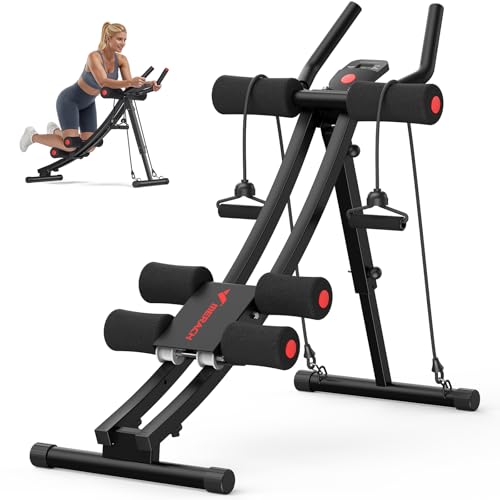
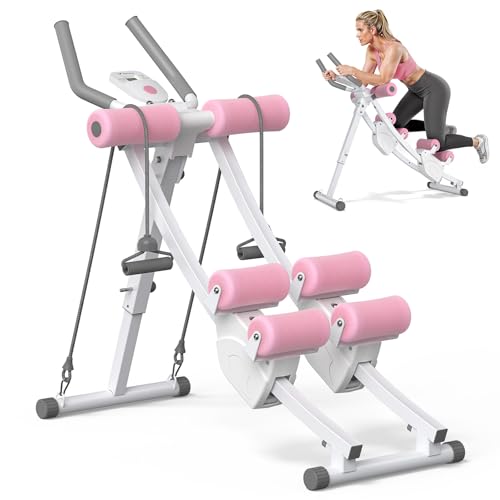
Live listings for the shortlist in this guide are pulled from Amazon below, so prices and availability are always current at the moment you look.



Closing perspective
The right upper body machine for a woman training at home is rarely the one with the longest feature list; it is the one whose lightest setting invites a confident first repetition, whose seat and handles meet her body without negotiation, and whose footprint leaves the room still feeling like a place she wants to enter tomorrow.