Our Top Picks
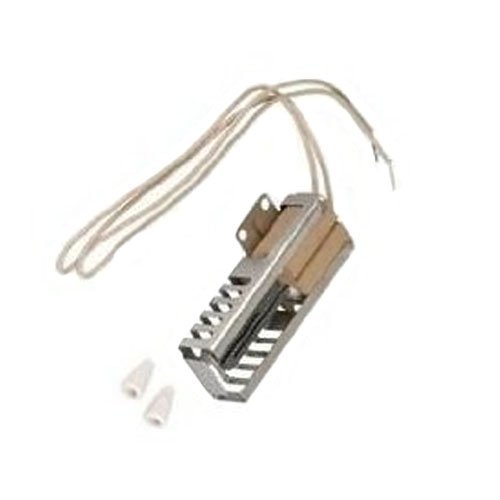
 Range Oven Igniter 316489403 Replacement Compatible with Kenmore5.5 x 3.54 x 3.14 inchesCheck on Amazon
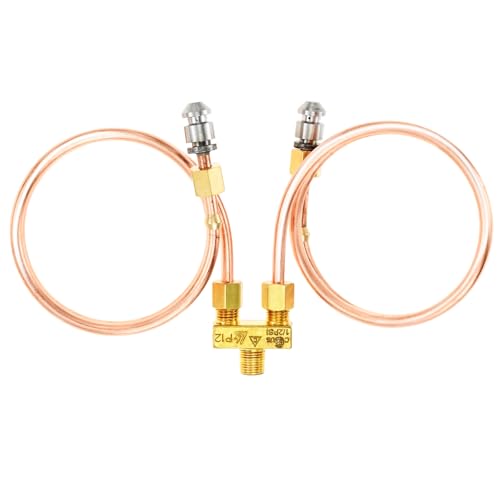
 3/16" OD x 25.6" Bendable Copper Pilot Tube3/16" OD x 25.6"24 x 0.26 x 0.25 inches0.4 poundsCheck on Amazon


What's inside
- How to read this guide
- Usable capacity matters more than the headline number
- Temperature stability and recovery after the door opens
- Convection in its three real forms
- Rack positions, spacing, and the half-sheet test
- Bake element, broiler, and where the heat actually comes from
- Gas, dual-fuel, and induction viewed only through baking
- Proofing, warming, and the gentle end of the dial
- Steam assistance, door seals, and the hardware around the cavity
- Self-cleaning heat and what it does to insulation over time
- Check prices on Amazon
- A decision checklist organised by what you bake
As an Amazon Associate I earn from qualifying purchases. This post may contain affiliate links at no extra cost to you.
How to read this guide
A range can heat a kitchen, boil pasta, and still disappoint a baker in quiet ways that never appear on a showroom card. Bread emerges with a pale side and a scorched side. Cookies spread unevenly across a single sheet. A delicate sponge rises, then settles into a shallow dip near the centre. None of those outcomes points to one dramatic fault. More often, they trace back to a cluster of smaller traits: how much usable space sits behind the door, how closely the cavity holds a set temperature, how moving air reaches the corners of a pan, and how far apart the racks can be spaced when two or three trays share the oven at once. This guide organises those traits in the order a baker actually encounters them, from the dimensions printed in a specification sheet through to the feel of a door hinge after years of daily opening.
As an Amazon Associate, this site earns from qualifying purchases, and that relationship does not change the criteria, thresholds, or comparisons described in the pages that follow. Every claim here rests on published specifications, manufacturer manuals, labelling conventions, and the physical geometry of pans, racks, and cavities, rather than on any suggestion that a loaf was baked or a tray was handled in a private kitchen for this comparison. Where a figure can vary between configurations of the same width, the range of figures is given and the reason for the variation is explained, because a 30-inch model with a storage drawer and a 30-inch model with a second lower oven do not offer the same baking volume even though their exterior footprints match.
Reading the sections in sequence gives a complete picture, yet each part also stands on its own. A reader who mainly bakes sourdough in a covered vessel can move straight to the discussion of recovery after the door opens and of clearances above a tall pot. A reader who produces wedding cakes in batches can linger on rack spacing and on the behaviour of fan systems when pans block airflow. A reader torn between fuel types will find gas, dual-fuel, and induction compared specifically through a baking lens, not through the more familiar contest over stovetop responsiveness, because a burner that simmers beautifully tells you almost nothing about whether the oven beneath it will brown the bottom of a focaccia without drying its crumb.
Throughout, temperatures appear in Fahrenheit, capacities in cubic feet, and pan dimensions in inches, matching the conventions used by manufacturers selling into North American kitchens. When a specification uses a marketing label instead of a measurable quantity, the label is unpacked. Convection, for example, describes at least three distinct hardware arrangements, and treating those arrangements as interchangeable is one of the most common reasons a buyer ends up surprised. Similarly, a headline capacity figure counts air in corners a pan can never occupy, so this guide repeatedly translates total volume into the flat, rectangular, usable area where baking actually happens.
Usable capacity matters more than the headline number
Manufacturers measure oven volume by multiplying interior height, width, and depth, then sometimes subtracting the space taken by elements, fan housings, and rack supports. The resulting figure, often between 4.5 and 6.5 cubic feet in a standard 30-inch range, sounds generous until a baker tries to fit a specific vessel. A half-sheet pan measuring 18 by 13 inches needs a cavity at least 19 inches wide once finger clearance is allowed on both sides, and it needs roughly 14 inches of depth front to back if the door is to close without the pan lip pressing against the glass. Many cavities clear those thresholds comfortably. The difficulty begins with taller work: a lidded Dutch oven standing 7 inches high with its knob, a bundt pan with a central tube, or a pullman loaf tin with a sliding lid that must be removed sideways rather than lifted straight up.
Interior height deserves separate attention because it is frequently the smallest dimension relative to need. A cavity advertised at 19 inches tall may offer only 15 or 16 inches between the lowest rack position and the broiler element or the upper heating assembly, and a tall crown on a brioche or a domed country loaf can close that gap quickly. Heat radiating from an element just a few inches above a crust will darken the top long before the interior crumb sets, which is why bakers often move loaves to a lower rack and then discover that the base sits too close to a bottom element or to the metal floor above a gas burner. Mapping those three distances, floor to lowest rack, rack to rack, and top rack to ceiling, tells you more than any single volume figure.
Width interacts with pan choice in a second way. Two quarter-sheet pans, each about 9.5 by 13 inches, can sit side by side in a cavity wider than roughly 21 inches, turning a small batch of scones or a set of individual galettes into a single load. Below that width, the same pans must be stacked on separate racks, which introduces the airflow and shadowing questions covered later in this guide. A 36-inch range usually removes the dilemma entirely, offering cavities around 24 to 26 inches wide that accept a full-size commercial-style sheet pan approaching 18 by 26 inches in some configurations, although many home bakers find that such large pans are awkward to wash, heavy when loaded, and prone to warping if their gauge is thin.
Depth also shapes heat distribution. In a deep cavity, the rear corners sit far from the door and close to the fan or rear element, while the front edge of a pan sits near the cooler zone beside the door seal. Rotating a tray halfway through baking compensates, but every rotation costs heat and interrupts a rise. Cavities in the region of 19 to 21 inches deep tend to suit standard home pans well, because the pan occupies most of the floor area and the hot air has less empty space in which to form uneven pockets. Very shallow cavities, sometimes found in double-oven models where two smaller compartments share the height of one, reverse the problem: a pan fits, yet the loaf above it has almost no headroom.
Double-oven ranges deserve a distinct calculation. Splitting 6 cubic feet into an upper cavity of about 2 cubic feet and a lower cavity of about 4 cubic feet creates a genuinely useful arrangement for a baker who warms plates, proofs dough in the smaller space, or bakes a single tray of biscuits without heating a large volume. The compromise is absolute: neither compartment matches the tall-loaf clearance of a single large oven, and the lower cavity often places its lowest rack unusually close to the floor of the appliance, which can make lifting a heavy cast-iron vessel out of it an awkward bend. Buyers who regularly bake tall celebration cakes or large enriched loaves should weigh that ergonomic and geometric cost against the everyday convenience of a small cavity.
If you are narrowing a shortlist by width first, the next comparison looks specifically at wider gas models and the cavity shapes that come with them.
Storage drawers and warming drawers further complicate the arithmetic. A range whose lower section is a drawer rather than an oven may still deliver a single cavity of impressive height, because no second set of elements and insulation divides the space. Conversely, a model with a baking drawer that reaches moderate temperatures can handle a second tray of rolls or keep a finished bake warm, but its shallow height and limited temperature precision mean it should not be counted as a full second oven when planning a multi-tray session. Reading the manual for the drawer’s maximum temperature and its stated purpose prevents a common misreading of the capacity figures on a retail listing.
Temperature stability and recovery after the door opens
An oven rarely sits exactly at the number on its dial. Its control system allows the temperature to fall below the set point, applies heat, overshoots slightly, then lets the cavity cool again, producing a repeating swing. For roasting, a swing of 20 degrees either side may matter little. For baking, the consequences are specific. Meringues dry rather than bake and can weep if the low point lingers. Sponges set their structure within a narrow window and can toughen if repeated surges overheat the batter at the edges. Custards and cheesecakes crack when a strong surge follows a cool interval. A well-regulated cavity for baking typically holds its swing within roughly 15 to 25 degrees Fahrenheit around the set point once preheated, and the tighter examples stay closer to 10 to 15 degrees through a long, undisturbed bake.
Preheat behaviour is part of the same story. Some ovens announce readiness when the air near the sensor reaches the target, long before the walls, racks, and floor have absorbed enough heat to act as a stable reservoir. A tray of cookies placed at that moment meets hot air but cold metal, and the first batch browns differently from the second. Manufacturers occasionally publish preheat times of 12 to 20 minutes for 350 degrees Fahrenheit, yet the thermal mass of a heavy cavity can need longer to settle. A baker comparing models should look for information about preheat indicators, additional ready chimes after a soak period, and whether a convection setting is used to speed the process, because those details signal how the control system thinks about readiness.
Recovery is the second half of stability. Opening the door for 20 seconds to rotate pans or to load a second tray can drop the air temperature by 50 to 100 degrees Fahrenheit, depending on door size, room temperature, and how widely the door is opened. What matters is the return path. A bake element with higher wattage, or a gas burner with a strong output rating, can restore air temperature quickly, but rapid restoration driven by a fierce element may scorch the underside of whatever sits on the lowest rack. Better systems restore heat steadily over a few minutes without a violent blast, and a fan can distribute that returning heat so the top tray does not race ahead of the bottom one. Dual-fuel designs often perform well here because an electric element can be modulated more finely than a gas flame cycling on and off.
Sensor placement quietly influences all of this. A sensor mounted high on a rear wall reads the hottest stratum of air and may cut heat while the lower third of the cavity, where a loaf actually sits, remains cooler. A sensor shielded by a large pan can read low and drive the element harder, overheating the exposed surfaces elsewhere. No buyer can relocate a sensor, but understanding its position helps explain why two ovens set to the same number produce different results, and why the rack position recommended in a manual for cakes is usually the centre, closest to the zone the sensor represents most faithfully. Calibration controls, which let an owner offset the set point by up to about 35 degrees Fahrenheit in either direction, are worth checking for, because a consistent offset can be corrected while an erratic swing cannot.
Low-temperature accuracy matters as much as accuracy at 350 or 450 degrees. Holding 170 to 200 degrees Fahrenheit for drying herbs, dehydrating citrus slices for decoration, or keeping a finished bake warm without further browning requires the control system to apply very small amounts of heat at long intervals. Some gas ovens struggle at the bottom of their range because a burner has a minimum stable flame, and the cavity oscillates between too warm and cooling. Electric elements, which can pulse briefly, generally manage gentle temperatures more gracefully, a point that returns in the discussion of proofing settings later in this guide.
Thermostat type is another dividing line. Electronic controls with a digital sensor usually track a set point more closely than older mechanical thermostats, whose dial markings may be approximate and whose response slows as components age. That does not make every electronic oven accurate, since sensor quality and software tuning vary, but it does mean a buyer prioritising precision should favour models that publish a temperature range in fine increments, allow single-degree or five-degree adjustments, and offer a convection conversion that automatically reduces the set point by about 25 degrees Fahrenheit to account for faster heat transfer in moving air.
Convection in its three real forms
The word convection simply means that a fan moves heated air around the cavity, yet the hardware behind the word differs enough to change results. The simplest arrangement, often called fan convection or standard convection, places a fan on the rear wall while heat still comes from the usual bake and broil elements. The fan evens out pockets of hot and cool air and shortens cooking times modestly, but the air it circulates has already been heated elsewhere, so the stream reaching a pan is not uniform in temperature. This arrangement helps with roasting and with single-tray baking, and it usually adds little cost or complexity.
True convection, also labelled European convection, adds a dedicated heating element around the fan itself, commonly rated between roughly 1,200 and 2,500 watts in electric models. Air is drawn over that element and blown into the cavity already at temperature, so the moving stream does not cool the food surface as it arrives. The practical difference appears with multiple trays. Cookies on the top, middle, and bottom racks brown more similarly, pastry cases set with a more even colour, and the baker can often reduce the set temperature by about 25 degrees Fahrenheit or shorten the bake, sometimes both. For anyone who regularly fills three racks, this third element is arguably the single most valuable feature a range can offer.
Twin-fan systems extend the idea further. Two smaller fans, or a large fan that reverses direction at intervals, alternate the direction of airflow so that the side of the cavity favoured by a clockwise stream in one minute is favoured by a counter-clockwise stream in the next. Reversal addresses a stubborn pattern in single-fan ovens, where the rear corners run hotter and the front centre runs cooler throughout the bake no matter how long the fan runs. Twin and reversing systems are more common in wider cavities, where the distance from fan to front corner is greatest and the risk of a persistent cool zone is highest.
Convection is not always the right choice. Delicate batters can lean or set asymmetrically if a strong fan blows across them before the structure firms, which is why soufflés, angel food cakes, and some sponges are still often baked in still air. Custards can skin over. A loaf with a scored top may form its ear unevenly if the crust sets too quickly on the fan side. Good ranges let the baker switch the fan off entirely and use a conventional bake mode, and the best control layouts make that switch a single deliberate choice rather than a buried menu item. Checking that a conventional mode exists, and that it uses the bake element rather than simply turning the fan speed down, is a small step that protects a whole category of recipes.
Fan noise and fan behaviour after the door opens also deserve a thought. A fan that continues to run at full speed with the door open blows hot air into the baker’s face and accelerates heat loss. Many models pause the fan when the door opens and resume on closing, which is both safer and better for recovery. Noise levels vary, and while no range is silent in convection mode, a fan that rattles or whines at a pitch that carries across a room will discourage use of the very mode the buyer paid for. Specification sheets rarely publish fan noise for ranges, unlike dishwashers where decibel figures are standard, so this trait is one to investigate through owner manuals and retailer questions rather than headline marketing.
Airflow only works if pans permit it. A solid sheet covering nearly the whole rack blocks the vertical movement of air between levels, and a deep roasting pan shields whatever sits inside it. Convection multi-tray baking works best with shallow, rimmed sheets that leave a gap of at least an inch around their edges, with racks spaced so that rising air can pass the lip of each tray. That geometry leads directly to the question of how many rack positions a cavity provides and how they are spaced.
Rack positions, spacing, and the half-sheet test
Rack count in a listing usually means the number of racks supplied, commonly two or three, while rack positions means the number of sets of embossed guides or ladder supports inside the cavity, commonly five, six, or seven. Positions are what govern flexibility. With six positions in a cavity about 19 inches tall, the baker can place trays roughly 3 inches apart for cookies, or open a gap of 7 or 8 inches beneath a tall loaf by using the lowest and a middle position for two different items. With only four positions, those choices become coarse, and a tray often ends up either too close to the top element or too close to its neighbour.
The half-sheet test is a practical way to combine these numbers. A half-sheet pan at 18 by 13 inches is the workhorse of home baking, used for cookies, roasted vegetables that accompany a bake, sheet cakes, focaccia, and batches of rolls. Confirm that the cavity accepts the pan on every rack position, not only the middle one, because some cavities narrow near the fan housing at the rear or near the door hinges at the front, and a pan that fits centrally may foul a support when raised. Confirm also that two half-sheets can sit on racks spaced two positions apart with at least 2 inches of clearance above the food on the lower sheet, since a cookie rises little but a dinner roll or a scone can gain half an inch or more and needs room for air to pass over it.
Rack construction affects both safety and evenness. Flat racks with a slight upturned rear edge keep pans from sliding into the rear wall. Split or half racks let a tall vessel occupy one side of a level while a shallow tray uses the other, a surprisingly useful arrangement when a Dutch oven and a tray of biscuits share a bake. Glide or telescopic racks, which roll out on ball-bearing or roller supports and hold their position under load, reduce the need to reach into a hot cavity and make rotating a heavy tray safer. Their mechanisms do take a little space and they should be checked for whether they can remain in the oven during a high-heat self-cleaning cycle, since removing and storing hot, heavy glide racks is a chore that can put owners off using the cycle at all.
Rack material and spacing also interact with heat. Heavy-gauge racks absorb and re-radiate heat, contributing a small stabilising effect, while thin racks flex under a loaded cast-iron vessel and can tilt a liquid batter enough to produce an uneven layer cake. A maximum load rating per rack, sometimes published in manuals at around 40 to 50 pounds for reinforced designs, is worth noting for bakers who use large stone or steel baking surfaces. A baking steel or stone placed on a rack adds thermal mass that dramatically improves the base of a pizza or a free-form loaf, but a stone measuring 16 by 14 inches and weighing 20 pounds or more concentrates that load and needs a rack that will not bow.
For a comparison focused on electric elements, rack geometry, and the fine low-temperature control that bakers use for enriched doughs, the dual-fuel discussion linked here is the natural next read.
Finally, consider the lowest position carefully. In many gas ovens the lowest rack sits close above a metal floor that covers the burner, and that floor becomes very hot, which is excellent for crisping the base of a pizza on a steel but risky for the bottom of a delicate tart in a thin tin. In electric ovens with a visible bake element on the floor, the lowest position can be closer still to direct radiant heat. A hidden bake element, concealed beneath the cavity floor, softens that radiation, makes the floor easier to wipe, and gives a gentler bottom heat that suits cakes, at the cost of slightly slower preheating because heat must conduct through the floor panel before entering the cavity.
Bake element, broiler, and where the heat actually comes from
Electric ranges publish wattages, and those numbers let a baker predict behaviour with unusual precision. A bake element commonly falls between about 2,000 and 3,400 watts, while a broiler element often reaches 3,000 to 4,000 watts. A stronger bake element shortens preheating and speeds recovery, but raw power is not the whole story, because an element that cycles between full power and off produces wider swings than a slightly weaker element modulated in shorter pulses. What a baker wants is enough wattage to recover after loading cold dough, paired with control logic that does not overshoot and brown the top of a tray while the centre is still raw.
The broiler matters to bakers more than its grilling reputation suggests. It finishes the top of a crumble, browns the cheese on a baked pasta that shares a menu with dessert, caramelises the sugar on a custard, and gives a par-baked flatbread its final colour. Broilers differ in coverage. A single central element can leave the corners of a sheet pale, while a wider element or a dual-element arrangement covers a full tray. Gas broilers, whether in the main cavity or in a separate lower drawer, produce intense direct heat with a flame’s characteristic unevenness, and a drawer broiler forces the baker to work at floor level. In-cavity electric broilers with multiple power levels offer finer control for finishing delicate toppings without burning them.
Hidden versus exposed elements changes cleaning and heat character together. An exposed bake element radiates directly onto the lowest rack and can be replaced relatively simply if it fails, but spills bake onto it and it must be lifted or worked around when wiping the floor. A concealed element gives a flat, uninterrupted floor that suits bakers who line the base with a sheet to catch drips from fruit pies, and it produces a slightly more diffuse bottom heat. Neither arrangement is universally better; the choice maps onto whether a baker prioritises fierce bottom heat for crisp crusts or gentle, even heat and easy cleaning for cakes and pastries.
Gas ovens express the same functions differently. A bake burner, often rated in British thermal units per hour in the region of 16,000 to 19,000 for a standard cavity, heats the floor panel and the air above it, while a separate broil burner sits at the top. Because combustion introduces water vapour, a gas cavity holds a slightly more humid atmosphere than an electric one, which many bakers value for crust development on lean bread doughs and for keeping the surface of a loaf supple during the first minutes of expansion. The same moisture can soften crisp pastry if the bake runs long, and gas burners generally cannot be modulated as finely at very low outputs, which shows up in proofing and warming performance.
Some ranges add a dedicated convection element, a rear element, or an auxiliary element in the floor, and manuals sometimes describe a multi-element baking mode that rotates heat sources during the cycle to balance top, bottom, and rear input. Those modes can genuinely improve layer cakes, which need the sides to set at the same pace as the centre without the top doming. When comparing models, it is worth reading which elements operate in each named mode rather than assuming that bake always means the bottom element alone, because two ranges with identical wattage figures can distribute that energy in entirely different patterns.
Gas, dual-fuel, and induction viewed only through baking
Separating the fuel question from stovetop preferences clarifies the decision. A gas range uses gas for both burners and oven. A dual-fuel range pairs gas burners with an electric oven. An induction range uses electromagnetic induction on top and, in almost all cases, an electric oven below. Since the oven is where baking happens, dual-fuel and induction models share most baking advantages, while a full gas range stands apart with its moister heat, its different low-temperature behaviour, and often a lower purchase and running profile where gas is inexpensive.
Electric ovens in dual-fuel and induction ranges tend to hold steadier temperatures, offer true convection with a dedicated element more frequently, and provide broader broiler control. They also handle long, low bakes predictably. For a baker whose output leans toward cakes, laminated pastry, meringue, and multi-tray cookies, those traits align closely with the work. The trade-offs are preheat times that can exceed those of a powerful gas burner, dependence on an electrical supply capable of supporting the appliance, and, in the case of dual-fuel, the need for both a gas line and a higher-capacity electrical circuit, which can complicate installation in an older cottage kitchen.
A full gas oven has defenders among bread bakers for good reason. The humid atmosphere delays crust setting slightly, allowing a loaf to expand, and the strong floor heat suits hearth-style loaves on a stone. Gas also continues to function during an electrical outage in some configurations, though electronic ignition models may not. Against that, temperature swings can be wider, low settings coarser, and convection less common or less effective in gas cavities, partly because a fan must be designed not to disturb the flame or spread combustion gases unevenly. A baker who mainly produces rustic loaves and roasts may feel none of those limitations, while a pastry-focused baker may meet them weekly.
Induction brings one baking-adjacent benefit that is easy to overlook: a cooler kitchen. Because induction heats the pan rather than the surrounding air and no flame vents combustion heat around the sides of a vessel, less waste heat escapes into the room during stovetop work that accompanies baking, such as melting butter, warming milk for a dough, or preparing a custard filling. In a small kitchen in summer, that difference affects comfort during long baking sessions, and it marginally reduces the load on the room that the oven’s own insulation must contend with. Induction tops also offer precise low settings for holding a ganache or a curd without scorching, tasks that sit on the border between stovetop cooking and baking preparation.
Readers who want the induction top paired with a closer look at electric oven behaviour, element ratings, and cavity sizes in that category can continue with the dedicated comparison below.
best freestanding induction ranges
Installation realities belong in this comparison too. A 30-inch dual-fuel or induction range typically requires a 240-volt circuit with capacity that many older homes must upgrade, and the cost of that upgrade can exceed the price difference between fuel types. Ventilation requirements differ, since gas combustion produces moisture and nitrogen dioxide that a good extractor should remove, while an electric oven places fewer demands on ventilation beyond removing cooking odours and steam when the door opens. None of these factors changes how a cake bakes, but each changes whether the chosen range can be installed safely and used daily without compromise.
Proofing, warming, and the gentle end of the dial
A dedicated proof mode holds the cavity in the region of 95 to 110 degrees Fahrenheit, warm enough to encourage yeast activity without approaching the temperatures at which butter in an enriched or laminated dough begins to melt out of its layers. That window is narrower than it sounds. Below about 85 degrees, a rich dough rises sluggishly and a baker’s schedule slips. Above about 115 degrees, butter softens and separates, yeast becomes stressed, and the flavour benefits of a slow ferment are lost. A range that publishes its proof temperature, rather than merely naming a bread-proof button, gives the baker something verifiable to work with.
Manufacturers achieve proof temperatures in different ways. Some use the oven light alone in a well-insulated cavity, a surprisingly effective method in older designs where a bulb gave off steady warmth. Some pulse a low-wattage element. Some use a small dedicated element or a warming zone. Each method creates a different distribution: light-based warmth concentrates near the bulb, while an element in the floor warms the rack from below and can create a hot spot under a bowl. Placing the dough bowl on a rack in the centre, away from walls, and covering it to retain moisture matters more as the method becomes less even, and a shallow pan of warm water on the floor can add humidity that keeps a dough surface from skinning during a long rise.
Warming modes overlap with proofing but aim slightly higher, typically holding prepared food between about 140 and 200 degrees Fahrenheit, with food-safety guidance generally favouring holding hot food at or above 140 degrees. For a baker, a reliable warm setting keeps rolls ready while a main course finishes, holds a baked pudding without further browning, or gently rewarms a day-old loaf to restore its crust. The usefulness of the mode depends on how low it can go without cycling into territory that continues to cook. A warm setting that actually oscillates up to 230 degrees will dry a cake and toughen a crumb, so published ranges and fine increments are again more informative than a button label.
Sourdough bakers should think about proofing in terms of duration as well as temperature. A bulk ferment may occupy the cavity for four to six hours, during which the range cannot be used for anything else and its control system must maintain a gentle temperature without the fluctuations that come from repeated door opening. A second smaller cavity in a double-oven model solves the scheduling problem elegantly, letting the main oven bake while dough proofs below or above. That single workflow advantage persuades many serious bakers toward a double-oven layout despite the reduced height of each cavity discussed earlier.
Slow cooking and dehydrating functions, now common on electronic ranges, extend the gentle end further. A cavity that can hold 150 to 175 degrees Fahrenheit steadily for many hours can dry apple rings for decoration, crisp meringue kisses overnight, or hold a cheesecake in residual warmth as it cools gradually to prevent cracking. These are specialist uses, yet they reveal the quality of low-end control more honestly than any headline about maximum broiler power, and a baker who preserves fruit or makes confectionery will value them.
Steam assistance, door seals, and the hardware around the cavity
Steam in the first minutes of a bread bake keeps the surface of the dough moist and elastic, delaying crust formation so the loaf can expand fully, and it contributes to a glossy, crisp finish as sugars and proteins on the surface dissolve and then set. Ranges offer steam in three broad degrees. At the simplest level, the manual instructs the baker to place a tray of water or ice in the cavity, which any oven can accommodate if its floor or lowest rack can support a heavy pan of boiling water safely. A step up, a steam-assist or steam-bake mode prompts the user to pour a measured amount of water, often around a cup, into a recess in the cavity floor, where an element vaporises it on a timed cycle. At the highest level, a plumbed or reservoir-fed steam system injects steam at controlled intervals, a feature more common in wall ovens and premium ranges.
Judging steam claims requires reading the manual’s description of volume and timing. A mode that produces a brief burst at the start suits lean loaves. A mode that maintains humidity longer can help baguettes and other shapes with a high surface-to-volume ratio. Steam also affects enriched and laminated doughs differently, and it should be vented or switched off for the final portion of a bake so the crust can dry and colour. Models that allow the baker to choose steam intensity, or that end the steam phase automatically, reduce the need to open the door and release the very humidity the system created.
The door is the cavity’s largest moving part and its weakest thermal link. A good seal uses a heat-resistant gasket, often a braided fibreglass or silicone-edged strip, that compresses evenly around the frame without gaps at the corners. A failing or thin seal leaks heat onto the front of the appliance, warms the knobs, creates a hot strip on the floor in front of the range, and forces the control system to work harder, widening temperature swings. Multiple panes of glass, commonly two to four, with ventilated channels between them, keep the outer surface cooler and reduce heat loss. A door that feels heavy usually contains more insulation and glass, which benefits both stability and safety in a household where children pass close to the appliance.
Hinges and door mechanics shape daily use in ways that specifications rarely capture. A door that opens smoothly to a stable horizontal position provides a temporary shelf for checking a tray, though resting heavy pans on an open door is discouraged by most manufacturers because it strains the hinges and can tip the appliance if it is not properly secured with its anti-tip bracket. Soft-close mechanisms prevent the door from slamming and disturbing a rising soufflé or a set custard, and they reduce wear on the seal. Removable doors, which lift off their hinges after opening to a specified angle, make cleaning the cavity and reaching its rear wall far easier, a genuine advantage after a fruit pie has bubbled over.
Interior surfaces complete the hardware picture. Dark porcelain enamel hides staining and absorbs heat, while lighter enamel shows spills clearly and can make it easier to judge the colour of a bake without removing the tray. Smooth cavity corners and a concealed element simplify wiping. Oven lighting deserves a mention too: a single bulb in a rear corner casts shadows across a tray, while dual side lights or a brighter halogen arrangement lets a baker assess browning through the glass without opening the door and losing heat. A large viewing window, positioned so that the centre rack is visible without stooping, reduces door opening throughout a bake and therefore improves the very stability this guide has been measuring.
Self-cleaning heat and what it does to insulation over time
A pyrolytic self-cleaning cycle raises the cavity to temperatures in the region of 800 to 900 degrees Fahrenheit for two to five hours, reducing spills to a pale ash that can be wiped away. For bakers, who generate sugary, buttery, and flour-based spills that carbonise stubbornly, the appeal is obvious. The cycle’s side effects are less obvious. Repeated exposure to such heat ages the insulation packed around the cavity, can gradually reduce its effectiveness, and may contribute to wider temperature swings or hotter exterior surfaces in later years. Gaskets also age faster under repeated extreme cycles, and a seal that no longer compresses fully will undermine the stability that the baker bought the range for.
Steam-cleaning cycles take the opposite approach, using water and moderate heat around 200 to 250 degrees Fahrenheit for a short period to loosen light soiling. They cannot remove baked-on sugar or carbonised fat, but they impose almost no thermal stress and can be run frequently after minor spills, preventing the build-up that eventually demands a full pyrolytic cycle. A range offering both options lets the owner match the cleaning intensity to the soil, which is the pattern most likely to preserve insulation and seals over a long service life.
Practical details around self-cleaning are worth checking before purchase. Many manuals require racks to be removed before a pyrolytic cycle unless the racks are specifically rated for it, and glide racks with lubricant in their mechanisms are particularly vulnerable. Removing racks, storing them somewhere safe while they are the size of the oven itself, and replacing them afterwards is a real inconvenience that influences how often the cycle is used. Some models lock the door for the entire cycle and a cooling period afterwards, which can total several hours during which the oven is unavailable, a scheduling consideration for a baker planning a full day of production.
Insulation quality shows up in quieter ways than cleaning. A well-insulated cavity keeps the kitchen cooler, protects adjacent cabinetry from heat damage over years of use, holds temperature with less energy, and keeps the exterior door and sides at safer temperatures. Manufacturers seldom publish insulation specifications for ranges, but clues exist in the appliance’s weight, in the temperature of the door during a long bake as reported in manuals’ safety sections, and in clearances required to combustible materials in installation instructions. A model that demands larger side clearances may be signalling that its exterior runs hotter.
Catalytic liners offer a third path, with specially coated panels that absorb and break down grease splashes during normal baking at temperatures above roughly 400 degrees Fahrenheit. They work continuously and impose no extra heat stress, but they address only the panels they cover, they wear out and need replacement after some years, and they do little for sugary spills on the floor, which are the spills bakers produce most. Understanding which surfaces a liner covers prevents disappointment when the base of the cavity still requires manual attention.
Bakers who need maximum single-cavity height together with a second oven for proofing or for a parallel tray will find the tall-format electric options gathered in the comparison that follows.
best 40 inch electric ranges double oven
Check prices on Amazon
Live listings for the shortlist in this guide are pulled from Amazon below, so prices and availability are always current at the moment you look.


A decision checklist organised by what you bake
Bread first
Prioritise recovery after door opening, strong and even floor heat, headroom for a lidded vessel of at least 8 inches including clearance, and either a steam-assist mode or a floor that safely accepts a water tray. Check the distance from the lowest rack to the ceiling rather than the total volume, confirm that a baking stone or steel fits the rack without overhang, and favour a cavity whose door seal and glass keep heat in during the long preheat a stone requires, which can run 45 to 60 minutes at maximum temperature. Gas and dual-fuel models both deserve consideration here, with the choice hinging on how much the baker values low-temperature precision for fermentation against the humid character of gas heat.
Pastry and laminated dough
Look for true convection with a dedicated element around the fan, fine low-temperature control for proofing in the 95 to 110 degree window, and a conventional still-air mode for the initial set of delicate items. Rack spacing that allows two trays with generous air gaps matters more than total rack count, because croissants and puff cases need room for expansion and for butter-laden air to circulate without steaming neighbouring pieces. A light interior and good lighting help judge the exact shade of a laminated bake, which can move from perfect to overdone in a couple of minutes at the end.
Cookies in batches
Multi-tray evenness is the whole question. Favour twin or reversing fans, or at minimum true convection, and verify that three racks can be positioned with even spacing rather than two close together and one far away. Preheat recovery matters because batch baking opens the door repeatedly, and a model that regains 350 degrees Fahrenheit within a few minutes without overshooting will produce consistent trays across an afternoon. Consider also the width test for two quarter-sheets side by side, which can double throughput without using a second rack level at all, and check that the chime or indicator signalling temperature recovery is audible from another room.
Cakes, sponges, and custards
Stability and gentleness lead. A narrow temperature swing, a hidden bake element or well-diffused bottom heat, a reliable still-air mode, and accurate settings in the 300 to 350 degree Fahrenheit band matter more than maximum power. Centre-rack guidance in the manual, a calibration adjustment, and a door that closes softly without jarring a setting sponge are small features with outsized value. For cheesecakes and custards, a steam or water-bath-friendly cavity with a floor that tolerates a large pan of water, plus a cooling programme or the ability to hold a very low temperature, helps prevent cracking and overbaking at the edges.
Mixed households and occasional bakers
Where baking shares the appliance with everyday cooking, flexibility outweighs specialisation. A double oven that proofs dough while roasting dinner, a warming setting that genuinely holds near 170 degrees, easy-clean surfaces, and controls that a guest can understand without a manual all contribute more to satisfaction than a marginal gain in convection sophistication. Even so, the fundamentals in this guide still apply: measure the cavity against the largest pan already owned, confirm at least five rack positions, and check that a conventional bake mode exists alongside any fan programme.
One further check repays the few minutes it takes, and it concerns the space around the range rather than inside it. A cavity door swings down into the room, and in a narrow cottage kitchen that arc can block a walkway, crowd a second cook, or leave too little room to step back while holding a tray of hot rolls. Measure the depth with the door fully open, allow standing room behind that line, and confirm that an adjacent cupboard door or a fridge handle does not foul the range door at its lowest point. Note also where the controls sit. Front-mounted knobs and touch panels stay reachable when a large pan covers the rear burners, yet they also sit closer to small hands and to the hem of a sleeve reaching across. Rear control panels keep the front clean and move settings away from children, but they ask the baker to reach over hot vessels to adjust a timer. Neither layout changes the temperature inside the cavity, although the layout chosen will be touched every single day, long after the novelty of a new convection mode has faded into routine.
Bring the largest pan and the tallest vessel from your own cupboards to the decision, on paper if not in person, and test every candidate cavity against those two objects before comparing anything else. A range that swallows both, holds its set point within a modest swing, moves air evenly across three racks when asked and stays still when asked not to, and proofs dough inside a documented temperature window has answered the questions that determine whether baking feels effortless or fraught. Choose on those answers, and the finish, handle shape, and control styling can be settled last, in the pleasant knowledge that the oven behind the door is shaped for the work it will actually do.