Our Top Picks
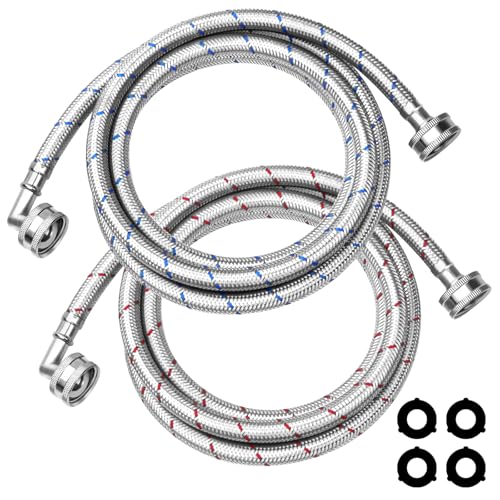
 PLUMBINGMASTER 10FT Stainless Steel Washing Machine Hoses with10FT (2 Pack)9 x 3 x 0.1 inches3.2 poundsCheck on Amazon


What's inside
- How to read this guide
- Cold-fill design versus the two-tap tradition
- What cold actually means across the seasons
- The energy mathematics of heating water
- How cold cycles compensate: time, motion and chemistry
- Enzymes: the workforce that prefers it cool
- Pods, liquids and powders in cold water
- Fabric care: shrinkage, fading and fibre life
- Stains: where cold wins and where it loses
- When hot water still matters: hygiene loads
- The cold-only drum: residue, odour and the cleaning cycle
- Hard water, soft water and cold chemistry
- Sorting and loading for cold success
- Reading a specification sheet for cold performance
- Not the same question as overall energy efficiency
- Garment by garment: a cold-water field guide
- Troubleshooting disappointing cold washes
- Seasonal adjustments through the year
- Claims, labels and healthy scepticism
- Rinsing, spinning and drying after a cold wash
- Check prices on Amazon
- A practical cold-washing routine
As an Amazon Associate I earn from qualifying purchases. This post may contain affiliate links at no extra cost to you.
How to read this guide
This guide treats one variable as its whole subject: the temperature of the water a washing machine uses. Everything here, from inlet plumbing to detergent chemistry to the fate of a wool jumper, follows from whether the water entering the drum arrives cold, arrives heated, or gets heated inside the machine. As an Amazon Associate, this site earns from qualifying purchases, and that arrangement does not influence the energy figures, temperature thresholds or hygiene cautions set out below. The numbers in this article are drawn from published appliance energy guidance, detergent manufacturers’ technical literature and textile care references, compared across sources rather than taken from any single brand’s brochure.
It helps to separate three questions that shopping pages habitually blur together. First, how is the machine plumbed: does it draw only cold water, or both hot and cold? Second, what do its cold cycles actually do: how long do they run, how vigorously do they agitate, and what temperature does the drum really reach? Third, what should you, the person sorting laundry, send through a cold cycle and what still deserves heat? A machine can score well on the first two questions while you defeat it entirely on the third, which is why the sorting and stain sections carry as much weight here as the plumbing.
A note on vocabulary before the detail begins. Cold wash, in manufacturer language, rarely means unheated tap water alone. Many cycles blend a small amount of warm water or run an internal heater briefly to lift the load to a target somewhere between 20 and 30 degrees Celsius, because detergent chemistry falters below that band. Wherever this guide says cold, it means that practical, lightly tempered cold of real machines, unless a passage specifically discusses raw tap temperature and its seasonal swings.
Cold-fill design versus the two-tap tradition
Older washing machines, and many current North American models, connect to both a hot and a cold supply. The machine opens valves in proportion to mix water near the selected temperature, drawing on the household water heater for the hot fraction. The design assumes that central heating of water is efficient and that the pipe run between heater and machine is short enough that the first litres arriving are actually hot rather than the cooled contents of the pipe itself.
Cold-fill machines take the opposite approach. A single inlet connects to the cold supply only, and an electric heating element inside the machine raises the water to whatever temperature the chosen cycle demands. This is the dominant pattern in European front-loading machines and increasingly common elsewhere. Its logic is control: the machine heats exactly the volume it uses, to exactly the temperature selected, instead of inheriting whatever a distant water heater and a long pipe deliver.
Each design changes what a cold wash means in practice. On a cold-fill machine, selecting cold simply leaves the heater off or nearly off, and the wash proceeds at inlet temperature. On a dual-inlet machine, selecting cold closes the hot valve, with the same result. The difference appears on warm and hot cycles, where the dual-inlet machine may draw substantial pre-heated water, and it appears in installation: a cold-fill machine can be plumbed where only a cold feed exists, in a utility corner, an outbuilding conversion or an apartment closet, without running a new hot line.
There is a subtle energy consequence to the pipe run that brochures seldom mention. A dual-inlet machine calling for hot water first receives the cold slug sitting in the pipe since the last draw, then genuinely hot water, then leaves a pipe full of hot water to cool afterwards. For the modest volumes of an eco cycle, that overhead can consume a surprising share of the heat drawn. A cold-fill machine heating internally has no pipe overhead at all, which partly offsets the higher unit cost of electricity compared with gas-heated water in many regions.
Shoppers comparing front-loading machines in general, before narrowing to their water-temperature behaviour, can start with the broader survey below and return here for the thermal detail.
best front load clothes washers
What cold actually means across the seasons
Tap water temperature is not a constant. In a temperate climate, mains water might arrive near 18 or 20 degrees Celsius in late summer and fall toward 5 or 8 degrees in a hard winter, with shallow supply pipes and cold snaps pushing it lower. A cold cycle run in August and the identical cycle run in January are therefore different washes wearing the same label, and much of the folklore about cold washing failing traces back to winter inlet temperatures that nobody measured.
Machines respond to this in different ways. Some simply wash at whatever arrives, and their cold cycles lengthen or disappoint in winter. Others temper the fill, adding a short burst of heating to reach a floor temperature around 20 degrees, protecting detergent performance at a modest energy cost. Specification sheets occasionally state this floor; more often it hides inside phrases about cold-water technology or temperature management. If your household sits in a cold region and you intend to wash cold year-round, that floor behaviour is one of the most valuable details to establish before buying.
Detergent chemistry explains why the floor exists. The enzymes used in modern laundry products, discussed in their own section below, work across a broad band but slow markedly in very cold water, and the surfactants that lift oily soil also lose speed. Below roughly 15 degrees Celsius, a standard dose in a standard cycle may leave visible soil behind, not because cold washing is flawed but because that particular wash fell outside the chemistry’s working range. Extending the cycle time recovers much of the loss, which is precisely what well-designed cold programmes do.
Home plumbing can help or hinder. An inlet pipe routed through a warm utility room delivers slightly warmer water than one running along a frozen exterior wall. A machine installed in an unheated garage in a northern winter faces the harshest version of cold washing, and in such locations a tempering cycle or a deliberate warm wash for important loads is not extravagance but sound practice. Judge cold performance claims against your own installation, not against a laboratory’s comfortable inlet temperature.
The energy mathematics of heating water
Heating water is where washing energy goes. For a conventional hot wash, published energy guidance consistently attributes roughly 75 to 90 percent of the cycle’s total energy to raising the water temperature, with motors, pumps and controls sharing the remainder. The physics is unforgiving: water has a high specific heat capacity, so every litre raised by every degree consumes a fixed, non-negotiable quantity of energy, and no clever drum pattern can repeal that arithmetic.
Put numbers to it for a representative load. Heating 40 litres of water from 15 to 60 degrees Celsius requires about 2.1 kilowatt-hours of thermal energy, calculated directly from the mass of the water and the temperature rise. The same load washed at an effective 25 degrees needs roughly a quarter of that heating energy. Even allowing for the longer running time of a cold cycle, during which the motor draws power for extra minutes, the balance is not close: the motor’s additional consumption is measured in hundredths of a kilowatt-hour, while the avoided heating is measured in whole ones.
This is also why the temperature dial matters more than almost any other setting you control. Dropping a regular load from 60 to 40 degrees saves far more energy than shortening the cycle by fifteen minutes, and dropping from 40 to a tempered cold saves a further large share. Households often hunt for savings in standby consumption and cycle duration while leaving the single largest lever, wash temperature, set by habit at a level chosen decades ago for detergents and fabrics that have both since changed.
Two qualifications keep the maths honest. First, a dual-inlet machine drawing hot water from an efficient gas heater shifts the cost and carbon calculation without eliminating it; the energy is still consumed, merely purchased in a different form and partly lost in the pipe. Second, hygiene loads genuinely needing heat, covered later, should be washed hot without guilt: they are a small minority of most households’ laundry, and the savings from washing everything else cold dwarf the cost of heating those few loads properly.
How cold cycles compensate: time, motion and chemistry
Wash performance rests on four factors that textile scientists summarise as chemistry, temperature, time and mechanical action. Lower one factor and the others must rise to hold the result. Cold cycles are an exercise in that trade: temperature falls sharply, so the programme extends time, adjusts drum motion and leans harder on detergent chemistry. A cold programme that finishes suspiciously quickly is usually one that skipped the compensation, and its results show it.
Time is the cheapest compensation available. A cold cycle may run noticeably longer than its warm equivalent, soaking and tumbling the load so enzymes have the extended contact they need at low temperature. This is why comparing machines by cycle duration alone misleads: a long cold programme is often a thorough one, deliberately trading minutes for degrees. For households washing overnight or during working hours, that trade is nearly free, which is part of cold washing’s practical appeal.
Mechanical action changes character rather than simply increasing. Vigorous agitation in cold water can damage fibres without fully compensating for lost heat, so well-designed cold cycles favour repeated lifting and dropping, rolling and pause patterns that work detergent solution through the load gently but persistently. Front loaders, whose tumbling action already suits this approach, generally execute cold cycles more convincingly than designs dependent on a central agitator, though modern impeller machines have narrowed that gap with carefully choreographed water currents.
Chemistry carries the largest share, and it has genuinely transformed. Detergents formulated for cold water use surfactant blends that remain effective at low temperature and enzyme packages selected for cool conditions. A premium warm-water detergent from thirty years ago would be outperformed in a modern cold wash by a current cold-formulated product, which is why advice about cold washing inherited from that era deserves retirement. Pairing a cold cycle with a detergent designed for it is not a marketing nicety; it is half of the system.
Enzymes: the workforce that prefers it cool
Modern detergents deploy several enzyme families, each aimed at a class of soil. Proteases break down protein-based stains such as blood, egg, milk and grass. Amylases attack starch from pasta, potato and sauces. Lipases work on fats and body oils, the invisible load that yellows collars and pillowcases. Cellulases nibble at the microscopic fibres that trap dirt in cotton and make colours look tired, while mannanases target the guar-based thickeners common in processed foods and cosmetics.
Heat is a double-edged tool for this workforce. Warm water accelerates enzyme activity up to a point, beyond which the enzymes themselves, being proteins, begin to denature and lose their shape and function. Many laundry enzymes reach their practical best somewhere in the 20 to 40 degree band, comfortably inside the tempered-cold range, and a very hot wash can actually destroy protease activity before the enzyme finishes its work on a bloodstain. Cold-to-cool washing is not a compromise these ingredients tolerate; for several of them it is close to their preferred working environment.
Time interacts with enzymes more strongly than with any other part of the wash. Given an hour of contact in cool water, an enzyme package dismantles soil molecularly, breaking large insoluble molecules into small soluble fragments that rinse away. Cut the contact to twenty minutes in the same water and the same chemistry only partly completes. This is the scientific core of the long cold cycle, and it also explains why a pre-soak in cold water with an enzyme detergent rescues garments that a short hot wash failed to clean.
One caution belongs here: enzyme products need the wash to stay within their temperature ceiling, so adding a hot rinse of near-boiling water or washing a mixed load on a sanitize programme wastes their contribution and can set the very protein stains the enzymes were loosening. Sorting by temperature, covered later, protects the chemistry as much as it protects the fabrics.
Pods, liquids and powders in cold water
The physical form of detergent decides whether it even reaches the wash in cold conditions. Powders must dissolve, and some powder formulations, particularly those heavy in builders that dissolve slowly, can leave gritty residue when the water is very cold and the cycle short. Liquids disperse immediately, which is one reason liquid products earned their cold-water reputation, though they traditionally carried fewer bleaching agents and sometimes fewer enzymes per dose than good powders.
Pods and capsules concentrate the dissolving question into a film. The polyvinyl alcohol film wrapping a pod is engineered to dissolve in water across a wide temperature range, but very cold water, a very short cycle and an overfilled drum form a combination that can leave the film partly intact, sometimes smeared across a garment as a translucent patch. The fixes are procedural rather than mysterious: place the pod in the empty drum before adding laundry so it meets water first, avoid overloading so water circulates freely, and in deep-winter conditions choose a cycle long enough for full dissolution.
Dosing discipline matters more in cold water than in hot. Excess detergent does not rinse as readily at low temperature, and the surplus stays in the fabric, attracting soil, stiffening towels and feeding the residue problems discussed in the drum-hygiene section. Modern concentrated products need surprisingly small doses for ordinary loads. If laundry emerges from cold washes feeling coated or looking dull, reducing the dose is a more likely remedy than raising the temperature, and it costs nothing to try for a fortnight.
Where households buy matched laundry appliances as a set, cycle design and detergent behaviour are worth comparing across both machines, since drying choices interact with how thoroughly a cold wash has rinsed. The combined guide below looks at pairs as a unit.
best clothes washers and dryers
Fabric care: shrinkage, fading and fibre life
Heat shrinks. Cotton fibres, spun and woven under tension, relax toward their natural length when hot water loosens the structure, which is why a shirt can survive a dozen cold washes unchanged and emerge smaller from a single hot one. Wool goes further: heat, moisture and agitation together drive felting, in which the scales on each wool fibre lock irreversibly into a denser mat. A cold, gentle cycle is not merely safer for wool; it is the difference between a jumper and a child’s version of that jumper.
Colour loss follows a similar gradient. Dyes bond to fibres with varying strength, and hot water opens fibre structures and accelerates dye migration, so deep colours bleed and fade faster at high temperature. Cold water keeps that migration slow, preserving dark denim, black cotton and saturated prints through far more cycles. The first wash of a new coloured garment deserves cold water on dye grounds alone, ideally with similar colours, because loose surface dye leaves most readily in that initial wash regardless of temperature.
Synthetic fibres add their own reasons. Elastane, the stretch component in everything from socks to sportswear, degrades with heat, losing recovery until waistbands sag and leggings bag at the knee. Cold washing extends elastane’s working life substantially. Heat also sets certain stains into synthetic fabrics and can glaze or soften delicate constructions, while cold water leaves the polymer essentially as it was. For sportswear carrying both elastane and heavy body-oil soil, cold water plus a lipase-rich detergent is the combination textile guidance consistently recommends.
Prints, embellishments and bonded seams complete the case. Screen-printed designs crack and peel faster when the underlying fabric cycles through heat, adhesives in bonded sportswear soften at temperatures a hot wash can reach, and sequins or glued trims on children’s clothes have short lives in hot drums. None of these items is precious in a financial sense, but replacing them early because of wash temperature is pure waste when a cold cycle cleans them adequately, as for everyday soil it generally does.
Stains: where cold wins and where it loses
Protein stains are cold water’s home ground. Blood, egg, dairy and sweat respond to cold soaking and enzyme action, while hot water cooks the protein into the fibre, setting a bloodstain with a permanence that no later treatment fully reverses. The rule for anything protein-based is absolute: cold first, always, and only consider warmer water after the stain has gone and the garment still needs a deeper clean for other reasons.
Grease and oil argue the other way, within limits. Fats are solid or highly viscous at cold temperatures and melt into a removable state as water warms, so a collar heavy with sebum or a cloth carrying cooking oil cleans more readily at 40 degrees than at 20, especially with lipase enzymes given time. The compromise most households adopt is targeted: pre-treat the greasy item with detergent worked into the fabric, then wash cold, reserving genuinely warm washes for loads dominated by oily soil such as kitchen textiles.
Tannin stains, tea, coffee, wine and fruit, sit between the camps. Cold water prevents immediate setting and handles fresh marks well, particularly with oxygen-based stain removers that activate adequately in cool water given soaking time. Old, dried tannin stains respond better to warmth and an extended soak. In every case, speed matters more than temperature: a fresh stain rinsed cold within the hour is a minor event, while the same stain discovered after a hot wash and a tumble dry may be permanent.
Mud deserves a special instruction because instinct misleads. Rinsing muddy garments immediately, in any temperature, works the soil deeper while it is wet and smeared. Let mud dry fully, shake and brush the loose dirt away outdoors, then wash cold with confidence. The sequence feels wrong and works reliably, and it illustrates this guide’s recurring theme: in laundry, the order of operations frequently outranks the temperature on the dial.
When hot water still matters: hygiene loads
Cold washing’s case collapses for a specific, identifiable minority of loads, and honesty about them protects the credibility of everything else here. When a household member has been ill with a vomiting or diarrhoeal infection, their towels, bedding and clothing carry a microbial load that ordinary cold washing reduces but may not adequately eliminate. A hot wash, typically at 60 degrees Celsius with a full detergent dose, is the established household response, and it should be used without hesitation until the illness has passed and a final hot wash has gone through.
Cloth nappies and reusable hygiene textiles form the second category. Their soil is heavy, protein-rich and bacterially active, and manufacturers’ care guidance generally prescribes a cold pre-rinse to remove the worst, followed by a hot main wash. The cold step and the hot step are partners in that routine, not rivals, which is a useful reminder that temperature choices are per-stage decisions inside a wash day, not tribal loyalties.
Heavy grease is the third case, already met in the stain section: workshop overalls, mechanics’ clothing and kitchen cloths saturated with oil may need sustained warmth to shift their load. Even here, pre-treatment and a long cycle reduce the temperature required, and many households find 40 degrees with time performs where an earlier generation needed 60 in a hurry. What these loads share is a defined reason for heat. Habit, rather than a named soil or a named risk, is not such a reason.
Allergy management adds a borderline case worth stating precisely. Dust mites thrive in bedding, and washing at 60 degrees kills them reliably, while cold washing removes much of their allergenic debris without killing the mites themselves. Households managing asthma or mite allergy often adopt a rhythm: frequent cold or warm washes for cleanliness, with a periodic hot wash of bedding to reset the mite population. That rhythm captures most of cold washing’s savings while respecting the medical reason heat exists in laundry at all.
The cold-only drum: residue, odour and the cleaning cycle
A machine that washes cold all year develops a characteristic problem, and pretending otherwise would undermine this guide’s usefulness. Body oils, detergent surplus and fabric-softener residue deposit gradually on the outer drum, the door seal folds and the detergent drawer. In a household that washes hot regularly, heat and detergent periodically strip those deposits. In a cold-only household they accumulate into a biofilm that eventually announces itself as a stale, swampy smell on supposedly clean laundry.
The remedy is scheduled rather than drastic. A monthly maintenance wash, run empty at the machine’s hottest setting with either a dedicated machine cleaner or a full dose of detergent, dissolves the accumulated film and flushes it away. Some machines provide a specific tub-clean programme that fills higher, agitates more aggressively and runs hotter than any garment cycle. Using it on a calendar rhythm, rather than waiting for odour, keeps the problem in the category of routine housekeeping instead of rescue work.
Daily habits carry equal weight. Leaving the door and detergent drawer ajar between washes lets the interior dry, and a dry drum is a hostile environment for the organisms that cause odour. Wiping the door seal’s folds weekly removes the lint-and-moisture paste that collects there. Dosing detergent accurately, as discussed earlier, starves the film of its main building material. Households that adopt these three habits commonly wash cold for years without odour trouble, which suggests the problem was never cold water itself but the moisture and residue management around it.
Front-loading machines need this attention more than top loaders, because their door seals create the sheltered folds where deposits gather, and their water efficiency leaves less rinsing flow to wash residue away incidentally. Shoppers narrowing their choice to a particular drum capacity in a front loader can compare sizes in the guide below, then apply this maintenance lens to whichever model they favour.
best 3 9 cu ft front load washers
Hard water, soft water and cold chemistry
Water hardness changes cold washing more than warm washing, because heat and hardness interact in both directions. Hard water’s calcium and magnesium ions interfere with surfactants, and in hot washes they also precipitate as scale on heating elements. In cold washes there is no scale deposition inside a cold-fill machine that never heats, but the interference with detergent remains, so hard-water households washing cold often need the upper end of the dosing range or a detergent with strong water-softening builders.
Soft water presents the opposite trap. Detergent doses calibrated by habit in a hard-water district become overdoses in soft water, and cold rinses struggle to clear the excess, leaving fabric stiff and skin sometimes irritated. Anyone moving house between water types should re-learn their dose from the product’s instructions rather than carrying the old scoop across the country. The temperature did not change; the chemistry around it did.
Limescale still matters to a cold-focused household, just in fewer places. A cold-fill machine that runs a monthly hot maintenance cycle will slowly scale its element if the water is hard and no softening measures exist, and dual-inlet machines draw on a water heater that scales on its own schedule regardless of laundry habits. Descaling the machine annually in a hard-water district, following the manufacturer’s stated method, protects the maintenance cycle’s effectiveness, which the previous section made load-bearing for odour control.
Sorting and loading for cold success
Sorting by colour remains necessary in cold water, because dye transfer slows but does not stop, and a new red garment can still tint a white load in a long cold soak. Sorting by soil level becomes more important than it was in hot washing: lightly soiled everyday clothes thrive in cold cycles, while genuinely dirty items grouped together justify either pre-treatment or a warmer group wash. Sorting by fabric weight, finally, protects delicates from the prolonged mechanical action that cold cycles use, since a long tumble among jeans will wear a blouse regardless of temperature.
Load size interacts with cold chemistry in both directions. An overloaded drum restricts water circulation, traps a pod against one garment and leaves folds of fabric effectively unwashed, all worse in cold water where the margin for error is thinner. An underloaded drum wastes the cycle’s fixed costs and can unbalance during spin. The practical target is a drum filled loosely to roughly three-quarters, where a hand’s width of space remains at the top, adjusted downward for bulky items that trap air.
Pre-treatment is cold washing’s quiet superpower. Ten minutes spent working liquid detergent or a stain product into collars, underarms and visible marks, followed by the load’s normal cold cycle, routinely matches the result of washing the whole load hot. It concentrates chemistry exactly where soil concentrates, instead of heating forty litres of water to solve a problem located on forty square centimetres of fabric. Households that adopt pre-treatment as a habit report the fewest disappointments with cold washing, and the correlation is not coincidental.
Reading a specification sheet for cold performance
Manufacturers describe cold capability in varied language, so translate claims into checkable features. A named cold programme with its own duration signals deliberate engineering rather than a temperature button that merely disables the heater. A stated minimum wash temperature or tempering behaviour tells you winter performance was considered. An internal heater’s wattage, where published, indicates how capably a cold-fill machine can raise small volumes when a cycle does call for warmth, and how effective its hot maintenance programme can be.
Inlet configuration belongs on the checklist for practical reasons already covered: a cold-fill-only machine simplifies installation in spaces lacking a hot feed, while a dual-inlet machine in a home with inexpensive, efficiently heated water may run its warm cycles more cheaply. Neither is universally superior, and any salesperson presenting one as such is simplifying past the point of honesty. Match the configuration to your plumbing and your energy supply, in that order.
Spin speed and rinse design matter to cold washing more than their modest billing suggests. Because cold water rinses detergent less readily, a machine offering an extra rinse option, and a spin strong enough to expel soapy water thoroughly between rinses, protects against residue problems. Look for a selectable additional rinse and a spin speed appropriate to your fabrics, rather than a headline maximum the machine reaches only on one programme.
Combined washer-dryer units raise a specific cold question, because their washing and drying share one drum and their cycles are long by design. Their cold washes benefit from that length, while their condensation drying is indifferent to how the wash ran. Buyers considering a single-unit solution for a flat or a holiday home will find the dedicated comparison below a useful companion to this temperature analysis.
Not the same question as overall energy efficiency
It is worth stating plainly how this guide’s subject differs from the familiar efficiency label on an appliance. That label aggregates a machine’s total electricity and water consumption across standardised cycles, reflecting motor design, water volume, spin extraction and heating together. Two machines with identical labels can behave very differently in cold washing: one may run a thoughtful, extended cold programme, the other a perfunctory short one, because the label’s test cycles do not isolate cold performance as a householder experiences it.
Conversely, a machine with a middling overall label can deliver outstanding real-world economy in a household that washes cold almost exclusively, because the dominant term in that household’s energy equation, water heating, has been removed by behaviour rather than by engineering. The largest laundry energy decision most households ever make is not which machine sits in the utility room but which temperature the dial rests on, week after week. Machines matter, and this guide compares their cold-relevant design closely, yet the dial and the sorting basket matter more.
Water consumption deserves the same separation. Cold cycles sometimes use slightly more water or time to sustain cleaning performance, and a household focused purely on water saving should read those figures directly rather than assuming cold automatically means less of everything. The honest summary is that cold washing’s guaranteed saving is thermal energy, its probable saving is garment life, and its costs are time and a modest maintenance discipline. That is a favourable ledger for most households, stated without inflation.
Garment by garment: a cold-water field guide
Denim rewards cold washing more visibly than any other wardrobe staple. Indigo dye sits largely on the surface of the yarn rather than penetrating it fully, which is why jeans fade along creases and thighs even in careful ownership. Hot water accelerates that surface loss dramatically, while cold water, especially with the garment turned inside out, slows it to a pace measured in years. Washing jeans less often also helps, and spot-cleaning a small mark beats immersing the whole garment, but when a full wash is due, cold is the setting that preserves the colour you originally chose in the shop.
Sportswear presents the opposite anxiety: it arrives heavily soiled with sweat and body oil, and owners fear cold water cannot shift that load. In practice the soil in sportswear is fresh, water-soluble in its salt fraction and enzyme-friendly in its oily fraction, provided the garments are washed promptly rather than left fermenting in a kit bag. A cold wash within a day, with a detergent rich in lipase and protease, handles gym clothing thoroughly. Delay is the real enemy, because dried sweat oxidises, odour-causing compounds bind more firmly to synthetic fibres, and a smell that a prompt cold wash would have removed entirely can become the permanent background scent of an old training shirt.
Shirts and blouses divide by construction. Cotton business shirts soil mainly at collar and cuff, where skin oil and grime concentrate in a narrow band, and that band responds to pre-treatment far better than to a hotter overall wash. Delicate blouses in viscose or silk blends face mechanical and thermal risk together, and cold gentle cycles protect both the fibre and any dye work. School uniforms, usually polycotton and washed at high frequency, are an economic case as much as a fabric one: across a school year of near-daily washing, cold cycles preserve both the garments and the household energy budget in ways that compound quietly.
Baby clothes prompt understandable caution, and the balanced position is straightforward. Everyday baby garments soiled with milk, food and ordinary mess wash perfectly well in cold water with an enzyme detergent, and cold protects the softness of cotton and the integrity of prints and fastenings. Items contaminated during a stomach illness join the hygiene category and deserve a hot wash. Parents sometimes adopt a two-stream system at the laundry basket itself, one stream for ordinary days and one for illness days, which removes the need for case-by-case deliberation at the machine.
Towels and bedding, the loads people most often heat by reflex, deserve a nuanced verdict. Towels washed cold stay softer longer, because heat and detergent residue together stiffen the looped pile, and a cold wash with accurate dosing and no softener preserves absorbency noticeably. Their hygiene needs depend on use: a hand towel in a healthy household is a low-risk item, while a towel used by someone with a skin infection is not. Bedding follows the allergy rhythm described earlier, frequent cooler washes for freshness with periodic hot washes where mite control is a medical goal rather than a habit.
Troubleshooting disappointing cold washes
When a cold wash disappoints, diagnose before heating. Grey, dingy whites usually trace to one of four causes: soil redepositing from overloaded drums, detergent underdosed for hard water, a machine whose drum film is shedding residue onto loads, or whites washed repeatedly alongside colours that are slowly donating dye. Each cause has a remedy that leaves the temperature dial alone, and raising the temperature masks only the first of them temporarily. A clarifying month of correct dosing, sorted loads and a cleaned machine resolves most dinginess complaints attributed to cold water.
Lingering odour on finished laundry points first to the machine, second to delay, and only third to temperature. Laundry left sitting wet in a sealed drum for hours develops a sour smell at any wash temperature, because the organisms responsible multiply in the damp warmth after the cycle ends. Unloading promptly, or using a delay-start so the cycle finishes near the moment someone can empty it, removes that cause entirely. Odour embedded in synthetic sportswear, by contrast, may need an extended cold soak with an enzyme product, which attacks the compounds gradually without the heat that would set them deeper into the polymer.
White streaks and powdery patches on dark clothing are residue, almost always detergent that never dissolved or never rinsed away. The pattern of the streaks tells the story: a single translucent smear suggests a pod film, granular specks suggest powder in very cold water, and a general filmy stiffness suggests chronic overdosing. The remedies follow respectively: pod into the drum first with room to circulate, liquid detergent during the coldest weeks, and a reduced dose with an extra rinse while the backlog of residue washes out of both fabric and machine over several cycles.
Stiff, scratchy results on items that used to emerge soft usually implicate the rinse rather than the wash. Cold water carries dissolved detergent away slightly less readily, so a machine’s standard rinse that sufficed for warm washing may leave a margin behind in cold service. Selecting the extra rinse for absorbent loads such as towels and bedding, and resisting the urge to compensate with fabric softener, which coats fibres and reduces absorbency, restores the hand-feel people expect. Vinegar-based rinse aids are sometimes proposed for this; they are harmless to most fabrics at laundry dilution, though they should never be mixed into the detergent compartment where they would interfere with the wash chemistry itself.
Seasonal adjustments through the year
A cold-washing household benefits from treating the calendar as a settings menu. In summer, inlet water is warm enough that cold cycles perform at their peak, pods dissolve without argument and enzymes work briskly. This is the season to wash the backlog of delicate, colourful and stretch garments with total confidence, and to notice how little the hot programmes are missed. It is also the season when a drum left closed develops odour fastest, so the door-ajar habit matters most precisely when washing itself is easiest.
Autumn brings heavier fabrics back into rotation and with them heavier soil: mud on trouser hems, rain-soaked outerwear, the first knitwear of the year. Cold washing still handles this load, with the mud rule applied patiently and knitwear given the gentle, cool treatment its fibres require. As inlet temperatures begin their slide, extending cycle length slightly, or choosing the machine’s standard rather than quick programme as the household default, quietly compensates for the chemistry slowing down.
Winter is the honest test. Inlet water at its coldest slows dissolution and enzyme activity, illness circulates and legitimately sends more loads to hot programmes, and bulky items crowd the drum. The winter adjustments are specific: liquid detergent or a pod given maximum water contact, no quick cycles for important loads, prompt attention to hygiene categories, and a maintenance wash kept on schedule even though the machine’s interior dries more slowly in a cold utility room. A household that adapts this deliberately usually finds winter cold washing entirely workable, while a household that changes nothing may conclude wrongly that cold washing itself failed.
Spring closes the loop with a reset. A thorough machine clean, a review of detergent stock as temperatures rise, and a check of the door seal after the damp months prepare the system for its easiest season again. Some households also use spring to wash stored winter textiles before putting them away, and there cold water earns a final mention: garments stored clean, cool-washed and fully dry resist both the dye loss of a farewell hot wash and the moth interest that soiled fibres attract.
Claims, labels and healthy scepticism
Marketing language around cold washing has grown enthusiastic, and a measured reader should translate superlatives into mechanisms. A cycle described as delivering warm-wash results in cold water is claiming that time, motion and chemistry have been balanced to compensate for temperature, which is plausible within the limits this guide has described and implausible beyond them. No cold cycle sterilises laundry, no detergent repeals the protein-setting effect of a later hot wash on an untreated bloodstain, and no machine makes sorting unnecessary. Claims that respect those boundaries are usually the trustworthy ones.
Certification and test-based labels help because they measure rather than assert. Energy labels, whatever their limits for cold performance specifically, at least rest on standardised measurement. Detergent packaging that specifies a working temperature range gives you a number to compare against your winter inlet temperature, which is more useful than a splash graphic of an iceberg. Keep a short list of the figures that matter for your household, inlet temperature in winter, typical load composition, water hardness, and judge every claim against that list rather than against a showroom narrative.
The most reliable evidence, finally, is your own laundry observed over time. Note whether colours hold across a season, whether collars stay clean with pre-treatment, whether the machine stays sweet with its monthly maintenance wash, and whether the energy bill reflects the heating you have stopped doing. Those four observations, recorded honestly, tell a household more about its cold-washing system than any single review, including this one, and they point directly at whichever variable, dose, sorting, cycle length or temperature, deserves adjustment next.
Rinsing, spinning and drying after a cold wash
The rinse phase decides how much of the wash liquor, with its suspended soil and spent detergent, actually leaves the fabric. Rinse water is cold in almost every programme regardless of wash temperature, so a cold wash changes less here than people assume. What matters is exchange: each rinse dilutes what remains in the load, and two moderate rinses clear residue more completely than one generous one. Machines that sense load size and adjust rinse volume accordingly serve cold washing well, because an underfilled rinse in a large drum is the most common hidden cause of the filmy results blamed on cold water itself.
Spin extraction then removes water mechanically, at a tiny fraction of the energy that evaporating the same water in a dryer would consume. A thorough spin matters doubly after cold washing, because garments carrying less residual water dry faster on a line and spend less time in the damp state where odour develops. Delicate fabrics limit spin speed for their own protection, and that trade is correct, but sturdy cottons should be spun at the highest speed their care labels allow. The energy saved in drying, whether the heat source is a dryer element or a heated room, routinely exceeds the small additional electricity the spin motor draws.
Drying choices interact with everything upstream. Line drying suits cold-washed clothing beautifully, since the same sunlight and moving air that fade nothing in a single afternoon also discourage the organisms behind stale smells, provided garments go out promptly and come in dry. Tumble drying adds heat at the end of a deliberately cool process, which is sometimes necessary in winter or in homes without drying space, but routine high-heat drying quietly returns part of the energy the cold wash saved and reimposes the thermal wear on elastane and prints that the wash avoided. A low or medium dryer setting, or a heat-pump dryer running its gentler programmes, keeps the system’s logic intact.
Ironing is the final thermal event in many garments’ lives, and it is worth noticing that a properly hot iron on a cold-washed shirt delivers localised heat exactly where creases need it, for seconds, rather than heating litres of water for an hour. Households sometimes cite a preference for the crispness of hot-washed shirts, when in truth the finish they remember came from pressing, not from the wash. Cold washing plus deliberate pressing reproduces that finish while keeping the wash itself gentle, a small example of the guide’s larger principle: apply heat surgically, at the stage where it does unique work, instead of flooding every stage with it by default.
Check prices on Amazon
Live listings for the shortlist in this guide are pulled from Amazon below, so prices and availability are always current at the moment you look.

A practical cold-washing routine
Assembled into a routine, the advice in this guide looks undramatic, which is rather the point. Default to the cold programme for everyday loads of clothing, sorted by colour and soil, dosed accurately with a cold-formulated detergent, pod placed in the drum first, drum filled loosely. Pre-treat collars, underarms and marks while the machine fills your attention elsewhere. Choose liquid or a quality pod in deep winter, and lengthen rather than heat a cycle that faces a heavily soiled load.
Reserve warmth deliberately. Kitchen textiles and cleaning cloths go through at 40 degrees when their grease load justifies it. Bedding rotates mostly cold or warm with a periodic hot wash where allergy management calls for one. Illness in the house switches towels and bedding to hot until health returns. Once a month, empty, the machine runs its hottest maintenance programme, and the seal gets wiped while it does. Nothing in that routine requires vigilance beyond a calendar note and a sorting habit.
Judge the results after a month, not after one load. Colour retention, elastane life and energy bills are all slow variables, visible across a season rather than a weekend. The first week’s loads will simply look clean, which conceals the real gains accumulating quietly in fabric that is not shrinking, dye that is not migrating and water that was never heated for no reason.
Keep one small record during that first month: the programme chosen, anything pre-treated, and any load that came back less than clean, with a note of what you changed next time. Laundry advice fails households most often not because it is wrong but because it is applied blindly and abandoned at the first disappointment. A page of notes turns each disappointment into an adjustment, dose up for the hard water, a longer cycle for the winter mud, an extra rinse for the towels, and within a few weeks the routine stops being an experiment and becomes simply how the house washes.
Share the routine with everyone who uses the machine, because a system understood by one person and overridden by another produces exactly the mixed results that make households distrust new habits. A short note near the detergent shelf, stating the default programme, the dose for your water, and the three loads that still get heat, aligns the whole household in a glance. Teenagers, guests and grandparents do not need the physics in this guide; they need the defaults written down where the decision actually happens, at the basket and the dial.
Run the cold cycle for the load in front of you, heat water only for the load that can name its reason, and your laundry will keep its colour, its shape and its claim on the household budget all at once.