Our Top Picks
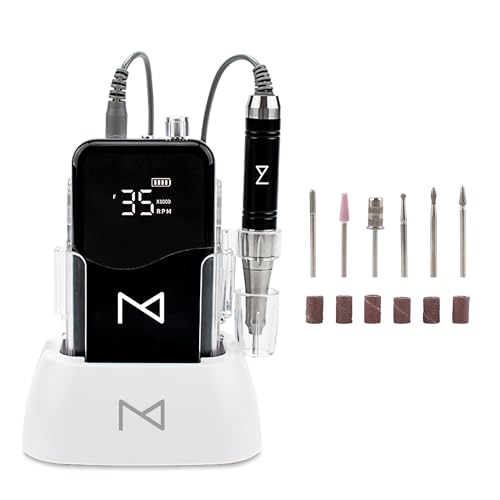
 Professional Electric Nail Drill MachineSingle Handpiece2.68 x 1.57 x 6.73 inches2.7 poundsCheck on Amazon




What's inside
- What an electric nail drill actually does, and why the headline number misleads
- Speed range and the low-speed torque that separates serious machines
- The handpiece: weight, balance, vibration, and heat over a full set
- Forward, reverse, and changing direction without stopping the work
- The bits in the box, and the 3/32-inch shank standard that governs everything after
- Bit materials and grits: carbide, ceramic, diamond, and sanding bands
- Corded, cordless, and the honest arithmetic of battery life
- Foot pedals, dials, displays, and the choreography of control
- Dust: where it goes, what it carries, and how extraction and cleaning keep it down
- Working with gel: removal, refinement, and the line between product and nail
- Acrylic work: bulk, structure, and why this material audits your machine
- Natural nails and beginner limits: the safety section that decides the purchase
- Noise, and what quiet actually sounds like at a desk
- Maintenance, warranty, and the replacement handpiece question
- A buying sequence that puts the deciding factors in the right order
- Matching speed to task: a working map instead of a single favorite number
- Setting up the workstation, and the practice routine that makes the machine earn its place
- Check prices on Amazon
- Disclosure
As an Amazon Associate I earn from qualifying purchases. This post may contain affiliate links at no extra cost to you.
What an electric nail drill actually does, and why the headline number misleads
An electric nail drill, often called an e-file, is a small rotary tool that spins an interchangeable bit inside a slim handpiece. The motor may sit in a desktop control box connected by a coiled cord, or inside the handpiece itself in a pen-style cordless design. Either way, the working end is the same: a rotating bit that files, shapes, buffs, and removes product far faster and more evenly than a hand file once the user has learned control. The machine does not do the thinking. It multiplies whatever the hand does, which is why choosing one is less about chasing the biggest specification and more about matching speed behavior, grip, and bit supply to the kind of nails you actually work on.
Almost every product page leads with a maximum speed, usually somewhere in the range of twenty thousand to forty thousand revolutions per minute. That number is real, but it describes the top of the dial, a region most users visit only briefly for acrylic shaping with a coarse bit. The work that decides whether nails look smooth or scorched happens much lower: cuticle-area cleanup near five thousand revolutions, gel removal in the middle band, and careful natural-nail preparation slower still. A machine that behaves beautifully at the bottom of its range and climbs smoothly as the dial turns is worth more than a faster machine that lurches, stalls, or vibrates at the speeds you will use every single session.
Buyers also divide into two camps that need different things. A home user maintaining gel polish on natural nails needs gentleness, quiet running, and bits that forgive a wandering hand. A semi-professional technician, or an advanced home user working with acrylic extensions on practice hands and paying clients among friends and family, needs sustained torque, a handpiece that stays balanced through long sets, and a bit collection deep enough to move from bulk removal to fine finishing without improvising. This guide keeps both readers in view, flagging where a feature is a genuine working advantage and where it is decoration that adds cost and weight without touching the result.
One more framing point before the details: an e-file is a skill tool, not an appliance. Manufacturers’ manuals assume training, and many explicitly recommend formal instruction before working on other people. The safest machine is the one whose controls make slow, deliberate work easy, because nearly every beginner injury with an e-file — a heat spike, a groove cut into the nail plate, a nicked cuticle — traces back to too much speed, too much pressure, or a bit chosen for a different material. Read the sections on natural-nail limits and bit selection as part of the purchase decision, not as fine print after it.
Speed range and the low-speed torque that separates serious machines
Torque is the twisting force that keeps a bit turning when it meets resistance. On a nail drill, resistance arrives the moment a bit presses into cured acrylic or a thick layer of builder gel. A high-torque motor holds its set speed under that load, so the bit keeps cutting evenly. A weak motor slows, grabs, and then surges when the pressure eases, and that grab-and-surge rhythm is what digs ruts into a nail surface and startles the hand holding the tool. Specification sheets rarely print a torque figure for consumer machines, so the practical clues are behavioral: does the maker describe a brushless motor, does the handpiece keep turning smoothly when a sanding band is pressed firmly into a practice tip, and do the published descriptions mention stall protection or feedback control that adds power as load rises?
Brushless motors deserve their growing reputation here. Without brushes wearing against a commutator, they run cooler, last longer, and typically deliver steadier low-speed torque, which is why they dominate the semi-professional tier. Brushed motors in entry machines can still be perfectly serviceable for gel polish removal and natural-nail care, where loads are light. The gap appears when coarse carbide bits meet hard acrylic at moderate speed: that is where a brushed unit may chatter while a brushless unit simply proceeds. If acrylic work is occasional rather than central, the simpler motor is a rational saving; if full sets are the weekly routine, torque is the first place extra money earns its keep.
Low-speed behavior matters as much as strength. Some machines cannot turn slower than a few thousand revolutions without pulsing, because their controllers were tuned for the top of the range. Work around the cuticle and on thin natural nails wants a bit that creeps — a slow, even rotation that lets the user steer rather than chase. Look for descriptions of a minimum speed near zero or a dial that begins at a genuinely gentle crawl, and for a pause or standby function that stops the bit when the handpiece is set down. A machine that idles smoothly at its lowest setting also tends to have the finer controller that makes every other speed more predictable.
Speed displays help more than expected. A small screen showing the current revolutions removes guesswork when you are following a bit maker’s guidance — carbide bits, for example, are usually run faster than diamond bits, and sanding bands slower than either. Without a display, users develop dial habits that drift between sessions. With one, a routine becomes repeatable: note the setting that removed gel cleanly last time, and it is waiting for you next time. Repeatability is an unglamorous virtue, but smooth results are mostly repeatability wearing a nicer name.
The handpiece: weight, balance, vibration, and heat over a full set
The handpiece is the part you actually hold for an hour at a time, and its ergonomics decide whether a machine feels like a precision instrument or a buzzing chore. Weight is the first variable. Very light pen-style units reduce fatigue during short sessions and suit travel kits, but a little mass in the handpiece can steady fine work, damping the small tremors that show up as wavy lines near the cuticle. What matters most is where the weight sits. A handpiece balanced near its middle, where the fingers grip, feels lighter in use than a nose-heavy design of the same total weight, because the wrist is not constantly correcting a forward tip.
Vibration is the second variable, and the one most tightly linked to quality. Every rotary tool vibrates somewhat; the question is whether the vibration stays a faint hum or becomes a buzz that blurs the bit’s contact point and tires the fingers. Excess vibration usually comes from an unbalanced motor, a loose collet, or a bent bit shank, and it worsens with speed. Published descriptions that mention machined metal handpiece bodies, quality bearings, or runout figures are signaling attention to this. A metal body also conducts heat away from the motor and gives the grip a cool, solid feel, though it adds weight compared with plastic shells. There is no universal winner; there is only the trade you prefer across a long afternoon.
Heat deserves its own sentence because it surprises new owners. A handpiece that grows uncomfortably warm after twenty minutes is telling you its motor is working near its limit or its bearings are dragging. Warmth at the grip is not merely unpleasant — it changes how firmly people hold the tool, and a shifting grip mid-pass is how bits wander. Machines intended for semi-professional use typically ventilate better and spread heat across a metal shell. If your sessions run long, treat described duty cycles and ventilation as working specifications, not trivia.
Grip diameter and surface finish finish the picture. Slim handpieces suit small hands and a pen-style hold close to the bit; wider bodies give larger hands something to brace against and often house bigger motors. A matte or lightly textured finish stays secure when hands carry a film of dust, while glossy plastic can creep in the fingers. Some handpieces add a flat side or a cradle on the control box so the tool rests without rolling toward the edge of the desk — a small mercy that prevents the most common cause of bent bits and cracked handpiece noses, which is a short fall onto a hard floor.
Forward, reverse, and changing direction without stopping the work
Every worthwhile nail drill rotates in both directions, and the reason is handedness and position rather than novelty. A right-handed technician working across a client’s nails approaches each finger from an angle where one rotation direction pulls the bit smoothly across the surface while the other digs or skips. Left-handed users mirror the problem. Ambidextrous home users discover the same effect when they switch to filing their dominant hand, suddenly working at an awkward angle where reversing the bit restores a natural stroke. A machine with only one direction forces contortions that show up in the finish.
The better control layouts make direction a deliberate, easy act: a clearly marked switch or button, positioned so it can be changed without putting the handpiece down, paired on many models with a rule that the motor pauses briefly before spinning the other way. That pause matters. Slamming a spinning bit into reverse under load stresses the motor and can loosen the chuck grip on the shank. Machines that enforce a momentary stop protect themselves, and the habit they teach — lift the bit, switch, resume — is the habit that protects nails too.
Some mid-range and professional units add a true pause function distinct from switching off: the handpiece stops but the control box remembers speed and direction, so work resumes exactly where it left off when the pedal is pressed or the button tapped. During a long set with interruptions — a doorbell, a child, a client adjusting position — that memory keeps the session coherent. Without it, users restart at whatever the dial happens to show, which may be far from the gentle setting the cuticle area needs.
Direction also interacts with bit design. Many carbide bits are cut to work in one rotation, flinging debris away from the surface in forward and behaving more gently in reverse; some are ground for both directions and marketed to left- and right-handed users alike. Diamond bits are less directional, since their abrasive surface cuts either way. When a kit’s bit descriptions mention handedness, that is a clue the maker understands real technique. When every bit is described as universal without qualification, expect the coarse removers at least to have a preferred direction, and plan your passes accordingly.
The bits in the box, and the 3/32-inch shank standard that governs everything after
Nearly all nail drill bits share a shank diameter of 3/32 of an inch, roughly 2.35 millimeters, and the handpiece collet or chuck is built to grip exactly that. This single standard is the most useful fact in the whole purchase, because it means bits are a shared ecosystem: a machine is not a life sentence to its maker’s accessories. A second, larger shank size exists in some podiatry and older salon equipment, and bits of that size will not fit a standard nail handpiece — which is why listings that fail to state shank size deserve a second look before ordering, and why a machine whose chuck accepts only its own proprietary bits should be passed over entirely.
The starter kit bundled with a machine usually contains a predictable cast: a few diamond bits in barrel and cone shapes for cuticle work and surface refinement, one or two carbide or ceramic bits for product removal, a mandrel with sanding bands, and perhaps a soft brush and a silicone polisher. Judge the kit by whether its pieces map onto real tasks rather than by raw count. A box boasting dozens of bits often pads the number with duplicate sanding bands and novelty shapes, while a modest set with a proper safety bit, a medium carbide barrel, and two useful diamond shapes covers ninety percent of home work. The kit is a starting wardrobe, not the whole closet; most users replace and expand individual bits within months as their technique clarifies.
Chuck design decides how pleasant that expanding will be. The common twist-lock chuck opens with a rotation of the handpiece nose, accepts the shank, and locks with a reverse twist — no tools, a few seconds per change. Cheaper push-in friction collets can grip unevenly and let a bit sit slightly off-center, which manufactures vibration out of thin air. Whatever the mechanism, the bit must seat fully and run true: a bit that visibly wobbles at low speed should be reseated, and if it still wobbles, retired, because a bent shank at high speed is both a finish problem and a safety one.
Storage sounds trivial until bits live loose in a drawer, dulling each other and collecting dust in their flutes. Kits that include a labeled bit holder or case are quietly more valuable than an extra handful of bands. Diamond bits in particular lose their edge when knocked about, and carbide flutes chip. A holder also enforces the cleaning routine described later in this guide: used bits go back to their slots only after brushing and disinfecting, so the case becomes a small map of what is ready and what is not.
Bit materials and grits: carbide, ceramic, diamond, and sanding bands
Carbide bits are the heavy removers. Their fluted metal heads — tungsten carbide in better examples — slice through acrylic and hard gel quickly, and the flute pattern controls the character of the cut. Cross-cut flutes remove material fast and suit bulk work on extensions; finer, straighter cuts leave a smoother surface and behave more calmly in less practiced hands. Carbide generates less friction heat than abrasive-style bits at the same task, but it can be unforgiving: those sharp flutes will cut skin and nail plate with equal enthusiasm, which is why the rounded-top safety barrel, whose smooth dome guards the cuticle zone, is the shape most often recommended for people still building confidence.
Ceramic bits occupy a middle temperament. They remove gel and softer acrylic at a moderate pace, are widely described as producing less heat in the material being filed, and their smoother action makes them popular for gel removal over natural nails. They are also brittle in a way carbide is not: drop a ceramic bit onto tile and it may chip or crack, after which it belongs in the bin, since a damaged edge can gouge. Users who work over hard floors and knock bits off desks — which is to say, most users eventually — should weigh that fragility honestly against the gentler cut.
Diamond bits do the detail work. A coating of diamond particles on a metal blank abrades rather than slices, in shapes built for specific geography: slim cones and needles for the cuticle pocket and sidewalls, small barrels for surface refinement, pointed flames for lifting the cuticle edge and cleaning under the free edge. Grit language mirrors hand files — coarser diamond for callus and product edges, finer for finishing natural nail and skin-adjacent work. Diamond wears gradually and clogs with dust, so its lifespan depends heavily on the brushing and soaking routine; a clogged fine bit feels useless long before its abrasive is actually gone.
Sanding bands are the consumable workhorses: disposable abrasive cylinders that slide onto a rubber mandrel, used at modest speeds for shaping, shortening, and surface preparation. Their grits span coarse shaping to fine smoothing, and because each band is cheap and single-client by hygiene logic, they suit anyone working on other people. Their limits are heat and delicacy — a band pressed hard at high speed warms the nail quickly — and they are a poor choice for precision cuticle work. A balanced kit uses each material where it is strongest: carbide or ceramic for removal, diamond for detail, bands for economical shaping, and a soft brush bit or hand brush to clear dust between passes.
Corded, cordless, and the honest arithmetic of battery life
A corded desktop machine draws steady power and delivers identical performance in minute one and minute ninety. Its control box anchors the desk, the handpiece stays light because it carries no battery, and there is nothing to charge, age, or forget before an appointment. The costs are mobility and tidiness: the box needs a permanent footprint, the handpiece cord must be routed so it does not drag through dust piles or catch on the desk edge, and the whole arrangement travels poorly. For a fixed workstation where full acrylic sets are the norm, those costs are trivial and the consistency is the point.
Cordless designs split into two families. Pen-style units put motor and battery in one slim body — the most portable format, excellent for travel, quick gel removals, and working away from an outlet, but usually the least powerful and the quickest to warm up under heavy acrylic load. Belt- or box-style portables keep a rechargeable control unit that clips to a waistband or sits on the desk, driving a separate light handpiece by a short cord; these approach desktop performance while still working anywhere, and they are the format many mobile technicians settle on. Between the two, the pen suits light and intermittent work, the portable box suits a working day.
Battery claims need translating. A stated runtime of many hours usually reflects intermittent use at moderate speed, not continuous acrylic removal at high load, which draws the battery far faster. What matters practically: the capacity figure if published, whether the display shows remaining charge as a percentage rather than a vague bar, whether the unit can run while charging for the inevitable forgotten-charge morning, and how it charges. USB charging — especially over the common Type-C connector — lets a machine share chargers with phones and tablets and refill from a power bank in a pinch, while proprietary barrel-plug adapters add one more thing to lose. Note also that lithium batteries age with calendar time and charge cycles regardless of brand promises, so a replaceable battery or an affordable service path quietly extends a cordless machine’s working life.
Salon corners and home desks alike benefit from thinking about the second chair, too: anyone who has arranged a small pamper corner for guests will recognize the same space-planning questions that arise around best commercial massage chairs, where footprint and cord routing matter as much as the headline features. A drill that can work cordlessly for a single guest set and then dock to charge keeps such a corner uncluttered in a way a permanently wired box cannot.
Foot pedals, dials, displays, and the choreography of control
A foot pedal changes how a session flows. With speed governed by the foot, both hands stay in position — one holding the handpiece, one presenting the nail — and the bit can be stopped instantly by lifting a toe rather than reaching for the box. Pedals come in two temperaments: simple on-off switches that run the machine at whatever the dial says, and variable pedals that behave like a sewing-machine treadle, pressing deeper for more speed. Variable control is the more skilled tool and the more demanding one; an unsteady foot produces an unsteady bit. On-off pedals pair well with a precise dial and suit most home users, while variable pedals reward technicians who have already automated their hand technique.
Compatibility is the catch. Not every machine accepts a pedal, pedal connectors are not universal, and some boxes offer a pedal socket only on higher trims of the same line. If a pedal is part of your plan — and for anyone regularly working on other people’s hands, it should be — confirm the socket exists on the exact model, not merely on its sibling. The same diligence applies to handpiece compatibility: cradle switches that pause the motor when the handpiece is docked, and handpiece stands that keep the bit off the desk surface, are small systems that only work when the parts were designed together.
The humble dial still deserves respect. A dial with a positive, slightly notchy action and clear markings can be adjusted by feel mid-session, whereas a smooth, unmarked wheel invites drift. Digital push-button speed control with a display is precise but slower to change in large steps. Neither is objectively superior; the deciding question is how you work. Users who follow bit-by-bit speed routines benefit from digital repeatability. Users who ride the speed continuously, swelling into a removal pass and easing off near the cuticle, usually prefer a dial or pedal they can modulate without looking.
Lighting and magnification belong in this conversation even though they are not part of the machine. E-file work is close work: the difference between the product layer and the natural nail beneath is a matter of color and sheen that poor light erases. A desk lamp with a neutral, bright output positioned to avoid the handpiece’s shadow, plus inexpensive magnification for cuticle work, improves results more than a jump in motor class. Budget for the lamp when you budget for the drill; the drill will get the credit, but the lamp does half the seeing.
Dust: where it goes, what it carries, and how extraction and cleaning keep it down
Filing cured product makes dust, and acrylic and gel dust is fine enough to hang in the air, settle across the desk, and coat the inside of the handpiece if it is left unprotected. That dust is not merely untidy. It carries uncured monomer residue and fine particles that irritate eyes and airways with repeated exposure, and it is the reason experienced technicians treat dust control as equipment, not housekeeping. The layered answer starts at the source: a desktop dust collector — essentially a quiet fan drawing air downward through a filter beneath a grille — captures a large share of particles at the moment the bit throws them, provided the work happens directly over the grille.
Collectors vary in the ways that matter: airflow strength, filter type and replacement cost, noise at working speed, and footprint. A collector that roars will be switched off, and a switched-off collector captures nothing, so realistic noise behavior at the middle setting counts for more than a heroic maximum airflow figure. Washable filters save money but need drying time; disposable filters are consistent but become a running cost to plan for. Some users add a small arm-mounted extractor for acrylic-heavy work; most home setups find a decent collector plus a mask sufficient. On the mask, fit is the whole game — a respirator-style mask that seals beats a loose paper loop mask that leaks at the cheeks.
What dust escapes capture lands on everything, including the person across the desk, which is why the tidy habits around towels and surfaces matter more in a nail corner than almost anywhere else in the house; the same laundering logic that applies to best towels to use for curly hair — separate the heavily soiled pieces, shake them out outdoors, and wash them apart from face cloths — applies directly to the towels that live under a filing station. Desk surfaces should be wiped down after every session, not at the end of the week, because yesterday’s dust becomes today’s airborne dust with one sleeve brushed across it.
The bits and handpiece need their own cleaning liturgy. After use, bits are scrubbed with a stiff brush to clear flutes and diamond pores, washed, disinfected according to the disinfectant maker’s stated contact time, dried fully, and stored dry. Sanding bands are discarded, never shared or saved. The handpiece itself should never be soaked or sprayed directly; a wipe with a barely damp cloth, attention to dust around the chuck opening, and periodic use of the maker’s cleaning brush keep grit out of the bearings. Dust inside a handpiece is a slow tax on torque and a common cause of the vibration that owners blame on the motor.
Working with gel: removal, refinement, and the line between product and nail
Gel is where most home e-file work lives, and it is forgiving territory to learn in, because gel removal announces its progress visually. A carbide or ceramic barrel at a moderate speed lifts cured gel in ribbons and dust, and as the bit approaches the base layers the color and resistance change, signaling the shift to a finer bit and a lighter hand. Soak-off gel polish on natural nails needs the least aggression of any task in this guide: the file’s job is to break the top coat’s seal evenly so the remover can work, and to tidy regrowth edges — not to grind through to bare nail by force. Users who treat gel removal as a race teach themselves pressure habits that natural nails will pay for later.
Builder gel and hard gel overlays justify the machine more fully. Refining a builder gel structure — restoring the apex, crisping sidewalls, shortening length evenly — is slow and uneven by hand file and quick and symmetrical with a medium carbide bit followed by a fine diamond or a hand file for the last pass. Heat management is the recurring theme: gel conducts the friction of a lingering bit straight to the nail bed, felt as a sudden warm spike. The technique answer is motion — keep the bit traveling, lift between passes, let each nail rest while another is worked — and the machine answer is a motor that does not need speed to compensate for weak torque, since excess speed is what turns a pause into a burn.
Cuticle-area work on gel sets is diamond territory. A fine flame or cone at low speed lifts the cuticle edge and clears the pocket so product can sit flush without flooding, which is the difference between a set that grows out gracefully and one that lifts at the base within days. This is also where reverse rotation earns its place, letting the bit work the left and right sidewalls with the same stroke direction relative to the hand. The boundary rule is absolute: diamond on skin-adjacent areas stays at the lowest speeds, with the handpiece braced so a flinch — yours or a client’s — moves the bit away from the nail, not into it.
Acrylic work: bulk, structure, and why this material audits your machine
Acrylic is the material that exposes a weak drill. It cures harder than gel, arrives in greater thickness, and its removal and shaping generate the heaviest loads and the most dust of any common service. Bulk removal with a coarse carbide bit is where sustained torque proves itself: the bit should keep cutting at a steady voice rather than chugging, and the handpiece should stay cool enough to hold comfortably through the whole set. A machine that manages acrylic only in short bursts with rests between nails is telling you it was designed for gel, whatever its maximum speed claims.
Structure work — defining the apex, thinning the free edge to a credit-card profile, refining smile lines — rewards precision more than power. Here the medium and fine carbide bits and a steady low-vibration handpiece matter, because acrylic shows every hesitation as a visible facet. Experienced technicians often finish acrylic by hand file for the final surface, using the machine for the ninety percent that is pure material movement. That division of labor is worth copying at home: the drill is a removal and rough-shaping engine, and the last refinement belongs to whichever tool gives the finest control, which is frequently the humble hand file.
Anyone setting up a small home salon corner for acrylic work will also be thinking about laundry and water at a scale beyond a single desk, and the planning overlap with best washers and dryers for a salon and spa is real: towel volume, dust-laden work clothes, and constant hand-washing make the laundry corner part of the nail station whether it was planned that way or not. Lay the room out so the dusty work, the clean storage, and the laundry flow do not cross paths, and the whole operation feels calmer.
Safety scales with acrylic’s demands. The coarse bits that remove it fastest also remove natural nail fastest when a pass strays, and the margin shrinks on short nail beds and thin plates. Debulk in stages, check thickness by eye and by gentle flex rather than by optimism, and switch to finer bits earlier than instinct suggests. The last millimeter of product over natural nail is hand-file territory for anyone without formal training, and honoring that boundary costs two minutes and prevents the ring-of-fire groove that takes months to grow out.
Natural nails and beginner limits: the safety section that decides the purchase
On natural nails, the e-file’s legitimate jobs are narrow: gentle cuticle-area cleanup with fine diamond bits, careful removal of product layers already softened or mostly lifted, light surface preparation where a product system calls for it, and callus-adjacent tidying around — not on — the nail folds. What the machine should not do on a natural nail is grind the plate thinner, chase a shine by abrasion, or substitute for patience during soak-off removal. The nail plate is thinner than most people imagine, and it does not regenerate where it sits; damage files a groove that must travel the full length of the nail over months before it is gone.
Beginner limits should be mechanical, not aspirational. Start on practice tips and a practice hand until bit changes, direction changes, and speed changes are automatic, because attention spent on controls is attention stolen from the contact point. On your own nails, cap speeds low for the first months, use safety-shaped bits near the cuticle, and adopt the two-pass rule: any area gets two light passes, then a pause and a look, rather than one committed pass. Keep the handpiece moving at all times when the bit touches the nail; a stationary spinning bit is a drill in the worst sense, digging a pit and a heat spike in the same spot.
Know the stop signals. Heat felt by the person whose nail it is means lift immediately and let the nail cool — and on someone else’s hands, ask constantly, because clients and friends often endure discomfort politely until it becomes pain. A nail that flexes with a papery give, shows pink or red patches, or feels tender hours later has been thinned past its allowance, and it needs product protection and a filing holiday, not another session. Broken skin around the nail ends the session for that finger; bits and broken skin do not mix, and no schedule justifies working through it.
Children’s nails, nails with visible infection or inflammation, and nails recovering from damage are outside the e-file’s remit entirely. So is work on anyone whose circulation or sensation is compromised, since the feedback loop that keeps filing safe — the felt heat, the early tenderness — cannot be trusted. These limits do not shrink the machine’s usefulness; they define the wide, safe territory inside which it can be enjoyed for years, and a buyer who reads them and nods is exactly the buyer who should own one.
Noise, and what quiet actually sounds like at a desk
Nail drills are not loud tools in absolute terms — none approaches a hair dryer — but their sound sits in a frequency band that carries through a room and grates over an hour. Makers who publish a noise figure usually quote the handpiece at a set distance under no load, which flatters reality; the working sound adds the bit’s contact noise, which on acrylic can exceed the motor’s own note. Brushless motors generally run smoother and quieter, and a well-balanced handpiece avoids the rattles that make a machine sound cheaper than it is. A bit that is even slightly bent adds a rhythmic ticking that owners often misdiagnose as motor failure.
Context decides how much this matters. A home user filing at midday in a detached house can ignore noise almost entirely. Someone doing evening sets in an apartment, a technician working while a client takes calls, or a parent fitting nail care around a sleeping household should weight quiet running heavily — and should also consider that the dust collector’s fan may contribute as much sound as the drill itself. The two machines are a system; a silent drill beside a roaring collector is not a quiet workstation. Listings that describe collector and drill noise in comparable terms help you plan the pair rather than each piece in isolation.
There is also the social acoustics of a relaxation space to consider: a corner arranged for rest, of the kind furnished with best electronic massage chairs, tolerates no buzzing at all, which is another argument for cordless machines that can move the filing work to a kitchen table and leave the quiet room quiet. Matching the tool to the room, and not only to the task, is the kind of unglamorous planning that separates a workstation that gets used weekly from one that migrates into a drawer.
Maintenance, warranty, and the replacement handpiece question
Daily care is short: brush dust from the handpiece nose and chuck area, wipe the body, coil the cord loosely rather than wrapping it tightly around the box, and store bits clean and dry. Weekly, check that the chuck still locks with a positive feel and that the bit runs true at low speed; a chuck that has begun to slip under load is a wear item announcing itself. Never oil a nail drill handpiece unless the maker explicitly instructs it — the bearings in these tools are typically sealed, and stray oil migrates exactly where grip and hygiene do not want it. Keep vents clear, and give cordless units the battery courtesy of not living permanently at either brim-full or empty when stored for long stretches.
Warranty terms reveal how a maker expects the machine to be used. A warranty that covers the handpiece — the wear component — for a meaningful period, with a stated repair or replacement path, signals a product built as a tool. A warranty covering only the control box, or one voided by any use the maker deems professional, signals a product built as a gadget, and semi-professional buyers should price that risk accordingly. Read the exclusions for the specific phrase about commercial use if there is any chance your machine will earn money, however informally; more than one dispute has turned on that line.
The replacement handpiece question belongs in the original purchase, not in the crisis after a drop. For many desktop systems the handpiece is replaceable separately at a fraction of the full kit’s cost, and some makers sell the same handpiece across several control boxes, which turns an accident into an errand. For sealed pen-style cordless units, a dead motor or battery usually means a whole new unit. Neither model is wrong, but the arithmetic differs: a slightly dearer system with a replaceable handpiece can be the cheaper five-year proposition, particularly for users whose machines travel, get borrowed, or work daily. Spare parts availability — chucks, cords, carbon brushes for brushed motors — is the trailing indicator of whether a brand supports its tools after the sale, and it is worth two minutes of checking before money moves.
A buying sequence that puts the deciding factors in the right order
Start with the material you will file most, because it sets the torque requirement, and torque is the one specification that cannot be upgraded later. Gel-only users can choose widely and happily, including slim cordless pens. Mixed gel and acrylic users should shortlist brushless or strongly described motors, a handpiece with some metal in its construction, and a pedal socket even if the pedal itself comes later. Then weigh the handpiece literally if you can — its weight, girth, and balance against your hand size and session length — because you will hold your decision far longer than you will admire it.
Next, audit the bits and the path beyond them. Confirm the 3/32-inch shank standard, count the genuinely useful shapes in the kit, and price the replacement bits you know you will want: a safety barrel, a fine diamond flame, spare sanding bands in two grits. Add the dust collector and a sealing mask to the same budget line, not as accessories but as part of the machine, since filing without them is a false economy paid in irritation and cleanup. Finally, read the warranty for the handpiece and the commercial-use line, check that a replacement handpiece exists and what it costs, and only then compare the pleasant extras — displays, pause memory, charging speed — that separate two otherwise equal finalists.
What this sequence deliberately leaves last is maximum speed, the number on the front of every box. By the time torque, handpiece, bits, dust, and support are settled, the remaining candidates will all spin fast enough, because every serious machine does. The differences that survive a year of weekly use are the ones this guide has dwelt on: steadiness at low speed, a grip that does not tire, bits that fit a shared standard, air that stays clean, and a maker who will sell you a handpiece in year three. Choose on those, and the number on the box can look after itself.
One last filter costs nothing and eliminates a surprising share of disappointments: read the manual before the machine, not after. Manuals are published for nearly every model, and ten minutes with one reveals the truths listings blur — the real minimum speed, whether the pedal socket exists, how the chuck actually opens, what the warranty excludes, and whether bits can be disinfected by the method you already own. A maker whose manual is clear, specific, and honest about limits is telling you how the support line will behave in year two, and that forecast is worth as much as any single specification in this guide.
Matching speed to task: a working map instead of a single favorite number
New owners often ask for the one right speed, and the honest answer is a map, not a number, because the correct revolutions depend on the bit’s diameter, material, and job. Large bits move more surface per revolution at their rim than small bits do at the same dial setting, so a big carbide barrel doing bulk acrylic removal belongs in the middle of the range, while a slim diamond cone cleaning a cuticle pocket belongs near the bottom, where a moment’s inattention costs nothing. Sanding bands sit low as well, since their abrasive surface grabs readily and heats quickly; silicone polishers and brushes run gently by nature and gain nothing from speed except splatter and wear.
A practical way to build the map is to anchor it to tasks in the order a service performs them. Debulking and length reduction on extensions take the highest speeds you will commonly use, with coarse or medium carbide and a moving, sweeping stroke. Surface refinement drops a clear step down and swaps to finer flutes, because the goal changes from removing material to erasing the previous bit’s tracks. Gel removal over natural nails drops again, with the bit skimming rather than digging, and cuticle work with fine diamond sits at the floor of the range, slow enough that the bit can be stopped with a fingertip’s pressure — the classic readiness check described in training materials. Natural-nail preparation, where it is done at all, stays in that same low neighborhood.
Two habits keep the map honest. First, change the bit before you change the speed when a task changes character; reaching for the dial while keeping a coarse remover mounted is how careful intentions end in a groove. Second, write your settings down for the first dozen sessions — bit, speed, direction, material — in the notebook or phone note you keep with the kit. Within a month the map becomes muscle memory, and the written record remains useful when a new bit brand behaves differently from the old one, because you will know exactly which variable moved.
Setting up the workstation, and the practice routine that makes the machine earn its place
A nail drill performs only as well as the small stage it works on. The desk wants a stable, wipeable surface at a height that lets forearms rest rather than hover, a chair that supports the lower back through an hour, and the control box placed so its dial falls under the non-dominant hand without reaching across the work. The dust collector sits directly under the filing zone, the lamp comes over the shoulder opposite the writing hand to keep shadows off the nail, and clean bits stand in their holder on the clean side of the desk while used bits land in a small lidded container on the other side. That one-way flow — clean to work to dirty, never back — is the whole hygiene system in miniature, and it costs nothing but the decision to arrange it once.
Practice deserves the same structure. The standard progression in training materials begins with the machine off: handling bits, working the chuck, rehearsing direction changes until the hands know them. Then comes low-speed work on practice tips mounted at realistic angles, concentrating on keeping the bit parallel to the surface and moving in long passes. Only after tips look even does the routine move to a practice hand, whose joints teach the bracing and presentation skills that real fingers demand, and only after that to the user’s own non-dominant hand — the traditional first client, because its feedback is honest and its owner is patient. Skipping stages does not save time; it relocates the learning onto nails that complain.
Finally, schedule the machine’s own place in the week. Bits dull gradually enough that declining performance masquerades as declining skill, so a monthly review — which bits still cut cleanly, which bands are running low, whether the handpiece cord has begun to crack near its strain relief — keeps surprises out of appointments. A drill bought well and kept on this small rhythm stops being a gadget with a learning curve and becomes what it was supposed to be: the quiet, predictable center of a workstation that produces calm, even nails on demand.
Check prices on Amazon
Live listings for the shortlist in this guide are pulled from Amazon below, so prices and availability are always current at the moment you look.


Disclosure
Fine dust, fine bits, and fine print belong in the same honest conversation, so here is ours about how this guide is funded. As an Amazon Associate we earn from qualifying purchases. That single arrangement does not raise a weak motor’s torque in our descriptions, does not quiet a rattling handpiece, and does not move any machine ahead of a better-balanced rival; where a specification could not be confirmed from a maker’s own documentation, this guide left the gap visible rather than filling it with enthusiasm.
May your slowest speed be your steadiest, and may every cuticle you approach stay exactly as calm as the hand that holds the bit.