Our Top Picks
 Senville Central Air Conditioning System3 TON / No AUX48 x 36 x 40 inches356.19 poundsCheck on Amazon
 MrCool SEER2 VERSAPRO Central Ducted Split System2.5 Ton17.52 x 21.02 x 45 inches132.72 poundsCheck on Amazon
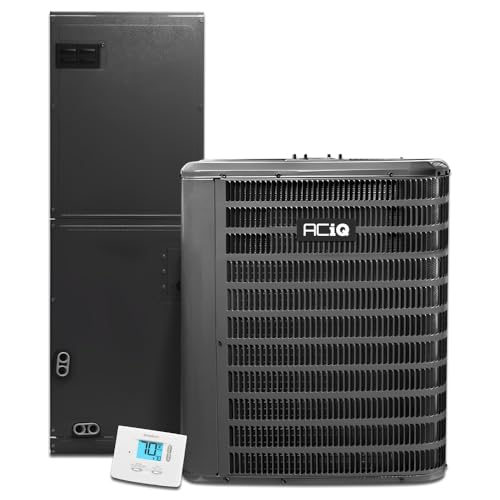
 ACiQ 2.5 Ton 14.3 SEER2 Central Air Conditioner2.5-Ton29.1 x 25 x 29.1 inches139 poundsCheck on Amazon
 ACiQ 5 Ton 14.3 SEER2 Central Air Conditioner5-Ton29.1 x 32.8 x 29.1 inches182 poundsCheck on Amazon

What's inside
- Start with the dwelling, not the catalogue
- Ducted central systems: quiet, invisible, demanding
- Ductless splits: precision without the ductwork
- Window, wall and portable options for single rooms
- Five residential archetypes worth discussing
- Archetype one: the ducted central all-rounder
- Archetype two: the multi-zone ductless network
- Archetype three: the single-zone split for a problem room
- Archetype four: the high-efficiency heat pump pairing
- Archetype five: the quality window or sleeve unit
- Sizing: the calculation behind the comfort
- Efficiency ratings and what they conceal
- Airflow, filtration and indoor air quality
- Noise: the specification you live with nightly
- Controls, thermostats and everyday usability
- Installation day and the weeks around it
- Running costs beyond the electricity bill
- A maintenance rhythm that prevents most failures
- Mistakes that quietly ruin good purchases
- Questions worth asking every installer
- Frequently asked questions
- Refrigerants and the environmental ledger
- Planning for extensions, conversions and changing lives
- The buying process, week by week
- Regional notes: coast, countryside and city
- Humidity: the invisible half of comfort
- Warranties, service plans and the paperwork of peace
- Households with special requirements
- When repair beats replacement, and the reverse
- Reading quotations like an editor
- A short season-by-season ownership calendar
- One last check before signing anything
- Check prices on Amazon
- Bringing the decision together
As an Amazon Associate I earn from qualifying purchases. This post may contain affiliate links at no extra cost to you.
Disclosure in plain terms: this cottage guide earns its keep whenever a purchase follows from something read here, because the seller involved returns a modest share of that sale to us. That arrangement never buys a mention here. Everything below is presented purely as a family of equipment, never as a shopping shortcut, and final figures should always be confirmed with the maker and your installer.
A residential air conditioner is the one cooling purchase a household lives inside, quite literally, for fifteen years or more. Unlike a fan that can be returned in a weekend or a portable unit that can be rolled into a cupboard, a home system becomes part of the building: wired into its circuits, plumbed into its walls, and woven into the daily rhythm of sleeping, cooking, working and gathering. Choosing well is therefore less about chasing a headline specification and more about matching a machine to a dwelling, a climate and a family’s habits.
The residential market splits into a handful of recognisable families. Ducted central systems cool the whole property from one plant location. Ductless splits serve one room or several zones without air ducts. Window and through-wall units handle single spaces with minimal installation. Packaged and hybrid arrangements fill the gaps for homes with unusual layouts, limited roof space or no spare wall. Each family carries its own installation burden, its own noise profile and its own way of failing when it is neglected.
This guide walks through the decision in the sequence a careful buyer actually faces it. First, reading the home and its heat load. Then comparing the families honestly, including the ones sales brochures underplay. Then sizing, efficiency, airflow, noise and controls, followed by installation realities, running costs, maintenance and the mistakes that quietly ruin otherwise sound purchases. The middle section profiles five residential archetypes in prose, because the correct model for your address can only be settled after your rooms have been measured.
Start with the dwelling, not the catalogue
Two homes with identical floor plans can demand strikingly different cooling. A shaded cottage beneath mature trees may drift through a heatwave with modest help, while an identical layout on an open, sun-baked plot absorbs heat from dawn until long after supper. Roof colour, glazing area, wall construction and the direction the main rooms face all bend the requirement, which is why copying a neighbour’s equipment choice so often disappoints.
Internal life adds a second layer. A household of five with a keen cook, a tumble dryer running daily and computers in three bedrooms generates warmth that a couple in a quiet flat never produces. Rooms also differ in purpose: a nursery needs gentle, stable air, a kitchen needs capacity that survives the oven hour, and a seldom-used guest room needs the ability to rest idle without dragging the whole system down.
Climate writes the final paragraph of the brief. Humid districts reward machines that wring moisture from the air during long, modest runs. Dry heat rewards airflow and shade. Coastal air corrodes outdoor cabinets faster than inland air does, and dusty rural environments clog filters at a pace city owners would find alarming. Naming your climate honestly, before admiring any product, narrows the field more usefully than any brand comparison.
Gather evidence before inviting quotes. Note which rooms overheat first, which windows catch the evening sun, where condensation gathers and which doors are habitually closed. Photograph the electrical panel, the likely outdoor unit position and any existing vents. Households weighing room-by-room equipment against a unified design will find useful contrast in best air conditioners for small homes, since compact properties reward different trade-offs than sprawling ones.
Ducted central systems: quiet, invisible, demanding
The ducted arrangement remains the reference point for whole-home residential comfort. An outdoor condenser partners with an indoor coil and blower, usually in a loft, cupboard or garage, while insulated ducts carry treated air to grilles throughout the property. Nothing intrudes into the rooms except small vents, and one control point, or a few zoned ones, conducts the entire house.
That invisibility is earned with building work. Ducts need routes, returns need pathways, and the indoor unit needs drainage and service access. In new construction or deep renovation the cost hides inside the project; in a finished home with solid floors and low ceiling voids, retrofitting ducts can dominate the budget and the disruption. A trustworthy survey states plainly what each room gains and what each ceiling loses before anyone commits.
Where ducts already exist, their condition decides whether a replacement machine will shine or stumble. Crushed flexible runs, joints sealed with tape that perished years ago and returns sized for a smaller era all sabotage new equipment. Pressure testing and a camera inspection cost little compared with the machine itself, and their findings belong in writing beside any quotation that proposes reusing the network.
Zoning is the ducted system’s answer to uneven households. Motorised dampers split the property into territories, perhaps sleeping quarters apart from living spaces, each governed by its own sensor. Cooling effort follows occupancy instead of tradition, and the classic grievance of a chilly lounge beneath stifling bedrooms fades. Zones must still respect the equipment’s minimum airflow, so zoning has to be drawn into the scheme from its first sketch, never stapled on once the machinery has been chosen.
Ductless splits: precision without the ductwork
A split system moves refrigerant instead of air. Slim copper lines link an outdoor unit to indoor heads mounted on walls, low on floors or recessed into ceilings, and each head manages its own room. Installation typically takes a day or two per zone, with a modest core hole rather than a building project, which explains the family’s dominance in cottages, extensions and older homes where ducts never existed.
Room-level control is the deeper attraction. A teenager revising through the night, a grandparent who feels the cold, a home office that empties at six: each space follows its own schedule and temperature. Unused rooms simply rest. Multi-zone outdoor units feed several heads from one cabinet, while single-zone pairings give larger or awkwardly distant rooms dedicated machinery and simpler fault isolation.
Efficiency flourishes because nothing is lost in transit. Ducted networks can surrender a meaningful share of their cooling to hot lofts before the air reaches a bedroom; refrigerant lines surrender almost nothing. Inverter compressors, now standard across serious residential splits, adjust output continuously instead of lurching between full blast and silence, which steadies temperature and trims both noise and consumption.
The compromises announce themselves plainly enough. Indoor heads take up wall room and declare their presence in period interiors. Filters live in every head and need regular attention. One outdoor unit serving many rooms concentrates risk, since a major fault can silence several spaces at once. Long line runs to distant rooms demand careful engineering, and condensate from each head needs a reliable downhill path or a small pump.
Window, wall and portable options for single rooms
Not every residential problem deserves a permanent system. Window units compress the entire refrigeration circuit into one box that sits in a sash opening, exhausting heat outdoors and dripping condensate outside. Modern examples are far calmer and thriftier than their rattling ancestors, and for a rented bedroom or a seasonal office they solve the problem in an afternoon with no tradesperson involved.
Through-wall sleeves offer a tidier permanent version for rooms that will always need help: a garden studio, a converted garage, a top-floor study under a hot roof. The sleeve stays with the building while the chassis can slide out for service or replacement, a small mercy owners appreciate a decade later. Anyone comparing dedicated equipment for generous single spaces should also read best air conditioners for large rooms, where throw distance and outlet placement receive the attention they deserve.
Portable units trade efficiency for freedom. A single-hose portable draws room air to cool its condenser and blows that air outside, creating negative pressure that pulls warm air in through every gap; dual-hose designs soften the flaw without erasing it. They earn their place in emergencies, short tenancies and listed buildings where nothing may pierce the fabric, but as a permanent answer for a whole home they disappoint almost everyone who tries.
Evaporative coolers deserve a footnote for arid districts. By passing air through wetted pads they deliver a genuine temperature drop at a fraction of the running cost, provided the air begins dry. In humid weather the same device becomes a fan with extra moisture, so geography, not marketing, decides whether this family belongs on a shortlist at all.
Five residential archetypes worth discussing
Catalogues organise machines by brand and capacity, but households experience them as temperaments: the invisible servant, the precise room keeper, the seasonal helper. The five archetypes below describe the shapes residential purchases most commonly take. Treat them as conversation starters for installer visits and family debates alike, then let measurements and quotations refine the choice.
Archetype one: the ducted central all-rounder
This is the default recommendation for larger homes with duct routes available, and its virtues are cumulative rather than spectacular. Air arrives everywhere evenly, equipment hides away, and a single maintenance relationship covers the property. Two-stage or variable-speed versions of this archetype have largely retired the old complaint about blasts of arctic air followed by stuffy pauses, because the blower can whisper along for hours at partial output.
Ownership suits households that value set-and-forget comfort over per-room tinkering. The segment spans sensible mid-range machines through to premium variable-capacity flagships, and the sensible spending pattern is consistent: fund the ductwork and the installation quality first, then climb the equipment ladder with whatever budget remains. A mid-tier machine on excellent ducts will out-comfort a flagship strangled by poor airflow every single summer.
Archetype two: the multi-zone ductless network
Built around one outdoor cabinet feeding three to five indoor heads, this archetype suits cottages, bungalows and renovated homes where family members keep different hours and hold different opinions about temperature. Bedrooms can cool deeply at night while living areas idle, and a rarely used annexe can join the network without disturbing the rest.
The planning questions are specific: which rooms genuinely need heads, where each condensate line will travel, and whether one outdoor unit’s failure should be allowed to darken the whole house. Some households deliberately split the network across two smaller outdoor units for resilience. Filtration happens per head, so the maintenance routine multiplies, though each task takes minutes with a vacuum and a sink.
Archetype three: the single-zone split for a problem room
Every town has houses with one impossible room: the loft conversion under dark tiles, the west-facing study, the conservatory that becomes a greenhouse by ten each morning. A dedicated single-zone split answers precisely, sized for that room’s load alone, independent of whatever serves the rest of the property. It is frequently the highest-satisfaction purchase in this entire guide because it fixes a named grievance rather than a statistical one.
Placement makes or breaks this archetype. The head belongs high on a wall the air can wash across without striking occupants directly, and the outdoor unit deserves a position where its hum will not haunt a patio or a neighbour’s bedroom window. Households designing around sleeping spaces in particular will find the placement logic expanded in our companion coverage of smaller properties, linked earlier in this guide.
Archetype four: the high-efficiency heat pump pairing
Many residential systems sold today reverse their cycle and heat in winter, and this archetype leans into that double life deliberately. The machine is chosen as much for its cold-weather output and defrost behaviour as for summer prowess, and the household retires or demotes an ageing boiler, gaining one maintained appliance instead of two. Shoulder seasons, where a whisper of heat at dawn transforms a cottage, are where this design earns devotion.
Success depends on honest winter arithmetic. Heat output falls as outdoor temperatures drop, so sizing must consider the coldest design night as carefully as the hottest afternoon, and in severe climates a backup heat source remains prudent. Radiator or duct delivery temperatures also matter, since heat pumps prefer producing gentler warmth continuously over fierce bursts.
Archetype five: the quality window or sleeve unit
The humblest archetype still deserves respect when chosen well. A properly sized window or through-wall unit, with an inverter compressor, a decent energy label and a mounting job that seals the gaps around it, transforms a rental, a dormer bedroom or a first flat. The category has matured: current models sip power in sleep mode, remember settings after outages and run quietly enough for light sleepers.
Buyers should measure the opening before falling for any specification sheet, confirm the electrical circuit can carry the load alongside existing appliances, and plan where condensate will go on the first humid night. Renters should also confirm permission in writing, since a well-documented agreement prevents the season’s most avoidable argument. Those furnishing compact rented spaces may also appreciate best air conditioners for condos, where shared walls and association rules shape the decision.
Sizing: the calculation behind the comfort
Capacity is quoted in BTU per hour or in kilowatts, and the correct figure emerges from a load calculation, not from a rule of thumb recited at a showroom. A proper assessment weighs floor area, ceiling height, glazing, orientation, insulation, air leakage and internal gains room by room. It takes a competent assessor an hour or two, and the resulting document should be handed to you, explained and kept with the house papers.
Oversizing is the residential market’s most expensive habit. A machine with capacity to spare reaches the thermostat setting quickly, then stops before it has dried the air, leaving rooms that register cool yet feel clammy. Short, frequent cycles also wear compressors and contactors, swing temperatures noticeably and inflate bills. In humid districts the lived experience can be worse than a modest system that runs long and steadily.
Undersizing fails differently: honestly, on the handful of fiercest afternoons, when the system runs continuously and the indoor temperature drifts a degree or two above target. Many engineers quietly prefer a system sized close to the calculated load, relying on variable-speed headroom for extremes, because the remaining three hundred days reward the restraint with dryness, quiet and stability.
Staging is the technology that forgives small sizing errors. Single-stage machines know only on and off. Two-stage equipment adds a gentler gear for mild days. Fully variable machines behave like a dimmer rather than a switch, matching output to the hour. When comparing quotations, ask what fraction of the season each option would spend at low output; that answer predicts comfort better than peak capacity does.
Efficiency ratings and what they conceal
SEER2 is the seasonal efficiency figure attached to residential equipment in current catalogues, expressing cooling delivered per unit of electricity across a representative season. Higher numbers promise lower bills, and within one manufacturer’s range they rank models dependably. Between brands, small gaps mean little, since test conditions and rounding blur them; large gaps deserve attention and a question about what engineering produced them.
The rating assumes a competent installation, which is precisely what many homes never receive. Refrigerant charge, airflow across the coil and duct leakage can each erase the advantage of a premium label, which is why commissioning measurements belong in the contract. A reputable installer will verify charge by measurement rather than guesswork, set blower speeds deliberately and record the readings on the handover paperwork.
Money arithmetic depends on season length and tariff. In districts with five hot months, climbing several efficiency points can repay its premium well inside the equipment’s life. Where cooling runs for a few weekends, the same premium might chase pennies for decades, and the budget serves better in shading, draught-proofing or a quieter outdoor unit. The deeper treatment of consumption, standby draw and part-load behaviour lives in best air conditioners for energy saving, recommended reading before signing anything.
Part-load performance deserves emphasis because homes spend most hours far below peak demand. Variable-speed compressors sip electricity at low revolutions with an economy fixed-speed machines cannot approach, and their long runtimes double as dehumidification shifts. Ask any salesperson to describe behaviour on a merely warm evening; you are buying that machine, not the one that performs on the record-breaking afternoon.
Airflow, filtration and indoor air quality
Cooling is only half the job description; the same airstream carries dust, pollen and whatever the household sheds into the air. Standard panel filters protect the coil more than the occupants, while deeper media filters and well-sealed filter cabinets genuinely clean the passing air at the cost of pressure the blower must overcome. Filter choice is therefore an airflow decision as much as a health one, and the blower’s capability should be confirmed before upgrading media.
Return air paths shape results invisibly. Bedrooms behind closed doors need a route back to the system, through transfer grilles, door undercuts or dedicated returns, otherwise supply air pressurises the room and delivery collapses. The symptom, a room that only cools with its door ajar, is diagnostic rather than mysterious, and the remedies are cheap when planned and awkward when retrofitted.
Humidity control intertwines with filtration and runtime. Long, gentle cycles wring moisture steadily; oversized equipment leaves the air cold and damp. Some systems offer dedicated dehumidification modes that slow the blower to condense more water, a feature worth real money in river valleys and coastal districts. Hygrometer readings in the mid range, neither desert nor swamp, mark the territory where homes feel comfortable and furnishings stay safe.
Fresh air is the forgotten cousin. Tightly sealed modern homes can accumulate stale air and cooking moisture that no recirculating system removes, which is why some installations pair cooling with balanced ventilation or an energy recovery ventilator. If a quote for a sealed new build never mentions ventilation, ask why; the silence usually signals a design copied from a leakier era.
Noise: the specification you live with nightly
Manufacturers quote sound levels for outdoor units at a standard distance, and the spread between the calmest and loudest residential cabinets is wide enough to decide neighbourly relations. Placement multiplies or divides the figure: a unit tucked beside a reflective corner sounds louder than the same machine in open ground, and vibration through a wall bracket can turn a modest hum into a bedroom drone.
Indoor noise matters at least as much. Ducted systems move their sound to the plant cupboard, leaving grilles that should barely sigh. Split heads publish fan speeds with corresponding decibel figures, and the lowest speeds of good units fade beneath ordinary room sounds, which is what night modes exist to protect. Window units concentrate everything in the room itself, so their sleep settings deserve a demonstration rather than a brochure promise.
Visit a showroom or ask for a reference installation if noise sensitivity runs high in your household. Stand where a bed would be, not where the salesperson stands. Light sleepers, musicians and anyone working from home on calls will repay this diligence every day, whereas a household of heavy sleepers beside a busy road may reasonably spend the money elsewhere.
Controls, thermostats and everyday usability
The finest refrigeration hardware can be undermined by a control nobody understands. A good residential thermostat presents the essentials plainly: current temperature, target, mode and a schedule a normal human can edit without a manual. Programmable setbacks suit predictable households, while learning controls suit irregular ones, provided somebody checks occasionally that the learned pattern still resembles real life.
Zoned systems multiply the interface question. Each zone needs its own sensor placed away from sunlight, draughts and the supply grille’s breath, or it will govern by fiction. Remote sensors in the rooms people actually occupy often outperform a single hallway thermostat, especially in cottages with thick walls where the hall is the last place to warm and the first to cool.
App control has become common across residential ranges, and its genuine gifts are modest but real: cooling started on the journey home, a cottage pre-chilled before arrival, alerts when a filter is due or a fault code appears. Judge apps by reliability and clarity rather than feature confetti, and confirm the system remains fully operable from its wall control when the internet sulks.
Installation day and the weeks around it
Residential installation quality varies more than equipment quality, which inverts the shopping instinct to compare machines endlessly and installers briefly. Seek firms that measure before quoting, put the load calculation in writing, specify duct or line-set work explicitly and describe commissioning steps unprompted. References from similar properties outweigh glossy reviews, and a firm that discusses condensate drainage in detail has usually flooded fewer ceilings than one that waves the subject away.
Expect the work to touch electrics, drainage and sometimes building fabric. Outdoor units need a level, drained base and clearance for airflow and service. Line sets should run protected from sunlight and strimmers. Indoor heads need studs or solid fixing, not plasterboard optimism. Agree in advance who makes good the decoration, who removes the old equipment and packaging, and what the property should look like when the vans leave.
Commissioning is the ceremony that separates installation from mere assembly. Refrigerant charge verified by measurement, airflow balanced to each room, condensate tested with actual water, controls demonstrated and the documentation handed over: these steps convert a pile of correct components into a system. Refuse final payment structures that leave nothing riding on this stage, and keep the commissioning record with the warranty papers.
Permits, neighbour considerations and local rules occasionally gate the project. Outdoor unit placement may face setback or noise ordinances, flats may need association consent, and electrical upgrades may require inspection. Discovering these constraints in week one is administration; discovering them on installation morning is chaos. A seasoned installer raises them before you think to ask.
Running costs beyond the electricity bill
Electricity dominates lifetime cost, but it does not travel alone. Filters, annual servicing, occasional refrigerant work and the odd control board all belong in an honest ownership budget. Ductless heads shift cost toward frequent light tasks the owner performs; ducted systems concentrate cost into professional visits and filter media. Neither pattern is superior, yet each suits a different temperament of owner.
Tariff structure can matter as much as efficiency class. Households on time-of-use pricing gain from pre-cooling during cheap hours and coasting through expensive ones, a strategy variable-speed equipment and decent insulation execute beautifully. Thermal mass is the silent partner: a stone cottage cooled before the peak tariff may barely run during it, while a lightweight structure needs power exactly when power costs most.
Longevity follows maintenance more faithfully than brand. Coils kept clean, drains kept clear, vegetation kept back from the outdoor cabinet and filters kept honest routinely deliver the full design life; neglected premium equipment regularly dies younger than cherished basic equipment. When comparing quotations over a fifteen-year horizon, include the service plan each firm offers and what it actually covers in writing.
A maintenance rhythm that prevents most failures
Owner tasks are humble and decisive. Rinse or replace filters on the maker’s schedule, sooner in dusty or pet-rich homes. Keep the outdoor unit’s surroundings clear by a generous margin, brush leaves from its base after storms and never let a hedge swallow its airflow. Pour a little water through condensate drains at the season’s start to confirm they run freely, and learn where the float switch lives before it teaches you during a dinner party.
Professional servicing belongs on an annual rhythm for most homes, timed before the cooling season rather than during its first crisis. A proper visit cleans coils, checks refrigerant indicators, tests electrical connections, measures temperature splits and inspects drainage and safety controls. The written report matters as much as the work, because trends across years reveal a weakening capacitor or creeping charge loss while remedies remain cheap.
Between visits, your senses are instruments. Ice on a line set, a new rattle, a room drifting warmer than its siblings, bills rising without a hotter summer: each is a sentence in a language worth learning early. Systems rarely fail without rehearsal; they murmur first, and households that listen pay for adjustments instead of replacements.
Mistakes that quietly ruin good purchases
The commonest error is shopping by capacity headline and brand familiarity while ignoring the load calculation entirely. Close behind comes signing whichever quotation lands lowest, seldom pausing to inventory its exclusions, which typically turn out to be duct sealing, commissioning time or the electrical work that pricier rivals had folded in honestly from the start. A cheap installation of good equipment disappoints longer than an honest installation of modest equipment ever will.
Placement errors persist for decades: outdoor units baked in sun-trap corners or boxed in for tidiness until they suffocate, indoor heads blowing straight onto beds, thermostats mounted where afternoon sun teaches them lies. Each is free to avoid at design stage and expensive to forgive afterwards, so walk the plan physically, stand where furniture will stand, and argue before anything is drilled.
Neglect closes the list. Filters forgotten until the coil ices, drains discovered by a ceiling stain, warranties voided by skipped servicing: the pattern is drearily consistent. The remedy is administrative, not technical. Put service dates in the family calendar the day the system is commissioned, store the manuals where the next owner will find them, and treat the maintenance rhythm as part of the purchase price.
Questions worth asking every installer
Will you perform a room-by-room load calculation and leave me the document? What happens to my humidity on a mild, wet day, not just at peak heat? Which parts of this quote are ductwork, electrical work and commissioning, priced separately? What sound level will the outdoor unit produce at my boundary, and where exactly will condensate travel? Satisfactory answers arrive specifically; evasive ones arrive as reassurance.
Ask also about the decade after installation. Who services the system locally, how quickly do they attend breakdowns in a heatwave, and are parts for this range stocked regionally or shipped from afar? A slightly less glamorous machine with a strong local support network regularly outlives a exotic flagship orphaned by its supply chain, and resale buyers notice documented service histories more than specification sheets.
Frequently asked questions
How long should a residential system last? With honest maintenance, ducted and split systems commonly serve well into their second decade, while window units live shorter, harder lives. Longevity tracks cleanliness, correct charge and gentle runtime patterns more than purchase tier, which is why the maintenance section above deserves rereading whenever enthusiasm for it fades.
Can one system cool a home with very different room sizes? Yes, provided the design respects the differences: zoning for ducted layouts, separate heads for split networks, and load figures calculated per room rather than averaged across the property. Averaging is the enemy; the nursery and the glass-roofed kitchen extension simply do not live in the same climate, and equipment chosen for their mean serves neither.
Is it worth replacing a working but elderly system? Sometimes the arithmetic says yes through efficiency and reliability, sometimes sentiment and remaining life say wait. The honest test compares measured running costs and repair history against a properly installed modern equivalent, including the duct or line-set work either path requires. A failing compressor, obsolete refrigerant or repeated summer breakdowns usually settle the argument.
What size system does an average house need? There is no responsible universal answer, which is precisely why this guide keeps returning to the load calculation. Houses of similar size differ by orientation, glazing and insulation enough to swing the requirement widely. Any figure offered without measurements is a guess wearing a uniform, and guesses are what the sizing section exists to retire.
Should the system also heat? For many households the heat pump pairing is the quiet bargain of the purchase, covering shoulder seasons elegantly and reducing reliance on a second appliance. In colder districts the decision hinges on winter output figures and backup arrangements. Discuss both seasons with the installer rather than discovering the winter personality after the summer honeymoon ends.
How disruptive is installation, honestly? A single split may be finished between breakfast and dinner. A ducted retrofit in a finished home can occupy a week and several ceilings. Window units ask an afternoon and a strong pair of hands. The quotations worth trusting describe the disruption in advance, room by room, including making good, because surprise is the only truly unacceptable part.
Refrigerants and the environmental ledger
Every residential system carries a charge of refrigerant, the working fluid that ferries heat from indoor coil to outdoor cabinet. The industry is mid-transition between generations of these fluids, moving toward options with lower warming potential, and buyers will hear model ranges described as ready for the newer blends. The practical consequences for a household are modest but real: equipment designed for current refrigerants will be serviceable for its whole life, while very old machines using phased-out fluids face rising service costs as supplies dwindle.
Leaks matter more than chemistry debates. A correctly installed circuit, with flared or brazed joints pressure-tested and evacuated before charging, should hold its charge for years without topping up. A system that needs refrigerant added repeatedly has a leak that deserves hunting, not a habit that deserves feeding, because escaping refrigerant is both an environmental harm and a symptom that will eventually strand the household mid-heatwave.
End of life deserves a question at purchase time. Reputable installers recover refrigerant from retired equipment rather than venting it, and recyclers separate the metals and oils in an old cabinet responsibly. Asking what happens to your old unit is a small test of a firm’s character, and the answer predicts how carefully they will treat the parts of the job you cannot watch.
Planning for extensions, conversions and changing lives
Houses evolve, and cooling designed with no margin for evolution becomes an obstacle course later. A loft conversion planned within five years, a garden room on the drawing board, a teenager’s bedroom destined to become a studio flat: each argues for either modest spare capacity in a multi-zone network, line-set routes anticipated in the walls, or at least a documented plan for how the future space will join the system.
Spare capacity needs nuance, because the oversizing warnings elsewhere in this guide remain true. The elegant solution is architectural rather than mechanical: choose a multi-zone outdoor unit with an unused port, or a duct layout whose trunk can accept one more branch, while sizing today’s indoor equipment precisely for today’s rooms. Tomorrow’s head or grille then arrives without tomorrow’s machinery being grotesquely large for the present.
Households also change their patterns without changing their floor plans. Retirement turns a weekend cottage pattern into an all-day occupancy pattern. A new baby turns a spare room into the most climate-critical space in the building. Controls with flexible scheduling and zoning that can be rebalanced absorb these shifts gracefully, which is another reason to favour designs whose logic can be adjusted rather than architectures frozen at installation.
The buying process, week by week
A well-run residential purchase has a recognisable rhythm. The first week belongs to homework: room notes, photographs, electricity panel details and the shortlist of firms worth inviting. Site visits follow, ideally on a warm day when the house can demonstrate its grievances, and each visiting firm should leave measurements behind rather than impressions.
Quotations deserve a comparison table of your own making, because firms format them to be incomparable. Rows for equipment, duct or line-set work, electrical work, controls, commissioning, warranty terms, service plans and making good will expose what a low headline figure omitted. Differences that survive this table are genuine choices; differences that vanish were presentation.
Between signing and installation, confirm the schedule, the delivery route for bulky equipment, parking for vans, and which rooms must be emptied of furniture or pets on which days. Installation week itself rewards a household representative who is reachable, a kettle that works and a daily five-minute conversation about progress, because small misunderstandings caught at tea break rarely grow into disputes.
Handover closes the purchase and opens ownership. Beyond the commissioning record, collect the manuals, the warranty registrations completed in your name, the service firm’s direct number and a demonstration that ends with you operating the controls unaided. Photograph the installed nameplates; model and serial numbers captured on a phone have rescued more warranty claims than any filing system.
Regional notes: coast, countryside and city
Coastal households fight salt. Outdoor cabinets near the sea benefit from protective coatings on coils, fixings that resist corrosion and a rinsing routine with fresh water during servicing. Prevailing sea breezes also complicate placement, since a unit sheltered from the wind may recirculate its own exhaust while one exposed to it sheds heat beautifully and weathers faster.
Rural properties fight distance and dust. The nearest service firm may be an hour away, which elevates reliability and parts availability above exotic features, and harvest seasons fill the air with particles that halve filter intervals. Generous clearance around the outdoor unit keeps strimmers, bonfires and stored firewood from becoming characters in the system’s story.
City homes fight space and rules. Balconies shrink placement options, façades may be protected, and noise ordinances carry real enforcement. Slim side-discharge outdoor units and through-wall designs exist precisely for these constraints, and the neighbour conversation, held early and pleasantly, prevents the complaint that arrives with the first hot weekend.
Humidity: the invisible half of comfort
Temperature is the number on the thermostat, yet comfort is a duet between temperature and moisture. Air at a moderate temperature with heavy humidity feels oppressive, encourages condensation on cool surfaces and feeds mould in wardrobes and behind furniture. Air wrung too dry irritates eyes and throats. Residential equipment influences the balance through runtime patterns, coil temperatures and blower speeds, which is why two systems at identical thermostat settings can leave a house feeling entirely different.
Long cycles are the drying mechanism. As air passes repeatedly over a cold coil, water condenses and drains away, and a system that runs gently for forty minutes removes far more moisture than one that blasts for eight and rests. This single fact explains the oversizing problem, the appeal of variable-speed machinery and the value of dehumidification modes that deliberately slow airflow to deepen the drying effect.
Measure before blaming. An inexpensive hygrometer in the main bedroom reveals whether the house lives in the comfortable middle band or drifts swampward each evening. Persistent excess moisture despite long runtimes points toward infiltration, a missing vapour barrier, an undersized drain or a coil that needs cleaning, each a diagnosis an installer can test rather than a mystery to endure.
Warranties, service plans and the paperwork of peace
Residential warranties divide into parts cover, labour cover and the conditions that keep both alive, and the conditions are where attention belongs. Many manufacturers extend parts terms when the product is registered promptly and serviced annually by approved hands; missing the registration window quietly shortens the promise. Read the exclusions for acts of weather, power surges and unauthorised repairs, and consider surge protection where storms trouble the supply.
Service plans vary from genuine preventive care to prepaid callout insurance wearing a friendlier name. A plan worth buying names its annual tasks, includes the consumables it will replace, states its response ambitions during peak season and explains what happens to unused value if you move house. Vague plans that promise priority treatment without defining it should be priced as the marketing they are.
Finally, assemble the system’s biography in one folder, physical or digital: load calculation, quotations, commissioning sheet, registration confirmations, service reports and correspondence. When a fault appears in year nine, that folder turns a stranger’s guesswork into an informed repair, and when the house is sold, it converts your maintenance diligence into a buyer’s confidence.
Households with special requirements
Allergy and asthma households should treat filtration and humidity as medical infrastructure rather than comfort garnish. Deeper filter media, sealed cabinets, coils kept scrupulously clean and moisture held in the middle band all reduce the airborne irritants a system might otherwise distribute faithfully to every pillow in the house. Discuss filter changes as a scheduled ritual, and consider a spare set so a clean filter is always waiting when the calendar calls.
Newborns and elderly relatives narrow the acceptable temperature band and punish draughts. Gentle airflow, heads or grilles positioned away from cots and favourite chairs, and controls that hold a steady temperature rather than swinging around it matter more than raw capacity. Night operation deserves a rehearsal before it is needed: run the system through one warm evening and adjust speeds and louvres while everyone is awake to comment.
Home workers add a daytime load that residential design once ignored. A study with two monitors, a video call schedule and a west-facing window can be the hardest-working room in the building by three in the afternoon, and it deserves its own line in the load calculation rather than a share of an average. Shift workers sleeping through daylight invert the usual schedule entirely, favouring bedroom zones that can hold night conditions at noon without cooling an empty house.
Pet households generate hair, dander and door traffic at rates that humble standard maintenance intervals. Filters may need attention twice as often, outdoor units attract nesting interest, and temperature planning must consider animals home alone during heatwaves, when a system fault becomes a welfare emergency rather than an inconvenience. Remote alerts, discussed further in connected contexts, earn genuine value here rather than novelty status.
When repair beats replacement, and the reverse
An ageing system with a sound cabinet, honest ducts and a single failed component usually deserves its repair, particularly when the refrigerant it uses remains supported and its efficiency, while unglamorous, is not disgraceful. Capacitors, contactors, fan motors and control boards are the small change of the trade, and a firm that quotes a replacement before testing them is selling rather than diagnosing.
Replacement takes the argument when failures queue up: a compressor labouring loudly, a coil leaking for the second time, refrigerant that has become scarce and dear, or efficiency so poor that each summer’s bills read like instalments on the new machine anyway. The crossover is financial and emotional at once, and the service history folder described earlier converts the decision from a hunch into arithmetic.
Either path benefits from timing. Repairs attempted in the first heatwave compete with every other household’s emergency, while replacements planned in the mild season attract better attention, fuller choices and occasionally keener quotations. The household that decides in spring, whichever way it decides, negotiates from calm rather than from a sleepless bedroom in a record-breaking July.
Reading quotations like an editor
A quotation is a text, and it rewards the same scepticism a good editor brings to a manuscript. Vague lines such as sundries, extras or installation materials conceal either padding or future arguments, and both possibilities argue for itemisation. Equipment should appear with full model designations rather than family nicknames, because ranges contain siblings with meaningfully different efficiency, noise and warranty terms hiding behind nearly identical badges.
Compare the assumptions beneath the figures. One firm may have priced duct sealing, a new condensate route and an electrical upgrade that another silently excluded, planning to discover them as extras once the ceiling is open. The table method described earlier in this guide exists for exactly this situation, and firms that welcome it are telling you something encouraging about how they handle every other question.
Payment structure is part of the text too. Deposits that mirror equipment delivery, staged payments tied to visible milestones and a final portion released after commissioning align everyone’s incentives with a finished, verified system. A demand for nearly everything upfront, by contrast, asks the household to carry all the risk of a project it cannot perform itself, and that request deserves a polite, firm negotiation or a different firm.
Finally, read the warranty paragraph aloud. Whose labour is covered, for how long, registered by whom and maintained under what conditions are four separate questions, and a quotation that answers only the first has told you a quarter of the story. The complete answer, in writing, before signing, is the cheapest insurance in the entire purchase.
A short season-by-season ownership calendar
Spring is for preparation: filters changed or cleaned, the professional visit booked before diaries fill, condensate drains proven with a jug of water, and the outdoor cabinet freed from winter’s accumulation of leaves and forgotten garden clutter. A system awakened gently in April rarely stages an emergency in July.
Summer is for observation rather than intervention. Note runtimes, listen for new sounds, glance at the outdoor unit after storms and resist the temptation to demand arctic temperatures during heatwaves, when a modest target keeps machinery in its efficient stride and rooms genuinely comfortable. Autumn is for review: bills compared with the season’s weather, service notes filed and any room that disappointed added to next year’s adjustment list. Winter, for heat pump households, is simply the second working season, with defrost cycles and outdoor drainage earning the same calm attention.
One last check before signing anything
Stand in the room that suffers most, on the warmest afternoon available, and describe aloud what success would feel like there in a year’s time. Then compare that sentence with the quotation on the table. If the document answers it line by line, through load figures, placement drawings and commissioning commitments, the purchase is ready. If it answers a different, easier question, the conversation is not finished, however polished the brochure looks. Patience at this desk, measured in days, purchases comfort measured in decades, and no household has ever regretted the week it spent reading carefully before committing to machinery it will live beside through fifteen summers.
Check prices on Amazon
Live listings for the shortlist in this guide are pulled from Amazon below, so prices and availability are always current at the moment you look.



Bringing the decision together
Residential cooling rewards households that sequence their thinking: read the dwelling, calculate the load, choose the family that fits the building, then select equipment within it, and finally appoint an installer whose commissioning discipline matches your ambitions. Reversing that order, by falling for a machine first and bending the house around it, manufactures most of the disappointment this guide has catalogued.
Keep the paperwork as carefully as the equipment. Load calculations, commissioning records, service reports and warranty terms form the biography of the system, useful at every repair, extension and eventual sale. A future buyer who inherits that file inherits confidence, and confidence, in the housing market as in the cooling market, is worth money.
Choose the system your house has been describing all along, install it as if you will maintain it for decades, and the reward is a home whose summers feel unremarkable in the best possible way: rooms that simply rest at the temperature life requires, while the machinery fades into the background hum of a cottage at peace with its climate.