What's inside
- Key Takeaways
- Quick Picks
- How Did We Choose These Six Counter-Depth Models?
- The Best 22.2 Cu Ft Counter Depth French Door Refrigerators, Reviewed One by One
- How Do the Six Compare Side by Side?
- What Does Counter Depth Actually Change Day to Day?
- Which Dispenser Style Suits Your Household?
- How Should You Measure for a Counter-Depth Fridge?
- Why Do Capacities Stray From the Class Figure?
- How Do You Keep a Counter-Depth Fridge Running Well?
- How Much of the Capacity Is Fridge, and How Much Is Freezer?
- What About Noise, Heat and the Room Around the Fridge?
- Should You Consider a Different Layout Instead?
- How Do Delivery and Installation Usually Go?
- What Should You Budget Beyond the Fridge Itself?
- How Long Should One of These Fridges Last?
- Which Shelves and Bins End Up Doing the Real Work?
- How Should You Organise the Freezer Drawer?
- What Changes When You Replace an Older, Deeper Fridge?
- How Do These Finishes Age in a Working Kitchen?
- What Are the Most Common Mistakes When Buying in This Class?
- Final Recommendation
- Frequently Asked Questions
- Related Guides
As an Amazon Associate I earn from qualifying purchases. This post may contain affiliate links at no extra cost to you.
cottageverdict.com is reader-supported. When you buy through links on our site, we may earn an affiliate commission.
Counter-depth refrigeration is a promise about how a kitchen feels: the doors sit nearly flush with the cabinets, the room keeps its sightlines, and nothing juts into the walkway like a parked car. Shoppers hunting the best 22.2 cu ft counter depth french door refrigerators are really hunting that promise at a particular size — big enough for a family shop, shallow enough for a galley or an island layout. This guide takes the class seriously and then is honest about its edges, because the six models below actually span 17.5 to 25.5 cu. ft.: two anchor the class almost exactly, two step above it, and two serve narrower kitchens that still want the counter-depth French door shape.
Where to buy: every model here is sold through Amazon, and the names in the Quick Picks table, the review headings and the comparison table all link to the matching listing, where you can check price on Amazon and confirm the current finish and configuration. Before anything else, measure your cabinet run’s depth and the width of the opening, and walk the delivery path from the street door to the kitchen with a tape in hand — counter-depth models are shallower than standard boxes, yet their doors and packaging still defeat narrow hallways.
Three of the six wear GE badges in two tiers, two are Samsung Bespoke designs built around an internal water pitcher, and one Kenmore squeezes the French door format into a 30-inch opening. That spread is the real story of this class: at roughly 22 cu. ft., the differences that matter are dispenser style, door count, finish behaviour and how honestly each maker counts capacity. The reviews argue each case separately, because a fridge that delights a pitcher household can irritate a family raised on through-door ice.
Key Takeaways
- The class is a centre of gravity, not a fence: these six run from 17.5 to 25.5 cu. ft., so read each capacity on its own line.
- Counter depth buys floor space and sightlines; it gives back a little shelf depth compared with a standard-depth box.
- Two dispensing philosophies compete here — through-door or internal dispensers versus Samsung’s removable AutoFill pitcher.
- Both GE tiers and the Kenmore use fingerprint-resistant stainless, which matters in kitchens where the fridge is touched hourly.
- The Kenmore is the only 30-inch-wide model; the other five need a 36-inch opening.
- Door swing clearance, not cabinet depth, is the measurement buyers most often forget.
Quick Picks
| Pick | Badge | Why it earns its place |
|---|---|---|
| GE 22.1 Cu Ft Counter Depth French Door Refrigerator GYE22GYNFS | Best Overall in the Class | At 22.1 cu. ft. it lands almost exactly on the class figure, with a space-saving ice maker and showcase LED lighting in a 36-inch counter-depth body. |
| GE Profile 21.9 Cu Ft Counter Depth French Door Refrigerator | Best Internal Dispenser Design | The Profile tier hides its dispenser inside the fresh-food door, keeping the front clean while holding 21.9 cu. ft. behind fingerprint-resistant stainless. |
| Samsung 24 Cu Ft Bespoke Counter Depth French Door Refrigerator | Best Pitcher Convenience | A step above the class at 24 cu. ft., built around an AutoFill water pitcher that chills and refills itself inside the door. |
| Samsung 25.5 Cu Ft Bespoke Counter Depth French Door Refrigerator | Best Smart Step-Up | The largest box here at 25.5 cu. ft., adding Samsung’s AI smart features to the Bespoke counter-depth format for households that outgrew the class. |
| GE 20.6 Cu Ft Counter Depth French Door Refrigerator | Best Slightly Smaller GE | A 20.6 cu. ft. counter-depth GE for kitchens where the full class size crowds the run, in the same fingerprint-resistant finish. |
| Kenmore 17.5 Cu Ft 30 Inch French Door Refrigerator Counter Depth | Best for 30-Inch Openings | The narrow-kitchen answer: French doors, counter depth, an ice maker and Accela Chill inside a 30-inch-wide, 17.5 cu. ft. frame. |
How Did We Choose These Six Counter-Depth Models?
We started from the listings actually available to buy and filtered for three things: a French door layout, a counter-depth cabinet, and a capacity that a shopper researching this class would plausibly cross-shop. That last test is why the list brackets the headline figure instead of cloning it six times. A household replacing a worn 22 cu. ft. fridge will glance up at a 24 or 25.5 cu. ft. Bespoke and down at a 20.6 cu. ft. GE in the same afternoon, and a guide that pretends otherwise would be tidier but less useful.
Within that bracket we weighted the unglamorous evidence: whether the maker publishes an exact capacity and width, whether the dispenser arrangement is described plainly, and whether the finish is a fingerprint-resistant treatment rather than raw stainless that shows every touch. Models that hid their dimensions or blurred counter depth with standard depth in the same listing were set aside, because depth is the entire point of this category and vagueness there is a delivery-day risk.
Finally, we kept brand duplication only where the duplication teaches something. The two GE tiers show what the Profile badge adds over the standard line, and the two Samsungs show how the Bespoke idea stretches from pitcher practicality to a connected, larger cabinet. The Kenmore stays because no other pick answers the 30-inch question, and narrow kitchens deserve a French door option that does not begin with demolition.
The Best 22.2 Cu Ft Counter Depth French Door Refrigerators, Reviewed One by One

GE 22.1 Cu Ft Counter Depth French Door Refrigerator GYE22GYNFS — Best Overall in the Class
If the class had a reference model, this GE would be it. At 22.1 cu. ft. it sits a rounding error below the headline figure, in a 36-inch counter-depth cabinet that keeps the doors close to the cabinet line. GE’s space-saving ice maker lives inside the door rather than eating a shelf bay, which is the quiet engineering decision that defines this fridge: the ice hardware serves the household without taxing the fresh-food space that a 22 cu. ft. box cannot spare.
The showcase LED lighting is the other half of its personality. Bright, even light down the cabinet turns the daily hunt for the mustard jar from excavation into glancing, and in a counter-depth interior — shallower shelves, everything closer to the front — good lighting does more work than any smart feature. The French doors open onto wide, shallow shelves that suit households who shop twice a week and cook in planned waves, rather than bulk buyers who need warehouse depth.
Ownership here is about steadiness. The layout is conventional in the best sense: crisper drawers below, adjustable shelving above, a freezer drawer that glides rather than a door that swings into the room. Nothing about the GYE22GYNFS asks you to learn a new religion of refrigeration. For a family replacing a tired standard-depth fridge and wanting the built-in look without a built-in budget, it is the most defensible answer in this guide, and its near-exact capacity makes the comparison honest.
- Capacity: 22.1 cu. ft. total
- Width: 36 inches, counter depth
- Ice: space-saving ice maker integrated in the door
- Lighting: showcase LED interior lighting
- Finish: stainless steel
- Layout: French doors over a freezer drawer
Strengths
- Capacity lands almost exactly on the class figure, so comparisons stay honest.
- Door-mounted ice maker preserves fresh-food shelf room.
- Showcase lighting flatters a shallow cabinet where everything sits near the front.
Trade-offs
- Counter depth still means shallower shelves than a standard-depth equivalent.
- No internal water pitcher; dispensing follows a conventional arrangement.
- Stainless front is not the fingerprint-resistant treatment of the Profile tier.
Best for: families who want the textbook version of this class — right size, right depth, no gimmicks to maintain.
Not suited for: bulk warehouse shoppers who load a fortnight of groceries in one trip and need deep shelves.
Day to day, the detail that separates this GE from cheaper counter-depth boxes is how the interior handles the awkward items: a tall bottle row that actually accepts wine bottles upright, crisper drawers that glide on their runners instead of juddering, and door bins deep enough for a gallon jug without the door feeling strained at the hinge. None of these touches photographs well, which is why they rarely headline a listing, yet they are precisely what you will touch ten times a day for the next decade. A fridge is a piece of kitchen infrastructure disguised as an appliance, and this one is built like infrastructure.

GE Profile 21.9 Cu Ft Counter Depth French Door Refrigerator — Best Internal Dispenser Design
The Profile version of GE’s counter-depth idea makes one strong aesthetic argument: the front of the fridge should be a calm sheet of fingerprint-resistant stainless, uninterrupted by a dispenser recess. Its dispenser sits inside the fresh-food compartment, so water comes from within the door’s inner wall and the exterior keeps the flat, built-in look that counter-depth buyers are paying for in the first place.
That choice has practical consequences beyond looks. An internal dispenser loses no door-bin space to an external paddle assembly, and the 21.9 cu. ft. cabinet — a whisker below its GE sibling — arranges itself around wide shelves and drawers in the usual Profile manner. Households that fill bottles and jugs at the fridge will adapt in a day; households that graze with a glass twenty times a day will notice the extra door-opening, and should think honestly about which household they are.
Where the standard GE reads as the sensible default, the Profile reads as the considered one. The fingerprint-resistant finish earns its keep in a busy kitchen, wiping clean without the streaking ritual raw stainless demands. If your kitchen is open-plan and the fridge is effectively furniture in your living space, this is the pick whose face you will be happiest to live beside for a decade.
- Capacity: 21.9 cu. ft. total
- Width: 36 inches, counter depth
- Dispenser: internal, inside the fresh-food door
- Finish: fingerprint-resistant stainless steel
- Layout: French doors over a freezer drawer
- Tier: GE Profile, above the standard GE line
Strengths
- Unbroken door fronts give the truest built-in appearance in this guide.
- Fingerprint-resistant finish shrugs off daily touching in busy kitchens.
- Internal dispenser keeps the exterior free of a bulky recess.
Trade-offs
- Every glass of water means opening the door, which grazers may tire of.
- Slightly less capacity than the standard GE sibling at a Profile tier.
- Internal dispenser plumbing is one more thing to keep clean inside the cabinet.
Best for: design-led kitchens where the fridge front is part of the room’s furniture and fingerprints are a daily nuisance.
Not suited for: households that dispense water constantly and prefer a through-door paddle without opening the cabinet.
The Profile also rewards households that entertain in the kitchen itself. With no dispenser recess breaking the doors, the pair of French doors reads as one composed surface when closed, and guests leaning against the counter see furniture, not machinery. Open one door for the milk and the other stays sealed, which is the French door format’s quiet efficiency argument: you cool the whole cabinet less often because you expose half of it at a time. In a small home where the kitchen is also the living room, that composed face and that half-open habit add up to a fridge that intrudes less on the life around it.

Samsung 24 Cu Ft Bespoke Counter Depth French Door Refrigerator — Best Pitcher Convenience
Samsung’s Bespoke entry steps above the class at 24 cu. ft., and its signature is a piece of removable crockery: the AutoFill water pitcher. The pitcher lives in the door, refills itself automatically, and lifts out to pour at the table like a jug — which quietly changes how a household drinks water. Glasses get filled at the counter, the pitcher goes to the dining table at meals, and nobody stands at an open fridge door dribbling from a paddle.
The Bespoke framing matters too. Samsung designed this line as kitchen furniture, with clean panel-ready styling that sits calmly in a renovated room, and the 3-door French configuration keeps the fresh-food span wide while the freezer drawer below handles the frozen bulk. At 24 cu. ft. it offers breathing room the two GEs cannot: a holiday turkey brine, a tray of marinating ribs, and the weekly shop can coexist without negotiation.
Choose it with open eyes about the trade. The pitcher occupies door space that bins would otherwise use, and households devoted to through-door cubed-and-crushed rituals are not this fridge’s audience. But for pitcher households — and there are more of them than the industry assumed — this is the most civilised version of the counter-depth idea here, with capacity headroom as a bonus rather than the headline.
- Capacity: 24 cu. ft. total — a step above the class figure
- Width: 36 inches, counter depth
- Water: AutoFill pitcher that refills inside the door
- Layout: 3-door French door configuration
- Finish: stainless steel, Bespoke styling
- Freezer: drawer below the fresh-food section
Strengths
- Removable pitcher pours at the table and refills itself afterwards.
- Extra capacity over the class size absorbs big weekly shops easily.
- Bespoke styling reads as furniture in open-plan kitchens.
Trade-offs
- Pitcher takes door space that storage bins would otherwise occupy.
- No through-door dispensing for households wedded to paddle-and-glass habits.
- Larger than the class brief; confirm the bigger box suits your run.
Best for: pitcher households and entertainers who carry water to the table and want headroom above the standard class size.
Not suited for: through-door ice devotees who want cubes delivered without opening anything.
There is a subtler benefit to the pitcher arrangement that owners tend to mention after a month: the fridge door opens less. A household that drinks water all day opens a dispenser door or a paddle recess constantly; a household with a chilled pitcher on the table opens the fridge at meals and while cooking, and otherwise leaves the cold air where it belongs. Less door traffic means steadier temperatures for the food sharing the cabinet, and it means the Bespoke’s compressor works to a calmer rhythm. The pitcher is marketed as a convenience, but it behaves like an efficiency feature.

Samsung 25.5 Cu Ft Bespoke Counter Depth French Door Refrigerator — Best Smart Step-Up
Some kitchens start this search at 22 cu. ft. and end it honestly at 25.5. This Samsung — model RF27CG5B30SR — is the largest counter-depth box in the guide, and it wraps that volume in Samsung’s AI smart refrigerator platform, which brings connected monitoring and energy-aware behaviour to a cabinet that still respects the counter-depth line. The step-up is deliberate: if your household has outgrown the class, growing within the format beats abandoning it for a deep, room-eating standard box.
Physically it remains a Bespoke: 3-door French layout, stainless finish, a freezer drawer below, and the wide fresh-food span that makes French doors worth having. The difference is emphasis. Where the 24 cu. ft. Bespoke sells a pitcher, this one sells capacity plus connectivity — app visibility into the fridge’s state, alerts when a door is left ajar, and the general Samsung smart-home handshake for households already living in that ecosystem.
The caution is proportion. A 25.5 cu. ft. counter-depth cabinet is wide and tall even if it is shallow, and in a small kitchen it can dominate the run it was meant to flatter. Measure the opening, then stand back and imagine the elevation honestly. For the right room — a family kitchen with a 36-inch slot and a grocery habit that defeated the last fridge — this is the guide’s ceiling, in every sense.
- Capacity: 25.5 cu. ft. total — the largest in this guide
- Model: RF27CG5B30SR
- Width: 36 inches, counter depth
- Platform: Samsung AI smart refrigerator features
- Layout: 3-door French door configuration
- Finish: stainless steel, Bespoke styling
Strengths
- Class-leading capacity without surrendering the counter-depth profile.
- Connected alerts catch a door left ajar before food suffers.
- Bespoke design keeps a big box visually calm in a finished kitchen.
Trade-offs
- Smart features reward Samsung-ecosystem households most.
- Its sheer elevation can overwhelm a compact kitchen run.
- Well above the class figure; overkill for couples who shop lightly.
Best for: growing families who need maximum counter-depth volume and already use connected appliances.
Not suited for: small households that would cool mostly empty shelves and never open the app.
Think carefully, though, about what the smart layer asks of you. Connected features live in an app, and an app lives on updates, accounts and a home network that behaves itself. Households that enjoy that layer — the door-ajar alert that saves a holiday shop, the glance at the fridge from the supermarket aisle — will find this Samsung genuinely easier to own than a dumb box of the same size. Households that ignore apps will simply own a very large, very capable counter-depth fridge and should buy it for the capacity and the Bespoke cabinet, treating the connectivity as a bonus that costs them nothing to leave unused.

GE 20.6 Cu Ft Counter Depth French Door Refrigerator — Best Slightly Smaller GE
Not every 36-inch opening wants the maximum box that fits it. This GE, model GYE21JYMFS, holds 20.6 cu. ft. in the same counter-depth French door format as its larger siblings, and that modest reduction buys a subtler presence in the room and, often, a calmer relationship with the cabinets around it. Couples and smaller families who shop fresh and often will never find the missing space; they will find the fingerprint-resistant stainless, which this model carries as standard.
The layout follows the family pattern: wide fresh-food shelves up top, a freezer drawer below, door storage arranged for the bottles and jars that dominate real fridges. What distinguishes it in practice is temperament — a slightly smaller cabinet cycles less air per door opening, warms less when the kids graze, and asks less of the compressor across a year of ordinary use. None of that appears on a badge, but all of it appears in daily life.
Read it as the guide’s honesty check in the downward direction. Guides love to upsell; kitchens do not care. If your household throws food away more often than it runs out of room, the correct counter-depth French door fridge may be the smaller one, and this GE is the most straightforward way to choose smaller without choosing worse.
- Capacity: 20.6 cu. ft. total
- Model: GYE21JYMFS
- Width: 36 inches, counter depth
- Finish: fingerprint-resistant stainless steel
- Layout: French doors over a freezer drawer
- Position: below the class figure, for lighter households
Strengths
- Right-sized for couples and fresh-shopping households that waste surplus space.
- Fingerprint-resistant finish included rather than reserved for the top tier.
- Same GE counter-depth format and layout logic as its bigger siblings.
Trade-offs
- Holiday cooking and bulk shops will test its limits sooner.
- Less freezer drawer volume for batch cookers and freezer-stockers.
- Buyers set on the class capacity should look at the 22.1 cu. ft. GE instead.
Best for: couples and small families who shop little and often and prefer a fridge that fits their habits, not their aspirations.
Not suited for: batch cookers who freeze meals by the dozen and need maximum drawer volume.
There is also a delivery argument for this model that rarely gets said aloud. A slightly smaller cabinet is a slightly lighter, slightly more forgiving cabinet on stairs, in lifts and around the banister turn that defeats so many appliance days. If your route into the kitchen is awkward — and in the older housing stock where counter-depth fridges are most often retrofitted, routes are usually awkward — the GYE21JYMFS is the GE here most likely to arrive without drama. Installers remember such things even when reviewers forget them, and a fridge that arrives calmly tends to be installed carefully.
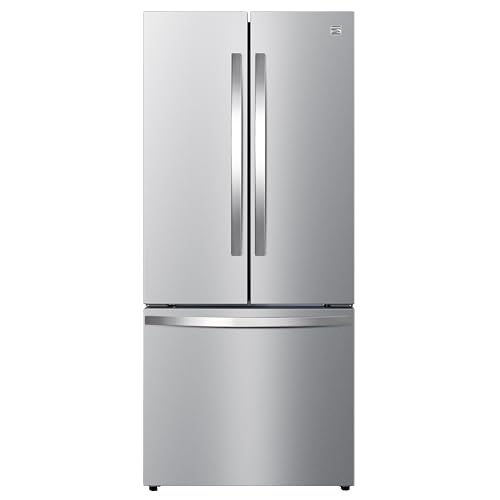
Kenmore 17.5 Cu Ft 30 Inch French Door Refrigerator Counter Depth — Best for 30-Inch Openings
Every other pick in this guide assumes a 36-inch opening. This Kenmore assumes the other kitchen — the one in the older house, the condo, the cottage — where the fridge slot is 30 inches wide and the French door dream usually dies at the tape measure. At 17.5 cu. ft. it is well below the class capacity, and it earns its place anyway, because for a 30-inch household the alternative to this fridge is not a bigger French door model; it is a top-freezer compromise.
Kenmore packed the format honestly: counter depth so the doors sit near the cabinet line, a factory ice maker, Accela Chill for fast cooling after a big shop, adjustable shelving, and a fingerprint-resistant stainless finish that matches the wider models’ manners. The fresh-food span is narrow by French door standards, yet the split doors still beat a single swinging door in a tight galley, where a full-width door arc can block the walkway entirely.
Judge it against its real rivals — 30-inch top-freezer and side-by-side models — and it wins on layout and feel. Judge it against the 22 cu. ft. class and it loses on volume, openly. That is the correct way to read its presence here: not as a shrunken contender, but as proof that the counter-depth French door idea survives at 30 inches for the kitchens that need it most.
- Capacity: 17.5 cu. ft. total
- Width: 30 inches — the only narrow pick in this guide
- Depth: counter depth
- Ice: factory ice maker included
- Cooling: Accela Chill fast-cooling feature
- Finish: fingerprint-resistant stainless steel, ENERGY STAR certified
Strengths
- Brings French doors and counter depth to genuine 30-inch kitchens.
- Split doors swing less into tight galley walkways than one wide door.
- Ice maker and fast-chill features match the wider models’ equipment.
Trade-offs
- Capacity is far below the class figure; big households will outgrow it.
- Narrow fresh-food shelves will not take the widest party platters flat.
- Freezer drawer space is modest for serious frozen storage.
Best for: 30-inch kitchens in older homes and condos that refuse to give up on French doors.
Not suited for: anyone with a 36-inch opening, who should spend the width on the larger picks above.
Owners of narrow kitchens should also think about what the French door format does to the room’s working triangle. With the range on one wall and the sink on another, a single wide fridge door swings through the exact space the cook stands in; the Kenmore’s split doors halve that intrusion, and each door can be opened with one hand while the other holds a pan. It is a small mercy, repeated daily. Add the counter-depth stance, which returns a few inches of floor to a room that has none to spare, and the Kenmore stops looking like the guide’s runt and starts looking like its most considered answer for a specific, common kind of home.
How Do the Six Compare Side by Side?
| Pick | Capacity | Width | Signature feature |
|---|---|---|---|
| GE GYE22GYNFS | 22.1 cu. ft. | 36 in. | Space-saving door ice maker, showcase LED lighting |
| GE Profile | 21.9 cu. ft. | 36 in. | Internal dispenser, fingerprint-resistant front |
| Samsung Bespoke 24 | 24 cu. ft. | 36 in. | AutoFill water pitcher in the door |
| Samsung Bespoke 25.5 | 25.5 cu. ft. | 36 in. | AI smart platform, largest cabinet here |
| GE GYE21JYMFS | 20.6 cu. ft. | 36 in. | Fingerprint-resistant finish, right-sized cabinet |
| Kenmore 30-Inch | 17.5 cu. ft. | 30 in. | French doors for narrow openings, Accela Chill |
Read the table as a map of intentions rather than a league ladder. Capacity climbs from the Kenmore’s narrow-kitchen brief to the big Samsung’s family brief, while the two GEs near 22 cu. ft. hold the centre the class is named for. The feature column is where your household’s habits should vote: pitcher drinkers, dispenser grazers, app households and narrow kitchens each have a different winner, and no row wins all four arguments at once.
What Does Counter Depth Actually Change Day to Day?
The honest answer is: traffic and sightlines, more than storage. A counter-depth cabinet stands proud of the counter by little more than its door thickness, so the fridge stops interrupting the room’s lines and stops narrowing the passage between island and run. In a galley, that reclaimed visual space is the difference between a kitchen that feels fitted and one that feels parked in.
Inside, the trade is shelf depth for shelf width. French door models spread food across a wide, shallow plane where everything is visible at a glance, which suits households that cook from fresh ingredients in rotation. Deep standard-depth boxes swallow bulk buys and catering trays more easily but hide older food at the back, where it quietly becomes archaeology. Neither is superior in the abstract; your shopping rhythm decides.
Which Dispenser Style Suits Your Household?
This guide contains the three live philosophies. Through-door and internal dispensers serve the grazer — the household member who wants a glass of cold water without a plan. The Profile’s internal arrangement keeps the front clean at the cost of opening the door each time, while the standard GE pattern keeps access immediate. Samsung’s pitcher serves the pourer: water lives in a vessel, travels to tables and desks, and refills itself when docked.
Ice follows a similar split. Door-integrated and freezer-based ice makers all demand a water line, so confirm your kitchen has one — or budget for fitting one — before falling for any model here. Renters and owners of older homes without a line should treat that plumbing question as the first filter, ahead of capacity, because a fridge whose ice maker can never be connected is a promise half kept.
How Should You Measure for a Counter-Depth Fridge?
Measure the opening’s width at three heights, because old walls lean and cabinets settle; the smallest figure is your truth. Measure depth from the wall to the counter’s front edge, then add the door and handle projection the maker publishes, and picture the result against your walkway. Measure height under any cabinet bridging the slot, remembering that hinge caps can sit proud of the cabinet’s stated height.
Then measure the journey, not just the destination. Front door width, hallway turns, stairwell corners and lift dimensions have ended more fridge upgrades than any spec sheet. Counter-depth models are shallower, which genuinely helps on turns, but their width and height are full-size. Note the tightest point on the route and compare it against the boxed dimensions on the listing before ordering, not after the lorry arrives.
Why Do Capacities Stray From the Class Figure?
Because capacity classes are shopping language, not engineering standards. Makers measure total volume by a shared method, but product families are designed at the sizes their tooling and price ladders dictate — 20.6, 21.9, 22.1, 24, 25.5 — and retailers group them under the round number a shopper typed. The practical lesson is to compare the exact figure on each listing and to weight usable layout over a decimal of gross volume.
It also pays to remember what the gross figure hides: freezer share, door-bin volume and crisper size vary between models of identical total capacity. A 22 cu. ft. fridge with a generous freezer drawer serves a batch cook better than a 24 cu. ft. model whose extra space all sits in door bins. Read the interior breakdown wherever the listing gives one, and picture your own weekly shop sitting on those shelves.
How Do You Keep a Counter-Depth Fridge Running Well?
Leave the maker’s stated clearance around the cabinet; counter-depth fridges breathe through their sides and base, and a slot fitted too tightly makes the compressor work against its own heat. Keep door seals clean and check them with a banknote test — a note that slides out of a closed door without resistance marks a seal that is leaking cold and money.
Inside, resist the urge to pack the shallow shelves solid. Air needs corridors between items to hold temperature evenly, and a counter-depth cabinet rewards the household that shops in rhythm rather than in bulk. Set the fresh-food section near the maker’s recommended mark, give new loads an hour before judging the temperature, and wipe dispenser and pitcher parts on a schedule, because water systems reward small, regular attention and punish neglect comprehensively.
How Much of the Capacity Is Fridge, and How Much Is Freezer?
Total capacity is the number on the badge, but households live in the split. French door models in this class typically give roughly two-thirds of their volume to fresh food and a third to the freezer drawer, which suits the way most families actually eat: fresh ingredients cycling weekly up top, a supporting cast of frozen goods below. If your household runs the other way — batch cooking, garden gluts, a hunter’s or a market gardener’s freezer habit — the drawer will feel small no matter which of these six you choose, and a separate garage freezer may be the honest companion purchase.
The drawer format itself deserves a word. A freezer drawer pulls the frozen section toward you and presents it from above, so finding the peas is a glance rather than a kneel-and-dig. The cost is geometry: drawers hold boxes and bags happily but swallow very large, rigid items — a whole frozen turkey, a sheet cake — less gracefully than a wide side-by-side freezer column. Picture your three largest frozen regulars and check them against the drawer before you fall for a finish.
What About Noise, Heat and the Room Around the Fridge?
Counter-depth fridges live closer to the life of the house than their standard-depth cousins, because they are bought for kitchens that open onto living space. Compressor hum and fan whisper therefore matter more, and the honest position is that all six of these are modern inverter-era machines whose running sounds sit at conversation-drowning level only in a silent room at 3 a.m. What varies more is installation: a fridge wedged tight against cabinetry can telegraph vibration into the joinery, while one standing on a level floor with its maker’s clearances kept will run as background.
Heat is the twin consideration. The cabinet sheds the warmth it removes from your food into the kitchen, and in a small, already warm room that contribution is real across a summer. Keeping the clearances the maker specifies is not pedantry; it is what lets the machine shed heat without working harder, and working harder is where both noise and running costs are born. Level the cabinet, leave the gaps, and most of what people call a noisy fridge turns out to be an installation story.
Should You Consider a Different Layout Instead?
It is worth one honest paragraph of doubt. French doors are the fashionable format, and this whole guide assumes them, but a bottom-freezer single-door model gives you an undivided fresh-food door and often a slightly simpler seal arrangement, while a side-by-side suits households that live out of the freezer as much as the fridge. If your kitchen is narrow enough that two French doors both clip the island, a single door may serve you better than fashion does.
What French doors uniquely offer is the wide fresh-food span at standing height: platters slide in flat, the week’s vegetables are visible in one glance, and nothing important hides at ankle level. For households that cook from fresh ingredients most nights, that span is not a luxury but the working surface of the kitchen’s cold side. Choose the layout that matches where your food actually lives, and let the neighbours keep whichever format is currently fashionable.
How Do Delivery and Installation Usually Go?
Plan the day in three acts. First, the old fridge: photograph its water line connection, note whether a shut-off valve exists behind it, and arrange its removal or haul-away when you order, because a displaced fridge in a hallway is a week-long obstacle. Second, the route: clear it, take doors off their hinges if the tape measure says so, and protect the floor where the new cabinet will pivot. Third, the install itself: level the cabinet, connect the water line if you have one, and let the fridge stand and settle before loading it with the weekly shop.
Give the new machine a few hours to pull down to temperature before judging it, and a full day before concluding anything about its noise or cycling. Resist filling it to the walls on day one; air needs to move while the cabinet learns its rhythm. Keep the packaging until the first week has passed without a fault — returns are painless with boxes and miserable without them — and register the warranty while the paperwork is still on the counter rather than in a drawer of good intentions.
What Should You Budget Beyond the Fridge Itself?
The sticker is the beginning, not the bill. A water line kit, a new shut-off valve or an electrician’s visit to move a socket can each join the invoice, and none of them is a surprise if you inspect the slot before ordering. Haul-away of the old machine, delivery to a second floor, and door removal are the other usual extras; ask about each at checkout rather than on the doorstep, where your negotiating position is weakest.
Running costs deserve the same clear eye. An ENERGY STAR certified model like the Kenmore earns its badge in lower consumption across years of continuous running — a fridge never sleeps, so small efficiency differences compound quietly. Whatever you choose, the cheapest fridge to run is a well-sealed, well-ventilated one, which returns the budget conversation to the unglamorous virtues: clearances kept, seals clean, coils free of the felt of dust that kitchens generate.
How Long Should One of These Fridges Last?
A modern refrigerator’s honest expectation is a decade and more of service, with the compressor and the door seals deciding most of the story. Seals are consumables in slow motion: they harden, tear at the corners, and leak money as cold air for years before they fail outright, so inspecting them annually is the highest-value maintenance a fridge ever receives. Water filters, where fitted, want changing on the maker’s schedule if dispenser taste matters to your household.
The electronics are the newer unknown. Smart models carry boards and sensors that a purely mechanical fridge never had, which is one more reason the guide’s simpler picks — the standard GE, the Kenmore — will suit households that keep appliances for a very long time and repair rather than replace. Buy the complexity you will use, keep the seals supple and the clearances honest, and any of these six should outlast the kitchen trend cycle that produced it.
Which Shelves and Bins End Up Doing the Real Work?
After a month with any fridge, a pattern emerges: two shelves carry the household, the door bins carry the condiments, and one crisper becomes a drawer of good intentions. Counter-depth models reward households that plan for that pattern. Put the daily shelf at waist height where the light is best, give the door bins to the bottles that genuinely move, and let the crispers be the vegetable drawer they claim to be rather than overflow storage for everything else.
Adjustability is the feature that decides whether this works. Shelves that split, slide or fold let a tall stockpot or a standing bottle claim space without evicting a whole shelf’s worth of food, and in a shallow cabinet that flexibility is worth more than another half cubic foot on the badge. When you compare the six interiors here, compare the shelving tricks as carefully as the capacities; you will use the tricks daily and the capacity weekly.
How Should You Organise the Freezer Drawer?
A drawer freezer rewards flat thinking. Freeze soups, sauces and portions in flat bags that stack like files, label them on the edge that faces up, and keep a small open box for the loose citizens — the half bag of peas, the odd fish fillet — that otherwise migrate to the drawer’s corners and fossilise. The drawer’s upper tray, where fitted, is the right home for ice cream and anything you reach for weekly, because it is the layer you see without excavation.
Temperature discipline matters more in a drawer than in a door freezer, because a drawer is opened by pulling the cold air’s container out into the room. Work quickly, batch your trips, and do not leave the drawer standing open while you decide about dinner. Households that freeze a lot should also rotate honestly: new bags go under or behind, the oldest come forward, and the drawer stays a store rather than becoming a museum of forgotten good intentions.
What Changes When You Replace an Older, Deeper Fridge?
The first week with a counter-depth cabinet teaches two lessons. The pleasant one is spatial: the kitchen feels larger, the walkway clears, and the room’s lines calm down in a way visitors notice before they can name it. The harder lesson is behavioural: a household trained by a deep fridge to buy in bulk and excavate weekly must learn to shop in rhythm and store in the open, because the shallow shelves display everything, including your habits.
Most households convert within a fortnight and then defend the format fiercely, because visibility turns out to be a feature no capacity figure captures. Food waste falls when nothing can hide. The weekly shop gets smaller and better. If you are hesitating at the threshold of this class, that conversion story — repeated by nearly everyone who has made the swap — is the most reassuring evidence this guide can offer.
How Do These Finishes Age in a Working Kitchen?
Stainless steel’s reputation for showing fingerprints is earned, but its deeper virtue is forgiveness: it does not chip, it does not yellow, and a decade of wiping leaves it looking like itself. The fingerprint-resistant treatments on the Profile, the smaller GE and the Kenmore add a clear coat that hides the daily touching, at the cost of a slightly softer sheen that purists occasionally notice under raking light. In a kitchen with children, that trade is not close: choose the treatment and spend your wiping time on the hob instead.
Handles and edges age faster than door faces. Bar handles collect grime at their mounts, recessed edges collect it along their seams, and both reward a monthly pass with a soft cloth more than any special product. The Bespoke Samsungs’ calm, minimal fronts give grime fewer places to gather, which is an unadvertised benefit of the furniture look. Whichever finish you choose, agree as a household on one cleaning product and keep it under the sink; finishes suffer more from a rotation of harsh experiments than from honest daily use.
Finally, think about the room’s other metals before you commit. A fridge that stands alone can wear any finish, but one that shares sightlines with a range, a hood and cabinet hardware looks best when its tone joins that conversation — warmer stainless beside warmer hardware, brighter steel beside chrome. The models here all speak some dialect of stainless, so the choice is about undertone and sheen rather than colour, and seeing the finish in your own kitchen’s light, at ordering distance, is worth more than any showroom impression.
What Are the Most Common Mistakes When Buying in This Class?
The first is shopping the class number instead of the exact capacity, then being surprised by a fridge that is meaningfully smaller or larger than the kitchen planned for. The second is measuring the slot and forgetting the route — a counter-depth box that cannot turn the hallway corner is just an expensive return. The third is falling for a dispenser style your household will not use: pitcher families and paddle families rarely convert, and the fridge will outlast the attempt.
Fourth comes ignoring the water line. Ice makers and dispensers need one, and discovering its absence on delivery day turns excitement into plumbing invoices. Fifth, buyers forget door swing: French doors need clearance on both sides, and a wall or island that clips a door’s arc will annoy you every single day. Finally, many shoppers compare gross capacities across brands without checking the freezer’s share, then wonder where the frozen food is supposed to live.
Final Recommendation
For most households researching this class, the answer is the fridge that actually matches it: the GE GYE22GYNFS, whose capacity, door-mounted ice maker and showcase lighting form the most balanced package here. If the fridge’s face matters as much as its interior, step to the GE Profile counter-depth model and its clean internal-dispenser front. Pitcher households and bigger shops belong with the Samsung 24 cu. ft. Bespoke, while the 25.5 cu. ft. Samsung waits for families who have honestly outgrown the class, the smaller GE serves couples who shop fresh, and the Kenmore rescues 30-inch kitchens from compromise. Measure your slot and your route, choose the dispenser your household will still love in year five, and the counter-depth promise — a kitchen that looks fitted rather than filled — will keep itself long after the delivery crew has gone.
Frequently Asked Questions
Is 22.2 cu. ft. enough for a family of four?
For a family that shops weekly and cooks fresh most nights, yes — the two GEs near that figure are sized exactly for that rhythm. Families who bulk-buy monthly or freeze large batches will feel the freezer drawer’s limits first and should consider the 24 or 25.5 cu. ft. Samsung step-ups in this guide.
Do counter-depth fridges hold less than standard-depth ones?
Generally a little, yes: the shallower cabinet trades depth for width and visibility. In practice the wide, shallow shelves waste less food to back-of-fridge forgetting, so many households find the usable capacity closer than the figures suggest.
Does the Kenmore really fit a 30-inch opening?
Yes — it is a 30-inch-wide model, the only one here. Confirm your opening’s true width at several heights and allow the maker’s clearance, but no cabinet surgery should be needed in a genuine 30-inch slot.
Do all six picks need a water line?
Any model whose ice maker or dispenser you intend to use needs a plumbed water supply. If your kitchen lacks one, either budget for installation or accept that those features stay dormant — the fridge itself will still cool perfectly well.
Which finish is easiest to keep clean?
The fingerprint-resistant stainless on the GE Profile, the smaller GE and the Kenmore hides daily touching best. Plain stainless, as on the standard GE and the Samsungs, looks superb after a wipe but asks for that wipe more often.
Related Guides
Still shaping the rest of the kitchen plan? These companion guides cover the neighbouring refrigerator decisions. Best 24 Cu Ft Bottom Freezer Refrigerators Best 30 Inch Wide Refrigerators Best 3.9 Cu Ft Front Load Washers


