What's inside
- Key Takeaways
- Quick Picks
- How We Chose These Picks
- How Do the Six Mixers Compare Side by Side?
- Tilt-Head or Bowl-Lift: Which Design Matches Your Baking?
- How Much Bowl Capacity Do You Honestly Need?
- What Do Speed Counts Actually Change at the Bowl?
- Which Attachments Turn a Mixer Into a Kitchen System?
- How Do You Knead Bread Dough Without Abusing the Machine?
- What Is the Right Way to Cream Butter and Sugar?
- How Should You Clean and Store a Mixer So It Lasts?
- What Does the First Month With a Stand Mixer Change?
- How Do You Whip Egg Whites and Cream Reliably Every Time?
- How Do You Mix for One or Two Without Losing Ingredients in a Big Bowl?
- What Should You Know About Noise, Vibration and Counter Behaviour?
- How Does a Mixer Change Baking With Children and Grandparents?
- Which Jobs Around the Kitchen Can a Mixer Steal From Other Tools?
- How Do You Read a Mixer Listing Without Being Fooled by It?
- What Does a Sensible First Recipe Sequence Look Like?
- How Should You Decide Between the Two Cuisinarts?
- When Does It Make Sense to Buy the Small Mixer First?
- How Do You Keep Flour Inside the Bowl Where It Belongs?
- What Role Does the Mixer Play in Holiday-Scale Baking?
- How Should Left-Handed Bakers and Small Hands Judge Controls?
- What Should You Do in the First Five Minutes After Unboxing?
- How Do You Judge Whether a Mixer Is Worth Repairing Years Later?
- What Mistakes Do New Stand Mixer Owners Make Most Often?
- How Should a Gift Buyer Choose a Mixer for Somebody Else?
- How Should You Test a New Mixer in Its First Week?
- Final Recommendation
- Frequently Asked Questions
- Related Guides
As an Amazon Associate I earn from qualifying purchases. This post may contain affiliate links at no extra cost to you.
cottageverdict.com is reader-supported. When you buy through links on our site, we may earn an affiliate commission.
Where to buy: the six mixers reviewed below are all sold through Amazon, and each model name in the Quick Picks table, the detailed reviews and the comparison table links to its listing, where you can check price on Amazon and confirm which beaters, bowls and shields are included in the box before you commit.
Choosing among the best stand mixers for your kitchen is really choosing how your baking life will feel for the next decade. A stand mixer is not a seasonal gadget; it is the appliance that creams the birthday butter, kneads the Friday loaf and whips the emergency meringue when guests are already parking outside. Buy too small and every double batch becomes a negotiation. Buy too heavy and the machine lives in a cupboard, which is where stand mixers go to be forgotten. The right choice sits on the counter, within reach, matched to the doughs and batters you actually make.
This guide lines up six machines across three philosophies. Three carry the KitchenAid badge at different sizes and head styles, from the compact Classic to a bowl-lift model built for serious bread. Two Cuisinart machines answer with bigger bowls, more speeds and, in one case, a digital brain. One small mixer from Kitchen in the box argues that a 3.2-quart lightweight machine serves a small kitchen better than a monument it has no room for. Each review judges the mixer against the baker it suits, not against an abstract ideal.
Key Takeaways
- Tilt-head designs suit most home bakers because the bowl is easy to reach, while bowl-lift models earn their keep with stiff dough and big batches.
- Bowl size in quarts only matters relative to your recipes; a 4.5-quart bowl handles family baking, and 5.5 quarts buys headroom for double loaves.
- The attachment hub on the KitchenAid machines turns a mixer into a platform for pasta, grinding and more, which changes long-term value.
- Cuisinart’s pair counter with twelve speeds and generous bowls at competitive positions in the range.
- A small, light mixer that stays on the counter beats a powerful one stored in a garage, every single week.
Quick Picks
| Pick | Badge | Why it earns its place |
|---|---|---|
| KitchenAid Classic 4.5 Quart Stand Mixer K45SS | Best Entry Into the Classic Line | The original tilt-head formula in Onyx Black, with metal construction and ten speeds for everyday baking. |
| KitchenAid Artisan 5 Quart Stand Mixer | Best All-Round Family Mixer | A five-quart bowl, a pouring shield and the huge colour range that made this the default wedding-registry mixer. |
| KitchenAid 5.5 Quart Bowl-Lift Stand Mixer | Best for Heavy Dough Batches | Bowl-lift stability, eleven speeds and a stainless bowl for bakers whose dough fights back. |
| Cuisinart 5.5 Quart Stand Mixer 12 Speed | Best Value Big-Bowl Alternative | Twelve speeds, a 5.5-quart stainless bowl and a full trio of tools without the flagship tax. |
| Cuisinart Precision Pro Digital Stand Mixer SMD-50 | Best Digital Controls | The same generous format with a digital interface and three preprogrammed food preparation settings. |
| Kitchen in the box 3.2Qt Small Stand Mixer | Best Small-Kitchen Mixer | A portable 3.2-quart machine with six speeds that one person can lift with one hand. |
How We Chose These Picks
We weighed four things, in the order bakers feel them. First, the drive: how the head is built, how many speeds the dial offers and whether the machine walks across the counter when a stiff dough climbs the hook. Metal construction, which the KitchenAid Classic names on its listing, signals a gear train and housing meant for years rather than seasons. Second, the bowl: its capacity, its handle, and whether it locks firmly enough that you trust the machine alone with a wet batter while you grease a tin.
Third came the tools in the box. A flat beater, a dough hook and a wire whisk are the working trio; a pouring shield, as the Artisan includes, is the difference between a clean counter and a flour snowfall when you add dry ingredients at speed. Fourth, we considered the ecosystem and the footprint together. KitchenAid’s attachment compatibility stretches a mixer into pasta rollers and grinders later. Cuisinart counters with bowl size and speed count at each level. Kitchen in the box wins a different contest entirely: the machine you can carry with one hand and store in a cupboard you actually have.
We deliberately kept one foot in reality about batch size. Most home baking is a single cake, a dozen muffins, one loaf. A mixer that excels there and merely copes with the annual double batch is a better buy for most kitchens than a semi-professional unit that makes Tuesday’s sponge feel like operating plant machinery. The rankings below reflect that order of priorities, with the bowl-lift KitchenAid reserved for the minority whose weekly bread habit genuinely needs it.

KitchenAid Classic 4.5 Quart Stand Mixer K45SS — Best Entry Into the Classic Line
The Classic is where the KitchenAid story starts for most households, and its recipe has barely changed because it works. The tilt-head lifts clear of the 4.5-quart bowl so you can scrape, taste and add without wrestling the beater, and the listing counts 59 touchpoints around the bowl where the beater passes, which is the brand’s way of saying the mixing action reaches the edges instead of leaving a ring of unmixed butter at the base. Ten speeds cover the honest range of home work, from folding at the bottom to whipping at the top.
Onyx Black suits kitchens that want the machine to disappear against dark counters, and the durable metal construction gives the Classic a heft that reads as permanence when you set it down. This is not the mixer for a weekly four-loaf habit; the bowl fills quickly with a double bread batch and the head works hard at stiff doughs. For cakes, cookies, mash, whipped cream and a single loaf at a time, it is the benchmark everything else in this guide is quietly measured against, and its compatibility with the wider attachment family means it can grow jobs as your ambitions grow.
- Style: tilt-head, 4.5 quart bowl
- Speeds: 10 speed settings
- Construction: durable metal build
- Mixing action: 59 touchpoints around the bowl
- Colour of this listing: Onyx Black
- Growth path: compatible with KitchenAid attachments
Strengths
- The tilt-head makes adding and scraping effortless
- Metal construction promises a long working life
- Attachment hub opens pasta and grinding later
Trade-offs
- The 4.5-quart bowl limits double batches
- Heavy dough makes the head work visibly hard
- No pouring shield is named in the box contents
Best for: first-time stand mixer owners baking weekly cakes and cookies. Not suited for: high-volume bread bakers or caterers in disguise.
KitchenAid Artisan 5 Quart Stand Mixer — Best All-Round Family Mixer
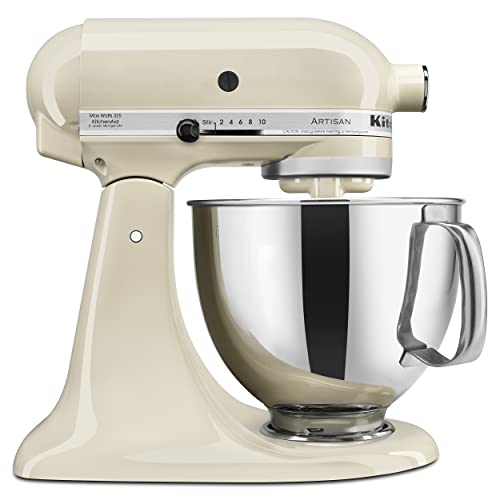
If the Classic is the sensible shoes, the Artisan is the pair you also enjoy looking at. The bowl grows to five quarts, the listing includes a pouring shield for mess-free mixing, and the tilt-head design still lets you add ingredients mid-mix without stopping the motor. Almond Cream, the colour of this listing, is the warm neutral that made the Artisan a fixture of registry lists and kitchen photographs, but the machine beneath the colour is a straightforward upgrade in capacity and convenience over its smaller sibling.
Families feel the extra half-quart precisely at the moments that used to overflow: a double cookie dough, a birthday cake with a spare layer, mashed potatoes for a table of eight. Ten speed settings match the Classic, and the same attachment compatibility applies, so the Artisan can inherit pasta rollers and ice-cream makers as the household’s ambitions wander. It remains a tilt-head, with a tilt-head’s one weakness: very stiff dough can make the head nod under load, a trait bread specialists should weigh against the bowl-lift model reviewed next.
- Style: tilt-head, 5 quart bowl
- Speeds: 10 speed settings
- Included extra: pouring shield for cleaner adding
- Colour of this listing: Almond Cream
- Design note: head tilts for easy ingredient access
- Growth path: compatible with the attachment range
Strengths
- Five quarts swallows family-size batches whole
- Pouring shield keeps flour off the counter
- The colour range lets the machine match the kitchen
Trade-offs
- Tilt-head flex shows under the stiffest doughs
- It claims permanent counter space and knows it
- Attachments beyond the basics are separate purchases
Best for: family bakers who mix often and bake big occasionally. Not suited for: minimalists or dedicated sourdough producers.
KitchenAid 5.5 Quart Bowl-Lift Stand Mixer — Best for Heavy Dough Batches
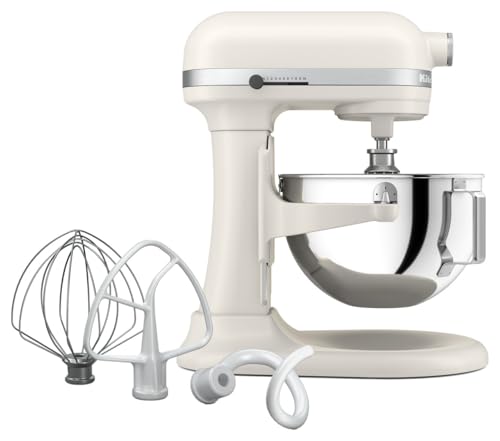
The bowl-lift design exists for one reason: stability under load. Instead of tilting, the head stays fixed while the 5.5-quart stainless steel bowl rides a lever up into the beater, locking the whole assembly into a single rigid frame. When a lean bread dough climbs the hook and starts slapping the bowl’s sides, that rigidity is the difference between a machine that kneads and a machine that dances. Eleven mixing speeds give finer control at the low end, where dough work lives, than the ten-speed dials of its tilt-head siblings.
The box includes the working trio in full: flat beater, dough hook and wire whip, so the machine arrives ready for batter, bread and meringue without an accessory order. Porcelain White keeps the big frame visually light, which matters because this mixer will not be travelling to a cupboard between uses; it is heavy, tall and entirely committed to its counter position. Under-cabinet clearance is the measurement to take before ordering, since a bowl-lift with the bowl raised needs more vertical room than its shelf height suggests.
- Style: bowl-lift, 5.5 quart stainless steel bowl
- Speeds: 11 mixing speeds
- Included tools: flat beater, dough hook, wire whip
- Colour of this listing: Porcelain White
- Frame: fixed head, lever-raised bowl
- Best workload: stiff and large dough batches
Strengths
- Rigid frame stays planted under heavy dough
- Largest KitchenAid bowl in this guide
- Eleven speeds refine low-speed dough control
Trade-offs
- Adding ingredients mid-mix is less casual
- Height demands a cabinet clearance check
- Overkill for cake-and-cookie households
Best for: weekly bread bakers and double-batch households. Not suited for: small kitchens or occasional bakers.
Cuisinart 5.5 Quart Stand Mixer 12 Speed — Best Value Big-Bowl Alternative
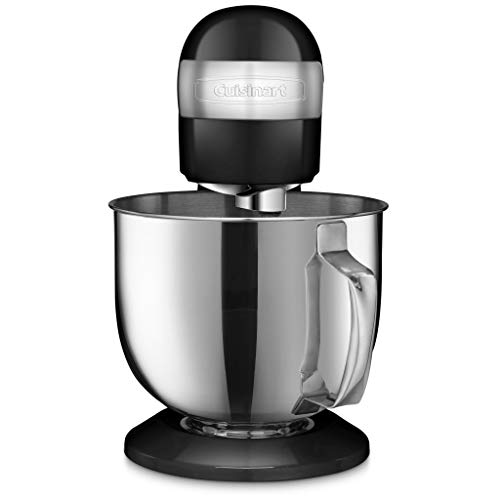
Cuisinart’s SM-50 makes its argument with numbers a baker can use: a 5.5-quart stainless steel bowl matching the biggest KitchenAid here, and twelve speeds where the famous rival offers ten or eleven. The extra low gears matter more than the extra top ones, because slow, patient stirring is what folds flour into a batter without toughening it, and what starts a dough without spraying the counter. The box is complete in the way buyers appreciate a year later: chef’s whisk, mixing paddle, dough hook and a splash guard with a pour spout.
Onyx is the finish on this listing, and the machine carries itself like a serious alternative rather than a tribute act. What it does not carry is an attachment ecosystem with KitchenAid’s decades of depth; if your five-year plan includes a specific pasta roller or grain mill from that catalogue, factor the loyalty honestly. If your plan is mixing, in generous quantities, with fine speed control, the Cuisinart’s arithmetic is hard to argue with, and many bakers will never miss the hub at all.
- Style: tilt-head format, 5.5 quart stainless bowl
- Speeds: 12 speed settings
- Included tools: chef’s whisk, mixing paddle, dough hook
- Included extra: splash guard with pour spout
- Colour of this listing: Onyx
- Model reference: SM-50BK
Strengths
- Big bowl and twelve speeds in one package
- Full tool trio plus splash guard included
- Fine low speeds suit folding and dough starts
Trade-offs
- Attachment range is narrower than KitchenAid’s
- Fewer colours than the Artisan’s famous palette
- Brand loyalty parts availability varies by region
Best for: value-focused bakers who mix large batches weekly. Not suited for: buyers planning a KitchenAid attachment collection.
Cuisinart Precision Pro Digital Stand Mixer SMD-50 — Best Digital Controls
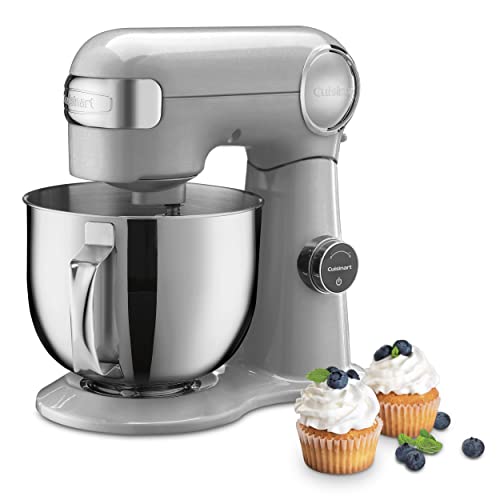
The SMD-50 takes the SM-50’s generous hardware and replaces the dial with a digital interface, adding three preprogrammed food preparation settings to its twelve speeds. Preprograms sound like garnish until you have used one: a timed, ramped knead or a controlled whip removes the standing-and-watching portion of a recipe, and repeatability improves because the machine, not your mood, decides when the speed changes. Bakers who follow recipes to the gram tend to love this kind of consistency.
Silver Lining is the finish here, and the bowl remains the same 5.5-quart stainless steel unit with whisk, flat mixing paddle, dough hook and splash guard in the box. The honest caution is that digital controls introduce a screen and electronics into an appliance category famous for lasting thirty years on a dial and a prayer. Cuisinart backs its machines properly, yet a buyer choosing between the two Cuisinarts is really choosing a philosophy: mechanical simplicity with the SM-50, or programmed convenience with this model. Neither answer is wrong; they suit different cooks.
- Style: digital stand mixer, 5.5 quart bowl
- Speeds: 12 speeds with digital control
- Programs: 3 preprogrammed food prep settings
- Included tools: whisk, flat mixing paddle, dough hook
- Included extra: splash guard
- Colour of this listing: Silver Lining
Strengths
- Preprogrammed settings make results repeatable
- Digital display shows exactly where you are
- Same large bowl and full tool set as its sibling
Trade-offs
- Electronics add a long-term repair question
- Dial devotees may find the interface fussy
- Programs help most if you bake by the book
Best for: precise, recipe-driven bakers who value repeatability. Not suited for: buyers wanting the simplest possible controls.
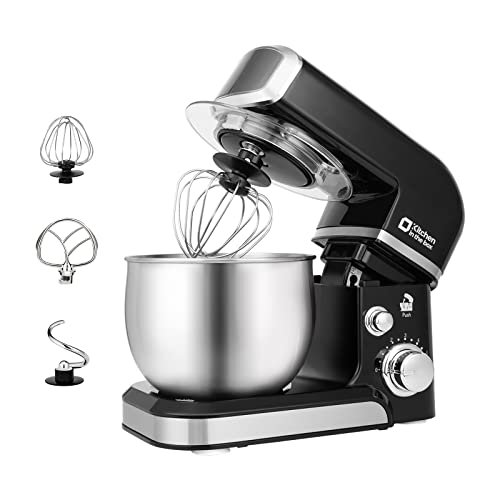
Kitchen in the box 3.2Qt Small Stand Mixer — Best Small-Kitchen Mixer
Every other machine in this guide assumes a counter that can surrender a permanent parking space. The Kitchen in the box mixer assumes the opposite: a small kitchen, a single cook or a couple, and storage that must be earned. At 3.2 quarts with six speeds, it handles the daily reality of small households, which is one cake batter, one batch of cookie dough, eggs for two, cream for one dessert. Its portability is the headline feature; the listing calls it lightweight, and one person can genuinely carry it from cupboard to counter without a warm-up.
The tool set covers the essentials with an egg whisk, dough hook and flat beater, so nothing about a normal recipe feels compromised, only scaled. What you give up is headroom and heroics: a stiff wholemeal dough in a full bowl will test a small motor, and doubling recipes is off the menu. Judge it as a flat-pack solution to a real constraint and it is excellent. Judge it against the bowl-lift KitchenAid and you are comparing a bicycle to a lorry because both have wheels.
- Style: compact stand mixer, 3.2 quart bowl
- Speeds: 6 speed settings
- Build: portable, lightweight for daily moving
- Included tools: egg whisk, dough hook, flat beater
- Colour of this listing: Black
- Audience: daily use in small households
Strengths
- Light enough to store away between bakes
- Right-sized for one and two-person recipes
- Full basic tool trio included in the box
Trade-offs
- No capacity for doubled or family batches
- Stiff dough pushes a small motor hard
- Six speeds offer less fine control
Best for: small kitchens, singles, couples and beginners. Not suited for: bread enthusiasts or big-family baking days.
How Do the Six Mixers Compare Side by Side?
| Pick | Bowl | Speeds | Standout detail |
|---|---|---|---|
| KitchenAid Classic 4.5 Quart Stand Mixer K45SS | 4.5 qt | 10 | Metal build, 59 touchpoints |
| KitchenAid Artisan 5 Quart Stand Mixer | 5 qt | 10 | Pouring shield included |
| KitchenAid 5.5 Quart Bowl-Lift Stand Mixer | 5.5 qt | 11 | Bowl-lift rigid frame |
| Cuisinart 5.5 Quart Stand Mixer 12 Speed | 5.5 qt | 12 | Splash guard with spout |
| Cuisinart Precision Pro Digital Stand Mixer SMD-50 | 5.5 qt | 12 | 3 preprogrammed settings |
| Kitchen in the box 3.2Qt Small Stand Mixer | 3.2 qt | 6 | Lightweight and portable |
Tilt-Head or Bowl-Lift: Which Design Matches Your Baking?
The tilt-head is the friendlier machine day to day. The head swings back, the bowl sits open, and you scrape, add and taste without thinking. For cakes, batters, frostings and whipped anything, that openness is worth more than rigidity. Its weakness appears with dense, low-hydration dough, where torque can make the head nod and the whole machine rock gently, a sign it is working at the edge of its design rather than failing.
The bowl-lift trades that openness for a locked frame. Adding ingredients means lowering the bowl or working through a narrower gap, and a pouring shield earns its place. In exchange, stiff dough kneads without drama and big batches stay composed. Choose by your dominant recipe: if bread leads your baking life, lift; if cakes and cookies lead, tilt. Households split evenly should tilt first, because daily friendliness compounds, and borrow a neighbour’s patience for the two stiffest doughs of the year.
How Much Bowl Capacity Do You Honestly Need?
Capacity numbers flatter every machine, because a bowl filled to the brim with flour cannot be mixed at all. Working capacity is closer to two-thirds of the headline figure for dry-heavy mixes. A 4.5-quart bowl therefore handles a standard cake, a single loaf’s dough and a family cookie batch in comfort. The 5 and 5.5-quart bowls stretch to doubled cookies, two-loaf doughs and party-scale mash. The 3.2-quart compact is honest about its lane: single recipes for small households, mixed properly rather than heroically.
Match the bowl to the recipe you make monthly, not the feast you make annually. Oversizing has a cost beyond money: small quantities get lost in a huge bowl, where the beater can pass over a single egg white without truly whipping it. Several bakers solve this by owning the big machine and a small second bowl. Others simply choose the middle of this guide, the five-quart class, which splits the difference gracefully for most homes.
What Do Speed Counts Actually Change at the Bowl?
Six, ten, eleven or twelve speeds matter less as a total than as a distribution. The bottom two settings decide your quality of life: a true slow stir folds flour without a dust cloud and starts dough without violence. The top setting decides your meringues and whipped cream. Middle speeds are where creaming lives, and any machine here covers that band comfortably. The Cuisinarts’ twelve speeds and the bowl-lift’s eleven buy finer steps at the gentle end, which careful bakers notice; the six speeds of the compact cover the same jobs with less nuance.
Preprogrammed settings, unique here to the digital Cuisinart, change the question from how many speeds to who chooses them. A program ramps and rests on a schedule written for the task, which suits bakers who want the same knead every Saturday. Manual dials suit bakers who adjust by eye and ear. There is no hierarchy between those temperaments, only a fit, and recognising your own temperament is the cheapest research you will do in this purchase.
Which Attachments Turn a Mixer Into a Kitchen System?
The front hub on KitchenAid machines accepts a small civilisation of tools: pasta rollers and cutters, a meat grinder, a grain mill, an ice-cream maker, spiralizers and more, each sold separately and each replacing a separate appliance. This is the Classic and Artisan’s quiet long-term argument. The mixer you buy for cakes in year one can roll anniversary pasta in year three without another motor entering the house. Cuisinart’s ecosystem is thinner, and the compact Kitchen in the box plays a different game entirely, so hub dreams should steer you early.
Be honest about which attachments you will truly buy. A hub that never hosts anything is a decorative cap, and plenty of bakers live happily that way. But if fresh pasta or home-ground burgers are already on your wish list, price the attachments into the comparison now rather than discovering later that your chosen platform cannot grow in that direction. Platforms are the one decision in this guide that cannot be revised cheaply.
How Do You Knead Bread Dough Without Abusing the Machine?
Respect the dough hook’s speed limit: kneading happens at low speed, typically the second setting, whatever the temptation to hurry. Higher speeds overheat motors and throw dough around the bowl instead of developing it. Add flour gradually, especially in the big bowls, and let each addition incorporate before the next lands; a sudden full load is how flour ends up on the ceiling and how gears earn an early retirement.
Watch the dough, not the clock. When it clears the bowl’s sides and turns smooth and elastic, stop, even if the recipe’s minutes have not elapsed, because over-kneading in a powerful machine is a real failure mode that home bakers rarely expect. Rest the machine between back-to-back batches on heavy days, and keep quantities within the bowl’s honest working capacity. The bowl-lift KitchenAid tolerates this work best, but good technique flatters every mixer in the guide.
What Is the Right Way to Cream Butter and Sugar?
Start with butter that yields to a fingertip but does not shine with melt, and give the machine time at a middle speed with the flat beater. The mixture should turn pale and fluffy, which is trapped air doing future cake-rising work. Scrape the bowl twice during the process, because every mixer, whatever its touchpoint count, leaves a shy layer at the base that only a spatula can recruit. Add sugar gradually so the crystals cut through the butter rather than riding on top of it.
Eggs come next, one at a time, each beaten in fully before the next joins, or the emulsion sulks and splits. A spoonful of the recipe’s flour with the final egg steadies a mixture that looks ready to curdle. These are hand-baking truths that a stand mixer does not repeal; it simply performs the labour while you perform the judgement, which is the correct division of work between a person and a machine.
How Should You Clean and Store a Mixer So It Lasts?
Bowls, beaters and hooks wash like any serious kitchen metal, with the manual’s word on dishwasher safety governing each part. The head and body want a damp cloth and immediate attention to splashes, because dried batter on a hinge becomes tomorrow’s grit in the mechanism. Never immerse the machine, and never spray cleaner directly onto it; spray the cloth instead. A minute of wiping after each use keeps a ten-year-old mixer looking like a two-year-old one.
Storage is a lifestyle decision disguised as logistics. A mixer on the counter gets used three times as often as one in a cupboard, which is the entire argument for the compact Kitchen in the box in small kitchens: it is the one machine here designed to travel daily without resentment. For the heavy machines, measure the counter-to-cabinet height before choosing, park the mixer where it will live, and coil the cord loosely rather than strangling the neck with it.
What Does the First Month With a Stand Mixer Change?
Recipes you used to avoid quietly return. Whipped cream stops being an event. Pizza dough becomes a weeknight possibility instead of a project. Baking with children gets easier because the machine holds the bowl steady while small hands add ingredients, and baking for crowds stops requiring a recovery day for your forearms. Most owners also report a subtle shift in standards: when creaming costs nothing, the good cake recipe replaces the adequate one.
There is a learning curve worth respecting. Your first dough will probably be over or under kneaded, and your first meringue may teach you about grease in bowls the memorable way. Keep notes for the first dozen bakes, speed and minutes alongside results, and the machine’s personality will map itself quickly. By the second month, the dial settings become instinct, and the mixer fades into the kitchen’s furniture of trusted tools.
How Do You Whip Egg Whites and Cream Reliably Every Time?
Fat is the enemy of foam, so the bowl and whisk must be scrupulously clean and dry, with no yolk smuggler hiding in the whites. Room-temperature whites whip faster and higher than cold ones. Start at a middle speed until the foam turns uniform, then climb, adding sugar gradually once soft peaks form if the recipe calls for it. Stop the moment peaks stand glossy and firm; ten extra seconds can push a foam toward graininess that no folding will forgive.
Cream plays by kinder rules but rewards the same attention. Cold cream, a cold bowl on hot days, and a watchful eye near the end, because the distance between softly whipped and butter is about half a minute at full speed. The wire whisk or whip included with most picks here is the right tool; the flat beater will do the job slowly and less evenly. When in doubt, finish the last stage by hand with the whisk you already have in the bowl, trading a little labour for total control.
How Do You Mix for One or Two Without Losing Ingredients in a Big Bowl?
Small quantities in large bowls are the stand mixer’s one structural awkwardness. A single egg white in a 5.5-quart bowl spreads into a film the whisk can barely gather, and a half-batch of buttercream hides under the beater’s path. The cures are practical: choose the smallest bowl your machine accepts, tilt ingredients toward the beater’s sweep, and accept a hand whisk for the tiniest jobs. This is also where the compact Kitchen in the box quietly justifies itself in a household of one, because its whole scale assumes small recipes.
Couples who bake small but entertain large face the reverse puzzle, and the five-quart Artisan is the usual peace treaty. It whips two whites acceptably if they start at room temperature, and it still doubles the holiday cookie dough without complaint. Think in terms of your most frequent batch, not your smallest or largest, and let the extremes borrow solutions: a hand whisk at one end, two sequential batches at the other.
What Should You Know About Noise, Vibration and Counter Behaviour?
A stand mixer under dough load is not silent, and the sound tells you things. A steady hum is health. A labouring growl that rises and falls with the dough’s rotation is normal for stiff mixes at low speed. High-pitched strain, burning smells or a head that bounces hard enough to walk the machine toward the counter’s edge are instructions to stop, split the batch and reconsider quantities. Suction feet and sheer weight keep most of these machines planted; the compact lightweight model deserves supervision on a full bowl precisely because it lacks that ballast.
Placement softens the whole experience. A mixer parked on a hollow section of counter amplifies its own drumming, while a solid corner near a wall carries the sound away. A thin mat underneath can calm vibration on stone counters, provided it does not let the machine skate. Run your first heavy dough where you intend the machine to live, and let your ears vote before the position becomes permanent.
How Does a Mixer Change Baking With Children and Grandparents?
A stand mixer is the rare appliance that widens a kitchen’s age range. Children can add ingredients to a bowl that is not being held, watch creaming transform butter through the shield, and take ownership of the speed dial under supervision, which turns baking into a lesson rather than a spectator sport. The tilt-head models suit this best, because the open bowl invites participation and the moving parts stop the moment the head lifts on most designs.
At the other end of life, the machine returns baking to hands that arthritis tried to retire. Kneading and prolonged beating are the two tasks ageing joints surrender first, and they are precisely the tasks a stand mixer absorbs. For a grandparent baking independently, bowl weight matters as much as motor power: a full five-quart stainless bowl is a two-hand lift, and the smaller machines or a second person at washing-up time keep the whole ritual joyful rather than hazardous.
Which Jobs Around the Kitchen Can a Mixer Steal From Other Tools?
Owners underuse their mixers creatively. The flat beater shreds cooked chicken and pork for pulled sandwiches in seconds, mashes potatoes and swedes evenly, and blends meatball and meatloaf mixtures more gently than hands that overwork them. The whisk builds mayonnaise and vinaigrettes with a patience no wrist sustains. Even the dough hook moonlights, pulling together shaggy cracker and flatbread doughs that barely justify washing a food processor.
These side jobs matter to value. A machine that only bakes must justify its counter space against your baking frequency alone. A machine that also shreds Sunday’s roast chicken, mashes Wednesday’s potatoes and whisks Friday’s dressing earns its parking spot across the whole week, which is why the established platforms with strong beaters punch above their recipe books. When you cost a mixer, count the tasks, not just the cakes.
How Do You Read a Mixer Listing Without Being Fooled by It?
Listings lead with wattage because it is the easiest number to inflate and the least useful one to compare, since gearing and design decide how much of that power reaches the dough. Read instead for bowl capacity in quarts, the count of speeds, the names of the tools in the box and the construction material of the body. Those four facts, all present in the listings behind this guide, predict your ownership experience far better than a watt headline.
Photographs deserve suspicion in one specific way: bowls are often shown heaped with ingredients that no beater could actually move, and mixers are shot on counters with nothing nearby to reveal their true height. Find the dimension lines in the listing, take a tape to your counter and cabinets, and let arithmetic overrule photography. The bowl-lift model in particular has surprised many buyers with its raised-bowl clearance, always on delivery day, always in the wrong direction.
What Does a Sensible First Recipe Sequence Look Like?
Week one belongs to forgiveness. Start with whipped cream and a simple sponge, which teach you the whisk and the speed dial without consequences. Move to a familiar cookie dough next, and notice how creaming looks when a machine does it, because your visual benchmarks from hand mixing will mislead you at first. Save bread for the third or fourth session, once your hands trust the machine, and choose a forgiving enriched dough before a lean, stiff one.
Keep a small notebook or a note on the fridge for the first month: recipe, speed, minutes, result. Stand mixers are consistent creatures, so your notes convert directly into repeatable success, and the page becomes the manual you actually consult. By the time the notebook fills, you will know whether your machine runs hot at the head, how its speeds map to your old hand habits, and exactly which setting your household calls the meringue gear.
How Should You Decide Between the Two Cuisinarts?
The SM-50 and the SMD-50 share a bowl, a tool set and a twelve-speed range, so the decision is about control philosophy and nothing else. The dial machine answers instantly, tolerates floury fingers and will feel familiar to anyone who has used a mixer before. The digital model offers preprogrammed settings and a display that states the current speed and stage, which bakers following structured programs and timed kneads genuinely exploit.
Consider who else will use the machine. A household of confident cooks may prefer the dial’s immediacy. A household where a teenager bakes alone after school may be safer with programs that ramp speeds sensibly instead of jumping straight to ten with a bowl of flour. Neither machine is the upgraded version of the other in any simple sense; they are the same generous hardware wearing two different temperaments, and temperament, in a tool you will use for years, is a legitimate deciding factor.
When Does It Make Sense to Buy the Small Mixer First?
Beginners face a genuine dilemma: the compact machine costs less commitment, yet a keen beginner can outgrow it within a year. The honest test is your kitchen, not your ambition. If a full-size mixer would live in a cupboard because the counter cannot hold it, the small machine wins today, because a used small mixer teaches more than an avoided large one. Skills transfer upward perfectly when space or budget later allows the flagship.
The small mixer also makes a defensible second machine in serious households, handling whipping and small batters while the big bowl is occupied by dough, a two-machine rhythm professional kitchens take for granted. And for students, first flats and holiday homes, the Kitchen in the box format is simply the proportionate answer. Buy the machine that fits the life you are living this year; mixers hold their usefulness, and households are allowed to graduate.
How Do You Keep Flour Inside the Bowl Where It Belongs?
Flour clouds are a technique problem wearing a machine’s disguise. Add dry ingredients in three portions rather than one landslide, start the motor at the lowest setting after each addition, and let the beater gather the flour before climbing a single speed. The pouring shield on the Artisan and the splash guards on both Cuisinarts exist for exactly this choreography, narrowing the escape routes while still letting you pour. A tea towel draped over the bowl for the first five seconds is the old baker’s version of the same trick.
Liquid additions misbehave differently, splashing rather than dusting, and the answer is position: pour down the bowl’s side, away from the beater’s sweep, in a thin stream. Warm liquids added to creamed mixtures should arrive slowly to protect the emulsion you just built. None of this requires talent, only sequence, and once the sequence becomes habit your counters will stay clean enough that the shield feels like insurance rather than equipment.
What Role Does the Mixer Play in Holiday-Scale Baking?
December is the stand mixer’s cup final. Cookie doughs queue in rotation, fruit cakes demand long slow beating, and enriched doughs rise in shifts across the counter. The big bowls in this guide, the 5.5-quart trio, earn their size in this month alone, while the smaller machines cope by running more batches, which is a perfectly respectable strategy if the baker’s time is cheaper than the upgrade. Plan the order of battle: doughs that chill well go first, batters that wait badly go last.
Heat management becomes real during marathon sessions. Motors warm under repeated heavy loads, and a short rest between the stiffest batches is kindness that extends the machine’s life by years. Work in waves, washing bowls during rises, and the mixer will feel less like a bottleneck and more like a colleague. Many owners say the holidays are when the purchase price stops being a number and becomes a memory of the year the machine paid for itself in one month.
How Should Left-Handed Bakers and Small Hands Judge Controls?
Most stand mixers place their speed lever or dial on one side of the head, and product photographs rarely mention which. If you are left-handed, check the listing images for the control’s position and imagine your own reach across a running machine; a control on the far side is a daily irritation, not a triviality. Dial size matters for small or arthritic hands too, since a stiff, tiny knob turned with floury fingers is a design flaw you will meet three times a week.
Bowl handles deserve the same scrutiny. A full bowl of batter is heavy and awkward, and a sturdy handle positioned for a secure grip is a safety feature in everything but name. The stainless bowls in this guide’s larger models are built for that two-handed confidence. Where a listing is silent about a detail your hands care about, the question is worth asking before purchase rather than discovering after the box is open and the first cake is due.
What Should You Do in the First Five Minutes After Unboxing?
Wash the bowl and tools before anything edible approaches them, because manufacturing residues have no place in a sponge cake. Run the machine empty through its speeds and listen: a new mixer should sound even and confident, and any grinding or surging is a warranty conversation to have immediately, not after a month of denial. Test the head lock or bowl lift through its full travel, and confirm the beater’s clearance above the bowl’s base matches the manual’s adjustment guidance.
Register the warranty while the box is still in the room, photograph the serial plate, and file the manual where kitchen manuals actually live in your house. Then make the easiest thing you know, a whipped cream or a packet cake, and let the machine’s first job be a success you can taste. Appliances, like people, benefit from a good first day, and the habits you set in this hour tend to persist for the life of the machine.
How Do You Judge Whether a Mixer Is Worth Repairing Years Later?
A decade in, a good mixer may ask for its first real attention: a worn beater coating, a tired speed control, a bowl handle loosened by ten thousand lifts. Established platforms shine here because parts lists exist and independent repairers know the machines. Weigh any repair against the motor’s health; a strong motor with a minor fault deserves the fix, while electrical smells and gear noise argue for replacement. Owners of the big-name machines in this guide routinely report repairs that returned their mixers to full duty, which is the practical meaning of buying a platform rather than a product.
Sentiment is allowed a vote too. A mixer that has produced a decade of birthday cakes carries household history no new box can match, and keeping it running is a legitimate reason to spend on care. Just keep the arithmetic honest, note what the repair buys you in expected years, and let the machine’s next decade be a decision rather than an accident.
What Mistakes Do New Stand Mixer Owners Make Most Often?
Overfilling leads the list. A bowl at its brim mixes badly and decorates the kitchen, and the fix is humility: split the batch or choose the bigger bowl next time. Second comes speed impatience, adding flour at a gallop and wearing the dust cloud that follows; start slow, always, and let the shield or guard do its work. Third, owners park a heavy mixer in a cupboard and then wonder why they never bake, blaming motivation for a storage decision.
Fourth, the dough hook gets used at heroic speeds, which punishes the motor and the dough alike. Fifth, attachments multiply before the basics are mastered; learn your beater, hook and whisk across a season of baking before the hub seduces you. Finally, people skip the scrape. No domestic mixer reaches every millimetre, and the unmixed pocket at the bowl’s base has quietly marbled a thousand cakes. Two pauses with a spatula per recipe is the cheapest quality upgrade in this entire guide.
How Should a Gift Buyer Choose a Mixer for Somebody Else?
Gifting a stand mixer is generous and perilous in equal measure, because the machine will occupy the recipient’s counter and colour scheme for years. Buy for their baking, not your admiration: the Classic for the keen beginner, the Artisan for the established family baker, the compact for the student flat where a flagship would be furniture abuse. When in doubt, the middle of the range in a neutral finish is the gift that lands safely, and keeping the receipt is not pessimism but kindness.
How Should You Test a New Mixer in Its First Week?
Run three examinations while the box is still in the hall. Whip cream to learn the top speeds, cream butter and sugar for a familiar cake to learn the middle, and knead one forgiving dough to learn the low end and the machine’s voice under load. Judge each result against your hand-mixed memory, note the settings that produced it, and any machine that passes your own recipes in week one will rarely surprise you afterwards.
Final Recommendation
Most households should land on the KitchenAid Artisan 5 Quart Stand Mixer: five quarts, a pouring shield and the attachment future cover family baking with room to grow. First-time buyers on a tighter brief will be served for years by the KitchenAid Classic 4.5 Quart Stand Mixer K45SS, while committed bread bakers should step straight to the KitchenAid 5.5 Quart Bowl-Lift Stand Mixer and its rigid frame. Big-batch bakers who prefer Cuisinart’s value have two strong routes in the SM-50 and its digital sibling. Whichever name you choose, buy the mixer your counter can keep and your recipes can fill, and it will repay you in cakes that never ask your shoulders for permission again.
Frequently Asked Questions
Can a stand mixer replace a hand mixer entirely?
For nearly everything, yes, and the stand machine adds hands-free kneading a hand mixer cannot match. Tiny jobs, like whipping two egg whites in a small jug, still suit a hand tool, which is why many bakers keep a cheap one in a drawer as a understudy.
How long should a good stand mixer last?
A metal-built machine from an established maker should measure its life in decades of home use, with beaters and bowls as the replaceable wear parts. Longevity follows care: sensible loads, low-speed kneading and a wipedown habit.
Is a pouring shield or splash guard worth having?
Yes, the first time you add a kilo of flour to a running bowl. The Artisan includes a shield and both Cuisinarts include guards, and owners of machines without one usually buy the accessory within the year.
What size mixer suits a family of four?
The five-quart class is the sweet spot, covering family cakes, doubled cookies and holiday mash without straining. Bread-heavy families should consider the 5.5-quart bowl-lift for its frame as much as its volume.
Can these mixers handle gluten-free doughs and batters?
Gluten-free batters are typically softer and mix beautifully at moderate speeds. Gluten-free doughs vary from batter-like to stiff; treat the stiff ones with the same low-speed respect you would give a lean wheat dough.
Do I need to adjust recipes written for hand mixing?
Times shrink and efficiency rises. Creaming that took eight minutes by hand may take four, and kneading develops faster under a hook, so check early and often during your first bakes until the machine’s pace becomes familiar.
Related Guides
A mixer anchors one end of the counter; blending anchors the other. Our roundup of Best Blenders for Smoothies and Ice covers the morning side of that counter in detail. If sore shoulders are what sent you shopping, the support story continues in Best Gel Pillows for Side Sleepers, because bakers need sleep too. And for the heated side of kitchen upgrades, Best Electric Blankets is a cosier read than it sounds on a cold evening.



[…] of a well-run home drinks station. If mixing and baking are next on your upgrade list, our guide to Best Stand Mixers for Your Kitchen covers the counter’s other workhorse. For the bathroom side of household water habits, Best […]