Our Top Picks
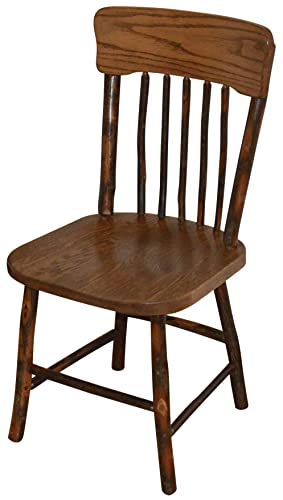
 Amish-Made Rustic Hickory Panel Back Dining Chair18" W x 17" D x 36" H18 x 18 x 36 inches16 PoundsCheck on Amazon
 Amish-Made Walnut-Stained Oak and Hickory Rocking Chair25" W x 32" L x 46" H32 x 25 x 43 inches20 poundsCheck on Amazon
 A & L Furniture Hickory 9-Slat Rocker Chair27W x 32D x 46H27 x 32 x 46 inches30 poundsCheck on Amazon


What's inside
- Why hickory behaves differently from other chair woods
- How steam bending shapes the classic forms
- Joinery choices and what they predict about lifespan
- The main chair families in the handmade hickory world
- Sizing, proportions, and comfort geometry
- Finishes and what they ask of the owner
- Indoor use, porch use, and the honest limits of each
- Care routines that keep hickory chairs sound
- Telling genuine handwork from factory rustic styling
- Comfort over long sittings and for different bodies
- Wood sourcing, sustainability, and the story behind the stock
- Building a set without falling into the matching trap
- Households with children, pets, and heavy daily traffic
- A practical evaluation sequence for any listing
- Common disappointments and how buyers avoid them
- Style integration for cottages, farmhouses, and modern rooms
- Check prices on Amazon
- Bringing the decision together
As an Amazon Associate I earn from qualifying purchases. This post may contain affiliate links at no extra cost to you.
The notes below pull together workshop specifications, wood-care references, and patterns in buyer reports collected across many listings. This guide rests on published material from small workshops, general references describing hickory as a furniture wood, and recurring comments from owners who live with these chairs daily. Nothing here claims firsthand use of any particular chair, because construction quality varies enormously between makers and even between individual pieces leaving the same bench. Instead, the aim is to explain what separates a thoughtfully built hickory chair from a merely rustic-looking one, so readers can read a listing, a catalogue page, or a workshop description with sharper eyes.
Handmade hickory chairs occupy a distinctive corner of American furniture. They grow out of Appalachian and Ozark traditions where young hickory saplings, poles, and split stock were bent while green or after steaming, then lashed, pegged, or mortised into frames that could survive porches, cabins, and farmhouse kitchens. Modern workshops, including Amish and other small craft operations, carry that vocabulary forward with better drying, more consistent joinery, and finishes suited to contemporary homes. The result is a family of seating that includes bent-pole rockers, stick-built side chairs, dining chairs with woven or solid seats, and occasional accent pieces for entryways and bedrooms.
Because the category is broad, comparing chairs by photograph alone misleads. Two rockers may share a silhouette while differing in wood selection, bend radius, joint reinforcement, seat construction, and finish chemistry. Those hidden choices decide whether a chair feels solid after five summers or develops a worrying creak by the second. This article works through the material itself, the bending and joining methods, the main chair forms, sizing, placement indoors and on porches, finish options, maintenance, and the telltale signs that distinguish genuine handwork from factory output dressed in rustic styling.
Why hickory behaves differently from other chair woods
Hickory earns its reputation through an unusual combination of hardness, stiffness, and shock resistance. Among North American hardwoods commonly used for furniture, it sits near the top for density and bending strength, which is precisely why it historically became tool handles, wagon parts, and ladder rungs before it became decorative seating. For chairs, that toughness matters at stress points: rocker rails meeting the ground, back posts flexing under a sitter, and thin bent components that must hold curvature without snapping. A well-chosen hickory member absorbs punishment that would split a softer species along the grain.
The same density brings trade-offs that honest workshops acknowledge. Hickory is heavy, so a solid frame chair can surprise buyers expecting the lightness of pine or cedar. It also dulls cutting edges quickly, which raises labour time and partly explains why hand-built examples occupy a higher tier among listings than visually similar pieces in softer woods. Movement with humidity is another consideration. Hickory expands and contracts across the grain as seasons change, so competent makers allow for that motion in seat attachments and panel fits rather than locking every component rigidly in place.
Appearance varies as much as behaviour. Hickory heartwood tends toward warm brown tones while sapwood runs pale, almost creamy, and many craft chairs deliberately mix the two for a streaked, lively surface. Grain is generally straight but can swirl around knots, and the contrast between earlywood and latewood gives sanded surfaces a subtle ribbon effect under clear finishes. Buyers who want perfectly uniform colour should understand that variation is intrinsic to the species, not a defect introduced by careless work. Workshops that sort stock carefully can narrow the range, yet expecting identical boards across a dining set misunderstands the material.
Species naming adds another layer of confusion in listings. True hickories, such as shagbark and pignut, differ slightly from pecan, which belongs to the same broader group and sometimes appears in furniture descriptions. For chair purposes the practical differences are modest, but a transparent maker will state which stock went into a frame rather than hiding behind a generic label. When descriptions stay vague about the wood itself, that vagueness often extends to joinery and finish details further down the page.
How steam bending shapes the classic forms
Bending is the signature technique behind most hickory seating. In a typical small-shop process, straight-grained stock is soaked or steamed until heat and moisture plasticise the wood fibres, then drawn around a form and clamped until it cools and dries in its new curve. Rocker rails, continuous back bows, arm rests, and rounded crest pieces all begin this way. The craft lies in selecting pieces whose grain runs uninterrupted along the intended curve, because a bend imposed across short grain invites failure exactly where the sitter loads the chair hardest.
Green bending represents an older branch of the tradition. Freshly cut poles bend readily without elaborate steam equipment, and historic stick chairs exploited that willingness by shaping components soon after harvest. The catch is shrinkage: as green wood dries in service, joints can loosen unless the maker compensates with draw-bored pegs, wedging, or designs that tighten under load. Contemporary workshops more often start from air-dried or kiln-conditioned stock and steam it, gaining dimensional predictability while retaining the flowing lines that define the style.
Radius discipline separates patient bending from rushed work. Hickory tolerates tight curves better than many hardwoods, yet every species has limits, and forcing a thick section around too small a form crushes fibres on the inside of the bend while stretching the outer face toward fracture. Listings that mention graduated forms, rest periods between bending and assembly, or thicker stock reserved for gentler curves signal a shop thinking about longevity. Silence on process is not proof of poor work, though it removes one useful confidence marker.
After bending, components need time. A bow pulled from its form too early springs back partially, and chairs assembled from such parts carry internal stress that shows up later as twisted frames or doors of movement in the joints. Reputable builders describe holding bent pieces in forms or straps until moisture equalises, then fitting joints to the settled shape rather than forcing parts together. That patience rarely photographs well, which is why written workshop specifications deserve close reading alongside images.
Reading bend quality in photographs and descriptions
Close views reveal more than wide lifestyle shots. Look for smooth, continuous curves without flattened facets, because facets suggest the piece was bent in hurried increments or sanded aggressively to disguise a kink. Check that paired components, such as the two sides of a rocker, mirror each other closely; visible asymmetry in a product photograph often grows more noticeable in person. Grain should flow around the curve like contour lines on a map, not run out through the surface at a sharp angle.
Descriptions can confirm what images hint at. Mentions of steam boxes, bending forms, matched pairs, and drying schedules indicate process awareness. By contrast, language that dwells only on colour, style labels, and room staging while omitting construction entirely leaves the structural story untold. For a chair expected to serve daily, the structural story matters more than staging.
Joinery choices and what they predict about lifespan
Joints carry the real burden in any chair, and hickory construction offers several traditional answers. Mortise-and-tenon joints, where a shaped tongue enters a matching socket, remain the benchmark for frame integrity because they provide generous glue surface and mechanical resistance to racking. In bent-pole work, round tenons entering drilled mortises echo the natural geometry of the stock, and a slight draw bore, achieved by offsetting peg holes so the peg pulls the joint closed, adds security that glue alone cannot guarantee through seasonal cycles.
Woven and lashed constructions appear in older stick traditions and in some contemporary rustic lines. Rawhide, cane, or fibre lashings wrap junctions and flex slightly with the frame, distributing stress instead of concentrating it at a rigid glue line. Such joints suit lighter occasional chairs and porch pieces used gently. They are less appropriate where children climb, guests lean back hard, or dining chairs slide in and out several times daily, because repeated abrasion and moisture gradually slacken the wrapping.
Screws and metal brackets occupy the ambiguous middle ground. A hidden screw reinforcing a well-fitted tenon is sound engineering, while a butt joint held only by two screws driven into end grain is a shortcut waiting to loosen. Readers evaluating listings should look for language distinguishing reinforcement from primary structure. Workshops proud of their joinery usually describe it plainly, naming pegs, wedges, or through-tenons, whereas vague phrases about sturdy assembly say nothing testable at all.
Glue selection matters quietly in the background. Modern aliphatic and polyurethane adhesives, used on properly fitted joints, outlast the surrounding wood in many failure scenarios. Hide glue, still favoured by some traditional benches, offers repairability: a future craftsperson can steam open a joint, clean it, and restore the chair rather than discarding it. For heirloom-minded buyers, repairable construction deserves real weight, because a chair designed for disassembly and renewal can serve several generations instead of one decade.
Seats: woven, splint, slat, and solid
Seat construction shapes comfort as strongly as frame geometry. Woven seats of hickory bark, splint, cane, or rush flex under weight, spreading pressure across the sitter’s body and forgiving long sessions at a table or on a porch. Hickory bark weaving carries special heritage value, since the inner bark strips come from the same tree family as the frame, and a tightly woven bark seat can last many years before individual strands wear through at the front rail.
Slatted seats take the opposite approach, using shaped wooden strips with small gaps for drainage and air flow. On porches they shed rain and dry quickly, and their firmness suits people who dislike the hammock sensation of woven materials. Solid sculpted seats, borrowed from Windsor traditions, offer the most supportive surface when carved thoughtfully, with a shallow saddle that positions the sitter without cushions. Each approach trades maintenance differently: woven seats eventually need reweaving, slats may need refinishing at worn edges, and solid seats can check if humidity swings wildly.
Attachment method deserves a question whenever a listing allows enquiries. Seats screwed rigidly at every corner fight the frame as wood moves, while floating attachments or elongated holes permit seasonal breathing. That small engineering courtesy rarely appears in marketing copy, yet it predicts whether hairline cracks appear around fasteners after the first heating season indoors.
The main chair families in the handmade hickory world
Bent-hickory rockers are the emblematic form. A continuous bow often forms the back and arms in one flowing gesture, while curved rails below provide the rocking arc. Good examples rock smoothly without a pronounced bump at either end of the travel, and the geometry keeps the sitter’s weight centred so the chair neither tips backward alarmingly nor feels eager to dump its occupant forward when they stand. Seat height on rockers tends lower than dining chairs, encouraging the reclined posture people seek for reading and conversation.
Stick chairs represent the tradition at its most elemental. Builders assemble them from poles and saplings, sometimes with bark retained on less-handled surfaces, and the visual rhythm comes from repeated verticals and horizontals rather than carved ornament. Despite their simple appearance, well-made stick chairs demand careful fitting, because each irregular component must meet its neighbours at convincing angles. They suit cabins, entryways, and covered porches where their lightness and informality feel native.
Dining chairs translate hickory construction to the table. Here the priorities shift toward upright posture, consistent seat height across a set, and backs that clear table aprons when pushed in. Handmade sets often show slight variations between chairs, a reality buyers should embrace in moderation: millimetre-level differences are the fingerprint of bench work, while visibly mismatched heights or back angles suggest rushed production. Many workshops build dining models with woven or solid seats and offer them singly for buyers assembling a set gradually.
Side and accent chairs fill gaps between the headline categories. A single hickory chair beside a fireplace, in a bedroom corner, or at a writing desk brings the material’s texture into rooms where a full set would overwhelm. Because accent pieces carry lighter daily loads, makers sometimes experiment here with tighter bends, mixed sapwood patterning, or unusual seat weaves. Shoppers browsing broader seating guides, including roundups of best furniture club chairs covering upholstered lounge styles, will notice hickory accent chairs trade plush cushioning for sculptural presence and natural grain.
Porch-specific designs round out the landscape. These chairs anticipate humidity, temperature swings, and occasional rain drift, so they favour slatted or woven seats that dry, finishes rated for exterior exposure, and joinery that tolerates movement. Some makers produce hybrid pieces marketed for both sunroom and veranda use, and those models deserve extra scrutiny of finish specifications, because indoor lacquer on a porch chair is a mismatch that reveals itself within a single wet season.
Sizing, proportions, and comfort geometry
Comfort in a handmade chair emerges from measurements working together rather than any single generous dimension. Seat height determines how feet rest and how easily a sitter rises; dining models commonly place the seat surface in a band that suits standard table heights, while rockers and lounge-leaning pieces sit lower to encourage a settled posture. Seat depth interacts with thigh length, so deeper seats favour taller occupants unless a back cushion or woven sag effectively shortens the platform. When listings publish dimensions, compare the full set rather than fixating on overall height, which says the least about how a body actually fits.
Back angle carries enormous influence over perceived comfort. Nearly vertical backs suit dining and desk use, keeping the torso alert and supported during meals or tasks. A modest recline suits conversation chairs, and rockers add dynamic recline that changes through the rocking cycle. Handmade production means these angles come from the maker’s forms and habits, so two workshops interpreting the same traditional pattern may deliver noticeably different sitting experiences. Buyer reports frequently mention this divergence, praising one maker’s upright support while another’s deeper lean divides opinion along lines of personal preference.
Arm height and placement matter where arms exist. Arms set too high shrug the shoulders; too low, they become decorative rails offering no real support when rising. On bent designs the arm often flows from the back bow, creating a fixed relationship between back angle and arm position that the maker must resolve at the bending form stage. Photographs taken from the side reveal this relationship better than frontal shots, and side views also expose rocker rail curvature and back post rake in a single glance.
Weight capacity statements in listings deserve calm interpretation. Responsible workshops publish conservative figures derived from their joinery and stock dimensions, while exaggerated claims without construction context mean little. Hickory’s inherent strength helps, but capacity ultimately depends on the weakest joint and the seat span, not the species name alone. Households expecting a chair to serve a wide range of guests should favour makers who discuss frame dimensions and reinforcement openly over those offering only superlatives.
Measuring your space before ordering
Porch and room planning prevents the common disappointment of a beautiful chair overwhelming its intended corner. Rockers need clearance behind and in front equal to their travel arc, plus margin for feet and passing traffic, so measure the full footprint at rest and add the sweep the rails describe. Doorway and stair dimensions matter for delivery too, since one-piece bent frames rarely disassemble, and a chair that fits its destination room may still refuse a narrow hallway turn. Readers comparing porch seating categories will find related spatial advice in guides such as best outdoor patio rocking chairs, where swing and rocker clearances receive similar attention.
Dining sets require arithmetic of a different kind. Allow each chair its width plus elbow room along the table edge, confirm that back heights read well against the table’s proportions, and check that arms, where present, slide beneath the apron or accept that they will stand away from the table. In smaller rooms, stick and side chairs with open backs keep sightlines light, whereas solid high backs create a more enclosed, formal feeling that suits larger farmhouse tables.
Finishes and what they ask of the owner
Finish choice governs both appearance and upkeep. Hardwax oils and traditional oil finishes penetrate the surface, deepening hickory’s colour contrast and allowing spot repairs with little skill: a worn arm can be cleaned, lightly abraded, and re-oiled without refinishing the whole chair. The trade-off is water resistance, since oil finishes bead spills only briefly and need periodic renewal, especially on porch pieces and dining seats exposed to daily wear.
Film finishes, including lacquer, varnish, and modern waterborne coatings, build a protective layer above the wood. They resist moisture and staining better, suit dining chairs facing gravy and coffee, and generally ask less frequent attention. Their weakness appears when the film eventually chips or wears through at edges, because local repairs tend to show, and full restoration means stripping the affected component. Exterior-rated spar varnishes and specialised outdoor oils exist for porch furniture, trading some clarity for ultraviolet resistance and flexibility through temperature swings.
Some traditional makers leave certain components, particularly woven bark seats, unfinished or treated only lightly, allowing the material to silver and harden naturally. That choice suits covered porches and rustic interiors but surprises buyers expecting uniform sheen across the whole piece. Listing photographs taken in bright showroom light can exaggerate gloss, so written finish descriptions provide the more reliable guide to what arrives and what maintenance rhythm follows.
Colour terminology in this category needs decoding. Hickory accepts stain unevenly because heartwood and sapwood absorb pigments at different rates, and blotching is a known risk on pale sapwood sections. Many experienced finishers therefore use clear or lightly tinted coats that celebrate natural contrast instead of fighting it. A chair photographed with perfectly even walnut-dark colour across mixed stock has likely received heavy toning, which is legitimate but worth knowing, since scratches will reveal the paler wood beneath more dramatically.
Matching finish to placement
Indoor chairs in heated rooms benefit from finishes that tolerate dry winter air without cracking, and almost any quality furniture finish qualifies when the wood was properly dried before assembly. Covered porch chairs need moisture tolerance and mould awareness, particularly in humid regions where overnight condensation settles on horizontal surfaces. Fully exposed outdoor use remains the hardest assignment; even durable hickory benefits from a roof, and makers who promise indefinite unsheltered performance without maintenance are describing hope rather than material science. For sheltered veranda seating that complements other outdoor pieces like those in best inexpensive hanging porch chairs, a renewable oil system often balances protection with easy seasonal refreshment.
Indoor use, porch use, and the honest limits of each
Inside the home, handmade hickory chairs bring warmth that manufactured furniture in uniform veneers rarely matches. The mixed tones sit comfortably beside oak floors, painted cabinetry, and linen upholstery, and the visible handwork gives dining rooms and reading corners a sense of continuity with older craft traditions. Indoor conditions are also kind: stable humidity, no driving rain, and moderate temperatures let joinery stay tight and finishes age slowly. Many owners report that indoor hickory pieces become the least troublesome wooden furniture they own, needing little beyond dusting and occasional finish attention at wear points.
Porches introduce variables that reward thoughtful selection. A covered porch with good air circulation is a friendly environment, especially for chairs raised slightly on their rails rather than standing in pooled water. Sun exposure fades finishes unevenly, so rotating porch chairs occasionally, or choosing positions with balanced light, keeps colour development even across a pair or set. In coastal or very humid climates, ventilation beneath seats matters, and slatted or woven designs outperform solid seats that trap moisture against the frame.
Fully outdoor placement, on open decks or in gardens, should be approached as a deliberate experiment rather than a default expectation. Hickory heartwood offers moderate natural durability, yet repeated wetting and drying cycles stress joints and finishes regardless of species. Owners who accept that assignment typically commit to seasonal inspection, prompt refinishing, and winter storage under cover. Workshops sometimes offer explicitly outdoor lines built with those commitments in mind, using thicker stock, drainage-conscious seats, and finishes formulated for exposure.
Seasonal transitions deserve a place in every owner’s routine. Moving a chair from a heated room to a damp porch in spring, or the reverse in autumn, exposes it to humidity swings that can open joints temporarily. Allowing pieces to acclimatise gradually, and avoiding placement directly beside radiators, wood stoves, or heating vents, reduces stress cracking in seats and backs. These habits cost nothing and preserve more furniture than any miracle coating sold alongside the chair.
Care routines that keep hickory chairs sound
Routine care begins with simple cleanliness. Dust and grit act as abrasives under rocking rails and between woven strands, so regular wiping with a soft cloth and occasional vacuuming of woven seats with a brush attachment protects surfaces quietly. Spills should be blotted rather than left to pool, particularly on oil-finished pieces, and coasters or mats under plant pots prevent the ring stains that dominate repair requests described in buyer feedback.
Joint awareness forms the second habit. A chair that begins to creak or flex is communicating early, and attentive owners investigate while the fix remains small. Tightening a loosened rung, regluing a joint under guidance from the maker, or replacing a worn bark strand costs little compared with the damage a neglected joint inflicts on its neighbours as racking forces redistribute. Many workshops welcome questions from owners years after purchase and can advise whether a repair suits home skills or deserves a bench visit.
Finish renewal follows the system already on the chair. Oil finishes accept additional coats after cleaning, film finishes may need light sanding and compatible topcoats, and mixing product families without preparation invites adhesion failures that look worse than the original wear. Keeping a note of the finish type supplied at purchase, whether on a care card or in correspondence with the workshop, removes guesswork when renewal time arrives several years later.
Storage, when needed, should be dry, ventilated, and off bare concrete, which wicks moisture into rails and feet. Stacking chairs without padding scars finishes and bends woven seats out of shape, so individual placement or soft barriers between pieces pays off. Before returning stored chairs to service, a slow inspection in good light reveals any mould, insect interest, or joint movement that developed unseen, and problems caught at that moment remain minor.
Repair traditions and spare parts
One quiet advantage of buying from identifiable workshops is continuity. A maker who built a chair can usually supply a replacement rung, reweave a seat, or match a finish years later, because their forms, stock sources, and methods persist. Mass-produced lines, by contrast, change tooling frequently, and a broken component often ends the whole piece’s useful life. Buyers weighing long-term value should treat repairability as a feature comparable to initial comfort, since chairs live hard lives in real households with children, pets, guests, and moves between homes.
Documentation helps future repairs succeed. Photographs of joinery details, notes about seat material, and records of finish products give any competent furniture repairer a head start even if the original workshop has closed. Owners who keep such records in a household file perform a small archival service for whoever inherits the furniture next.
Telling genuine handwork from factory rustic styling
The market rewards rustic appearance, so manufactured furniture frequently borrows hickory’s visual cues without its construction. Genuine handwork announces itself through small irregularities that follow logic: grain matched thoughtfully at joints, pegs seated flush but not mechanically identical, bends that flow smoothly, and undersides finished with the same care as visible surfaces, even if less polished. A maker expecting decades of service rarely leaves sharp, torn, or carelessly sanded areas where hands and clothing will find them.
Factory pieces reveal different patterns. Identical knots repeating across components suggest printed or veneered surfaces rather than solid stock. Staples, visible screw clusters at stressed joints, and uniform stain that pools identically in every corner point toward speed-driven assembly. Weight offers another clue, since solid hickory has unmistakable heft; a suspiciously light chair claiming solid construction deserves questions about which parts, if any, actually use the named wood.
Pricing signals, while not discussed here in figures, follow a recognisable logic across listings. Hand bending, careful drying, fitted joinery, and hand-applied finishes consume hours of skilled labour, and sustainable workshops must charge accordingly. Listings promising handmade quality at prices that could not cover the raw stock and a single day of bench time are usually describing hand-finished or hand-assembled production, terms that merit reading in full before assumptions form. Transparency about process steps performed by hand, versus those mechanised, distinguishes honest hybrid production from misleading labelling.
Questions cut through ambiguity efficiently. Asking a seller which components are solid hickory, how joints are constructed, what finish system is applied, and who stands behind repairs produces answers that either build confidence or expose evasion. Workshops rooted in craft traditions generally welcome such enquiries and respond with specifics, because informed buyers become satisfied long-term owners who recommend the work to neighbours and family.
Workshop models: Amish, Appalachian, and contemporary craft
Amish workshops feature prominently in this category, bringing disciplined production habits, family labour structures, and long experience with hickory furniture for regional markets. Their output often balances consistency with hand fitting, and many operations build to order, allowing seat material and finish choices within a defined range. Appalachian makers tend toward the older bent-pole and stick idioms, sometimes harvesting and preparing stock themselves, which shortens the chain between forest and finished chair but can lengthen waiting times during busy seasons.
Contemporary studio makers approach hickory from a design perspective, pairing traditional bending with modern silhouettes, mixed materials, or sculptural forms intended as functional art. Their production volumes are small and their waiting lists can be long, yet the individual attention each piece receives shows in refined details. None of these models is inherently superior; the right match depends on whether a buyer prioritises tradition, consistency, experimentation, or delivery speed, and listings usually signal which philosophy produced the chair.
Lead times deserve respect in planning. A workshop building to order may need weeks or months depending on season, drying schedules, and order books, and rushing bench work undermines the very qualities that justify choosing handmade furniture. Buyers furnishing a room for a fixed occasion should order early, confirm timelines in writing, and treat modest delays communicated honestly as normal features of craft production rather than service failures.
Comfort over long sittings and for different bodies
Short showroom sittings mislead, because chairs reveal their true comfort after an hour with a book or a long meal with friends. Woven seats distribute weight and breathe, reducing the pressure points that firm flat surfaces create, while sculpted solid seats support posture when their carving matches the sitter’s shape. Rockers add movement that many people find eases stiffness, letting the body shift subtly instead of locking into one position. Readers whose primary interest is the rocking experience itself may also enjoy the dedicated discussion in best chairs for rocking, which approaches motion and posture from a broader seating perspective.
Back support philosophy divides makers. Some shape backs with lumbar emphasis borrowed from contemporary ergonomic thinking, while traditional designs rely on a gentle overall curve and the natural give of bent components. Neither approach suits every spine, and buyer reports reflect that spread honestly, with the same model praised for support by one household and found too upright by another. Where possible, matching chair geometry to the primary user’s habits, upright dining, reclined reading, or porch conversation, matters more than seeking universal approval.
Cushions enter the picture for many owners, and handmade frames accommodate them gracefully when seat dimensions allow. A thin cushion on a woven seat adds softness without defeating the weave’s support, while deep cushions on a low rocker can push the sitter’s knees uncomfortably high. Natural fibre cushions in washable covers suit porch settings, and indoor chairs pair well with wool or heavy cotton that complements hickory’s tones without competing with its grain.
Accessibility considerations deserve explicit attention in households with older members or guests with limited mobility. Firmer seats at moderate heights, sturdy arms positioned for push-off leverage, and rockers with controlled travel all support independent sitting and standing. Lightweight stick chairs, easy to move, may serve less well here despite their charm, because stability under a descending or rising body matters more than portability. Thoughtful makers discuss these needs without condescension and can often adjust dimensions within their patterns.
Wood sourcing, sustainability, and the story behind the stock
Hickory grows abundantly across eastern and central North American forests, often regenerating vigorously after harvest, which gives furniture makers a comparatively renewable hardwood to work with. Small workshops frequently source poles and lumber regionally, reducing transport distances and supporting local sawmills that handle smaller volumes than industrial operations. Some Appalachian builders still cut saplings selectively from managed woodlots, thinning crowded stands in ways that benefit remaining trees while supplying the straight, flexible stock that bending requires.
Buyers interested in provenance can ask where the wood originates and how it was dried, and credible makers answer without drama. Air drying followed by kiln finishing is a common responsible sequence, bringing stock to moisture levels compatible with indoor furniture while limiting the stress that aggressive kiln schedules alone can introduce. Wood dried too quickly may case-harden, hiding internal tension that emerges during bending or joinery, so drying method influences finished quality as surely as species selection does.
Bark and by-product use reflects the thrift embedded in this craft tradition. Strips from hickory trunks become seat weaving, offcuts become pegs and small components, and sawdust returns to gardens or animal bedding on farm-based operations. That whole-tree mindset contrasts with production models where only uniform clear boards hold value and everything else becomes waste. For buyers who care about material ethics, a workshop’s willingness to discuss its stock handling offers a window into its broader values.
Certification language appears inconsistently in small-shop listings, because formal chain-of-custody programmes can cost more than a tiny operation can justify. Absence of a logo therefore says less in this category than it would for industrial flooring or cabinetry. Direct conversation, regional sourcing statements, and visible familiarity with the wood’s behaviour collectively provide a practical substitute for paperwork at this scale of production.
Building a set without falling into the matching trap
Dining sets raise a question that single-chair buyers never face: how closely should handmade pieces resemble one another? Grain, sapwood distribution, and subtle shaping differences guarantee that no two chairs will be twins, and most buyers come to value that individuality once the set settles around a table. Problems arise only when variation crosses into inconsistency of height, finish tone, or structural feel, because those differences affect daily use rather than merely decorating it. Reputable workshops grade components across a set, distributing striking grain evenly so no single chair shouts while others whisper.
Ordering strategy can reduce risk for large sets. Some households begin with a pair, live with them through a season, and then commission the remainder from the same maker while forms and finish batches remain familiar. Others order the full set at once to secure consistent stock selection, accepting the longer wait that batch production entails. Either path benefits from written confirmation of dimensions, seat material, and finish, since memory blurs details across months of anticipation.
Mixing hickory chairs with existing furniture follows looser rules than buyers fear. The wood’s warm mid-tones bridge dark walnut tables and pale pine floors with equal ease, and woven seats introduce texture that softens rooms dominated by flat surfaces. Eclectic arrangements, pairing two hickory armchairs at the table ends with simpler side chairs along the edges, carry a long folk tradition and solve the practical problem of giving hosts supportive seats during long meals.
Replacement planning belongs in set discussions from the beginning. Households with young children might order one spare chair against future damage, or confirm that the maker keeps patterns available for later additions as families grow. A workshop’s set policies, stated plainly at purchase time, prevent disappointment when a grandchild’s arrival or a holiday expansion suddenly demands seating that matches what already exists.
Pairs, singles, and the secondhand route
Singles and pairs circulate through estate sales, antique shops, and regional marketplaces, offering entry into handmade hickory at gentler commitment levels. Evaluating used pieces rewards the same skills this guide describes for new listings: sound joints, honest wear rather than concealed damage, and seats whose weaving remains tight. Older chairs may carry hide glue construction that a competent restorer can service beautifully, extending lives that began generations ago.
Secondhand buyers should inspect rocker rails for flat spots worn by decades of use, check undersides for repairs executed with inappropriate hardware, and sit in the chair long enough to feel for racking that photographs cannot convey. Honest sellers of vintage craft furniture usually welcome that scrutiny, and pieces passing it often deliver character that new production needs years to earn.
Households with children, pets, and heavy daily traffic
Family life tests chairs in ways showroom conditions never simulate. Hickory’s hardness resists the dents that chair legs, toy collisions, and dropped tableware inflict on softer woods, which partly explains its farmhouse heritage. Woven seats forgive spills better than upholstery when wiped promptly, and slatted designs tolerate the crumbs and craft debris of busy households with a shake and a brush. Makers familiar with family buyers often recommend slightly heavier frames and film finishes for dining sets destined for daily service.
Climbing presents the predictable hazard. Children treat chair backs as ladders and rocker arms as balance beams, loading joints in directions designers never intended. Sturdy joinery and sensible household rules share the defence here, and chairs with through-tenons or draw-bored pegs withstand occasional abuse better than lightly glued alternatives. Teaching young users to rock within the rails’ travel, rather than tipping onto two legs, preserves both furniture and small passengers.
Pets add claws, hair, and enthusiasm to the equation. Hickory’s density shrugs off casual scratching that would furrow pine, though determined sharpening on a favourite post will mark any wood eventually. Woven seats collect hair visibly and benefit from the regular vacuuming already recommended, while smooth slatted or solid seats wipe clean fastest in homes where muddy paws reach furniture before towels intervene. None of these realities disqualifies handmade chairs from pet households; they simply argue for finish and seat choices matched to the resident animals.
Guest traffic in holiday seasons concentrates wear into short intense periods. Chairs that serve a couple quietly all year may host a dozen relatives across a festive week, and marginal joints announce themselves under that surge. A pre-season check, tightening what can be tightened and noting what needs professional attention, keeps celebrations focused on people rather than furniture failures.
A practical evaluation sequence for any listing
Faced with dozens of listings across retailers and workshop sites, a consistent evaluation sequence keeps comparisons honest. Begin with construction fundamentals: wood identity, joinery type, and bending method, because those determine the ceiling on everything else. Move next to dimensions and geometry matched against the intended users and room, then seat construction and finish system matched against placement. Only after those layers satisfy should style details, delivery terms, and decorative options influence the decision, since beauty cannot compensate for a frame that loosens or a finish that fails in its assigned environment.
Photograph analysis rewards patience. Study the underside views when sellers provide them, because joinery honesty shows there first. Examine how the back meets the seat, how rails join posts, and whether stretchers sit at heights that welcome feet or punish ankles. Count the stretchers themselves: chairs braced on multiple sides resist racking better than minimally braced designs, particularly in dining service where lateral forces arrive daily.
Written descriptions deserve the same structured attention. Specific numbers for seat height and depth, named finish products or families, stated wood species, and explicit care guidance all signal a seller who understands the product deeply. Superlative-heavy copy without specifications asks buyers to substitute enthusiasm for evidence, and in a category where genuine quality hides beneath surfaces, evidence should win.
Reviews and buyer reports contribute most when read for patterns rather than individual verdicts. Repeated mentions of tight joints after years of use, responsive makers, or finishes wearing gracefully carry weight, while isolated complaints about colour variation often reveal mismatched expectations rather than defective goods. Conversely, recurring reports of loosening, cracking at the same joint, or seats failing early identify design or production weaknesses that no single glowing testimonial can outweigh.
Questions worth sending before purchase
Direct questions to a workshop or seller can confirm what listings leave unstated. Which parts are solid hickory, and which use other species or materials? How are the principal joints constructed and reinforced? What finish system protects the piece, and how should it be renewed? What seat materials are available, and can they be replaced later? What does the maker recommend for the buyer’s intended placement, porch or interior? Answers arriving with specifics and without defensiveness build the trust that long-distance furniture buying requires.
Delivery and damage policies complete the enquiry list. One-piece chairs travel as freight or oversized parcels, and packaging quality decides whether bent components arrive unstressed. Clarify who bears responsibility for transit damage, how claims proceed, and whether the maker prefers local pickup for regional buyers. These logistics rarely appear in romantic craft narratives, yet they shape real ownership experiences decisively.
Common disappointments and how buyers avoid them
Colour surprise leads the list of avoidable regrets. Hickory’s natural contrast means the delivered chair may show bolder sapwood streaks than a carefully selected showroom photograph suggested. Buyers who love that variability thrive, while those wanting restraint should discuss sorting preferences with the maker beforehand or choose finishes that mute contrast. Expectation alignment before production prevents friction that neither party deserves.
Scale misjudgement follows closely. Rustic chairs often carry chunkier proportions than their photographs imply, and a rocker that looked graceful online can dominate a small porch or crowd a modest dining room. Taping the footprint on the floor, marking back height against a wall, and comparing seat height with existing chairs converts abstract numbers into physical understanding before money moves.
Maintenance surprise ranks third. Oil finishes need renewal, woven seats eventually need reweaving, and porch pieces ask seasonal attention, so buyers expecting maintenance-free service should choose film finishes and indoor placement or reconsider the category honestly. Makers who state upkeep requirements plainly do buyers a favour, even when the truth complicates a sale, because informed owners maintain furniture that uninformed owners neglect and then blame.
Finally, timeline friction arises when gift deadlines or renovation schedules collide with craft production rhythms. Ordering early, communicating occasion dates clearly, and holding a backup seating plan for gatherings removes pressure from everyone involved. Furniture built slowly and well rewards the patience it requests, usually for decades after the forgotten urgency of its delivery week.
Style integration for cottages, farmhouses, and modern rooms
Cottage interiors welcome hickory almost without effort. Painted walls, floral or checked textiles, and gathered vintage objects share the chairs’ handmade DNA, and woven seats echo baskets and natural fibre rugs already present in such rooms. A single bentwood rocker beside a cottage fireplace, draped with a knitted throw, composes the kind of corner that defines the style’s enduring appeal.
Farmhouse settings emphasise the material’s agricultural roots. Long tables, bench seating along one side, and hickory chairs at the ends or opposite side create dining arrangements built for harvest meals and homework sessions alike. The wood’s toughness suits the working character of these homes, where furniture earns its place through service rather than ceremony.
Modern rooms benefit from hickory as a warming counterpoint. Clean-lined interiors heavy with metal, glass, and pale upholstery can feel austere until natural grain and hand-shaped curves introduce organic variation. A pair of stick chairs flanking a contemporary console, or a sculptural rocker anchoring a minimalist reading nook, demonstrates that traditional craft and current design vocabulary reinforce rather than contradict each other.
Transitional spaces, which most real homes are, simply need coherence of tone. Repeating hickory’s warm browns in a frame, a floor register, or leather accessories ties a single chair into the room’s story, while scattering too many competing wood species fragments attention. When in doubt, let the chair be the room’s primary wood statement and keep surrounding pieces quieter.
Check prices on Amazon
Live listings for the shortlist in this guide are pulled from Amazon below, so prices and availability are always current at the moment you look.


Bringing the decision together
A handmade hickory chair asks its buyer to think like a steward rather than a consumer of disposable goods. The purchase begins a relationship with a material that darkens gently with light exposure, develops sheen where hands and clothing polish it, and records household history in small marks that owners of long standing often read with affection. Choosing well means honouring that timeline at the selection stage, favouring sound joinery over surface novelty and honest specifications over flattering photography.
Budget thinking in this category works best across years of service rather than the moment of purchase. A chair that serves daily for two decades, accepts repairs gracefully, and retains its maker’s support spreads its cost across thousands of sittings, while a cheaply built imitation replaced three times quietly overtakes it. Buyers need not reach for the most elaborate option available; they need the option whose construction matches their household’s actual demands, neither underbuilt for family traffic nor overbuilt for a quiet guest room corner.
Trust, once established with a workshop, compounds pleasantly. Owners return for matching pieces, commission gifts for adult children establishing first homes, and recommend makers within their communities, sustaining the small production ecosystems that keep these skills alive. That continuity explains why so many listings emphasise the maker’s name, region, and story: in craft furniture, provenance is not decoration but a practical promise about who answers when questions arise in year seven.
Regional availability also shapes the search in practical ways. Hickory workshops cluster where the trees grow and where craft traditions took root, so buyers in those regions may visit benches, sit in sample chairs, and discuss dimensions face to face. Everyone else relies on shipped freight, detailed correspondence, and the written specifications this guide keeps returning to, which makes thorough listings from distant makers especially valuable.
Gather the measurements of your room, the habits of your household, and the placement you truly intend, then let those facts filter the field before style preferences speak. Read construction descriptions slowly, send the questions that matter, and give drying schedules and bending forms the respect their invisible patience deserves. The chairs that emerge from that process tend to fit their homes in every sense that counts. Choose the hickory chair whose bones, bends, and finish suit your daily life, and it will repay that care with quiet, sturdy company long after trend-driven furniture has left the house.