Our Top Picks
 Rellytech Mini Split AC/Heating System12000BTU,115V,19 SEER28.23 x 32.28 x 11.93 inches92 poundsCheck on Amazon
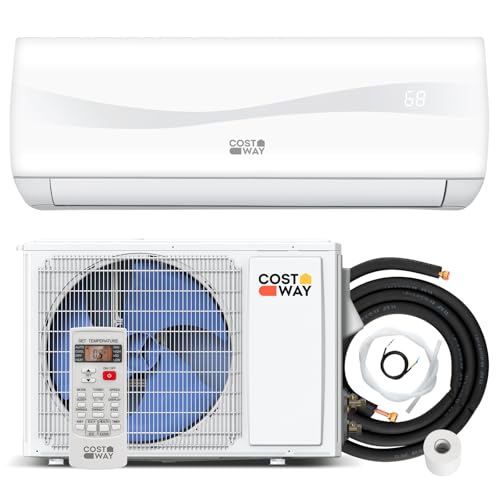
 COSTWAY 12000BTU Mini Split Air Conditioner& Heater12000BTU, 115V, 20 SEER9 x 44.5 x 13 inches68 poundsCheck on Amazon


What's inside
- Why the Make Matters More Than the Model
- The Three Tiers of Ductless Manufacturing
- Cold-Climate Heating: The First Axis of Comparison
- Inverter Compressors: The Technology Every Tier Now Shares
- Depth of the Ductless Catalogue
- Warranty: Registration Is Where the Truth Lives
- Dealer Networks, Parts and the Geography of Support
- DIY-Friendly Brands Versus Installer-Only Brands
- Controls, Connectivity and Life at a Distance
- Reliability, Longevity and the Shape of Ownership
- Matching the Make to the Cottage
- Brand by Brand: The Short, Honest Version
- Questions to Answer Before You Choose a Make
- Single-Zone Versus Multi-Zone: Where Brand Choice Bites Hardest
- Efficiency Claims and How Each Tier Talks About Them
- The Money Question, Handled Qualitatively
- A Short Method for Deciding, in Order
- Quiet, Air Movement and the Feel of a Room
- If Your Preferred Brand Has No Local Dealer
- Refrigerants, Standards and Buying for the Decade Ahead
- Check prices on Amazon
- The Verdict on Makes
As an Amazon Associate I earn from qualifying purchases. This post may contain affiliate links at no extra cost to you.
Cottage Verdict earns a small commission from purchases made through links on this page, and we spend it on the unglamorous work of tracking which manufacturers still answer their phones and stock parts a decade after the sale.
Why the Make Matters More Than the Model
Most buying guides for ductless air conditioners want to march you through model numbers, capacity charts and feature lists until a single winning unit emerges. This guide deliberately does something else. It compares manufacturers, because with ductless mini-split equipment the badge on the outdoor unit predicts your ownership experience more reliably than any individual model’s specification sheet.
The reasoning is practical. A ductless system is not a toaster. It is a matched set of outdoor and indoor units, joined by refrigerant lines, controlled by proprietary electronics, and expected to work for a long time in a building that may sit empty for weeks between visits. When something falters in year seven, what saves you is not the model you chose but the manufacturer behind it: whether its parts network reaches your region, whether local installers still train on its equipment, whether its control boards remain available, and whether its warranty registration you completed in year one is honoured without an argument. Two systems with near-identical specifications on paper can lead to entirely different decades of ownership depending on those answers.
There is a second reason to shop by make first. Ductless lines are ecosystems. Indoor units, multi-zone outdoor units, controls and accessories within a brand are designed to work together, and mixing across brands is generally not possible. Choosing a manufacturer is therefore choosing the whole menu you will order from for the life of the installation: the wall units for the bedrooms, the ceiling cassette for the great room if you add one later, the low-ambient outdoor unit if the cottage’s role expands into winter. Model selection happens inside that menu, and it is the second decision, not the first.
A note on scope before we begin. Cottage Verdict already covers one manufacturer in depth elsewhere on the site, in a single-brand guide devoted to Mitsubishi equipment. This article is different in kind: it is a comparison of makes across the whole ductless field, Japanese, Korean and value-oriented alike, and it treats Mitsubishi as one contender among several rather than as the subject. If you have already settled on that brand, the single-brand guide is your next stop. If you are still deciding whose badge belongs on your cottage wall, start here.
The Three Tiers of Ductless Manufacturing
The ductless market sorts itself, with some untidiness at the edges, into three broad groups, and understanding the groups is more useful than memorising any ranking within them.
The first group is the Japanese premium tier: Mitsubishi Electric, Daikin and Fujitsu. These are the companies that effectively invented the modern mini-split and refined it over decades in their home market, where ductless is not an alternative technology but the default one. Their ductless catalogues are deep, their cold-climate engineering is the benchmark others chase, their dealer networks in North America are the most established, and their prices sit at the top of the market for reasons that are partly engineering and partly the cost of maintaining that support structure.
The second group is the Korean tier, principally LG and Samsung. Both are enormous electronics manufacturers that brought serious compressor and controls engineering, strong design departments and aggressive feature development to ductless equipment. Their lines are broad, their products are often the most visually considered in the field, their smart controls are polished, and their North American support sits between the Japanese tier and the value tier: real networks, real training, but with ductless as one division among many in companies that also sell televisions, phones and washing machines.
The third group is the value and global tier: Gree, Midea, Cooper and Hunter, Pioneer and a shifting cast of related brands. Gree and Midea are manufacturing giants in their own right; between them they build a substantial share of the world’s air conditioners, including equipment sold under other companies’ badges. Cooper and Hunter and Pioneer are best understood as brands that source, specify and support equipment built largely on those global platforms, aimed squarely at North American buyers, with Pioneer in particular cultivating the do-it-yourself and small-contractor market. This tier competes on accessibility and price while offering inverter technology and cold-climate models that would have been premium-only not long ago.
None of these tiers is simply the best. They are different bargains between engineering depth, support infrastructure and cost, and the right bargain depends on where your cottage is, who will install the system, and who will answer the phone in ten years.
Cold-Climate Heating: The First Axis of Comparison
For a cottage in any region with a real winter, cold-climate heating performance is the axis that separates the field fastest, because a ductless system asked to heat must keep delivering warmth as outdoor temperatures fall, which is precisely when physics makes its job hardest.
The Japanese tier built its reputation here. Mitsubishi Electric’s hyper-heating approach is the best-known example of the genre: compressor and control engineering designed to hold a high share of rated heating capacity deep into sub-freezing weather and to keep operating at temperatures where lesser systems give up and call for backup heat. Daikin’s cold-climate lines pursue the same goal with its own inverter and refrigerant control strategies, and Fujitsu’s extra-low-ambient models have long been quiet favourites in northern New England and eastern Canada, where installers recommend what survives February. The shared trait is intent: these product families were engineered for heating as a primary duty, not as a bonus feature added to a cooling appliance.
The Korean tier has closed much of this gap. LG’s high-performance heating lines and Samsung’s wind-free and cold-climate offerings both include models specified for low-ambient operation, and in moderate cold, the shoulder seasons and the milder winter regions, they perform the heating role entirely credibly. The careful buyer reads the low-temperature specifications model by model rather than assuming the whole brand performs alike, because within both Korean catalogues the distance between a standard model and a cold-climate model is significant.
The value tier requires the most homework on this axis. Gree’s better lines include genuinely cold-capable equipment, unsurprising given the climates much of its home market endures, and Midea’s platforms have steadily improved their low-ambient credentials. But the tier also contains cooling-led models whose heating fades early, and the branding does not always make the distinction obvious from the front of the box. Cooper and Hunter’s cold-climate series are marketed clearly on this point, which helps. The rule for the whole tier is to verify the heating specification of the exact model, in writing, against the coldest temperatures your cottage actually sees, and to plan backup heat for the nights beyond any heat pump’s honest reach. A wood stove, in cottage country, has ended more arguments on this subject than any specification sheet.
Inverter Compressors: The Technology Every Tier Now Shares
It is worth pausing on the compressor, because inverter technology is the reason ductless systems behave the way they do, and because the differences between brands today are differences of refinement rather than of kind.
A conventional compressor is either on or off, and a system built around one cycles between full effort and rest. An inverter compressor is driven through electronics that vary its speed continuously, so the system can run slowly and steadily for hours, matching its output to the room’s actual need. The results are the signature ductless virtues: steadier temperatures without the sawtooth of on-off cycling, strong moisture removal during long gentle cooling runs, soft starts that are kind to cottage electrical systems and generators, and quiet operation indoors and out. In heating mode, the same modulation lets the system work efficiently across a wide band of outdoor temperatures instead of surrendering early.
Every manufacturer in this guide sells inverter equipment, and the entry models of the value tier now modulate in ways that premium models of a generation ago did not. What still separates the tiers is the width and polish of that modulation. Premium systems tend to turn down further, holding very low steady outputs for small rooms and mild days without short-cycling, and to coordinate compressor, fans and expansion valves as one system rather than as neighbours. They also tend to protect the electronics better against the voltage wobbles of rural power, a detail that never appears in marketing and matters enormously at the end of a long feeder line. When you compare brands, ask installers not whether a system is inverter, since the answer is nearly always yes, but how the brand’s equipment behaves at the gentle end of its range, because that is where a cottage system spends its life.
Depth of the Ductless Catalogue
A manufacturer’s ductless depth, the sheer range of indoor unit styles, capacities and multi-zone configurations it offers, decides how gracefully a system can fit an awkward cottage and grow with it.
Mitsubishi Electric and Daikin sit at the deep end. Wall-mounted units in many capacities, floor-mounted consoles that suit low knee walls and rooms where wall space is precious, ceiling cassettes for open-plan spaces, slim ducted indoor units that hide in a soffit and serve two small rooms with short duct runs, and multi-zone outdoor units that run several indoor units from one cabinet: all of it exists within each catalogue, engineered as one family. For a cottage with dormers, additions from three different decades and a great room with a cathedral ceiling, that depth is not indulgence. It is the difference between a system designed for the building and a system the building had to accept.
Fujitsu’s catalogue is somewhat narrower but covers the residential essentials thoroughly, with a loyal installer base that knows its quirks intimately. LG and Samsung both field broad ranges with a particular strength in indoor unit design; Samsung’s wind-free concept, which disperses air through a perforated panel to avoid a direct draught, and LG’s design-led wall units speak to owners who will look at these machines every day and would prefer them handsome. Their multi-zone and light commercial offerings are substantial as well.
The value tier concentrates on the highest-volume shapes: wall-mounted units above all, in single-zone and multi-zone arrangements, with floor consoles and cassettes appearing in the stronger lines. Gree’s catalogue, reflecting its scale, is broader than the tier’s average. Pioneer and Cooper and Hunter focus tightly on the wall-unit mainstream, which happens to be what most cottages need, but an owner planning a concealed ducted indoor unit or an unusual capacity split across many zones will feel the catalogue’s edges sooner. Depth is a form of insurance: you may never need the exotic indoor unit, but the brand that makes it also tends to make the ordinary one with more care and to support both for longer.
Warranty: Registration Is Where the Truth Lives
Ductless warranties reward owners who read them as contracts rather than as advertising, because the headline term and the delivered term often differ by exactly one administrative step.
Across the industry, the pattern is consistent. A base parts warranty applies when equipment is installed, and a longer term, commonly reaching well past the base period on premium lines, applies when the system is registered within a stated window after installation, and in some programmes when it is installed by a dealer holding the manufacturer’s credential. Mitsubishi Electric’s dealer programme is the clearest example of the model: registration through a credentialed installer unlocks the brand’s longest coverage, which ties the best warranty to the dealer network deliberately. Daikin operates a similarly structured approach with strong published terms for registered equipment, and Fujitsu likewise extends coverage on registration through its dealer channel.
The Korean brands publish competitive warranty terms and have improved their registration processes steadily, though owners should confirm whether the longest terms require credentialed installation in their region, since programme details vary by country and sometimes by state or province. The value tier’s warranties are typically shorter in their longest form and more dependent on the selling brand’s own administration: Cooper and Hunter and Pioneer both publish defined warranty terms and handle claims through their own support operations, which many owners report as responsive, but the structure is a brand promise rather than a vast dealer-network obligation, and it should be weighed as such.
Three practical rules follow for any brand. Register the equipment, in the window, and keep the confirmation with the cottage documents. Confirm before purchase, in writing, exactly what term your installation qualifies for, since the answer depends on who installs it. And remember what warranties do not cover: labour is frequently excluded or limited, refrigerant and consumables sit outside, and a warranty is only as good as the network that will perform the work, which brings us to the axis that matters most of all for a cottage.
Dealer Networks, Parts and the Geography of Support
A ductless system at a cottage lives or dies by geography. The finest engineering in the field is a stranded asset if the nearest trained technician is three hours away and the control board your unit needs ships from a warehouse on another coast.
The Japanese tier’s North American networks are the deepest in ductless specifically. Mitsubishi Electric has spent decades building a distributor and Diamond Contractor style network that reaches well beyond the big cities, and in many cottage regions, the heating contractor in the nearest town installs and services that one brand above all others. Daikin, already a giant in global air conditioning, strengthened its North American position enormously by acquiring a major American manufacturer, and its ductless support now rides on a very large distribution footprint. Fujitsu’s network is smaller but notably loyal, with regional pockets, parts of the Northeast and upper Midwest among them, where it is the local default and support is correspondingly strong.
LG and Samsung support ductless through the weight of their general appliance and HVAC distribution, which is considerable, though the ductless-specific expertise at the end of the line varies more by locality. In a metropolitan area, either brand is easy to have serviced. In a rural county, the honest answer depends entirely on whether a local contractor has taken the line on, and that is a question to ask before purchase, not after the first fault.
The value tier splits by brand. Gree’s North American presence is large and growing, partly because its equipment also reaches the market under partner badges, which thickens the effective parts and knowledge base. Midea similarly stands behind a widening network. Cooper and Hunter and Pioneer operate a different model: centralised support, parts shipped from their own stock, and a reliance on independent installers and capable owners rather than on a credentialed dealer lattice. For a remote cottage, that model has an underappreciated virtue, a brand that will ship you the part and talk your local technician through the repair may serve you faster than a premium network whose nearest credentialed dealer is booked out for weeks. It also has an obvious risk: there is no local bench of brand-trained help to fall back on, so the owner’s own competence, or their electrician’s, becomes part of the support plan.
The method that cuts through all of this is embarrassingly simple. Before choosing a make, telephone the two or three HVAC contractors who actually serve your cottage’s area and ask which ductless brands they install, which they service, and which they would put in their own homes. Their answers, weighted by the fact that they will meet your system on its worst day, are worth more than any comparison published anywhere, including this one. Brand choice for a cottage is, in the end, a local decision wearing a global market’s clothes. For owners still weighing whether ductless suits the building at all, the sizing and layout questions in our guide to best 9000 btu split system air conditioners are a useful companion read.
DIY-Friendly Brands Versus Installer-Only Brands
No divide in the ductless world generates more argument than the one between equipment sold for professional installation only and equipment marketed to capable owners, and a cottage guide has to address it plainly, because cottages attract handy owners the way porches attract rocking chairs.
The premium Japanese and Korean brands sell through professional channels. Their best warranties assume credentialed installation, their distribution runs through distributors who sell to contractors, and their position, not unreasonable given refrigerant handling rules and the ease of ruining a good system with a bad installation, is that ductless equipment is a trade product. Owners can still buy some of this equipment through online sellers, but doing so can compromise warranty standing and leaves the owner to find an installer willing to commission equipment they did not supply, which many of the best contractors decline to do.
The value tier, led by Pioneer’s long-standing direct model and Cooper and Hunter’s similar approach, treats the owner and the independent installer as first-class customers. Equipment is sold openly, documentation is written for the person holding the tools, and some product lines in this corner of the market are built around pre-charged line sets and simplified connections intended to reduce the specialist steps in an installation. This openness is a genuine service to remote cottage owners whose nearest contractor is booked until autumn. It also transfers risk: the quality of the installation, on which efficiency, reliability and longevity all depend, rests on whoever does the work, and the regulations governing refrigerant work in your jurisdiction apply to a cottage exactly as they apply to a city house.
The sensible middle path, and the one most rural owners actually take, is a hybrid: buy a brand your region supports, have the trade-critical steps, mounting, line work, evacuation, commissioning, done or checked by a professional, and reserve your own labour for the carpentry, the condensate routing and the hundred small preparations that make an installer’s day efficient. Whichever route you choose, choose the brand with your eyes open about which model it belongs to. A DIY-friendly badge on the box and a support line that answers are a coherent package; a professional badge bought grey-market with no dealer behind it is the worst of both worlds.
Controls, Connectivity and Life at a Distance
Cottages are managed from afar for much of the year, which makes a ductless brand’s controls and connectivity more than a convenience question. The ability to check a cottage’s temperature from home, to warm it before a winter drive, or to be alerted when indoor temperatures sag toward pipe-threatening territory has real protective value.
Here the Korean tier’s consumer electronics heritage shows. LG’s and Samsung’s app ecosystems are polished, their Wi-Fi integration is typically built into much of the range rather than bolted on, and owners who already live inside those companies’ smart home platforms will find the ductless system a natural citizen. The Japanese tier offers fully capable app control and remote monitoring, sometimes through adapters on certain indoor units rather than universally built in, and its dealer-oriented remote diagnostics can be the more valuable feature for a distant owner: a contractor who can see a fault code before driving out is a contractor who arrives with the right part. The value tier covers the essentials, app control and scheduling are common, with less depth in diagnostics and platform integration.
Two cautions apply to every brand. Cottage internet is not city internet, so confirm the system behaves gracefully when the connection drops: schedules should persist, settings should hold, and the wall controller should remain fully functional without the cloud. And treat any connected system’s account and password as part of the cottage’s documents, recorded alongside the deed and the septic paperwork, because the next owner, or the next family member managing the place, will need them on the coldest night of the year, not on a convenient afternoon. Owners comparing whole-property strategies may also find our notes on best air conditioners apartment useful, since the landlord-and-tenant lessons there about controls and handovers apply surprisingly well to cottages shared between generations.
Reliability, Longevity and the Shape of Ownership
Ask contractors what separates the brands over fifteen years and the conversation turns from specifications to patterns: which outdoor units still run quietly after a decade of winters, which brands’ boards fail gracefully and are stocked, which indoor units yellow, rattle or shed their louvre motors, and which manufacturers have orphaned a product line’s parts while the systems were still young.
The Japanese tier’s advantage here is institutional. Ductless is these companies’ core trade, their model families evolve rather than churn, and parts support for older systems is the strongest in the field. That continuity is a large part of what the premium buys. Daikin’s scale adds a further assurance: companies of that size do not exit categories casually. Fujitsu’s owners benefit from the same focus on a narrower front.
The Korean brands build durable equipment, and their compressors in particular draw respect across the trade. The questions are about emphasis over time: ductless competes for attention inside very diversified companies, and owners should look for the depth of the current line and the local programme behind it as evidence of commitment in their market. The value tier’s longevity story is still being written in North America, but its foundations are sturdier than its prices suggest, because Gree and Midea manufacture at a scale and for home markets that demand durability, and because the simpler, more standardised the equipment, the easier it is for any competent technician to keep alive. A Pioneer or Cooper and Hunter system may never enjoy a dealer network’s embrace, yet its very conventionality can make it repairable by the generalist who services everything else in a small town.
Across all tiers, the owner’s contribution to longevity is the same unglamorous list: filters cleaned on rhythm, outdoor units kept clear of snow, leaves and nesting material, condensate drains checked, and an annual professional visit in regions where the system heats as well as cools. Brand determines the ceiling of a system’s lifespan; maintenance determines how close to that ceiling yours gets. Damp-climate owners should also weigh mould resistance and coil hygiene, a subject treated in depth in our guide to systems for humid regions, since a ductless indoor unit’s wet coil in a closed-up cottage is a mould farm unless the brand’s self-cleaning and dry-out cycles are used deliberately.
Matching the Make to the Cottage
Advice is only useful when it lands on a real building, so here is how the comparison resolves for the cottage situations that recur most often.
For a northern cottage heated through real winters, where the ductless system will carry the building with a wood stove or existing heat as backup, start with the Japanese tier’s cold-climate families and the strongest local dealer, and treat hyper-heating class performance as the entry requirement rather than an upgrade. If two brands qualify, let the local service answer decide between them.
For a three-season cottage in a moderate climate, cooling-led with heating for the shoulder months, the field opens wide. Korean equipment offers a refined balance of features, design and support; Japanese equipment offers depth and the longest track record; and the better value lines are entirely defensible where budget matters and a competent installer stands behind the choice. This is the scenario where the money saved by a value brand can be redirected to insulation and still leave the cottage more comfortable.
For a remote cottage far from any dealer network, invert the usual logic. The best brand is the one whose support model reaches you: that may be the premium make the county’s one HVAC firm installs, or it may be a direct-support value brand whose parts arrive by courier and whose technical line answers a capable owner’s questions. Decide by making the phone calls before the purchase, not by reading national marketing.
For a cottage being prepared for rental or multi-family sharing, prioritise controls, durability and the warranty’s transfer and registration terms, and lean toward brands whose local service can turn a fault around between guests. For a small cottage needing a single zone for a great room, nearly every brand here makes a suitable wall unit, and the decision can rest on installer preference and the efficiency questions covered in best air conditioners for energy saving, where the running-cost arithmetic of small spaces is worked through.
Brand by Brand: The Short, Honest Version
Mitsubishi Electric
The benchmark for ductless depth and cold-climate heating in North America, with the most developed dealer culture in the category and warranty terms that reward credentialed installation and registration. Its catalogue answers almost any cottage layout, including floor consoles for awkward rooms and multi-zone systems for whole buildings. The costs are the highest in the field and the professional-channel model is firm, but for a winterised cottage far from town, the combination of hyper-heating performance and a contractor network that actually reaches rural areas is the one every rival is measured against.
Daikin
A global giant whose ductless engineering is first-rank and whose North American footprint, enlarged by acquisition, gives it distribution muscle no other Japanese maker matches here. Its lines span from straightforward single zones to sophisticated multi-zone and light commercial work, its warranty structure on registered equipment is strong, and its inverter refinement is beyond serious dispute. Daikin suits the owner who wants premium engineering with the reassurance of sheer corporate scale behind parts and support.
Fujitsu
The connoisseur’s choice in several northern regions, where its extra-low-ambient heating models and a devoted installer base have made it the local default in places marketing never reached. The catalogue is narrower than its two Japanese rivals’, and national visibility is lower, but where Fujitsu is established, owners get cold-climate competence and technicians who know the equipment deeply. Check your region: Fujitsu is either very present or barely present, and that fact should drive the decision.
LG
The design-and-features leader of the Korean tier, with handsome indoor units, a broad residential range, capable cold-climate models in its performance lines and app controls that feel native to a modern phone. LG suits owners who care how equipment looks in a finished room and who live in areas where its HVAC distribution is active. Read heating specifications model by model for winter duty, and confirm the local installer base before committing to a whole-cottage multi-zone system.
Samsung
Samsung’s distinctive contribution is comfort engineering, above all its wind-free approach to delivering cooled air without a draught, which matters in bedrooms and in rooms where people sit still. Its cold-climate offerings have strengthened, its connectivity is excellent, and its design language is the most contemporary in the field. As with LG, ductless is one division of a vast company, so the local programme behind the badge deserves verification, particularly outside metropolitan areas.
Gree
The manufacturing colossus of the value tier, building equipment for the world and for other brands besides its own. Its better lines offer real cold-climate capability and inverter refinement at accessible cost, and its North American presence keeps thickening. Gree suits the budget-conscious owner who still wants a substantial manufacturer behind the equipment, provided the exact model’s heating specification is verified and a willing installer is lined up.
Midea
Another global giant, ever more visible under its own name after years of building for others, with steadily improving cold-climate credentials and a reputation for sensible, well-made mainstream equipment. Midea’s ductless story in North America is one of momentum: strong platforms, growing support, and value that is hard to argue with for cooling-led and moderate-heating duties.
Cooper and Hunter
A brand built for the North American value market, specifying equipment on global platforms and supporting it centrally with clear cold-climate series and published terms. It speaks directly to owners and independent installers rather than through a dealer lattice, which remote cottagers may experience as either refreshing accessibility or missing infrastructure, depending on the help available locally.
Pioneer
The most DIY-identified name in the field, with a long record of selling ductless systems directly to capable owners and small contractors, documentation written for the installer on site, and support that expects to talk to the person holding the tools. For a remote cottage with a genuinely handy owner, Pioneer is a coherent and often satisfying choice. For an owner who wants a dealer to own every problem for fifteen years, it is the wrong shape of company, and its systems should be chosen with that understood.
Questions to Answer Before You Choose a Make
- Which ductless brands do the contractors who serve your cottage’s area install and service, and which would they choose for their own homes?
- What are the coldest temperatures the cottage must be heated through, and does the exact model you are considering publish honest heating performance at those temperatures?
- Does the system’s role stop at cooling and shoulder-season warmth, or must it carry the building through winter with backup heat as a supplement rather than the plan?
- What warranty term does your installation actually qualify for, once installer credential and registration are accounted for, and who confirmed it in writing?
- How deep is the brand’s catalogue for the indoor unit styles your rooms need now, and for the zone you may add when the bunkhouse or extension is finished?
- If a control board fails in year nine, where does the replacement come from, how long does it take to reach your county, and who fits it?
- Does the brand’s app and remote monitoring work the way your cottage’s internet connection requires, and does the system behave properly when that connection drops?
- Are you buying through the channel the brand intends, with warranty standing intact, or through a route that quietly voids the coverage you think you have?
Notice how few of those questions concern the equipment’s specification sheet. That is the article’s argument in miniature. Specifications decide between models inside a brand, and they matter there. But the ownership of a ductless system, across the long quiet years between installation and replacement, is decided by heating intent, catalogue depth, warranty administration and the geography of support, and all four are properties of the make.
Single-Zone Versus Multi-Zone: Where Brand Choice Bites Hardest
The configuration of the system changes how much the brand matters, and cottage owners should understand why. A single-zone system, one outdoor unit serving one indoor unit, is the simplest ductless arrangement there is. Every manufacturer in this guide makes good ones, the pairing is engineered as a unit, and if the worst happens in year twelve, replacing the whole system is a bounded, comprehensible expense. Brand still matters for parts and support, but a single-zone installation is the most forgiving context in which to choose a value make.
Multi-zone systems raise the stakes considerably. One outdoor unit now serves two, three or more indoor units of possibly different styles, and the whole assembly behaves as one organism: capacities interact, the outdoor unit’s minimum output must suit the smallest zone calling alone, and a fault in the shared outdoor unit silences every room at once. The premium brands’ long experience shows here in refined capacity control, in indoor units that cooperate gracefully, and in diagnostic systems that can tell a technician which branch of the family is unhappy. The value tier’s multi-zone offerings work and are widely installed, but the margin for sloppy design is thinner, and the design is exactly what a distant cottage cannot easily have redone.
There is also a strategic alternative that brand depth makes possible: several independent single-zone systems instead of one multi-zone system. Cottages often suit this pattern beautifully. The great room gets its own system, the bedroom wing gets another, each sized honestly for its load, each able to fail without darkening the whole building, and each replaceable on its own schedule. Whether that pattern beats a multi-zone layout depends on outdoor space, electrical capacity and the number of condensers the site can gracefully hold, but it is a conversation worth having with your installer, and it is a conversation the deeper catalogues support best, since matching indoor styles across separate systems stays within one brand’s design language. Large open spaces test any configuration hardest, and the layout reasoning in best air conditioners for large rooms pairs well with this section for owners planning a great-room system.
Efficiency Claims and How Each Tier Talks About Them
Every brand publishes efficiency figures, and every brand’s figures are gathered under the same test regimes, yet the numbers reward careful reading rather than league-table thinking. Ductless systems as a class are efficient movers of heat, and the differences between a good value model and a flagship premium model, while real, are smaller than the differences made by sizing, installation quality and how the cottage itself leaks air and heat. An oversized flagship cycling on and off in a draughty cottage will cost more to run than a correctly sized mid-range system in a tight one, a sentence that no brochure will print and every honest installer will confirm.
Where the tiers genuinely diverge is at the edges of the operating envelope. Premium systems tend to hold their efficiency better at very low outdoor temperatures in heating mode and at very low part loads in cooling mode, which are precisely the conditions specification headlines describe least well. The Korean brands’ flagship lines chase the same territory with determination. Value equipment posts respectable headline figures and performs admirably in the broad middle of the season, which for a three-season cottage may be the whole of its working life. The practical approach is to compare the exact models under consideration, ask the installer to explain where each earns its numbers, and then spend at least as much energy on the building: shading the west glass, sealing the obvious leaks, and insulating the roof will outperform a badge upgrade in almost every cottage in the country.
The Money Question, Handled Qualitatively
This guide prints no prices, because installed ductless costs swing too widely with region, configuration and electrical work for any figure to be honest. The shape of the spending, though, can be described, and brand choice influences that shape in predictable ways.
Premium Japanese equipment carries the highest equipment cost and is usually paired with credentialed installation, which prices professionally and includes the registration and commissioning that unlock the brand’s best warranty. The owner is buying engineering, network and longevity as one bundle, and over a long ownership the bundle often proves the economical choice for a winterised cottage that cannot afford failures. Korean equipment typically lands somewhat lower for comparable configurations, with the savings real but not dramatic, and with feature content that sometimes exceeds the premium tier at the same outlay. Value equipment changes the arithmetic fundamentally: the equipment itself costs a fraction of the premium tier, which either reduces the project to a manageable size or frees budget for the building improvements that make any system perform better.
The hidden variable in every comparison is installation labour, which brand choice influences through channel rather than through the equipment. Professional-channel brands arrive with professional installation attached; direct brands allow the labour to be arranged, shared or, where lawful and wise, partly contributed by the owner. Compare quotes as complete, commissioned, warranty-intact systems, and any brand comparison becomes fair. Compare equipment prices alone and the comparison is rigged from the start.
A Short Method for Deciding, in Order
For owners who want the whole article as a procedure, here it is. First, define the duty: cooling only, cooling with shoulder-season heat, or full winter heating, and write down the coldest temperature the system must handle. Second, telephone the contractors who serve the cottage and list the brands they install and support without heroics. Third, intersect the two lists: the brands that meet the duty and have local support form your real shortlist, which is usually two or three names long. Fourth, within that shortlist, compare catalogue fit for your rooms, warranty terms as your installation will actually qualify for them, and the controls you will live with. Fifth, choose the model, with your installer’s sizing, inside the winning brand.
That order, duty, geography, brand, model, feels backwards to anyone raised on specification shopping, and it is the single most valuable habit this guide can pass on. It produces cottages cooled by equipment their region can feed, heated by systems chosen for the winter they will actually meet, and owned without the particular loneliness of watching a fine machine sit silent for want of a part nobody nearby stocks.
Quiet, Air Movement and the Feel of a Room
Specifications rarely capture how a ductless system feels to live with, yet brand character shows up strongly in the lived details, and cottage owners, who spend long evenings in the rooms these machines serve, notice them more than most.
Indoor noise is the first detail. All ductless wall units are quiet by the standards of window units or hotel through-wall machines, but the brands voice their machines differently. The premium Japanese units are tuned for near-silence at low fan speeds, with night modes that drop both sound and display brightness for bedrooms. Samsung’s wind-free delivery removes the sensation of moving air almost entirely once a room reaches temperature, which some occupants adore and others find strangely still. LG invests in fan and louvre refinement with similar intent. Value-tier units are respectably hushed at low speed, though their fan steps can be coarser and their louvres more audible as they sweep. None of this appears in a capacity table, and all of it will be present at every dinner and every night’s sleep for the life of the system, which is why a showroom listen, or an installer’s honest description, belongs in a brand decision.
Air treatment features form the second detail. Filtration beyond the standard washable mesh, deodorising and allergen-focused filters, coil self-cleaning cycles that dry the indoor unit after cooling to discourage mould, and in some lines air-purifying technologies of varying proven worth: each brand assembles a different bundle. For a cottage closed up between visits, the self-drying coil cycle is the feature with the clearest real-world value, because the musty smell of a neglected indoor unit is the most common complaint in seasonal ductless ownership. Ask each brand’s installer how the machine handles its own moisture when the cottage empties on Sunday night, and weigh the answer more heavily than any purification claim.
If Your Preferred Brand Has No Local Dealer
Sometimes the research points one way and the map points another: the brand you want is not the brand your region supports. This situation is common enough in cottage country to deserve a direct treatment rather than a shrug.
The first option is to follow the map. Local support is not a consolation prize; over fifteen years it may matter more than the engineering differences that drove your preference, and the locally supported brand in any tier is a legitimate, often wise, choice. Many owners who take this path report that the anxiety they felt at compromising evaporates within a season, replaced by the comfort of knowing the technician by name.
The second option is to widen the definition of support. A premium brand’s dealer two counties away may still serve your cottage on a planned basis, particularly for installation and annual service, if the arrangement is agreed before purchase. A value brand’s centralised parts and telephone support may suit a household with real mechanical confidence. Either arrangement can work; what cannot work is assuming support will materialise later. Get the arrangement in conversation, ideally in writing, before the equipment is ordered.
The third option is to reconsider the system type altogether. If ductless support of any brand is thin where your cottage stands, a ducted system serviced by the region’s general HVAC trade, or a simpler cooling arrangement for a three-season building, may be the honest answer. Brand loyalty should never outrank the building’s need to be serviced in February. The cottages that stay comfortable for decades are the ones whose owners chose systems their landscape could sustain, and that principle outranks every comparison in this guide, including the ones we have just spent several thousand words making.
Refrigerants, Standards and Buying for the Decade Ahead
One background consideration touches every brand equally and rewards a moment’s thought before purchase. The ductless industry is partway through a transition to newer refrigerants with lower climate impact, and manufacturers are moving their line-ups across at different speeds and on different schedules by region. A system bought today may therefore use a different refrigerant from the same brand’s system of five years ago, and indoor and outdoor units from different generations of a range should never be assumed compatible, even within one badge.
For the cottage owner, the practical meaning is modest but real. Buy matched, current equipment as a complete set rather than hunting a leftover outdoor unit to pair with existing heads. Record the refrigerant type and the full model and serial numbers in the cottage documents, because a technician in year nine will bless you for it. And favour brands with the scale and stability to support their current platforms for a long tail of years, since the transition makes orphaned platforms a slightly larger risk than usual. This is one more quiet argument for the established makers of every tier, the giants of Japan and Korea and the manufacturing giants behind the value brands alike, over transient badges that may not exist when the first major part is needed. Longevity, in ductless ownership, is a supply-chain quality before it is a mechanical one.
Check prices on Amazon
Live listings for the shortlist in this guide are pulled from Amazon below, so prices and availability are always current at the moment you look.
The Verdict on Makes
If a single sentence must carry the comparison, it is this: choose the manufacturer whose cold-climate intent matches your winter, whose catalogue fits your building’s odd corners, and whose support genuinely reaches your cottage’s map reference, and only then choose the model. For winterised cottages in serious cold, that process most often ends with the Japanese premium tier, and with whichever of Mitsubishi Electric, Daikin or Fujitsu owns the trust of your local trade. For design-conscious owners in moderate climates with good local coverage, LG and Samsung offer a refined and entirely respectable alternative. For accessible cost, owner involvement and direct support, Gree, Midea, Cooper and Hunter and Pioneer each present a coherent bargain, strongest where a capable installer or a capable owner completes the support picture.
What no cottage owner should do is choose a badge from a national advertisement and discover its local meaning afterwards. The ductless market’s global brands are all, in the end, local services wearing famous names, and the cottage that chooses by the service will still be cool in the tenth August and warm in the tenth January, long after the specification sheets that once seemed so decisive have been recycled with the box the outdoor unit came in.