Our Top Picks
 BLACK+DECKER Portable Air Conditioner9,000 BTU (Without Heat)16.5 x 26 x 11.5 inches45.8 poundsCheck on Amazon


What's inside
- Who Soleus Air is, and why the range looks the way it does
- The saddle design: cooling that leaves the window a window
- Conventional window units in the Soleus catalogue
- Portable models: flexibility with honest trade-offs
- Dehumidifiers: the quiet half of the catalogue
- Sizing Soleus units for cottages and single rooms
- Installation day: getting a saddle or window unit right
- Noise, sleep and the cottage evening
- Energy use and running costs in a seasonal home
- Filters, cleaning and the rhythm of maintenance
- Aftercare, parts and the honest limits of a specialist brand
- How Soleus compares with the big-name alternatives
- Room-by-room: where each Soleus format earns its place
- Buying checklist for a Soleus purchase
- Seasonal routines that keep a Soleus running well
- Who should choose Soleus, and who should look elsewhere
- Smart control, timers and arriving to a cool cottage
- Humidity, mould and the closed-up cottage problem
- Troubleshooting the faults cottage owners actually meet
- Cost of ownership beyond the ticket on the box
- Check prices on Amazon
- Questions cottage owners ask about Soleus most often
As an Amazon Associate I earn from qualifying purchases. This post may contain affiliate links at no extra cost to you.
Cottage Verdict earns a small commission when readers purchase through links on this page, and that support keeps our cottage cooling research independent, unhurried and free from any obligation to praise a brand simply because it sells well.
Soleus Air occupies an unusual corner of the American cooling market. The company is not a giant appliance conglomerate with a refrigerator division on one side and a television division on the other. Its catalogue stays close to the business of moving heat and moisture out of individual rooms: window air conditioners, portable air conditioners and dehumidifiers, sold through large national retailers and home improvement chains that most cottage owners already visit for lumber, paint and plumbing parts.
That narrow focus shapes everything worth knowing about the brand. A Soleus unit rarely tries to be the most powerful machine in its class or the cheapest box on a pallet near the checkout. Instead, the range leans on thoughtful shapes, especially a saddle design that drapes over a window sill and leaves most of the glass uncovered, and on practical touches such as washable filters, straightforward remotes and condensate handling that suits seasonal homes opened up on Friday and closed again on Sunday night.
For a cottage, those priorities matter more than headline specifications. A small holiday home usually has one or two rooms that genuinely need cooling, windows that frame a lake, a garden or a woodland clearing, and an owner who would rather spend a summer weekend swimming than troubleshooting machinery. A compact unit that installs without blocking the view, runs quietly enough for a nap, and can be removed or drained without drama fits that life far better than an oversized system bought purely on tonnage.
This guide walks through the Soleus Air range as a cottage buyer should see it. We look at how the saddle window design works, where conventional window units still make sense, what the portable models can and cannot do, and why the dehumidifier side of the catalogue deserves attention in damp climates. Just as importantly, we are candid about aftercare: parts availability and service coverage for a specialist brand are thinner than for the largest manufacturers, and a sensible purchase plan accounts for that from the start.
Who Soleus Air is, and why the range looks the way it does
Soleus Air is an American company whose identity rests on room comfort appliances rather than whole-house systems. You will not find a Soleus furnace, a Soleus heat pump packaged unit or a Soleus central ducted installation in a builder’s catalogue. The brand’s engineering effort concentrates on the self-contained machine that one or two people can carry into a room, set into a window or wheel across a floor, and plug into an ordinary household outlet.
Distribution tells the same story. Soleus products reach buyers through big-box home stores, warehouse clubs and large online marketplaces, the sort of channels where a cottage owner compares three boxes side by side and takes one home in the car. That retail presence is a genuine strength: the brand is not an obscure import you can only order from a single overseas seller, and replacement filters, remote controls and basic accessories surface in the same stores that sold the original unit.
Yet retail distribution is not the same as a deep service network. The largest appliance makers maintain dense webs of authorised repairers who stock compressors, control boards and fan motors for current models. A smaller specialist relies more heavily on warranty replacement, a central support line and parts shipped from a warehouse. Neither model is automatically wrong, but they produce different ownership experiences when something fails in year four rather than month four, and this guide returns to that distinction several times.
The design language across the range is restrained. Cases are mostly white or light grey, controls favour legible buttons over decorative touch panels, and the marketing language emphasises comfort features such as sleep modes and dehumidification rather than exotic smart-home promises. Some models add Wi-Fi control through a phone app, which helps owners cool a cottage before arrival, although the brand treats connectivity as a convenience layered onto a simple machine rather than the reason to buy it.
The saddle design: cooling that leaves the window a window
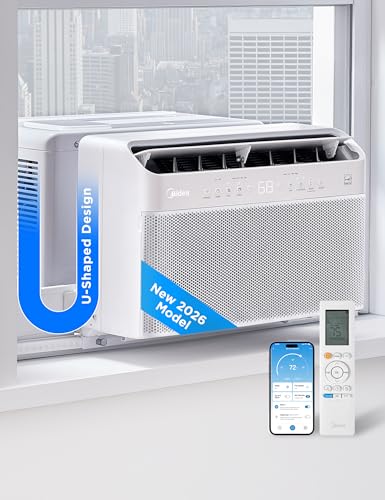
The product most people picture when they hear the Soleus name is the saddle air conditioner, sometimes described as an over-the-sill unit. A conventional window box sits in the middle of the opening, its cabinet filling the lower half of the frame and its weight pressing down on a bracket or the sill itself. The saddle design reshapes that cabinet into an inverted U. The indoor section hangs inside the room, the outdoor section hangs outside, and a connecting bridge straddles the sill between them.
Because the bulk of the machine sits below the sill line on both faces of the wall, the glass above stays largely clear. Light keeps entering the room, and the view that justified buying a cottage in the first place survives the installation. Anyone who has spent a summer staring at the back of a rattling metal box instead of a harbour or a herb garden understands immediately why this geometry appeals to cottage owners in particular.
The shape brings practical benefits beyond scenery. Weight distributes across the wall rather than cantilevering from a frame, so many installations need no external support bracket and no screws driven into the window casing. The window itself can often still open and close once the unit is seated, which matters in shoulder seasons when daytime cooling and evening fresh air are both welcome. A foam and panel kit seals the gaps around the bridge, and careful fitting at this stage decides how much warm air sneaks back in around the edges.
There are limits a buyer should respect. The saddle format suits a defined band of capacities, enough for bedrooms, studies and modest living rooms, but it is not the answer for a large open-plan space with a vaulted ceiling. Wall thickness and sill depth must fall within the range the bridge can straddle, so measuring the actual window, including trim and any storm frame, is essential before ordering. Double-hung windows are the natural fit; casement and sliding windows generally are not, and forcing an installation the geometry does not support invites leaks, vibration and disappointment.
Noise behaviour also changes with the shape. In a conventional box, the compressor sits roughly in the plane of the glass, and its hum transmits straight into the room. In a saddle unit, much of the mechanical mass drops below and outside that plane, and the indoor section mainly houses the fan and evaporator. Owners commonly describe the result as a softer presence, closer to a steady airflow sound than a mechanical drone, although individual sensitivity varies and a badly seated unit can still buzz against a loose sill.
Conventional window units in the Soleus catalogue
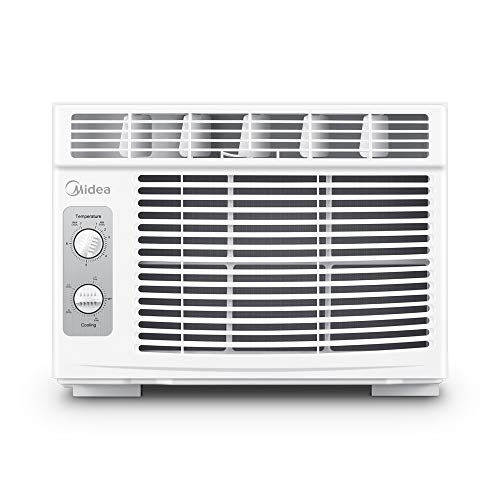
Alongside the headline saddle models, Soleus has long sold traditional window air conditioners in the smaller capacity bands that suit single rooms. These are the familiar rectangular cabinets with accordion side panels, a front grille and a control cluster or remote. They compete on straightforward value and availability rather than novelty, and for many cottages they remain the pragmatic choice, particularly where a window already carries a bracket from a previous unit.
Small rooms reward restraint. A guest bedroom in a cottage might measure little more than a bed, a wardrobe and a walking strip between them, and a compact unit in the lowest capacity band cools that volume quickly without short, clammy cycles. Shoppers comparing sizes for exactly this situation will find our guide to best 5000 btu compact window air conditioners useful alongside the brand-specific notes here, because correct sizing does more for comfort than any single feature on a specification sheet.
Mid-sized window models step up for master bedrooms and combined kitchen-living spaces. Here the questions shift from raw capacity toward airflow throw, louvre adjustment and whether the fan speed range includes a genuinely gentle night setting. Soleus window units typically offer several fan speeds, a sleep mode that relaxes the target temperature gradually, and a dry mode that prioritises moisture removal on muggy evenings when the thermometer alone understates the discomfort.
Installation discipline matters more than brand at this level. A unit tilted slightly outward sheds condensate correctly; a unit tilted inward can weep onto a sill and, over a season, stain paint or swell timber. Side panels should be taped or sealed where they meet the frame, the sash should lock down onto the cabinet flange, and the whole assembly should feel immovable when pushed. Ten extra minutes with a level and a roll of foam tape prevent most of the rattles and drips that owners later blame on the machine.
Portable models: flexibility with honest trade-offs
Every brand in room cooling sells a portable, and Soleus is no exception. A portable air conditioner stands on the floor, connects to a window through an exhaust hose and a fitting kit, and asks nothing of the building beyond a nearby outlet. For renters, for rooms whose windows will not accept any cabinet, and for cottages where cooling is needed in different rooms on different weekends, that freedom is real and sometimes decisive.
The trade-offs deserve equal clarity. A single-hose portable draws replacement air from elsewhere in the building, which slightly undermines its own cooling, and the hose itself radiates some heat back into the room. The result is that a portable generally needs a higher nominal capacity to deliver the same felt comfort as a window unit in the same space. It will also occupy floor area, produce a more noticeable exhaust note, and collect condensate that must evaporate, drain or be emptied depending on humidity and model design.
Within those constraints, Soleus portables follow the brand pattern of sensible controls and a dehumidification mode that earns its keep in coastal and lakeside properties. Rolling casters, integrated handles and a window kit that adjusts to common sash widths make seasonal deployment realistic: wheel the unit out of a cupboard in June, vent it through the spare-room window, and reverse the process when September evenings turn cool again.
Buyers should think carefully about where the hose will run. A short, straight run to a nearby window wastes less cooling than a long hose draped across a room, and a window kit sealed with care stops insects and warm air exploiting the same opening. If the cottage has one room that is always hot and another that is occasionally warm, a window unit in the first room plus a portable shared by the rest of the house often beats two mediocre installations chosen in a hurry.
Dehumidifiers: the quiet half of the catalogue
Cottages suffer from damp at least as much as from heat. A building closed up for weeks between visits, sitting near water or under trees, accumulates moisture in mattresses, curtains, books and the backs of wardrobes. Soleus sells standalone dehumidifiers alongside its cooling range, and for many owners one of these machines, running on a humidistat with a continuous drain, protects the property more faithfully than any air conditioner could.
A dehumidifier does not chase a temperature; it pulls water from the air until a target humidity is reached, then rests. That behaviour suits a closed cottage because the machine can guard against mould while nobody is present, provided the collected water has somewhere safe to go. A hose led to a floor drain, a sink or a condensate pump removes the risk of a full bucket switching the unit off on the second day of a three-week absence.
The dry mode on Soleus cooling units overlaps with this territory during occupied periods. On a still, saturated evening, dropping humidity can make a room feel several degrees kinder without aggressive chilling, and skin, bedding and tempers all benefit. Owners in persistently wet regions may want to read our broader treatment of best air conditioners for humid climates before deciding whether one dual-purpose machine or two specialised machines serve their building better.
Capacity in dehumidifiers is quoted as water removed per day under standard test conditions, and real-world extraction falls as air grows cooler. A basement store room under a cottage behaves very differently from a sunlit bedroom, even at identical floor area. Choosing a model with a little headroom, a reliable humidistat and a filter that washes clean under a tap keeps the machine effective across those different corners of the property.
Sizing Soleus units for cottages and single rooms
Capacity labels only help when matched to the room in front of you. Start with floor area, then adjust honestly: add for a kitchen’s cooking heat, for south or west glass that bakes all afternoon, for ceilings higher than a standard room, and for occupancy beyond two people. Subtract a little for a shaded north-facing room under trees, or for a bedroom used only at night when the day’s heat has already faded from the walls.
Oversizing is the classic cottage mistake. A unit too strong for its room satisfies the thermostat in a few blasts, then stops before it has wrung much moisture from the air. The room feels cold and clammy at once, the compressor cycles hard, and sleep suffers from the constant starting and stopping. A correctly sized machine runs longer, steadier cycles, dries the air as it cools, and usually sounds calmer doing so.
For a principal living space in a small cottage, many owners land in the middle capacity bands, where our comparison of best 8000 btu air conditioners sets out what that class generally offers across brands. Soleus competes in that territory mainly through its window and saddle formats, and the deciding factors are usually window geometry and noise preference rather than any dramatic difference in cooling power between reputable labels.
Bedrooms deserve their own calculation because the sleeper’s comfort window is narrow. A degree too warm and the night fragments; a degree too cold and blankets become a battle. Our dedicated notes on best air conditioners for bedrooms explore night-time sizing in depth, and the lesson transfers directly: pick the smallest capacity that reliably handles the room’s worst evening, then value a quiet low fan speed and a sleep curve over any surplus power you will never use.
Measuring the window before you measure the room
Saddle and window units both begin with a tape measure, not a shopping cart. Record the width of the opening, the height the sash can raise, the depth of the sill from inside face to outside face, and the thickness of the wall at that point. Photograph the window from inside and outside, because trim profiles, insect screens and storm windows hide in photographs less easily than in memory.
Check the electrical side with the same care. Most room units in these classes run on a standard household circuit, but an older cottage may share that circuit with a kettle, a toaster and a microwave in an open-plan kitchen. A breaker that trips whenever breakfast meets cooling is not a defect in the air conditioner; it is a load problem in the building, and an electrician’s visit costs less than a season of frustration.
Installation day: getting a saddle or window unit right
Two people make installation safer and calmer. Even a compact unit is an awkward, dense object, and a saddle model must be lowered over a sill with control so its bridge seats evenly. Clear the floor inside, open the window fully, clean the sill of grit and old paint flakes, and dry-fit the sealing kit before committing to final positions.
Seat the unit, then step back and look at the lines. The cabinet should sit level side to side, with the slight outward fall the manufacturer specifies for drainage. Foam seals belong in every visible gap, compressed enough to block air but not so crushed that they distort the frame. Where the kit provides panels, fix them firmly; a panel that flexes in wind becomes a drum skin for vibration.
Run the machine for twenty minutes before tidying up. Listen at the window, at the opposite wall and from the next room. A faint, even airflow sound is normal; a rattle localises to a loose panel, a buzz to a cabinet touching a hard edge, and a gurgle to condensate finding an unexpected path. Correcting these while tools are still out takes minutes. Correcting them a month later means starting the whole job again in warmer weather.
Keep the packaging until the first hot spell has tested the installation properly. Retail returns and warranty exchanges move faster with the original box, and the foam inserts that protected the unit in transit also protect it in winter storage. A cottage owner who treats installation as a craft rather than a chore generally does it once per unit, not once per summer.
Noise, sleep and the cottage evening
Cottages are quiet places, and machinery that would pass unnoticed in a city apartment can dominate a rural night. Crickets, distant water and wind in trees form a soft background against which a compressor’s onset lands heavily. This is why the saddle layout, with its mechanical mass lowered and divided by the wall, has found such a receptive audience among light sleepers and why fan design matters as much as compressor choice.
Judge noise by behaviour across the whole evening, not by a single demonstration. A unit that starts gently, settles into a steady low speed and resists frequent cycling will disturb sleep far less than a nominally quieter machine that surges and stops. Sleep modes help by easing the target temperature upward through the night, matching the body’s own cooling, and by dimming display lights that can glare surprisingly bright in a dark room.
Placement inside the room shapes perceived noise too. Air directed along a ceiling spreads and slows before descending, while a grille aimed at a bed delivers a draught that feels colder and louder than the same setting experienced from a sofa. Louvres deserve a minute of experimentation on the first evening; small changes in angle often transform comfort without touching the thermostat at all.
Guests change the equation further. A spare-room unit that you tolerate easily may keep a visiting grandparent awake, and a portable moved into that room for one weekend can be the kinder solution even if its paper specifications look worse. Flexibility, the unglamorous virtue running through the whole Soleus range, keeps earning its place in buildings whose population swells and shrinks with the school holidays.
Energy use and running costs in a seasonal home
A cottage air conditioner works an unusual duty cycle: idle for weeks, then asked to rescue a heat-soaked building on the hottest Friday of the year. Running costs therefore depend less on laboratory efficiency figures alone and more on how the owner manages that first pull-down and the steady days that follow. Cooling an empty cottage to comfort hours before arrival wastes energy on furniture; arriving, opening windows for the first exchange of air if the evening allows, then closing up and starting the unit gives the machine a fairer task.
Efficiency ratings still deserve a look. Higher-rated models in the window and saddle classes trim consumption across a long season, and the saving compounds in regions where summer stretches from May into September. But a modestly rated unit, correctly sized and sealed carefully into its window, will usually out-perform an efficient unit installed with gaps you can see daylight through. Weatherstripping remains the cheapest efficiency upgrade in the entire subject.
Timers and app control serve economy when used with restraint. A schedule that pre-cools the bedroom for an hour before bed, then hands over to a sleep curve, beats leaving a unit at full tilt through an empty afternoon. Wi-Fi models in the Soleus range allow that scheduling from the drive down, yet owners should resist micro-managing temperatures hour by hour; steady settings let the machine settle into its most efficient rhythm.
Shade is the silent partner of every cooling decision. A deciduous tree, an awning over west glass or even a pale blind drawn during the fiercest hours reduces the load before the compressor ever starts. Cottage owners often plant and build with exactly this instinct, and pairing that passive wisdom with a modest, well-fitted Soleus unit produces comfort that feels effortless rather than engineered.
Filters, cleaning and the rhythm of maintenance
Room air conditioners ask little, but they ask it regularly. The washable mesh filter behind the front grille collects dust, pollen and the fine debris of rural life, and a clogged filter strangles airflow, invites icing and lengthens every cooling cycle. Sliding it out, washing it gently, letting it dry fully and refitting it takes minutes, and a monthly rhythm during the season keeps performance close to the day the unit was installed.
Coils benefit from an annual inspection. The outdoor face gathers seeds, insects and storm-blown leaves, especially on a unit mounted low in a garden wall. A soft brush and a careful hand clear most of it; bent fins can be coaxed straight with patience, and anything involving refrigerant lines or electrical panels belongs to a professional rather than a holiday weekend experiment.
Portables and dehumidifiers add water management to the list. Tanks should be emptied and wiped before storage so residues do not ripen in the dark, drain hoses checked for kinks and blockages, and pumps, where fitted, tested with clean water before the season of trust begins. A machine that will guard an empty cottage against damp must prove its plumbing while someone is still there to watch it.
Winter storage decides how gracefully a unit ages. Clean and dry everything, coil the cord loosely, cover the cabinet against dust, and store a window or portable unit upright in a dry place rather than a damp outbuilding. Saddle and window units left in place need an exterior cover that sheds weather without trapping condensation against the case, plus a note in the cottage diary recording what was done and when.
Aftercare, parts and the honest limits of a specialist brand
Here the guide must be plain. Soleus sells through major retailers and supports its products with warranties and a customer service operation, yet its bench of local repairers and its depth of spare-parts stock cannot match the largest appliance corporations. A control board for a discontinued model from a giant brand may sit in a regional warehouse; the equivalent Soleus part may need ordering, waiting for, or may eventually be unavailable, tipping a repair decision toward replacement.
That reality does not make the brand a reckless purchase. It changes how a thoughtful owner buys. Keep the receipt and model details somewhere safer than a kitchen drawer in a damp building. Register the product if the brand offers registration. Buy through a retailer whose returns and extended-service options you understand, and consider whether a modest protection plan suits a machine destined for a property you visit only monthly.
Common consumables are easier than electronic parts. Filters, remotes, window kits and hoses circulate widely because they fit across seasons of similar models. The pinch points are compressors, boards and fan motors once a design leaves production. An owner who values a decade of repairability above design elegance may still choose a giant brand for a primary residence, while accepting the Soleus balance happily in a cottage where the unit works seasonally and the saddle shape solves a real problem.
Support experiences also vary by channel. A unit bought from a local store can sometimes be carried back to a counter and a human conversation, whereas a marketplace purchase routes everything through shipping labels and chat windows. Neither path guarantees speed in a heatwave, when every service system in the country is saturated, but knowing your path in advance, and keeping a portable or a fan as household backup, turns a breakdown from a ruined holiday into an inconvenience.
What to check before you ever need support
Photograph the rating plate on the day of installation, because model and serial numbers printed on a cabinet become hard to read after years of sun and cleaning. Save the manual digitally, note the retailer’s order reference beside it, and record which circuit the unit uses in the cottage’s electrical notes. These small acts, done once, save remarkable time if a warranty conversation ever begins.
Learn the simple resets too. Many service calls end with a tripped protection device, a remote whose settings nobody remembers choosing, or a filter so loaded that the machine protected itself. The manual’s troubleshooting pages, unglamorous as they are, resolve a large share of apparent failures, and working through them calmly distinguishes a genuine fault from a cottage gremlin before you spend money on either.
How Soleus compares with the big-name alternatives
Shoppers rarely consider Soleus in isolation, so a fair comparison helps. The giant brands bring broader model ladders, deeper parts pipelines and, in some lines, inverter compressors that modulate output with great refinement. Soleus counters with the saddle geometry, a catalogue uncluttered by unrelated appliances, and retail availability that lets a buyer see, lift and judge a unit in person rather than trusting photographs alone.
Against other specialist and store brands, the differences narrow to details: the feel of the remote, the honesty of the window kit, the behaviour of the sleep mode, the ease of sliding out a filter. These details sound minor in a showroom and become major across five summers of daily use. Reading owner reports with an eye for repeated themes, rather than individual triumphs or disasters, reveals more about those details than any feature list.
Price positioning, discussed without figures, generally places Soleus in the competitive middle: rarely the bargain-basement option, rarely the premium outlier. For a cottage, that middle often represents the rational ground. The building does not need the most sophisticated machine in the country, but it does need one whose seals, fans and controls survive being ignored all winter and trusted all summer.
Consider also the cost of the window itself. A saddle unit that avoids cutting, bracketing or permanently altering an original cottage window preserves joinery that may be older than the owner. In period properties, avoiding irreversible changes carries a value no efficiency table captures, and it can matter again at resale when buyers fall for unspoiled sashes and the views through them.
Room-by-room: where each Soleus format earns its place
The main living room usually holds the strongest case for a saddle or window installation. It is occupied for long stretches, benefits from the view-preserving design, and justifies the hour spent fitting seals properly. Choose capacity for the room’s worst afternoon, confirm the window geometry twice, and let this be the cottage’s anchor machine, the one whose maintenance you never skip.
The primary bedroom rewards quiet above all. A smaller saddle or window unit, run steadily through the evening rather than blasted at bedtime, pre-cools walls and bedding so the night starts comfortable. Blackout from a bright control display can be solved with the display-off setting most modern units provide, and a timer can hand the small hours to a gentler fan-only period if local nights cool reliably.
Guest rooms and box rooms suit portables or the smallest window models. Their occupancy is irregular, their windows vary, and their cooling emergencies are measured in a few nights per season. A portable stored in a cupboard and deployed when grandchildren arrive is not a compromise here; it is the correct tool, freeing budget and window space for the rooms that work every day.
Workshops, studios and garden rooms present a dustier challenge. Filters clog faster where sawdust or potting compost circulates, so a model with easy filter access wins, and capacity should account for equipment heat and any large panes of glass. A dehumidifier may serve these spaces in winter, guarding tools and canvases, while the cooling unit rests, an alternation the Soleus catalogue supports neatly because the same household can stay within one brand’s controls and habits.
Buying checklist for a Soleus purchase
- Measure twice: record window opening, sill depth, wall thickness and screen arrangement before choosing between saddle and conventional formats.
- Size for the room: match capacity to area, sun exposure, ceiling height and occupancy rather than reaching for the largest box that fits.
- Confirm the circuit: check what else shares the cottage wiring on that run, especially in kitchens and older properties.
- Plan the water: decide how condensate will drain in cooling and dry modes, and how a dehumidifier will empty when nobody is present.
- Keep the paperwork: store receipt, model photographs and retailer references digitally so warranty help never depends on a damp drawer.
- Think about year five: weigh the saddle design’s benefits against the thinner parts network, and decide consciously rather than discovering the trade later.
None of these steps requires technical training. They require an afternoon of attention before purchase instead of a weekend of regret after it, which is the exchange this entire guide recommends. A cottage rewards owners who prepare calmly, from the woodpile to the window seals, and cooling equipment follows the same rule as every other system in a small, much-loved building.
Seasonal routines that keep a Soleus running well
Spring opening is the natural audit moment. Before the first hot day, refit or inspect the unit, wash the filter, clear the exterior coil, test every mode including dry and fan-only, and run the machine long enough to confirm that condensate travels where it should. A fault found in May is an errand; the same fault found during a July heatwave is a crisis competing with every other household in the region.
Mid-season, glance at the seals after storms and at the filter after pollen-heavy weeks or nearby building work. Listen for new sounds rather than louder ones; a fresh rattle or tick usually names its cause to anyone willing to spend two quiet minutes beside the machine. Small corrections, a reseated panel or a tightened kit screw, prevent the vibration wear that shortens a unit’s life.
Autumn closing deserves the same care as spring opening. Clean and dry the machine, decide whether it stays in the window under a cover or travels to storage, drain every trap and tank, and write two lines in the cottage log about its condition. Owners who keep that log across years build a memory for the building itself, spotting the slow changes, a filter clogging faster, a room growing hotter as a tree is felled, that no single visit would reveal.
Who should choose Soleus, and who should look elsewhere
Choose Soleus if your cottage windows and views are precious, if your cooling needs live in one or two rooms, and if you value a machine that a local retail trip can replace or supplement without specialist installers. Choose it also if damp shares top billing with heat, because the dehumidifier side of the range lets one brand cover both halves of the cottage climate problem with consistent controls and habits.
Look elsewhere if you need whole-house cooling, if a vast open-plan interior demands capacities beyond the room-unit classes, or if a guaranteed decade of deep parts support outranks every design consideration. Look elsewhere, too, if your windows are casements or sliders that no saddle or standard cabinet can fit honestly; a split system or a portable will serve those buildings better than any amount of hopeful adaptation.
Between those poles sits the typical cottage decision, and it is usually settled by the window in the living room. Measure it, stand in front of it at the hour when the sun strikes hardest, and imagine the room with a conventional box filling the lower pane versus a saddle unit tucked beneath the sill. For a great many owners, that single act of imagination, backed by the sizing and aftercare notes in this guide, makes the choice feel obvious rather than agonised.
Smart control, timers and arriving to a cool cottage
Selected Soleus models offer Wi-Fi control, and in a seasonal property that feature earns a more serious hearing than it might in a full-time home. Switching a unit on during the final hour of the drive means the cottage greets you with cooled air instead of the stored heat of a closed building, and switching it off remotely rescues the afternoon when everyone leaves in a rush and nobody remembers the living room machine still humming behind a closed door.
Restraint keeps the feature honest. Remote control cannot rescue a badly sized unit, seal a gap around a window kit or clean a filter nobody has touched since spring. Treat connectivity as the finishing layer on a sound installation, and verify at home, on your own phone, that the app pairing works before relying on it from a motorway services car park two counties away with tired children in the back seat.
Timers without Wi-Fi cover much of the same ground for owners who prefer simplicity. A delayed start set before a day out, or a delayed stop that lets a bedroom unit retire an hour after its occupants fall asleep, trims wasted running without any account, password or software update entering cottage life. In buildings where broadband itself is seasonal or temperamental, that independence from the network is a virtue rather than a missing feature.
Voice control and app dashboards will keep evolving faster than compressors do, and a cottage machine may serve through several generations of phones. Judge the hardware first: the cabinet, the fan, the seals and the drainage decide the summers. Software that still works in five years is a welcome bonus, and software that does not should leave behind a unit still fully operable from its own panel and remote, which is the standard to hold any connected Soleus model to at purchase.
Humidity, mould and the closed-up cottage problem
Heat announces itself the moment a door opens, but damp works silently between visits. A cottage shut for a month absorbs moisture from the ground, the air and any small plumbing weep, and that moisture settles into soft furnishings where mould spores wait for warmth. Cooling alone, used only during occupation, arrives too late to interrupt that cycle, which is why this guide keeps returning to dehumidification as a first-class topic rather than a footnote.
A standalone Soleus dehumidifier on a humidistat, draining continuously to a safe outlet, stands guard while the cottage sleeps. Set a target that protects fabrics and timber without drying the building harshly, confirm the drain route physically carries water away, and arrange for a neighbour, a caretaker or your own mid-season visit to glance at the machine. Automation in an empty building always deserves a human audit trail, however reliable the appliance.
During occupied weeks, the dry mode on a cooling unit handles the lived-in moisture of showers, cooking and wet swimwear draped over chairs. Running dry mode on a grey, saturated afternoon often restores comfort more gracefully than deep cooling, because skin reads humidity as keenly as temperature. Bedding feels fresher, windows mist less at dawn, and the cottage smells like a holiday again rather than a cellar.
Ventilation partners with all of this rather than competing against it. Airing the building on a dry morning, exhausting bathroom steam at its source and resisting the urge to dry laundry indoors on wet days all reduce the load any machine must carry. The Soleus equipment then does the remainder, steadily and without heroics, which is exactly the workload self-contained appliances handle best across a long season.
Troubleshooting the faults cottage owners actually meet
Most apparent failures in room cooling trace back to air, water or power rather than to a dead compressor. A unit blowing weakly has usually swallowed a season of dust into its filter. A unit cooling weakly may be fighting a dislodged window seal, a blocked outdoor coil or a room whose door stands open to a sunlit hallway. Working through those causes in order solves the majority of disappointing afternoons without a single tool beyond a brush and a roll of foam tape.
Water appearing where it should not deserves calm, methodical attention. Check the outward tilt, clear the drain path of the debris and insect nests that rural buildings specialise in, and confirm that a portable’s tank or a dehumidifier’s hose has not shifted. Water follows the easiest route with complete indifference to your weekend plans, so the fix is always to give it back its intended route rather than to catch it in ever more creative places.
Unfamiliar sounds tell their own stories. A new rattle usually means something loose has met something vibrating, a panel, a grille or a forgotten object on top of the cabinet. A cyclical groan at start-up can be normal pressure equalisation, while a grinding or screeching that persists is a signal to switch off and seek help. Recording the sound on a phone, humble as it feels, gives any support conversation a head start that written descriptions rarely achieve.
Electrical misbehaviour, repeated breaker trips, scorch marks, a plug running hot, belongs in a different category entirely: stop using the machine and call an electrician. Cottages with older wiring deserve particular respect here, because a cooling unit is often the largest continuous load the building has ever carried. No holiday comfort justifies coaxing a reluctant circuit, and a professional’s inspection frequently improves the safety of everything else plugged into the same ageing system.
Cost of ownership beyond the ticket on the box
A fair account of value spreads across the years a unit serves. The purchase is only the opening entry; filters washed rather than replaced, a window kit renewed after a few seasons, electricity across long summers and the possibility of an out-of-warranty repair all belong in the ledger. Soleus machines keep several of those entries low by design, with washable filters and owner-level maintenance covering most routine needs.
The uncertain entry is the late-life repair, where the thinner parts pipeline discussed earlier may convert a theoretically fixable fault into a replacement decision. Owners can soften that risk by buying the right unit once rather than the almost-right unit twice, by maintaining it so avoidable failures never queue ahead of genuine ones, and by keeping a modest household reserve for the appliances a seasonal property depends on.
Set against that risk is a saving unique to the saddle design: the window you did not have to alter, bracket or replace. Joinery work on older cottages is expensive and sometimes irreversible, and a machine that cools while leaving original fabric untouched protects both the building’s character and its budget. Value, in a heritage cottage especially, is measured in what you did not have to undo as much as in what you bought.
Longevity also follows the gentleness of the duty. A cottage unit resting through winter, cleaned before storage and spared the twelve-month grind of a city apartment often outlasts expectations formed by year-round appliances. Seasonal service is still service, though, and the owners who log it, season by season, are the ones whose machines greet each June like an old retainer rather than a stranger.
Check prices on Amazon
Live listings for the shortlist in this guide are pulled from Amazon below, so prices and availability are always current at the moment you look.

Questions cottage owners ask about Soleus most often
Can one saddle unit cool a whole small cottage?
It can cool the room it serves and soften conditions in adjoining spaces with open doors and a helpful fan, but a closed bedroom at the far end of a corridor will not share the benefit fairly. Small cottages with an open layout, low ceilings and good shade sometimes manage happily with one well-placed machine, while long or divided floor plans ask for a second, smaller unit where people actually sleep. Comfort follows occupation, so cool the rooms by their hours of use rather than chasing an even temperature across empty square footage.
Will a saddle unit suit a rental cottage or guest annexe?
Guest accommodation adds simplicity to the buying criteria, because visitors must operate the machine without a briefing. Clear controls, a remote that cannot be configured into confusion and a laminated card explaining the sleep setting beat advanced features in that setting. The saddle layout also keeps the view guests paid for, and its tidy sill-level profile photographs honestly in listings, which matters when the same room must sell itself to next season’s visitors from a phone screen.
How does a Soleus portable behave during a humid heatwave?
Expect it to work hard and to need its water management watched. In saturated air, condensate accumulates quickly, evaporation systems reach their limits, and a unit that seemed self-sufficient in mild weather may ask for draining at the least convenient hour. Setting up a continuous drain from the first day of a heatwave, rather than discovering the requirement at midnight, is the difference between a portable that feels like a rescue and one that feels like a second job.
Is the brand a sensible choice for a single-room flat or studio?
The same qualities that suit cottages translate directly: one room, one window worth preserving, and an occupant who values quiet evenings. A saddle or compact window unit in a studio must be sized with extra honesty, because cooking, sleeping and working all share one air volume, and the dry mode earns genuine appreciation in a space where showers and kettles humidify the very room where the bed stands.
What should you do in the first week of ownership?
Live with the machine deliberately. Try each fan speed at the hours you actually occupy the room, learn how the sleep curve feels across a whole night rather than a five-minute test, and note where the louvers send air when the room is arranged for real life instead of installation day. Check the exterior drainage after the first long run, glance at the seals after the first storm, and photograph the finished installation for your cottage records while everything is clean, level and exactly as the manufacturer intended.
That first week is also when small disappointments are cheapest to fix, and when the household learns whether the chosen capacity truly matches the room’s late-afternoon behaviour under a genuine sun load rather than the mild conditions that often flatter a new installation during its first forgiving days of service each season. A seal that whistles, a remote stored where nobody looks, a timer set in the wrong half of the day: each is a two-minute correction now and a season of low-grade irritation if left alone. Cottage ownership teaches this lesson through every system it contains, from gutters to septic tanks, and a new cooling unit simply joins the curriculum.
For the cottage where the lake view is non-negotiable and the bedroom window sits deep in shade by nine, a Soleus saddle unit tucked beneath the sill is less an appliance purchase than a promise to keep summer exactly as it was, only cooler.