Our Top Picks
 Floor Theory Area Rug Hand Tufted Wool Deep5' x 7' (Rectangular)84 x 60 x 0.5 inches20 poundsCheck on Amazon
 Floor Theory Area Rug Hand Tufted Wool Butter5' x 7' (Rectangular)84 x 60 x 0.5 inches20 poundsCheck on Amazon
 SAFAVIEH Heirloom 700 Area Rug 8x10⁸' x 10' (Rectangular)120 x 96 x 0.25 inches33.5 poundsCheck on Amazon
 Floor Theory Area Rug Hand Tufted Wool Leo5' x 7' (Rectangular)84 x 60 x 0.5 inches20 poundsCheck on Amazon
 Floor Theory Area Rug Hand Tufted Wool Walnut5' x 7' (Rectangular)84 x 60 x 0.5 inches20 poundsCheck on Amazon
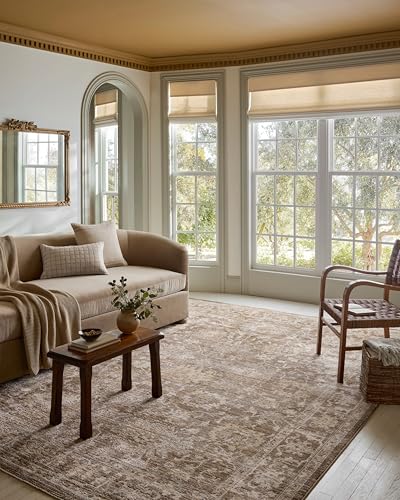 Loloi Magnolia Home by Joanna Gaines Pace Collection7'10" x 10' (Rectangular)22.72 poundsCheck on Amazon
What's inside
- What makes a rug an heirloom rather than a furnishing
- Hand-knotted construction and why it endures
- Reading knot density without being misled by it
- Wool, silk and the fibres that carry centuries
- Kilim and flatweave traditions
- Natural dyes and the colours that age gracefully
- Regional styles and what they signal
- Judging condition like a cataloguer
- New heirlooms versus antique pieces
- Placement, light and the daily life of a valuable rug
- Cleaning and caring for a rug meant to outlive you
- Storage, inheritance and passing a rug onward
- Appraisals, insurance and the question of value
- Buying well: questions, inspections and red flags
- Questions buyers ask before committing
- Bringing the search to a confident close
- The people behind the loom
- How patterns carry meaning across generations
- Check prices on Amazon
- Living with a heirloom day to day
As an Amazon Associate I earn from qualifying purchases. This post may contain affiliate links at no extra cost to you.
A note on how this guide is funded: readers who buy through links on this page support Cottage Verdict through a small commission that never changes the price paid at checkout. Our research for this article rests on weaving literature, auction house cataloguing practice, museum conservation writing and the accumulated experience of dealers and repairers, and it aims to describe quality markers honestly rather than to romanticise every old rug as a treasure.
What makes a rug an heirloom rather than a furnishing
Most rugs are consumables with good manners: they decorate for a decade, thin under chair legs, fade beside windows and eventually leave for the tip without ceremony. An heirloom rug belongs to a different category of object. It was made slowly from materials chosen for endurance, by hands whose skill took years to acquire, and it can absorb generations of daily life while remaining worth repairing when damage finally appears. The distinction is not age alone, nor price alone, but a combination of fibre, structure and workmanship that keeps the piece useful and valued long after its makers are gone.
Time tests every claim made for such a rug. A machine-made carpet may look splendid in a showroom photograph and still delaminate, shed its backing or lose its pattern definition within a few years of family traffic. A well-knotted wool rug, by contrast, often improves through its first decades as the pile polishes, colours settle into harmony and the surface develops the gentle sheen that collectors describe as patina. Heirloom quality is therefore a prediction backed by construction: given ordinary care, this object will still be earning its floor space when grandchildren rearrange the room around it.
Emotional value grows on top of structural value, and the two reinforce each other. A rug that carried a family’s celebrations, that children learned to read upon and dogs napped across, gathers associations no new purchase can replicate. Because the object survives, the memories have somewhere to live. Because the memories matter, owners commission repairs, rotate the piece away from harsh sun and teach the next generation its care. Neglect kills more heirlooms than wear does; survival is a partnership between how a rug was made and how it is treated.
Recognising that partnership matters before money changes hands. Buyers who understand knot structure, fibre behaviour and dye chemistry can distinguish a genuinely durable rug from a decorative imitation wearing antique styling. Sellers of fine pieces expect such questions and answer them with specifics. Sellers of imitations answer with atmosphere. This guide works through the evidence a buyer can gather with eyes, fingers and a few pointed questions, so that a purchase intended to serve three generations rests on knowledge rather than hope.
Hand-knotted construction and why it endures
In a hand-knotted rug, every tuft of pile is an individual knot tied by hand around warp threads stretched on a loom. A skilled weaver may tie several thousand knots in a working day, and a room-sized carpet can occupy a loom for the better part of a year. That labour sounds extravagant until the structure is understood: the finished textile has no separate backing to fail, no glue line to dry out, no latex layer to crumble into dust. The knots, warp and weft form a single interlocked fabric whose integrity comes from tension and density rather than adhesive.
Two great knot families dominate the tradition. The symmetrical knot, often called Turkish, wraps yarn around two warp threads and emerges between them, producing a sturdy pile suited to hard-wearing tribal and Anatolian weaving. The asymmetrical knot, often called Persian, loops around one warp and passes behind the next, allowing finer curves and more intricate floral drawing at high densities. Neither is superior in the abstract; each serves its regional designs. What matters for longevity is that knots are packed tightly and beaten down firmly row by row, so the pile stands as a united surface rather than a loose forest.
Between rows of knots, the weaver inserts weft threads and compacts everything with a heavy comb beater. That compaction, repeated hundreds of thousands of times, gives a fine rug its characteristic firmness, the quality dealers test by bending a corner and feeling resistance rather than flop. A rug that drapes like a blanket may be charming as a textile, but a floor piece intended for decades needs body. Kilims and other flatweaves achieve durability by a different route, through tightly packed weft-faced weaving discussed later in this guide.
Hand-knotted structure also explains repairability, the quiet superpower of heirloom textiles. A worn patch can be re-knotted, a damaged end can be re-warped, a moth-nibbled corner can be rebuilt by a restorer working with the same techniques as the original weaver. Machine-made rugs rarely accept such intervention gracefully, because their construction was never meant to be unmade and remade by hand. When a family commissions a repair that costs meaningful money, it does so because the object justifies it, and the object justifies it because its structure allows a skilled restorer to make it whole again.
Reading knot density without being misled by it
Knot density, usually expressed as knots per square inch, is the most quoted quality statistic in the rug world and the most frequently abused. Counting is simple in principle: turn the rug over, choose a square inch on the back where the pattern shows as a grid of tiny dots, and count the knots horizontally and vertically before multiplying. Fine city rugs from famous weaving centres can reach several hundred knots in that square, their backs resembling woven photographs. Sturdy tribal pieces may sit far lower while outlasting their finer cousins by decades.
Density governs detail more directly than durability. A high count permits curving vines, tiny animals and delicate outlines that a coarse weave cannot draw, and it usually signals finer yarn, slower work and a higher price. Longevity, however, depends equally on wool quality, knot tightness and how firmly each row was beaten home. A moderately dense rug in superb long-staple wool, packed hard, will outwear a flimsy high-count piece spun from short brittle fibre. Buyers who chase the biggest number on a tag sometimes purchase fragility dressed as refinement.
The back of a rug tells the truth that the front can hide. On a genuine hand-knotted piece, the pattern appears clearly on the reverse, slightly softer in colour, with each knot visible as a small irregular dot. Machine-made copies often show a pattern that looks too perfect, or a backing layer that conceals the structure entirely, or printed designs where the reverse bears little relation to the face. Slight irregularities on a handmade back are not flaws; they are fingerprints of the process, evidence that human hands rather than a programmed loom made the decisions.
Density also interacts with pile height and use. Very fine rugs often carry a short, closely clipped pile that shows traffic lanes sooner in punishing locations such as hallways, while a medium-density rug with resilient wool pile forgives a busy family room for decades. Matching density to placement is part of buying wisely: reserve the finest weaving for rooms where it will be admired more than trampled, and let robust mid-range pieces carry the daily load in the spaces where life actually happens.
Wool, silk and the fibres that carry centuries
Wool earned its dominance in rug weaving through a bundle of properties no substitute has matched. Each fibre carries natural crimp, so pile springs back after compression instead of lying crushed. Lanolin and the fibre’s outer scales resist dirt penetration and shed dry soil readily, which is why an old wool rug can release astonishing quantities of dust when beaten and still emerge bright. Wool accepts dye deeply and holds it through decades of light, accepts flame poorly enough to smoulder rather than blaze, and insulates both thermally and acoustically. A fibre doing that much work explains itself.
Not all wool is equal, and heirloom quality begins at the sheep. Long-staple wool from the fleece of healthy, often highland, animals spins into strong yarn with fibres that overlap generously along each thread. Short-staple or dead wool, shorn from animals that died or recovered from pelts, produces weaker yarn that sheds, pills and wears thin prematurely. Hand-spun yarn, recognisable by gentle variations in thickness along its length, tends to signal traditional material and gives antique pieces part of their visual warmth, because each knot catches light slightly differently from its neighbour.
Silk enters the conversation where luxury and fineness meet. Silk pile can achieve extraordinary knot densities and a luminous surface that shifts with viewing angle, and silk warps give some city masterpieces their precision. Yet silk costs dearly, dislikes heavy traffic and demands gentle handling, so an all-silk rug is a treasure for a quiet room rather than a workhorse for a family hall. More common in durable heirlooms is silk used as accent within wool pile, outlining motifs with a glint that survives because the surrounding wool carries the wear.
Cotton serves quietly as the foundation of most knotted rugs, forming warp and weft because it is strong, stable and less elastic than wool, which helps a rug lie flat and keep its shape. A wool foundation appears in many tribal pieces and produces a more supple handle. What buyers should avoid in a would-be heirloom is a foundation or pile built from synthetic fibres pretending to be natural: nylon and polyester piles can imitate wool’s first-year appearance while lacking its decades-long resilience, and their presence quietly disqualifies a rug from the heirloom category regardless of how traditional the pattern looks. For plant-fibre alternatives in everyday rooms, our survey of best 9×12 natural fiber rugs covers jute and sisal options honestly labelled as practical rather than generational.
Kilim and flatweave traditions
Not every heirloom is knotted. Kilims, woven flat by interlocking coloured wefts directly with the warp, have served households across Anatolia, the Balkans and Central Asia for centuries as floor coverings, bedding, storage bags and dowry wealth. With no pile to crush, a well-made Kilim in good wool can survive remarkable use, and its lighter weight allows it to move between roles and rooms across a lifetime. Families inherit Kilims folded in chests, carrying wedding motifs and village symbolism that a factory textile could never encode.
Slit-weave technique gives Kilims their bold geometry. Where two colours meet along a vertical boundary, the wefts turn back on their own warps, leaving a tiny slit that the eye reads as a crisp line. Those slits are structural facts, not damage, though long slits can weaken a piece and skilled weavers manage them with interlocking or dovetailing on important work. Patterns emerge as diamonds, hooks, eight-pointed motifs and stylised figures, each region favouring its own vocabulary. A buyer learning to read those motifs gains a map of origin more reliable than any label sewn on later.
Flatweaves beyond the Kilim family widen the field further. Soumak weaving wraps wefts around warps to build a raised, almost embroidered surface with great durability. Jajim and other striped weaves turn narrow loom widths into broad cloth through stitching. Each technique trades pile comfort for portability, reversibility and a graphic clarity that suits modern interiors surprisingly well. Underfoot a flatweave feels cooler and firmer than a knotted rug, and furniture slides more easily across it, practical virtues that heirloom hunters should weigh alongside romance.
Condition assessment differs for flatweaves. Check slits for separation, edges for the original selvedge, and ends for secure finishing, since a flatweave unravels from its extremities rather than wearing through its middle. Because there is no pile to hide repairs, restoration shows more readily, and honest old repairs in matching wool are generally accepted as part of a piece’s biography. A Kilim with sound structure and vivid natural colour remains a legitimate heirloom candidate at a gentler price than a knotted carpet of comparable age.
Natural dyes and the colours that age gracefully
Colour is where chemistry becomes visible. Traditional dyers extracted reds from madder root, blues from indigo, yellows from weld or pomegranate rind, and browns from walnut husks, fixing them to wool with metallic mordants refined through generations of practice. Properly dyed wool in these materials does not merely resist fading; it mellows. Reds soften toward rose, blues deepen, and the whole palette converges into the harmonious glow that makes antique rugs feel calm even when their patterns are lively. Time becomes a collaborator rather than an enemy.
Synthetic dyes arrived in the nineteenth century and split into two stories. Early aniline formulations included notorious fugitives that bled, streaked or faded to unrelated hues, and rugs from that experimental window can show strange colour behaviour that lowers their standing. Modern chrome dyes, by contrast, are stable, consistent and entirely respectable, used by reputable workshops worldwide. The honest question for a buyer is therefore not natural versus synthetic as a slogan, but whether the specific rug’s colours have demonstrated stability: even tones, no bleeding at the fringes, no harsh chemical brightness that sits uneasily beside the wool’s character.
Abrash offers a beloved clue to traditional production. The word describes subtle bands of colour variation across a rug, caused when a weaver began a new batch of dyed wool whose tone differed slightly from the last. In village weaving this was unavoidable and is now cherished as evidence of hand-dyed yarn and small-batch work. Deliberately faked abrash appears on some commercial rugs as obvious stripes, which connoisseurs spot quickly because genuine abrash shifts within a colour family, gradually and organically, rather than marching across the field in regular bands.
Testing colourfastness requires tact. A buyer in a showroom can press a slightly dampened white cloth against an inconspicuous area, with the seller’s permission, and check for transfer, though a well-set dye on old wool may still release surface dust colour without cause for alarm. More informative is examining the base of the pile: open the knots with your fingers and compare the colour at the root with the surface. Even ageing shows a gentle gradient; a dramatic difference, pale roots under saturated tips, can indicate a surface treatment or re-dyeing that a seller should disclose.
Regional styles and what they signal
Persian city rugs from centres such as Tabriz, Kashan and Isfahan represent the refined pole of the tradition: high knot counts, curvilinear floral drawing, silk accents and medallion layouts composed with architectural confidence. Village and tribal weaving from the Caucasus, Anatolia and western Persia speaks a bolder dialect of angular medallions, animal figures and saturated colour fields. Neither pole outranks the other in heirloom terms; a superb tribal rug with magnificent wool can outlive and outshine a mediocre city carpet, and collectors pursue both with equal seriousness.
Turkish rugs contribute their own signatures, from the double-knotted sturdiness of Anatolian village pieces to the fine prayer rugs of Hereke with silk and metal-wrapped thread. Indian production, centred historically in centres such as Agra and Jaipur, ranges from robust Mughal-inspired carpets to modern workshop weaving of variable quality, which makes construction checks especially important there. Chinese pieces, Afghan war rugs, Tibetan tiger rugs and Scandinavian flatweaves each extend the map further. Origin informs expectations about materials and technique, but origin alone never guarantees quality; every region has produced both masterpieces and merchandise.
Learning a few visual grammars sharpens buying judgement considerably. A Heriz rug announces itself with a bold central medallion and rust-red field built for mountain lodge durability. A Kazak shows fierce geometric shields in saturated primaries. A Gabbeh, woven by nomadic hands with cheerful improvisation, trades precision for charm and thick, resilient pile. When a seller attributes a rug to a tradition, compare the piece against these grammars; a mismatch between story and structure is the oldest warning sign in the trade.
Size interacts with region and rarity in ways that affect long-term value. Oversized antique carpets were commissioned for specific grand rooms and survive in smaller numbers, while small tribal pieces were woven in quantity for daily use and dowry. A family buying for a particular space, perhaps guided by the proportions discussed in our look at best 5 x 8 living room rugs, should remember that heirloom hunting rewards flexibility: the right rug in a slightly unexpected size, accommodated by thoughtful furniture placement, usually serves a household better than a compromised rug in the perfect dimensions.
Judging condition like a cataloguer
Condition separates a wise purchase from an expensive education, and cataloguers assess it systematically rather than by overall impression. Begin with the pile: is the wool full and resilient, evenly worn, or threadbare down to the foundation in traffic lanes? Low pile that remains even can be perfectly acceptable and even prized on antique pieces, while localised wear exposing warp threads signals structural consumption that will worsen. Run a palm across the surface in several directions; healthy wool feels alive and slightly oily, tired wool feels dry, brittle and reluctant to spring back.
Ends and edges carry disproportionate importance because rugs fail from their borders inward. Original fringes are the warp threads themselves extending beyond the weaving, and their presence, secured with proper kilim end finishes or overcasting, suggests a complete piece. Rugs cut down from larger originals, a common historical alteration, reveal themselves through borders that end abruptly or motifs sliced mid-figure. Side selvedges should be intact and evenly wrapped; fraying sides invite unraveling with every vacuum pass and every dragged chair.
Turn detective on repairs. Honest restoration, re-knotting worn areas in matching wool, stabilising ends, patching a moth hole with a fragment of similar age, preserves an heirloom and is openly discussed by reputable sellers. Concealed damage is another matter: painted wear, glued patches, foundation rot hidden under a fresh backing, or areas of dry, cracking wool that powder when flexed. Bend the rug gently in several places and listen; a healthy foundation flexes silently, while a rotten one crackles like paper, a sound that should end negotiations for any piece intended to last generations.
Moth history deserves direct questions. Clothes moth larvae graze wool pile down to the foundation in dark, undisturbed areas, leaving the cotton structure untouched and the pattern ghosted. Old moth damage, professionally cleaned and stabilised, may be acceptable on an antique at the right price. Active infestation is not acceptable at any price, since the buyer imports the problem into a house full of other textiles. Inspect the back in the quiet corners of the pattern, where grazing concentrates, and ask plainly what treatment the rug has received.
New heirlooms versus antique pieces
Buying an antique rug purchases history along with textile: a nineteenth-century village weaving carries its maker’s world inside its motifs, and no modern workshop can reproduce the specific glow of wool dyed and aged across a century. The costs of that romance are real. Surviving antiques have already spent part of their lifespan, may carry old repairs and fragile areas, and come in sizes dictated by vanished rooms. They also require confidence in attribution, because the antique market rewards storytelling and not every story survives scrutiny.
A newly made rug from a serious workshop offers a different contract: full pile, sound foundation, colours chosen for the buyer’s rooms, sizes made to order, and a lifespan that starts at zero in the buyer’s own family story. The heirloom of 2120 is being woven somewhere today, quite possibly by hands using vegetable dyes, hand-spun wool and knot counts that would satisfy a Qashqai grandmother. The task is distinguishing those workshops from factories producing distressed-look décor with chemical washes simulating age. Construction evidence, fibre honesty and dye behaviour separate the two far more reliably than branding.
Price logic differs between the paths. Antiques price in scarcity, age and collectibility, which can make a superb old rug either a bargain against new work of equal quality or a speculative purchase, depending on fashion. New heirloom-grade weaving prices in labour and materials, transparently heavy in both. Either route can be rational. What neither route tolerates is vagueness: a buyer should be able to state, for the chosen rug, what it is made of, how it was made, where, and why those facts justify the money, in plain sentences without recourse to atmosphere.
Many households eventually blend both approaches, anchoring a formal room with an antique whose colours took a century to compose, and commissioning robust new weaving for the family spaces where children and animals will write the next chapter. The two categories educate each other: living with a genuine antique teaches the eye what honest ageing looks like, which makes evaluating new work easier, while a sound new rug demonstrates the structural integrity an antique should still possess beneath its patina.
Placement, light and the daily life of a valuable rug
An heirloom rug does not ask to be museum-stored; it asks to be used intelligently. Ultraviolet light is its slowest enemy, breaking down dyes and fibres year after year on the sunward side of a room. Sheer curtains, window film, periodic rotation of the rug by half a turn and occasionally rearranging furniture to shift traffic lanes all spread the light and wear evenly, so no single medallion fades into a ghost while its twin stays vivid. Rotation twice a year, marked on a calendar like any other household rhythm, is the cheapest conservation a family will ever perform.
Underlay matters more than most owners realise. A quality pad prevents the rug from creeping and wrinkling, cushions the foundation against hard floors, and reduces the grinding action of grit trapped beneath. Choose a pad of dense felt or natural rubber suited to the floor finish, cut slightly smaller than the rug so its edge stays invisible. Thin synthetic pads that crumble with age can stick to floorboards and shed debris into the foundation, creating the very problems they were bought to prevent, so inspect and replace padding on a cycle rather than forgetting it for decades.
Furniture strategy shapes wear patterns decisively. Heavy pieces resting on the same four points for twenty years will compress pile and stress foundation threads locally; broad cups or small pads under legs spread that load. Dining chairs dragged across pile thousands of times abrade one border zone, a pattern visible on many otherwise fine old rugs. In rooms where chairs move constantly, a flatter, denser weave tolerates the punishment better than a long luxurious pile, which is worth remembering when assigning pieces to rooms after a purchase or an inheritance reshuffles the house.
Pets and heirlooms coexist in millions of homes, provided expectations stay honest. Claws rarely harm sound wool pile, and vacuumed regularly, a good rug tolerates animal life gracefully. The genuine dangers are repeated urine accidents, whose salts and acidity attack dyes and fibres if not extracted promptly, and determined scratching at a loose edge. Keep edges secured, address accidents immediately with blotting and professional advice, and consider reserving the single finest piece for a room where animals visit rather than reside. A smaller decorative treasure, of the kind surveyed among best accent rugs, can carry the family’s finest weaving into a lower-risk setting beautifully.
Cleaning and caring for a rug meant to outlive you
Routine care is unglamorous and decisive. Grit is the true abrasive in any rug’s life: sand and soil particles settle to the pile base, and every footstep grinds them against the knot heads, cutting fibres from below. Regular vacuuming with a suction-focused approach lifts that grit before it works. On fine or antique pieces, avoid aggressive rotating brushes that can fuzz the surface or catch fringes; a smooth nozzle, patience and several slow passes achieve more with less violence. Vacuum the back occasionally too, since vibration through the foundation loosens embedded soil that a face-only routine never reaches.
Periodic deeper attention refreshes a rug remarkably. Taking a manageable piece outdoors on a dry day, beating it gently from the back with a traditional beater and letting it air in shade releases dust that machines leave behind and discourages moth interest. Sunbathing, however, is a medicine with a strict dose: brief indirect airing freshens, while hours of direct summer sun tax dyes and dry fibres. Shake and air smaller pieces seasonally, and note which side faced up, so rotation habits stay consistent rather than accidental.
Professional washing belongs on a cycle of years, not months, and the choice of cleaner matters as much as the timing. A specialist in hand-knotted textiles will test dyes, wash flat with appropriate solutions, dry the piece fully and block it square, returning it with its structure respected. General carpet cleaners accustomed to wall-to-wall synthetics may use heat, agitation and chemistry that an heirloom cannot forgive. Ask any prospective cleaner how they handle vegetable dyes, fragile ends and silk accents; confident, specific answers distinguish the specialist from the optimist.
Spills demand speed more than products. Blot, never scrub, working from the edge of a spill toward its centre with clean white cloths, cold water and remarkable restraint. Scrubbing untwists pile, drives pigment deeper and can bloom a small accident into a permanent halo. Keep coloured towels away from a wet rug, since their dyes may transfer. For wine, pet accidents or anything involving dye or protein, a specialist consulted the same week costs less than a home experiment regretted for decades. Afterwards, dry the area thoroughly with airflow, because a damp foundation invites mildew that announces itself by smell long after the stain is forgotten.
Storage, inheritance and passing a rug onward
Life sometimes asks a rug to wait: a house move, a renovation, a period abroad. Storage done properly is a pause; storage done carelessly is a slow disaster. Clean the rug before storing, since soiled wool attracts moths and stains oxidise into permanence. Roll it with the pile facing inward around a sturdy tube, wrap it in breathable cotton or archival paper rather than plastic that traps moisture, and store it in a cool, dry, dark interior space rather than a damp garage or a hot attic where temperature swings stress fibres and invite pests.
Moth prevention during storage relies on cleanliness and inspection more than on chemicals. Cedar and lavender may please human noses but offer limited protection once their scent fades, and mothballs introduce odours that wool absorbs enthusiastically and releases reluctantly for years. A better protocol is a clean rug, a sealed-but-breathable wrap, and a calendar reminder to unroll and inspect the piece every few months, checking the back and folds for grazing or webbing. Early discovery turns a potential tragedy into a minor cleaning bill.
Inheritance planning for a significant rug deserves the same clarity as for furniture or jewellery. Record what the piece is: origin, approximate age, materials, where and when it was acquired, and any appraisals or repair records, and keep that file with household documents rather than in a memory that may not be consulted in time. Photograph the rug front and back in good light. Such records protect the next owner from undervaluing the piece at a house clearance, guide future conservation, and preserve the family story that forms half the object’s meaning.
Conversations help as much as paperwork. Tell the next generation why this rug matters, where it has lived and what care it expects, while those stories can still be told firsthand. A rug handed over with its history becomes a responsibility gladly accepted; a rug discovered anonymously in an attic becomes a disposal problem. Heirlooms are not merely objects that last. They are objects whose owners, one after another, decide that they should last, and each handover is a small ceremony in that long decision.
Appraisals, insurance and the question of value
Value in the rug world wears several faces that owners should keep distinct. Retail replacement value reflects what a comparable piece would cost from a dealer today. Fair market value reflects what a willing buyer would actually pay, often considerably less. Sentimental value obeys no market at all. An appraisal for insurance purposes should state its basis plainly, describe the rug with measurements, knot structure, materials, condition and photographs, and come from someone qualified in textiles rather than general household goods, because a generic valuation can mislead in both directions when a claim arrives.
Insurance itself deserves a deliberate decision for a genuinely valuable piece. Standard household policies may cap individual textile values below what a fine rug represents, making a scheduled endorsement or specialist cover appropriate. Document the rug before any loss, since proving the quality of a destroyed object from memory is a miserable exercise. Update appraisals periodically, because the market for antique textiles moves with taste and supply, and a valuation from twenty years ago may badly misstate today’s replacement landscape.
Resale expectations benefit from honesty. Heirloom rugs are not liquid investments; selling a fine piece quickly usually means accepting a dealer’s margin or an auction’s uncertainty, and the market rewards patience, documentation and condition. Families do best treating financial value as a secondary comfort: the rug’s primary return is decades of beauty and use, with resale a possible bonus rather than the purpose. That framing also protects buying decisions, because a rug chosen to be loved and lived on is rarely regretted, while a rug bought as a speculation can disappoint twice.
Authentication services exist for pieces whose attribution carries serious money. Museums, auction specialists and independent scholars can examine structure, dyes and design to support or challenge a claimed origin and date. For most family purchases, a reputable dealer’s written description, combined with the buyer’s own structural checks from this guide, provides proportionate assurance. Reserve deep authentication for deep expenditure, and remember that a modest rug with honest papers is a better heirloom than a grand story with none.
Buying well: questions, inspections and red flags
A good purchase begins with a tape measure and a clear account of the room: dimensions, light direction, traffic pattern, animals, children and the furniture that will stand on the piece. With those facts settled, examine any candidate rug in person where possible, in daylight as well as showroom lighting, because lamps flatter colours that a north-facing window will judge more strictly. Walk on the rug in socks. Sit on it. A rug intended for fifty years of mornings should feel right at the level of skin, not merely photograph well.
Work through a physical checklist without embarrassment; serious sellers respect it. Fold back a corner to feel foundation firmness and inspect the knot grid on the reverse. Open the pile in several places to check colour at the roots and look for dry, brittle wool. Examine all four borders and both ends for original finishes, reductions or repairs. Check for odours of mildew or heavy chemical washing. Measure the rug in three places along each dimension, because handmade pieces are rarely perfect rectangles, and a gentle irregularity is normal while a dramatic taper affects how furniture will sit.
Questions reveal as much as inspections. Ask what the foundation is made of, how the seller knows the dye story they are telling, whether the rug has been reduced, repaired or treated for moths, and what return terms apply if the piece misbehaves in the buyer’s light. Ask how the seller recommends cleaning it and listen for specifics rather than slogans. A dealer who answers patiently and documents claims in writing is offering the beginnings of the provenance file this guide recommends keeping for life.
Red flags cluster predictably. Prices far below comparable pieces, combined with reluctance to allow inspection of the back, suggest a story being protected from evidence. Excessive chemical smell, unnaturally uniform distressing, patterns printed rather than woven, and fringe sewn on as decoration rather than extending from the warp all mark a decorative product wearing heirloom costume. None of these make a rug worthless as décor, but they disqualify it from heirloom pricing, and the buyer’s task is simply to pay for what a thing is rather than for what it resembles.
Questions buyers ask before committing
Is a higher knot count always worth paying for?
Only when the design needs it and the wool supports it. Fine detail requires density, and density in excellent materials from a respected workshop legitimately costs more. Density in poor wool buys fragility. Judge the whole construction, handle the rug, and compare pieces within a similar tradition rather than pursuing a single statistic across unrelated styles.
Can a machine-made rug ever qualify as an heirloom?
Rarely in the structural sense this guide uses, because glued backings and synthetic piles limit both lifespan and repairability. Some high-quality machine-woven wool rugs serve families honourably for decades and may carry sentimental value, which is its own kind of inheritance. But a buyer seeking generational durability should favour hand-knotted or well-made flatwoven construction whose repair pathways are proven.
How much maintenance does a fine rug really need?
Less than feared, provided the small things happen reliably: regular gentle vacuuming, rotation a couple of times a year, prompt blotting of spills, a suitable pad beneath, and professional washing every few years depending on traffic. The burden is rhythm rather than labour. Neglect, by contrast, compounds quietly until it presents as damage requiring expensive restoration.
Should an heirloom rug go in a busy family room?
A robust one should, because heirlooms earn their meaning through use. Choose dense wool pile, forgiving colours and a structure suited to traffic, then let the room live on it. Reserve only the most delicate silk or fragile antique pieces for quieter settings. A great rug shut away from family life preserves its fibres while forfeiting its purpose.
What size makes the most sense for a long-term purchase?
Buy for the life the rug will lead across homes, not only for one room’s current arrangement. Generous sizes anchor living spaces flexibly and remain useful through moves and rearrangements, while very small pieces migrate easily but carry less presence. Consider how the proportions in guides such as best 8×10 rugs translate to your own rooms, then favour the size that furniture can sit on properly rather than perch around.
Bringing the search to a confident close
Choosing an heirloom rug is an exercise in reading evidence: knots counted on the back, wool judged between the fingers, dye behaviour examined at the roots of the pile, borders and ends interrogated for originality, and a seller’s claims weighed against the object in daylight. None of these checks requires professional training, only patience and a refusal to be hurried past the details. A rug that survives such scrutiny with its story intact has earned the trust its price requests.
Once home, the relationship turns from evaluation to stewardship. Rotate the piece, pad it properly, vacuum with respect for its structure, wash it through specialists when years of life accumulate, and write down what it is and where it came from. Those habits, repeated across decades, are the true mechanism by which a purchase becomes an heirloom. The weaver supplied the potential; the household supplies the years.
There is a particular pleasure in knowing that an object beneath daily life will still be beautiful when the children now crawling across it return with children of their own, and that its colours, softened by honest light and use, will carry the family’s rooms into a future none of us will see complete — a quiet continuity, knotted one handful of wool at a time.
The people behind the loom
Behind every heirloom rug stands labour that modern pricing struggles to honour. Weaving at a vertical loom for eight or ten hours daily, tying knot after identical knot while holding a complex pattern in memory or reading it from a knotted tally, is work that shapes a lifetime. In village settings, weaving historically fitted around agriculture and family life, with skills passed from grandmother to mother to daughter at looms inside the home. Dowry rugs carried a young weaver’s competence into her new household as visible proof of her hands, and some families can still name the ancestor who made a particular piece generations ago.
Workshop production organised that labour differently, gathering weavers under master craftsmen who supplied cartoon designs, dyed wool in coordinated batches and inspected rows as they rose. The best contemporary workshops preserve that discipline while improving the conditions around it: fair wages, schooling for weavers’ children, looms in clean and light-filled rooms. Buyers who care about the human side of an heirloom can ask where a new rug was woven and under what arrangements, and reputable sellers document the answer in growing numbers. A rug intended to carry family memory sits more comfortably in a home when its making honoured the family that produced it.
Signatures occasionally appear woven into a rug’s border or field, a master weaver or workshop declaring the work. Amulets and small deliberate irregularities appear too, woven charms against envy or a single knot in a contrasting colour whose meaning belongs to the maker alone. These human traces are part of what separates an heirloom from an industrial product: the object carries evidence of a person. When a seller can explain such a mark, the explanation adds a thread of provenance that future owners will retell, and retelling is how objects gather the gravity that keeps them out of skips and salerooms.
The global market has not always rewarded that labour kindly, and periods of depressed prices pushed many weaving families toward faster, coarser work or out of the craft altogether. The survival of high-quality weaving into the present owes much to buyers, dealers and revival projects willing to pay for time: time to hand-spin, time to dye in small batches, time to tie the extra hundred thousand knots. Every heirloom-grade purchase is therefore also a small vote for the continuation of a skill chain that has already survived empires, wars and the invention of the power loom.
How patterns carry meaning across generations
The motifs on a traditional rug are rarely random decoration. Stylised flowers speak of gardens and spring in regions where winter governs half the year. Running dogs along a border can signify loyalty or protection, hooked medallions guard the field, and the tree of life, branching from a rooted base toward a patterned heaven, appears in weaving cultures separated by continents. Birds promise news or freedom depending on the tradition reading them. A buyer need not become a symbol scholar, but learning even a handful of local meanings changes a rug from pattern into language, and language is something families hand down deliberately.
Prayer rugs carry the most recognisable architecture: a niche pointing toward Mecca, often with a lamp motif suspended within it and columns supporting an arch of flowers. Woven for devotion, many such pieces were also dowry treasures, preserved more carefully than everyday floor coverings and therefore surviving in remarkable condition. Garden rugs divide their fields into channels and flower beds, a paradise mapped in wool for rooms far from any courtyard. Hunting rugs animate their fields with riders, leopards and fleeing deer, freezing a whole world of movement into knotted stillness.
Regional palettes reinforce these meanings with colour symbolism of their own. Deep reds suggest vitality, courage and the hearth fire; indigo carries the night sky and protection; ivory grounds imply purity or winter; green, used sparingly in many traditions out of reverence, marks paradise and renewal. When colours shift subtly through abrash, the symbolism survives while the surface breathes. Understanding even this much helps a buyer judge reproductions, because a copyist who borrows motifs without their grammar often produces a rug that looks busy yet says nothing, and the eye senses the difference before the mind can explain it.
Modern weavers continue the conversation rather than merely quoting it. Contemporary heirloom workshops scale old medallions to new room sizes, quieten palettes for current interiors and occasionally weave a family’s own emblem into a border by commission. Such pieces raise an interesting question about authenticity: a rug designed today, in honest materials by traditional methods, may carry more genuine meaning for its owners than a slavish copy of a museum piece. Heirloom status was never really about the century of manufacture. It is about whether an object is made well enough, and loved specifically enough, to be worth carrying forward.
Check prices on Amazon
Live listings for the shortlist in this guide are pulled from Amazon below, so prices and availability are always current at the moment you look.


Living with a heirloom day to day
Daily life with a fine rug settles into small courtesies that quickly become automatic. Shoes worn outdoors stay near the door, not from preciousness but because grit is the enemy and door habits are the cheapest defence. Drinks find coasters and tables rather than the pile. Sunlight gets filtered at the brightest hours in summer. Children play on the rug freely, because that is what it is for, while art materials with serious pigment migrate to the kitchen table. None of this amounts to a regime; it is the ordinary respect a household extends to anything expected to serve for decades.
Seasonal rhythms give the rug its holidays. Twice a year it turns end for end, evening the light and the traffic. Once in a while it lifts for the floor beneath to be cleaned and the pad inspected. Every few years it travels to a specialist for a proper wash and returns with its colours rinsed clear of the grey film that city air deposits invisibly. Owners who keep a simple card with dates for each of these events hand the next generation a maintenance history as valuable as any appraisal, because continuity of care is itself a form of provenance.
Guests will ask about a beautiful old rug, and those conversations are part of its function. It anchors a room not only visually but socially, giving visitors something real to admire and hosts a story worth the telling: where it was found, who wove its kind, what its border animals mean, which grandmother insisted it would outlast us all. Objects that prompt such exchanges earn their keep in a currency beyond durability. When the day eventually comes to pass the rug along, those remembered conversations travel with it, folded into its meaning as surely as any fibre is knotted into its field, and the next household begins adding chapters of its own.
A final word belongs to patience. Fine rugs rarely reward haste: the right piece may take a season of looking, handling and comparing before it announces itself, and sellers of genuine quality expect deliberation rather than impulse. Keep a short list of the rooms, sizes and palettes that would serve the household, revisit candidates in different light, and let near-misses educate the eye without loosening the purse. When the rug that satisfies fibre, structure, colour and story finally appears, hesitation can end, because homework done slowly in advance is precisely what allows a confident decision to be made in a single afternoon.