What's inside
- Key Takeaways
- Quick Picks
- How Did We Choose These Six for a Litter Corner?
- How Do the Six Compare Side by Side?
- Should You Treat the Smell at the Box or in the Room?
- Where Exactly Should Each Kind of Device Sit?
- What Habits Make Any of These Devices Look Good?
- What Mistakes Do Litter-Corner Shoppers Make Most Often?
- How Do Carbon, Ionizers and HEPA Filters Each Attack Litter Smell Differently?
- What Changes When Two or Three Cats Share the Same Corner?
- How Do You Introduce a New Device Without Putting a Cat Off Its Box?
- What Does the First Month With a Litter Air Device Actually Look Like?
- Which Rooms in a Home Suit Which Layer Best?
- How Do You Stop the Corner Itself From Defeating the Device?
- How Should You Judge Whether Your Purchase Is Actually Working?
- What About Covered Boxes, Liners and Other Shortcuts?
- When Is the Answer a Vet Visit Rather Than a Purchase?
- Final Recommendation
- Frequently Asked Questions
- Related Guides
As an Amazon Associate I earn from qualifying purchases. This post may contain affiliate links at no extra cost to you.
cottageverdict.com is reader-supported. When you buy through links on our site, we may earn an affiliate commission.
Where to buy: all six products below are sold through Amazon, and each name in the Quick Picks table, each review heading and each row of the comparison table links straight to that product’s own listing, where you can check price on Amazon and confirm the current filter, cord and compatibility details before ordering. Anyone hunting for the best air purifiers for cat litter smell usually has one very specific room in mind: the corner where the box lives, and the moment a visitor’s nose finds it before their eyes do.
Here is the honest complication this guide refuses to hide. Four of the six picks are not room purifiers at all in the floor-standing sense. They are small plug-in or box-mounted deodorizing devices that work at the litter tray itself, using ionization, nano-technology odor neutralization or activated carbon to attack the smell at its source. The remaining two, the MOOKA PR1 and the Shark NeverChange HP152, are genuine whole-room machines with HEPA filtration that pull air from an entire space through a filter bed. Both layers are legitimate; they simply solve different halves of the problem, and this guide keeps them clearly separated so nobody buys a palm-sized plug-in expecting it to freshen a whole flat.
Source control deserves first place in any litter conversation. Odor is strongest in the few inches above the litter surface, in the minute after a cat has finished, and it fades as it dilutes into the room. A small device sitting at the box intercepts that concentrated plume while it is still concentrated, which is why modest little units can feel surprisingly effective in a laundry cupboard or an enclosed porch. A room purifier, by contrast, works on whatever has already escaped: the background tang in the hallway, the hair and fine dust drifting off kicked litter, the general pet atmosphere of a home with two or three cats.
Most households with a stubborn litter corner end up wanting both layers, or at least want to choose consciously between them. The four source devices here differ in ways that matter day to day: one doubles as a step in front of an automatic box, one needs no replacement filters at all, one pairs an ionizer with a carbon pad, and one is a filter-first unit from a maker whose entire pitch is stronger media and more airflow through it. The two room machines differ just as plainly, one leaning on a stated 2,200 square foot reach and a pet mode, the other on a filter the maker says does not need changing for years and a charcoal odor neutralizer.
Nothing in this guide promises anything medical. Litter odor is a comfort and hospitality problem, not a diagnosis, and every claim below stays at that level: smells, dust, hair, and how a room feels when guests arrive. Where a listing prints a figure, this guide uses it; where a listing stays silent, the review says the figure is the listing leaves unstated rather than guessing. Cats, meanwhile, get a vote in every placement decision, because a device a cat refuses to walk past is a device that will be unplugged within the week.
Key Takeaways
- Four picks work at the litter box itself and two clean the whole room; choosing the right layer matters more than choosing the strongest device.
- The Neakasa Airstep is the only pick that also serves as a step, suiting automatic boxes where cats climb in from the front.
- Filterless operation sounds effortless, yet the uahpet plug-in still needs its outlet position and cord run thought through.
- Carbon is the ingredient that actually holds odor molecules, so the Morrerfresh pairing of ionizer plus carbon pad deserves attention.
- For multi-cat homes, the MOOKA PR1’s stated coverage and pet mode make it the room-layer anchor of this list.
- Whatever you buy, scooping twice daily will outperform any gadget placed beside an neglected box.
Quick Picks
| Pick | Badge | Why it earns its place |
|---|---|---|
| Neakasa Airstep Litter Box Air Purifier | Best at the Box Itself | A step cats already use, turned into a three-mode odor, dust and hair control point right at the entrance. |
| uahpet Cat Litter Deodorizer | Best Filterless Plug-In | Plugs in beside the tray, claims no ozone, and asks for no filter purchases ever. |
| Morrerfresh Cat Litter Deodorizer | Best Ionizer Plus Carbon | Combines ionization with an activated carbon filter, and states plainly in its title that it is ozone-free. |
| Litter Box Air Purifier with Long-Life Filter | Best Filter-First Box Unit | Built around longer-lasting, more powerful filter media and stronger airflow, from a brand devoted to this one job. |
| MOOKA Air Purifier PR1 | Best Whole-Room HEPA | Stated reach up to 2,200 square feet, an H13 True HEPA filter and a dedicated pet mode for escaped odor. |
| Shark NeverChange Air Purifier HP152 | Best Low-Upkeep Room Machine | A charcoal build with an odor neutralizer and a filter designed to go years between changes. |
How Did We Choose These Six for a Litter Corner?
The first filter applied was honesty of category. Plenty of products borrow the words air purifier while doing something much narrower, so each candidate was sorted by what it physically does: treat air at the tray, or move room air through a filter. Anything that merely perfumed the air with fragrance was set aside, because masking a litter box with scent usually produces a worse combined smell and can put a cat off its own box.
Placement practicality came next. A litter device lives in the least glamorous spot in the home, often short of outlets, floor space and clearance. Cord length, plug-in versus mounted format, and whether a cat must step on, past or under the unit were all weighed. Compatibility mattered for the step-style pick in particular: a device shaped around specific automatic boxes earns a different recommendation from one that claims to suit most automatic and basic boxes alike.
Running cost thinking followed. Filterless designs remove an ongoing purchase but lean on technology whose effects are harder to verify at home; carbon designs consume their odor capacity and need fresh media on a rhythm; long-life room filters spread their cost across years. None of these is automatically best. The right answer depends on whether the household reliably remembers consumables or reliably forgets them, and the reviews below argue both sides openly.
Finally, each pick had to survive the cat test on paper: nothing that requires the animal to squeeze past a loud fan, nothing whose stated operation would startle a nervous rescue at two in the morning, and nothing scented. Quiet claims were noted where listings make them, and where a listing gives no noise figure at all, the review says so instead of assuming silence.

Neakasa Airstep Litter Box Air Purifier — Best at the Box Itself
The Airstep’s trick is that it occupies a spot your cat already uses. Automatic boxes sit raised, cats climb, and a step in front collects the litter that would otherwise scatter across the floor on their paws. Building odor, dust and hair control into that step means the device sits directly in the exit path of every visit, breathing the exact air that has just been disturbed. Its listing describes a two-in-one litter box air purifier and cat step with three modes, compatible with the maker’s M1 Plus and M1 Lite machines and with most automatic and basic litter boxes beyond them.
Three modes matter more than they might sound. A box in a spare bedroom can run a stronger setting through the day and ease back at night; a box in a studio flat may need the gentlest behavior almost constantly, because cat and owner share the same air. Mode choice also becomes a negotiation with a cautious animal: begin gently, let the cat treat the step as furniture first, and only then ask more of the purifier living inside it.
Because the filter lives inside a step, think about what steps collect. Litter granules, dust and kicked debris will gather on and around this unit more than on any shelf-sitting device, so a quick brush-off during your normal scooping round is part of ownership. The listing names an air filter as part of the design, which means a replacement rhythm exists even though the listing does not state its interval; budget for consumables and check the listing for the current filter arrangement before ordering.
- Format: step that sits in front of the box, doubling as the purifier housing
- Modes stated in the listing: 3
- Compatibility stated: M1 Plus and M1 Lite, plus most automatic and basic boxes
- Targets named: odor, dust and pet hair
- Noise figure: not given in the listing
Strengths
- Works in the exit path, where disturbed litter air is most concentrated.
- Uses floor space the step was going to occupy anyway.
- Named compatibility with two specific automatic boxes reduces guesswork for their owners.
Trade-offs
- Households with a covered or top-entry box gain little from a front step format.
- The filter inside will need replacing on a schedule the listing leaves unstated.
- A step position collects grit, so the unit asks for frequent wiping.
Best for: owners of compatible automatic boxes whose litter corner sits in living space. Not suited for: top-entry box households or anyone wanting whole-room filtration.

uahpet Cat Litter Deodorizer — Best Filterless Plug-In
This little unit takes the opposite approach to the Airstep: no step, no housing at floor level, just a plug-in device on a five-foot cord that sits near the box and works on odor with what the listing calls nano-tech, without filters and, the title states, with no ozone. Filterless is the headline for a certain kind of owner, the one who knows a replacement cartridge would sit in a drawer unopened while the old one slowly gave up.
Positioning is the whole craft with a plug-in deodorizer. Too high and it treats air the smell reaches last; too far along the wall and the plume from a fresh deposit drifts elsewhere first. The five-foot cord gives some freedom to land it close to the tray without demanding an outlet in the perfect spot, though homes whose litter corner lacks any nearby socket will still need a rethink. The listing also calls the unit quiet and safe for cats, claims made in comfort terms that suit how it will actually be judged: whether anyone, human or feline, notices it running.
Set expectations by size. A device of this class addresses the immediate neighborhood of one box in a smallish space: a bathroom, a utility nook, the end of a hallway. It is not moving meaningful volumes of air, and in a large open-plan room its effect will fade with distance from the tray. Judged on its actual brief, though, it asks almost nothing of its owner beyond an outlet and an occasional wipe, which is a genuinely rare quality among odor gadgets.
- Format: plug-in deodorizer on a cord
- Cord length stated in the listing: 5 ft
- Filters: none, per the listing’s filterless description
- Ozone wording in the listing title: No Ozone
- Coverage area: not stated in the listing
Strengths
- No consumables to remember, reorder or fit wrongly.
- The cord allows placement close to the tray rather than wherever the socket happens to be.
- Tiny footprint suits bathrooms and cupboards where floor machines cannot go.
Trade-offs
- Effect is local to the box area and will not freshen a large room.
- Filterless technology offers no cartridge whose condition you can inspect.
- Still needs a reachable outlet within cord distance of the litter corner.
Best for: single-cat homes with the box in a small enclosed space and an owner who hates consumables. Not suited for: open-plan rooms or multi-cat households needing room-scale help.

Morrerfresh Cat Litter Deodorizer — Best Ionizer Plus Carbon
Morrerfresh hedges its bets in a way this guide respects: an air ionizer and an activated carbon filter in one plug-in body. Ionization alone is hard for a home user to verify, while carbon’s odor-holding behavior is the same principle room purifiers rely on, so pairing them gives the device two distinct ways to work on a litter plume. The listing states the combination is ozone-free, words worth quoting exactly because buyers of ionizing gadgets reasonably ask that question first.
The listing’s suggested territory reaches beyond the box: bathrooms, bedrooms and small spaces generally. That breadth suits a household whose litter tray shares a room with human life, a spare bedroom doubling as a cat room, perhaps, where the device can sit between box and bed and work on whatever drifts across. In a bedroom, though, any device earns extra scrutiny for nighttime behavior, and the listing offers no decibel figure, so light sleepers should plan a trial position away from the pillow end of the room.
Carbon brings a maintenance truth with it: the pad loads up. In a busy two-cat box corner it will load faster than in a guest bathroom used twice a day, and a spent carbon element quietly stops contributing while the ionizer carries on alone. Owners who choose this pick should treat the carbon side as a consumable with a calendar reminder attached, and confirm replacement availability on the listing before committing.
- Format: plug-in unit for small spaces
- Technology named: air ionizer plus activated carbon filter
- Ozone wording in the listing title: Ozone-Free
- Suggested rooms in the listing: litter boxes, bathrooms, bedrooms, small spaces
- Noise figure: not stated in the listing
Strengths
- Two odor approaches in one body, including the carbon stage skeptics trust.
- The ozone-free statement is printed in the title rather than buried.
- Small-space brief fits the rooms litter boxes actually live in.
Trade-offs
- Carbon element is a consumable whose working life varies with use.
- No stated noise rating for bedroom placement decisions.
- Still a local device, not a substitute for room filtration in big spaces.
Best for: spare-bedroom cat rooms and enclosed litter nooks where a two-stage plug-in can sit between box and door. Not suited for: owners who want zero consumables, or large open rooms.
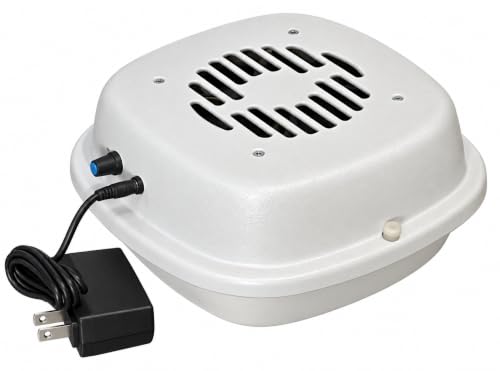
Litter Box Air Purifier with Long-Life Filter — Best Filter-First Box Unit
Purrified Air sells one idea with unusual focus: put serious filter media at the box and move more air through it. The listing’s own language promises longer-lasting and more powerful filter media plus more airflow than buyers may expect from the category, and it extends the brief beyond cats to ferret cages, a detail that tells you the maker is thinking about intense, enclosed animal odors rather than gentle background freshness.
That focus shapes who should shortlist it. Ferret and multi-pet households produce odor loads that make casual plug-ins look decorative, and a filter-first unit that sits at the source and actually exchanges the air around the tray has a plausible claim on their attention. The trade is physical presence: a unit built around real media and a real fan is a piece of equipment beside the box, needing clearance, a power route and a cat willing to share its corner with a gently humming neighbor.
The listing is notably free of printed numbers: no coverage area, no decibel figure, no stated filter life in months. Long-lasting is a comparative claim rather than a schedule, so the sensible reading is that the media is the product here, generously sized for its class, and that replacement timing will be learned from the maker’s own guidance after purchase. Buyers who need hard figures before ordering will find the other picks easier to interrogate; buyers who trust the filter-first philosophy will find this the most single-minded device in the six.
- Format: dedicated litter box air purifier unit
- Emphasis in the listing: long-lasting, powerful filter media and increased airflow
- Also named in the listing: ferret cage odor
- Coverage area: not stated in the listing
- Filter life in months: not stated in the listing
Strengths
- Single-purpose design from a maker focused entirely on box odor.
- Real filter media gives owners something tangible to inspect and replace.
- Airflow emphasis suits heavy odor loads from several animals.
Trade-offs
- The listing prints almost no numbers, so comparison shopping takes faith.
- A fan-and-media unit takes more room at the box than a plug-in.
- Replacement media is an ongoing cost with an unstated interval.
Best for: multi-pet and ferret households whose box corner defeats gentler gadgets. Not suited for: buyers who want published specifications before spending, or cramped cupboards.

MOOKA Air Purifier PR1 — Best Whole-Room HEPA
Step up a layer and the conversation changes completely. The PR1 is a floor machine for large rooms, listed for spaces up to 2,200 square feet, with an H13 True HEPA filter, a pet mode, an air quality display and a sleep mode the listing puts at 26 decibels. Placed in the room that holds the boxes, it handles everything the little devices cannot: hair drifting off a long-haired cat, fine litter dust kicked into the air, and the general background presence that greets you at the front door.
Pet mode is the setting that matters here. Litter events are episodic: a cat digs, deposits, covers enthusiastically, and for twenty minutes the room’s air carries the evidence. A mode tuned for pet households, backed by a display showing air quality, lets the machine respond to those episodes rather than idling at one fixed pace. Owners who like evidence will appreciate the AQI readout for a selfish reason: it confirms the machine noticed the same event your nose did.
Remember what HEPA does and does not do. The filter traps particles, including the dust and dander that carry much of a litter room’s character, while odor gases pass through particle media and rely on whatever carbon stage a machine includes. The PR1’s listing centers its HEPA and pet brief, so expect its strongest work on the dusty, hairy side of the problem, with the box-level devices in this guide remaining the specialists for the sharpest smell at the tray.
- Coverage stated in the listing: up to 2,200 ft²
- Filter stated: H13 True HEPA
- Sleep mode noise stated: 26 dB
- Features named: pet mode and AQI display
- Also named for: smoke, odors and pollen
Strengths
- Room-scale reach covers the whole cat room rather than one corner.
- Pet mode plus a visible air quality readout suits episodic litter events.
- Sleep setting’s stated quietness allows bedroom-adjacent placement.
Trade-offs
- Occupies floor space and needs clearance around its intake.
- Odor gas handling depends on stages beyond the headline HEPA filter.
- Overkill for a single box in a ventilated utility room.
Best for: multi-cat homes where the litter room doubles as living space. Not suited for: a lone cupboard box already served by a plug-in, or tiny rooms short of floor space.

Shark NeverChange Air Purifier HP152 — Best Low-Upkeep Room Machine
Shark’s pitch is in its name: a filter built to go years rather than months between changes, in a charcoal-finished machine for large rooms, with an odor neutralizer working alongside what the listing calls a HEPA-exceeding filter. For the litter problem specifically, that odor neutralizer is the interesting half of the design, because it speaks to the gaseous side of the smell that particle filters leave behind.
Think of the HP152 as the room layer for households that maintain things in bursts. The litter room gets a deep clean monthly, the machine gets attention rarely, and in between it simply runs. A long-life filter suits that rhythm far better than a design demanding fresh media every season, provided the household accepts the eventual replacement when it finally comes due as a larger single event rather than a drip of small ones.
The listing does not print a square footage figure for this model, describing it for home and large room use in general terms, and it gives no decibel number either. Placement therefore leans on judgment: give it the wall nearest the boxes with open air around it, run it continuously rather than in occasional purges, and judge it over a fortnight of normal cat life rather than a single dramatic afternoon.
- Format: floor machine for home and large rooms
- Filter described as: HEPA-exceeding, with an odor neutralizer
- Finish named in the listing: Charcoal
- Coverage area: not stated in the listing
- Noise figure: not stated in the listing
Strengths
- Odor neutralizer addresses the smell layer many room machines underplay.
- Long-life filter design fits low-maintenance households.
- Captures the dust and dander that make a cat room feel stuffy.
Trade-offs
- No published coverage number in the listing to size against your room.
- Eventual filter replacement is a bigger single purchase when it arrives.
- Still a room device, so the sharpest tray-level odor reaches it diluted.
Best for: busy households wanting a set-and-run room machine near the boxes. Not suited for: anyone expecting it to replace a box-level device entirely, or buyers who need stated decibel figures.
How Do the Six Compare Side by Side?
| Pick | Layer | Approach | Consumable |
|---|---|---|---|
| Neakasa Airstep Litter Box Air Purifier | At the box | Step-mounted purification, 3 modes | Air filter |
| uahpet Cat Litter Deodorizer | At the box | Filterless nano-tech plug-in | None |
| Morrerfresh Cat Litter Deodorizer | At the box | Ionizer plus activated carbon | Carbon element |
| Litter Box Air Purifier with Long-Life Filter | At the box | High-flow filter media unit | Long-life filter media |
| MOOKA Air Purifier PR1 | Whole room | H13 True HEPA with pet mode | HEPA filter |
| Shark NeverChange Air Purifier HP152 | Whole room | HEPA-exceeding filter plus odor neutralizer | Long-life filter |
Should You Treat the Smell at the Box or in the Room?
Picture the journey of litter odor. It begins intensely local, in warm air directly above the tray, then spreads along the floor, out of the door and into the home’s general circulation. Devices at the box meet it young and concentrated; room machines meet it old and diluted but in far greater volume. Neither meeting point is wrong, yet they reward different expectations, and disappointment usually comes from expecting one layer to do the other’s job.
Small, enclosed litter spaces tilt the decision toward the box layer. A cupboard under the stairs or a tiled utility room holds a modest volume of air, so a plug-in or step unit working at the source can genuinely change how that space smells when the door opens. Add a habit of prompt scooping and the room layer may never be needed at all.
Open layouts tilt it the other way. When the boxes sit in a corner of a living room or a bedroom, odor joins the room’s air within minutes whatever sits beside the tray, and only a machine exchanging the room’s volume will hold the background down. Many two-cat homes land on the layered answer: a source device for the sharp moments and a room machine for the general atmosphere, each sized honestly for its half.
Where Exactly Should Each Kind of Device Sit?
For step and plug-in units, distance is measured in inches. The Airstep belongs where its name puts it, directly before the box entrance, aligned so cats step onto it rather than around it. Plug-ins belong on the wall the box faces or beside it, low where possible, since the plume rises slowly from litter level. Keep any of them clear of the splash zone and out of reach of an enthusiastic digger’s kicked litter stream.
Room machines want the opposite treatment: space around them, not a corner burial. An intake choked by a wall or a curtain cannot pull the room’s air, so leave open room on the intake side, keep the unit in the same room as the boxes rather than the hallway outside, and resist hiding it behind the very furniture that traps odor. Continuous running at a modest setting beats occasional blasts, because litter events happen on the cat’s schedule, not yours.
Cord discipline belongs in this conversation too, because litter corners attract trailing cables and curious paws. Route cords along the wall, keep loops off the floor where a digging cat can hook them, and never drape a lead across the box entrance where it will be stepped on, soaked or chewed. A device unplugged by its own cable arrangement helps nobody, and a tidy corner is easier to keep clean in every other respect as well.
What Habits Make Any of These Devices Look Good?
Scooping remains the highest-leverage act in the entire topic. Solids and soaked clumps are the odor source; everything reviewed here merely manages what they release. Twice-daily scooping, a full litter change on a sane rhythm, and a monthly wash of the box itself will make a modest plug-in look brilliant, while a neglected box will defeat the proudest floor machine.
Litter choice partners with the hardware. An unscented litter lets you judge a device honestly, because perfumed litter confuses every assessment and can deter a cat from the box entirely. Depth matters too: enough litter to bury properly means less exposed waste and less smell between visits. Finally, count your boxes. The old guidance of one per cat plus a spare is not marketing; two cats sharing one tray will overwhelm any gadget with sheer event frequency.
What Mistakes Do Litter-Corner Shoppers Make Most Often?
The classic error is buying a room purifier to fix a tray problem, then declaring purification useless when the corner still smells at scooping distance. The second error runs the other way: expecting a plug-in the size of a night-light to freshen an open-plan flat. Both are layer mistakes, and both are avoidable by naming your actual problem before spending.
Fragrance is the third trap. Scented sprays, perfumed litters and aroma features near the box can push a fastidious cat to choose a rug instead, converting an odor issue into a house-training crisis. The fourth trap is forgetting consumables: carbon pads and filters fade quietly, and a device judged a failure at month eight may simply be a device whose media gave up at month six.
How Do Carbon, Ionizers and HEPA Filters Each Attack Litter Smell Differently?
Activated carbon works by hospitality at the molecular scale. Its surface is riddled with pores, and odor molecules drifting past settle into them and stay, which is why carbon is the stage cooks, smokers and cat owners all end up trusting for smell itself. The limit is capacity: a pore once filled holds nothing more, so carbon stages fade gradually and invisibly, and the only honest maintenance rule is replacement on a rhythm rather than replacement when the room already smells again.
Ionizers take a stranger route, charging particles so they clump and settle out of the air or are drawn to a collection surface. In a litter corner that means less fine dust floating, though the settled dust still exists on surfaces and needs wiping away during normal cleaning. Owners should understand that trade clearly: the air may carry less, while shelves near the box may gather a faint film faster than they used to.
HEPA filtration is the blunt, verifiable approach. Room air is pulled through a dense mat that traps hair, litter dust and the fine particles that give a cat room its stuffy character. It says nothing directly about odor gases, which pass through particle media, and that is precisely why the strongest litter setups pair a HEPA machine’s particle work with carbon’s odor work, whether inside one cabinet or split between a room unit and a box-level device.
Knowing which mechanism a product leads with tells you how it will age. Carbon-led devices decline as media loads. Filterless ion-led devices have little to decline but also little to inspect. HEPA machines announce their condition through airflow and filter indicators. None of this makes one mechanism morally better; it makes each one predictable, and predictable is what a buyer should pay for.
What Changes When Two or Three Cats Share the Same Corner?
Event frequency is the multiplier nobody budgets for. A single cat visits its box a handful of times daily; three cats turn the same tray into a near-hourly source, and each visit kicks fresh dust into the room. Devices sized by optimism fail here first. The room layer stops being a luxury in a multi-cat home and becomes the base, with a box-level unit added for the sharp moments rather than asked to carry the whole load.
Box count becomes part of air quality, oddly enough. Crowded trays soil faster, get dug in more frantically and push cats toward the edges, all of which raises both odor and scattered litter. Adding a second box in a different spot splits the load between two corners, and two modest source devices, one at each, often outperform a single heroic machine guarding a single overwhelmed tray.
Long-haired cats add a separate burden that smells like nothing yet changes everything: airborne hair and the dander riding on it. That burden belongs to the particle side of the problem, which is why multi-cat, long-haired households should weight the HEPA picks in this guide more heavily than a short-haired, single-cat home ever needs to.
How Do You Introduce a New Device Without Putting a Cat Off Its Box?
Cats vote with avoidance, and a litter corner is the worst place in the home to lose that vote. Introduce any new unit switched off for a day, letting it become furniture. Then run it during hours when you are present and the cat is relaxed, at its gentlest setting, before leaving it on overnight. A device accepted gradually stays plugged in; a device imposed suddenly gets unplugged by the owner at the first sign of a cat hesitating at the doorway.
Watch the approach path rather than the box itself. A cat that still strides in confidently has accepted the change; a cat that creeps, sniffs the air at the threshold and backs away is telling you the noise, the airflow or the unfamiliar smell of warm electronics needs more time. Moving the unit a foot farther from the entrance, or shifting a plug-in to the neighbouring wall, often settles what willpower cannot.
Never solve hesitation with scent. Tempting as it is to make the corner smell pleasant to human noses, added fragrance near a box risks teaching the cat that its own bathroom has become foreign territory. Plain, neutral, quietly moving air is the goal, and patience is the tool that gets there.
What Does the First Month With a Litter Air Device Actually Look Like?
Week one is mostly theatre: you will check the corner constantly, sniff deliberately, and probably declare victory early because any attention at all improves a neglected corner. The honest test arrives in week three, when the novelty has faded and your scooping rhythm has settled back to its true average. Judge the device then, on an ordinary Tuesday, not on the deep-cleaned Saturday when it arrived.
Somewhere in that month you will learn your device’s real maintenance personality. The carbon pad you meant to check stays unchecked. The step collects a drift of litter you now brush away without thinking. The room machine’s display spikes after a digging session and settles again, and you start trusting it the way you trust a thermostat: not by staring, but by noticing the room feels unremarkable.
Unremarkable is the victory condition. Nobody praises the air in a well-kept cat home; guests simply fail to mention the cats until they see one. If, by the end of the month, visitors meet the animal before they detect it, the layer you chose is doing its work, and the remaining task is only the dull one of keeping its media fresh.
Which Rooms in a Home Suit Which Layer Best?
The enclosed bathroom is the plug-in’s natural habitat. Its air volume is small, its door spends much of the day closed, and its outlet usually sits within a cord’s reach of the tray. A source device there can genuinely keep pace, and the room machine money is better saved. The catch is humidity: steamy showers and electronics are uneasy neighbours, so keep any unit clear of splash range and let the room dry between uses.
The spare bedroom asks for diplomacy. Guests sleep in the same air the cat uses, so the standard rises from acceptable to unnoticeable, and a layered answer earns its keep: a quiet source device at the tray for the sharp moments, and a room machine on its gentle setting through the night. If the room machine’s stated sleep noise is missing from its listing, buy with a trial period in mind and test it at pillow distance before committing.
The laundry or utility room is the forgiving case. Doors close, vents often exist, and nobody sleeps there, so a filter-first unit like the Purrified Air or a step at the box can work hard without negotiating with anyone’s rest. It is also the room where a larger, plainer device offends nobody, which makes it the best place in the house to prioritise media size over elegance.
The open-plan living space is where honesty matters most. Odor released there joins the whole home’s air, and no tray-side gadget, however earnest, will hold a large connected volume on its own. Budget for the room layer first, place it with clearance, and treat anything at the box as a helpful supplement rather than the main act.
How Do You Stop the Corner Itself From Defeating the Device?
Air devices lose fights that housekeeping picks with them. A mat that traps litter in front of the box also traps moisture and odor if it is never shaken out or washed, and a corner that is never wiped accumulates a background smell no filter can attribute or remove. The corner needs its own small routine: mat shaken outside weekly, hard floor wiped, walls at splash height checked monthly, and the box itself washed with plain hot water rather than scented cleaners that linger in the plastic.
Ventilation, where it exists, outranks machinery. A bathroom fan run for twenty minutes after the morning routine, or a window opened while you scoop, exchanges air more completely than any device in this guide. Purifiers earn their money in the many homes and hours where ventilation is absent, impractical or weather-dependent, and they should be judged as partners to fresh air rather than replacements for it.
Finally, respect the biology of the animal sharing the corner. A cat stressed by a new dog, a moved box or a changed litter will produce more odor incidents and more avoidance, and no purchase fixes a husbandry problem. When a corner suddenly worsens, look first at what changed in the cat’s life, and only then at what changed in its air.
How Should You Judge Whether Your Purchase Is Actually Working?
Use the doorway test, because it mimics how everyone else experiences your home. Leave the house for a few hours, come back, and walk to the litter room without preparing yourself. The smell that meets you in the doorway, before your nose adapts, is the honest reading. Inside the room, standing over the tray, almost any home registers something; at the threshold, a working setup registers almost nothing.
Keep a rough diary for the first fortnight if you are undecided between layers. Note the days guests visited, the days the corner disappointed you, and whether those days followed missed scooping, a litter change due, or a heatwave with windows shut. Patterns in that little record will tell you whether the remaining problem is the device, the routine or the room, and each of those has a different fix at a different price.
One more measurement trick costs nothing: ask a trusted friend, the kind who will tell you the truth about a haircut, whether they can tell where the box is before they see it. Regular visitors calibrate to your home almost as much as you do, so choose someone who comes rarely and likes you enough to be candid. Their answer, given in the hallway within a minute of arriving, is worth a shelf of air quality displays.
Beware the two false verdicts. A device condemned during a week when the box itself was overdue for a wash has not really been tried. A device praised during a week of open windows and diligent scooping may be riding on habits that will slip in winter. Give any purchase one ordinary, unremarkable month before deciding it is a triumph or a mistake.
If the verdict is genuinely poor, change one variable at a time. Move the unit before replacing it. Refresh the media before upgrading it. Add the missing layer before enlarging the existing one. Litter corners respond to methodical owners, and the cheapest correction is usually positional rather than financial.
What About Covered Boxes, Liners and Other Shortcuts?
A covered box is the oldest odor shortcut in the cat world, and it cuts both ways. The cover holds smell in, which helps the room and concentrates the experience for the cat, who must climb inside that held air several times a day. Some cats accept the trade without a flicker; others begin choosing softer, more open locations around the home. If your cat already uses a covered box happily, a step or plug-in device pairs with it neatly. If the cover itself is your planned fix, watch the cat’s behavior for a fortnight before spending on electronics to support it.
Liners promise faster cleaning and deliver mixed air results. A liner that slows the monthly wash of the box itself lets odor bake into scratched plastic, and plastic holds smell in a way no device downstream can undo. Owners who love liners should still wash the bare box on schedule and retire a tray whose surface has gone rough and grey, because a fresh box sometimes improves a corner more than a new gadget does.
Enclosed furniture cabinets, the kind that hide a tray inside a bench or cupboard, deserve the same two-sided reading. They look wonderful and they muffle the room’s exposure, yet the air inside the cabinet becomes the most concentrated in the home, and a small source device inside that cabinet is arguably the single best-placed purchase in this entire guide. Ventilation gaps matter; a sealed cabinet with a cat door is a cupboard of held breath, while one with discreet rear vents lets a plug-in unit actually exchange the air it treats.
When Is the Answer a Vet Visit Rather Than a Purchase?
Occasionally a corner worsens because the cat has changed, not the room. A sudden increase in urine volume, a new sharpness to the smell, deposits appearing outside the tray, or a cat straining and returning repeatedly are signals that belong to a veterinarian, and no device in this guide should delay that appointment. Air treatment manages the ordinary background of a healthy animal’s life; it is not a response to a medical change, and this guide would be doing readers a disservice if it let a purchase stand in for that phone call.
The same caution applies to appetite changes, hiding, or a litter routine that alters without any household change to explain it. Sort the animal first. Once a vet has given a clean picture, the corner can go back to being a shopping problem, and the layers above will handle it perfectly well.
Final Recommendation
Start with the layer your home actually needs. Enclosed litter nook, one cat, an owner who forgets consumables: the uahpet Cat Litter Deodorizer asks the least and gives a fair return. Automatic box in living space: the Neakasa Airstep Litter Box Air Purifier turns dead floor space into the hardest-working spot in the corner. A whole cat room that guests also enter calls for the MOOKA Air Purifier PR1 as the room anchor, ideally with a box-level partner beside the tray.
Whichever layer you choose, give it a fortnight of honest scooping and normal life before judging, because litter odor is a rhythm rather than an event. The right device will not announce itself dramatically; it will simply be the reason you stop bracing, just slightly, every time you open the door to the room where the box lives.
Frequently Asked Questions
Can a small plug-in really handle a litter box?
In a small enclosed space, yes, within its limits. A plug-in treats the air around one tray, which is where the smell is strongest, and owners of bathroom or cupboard boxes often find that enough. In a large open room the same device fades with distance, and a room machine becomes the honest answer.
Do I still need to scoop if I buy one of these?
Absolutely, and more faithfully than before, because a device lets you notice the difference scooping makes. Every product here manages odor released from waste; none removes the waste. Twice-daily scooping plus a working device outperforms either habit alone by a wide margin.
Are ionizing litter gadgets a worry around cats?
The two ionizing picks in this guide state their position in their own titles: the uahpet unit says No Ozone and the Morrerfresh says Ozone-Free. This guide quotes those statements rather than adding assurances of its own, and any owner whose cat has a known sensitivity should raise the question with their vet rather than with a product listing.
How close should a room purifier sit to the boxes?
Same room, a few feet away, with open air at its intake. Against the tray it would choke on kicked dust; in another room it would treat air the smell reaches last. Continuous modest running in the box room beats short powerful sessions elsewhere.
Why does the corner still smell at scooping time?
Because at scooping distance you are inside the plume before any device can dilute it, and fresh deposits are at their strongest in their first minutes. Judge your purchase by how the room smells when you enter it an hour later, not by the worst thirty seconds of the day.
Does litter type change how well these devices work?
Yes, noticeably. A litter that clumps firmly and is scooped cleanly leaves less residue releasing odor between visits, so any device appears stronger beside it. A dusty litter loads the air with fine particles at every dig, shifting the burden toward the HEPA side of this guide and toward mats and enclosed boxes that keep the dust near its source.
Related Guides
Households working through the wider pet-air picture will find our companion coverage useful, starting with Best Air Purifiers for Homes With Pets for the whole-home view, continuing with Best Air Purifiers for Home Offices for the room where a desk shares air with a sleeping cat, and finishing, for readers mid-renovation of the rooms these devices live in, with Best Solid Brass Kitchen Faucets.


