What's inside
- Key Takeaways
- Quick Picks
- How Did We Choose These Wrinkle Guard Dryers?
- How Does Wrinkle Guard Actually Work?
- Wrinkle Prevention or Wrinkle Rescue — Guard, Steam, or Both?
- Why Does Sensor Drying Matter to Wrinkles, Not Just to Energy?
- How Should You Load and Unload to Help the Guard Help You?
- Electric or Gas — Which Branch of the Range Suits Your Home?
- How Do You Care for a Dryer So Its Wrinkle Features Keep Working?
- What Does a Week of Guarded Laundry Actually Look Like?
- Which Clothes Benefit Most From a Guarded Dry?
- How Does Wrinkle Care Fit the Rest of the Laundry Room?
- How Do the Six Wrinkle Guard Dryers Compare?
- What Mistakes Defeat Wrinkle Guard?
- Final Recommendation
- Frequently Asked Questions
- Related Guides
As an Amazon Associate I earn from qualifying purchases. This post may contain affiliate links at no extra cost to you.
cottageverdict.com is reader-supported. When you buy through links on our site, we may earn an affiliate commission.
Where to buy: you will find all six dryers on Amazon under their listing names, and because all six come from one maker’s range, the reading that matters is fuel, capacity and steam — the wrinkle protection itself is the shared inheritance; check price on Amazon once you know which of those three axes decides it for your laundry room.
The best dryers with wrinkle guard solve the most ordinary tragedy in laundry: a load dried perfectly, then abandoned. Clothes that sit in a cooling drum settle into each other’s shapes, and by the time anyone remembers them, the creases have set as firmly as if they had been ironed in — the exact opposite of the intention. Wrinkle Guard, as this Kenmore range names it, is the countermeasure: after the drying cycle ends, the machine keeps returning to the load, tumbling it briefly at intervals so the clothes never rest long enough to set, buying you the hour that real life so often needs.
This guide is unusual in drawing all six picks from a single range, and it does so honestly rather than apologetically. Kenmore’s current dryer line states Wrinkle Guard in its listings with a consistency no other maker’s pool entries matched when we verified them, and the range happens to span the decisions a buyer actually faces: electric or gas, 7.0 or 8.0 cubic feet, Wrinkle Guard alone or Wrinkle Guard with the Accela Steam treatment for wrinkles, static and odours, in white or metallic silver. Rather than pretend six brands where the verified evidence gave us one strong range, we present the range properly and teach you to choose within it.
Two supporting features recur and deserve naming now. Smart Sensor Drying, stated across the line, ends the heated cycle when the load is dry rather than when a timer guesses — which matters for wrinkles as much as for energy, since over-dried fabric creases more stubbornly. And on the 8.0 cu. ft. models, Accela Steam joins the Wrinkle Guard, letting the machine actively relax a load that has already creased rather than merely preventing new creases from setting. Prevention below, cure on the larger machines: that is the range’s logic, and the reviews follow it pick by pick.
Key Takeaways
- Wrinkle Guard keeps tumbling a finished load at intervals, so clothes cannot sit and set into creases while life happens.
- All six picks are Kenmore, because this range states the feature most consistently in its verified listings — the choice is fuel, size and steam.
- The 8.0 cu. ft. models add Accela Steam, which relaxes existing wrinkles and tackles static and odours, beyond the Guard’s prevention.
- Smart Sensor Drying appears across the range and helps twice: no over-drying, and over-dried fabric is the kind that creases hardest.
- Electric versus gas is a household infrastructure decision; the wrinkle behaviour is the same on both branches of the range.
- Wrinkle Guard buys time, not miracles — a load left overnight will still need the steam cycle or an iron’s attention.
Quick Picks
| Pick | Badge | Why it earns its place |
|---|---|---|
| Kenmore 7.0 Cu. Ft. Electric Dryer, White | The range in its purest form | Wrinkle Guard with Smart Sensor Drying and touch controls in the standard 7.0 electric format — the reference version of this feature set. |
| Kenmore 8.0 Cu. Ft. Electric Dryer, Metallic Silver | Steam rescue, largest electric | The full treatment in electric form: Wrinkle Guard plus Accela Steam for wrinkles, static and odours, Smart Sensor Drying and an ENERGY STAR certification stated in the listing. |
| Kenmore 8.0 Cu. Ft. Electric Dryer, White | Steam rescue in classic white | Identical in stated features to the metallic silver flagship — Wrinkle Guard, Accela Steam, Smart Sensor, ENERGY STAR — in the white finish that matches most laundry rooms. |
| Kenmore 7.0 Cu. Ft. Gas Dryer, White | The gas branch, standard size | The same Wrinkle Guard and Smart Sensor pairing on gas power, for homes plumbed for it — installation by a licensed professional is part of the deal with any gas appliance. |
| Kenmore 8.0 Cu. Ft. Gas Dryer, Metallic Silver | Gas flagship with steam | The range’s fullest gas specification: Wrinkle Guard plus Accela Steam, Smart Sensor Drying, 8.0 cu. ft., in metallic silver. |
| Kenmore 8.0 Cu. Ft. Gas Dryer, White | Gas flagship in white | The white twin of the gas flagship — same Wrinkle Guard, Accela Steam and Smart Sensor specification at 8.0 cu. ft. — for white laundry suites on gas. |
How Did We Choose These Wrinkle Guard Dryers?
We began with the feature in the title, verified in words. Each of the six listings states Wrinkle Guard in its own text — in most cases in the phrase the maker uses to describe reducing wrinkles and static — and that explicitness is what a buyer deserves, because wrinkle-prevention features hide under a dozen brand names across the industry and cannot be compared by guesswork. Machines whose listings merely implied an extended tumble were set aside; the six below say it, and say what accompanies it, in print.
Within the range, we organised by the three real decisions. Fuel first: every capacity here exists in electric and gas branches, and your home’s connections, not our preference, should choose between them. Capacity second: 7.0 cu. ft. covers most families, while 8.0 changes bedding day and reduces the load-splitting that itself causes forgotten, creased laundry. Steam third: the Accela Steam models add a rescue function for clothes that have already sat, which households with unpredictable schedules will use weekly and punctual households may never need.
Static received its own check, because the listings name it alongside wrinkles in the Guard’s purpose, and the pairing is not decorative. Clothes that cling cling in folds, clinging folds become creases, and over-dried loads — the static-prone kind — are the same loads the sensor exists to prevent. A range that attacks wrinkles, static and over-drying together is attacking one problem from its three visible sides, and we weighted that coherence when deciding this category belonged to a single maker presented whole.
A note on what we did not do: we did not spread the picks across makers to fake variety. Readers comparing ranges will find wrinkle features elsewhere under other names, and small-space readers in particular should look at Best Compact 120-Volt Electric Dryers, where compact machines on ordinary outlets serve flats and dorms. This guide’s promise is narrower and stronger — the verified Wrinkle Guard range, explained completely.
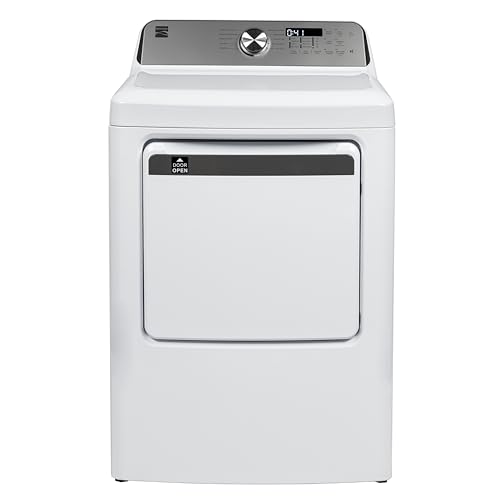
Kenmore 7.0 Cu. Ft. Electric Dryer, White — The range in its purest form
Start here if you want the feature set without the embellishments. This 7.0 cu. ft. electric Kenmore states the core pairing plainly in its listing: Wrinkle Guard to reduce wrinkles and static, and Smart Sensor Drying to judge when the load is done. Together they describe the everyday wrinkle problem accurately — most creasing is a duet of over-drying, which makes fabric brittle and crease-prone, and abandonment, which lets the creases set. The sensor handles the first partner; the Guard handles the second, returning to tumble the finished load so a school run, a meeting or a nap cannot ruin a wash day’s work.
The format is the conventional one: front load, white, touch controls, a drum sized for a family’s ordinary week. Seven cubic feet takes a full mixed load with room to move, a double bedding set, or the towel accumulation of a busy bathroom, and room to move is itself a wrinkle defence, since clothes dried in a compressed ball emerge pre-creased by geometry before neglect gets its chance. Electric power keeps installation to the standard dryer circuit found in most laundry rooms, with no gas line to consider.
Who should step past this pick to its larger siblings? Households whose loads regularly defeat seven cubic feet, and households whose schedules are so erratic that loads sit for hours, where the 8.0 models’ steam rescue earns its keep. Who should stop here? Everyone else. This is the range’s honest centre — the feature the title promises, the sensor that supports it, and nothing charged for in size or steam that a punctual household will not use. In a guide full of near-identical names, that clarity is worth stating as a virtue.
Daily life with it settles into a reassuring pattern: the sensor ends cycles earlier than the old timer did, the Guard keeps the finished load loose until you arrive, and the ironing board comes out for shirts and occasions rather than for everything. Static, the listing’s second named target, fades with the same treatment, because clothes neither baked dry nor left clinging in a heap hold less charge. It is not a dramatic machine. It is a machine that removes a small daily failure, which is what most appliance purchases are actually for.
It is also the pick against which to test the premium tiers’ value. Before stepping up, a household should name the specific weekly event the steam or the extra cubic foot would rescue — the bedding relay, the Sunday-night shirts, the overnight load. If the event exists, the upgrade is a purchase; if it has to be imagined, this 7.0 has already answered the brief. Guides exist to make that distinction cheap to draw, and this range, to its credit, makes it drawable from its own listings without a showroom visit.
- Feature from the listing: Wrinkle Guard to reduce wrinkles and static
- Drying: Smart Sensor Drying
- Capacity from the listing: 7.0 cu. ft., front load electric
- Controls: touch controls
- Finish stated in the listing: white
Strengths
- The core Wrinkle Guard and sensor pairing, unembellished
- Standard electric format suits most laundry rooms
- Roomy enough drum for ordinary family loads
Trade-offs
- No steam rescue for loads already creased
- Smaller than the 8.0 models for bedding-heavy homes
- White finish only at this size and fuel
Best for: most households wanting Wrinkle Guard in its straightforward electric form.
Not suited for: households whose loads routinely sit for many hours before unloading.

Kenmore 8.0 Cu. Ft. Electric Dryer, Metallic Silver — Steam rescue, largest electric
This is the range’s electric flagship, and its listing says so in a single breath: Wrinkle Guard and Accela Steam to reduce wrinkles, static and odours, Smart Sensor Drying, and ENERGY STAR certification, in an 8.0 cu. ft. front-load body finished in metallic silver. The steam is the meaningful addition. Wrinkle Guard prevents creases from setting in a load you are late for; Accela Steam goes further and treats a load that has already sat — a short steam cycle relaxes fibres so that yesterday’s forgotten shirts come back to wearable without a wash or an ironing session. Prevention plus cure is a genuinely different proposition from prevention alone.
The capacity multiplies the benefit. At 8.0 cubic feet, the drum takes king bedding, the whole week’s towels, or the mixed output of a large family in one load, and big loads are precisely the loads most often abandoned — nobody forgets a small load; they forget the enormous one that finished during dinner. A roomy drum also dries with fewer compressed folds, so the load the Guard protects starts from a smoother place. The metallic silver finish is the cosmetic layer: it suits laundry rooms designed as rooms rather than cupboards, and shows dust less than gloss white.
ENERGY STAR certification, stated in the listing, rounds out the case for households counting running costs: sensor drying already ends cycles at dryness rather than at a timer’s guess, and certification confirms the machine’s efficiency against the standard the label represents. Gas advocates will point to their branch’s economics, and fairly; but for an all-electric home this is the range’s most complete answer, and the one we would install in a busy family laundry room without a second thought.
Consider the household rhythm it enables. Sunday’s bedding dries while the family is out, guarded. A work shirt load finished at midnight gets steamed back to life at dawn instead of ironed in a panic. The school-uniform rotation survives being forgotten in the drum between the wash and the school run. None of these are specifications; all of them are the lived texture the specifications add up to, and they explain why the steam models command the range’s premium tier without apology.
- Features from the listing: Wrinkle Guard and Accela Steam for wrinkles, static and odours
- Drying: Smart Sensor Drying
- Certification stated in the listing: ENERGY STAR Certified
- Capacity from the listing: 8.0 cu. ft., front load electric
- Finish stated in the listing: metallic silver
Strengths
- Steam rescue relaxes loads that have already creased
- Largest electric capacity in the range
- ENERGY STAR certification stated in the listing
Trade-offs
- Premium tier of the range — garnish if your loads never sit
- Metallic silver finish will not match a white washer
- Big drum tempts overloading, which defeats the wrinkle logic
Best for: busy large households with erratic unloading times and electric hookups.
Not suited for: punctual small households paying for a rescue they will never call.

Kenmore 8.0 Cu. Ft. Electric Dryer, White — Steam rescue in classic white
Everything in the previous review applies here except the colour, and this guide will not insult you by disguising that fact as six new paragraphs of difference. The white 8.0 electric Kenmore carries the same stated specification: Wrinkle Guard and Accela Steam against wrinkles, static and odours, Smart Sensor Drying, ENERGY STAR certification, front-load format. The choice between this pick and its silver sibling is purely about the room it will live in and the washer it will stand beside — a white pair reads as one appliance suite; a silver dryer beside a white washer reads as a replacement mid-journey.
That honesty points at something worth saying about this whole range: within a capacity and fuel, the machines are a platform, and the buyer’s real decisions are the three axes named in our method — fuel, size, steam. Finish is a fourth, trivial axis, and it is a sign of a healthy range that it can be decided on looks alone without forfeiting a feature. White also carries a practical footnote: it shows lint and dust honestly, which in a laundry room is arguably a cleaning prompt rather than a flaw, and it matches the overwhelming majority of installed washers in the homes these dryers will join.
Buy this version when the steam-and-size specification is right and the room is white. The lived benefits are the flagship’s: loads guarded through an afternoon’s delay, creased loads steamed back at dawn, bedding dried in single loads that finish smoother for having room. If your washer is silver, buy the silver; the dryers are twins, and a guide that pretended otherwise would be padding — the one sin this range’s straightforward listings never commit.
One genuine consideration does separate them in practice, and it is resale and replacement logic rather than performance. White is the industry’s default, so a white dryer pairs with the widest range of future washers if one machine of the pair is replaced first. Households that replace appliances individually, as most do, may find that small flexibility worth more than a matched metallic finish. It is a minor point, but in a head-to-head this close, minor points are the only honest separators left.
- Features from the listing: Wrinkle Guard and Accela Steam for wrinkles, static and odours
- Drying: Smart Sensor Drying
- Certification stated in the listing: ENERGY STAR Certified
- Capacity from the listing: 8.0 cu. ft., front load electric
- Finish stated in the listing: white
Strengths
- Full steam-and-guard specification in the universal finish
- Matches the majority of installed washers
- Largest electric capacity with the rescue cycle included
Trade-offs
- Specification identical to the silver model — choice is cosmetic
- Premium tier pricing logic applies as with its twin
- White shows laundry-room dust and lint plainly
Best for: households wanting the full electric specification in a white suite.
Not suited for: anyone hoping the colour change hides a different machine.
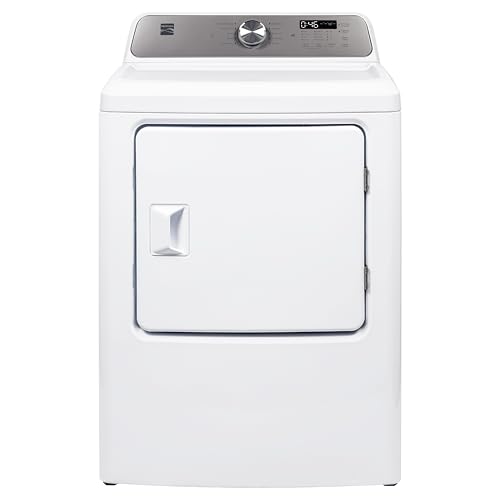
Kenmore 7.0 Cu. Ft. Gas Dryer, White — The gas branch, standard size
The gas branch of the range begins here: a 7.0 cu. ft. front-load Kenmore in white whose listing states Wrinkle Guard against wrinkles and static, Smart Sensor Drying and touch controls, with gas as its fuel. The wrinkle behaviour is the electric model’s — the Guard’s interval tumbling does not care what heated the air — so the decision this pick poses is purely about your home’s infrastructure and your preference between fuels, a preference usually formed by what the house already has and what the household already pays for energy.
Gas drying has its traditional advocates, who point to fast heat and, in many regions, lower running cost per load; it also carries a non-negotiable responsibility that this guide states plainly: a gas dryer connects to a gas line and vents combustion products, and its installation belongs to a licensed professional, full stop. That is not a caveat against this pick — it is the normal, safe route for every gas appliance — but it belongs in the review rather than the small print, because a household choosing between this and the electric 7.0 is also choosing an installation process.
In the laundry room, the experience converges with its electric twin: sensor-ended cycles that do not bake clothes into crease-prone brittleness, a Guard that keeps finished loads loose through the school run and the commute, and a drum sized for the ordinary family week. Gas households replacing an old gas dryer will find this the range’s natural like-for-like: same connections, same capacity class, and a wrinkle feature set their old machine almost certainly lacked.
One practical note on pairing: gas dryers are often bought alongside whichever washer the household already owns, since the fuel decision lives on the dryer side alone. The white finish and front-load format here blend with most installed washers without visual argument. Choose this pick when the gas line is already in the wall and the household’s loads are ordinary; step to the 8.0 gas models below when bedding volume or steam rescue joins the requirements list.
- Feature from the listing: Wrinkle Guard to reduce wrinkles and static
- Drying: Smart Sensor Drying
- Capacity from the listing: 7.0 cu. ft., front load gas dryer
- Controls: touch controls
- Finish stated in the listing: white; gas installation by a licensed professional
Strengths
- Wrinkle Guard and sensor pairing on the gas branch
- Like-for-like replacement for existing gas installations
- Fast-heating fuel many households prefer on running costs
Trade-offs
- Requires a gas line and professional installation
- No steam rescue at this size and fuel
- Unsuited to all-electric homes by definition
Best for: gas-plumbed households wanting the core wrinkle feature set at standard size.
Not suited for: all-electric homes, or anyone planning a self-installation.

Kenmore 8.0 Cu. Ft. Gas Dryer, Metallic Silver — Gas flagship with steam
Mirror of the electric flagship on the other fuel: this 8.0 cu. ft. gas Kenmore in metallic silver states Wrinkle Guard and Accela Steam for wrinkles, static and odours, with Smart Sensor Drying and touch controls. For a gas-plumbed household, this is the complete version of the idea this guide exists to explain — a dryer that prevents creases while you are delayed, rescues them with steam when prevention ran out, and judges dryness by sensor so the whole process starts from a gentler place.
The gas-and-steam combination suits a particular household rhythm worth describing: high-volume laundry processed in bursts, often at weekends, in a home where the dryer may finish at any point in a crowded day. The Guard covers the ordinary delays, the steam covers the exceptional ones, and the 8.0 drum means the burst itself is a few large loads rather than an all-day relay of small ones — each of which would have been its own abandonment risk. Capacity, in this category, is a wrinkle feature by the back door, and this pick has the most of it on the gas side.
The installation honesty of the smaller gas pick applies with equal force: a licensed professional connects this machine, and its venting is part of that professional’s work. Households should also confirm the obvious — that their gas supply and laundry space suit a full-size 8.0 body — before the finish seduces them. Metallic silver, as with the electric flagship, is the designed-room choice, pairing most naturally with a silver or graphite washer in a laundry that is furnished rather than merely equipped.
Against its white gas twin below, nothing mechanical separates them, and this review will not manufacture a difference. Against the electric flagship, the separator is the wall behind the machine: gas line or dryer circuit. That is the correct shape of this decision, and the range deserves credit for making it so clean — pick the fuel your house offers, pick the size your loads need, take the steam if your schedule is chaotic, and the finish is the only choice left to make on taste.
- Features from the listing: Wrinkle Guard and Accela Steam for wrinkles, static and odours
- Drying: Smart Sensor Drying
- Capacity from the listing: 8.0 cu. ft., front load gas dryer
- Controls: touch controls
- Finish stated in the listing: metallic silver; professional gas installation required
Strengths
- Complete gas specification: guard, steam, sensor, capacity
- Steam rescue for loads that outwait the Guard
- Designed finish for furnished laundry rooms
Trade-offs
- Gas line and licensed installation are prerequisites
- Premium tier of the gas branch
- Silver finish narrows future washer matching
Best for: gas households with big, bursty laundry and chaotic schedules.
Not suited for: electric homes, or buyers wanting the simplest possible install.
Kenmore 8.0 Cu. Ft. Gas Dryer, White — Gas flagship in white
The final pick completes the range’s symmetry: the 8.0 gas specification — Wrinkle Guard and Accela Steam against wrinkles, static and odours, Smart Sensor Drying, touch controls — in white. A household that has followed the three axes to gas, large and steam arrives at exactly two doors, this one and the silver one, and should choose by the room without a moment’s anxiety about features, because there is no feature difference to find.
White’s case in a hard-working laundry is practical. It matches the installed base of washers, it forgives the visual chaos of a family laundry room by keeping the largest object in it visually quiet, and it will pair with the widest choice of replacement washers over the dryer’s long life. The machine beneath the colour is the range’s gas flagship: bedding-scale capacity, prevention by tumbling, rescue by steam, and dryness judged by sensor rather than by hope.
The same professional-installation note applies, stated once more because gas deserves the repetition: this dryer is connected by a licensed installer, vented correctly, and only then asked to do the work described here. Households converting from electric to gas to reach this specification should count the installation project honestly in their decision; households already on gas face no such hurdle and can treat this as the straightforward top of their branch.
As the range’s closing entry, this pick lets us state the guide’s whole conclusion in miniature. Wrinkle protection turned out not to be a exotic technology but a small system — sense the dryness, tumble the waiting load, steam the forgotten one — applied consistently across fuels and sizes by a range that names it in every listing. The white gas 8.0 is that system at full strength for the largest group of traditional laundry rooms: gas-heated, white-suited, family-sized. If that description matches your home, your decision is already made.
- Features from the listing: Wrinkle Guard and Accela Steam for wrinkles, static and odours
- Drying: Smart Sensor Drying
- Capacity from the listing: 8.0 cu. ft., front load gas dryer
- Controls: touch controls
- Finish stated in the listing: white; professional gas installation required
Strengths
- Full gas flagship specification in the universal finish
- Widest future pairing options with replacement washers
- Guard plus steam covers delay and forgetfulness alike
Trade-offs
- Licensed gas installation required
- Premium tier of the range
- Identical to its silver twin beneath the finish
Best for: gas households wanting the complete specification in a white suite.
Not suited for: electric homes or self-installers.
How Does Wrinkle Guard Actually Work?
The mechanism is humble, which is why it works. When a drying cycle ends, clothes are warm, damp at the microscopic level, and pliable — and if they lie still in a heap, they cool into the heap’s shape, which is to say into creases. Wrinkle Guard interrupts that setting process: the drum turns briefly at intervals after the cycle, lifting and re-dropping the load so no fold stays folded long enough to become permanent, and the load stays loose until a human arrives. It is the machine equivalent of a friend shaking out your shirts and draping them over a chair, repeated patiently for as long as the feature runs.
Two boundaries keep expectations honest. First, the Guard prevents setting; it does not iron — a shirt dried in a ball will be a looser ball, not a pressed shirt, which is why loading and drum room still matter. Second, its protection is measured in hours, not days: a load guarded through an afternoon emerges well, while a load abandoned for a weekend will still want the steam cycle or an iron. Within those boundaries, the feature converts the commonest laundry failure — the forgotten load — from a rewashing event into a non-event, and that conversion, repeated weekly, is worth more than most headline specifications.
Wrinkle Prevention or Wrinkle Rescue — Guard, Steam, or Both?
The range’s two wrinkle technologies answer different moments in a load’s life, and choosing between the 7.0 and 8.0 models is really choosing which moments your household suffers. The Guard owns the first hours after drying: the meeting that overran, the school run, the nap. Accela Steam, on the 8.0 models, owns the morning after: it reintroduces moisture as steam to relax fibres that have already set, so a creased load can be recovered in a short cycle rather than rewashed or ironed piece by piece. Steam also addresses the listing’s other named targets, static and odours, which prevention alone cannot touch once they have developed.
Households should audit their own behaviour without flattery. If someone in your home reliably unloads within the hour, the Guard alone covers your reality and the 7.0 models are the honest buy. If your laundry regularly finishes into an empty house, or dries overnight, or waits out a double shift, you live in rescue territory and the steam models will pay their premium back in saved ironing within a season. The worst purchase is the mismatch in either direction — steam bought for a punctual home, or a guard-only machine asked to forgive a chaotic one.
Why Does Sensor Drying Matter to Wrinkles, Not Just to Energy?
Over-dried fabric creases more and forgives less. A load baked past dryness loses the last internal moisture that keeps fibres supple, so every fold the cooling load settles into is pressed into stiffer material. Smart Sensor Drying, stated across this range, attacks that precondition: the cycle ends when the load is dry, not when a timer’s allowance expires, so clothes enter their waiting period in the most pliable state a dryer can leave them. The Guard then protects a load that is worth protecting, instead of tumbling a brittle one.
There is a subtler interaction too. Sensor-ended cycles finish at unpredictable times — earlier than expected, usually — which historically made abandonment worse, because owners planned around the timer. The Guard exists precisely to absorb that unpredictability. Sensor plus Guard is therefore best read as one system rather than two features: the first optimises the drying, the second insures the result against the household’s actual life. Ranges that offer either alone solve half the problem this guide is about.
How Should You Load and Unload to Help the Guard Help You?
Wrinkle outcomes are decided half by the machine and half by the hands, and the hands’ half is teachable. Load so that garments can separate in the tumble — a drum filled to comfortable looseness, not to capacity’s boast — and shake each item once as it goes in, which removes the washer’s twists before heat can set them. Mixed loads should respect weight: a heavy towel load will crush a single shirt regardless of features, so shirts travel with shirts where the wardrobe allows, and the Guard’s tumbling then keeps a load of equals loose rather than refereeing a mismatch.
Unloading is the other half. When you do arrive, take the load out completely rather than mining it for today’s outfit and leaving the rest — partial unloading collapses the remaining clothes into the heap the Guard worked to prevent. Hang or fold immediately; the minutes after removal are when the last warmth leaves and the final shape sets, and a shirt hung in that window rarely needs an iron at all. Households that adopt the full ritual — shake in, full unload, hang at once — find the Guard’s contribution doubles, because the feature was designed to protect exactly that handover moment.
Electric or Gas — Which Branch of the Range Suits Your Home?
Let the wall decide. A home with a gas line at the laundry position and a household content with professional installation can take either branch on preference; a home without the line takes electric, and should not renovate plumbing for a dryer’s sake. Within this range the wrinkle system, the sensor and the capacities are mirrored across fuels, so no wrinkle outcome is sacrificed on either branch — an unusually clean position that lets running costs, existing infrastructure and installer availability carry the decision, as they should.
Two practical footnotes. Gas appliances require correct venting and a licensed installer, as the pick reviews state; treat any quote that waves that away as a reason to choose a different installer. And whichever fuel you choose, the drum-material and long-life questions do not disappear — readers researching durability as a first priority should continue to Best Steel-Drum Electric Dryers, where the drum’s construction is the entire subject, before returning here for the wrinkle decision.
How Do You Care for a Dryer So Its Wrinkle Features Keep Working?
The Guard’s tumbling and the sensor’s judgement both depend on unglamorous maintenance. The lint filter is the first: a clogged filter slows airflow, stretches cycles, and leaves clothes damper for longer — the exact conditions in which creases set hardest. Clean it every load, without exception, and wash it occasionally if fabric softener residue has filmed it. The sensor itself benefits from the same housekeeping, since its strips judge moisture by contact with the passing clothes and work best when the drum is clean and the loads are honestly sized.
Venting is the second discipline, for electric and gas alike: a clear, short vent path keeps drying brisk, and brisk, sensor-ended drying is the foundation the Guard stands on. A dryer labouring through a crushed or clogged vent produces the slow, uneven loads that defeat every wrinkle feature downstream. None of this is specialised work — a filter, a vent check, a drum wiped when it looks dull — but it is the difference between a feature that performs for a decade and one that quietly stops mattering by year three.
What Does a Week of Guarded Laundry Actually Look Like?
Monday: uniforms and work shirts wash before breakfast, dry during the school run, and wait guarded until the evening fold — no ironing queue forms. Wednesday: a mixed family load finishes into an empty house and is still loose at six. Friday: the bedding load, the week’s largest, dries in one 8.0 drum instead of two relays, and its size no longer guarantees it will be forgotten mid-relay. Sunday: a shirt forgotten since Saturday meets the steam cycle and goes to work on Monday anyway. None of these moments is dramatic; together they are the difference between a laundry room that generates chores and one that absorbs them.
Contrast the unguarded week, familiar to every reader who has owned a plain dryer: the same loads, the same good intentions, and a standing Sunday-evening negotiation with the ironing board. Wrinkle Guard’s value is not measured in any single load but in the disappearance of that negotiation. Households deciding whether the feature is worth a tier’s difference should price their own Sunday evenings honestly — the feature is cheap or expensive exactly in proportion to what an hour of not-ironing is worth in your house, and for most families the arithmetic settles quickly.
Which Clothes Benefit Most From a Guarded Dry?
Work shirts and school uniforms top the list, because they are dried on a schedule and worn on one too — the load that finishes at ten in the evening is needed at seven in the morning, and the Guard bridges exactly that gap. Cotton casual wear follows: T-shirts, chinos and children’s clothes emerge from a guarded drum ready to fold, where a static drum would have set their folds overnight. Bedding benefits in a different way, since large items crease along their fold lines in a still drum and a periodic tumble keeps re-dealing those folds to new positions.
At the other end, be honest about the limits. Linen will crease if you look at it, and a guarded dry merely reduces the iron’s work rather than removing it. Heavy denim barely creases in any case and gains little. Delicate synthetics gain from the sensor more than from the Guard, since their enemy is heat rather than rest. Knowing which third of your wardrobe the feature truly serves helps you judge its value to your household — for most families the school-and-work rotation alone justifies it, because that rotation is dried more often than everything else combined.
How Does Wrinkle Care Fit the Rest of the Laundry Room?
A dryer is one station in a pipeline, and wrinkle outcomes leak in from the stations around it. A washer left unemptied delivers pre-creased clothes to the best dryer in this guide — which is one reason laundry-room hygiene, of the kind Best Front-Load Washers That Don’t Mold treats for front-load machines and their seals, matters to more than odours. The transfer habits count too: clothes carried to the dryer in a compressed basket, then left while the kettle boils, arrive with a head start on creasing that no feature fully erases.
The encouraging summary is that wrinkle care is a system of small mercies, most of them free: prompt transfers, shaken loads, a sensor that stops on time, a guard that tumbles while you are busy, steam for the days it all went wrong anyway. The Kenmore range’s contribution is to mechanise the middle three. The household’s contribution is the first and the last — and readers who supply those will find that the iron, that old laundry-room tyrant, retires to shirts and ceremonies, which is where it belonged all along.
How Do the Six Wrinkle Guard Dryers Compare?
| Pick | Key specification from the listing | Where each fits best |
|---|---|---|
| Kenmore 7.0 Cu. Ft. Electric Dryer, White | 7.0 cu. ft. electric, Wrinkle Guard, Smart Sensor | The reference pick for typical families |
| Kenmore 8.0 Cu. Ft. Electric Dryer, Metallic Silver | 8.0 cu. ft. electric, Wrinkle Guard + Accela Steam, ENERGY STAR | The fullest electric version of the range |
| Kenmore 8.0 Cu. Ft. Electric Dryer, White | 8.0 cu. ft. electric, Wrinkle Guard + Accela Steam, ENERGY STAR | The flagship specification in white |
| Kenmore 7.0 Cu. Ft. Gas Dryer, White | 7.0 cu. ft. gas, Wrinkle Guard, Smart Sensor | The gas equivalent of the reference pick |
| Kenmore 8.0 Cu. Ft. Gas Dryer, Metallic Silver | 8.0 cu. ft. gas, Wrinkle Guard + Accela Steam, Smart Sensor | The fullest gas version of the range |
| Kenmore 8.0 Cu. Ft. Gas Dryer, White | 8.0 cu. ft. gas, Wrinkle Guard + Accela Steam, Smart Sensor | The gas flagship in classic white |
What Mistakes Defeat Wrinkle Guard?
The first mistake is treating the Guard as an ironing service. It prevents creases from setting in a well-dried, well-loaded load; it cannot press a shirt, rescue a ball-dried load, or forgive a weekend of abandonment. Buyers who expect pressed results from a tumble feature are disappointed by a machine doing exactly what its listing says — read the claim as prevention, and it will delight you weekly.
Second, overloading. A drum packed tight produces a compressed, pre-creased load and then denies the Guard the room to tumble it loose — the feature needs space to work, like every other part of drying. Fill to looseness, split the heroic loads, and both the drying and the guarding improve together.
Third, choosing fuel by fashion instead of by wall. Households have renovated gas lines to chase a fuel preference and bought electric machines for gas-plumbed rooms out of habit; both errors cost money without changing a single wrinkle outcome, because this range mirrors its features across fuels. Let infrastructure decide, and spend the savings on the size or steam your schedule actually needs.
A fifth mistake is drying everything on the hottest, fastest programme to save time, then asking the Guard to protect the result. Over-heated fabric is the most crease-prone fabric there is, and no amount of interval tumbling fully redeems a load that was baked into brittleness first. The sensor cycles exist to be used; the minutes they take are the price of clothes that stay smooth, and they are cheaper than the ironing they replace.
Fourth, partial unloading — mining the finished load for one outfit and leaving the rest to collapse. The Guard protected a loose load; your mining recreates the heap. Unload fully, hang immediately, and the system completes. It is the cheapest step in this entire guide and the one most often skipped.
Final Recommendation
Choose along the three axes and the range resolves itself. Electric households of ordinary size and reasonable punctuality take the 7.0 electric in white — the reference pick. Electric households with big loads or chaotic schedules take the 8.0 steam models, in whichever finish their room wears. Gas households mirror the same logic on their branch: the 7.0 gas for the standard case, the 8.0 gas steam models, silver or white, for volume and rescue. Nobody in this guide needs to agonise, because the wrinkle system itself never changes — only its capacity, its fuel and its safety net do.
Our single recommendation for the most readers is the 8.0 electric with steam in white: it is the version whose safety net matches real family life, where loads finish into empty rooms and mornings begin with yesterday’s laundry. Wrinkle Guard alone is a good feature; Wrinkle Guard with a steam rescue behind it is a system that forgives the household it serves, and forgiveness, in a laundry room, is the feature that gets used every single week. Buy the version of it that matches your fuel and your Mondays, and the ironing board can finally become what it always secretly wanted to be all along: merely occasional furniture in the spare corner.
Frequently Asked Questions
How long does Wrinkle Guard keep protecting a finished load?
The honest answer is hours, not days — the feature is designed around the delays of a normal day: a commute, a meeting, an evening out. Its interval tumbling keeps a load loose through that span comfortably. A load left for a full day or a weekend will still benefit compared with a static drum, but at that point the steam models’ rescue cycle, or an iron, becomes the realistic remedy.
Does Wrinkle Guard use much energy while it waits?
Very little compared with drying itself: the drum turns briefly at intervals without the heater running a full cycle, so the cost of an afternoon’s guarding is a small fraction of the load’s drying cost. Set against the alternative — rewashing or ironing a ruined load — it is among the cheapest insurance in the laundry room.
What is the difference between Wrinkle Guard and Accela Steam?
Timing and mechanism. Wrinkle Guard is prevention: it tumbles a finished load at intervals so creases cannot set. Accela Steam is treatment: on the 8.0 models it introduces steam to relax fibres that have already creased, and the listings credit it with reducing static and odours as well. Guard first, steam when guarding ran out — the range’s larger machines carry both for exactly that sequence.
Can Wrinkle Guard replace ironing altogether?
For most everyday clothing, largely yes — knits, casual cotton, children’s clothes and linens emerge ready to fold or hang. Formal shirts, sharp trousers and occasion wear will still want an iron or a press for their final standard, because no tumbling feature presses a crease in where one is wanted or delivers a collar’s crisp edge. The realistic promise is an iron demoted to occasional duty.
Is the gas or electric version better for wrinkles?
Neither — the wrinkle system is mirrored across both branches of this range, so the outcome for your clothes is the same. Choose by your home’s connections and your installer, not by wrinkle expectations. Gas requires a line and a licensed professional installation; electric requires the standard dryer circuit. The clothes cannot tell the difference, and neither will you.
Should I use fabric softener or dryer sheets as well?
They address a different problem — softness and static in the hand of the fabric — and the listings credit this range’s steam models with static reduction of their own. Households can use either approach, but note the housekeeping interaction: heavy softener use films the sensor and the lint filter over time, quietly degrading the judgement this whole system depends on. Moderate use, a clean filter and an occasionally wiped drum keep both comforts compatible. Households that iron rarely often find the softener question settles itself once the guarded, sensor-judged routine is in place, because clothes handled gently simply need less cosmetic help afterwards.
Does drum size affect how well Wrinkle Guard works?
Yes, through room to move. The Guard tumbles the load to keep it loose, and a load with space to fall apart tumbles better than a packed one — which is why the 8.0 models protect big family loads more effectively than a 7.0 asked to swallow the same laundry. Match the drum to your real load size and the feature works as described; overload any drum and no feature compensates.
Related Guides
The full-size sheet sets that benefit most from a guarded, sensor-judged dry are gathered in our guide to Best Cotton Sheet Sets (Full Size), where the emphasis falls on cotton that comes out of exactly these machines smooth enough to fold straight onto the bed.


