What's inside
- Where to Buy a Dryer for Propane — Starting With the Truth About the Label
- Key Takeaways
- Quick Picks
- How Did We Choose Gas Dryers Worth Converting?
- The Six Gas Machines at a Glance: Drum, System and Venting Character
- How Does an LP Conversion Actually Work, Step by Step?
- Why Do Propane Households Choose Gas Drying at All?
- What Should You Verify About Your Propane Supply Before Ordering?
- How Does Propane Drying Change Laundry Habits Across a Year?
- What Should the Laundry Room Itself Provide for a Gas Dryer?
- How Do You Compare Running Costs Between Gas and Electric Honestly?
- When Does It Make Sense to Delay Conversion and Run Electric Instead?
- What Errors Do Propane Dryer Buyers Most Often Make?
- How Should You Brief the Installer So Conversion Day Goes Well?
- What Does Living With a Converted Dryer Actually Feel Like?
- Which of These Machines Suits Which Kind of Rural Household?
- How Long Should a Converted Gas Dryer Serve, and What Ends Its Service?
- A Short Word on Safety Culture Around Any Gas Appliance
- Final Recommendation
- Frequently Asked Questions
- Related Guides
As an Amazon Associate I earn from qualifying purchases. This post may contain affiliate links at no extra cost to you.
cottageverdict.com is reader-supported. When you buy through links on our site, we may earn an affiliate commission.
Where to Buy a Dryer for Propane — Starting With the Truth About the Label
Here is the fact this entire guide is built on, stated before anything else: not one of the six dryers below is sold as a propane dryer. Every linked pick is a natural-gas model — the words gas dryer appear in each listing title, and the word propane appears in none of them. The best propane dryers in the real world are natural-gas dryers that a qualified installer converts to liquid propane using the manufacturer’s own LP conversion kit, a separate part matched to the model. That is how rural homes, farmhouses and off-grid properties dry laundry on bottled gas, and any guide that skips the conversion step is selling you a misunderstanding along with the machine.
So read this guide as a shortlist of the six gas dryers most worth converting. Each review names the machine’s capacity, its drying intelligence and its venting character, because those are the qualities you will live with after conversion day. The conversion itself gets its own how-to section below: what the kit changes, who should fit it, and what to verify before the first load. Readers comparing drying intelligence across fuel types should also see our guide to Best Sensor Dryers, where several of these same ideas appear in electric form.
Every linked name below leads to its Amazon listing, where you can check price on Amazon and confirm the model number — the exact model number matters more here than in any other dryer category, because the LP kit you order later must match it digit for digit. This guide prints no prices. It also prints no promises about propane performance figures, because no listing here publishes any; what it can do is judge each machine honestly as a gas dryer, and teach the conversion clearly.
Key Takeaways
- All six picks are natural-gas dryers; propane use requires the manufacturer’s LP conversion kit for the exact model, fitted by a qualified installer.
- No listing title in this set uses the word propane — the guide says so openly rather than letting the page title imply otherwise.
- Capacities run from 6.7 to 8.0 cu. ft., all full-size family machines; there are no portable gas dryers in this set.
- Sensor drying appears on the Kenmore, Midea, Electrolux and Samsung titles; the GE leads on venting distance, the West Bend on venting flexibility.
- Conversion is a one-time installation task, not a feature to shop for — choose the dryer you want, then order its matched kit.
Quick Picks
| Machine | Badge | What earns its place |
|---|---|---|
| Kenmore 7.0 Front Load Gas Dryer White | Sensor-Led Gas Kenmore | 7.0 cu. ft. with Wrinkle Guard, Smart Sensor Drying and touch controls. |
| GE GTD48GASWWB 7.2 Gas Dryer | Long-Vent Specialist | 7.2 cu. ft. rated for venting runs up to 120 ft, with Extended Tumble. |
| West Bend Vented Gas Dryer | Venting-Flexible All-Rounder | Ten cycles, four temperatures, reversible door and rear or side venting at 7 cu. ft. |
| Midea 6.7 Gas Dryer Auto Sensor Dry | Sensor Value in Gas | Auto Sensor Dry across 12 cycles, with Wrinkle Care and Air Fluff, at 6.7 cu. ft. |
| Electrolux 8.0 Perfect Steam Gas Dryer Titanium | Steam-and-Predictive Flagship | 8.0 cu. ft. with Perfect Steam, Predictive Dry and Instant Refresh in titanium. |
| Samsung 7.5 Gas Dryer with Sensor Dry DVG45T6000W | Sensor-Dry Family Size | 7.5 cu. ft. front-load gas dryer whose title centres on Sensor Dry. |
How Did We Choose Gas Dryers Worth Converting?
We applied two filters. The first was documentary: a pick had to be verifiably a gas dryer in its own listing title, with a precise model identity where the seller provided one, because conversion kits are model-specific and a vague listing is a future headache. The second filter was lived quality: capacity for real households, a drying system that protects clothes, and venting characteristics that suit real houses — including the awkward rural laundry rooms, long duct runs and basement corners that propane households disproportionately have.
We deliberately excluded conversion kits themselves from the picks. Kits appeared in product searches, as kits always do, but a kit is a component, not a dryer; listing one here as a recommendation would confuse the shelf. Kits are discussed in prose in the how-to section, where they belong. Households pairing a converted dryer with a new washer should note the sanitizing discussion in our guide to Best Top-Load Washers With Sanitizing, since hot, thorough washing and prompt gas drying are natural partners in homes far from municipal services.
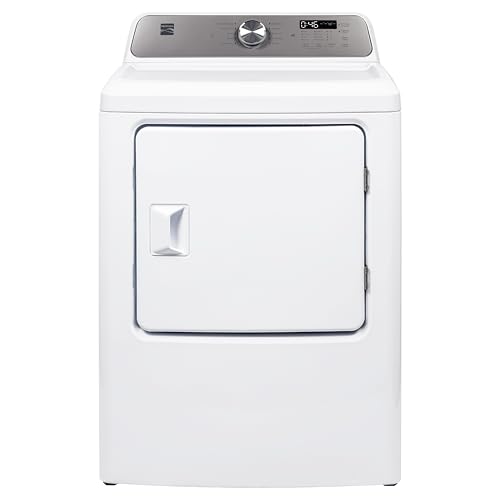
Kenmore 7.0 Front Load Gas Dryer White — Sensor-Led Gas Kenmore
This Kenmore is the gas sibling of the electric benchmark in our general dryer guide: a 7.0-cubic-foot front-load machine in white whose title names Wrinkle Guard, Smart Sensor Drying and touch controls. As a conversion candidate it has a particular virtue — maturity. The model family is mainstream, widely installed and thoroughly documented, which is precisely what you want when an installer must source the correct LP kit and set the burner up for bottled gas. Exotic machines make conversion a research project; this one makes it a phone call.
Smart Sensor Drying earns its place in a propane home for a fuel-specific reason: gas is delivered, stored and paid for by the tank, and a dryer that stops when the load is dry rather than when a timer expires respects that supply. Over-drying on propane is not merely rough on clothes; it is burning stored fuel to bake already-dry towels. Wrinkle Guard, described in the title as reducing wrinkles and static, handles the other rural reality — laundry rooms far from living spaces, where finished loads sit unemptied while the household is outside working.
Touch controls and a front-load format complete a familiar picture: stackable beside a matching washer, clean-wiping panel, mainstream ergonomics. For a farmhouse laundry room being modernised around an existing propane supply, this is the lowest-drama path to sensor-era drying, and its white finish matches the washers most such rooms already hold.
Order discipline matters: record the full model and serial from the rating plate at delivery, and order the LP kit against those identifiers before the installer’s visit, not after it.
- Fuel as sold: natural gas — running it on propane takes the LP conversion kit Kenmore specifies for this model
- Capacity, from the listing title: 7.0 cu. ft., front load
- Drying system named in its title: Smart Sensor Drying
- After-cycle care, from the listing title: Wrinkle Guard, to reduce wrinkles and static
- Controls, from the listing title: touch controls
- Where to buy: the Kenmore 7.0 Front Load Gas Dryer listing on Amazon — check price on Amazon
- Mainstream model family makes LP kit sourcing straightforward.
- Sensor drying respects a stored, delivered fuel supply.
- Wrinkle Guard suits laundry rooms far from living spaces.
- Conversion kit is a separate purchase and a separate appointment.
- Touch controls will not suit every hand in the household.
- Front-load format needs door-swing room some old laundry closets lack.
- Fuel as sold: natural gas; a model-matched LP conversion kit converts the GTD48GASWWB to propane
- Capacity, from the listing title: 7.2 cu. ft.
- Venting, from the listing title: up to 120 ft venting
- After-cycle care, from the listing title: Extended Tumble
- Model, from the listing title: GTD48GASWWB
- Where to buy: the GE GTD48GASWWB 7.2 Gas Dryer listing on Amazon — check price on Amazon
- Long-vent rating solves the rural laundry room’s hardest geometry.
- Extended Tumble protects loads that wait before folding.
- Full model identity and a deep national parts ecosystem.
- No sensor drying is named in its title.
- Its headline talent is wasted in laundry rooms beside exterior walls.
- Long duct runs demand stricter lint discipline than short ones.
- Fuel as sold: natural gas, convertible to propane with West Bend’s own LP kit for this dryer
- Capacity, from the listing title: 7 cu. ft., front load
- Cycles and control, from the listing title: 10 automatic cycles, 4 temperature settings, 4 dry levels, LED display
- Installation, from the listing title: reversible door, rear or side venting
- Format, from the listing title: vented gas dryer
- Where to buy: the West Bend Vented Gas Dryer listing on Amazon — check price on Amazon
- Side venting plus a reversible door fit rooms other dryers cannot.
- Broad manual range: ten cycles, four temperatures, four dry levels.
- LED display keeps a manual system honest and legible.
- No named sensor system; dryness levels are user-judged.
- Challenger brand in laundry, with a thinner service story than GE or Samsung.
- Flexibility is wasted in a standard, easy laundry room.
- Fuel as sold: natural gas; propane service needs the LP kit made for the MLTG37N1BWW
- Capacity, from the listing title: 6.7 cu. ft., model MLTG37N1BWW
- Drying system, from the listing title: Auto Sensor Dry
- Cycles, from the listing title: 12 total cycles
- Care features, from the listing title: Wrinkle Care, Air Fluff
- Where to buy: the Midea 6.7 Gas Dryer Auto Sensor Dry listing on Amazon — check price on Amazon
- Sensor drying at the capacity smaller households actually fill.
- Broadest cycle library in this guide, at twelve.
- Air Fluff serves stored-textile life, a rural staple.
- Smallest drum here; large families will run relay cycles.
- No steam or refresh system is claimed in its title.
- White finish only, per this listing’s description.
- Fuel as sold: natural gas — the ELFG7637AT converts to propane with its matched LP kit
- Capacity, from the listing title: 8.0 cu. ft., model ELFG7637AT, titanium
- Drying system, from the listing title: Predictive Dry
- Steam care, from the listing title: Perfect Steam, Instant Refresh
- Format, from the listing title: front load gas dryer
- Where to buy: the Electrolux 8.0 Perfect Steam Gas Dryer listing on Amazon — check price on Amazon
- Largest drum here, with steam refresh for service-distant households.
- Predictive Dry aims at accurate endings — economy on stored fuel.
- Titanium finish forgives working-laundry-room traffic.
- Flagship scale demands a planned laundry space and doorway clearance.
- Steam systems add a water connection to the installation conversation.
- Its capacity is surplus for small households’ daily loads.
- Fuel as sold: natural gas; the DVG45T6000W takes a model-specific LP conversion kit for propane
- Capacity, from the listing title: 7.5 cu. ft., front load
- Drying system in the title: Sensor Dry
- Model, from the listing title: DVG45T6000W/A3
- Finish, from the listing title: white
- Where to buy: the Samsung 7.5 Gas Dryer with Sensor Dry listing on Amazon — check price on Amazon
- Family-plus drum size without flagship scale or finish.
- Sensor Dry headlines the specification that matters most on stored fuel.
- Huge installed base means installers know the model family well.
- No steam, refresh or wrinkle system is named in its title.
- White-only presentation in this listing.
- Half-foot steps matter: verify your washer’s loads suit 7.5 rather than 8.0.
Think about the weekly texture this machine creates once converted. Sensor-led gas drying shortens the gap between washer and wardrobe: loads finish when they are dry, not when a padded timer allows, so a household running evening laundry gets clothes folded the same night instead of rediscovered, creased, the next morning. The touch panel’s flat face also suits working laundry rooms, where flour dust, barn dust and detergent film are facts of life; a wipe restores legibility that a knob cluster, with its lint-trapping seams, gradually surrenders. None of these are headline features, and all of them are the substance of a decade’s ownership.
For the conversion file, one more practical note: photograph the rating plate before the machine is pushed into its alcove. That photograph — model, serial, gas specification — is what every future parts order, kit question and service call will ask for, and it is considerably easier to take in the middle of the room than by torchlight behind an installed dryer.
Strengths
Trade-offs
Best for: propane households wanting the most documented, installer-friendly conversion candidate in the set. Not suited for: buyers expecting a dryer that runs on propane out of the box — no such pick exists here, or honestly anywhere in this guide.

GE GTD48GASWWB 7.2 Gas Dryer — Long-Vent Specialist
The GE’s title makes one claim no other pick here attempts: venting up to 120 ft. That number is the whole review. Rural and older homes — the natural habitat of propane dryers — are full of laundry rooms in the wrong place: a basement corner far from an exterior wall, a utility addition, a converted porch. Every dryer must exhale its moisture somewhere, and duct runs in such houses grow elbows the way gardens grow weeds. A machine whose manufacturer rates it for very long venting turns an installation that would strangle a lesser dryer into a routine job.
Capacity is 7.2 cubic feet, squarely family-size, and the title adds Extended Tumble — GE’s answer to the finished-load problem, keeping clothes moving after the heated cycle so creases do not set while the household is elsewhere. The model designation GTD48GASWWB is stated in full, which the conversion-minded buyer should appreciate: kit matching, parts ordering and installer conversations all run on that string of characters, and GE’s parts ecosystem is among the deepest in American appliances.
What the title does not claim is equally clear: no sensor system is named, no steam, no smart features. This is a venting-and-capacity machine, a workhorse specified for houses with difficult geometry. If your laundry room sits beside an exterior wall, its headline talent is wasted on you; if your duct run currently reads like a plumbing diagram, it may be the only pick here that truly fits your house.
Before ordering, walk your intended duct route with a tape and count the elbows honestly — the 120 ft figure assumes a route the installer’s calculation, not the homeowner’s optimism, confirms.
Long venting carries a maintenance corollary that belongs in the purchase decision. A duct run measured in tens of feet collects lint along its whole length, and a run with elbows collects it enthusiastically at every turn. Households choosing this GE for its reach should budget the discipline that reach demands: an annual duct inspection, a brush or professional cleaning on a schedule, and a lint filter habit that borders on ceremony. The machine forgives distance; it cannot forgive a duct slowly furred shut, because airflow is drying, and a strangled duct makes even a powerful burner patient and mediocre.
There is a planning dividend, though. A dryer that tolerates a long run frees the laundry room to live where the plumbing already is, rather than where the exterior wall happens to be — and in renovation arithmetic, not moving water and waste lines pays for a great deal of ductwork.
Strengths
Trade-offs
Best for: homes whose dryer must breathe through a long, elbowed duct run to reach outside air. A poor fit for: buyers whose top priority is sensor-led drying intelligence.

West Bend Vented Gas Dryer — Venting-Flexible All-Rounder
West Bend’s entry argues its case through adjustability. The title specifies a 7-cubic-foot front-load gas dryer with ten automatic cycles, four temperature settings and four dry levels, an LED display, a reversible door, and rear or side venting. Read those last three words twice. Side venting is the feature that rescues installations where the wall behind the dryer is not the wall the duct needs — a common verdict in converted spaces, additions and older farmhouses where the laundry room was an afterthought carved from a pantry or a porch.
The reversible door extends the same philosophy to the room’s human geometry: hang the door to open away from the washer, the wall or the walkway, whichever your floor plan dictates. Ten cycles with four temperatures and four dryness levels gives the household granular control — the settings breadth that sensor-led machines automate, offered here as manual range instead. Households who dry predictable, uniform loads often prefer exactly this: dial in the known answer, get the known result.
The LED display keeps that manual system legible, reporting selections clearly rather than hiding them behind dial positions alone. As a conversion candidate, the machine’s flexibility compounds: an installer working in a cramped, improvised laundry space will bless a dryer that vents from the side and opens from either hand, because conversion day in such rooms is already a puzzle of clearances.
West Bend’s name carries decades of American kitchen recognition; in laundry it is the challenger here, and its specification-forward title suggests it knows it must argue harder. On paper, the argument lands.
Manual range suits a particular kind of household knowledge. Families who dry the same loads in the same order every week — work clothes Monday, school clothes Wednesday, bedding Saturday — accumulate exact settings wisdom that no sensor can match, because the sensor meets each load as a stranger while the household meets it as a routine. Four temperatures crossed with four dryness levels is a wide grid of known answers, and ten named cycles organise that grid into starting points a new household member can learn in a week. The West Bend bets that its buyers know their laundry; in farm and trades households, that bet is usually safe.
Its venting flexibility also future-proofs the purchase against the room’s next incarnation. Laundry spaces in older homes migrate — from porch to addition to basement — and a machine that can vent rear or side, with a door that hangs either way, survives the migration without replacement.
Strengths
Trade-offs
Best for: improvised laundry spaces — conversions, additions, old farmhouses — where vent direction and door swing are genuine problems. Not the right match for: buyers who want the machine to judge dryness for them.

Midea 6.7 Gas Dryer Auto Sensor Dry — Sensor Value in Gas
The Midea MLTG37N1BWW brings sensor drying to the smaller end of this set: 6.7 cubic feet, twelve total cycles, and Auto Sensor Dry named in the title itself, alongside Wrinkle Care and Air Fluff. For propane households of one to three people, that combination is quietly ideal. The slightly smaller drum suits smaller households’ actual loads — heating 8 cubic feet of air to dry two people’s laundry wastes the very fuel a tank household watches most carefully — while the sensor system guards against the over-drying that fixed cycles inflict on small loads.
Air Fluff deserves its explanation, because rural households use it more than city ones: a no-heat tumble that shakes dust and staleness from stored textiles — the winter blankets coming down in October, the guest-room linens before visitors, the work jackets after a season in the barn. Wrinkle Care addresses the finished-load interval, and twelve cycles is the broadest cycle count in this guide, giving the Midea a settings library that larger, dearer machines here do not match on paper.
The title also praises its easy-using control panel, a phrase this review reports rather than endorses — but a straightforward panel on a sensor machine is a coherent philosophy: automate the judgement, simplify the interface. The full model number is stated, keeping the LP-kit conversation precise.
Households of five or more should look up the page to the 7.5 and 8.0 cubic foot machines; the Midea’s virtues are calibrated for smaller loads dried often, and a big family will run it in relays and blame the drum for a mismatch chosen at purchase.
Smaller households also dry differently in one respect guides rarely mention: their loads are more various per pound. Two people’s laundry mixes delicates, workwear, gym kit and household textiles in proportions a family load dilutes, so a sensor system that reads the actual drum — rather than a timer calibrated for average family cargo — protects a wardrobe that represents a larger share of the household’s clothing wealth. The Midea’s combination of a modest drum and genuine sensor judgement is, in that light, less a budget compromise than a correct calibration.
Propane economy reinforces the point. A tank household running a right-sized dryer heats only the air its loads require; across a winter of frequent small cycles, that restraint is measured in deliveries deferred, which is the unit rural households actually feel.
Strengths
Trade-offs
Best for: one-to-three-person propane households wanting sensor judgement and cycle breadth in a right-sized drum. Poorly suited to: families whose weekly laundry arrives in washer-filling mountains.

Electrolux 8.0 Perfect Steam Gas Dryer Titanium — Steam-and-Predictive Flagship
The Electrolux ELFG7637AT is the flagship of this set by every measure its title offers: the largest drum at 8.0 cubic feet, a titanium finish, and a trio of named systems — Perfect Steam, Predictive Dry and Instant Refresh. For a propane household, the interesting name is Predictive Dry. Where ordinary sensors react to moisture, a predictive system aims to call the finish accurately enough that the household can plan around it; on stored fuel, accurate endings are economy, because every unnecessary minute is tank gas burned into already-dry air.
Perfect Steam and Instant Refresh speak to a different rural truth: distance from services. Households far from dry cleaners and town laundries value a dryer that can refresh a jacket, relax wrinkles from a stored dress shirt, or steam the staleness out of occasion clothes at home. The 8.0-cubic-foot drum swallows the other end of the spectrum too — quilts, farmhouse bedding, the full output of a large washer — making this the one pick here that spans a household’s entire textile life without compromise at either extreme.
The titanium finish is not vanity in a working laundry room; darker finishes forgive the scuffs of baskets, boots and tool-adjacent traffic that farmhouse utility spaces collect. Electrolux’s laundry pedigree is long, and the full model designation in the title keeps the conversion-kit order exact.
Flagship cautions apply: confirm the LP kit’s availability for this specific model before purchase, and measure the room — an 8.0-cubic-foot cabinet with a front-load swing needs a laundry space that was planned, not improvised.
Steam ownership in a propane home carries one installation footnote worth stating plainly: steam systems sip water, so the laundry room needs a water supply arrangement at the dryer — usually a splitter from the washer’s line — and the conversion visit is the natural moment to have that plumbing confirmed alongside the gas work. Bundle the tasks and the flagship arrives complete; skip the conversation and the refresh cycles wait on a second appointment. Electrolux’s documentation culture makes both conversations easier than most, but the buyer still has to start them.
Consider also the household rhythm a predictive machine enables. When a dryer can be trusted to call its finish, laundry stops colonising the evening: loads are started before dinner with a known end, and the household’s scarcest resource — attention — is spent on the farm, the family or the road into town, not on checking a drum.
Strengths
Trade-offs
Best for: larger propane households wanting one machine for bedding mountains and refresh-worthy delicates alike. A weak match for: small households paying flagship scale for loads a 6.7 drum would dry.

Samsung 7.5 Gas Dryer with Sensor Dry DVG45T6000W — Sensor-Dry Family Size
Samsung’s entry keeps its title admirably plain: a 7.5-cubic-foot front-load gas dryer with Sensor Dry, in white, model DVG45T6000W/A3. That plainness is itself information. The machine’s case rests on the two things family laundry actually consumes — drum volume and dryness judgement — rather than on a bouquet of secondary systems. Seven and a half cubic feet sits between the Kenmore’s seven and the Electrolux’s eight, a size that takes a full family washer load including bedding without the flagship’s footprint or finish premium.
Sensor Dry is the headline, and in a propane household its value compounds quietly: accurate dryness protects the clothes and meters the tank. Samsung’s laundry ecosystem adds a practical conversion-era advantage — the brand’s dryers are installed in enormous numbers, so rural installers and gas fitters have usually met this model family before, and the LP conversion conversation starts from familiarity rather than a manual hunt. The full model string, suffix included, is printed in the title, which is exactly the string the kit order will need.
The title claims nothing about steam, wrinkle systems or connectivity, and this review claims none on its behalf. What it offers is the mainstream family specification, executed by the category’s highest-volume maker, in the size most family laundry rooms were built around.
Households choosing between this and the Kenmore are choosing between emphases: Samsung’s volume-plus-sensor plainness, or Kenmore’s wrinkle care and touch interface at a half-foot less drum. Both are sound; the loads you dry weekly should arbitrate.
Samsung’s scale in laundry buys one more thing a conversion household should value: documentation depth. Model-specific conversion guidance, parts diagrams and service literature for a high-volume platform are easy for any competent fitter to obtain, in any state, on short notice. When the nearest appliance technician is an hour away, the difference between a machine everyone can get parts and paperwork for, and a machine that begins every service call with research, is measured in weeks of laundry-room normality.
The 7.5 drum also future-proofs the household’s arc. Families grow into this size and rarely out of it; a dryer bought for two can serve five without the relay-cycle resentment that undersized machines breed, which makes the Samsung the conservative decade-long bet of this set.
Strengths
Trade-offs
Best for: family propane households wanting sensor judgement and generous volume in a mainstream, installer-familiar package. A mismatch for: buyers seeking steam refresh or a dark finish from their dryer.
The Six Gas Machines at a Glance: Drum, System and Venting Character
| Dryer | Drum | Drying system named in title | Venting or care signature |
|---|---|---|---|
| Kenmore 7.0 Front Load Gas Dryer White | 7.0 cu. ft. | Smart Sensor Drying | Wrinkle Guard |
| GE GTD48GASWWB 7.2 Gas Dryer | 7.2 cu. ft. | None named | Venting up to 120 ft; Extended Tumble |
| West Bend Vented Gas Dryer | 7 cu. ft. | 4 dry levels, manual range | Rear or side venting; reversible door |
| Midea 6.7 Gas Dryer Auto Sensor Dry | 6.7 cu. ft. | Auto Sensor Dry | Wrinkle Care; Air Fluff |
| Electrolux 8.0 Perfect Steam Gas Dryer Titanium | 8.0 cu. ft. | Predictive Dry | Perfect Steam; Instant Refresh |
| Samsung 7.5 Gas Dryer with Sensor Dry DVG45T6000W | 7.5 cu. ft. | Sensor Dry | Mainstream family specification |
How Does an LP Conversion Actually Work, Step by Step?
A conversion kit changes how the dryer meters gas. Natural gas arrives at low pressure from a mains supply; propane is stored as liquid and delivered at a different pressure, so the burner’s orifice and the regulator settings must be swapped for the propane specification the manufacturer engineered for that exact model. The kit contains those model-matched parts. Fitting it is a qualified installer’s job — gas work is licensed work in most jurisdictions, and the install includes leak checks, burner adjustment and a test cycle, none of which belong on a homeowner’s weekend list.
The practical sequence runs like this. Choose and order the dryer. Read its full model number from the listing and, once delivered, from the rating plate. Order the manufacturer’s LP conversion kit for that model — from the manufacturer or an authorised parts channel, never a generic substitute. Book a licensed gas installer, ideally the same professional who services your propane supply, and have the kit on hand before the visit. After conversion, the installer labels the machine as converted; keep that documentation with the home’s appliance file, because a future buyer, insurer or service technician needs to know the machine no longer drinks natural gas.
One more honesty note: conversion is one-directional in practice. A dryer converted to propane that later moves to a natural-gas home needs converting back, again with the correct kit and a qualified fitter. Factor that into decisions for properties whose fuel future is uncertain.
Why Do Propane Households Choose Gas Drying at All?
Because the fuel is already there. A home heated by propane, cooking on propane and heating water with propane owns the tank, the regulator and the delivery relationship; adding the dryer to that system is incremental, while adding a high-draw electric dryer may mean panel upgrades in an older rural electrical service. Gas dryers also heat quickly and, in many regions, dry a load for less delivered-energy cost than resistance-electric drying — though tariffs and propane prices vary enough that this guide asserts the principle, not a universal saving.
There is also a resilience argument off-grid and storm-prone households understand instinctively: systems that share one stored fuel degrade gracefully together. The household that keeps its tank filled keeps its laundry running. Readers designing whole laundry systems around private water supplies will find the matching washer-side reasoning in our guide to Best Washers for Septic Systems, where water volume and discharge discipline get the same honest treatment.
What Should You Verify About Your Propane Supply Before Ordering?
Three conversations precede any order. First, your propane supplier: confirm the tank and regulator can serve an additional appliance, and ask whether their technicians perform dryer conversions — many do, and a supplier-fitted conversion keeps the fuel system under one accountable hand. Second, your installer or gas fitter: confirm the exact kit for your chosen model and book the visit to follow delivery closely, because an unconverted gas dryer in a propane home is furniture until that visit happens. Third, your home insurance and local code: some jurisdictions and policies have specific requirements for gas appliance installation and documentation, and learning them before the work is cheaper than learning them after.
Then verify the laundry room itself: a gas dryer needs combustion air and a proper vent, and propane installations carry their own clearance rules. Measure the space, the doorway path and the vent route, and photograph the existing shut-off and line so every professional conversation starts from the room as it is.
How Does Propane Drying Change Laundry Habits Across a Year?
Households new to stored fuel discover that the tank imposes a gentle accounting on habits that mains gas never did. A delivery has a date; a gauge has a reading; laundry joins heating and hot water in the household’s awareness of a shared, finite store. In practice this produces better drying habits rather than anxious ones. Loads get sorted properly because a sensor cycle wasted on a badly mixed drum is visible waste. The lint filter gets cleaned because airflow is economy. Full loads replace half loads because heating a drum of air for three shirts offends the same instinct that turns off lights in empty rooms.
Seasonality sharpens the lesson. Winter is when the tank works hardest for the house — heating first, laundry second — and households learn to schedule heavy drying, the bedding and towel mountains, with the same mild foresight they apply to any shared resource. None of this is hardship; it is the ordinary competence of homes that have always lived by stored fuel, from woodpiles to water tanks. A sensor-led dryer, which meters its own appetite honestly, fits that culture far better than a timer machine that burns the same minutes for a pillowcase as for a quilt.
What Should the Laundry Room Itself Provide for a Gas Dryer?
Gas appliances ask the room for three provisions beyond space. Combustion air comes first: a burner breathes, and a sealed-tight closet starves it, so the room’s air supply — louvred doors, vents, or simply an honest utility space — is part of the installation, not an afterthought. The shut-off comes second: an accessible gas valve at the machine, which your installer will confirm or fit, turns every future service visit into a safe, simple job. The vent comes third, as it does for every dryer, carrying moisture and lint out of the house entirely.
Flooring and clearance deserve a rural footnote. Laundry rooms in older properties often sit on floors that slope, flex or harbour the occasional water event; a heavy gas machine should stand level and firm, both for quiet tumbling and for the integrity of its rigid connections. Your installer will level it on conversion day — keep it that way, and resist sliding the machine casually when cleaning behind it. Gas connections forgive many things, but casual dragging is not among the habits to cultivate.
How Do You Compare Running Costs Between Gas and Electric Honestly?
Buyers cross-shopping this guide against electric models deserve a fair method rather than a slogan. Compare delivered energy, not headline prices: the cost of propane per unit of heat at your supplier’s current rate, against the cost of electricity per equivalent unit at your tariff, adjusted by the plain fact that gas dryers and electric dryers convert that energy with broadly comparable enthusiasm. In many rural districts propane wins that arithmetic; in some, off-peak electricity closes the gap. Your supplier and your utility bill both publish the numbers needed, and either answer is respectable — the dishonest move is assuming one without checking.
Then add the costs that never appear in the energy column. A propane conversion is a one-time installation expense. An electric dryer in an older rural home may demand a panel upgrade that dwarfs it. Conversely, a home already wired for an electric dryer pays nothing to stay electric. The spreadsheet that matters is your house’s spreadsheet, drawn from your panel, your tank and your tariffs — which is why this guide teaches the method and declines to crown a universal winner.
When Does It Make Sense to Delay Conversion and Run Electric Instead?
Sometimes the honest answer is: not yet. A household expecting a natural-gas connection within a year might rationally buy the gas dryer, convert it to propane for the interim, and convert back on connection — or might equally rationally buy electric and skip two conversions entirely. A rental or short-tenure property argues against conversion investment altogether. A home whose propane system is already at its regulator’s comfortable limit, with a supplier quoting upgrade work, should price that work into the dryer’s true cost before admiring any machine on this page.
The pattern in every scenario is the same: the dryer is the visible purchase, but the system around it — tank, regulator, installer, documentation, vent — is the real decision. Households that decide the system first find the machine choice almost anticlimactic, and they are invariably the households still satisfied five winters later.
What Errors Do Propane Dryer Buyers Most Often Make?
The cardinal error is believing the marketing shorthand — ordering a gas dryer under the impression it will run on propane as delivered, then discovering the conversion requirement with a machine already in the hallway. This guide exists to prevent exactly that afternoon. The second error is kit improvisation: generic or wrong-model orifices are not bargains, they are combustion experiments, and the correct kit costs little against the machine’s price. Third, buyers forget the vent. Propane conversion changes the fuel, not the moisture; the dryer still exhales a load’s worth of water vapour and lint, and a room without a vent plan will collect both.
Fourth, households neglect to tell their propane supplier about the new appliance, then wonder at delivery intervals that no longer match consumption. Fifth, they lose the conversion documentation — a small paperwork failure that complicates every future service visit, resale and insurance conversation. Keep the installer’s paperwork with the manual, in the laundry room, where the machine’s whole biography belongs.
How Should You Brief the Installer So Conversion Day Goes Well?
Conversion day succeeds on information delivered in advance. Send the installer the dryer’s full model number and a photograph of the rating plate when booking, so the correct kit travels in the van rather than in a follow-up order. Send photographs of the laundry room too: the gas line’s position, the vent outlet, the doorway path. Mention the propane supplier’s name; local fitters and suppliers usually know each other’s work, and that familiarity smooths everything from regulator questions to paperwork.
Prepare the room as you would for any trades visit: clear the path, empty the old machine’s position, and decide in advance where the converted machine’s documentation will live. Ask the installer, before they leave, to walk you through what was changed, where the conversion label sits, and what the first cycle should look and sound like. That five-minute briefing is the difference between a household that owns a system and a household that merely possesses an appliance. Keep the supplier informed that a dryer now draws on the tank, and adjust the delivery rhythm before the gauge teaches the lesson the hard way.
What Does Living With a Converted Dryer Actually Feel Like?
Entirely ordinary — which is the point, and worth saying because the conversion process can make the prospect feel exotic. The drum turns the same, the cycles run the same, the clothes emerge the same. What differs lives outside the machine: a tank gauge checked with the season’s rhythm, a supplier who knows your household’s appetite a little better, and a line in the home’s documentation file that says this dryer burns propane, converted on this date, by this fitter. Visitors will never notice. Future technicians will be grateful.
The households that struggle with converted dryers are never struggling with the conversion; they are struggling with the things this guide flagged upstream — a strangled vent, a lost document, a drum size chosen for a different family. Get those right and a converted gas dryer is simply a dryer, doing the week’s least glamorous work with decade-long indifference to which fuel arrives at its burner.
Which of These Machines Suits Which Kind of Rural Household?
Match by household shape and the shortlist resolves itself. The homestead with a mudroom laundry and a duct run like a country road wants the GE’s venting reach above all other virtues. The farmhouse modernising in stages, washer already new and family growing, wants the Samsung’s volume and installer familiarity, or the Kenmore’s wrinkle care if the laundry room sits far from the house’s living heart. The cottage household of two, drying little and often on a watched tank, wants the Midea’s right-sized sensor drum. The house at the end of a long lane, an hour from the nearest town services, wants the Electrolux’s steam refresh precisely because the alternative is a two-hour round trip. And the family shoehorning laundry into a converted pantry wants the West Bend, because side venting and a reversible door are the difference between a machine that fits and a machine that merely arrives.
Notice what does not appear in those matches: price promotions, colour preferences, cycle counts admired in the abstract. Propane households, who plan fuel by the season and services by the distance, tend to buy appliances the same way — by fit to the life actually being lived.
How Long Should a Converted Gas Dryer Serve, and What Ends Its Service?
A gas dryer is among the longest-lived appliances in the home, and conversion does not shorten that expectation; the burner and drum do not care which gaseous fuel the orifice was sized for. What ends service, in the usual order, is neglect of airflow — lint-starved drying that overworks everything — followed by the ordinary wear of belts, rollers and igniters, all of which are routine, documented repairs on mainstream platforms like the Kenmore, GE and Samsung here. The Electrolux and West Bend and Midea carry the same mechanical logic with thinner or thicker local service networks depending on your region, which is worth one phone call to your installer before purchase: ask which of these brands they see, stock parts for and enjoy working on.
That single call is the most undervalued step in this entire category. An installer who knows a platform converts it faster, services it cheaper and keeps it alive longer — advantages that compound across a fifteen-year ownership in ways no specification table can capture.
A Short Word on Safety Culture Around Any Gas Appliance
Gas drying is mature, ordinary technology, and the safety culture around it is correspondingly simple: respect the connections, keep the vent clear, and treat unfamiliar smells or behaviour as a reason to stop the machine and call the professional rather than to run one more cycle and see. A converted dryer should carry its conversion label visibly; the household should know where the machine’s shut-off valve is before the first load, not during the first worry. Carbon-monoxide awareness belongs to any home burning any fuel — detectors maintained, vents unblocked, appliances serviced on schedule — and a propane household, which already lives by that culture for its heating, extends it to the laundry room without new effort. None of this is cause for anxiety; it is the same calm competence that stored-fuel homes practise everywhere else, applied to one more appliance.
Final Recommendation
Choose the dryer first and the kit second, in that order, and this category becomes straightforward. For most propane households the Kenmore and the Samsung are the natural centre: documented, sensor-led, family-sized machines that any rural installer will know. The GE is the answer when the house itself is the problem — long vent runs forgive nothing, and its rating forgives nearly everything. The West Bend suits improvised rooms with its side venting and reversible door; the Midea suits smaller households that want sensor judgement without heating surplus drum; the Electrolux is the flagship for large households far from town services, refreshing and steaming at home what others drive miles to have done.
Whichever machine you choose, budget the conversion into the purchase from the first day — the kit, the licensed fitter, the documentation kept safe. A propane dryer is not a product you buy; it is a small system you assemble, and the households happiest with theirs are the ones who planned the system whole rather than discovering it in pieces.
Frequently Asked Questions
Can I convert a gas dryer to propane myself?
The kit is model-matched parts; the work is licensed gas work in most jurisdictions, involving orifice and regulator changes, leak testing and burner adjustment. This guide’s firm advice is a qualified installer — ideally your propane supplier’s own technician — every time.
Does conversion change how well the dryer dries?
A correctly converted dryer delivers its designed heat on propane; the cycles, sensors and capacities in these reviews describe the machine you will own. What changes is the fuel metering, not the drum, the airflow or the control system. This is why the reviews above judge each machine on its drying character — sensor judgement, venting, drum size — rather than on its fuel: after a proper conversion, the character is the machine’s, unchanged, and the propane is simply how its heat arrives. An improperly converted dryer is a different story, which is precisely why this guide insists on the manufacturer’s kit and a licensed fitter rather than treating conversion as a detail.
Why is there no portable propane dryer in this guide?
Because the verified listings for this guide contain none: portable dryers are electric machines in the current market, and inventing a portable gas pick would violate the honesty this page is built on. Portable needs are served by the electric compact class instead.
What if my home later gets a natural-gas connection?
The dryer would need converting back with the correct natural-gas kit and a qualified fitter. Keep the original documentation from the first conversion; it tells the second installer exactly what was changed.
Which pick suits a very long duct run in an old farmhouse?
The GE GTD48GASWWB, whose title rates it for venting up to 120 ft. Have your installer confirm the route’s equivalent length, counting elbows, before ordering — but among these six, it is the machine designed for that house.
Related Guides
Readers who prefer their gas drying deliberately simple — fewer systems, plainer controls, the same conversion story told straight — will find their shortlist in Best Simple Gas Dryers, the live companion to this guide. Read it alongside this page if your household is deciding not just which machine to convert, but how much machine it wants at all: the simple-gas shortlist strips the category to capacity, heat and reliability, and some propane households — particularly those replacing a beloved basic dryer — will find their answer there faster than among the sensor-led flagships above.


