What's inside
- Where to Buy a Sensor Dryer — and How to Tell a Real Sensor Claim From a Label
- Key Takeaways
- Quick Picks
- How Did We Police the Word Sensor in This Guide?
- Four Linked Machines and Two Classes: The Comparison That Matters
- How Does a Moisture Sensor Actually Know the Load Is Dry?
- When Does Sensor Drying Save the Most — and When Does It Barely Matter?
- What Habits Make Any Sensor Dryer Perform at Its Best?
- What Goes Wrong When Buyers Shop for Sensor Dryers Carelessly?
- How Do Sensor Dryers Treat Delicate and Technical Fabrics?
- What Should You Check in the First Fortnight of Owning One?
- How Does Sensor Drying Interact With Hard Water, Softeners and Scent Products?
- Why Do Manufacturers Give the Same Idea So Many Names?
- How Should Renters and Landlords Think About Sensor Dryers?
- What Does a Sensor Dryer Mean for a Household’s Weekly Rhythm?
- How Do You Read a Sensor Dryer’s Specification Without Being Misled?
- When a Sensor and a Timer Disagree: Which Should You Believe?
- What Place Does Sensor Drying Have in a Whole-Home Laundry Plan?
- A Brief History of How Dryers Learned to Judge
- Final Recommendation
- Frequently Asked Questions
- Related Guides
As an Amazon Associate I earn from qualifying purchases. This post may contain affiliate links at no extra cost to you.
cottageverdict.com is reader-supported. When you buy through links on our site, we may earn an affiliate commission.
Where to Buy a Sensor Dryer — and How to Tell a Real Sensor Claim From a Label
The best sensor dryers share one discipline: they stop when the clothes are dry, not when a clock runs out. That sounds like a small thing until you picture the two failures it replaces — towels still damp at the core because a timer guessed short, and shirts baked crisp because it guessed long. A sensor dryer reads the load itself, usually by measuring moisture or exhaust conditions as the drum turns, and ends the cycle on evidence. This guide holds a strict line about the word sensor: a pick earns the claim only where its own listing title names it — Sensor Dry, Smart Sensor Drying or an equivalent phrase printed by the seller. Four machines below clear that bar with links; two further entries are prose-only discussions of classes worth understanding, clearly marked as such.
Fuel honesty matters here too. Two of the four linked picks are gas dryers, and each review says so in its opening lines, because a sensor does not care what heats the air but a household certainly does — circuits, vents and fuel lines are decided long before dryness algorithms. Readers whose laundry room doubles as a noise-sensitive space should continue to our guide to Best Quiet Tumble Dryers after this one; sensor intelligence and quiet running are different virtues, and some households need to shop for both at once.
Every linked name leads to its Amazon listing, where you can check price on Amazon and confirm the specification against your own laundry room. This guide prints no prices and no performance figures the listings themselves do not state. Where a title is silent about a detail, the review stays silent too — a discipline that will occasionally make a review feel shorter than a rival’s, and that is precisely the trade this page accepts in exchange for never inventing a feature.
Key Takeaways
- Sensor claims in this guide come only from listing titles that name Sensor Dry or Smart Sensor Drying outright.
- Two linked picks are electric (LG 7.3, Kenmore 8.0) and two are gas (GE Profile 7.4, LG DLGX4001B 7.4) — fuel is stated in every review.
- Replacement moisture-sensor parts surfaced in product searches; they are components, not dryers, and none appears here as a pick.
- The two prose entries cover the heat-pump sensor class and the timed-dryer contrast class, without links, by design.
- Sensor drying pays most on mixed loads; uniform loads are where timers remain respectable.
Quick Picks
| Dryer | Badge | Reason for inclusion |
|---|---|---|
| LG 7.3 Electric Dryer with Sensor Dry | Rear-Control Sensor Benchmark | 7.3 cu. ft. electric dryer with rear controls and Sensor Dry in its name. |
| Kenmore 8.0 Front Load Electric Dryer Metallic Silver | Steam-Assisted Sensor Flagship | 8.0 cu. ft., Smart Sensor Drying, Wrinkle Guard with Accela Steam, ENERGY STAR certified per its title. |
| GE Profile 7.4 Smart Gas Dryer with Sanitize and Sensor | Gas Sensor With Sanitize | A gas dryer — stated plainly — with Sensor Dry, a Sanitize Cycle and an aluminized alloy drum. |
| LG DLGX4001B 7.4 Gas Dryer Sensor Dry | Gas Sensor With Steam and Wi-Fi | A gas dryer with Sensor Dry, TrueSteam and Wi-Fi in its title. |
| Heat-Pump Sensor Dryers (dealer-channel class) | Ventless Humidity Class | Prose entry: the condensing, humidity-led class sold mainly through appliance dealers. |
| Timed Compact Dryers Without Sensor Systems | The Honest Contrast | Prose entry: the non-sensor class, and the loads where it remains a rational buy. |
How Did We Police the Word Sensor in This Guide?
By treating it as a claim that needs a citation. Product searches for sensor dryers return three kinds of result: dryers whose titles name a sensor system, dryers whose titles do not, and loose components — replacement moisture sensors and sensor bars sold as spare parts. Only the first kind earned a linked pick here. The components were excluded outright; a spare part is not a dryer, and recommending one in a dryer guide would be a category error with a price attached. Dryers without a sensor claim in the title were excluded from the linked set even when the brand’s wider marketing might imply one, because this guide reports listings, not implications.
The two prose entries exist because the linked four do not exhaust what a sensor shopper should understand. Heat-pump machines sense humidity as their native language yet reach most buyers through dealers rather than the listings pooled here; timed compact dryers define the contrast that makes the sensor value visible. Both are discussed qualitatively, with no invented model numbers and no links. Households washing delicate garments alongside family loads may also appreciate the washer-side companion to this thinking in our guide to Best Washers With a Handwash Cycle, since gentle washing and evidence-led drying protect the same clothes at opposite ends of laundry day.

LG 7.3 Electric Dryer with Sensor Dry — Rear-Control Sensor Benchmark
Fuel first: this LG is an electric dryer, 7.3 cubic feet, described in its title as an ultra large capacity rear-control machine with Sensor Dry, in white. The rear-control layout is its ergonomic signature — the panel sits on a raised backsplash behind the lid line, the traditional American arrangement that keeps controls away from the drum door and reads clearly to anyone standing at the machine. Households replacing an older rear-control dryer will find the posture of using it instantly familiar.
Sensor Dry is the title’s promise and the machine’s reason for being in this guide. LG’s sensor approach judges the load’s moisture as it tumbles and ends the heated cycle when dryness arrives, which in a 7.3-cubic-foot drum full of mixed family laundry is the difference between a single transfer and a damp-towel second act. Ultra large capacity in LG’s phrasing means the mainstream-plus size: full washer loads, bedding in season, the towel output of a household that swims or trains.
The title is otherwise restrained — no steam, no connectivity, no finish beyond white is claimed — and the review honours that restraint. What is being bought here is the category’s core proposition executed by one of its highest-volume makers: a big electric drum that decides doneness itself. For households whose current dryer runs on hopeful timers, this is the reference upgrade, the machine against which the fancier picks below must justify their extras.
Rear controls carry one practical caveat: they raise the machine’s effective height at the back, so measure over-machine shelving or cabinets before assuming a like-for-like swap.
- Fuel: electric
- Capacity, from the listing title: 7.3 cu. ft., ultra large capacity
- Drying system, from the listing title: Sensor Dry
- Controls, from the listing title: rear control layout
- Finish, from the listing title: white
- Where to buy: the LG 7.3 Electric Dryer with Sensor Dry listing on Amazon — check price on Amazon
- The guide’s benchmark: sensor drying in a big, familiar electric format.
- Rear controls suit households replacing traditional top-panel machines.
- Capacity covers family loads and seasonal bedding without flagship extras.
- No steam or refresh feature is claimed in its title.
- Rear-control height can collide with low over-machine shelving.
- White is the only finish this listing describes.
- Fuel: electric
- Capacity, from the listing title: 8.0 cu. ft., front load, metallic silver
- Sensor system, per its title: Smart Sensor Drying
- Finishing care, from the listing title: Wrinkle Guard and Accela Steam, to reduce wrinkles, static and odors
- Certification, from the listing title: ENERGY STAR Certified
- Where to buy: the Kenmore 8.0 Front Load Electric Dryer listing on Amazon — check price on Amazon
- Largest drum in the guide, with sensor judgement to run it honestly.
- Steam and wrinkle systems attack finishing problems sensors cannot.
- ENERGY STAR designation stated in the listing title itself.
- Flagship footprint demands a measured, planned laundry space.
- Steam features add a water-supply detail to installation.
- Small households will chronically under-fill its drum.
- Fuel: gas — a gas dryer, requiring a gas supply and venting
- Capacity, from the listing title: 7.4 cu. ft.
- Drum, from the listing title: aluminized alloy drum
- Drying system, from the listing title: Sensor Dry
- Cycle of note, from the listing title: Sanitize Cycle
- Where to buy: the GE Profile 7.4 Smart Gas Dryer listing on Amazon — check price on Amazon
- Sensor judgement paired with brisk gas heat and a sanitize option.
- Aluminized alloy drum argues for a long service life.
- Profile-tier specification at a family-plus 7.4 cu. ft.
- Gas supply and venting are prerequisites an electric home may lack.
- Smart features are named but not detailed in the title.
- Sanitize cycles run hot and long by design; not for delicates.
- Fuel: gas — this LG burns gas and needs a supply line and a vent
- Capacity, from the listing title: 7.4 CF ultra large capacity, model DLGX4001B
- Drying system, from the listing title: Sensor Dry
- Steam, from the listing title: TrueSteam
- Connectivity, from the listing title: Wi-Fi
- Where to buy: the LG DLGX4001B 7.4 Gas Dryer listing on Amazon — check price on Amazon
- Sensor drying plus steam finishing plus notifications, in one gas machine.
- Wi-Fi alerts attack the forgotten-load problem at its root.
- Ultra large capacity matches family washer output load for load.
- Gas installation prerequisites apply, as with the GE Profile.
- App specifics are not detailed in the listing title.
- Steam adds a water-supply arrangement to the install.
- Class character: ventless condensing dryers that sense humidity as their operating principle
- Typical route to buy: appliance dealers and kitchen studios, with installation advice included
- Cycle character: longer, gentler drying without a vent run
- Where to buy: the heat-pump sensor class through a local appliance dealer — ask the dealer to name the exact model’s humidity-sensing system before ordering
- Ventless freedom suits interior rooms no vented machine can serve.
- Gentle, humidity-led cycles are kind to fabrics.
- Dealer purchase includes installation guidance by default.
- Cycles run longer than vented machines’.
- No verified listing in this guide’s pool means no click-and-order path here.
- Condensate management becomes a small household routine.
- Class character: compact dryers controlled by user-set timers, with no moisture sensing claimed
- Typical route to buy: marketplace listings and small-appliance retailers, model by model
- Control character: the owner is the sensor — judgement learned per load type
- Where to buy: the timed compact class through small-appliance retailers — compare drum size and wattage, since no sensor claim needs verifying
- Simplest, usually least expensive route into tumble drying.
- Perfectly predictable behaviour for uniform, repeated loads.
- Fewer systems to fail across a long service life.
- Mixed loads expose the timer’s blindness immediately.
- Over-drying and under-drying are the owner’s recurring tuition.
- No listing in this guide means research starts from zero.
There is a household-economics point in this machine’s restraint. Every feature omitted from a specification is a feature that cannot fail, confuse a guest or demand a firmware conversation; the LG’s title describes a dryer reduced to its essentials and then given the one intelligence that matters. For households replacing a fifteen-year-old timed machine, the adjustment period is measured in days: the controls feel familiar, the drum is bigger, and the only new experience is opening the door to find the load actually dry — neither armoured in residual damp nor cooked past its needs. That quiet correctness, repeated several hundred times a year, is the whole case for the sensor category, and this machine makes it without decoration.
Strengths
Trade-offs
Best for: electric households wanting sensor judgement in the classic rear-control format. Not suited for: buyers chasing steam refresh or app connectivity from their dryer.

Kenmore 8.0 Front Load Electric Dryer Metallic Silver — Steam-Assisted Sensor Flagship
Also electric, and the largest machine in this guide: Kenmore’s 8.0-cubic-foot front-load dryer in metallic silver. Its title is the most decorated here — Smart Sensor Drying, Wrinkle Guard and Accela Steam described as reducing wrinkles, static and odors, and an ENERGY STAR certification stated outright. Each element earns discussion. Smart Sensor Drying is Kenmore’s name for the evidence-led cycle ending this guide exists to celebrate, here applied to a drum big enough that mixed loads arrive in genuine variety — the exact condition sensors exist for.
The steam pairing addresses what sensors cannot. A sensor knows when clothes are dry; it knows nothing about the creases they set while waiting or the staleness they carry from storage. Accela Steam, as the title frames it, works on wrinkles, static and odors — the finishing problems of laundry rather than the drying problem. Wrinkle Guard extends that philosophy past the cycle’s end. Together they describe a machine aimed at households whose laundry bottleneck is not drying speed but the state clothes are in when someone finally opens the door.
The ENERGY STAR note, printed in the title, matters in an electric flagship: big drums invite big loads, and a certified machine reassures the household that its convenience is not being bought with careless consumption. Metallic silver, finally, is the finish that lets a front-load pair look deliberate beside a silver washer rather than apologetic beside a white one.
Eight cubic feet is a commitment of floor space and door swing; measure both. Households whose laundry is genuinely this large will find the capacity addictive, and smaller households should resist buying drum they will heat half-empty all winter.
Consider who actually benefits from steam in a dryer, because the answer is narrower and more valuable than the marketing suggests. It is the household whose clothes live complicated lives: uniforms that must look pressed without ironing, occasion wear stored between rare outings, work clothes refreshed on a Sunday evening rather than rewashed. For those households the steam system converts the dryer from a drying appliance into a wardrobe-maintenance appliance, and the sensor’s role grows rather than shrinks — steam finishing only works on loads that were dried correctly in the first place. The Kenmore’s pairing is therefore coherent rather than extravagant: evidence-led drying as the foundation, steam as the finish, capacity as the canvas. Buyers whose wardrobes are jeans and tees should weigh the LG above more heavily; buyers whose wardrobes include anything with a crease that matters will understand this machine immediately.
Strengths
Trade-offs
Best for: large electric households wanting sensor drying plus steam finishing in one flagship. A poor fit for: compact laundry closets or couples drying two-person loads.

GE Profile 7.4 Smart Gas Dryer with Sanitize and Sensor — Gas Sensor With Sanitize
Fuel, stated before features as this guide promises: the GE Profile is a gas dryer. Its 7.4-cubic-foot drum is aluminized alloy, per the title, and the named systems are a Sanitize Cycle and Sensor Dry, under GE’s Profile badge with Smart in the name. The drum material is a genuine specification worth pausing on — aluminized alloy is chosen for corrosion resistance in the hot, humid interior a dryer drum inhabits, which is a longevity argument written in metallurgy rather than marketing.
Sensor Dry on gas heat has its own character: gas burners deliver heat briskly, so a sensor that ends the cycle precisely protects clothes from the over-drying that fast heat makes easy. The Sanitize Cycle extends the machine’s brief to the loads households worry about — the illness-week bedding, the gym bag’s contents, the towels that served a stomach bug — where a hotter, deliberate cycle is the point rather than a side effect. The title claims the cycle; this review reports it as the listing’s own language, without inventing temperature figures the listing does not publish.
GE Profile is the maker’s step-up line, and the Smart designation signals the connected tier of the range; the title does not detail the app behaviour, so neither does this review. What stands on the record is a gas dryer of family-plus capacity, with sensor judgement, a sanitize option and a drum built from a corrosion-resistant alloy — a specification that suits households intending to keep their dryer a long time and use it hard.
Gas installation rules apply in full: a proper gas line, a vent, and clearances your installer confirms. Sensor intelligence does not exempt a machine from plumbing.
The Profile badge deserves one clarifying sentence for buyers new to GE’s range architecture: Profile sits above the core GE line, which in practice means the specification sheet reads longer and the materials — an aluminized alloy drum here — argue harder for longevity. In a gas appliance, which households typically keep longer than any other laundry machine because replacing it involves fuel trades as well as delivery, that longevity argument is not decoration. A drum that resists corrosion in a hot, wet, lint-rich environment is the difference between a machine retired for its cabinet and one retired for its calendar. Pair that with sensor judgement and a sanitize option, and the GE becomes the conservative engineer’s choice of this guide: nothing frivolous, everything load-bearing.
Strengths
Trade-offs
Best for: gas households wanting sensor drying, a sanitize option and a drum built for longevity. Not the right match for: electric-only homes or buyers wanting steam refresh.
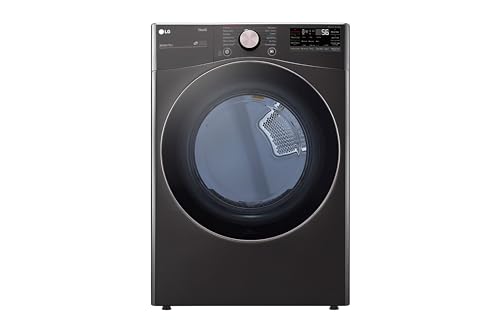
LG DLGX4001B 7.4 Gas Dryer Sensor Dry — Gas Sensor With Steam and Wi-Fi
The second gas pick is LG’s DLGX4001B: 7.4 cubic feet of ultra large capacity, with Sensor Dry, TrueSteam and Wi-Fi all named in its title. Where the GE Profile pairs its sensor with a sanitize cycle and an alloy drum, this LG pairs its sensor with steam and connectivity — the two machines are the guide’s gas fork in the road, and choosing between them is choosing which second virtue your household values after dryness judgement itself.
TrueSteam is LG’s name for its steam generation, aimed at the finishing problems: wrinkles relaxed, odors lifted, stored clothes revived without a full wash. Wi-Fi, in a dryer, earns its keep in one unglamorous way — the end-of-cycle notification that reaches the garden, the office or the upstairs, defeating the finished-load-forgotten problem that wrinkle systems then have to solve. A household that hears the alert folds promptly; a household that does not needs the wrinkle care. Connected drying is really notification drying, and it is genuinely useful.
Sensor Dry remains the headline act. On gas heat, with a 7.4 drum of mixed family laundry, the sensor’s judgement is what stands between the load and the two timer failures. The full model designation, DLGX4001B, is printed in the title — keep it for the parts and documentation file, as with every precise model in this guide.
Note the honest boundary: the title claims Wi-Fi without detailing an app ecosystem, and steam without a cycle list. Buyers for whom those specifics are decisive should read the listing’s full text before ordering; the sensor claim, which is this guide’s criterion, is stated plainly.
The Wi-Fi deserves a second, more sceptical pass, because connectivity in appliances attracts both hype and reflexive dismissal. Strip away the app-store language and a connected dryer’s durable value is the notification: the cycle-end signal delivered wherever the household actually is. Every other connected convenience is secondary to that single message, because the costliest dryer habit in any home is the finished load sitting — setting wrinkles, souring slowly, forcing a rewash that wastes the entire first cycle. A machine that taps its owner on the shoulder from the garden converts its sensor’s precision into finished laundry rather than merely finished drying. Judged on that basis, the LG’s connectivity is not a gimmick bolted onto a sensor dryer; it is the sensor philosophy extended past the drum — evidence, delivered, in time to act on it.
Strengths
Trade-offs
Best for: gas households wanting sensor judgement with steam refresh and end-of-cycle alerts. Poorly suited to: buyers who prefer their dryer entirely unconnected.
Heat-Pump Sensor Dryers (dealer-channel class) — Ventless Humidity Class
This entry is prose by design: it describes a class, not a linked listing. Heat-pump dryers dry by condensing moisture from warm recirculated air rather than venting it away, and sensing is their native discipline — a heat-pump machine lives by reading humidity, because its whole cycle is a negotiation between air, water and time. The class is sold predominantly through appliance dealers and kitchen studios, particularly in its European-made forms, which is why it appears here without a marketplace link: the verified pool for this guide held no heat-pump listing whose title made the sensor claim this page requires.
Who should pursue the class anyway? Households without any vent path — interior laundry rooms, condos with association rules, conversions where an exterior wall is simply not available. Heat-pump drying is gentle, ventless and content to run on ordinary power, at the cost of longer cycles and a purchase conversation held with a dealer rather than a delivery courier. Judge specific models at the dealer by the same rule this guide uses: ask what the machine senses, and make the seller name it.
No image, link or model number accompanies this entry, deliberately. It is a direction to research, not a product to click.
One more distinction keeps expectations calibrated. Heat-pump sensing is continuous and ambient — the machine manages a climate inside its cabinet — rather than the contact judgement a sensor bar makes against fabric. Owners describe the experience differently: loads emerge evenly, gently dry over a longer arc, and the laundry room stays free of the heat and humidity a vented machine exports when its ducting is imperfect. For flats above other flats, for rooms without exterior walls, for households whose landlord forbids ductwork outright, that climate-managed gentleness is not a compromise at all. It is the only version of tumble drying the building permits, executed by machines that sense as a way of life.
Strengths
Trade-offs
Best for: ventless laundry rooms and condo households willing to buy through a dealer. A weak match for: anyone who needs a dryer delivered this week from an online listing.
Timed Compact Dryers Without Sensor Systems — The Honest Contrast
The second prose entry is the contrast class that keeps this guide honest: compact dryers that dry by timer alone. They are not failed sensor dryers; they are simpler machines for simpler loads, and they fill the portable shelves of every marketplace. A timer cannot read a load — it executes the minutes it was given — which makes these machines predictable in cost and behaviour, and entirely dependent on the user’s judgement for their results.
There are loads where that trade is rational. Uniform cargo — the same work shirts, the same gym kit, the same cloth nappies on the same setting every day — teaches its owner the exact minutes required within a fortnight, after which a sensor adds little. Small households drying small, known loads in compact machines often live happily in this class for years, and its machines are typically the least expensive way to own any tumble drying at all. Readers on private water systems, incidentally, will find a kindred simplicity-first philosophy in our guide to Best Washers for Well Water, where matching the machine to the household’s real conditions matters more than feature counts.
The class fails where loads vary: guests, seasons, bedding weeks, the mixed family drum. If your laundry changes shape weekly, the sensor picks above exist for you. If it never changes shape at all, this prose entry may be the most money-saving paragraph in the guide.
There is even a teaching virtue in the timed class that sensor owners quietly lose. A household that must judge dryness itself learns its fabrics — which towels hold water, which synthetics surrender it, how a load’s weight in the arms predicts its minutes on the dial. That literacy transfers to every laundry decision afterwards. None of which obliges anyone to choose the harder school; but buyers who enjoy competence in domestic machinery will find the timed compact a satisfying instrument, and buyers who do not will find this guide’s four linked machines waiting above with their sensors ready.
Strengths
Trade-offs
Best for: households drying identical small loads on a reliable routine. A mismatch for: families whose drum holds a different mixture every day.
Four Linked Machines and Two Classes: The Comparison That Matters
| Entry | Fuel | Sensor claim, as titled | Second virtue |
|---|---|---|---|
| LG 7.3 Electric Dryer with Sensor Dry | Electric | Sensor Dry | Rear-control familiarity |
| Kenmore 8.0 Front Load Electric Dryer Metallic Silver | Electric | Smart Sensor Drying | Accela Steam finishing |
| GE Profile 7.4 Smart Gas Dryer with Sanitize and Sensor | Gas | Sensor Dry | Sanitize Cycle, alloy drum |
| LG DLGX4001B 7.4 Gas Dryer Sensor Dry | Gas | Sensor Dry | TrueSteam and Wi-Fi alerts |
| Heat-Pump Sensor Dryers (dealer-channel class) | Electric, ventless | Humidity-led by design | No vent required |
| Timed Compact Dryers Without Sensor Systems | Electric, compact | None — by definition | Simplicity and price |
How Does a Moisture Sensor Actually Know the Load Is Dry?
The commonest arrangement is disarmingly simple: metal sensor bars inside the drum make contact with tumbling fabric, and damp fabric conducts differently from dry fabric. The machine reads that changing signal and watches it level out; when the load’s moisture stops falling, the heat’s work is done. Other designs infer dryness from exhaust air temperature and humidity. Either way, the principle is measurement rather than estimation — the cycle’s length becomes an outcome, not an input.
Two ownership details follow. Sensor bars work best clean: fabric-softener residue and mineral film can insulate them, which is why manuals quietly advise an occasional wipe of the sensor area with a suitable cleaner. And sensors judge the load they touch — a single thick item balled inside dry clothes can hide its damp core from the bars, which is why shaking loads out before starting remains good practice even in the sensor age. The technology is excellent; it is not magic, and it rewards the same loading discipline every dryer rewards.
When Does Sensor Drying Save the Most — and When Does It Barely Matter?
Savings peak where variety lives. A family drum holding jeans, cottons, synthetics and one thick hoodie is a drying-time argument no timer can settle; the sensor settles it by reading the slowest evidence and sparing the fastest fabrics the extra heat. Energy follows the same curve: cycles end at dryness rather than at a padded estimate, so the mixed-load household stops paying to overheat dry clothes several times a week. Fabric life extends quietly in the background — heat beyond dryness is pure wear, and removing it is the gentlest thing a dryer can do for a wardrobe.
The advantage thins where loads are uniform and known. The prose entry above makes the case for timed compacts honestly: identical cargo teaches its owner the number, and a sensor confirming the same number daily adds convenience rather than transformation. Sensor value is therefore a property of your laundry’s variety, not of the machine’s price — a sentence worth rereading before paying flagship money for a drum that will only ever hold gym kit.
What Habits Make Any Sensor Dryer Perform at Its Best?
Sort by weight, not by colour alone: heavy cottons together, synthetics together, and the sensor’s reading becomes a clean signal instead of an average of arguments. Leave headroom in the drum — air must move for moisture to leave — and untangle sheets before they become a sail with a damp centre. Clean the lint filter every load, because a sensor can judge moisture perfectly while a strangled airflow doubles the time taken to act on the judgement.
Then maintain the sensor itself. Wipe the sensor bars as the manual directs, especially in softener-heavy households, and run the machine’s own diagnostic or calibration routine if it offers one after installation or a house move. Finally, trust but verify for the first fortnight: check loads at the buzzer, learn how your machine’s idea of dry maps to your household’s, and adjust the dryness level setting once, deliberately, rather than compensating forever with extra minutes.
What Goes Wrong When Buyers Shop for Sensor Dryers Carelessly?
The first error is buying the word rather than the claim: listings exist where sensor appears in search keywords but not in the product’s own title or specification, and this guide’s rule — the title must name it — exists to protect buyers from that fog. The second error is the spare-part trap: replacement moisture sensors are cheap, plentiful and utterly incapable of drying clothes, yet they surface in sensor-dryer searches dressed in similar language. The third is fuel blindness: falling for a sensor specification and discovering at delivery that the machine is gas and the laundry room is not.
Fourth, buyers underrate the second virtue. Among genuine sensor machines, the decision is made by what accompanies the sensor — steam, sanitize, connectivity, drum size, control layout — matched to the household’s real frustrations. And fifth, they forget the vent and the circuit in their excitement about the algorithm; a sensor dryer still breathes and still draws power like any other dryer, and the room must be ready for both.
How Do Sensor Dryers Treat Delicate and Technical Fabrics?
Delicates fail in dryers two ways: heat and time. Sensor systems govern the second precisely and, by ending cycles early on light loads, often soften the first as a side effect — a drum of synthetics and sports fabrics reaches dryness fast, and a sensor notices, where a timer set for the household’s average load would keep cooking them toward their average. Technical fabrics benefit most visibly: water-resistant shells whose coatings resent prolonged heat, elasticated training wear, merino layers that emerge from timed cycles feeling punished. A sensor cannot make a dryer gentle in temperature — that is the cycle selection’s job — but it can make gentleness brief, which is half the battle.
The practical method is partnership: choose the low-heat cycle for the fabric, then let the sensor choose the duration for the load. Households that adopt that division of labour report the specific satisfaction of sports kit that dries completely without the faint scorched smell that used to announce laundry day from the hallway.
What Should You Check in the First Fortnight of Owning One?
Treat the first two weeks as calibration, for the household as much as the machine. Dry your three commonest loads on the default sensor setting and check them the moment the cycle ends — seams, waistbands, towel folds, the places dampness hides. If the machine’s idea of dry runs damper than yours, raise the dryness level one step and repeat; if loads emerge hotter and crisper than needed, step down. This single deliberate adjustment, made once, replaces years of adding ten minutes out of habit.
Check the room as well as the clothes. A new sensor dryer that takes noticeably longer than its predecessor on identical loads is usually reporting an airflow problem — a crushed duct, a clogged exterior flap, a filter housing seated badly — rather than a sensing problem. The sensor measures the load; the vent decides how fast the evidence can change. Diagnose in that order and most early disappointments resolve into a straightened duct and a satisfied household.
How Does Sensor Drying Interact With Hard Water, Softeners and Scent Products?
Indirectly, but really. The sensor bars inside a drum read the world through contact, and the laundry world’s residues — softener films, dryer-sheet coatings, the mineral story hard water writes on fabric — accumulate on those bars exactly as they accumulate on everything else in the drum. Households using heavy softener routines may find a sensor’s judgement drifting over months, loads ending a touch damper than they did when the machine was new. The remedy is maintenance, not replacement: wipe the sensor area as the manual directs, and the judgement sharpens again.
There is a wardrobe angle too. Residue-heavy laundry holds moisture differently and dries less evenly, which asks more of any sensing system. Households that simplify their wash chemistry often discover their dryer — sensor or otherwise — performing as though it had been serviced, when in fact it has merely been given a cleaner signal to read.
Why Do Manufacturers Give the Same Idea So Many Names?
Sensor Dry, Smart Sensor Drying, Auto Sensor Dry, moisture sensing, predictive drying — the vocabulary multiplies because each brand trademarks its own dialect for a shared principle. The buyer’s defence is the rule this guide opened with: ignore the dialect, look for the claim. A title that names a sensing system, in whatever dialect, is making a checkable promise; a title that does not name one is making none, whatever the surrounding marketing implies. Read for the verb — does the machine sense, judge, detect? — and the badge becomes irrelevant.
That reading skill outlasts any single purchase. Dryer ranges refresh yearly, dialects multiply, and the household that shops by claims rather than badges will keep choosing well long after this guide’s four models have been succeeded by their descendants.
How Should Renters and Landlords Think About Sensor Dryers?
Rental laundry has a quiet economics: the tenant pays the energy, the landlord pays for the machine’s longevity, and both lose when loads are over-dried — the tenant in bills and wardrobe wear, the landlord in a dryer whose elements and belts age faster under padded timer cycles. A sensor dryer aligns those interests better than almost any appliance upgrade a landlord can make. Cycles end at dryness, so the machine works fewer total hours across a tenancy; tenants, including the ones who have never operated a dryer before, get acceptable results from the default setting without instruction manuals taped to the wall.
For tenants choosing their own compact machine, the calculus inverts toward the prose class: a timed compact is cheaper to buy, easier to move and adequate for a single person’s routine. The sensor premium pays best where the machine will serve varied loads for years — which describes family homes and quality rentals alike, and describes a six-month lease hardly at all.
What Does a Sensor Dryer Mean for a Household’s Weekly Rhythm?
The change is subtle enough that owners often name it only in retrospect: laundry stops requiring supervision. A timed dryer creates appointments — return in forty minutes, check, add fifteen, check again — and those appointments colonise evenings in a way households accept as normal until they stop. A sensor dryer converts the appointment into a notification, human or electronic: the load is done when it is done, and it is done properly the first time. Folding moves earlier, the second load starts sooner, and the whole week’s washing compresses into fewer, calmer sessions.
Households with children feel the compression most, because their loads are the most various and their evenings the most contested. The sensor does not merely dry clothes in such homes; it returns the half-hour that used to be spent negotiating with a timer, several times a week, indefinitely. Few appliance features can honestly claim to give a family time; this one, modestly and mechanically, does.
How Do You Read a Sensor Dryer’s Specification Without Being Misled?
Start with the title, as this guide did, and mark every claim that is actually a claim. Capacity is a claim. Fuel is a claim. A named sensing system is a claim. Then notice the adjectives doing unclaiming work — smart, intelligent, advanced — which describe a posture rather than a mechanism, and give them no weight until a named system backs them. The four linked machines here survive that reading with their sensor claims intact, in the sellers’ own words, which is exactly the standard to apply to any model you meet elsewhere.
Finish with the installation facts, because they outrank features in consequence: circuit or gas line, vent route, door swing, the height of a rear-control backsplash against your shelving. A sensor dryer installed badly dries worse than a timed dryer installed well, every week, for years. The specification that matters most is the one measured in your laundry room with a tape.
When a Sensor and a Timer Disagree: Which Should You Believe?
Every sensor household eventually meets the moment: the machine declares the load dry, and a hand plunged into the drum finds a towel core still cool and damp. Believe the hand — then diagnose the disagreement instead of abandoning the system. The usual culprit is load architecture: one dense item balled or buried, its moisture never presented to the sensor bars or the exhaust stream. The fix is mechanical, not electronic: shake the item out, redistribute the drum, run a short additional burst. The pattern to watch is frequency. An occasional disagreement after a bedding load is physics; a disagreement every load is a maintenance signal — filmed sensor bars, a furred filter, a vent run losing its argument with distance.
The reverse disagreement matters too. A sensor that keeps a load turning long past dryness is wasting the exact resource it exists to save, and its cause is usually the same short list read backwards. Clean, straighten, verify — and only then conclude the machine’s judgement, rather than its circumstances, is at fault.
What Place Does Sensor Drying Have in a Whole-Home Laundry Plan?
A dryer does not dry alone; it finishes what a washer started, and sensor value multiplies when the pair is planned together. A washer with strong spin performance hands the sensor a load whose remaining moisture is evenly distributed, which is the easiest evidence to judge. A washer with fabric-specific cycles hands over loads already sorted by temperament, which lets the sensor’s reading describe one kind of textile rather than an argument among five. Households planning a pair should therefore think of the sensor dryer as the second half of a system whose first half decides how hard the second half must think.
That systems view also disciplines the budget. Money spent duplicating intelligence — a washer that weighs and judges, a dryer that weighs and judges — buys less than money spent making each machine excellent at its own half of the work. The four linked dryers here were chosen as finishers: bring them a well-washed, well-spun load, and their sensors will do the rest with very little left to supervise.
A Brief History of How Dryers Learned to Judge
The earliest tumble dryers offered heat and hope: a dial, a duration, and a household that learned by scorched experience where the number for towels lived. Exhaust-temperature controls were the first step toward judgement, ending cycles when the outgoing air suggested the load’s moisture was spent — a proxy, but a real one. Contact moisture sensing refined the proxy into evidence, putting the measurement inside the drum against the fabric itself. The current generation, represented by the Smart Sensor language on the Kenmore and the Sensor Dry systems on the LG and GE machines here, layers level choices and fabric programmes over that evidence, so the household sets a preference — drier, damper, ready to iron — and the machine still decides when the preference has been reached.
That history explains the guide’s strict vocabulary rule. Judgement arrived in stages, and the marketplace’s language blurred every stage boundary for marketing convenience. A buyer reading titles the way this guide does — claim by named claim — is really just insisting on knowing which stage of that history a given machine actually belongs to. The four linked dryers belong to the evidence stage. That is the whole of their shared virtue, and it is enough.
Final Recommendation
Decide your fuel first, because this guide’s four linked machines split cleanly in half. Electric households choose between LG’s rear-control benchmark — sensor judgement in the classic format, nothing wasted — and Kenmore’s silver flagship, which adds steam finishing and the largest drum here to the same Smart Sensor discipline. Gas households choose between GE Profile’s sanitize-and-alloy specification and LG’s steam-and-Wi-Fi specification, both at 7.4 cubic feet, both sensor-led. Then let the two prose entries do their quiet work: if you have no vent, the heat-pump class is your real shortlist, and if your loads never vary, a timed compact may serve you honestly for years.
Above all, hold the line this guide held: a sensor dryer is a machine whose seller names its sensing in the title, in plain words, where you can point to it. Buy that sentence, and the dry clothes take care of themselves — cycle after cycle, judged on evidence, finished when they are actually done.
Frequently Asked Questions
Is Sensor Dry the same as a moisture sensor?
In the titles used here, yes in substance: Sensor Dry and Smart Sensor Drying are the manufacturers’ names for systems that judge the load’s moisture and end the cycle accordingly. This guide accepts the claim only where the listing title itself names such a system.
Why are two of the four linked picks gas dryers?
Because they earned their places on sensor merit, and their fuel is a fact to state, not a flaw to hide. Each review names the fuel in its opening lines so electric households can skip and gas households can shortlist without surprises.
Can a sensor be wrong?
It can be fooled at the margins — a balled sheet hiding a damp core, sensor bars filmed with softener residue. Good loading habits and an occasional wipe of the sensor area keep its judgement sharp; the dryness-level setting exists for households that prefer a margin.
Are replacement sensor parts worth buying to upgrade my old dryer?
No — and this guide excluded them deliberately. A replacement sensor is a spare component for a machine designed around it, not an upgrade that confers sensor drying on a timed dryer. If you want sensor drying, buy a sensor dryer.
Does sensor drying really protect clothes?
It removes the commonest source of dryer wear: heat applied after the load is already dry. By ending cycles on evidence, sensor machines spare elastic, prints and fibres the baked extra minutes that timers routinely add to mixed loads. The protection is cumulative rather than dramatic — no single cycle ruins a shirt — but wardrobes are retired by accumulation, garment by garment, and a household that removes the over-drying tax from several hundred cycles a year will notice its clothes lasting longer before it can quite say why. That slow, unglamorous dividend is the most honest promise the sensor category makes.
Related Guides
For the fuel-specific view of this same technology — sensor systems on gas heat, with moisture sensing as the organising idea — continue to Best Gas Dryers With Moisture Sensors, the live companion whose shortlist overlaps this one’s thinking from the gas side. Read together, the two guides separate the questions buyers most often tangle: what sensing does, which fuel delivers the heat, and which second virtue — steam, sanitize, connectivity, capacity — deserves the household’s money after those two are settled. Untangled, the purchase becomes a sequence of small, answerable questions instead of one large anxious one, and the machine that arrives tends to be the machine the household actually needed.


