What's inside
- Key Takeaways
- Quick Picks
- How Did We Choose These Large-Family Dryers?
- How Much Drum Does a Large Family Really Need?
- Why Do Big Loads Need a Sensor More Than Small Ones?
- How Should a Large Family Organise Drying Across a Week?
- Gas or Electric for a Family Dryer?
- What Maintenance Keeps a Family Dryer at Full Pace?
- How Does a Family Dryer Change the Washer’s Job?
- What Does the School-Week Deadline Do to Dryer Choice?
- How Do You Load a Very Large Drum Well?
- How Do the Six Large-Family Dryers Compare?
- What Mistakes Do Large Families Make When Buying a Dryer?
- Final Recommendation
- Frequently Asked Questions
- Related Guides
As an Amazon Associate I earn from qualifying purchases. This post may contain affiliate links at no extra cost to you.
cottageverdict.com is reader-supported. When you buy through links on our site, we may earn an affiliate commission.
Where to buy: each dryer below is listed on Amazon under its listing name, and for a large family the two figures that govern everything are drum capacity and the fuel your laundry room already speaks; check price on Amazon after those two are settled, because no feature rescues a dryer that is too small or plumbed for the wrong wall.
The best dryers for large families are bought by people who measure laundry in baskets per day, not loads per week. A household of five or six generates a continuous river — school clothes, work clothes, sports kit, towels that multiply mysteriously, bedding in rotation — and a dryer that cannot keep pace becomes the bottleneck around which the whole house’s mornings reorganise themselves. Capacity is therefore this guide’s first language: every pick below offers at least 7.0 cubic feet of drum, and the largest offers 8.0, because in a big household the dryer’s size is not a luxury specification but the difference between a system and a queue.
Capacity alone, though, is a crude instrument, and the second theme of this guide is judgement. Large loads are uneven loads — a drum of towels wrapped around a duvet cover dries at wildly different rates — so the sensor-equipped picks here matter as much as the big ones: a machine that reads the load’s moisture finishes the bedding properly without baking the shirts that shared the cycle. Steam appears on several picks as the large family’s pressure valve, refreshing the load that sat, sanitising where a listing claims it, and relaxing the creases that big, long loads set into themselves.
The six picks divide by fuel and by philosophy. Two LG gas models bring Sensor Dry, one with TrueSteam and Wi-Fi, the other with Wrinkle Care and a door designed for armful loading. GE fields a 7.4 gas model and the guide’s largest electric drum at 7.8 with steam and a sanitize cycle. Kenmore’s 8.0 electric tops the capacity table with its steam-and-guard pairing, and KoolMore’s 7.0 electric closes the list as the straightforward volume option. Gas picks carry the standing note of this site: a licensed professional installs them. Everything else is drum, sensor and the arithmetic of your household’s river.
Key Takeaways
- In a large household the dryer is a throughput machine: 7.0 cu. ft. is the floor here, and 7.8–8.0 cu. ft. changes bedding day entirely.
- Sensor drying matters more, not less, at scale — big mixed loads dry unevenly, and a sensor finishes them without baking the fast-drying items.
- Steam models earn their place as rescue and refresh for the loads a busy house inevitably leaves sitting.
- Gas and electric branches are both fully represented; let the laundry room’s existing connections choose, and have gas installed professionally.
- The largest drum is only an advantage if loads are actually large — right-size to your river, not to your ambitions.
- A family dryer works daily, so filter and vent discipline decide whether its second five years match its first.
Quick Picks
| Pick | Badge | Why it earns its place |
|---|---|---|
| LG 7.4 Cu. Ft. Gas Dryer with Sensor Dry and TrueSteam | Sensor and steam on gas | The listing stacks the family virtues: ultra large 7.4 cu. ft. capacity, Sensor Dry, TrueSteam and Wi-Fi, on the gas branch. |
| GE Profile 7.4 Cu. Ft. Front Load Gas Dryer | GE’s family gas machine | A 7.4 cu. ft. front-load gas dryer from GE’s Profile line in white; its listing is terse, so its case rests on capacity, fuel and the line it comes from. |
| GE 7.8 Cu. Ft. Smart Front-Load Electric Dryer with Steam | Largest electric drum, sanitize cycle | The biggest electric drum in the guide at 7.8 cu. ft., with steam and a sanitize cycle named in the listing, in a smart front-load format. |
| LG 7.4 Cu. Ft. Smart Gas Dryer with Sensor Dry | Smart gas with Wrinkle Care | The second LG gas entry states Sensor Dry, Wi-Fi, Wrinkle Care and an EasyLoad door — the loading-and-waiting problems of family laundry, addressed by name. |
| Kenmore 8.0 Cu. Ft. Electric Dryer, Metallic Silver | The capacity ceiling, with steam | The largest drum in the guide at 8.0 cu. ft., carrying Wrinkle Guard and Accela Steam, Smart Sensor Drying and an ENERGY STAR certification from its listing. |
| KoolMore 7.0 Cu. Ft. Electric Clothes Dryer, 240V | Straightforward family volume | A 27-inch, 7.0 cu. ft. front-load electric dryer at 240V — the guide’s plainest route to family capacity, with its limits stated as plainly as its size. |
How Did We Choose These Large-Family Dryers?
We set the capacity floor first and without sentiment: nothing below 7.0 cubic feet was considered, because below that line a large family splits loads, and split loads double the dryer’s working day. Above the floor, we read each listing for the features that govern big-load life — sensor drying named in the title wherever a pick claims it, steam where it is stated, and cycle evidence like a sanitize programme where a maker prints it. Specifications in the boxes below are the listings’ own; where a listing is terse, the review says what is known and declines to decorate it.
Fuel balance was deliberate. Large families exist in gas houses and electric houses, and a guide that served only one would fail half its readers, so the list carries three gas and three electric machines. The gas models’ reviews repeat the professional-installation note because at family scale the dryer is a major appliance on a major connection, and the note is part of the product. Readers whose shortlist is specifically gas-and-sensor will find the neighbouring specialism in Best Gas Dryers With Moisture Sensors, which judges that exact intersection on its own.
Noise and heat were considered as family facts. A near-daily dryer in a lived-in house is heard and felt by everyone, and a machine whose cycles drone through homework hour or warm the kitchen in August imposes a tax no specification refunds. The picks were favoured for the ordinary civilities of big appliances — balanced drums, contained sound, venting that can be routed properly — because infrastructure that annoys its household gets used reluctantly, and reluctant laundry is late laundry.
Finally, we weighted the unglamorous arithmetic of family laundry: loads per day, bedding frequency, the school-run deadline. A dryer for this reader is infrastructure, closer to a boiler than to a gadget, and the reviews judge the picks as infrastructure — by whether the river flows or dams. Gadget appeal, where a listing offers Wi-Fi, is recorded and then put in its place: useful for a forgotten-load alert, irrelevant to whether Thursday’s towels are dry.
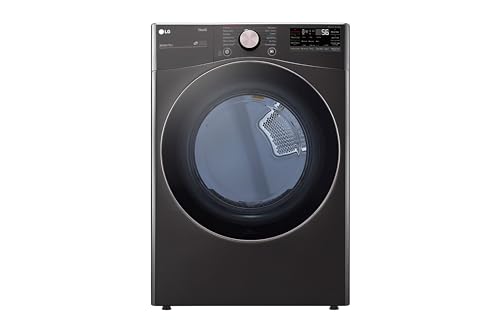
LG 7.4 Cu. Ft. Gas Dryer with Sensor Dry and TrueSteam — Sensor and steam on gas
This LG is the gas branch’s most complete answer to the large-family brief, and its listing reads like the brief itself: 7.4 cubic feet described as ultra large capacity, Sensor Dry, TrueSteam, and Wi-Fi, in a gas dryer. Start with the sensor, because at family scale it is the feature that pays daily. A drum holding a duvet cover, two sheets and a tangle of pillowcases contains several different drying rates at once; a timed cycle must choose between damp bedding and scorched pillowcases, while a sensor reads the load as a whole and keeps the heat on until the slowest citizen is dry. That judgement, repeated across a family’s thousand loads a year, is worth more than any single cycle name.
TrueSteam covers the family’s other certainty: loads will sit. A steam refresh relaxes a finished load that waited through dinner and homework, and gives the school shirts a second chance at smooth without a rewash. Wi-Fi, the listing’s third flourish, earns a measured word — its real family value is the alert that a cycle has finished, delivered to a parent who is never in the laundry room when it happens, which converts forgotten loads from a discovery into a notification. None of this replaces unloading, but in a house with six people’s laundry, notifications are a genuine management tool.
The gas foundation deserves its plain statement: this is a full-size gas appliance, installed by a licensed professional on a proper line with correct venting, and that installation is part of its cost and its safety. Households already on gas will find the exchange natural — the old gas dryer leaves, this one takes its connections and immediately works twice as intelligently. Households converting from electric should price the project honestly and weigh it against the electric picks below, whose capacities match this one without touching a gas line.
As a daily proposition, then: a drum that swallows the bedding rotation whole, a sensor that respects mixed loads, steam for the inevitable delays, and alerts for the absent-minded. If your family is large, your house is gas, and your laundry currently organises itself around the dryer’s limitations, this is the pick most likely to reverse that relationship — the machine around which the household’s river simply flows.
- Capacity from the listing: 7.4 cu. ft., ultra large capacity
- Drying: Sensor Dry
- Steam: TrueSteam named in the listing
- Connectivity stated in the listing: Wi-Fi
- Fuel: gas — licensed professional installation required
Strengths
- Sensor judgement sized for big, uneven family loads
- Steam refresh rescues loads that sit
- Wi-Fi alerts fight the forgotten-load problem
Trade-offs
- Gas line and professional installation are prerequisites
- Feature-rich tier — wasted on small households
- Steam and connectivity add systems a simple dryer avoids
Best for: large gas households whose mixed loads and delays defeat a basic dryer.
Not suited for: electric homes, or small families buying capacity they will never fill.

GE Profile 7.4 Cu. Ft. Front Load Gas Dryer — GE’s family gas machine
Some listings argue; this one simply states. The GE Profile entry in our pool gives its essentials — 7.4 cubic feet, front load, gas, white, the Profile name and its model designation — and declines to embroider. This guide respects that terseness by building the pick’s case only from what is solid: a family-scale drum on the gas branch, from the Profile tier of a maker whose laundry lines are a fixture of American homes, in the format and finish that suit a conventional family laundry room. Where the LG above sells a system, this GE sells a drum, a fuel and a badge — and for many households that is the correct purchase.
The capacity is the same 7.4 class as the LG’s, which in family terms means the bedding rotation in one load, the towel river in one load, and the mixed weekend mountain in one or two. Front-load format pairs naturally with the front-load washers large families favour, and the white finish disappears into the standard laundry room without demanding the room be designed around it. Profile, as a tier, is where GE places its more considered machines, and buyers who know the line will read that placement as the listing’s quiet feature claim.
What this review will not do is assign the GE a sensor or steam specification its listing does not print. Shoppers for whom those features are decisive should verify them on the full listing before ordering, exactly as this guide advises wherever evidence runs out — and if the verification disappoints, the LG gas pick above states its sensor case in its title. If, on the other hand, your household’s needs are the classic ones — big drum, gas heat, a maker’s line you trust, no interest in connectivity — the GE’s restraint is not a gap but a match.
The standing gas note applies in full: licensed professional installation, correct venting, no exceptions, and the household should treat that appointment as part of delivery day rather than an afterthought. Set up properly, this is the kind of dryer a family buys once and then forgets about for years, which for infrastructure is the highest available praise. Not every pick in a guide needs a flourish; some need to be the sensible machine, clearly labelled, and that is this one’s office.
- Capacity from the listing: 7.4 cu. ft.
- Format: front load gas dryer
- Line and finish from the listing: GE Profile, white
- Sensor or steam claims in the listing: none printed — verify on the full listing
- Fuel: gas — licensed professional installation required
Strengths
- Full family capacity on the gas branch
- Profile-line machine from a traditional laundry maker
- Plain proposition: drum, fuel and format, honestly stated
Trade-offs
- Listing is terse — sensor and steam must be verified separately
- Gas installation by a professional is mandatory
- No stated connectivity or refresh features
Best for: gas households wanting family capacity without a feature manifesto.
Not suited for: shoppers who need sensor drying confirmed in the title before buying.

GE 7.8 Cu. Ft. Smart Front-Load Electric Dryer with Steam — Largest electric drum, sanitize cycle
On the electric branch, this GE is the capacity leader: 7.8 cubic feet, the largest electric drum in this guide, in a smart front-load machine whose listing names steam and a sanitize cycle. Four-tenths of a cubic foot over the 7.4 class is the difference between a king duvet that fits and one that must be wrestled, between the whole family’s towels in one load and the same load plus a remainder that waits, damp, for a second run. In a large household those remainders are where laundry systems go to die, and a drum that abolishes them earns its size every week.
The named cycles suit family life with unusual precision. Steam refreshes and relaxes the loads a busy house leaves sitting — the same rescue logic as the LG’s, on the electric branch. The sanitize cycle, stated in the listing, addresses the loads families actually worry about: the bedding after a child’s illness, the sports kit that fermented in a bag, the towels of a house with a new baby. A guide that makes no health claims can still note that a maker offers a cycle named for the purpose and that family buyers consistently rank it among their reasons — the listing’s words, the households’ priorities.
Smart, in the listing’s description, places the machine in the connected generation; as with the LG, the practical dividend for a family is awareness — a finished-cycle alert in a house where the laundry room is two floors from the living — rather than any change to the drying itself. The drying itself is the drum and the cycles, and on those the GE’s case is complete: biggest electric capacity here, steam for the delays, sanitize for the crises, and no gas line anywhere in its requirements. All-electric large families should start their shortlist with this pick and make the others argue against it.
One discipline scales with the drum: a 7.8 cu. ft. capacity invites heroic loads, and heroic loads dry unevenly if they are packed rather than placed. Feed the machine in armfuls, let bulky items claim their space, and the big drum delivers the even, single-cycle results it was bought for. A family that masters that one habit will find this dryer quietly abolishes the concept of laundry day — the river simply runs through it, load by load, all week.
- Capacity from the listing: 7.8 cu. ft. — largest electric here
- Features named in the listing: steam, sanitize cycle
- Format: smart front-load electric dryer
- Finish stated in the listing: white
- Best use: maximum electric capacity for bedding and family volume
Strengths
- Biggest electric drum in the guide
- Sanitize cycle answers real family events
- Steam refresh covers the sitting-load problem
Trade-offs
- Large body needs a laundry room that fits it
- Smart features are garnish for households that ignore alerts
- Capacity wasted on households smaller than its brief
Best for: all-electric large families, especially with bedding volume and young children.
Not suited for: gas households or small families seduced by the biggest number.

LG 7.4 Cu. Ft. Smart Gas Dryer with Sensor Dry — Smart gas with Wrinkle Care
If the first LG in this guide is the steam flagship, this one is the ergonomist. Its listing states the shared foundations — 7.4 cubic feet, Sensor Dry, Wi-Fi, gas — and then names two features aimed at the physical life of family laundry: Wrinkle Care, and an EasyLoad door. The door first, because it is the feature owners touch most: family loading is armful loading, armfuls dropped from a basket held against the body, and a door designed to receive that traffic — and to let items be added or retrieved without escaping — removes a small friction that occurs a thousand times a year.
Wrinkle Care is the sitting-load answer in this model’s dialect: where its sibling reaches for steam, this one works the finished load to keep it from setting, the prevention half of the wrinkle system. For families whose loads wait in the drum through school runs and shifts, that prevention is the difference between folding and ironing, multiplied by every load of the year. Paired with Sensor Dry’s judgement — the load neither baked nor left damp — the package describes a dryer designed around the family’s actual failure modes rather than around a specification sheet’s vanity.
Choosing between the two LG gas models is therefore a genuine fork, and this guide will not pretend one is simply better. Steam refreshes and treats a load after the fact and suits households whose delays are long and whose wardrobes are crease-sensitive; Wrinkle Care prevents and suits households whose delays are moderate and whose loading is heavy and constant. Both share the sensor, the capacity and the fuel. Read your own household’s diary honestly and the fork resolves itself — a rare case of two listings describing two real, different families.
The gas note, once more, with feeling: professional installation on a proper line, correct venting, and only then the thousand easy loads. Wi-Fi setup joins the install day list for this model, and households that complete it gain the alert system that makes the whole sensor-and-care package cohere — a dryer that judges its loads, minds them while they wait, and tells you when they are ready has, in every way that matters to a parent, joined the household staff.
- Capacity from the listing: 7.4 cu. ft. smart gas dryer
- Drying: Sensor Dry
- Features named in the listing: Wrinkle Care, EasyLoad door, Wi-Fi enabled
- Finish stated in the listing: white
- Fuel: gas — licensed professional installation required
Strengths
- EasyLoad door suits armful family loading
- Wrinkle Care guards loads that wait
- Sensor Dry and Wi-Fi alerts complete the system
Trade-offs
- No steam — prevention rather than rescue for creases
- Gas installation by a professional is mandatory
- Smart features need setup to earn their place
Best for: gas families whose loads are constant, heavy and often left waiting.
Not suited for: households wanting steam rescue, or electric-only homes.

Kenmore 8.0 Cu. Ft. Electric Dryer, Metallic Silver — The capacity ceiling, with steam
The Kenmore closes the capacity argument by ending it: 8.0 cubic feet is the largest drum in this guide, and its listing wraps that drum in the feature set family life keeps requesting — Wrinkle Guard and Accela Steam against wrinkles, static and odours, Smart Sensor Drying to judge the load, and ENERGY STAR certification. In a large household, the extra space is not about any single heroic load; it is about the absence of remainders. The bedding fits. The towels fit. The mixed mountain after a holiday fits, and a laundry system without remainders is a system whose baskets empty, whose washer never waits, and whose mornings start without a damp backlog.
The sensor-and-guard pairing scales gracefully to this size. Big loads are the most uneven loads, so Smart Sensor Drying’s judgement matters most exactly here, and the Wrinkle Guard’s interval tumbling protects the finished mountain through the hours a family cannot attend it — with Accela Steam behind the Guard for the days even the guarding ran out. It is the same system our wrinkle-focused coverage examines in depth, deployed at family scale, and households that have suffered both damp remainders and creased abandonments will recognise it as the complete answer to their two standing complaints.
ENERGY STAR certification, stated in the listing, deserves its sentence in a family context: a dryer that runs daily multiplies its efficiency, good or bad, across a thousand cycles, so a certified machine’s advantage is not a gesture but a running total. The metallic silver finish is the household’s cosmetic choice — a designed laundry room wears it well — and beneath it the format is the conventional, serviceable, front-load electric machine that any installer and most repairers know intimately.
Who should not buy it? The household whose river is smaller than its drum, because a half-empty 8.0 tumbles a small load inefficiently and tempts its owners into saving up laundry — the exact habit this guide argues against. But for the genuinely large family on electric power, this is the guide’s ceiling and its recommendation in one: the most room, the fullest wrinkle system, a sensor in charge, and a certification on the running costs. If your baskets fill daily, stop measuring and start here.
- Capacity from the listing: 8.0 cu. ft. — largest in this guide
- Features from the listing: Wrinkle Guard and Accela Steam
- Drying: Smart Sensor Drying
- Certification stated in the listing: ENERGY STAR Certified
- Format: front load electric, metallic silver
Strengths
- Largest drum abolishes split loads and remainders
- Guard plus steam covers delay and abandonment alike
- ENERGY STAR certification stated for daily running costs
Trade-offs
- Oversized for households under four people
- Premium tier of its range
- Silver finish may not match an existing white washer
Best for: the largest electric households, and anyone whose loads always overflow.
Not suited for: small families, or gas-plumbed homes.

KoolMore 7.0 Cu. Ft. Electric Clothes Dryer, 240V — Straightforward family volume
Every guide needs its plain option, and the KoolMore is this one’s: a 27-inch front-load electric dryer, 7.0 cubic feet, 240V, described by its listing as large capacity and intended for home laundry, in white. No sensor is claimed in the title, no steam, no connectivity — the listing offers a drum, a format and a fuel, at the capacity floor this guide set, for households whose decision is primarily about volume on a conventional electric circuit. There are more such households than feature marketing admits, and they deserve a pick reviewed on its own terms.
Those terms are these. Seven cubic feet is a real family drum: the bedding rotation fits, the towel load fits, the ordinary week flows without splitting. The 240V specification means a proper dryer circuit and full-size drying power — this is not a compact in disguise — so cycle pace is the conventional one, and the machine’s work is limited by its owner’s habits rather than by its outlet. A household migrating from an elderly basic dryer of similar size will find the KoolMore the least disruptive upgrade in this guide: same connections, same format, more room.
The honesty paragraph, as this pick’s readers deserve: without a stated sensor claim, the burden of not over-drying falls on cycle choice and the owner’s attention, and without steam or a guard feature, loads that sit will crease as loads have always creased. Families whose schedules are chaotic should weigh the Kenmore or the GE electric above, whose systems forgive that chaos. Families with a reliable laundry rhythm — loads dried, unloaded and folded in sequence — will find the KoolMore’s simplicity a fair trade for its tier, and its drum entirely adequate to their river.
Judge it, finally, as infrastructure bought on a budget of attention rather than of features: it asks the household to supply the judgement that the sensor models automate. Some households prefer exactly that bargain, distrusting electronics and valuing a machine any repairer understands. For them, and for landlords equipping a family rental with honest capacity, the KoolMore is the guide’s closing pick and a respectable one — the floor of the category, clearly labelled, doing the category’s essential job.
- Capacity from the listing: 7.0 cu. ft., 27-inch front load
- Electrical stated in the listing: 240V electric
- Sensor or steam claims in the listing: none printed
- Finish stated in the listing: white
- Best use: family volume on a conventional dryer circuit
Strengths
- Full family capacity on a standard 240V circuit
- Simple, conventional machine — easy to place and service
- Least disruptive upgrade from an older basic dryer
Trade-offs
- No sensor drying claimed — owner judgement required
- No steam or wrinkle-guard features stated
- Sits at the guide’s capacity floor, not above it
Best for: households with a steady laundry rhythm wanting plain family volume.
Not suited for: chaotic-schedule families who need a dryer that forgives.
How Much Drum Does a Large Family Really Need?
Translate cubic feet into your own laundry before trusting any recommendation, including ours. A family’s bedding set — duvet cover, sheets, pillowcases — is the load that exposes undersized drums, because it must tumble as a mass that can unfold; if your current dryer forces that set into two runs, you need the 7.8 or 8.0 end of this guide. The towel river is the second test: count a full bathroom reset, and if it overflows your drum’s comfortable looseness, the same conclusion follows. Ordinary clothing loads, by contrast, fit almost any pick here — it is the bulky minority of loads that should size the machine, because those are the loads that cannot be split gracefully.
The opposite error exists and costs quietly. A drum far larger than the household’s loads tumbles small washes inefficiently and seduces owners into hoarding laundry until the drum is worth running — converting a daily river into a weekly dam that then takes all day to clear. Households of four sit happily at 7.4; households of six with bedding volume belong at 7.8 to 8.0; households in between should count their bedding, not their people, and choose accordingly. The right drum is the one your largest weekly load fills to looseness, no more and no less.
Why Do Big Loads Need a Sensor More Than Small Ones?
A small load is nearly homogeneous — five shirts dry together and finish together. A family load is a parliament of fabrics: the duvet cover still exhaling moisture long after the pillowcases are crisp, the towels drinking time the T-shirts do not need. A timed dryer must betray someone in that parliament, ending early for the bedding’s sake or late for the shirts’. A sensor dryer reads the assembly’s actual state and keeps faith with all of it, which is why this guide treats Sensor Dry — stated on both LG models and, in its Smart Sensor form, on the Kenmore — as a family feature first and an efficiency feature second.
The downstream effects compound across a year. Less over-drying means family clothing lasts longer at exactly the sizes children are growing out of on schedule anyway; less under-drying means no load returns for a second pass, which is where a big household’s dryer queue doubles. When a family’s dryer works one load in seven twice, it has effectively shrunk by a seventh — a capacity loss no specification sheet mentions. Sensor judgement is how the big drums in this guide keep their size honest in practice rather than only in the listing.
How Should a Large Family Organise Drying Across a Week?
Systems beat heroics. The households that cope best run a standing rotation rather than a weekly mountain: bedding on a fixed day, towels midweek and weekend, clothing in daily or near-daily loads that keep the river shallow. A large drum supports the rotation by absorbing each category whole — no category waits for a partner load to justify a cycle — and a sensor supports it by making each category’s cycle exactly as long as it needs to be. The dryer’s job in such a system is not speed but reliability: it must simply always be ready, empty and working, which is a maintenance standard as much as a purchase.
Deadlines deserve their own rule: the load that is needed at a fixed hour — uniforms, kit, the Friday shirt — is dried the day before it is needed, never the morning of. Large families learn this after exactly one disaster, and a dryer with alerts or a guard feature softens the lesson, but the rule itself is free and outperforms every feature in this guide. Build the rotation, dry tomorrow’s deadline today, and the biggest household’s laundry becomes the dullest subject in the house, which is the precise definition of success.
Gas or Electric for a Family Dryer?
Let the house decide, as this guide advises in every category, but at family scale the stakes of the decision grow with the load count. A gas line already at the laundry position makes the gas picks natural citizens, with the licensed-installation appointment as their one ceremony; an all-electric house loses nothing that matters, since the electric branch here carries the guide’s two largest drums and its fullest wrinkle system. What a family should not do is renovate fuel infrastructure for a dryer’s sake — the money and disruption belong to the house’s long-term plan, not to a single appliance, however hardworking.
Running-cost comparisons between fuels are local arithmetic — your tariffs, your climate, your load count — and this guide will not invent figures for them. The structural points are stable: a family dryer runs near-daily, so small per-load differences accumulate into real annual ones, and features that shorten or right-size cycles, sensors above all, pay their way faster in a family than anywhere else. Choose the fuel by the wall and the tariff; choose the machine by the drum and the sensor; and let the finish be the only decision made on taste. Readers furnishing the rest of a family house with the same fit-the-room discipline will enjoy Best 110V Hot Tubs, where a very different appliance is chosen by exactly the same method of honest measuring.
What Maintenance Keeps a Family Dryer at Full Pace?
A family dryer is a high-hour machine, and its pace in year five is set by habits in year one. The lint filter is the daily one: at family load counts it fills completely, and a filmed or clogged filter stretches every cycle, which in a queued household is a tax on the whole day. Clean it every load — assign it, in a family, as a named person’s standing job, because unowned maintenance is undone maintenance. The vent path is the seasonal one: a long or crushed vent quietly converts a large dryer into a slow one, and slow, at family scale, means a second dryer queue forming behind the first.
The drum and door deserve a monthly minute: a wipe for the residue that family loads deposit, a check of the seal, a listen for new sounds while the machine is young enough for them to mean something. Washer care belongs in the same ritual, since the dryer’s loads are only as good as the washer’s spin and cleanliness — the high-efficiency pairing logic of Best HE Top-Load Washers applies to the laundry room as a whole, not to one machine. None of this is skilled work. It is the rent a family pays for a river that never dams, and it is cheaper than any repair.
How Does a Family Dryer Change the Washer’s Job?
A dryer this size quietly re-specifies the washer beside it. Loads are now sized by the dryer’s drum, spins matter more because a well-spun load shortens the big drum’s work, and the washer’s own capacity becomes the river’s real source — a family that upgrades the dryer alone often discovers the washer was the narrower gate all along. Plan the pair as one system across a few years if replacing both at once is not possible: dryer first if drying is the visible queue, washer first if loads are being split before they ever reach the heat.
The pairing has a gentler side too. A sensor dryer forgives a washer’s uneven loads; a good washer’s spin forgives a dryer’s full drum; steam in the dryer rescues what a delayed washer load creased. Large families live inside these compensations daily, which is why this guide keeps returning to the system rather than the single machine. The six picks are six ways of holding up the drying end of that system — choose the one whose strengths cover your washer’s and your household’s weaknesses, and the whole laundry room rises with it.
What Does the School-Week Deadline Do to Dryer Choice?
Family laundry has a tyrant the specification sheets never mention: the deadline. Kit is needed at seven, uniforms at seven-thirty, and the shirt for the school photograph cannot be the one still damp at dawn. A large family’s dryer is therefore judged, in practice, by its worst morning rather than its average load — and the features that govern worst mornings are the unglamorous ones in this guide: a drum big enough that nothing waits, a sensor honest enough that nothing needs a second pass, and, on the steam and guard models, a rescue for the load that was forgotten until the alarm clock.
Households should buy for that morning deliberately. If your family’s deadlines are daily and unforgiving, the forgiveness features are not garnish — they are the product, and the steam Kenmore or the steam GE, or the guarded LG on gas, earns its tier on the first rescued school day. If your deadlines are soft and your laundry is run by a person who enjoys running it, the plainer picks serve perfectly. The mistake is to buy for the average Tuesday and discover, on the worst Thursday of term, which machine you actually needed.
How Do You Load a Very Large Drum Well?
Size tempts two errors. The first is packing: a drum filled to its seams cannot tumble, and a load that cannot tumble dries as a damp-centred ball regardless of the sensor’s intelligence — fill to looseness, where items still fall as individuals, even when the basket insists there is room for one more towel. The second error is the opposite vanity, running the great drum for a handful of socks because it is there; batch the smalls into the next real load and let the machine work at its designed scale.
Feeding technique matters at this size: armfuls placed, not thrown, with bulky items given their unfolding room first and smaller items distributed through them, so the load begins as a mixture rather than a layer cake. Zip the duvet cover, turn the pillowcases out, shake the sheets once as they go in — ten seconds of craft that a sensor then multiplies across the whole cycle. A large drum rewards the household that loads it like a system and punishes, with damp cores and second passes, the one that loads it like a bin.
How Do the Six Large-Family Dryers Compare?
| Pick | Specification as listed | Where it fits best |
|---|---|---|
| LG 7.4 Cu. Ft. Gas Dryer with Sensor Dry and TrueSteam | 7.4 cu. ft. gas, Sensor Dry, TrueSteam, Wi-Fi | The complete gas answer for big families |
| GE Profile 7.4 Cu. Ft. Front Load Gas Dryer | 7.4 cu. ft. gas, GE Profile, white | The traditional gas family dryer |
| GE 7.8 Cu. Ft. Smart Front-Load Electric Dryer with Steam | 7.8 cu. ft. electric, steam, sanitize cycle | Maximum electric capacity with family cycles |
| LG 7.4 Cu. Ft. Smart Gas Dryer with Sensor Dry | 7.4 cu. ft. gas, Sensor Dry, Wrinkle Care, EasyLoad door | The ergonomic gas pick for busy families |
| Kenmore 8.0 Cu. Ft. Electric Dryer, Metallic Silver | 8.0 cu. ft. electric, Wrinkle Guard + Accela Steam, ENERGY STAR | The capacity ceiling with the full wrinkle system |
| KoolMore 7.0 Cu. Ft. Electric Clothes Dryer, 240V | 7.0 cu. ft. electric, 240V, no sensor claim in listing | Plain family volume at the category floor |
What Mistakes Do Large Families Make When Buying a Dryer?
The first mistake is sizing to the average load instead of the decisive one. Clothing fits anywhere; bedding and towels decide the drum, and a family that buys for its Tuesdays will split its Saturdays forever. Count the bulky loads, choose for them, and let the ordinary loads enjoy the room.
Second, treating fuel as a preference before checking the wall. Households fall for a gas model with no gas line, or overlook that their electric circuit is already perfect for the largest electric drums. The wall speaks first; the shortlist forms after it has spoken, and the installation — licensed and professional for gas — is booked with the same seriousness as the purchase.
Third, ignoring the sensor question at scale. A timed dryer in a small household is a foible; in a large one it is a daily tax of second passes and over-baked shirts, because big loads are uneven loads. Families should weight sensor drying as heavily as capacity, and where a listing does not state it — as with the GE Profile and KoolMore here — verify it or consciously accept its absence.
A fifth mistake is buying the flagship for a household that will never open its features. Wi-Fi unconfigured, steam unused, cycles left on one default — a premium machine run as a basic one is a basic machine at a premium price. Families should buy the tier their habits will actually operate, which is why this guide keeps a plain pick and a terse pick in honourable positions: used fully, they beat a flagship used barely.
Fourth, letting the new dryer inherit the old one’s neglect. A family machine’s filter, vent and drum care are a rota, not a hope; assign them, or the thousand-load year will slow the machine to the pace of the one it replaced. The river dams at the filter more often than at the drum.
Final Recommendation
Resolve it by wall and by bedding. Gas families choosing between the two LGs take steam and refresh in the first, or Wrinkle Care and the loading door in the second, with the GE Profile as the plain traditional alternative. Electric families start at the GE 7.8 for its drum and sanitize cycle, step up to the Kenmore 8.0 for the fullest capacity and wrinkle system, and consider the KoolMore when the household’s rhythm is steady and its priorities are volume and simplicity. Every pick here clears the family’s first bar — a drum the river fits — and the differences above that bar are about how much judgement and forgiveness you want the machine to supply.
Our recommendation for the most large families is the Kenmore 8.0 electric: the biggest drum, a sensor in charge, steam and guard behind it, and certification on the costs of a machine that will run nearly every day of its life. A family dryer succeeds when nobody in the house thinks about it, and this is the pick most likely to disappear into the household’s background — leaving only dry bedding, folded towels and mornings that start on time. In a house where the laundry basket refills by return of post, that disappearance is not a small thing — it is the whole purchase, delivered daily, in the only currency a large family truly trades in: unhurried mornings and empty baskets at the end of every single day of the school week, all term, all year, without the household once having to think about the machine that made it all possible in the first place, day after ordinary day.
Frequently Asked Questions
Is 7.4 cu. ft. enough for a family of six?
For clothing and towels, comfortably; for the full bedding rotation in single loads, it depends on your bedding’s bulk. A family of six with king bedding and a weekly full-house linen change should look at the 7.8 GE or the 8.0 Kenmore, where the decisive loads fit whole. Count your largest weekly load, not your headcount — the load is the specification that matters.
Why do several picks here run on gas?
Because many family homes are plumbed for gas drying, and at family load counts the fuel is a real household economy rather than a detail. The guide balances three gas and three electric picks so the wall, not the article, makes the choice. Every gas model requires installation by a licensed professional, with correct venting — treat that as part of the purchase, not an optional extra.
Does a sanitize cycle matter for a family dryer?
It is the cycle families ask about after the first childhood illness or the first forgotten sports bag, and the GE electric states one in its listing. This guide makes no health claims; it simply notes that a maker offers the programme and that households with young children consistently value it. If that is your household, the feature is a legitimate reason to favour that pick.
Sensor Dry or a bigger drum — which matters more?
Buy the drum that fits your decisive loads first, because no sensor enlarges a drum; then, among drums that fit, take the sensor every time. A big timed drum still splits its loyalty on mixed loads, while a sensor in an adequate drum finishes everything properly. The top picks here refuse the dilemma by offering both, which is why they top the guide.
How long should a family dryer last?
This guide will not invent a number of years for any model, because listings do not state one and honesty about lifespan is a range of habits, not a figure. What can be said: a family dryer runs near-daily, so its life is measured in loads, and the households that clean filters every load, keep vents clear and avoid chronic overloading are the ones whose machines reach the far end of their design life. Buy the drum and sensor you need; then keep the rota.
Can a large family use a dryer without a sensor?
Yes — the KoolMore and, on its terse listing, the GE Profile serve exactly those households — provided the family’s rhythm supplies the judgement instead: loads checked rather than assumed, mixed loads given their full time, bedding not asked to share with shirts. It is a workable bargain where a reliable person runs the laundry. Where the laundry runs itself between other duties, the sensor models forgive more and are worth their tier.
Related Guides
The loads these drums exist for are gathered in our guide to Best Bath Sheets and Large Towels, where the largest towels and bath sheets are judged by how well they survive — and fill — a family-scale laundry like the one this article describes.


