What's inside
- Key Takeaways
- Quick Picks
- How Did We Choose These Gentle Dryers?
- Why Do Clothes Shrink in the Dryer at All?
- How Does Sensor Drying Protect a Wardrobe in Practice?
- Which Fabrics Shrink Most, and How Should You Sort for Drying?
- What Is the Gentlest Routine for Knitwear and Favourite Cotton?
- What Should You Do With Clothes That Have Already Shrunk?
- How Can You Test a New Dryer Before Trusting It With Favourites?
- What Role Does the Washer Play in Whether Clothes Shrink?
- How Should Small-Space Dwellers Dry Delicates Without a Full-Size Machine?
- How Do the Six Gentle-Drying Options Compare?
- What Mistakes Shrink Clothes Even in a Good Dryer?
- Final Recommendation
- Frequently Asked Questions
- Related Guides
As an Amazon Associate I earn from qualifying purchases. This post may contain affiliate links at no extra cost to you.
cottageverdict.com is reader-supported. When you buy through links on our site, we may earn an affiliate commission.
Where to buy: Amazon stocks the dryers below under their listing names, and in this category the honest reading order is sensor first, capacity second, because what protects your clothes is a machine that stops when they are dry rather than one that cooks them on a timer; check price on Amazon after you have confirmed the drying logic, not the drum size, suits your wardrobe.
The best clothes dryers that don’t shrink clothes begin with a confession this guide will repeat until it sticks: no dryer can promise that nothing will ever shrink. Shrinkage lives in the fibres themselves — cotton relaxes and tightens, wool felts under heat and agitation, and a hot enough cycle will defeat any machine ever built. What a well-chosen dryer can do is remove the two causes you control: excessive heat and excessive time. A dryer that senses moisture and stops at dry, on a low temperature, gives your clothes the gentlest mechanical drying available, and that is the honest version of this article’s title.
That is why the picks below are organised around drying logic rather than drum size. The full-size LG leads with Sensor Dry in its very name, because moisture sensing is the single most protective technology in this category. The compact Effidry and the little KimPump earn their places from the opposite direction — low wattage means low heat, and small loads of delicate clothing are exactly where shrinkage disasters happen. The KoolMore contributes a large, roomy drum, discussed candidly below, and two further places are given to full-size sensor-dry ranges from major makers that we describe in prose, because their listings in our verified pool were not clean enough to link and we will not invent one.
Your habits complete the system, and this guide teaches them alongside the machines: sorting by fibre, choosing the low-heat cycle even when it is slower, pulling knits out slightly early, and respecting the care label as the final authority. A reader who adopts those habits with a mediocre dryer will shrink less than a careless reader with the best machine here. Buy the machine that makes the habits easy, then keep the habits.
Key Takeaways
- No dryer can guarantee zero shrinkage; the honest goal is removing excess heat and excess time, the two causes you control.
- Moisture sensing is the key protective feature — the LG pick carries Sensor Dry in its name, and the prose-only ranges are chosen for the same logic.
- Low wattage means gentle heat: the 600W KimPump and the 1050W Effidry suit the small, delicate loads that shrink first.
- A roomy drum helps clothes move freely instead of baking in a compressed ball, which is the KoolMore’s contribution here.
- Care labels outrank every machine: a garment marked do-not-tumble-dry does not belong in any pick in this guide.
- Pulling knits and cotton jersey out while faintly cool-damp, then airing them flat, prevents most real-world shrinkage.
Quick Picks
| Pick | Badge | Why it earns its place |
|---|---|---|
| LG 7.3 Cu. Ft. Electric Dryer with Sensor Dry | Sensor Dry as the headline act | The listing puts Sensor Dry in the title because it is the point: a full-size dryer that stops at dryness instead of baking on a timer. |
| KoolMore 7.0 Cu. Ft. Electric Clothes Dryer, 240V | Roomy drum, honest limits | A large 7.0 cu. ft. front-load drum at 240V; its contribution here is space for loads to tumble freely, and we are candid that its listing does not claim sensor drying. |
| Effidry S3 Compact Clothes Dryer, 110V | Low wattage, small delicate loads | A 1.0 cu. ft. compact running at 110V and 1050W with a stainless drum and eight drying modes — gentle heat for the loads that shrink first. |
| KimPump Portable Clothes Dryer, 600W | The gentlest heat here | Six hundred watts, dual heat modes and a timer in a travel-sized body — the lowest-heat drying in this guide, for delicates, RVs and small apartments. |
| Samsung Full-Size Sensor-Dry Ranges (prose-only) | Prose-only: major sensor-dry range | Samsung’s full-size dryer ranges are widely built around sensor drying; described qualitatively here because our verified pool held no clean listing to link. |
| GE Full-Size Sensor-Dry Ranges (prose-only) | Prose-only: traditional maker, sensor lines | GE’s full-size ranges likewise include sensor-dry models in family capacities; included qualitatively under the same no-clean-listing rule. |
How Did We Choose These Gentle Dryers?
We ranked drying logic above everything. A moisture sensor that ends the cycle at dryness attacks shrinkage at its root, because the classic disaster is not the first twenty minutes of heat but the extra twenty a timer adds after the clothes are already dry. Listings that named sensor drying went to the front of the queue; listings that offered only timed heat had to justify themselves another way, through low wattage, small-load specialisation or drum room, and two of them did. Everything quoted in the spec boxes — capacity, voltage, wattage, drum material, mode counts — comes from the listings themselves.
Two places are deliberately prose-only. The full-size sensor-dry ranges from Samsung and GE are, in general terms, exactly the kind of machines this guide exists to recommend, but our verified pool did not contain a clean, linkable listing for them at the time of writing, and our rule is absolute: no verified listing, no link, no invented model number. They are described qualitatively below so you can recognise the right specification when you shop, and the linked picks remain the ones we can stand behind precisely.
Fabric-care scope was kept deliberately narrow. This guide makes no health claims and treats shrinkage purely as a question of garment fit and longevity, because that is the question readers actually bring to it. Where a garment matters for reasons beyond fit — a uniform that must meet a standard, a child’s clothes being passed between siblings — the same protective logic applies with even more force, since a size lost is a garment lost to the household entirely.
We also policed our own language. You will not find a promise in this article that a garment cannot shrink; you will find mechanisms, temperatures described in words rather than invented figures, and habits. Readers who want the neighbouring virtue — clothes that come out smooth as well as unshrunk — should continue to Best Dryers With Wrinkle Guard, where the same sensor generation of machines is judged on its wrinkle-prevention cycles instead.

LG 7.3 Cu. Ft. Electric Dryer with Sensor Dry — Sensor Dry as the headline act
This LG is the most direct answer to this guide’s question that a listing can give. Its name states its capacity — 7.3 cubic feet, ultra large by the listing’s own description — its rear-control layout, its electric format and, in the position of honour, Sensor Dry. Moisture sensing changes the moral character of a dryer cycle: instead of a clock deciding when your clothes have had enough, the machine measures the load itself and ends the heat when dryness arrives. The over-drying that tightens cotton fibres and sets shrinkage simply has less opportunity to happen.
Capacity plays a supporting role that should not be undersold. In a 7.3 cu. ft. drum, a normal family load tumbles as individual garments through moving air rather than rotating as a compressed wad, and even tumbling means even drying, which means the sensor’s verdict applies to the whole load instead of to the dry outer layer of a ball whose centre is still damp. Owners upgrading from a small, timed dryer notice two things at once: cycles that end sooner than the old timer allowed, and knitwear that keeps its size across a season of washing.
Use it as its designers intended and it rewards you. Run delicates and shrink-prone cotton on the low-temperature sensor programmes rather than the hottest workhorse cycle, resist the habit of adding a timed top-up just to be sure, and take knits out promptly at the signal. The machine’s contribution is judgement; yours is not overriding it. For a household replacing a dryer specifically because the old one kept eating jumpers, this is the pick whose listing answers the complaint in so many words.
One boundary deserves stating in its own review, as it does in the whole guide: Sensor Dry protects against the dryer’s contribution to shrinkage, not against a care label. A wool garment marked for flat drying will still felt if tumbled hot in this or any machine, because the fibre’s behaviour under heat and agitation is physics, not a settings problem. What the LG removes is the accidental, unnecessary heat — the over-run, the over-bake — and in real wardrobes that accidental heat is responsible for most of the shrinkage people actually experience.
Running costs follow the same logic in miniature. A cycle that ends when the load is dry uses less energy than a timer’s fixed allowance, so the protective behaviour and the economical behaviour are the same behaviour — a point worth making to any household member who reaches for the longest setting out of thrift anxiety. Over a dryer’s life, the sensor’s savings in electricity and in un-shrunk clothing point in the same direction, which is more than can be said for most appliance features that promise to pay for themselves.
- Drying logic from the listing: Sensor Dry
- Capacity from the listing: 7.3 cu. ft., ultra large capacity
- Format: electric dryer, rear control
- Colour stated in the listing: white
- Best use: family loads where over-drying is the shrinkage risk
Strengths
- Sensor Dry named in the listing — the core anti-shrink technology
- Large drum lets loads tumble loosely and dry evenly
- Full-size electric format suits plumbed laundry rooms
Trade-offs
- Full-size machine — no help to dorm or studio readers
- Sensor protection still depends on choosing low-heat programmes for delicates
- Cannot override a care label: some garments must never be tumbled
Best for: families whose current timed dryer over-dries and shrinks everyday cotton and knits.
Not suited for: anyone seeking a written guarantee that nothing can ever shrink.

KoolMore 7.0 Cu. Ft. Electric Clothes Dryer, 240V — Roomy drum, honest limits
Candour first: the KoolMore’s listing does not use the words sensor or moisture anywhere, and this guide will not pretend otherwise. What it states is a 27-inch, 7.0 cu. ft. front-load electric dryer at 240V, described as large capacity and intended for home laundry. Its place in a shrinkage guide rests on one physical truth and one piece of advice. The truth: clothes dried in a drum with room to move dry more evenly and finish sooner than clothes packed tight, and sooner means less total heat exposure. The advice: in a machine without a headline sensor claim, the owner’s cycle choice carries the whole burden, so the low-heat settings become your protection and your discipline matters more.
Why include it at all? Because many households shopping this category will buy on capacity and price tier and then ask how to protect their clothes, and the honest answer is that a big, simple dryer plus good habits beats a small, clever dryer used carelessly. The KoolMore’s drum swallows family loads whole — bedding, towel batches, the weekly cotton mountain — and a load that fits properly is a load that dries evenly, which is half the shrinkage battle in practice, and the half most often lost in the basket before the cycle even starts. Pair it with the sorting and low-heat habits taught in this guide’s later sections and it serves a careful household well.
The 240V specification is worth noting for installation honesty: this is a full-power, plumbed-laundry-room machine, wired like a conventional electric dryer, not a plug-anywhere compact. Readers whose homes cannot support that should look at the two small picks below instead, which trade capacity for ordinary-outlet convenience and inherently gentler heat. The KoolMore is the traditional end of this guide — the big white box, bought for volume — included with its limitation stated in daylight so that nobody buys it expecting a sensor its listing never promised.
In daily use, then, the routine writes itself: sort shrink-prone items out of the hottest loads entirely, dry family cotton on moderate settings, and check the load rather than trusting any timer blindly for the first month until you know how the machine behaves with your wardrobe. That apprenticeship is the real price of a non-sensor machine, and owners who pay it report the same outcome as sensor owners — clothes that fit in December as they did in September — earned by attention instead of electronics.
That apprenticeship has one more chapter: learn the machine’s sounds and smells of doneness. A load tumbling dry sounds lighter and ticks less against the drum; a load still shedding moisture feels cool and heavy when you crack the door at the three-quarter mark. Owners who build that sense stop needing to choose between damp and over-done, because they can audit the machine’s progress with their hands. It is an old laundress’s skill running on a modern appliance, and households that recover it rarely shrink anything that matters again.
- Capacity from the listing: 7.0 cu. ft., 27-inch front-load format
- Electrical stated in the listing: 240V electric
- Sensor claim in the listing: none — stated here for honesty
- Colour stated in the listing: white
- Best use: large family loads dried with owner-chosen low heat
Strengths
- Large drum gives loads room to tumble and dry evenly
- Conventional 240V full-size format for laundry rooms
- Simple proposition: capacity and straightforward drying
Trade-offs
- No sensor drying claimed in the listing — discipline required
- Needs a proper 240V dryer circuit, not a wall socket
- Least specialised for delicates of the linked picks
Best for: high-volume households willing to manage heat settings attentively.
Not suited for: set-and-forget owners who want the machine to judge dryness for them.
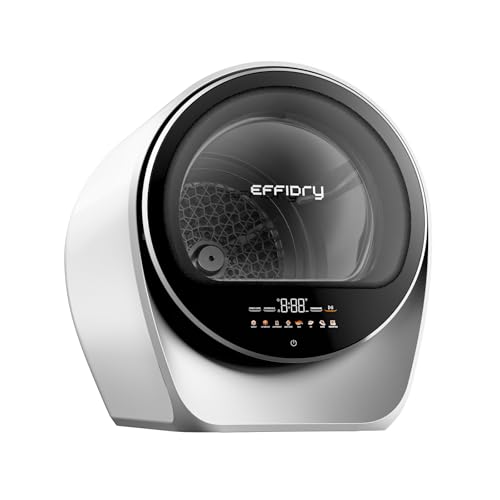
Effidry S3 Compact Clothes Dryer, 110V — Low wattage, small delicate loads
Shrinkage disasters are disproportionately small-load events: the favourite jumper, the good cotton shirts, the baby clothes that came back doll-sized. The Effidry S3 is built precisely at that scale. Its listing states a 1.0 cu. ft. capacity, 110V and 1050W power, a stainless steel drum and eight drying modes, aimed at small spaces, apartments and dorms. The wattage is the gentle-drying argument in numerical form: a compact dryer drawing about a kilowatt simply cannot blast a load with the ferocity of a full-size heating element, and for delicate smalls that ceiling on heat is protection you do not have to remember to select.
Eight modes in a machine this size is a generous spread, letting you separate the quick refresh of synthetics from the slow, low treatment of cotton knits rather than running everything on one compromise setting. The stainless drum is the right material for the job too — smooth, kind to fabrics, and easy to wipe clean of the lint that small dryers concentrate. In a dorm or a studio, where the alternative is a heated rail or a laundromat’s industrial heat, a machine like this returns control over exactly the garments people care most about.
The limits are the format’s own. One cubic foot is a few garments at a time, not a family wash; cycle times stretch because low power is the point; and anyone hoping to dry bedding here will be disappointed by physics. Treat the Effidry as a delicates instrument that also handles everyday smalls, and it is excellent. Treat it as a household’s only dryer and it will be overwhelmed — a distinction this guide draws for every compact pick, because mismatched expectations, not weak machines, cause most returns.
There is also a wardrobe-economics point in its favour. The garments most ruined by shrinkage are usually the most expensive per item in the wash — knitwear, fitted cotton, anything with a shape to lose. A small, gentle dryer dedicated to those pieces can justify itself on saved jumpers alone, while the household’s towels and sheets go wherever they have always gone. Readers assembling a two-tier laundry — gentle machine for the precious, anything for the rest — will find this the natural centre of the gentle tier.
- Capacity from the listing: 1.0 cu. ft. compact
- Power stated in the listing: 110V, 1050W
- Drum: stainless steel
- Modes stated in the listing: 8 drying modes
- Intended spaces in the listing: small spaces, apartments, dorms
Strengths
- Low wattage caps heat at a gentle level by design
- Eight modes separate delicate loads properly
- Stainless drum is smooth against fabrics
Trade-offs
- One cubic foot — a few garments per cycle
- Low power means longer drying times
- Not a whole-household dryer for family laundry
Best for: apartment and dorm residents protecting knitwear and small delicate loads.
Not suited for: families needing to dry full weekly loads in one machine.

KimPump Portable Clothes Dryer, 600W — The gentlest heat here
The KimPump takes the low-power argument to its conclusion: 600 watts, stated plainly in its listing, with dual heat modes, a timer, and touch and remote control, in a compact body pitched at travel, RVs and apartments. At that wattage the machine is closer in spirit to a warm cabinet than to a conventional tumble dryer’s blast, and for the most shrink-anxious loads in a wardrobe — the knit you love, the cotton with a perfect fit, the travel clothes you cannot replace on the road — that gentleness is the entire value proposition.
Dual heat modes matter because even gentle drying has degrees: the lower mode for the truly delicate, the higher for small cotton loads that need a little more persuasion. The timer, which in a full-size machine is the villain of this guide, behaves differently at 600 watts — the cost of a few extra minutes is small when the heat itself is mild, though the discipline of checking rather than over-running still applies. Touch and remote control sound like garnish until the machine is sitting on a shelf or in an RV corner, at which point not climbing to reach its panel becomes a daily convenience.
Nobody should mistake this for a family dryer. It dries a few items at a time, slowly, and its natural loads are the ones listed in its own pitch: travel clothing, RV laundry, the small delicate stream of an apartment household. Within that remit it solves a real problem — the laundromat dryer on its one brutal setting has shrunk more holiday wardrobes than any machine in history — by giving travellers and small-space dwellers a heat level that respects clothes. Bought for that job, it is not a compromise at all.
It also pairs intelligently with the way careful people already launder. Wash the precious things, give them a short, low KimPump cycle to take the chill and most of the moisture out, then finish them flat or on a hanger in moving air. That hybrid routine — machine for the bulk of the water, air for the final stretch — is the single most reliable anti-shrink method this guide can teach, and the KimPump’s mild heat makes it the safest machine here to practise it with.
- Power stated in the listing: 600W compact dryer
- Heat: dual heat modes
- Controls: timer, touch and remote control
- Intended uses in the listing: travel, RV, apartment, indoor use
- Best use: a few delicate items at a time
Strengths
- Lowest heat in the guide — inherently gentle on fibres
- Dual modes separate truly delicate loads from small cottons
- Travel-sized body with remote control convenience
Trade-offs
- Very small batches only, and slow by full-size standards
- Cannot serve as a household’s main dryer
- Timer-based — the checking habit still applies
Best for: travellers, RV owners and delicates-first apartment laundry.
Not suited for: anyone expecting to dry a family wash in an evening.
Samsung Full-Size Sensor-Dry Ranges (prose-only) — Prose-only: major sensor-dry range
This place is held for a type of machine rather than a linked product. Samsung’s full-size dryer ranges are, as a line, strongly associated with sensor-based drying — the same moisture-judging logic this guide recommends — offered in large family capacities in both electric and gas formats. We describe the range in prose because our verified pool contained no listing for it that met our linking standard when this guide was prepared, and a guide that invents a model number to fill a table would betray every other claim it makes.
What to look for if you shop this direction yourself: the sensor drying feature named explicitly in the specification, a low-temperature or delicates programme described in the cycle list, and a drum sized to your household’s real loads so that clothes tumble freely. A range machine from a maker of this scale also brings the practical comforts of a wide service network and predictable parts supply, which matter over a dryer’s long life. Judge any specific model by those printed facts rather than by the badge, and the range’s general reputation for sensor competence becomes a safe guide.
Positioned against the linked picks, this prose entry is the alternative for brand-loyal households: if your washer is already from this maker and you want a matched pair with sensor drying, the range is where to look, with the checks above as your shopping list. If you prefer a pick this guide could verify line by line, the LG above states its sensor claim in its title and takes the same approach in a single, examinable listing.
A word on tiers within such a range, since readers will meet them immediately: the sensor system itself is usually present well down the price ladder, while the expensive models add capacity, steam refresh, finishes and connectivity. For shrinkage purposes, the modest sensor model and the flagship protect clothes by the same mechanism, so a budget-conscious household loses nothing that matters by buying the sensor claim at the tier it can afford and declining the garnish. That is a rare and pleasant property in appliance shopping, and it follows directly from this guide’s central point — protection is a logic, not a luxury feature.
- Buying route: national retail and dealer channels; pick the sensor cycle by name on the control panel
- What to verify on any listing: sensor drying named in the specification
- What to verify: a low-temperature delicates programme in the cycle list
- Format generally: full-size family dryers, electric and gas branches
- Positioning: premium-tier major-brand range
Strengths
- Sensor-dry philosophy across a full-size range
- Matched-pair appeal for existing owners of the brand
- Wide service and parts infrastructure behind the range
Trade-offs
- No verified listing here, so no specific model can be recommended
- Specifications vary by model — the checks listed are essential
- Premium tier positioning compared with simpler machines
Best for: brand-loyal households who will verify the sensor specification model by model.
Not suited for: readers who want a single verified listing to buy from this page.
GE Full-Size Sensor-Dry Ranges (prose-only) — Prose-only: traditional maker, sensor lines
The second prose-only place goes to GE’s full-size dryer ranges, for the same reason and under the same rule: the maker’s lines include sensor-equipped family dryers of exactly the kind this guide recommends, but our pool held no listing clean enough to attach a link to, so the range is described rather than sold. GE’s long history in American laundry rooms is part of the appeal for many households — a traditional maker whose current ranges have absorbed the sensor generation’s protective logic.
Shopping this range well means applying the guide’s checklist without shortcuts: find sensor drying stated in the model’s own specification, confirm a genuinely low-temperature cycle for knits and cotton jersey, and size the drum so a full family load can still move. Where a model in the range adds steam or refresh features, treat them as comforts rather than protection — the anti-shrink work is done by moisture judgement and moderate heat, and those two lines in the specification are the ones your wardrobe’s future depends on.
Between the two prose entries, the choice is mostly ecosystem and availability: which maker’s washer already sits in your laundry room, which service network covers your area, and which specific model passes the sensor check at a tier you accept. Both entries exist to keep this guide honest and complete — the category’s centre of gravity includes these ranges — while reserving its links for listings verified word by word. A reader who buys either range using the checklist above has used this guide exactly as intended.
Ownership expectations for a range machine differ from a single verified pick in one more way: cycles and sensor behaviour vary enough between models that the first month is an apprenticeship whichever badge you choose. Run the shrink-prone loads on the conservative settings, note which programme your knits prefer, and write the winning combination on a card kept by the machine. That small household ritual converts a generic range dryer into your wardrobe’s specific protector, and it is the honest labour that prose-only entries ask of their readers in exchange for the wider choice they offer.
- Buying route: dealer and big-box floors; the sensor lines are identified by their cycle menus
- What to verify on any listing: sensor drying in the model specification
- What to verify: a low-temperature cycle suitable for knits
- Format generally: full-size family dryers from a traditional maker
- Positioning: mid-to-premium tier depending on model
Strengths
- Traditional maker with sensor-equipped family lines
- Broad model range lets you match an existing washer
- Specification checklist transfers directly from this guide
Trade-offs
- No single model verified or linked from this page
- Feature depth varies widely across the range
- Requires more of the reader’s own checking than linked picks
Best for: households matching an existing GE laundry setup who will run the sensor checklist.
Not suited for: shoppers wanting this page to make the final decision for them.
Why Do Clothes Shrink in the Dryer at All?
Two mechanisms do the damage, and separating them clarifies every buying decision in this guide. The first is heat acting on fibres: cotton fibres, spun and woven under tension, relax toward their natural shorter state when heated, especially when wet, so a hot cycle literally allows a garment to settle smaller. The second is agitation acting on wool: wool fibres carry tiny scales that lock together under heat, moisture and tumbling, felting the fabric into a denser, smaller version of itself — which is why wool shrinkage is dramatic and irreversible while cotton’s is usually modest and partly recoverable.
Time multiplies both mechanisms. A load that reaches dryness at minute twenty-five and then tumbles hot until a timer’s minute fifty has received double the exposure it needed, at the moment its fibres are driest and most vulnerable. That is the precise failure sensor drying exists to prevent, and why this guide treats moisture judgement, not exotic features, as the headline specification. Low heat attacks the first mechanism; stopping on time attacks the multiplier; fibre-aware sorting decides which garments should face the machine at all.
How Does Sensor Drying Protect a Wardrobe in Practice?
A sensor dryer measures the load’s moisture as it tumbles — typically through contact strips in the drum that register how wet the passing clothes are — and ends the heated cycle when the load reaches the dryness level you selected. The practical consequences accumulate quietly: cycles that finish earlier on small or synthetic loads, knitwear that stops cooking once it is dry, and an end to the just-to-be-sure extra ten minutes that owners of timed machines add out of habit. Over a year of family laundry, the reduction in total heat exposure is enormous, and it is achieved without the owner thinking about it.
The discipline that remains is cycle selection. A sensor programme run at high temperature still exposes clothes to that temperature for the whole journey to dryness, so shrink-prone loads belong on the low-heat sensor settings, where the machine’s judgement and the gentle temperature work together. Delicates that a label permits to tumble should get that pairing every time. Sensor plus low heat is the closest thing to a system this category offers — which is why the gentlest overall drying technology, the heat pump, gets its own dedicated treatment in Best Heat-Pump Tumble Dryers, where slower, cooler drying is examined as a category in itself.
Which Fabrics Shrink Most, and How Should You Sort for Drying?
Wool is the champion shrinker and the least forgiving: heat, moisture and tumbling felt it, and a felted jumper does not come back. Unless a wool garment is explicitly labelled as tumble-safe, it should not meet any dryer in this guide. Cotton sits in the middle — it shrinks most in its first few hot washes and dries, then largely stabilises — and it is cotton that sensor drying and low heat protect best, because its shrinkage is driven by exactly the over-heating and over-running those features remove. Cotton jersey, with its knitted structure, deserves the same caution as light knitwear.
Synthetics barely shrink at all but carry a different risk — excessive heat can set wrinkles or damage finishes — so they reward low settings for a separate reason. Linen behaves like a prouder cotton, shrinking early and creasing always. The practical sort is therefore threefold: never-tumble items out entirely, shrink-prone naturals into low-heat sensor loads, and synthetics into their own low setting. Three habits, applied at the laundry basket rather than at the machine, prevent nearly every shrinkage story we hear — the dryer you buy then merely has to not undermine them.
What Is the Gentlest Routine for Knitwear and Favourite Cotton?
For the garments you would actually grieve, use the full careful routine. Wash them cool and gentle, then dry them on the lowest heat a sensor programme offers — in the LG, on the small compact’s mildest mode, or in the KimPump’s lower heat setting — and check them before the cycle’s formal end. Pulling a knit out while it is still faintly cool and evenly damp, then laying it flat to finish, is the single most protective habit in domestic laundry: the fibre never experiences dry heat at all, and the garment keeps both its size and its shape.
Shape matters alongside size. Knitwear dried hanging stretches; knitwear dried in a hot drum shrinks; knitwear finished flat, eased back into its outline with your hands, does neither. Cotton shirts benefit from the opposite small kindness — a shake as they leave the drum and a hanger to finish on, which removes most creases while the fabric is warm and pliable. None of this takes longer than the careless routine. It merely spends the same minutes at the protective end of the process instead of the damaging one.
What Should You Do With Clothes That Have Already Shrunk?
Some damage can be negotiated with, and it is kinder to say so than to pretend every shrunken garment is landfill. Cotton that has tightened modestly often relaxes a little after a lukewarm soak and a gentle stretch back to shape as it dries flat, because the fibres were persuaded smaller rather than structurally changed. The recovery is partial and temporary — the next hot dry will re-tighten it — so a rescued garment graduates permanently to the gentle routine this guide teaches, or it will shrink again on schedule.
Wool felting, by contrast, is a one-way door: the fibres have locked, and no soak unlocks them. Felted knitwear can be retired to household duty, passed to a smaller person, or kept as the household’s tuition receipt — most careful laundry households own one such garment and can tell you its story. The purpose of this guide is to ensure the collection does not grow. Prevention, in this one corner of domestic life, is not a platitude; it is the only treatment that reliably works.
How Can You Test a New Dryer Before Trusting It With Favourites?
Give any new machine a probation period, because individual dryers run hotter or cooler than their settings suggest. The test load is expendable and representative: old cotton T-shirts, a retired knit, everyday underwear and socks, dried on the programme you intend to use for real. Measure nothing with instruments — judge by fit and feel against how those same items behaved in your previous routine. If the test load emerges supple and true-sized, promote the machine to favourite duty; if it emerges board-stiff, drop a heat level and test again.
This probation habit also calibrates the household, not just the machine. Different members load, sort and select differently, and shrinkage events in real homes are usually a settings disagreement wearing a disguise. Agreeing the house rules during the test month — which programme for knits, who may add extra time (nobody), what never enters the drum — prevents the slow drift back to the hottest, longest cycle that undoes careful buying. The machine provides the capability; the household’s agreement provides the consistency, and wardrobes are saved by the combination.
What Role Does the Washer Play in Whether Clothes Shrink?
Shrinkage investigations usually interrogate the dryer, but the washer sets the scene. A hot wash begins the fibre relaxation that a hot dry completes, and an aggressive spin twists knitted structures into the tight state that heat then fixes. Households serious about size-keeping therefore cool the whole pipeline down: warm or cool washes for shrink-prone items, a moderate spin, and then the gentle drying this guide describes. The two machines should be specified as a system, not as strangers who happen to share a room.
There is a detergent footnote too. Residue left in fabric stiffens it, and stiff fabric reads to its owner as shrunken even when the measurements are unchanged. A proper rinse in the wash — and no heroic detergent dosing — keeps cotton supple enough that its true size is obvious. Several wardrobes have been mourned as dryer victims when the actual culprit was a season of overdosed, under-rinsed washing that no dryer could have rescued.
How Should Small-Space Dwellers Dry Delicates Without a Full-Size Machine?
Small homes concentrate the shrinkage problem: no laundry room, a compact washer, and historically a choice between a laundromat’s fierce dryers and a rack by the window. The two small picks in this guide exist to break that choice. Their low wattage is not a deficiency to apologise for but the precise characteristic delicate laundry wants — heat with a low ceiling, sized for the few garments per load that small-space life actually produces. A dorm resident with an Effidry controls the fate of their knitwear more completely than a householder with a big timed dryer does.
The routine that completes the small-space system is hybrid drying: machine first, air second. Give delicates a gentle machine cycle that removes most moisture at low heat, then finish them on a rack or hanger where no heat touches them at all. This halves rack time compared with air-drying from wet, avoids the long damp hours that make small rooms smell of laundry, and exposes fibres to the minimum of everything. Even the bathing side of a small home follows the same philosophy of fitted, purpose-sized equipment, as Best Air Bubble Tubs With LED Lights shows in a room where every fixture is chosen to earn its footprint.
How Do the Six Gentle-Drying Options Compare?
| Pick | Headline specification | Where it fits best |
|---|---|---|
| LG 7.3 Cu. Ft. Electric Dryer with Sensor Dry | 7.3 cu. ft. electric, Sensor Dry | The full-size sensor-led answer |
| KoolMore 7.0 Cu. Ft. Electric Clothes Dryer, 240V | 7.0 cu. ft. electric, 240V, no sensor claim in listing | Volume drying with owner-managed heat |
| Effidry S3 Compact Clothes Dryer, 110V | 1.0 cu. ft., 110V 1050W, stainless drum, 8 modes | Gentle small-load drying in small spaces |
| KimPump Portable Clothes Dryer, 600W | 600W, dual heat modes, timer, portable | Travel and delicates at the gentlest heat |
| Samsung Full-Size Sensor-Dry Ranges (prose-only) | Prose-only range — sensor drying to be verified per model | Matched-pair shoppers doing their own final check |
| GE Full-Size Sensor-Dry Ranges (prose-only) | Prose-only range — verify sensor drying per model | Traditional-brand shoppers applying the checklist |
What Mistakes Shrink Clothes Even in a Good Dryer?
The classic mistake is the insurance top-up: adding timed minutes after a sensor cycle ends, just in case. That habit reintroduces exactly the over-drying the sensor exists to prevent, applied at the moment of maximum vulnerability. Trust the machine’s judgement for a month and judge by your wardrobe’s fit, not by an anxiety that warm clothes feel damper than they are — warm fabric always feels less dry than it is, and much shrinkage is born in that misjudgement.
Second, owners dry by load size instead of by fibre. A mixed load forces one temperature on wool-blend socks, cotton shirts and synthetic gym wear simultaneously, and the compromise setting is wrong for at least one of them. Sort at the basket: the thirty seconds it takes is the cheapest garment protection in the house.
Third, the care label gets treated as a suggestion. A label forbidding tumble drying is the manufacturer’s own shrinkage data speaking, and no sensor, however clever, repeals it. The garments lost this way are usually favourites, because favourites get worn, washed and grabbed for the dryer in a hurry. Slow down at exactly that moment.
A subtler mistake is drying one precious item inside a load of towels to save a cycle. The towels demand time and heat the knit cannot take, the sensor reads the towels’ moisture, and the small passenger receives the full sentence. Precious items travel together or not at all — a delicates load of three garments is not wasteful; it is the system working as designed, and the compact picks in this guide exist partly to make such small loads feel normal rather than extravagant, which in practice is what keeps the habit alive.
Finally, do not confuse a big drum with permission to overfill it. A compressed load dries unevenly, the sensor reads its dry shell, and the damp core then gets its own extra cycle — doubling heat exposure for the whole load. Fill to the point where clothes still tumble as individuals, and the machine’s protection actually reaches every garment.
Final Recommendation
Start with the machine whose listing answers the shrinkage question directly: the LG, with Sensor Dry in its name and a family-sized drum, is the full-size recommendation for most households. Small-space readers should choose by load — the Effidry for a regular stream of apartment delicates, the KimPump for travel and the gentlest possible heat — and volume households that choose the KoolMore should do so knowing its protection comes from their own discipline. The two prose-only ranges serve brand-loyal shoppers willing to run the sensor checklist themselves. Every route in this guide, followed with the sorting and low-heat habits taught above, will shrink dramatically less than the timed, hottest-setting routine most wardrobes currently endure.
If one sentence survives this article, let it be the honest one we opened with: no dryer can promise that nothing will ever shrink — but a sensor, a low setting and an owner who pulls the knits out in time can make shrinkage the rare accident it ought to be, instead of the slow certainty it so often is. Your wardrobe already contains everything needed to prove the point: run the next month of laundry the gentle way, and let the fit of your favourite clothes deliver the verdict that no listing page could ever deliver on its own.
Frequently Asked Questions
Can any dryer truly guarantee clothes will not shrink?
No, and you should distrust any listing or salesperson who says otherwise. Shrinkage is a fibre behaviour triggered by heat, moisture and agitation; a good dryer minimises the heat and the time, which removes most real-world shrinkage, but a wool garment tumbled hot will felt in the finest machine ever built. The guarantee worth having is a mechanism — sensor judgement plus low heat — not a slogan.
Is sensor drying or low heat more important?
They protect against different halves of the problem, and the safest loads use both. Low heat limits what each minute does to the fibres; sensor drying limits how many minutes the load receives after it is already dry. If forced to choose one, sensor drying saves more wardrobes in practice, because over-running is the more common household failure — but the shrink-prone loads deserve the pairing.
Why do compact dryers shrink clothes less?
Physics, mostly: a compact dryer drawing 600 or 1050 watts cannot generate the peak heat of a full-size element, so its worst behaviour is milder. Small loads also tumble as individual garments rather than a mass. The trade is time and capacity — compact machines dry a few items slowly — which is why this guide positions them as delicates instruments rather than family dryers.
Should I take clothes out before the cycle ends?
For knits and favourite cotton, yes — removing them while faintly cool-damp and finishing them flat or hanging is the most protective routine there is. The last stage of any heated cycle is where dry fibres meet the most heat, and stepping out of it costs the garment nothing. For towels, sheets and workwear, let the sensor finish the job it is good at.
Does a bigger drum really help prevent shrinkage?
Indirectly, yes. Clothes in a roomy drum tumble as individuals, dry evenly, and finish together, so no part of the load needs extra heat for the sake of a damp core. A cramped drum creates exactly that damp core and the double exposure that follows. Capacity is not a protective feature in itself — the KoolMore entry is candid about that — but it supports the features and habits that are.
Do new clothes shrink more than old ones?
Yes — most cotton garments do the majority of their shrinking in their first few hot washes and dries, as the fibres settle from their manufactured tension, and then largely stabilise. That makes the first month of a garment’s life the worst possible time for careless drying, and the best time for the gentle routine: a favourite bought this season deserves sensor-and-low treatment from its very first wash, not after its first casualty.
What about wool — is there any safe way to tumble it?
Only when the garment’s own label says so, as some treated, machine-washable wools permit a gentle tumble. For all other wool, the safe route is flat air-drying away from direct heat. No pick in this guide, at any setting, converts ordinary wool into a tumble-safe fabric, and a guide that implied otherwise would cost readers their favourite jumpers.
Related Guides
The natural partner to gentle drying is bedding that rewards careful laundering, and our guide to Best Egyptian Cotton Sheet Sets collects the Egyptian cotton sets whose long-staple weave holds its size and softness best under exactly the low-heat, sensor-judged routine this article recommends.



[…] shelf from here: compare the scrub-first tradition in Best Top-Load Washers for Large Families Best Clothes Dryers That Don’t Shrink Clothes Best Compact Portable Dryers Best Absorbent and Quick-Drying Bath […]