What's inside
- Quick Picks
- How We Chose These Picks
- Key Takeaways
- Detailed Reviews
- Comparison Table
- How to Choose When the Fibre Line Is the Product?
- Caring for Wool Without Ruining It
- Common Mistakes When Buying Wool Blankets
- Where Wool Earns Its Keep: Camp, Car and Cold Rooms
- Why Makers Blend Wool at All?
- The Emergency Kit Argument, Taken Seriously
- A Short History Written in Blankets
- Giving Wool, and Being Given It
- Weight, Drape and the Feel of a Blanket Over a Winter
- Final Recommendation
- Frequently Asked Questions
- Related Guides
As an Amazon Associate I earn from qualifying purchases. This post may contain affiliate links at no extra cost to you.
As an Amazon Associate, cottageverdict.com earns from qualifying purchases made through links in this guide — at no extra cost to you.
Where to buy: the six best wool blend blankets gathered here are all listed on Amazon, and each name is linked in the Quick Picks table, in its review heading and in the comparison table, so you can check price on Amazon and verify the fibre wording and the dimensions on the listing itself before you commit to a blanket you may own for a decade.
This is a guide with a confession built into its title, and the confession should come first. Of the six blankets below, exactly one is actually titled a wool blend: the Calyx Interiors throw, whose listing says Wool Blend and states no percentage at all. The rest of the shelf that shoppers meet under this search is a mixture of things that are not blends in that sense — a two-wool blanket titled 10% Cashmere and 90% Merino, a blanket titled 80% Wool with the remainder unstated, a merino wool blanket with no percentage given, a military-style blanket whose title states no percentage whatsoever, and a blanket titled 100% Wool, which is by definition not a blend at all. A guide that called all six wool blends would be lying in its first paragraph, so this one will do the opposite: it will teach you to read the fibre line of every wool blanket you ever meet, using these six honest examples.
Why does the distinction matter enough to build an article around? Because fibre composition is the one property of a blanket you cannot judge by touch in a shop photograph, cannot change after purchase, and cannot verify once the label is lost. A blend of two wools behaves differently from a single-fibre blanket; an 80% Wool blanket contains a fifth of something its title does not name, and that unnamed fifth affects softness, durability and price in ways a buyer deserves to know are unknown. A blanket with no stated percentage is a blanket whose maker has declined to tell you the most basic fact about it, which may reflect a variable supply of recycled or mixed stock, or simple marketing vagueness, but either way the buyer should purchase it for its stated virtues — size, weight, washability, warmth of reputation — and not for a fibre story that was never actually told.
What unites the six, beyond wool itself, is purpose. These are substantial blankets: throws and full blankets from 55×79 inches up to 66″ X 90″, aimed at sofas, beds, camps, cars and emergency kits rather than at decoration. Wool earns its place in those settings for reasons that need no embellishment — it feels warm in cold rooms, it travels, it endures — and this guide will keep its language to comfort and use, exactly as the listings do, without dressing any pick in properties its title never claimed.
Quick Picks
| Blanket | Badge | Why it is here |
|---|---|---|
| Calyx Interiors Wool Blend Throw | The Only True Blend Title | Titled Wool Blend with tassels in Navy/Gray, soft and warm and thick per its listing, with no percentage stated. |
| LYHome Cashmere Merino Wool Blanket | Best Two-Wool Blend | Titled 10% Cashmere, 90% Merino at 55×79 in, with fringe and OEKO-TEX wording in its listing. |
| EverOne 80 Percent Wool Blanket | Best Utility Blanket | An Olive Drab blanket titled 80% Wool and Fire Retardant at 66″ X 90″, built for hard use. |
| Arcturus Military Wool Blanket | Best Camp Blanket | A Twin 64″ x 88″ military-style blanket at 4.5 lbs, triple-washed and washable, with no percentage stated in its title. |
| PuTian Merino Wool Blanket | Best Merino Throw | A merino wool throw at 87″ x 63″, titled odor-free with reinforced edges and machine washable. |
| Molithe 100 Percent Wool Blanket | The Pure Wool Option | Titled 100% Wool at 62″ x 86″, a military and camping blanket for buyers who want a single fibre, stated plainly. |
How We Chose These Picks
The selection began with the titles’ fibre lines and nothing else. We grouped every candidate by what its listing actually states — blend with percentage, blend without percentage, partial percentage, single wool named, full wool stated — and kept the strongest example of each honest category rather than six blankets pretending to be the same thing. That is why the set looks miscellaneous at a glance and coherent on inspection: it is a map of what this market really sells, drawn to scale.
Use came second. A wool blanket is bought for a job — the sofa in a cold house, the camp bed, the car boot in winter, the emergency kit in the hall cupboard — and the six divide those jobs among them: two refined throws for indoor life, four harder blankets for outdoor and utility life. Size and weight were recorded exactly as titled, because with wool those numbers are the warmth story that can actually be verified; a 4.5 lb blanket and a light throw are different instruments, whatever either maker says about cosiness. Care claims were treated the same way: where a title says washable or machine washable, we say so for that pick, and where a title is silent, the spec box records the silence rather than assuming a wool blanket can simply be thrown in the machine, an assumption that has shrunk a great many blankets into dolls’ bedding.
Finally, we refused two temptations. The first was to complete incomplete fibre stories — to call the Arcturus a blend because it sits in a blend guide, or to call it pure wool because its style suggests it. Its title states neither, so this guide states neither, and the percentage line in its spec box reads as not stated because that is the truth of the listing. The second temptation was to rank by softness language. Every maker here reaches for soft and warm; the words cost nothing and prove nothing. What can be ranked is clarity, size, weight and fitness for a named job, and that is the ranking the verdicts below defend.
Key Takeaways
- Only the Calyx pick is titled Wool Blend, and its percentage is not stated; read every other pick by its own fibre line.
- The LYHome is a two-wool blend titled 10% Cashmere and 90% Merino, the most precise fibre statement in the guide.
- The EverOne is titled 80% Wool and Fire Retardant; the remaining fifth of its fibre is not named in the title.
- The Arcturus Military title states no percentage at all — it is neither a stated blend nor stated 100% wool.
- The Molithe is titled 100% Wool, which makes it the single-fibre option, not a blend.
Detailed Reviews

Calyx Interiors Wool Blend Throw
Here is the blanket this search actually promises. Calyx Interiors titles it a Wool Blend Throw Blanket with Tassels, in Navy/Gray, soft and warm and thick, for couch, bed and sofa. It is the decorative citizen of the set: tassels at the ends, a two-tone colourway that sits calmly in a living room, and a throw’s proportions intended for legs on a sofa and the foot of a bed rather than for a camp cot in November. If your picture of a wool blend blanket is an object that makes a room look finished while keeping an evening reader warm, this is the pick that matches the picture, and it is the only one of the six whose maker uses the blend words at all.
The honesty note is the missing percentage. The title does not state how much of the blend is wool, nor what the wool is blended with, and a buyer for whom that ratio is the whole point should treat the listing’s fuller details as required reading before ordering. What the blend form generally offers — and the reason makers blend — is a softening and steadying of wool with a second fibre, at a gentler price than a full wool throw; but this guide will not assign the Calyx a partner fibre it never names. Buy it as a handsome, warm-feeling throw whose exact recipe is unstated, and it will satisfy. Buy it as a certified fibre specification, and you are purchasing a document the listing never issued.
- Fibre wording in title: Wool Blend
- Percentage of wool: not stated in the listing
- Colour of this variant: Navy/Gray
- Trim: tassels, as titled
- Settings named in title: couch, bed, sofa
- Dimensions: not given
Strengths
- The one pick whose title actually says wool blend, matching the search honestly
- Tasselled, two-tone presentation suits a living room rather than a kit bag
- Thick and warm positioning per its listing, for evening indoor use
Trade-offs
- No percentage stated, so the wool share cannot be verified from the title
- The blending partner fibre is not named either
- A decorative throw is not the tool for camping or emergency duty
Verdict in short: the living-room blend throw for buyers comfortable with an unstated recipe. Poor fit for: fibre purists who need the ratio in writing before they buy.
Check price on Amazon for the Calyx wool blend throw in Navy and Gray

LYHome Cashmere Merino Wool Blanket
If the Calyx shows how vague a blend claim can be, the LYHome shows how precise one can be, and the contrast is the lesson of this whole guide in a single pair of listings. The title states a cashmere and merino wool blanket, soft throw for bed and couch, 55×79 inches, and then gives the recipe outright: 10% Cashmere, 90% Merino, with OEKO-TEX wording attached, finished with fringe, in a Gray tartan, and suggested for sofa, travel and picnic. Two wools, both named, both quantified. A tenth of cashmere in a merino body is a classic softening blend — enough of the finer fibre to change the hand-feel of the whole cloth, not so much that the blanket becomes a fragile luxury object afraid of the washing machine and the picnic lawn.
At 55×79 inches it is also the most generously sized of the indoor throws here, long enough to cover a tall reader from chin to toes on a sofa and wide enough to serve as the single extra layer on a double bed through the shoulder seasons. The tartan in grey keeps it in the same calm register as the Calyx while the fringe gives it a finished, deliberate edge. Its limits are the limits of fine fibres generally: this is the blanket in the set least suited to being dragged through a campsite or stuffed behind a car seat, and its care should follow the listing rather than the habits a household applies to fleece. For indoor life, though, it is the most completely specified and arguably the most desirable object in the guide.
- Fibre as titled: 10% Cashmere, 90% Merino
- Dimensions: 55×79 in, per the title
- Certification wording in title: OEKO-TEX
- Finish: fringe, as titled
- Colour and pattern: Gray, Tartan
- Settings named in title: bed, couch, sofa, travel, picnic
Strengths
- The only fully quantified fibre recipe in the set, both wools named
- Generous 55×79 size covers tall readers and double beds alike
- Cashmere share softens the merino body without making it delicate beyond reason
Trade-offs
- Fine fibres ask for gentler care than the utility blankets below
- Not the pick for campsites, car boots or emergency kits
- Tartan styling commits the room to a traditional register
Verdict in short: the connoisseur’s throw, bought on the clearest fibre statement here. Poor fit for: anyone whose blanket must survive outdoor and utility duty.
See the Amazon price for the LYHome cashmere merino blanket in Gray tartan
EverOne 80 Percent Wool Blanket
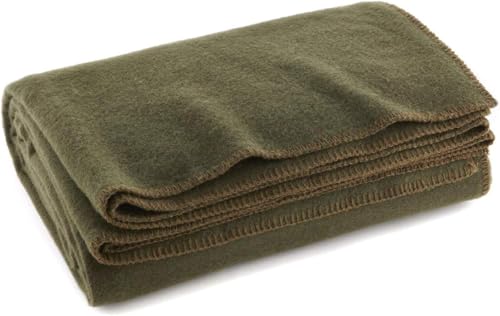
The EverOne speaks in the dialect of equipment. Its title is eleven words of specification: Olive Drab, 80% Wool, Fire Retardant, 66″ X 90″. That is a blanket for a cot, a truck, a cabin bunk or the back of a hall cupboard where the emergency supplies live, and its dimensions are the largest in this guide — ninety inches of length covers the tallest sleeper and tucks under a camp mattress with authority. The 80% Wool figure is stated plainly, and this guide states the corollary just as plainly: the remaining fifth of the fibre is not named in the title, so a buyer knows the majority recipe and not the whole of it, which is still more information than several other listings provide.
Fire Retardant appears in the title as a stated property, and it is reported here exactly as titled, without any elaboration of treatment or chemistry, because the listing offers none. In practical terms, the property belongs to the same utility story as the colour: this is a blanket intended to live near campfires, wood stoves, vehicle kits and workplaces where a decorative throw would be out of its depth. Olive drab will not show the marks of that life, and the size lets one blanket serve as wrap, ground layer or shared cover for two people in a pinch. Nobody will hang it over a sofa for its beauty, and that is not a criticism; it is the definition of the tool, and households with a cabin, a boat or a preparedness shelf will recognise it instantly as the correct one.
- Fibre as titled: 80% Wool
- Remaining fibre: not stated in the listing
- Property in title: Fire Retardant
- Dimensions: 66″ X 90″
- Colour: Olive Drab
- Weight: not given
Strengths
- Largest dimensions in the guide, covering tall sleepers completely
- Percentage stated outright, so the majority fibre is verifiable
- Utility colour and stated fire retardant property suit hard settings
Trade-offs
- A fifth of the fibre is unnamed in the title
- Olive drab utility looks will not grace a living room
- No weight is given, so its carry burden must be judged from the listing
Verdict in short: the big utility blanket for cabins, vehicles and emergency kits. Poor fit for: anyone buying a wool blanket as a piece of home decoration.
Look at the Amazon listing price for the EverOne olive drab blanket before winter
Arcturus Military Wool Blanket
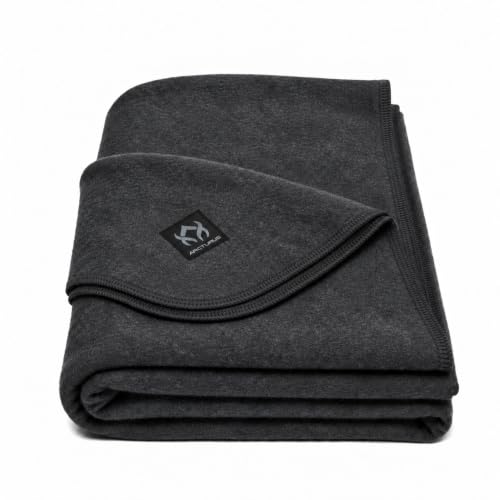
Now the blanket this guide has been using as its honesty exercise. The Arcturus title calls it a Military Wool Blanket, Twin, 64″ x 88″, warm, thick and washable, great for camping, outdoor events, cold weather, emergency kits and cozy nights at home, at 4.5 lbs and triple-washed. Notice what is present: size, weight, care, uses, a preparation detail in the triple washing. Notice what is absent: any percentage. The title does not say this blanket is a blend, and it does not say it is 100% wool, and this review will not say either. Its percentage line below reads not stated because not stated is the fact, and a shopper who needs the number must find it in the maker’s fuller materials or choose a pick that prints it.
Judged on what is stated, the Arcturus is a compelling camp blanket. Four and a half pounds is a serious, warm-weight blanket rather than a throw, twin dimensions cover a camp cot or a single bed with drape to spare, and washable is a word many wool blankets cannot use — it changes the ownership experience entirely, because a blanket that can be washed after a smoky weekend gets used for decades of weekends instead of being rationed. Triple-washed suggests the maker has prepared the cloth so its feel and size are settled before it reaches you, which any camper who has watched a blanket shrink will appreciate. Buy it for the stated virtues and it is easy to recommend. Buy it for a fibre story, and you are reading a story the listing never wrote.
- Style in title: Military Wool Blanket, Twin
- Dimensions: 64″ x 88″, as titled
- Weight: 4.5 lbs, per the title
- Wool percentage: not stated in the listing
- Preparation in title: triple-washed
- Care in title: washable
Strengths
- Stated weight and size describe a genuinely substantial camp blanket
- Washable wool removes the usual rationing of a blanket’s use
- Twin dimensions serve cot, single bed and sofa with equal ease
Trade-offs
- No fibre percentage is stated, so its composition cannot be verified here
- At 4.5 lbs it is a load in a pack compared with the throws
- Military styling is a plain, functional aesthetic only
Verdict in short: the washable heavyweight for camping and cold rooms, bought on stated facts. Poor fit for: buyers who require a printed fibre percentage as a condition of purchase.
Check today’s Amazon price for the Arcturus military blanket in the twin size
PuTian Merino Wool Blanket
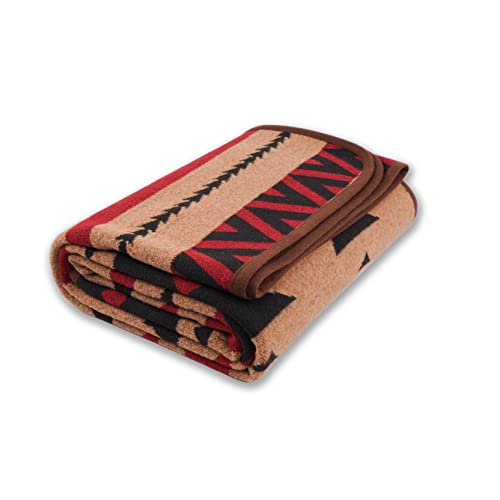
PuTian names its wool and lets the breed do the talking: a merino wool blanket, warm throw for camping, at 87″ x 63″ in a colour the listing calls Kaki Flame, described as odor-free and durable with reinforced edges, for couch, bed, travel and emergency across multiple scenes, and machine washable. Merino is the fine-wool name most buyers already know from clothing, and its presence in the title is a fibre statement of a different kind from a percentage: the breed is named, the proportion is not. This guide records both halves of that. A merino blanket with no stated percentage may be wholly merino or may not, and the title does not settle it.
What the title does settle is an attractive working profile. Eighty-seven by sixty-three inches is near-blanket length with throw manners, reinforced edges answer the exact place where hard-used blankets fail first, and machine washable on a merino blanket is a genuine convenience that widens its life from best to everyday. Odor-free is the maker’s claim, reported as titled; wool is often chosen for travel partly because it can be aired rather than constantly washed, and a listing that leans into that reputation is at least pointing at the right virtue. The colour name, Kaki Flame, suggests a khaki with warmth in it, suited to the outdoor register the whole listing speaks. For campers who want a named fine wool and easy care in one object, this is the natural pick of the six.
- Wool named in title: merino wool
- Percentage: not given
- Dimensions: 87″ x 63″, as titled
- Edge detail in title: reinforced edges
- Care in title: machine washable
- Colour name in title: Kaki Flame
Strengths
- Named merino wool with machine washable care, a rare easy pairing
- Reinforced edges address the first failure point of hard-used blankets
- Long 87 inch body suits tall campers and full bed coverage
Trade-offs
- No percentage is stated, so the full fibre recipe is unverified
- Odor-free is a maker claim to be judged in use, not a measured fact
- Outdoor colour and styling will not suit every indoor room
Verdict in short: the travelling merino for campers who wash often and pack long. Poor fit for: specification-first buyers who want every fibre accounted for numerically.
Find the Amazon price for the PuTian merino blanket in the Kaki Flame colour

Molithe 100 Percent Wool Blanket
The final pick is the control sample that makes the whole guide’s distinctions visible. Molithe titles its blanket 100% Wool, at 62″ x 86″, warm and thick, military in style, camping gear, great for camping, picnic, outdoors, travel, cars, sporting events and survival kits. A blanket that is entirely one fibre is not a blend, and its presence in a blend guide is useful precisely because so many shoppers use the words loosely. If what you actually want is the single-fibre object — one material, stated completely, nothing blended and nothing unnamed — this is the only pick here whose title gives you that in full, and it gives it in the first three words.
As equipment, the profile is the familiar military one: a substantial rectangle in the low-sixties by mid-eighties inches, aimed at the same world as the EverOne and Arcturus — camp, car, event, kit — rather than at the sofa. The title does not state a weight or a care instruction, so both are recorded as gaps below and should be checked on the listing by any buyer for whom machine washing is a condition. What can be said is that a fully stated fibre line removes an entire category of doubt from the purchase. There is no unnamed fifth, no missing ratio, no breed-without-proportion. In a guide devoted to the proposition that the fibre line is the blanket, the Molithe is the cleanest sentence of the six.
- Fibre as titled: 100% Wool
- Dimensions: 62″ x 86″, per the title
- Style in title: Military, Camping Gear
- Settings named in title: camping, picnic, outdoors, travel, cars, sporting events, survival kits
- Weight: none stated in the listing
- Care instruction in title: not stated in the listing
Strengths
- Complete, unambiguous fibre statement in the title itself
- Full blanket dimensions for camp, car and kit duty
- Single-fibre simplicity for buyers who dislike unnamed components
Trade-offs
- Not a blend, so it cannot answer a shopper seeking blended softness
- No care instruction in the title; washing method must be confirmed
- Utility register throughout, with no decorative ambitions
Verdict in short: the pure-wool equipment blanket with nothing left unstated about fibre. Poor fit for: a reader who came specifically for a blended throw for the sofa.
Review the Amazon price for the Molithe blanket whose title states its fibre in full
Comparison Table
| Blanket | Fibre line, exactly as titled | Dimensions from the listing | Home ground |
|---|---|---|---|
| Calyx Interiors Wool Blend Throw | Wool Blend, percentage not in listing | Size not in listing | Couch, bed, sofa |
| LYHome Cashmere Merino Wool Blanket | 10% Cashmere, 90% Merino | 55×79 in | Bed, couch, travel, picnic |
| EverOne 80 Percent Wool Blanket | 80% Wool, Fire Retardant | 66″ X 90″ | Utility, cot, vehicle, kit |
| Arcturus Military Wool Blanket | Percentage not in listing | 64″ x 88″, 4.5 lbs | Camping, emergency kits, home |
| PuTian Merino Wool Blanket | Merino wool, percentage not in listing | 87″ x 63″ | Couch, bed, travel, emergency |
| Molithe 100 Percent Wool Blanket | 100% Wool | 62″ x 86″ | Camping, cars, survival kits |
How to Choose When the Fibre Line Is the Product?
Decide first which kind of certainty you are buying. If a fully stated recipe matters most, the LYHome and the Molithe are your two poles: a quantified blend of two wools for indoor softness, or a single fibre stated whole for utility life. If the job matters more than the recipe — a camp blanket that washes, a huge utility blanket for a cabin — then the Arcturus and EverOne argue from size, weight and care, and their incomplete fibre lines become a known and accepted trade rather than a surprise discovered at home. The only genuinely poor purchase in this territory is the accidental one: the blanket bought believing a fibre story its title never told.
Then match the form to the room. Throws with tassels and fringe belong where they will be seen and handled gently; military rectangles belong where they will be sat on, spread on ground and stuffed into kits. Wool’s warmth scales with weight and coverage more honestly than with adjectives, so compare the stated pounds and inches before comparing the prose. And settle care before purchase, not after the first muddy weekend: the washable picks here can live a hard life in a normal household routine, while a blanket whose care is unstated should be bought by someone prepared to follow its label to the letter, whatever the label turns out to say.
Caring for Wool Without Ruining It
Wool’s great domestic virtue is that it needs less washing than almost any other blanket fibre, because its surface resists taking up dirt and odour in the first place — airing a wool blanket over a rail on a dry day refreshes it in a way that does nothing for a synthetic throw. When washing is needed, the picks whose titles say washable or machine washable can go through the routine their listings describe. For any wool blanket, the enemies are agitation, heat and haste: a gentle cycle, cool water, and a flat or line dry away from fierce heat will keep the cloth’s dimensions and hand-feel settled, while a hot, hard wash is the classic recipe for a blanket that returns from the machine smaller, denser and bound for a smaller bed.
Storage is the other half of care, and wool asks for one specific respect: it is a protein fibre, and the household pests that eat protein fibres find a folded blanket in a dark cupboard over summer to be a laid table. Store wool clean — soiling is what draws them — in a breathable bag or a cupboard that is opened and aired, and inspect the folds each autumn before the blanket goes back into service. A blanket that survives its summers will survive almost anything else a household does to it, which is how the military blankets in this guide acquire their decades-long reputations in cabins and kits.
Common Mistakes When Buying Wool Blankets
The first mistake is the one this article exists to prevent: assuming the search term describes the product. Wool blend is a fibre statement, not a category mood, and only one of these six listings actually makes it. The second is treating a stated percentage as the whole recipe; 80% Wool is honest as far as it goes, and the unnamed remainder is part of what you are buying whether it is acknowledged or not. The third is its mirror image — dismissing a blanket like the Arcturus for an unstated percentage when its stated size, weight and washability may serve your actual purpose better than a fully specified throw that cannot be washed and will not cover a camp cot.
Fourth, buyers routinely purchase wool by the photograph of a styled bed and discover a utility blanket’s plainness, or purchase a military blanket and discover a throw’s delicacy was what the room wanted. Read the settings named in the title; makers tell you the intended world more honestly there than anywhere else. Fifth, do not buy wool for a household that will only ever wash everything on one hot cycle. The fibre will forgive much, but not that, and a family honest about its laundry habits will be happier with the washable picks or with another fibre altogether than with a beautiful blanket quietly felting in the machine.
Where Wool Earns Its Keep: Camp, Car and Cold Rooms
The settings named across these titles form a pattern worth trusting: camping, travel, cars, emergency kits, cold weather, sporting events. Wool blankets cluster there because those are the places where a blanket is equipment — where it may be damp, sat on, slept under in a tent, spread on a tailgate or pulled out in a power cut — and where a fibre that stays comfortable when the air is cold and the ground is colder justifies its weight. In a power cut, the big utility blankets stop being camping gear and become the household’s warmth reserve, one per bed, and families who own them describe the same quiet satisfaction as families who own a good torch: rarely needed, completely decisive when needed.
Indoors, wool’s case is different and quieter. A wool throw over the legs lowers the temptation to heat a whole house for one reader in one chair, and it does so for decades without the surface tiredness that overtakes plush synthetics. The indoor picks here — the Calyx for its looks, the LYHome for its recipe — are long-life objects in a way that most soft furnishings are not, and buying them well, once, is the entire strategy. Wool asks to be chosen slowly and kept forever; nearly every mistake in this category comes from reversing that order.
Why Makers Blend Wool at All?
A blend is an engineering answer to a set of honest problems. Pure wool is warm, enduring and characterful, and it is also variable, sometimes coarse, and priced by a fibre market that does not care about your sofa. Blending lets a maker tune the cloth: a fine soft fibre folded into a sturdy one to change the hand-feel, a second component added to steady the weave, hold a dye or bring the price within reach of the households the blanket is actually for. None of that is disreputable. The reputable version of blending is the LYHome’s, where the recipe is printed and the buyer can judge the tuning for herself. The version that deserves scepticism is the blend with no numbers, where the word does the selling and the recipe stays in a drawer at the factory.
Two-wool blends occupy a special place in this landscape, because they blend within the family. Cashmere into merino changes softness without changing the fundamental character of the cloth: it still behaves as wool in the wash, in the cupboard and in cold air, and a buyer who understands wool already understands the blanket. Blends that reach outside the wool family change more variables at once, which is precisely why their proportions matter more, not less. When a title declines to give them, the buyer is not being protected from complexity; she is being asked to fund it blind. A sentence of numbers costs a maker nothing to print when the numbers are flattering, and the absence of the sentence is itself a piece of information a careful shopper is entitled to weigh.
None of this makes an unstated blanket a bad blanket. It makes it a blanket bought on other evidence — weight in the hand, size on the bed, the maker’s reputation across many winters, a washable construction that forgives experiment. The Arcturus is the standing example in this guide: thousands of cold nights can validate a blanket whose percentage stays unstated, and the validation is real. The discipline is simply to know which kind of evidence you are relying on, laboratory or lived, and not to mistake one for the other at the moment of purchase.
The Emergency Kit Argument, Taken Seriously
Three of these six titles name emergency or survival settings, and it is worth pausing on why wool, specifically, keeps being chosen for the kit in the hall cupboard. An emergency blanket in the useful sense is not the foil sheet of a hiking first-aid pouch; it is a real blanket that can warm a real household through a night when the heating fails, the car stops in snow, or a guest arrives in a cold snap to a house with no spare bedding. Wool serves there because it is substantial, because it can be stored for years and come out ready, and because a single large blanket — the EverOne’s ninety inches, the Arcturus’s twin span — can be shared, doubled or wrapped in ways a small throw cannot improvise.
Building that reserve is a one-time, unglamorous purchase that households postpone for decades and then wish, on one specific night, they had not. The sensible pattern is to buy the utility blanket for its first job — cabin, car, camp — and let the emergency role be its second, so the object is used, known and locatable rather than sealed away and forgotten. A blanket in the car boot all winter is already an emergency blanket; it merely has a day job. Rotate it into the wash and back each spring, check the cupboard blankets each autumn alongside the torch batteries and the smoke alarms, and the whole quiet system will be there on the one night it is the most important textile in the house.
A Short History Written in Blankets
The military styling of half this guide is not a fashion accident. Armies issued wool blankets for the better part of two centuries because the fibre survived conditions that destroyed everything else in a kit bag, and the surplus and civilian descendants of those issue blankets — plain, heavy, olive or grey, sized for a cot and a soldier — became the template that camp and utility blankets still follow. When a modern listing says military, it is claiming descent from that template: the dimensions, the weight and the indifference to decoration are the inheritance, even when the fibre line, as we have seen, is less forthcoming than an army quartermaster would have tolerated.
The throw at the other end of the guide descends from a different line entirely: the domestic blanket as furnishing, tasselled and tartaned, made to be seen across a sofa back and chosen the way a cushion is chosen. Neither lineage is superior; they are answers to different centuries of need. What a modern buyer gains from knowing the two lines is a quick diagnostic. If a listing mixes the vocabularies — military imagery with tassels, survival language with fringe — it is selling a mood rather than an object, and the spec lines, as ever, are where the truth of the thing will be found.
Giving Wool, and Being Given It
A wool blanket is one of the few gifts that can be given to a household rather than a person, and that changes how it should be chosen. Give the recipe, not the mystery: the LYHome, whose fibre line can be read aloud from the listing, is the gift that needs no defending, while a blanket with an unstated composition asks the recipient to trust a story neither of you can actually tell. For a wedding or a first home, the indoor throws are the register; for the friend who has just bought a cabin, a boat or a camper, the utility blankets land as the rare gift that is both personal and genuinely useful, the one that will still be in service at the tenth anniversary of the purchase.
Receiving wool well is its own small skill. A new wool blanket deserves its first airing, a shake and a day over a rail before it goes on a bed, and its first wash — where the title permits one — should be the gentle version, whatever the household’s habits with other textiles. Keep the listing’s fibre line somewhere findable, a note in a drawer or a photograph of the label, because in five years, when a partner or a grown child asks what the blanket is made of before washing it, the answer will matter and nobody will remember it. The blankets in this guide whose titles state their fibre plainly are, among their other virtues, the ones whose owners will still know what they own in a decade, and that quiet knowability is worth more than it first appears.
Finally, a word for the second-hand market, where wool blankets outlive their first owners in large numbers. A used wool blanket of stated size and honest construction is often the best value in the entire category, because the fibre’s longevity means the object has decades left when its first household is done with it. Wash it gently, air it thoroughly, inspect the edges and the folds, and a blanket from a cabin clear-out may out-serve a new one. The one thing the second-hand buyer cannot recover is a lost fibre story, which returns us, for the last time, to the guide’s whole argument: the recipe is part of the blanket, and it is worth buying, keeping and handing on with the cloth itself.
Weight, Drape and the Feel of a Blanket Over a Winter
Two blankets of identical dimensions can live entirely differently in a house, and the variable is weight. A heavy wool blanket — and the only stated weight in this guide, the Arcturus at 4.5 lbs, sits firmly in that class — lies still. It stays where a sleeper puts it, it does not slide off a camp cot at the first turn, and its pressure across the body is itself part of the comfort many people seek from wool in the first place. A light throw, by contrast, is handled rather than lain under: it is carried from chair to chair, shaken out, folded over a sofa arm, and its virtues are convenience and softness rather than presence. Neither is better; they are different instruments, and a household that owns one of each will reach for them on different evenings without ever consciously deciding why.
Drape follows weight and weave together. A blanket that drapes follows the contours of a body or a bed and seals its edges against draughts by its own softness; a blanket with body holds its shape, tents slightly, and leaves the sleeper to arrange it. Camp blankets are usually the second kind and indoor throws the first, which is another way of seeing why the two lineages in this guide should not be swapped. Put a stiff utility blanket on a sofa and it will look and feel like equipment taking a rest. Put a draping throw on a camp cot and it will spend the night migrating to the floor. Read the stated weight, the named settings and the construction together, and the blanket’s behaviour in your house is largely predictable before it arrives — which is, in the end, all that honest shopping guidance can ever promise.
Picture the blanket you buy from this page in ten years, because wool is one of the few purchases where that picture is a realistic planning tool rather than a fantasy. The throws will be softer than they are today, their fibres settled, their colours a shade calmer, folded over the same sofa or a successor to it. The utility blankets will carry a decade of camps and cold snaps in their edges, and will still be the objects a household reaches for when the weather turns serious. Almost nothing else in a modern home is bought on that timescale, and the timescale is the final argument for the guide’s fussiness about fibre lines: a fact you will live with for ten years is worth thirty seconds of reading today, and a recipe that will outlast the listing itself is worth choosing as carefully as the cloth.
Final Recommendation
Buy the LYHome Cashmere Merino Wool Blanket if your blanket will live indoors: it carries the clearest fibre statement in the guide, a generous size and a softness recipe that is printed rather than implied. Buy the Arcturus Military Wool Blanket if yours will live in a tent, a car or a cold spare room, and buy it for its stated weight, size and washability with your eyes open about its unstated percentage. And if the search that brought you here was really about the words wool blend themselves, the Calyx Interiors Wool Blend Throw is the one pick that uses them — a handsome throw whose recipe is its maker’s secret, which some households will find charming and others will find disqualifying, and now, at least, you know exactly which household yours is.
Frequently Asked Questions
Which of these blankets is truly a wool blend? By title, the Calyx Interiors throw, which says Wool Blend and states no percentage. The LYHome is a blend of two named wools at stated percentages; the others are partial, unnamed or single-fibre statements, each described exactly in its review.
Is the Arcturus blanket 100% wool? Its title does not say so, and it does not state any percentage. This guide records its composition as not stated and recommends it on its stated size, weight and washability instead.
What is the remaining fibre in the 80% Wool EverOne? The title does not name it. Eighty percent wool is stated; the other fifth is not, and no review here guesses at it.
Which pick is softest for a sofa? The LYHome, by recipe: a tenth cashmere blended into merino is a softening construction, and its size and fringe suit sofa and bed life rather than outdoor duty.
Can wool blankets be machine washed? Only where the title says so. The Arcturus is titled washable and the PuTian machine washable; for the others, follow the listing and label rather than assuming.
How should a wool blanket be stored over summer? Clean, fully dry and aired, in a breathable bag or a cupboard that gets opened now and then. Wool is a protein fibre and stored soiling is what attracts the pests that damage it, so the end-of-season wash or thorough airing is the important part; check the folds in autumn before the blanket returns to the bed, and a well-kept blanket will repeat that cycle for decades.
Does a heavier wool blanket always sleep warmer? Weight and coverage are the most honest warmth signals a listing gives, ahead of adjectives. A heavier blanket generally lies stiller and covers more completely, which is most of what warmth means in practice, but the only weights and sizes you can rely on are the stated ones — which is why this guide quotes them exactly and invents none.
Why is a 100% wool blanket in a blend guide? Because shoppers meet it under this search, and because the contrast teaches the category: the Molithe’s single-fibre statement is the opposite pole from a blend, and knowing both poles makes every fibre line in between readable.
One last check before ordering any of the six costs less than a minute and prevents the commonest disappointment in this category: lay a tape measure across your own bed or sofa and mark the blanket’s stated dimensions with cushions or books. A 55-inch throw and a 90-inch utility blanket are both described as blankets in their listings, and the tape measure is the only narrator that will tell you, in your own room, what that difference actually looks like against the furniture the blanket has to serve. Do it for the fibre line’s sake as well — a household that measures first is a household already shopping the way this guide has argued for throughout: by stated fact, in the open, with nothing important left to implication.
And when the blanket arrives, give it the unhurried first evening every long-life purchase deserves: shake it out, lay it across the bed or the sofa, read its label once against the listing that sold it, and note anything that differs while the discovery is still cheap to act on. A maker whose delivered blanket matches its printed fibre line has earned the trust the next decade will ask of it; a maker whose blanket arrives as a different object from the one described has told you, early and usefully, everything about how the relationship would have gone. Either way, you will know — and knowing, rather than hoping, is the whole craft this category rewards.
Keep the chosen blanket’s listing details with your household papers if you are the kind of owner who keeps such things; future you, standing in a laundry room in 2031, will be grateful for the foresight, and present you can simply get on with enjoying the blanket itself tonight.
Related Guides
The guides below continue this batch’s blanket and tub coverage.


