What's inside
- Key Takeaways
- Quick Picks
- How Did We Choose These Army Surplus Blankets?
- Why Wool? The Material Logic Behind the Military Blanket
- How Should You Store and Care for a Wool Blanket Between Adventures?
- Where Does Each Kind of Wool Blanket Belong: Car, Cabin, Tent or Bed?
- How Does a Heavy Blanket Change the Way You Sleep and Travel?
- How Did This Blanket Pattern Become a Household Object at All?
- Comparison Table
- What Are the Most Common Mistakes When Buying a Military-Style Wool Blanket?
- What Should a Winter Vehicle Kit Hold Besides the Blanket?
- How Can You Tell a Well-Made Wool Blanket from a Costume One?
- Final Recommendation
- Frequently Asked Questions
- Related Guides
As an Amazon Associate I earn from qualifying purchases. This post may contain affiliate links at no extra cost to you.
cottageverdict.com is reader-supported. When you buy through links on our site, we may earn an affiliate commission.
Where to buy: every blanket below links to its Amazon listing, where you can check price on Amazon and confirm the wool percentage, the dimensions and the weight before ordering. In this category those three numbers are the whole review in miniature, so read them before the adjectives, including ours.
The best army surplus blankets come with a naming confession that this guide will make once and then honour throughout: almost none of the blankets sold under this search today are genuine government-issue surplus pulled from a military warehouse. They are military-style blankets, modern production built to the old specification’s spirit, high wool content, olive drab or camp colours, generous cut, nothing decorative that does not earn its place. True issued surplus still exists in specialist shops, in variable condition and variable supply, but the six picks here are the new-production blankets that most searchers actually mean, and they are judged as what they are.
Why does the military pattern endure when a hundred softer, prettier blankets compete with it? Because the specification was written by an organisation that needed one blanket to work everywhere: warm when wet, tough enough to be dragged across decades of barracks, camps and emergencies, large enough to matter, and simple enough to maintain in the field. Wool is the heart of it. A wool blanket keeps insulating when damp, resists fire better than synthetics, shrugs off odours across days of use, and survives treatment that would reduce a household throw to lint. Those are not nostalgic virtues; they are the reasons the same design sits in car boots, cabins, emergency kits and festival tents a century after it was standardised.
The modern versions divide by wool percentage, and the percentage is destiny. The 80 percent wool blankets in this guide blend wool with synthetic fibres that add strength and keep the price in the working-blanket tier. The 100 percent wool and merino picks cost more and deliver the fibre’s full character, including its full demands. Weight follows content: these are heavy blankets, several pounds each, and that heft is part of their comfort outdoors and their inconvenience in a washing machine. Nobody should buy one expecting a cloud; they should buy one expecting a tool.
Texture honesty matters here too. Military-style wool is not cashmere and does not pretend to be. It has a firm, slightly coarse hand that softens with washing and use, and some picks in this guide have been washed or finished to start life gentler than the barracks original. Sensitive skin may want a layer between body and blanket, a sheet, a base layer, the way soldiers themselves used them. Buyers who accept that character get a blanket that will outlast trends, vehicles and possibly the house it is stored in.
This guide therefore reads like an equipment review rather than a decorating one. Each pick is weighed by wool content, dimensions, weight, fire behaviour where the maker states it, washability and the jobs it suits: vehicle emergency kits, camping, cabins, outdoor events, home emergency stores and the cold end of ordinary beds. The prettiest blanket here is still an olive rectangle. The best one is the one whose specification matches the work you actually have for it.
Key Takeaways
- Nearly all blankets in this category are modern military-style production, not genuine warehouse surplus, and this guide judges them as such.
- Wool percentage drives everything: 80 percent blends balance toughness and price, while full wool and merino cost more and demand more.
- Wool insulates even when damp and resists fire and odours, which is why the pattern survives in emergency and outdoor use.
- These are heavy, firm-textured blankets; expect several pounds of blanket and a hand-feel closer to equipment than to bedding luxury.
- Two picks add modern manners to the pattern, triple washing for softness and machine washability respectively.
- The two-pack Ever Ready is the emergency-kit value play, stocking two vehicles or a vehicle and a cabin at once.
Quick Picks
| Pick | Badge | Why it earned its place |
|---|---|---|
| EverOne Olive Drab 80% Wool Blanket | Best Classic Pattern | An 80 percent wool, fire-retardant blanket at 66 x 90 inches, the standard design in its standard form. |
| Ever Ready First Aid Olive Drab 80% Wool Blanket | Best Emergency Two-Pack | Two 80 percent wool blankets in one purchase, built for first-aid and survival kits across home and vehicle. |
| Molithe 100% Wool Blanket 62 x 86 | Best Full Wool | A 100 percent wool blanket with no synthetic partner, for buyers who want the fibre undiluted. |
| Arcturus Military Wool Blanket | Best Washed and Softer | A triple-washed, washable military blanket at 4.5 pounds that starts life gentler than the barracks pattern. |
| Stansport Wool Blend Camp Blanket | Best Budget Camp Classic | The long-running camp-store staple in olive drab, a wool blend made for tents, trucks and rough weekends. |
| PuTian Merino Wool Blanket | Best Machine-Washable Merino | A merino wool blanket with reinforced edges that goes in the machine, bridging camp toughness and home comfort. |
How Did We Choose These Army Surplus Blankets?
Wool content was the gate, and it had to be stated as a number. A blanket that merely says wool blend in large type and hides the proportion in small type was passed over in favour of makers who publish their percentages, because in this category the percentage predicts warmth, weight, fire behaviour and price more reliably than any other line on the listing. The selection spans 80 percent blends, a full-wool blanket and a merino option so readers can see the ladder and choose their rung.
Dimensions and weight came next, because a military blanket’s usefulness is geometric. Most picks here cluster around the traditional 66 by 90 inch class or close to it, large enough to wrap a person completely, cover a twin bed or line a tent floor’s sleeping area. Weight was read as information rather than as a fault: a blanket around four to five pounds is a serious insulator that stays where wind puts lighter throws into the next county, and the guide says plainly which picks ask the most of the arms that carry them.
Intended work shaped the final six. Two picks lean emergency, with fire-retardant claims and first-aid positioning; two lean camp and cabin; two lean toward the home end of the pattern, with washing and softness concessions that make them liveable on a bed. That spread mirrors how these blankets are actually bought, because the same olive rectangle serves a car boot in January, a festival in July and a spare bed in December, and a guide that pretended otherwise would miss the product’s whole appeal.
Claims were handled with gloves. Fire retardance is reported as the makers state it, as a property of wool-rich construction rather than as a promise that the blanket is fireproof, because no textile in this guide is that. Washability is reported per maker and never generalised across the list. Surplus language is used the way this introduction defined it: style and specification, not provenance. Readers deserve equipment described the way equipment should be described, in numbers and limits.
Why Wool? The Material Logic Behind the Military Blanket
Wool’s military career rests on four properties no synthetic has yet combined in one fibre. It insulates when wet, because its fibres absorb moisture vapour into their structure while the surface still feels comparatively dry, and the trapped air that does the warming survives damp conditions that collapse other fills. It resists ignition, charring rather than melting, which matters around campfires, stoves and the sparks of field life. It manages odour across days of use, a mercy in tents and emergency shelters. And it endures mechanical abuse, bending and dragging and refolding, for years without the surface disintegrating.
The synthetic partners in the 80 percent blends are not adulteration; they are engineering with a budget. A fifth of synthetic fibre adds tear strength, steadies the blanket’s dimensions through washing and brings the price into the range where a household can own two, one for the car and one for the cabin, which is how these blankets are actually deployed. Pure wool keeps the faith completely and charges for it. Both approaches descend from the same specification, and this guide treats the choice between them as a budget-and-priority decision rather than a purity test.
The costs of wool are equally physical. It is heavy for its warmth compared with modern synthetic insulation, it dries slowly once soaked through, and its hand-feel, firm and slightly prickly in the coarser grades, divides humanity into those who find it honest and those who find it hostile. The picks below that wash or soften the fibre are attempts to narrow that divide without surrendering the material’s virtues, and their sections judge how far the softening honestly goes.
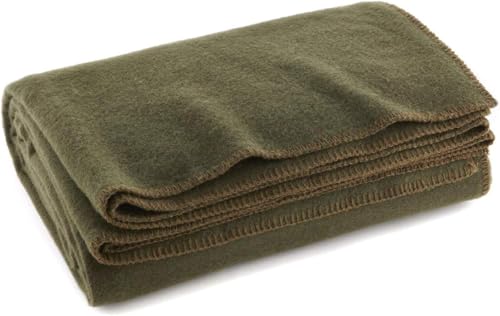
EverOne Olive Drab 80% Wool Blanket — Best Classic Pattern
The EverOne is the reference blanket of this guide, the one the others are variations on: 80 percent wool, olive drab, fire retardant per the maker, cut at 66 by 90 inches. That size is the pattern’s wisdom in two numbers, long enough to tuck under a sleeping person’s feet and over their shoulders at once, wide enough to wrap rather than merely cover. As a car-boot blanket, a cabin bed layer or the household’s designated emergency blanket, it performs the design’s whole repertoire without specialisation or apology.
Fire behaviour is this pick’s headline beyond the standard virtues. Wool-rich blankets char and self-limit rather than melting onto skin the way synthetics can, and EverOne markets the blanket as fire retardant, which in practice recommends it for the places blankets meet sparks: around wood stoves, at campfire seating, in the emergency kit of a house with an open fire. The guide repeats the maker’s claim as a claim, with the standing caution that retardant is not proof and no blanket belongs in a fire; but as a relative property among textiles, wool’s behaviour is genuinely the safest on this page.
Expect the classic hand-feel, firm and businesslike, softening gradually across washes and seasons. Expect also the classic weight, which makes the blanket stay put on a windy picnic and makes it a deliberate choice rather than a casual grab for a summer evening. For buyers who want the military blanket as the military intended it, modern-made and honestly specified, this is the default recommendation of the roundup.
- Wool content: 80% wool blend
- Size: 66 x 90 in
- Colour: olive drab
- Property: fire retardant per maker
- Role: vehicle, cabin and emergency blanket
Strengths
- The standard specification executed plainly, with the pattern’s full size intact.
- Wool-rich fire behaviour suits stove-side and campfire duty better than synthetics.
- One blanket covers the car, cabin and emergency roles without compromise.
Trade-offs
- Firm, traditional wool texture will not please skin that wants softness first.
- Substantial weight makes it a deliberate carry rather than a casual throw.
- Olive drab is a working colour that will not decorate a bright room.
Best for: emergency kits, cabins and anyone wanting the classic pattern exactly as specified.
Not suited for: buyers seeking a soft, pretty sofa throw or a featherweight pack blanket.

Ever Ready First Aid Olive Drab 80% Wool Blanket — Best Emergency Two-Pack
Ever Ready sells the same essential blanket, 80 percent wool, olive drab, 66 by 90 inches, fire retardant per the maker, as a two-pack aimed squarely at first-aid and survival preparation, and that packaging changes the recommendation completely. Emergency blankets are a plural product. One belongs in the vehicle, one in the house or the second vehicle, and a household that buys a single beautiful blanket and then cannot decide where it lives has solved the problem in the worst way. The two-pack solves it by multiplication.
The first-aid framing is legitimate rather than theatrical. In roadside and outdoor emergencies, a wool blanket is a genuine tool: warmth for a shocked or injured person, a ground layer, a stretcher-side comfort, a windbreak while help is awaited. Wool’s damp insulation and fire behaviour are exactly the properties that matter in those minutes, which is why the type has ridden in ambulances and patrol cars for generations. This guide makes no medical claims beyond that plain utility; the blanket supports the people helping, and that is honour enough for a textile.
As a purchase, the pair also hedges the texture question. A household new to wool blankets can station one in the car, where softness hardly matters, and live with the other at home for a season before deciding whether the pattern suits their beds. If it does not, both blankets still have honourable employment outdoors. Few purchases in this batch insure themselves so thoroughly against their own risk.
- Wool content: 80% wool blend
- Size: 66 x 90 in each
- Quantity: 2 pack
- Colour: olive drab green
- Role: first-aid, survival and vehicle kits
Strengths
- Two full-size blankets let a household equip vehicle and home in one purchase.
- Emergency positioning matches wool’s real strengths in warmth and fire behaviour.
- Identical pair simplifies storage, rotation and replacement planning.
Trade-offs
- Two working blankets are a storage commitment in a small home.
- Same firm traditional texture as the single EverOne, doubled.
- Households wanting only a bed blanket pay for a second they must place.
Best for: prepared households equipping cars, cabins and emergency stores in one order.
Not suited for: minimalists who want exactly one blanket and a clear conscience about it.

Molithe 100% Wool Blanket 62 x 86 — Best Full Wool
The Molithe removes the asterisk from the category: 100 percent wool, no synthetic partner, sized at 62 by 86 inches and described by its maker as warm and thick, for camping, picnics, travel, cars, sporting events and survival kits. For the buyer who reads blend percentages with suspicion and wants the fibre exactly as the original specification’s spirit intended, this is the pick that ends the search. Full wool brings the complete set of properties, damp insulation, odour resistance, fire behaviour and decades-grade durability, at full strength.
It also brings the complete set of demands, and the guide will not soften them. Pure wool wants gentle washing and patient drying, resents being stored damp, and shows its texture honestly against the skin. Its slightly smaller footprint than the 66 by 90 pair above is worth noting for tall sleepers, who should measure their wrap against 86 inches of length before committing. In exchange, the blanket’s warmth per layer and its behaviour in bad weather are the benchmark the blends approximate.
Camping is where this pick argues hardest. A blanket that insulates through dew, shrugs off a night’s woodsmoke smell by morning’s airing and can be shaken out and used again the next night without a laundry is performing the exact duties the military pattern was designed around. Carried in a vehicle it is heavier insurance than the blends; spread in a tent it is the layer campers reach for when the synthetic sleeping system needs a partner. Purists, outdoorspeople and cold sleepers will find their blanket here.
- Wool content: 100% wool
- Size: 62 x 86 in
- Character: warm and thick per maker
- Colour: military tone
- Role: camping, travel and survival kits
Strengths
- Undiluted wool delivers the fibre’s full weather and durability character.
- Thick build gives serious warmth for tent, car and cabin duty.
- No synthetic content to melt, smell or age on a different schedule.
Trade-offs
- Pure wool asks the most careful washing and drying in this guide.
- Slightly shorter and narrower than the 66 x 90 classic pattern.
- Firmest natural texture here; sensitive skin will want a layer beneath.
Best for: wool purists, serious campers and anyone buying one blanket for bad weather.
Not suited for: easy-care households, the very tall or anyone who dislikes wool’s hand-feel.

Arcturus Military Wool Blanket — Best Washed and Softer
Arcturus looked at the military blanket’s one famous flaw, the scratch, and engineered against it. Their blanket is triple-washed, a process the maker credits with removing the loose, prickly fibres that make new wool blankets feel like a penance, and it is washable in the owner’s routine rather than being a dry-clean hostage. At 64 by 88 inches and 4.5 pounds, it keeps the pattern’s substance while presenting a noticeably friendlier face, and that combination has made it the crossover pick of this category, the one that lives on beds as happily as in tents.
The washing point deserves emphasis because it changes who can own this blanket. Traditional wool blankets accumulate camp smoke, car-boot dust and life, and owners who cannot wash them begin, unconsciously, to use them less. A blanket designed to be washed gets washed, stays pleasant and stays in service. Arcturus markets it across camping, outdoor events, cold weather, emergency kits and home use, and for once the breadth is credible, because the care barrier that usually confines the pattern to outdoor duty has been deliberately lowered.
Softness is relative and the guide will keep it so: triple-washed wool is softer wool, not fleece, and a sleeper who dislikes any texture will still know this is a wool blanket. But for the large middle of humanity who find ordinary wool acceptable and new surplus-style wool itchy, the Arcturus lands in the comfort zone while keeping the weight, size and weather virtues intact. It is the recommendation for the buyer who wants one blanket to do every job in this guide and also be allowed on the bed.
- Wool content: military wool blend (see listing for current specification)
- Size: twin class, 64 x 88 in
- Weight: 4.5 lbs per maker
- Finish: triple-washed, washable
- Role: camp, emergency and home bed
Strengths
- Triple washing removes the new-wool scratch that deters many buyers.
- Washable design keeps it in regular service instead of in storage.
- Full military size and weight preserve the pattern’s weather virtues.
Trade-offs
- Softer is relative; it remains unmistakably a wool blanket in the hand.
- At 4.5 pounds it is a serious object to launder and to carry.
- Its crossover popularity means it is a considered purchase, not a bargain-bin find.
Best for: buyers wanting one wool blanket for tent, car, emergency kit and bed alike.
Not suited for: anyone whose skin rejects wool entirely, however kindly it is washed.
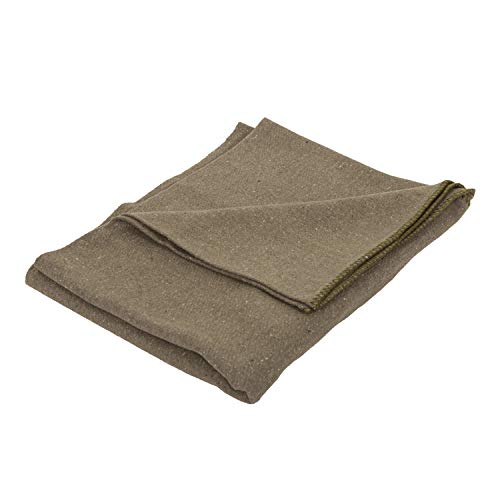
Stansport Wool Blend Camp Blanket — Best Budget Camp Classic
Stansport’s camp blanket is the old scout-camp and deer-camp standby, an olive drab wool blend that has been sold through camp stores for years at the working end of the price ladder. It does not court the bed or the design shelf. It courts the tent floor, the truck seat, the tailgate, the cabin bunk and the festival field, and it has survived in that market for the only reason anything survives there: it works, it is cheap enough to own without anxiety, and it tolerates being treated like equipment because it is equipment.
Blend is the honest word in its name, and buyers should hold it to blend expectations. A camp-store wool blend will not match the Molithe’s full-wool weather character or the Arcturus’s washed softness, and its dimensions and weight sit at the lighter end of this guide’s family. What it offers instead is coverage: a real wool-containing blanket at a tier where losing it, lending it or retiring it after hard seasons is a shrug rather than a financial event. For scout troops, fishing camps and households equipping several bunks, that arithmetic is the entire argument.
Treat it as the gateway blanket of the category. Many owners start with a Stansport-class blanket in the car, discover how often a wool blanket earns its keep, and later promote a finer pick to the bed or the main cabin while the camp blanket continues in rougher service. A product that can be both a first purchase and a permanent second-stringer has a kind of wisdom in it, and this guide respects the type even while ranking its refinement last.
- Wool content: wool blend, camp grade
- Size: camp blanket class (confirm on listing)
- Colour: O.D. green
- Positioning: budget tier
- Role: tents, trucks, camps and bunks
Strengths
- The most affordable way into a real wool-containing camp blanket.
- Long-running camp-store design with a proven, unpretentious record.
- Cheap enough to equip several bunks, seats or kits without anxiety.
Trade-offs
- Blend construction cannot match full wool’s weather performance.
- Firmest, plainest finish in the guide; comfort is not its argument.
- Lighter build gives less insulation than the heavyweight picks here.
Best for: camps, scout troops, truck kits and buyers equipping several spots at once.
Not suited for: anyone wanting a primary bed blanket or full-wool performance.
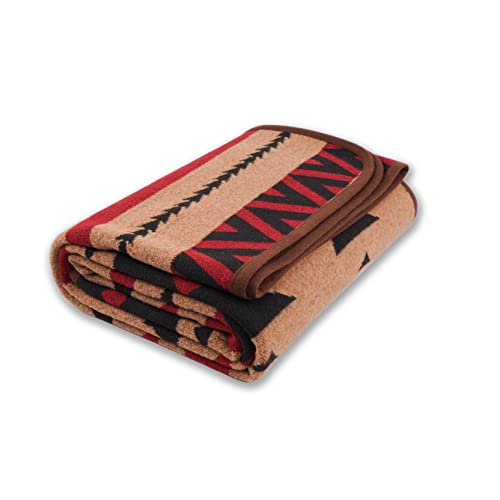
PuTian Merino Wool Blanket — Best Machine-Washable Merino
The PuTian closes the guide by walking the military idea furthest toward the home without surrendering its soul. The fibre is merino wool, the finer, softer branch of the wool family, in an 87 by 63 inch blanket with reinforced edges, described by its maker as odor-free, durable and machine washable, in a khaki flame colourway that nods to the camp palette while suiting a sofa far better than olive drab does. It is the pick for the buyer who wants wool’s weather virtues and a texture their skin will greet as a friend.
Merino changes the comfort equation honestly. Its finer fibres bend rather than prickle, so the blanket can lie directly against skin in a way the classic pattern’s coarser wool should not, and the reinforced edges answer the one structural worry of softer wool, which is wear at the borders where blankets are grabbed, folded and dragged. Machine washability, remarkable in a wool blanket of this size, completes the domestication: this is a blanket a household can actually maintain at the standard its price deserves.
The trade is the pattern’s brute end. Merino’s refinement costs some of the coarse wool’s indifference to abuse, and this is not the blanket to line a pickup bed or wrap a stove. Its theatre is the couch, the bed, the car seat and the civilised campsite, where its warmth, softness and easy care compound daily. Buyers torn between the military idea and domestic reality will find that this pick is where the two shake hands.
- Wool content: merino wool
- Size: 87 x 63 in
- Edges: reinforced per maker
- Colour: khaki flame
- Care: machine washable per maker
Strengths
- Merino softness makes wool comfortable directly against the skin.
- Machine washable, a rare and valuable property in a wool blanket.
- Reinforced edges protect the borders where softer wool wears first.
Trade-offs
- Refined fibre tolerates less rough handling than the coarse classic pattern.
- Not the choice for stove-wrapping, ground-sheet or pickup-bed duty.
- Its home-friendly character moves it furthest from true surplus spirit.
Best for: beds, sofas and car seats wanting wool warmth with a gentle hand and easy care.
Not suited for: hard field use or buyers who want the uncompromising barracks original.
How Should You Store and Care for a Wool Blanket Between Adventures?
Wool care is mostly a matter of not doing the three things that kill it: storing it damp, storing it dirty and washing it violently. Before any blanket goes into a cupboard or a kit box, it should be clean and completely dry, because mildew loves a folded, forgotten wool blanket the way rust loves a forgotten tool. Air it after trips, shake out the dust and debris while the outing is still recent, and let sunshine and breeze do the routine freshening that wool responds to better than any spray.
Washing, when it comes, follows the maker’s word for each blanket, since this guide spans dry-gentle traditionalists and genuinely machine-washable moderns. The universal rules are cool water, mild detergent, minimal agitation and a supported, flat dry, because a wet wool blanket is heavy enough to stretch itself out of shape on a line. Never wring one. Roll it in a towel if you must move water quickly, then lay it out and let time finish the job.
Moths are the long-term enemy of stored wool, though wool blends and modern finishes reduce the risk compared with grandma’s cedar-chest era. Clean storage is itself a deterrent, since larvae prefer soiled fibres, and a cedar block or a sealed bin for the off-season adds cheap insurance for the full-wool picks. A blanket stored this way emerges each autumn as it went in, which is the entire point of owning equipment built to last decades.
Where Does Each Kind of Wool Blanket Belong: Car, Cabin, Tent or Bed?
The car is the least forgiving station and the most important. A vehicle blanket must work after months of neglect, in the dark, possibly in rain, for a person who may be cold, shaken or simply stuck until morning. That brief favours the 80 percent blends and the two-pack logic: tough, fire-sensible, cheap enough to dedicate permanently to the boot and never borrowed back into the house. A blanket that lives in the car should be treated as part of the car, like the spare tyre, present because the day it is needed admits no substitute.
The cabin rewards the heavier end of the guide. A cabin bed or bunk that sits in an unheated room between visits needs a blanket that warms without electricity, tolerates a cool, occasionally damp building and emerges from storage ready rather than musty. Full wool and the heavyweight blends serve there, provided the storage is dry and the spring airing is a ritual. Cabins are also where the pattern looks most at home; an olive blanket on a pine bunk needs no styling whatsoever.
The tent asks for judgement about weight. Car campers can carry any pick in this guide and should choose by weather, with full wool for wet country. Backpackers should not carry any of them, because four-plus pounds of blanket is a sleeping system’s entire budget spent on one layer, and this guide says so plainly rather than pretending the pattern is ultralight. Between those poles sits the festival, the scout camp and the garden sleepover, where the camp-grade Stansport and the blends do cheerful, mud-tolerant service.
The bed, finally, is where the modernised picks earn their existence. A household that wants wool’s temperature behaviour in the main bedroom should start with the Arcturus or the PuTian, whose washing and softness were designed for domestic life, and treat the classic patterns as the spare-bed and guest-room layer, ideally over a sheet. Assigned this way, every blanket in the guide is in the station its specification was built for, and none is being blamed for failing at a job it never claimed.
How Does a Heavy Blanket Change the Way You Sleep and Travel?
Weight is this category’s most misunderstood specification, read as a defect by buyers raised on ultralight marketing and as a feature by everyone who has slept under one in a cold room. A four-to-five-pound blanket stays where it is put. It does not migrate off the bed at three in the morning, it does not blow off a picnic or a stadium seat, and its pressure across the body is itself a comfort many sleepers seek, the same settling sensation that sells weighted blankets at many times the price. In a tent, that planted quality keeps the layer over the sleeper through every turn of the night.
The costs are logistical rather than thermal. A heavy blanket is a deliberate object to pack, wash and store, and in a small home washing machine its wet weight can exceed what the drum handles happily, which is why the washable picks’ instructions deserve reading before purchase rather than after the first laundry day. Travellers who fly should leave these blankets at home entirely; travellers who drive should regard the weight as ballast well spent, since the blanket rides in the vehicle rather than on their back.
There is also a psychological dividend that owners mention and specifications cannot capture. A substantial wool blanket feels like preparedness made tangible. Folded in the car or across the spare bed, it communicates that the household has thought about cold nights in advance, and on the night the heating fails or the car stops in the wrong county, that forethought converts directly into comfort and calm. Few purchases at this tier buy so much peace of mind per pound.
How Did This Blanket Pattern Become a Household Object at All?
The design descends from the bedding that armies standardised across the last century: a large, single-layer wool blanket in a drab colour, made by the million, issued to everyone and expected to survive everything. After each conflict, vast quantities entered civilian life through surplus channels, and the blanket became a fixture of farms, camps, scout troops and working households, valued for exactly the virtues the quartermasters had specified. Generations grew up with one in the car and one on the spare bed, which is why the search term itself carries the word surplus like a surname.
As genuine stocks thinned and aged, manufacturers began producing the pattern new, first for the same institutional buyers and then for the civilian market that had learned to love it. That transition is the honest history behind this guide’s opening confession: the modern blankets here are grandchildren of the issued original, not the original itself. What they inherit is the specification, the size, the wool-rich build and the drab palette. What they add, in the better picks, are the manners, washing, softness and quality control that a warehouse lottery never offered.
The pattern’s survival into an era of heated throws and engineered synthetics is itself the review that matters most. Technologies with better laboratories have tried to replace it for a hundred years, and it persists wherever warmth must be guaranteed without power, maintenance or delicacy. Buying one today is not nostalgia, or not only nostalgia. It is joining a very long queue of people who needed a blanket to work, in the rain, in the dark, the first time and the fiftieth, and found that this one did.
Comparison Table
| Pick | Wool content | Size | Standout property | Best role |
|---|---|---|---|---|
| EverOne Olive Drab 80% Wool Blanket | 80% wool | 66 x 90 in | Fire retardant per maker | Classic all-duty pattern |
| Ever Ready First Aid Olive Drab 80% Wool Blanket | 80% wool | 66 x 90 in, 2 pack | Emergency positioning | Vehicle and home kits |
| Molithe 100% Wool Blanket 62 x 86 | 100% wool | 62 x 86 in | Undiluted fibre | Serious camping |
| Arcturus Military Wool Blanket | Wool, triple-washed | 64 x 88 in | Washable, softer start | Camp-to-bed crossover |
| Stansport Wool Blend Camp Blanket | Wool blend | Camp class | Budget tier | Camps and bunks |
| PuTian Merino Wool Blanket | Merino wool | 87 x 63 in | Machine washable | Home-friendly wool |
What Are the Most Common Mistakes When Buying a Military-Style Wool Blanket?
The first mistake is hunting for provenance instead of specification, paying a premium for the word surplus while the wool percentage, the only number that predicts performance, sits unexamined. Genuine issued blankets in good condition are wonderful objects, but a modern blanket with a declared 80 or 100 percent wool content will outperform a tired genuine article whose history is mostly storage. The second mistake is the opposite naivety: assuming any olive blanket is the real pattern, when the market’s cheapest entries can be mostly synthetic with a wool garnish and a photographer’s blessing.
Third, buyers underestimate the texture and then blame the blanket for being what every honest description said it was. Read the softness language carefully, choose the washed or merino picks if your skin is particular, and use a sheet layer with the classic patterns the way generations of soldiers did. Fourth is laundering by household autopilot, one hot aggressive cycle that felts a full-wool blanket into a smaller, denser relative of itself. Fifth is storing the blanket damp after a trip, the single most common cause of the musty smell people then attribute to wool itself, when the fibre was innocent and the cupboard was the crime scene.
What Should a Winter Vehicle Kit Hold Besides the Blanket?
Since two picks in this guide are bought for vehicles, the blanket’s company deserves a paragraph. It works best alongside the unglamorous basics: a torch that is checked seasonally, water that is rotated, a shovel where snow is a language the roads speak, and warm layers that belong to the car rather than to whoever happens to be driving it. The blanket’s role in that company is warmth and ground insulation, the layer that makes waiting survivable and sleeping in a lay-by possible, and wool’s damp and fire behaviour is why it, rather than a prettier throw, gets the job.
Position matters as much as presence. A blanket folded under cargo will not be reached at midnight in the rain; a blanket kept accessible, across the boot’s top or behind the rear seat, becomes part of the car’s working equipment. Households with the Ever Ready pair have the right instinct built into the purchase: one blanket can live in the vehicle permanently while its twin covers the house, the cabin or the second car, and neither has to be remembered on the day it matters, because it is already there.
How Can You Tell a Well-Made Wool Blanket from a Costume One?
Three checks separate equipment from costume. First, the label: a real percentage for the wool content, stated without fog, and a weight or a heft in the hand that agrees with it. Second, the edges: military-pattern blankets live or die by their finishing, and a well-made one has dense, even stitching or binding that does not wave or pucker when the blanket is pulled taut. Third, the surface: hold it to the light and look for thin patches, then run a palm against the nap; honest wool feels uniform, while a costume blanket reveals streaks of synthetic shine where the blend was skimped.
The smell test is older than any laboratory and still useful. Real wool carries a faint, characteristic lanolin-and-sheep scent when new that fades across the first airings; a blanket that smells overwhelmingly of chemicals is telling you about its finish or its fibres, and the telling should be believed. None of these checks requires expertise, only attention, and attention is the entire skill this category rewards, because the good blankets announce themselves plainly to anyone who reads numbers and uses their hands.
Final Recommendation
Match the blanket to its station and this category becomes simple. For the classic pattern in its standard form, the EverOne is the default, and households preparing properly should take the Ever Ready pair and put one in the vehicle and one in the house before winter argues the point. Campers and purists belong to the Molithe’s full wool, while anyone who wants the pattern to live on a bed should choose between the Arcturus’s washed approachability and the PuTian’s merino softness, with the Stansport equipping every bunk, boot and borrowed tent in between. Whichever olive rectangle comes home with you, store it clean and dry, wash it the way its maker directs, and it will still be on duty, keeping somebody warm in some unglamorous emergency or perfect cold evening, long after softer blankets have retired.
Frequently Asked Questions
Are these blankets genuine military surplus?
The picks in this guide are modern military-style production, built to the classic pattern’s spirit and specification, and they are described that way throughout. Genuine issued surplus exists through specialist channels in variable condition and supply, and it can be excellent, but it cannot be linked, sized or warrantied the way new production can. For most buyers, a new blanket with a declared wool percentage is the more predictable purchase, which is why this guide is built on them.
Will a wool blanket keep me warm if it gets wet?
Wool is the best common blanket fibre in damp conditions, because its fibres absorb moisture vapour while retaining much of their insulating structure, so a damp wool blanket still warms where a damp cotton one turns into a cold compress. It is not magic: a soaked blanket of any material is a problem to be solved with shelter and drying. But in the realistic world of dew, drizzle and condensation, wool’s advantage is real and is the core reason the military pattern exists.
Is an 80 percent wool blanket much worse than 100 percent?
Different rather than simply worse. The synthetic fifth adds tear strength, dimensional stability and a friendlier price, at the cost of some of wool’s fire behaviour, odour resistance and damp performance at the margins. For vehicle kits, cabins and general duty, the blends in this guide are rational engineering. For the buyer who wants the fibre’s complete character, or who camps in genuinely wet country, the full-wool Molithe justifies its premium honestly.
How do I stop a wool blanket from itching?
Layer, wash and choose are the three levers. A sheet or base layer between skin and a classic-pattern blanket solves the problem the way soldiers solved it. Washing, following the maker’s directions, softens any wool blanket across its first season. And choosing is decisive: the triple-washed Arcturus and the merino PuTian exist precisely for skin that finds the standard pattern hostile, and both keep the category’s virtues while changing its manners.
Can I use one of these as my main bed blanket?
Yes, and households have done so for a century, with the washed and merino picks being the most bed-ready here. Expect a firmer, heavier layer than modern bedding provides, with excellent temperature behaviour and a look that suits rustic, cabin and minimalist rooms better than frilly ones. Pair it with a soft top sheet, give the bed a day to look intentional rather than barracks-plain, and many sleepers find they prefer the honest weight to lofty synthetic alternatives.
Can a wool army blanket be used as a picnic or ground blanket?
It is one of the pattern’s oldest civilian jobs, and the heavier picks here excel at it: wool’s density keeps ground damp from striking through the way it does through cotton, its weight stops the corners lifting in a breeze, and its surface sheds dry grass and crumbs with a shake. Choose the blends or the camp-grade Stansport for regular ground duty and save the full-wool and merino picks for cleaner work, not because they cannot do it but because their talents are wasted on mud. Spread on grass, a wool blanket also insulates sitters from cold ground, which on an autumn evening is the difference between staying for the sunset and leaving before it.
Why are these blankets almost always olive, grey or khaki?
The palette is the uniform’s inheritance: drab colours that did not show dirt in the field, did not fade conspicuously and did not ask to be admired. Civilian life kept the colours because they suit the work, hiding the evidence of boots, dogs and car boots, and because a certain honesty attaches to a blanket that refuses decoration. Buyers furnishing a bright room should know the drab tones will read as a deliberate rustic note rather than as a match, and the merino pick’s khaki is the gentlest bridge between the pattern’s world and the sofa’s.
How long should a wool army-style blanket last?
Decades is not an exaggeration when storage and washing are kind, because wool’s fibres tolerate bending and abrasion that fatigue synthetics, and the pattern has no zips, fills or coatings to fail. The usual causes of early death are felting from a hot wash, mildew from damp storage and moth damage in a neglected cupboard, all of which are owner-side events. Buy the blanket once, keep it clean and dry, and it becomes the rare purchase your household may hand down.
What size should I choose for a tall sleeper?
Length is the dimension that decides, and tall sleepers should read it before anything else on the listing. The 90-inch classics in this guide wrap a tall frame with something to spare at both ends, the 88-inch Arcturus follows closely, and the 86-inch full-wool Molithe, for all its virtues, is the one a very tall camper should measure against their own height before ordering. Width matters less in a wrap than in a shared bed, where the standard 60-plus inches serve two sleepers adequately and three not at all.
Do wool army blankets smell when they are new?
A faint natural wool scent is normal in the full-wool and high-blend picks and fades across the first airings and washes; it is the fibre’s own character, not a defect, and most owners stop noticing it within the first week. Airing the blanket outdoors for a day is the fastest honest cure, and the washed Arcturus and the merino PuTian start life with the least of it. A strong chemical odour, by contrast, is information about finishes or synthetic content and is one of the checks this guide recommends making while a return is still simple.
Should I buy one heavy blanket or two lighter ones for a cabin?
For a single bunk in a cold room, one heavy blanket wins, because warmth at three in the morning is a property of the layer actually on the sleeper, and two thin blankets that slide apart deliver less than their combined promise. For a cabin that hosts varying numbers of guests, two midweight blankets offer flexibility, one per bunk or doubled on the coldest bed as the party requires. The Ever Ready two-pack was built for exactly that second logic, and households furnishing a cabin from scratch will find the pair, plus one heavyweight for the main bed, covers every sleeping arrangement the building can present.
Related Guides
Are wool blankets a good choice for people with dust concerns at home?
Wool has practical virtues here that deserve a plain statement without medical promises. Its fibres resist hosting the static charge that attracts dust to synthetics, it tolerates vigorous outdoor shaking and airing that clears what it collects, and the washable picks in this guide can be laundered at a rhythm that keeps them genuinely clean. Households managing diagnosed conditions should follow their clinician’s guidance on bedding generally; within ordinary housekeeping, a wool blanket that is aired and washed on schedule is among the easiest large textiles to keep fresh.
One closing observation from years of watching these blankets work: they are bought once and then simply present, season after season, asking nothing and failing rarely, which is a relationship few household products ever offer.
The blanket shelf’s remaining stops cover gentler and younger territory. Families moving from camp blankets to nursery ones should continue to Best After-Swaddle Transition Blankets, while the lightest layer of all is gathered in Best Lightweight Receiving Blankets. Readers who prefer their warmth with a thermostat can compare philosophies in Best American-Made Electric Blankets, and anyone who liked this guide’s plain-speaking about materials will find the same treatment of a different fibre in Best Acoustic Blankets.


