What's inside
- Key Takeaways
- Quick Picks
- How Did We Choose These Alpaca Blankets?
- Why Does Alpaca Feel Different from Sheep’s Wool Under Your Hand?
- How Should You Care for an Alpaca Blanket So It Lasts a Decade?
- What Do Alpaca Grades and Fibre Terms Actually Mean?
- How Does Alpaca Compare with Cashmere and Merino for a Throw?
- Which Rooms in the House Does an Alpaca Blanket Serve Best?
- How Do You Choose the Right Size of Alpaca Blanket the First Time?
- What Changes During an Alpaca Blanket’s First Month in a Home?
- Comparison Table
- What Are the Most Common Mistakes When Buying an Alpaca Blanket?
- Is an Alpaca Blanket a Good Gift, and for Whom?
- Final Recommendation
- Frequently Asked Questions
- Related Guides
As an Amazon Associate I earn from qualifying purchases. This post may contain affiliate links at no extra cost to you.
cottageverdict.com is reader-supported. When you buy through links on our site, we may earn an affiliate commission.
Where to buy: each blanket below links to its Amazon listing, where you can check price on Amazon and confirm the alpaca percentage, the dimensions and the care instructions before ordering. Read the percentage line with particular care, because in this category the blend ratio is the product, and two blankets that both say alpaca on the front can be very different animals underneath.
The best alpaca blankets earn their reputation from a fibre that behaves like a small miracle of engineering. Alpaca hair is hollow at its core, which makes it warmer than sheep’s wool at a lighter weight, and it carries no lanolin, which is why so many people who find wool itchy can wear and sleep under alpaca in comfort. The blankets in this guide come mostly from the Andean tradition, woven in Peru and Ecuador by makers who have worked this fibre for generations, and they range from a heavyweight full-queen bed blanket to compact throws sized for a single chair and a single person.
Before the picks, one clarification that will save confusion across this whole batch of guides: the phrase baby alpaca, which appears in a companion guide, does not mean blankets for babies. It names the softest grade of fibre, taken from an alpaca’s first shearing. The blankets here are adult products, throws and bed blankets for grown-up rooms, and their softness comes from the fibre’s natural fineness and from blends chosen by each maker. When a listing here says alpaca wool, read it as alpaca fibre; alpacas are not sheep, and the word wool survives in product names as a courtesy to tradition rather than as taxonomy.
Blend literacy is the essential shopping skill in this category. A blanket described as 50/50 alpaca and sheep wool is making a deliberate engineering choice, borrowing wool’s resilience and structure to support alpaca’s softness, and it will feel and wear differently from a 70 percent alpaca throw blended with acrylic for stability, or from the high-alpaca weaves that lean fully into the fibre’s drape. None of these is automatically best. Pure-leaning blends maximise the signature softness and lightness; wool blends maximise durability and warmth per blanket; acrylic blends hold shape and price steady. The picks below state their blends openly so the choice can be made on facts.
Warmth, for the record, is where alpaca justifies its premium over ordinary wool. The hollow fibres trap air efficiently, so an alpaca throw delivers a surprising depth of warmth for something that drapes like a heavy scarf. It also breathes better than its warmth suggests, releasing excess heat rather than cooking the sleeper, which is why Andean households use the same blankets across big daily temperature swings. Add its natural resistance to pilling compared with sheep’s wool and its softness without lanolin, and the fibre’s following stops looking like fashion and starts looking like physics.
Care is the counterweight, and this guide will not hide it. Several picks here are dry-clean or gentle-hand-wash products, and even the more forgiving ones dislike hot water, agitation and being stored damp. An alpaca blanket is a considered purchase, closer to a good coat than to a fleece throw, and it rewards owners who treat it that way with a decade or more of service. Readers who want a blanket they can machine-wash weekly without a thought should enjoy this guide for its honesty and then buy something else; readers who want the finest natural throw fibre in common use are in exactly the right place.
Key Takeaways
- Alpaca fibre is hollow-cored, warmer than sheep’s wool at a lighter weight, and free of the lanolin that makes wool itch for many people.
- Blend percentage is the headline specification: wool blends add durability, acrylic blends add stability, high-alpaca weaves maximise softness.
- Most picks here are Andean-made, woven in Peru or Ecuador within a long regional tradition.
- The heavyweight alpaca-and-sheep-wool blanket serves a full or queen bed; the rest are throws of varying generosity.
- Care is gentle by furniture standards: several picks are dry-clean or careful-wash products, and they repay the ceremony with long life.
- Baby alpaca elsewhere in this batch names a fibre grade, not a product for infants; these are adult blankets.
Quick Picks
| Pick | Badge | Why it earned its place |
|---|---|---|
| Alpaca and Sheep Wool Blanket Full/Queen | Best Heavyweight Warmth | A 50/50 alpaca and sheep wool bed blanket woven in the Peruvian Andes, reversible and seriously warm. |
| Alpaca Wool Blanket Throw Reversible | Best Reversible Throw | A thick, soft Ecuadorian throw in blue and grey that gives two looks in one blanket. |
| ALPAKITAS 70% Alpaca Throw Blanket | Best Compact Throw | A 70 percent alpaca artisan throw from Ecuador, sized for one chair and one happy occupant. |
| QISU Alpaca Wool Blanket Throw | Best Large Throw | An oversized 85 by 65 inch throw in a white-blue variegated weave that can cover two people. |
| Alpaca Wool Blanket Queen Reversible | Best Queen Size | A full queen reversible blanket handmade in Ecuador, in warm brown, for a properly dressed bed. |
| Alpaca Wool Throw Blanket 85 x 65 | Best Deep Colourway | A generous dark brown throw with the same oversized dimensions and a richer, moodier palette. |
How Did We Choose These Alpaca Blankets?
Alpaca content came first, and it had to be stated rather than implied. Listings that waved the word alpaca while hiding the blend were set aside in favour of makers who publish their percentages, because a buyer paying alpaca prices deserves to know whether the blanket is mostly alpaca, half alpaca or alpaca-kissed. The six picks here declare blends from 50 percent upward, or present themselves as alpaca wool blankets within the Andean tradition, and their sections discuss what each ratio does to feel and durability.
Origin and construction came second. Alpaca weaving is a living Andean craft, and the blankets made within that tradition, in Peru and Ecuador, tend to show the fibre handling that only long practice teaches: even tension, clean reversibility where offered, and edges that finish a blanket rather than merely ending it. Handmade variation is part of the character here, not a defect, though it means dimensions should be read as honest approximations rather than machine tolerances.
Role coverage shaped the final six. One heavyweight bed blanket, one true queen, two oversized throws that can share, and two compact throws for single chairs give this guide a pick for every realistic alpaca use, because alpaca’s price makes buying the wrong size an expensive education. Colour was treated as a real criterion rather than an afterthought: earth tones, blue-grey, white-brown, variegated and dark brown appear across the list, so most rooms can find a blanket that looks native rather than imported for the occasion.
Care demands were weighed last and disclosed fully. A guide that hid dry-clean instructions until after purchase would be betraying its readers, so each pick’s section states its care reality plainly and the comparison table keeps the blends visible at a glance. Alpaca ownership is a small commitment, and the readers who thrive with it are the ones who accepted the commitment with open eyes.
Why Does Alpaca Feel Different from Sheep’s Wool Under Your Hand?
Run a palm across both fibres and the difference announces itself before any specification can. Alpaca’s surface is smoother, almost silky, because its fibres have flatter scales than sheep’s wool, and those scales are what make wool feel prickly against sensitive skin. With less mechanical grip between fibres, alpaca also pills less readily and drapes more fluidly, falling in soft folds where a wool blanket of the same weight stands a little stiffer. The result is a blanket that feels like a textile luxury while performing like outdoor equipment, a combination few natural fibres manage.
The hollow core does the thermal work. Each fibre carries a pocket of air along its length, and air is the actual insulator in every blanket ever made; fibres merely hold it in place. Alpaca holds more of it per ounce than wool does, which is why these throws feel improbably light for the warmth they deliver on a winter evening. It also means the blanket compresses kindly for storage and travel, then shakes back to working loft without the sulking that flattened down can show.
Moisture behaviour completes the portrait. Alpaca absorbs less water than wool and releases what it takes up readily, so the blanket feels dry against the skin in conditions where wool turns faintly clammy. In a lakeside cabin, a stone cottage or any room that runs cool and humid, that dryness is a genuine comfort advantage. It is also why the fibre earned its place in the Andes, where a blanket may be asked to perform through a damp mountain night and a bright, dry morning in the same twenty-four hours.

Alpaca and Sheep Wool Blanket Full/Queen — Best Heavyweight Warmth
This is the blanket in the guide that most deserves the word blanket in its full, old-fashioned sense: a heavyweight bed covering in full/queen size, woven in the Peruvian Andes from a declared 50/50 blend of alpaca and sheep wool, Merino and Dorset per the maker, in earth tones, and reversible. The sheep wool is not a dilution to apologise for. It is the structural partner that gives the weave body and resilience, while the alpaca half contributes the softness and the hollow-core warmth. Together they produce the warmest object on this page.
On a bed it behaves like the top layer of a serious winter system, the blanket you reach for when the house is cold and the duvet alone feels theoretical. Its weight is part of its comfort for sleepers who like to feel tucked in by something with presence. Reversibility doubles its wardrobe, earth tones on both faces in the woven tradition, so the bed can change mood with a flip. As a cottage or cabin blanket it is close to perfect: natural fibres, no synthetic fill, a weave that shrugs off years of weekends.
The honest costs are weight and care. This is not a throw to be carried from room to room, and it will not enjoy a hot, aggressive wash. Buyers should also expect the faint, pleasant texture of real wool in the hand, softer than a pure sheep blanket thanks to its alpaca half, but more rustic than the high-alpaca throws below. For the cold bedroom, the farmhouse and the mountain house, that rusticity is not a compromise at all; it is the entire point, executed by the region that invented the form.
- Blend: 50% alpaca, 50% sheep wool (Merino/Dorset)
- Size: full/queen bed blanket
- Origin: woven in the Peruvian Andes
- Design: reversible, earth tones
- Fill: none, woven natural fibres
Strengths
- The deepest warmth in this guide, from a heavyweight natural weave.
- Wool partnership adds resilience and structure that pure softness lacks.
- Reversible earth-tone faces give one blanket two distinct bed looks.
Trade-offs
- Heavy to move, fold and launder compared with every throw below.
- Retains a touch of wool’s texture that the most sensitive skin may notice.
- Bed-blanket scale is wasted on buyers who only wanted a chair throw.
Best for: cold bedrooms, cabins and cottages wanting one serious natural bed blanket.
Not suited for: anyone seeking a light, portable throw or a machine-wash-and-forget routine.
Alpaca Wool Blanket Throw Reversible — Best Reversible Throw
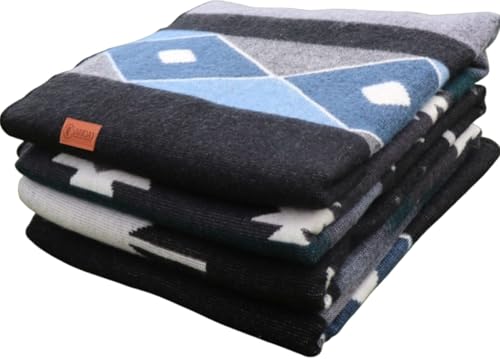
Handmade in Ecuador and sized at 78 by 47 inches, this throw is the versatile middle citizen of the guide: long enough to cover a stretched-out adult on a sofa, narrow enough to live on a chair without drowning it, and reversible between blue and grey faces that suit very different rooms. The maker describes it as thick and ultra soft, and the alpaca character bears that out in the hand, a smooth, non-itchy surface that invites contact rather than merely tolerating it.
Reversibility sounds like a small feature until a throw has lived in a house for a month. The grey face keeps a calm, modern living room calm; the blue face warms up a pale chair or a white sofa; and flipping between them lets one blanket serve a room through a redecoration that would orphan a single-faced throw. For renters and small homes, where every object must hold two jobs, that flexibility is a genuine specification, not a garnish.
As a gift, this is the pick that travels best across tastes, because the recipient effectively receives two colourways and can choose their own. As a personal purchase, it suits the reader-in-a-chair life and the evening sofa equally. Its limits are the throw category’s limits: it will not dress a bed as the main event, and two adults sharing it will negotiate. Within those honest borders, it may be the most liveable object in this entire roundup.
- Blend: alpaca wool, handmade weave
- Size: throw, 78 x 47 in
- Origin: handmade in Ecuador
- Design: reversible, blue and grey
- Character: thick, ultra soft, non-itchy per maker
Strengths
- Two colourways in one blanket double its usefulness in real rooms.
- Generous throw length covers a reclining adult properly, head to heel.
- Smooth alpaca surface suits skin that finds sheep’s wool prickly.
Trade-offs
- Throw width means couples share it by negotiation, not by right.
- Handmade character brings slight variation piece to piece.
- Too small to serve as a bed’s principal blanket in winter.
Best for: living rooms, reading chairs and gift-givers who want two looks in one present.
Not suited for: buyers needing full bed coverage or a matching pair with machine precision.
ALPAKITAS 70% Alpaca Throw Blanket — Best Compact Throw
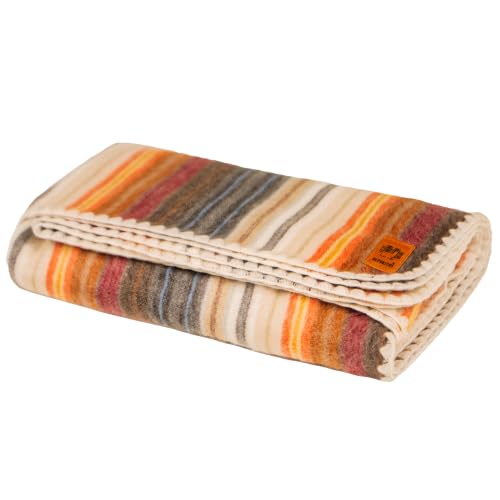
The ALPAKITAS throw states its recipe with unusual clarity: 70 percent alpaca, 30 percent acrylic, artisan-made in Ecuador, sized at 64 by 45 inches in a white and brown colourway, and dry clean. That transparency is itself a recommendation in a category full of fog. The acrylic third is a stability choice, helping the weave hold its shape and its edges through years of folding, while the alpaca majority keeps the fibre’s signature softness firmly in charge of the experience.
Compact is the operative word. At its size, this is a personal throw in the truest sense: one chair, one lap, one pair of shoulders. It suits the desk worker in a cool home office, the passenger seat of a car that does long winter drives, and the single armchair that is one person’s declared territory. What it will not do is cover a sofa’s worth of family, and buyers should honour that boundary rather than stretching the blanket into a role its dimensions refuse.
Dry-clean care is the price of admission, and the guide states it without flinching because pretending otherwise would set owners up to ruin a lovely object in its first month. Treated as the occasional-care textile it is, an artisan piece rather than a utility blanket, the ALPAKITAS rewards its owner with the highest declared alpaca content among the compact throws here and a colourway, natural white against warm brown, that looks at home in both rustic and minimalist rooms.
- Blend: 70% alpaca, 30% acrylic
- Size: throw, 64 x 45 in
- Origin: artisan-made in Ecuador
- Colour: white and brown
- Care: dry clean per maker
Strengths
- The clearest blend declaration in the guide, with alpaca firmly in the majority.
- Acrylic partner stabilises the weave for years of folding and use.
- Personal size suits desks, cars and single chairs with no wasted bulk.
Trade-offs
- Dry-clean care rules it out for low-maintenance households.
- Compact dimensions cannot serve a sofa or a sharing couple.
- Artisan production means each piece carries handmade variation.
Best for: solo loungers and home-office workers wanting a high-alpaca personal throw.
Not suited for: families, sharers or anyone whose blankets live in the washing machine.

QISU Alpaca Wool Blanket Throw — Best Large Throw
Most throws are sized for one and apologise to two. The QISU goes the other way: 85 by 65 inches of alpaca wool blanket in a white and blue variegated weave, dimensions that cover a couple on a sofa without diplomacy and double as a light top layer on a twin or full bed. The variegation is the aesthetic signature, bands of colour that shift gently across the weave, giving a room pattern and movement without the commitment of a printed design.
QISU describes the fabric as ultra-soft, breathable and non-itchy, and the size amplifies those virtues into a genuinely social blanket: film nights, guests who run cold, a spare layer that can be thrown over a visitor’s shoulders and actually reach their feet. It is also the throw in this guide most likely to be borrowed by the bed, standing in as a summer top blanket or an extra winter stratum, which multiplies its value across the year.
The variegated colourway deserves a practical note: it is forgiving. Mismatched rooms, pet hair between cleans, the general evidence of a lived-in sofa all disappear into a shifting weave more gracefully than into a flat solid. Buyers whose homes are showpieces may prefer the solids elsewhere in this list. Buyers whose homes are alive will find this the easiest alpaca to live with day to day, provided its generous footprint has somewhere to fold away, because 85 by 65 inches of blanket is a real presence in a small linen cupboard.
- Blend: alpaca wool
- Size: large throw, 85 x 65 in
- Design: white blue variegated weave
- Character: ultra-soft, breathable, non-itchy per maker
- Role: sofa sharing or light bed layer
Strengths
- Oversized dimensions end the two-people-one-throw negotiation entirely.
- Variegated weave hides everyday evidence and flatters mixed rooms.
- Doubles as a light bed layer, multiplying its seasons of use.
Trade-offs
- Its generous size needs real storage space when folded away.
- The shifting pattern will not suit minimalists wanting a flat solid.
- Too much blanket for a single small armchair’s tidy drape.
Best for: couples, film nights and hosts who keep a serious spare layer ready.
Not suited for: tiny flats with no storage or anyone wanting a strictly personal throw.

Alpaca Wool Blanket Queen Reversible — Best Queen Size
A true queen-size alpaca blanket is a rarer object than the throw shelf suggests, and this Ecuadorian handmade piece fills the role at 94 by 78 inches in warm brown, reversible like its smaller sibling above. On a queen bed it provides what throws cannot: full coverage with drape, a top layer with presence, and the particular pleasure of alpaca’s warmth distributed across an entire night’s sleep rather than an evening’s lounging. For buyers whose alpaca ambition is a dressed bed rather than a dressed chair, this is the pick the guide was built to find.
The brown colourway works harder than it first appears. Brown grounds a bedroom, pairs with the creams and woods that dominate cottage-style rooms, and shows less of life’s evidence than the whites and pastels elsewhere in the blanket world. Reversibility gives the bed a second register, lighter against darker, so the same blanket can carry a room from winter’s depth to spring’s lift with a flip on laundry day.
Expect handmade character at bed scale: a weave with a human hand in it, dimensions that are honest rather than machined, and warmth that will surprise buyers who associate natural blankets with thinness. Care follows the alpaca rules, gentle and unhurried, and a queen blanket of this value deserves the large drum or the professional clean rather than a wrestle with a small home machine. Owners who accept those terms get the guide’s most complete expression of what an alpaca blanket can be.
- Blend: alpaca wool, handmade weave
- Size: queen, 94 x 78 in
- Origin: handmade in Ecuador
- Design: reversible, brown
- Role: principal bed blanket
Strengths
- True queen coverage brings alpaca’s warmth to a whole night’s sleep.
- Reversible faces give one bed two seasonal moods for free.
- Deep brown palette suits cottage and wood-toned rooms beautifully.
Trade-offs
- Bed scale plus natural fibre means careful, possibly professional, laundering.
- Handmade variation is part of the piece and will not please perfectionists.
- A significant purchase compared with the throws, as queen alpaca always is.
Best for: queen-bed owners wanting alpaca as the bed’s principal natural blanket.
Not suited for: buyers who only need a throw, or who machine-wash everything hot.

Alpaca Wool Throw Blanket 85 x 65 — Best Deep Colourway
The final pick shares the QISU’s generous 85 by 65 inch footprint and takes it in a moodier direction: dark brown, described by its maker as warm, ultra-soft, breathable and non-itchy. Where the variegated throw brings pattern, this one brings depth, a solid, saturated colour that anchors a pale sofa, disappears elegantly into a leather chair’s company, and gives a room the visual warmth to match the physical kind the fibre provides.
Solid dark colours are the introverts of the blanket world, and they earn their place by behaviour. They hide pet hair of the darker varieties, they forgive the newsprint and denim dye of real lounging, and they make the alpaca’s smooth surface the whole show, since there is no pattern to look at instead. On a bed, the dark brown works as a folded foot-of-bed layer with real graphic weight, the stripe of depth across white bedding that stylists charge money to suggest.
Choosing between this and the QISU is a genuine fork with no wrong answer: same generous scale, same fibre family, different temperament. Pattern people get movement and camouflage; solid people get calm and drama. Both give two sleepers room, both serve as light bed layers, and both ask for the same gentle alpaca care. The guide’s advice is to look at your sofa, your pets and your walls, and let the room cast the deciding vote.
- Blend: alpaca wool
- Size: large throw, 85 x 65 in
- Colour: dark brown
- Character: warm, breathable, non-itchy per maker
- Role: sofa sharing or bed-foot layer
Strengths
- Deep solid colour anchors light rooms and hides daily evidence well.
- Oversized cut shares between two people without compromise.
- Smooth alpaca surface becomes the whole visual effect, elegantly.
Trade-offs
- Dark brown shows pale lint and light pet hair more than mid-tones.
- Its mood is specific; bright, airy rooms may find it heavy-looking.
- Large dimensions ask for storage room when the blanket is put away.
Best for: leather-and-wood living rooms and anyone wanting a dramatic, generous throw.
Not suited for: pastel schemes or buyers wanting pattern to do the decorating.
How Should You Care for an Alpaca Blanket So It Lasts a Decade?
Alpaca care rests on a single principle: the fibre is strong but dislikes shock. Avoid hot water, avoid violent agitation, avoid wringing, and most alpaca blankets will outlast the furniture they cover. Where a maker says dry clean, as the ALPAKITAS does, obey without improvisation. Where hand or gentle washing is permitted, use cool water and a mild detergent, support the blanket’s full weight when wet rather than lifting it by one corner, and dry it flat in shade, because a hanging wet blanket can stretch under its own load and sunlight is no friend to natural dyes.
Storage matters as much as washing. Fold the blanket clean, never store it damp, and keep it somewhere air can reach it rather than sealed in plastic, which traps moisture against the fibres. Alpaca’s lack of lanolin makes it less attractive to moths than sheep’s wool, a genuine advantage, but cedar or lavender in the cupboard remains cheap insurance for any natural-fibre textile. Between uses, a shake and an hour’s airing on a dry day refreshes the blanket more honestly than any fragranced spray.
The reward for this modest ceremony is unusual longevity. Natural fibres that are not abused do not tire the way synthetics do; an alpaca blanket’s tenth year can look much like its second, with the weave settled and the softness, if anything, improved. Buyers who find the care list daunting should compare it with the replacement cycle of cheap throws, bought, pilled and discarded in rotation. Alpaca asks for attention instead of money, and for many households that is the better bargain.
What Do Alpaca Grades and Fibre Terms Actually Mean?
Alpaca fibre is sorted after shearing by fineness, and the vocabulary on labels descends from that sorting table. The finest grades, the ones that feel almost like silk against the neck, come from the youngest animals and the softest parts of the fleece, and they command the prices to match. Standard adult fibre, which fills most of the blankets in this guide, is a step coarser on paper and still finer in the hand than most sheep’s wool a buyer will ever meet. Coarser grades go to rugs and outerwear, where softness matters less than iron durability.
Two breed words occasionally appear and are worth decoding. Huacaya alpacas carry the dense, crimpy fleece that resembles a teddy bear’s and supplies the great majority of the world’s alpaca fibre, including most blankets. Suri alpacas grow long, lustrous locks that drape like silk; suri fibre appears in premium shawls and throws and feels noticeably sleeker. Neither is better in the abstract. Huacaya gives the classic warm, soft blanket hand, while suri gives sheen and fluidity, and a label naming its breed is usually a label confident in its sourcing.
Micron counts, when a maker offers them, are the objective version of all this poetry: a measurement of fibre diameter, with lower numbers meaning finer, softer fibre. Most blanket buyers do not need the number, because the hand test at the point of purchase tells the same story more directly. What every buyer does need is the blend percentage, the dimension line and the care instruction, the three facts that decide whether a particular blanket fits a particular life. Grades are for connoisseurs; those three facts are for everyone.
How Does Alpaca Compare with Cashmere and Merino for a Throw?
Cashmere is alpaca’s most glamorous rival, softer still at its finest and priced accordingly, but it is a more delicate fibre that pills under friction and asks for real commitment in care. For a scarf or a special-occasion wrap, cashmere’s luxury is unmatched. For a blanket that will be sat on, shared, folded daily and occasionally borrowed by a dog, alpaca’s resilience makes it the more sensible luxury, nearly as soft, markedly tougher, and generally less expensive at blanket scale.
Merino is the more practical rival: fine sheep’s wool with a soft hand, good availability and easier care in its modern washable forms. A good merino throw is a fine object, and this guide’s first pick deliberately blends alpaca with Merino and Dorset wool to borrow exactly those virtues. Where alpaca pulls ahead is the itch question and the warmth-to-weight contest; where merino pulls ahead is price and the simplicity of buying it anywhere. Households choosing between them are choosing between two good answers, and the deciding factor is usually skin sensitivity rather than specifications.
The honest summary is that alpaca sits in a fortunate middle: more durable than cashmere, softer and lighter than most wool, warmer than both at equal weight, and priced between them at blanket sizes. That middle is not a compromise. It is the reason Andean weavers built a textile culture on this animal while sheep and goats were also available to them, and it is why the fibre keeps converting buyers who meet it in a blanket first.
Which Rooms in the House Does an Alpaca Blanket Serve Best?
The living room is the obvious parish, where a throw’s softness is public property and its looks work daily. Alpaca earns its place there over fleece the moment guests arrive, because it reads as a textile rather than as loungewear, and over wool whenever a household member’s skin votes against lanolin and prickle. The primary bedroom is the second parish, with the queen and heavyweight picks dressing the bed in a natural layer that regulates temperature through the night instead of merely adding heat.
The third parish is the one buyers forget: the cool room that is not quite a living space. A reading nook by a north window, a garden room used three seasons of the year, a guest bed in a house kept cool between visitors, a cabin that is heated by a stove with cold corners. In those in-between temperatures, alpaca’s warmth-to-weight is at its most eloquent, because the blanket must be carried there, draped there and lived under for hours, and a heavy wool or a chilly cotton both fail one side of that brief.
Where alpaca does not belong deserves equal clarity. It is wasted on a child’s den blanket that will be dragged across gardens, and endangered in any household where every textile is washed hot on principle. It is also the wrong purchase for the chronic borrower-out of blankets, the picnic-and-car-boot life, where a washable fleece or the army-style wool blankets elsewhere in this batch absorb the abuse with a shrug. Match the fibre to the room’s real behaviour and alpaca stops being a luxury risk and becomes the most reliable comfort in the house.
How Do You Choose the Right Size of Alpaca Blanket the First Time?
Measure the furniture, not your optimism. A chair throw lives between 45 and 65 inches of length: enough to cover a seated adult’s lap and legs, not so much that it pools on the floor and collects dust and heels. The ALPAKITAS and the reversible Ecuadorian throw sit in this band, and both were chosen for chairs and single occupants. A sofa throw that must serve two people honestly starts around 80 inches in its long dimension, which is why the two 85 by 65 picks exist; anything smaller turns sharing into a border dispute conducted in silence.
Bed blankets follow mattress arithmetic with drape added. A queen mattress wants a blanket in the mid-90s by high-70s inches to land with authority on both sides, which is the reversible queen’s exact territory, while the heavyweight full/queen serves the same bed with a more rustic hand and a little more negotiation at the edges. Buyers between sizes should size up in this category without hesitation: alpaca drapes so fluidly that surplus fabric reads as luxury, while a shortfall reads as a mistake every single night.
There is also the question of the blanket’s second job. A throw that will double as a travel blanket for long drives should favour the compact end; a throw that will double as a guest bed’s top layer should favour the generous end. Naming the second job before purchase is the cheapest expertise in this whole guide, because it converts a vague sense of size into a decision with a reason attached, and reasons survive the arrival of the parcel better than impulses do.
What Changes During an Alpaca Blanket’s First Month in a Home?
Expect a short courtship. A new natural-fibre blanket can shed a little loose fibre in its first weeks, the weaving’s equivalent of a new carpet’s fluff, and a gentle shake outdoors now and then clears it without drama. The weave also relaxes: folds from packaging soften, the drape finds its natural fall, and the surface, handled daily, takes on the slight polish that makes alpaca look richer at month three than at day one. Buyers who judge natural textiles by their first hour misjudge them completely.
The household changes too. A good throw acquires a territory, the chair it belongs to, the person it belongs to, the hour of the day it is reached for, and those habits are the real measure of a successful purchase. If the blanket is still being moved around experimentally at the end of the month, its size or weight may be mismatched to the room, and that is useful information rather than failure. If it has disappeared into one family member’s permanent custody, buy peace the way experienced households do: with a second, different blanket from this list, chosen for the person who lost the first one.
Comparison Table
| Pick | Blend | Size | Origin | Best role |
|---|---|---|---|---|
| Alpaca and Sheep Wool Blanket Full/Queen | 50% alpaca / 50% sheep wool | Full/queen | Peruvian Andes | Heavyweight bed warmth |
| Alpaca Wool Blanket Throw Reversible | Alpaca wool | 78 x 47 in | Ecuador | Reversible living-room throw |
| ALPAKITAS 70% Alpaca Throw Blanket | 70% alpaca / 30% acrylic | 64 x 45 in | Ecuador | Compact personal throw |
| QISU Alpaca Wool Blanket Throw | Alpaca wool | 85 x 65 in | — | Oversized sharing throw |
| Alpaca Wool Blanket Queen Reversible | Alpaca wool | 94 x 78 in | Ecuador | Queen bed blanket |
| Alpaca Wool Throw Blanket 85 x 65 | Alpaca wool | 85 x 65 in | — | Deep-toned sharing throw |
What Are the Most Common Mistakes When Buying an Alpaca Blanket?
The costliest mistake is buying the word instead of the blend. A blanket that is a fifth alpaca and four-fifths anonymous synthetic is not a bargain alpaca blanket; it is a synthetic blanket with an alpaca garnish, and it will feel like one by the second month. Read the percentage, and let anything under half alpaca justify itself in writing before it justifies itself in your basket. The second mistake is the reverse snobbery: dismissing honest blends. The 50/50 wool partner in this guide’s first pick and the acrylic stabiliser in its third are engineering, not adulteration, and both produce blankets that out-serve a fragile high-percentage weave in real homes.
Third, buyers wash first and read later. One hot, agitated cycle can felt and shrink a natural blanket past saving, and no returns policy covers a mistake the care label warned against in print. Fourth is sizing by hope, ordering a personal throw for a sharing sofa because the photograph showed it draped generously over a small chair. Dimensions in this category are stated plainly by the good makers; compare them against your furniture with a tape measure, not against a styled image. Fifth is storing the blanket damp or sealed, then blaming the fibre for the mustiness that storage created.
Is an Alpaca Blanket a Good Gift, and for Whom?
It is one of the strongest gifts in the entire blanket category, for structural reasons. A throw requires no knowledge of the recipient’s bed size, natural fibres carry an inherent sense of occasion, and the Andean handmade story gives the gift a provenance that a synthetic throw cannot borrow. Weddings, housewarmings and milestone birthdays are its natural occasions, and the reversible picks hedge the giver’s colour risk by handing the recipient two palettes and the choice between them.
The cautions are about the recipient’s life rather than the blanket’s quality. Do not give dry-clean-only alpaca to a household with three toddlers and a dog, however beautiful it is; give it to the reader, the new homeowner, the parent whose children have grown, the friend with the cold, lovely cottage. A gift that matches its owner’s habits gets used for a decade. A gift that fights them becomes a cupboard monument, and alpaca deserves better than to be anyone’s monument.
Presentation helps the fibre make its case. Alpaca’s first touch is its best argument, so a gift that can be handled before it is fully unwrapped, folded over the arm of a chair rather than sealed in plastic, converts sceptics instantly. Include the care instructions in your card, written as the small ceremony they are rather than as a warning, and the recipient will understand they have been given an object with a future, not a consumable with a season.
Final Recommendation
Choose by the seat or bed the blanket must serve, and the rest of this guide falls into place. A cold bedroom wanting one serious natural blanket should take the alpaca and sheep wool heavyweight, while a queen bed dressing for looks and warmth together belongs to the reversible Ecuadorian queen. Living rooms divide by household: the reversible blue-grey throw for flexible, giftable versatility, the compact ALPAKITAS for one cherished chair, and the two oversized throws, variegated or dark brown, for everyone who shares a sofa and is tired of negotiating for corners. Whichever lands in your home, read its care label before its first evening and honour the gentle routine it asks for. An alpaca blanket kept kindly becomes the object guests reach for without asking, and the one your own hands will look for on the first cold night of every year.
Frequently Asked Questions
Is alpaca really warmer than wool?
Weight for weight, yes, for a physical reason: alpaca fibres are hollow along their core, trapping more insulating air per ounce than solid sheep’s wool fibres. In blanket terms that means a lighter throw can deliver warmth people expect from a heavier wool one. The difference is real but not magical; a thin alpaca throw will not out-warm a thick wool bed blanket, which is why this guide matches each pick to its role rather than crowning the fibre itself.
Why can people who itch in wool often wear alpaca?
Two properties help. Alpaca carries no lanolin, the wool grease that triggers sensitivity in some people, and its fibre scales lie flatter, so the prickle mechanism that makes coarse wool uncomfortable is greatly reduced. Makers across this guide describe their blankets as non-itchy for that reason. Sensitivity is personal, though, and the very sensitive should start with a throw they can test against the skin before committing to a bed-size purchase.
What does baby alpaca mean, and is it in this guide?
Baby alpaca is a grade of fibre, the softest cut, traditionally from an animal’s first shearing, and despite the name it has nothing to do with products for infants. It is covered by its own companion guide in this batch. The blankets here are adult throws and bed blankets in standard alpaca grades and blends, chosen for warmth, size range and value rather than for that premium fibre grade specifically.
Can I machine-wash these blankets?
Follow each maker’s label, because the answers differ by blend and weave. The ALPAKITAS is dry clean, and several natural weaves in this guide want cool, gentle hand washing and flat drying rather than a machine cycle. The general alpaca rules are cool temperatures, minimal agitation, no wringing and shade drying. A blanket whose label permits a gentle machine cycle should still get the coolest, calmest programme your machine offers.
Why are alpaca blankets more expensive than wool or fleece?
Supply and labour. Alpacas produce one modest fleece a year, the fibre must be sorted by grade, and many of these blankets are woven by artisans in the Andes rather than extruded in vast synthetic runs. The price buys the fibre’s warmth-to-weight, its softness without lanolin and, in the handmade picks, a piece of a living craft tradition. Judged by years of service rather than by the ticket, a well-kept alpaca blanket is not the extravagance it first appears.
Will an alpaca blanket work for someone who runs hot at night?
Often better than its warmth suggests. Alpaca insulates with trapped air but also breathes and handles moisture gracefully, so it tends to stabilise temperature rather than simply raising it, which is why the same fibre serves Andean households through sharp day-night swings. A hot sleeper should still choose the lighter throws over the heavyweight bed blanket, and pair the blanket with cotton sheets rather than flannel. Within those sensible limits, many warm sleepers find alpaca more comfortable than a synthetic throw of half its insulating power.
Do alpaca blankets shed or pill?
A little loose fibre in the first weeks is normal for natural weaves and settles quickly with use and the occasional outdoor shake. Pilling, the bane of sheep’s wool and fleece alike, is notably less of an alpaca problem because the fibres are smoother and longer, so they resist working their way into knots on the surface. A blanket that sheds heavily month after month is telling a different story, usually about a short-fibre blend, which is one more reason the declared percentages in this guide matter.
How can I tell if an alpaca blanket is genuine?
Start with the label: honest makers state the blend percentage, as the picks here do. Then use your hands. Genuine alpaca feels smooth and almost cool at first touch, drapes fluidly rather than standing stiff, and shows the slight irregularity of real weaving in handmade pieces. A blanket that feels plasticky, smells of chemicals or hides its fibre content entirely is telling you what it is, and the telling should be believed.
How heavy is an alpaca blanket compared with a wool one?
Lighter at equal warmth, which is the fibre’s central trick. The heavyweight bed blanket in this guide is deliberately substantial, because it blends alpaca with sheep wool for a cold-climate role, but the throws deliver their warmth at weights that surprise people picking them up for the first time. That lightness matters in daily life more than in specifications: a blanket that is easy to carry from room to room gets carried, and a blanket that gets carried gets used, which is the entire economy of comfort in a house.
Should I buy one alpaca blanket or two cheaper wool ones?
It depends on whether the blanket’s job is singular or plural. One alpaca blanket serves one beloved chair or one bed better than any pair of ordinary blankets serves it, because softness and warmth-to-weight concentrate where life actually happens. Two households’ worth of rooms, a guest bed plus a sofa, argue the other way. The mistake is splitting the difference with one mediocre blanket asked to be everywhere; in this category, commitment to a role produces more comfort per purchase than coverage spread thin.
Can alpaca blankets be used outdoors?
On a dry evening, gladly: a porch, a garden bench or a stadium seat in autumn are all natural alpaca territory, and the fibre handles cool, damp air with composure. What it should not face is rain, ground moisture or the kind of outdoor life that involves sparks, mud and being left on wet grass, because the blanket’s care rules assume a dry, gentle existence. For the rough outdoor role, this batch’s army-style wool blankets are built to suffer happily; keep the alpaca for the civilised side of the door.
Related Guides
One last encouragement belongs here for readers hesitating at the checkout: alpaca is among the few blanket fibres whose pleasures increase with familiarity, because the hand learns its smoothness the way it learns a favourite chair. The first evening is pleasant; the fiftieth is a habit you will organise cold nights around.
The natural-fibre shelf continues from here in several directions. For a knitted texture with a completely different hand, continue to Best Affordable Chunky Knit Blankets, and for the nursery end of the craft see Best Knit Baby Blankets. Travellers who love a blanket that earns its luggage space should read Best Airplane Blankets and Pillow Sets, and readers who enjoyed this guide’s insistence on honest materials may appreciate the same approach applied to sound in Best Acoustic Blankets.


