What's inside
- Key Takeaways
- Quick Picks
- How Did We Choose Cleaners for a SILGRANIT Sink?
- How Do the Six Divide the Work on a Diamond Sink?
- What Is SILGRANIT, and Why Does It Clean Differently?
- How Do You Remove Limescale Veiling From a Diamond Sink?
- How Should Metal Marks and Pan Streaks Be Treated?
- Which Products Should Never Touch a Blanco Diamond Sink?
- What Does a Good Weekly Routine for a Diamond Sink Look Like?
- Can You Use the Same Cleaner on the Faucet and Counters?
- How Do You Handle Pigment: Coffee, Tea, Turmeric and Beetroot?
- What Should You Do in the First Month With a New Diamond Sink?
- How Does Colour Change the Care Conversation?
- When Should You Call Blanco Rather Than Clean Harder?
- How Should You Clean the Drain and Disposal Flange Area?
- What Is the Right Way to Trial a New Cleaner on SILGRANIT?
- How Do Seasonal Habits Change Composite Care?
- Should a Blanco Diamond Sink Be Sealed From New?
- How Do You Care for a Blanco Sink in a Rental Property?
- What Role Does the Sink Grid Play in Composite Care?
- How Should You Treat the Sink During a Kitchen Renovation Elsewhere?
- Do Water Softeners Change How a Diamond Sink Ages?
- How Can You Tell Genuine Wear From Cleanable Deposit?
- What Should Guests and Cleaners Be Told About the Sink?
- How Does a Diamond Sink Age Across a Decade of Correct Care?
- What Mistakes Do Blanco Diamond Owners Make?
- Final Recommendation
- Frequently Asked Questions
- Related Guides
As an Amazon Associate I earn from qualifying purchases. This post may contain affiliate links at no extra cost to you.
cottageverdict.com is reader-supported. When you buy through links on our site, we may earn an affiliate commission.
Where to buy: Each cleaner below is listed on Amazon, where you can check price on Amazon and read the surface wording on the maker’s own label, which matters here because only one bottle in this line-up is made by the sink’s own manufacturer.
A Blanco Diamond sink is not granite, whatever its name suggests to visitors. It is SILGRANIT, a composite of quartz-rich granite stone and acrylic resin that Blanco moulds into the Diamond series’ familiar double and single bowls, and it cleans like a composite rather than like a slab of quarried rock. The best cleaners for Blanco Diamond composite kitchen sinks therefore divide into two honest families: the cleaner Blanco itself formulates for SILGRANIT, and third-party products whose own labels declare them suitable for granite composite surfaces generally.
That distinction is maintained carefully throughout this guide. A rival bottle described here as suitable for granite composite is described that way because its maker says so about granite composite as a material, not because Blanco has endorsed, certified or blessed it, and no such endorsement is claimed anywhere below. Owners who want the manufacturer’s own answer have it as the first pick; owners who want alternatives have them labelled as what they are.
The enemies list for a Diamond sink is specific: limescale veiling in hard water districts, metal marks from pans and cutlery, pigment from coffee, tea, beetroot and turmeric, and the dull traffic film that gathers where hands and sponges pass ten thousand times. The six products below divide those enemies among themselves, from weekly maintenance to sealed, restored finishes.
Key Takeaways
- Blanco’s own BlancoClean Daily+ is the only cleaner here formulated by the sink’s manufacturer for SILGRANIT.
- Third-party picks are suitable for granite composite according to their own labels, not Blanco endorsement.
- Limescale veil, metal marks and pigment are three different problems needing three different responses.
- A care kit with a nano sealer restores water beading that daily cleaning alone cannot bring back.
- Abrasive powders and strong acids are the two chemistries a Diamond sink should never meet.
- Drying the bowl after the evening wash prevents more marks than any product removes.
Quick Picks
| Pick | Badge | Why it earns a place |
|---|---|---|
| BLANCO BlancoClean Daily+ SILGRANIT Cleaner | The Manufacturer’s Own Weekly Cleaner | Blanco formulates this cleaner for SILGRANIT granite composite and positions it for weekly use, removing the compatibility guesswork entirely. |
| Shieldon Sink Care Kit for Granite Composite | Best Full Restoration Kit | A cleaner plus nano sealer system for granite composite, ceramic and natural stone sinks, with sponges and cloth included, aimed at repelling stains and hard water. |
| HOPE’S Perfect Sink Cleaner and Polish | Best for Lifting Stubborn Stains | A restorative polish whose own label lists composite among its sink materials, used here for the marks and bloom a weekly cleaner leaves behind. |
| KOHLER Neoroc Kitchen Cleaner K-23730 | Best Protective Daily Composite Cleaner | Formulated by Kohler for its own Neoroc composite sinks, with stated protection against fingerprints, grease and water spots, in an eight ounce bottle. |
| Weiman Granite & Stone Daily Clean & Shine | Best Daily Wipe for Composite Households | A daily granite and stone spray that cleans, shines and disinfects, used by granite composite households for routine surface care on the maker’s stated stone range. |
| Bar Keepers Friend Granite & Stone Cleaner | Best Periodic Polish in the Stone Family | The stone-specific cleaner-polish from Bar Keepers Friend, labelled for natural and manufactured stone including quartz, supplied as a two pack for periodic shining and protection. |
How Did We Choose Cleaners for a SILGRANIT Sink?
Provenance came first, and it is why the Blanco-made cleaner leads this list. When a manufacturer formulates a maintenance product for its own patented material, the compatibility question disappears, and for a sink that represents a significant purchase, that certainty has real value. BlancoClean Daily+ was therefore included as the reference standard against which every alternative’s claims are read.
Alternatives were admitted only on their own paperwork. Each third-party pick below names granite composite, composite or natural stone sinks within its stated surface range, which is the legitimate basis for using it on a Diamond bowl. Products that merely implied suitability through photography or vague stone language were left out, because a composite sink deserves the same label literacy this site’s other cleaning guides preach.
The set was then balanced across the maintenance calendar: a weekly cleaner, a restorative polish, a sealing care kit, a protective daily cleaner from another sink maker, and two stone-care staples that granite composite owners commonly keep. A Diamond sink’s needs change across a month, from Tuesday’s rinse to the quarterly restoration, and a one-bottle answer would fail that calendar as surely as it fails other materials.
Finally, every pick was screened against the composite blacklist: no scouring powders, no oven-grade caustics, no acid descalers of the kettle variety. Products that clean granite composite by respecting its resin-bound surface earned their places; products that would clean it by attacking that surface did not, however famous their names are on other materials.

BLANCO BlancoClean Daily+ SILGRANIT Cleaner — The Manufacturer’s Own Weekly Cleaner
Start with the answer that requires no faith. BlancoClean Daily+ is Blanco cleaning Blanco: a formula made by the company that patented SILGRANIT, expressly for granite composite sinks, and expressly for a weekly rhythm. For a Diamond owner, that provenance converts every question a third-party bottle raises, will it dull the resin, will it veil the colour, will it void anything, into a question already answered by the people who moulded the bowl.
The weekly positioning deserves attention because it defines the product’s ambition honestly. This is maintenance chemistry, designed to lift the ordinary week’s film, water marks and light soiling before they compound into the veiling that makes a composite sink look tired before its time. Owners who keep the weekly appointment rarely need rescue products; owners who skip it eventually meet the restorative end of this list, which is more work for everyone.
Use it as the sink’s standing appointment rather than its emergency service. A weekly pass over the bowls, the drain area and the faucet deck, followed by a rinse and a dry wipe, maintains the surface’s even, matte depth and keeps limescale from establishing the foothold it needs in hard water postcodes. Of the six bottles here, this is the one whose absence a Diamond sink will notice first.
Ownership of a premium sink feels different when the weekly bottle carries the same name as the bowl; that coherence is worth money to many Diamond owners and this guide makes no apology for ranking it first.
- Maker: Blanco, for its own SILGRANIT material
- Positioning: granite composite cleaner, weekly use
- Surface: SILGRANIT bowls including Diamond series
- Role: maintenance of film, marks and light soil
- Status: the reference cleaner for this guide
Strengths
- Manufacturer provenance ends compatibility doubt
- Weekly rhythm prevents veiling before it starts
- Formulated for the exact material of the sink
Trade-offs
- Maintenance strength, not a heavy restoration tool
- Brand-specific bottle earns no place on other jobs
- Weekly habit is required for the full benefit
Best for: Diamond owners who want the manufacturer’s own maintenance answer and will keep a weekly rhythm.
Not suited for: owners seeking one aggressive product to rescue a long-neglected sink in a single session.
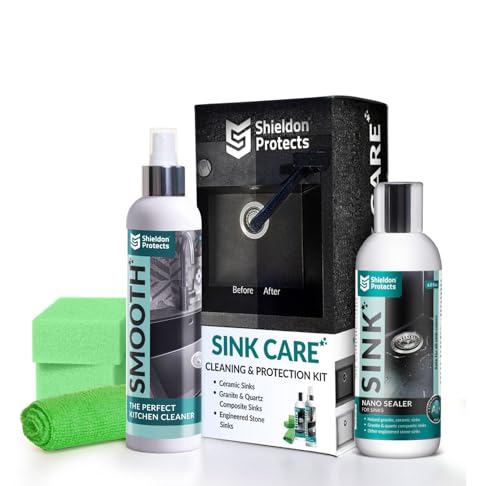
Shieldon Sink Care Kit for Granite Composite — Best Full Restoration Kit
When a Diamond sink’s problem is no longer dirt but behaviour, water clinging in sheets, stains arriving faster than they used to, grease filming a bowl that once shrugged it off, the answer is a system rather than a spray. Shieldon’s care kit pairs a cleaner with a nano sealer for granite composite, ceramic and natural stone sinks, promising to restore shine and to repel stains, grease and hard water, and it includes the two sponges and microfibre cloth the process needs.
Read its claim precisely: this is an independent kit that declares granite composite within its own stated range, which is the correct and sufficient basis for using it on a Diamond bowl. It is not a Blanco product and carries no Blanco endorsement, and this guide presents it strictly as a third-party system whose sealer step does something the manufacturer’s weekly cleaner does not attempt: laying down a renewed protective surface that changes how water and soil behave for the following weeks.
Schedule it quarterly, or whenever the bowl’s water behaviour tells you the surface has gone tired. Clean first, seal second, and give the treatment the unhurried session it asks for rather than squeezing it between dinner courses. Households in hard water districts will likely adopt it as the Diamond’s seasonal service, with BlancoClean handling the weeks in between.
A care kit is the purchase owners postpone longest and appreciate fastest, usually on the afternoon the sealed bowl starts shedding water like a new sink again.
- Maker: Shieldon, independent of Blanco
- System: cleaner plus nano sealer, two stages
- Stated range: granite composite, ceramic, natural stone
- Included: two sponges and a microfibre cloth
- Promise: restores shine, repels stains and hard water
Strengths
- Sealer step renews protection, not just cleanliness
- Tools included for the full two-stage process
- Granite composite named in its own surface range
Trade-offs
- A session-length treatment, not a quick wipe
- Third-party system without manufacturer endorsement
- Sealer needs reapplication on a seasonal rhythm
Best for: Diamond owners whose sink has lost its water-shedding behaviour and needs a restorative system.
Not suited for: owners wanting a single quick spray for weekly upkeep.
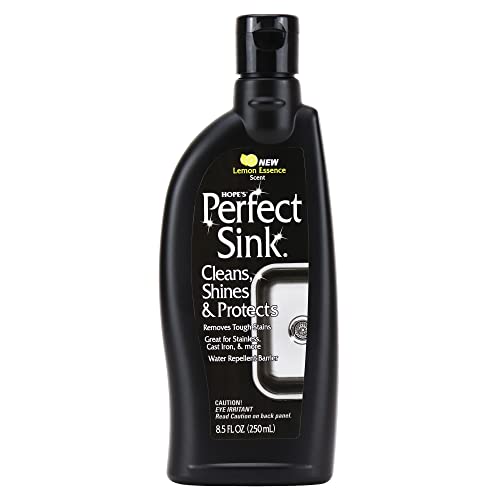
HOPE’S Perfect Sink Cleaner and Polish — Best for Lifting Stubborn Stains
Within this guide’s Blanco-specific frame, the HOPE’S sink polish plays the role of the mark remover. Its label lists composite among the sink materials it serves, alongside cast iron, Corian and acrylic, and that wording is the whole basis of its inclusion: an independent polish, suitable for composite sinks according to its maker, aimed at stains and restoration rather than at weekly maintenance. No connection to Blanco is claimed for it, and none should be inferred.
The Diamond-specific case for it is the metal-mark problem. Composite bowls collect grey streaks where pan bases and cutlery drag, plus the shadow stains that coffee and tea leave in a bowl rinsed too casually. A restorative polish worked patiently over those areas, with dwell time doing the heavy lifting, lifts evidence that a maintenance cleaner is not designed to touch. The compact bottle suits that occasional, targeted work well.
Keep its role fenced. This is the bottle for the monthly inspection under good light, when the Diamond’s bowls get their marks audited one by one, not the bottle for the weekly wash, where BlancoClean’s gentler, purpose-built chemistry belongs. Used in its place, it extends the intervals between heavier restorations like the Shieldon kit considerably.
Keep this polish’s work diary mental and brief: marks in, marks out, once a month, and the Diamond’s bowls stay out of the restoration conversation almost entirely.
- Maker: HOPE’S, independent sink polish
- Label wording: composite listed among its materials
- Size: 8.5 fluid ounces for occasional work
- Action: restorative, removes stains and bloom
- Diamond role: monthly mark and stain attention
Strengths
- Composite named on its own label plainly
- Strong on metal marks and shadow stains
- Occasional rhythm makes the small bottle last
Trade-offs
- Not the manufacturer’s cleaner for SILGRANIT
- Too purposeful for the weekly maintenance slot
- Patient dwell technique decides the outcome
Best for: Diamond owners battling pan marks and drink stains that weekly cleaning leaves behind.
Not suited for: owners who want the sink maker’s own formula as their only product.

KOHLER Neoroc Kitchen Cleaner K-23730 — Best Protective Daily Composite Cleaner
There is a particular credibility in a cleaner made by a sink manufacturer, even when the sink it was made for is not yours. Kohler formulates this cleaner for Neoroc, its own composite sink material, and states protection against fingerprints, grease and water spots, the exact trio that troubles dark composite bowls daily. A Diamond owner can therefore read it as a composite specialist from a peer manufacturer, suitable for granite composite care on the strength of its own composite-sink purpose, while understanding clearly that it is a Kohler product with no Blanco connection.
The protection angle distinguishes it from a plain cleaner. Dark SILGRANIT shows fingerprints around the rim and faucet deck with embarrassing clarity, and a formula that leaves the surface less receptive to the next print stretches the clean look across the whole week rather than the whole hour. The eight ounce bottle and kitchen-specific positioning suit that frequent, light application around the bowl’s most-touched geography.
Alternate it intelligently with the manufacturer’s own cleaner rather than treating the two as rivals. BlancoClean owns the weekly full-bowl maintenance; the Kohler bottle owns the quick protective passes over rim and deck between times. Composite owners who run both find each product doing the work its maker actually designed it for, which is the recurring moral of every cleaning guide on this site.
Fingerprint defence sounds trivial until a dark rim under pendant lights is greeting guests; then it becomes the most visible cleaning the household does.
- Maker: Kohler, for its Neoroc composite sinks
- Size: 8 fluid ounces, kitchen cleaner format
- Stated defence: fingerprints, grease, water spots
- Material logic: formulated for composite sink care
- Diamond status: third-party, no Blanco connection
Strengths
- Composite-sink pedigree from a peer manufacturer
- Protective finish stretches the clean look longer
- Ideal for rim and deck touch zones
Trade-offs
- Made for a rival material, however kindred
- Small bottle suits passes, not full restorations
- No Blanco endorsement attaches to it
Best for: dark Diamond owners whose rims and decks collect fingerprints faster than the bowls collect soil.
Not suited for: purists who keep only the sink manufacturer’s own products in the cupboard.

Weiman Granite & Stone Daily Clean & Shine — Best Daily Wipe for Composite Households
In a Blanco-focused cupboard, the Weiman spray is the generalist neighbour: a daily formula for granite and stone that cleans, shines and disinfects, with the maker stating it kills ninety-nine point nine percent of germs and bacteria under its label directions. Granite composite owners reach for it because SILGRANIT’s stone-rich composition sits within the granite family’s care habits, and the bottle’s own stated range covers granite and stone surfaces for daily use. That is the basis presented here, the product’s own stone positioning, with no Blanco certification implied or claimed.
Its daily rhythm complements rather than competes with BlancoClean’s weekly appointment. The spray handles the counter-adjacent wipe-downs, the splash zone and the quick sanitation pass after raw meat has been prepared near the sink, where a disinfecting claim, used with its dwell time respected, does work a maintenance cleaner never promised. The citrus scent and streak-free finish keep that frequency pleasant rather than medicinal.
Boundaries keep the arrangement honest. The Weiman does not replace the weekly SILGRANIT-specific clean, does not seal like the Shieldon system, and should be kept to the surfaces its label names. Inside those fences it is the bottle a composite household will empty fastest, which in cleaning is usually the truest review a product can earn.
Frequency is this spray’s whole argument, and composite households that adopt it find the weekly deep clean shrinking as the daily wipe grows.
- Maker: Weiman, daily granite and stone spray
- Size: 24 ounces, citrus scented
- Maker claim: disinfects, killing 99.9 percent of germs
- Stated range: granite, marble, limestone, tile, slate
- Diamond status: third-party stone care, no Blanco link
Strengths
- Daily disinfecting option for the sink’s surround
- Streak-free finish suits frequent quick passes
- Stone-family positioning fits composite care habits
Trade-offs
- Not formulated specifically for SILGRANIT
- Dwell time required for the disinfecting claim
- Does not seal or restore a tired surface
Best for: composite households wanting a daily disinfecting wipe within a stone-care routine.
Not suited for: owners seeking a SILGRANIT-specific formula for every task.

Bar Keepers Friend Granite & Stone Cleaner — Best Periodic Polish in the Stone Family
The final pick returns to a distinction this site makes often: within a famous brand, the bottle matters more than the name. This is Bar Keepers Friend’s granite and stone cleaner and polish, the branch of the family labelled for natural and manufactured stone, quartz and marble among them, and it is that stone-specific labelling that earns it a place in a granite composite cupboard. The brand’s stronger general powders are a different product entirely and should stay far from a Diamond bowl.
On composite, its role is the periodic polish: a pass that cleans, shines and helps protect, restoring some of the surface’s composed lustre after weeks of daily service have flattened it. The two pack format fits households running the same stone-care routine across composite sink and stone counters together, where one bottle lives by the sink and its twin under the counter it serves.
Treat it as the finishing step in the Diamond’s calendar, after cleaning has done its plain work, and buff it properly rather than wiping it away in haste. A polish rushed is a polish wasted, and on a matte composite the reward for patience is subtle but real: an even depth to the colour and a surface that meets the next week’s water with better manners.
A twin pack quietly enforces the polish rhythm, because a household with a reserve bottle has one fewer excuse to skip the monthly pass.
- Maker: Bar Keepers Friend, stone-specific formula
- Pack: two bottles of 25.4 ounces
- Labelled for: natural and manufactured stone, quartz
- Also named: Silestone, soapstone and marble
- Diamond status: independent stone care product
Strengths
- Stone-specific branch of a famous cleaning family
- Polish step restores an even, composed lustre
- Twin pack serves sink and counters together
Trade-offs
- Must not be confused with the brand’s powders
- A finishing pass, not a rescue treatment
- Buffing effort is part of the result
Best for: households polishing a composite sink and stone counters within one shared routine.
Not suited for: anyone tempted to substitute the brand’s general powder onto composite.
How Do the Six Divide the Work on a Diamond Sink?
| Pick | Relationship to Blanco | Working role | Best moment to use it |
|---|---|---|---|
| BLANCO BlancoClean Daily+ SILGRANIT Cleaner | Made by Blanco for SILGRANIT | Weekly maintenance cleaner | The standing weekly wash |
| Shieldon Sink Care Kit for Granite Composite | Independent kit for granite composite | Cleaner plus nano sealer restoration | Quarterly revival and sealing |
| HOPE’S Perfect Sink Cleaner and Polish | Independent, labels composite sinks | Restorative stain-lifting polish | When marks and bloom accumulate |
| KOHLER Neoroc Kitchen Cleaner K-23730 | Made by Kohler for its Neoroc composite | Protective daily composite cleaner | Frequent gentle care and fingerprint defence |
| Weiman Granite & Stone Daily Clean & Shine | Independent, labels granite and stone | Daily clean and shine for stone family | Routine wiping on composite surfaces |
| Bar Keepers Friend Granite & Stone Cleaner | Independent, labels manufactured stone | Cleaner-polish for stone and quartz family | Periodic lustre and protection pass |
What Is SILGRANIT, and Why Does It Clean Differently?
SILGRANIT blends a high proportion of granite stone particles with an acrylic resin binder, moulded under pressure into a dense, non-porous sink body. The stone fraction supplies hardness, heat tolerance and the matte mineral look; the resin fraction supplies the mouldability and the surface behaviour that cleaning must respect. That is why kettle descalers and scouring powders, tolerable on quarried stone or steel, are unwelcome here: they attack the binder that holds the whole composite together.
In daily terms the material is forgiving: non-porous against stains, unbothered by ordinary heat, and quiet under dropped cutlery. Its vulnerabilities are specific rather than general, limescale veiling on the surface, metal transfer from dragged pans, and pigment left standing overnight. The six products in this guide map onto those three vulnerabilities plus routine soil, which is the correct way to build a care cupboard for any engineered material.
How Do You Remove Limescale Veiling From a Diamond Sink?
Limescale on composite appears as a pale, cloudy veil that makes dark bowls look grey and tired, and it builds fastest where water stands and evaporates: the bowl floor’s low spots, the drain surround and the faucet deck. The weekly BlancoClean rhythm exists largely to deny that veil its foothold, lifting mineral film while it is still a rumour rather than a landscape.
Established veiling needs patience over force. Work the manufacturer’s cleaner or the restorative polish over the affected area in sections, allow dwell time, and repeat the cycle rather than reaching for an acid descaler, whose speed is bought with the resin’s health. A sealed finish from the Shieldon kit then slows the veil’s return, turning a recurring battle into a seasonal appointment.
How Should Metal Marks and Pan Streaks Be Treated?
The grey streaks a Diamond collects are usually metal transferred from pan bases and utensils, sitting on the surface rather than cut into it, which is why a restorative polish lifts them so satisfyingly. Rub the polish along the mark with a soft cloth, following the bowl’s contours, and let the product’s chemistry loosen what friction deposited. Dragging anything abrasive across the same mark converts a removable deposit into a permanent scar, the one irreversible outcome in composite care.
Prevention is a handling habit: lift pans rather than sliding them across the bowl, and use the sink grid if your cooking involves heavy cast iron in daily rotation. Composite is hard, but hardness and kindness are different properties, and a bowl treated as a surface rather than a slide will keep its even finish for years longer.
Which Products Should Never Touch a Blanco Diamond Sink?
The blacklist is short and absolute. Scouring powders and abrasive pads scratch the resin-bound surface and open it to faster staining. Strong acid descalers, the kettle and bathroom kind, attack the binder and can bleach or roughen the colour unevenly. Oven cleaners and undiluted bleach bring caustic force that composite never asked for and cannot repay with anything but damage.
Steel wool deserves its own sentence because it sins twice, scratching the surface and leaving behind microscopic iron that rusts into freckles indistinguishable from stains. When a mark resists every gentle product in this guide, the correct escalation is time, repetition and the manufacturer’s own advice line, in that order, never a harsher chemistry borrowed from another room’s cupboard.
What Does a Good Weekly Routine for a Diamond Sink Look Like?
Choose a fixed evening, because composite care succeeds by rhythm rather than enthusiasm. Empty the bowl completely, wash it with the manufacturer’s weekly cleaner, attend to the drain surround and faucet deck where film concentrates, rinse thoroughly, and dry the whole bowl with a cloth. That last step, two unglamorous minutes, prevents more veiling and spotting than any product in this guide can remove after the fact.
Monthly, add the inspection: run a hand over the bowl in good light, note metal marks, pigment shadows and any area where water has stopped beading, and answer with the polish or the care kit as the evidence dictates. A sink maintained on that calendar ages like the stone it imitates, slowly and with dignity, rather than like a neglected appliance.
Can You Use the Same Cleaner on the Faucet and Counters?
The faucet above a Diamond sink is usually stainless or chrome, and the counters are usually stone, quartz or laminate, so the sink’s cupboard naturally overlaps with the kitchen’s wider one. The stone-family products above, the Weiman daily spray and the Bar Keepers Friend stone polish, legitimately serve the counters their labels name, which is why they appear in both this guide and the general counter guide, in differently written roles.
The traffic is one-directional, though. Composite-safe products may graduate to counters their labels name, while counter products, degreasers and descalers should never be assumed safe downward onto SILGRANIT. When a bottle’s label does not name composite or granite composite, its place is elsewhere in the kitchen, and the Diamond keeps its own small, correct shelf.
How Do You Handle Pigment: Coffee, Tea, Turmeric and Beetroot?
Composite’s non-porous surface gives pigment no depth to hide in, so fresh spills rinse away with water alone and only standing contact creates work. The household rule is therefore temporal rather than chemical: rinse pigment the same evening, and the restorative polish will rarely be needed. A mug ring left over a holiday weekend is the realistic worst case, and it yields to the polish with dwell time and a soft cloth.
Beetroot and turmeric deserve their reputation and a prompt rinse in equal measure, particularly on paler SILGRANIT colours where their evidence shows at full contrast. Dark Diamond bowls forgive pigment visually while still deserving the rinse, since the deposit dulls the matte finish whether or not its colour announces itself.
What Should You Do in the First Month With a New Diamond Sink?
Establish the drying habit before any product habit, because the first month sets the surface’s baseline. Rinse after use, dry after the evening wash, and run the manufacturer’s cleaner weekly from the start rather than waiting for the first veil to justify it. Early consistency is what keeps a composite sink in its honeymoon condition for years instead of months.
Also register the sink and keep Blanco’s own care guidance with the house documents. If an unusual mark or a warranty question ever arises, the manufacturer’s records and your own routine notes turn the conversation into a short one. Premium materials repay premium paperwork, and the Diamond is no exception to that household law.
How Does Colour Change the Care Conversation?
Dark SILGRANIT colours, the anthracites and blacks that dominate Diamond sales, display limescale veiling and pale dust at maximum contrast while hiding pigment and metal marks inside their depth. Pale colours reverse the evidence entirely, shrugging off veiling visually and confessing every coffee shadow. Neither is easier to own; each simply schedules its chores in a different order.
Choose products by your colour’s confession pattern. Dark bowls lean on the weekly anti-veil rhythm and the sealer’s protection; pale bowls lean on prompt pigment rinsing and the restorative polish. The six picks above cover both confessions, which is why this guide refuses to narrow itself to a single bottle even for a single sink model.
When Should You Call Blanco Rather Than Clean Harder?
A crack, a chip from a falling cast-iron edge, a stain that survives the full gentle arsenal, or any change in the surface’s texture under the hand: these are manufacturer conversations, not cleaning challenges. Blanco’s support for its own material can distinguish a cosmetic event from a structural one and can advise on repair paths that no bottle in this guide should attempt to improvise.
The instinct to clean harder is the enemy at exactly this threshold. Every product above was chosen for respecting the material’s limits, and the most respectful act available, when those limits are reached, is to stop cleaning and start telephoning. A Diamond sink is a decades-long fixture, and one patient call protects more value than a cupboard of chemistry.
How Should You Clean the Drain and Disposal Flange Area?
The drain surround collects the bowl’s hardest-working grime, a ring of film, food fines and mineral scale in the one place a flat cloth cannot follow. Work the weekly cleaner around the flange with a soft brush, rinse generously, and dry what you can reach. On composite, that brush must stay soft, because the drain’s tight radius tempts owners toward the scouring tools this guide has banned from the room.
If a disposal is fitted, its splash guard and flange deserve the same weekly attention, since odours blamed on the sink usually live there. A clean, dry drain zone changes the whole bowl’s perceived freshness more than any scented product, and it is the detail that separates a maintained Diamond from a merely wiped one.
What Is the Right Way to Trial a New Cleaner on SILGRANIT?
Trial any new bottle, however impeccable its label, in the bowl’s least visible corner: behind the faucet deck or beneath where a grid usually sits. Apply it exactly as directed, rinse, dry, and inspect the patch the next morning in natural light for any change in sheen or colour. Composite reactions are usually immediate and local, so a disciplined patch test converts an unknown into a known at the cost of one square inch and one day.
Only after that audition should a product join the Diamond’s shelf, and the audition applies to products this guide includes as much as to any impulse purchase. Labels, including the ones quoted here, are claims to be verified on your own sink’s colour and finish, and the verification habit is the real subject of every cleaning article on this site.
How Do Seasonal Habits Change Composite Care?
Winter brings harder-working kitchens, more roasting, more soaking, and in many districts a harder cast to the water as supplies change, so the Diamond’s weekly rhythm may tighten to twice weekly during the heavy season without any product changing at all. Summer brings pigment, berries, salads, tomatoes, and a bowl that needs rinsing promptly rather than cleaning deeply.
Reading the sink seasonally keeps the cupboard stable: the same six products, deployed at different tempos. Owners who chase new bottles for seasonal problems usually discover the old bottles were sufficient and the calendar was the missing ingredient, which is a cheaper discovery than most the kitchen offers.
Should a Blanco Diamond Sink Be Sealed From New?
A new Diamond arrives with its moulded surface intact and behaving well, so the sensible sequence is maintenance first and sealing when behaviour changes, rather than sealing on delivery day out of anxiety. The care kit’s moment arrives when water stops beading, when stains begin arriving faster than the weekly cleaner dismisses them, or roughly on a seasonal rhythm in hard water homes.
That said, owners in the hardest water districts may reasonably adopt the kit earlier as prevention, since limescale veiling is far easier to slow than to reverse. Either way, the decision should follow the bowl’s observed behaviour under your water, not a generic calendar printed for a different postcode’s supply.
How Do You Care for a Blanco Sink in a Rental Property?
Tenants cannot be relied upon to know that a composite sink has a blacklist, so the landlord’s defence is information placed where the cleaning happens: a small, polite card inside the cupboard door naming the weekly cleaner to use and the two chemistries to avoid. Providing the manufacturer’s own bottle at the start of the tenancy costs little and converts that card from a rule into a routine the tenant can actually follow.
At inspection, read the bowl the way this guide reads it: veiling means the weekly rhythm lapsed, scratches mean something abrasive visited, and both are conversations rather than catastrophes if caught early. A Diamond in a rental is a premium fixture exposed to amateur care, and managing that exposure with a supplied bottle and a cupboard card is far cheaper than managing its consequences.
What Role Does the Sink Grid Play in Composite Care?
A bottom grid keeps pan bases and cutlery from ever quite touching the composite, which prevents most metal transfer and the small impact chips that begin at contact points. For households whose cooking is heavy and hurried, the grid is not an accessory but a care product in its own right, silently doing the work that the restorative polish would otherwise be hired to undo monthly.
The grid itself needs the weekly wash alongside the bowl, since its feet and wires collect the same film in miniature. Lift it out during the BlancoClean pass, clean beneath it, and dry the contact points before it goes back. A grid left in place for a month becomes a stencil, printing its own outline in film across the bowl floor.
How Should You Treat the Sink During a Kitchen Renovation Elsewhere?
Renovation dust is abrasive, laden with plaster and grit that turn a routine wipe into a sanding session. Cover a Diamond sink completely whenever work happens in the room, even work that seems distant and clean, and rinse the bowl with plenty of plain water before the first wipe after uncovering it, so any settled grit floats away instead of being ground across the surface by a cloth.
Builders should be told, explicitly and early, that the composite bowl is not a mixing bucket, a tool rest or a step. Most tradespeople respect a fixture the moment its material is explained; the damage stories in composite care almost always begin with a sink nobody mentioned, used as site furniture by someone who reasonably assumed it was stone.
Do Water Softeners Change How a Diamond Sink Ages?
Softened water removes the limescale veil from the composite story almost entirely, which transforms the care calendar: the weekly cleaner becomes a simple soil wash, the sealer’s anti-scale role fades, and pigment and metal marks inherit the starring roles. Owners who fit a softener for other reasons will find their Diamond quietly becoming the lowest-maintenance sink they have ever owned.
The trade is a different film, since soft water can leave its own slippery feel and, in some supplies, a faint spotting of a different character. The routine does not change, only its emphasis, and the drying habit remains valuable under any water chemistry ever plumbed into a house.
How Can You Tell Genuine Wear From Cleanable Deposit?
Run a clean, wet fingertip across the suspect area. Deposits, scale, metal transfer, dried pigment, sit on the surface and change the fingertip’s glide, catching slightly against the direction of travel. Genuine wear, a scratch or a dulled patch, feels like a change in the surface itself and usually catches light differently at a low angle even when the bowl is wet.
That small diagnostic decides the response: deposits get chemistry and patience from the products above, while wear gets acceptance or a manufacturer conversation. Misreading the two leads owners to scrub deposits as if they were damage and to polish damage as if it were dirt, failing at both with the same exhausted cloth.
What Should Guests and Cleaners Be Told About the Sink?
A household’s care routine is only as strong as its least informed pair of hands, and the two groups most likely to meet a Diamond sink uninformed are guests helping with washing up and professional cleaners arriving with a standard kit. A thirty-second briefing, soft sponge only, the named bottle is under the sink, nothing abrasive, protects the surface more reliably than any product choice the owner makes alone.
For cleaning services, put it in writing on the service notes and supply the products yourself rather than letting a generic kit improvise. Professionals respect a specified product list; what damages composite in real homes is rarely malice and usually a well-meaning scouring pad deployed by someone who was never told the bowl was not steel.
How Does a Diamond Sink Age Across a Decade of Correct Care?
Correctly kept, a SILGRANIT bowl ages almost invisibly: the colour holds its depth, the matte surface stays even, and the only evidence of the years is a faint softening of the factory freshness that most owners read as the sink settling into the house. That trajectory depends entirely on the unglamorous calendar this guide describes, weekly manufacturer cleaning, monthly mark attention, seasonal sealing where the water demands it.
Incorrectly kept, the same sink ages in chapters that can be read at a glance: the veil chapter, the scratch chapter, the ring around the drain chapter. The encouraging truth is that the first two chapters are largely reversible with the restorative products above when they are caught early, which is why this guide keeps prescribing inspection in good light as a cleaning tool in its own right.
What Mistakes Do Blanco Diamond Owners Make?
Reaching for the kettle descaler is the costliest reflex in composite care, because the acid that dissolves scale from steel attacks the resin binding a SILGRANIT bowl, leaving the surface rougher and faster to veil than before. The cure manufactures the disease’s next, worse episode, and the damage cannot be polished back to the moulded original.
A second mistake is assuming that any product labelled for granite is automatically endorsed for a Blanco sink. Granite composite is a material family, not a Blanco certification, and this guide has been careful to present third-party bottles on their own labels’ authority. Owners should keep that distinction alive in their own cupboards and conversations.
Third, owners scrub metal marks with abrasive pads, converting a removable deposit into a scratched patch that then collects soil faster than the surrounding bowl. The mark would have lifted with polish and patience; the scar is permanent. In composite care, patience is not a virtue but a technical requirement.
Finally, many households clean the bowls and ignore the faucet deck and drain surround, where film and scale concentrate into the dark ring that makes a cared-for sink look neglected. The weekly routine in this guide names those zones deliberately, because a sink reads as clean at its dirtiest visible detail.
Final Recommendation
The manufacturer’s own bottle is the spine of the routine: BLANCO BlancoClean Daily+ SILGRANIT Cleaner weekly, without exception, and the Diamond will hold its depth for years. Around that spine, the Shieldon Sink Care Kit for Granite Composite provides the quarterly restoration and sealing that maintenance alone cannot deliver.
For marks and moments between those appointments, the HOPE’S Perfect Sink Cleaner and Polish lifts stains on its own composite labelling, the Kohler cleaner guards the rim against fingerprints, and the two stone-family bottles support the wider kitchen. Each is presented on its own maker’s authority, with Blanco’s cleaner alone carrying Blanco’s name, exactly as it should be.
A Diamond sink asks for so little, the right bottle weekly and a dry cloth nightly, that giving it precisely that is the easiest bargain in the whole kitchen to keep.
Frequently Asked Questions
Is BlancoClean the only cleaner Blanco approves for Diamond sinks?
It is the cleaner Blanco itself makes and positions for SILGRANIT, which makes it the manufacturer’s own maintenance answer and the reference product in this guide. Other products in this list are included on the authority of their own labels, which name granite composite or composite among their surfaces; that is suitability by their makers’ statements, not a Blanco endorsement, and this guide claims no such endorsement for them.
Can I use a granite counter cleaner on my Blanco Diamond sink?
Only where the product’s own label supports granite composite or composite sink use, and with the understanding that counter positioning does not equal sink approval. The stone-family sprays in this guide are included because their stated ranges cover the granite and stone family for daily care. When a label names counters alone and stays silent on sinks, keep it on the counter.
How do I stop my dark Diamond sink looking grey?
The grey cast is limescale veiling, and the cure is rhythm plus drying: the manufacturer’s weekly cleaner to lift film early, a dry wipe after the evening wash to deny minerals their evaporation stage, and a sealing care kit seasonally to slow the veil’s return. Avoid acid descalers entirely, since they roughen the surface and make each subsequent veil arrive faster.
Will a nano sealer change how my sink looks?
A sealer from a care kit like Shieldon’s is intended to restore the surface’s behaviour more than its appearance: water beads and sheets away, stains release more easily, and the matte depth looks even because the surface is protected rather than coated in anything visible. Any change is toward the sink’s original condition, not toward a gloss the material never had.
Are metal marks on SILGRANIT permanent?
Usually not. The grey streaks from pans and cutlery are metal deposited on the surface, and a restorative polish with patience lifts them. They become permanent only when attacked with abrasives that scratch the composite itself. Lift cookware rather than sliding it, and the marks will visit rarely enough for the polish’s monthly round to keep the bowl clear.
Can I use bleach on a Blanco Diamond sink?
Undiluted bleach and strong caustic cleaners sit on this guide’s blacklist for composite, because they can damage the resin-bound surface and its colour. The disinfecting need that sends owners toward bleach is better met by the daily stone spray in this guide, used on the surfaces its label names and with its dwell time respected, or by asking Blanco’s own guidance for the specific situation.
How do I keep the area around the faucet on a Diamond sink clean?
The faucet deck is part of the sink’s moulded geography on many Diamond installations and collects the puddle ring where water stands after every use. Include it in the weekly manufacturer’s clean, work the cleaner around the faucet base with a soft brush, and dry the deck during the nightly wipe. That ring, left alone, becomes the dark collar that makes an otherwise immaculate composite sink look tired in photographs and in person.
What should I do if a red wine spill sits in the sink overnight?
Do not panic and do not reach for anything abrasive. Rinse the bowl, wash it with the manufacturer’s cleaner, and treat any remaining shadow with the restorative polish and a dwell period rather than pressure. Pigment on a non-porous composite is a surface guest, not a resident, and an overnight stay rarely survives a patient morning routine performed in the right order.
Related Guides
Composite sink care leads naturally toward the sinks themselves and the wider cleaning cupboard, so these guides round out the picture. Best Composite Kitchen Sinks Best 2.0 Cubic Foot Countertop Microwaves Best Descaler for Nespresso Machines.



[…] cooking picture with Best Smokers for Beginners if this is your first step into low-and-slow, Best Cleaners for Blanco Diamond Composite Kitchen Sinks for the indoor cleanup station after a smoking day, and Best Dual Probe Meat Thermometers for the […]