What's inside
- Key Takeaways
- Quick Picks
- How Did We Choose These Budget Pet Vacuums?
- How Do the Six Picks Compare at the Kitchen Table?
- Where Does Pet Hair Actually Live in Your Home?
- How Should You Maintain a Budget Pet Vacuum so It Stays Strong?
- What Mistakes Do Budget Pet Vacuum Shoppers Make?
- How Do You Build the Cheapest Complete Pet Hair System?
- How Does Each Pick Handle Cars, Stairs and Sofas Specifically?
- What Should You Expect during Shedding Season?
- How Do Budget Pet Vacuums Treat Different Coats and Animals?
- What Does a Week of Budget Pet Cleaning Actually Look Like?
- When Should a Budget Pet Home Spend More?
- How Should You Store and Charge Handhelds so They Are Always Ready?
- Can Budget Machines Handle Litter, Kibble and Other Pet Debris?
- Final Recommendation
- Frequently Asked Questions
- Related Guides
As an Amazon Associate I earn from qualifying purchases. This post may contain affiliate links at no extra cost to you.
cottageverdict.com is reader-supported. When you buy through links on our site, we may earn an affiliate commission.
Where to buy: the five linked machines below are sold on Amazon, and each name leads to its listing so you can check price on Amazon today; the prose-only sixth entry is not sold anywhere, because it is already in your kitchen drawer.
The best budget pet vacuums start from a truth that expensive marketing prefers to skip: pet hair is not a difficult debris. It is light, it is visible, and it surrenders to almost any honest suction paired with a brush that can grab it. What makes pet hair a problem is not its stubbornness but its address book — it lives on sofas, stairs, car seats, bedding and the exact square of carpet where the dog performs his post-walk shake. Expensive machines earn their tiers with filtration systems, sealed bodies and deep-carpet agitation. The budget tier wins a different way: by putting a simple, willing machine within arm’s reach of every place hair lands.
That is why this shortlist is shaped the way it is. Three of the five linked picks are handhelds, because the daily reality of pet ownership is not a weekly whole-house ceremony but a dozen small ambushes: the sofa before guests sit down, the car before a passenger in black trousers gets in, the stairs that collect a visible fleece between proper cleans. Two full-size uprights anchor the list for the floors themselves, one a dedicated pet model with swivel steering, one a featherweight generalist that happens to be excellent value for shedding homes. A sixth entry costs nothing at all and is reviewed with complete seriousness.
A word about the word budget, since it does heavy lifting in this guide’s title. Budget here is a tier described in words, not a number — prices drift with seasons and sales, and a figure printed today would mislead by spring. What the tier means in practice: simple machines, honestly built, without sealed-system filtration theatre or flagship price tags, whose running costs stay low and whose replacement, years from now, will not require a family meeting. Spend where your home actually needs it; for most pet hair, it does not need much.
One expectation to set before the picks. Budget pet machines trade away refinement, not competence: bins are smaller, plastics plainer, filtration simpler, and none of these five will deep-clean a thick carpet like a premium upright. Households managing serious allergies should treat this list as the everyday tier and look higher for their main machine. Households whose problem is simply that a cheerful animal sheds on everything they own — welcome. Your problem is cheaper to solve than you feared.
Key Takeaways
- Pet hair is easy debris; the challenge is its locations, so reach and readiness matter more than raw power at this tier.
- Three handhelds make the list because most pet messes are small, sudden and nowhere near the room where a big vacuum lives.
- A motorised pet brush is the one feature worth insisting on — it lifts hair from upholstery that plain suction merely slides over.
- Two budget uprights cover the floors themselves: one pet-specific with swivel steering, one strikingly light for daily use.
- Budget means simpler filtration; allergy-managed homes should pair these with a higher-tier main machine or look upmarket.
- The zero-machine tier — lint rollers and grooming gloves — genuinely belongs in the system, especially for clothes and car seats.
Quick Picks
| Pick | Badge | Why it made the list |
|---|---|---|
| Bissell Pet Hair Eraser Hand Vacuum 2390A | Best sofa-and-stairs handheld | A pet-dedicated cordless hand vacuum with a motorised brush built for upholstery hair. |
| BLACK+DECKER dustbuster furbuster Pet Vacuum | Best motorised-brush handheld | The furbuster’s powered brush and familiar dustbuster shape, tuned for home and car hair. |
| Shark UltraCyclone Pet Pro Plus CH951 | Best car-interior pet pick | Pet power brush, crevice tool and an XL cup in a cordless handheld made for upholstery seams. |
| Bissell CleanView Swivel Pet Upright 2252 | Best full-size pet upright | Swivel steering, a triple-action brush roll and a large tank, built expressly for pet homes. |
| Dirt Devil Endura Lite Upright | Lightest budget upright | A featherweight corded upright that makes daily floor passes in shedding homes effortless. |
| Lint Rollers and Grooming Gloves | Zero-machine tier | No battery, no bin, no noise — the original pet hair technology, still unbeaten on clothes. |
How Did We Choose These Budget Pet Vacuums?
We shopped the way pet owners actually live. The first question was not how a machine performs on a showroom square of carpet but how quickly it can be in your hand when hair appears — because a budget machine’s superpower is presence. Handhelds that charge on a base and lift away in one motion scored over marginally stronger tools that live in boxes. Uprights scored on weight and steering, since a budget upright that is tiresome to push becomes a weekly machine, and pet hair does not keep a weekly schedule.
The second screen was the brush. Hair on upholstery and carpet is held by friction and static, and plain suction from a smooth nozzle slides over it with embarrassing politeness. Every linked pick therefore brings agitation to the fight: motorised pet brushes on the handhelds, a triple-action brush roll on the Bissell upright, a working brush on the Dirt Devil. Machines that offered suction alone, however proud their numbers, were passed over for this list.
Third, we audited the running costs that define a budget tier over years rather than weeks: washable filters over proprietary cartridges, bags nowhere in sight, bins that empty without tools, and batteries in machines from makers with replacement ecosystems. A cheap machine with expensive habits is not a budget machine; it is a subscription wearing a low first payment. Each pick below keeps its ongoing appetite modest and predictable.
Finally, we kept the sixth chair for the tools with no motor at all. Any honest guide to cheap pet hair control that omits lint rollers and grooming gloves is protecting the dignity of appliances at the expense of the reader. They are part of the system in every experienced pet home, and they set the standard the machines must beat: instant, silent, and already paid for.

Bissell Pet Hair Eraser Hand Vacuum 2390A — Best sofa-and-stairs handheld
Bissell has built its name in pet homes for generations, and the Pet Hair Eraser hand vacuum is that heritage concentrated into one cordless tool. Its listing describes a lithium-ion powered handheld for home, auto and upholstery pet hair pickup, and the detail that matters most sits at its front: a motorised brush designed to work hair out of fabric rather than skim across it. Sofas, stair treads, pet beds and the carpeted boot of a car are this machine’s native country, and it moves through them like a local.
The experience is defined by readiness. It lives charged, lifts one-handed, and answers the two-minute jobs that constitute most of pet ownership: the chair before a guest sits, the cushion where the cat spent the afternoon, the doormat’s daily donation. Lithium-ion power keeps its pull consistent through the job rather than fading audibly as older battery chemistries did, so the last stair gets the same effort as the first. Between jobs it asks almost nothing — an emptied cup, an occasional filter rinse — which is precisely the maintenance profile a budget tool must have to stay in daily service.
Its boundaries are a handheld’s boundaries. The cup is small, so a whole-car expedition means an emptying pause or two; the runtime suits ambushes, not afternoons; and no hand vacuum pretends to deep-clean floor carpet. Judge it instead as the machine that keeps pet hair from ever becoming a project. In homes where the big vacuum comes out on Saturdays, this is the tool that makes Saturdays easier — and on the evidence of its specialised brush and pet-first design, it is the budget handheld we would hand to a new pet owner first.
- Power: lithium-ion cordless, per the listing
- Brush: motorised, designed for upholstery pet hair
- Territory: home, auto and furniture per the listing
- Format: hand vacuum with dirt cup
- Positioning: budget tier, pet-dedicated
Strengths
- Motorised brush lifts hair that plain nozzles slide across.
- Always-charged readiness suits the ambush rhythm of pet mess.
- Bissell’s pet specialisation shows in details that matter daily.
Trade-offs
- Small cup needs emptying during bigger clean-up sessions.
- Runtime is sized for spot jobs, not whole-home cleaning.
- Floors still need an upright; this is a specialist, proudly.
Best for: sofa, stairs and pet-bed hair in any pet home. Not suited for: buyers wanting one machine to clean whole floors.
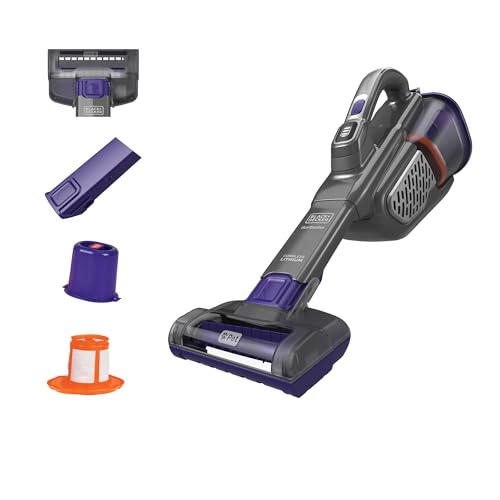
BLACK+DECKER dustbuster furbuster Pet Vacuum — Best motorised-brush handheld
The dustbuster is the handheld vacuum’s founding shape, and the furbuster variant aims it squarely at pet hair with a motorised pet brush at its nose. Its listing describes a cordless, rechargeable handheld for home and car with powerful suction in the AdvancedClean line — familiar words, but the combination deserves respect, because this is the tool shape that grandparents, students and new drivers all already know how to use. There is no learning curve to budget for; the machine explains itself in the hand.
Where the Bissell above is the specialist’s choice, the furbuster is the household’s: the one that lives in a utility cupboard or a hallway corner and gets borrowed for everything from the cat’s favourite chair to the crumbs-and-hair geology of a family car’s footwells. The powered brush distinguishes it from the legion of plain dustbusters that pet hair defeats; with agitation at the nozzle, upholstery gives up its fleece instead of polishing it. Its suction, in the handheld class, is entirely sufficient for debris that was never heavy to begin with.
Compromises arrive in the usual handheld places. Runtime and cup size suit sessions measured in minutes, and filtration is the simple, washable kind appropriate to the tier — effective for hair and crumbs, not a sealed allergen system. Owners who keep its brush free of wound hair will find it dependable for years; owners who do not will blame the motor for the brush’s sins, as owners have since the first dustbuster met the first long-haired cat. As a budget second machine for a pet home, it is close to the definition of money sensibly spent.
- Power: cordless rechargeable handheld
- Brush: motorised pet hair brush per the listing
- Territory: home and car per the listing
- Line: AdvancedClean dustbuster family
- Positioning: budget tier, generalist handheld
Strengths
- Powered brush solves the plain handheld’s pet hair weakness.
- Universally familiar shape needs no instruction for any user.
- Equally at home on upholstery, stairs and car interiors.
Trade-offs
- Cup and runtime are sized for spot work, not expeditions.
- Filtration is basic-tier; not a sealed allergen system.
- Brush needs regular de-hairing to stay at its best.
Best for: households wanting one grab-and-go tool for hair everywhere. Not suited for: allergy-managed homes needing sealed filtration.

Shark UltraCyclone Pet Pro Plus CH951 — Best car-interior pet pick
Shark’s UltraCyclone Pet Pro Plus is the handheld in this list with its sleeves rolled highest. Its listing assembles a pet power brush, a crevice tool, a scrubbing brush and an XL dust cup in a cordless hand vacuum — a kit that reads like it was specified by someone who has actually cleaned a car after a dog. Cars are where budget pet cleaning goes to be tested: hair weaves into carpet and seat fabric, grit hides in seams, and the whole job happens in a space designed for sitting, not for cleaning. Tools decide that job, and this machine brings the full set.
The crevice tool earns special mention because car interiors are mostly crevice: the trench between seat and console, the rails under seats, the door pockets where hair and gravel settle into a permanent sediment. The scrubbing brush handles the paw-print end of the problem, dried mud on mats and sills, while the pet power brush works the seats themselves. The XL cup matters more in a car than in a house, because the nearest bin is never near, and a cup that survives the whole car without a walk to the house bin keeps the job in one unbroken mood.
At home it covers the same territory as its handheld siblings — stairs, sofas, pet beds — with the same handheld limits on runtime and floor work. Its filtration is again tier-appropriate rather than medical, and its cup, while XL for a handheld, remains a cup. But as the designated driver of this shortlist, the machine that turns a hairy car from a monthly dread into a fifteen-minute routine, the UltraCyclone earns its chair with the most complete tool kit in the budget class.
- Tools: pet power brush, crevice tool, scrubbing brush
- Cup: XL dust cup for the handheld class
- Power: cordless hand vacuum format
- Territory: car and home per the listing
- Positioning: budget tier, kit-led value
Strengths
- Full tool kit answers cars, stairs and upholstery in one box.
- XL cup survives a whole car clean without a bin walk.
- Scrubbing brush tackles dried mud as well as hair.
Trade-offs
- Handheld runtime still bounds the size of each session.
- More tools means more pieces to store and keep track of.
- Not a floor machine; carpets need an upright partner.
Best for: pet owners whose car carries as much hair as their sofa. Not suited for: minimalists who want a single-nozzle tool and nothing else.
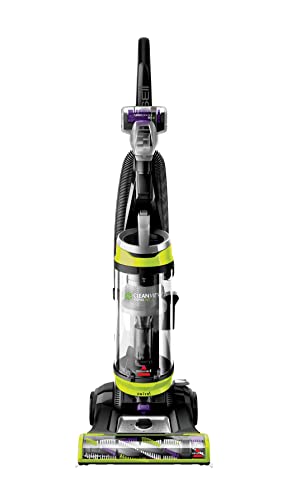
Bissell CleanView Swivel Pet Upright 2252 — Best full-size pet upright
When the floors themselves need their weekly reckoning, the CleanView Swivel Pet is the budget upright built expressly for the shedding household. Its listing names the equipment plainly: swivel steering, a triple-action brush roll, a large-capacity dirt tank and pet hair pickup as the design brief. Each item answers a known pet-home complaint. Swivel steering threads around the furniture pets colonise; the brush roll’s triple action is aimed at hair that mats into carpet pile; the tank swallows a shedding season’s session without the mid-clean emptying that breaks a cleaner’s rhythm and temper.
In use, this is the machine for the Saturday pass that resets the house: carpets agitated properly, hard floors swept by suction, edges visited, and the tank’s contents providing the week’s undeniable evidence of what the dog contributed. Scatter-free behaviour on hard floors matters in pet homes, where litter and kibble join the hair census, and the CleanView’s design brief covers both surfaces rather than treating boards as an afterthought. It also reaches under furniture better than its upright silhouette suggests, because the swivel head lets the body angle where a fixed neck would refuse.
The tier’s honesty applies here too. This is a bagless machine with filters to wash, a cord to manage, and filtration aimed at pet hair rather than at laboratory allergens. It will not coddle its user with flagship quietness or sealed-system purity. What it offers instead is the complete floor half of a budget pet system at a tier that leaves money for the handheld that handles the other half — and that pairing, as this guide keeps arguing, is how pet homes actually stay clean.
- Steering: swivel, per the listing
- Brush roll: triple-action design for pet hair pickup
- Tank: large-capacity dirt tank
- Format: corded bagless upright
- Positioning: budget tier, pet-dedicated upright
Strengths
- Purpose-built brush and tank for shedding households’ floors.
- Swivel steering makes furniture-dense rooms less of a wrestle.
- Large tank finishes pet-season sessions in one emptying.
Trade-offs
- Corded body asks more effort than a handheld for tiny jobs.
- Bagless filters need washing and patient drying.
- Filtration targets hair, not clinical allergen control.
Best for: pet homes wanting one upright designed for their floors. Not suited for: owners seeking sealed HEPA systems at any tier.

Dirt Devil Endura Lite Upright — Lightest budget upright
The Endura Lite’s argument is a single word repeated until it becomes a philosophy: light. Its listing describes a lightweight, powerful, corded bagless upright for carpet and hard floor, and in a shedding home that lightness changes the cleaning calendar. A machine that can be carried one-handed from cupboard to carpet, and pushed without shoulder negotiation, gets used on Tuesdays — and pet hair, which accumulates on its own daily schedule, is defeated by Tuesday machines far more than by Saturday heroes. This is the upright for owners who know their own habits honestly.
Do not mistake the lightness for fragility of purpose. The Endura line is Dirt Devil’s long-running value family, built around a simple formula: a working brush roll, honest suction, a rinsable filter and a body with nothing on it that does not earn its place. On the low and medium pile carpets where most pet homes live, that formula collects hair entirely respectably, and on hard floors it gathers the litter-and-kibble scatter that shedding homes sweep daily. Its cord frees it from runtime arithmetic entirely; the clean lasts as long as your patience, not the battery’s.
The compromises are the tier’s signature. The dust cup is modest, the plastics are workmanlike, and thick plush carpet will ask questions this light frame answers only adequately. Filtration is basic and washable rather than sealed. But weigh what the machine is for: a daily-driver upright at a budget tier, light enough that nobody in the house negotiates with themselves before using it. In the economy of pet hair, frequency is wealth, and no machine in this guide buys frequency more cheaply per pound.
- Format: corded bagless upright, lightweight
- Surfaces: carpet and hard floor per the listing
- Filtration: rinsable filter, simple bagless system
- Runtime: unlimited, courtesy of the cord
- Positioning: budget tier, weight-led value
Strengths
- Featherweight body turns daily floor passes into a habit.
- Corded stamina removes runtime from the cleaning equation.
- Simple, washable maintenance keeps running costs minimal.
Trade-offs
- Modest cup fills quickly during heavy shedding weeks.
- Deep plush pile exceeds its comfortable agitation range.
- Basic filtration is not aimed at sensitive allergy needs.
Best for: shedding homes that clean floors little and often. Not suited for: deep-pile carpets needing heavyweight agitation.
Lint Rollers and Grooming Gloves — Zero-machine tier
The final entry has no motor, no listing and no shame. A lint roller remains the fastest pet hair tool ever made for the jobs machines do worst: the black coat before a meeting, the car seat before a passenger, the guest-room pillow discovered at the worst possible moment. It works silently, instantly, in the dark, during a power cut, with no filter to wash and no battery to forgive. Grooming gloves attack the problem one step earlier, collecting loose hair at the animal during a stroking session the pet experiences as affection — the only cleaning technology in this guide that its debris source actively enjoys.
Their limits are equally obvious. Rollers consume refill sheets forever, gloves collect only what is already loose, and neither touches a carpet. But as members of a system they are irreplaceable, and every experienced pet household already runs the hybrid this guide recommends: machines for floors and furniture, rollers for fabric and emergencies, gloves for prevention. The zero-machine tier also disciplines the shopper. Any appliance that cannot beat a roller’s convenience for its chosen job should not be bought for that job — a test that saves more money than any sale.
We include them as a formal pick because honesty about cheap pet hair control demands it, and because their presence reframes the five machines above correctly. You are not buying your way out of pet hair; no tier does that. You are assembling, at the lowest sensible cost, a set of tools whose combined coverage leaves hair with nowhere respectable to live. The roller in the drawer and the glove by the dog’s chair are not admissions of defeat. They are the general staff of the whole campaign.
- Power: none; human hands only
- Running costs: roller refill sheets, indefinitely
- Territory: clothes, car seats, bedding, the animal itself
- Availability: every supermarket and drawer in the land
- Positioning: below budget — the zero tier
Strengths
- Instant and silent on clothes, where vacuums are clumsy.
- Gloves remove hair before it ever reaches a surface.
- No charging, emptying, filters or storage negotiations.
Trade-offs
- Roller refills are a small cost repeated forever.
- Useless on floors and deep upholstery hair.
- Gloves only collect hair the coat was ready to shed.
Best for: every pet home, as the always-ready first response. Not suited for: anyone expecting them to clean a carpet.
How Do the Six Picks Compare at the Kitchen Table?
| Pick | Badge | Format | Best territory | Running habit |
|---|---|---|---|---|
| Bissell Pet Hair Eraser Hand Vacuum 2390A | Best sofa-and-stairs handheld | Cordless handheld | Sofas, stairs, pet beds | Charge, empty cup, rinse filter |
| BLACK+DECKER dustbuster furbuster Pet Vacuum | Best motorised-brush handheld | Cordless handheld | Home and car spot work | Charge, empty, de-hair the brush |
| Shark UltraCyclone Pet Pro Plus CH951 | Best car-interior pet pick | Cordless handheld, tool kit | Car seats, seams, mats | Charge, empty XL cup |
| Bissell CleanView Swivel Pet Upright 2252 | Best full-size pet upright | Corded upright | Whole floors, weekly reset | Empty tank, wash filters |
| Dirt Devil Endura Lite Upright | Lightest budget upright | Corded upright, light | Daily floor passes | Empty cup, rinse filter |
| Lint Rollers and Grooming Gloves | Zero-machine tier | Manual tools | Clothes, seats, the pet | Replace roller sheets |
The pattern to notice is territorial, not technological. Each pick owns a map of the pet home — upholstery, car, floors, clothing — and overlaps its neighbours only politely. A budget spent across two territories, say the Bissell handheld and the Dirt Devil upright, cleans a real home more completely than the same budget concentrated in one stronger machine standing in a single territory. That is the budget tier’s whole strategy, printed in a table.
Where Does Pet Hair Actually Live in Your Home?
Map the hair before you shop and the shopping becomes obvious. The first territory is soft furniture, because animals are connoisseurs of comfort and sofas collect both hair and the oils that glue it down. The second is the stair carpet, a vertical trap that every paw crosses and no robot climbs. The third is the car, where hair weaves into fabric under the twin pressures of vibration and time until it appears upholstered in its own right. The fourth is the floor’s edge — the skirting line and rug borders where air currents deposit what open floor gives up.
There is a fifth territory, easy to forget because it is not a place: the air’s slow deposit on shelves, skirting tops and the leaves of houseplants, where the finest fraction of the pet’s output settles over weeks. No machine in this guide is built for that film, and honesty is cheaper than disappointment — a damp cloth on a weekly round handles it better than any suction at this tier, and households troubled by the airborne fraction itself should read about filtration-led machines and purifiers rather than asking a budget handheld to be a climate system.
Each territory has a mechanical answer, and the answers are not interchangeable. Upholstery wants a motorised brush in a light body. Stairs want the same tool, carried. Cars want crevice tools and patience. Floors want a brush roll and capacity. Clothing wants adhesive. A shopper who begins with the map will never make the classic budget error — one respectable machine, bought hopefully, standing in the hall while hair flourishes in the four territories it cannot reach. The map is the budget; the machines are merely how you spend it.
How Should You Maintain a Budget Pet Vacuum so It Stays Strong?
Budget machines do not die of weak motors; they die of hair, administered slowly. The brush on every pick in this guide is a hair collector before it is a hair remover, and a brush wound tight with its own harvest loses agitation, strains its motor and begins polishing the very hair it was bought to lift. Give each brush a monthly appointment with scissors or a seam ripper, cutting along its groove and pulling the freed hair away, and the machine you maintain will feel suspiciously like the machine you bought.
Filters are the second liturgy. The washable filters in this tier are honest components with one demand: wash them on schedule and let them dry completely — a full day, not an hour of optimism — before they return to work, because a damp filter chokes airflow and mildews quietly. Cups and tanks should be emptied before their fill lines, since hair compresses into felt that resists both suction and emptying. None of this requires skill, money or tools beyond scissors. It requires only the recognition that at the budget tier, maintenance is not the warranty’s fine print; it is most of the product.
What Mistakes Do Budget Pet Vacuum Shoppers Make?
The expensive mistake at this tier is buying suction without a brush. Listings for plain handhelds boast impressive pull, and then their owners watch hair slide around a sofa cushion like leaves on ice, because friction, not airflow, was the lock. The second mistake is the opposite vanity: one large upright bought to do everything, which then does the floors admirably while the stairs, car and sofa — the majority of the hair map — wait for a motivation that never arrives. Territory beats horsepower, at this tier, every single time.
A third mistake is neglecting the animal in the calculation. Grooming is vacuuming performed in advance: a dog brushed twice a week donates a fraction of the hair to the floors that an unbrushed dog donates, and the gloves in our sixth pick exist to make that arithmetic pleasant. Fourth comes the filtration misunderstanding — expecting budget machines to serve as allergy management. They collect hair beautifully and fine dander modestly; households with diagnosed sensitivities should let a sealed, higher-tier machine carry the health responsibility and enjoy these picks for the visible war they win so cheaply.
How Do You Build the Cheapest Complete Pet Hair System?
Assemble by territory and stop when the map is covered. Start with the zero tier, because it is nearly free: a roller in the hall drawer, one in the car, gloves where the pet is groomed. Add one handheld with a motorised brush — any of the three above, chosen by whether your second territory is stairs, general rooms or the car. Add one upright when floors demand it: the Bissell if pet hair on carpet is the main campaign, the Dirt Devil if daily lightness will keep the campaign going. That is the whole system. Everything beyond it is refinement.
Notice what the system does not contain: no flagship, no sealed laboratory filtration, no machine whose repair would require deliberation. Its total commitment stays at the budget tier while its coverage rivals systems assembled far more expensively but less thoughtfully. When a component eventually wears out — a handheld battery after years, a brush roll worn smooth — replace that component’s role, not the whole strategy. Pet hair is a permanent condition of a happy house. The cheapest complete answer is the one designed to be maintained, piece by piece, forever.
How Does Each Pick Handle Cars, Stairs and Sofas Specifically?
Since territory decides this category, it is worth walking the three hardest territories with each machine in hand. The sofa first. The Bissell handheld’s motorised brush was designed for exactly this surface and shows it, pulling hair from weave and cushion seams in short, satisfying passes. The furbuster matches it closely on flat cushions and trails slightly in seams, where its brush housing is a touch broader. The Shark’s pet power brush is their equal on cushions and its crevice tool then does what neither rival attempts: the seam trenches where hair, crumbs and grit compact into a felt that only a narrow nozzle and patience will evict.
Stairs reward lightness and cordlessness above all, which is why all three handhelds beat both uprights there despite the uprights’ greater power. A corded upright on stairs is a negotiation between the machine, its cord and gravity conducted on a narrow stage; a handheld simply climbs with you, one tread at a time, and the job takes minutes. Between the handhelds, choose by cup size if your stairs are many and hairy — the Shark’s XL cup finishes a long staircase without a descent to the bin — and by brush if they are carpeted deeply, which favours the Bissell’s dedicated design.
The car, finally, is the Shark’s home fixture, as its section argued, but the other handhelds are credible substitutes and the uprights are not contestants at all — no upright vacuums a footwell. What the car adds that rooms do not is time: hair left in car fabric weaves itself tighter with every journey’s vibration, so the best car tool is the one kept in or near the car, charged and ready. A budget handheld that lives in the garage will outperform, across a year, a superior machine that lives in a distant cupboard. Territory, readiness, brush — the guide’s three words, winning again.
What Should You Expect during Shedding Season?
Twice a year, most double-coated dogs and many cats conduct a controlled demolition of their own insulation, and the budget system meets its annual examination. The signs arrive gradually: hair on clothes that grooming used to intercept, drifts in corners that were clean last week, a handheld cup that fills in one sofa. The correct response is tempo, not panic. Double the frequency of everything for the season’s few worst weeks — daily upright passes in the animal’s main rooms, handheld ambushes whenever hair is visible, grooming sessions that end with the glove heavy — and the system holds without any machine being asked to perform beyond its design.
Maintenance intervals compress in sympathy. Brushes that needed monthly freeing may need it fortnightly; filters load faster; the upright’s tank reaches its line mid-session and should be emptied without resentment, since a full tank is evidence the system is working. This is also the season to check the handhelds’ brushes for the felted ring of hair that forms at their edges, invisible until agitation fades. Ten minutes of seasonal attention is the entire tax, and it is worth comparing with the alternative: households without a system meet shedding season as a crisis, and usually solve it by buying something expensive in a hurry.
When the season passes, return to the ordinary rhythm and resist upgrading in the afterglow of survival. A system that held through the worst weeks has proven itself for the year, and the money not spent on a panic flagship remains available for the genuinely useful refinements — a second handheld for the car’s garage, spare filters so one can dry while another works, a better brush for the animal itself. Shedding season, survived cheaply, is the budget philosophy’s best advertisement.
How Do Budget Pet Vacuums Treat Different Coats and Animals?
Not all hair behaves alike, and the wise budget follows the coat. Short, stiff hair — the terrier and shorthaired-cat kind — embeds in fabric like tiny needles and resists suction bravely; it is the case where motorised brushes earn their entire keep, worrying the fibres until the needles release. Long, silky hair behaves oppositely: it lifts easily and then wraps brushes and rollers with theatrical enthusiasm, shifting the battle from pickup to maintenance. Double coats produce volume rather than difficulty, filling cups and tanks at comic speed and rewarding the largest capacities in this guide.
Other animals redraw the map entirely. Rabbit and small-pet homes fight hay and bedding more than hair — light, bulky debris that fills cups quickly and suits the uprights’ capacity. Bird homes produce feather and seed, which scatter ahead of careless suction and reward slow passes and brushroll control. Reptile and fish households barely need this guide at all, which is its own kind of budget advice: the cheapest pet vacuum is the one your particular animal never makes you buy. Match the machine to the coat you actually live with, and be suspicious of any advice — including advice in guides with better production values — that treats pet hair as one substance with one solution.
Multi-pet homes multiply everything except the principles. Territories overlap, seasons stagger, and the case for readiness strengthens: a handheld at each end of the house is not extravagance but logistics. The budget tier is uniquely suited to that duplication, since two modest machines cost what one proud machine costs and cover twice the map. When in doubt, duplicate the cheap and cheerful rather than upgrading the singular and distant.
What Does a Week of Budget Pet Cleaning Actually Look Like?
Monday begins with the upright’s short tour: the hallway, the kitchen’s edges and the rug where the dog sleeps, ten unhurried minutes with the Endura Lite or a fuller pass with the CleanView if the weekend was hairy. The handheld lives its parallel life in moments too small to schedule — the sofa before a visitor, the car seat before the school run, the stairs glimpsed on the way up with laundry. None of these moments feels like vacuuming, which is exactly why they happen, and why the floors of system homes look permanently better than the floors of homes with one superior machine and no system.
Midweek belongs to the animal: two grooming sessions with the gloves, perhaps ten minutes each, conducted on the sofa to reviews of deep contentment from the dog. The hair those gloves collect is the week’s largest single harvest, and it never touched a floor. By Friday the roller has handled two coats, one passenger seat and a guest-room pillowcase. The machines have run, in total, perhaps forty minutes between them. The house is not showroom clean; it is something better — continuously, effortlessly presentable, at a level of effort the household can sustain in its busiest week of the year.
That sustainability is the real deliverable of the budget tier. Expensive systems often clean magnificently and demand magnificently, and their owners’ effort quietly rations them back to weekly use. The cheap system’s demands are so small that they survive holidays, illnesses, new babies and shedding seasons. Judge any pet cleaning purchase by its worst-week performance rather than its best-day demonstration, and the modest machines in this guide stop looking like compromises and start looking like the incumbents they are.
When Should a Budget Pet Home Spend More?
Honesty requires naming the borders of this guide’s territory. Spend more when fine dust, not visible hair, is the problem — when a clinician has connected symptoms to the home environment, or when a household member’s sensitivity makes sealed filtration and bagged, dust-free emptying worth their genuine premium. Spend more when the home’s carpets are deep and extensive, because agitating thick pile is the one job where motor and brush budgets show, and budget uprights will leave those carpets merely adequate. Spend more when a single machine must serve a very large house, where capacity and stamina stop being conveniences.
Notice what those cases share: they are about health, depth or scale, never about hair itself. The shopper who upgrades for hair alone usually discovers that the flagship lifts the same hair with more ceremony, while the stairs and car — unaddressed by the upgrade — look exactly as they did. Upgrade for a named reason, keep the budget system for the territories, and the two tiers coexist happily. The handheld by the sofa does not care that a sealed flagship handles the deep clean; it has its own war to win, and it is winning it daily for a fraction of the flagship’s price.
How Should You Store and Charge Handhelds so They Are Always Ready?
A handheld’s readiness is a storage decision before it is a battery specification. The machine that charges in the room where messes happen gets used; the one exiled to a distant cupboard becomes a rumour. Place the charging base where the territory map and the household’s traffic intersect — a utility corner near the stairs, a garage shelf beside the car door, a kitchen nook if crumbs share the machine’s duties — and resist the aesthetic urge to hide it somewhere that requires a journey and a decision. Readiness is measured in steps, and every step taxes the next ambush.
Battery manners at this tier are simple and often neglected. Let the machine live on its charger if its maker designs it that way, as most modern lithium-ion handhelds are; run it down occasionally through honest work rather than anxious exercising; and keep its contacts and vents free of the dust it collects for a living. When a battery eventually fades years from now, judge the replacement against the whole system’s economics: a fresh battery for a sound machine is the budget philosophy working as intended, while a household that replaces whole tools at the first fade has quietly left the budget tier without noticing.
Accessories deserve the same geography. The crevice tool stored with the Shark will clean car seams; the crevice tool stored in a lost box in the attic will not. Keep each handheld’s tools in a small basket at its charging point, keep the scissors for brush duty in the same basket, and the system’s maintenance becomes a single location’s habit instead of a house-wide search. Pet hair control, at the budget tier, is mostly logistics wearing a motor — arrange the logistics and the motor hardly matters.
Can Budget Machines Handle Litter, Kibble and Other Pet Debris?
Hair is the famous debris, but pet homes sweep a broader census: litter tracked from the tray in a widening halo, kibble that ricochets from bowls and migrates under appliances, bedding hay, feather drift and the fine grit that arrives on paws from every garden. The budget machines handle this census unevenly in instructive ways. Hard, granular debris rewards plain suction and punishes weak seals — it rattles through the handhelds happily and fills their cups fast. On hard floors, the uprights gather scatter best when their brushes are managed thoughtfully, since a spinning brush can flick litter ahead of the head faster than suction gathers it.
The practical technique is unglamorous: slow down at the halo, approach scatter from two directions, and let the handheld take the corners where the upright’s head cannot seal. Litter deserves one special discipline — empty cups outdoors or into a bag held inside the bin, because fine litter dust is the bagless system’s least pleasant emission, and the household member with sensitivities should not be the one performing it. None of this requires a better machine. It requires the recognition that pet debris is a mixed load, and that the cheap system’s variety — brushes, nozzles, rollers, gloves — is precisely a mixed load’s answer.
Final Recommendation
For most pet homes on a budget, buy the pairing, not the product:
the Bissell Pet Hair Eraser handheld for the upholstery territories and the Dirt Devil Endura Lite for daily floors make the leanest complete start, with lint rollers and gloves filling the gaps for almost nothing. Choose the furbuster if one generalist handheld must serve every room, the Shark UltraCyclone if the car is a major territory, and the Bissell CleanView Swivel Pet upright when carpeted floors carry the heaviest hair and deserve the dedicated machine.
Above all, spend on coverage before power, and on brushes before boasts. Draw the hair map of your own home on paper if it helps — sofa, stairs, car, floors, clothes — and refuse to leave the shop, virtual or otherwise, until every territory on it has a named tool with a named home to charge or hang in. Pet hair was never the hardest debris in your home — only the most widely distributed. A modest machine in every territory beats a mighty one in the hallway, and the money you do not spend can go where it belongs: on the animal, who will shed on the results with complete impartiality and considerable charm.
Frequently Asked Questions
Can a budget vacuum really handle a heavy-shedding dog?
Yes, with the right division of labour. Heavy shedding is a volume and frequency problem more than a power problem: daily light passes with an upright like the Endura Lite, handheld ambushes on furniture, and regular grooming to intercept hair at the source will hold even a heroic coat at bay. What budget machines cannot do is rescue a month of neglect in one session — but neither, honestly, can most flagships.
Is a handheld or an upright more important for pet hair?
It depends which territory dominates your home. Homes with carpeted floors and modest furniture shedding should buy the upright first. Homes with hard floors, hairy sofas and a hairy car should buy the handheld first, because their floors need only sweeping suction while their furniture needs the brush. The map of your hair, drawn honestly, makes the decision in a minute.
Why does hair keep wrapping around the brush?
Because a rotating brush collects hair the way a spool collects thread — it is geometry, not a defect. Longer hair wraps faster, and a full brush stops agitating and starts straining its motor. Monthly cutting along the brush’s groove is the universal remedy, and machines at every tier need it; budget owners simply meet the chore sooner if they skip it.
Are budget pet vacuums suitable for allergy sufferers?
They help with visible hair and tracked debris, but their filtration is simpler than sealed HEPA systems and their bagless emptying releases some fine dust at the bin. Households managing diagnosed allergies should treat a sealed, higher-tier machine as the primary cleaner, use these budget picks as support tools, and take personalised advice from their clinician about home cleaning regimes.
How often should I vacuum in a shedding home?
Little and often beats rare and thorough. High-traffic floors benefit from brief passes several times a week, upholstery from a handheld session whenever hair becomes visible, and the car from a monthly appointment before hair upholsters itself permanently. The budget system’s lightness and readiness exist precisely to make that rhythm painless.
Do grooming gloves really reduce vacuuming?
Measurably, yes, because hair collected on a glove during a stroking session is hair that never reaches a floor, sofa or car seat. They only gather what the coat is ready to release, so they complement rather than replace brushing for thick double coats — but as prevention they are the cheapest suction in this entire guide: none at all.
Related Guides
Continue in this batch with Best Lightweight Bagged Upright Vacuums for the sealed-bag alternative, look further ahead to Best Automatic Pool Vacuums for a very different kind of debris, or plan consumables with Best Vacuum Bags and Bag Filter Systems. For the airborne side of living with dogs, our live guide to Best Air Purifiers for Dogs covers what vacuums cannot catch.



[…] Best Affordable Vacuums for Pet Hair. For pet households watching the tier even more closely, see Best Budget Pet Vacuums. The tools that turn these uprights into stair and upholstery machines are compared in Best Vacuum […]
[…] ready to spend can return to Best Budget Pet Vacuums for the value end of the market, browse Best Vacuum Attachments for the tools that make any […]