What's inside
- Key Takeaways
- Quick Picks
- How Did We Choose These Worked Examples?
- How Do the Six Examples Compare on Paper?
- What Is the Difference between Amps, Watts and Air Watts?
- So How Many Amps Do You Actually Need?
- When Do Amps Genuinely Matter? Ask Your Circuit Breaker
- What Mistakes Do Shoppers Make with Vacuum Power Numbers?
- How Can You Judge Cleaning Power without a Laboratory?
- How Did Amps Become a Marketing Number in the First Place?
- What Happens to Power as a Vacuum Ages and Clogs?
- How Should You Read a Vacuum Listing like an Electrician and a Cleaner at Once?
- Does a Vacuum’s Power Draw Affect Its Running Cost?
- What about Extension Cords, Generators and Power Stations?
- Final Recommendation
- Frequently Asked Questions
- Related Guides
As an Amazon Associate I earn from qualifying purchases. This post may contain affiliate links at no extra cost to you.
cottageverdict.com is reader-supported. When you buy through links on our site, we may earn an affiliate commission.
Where to buy: the five linked machines below are sold on Amazon, and each name leads to its listing, where you can check price on Amazon and read exactly which electrical figures that manufacturer chooses to publish — and which it leaves for the rating plate.
Vacuum amperage is the most quoted and least understood number in the cleaning aisle, and this guide exists to retire the confusion properly. Somewhere along the way, shoppers absorbed the idea that amps measure suction: that a twelve-amp upright must therefore clean half again as well as an eight-amp one, the way a bigger engine makes a faster car. The analogy fails at the first fact. An amp measures electrical current — how much electricity the motor draws from your wall. It says something real about power consumption and almost nothing, on its own, about what arrives at the carpet.
Think of the electrical chain in order. Current, measured in amps, flows at a pressure measured in volts; multiply the two and you get watts, the rate at which the machine consumes energy. Somewhere inside the vacuum, a motor converts that energy into moving air, losing a generous share to heat, noise and friction along the way. What cleans your floor is the moving air itself — its volume and its pressure working through a brush that loosens debris. Amps describe the start of that chain. Cleaning happens at the end of it, and the conversion between the two is where manufacturers’ efficiency, honesty and design quality all hide.
To make the lesson concrete, this explainer uses five real machines as worked examples, spanning a commercial Sanitaire, a famously light Oreck, two mainstream household uprights and an ash vacuum whose listing actually prints its amp figure in its title. A sixth entry, prose-only, steps into the cordless world, where amps retire entirely and voltage and watt-hours run the conversation instead. Along the way we will separate amps from watts, watts from air watts, and all of them from suction — and finish with the one place amps genuinely matter to a homeowner: the circuit breaker in an older house, quietly keeping count.
A note on evidence before we begin. Where a listing states an electrical figure, we quote it as stated. Where a listing does not state one — and several below do not headline their draw — we say so rather than filling the gap with folklore, because learning to notice a missing number is half the skill this guide is trying to teach. The rating plate on the machine itself, and the manual behind it, remain the final authorities on any individual model.
Key Takeaways
- Amps measure how much current a vacuum’s motor draws, not how strongly it cleans; the number describes appetite, not performance.
- Watts are amps multiplied by volts, so the same motor wears different wattage labels in different countries without changing at all.
- Air watts come closest to measuring useful cleaning power, because they are calculated from airflow and suction at the nozzle rather than consumption at the plug.
- Two vacuums with identical amp draws can clean very differently, because motor efficiency, brush design and airflow paths sit between the plug and the pile.
- Among the five worked examples below, only the ash vacuum’s listing title prints its amp figure outright — a lesson in how manufacturers choose numbers.
- Amps do matter at the wall: on an older home’s shared circuit, a big vacuum plus a space heater can be a breaker trip waiting for a cold evening.
Quick Picks
| Pick | Badge | Why it made the list |
|---|---|---|
| Sanitaire Tradition SC684G Upright | Commercial worked example | A long-running commercial upright whose design predates amp marketing and rewards a look at the rating plate. |
| Oreck Commercial XL Upright Vacuum | Lightweight worked example | Famously light cleaning from a modest motor — the standing disproof that draw equals performance. |
| Hoover WindTunnel 2 Whole House Rewind | Household upright example | A mainstream bagless upright whose suction story is told through airflow design rather than an amp headline. |
| Bissell CleanView Upright with Extension Wand | Modern bagless example | A current value-tier upright marketed on passes and capacity, not on electrical appetite. |
| PowerSmith Ash Vacuum PAVC101 | The stated-amp example | Its listing title says 10 Amp and 120 V outright, letting us do real arithmetic with published figures. |
| Cordless Voltage and Watt-Hour Systems | Prose-only explainer entry | Battery vacuums leave amps behind; voltage, capacity and air watts carry the meaning there instead. |
How Did We Choose These Worked Examples?
An explainer needs examples that each prove a different point, so the five linked machines were chosen as arguments rather than as a ranking. The Sanitaire represents the commercial world, where machines are bought by people who measure cost per year of service and where electrical modesty has always been normal. The Oreck represents efficiency: decades of demonstrating that a light machine with a well-designed brush can embarrass thirstier rivals on carpet. The Hoover and the Bissell represent the modern household mainstream, where listings lead with trademarked airflow systems, tank sizes and pass counts — evidence, in themselves, of where manufacturers believe cleaning is actually decided.
The PowerSmith earned its place on a technicality that is really the whole lesson: its listing title states “10 Amp” and “120 V” in plain text. That makes it the only example here where the arithmetic in the next sections can be performed entirely from published figures, with nothing borrowed from rating plates or reviewers’ memories. Ash vacuums also live an electrically interesting life — metal canister, heat-aware filtration, a motor working against fine, dense debris — which makes the machine a better teacher than its niche suggests.
The prose-only sixth entry covers the growing share of vacuums that have no plug at all. Cordless machines cannot be compared by household amps in any meaningful way, because their current flows from a battery at a fraction of mains voltage. Their honest currencies are voltage, watt-hours and air watts, and the entry explains how to translate between the two worlds without being fooled by either.
Throughout, one rule governed every number in this article: if a figure does not appear in a machine’s listing or in the basic arithmetic of volts and amps, it does not appear here dressed as fact. Readers who finish the guide should be able to interrogate any vacuum listing anywhere and notice, within seconds, which numbers are measurements, which are marketing, and which are missing.
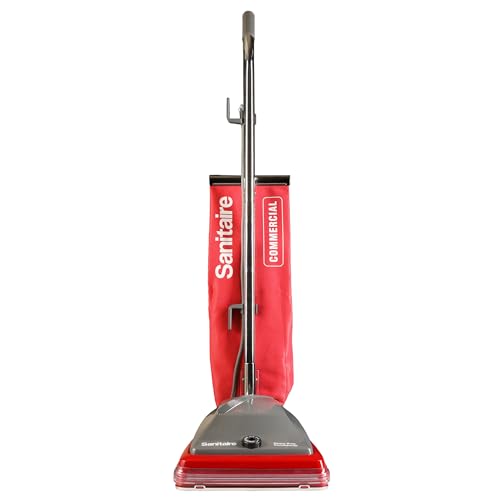
Sanitaire Tradition SC684G Upright — Commercial worked example
The Sanitaire Tradition line has cleaned offices, churches and hotel corridors for so long that its red silhouette is practically a uniform. Its listing describes a commercial bagged upright and, notably, does not headline an amp figure in its title — a silence worth pausing over. Commercial buyers, who purchase machines by the fleet and pay the electricity bills for all of them, have never shopped by appetite. They shop by durability, by whether the local repair shop stocks its belts, and by whether the machine still cleans in year five. The missing amp number is what a mature market looks like.
As a worked example, the SC684G teaches the first skill: where the number actually lives. On machines like this, the draw is printed on the rating plate — the small label near the cord or under the body that also carries the model and serial information — and in the manual’s specification table. That placement is the industry’s quiet confession. Amps are an electrical compliance figure, published for safety and circuit planning, positioned exactly where an electrician would look and exactly where a marketer would not. When you shop, treat any amp figure you find there as data about your wiring, not about the carpet.
The machine around that label is a study in what actually cleans: a substantial brush roll turning at working speed, a large-capacity bag that keeps airflow steady as it fills, and a body built to be serviced rather than replaced. Facilities managers who run these for years report a pattern this guide endorses — consistent, unglamorous pickup that depends on bags being changed and belts being fresh, not on the motor’s draw changing, which of course it never does. If a decade-old design with no amp headline can hold commercial floors, the burden of proof sits heavily on any household machine that leads with its appetite.
- Format: commercial bagged upright
- Amp figure: not headlined in the listing title; see the rating plate
- Cleaning core: large brush roll and high-capacity bag system
- Buying culture: fleets, serviceability and cost per year
- Lesson: electrical draw is a compliance figure before it is anything else
Strengths
- Commercial build prioritises years of service over showroom numbers.
- Bagged system keeps airflow consistent between changes.
- Parts and service knowledge are everywhere this machine works.
Trade-offs
- Shoppers must consult the rating plate or manual for its draw.
- Commercial styling makes no concession to domestic decoration.
- Bagged running costs apply, as with any sealed-bag design.
Best for: readers who want the commercial world’s evidence that draw is not destiny. Not suited for: shoppers who need every figure printed in the listing title.

Oreck Commercial XL Upright Vacuum — Lightweight worked example
Every field has a standing counterexample that keeps its folklore honest, and in vacuum amperage that role belongs to Oreck. The Commercial XL’s listing describes a bagged upright, lightweight, with automatic height adjustment and a high-speed brush roll, for carpets and hard floors — and builds its entire reputation on cleaning credibly while asking little of the wall and less of the arm. Generations of hotel housekeepers have pushed these all shift, which is a harder review than any laboratory writes.
The Oreck’s lesson is about where cleaning energy goes. A vacuum’s motor budget is spent in two places: generating suction in the fan, and turning the brush that beats debris loose from carpet fibres. Designs differ enormously in how they divide that budget and how much they waste in turbulent, leaky airflow paths. A machine with a short, direct path from nozzle to bag, and a brush spinning fast against the pile, can convert a modest draw into startling pickup — while a thirstier machine with a convoluted path and a lazy brush converts its extra current mostly into heat and noise. Amps count what enters. They are silent about the conversion.
Like the Sanitaire, the Oreck’s listing title does not print its amp figure, and the pairing is instructive: the two most efficiency-famous uprights in this guide are the two least interested in advertising appetite. When you meet the machine in person, its rating plate will give the draw for circuit purposes. Until then, let its decades of commercial service stand as the data point that matters — proof, renewed daily in hotel corridors, that the relationship between amps and clean carpets is loose enough to drive a lightweight vacuum through.
- Format: bagged upright, lightweight commercial design
- Amp figure: not headlined in the listing title; see the rating plate
- Cleaning core: high-speed brush roll with automatic height adjustment
- Surfaces: carpets and hard floors per the listing
- Lesson: conversion efficiency, not consumption, decides pickup
Strengths
- Lightweight body makes its efficiency argument in the hand.
- Fast brush roll spends energy on agitation where carpet needs it.
- Commercial service history spans decades of daily professional use.
Trade-offs
- Listing leaves the electrical figure to the plate and manual.
- Upright format offers limited above-floor reach without extras.
- Bagged consumables are part of its ownership, as expected.
Best for: readers who suspect, correctly, that design beats appetite. Not suited for: buyers wanting a specification duel fought in the listing title.

Hoover WindTunnel 2 Whole House Rewind — Household upright example
The Hoover represents the mainstream household upright, and its listing is a small museum of how such machines are actually sold: a named suction technology, HEPA media filtration, allergen and odour positioning, and a cord that rewinds itself. Amps appear nowhere in the headline, and yet nobody doubts this machine cleans. Hoover’s WindTunnel idea is an airflow idea — channels arranged so that the airstream lifts debris instead of scattering it ahead of the head — which is precisely the kind of claim an amp figure cannot make, because it describes what the air does after the motor has done its spending.
Use the Hoover to practise the guide’s central translation. Whatever its motor draws — a figure for its rating plate and manual — the cleaning you experience is the product of that draw multiplied by everything downstream: the fan’s efficiency, the seals’ honesty, the WindTunnel channels’ geometry, the brush’s contact with the pile, and the filter’s resistance as it loads with dust. Change any one of those and the same electrical appetite yields a different clean. This is why two uprights can share a draw and share nothing else, and why a shopper armed only with amp figures knows the least important fact about both of them.
The Rewind feature adds a footnote that belongs in an electrical guide: cord length and cord management shape how a corded machine meets your home’s circuits. A long cord lets you choose sockets, which lets you choose circuits — a genuinely useful freedom in an older house where one circuit serves three rooms. The machine that can reach a lightly loaded socket from the hallway is, electrically speaking, better mannered than a stronger machine tethered to the busiest circuit in the building.
- Format: corded bagless upright with cord rewind
- Amp figure: not headlined in the listing title; see the rating plate
- Cleaning core: WindTunnel airflow channel design
- Filtration: HEPA media per the listing
- Lesson: airflow geometry is where draw becomes cleaning
Strengths
- Named airflow design addresses scatter, a real cleaning failure.
- Cord rewind and length give flexibility across home circuits.
- HEPA media strengthens the filtration side of its story.
Trade-offs
- Electrical figure requires the plate or manual to confirm.
- Bagless filters add washing and drying to the routine.
- Full-size upright storage is part of the household bargain.
Best for: mainstream shoppers learning to read past the plug. Not suited for: readers who want a robot or cordless answer instead.

Bissell CleanView Upright with Extension Wand — Modern bagless example
The Bissell CleanView shows where the industry’s persuasive energy goes now. Its listing headlines an XL two-litre dirt tank, an active extension wand, and OnePass Technology — a promise about passes over the carpet rather than about current from the wall. Read as evidence, that is encouraging: a mass-market manufacturer, free to print any number it likes, chose capacity and pass efficiency as its arguments. The amp figure’s absence from the marquee is the modern market quietly agreeing with this guide.
OnePass deserves a moment’s analysis because it names a real variable. Cleaning per pass is a product of brush design, suction at the head and the operator’s patience, and a machine that genuinely collects more per pass saves its owner the second and third traversals that make vacuuming feel endless. No amp figure can express that. A thirsty machine pushed too fast cleans worse than a modest one given a fair pass, which is why technique sections appear later in this guide: the human arm is part of the electrical chain’s final conversion, whether the marketing admits it or not.
The CleanView’s tank contributes its own electrical footnote. A bagless machine’s airflow resistance climbs as its tank fills and its filters load, so the cleaning delivered by a fixed motor draw declines across a long session — another reason the draw alone cannot describe performance. Empty the tank, wash the filter, and the same amps produce a visibly different machine. Maintenance, in other words, is an electrical specification that no listing can print for you, because you are the one who supplies it.
- Format: corded bagless upright with extension wand
- Amp figure: not headlined in the listing title; see the rating plate
- Cleaning core: OnePass Technology per the listing
- Capacity: XL 2L dirt tank
- Lesson: performance per pass outranks appetite per hour
Strengths
- Marketing leads with outcomes — passes and capacity — not appetite.
- Large tank keeps airflow steadier across long sessions.
- Extension wand extends the machine’s useful territory upward.
Trade-offs
- Draw must be confirmed from the plate or manual, not the title.
- Bagless performance depends on your filter-washing discipline.
- Full-size body is more machine than small flats require.
Best for: value-tier shoppers who want the modern argument in one machine. Not suited for: anyone seeking a bagged, sealed-debris alternative.
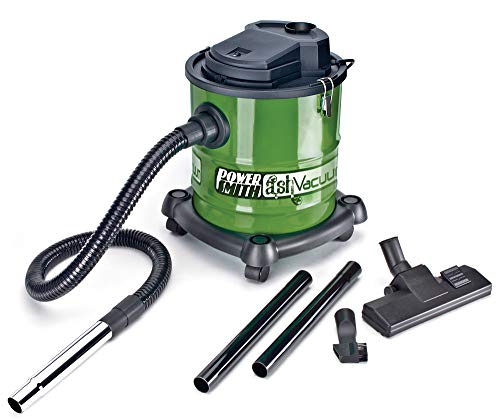
PowerSmith Ash Vacuum PAVC101 — The stated-amp example
At last, a listing that shows its working. The PowerSmith PAVC101’s title states “10 Amp” and “120 V” in plain sight, alongside its three-gallon metal canister and sixteen-foot reach, and that transparency makes it the arithmetic heart of this guide. Multiply the two published figures and the machine’s appetite appears: ten amps at one hundred twenty volts is twelve hundred watts of consumption. That number is real, checkable and — this is the entire point — still not a measurement of how well it vacuums ash. It tells you what the motor drinks. The drinking is where the honesty ends and the engineering begins.
Ash is a demanding teacher of that distinction. Cold fireplace ash is fine, dense and prone to clogging filters that household dust barely troubles, so an ash vacuum’s real performance is decided by its filter system and its metal, heat-aware construction far more than by its draw. The PowerSmith’s canister format exists because the debris is the problem, not the power supply. A shopper who bought this machine for its ten amps and ignored its filtration would have purchased the one figure that matters least to the job, which is the mistake this whole article exists to prevent — in miniature, with a fireplace.
The stated figures do earn their keep in one place: your circuit. Twelve hundred watts is a serious but ordinary household load, comparable to a hair dryer or a small heater, and the circuit section below uses it as the reference load. Note also the safety boundary that no amp figure can soften: ash vacuums are for cold ash only, fully cold, because no filter or canister rating turns a vacuum into a safe place for embers. Electricity is the second most interesting hazard in this machine’s life. Fire remains the first.
- Stated draw: 10 Amp per the listing title
- Stated supply: 120 V per the listing title
- Arithmetic: 10 × 120 = 1,200 watts of consumption
- Format: metal canister, 3 gallon, ash and fireplace duty
- Lesson: a stated figure enables arithmetic, not conclusions
Strengths
- Listing publishes its electrical figures where shoppers can use them.
- Metal canister and ash filtration suit its specialised debris.
- Its numbers anchor this guide’s circuit calculations honestly.
Trade-offs
- A specialist: fireplace ash is its world, not whole-house cleaning.
- Fine ash demands filter attention to keep airflow alive.
- Cold ash only — no electrical figure changes that rule.
Best for: fireplace owners and readers who want one fully stated example. Not suited for: general household cleaning beyond its ash brief.
Cordless Voltage and Watt-Hour Systems — Prose-only explainer entry
Unplug the vacuum and the amp conversation changes language. A cordless stick’s motor draws current from a battery pack at a modest voltage — the pack’s voltage is the figure manufacturers print largest — and the energy available for a cleaning session is that voltage multiplied by the battery’s amp-hour capacity, giving watt-hours. A pack described in those terms tells you how long the machine can work; it says nothing directly about how hard. For effort, the cordless world uses air watts, a measure taken at the business end, which is why a well-known cordless listing elsewhere in this batch quotes its suction in exactly those units.
The translation trap catches shoppers constantly. A battery vacuum drawing high current at low voltage may consume fewer watts than a corded machine sipping modest current at mains voltage, yet out-clean it on carpet through superior brush design — or the reverse. Current figures from the two worlds simply cannot be placed side by side, because the volts standing behind them differ by a factor of five or more. Whenever a comparison crosses the cord, convert everything to watts for appetite and to air watts for effort, and let amps retire from a conversation they were never equipped to lead.
We keep this entry prose-only because no single cordless model can represent a measurement system, and because the lesson is portable: it applies to every stick, handheld and robot you will ever meet. Robots, incidentally, live here too — battery machines whose listings quote pascals for suction and whose docks sip mains power to recharge them. The cordless world is not less powerful or more honest than the corded one. It is simply keeping its books in different currencies, and now you hold the exchange rates.
- Currency one: pack voltage, the headline battery figure
- Currency two: watt-hours, voltage times amp-hours, for endurance
- Currency three: air watts, for effort at the cleaning head
- Availability: discussed as a system; no single model linked
- Lesson: never compare amps across the cord
Strengths
- Watt-hours describe runtime more honestly than any current figure.
- Air watts measure effort where the cleaning actually happens.
- The system view protects shoppers in every cordless comparison.
Trade-offs
- Three currencies demand more arithmetic from the shopper.
- Air watt methods still vary between manufacturers’ laboratories.
- Battery figures age as packs age, unlike a corded rating plate.
Best for: anyone cross-shopping corded and cordless machines. Not suited for: readers who only ever intend to buy at the wall socket.
How Do the Six Examples Compare on Paper?
| Pick | Badge | Amp figure in listing title | What its listing leads with | Lesson it teaches |
|---|---|---|---|---|
| Sanitaire Tradition SC684G Upright | Commercial worked example | Not stated; see rating plate | Commercial bagged format | Mature markets ignore appetite |
| Oreck Commercial XL Upright Vacuum | Lightweight worked example | Not stated; see rating plate | Lightweight build, brush speed | Efficiency beats consumption |
| Hoover WindTunnel 2 Whole House Rewind | Household upright example | Not stated; see rating plate | Airflow channels, filtration | Geometry converts draw to cleaning |
| Bissell CleanView Upright with Extension Wand | Modern bagless example | Not stated; see rating plate | Tank capacity, passes | Outcomes outsell appetite now |
| PowerSmith Ash Vacuum PAVC101 | The stated-amp example | 10 Amp, 120 V, stated | Its amp figure, unusually | Arithmetic is not a verdict |
| Cordless Voltage and Watt-Hour Systems | Prose-only explainer entry | Not applicable at the wall | Voltage and runtime claims | Convert currencies before comparing |
The table’s pattern is the argument in one glance: four of five manufacturers, given total freedom, chose not to headline the figure this guide is named after, and the fifth — the specialist ash machine — proves by arithmetic that even a perfectly stated figure settles nothing about cleaning. What the listings lead with instead is a map of what actually matters: brushes, airflow paths, capacity, filtration and passes. Learn to read those first, and let amps return to their proper home on the rating plate, consulted when the circuit, not the carpet, is the question.
What Is the Difference between Amps, Watts and Air Watts?
Three numbers, three different jobs. Amps measure current: the flow of electricity into the machine, visible on the rating plate and relevant to your wiring. Watts measure power consumption: current multiplied by voltage, so the PowerSmith’s ten amps at one hundred twenty volts make twelve hundred watts, while the identical motor on a two-hundred-forty-volt supply would draw roughly half the current and wear a different label without changing its nature in any way a carpet could detect. Watts tell you what a machine costs to run and what it asks of a circuit. They still do not tell you how it cleans.
Air watts move the measurement to the other end of the machine. They are calculated from the airflow and suction the vacuum actually produces at its nozzle — the working end — and so they capture, imperfectly but honestly, how much of the consumed power survived the journey through motor, fan, seals and filters to become useful work. A vacuum converting its watts into air watts efficiently is a well-designed vacuum, whatever its appetite. When a manufacturer publishes air watts, it is publishing the closest thing the industry has to a cleaning-power figure, and shoppers should reward the transparency by learning to ask for it.
Suction itself, finally, is usually quoted as water lift or, on robots, in pascals — a measure of pressure the fan can sustain. Pressure without airflow seals a gauge impressively and moves little debris; airflow without pressure stirs dust it cannot lift. Real cleaning is the two in harness, which is exactly what air watts attempt to summarise and exactly why no single one of these numbers, quoted alone in a headline, deserves your trust unaccompanied.
So How Many Amps Do You Actually Need?
Here is the liberating answer: for cleaning, there is no amp threshold to reach, and any guide that names one is selling certainty it does not possess. Full-size corded uprights and canisters across the reputable market clean their intended floors well at a range of draws, because their designers balanced motor, fan and brush as a system. What you need is not a bigger appetite but a matched one: enough power for the machine’s own design, delivered to a brush appropriate for your floors, in a body whose airflow path you will keep clean. The Oreck’s career and the Sanitaire’s fleets both testify that the matched system beats the merely thirsty one.
Where a number does become practical is at the extremes of format. Compact and handheld corded machines draw less because their jobs are smaller; commercial machines draw what continuous duty requires; and any vacuum claiming miraculous cleaning from a tiny draw should be asked, politely, where the energy for the miracle is coming from. Physics permits efficiency. It does not permit magic, and the distance between those two is the distance this guide has been measuring all along.
Reframe the shopping question and it answers itself. Instead of asking how many amps a vacuum has, ask what its brush does to your carpet type, how its airflow survives a filling bin, what its air watts are if published, and whether owners of three years’ standing still praise it. Those questions have answers that predict your satisfaction. The amp figure predicts your electricity bill’s third decimal place and your breaker’s patience — both worth knowing, neither worth choosing by.
If a salesperson or a listing insists on returning the conversation to appetite, accept the number graciously and then ask the follow-up that restores proportion: what does the machine do with it? A confident answer will talk about brushes, airflow and filtration. A vague one will repeat the number more slowly, as though volume were evidence. You will know, by then, which kind of machine you are being sold — and the knowledge generalises to every specification in this guide and every appliance beyond it.
When Do Amps Genuinely Matter? Ask Your Circuit Breaker
There is one room where amps rule without apology, and it is the room with the breaker panel. North American homes typically serve rooms with fifteen- or twenty-amp branch circuits, and everything plugged into one circuit shares its allowance: the vacuum, the space heater warming your feet, the hair dryer next door, the microwave on the same run in an older kitchen. Add the draws together and exceed the allowance, and the breaker performs its one trick — silence, darkness, and a walk to the panel in your socks.
Older homes sharpen the arithmetic. Their circuits often serve more rooms, their panels may include ageing breakers, and their wiring was installed when a household’s total ambition was a television and a kettle. In such a house, a twelve-hundred-watt vacuum like our stated PowerSmith example is a fine citizen alone on a circuit and a troublemaker alongside a space heater on a cold evening. The practical habits are simple: vacuum on the circuit with the least company, avoid pairing the clean with other big draws, and treat a breaker that trips repeatedly as information about the wiring’s limits rather than as a challenge to attempt again louder.
Two safety corollaries deserve plain words. A tripping breaker is a protection working, never a nuisance to defeat with a bigger breaker — that alteration belongs to licensed electricians and building codes, not to frustrated homeowners. And a vacuum that runs hot, smells of warm insulation, or dims the lights dramatically is reporting a problem in itself or the circuit; unplug it and have the situation looked at. Amps, respected in their own territory, keep both the machine and the house honest.
What Mistakes Do Shoppers Make with Vacuum Power Numbers?
The founding mistake is the one this guide opened with: reading amps as suction and ranking machines by appetite. Its close cousin is comparing wattage across countries, where voltage differences manufacture gaps that exist only on paper. A third is trusting any single number — pascals on a robot, air watts on a stick, amps on an upright — as though it were measured under rules all manufacturers share. Test conditions differ, sometimes innocently and sometimes conveniently, and a figure without its method is a story rather than a measurement.
Shoppers also neglect the numbers’ behaviour over time. A corded machine’s draw stays constant while its cleaning declines with every clogged filter and hair-wrapped brush, so the figure on the plate describes the machine’s potential on its best-maintained day. Cordless figures drift the other way as batteries age. The final mistake is buying headroom you cannot use: the thirstiest machine on a fifteen-amp circuit shared with a heater is not the most powerful vacuum in the house on a January evening. It is the one most likely to be cleaning in the dark.
How Can You Judge Cleaning Power without a Laboratory?
Your floors provide the only laboratory whose results you will live with, and simple tests expose weak machines quickly. Scatter a measured line of dry rice and grit along a skirting board and across open carpet, then count the passes each candidate needs at a natural pace; passes are the consumer translation of every power figure ever printed. Try the upholstery tool on a cushion that a pet owns, and watch whether the machine lifts hair or merely combs it into stripes. Finish by emptying the machine and noting how much of what it collected was the debris you scattered, rather than the debris it found convenient.
Read the machine’s behaviour as data, too. A vacuum that grows louder and hotter while collecting less is converting its draw into struggle; one that stays composed while its bin fills honestly is converting draw into work. Check how performance feels with the bin half full, because that is the state the machine will actually live in, whatever its showroom figure promised. None of these tests needs instruments. They need the scepticism this guide has been practising from its first paragraph: measure outcomes, and let appetite look after itself.
How Did Amps Become a Marketing Number in the First Place?
The amp’s career as a sales figure began innocently. In the decades when vacuums were sold in shops by people who could plug them in, electrical size was one of the few objective facts on the tag, and bigger motors genuinely were the crude route to stronger suction in an era of inefficient fans and felt seals. Shoppers learned the association honestly, the way one learns that a bigger kettle boils more water. Manufacturers, noticing which number customers repeated back, began printing it larger — and an association that had once been roughly true hardened into a rule long after engineering had quietly repealed it.
What repealed it was everything around the motor. Better fan geometries, sealed airflow paths, cyclonic separation that keeps filters clear, brush rolls engineered for specific piles: each advance extracted more cleaning from the same current, until the correlation between appetite and outcome grew too loose to shop by. The commercial world noticed first, because fleets multiply every inefficiency by a hundred machines and a thousand electricity bills. The household market is noticing now, which is why four of this guide’s five listings argue about brushes, tanks and passes instead of appetite. The amp did not become a lie. It became a leftover — a true fact about the plug, promoted beyond its competence.
There is a general skill buried in this history, and it transfers to every appliance you will ever buy. Whenever a headline number measures an input — current consumed, watts drawn, capacity filled — ask what the corresponding output number would be and why it is not the one in large print. Sometimes the answer is innocent complexity. Sometimes it is that the output is harder to flatter. Either way, the question itself is the shopper’s best instrument, and it costs nothing to carry from the vacuum aisle to every other aisle in the store.
What Happens to Power as a Vacuum Ages and Clogs?
A rating plate describes a machine on its first day, in a clean state, with every filter breathing freely. Ownership immediately begins editing that description. A bagless tank half full forces air through a shrinking cyclone; a washable filter overdue for its rinse adds resistance with every session; hair winding around a brush roll taxes the motor’s other job; a hose with a partial blockage of dust felt at its bend narrows the whole system’s throat. The draw at the wall may stay nearly constant through all of this — the motor still drinks — while the cleaning at the carpet declines week by week. This is the cruellest version of the amp illusion: the number that never changes, certifying a performance that is quietly leaving.
The remedy is embarrassingly unmechanical. Restore the airflow path and the performance returns, because it never depended on more power, only on less obstruction. Empty before the fill line, not after. Rinse or replace filters on the maker’s schedule and let washable ones dry completely, since a damp filter resists air like a full one. Free the brush roll monthly. Check the hose and the head’s neck — the two bends where debris loves to felt itself into a plug — whenever suction feels shy. Owners who keep this small liturgy find their machines performing at something like plate specification for years.
There is also a diagnostic gift hidden here. When a vacuum weakens, work through the airflow path before suspecting the motor: bin, filter, hose, head, brush. Nine times in ten the fault is a blockage or a loaded filter, both free to fix. The tenth time — burning smells, grinding sounds, a motor that surges or cuts out — is a repair conversation, and even then the rating plate’s figures will help the repairer more than they ever helped the shopper. Electricity, once again, is the context. Air is the story.
How Should You Read a Vacuum Listing like an Electrician and a Cleaner at Once?
Try a two-pass method on any listing, anywhere, and watch how quickly its persuasion rearranges itself. The first pass is the electrician’s: find the draw, the voltage, the cord length and the weight, and file them under logistics — what your circuits must feed, what your arm must carry, what your cupboard must hold. Note what is missing as carefully as what is printed. A listing that trumpets appetite while hiding weight is telling you something; a listing like the PowerSmith’s, stating its figures plainly and moving on, is telling you something else, and better.
The second pass is the cleaner’s: ignore every electrical word and read only for the debris story. What loosens the dirt — which brush, at what contact with which floor? What carries it — how long and how sealed is the air’s road from nozzle to tank? What keeps the road open — cyclones, bags, filters, and how are they serviced? What reaches the places floors end — wands, hoses, tools? A listing that answers those four questions richly belongs to a machine designed by people who clean. A listing that answers them thinly while shouting about the plug belongs to a machine designed by people who advertise.
Then, and only then, let the two passes meet. The electrician confirms the house can feed and store the machine; the cleaner confirms the machine deserves feeding. If both passes pass, the amp figure has played its entire legitimate role in your decision — as a footnote that checked out. Practise the method on the five worked examples above and you will find it takes under a minute per listing. That minute, repeated across a shopping afternoon, is worth more than any single specification in this article, including the ones we spent pages explaining.
Does a Vacuum’s Power Draw Affect Its Running Cost?
Barely, and the arithmetic is worth doing once so the worry can retire. Take the thirstiest plausible household machine and run it for a generous half hour a week, every week of the year. Even at twelve hundred watts, that totals roughly thirty kilowatt-hours annually — the consumption of a modest appliance left idling for a few days, and a rounding error beside heating, cooling, water heating and the refrigerator’s eternal shift. The vacuum is among the hardest-working and least expensive machines in the home precisely because its appetite, however hearty, is only ever invited to the table for minutes.
The comparison that matters is not vacuum against vacuum but vacuum against its alternatives in your own routine. A slightly thirstier machine that finishes in one pass spends less total energy — and far less of yours — than a frugal one that needs three. Efficiency in cleaning is measured per room, not per hour, which is yet another reason the draw on the plate cannot rank machines. Buy for outcomes, keep the airflow path clean, and let the electricity bill worry about the appliances that run all day. It will not even learn your vacuum’s name.
What about Extension Cords, Generators and Power Stations?
Three accessories raise electrical questions often enough to deserve a short, firm section. Extension cords first: a vacuum should ideally meet the wall directly, and if a cord is unavoidable it should be short, heavy-gauge and fully uncoiled, because a thin or coiled cord resists current, warms under load and starves the motor it feeds. A machine that seems weak on a long thin cord may be entirely healthy at the wall — one more case of the electrical context impersonating a performance fact.
Portable power stations and small generators, increasingly common in garages and at rural properties, must be sized by watts rather than by optimism: the station’s continuous output needs to exceed the vacuum’s consumption with headroom for the motor’s brief starting surge, and the PowerSmith’s twelve-hundred-watt arithmetic shows how quickly a household machine can outgrow a small unit. Check the figures on both rating plates, keep the vacuum’s own cord short, and remember that a machine labouring on an undersized supply runs hot for reasons that have nothing to do with its design.
Final Recommendation
Buy the system, not the appetite.
For commercial-grade evidence that design outranks draw, the Sanitaire and the Oreck make the case in red and in lightweight respectively. For mainstream homes, the Hoover’s airflow design and the Bissell’s pass-and-capacity argument show where modern cleaning is actually decided. For a fully stated electrical example — and for the fireplace — the PowerSmith’s honest ten amps anchor the arithmetic. And for everything cordless, translate into volts, watt-hours and air watts before comparing anything at all.
Keep the amp figure for its one true job: checking that your home’s circuits can feed the machine you chose for other, better reasons. Do that, and the number that misleads a million shoppers becomes what it always should have been — a footnote you understand completely, printed small, exactly where it belongs.
Frequently Asked Questions
Is a higher-amp vacuum always more powerful?
It always consumes more power; it does not always deliver more cleaning. What reaches the carpet depends on motor efficiency, fan and airflow design, seals, brush agitation and how clean the filters are. A well-designed machine with a modest draw routinely out-cleans a thirsty, leaky one, which is why this guide treats amps as an electrical fact rather than a performance claim.
How do I convert amps to watts?
Multiply amps by volts. On a typical North American supply of one hundred twenty volts, a ten-amp machine consumes twelve hundred watts, as the PowerSmith example in this guide shows. The same arithmetic in reverse — watts divided by volts — gives the draw of any appliance whose wattage you know, which is the quickest way to audit a circuit before plugging in.
What are air watts, and should I shop by them?
Air watts estimate useful cleaning power at the nozzle, combining airflow and suction rather than consumption at the plug. They are the most performance-like figure manufacturers publish, especially in the cordless world, and worth favouring when available — with the caveat that test methods still differ between brands, so comparisons are safest within one maker’s range.
Why does my breaker trip when I vacuum in winter?
Because winter adds company to the circuit. A vacuum drawing a serious load alongside a space heater, and perhaps a kettle or dryer on the same run in an older home, can exceed the branch circuit’s allowance, and the breaker trips to protect the wiring. Vacuum on a quieter circuit, or pause the heater for the ten minutes the cleaning takes.
Do robot vacuums have amp ratings I should compare?
Not meaningfully. Robots are battery machines; their listings quote suction in pascals and their docks draw modest mains power to recharge. Compare robots by navigation, brush design, emptying arrangements and how their suction claims behave on your floor types — and remember that pascal figures are each brand’s own measurement, safest compared within that brand.
Where do I find my vacuum’s real amp figure?
On the rating plate: the small printed label on the machine’s body, often near the cord entry or underneath, which lists model, serial and electrical draw together. The manual’s specification page repeats it. If a listing’s headline omits the figure — as four of this guide’s five examples do — the plate is not hiding a secret; it is simply where that fact has always lived.
Related Guides
Shoppers ready to spend can return to Best Budget Pet Vacuums for the value end of the market, browse Best Vacuum Attachments for the tools that make any motor’s power more useful, or consider Best Bagless Backpack Vacuums for commercial formats. For another masterclass in reading a specification honestly, our live guide to Best Air Purifiers by CADR Rating applies the same discipline to clean air.



[…] in this batch, Vacuum Amperage Explained: How Many Amps Do You Need? decodes the power numbers behind several of these formats, while Best Ash Vacuums for Fireplaces […]