What's inside
- Key Takeaways
- Quick Picks
- How Do You Measure a Vacuum’s Worth Over Years Rather Than Minutes?
- Which Vacuums Give the Most Cleaning for the Money Over Five Years?
- How Should You Split Your Budget Between the Machine and Its Upkeep?
- How Do You Read a Vacuum Listing Like an Accountant?
- What Habits Make a Budget Vacuum Last Twice as Long?
- What Does a Cost-Per-Clean Calculation Actually Look Like?
- Which Households Get the Most From Each Kind of Value?
- What Are the Most Common Mistakes When Chasing Vacuum Value?
- When in the Year Does a Value Vacuum Become a Better One?
- Final Recommendation
- Frequently Asked Questions
- Related Guides
As an Amazon Associate I earn from qualifying purchases. This post may contain affiliate links at no extra cost to you.
cottageverdict.com is reader-supported. When you buy through links on our site, we may earn an affiliate commission.
Where to buy: each linked machine below is sold on Amazon, where the sensible habit is to check price on Amazon on the morning you actually shop, because bundle contents and seasonal positioning drift constantly in this tier. What does not drift is the arithmetic this guide is built on, and that arithmetic starts long after the checkout.
Ask a room of vacuum owners which machine gave them the best bang-for-your-buck vacuums experience and almost nobody names the cheapest machine they ever bought. They name the one that is still working. The upright bought in a hurry during a house move, still pulling grit out of the hall carpet five winters later. The canister inherited from a parent that has eaten nothing but a belt and a filter in a decade. Value in a vacuum is not a number attached to a box; it is a ratio between everything the machine costs you across its life and everything it quietly does during that life, and the numerator is far larger than the sticker suggests.
That is the lens for everything that follows. A vacuum’s true bill includes the bags or filters it consumes, the belt that snaps the week before guests arrive, the brush roll that wears smooth, the second machine bought early because the first one gave up, and the afternoons spent coaxing a wheezing motor through a job it was never built for. Spread across five years, a modest machine with cheap consumables and honest construction routinely out-values a flasher rival whose replacement filter costs like a dinner out. The five linked picks below were chosen by that ledger, not by shelf appeal. Each sits in the budget-to-lower-mid tier at purchase, and each earns its place by what it asks from you afterwards: very little, predictably, for years.
The sixth entry is not a machine at all. It is the five-year cost ledger itself, treated as a pick because learning to keep it changes every vacuum decision you make afterwards. Read it as the method behind the list. If you finish this guide and buy none of the five machines, but start pricing filters before you price motors, the guide has done its job.
One ground rule before the picks: nothing here is ranked by a figure printed on a box. Suction claims in this tier are measured under conditions no hallway reproduces, so we compare shapes instead — corded against cordless, bagged against bagless, light against substantial — and we talk about tiers and years rather than decimals. A vacuum you keep for seven years at the budget tier is a bargain. A vacuum you replace twice in three years at any tier is not, whatever the receipt said.
Key Takeaways
- Judge a vacuum by its five-year bill — machine, consumables, spares and replacements — rather than by the number on the shelf edge.
- Corded uprights dominate this list because removing the battery removes the single most expensive failure point in budget cleaning.
- The Dirt Devil Endura Lite is the lightest route into whole-home cleaning here, while the Hoover WindTunnel 2 is the heavyweight built for long service.
- Bagless designs save on bags but bill you in filters and wash days; the ledger at the end shows how to weigh the two honestly.
- Every pick below uses widely stocked belts, filters or bags, because a cheap machine with orphan parts is a short-lived machine.
- The best value purchase is usually the machine one step above the absolute floor of the market, not the floor itself.
Quick Picks
| Pick | Badge | Why it made the list |
|---|---|---|
| Dirt Devil Endura Lite Upright | Lightest long-term worker | A featherweight corded upright whose simple build and washable filter keep the yearly bill close to zero. |
| Eureka PowerSpeed Upright NEU181A | Big-cup family value | A generous dust cup and a pet turbo brush give larger households fewer interruptions per clean. |
| Amazon Basics Upright Bagless Vacuum | Plainest honest cleaner | An unpretentious bagless upright with a washable filter and a detachable handle for above-floor work. |
| Bissell CleanView Upright with Extension Wand | Reach without a second machine | The active extension wand folds stair and ceiling work into the same purchase as floor cleaning. |
| Hoover WindTunnel 2 Whole House Rewind | Built to be kept | HEPA media filtration and a retractable cord mark out the most substantial machine in this line-up. |
| The Five-Year Cost Ledger | Prose-only method pick | The accounting habit — belts, filters, bags, spares — that turns any future vacuum purchase into a value purchase. |
How Do You Measure a Vacuum’s Worth Over Years Rather Than Minutes?
We started by listing everything a vacuum consumes besides electricity. Bags, where fitted. Filters, washable or replaceable. Belts. Brush rolls. The occasional hose or wheel. Then we asked how available those parts are for each candidate: a model whose filter is stocked by every large retailer will still be serviceable in year six, while a model whose parts ship from one obscure listing is effectively disposable the first time something wears. Parts availability, more than any performance figure, is what separates a five-year machine from an eighteen-month one in this tier.
Second, we favoured mechanical simplicity. Every feature is a future repair: a cord rewind can jam, a swivel joint can loosen, a powered head can lose its motor. The picks below are not featureless — one has a rewind, one has an extending wand — but each feature was weighed against the failure it invites, and each machine’s core job, moving air through carpet, depends on as few moving parts as the design allows. Corded power runs through the whole list for the same reason. A battery is a consumable with a calendar attached; a cord is a component that typically outlives the motor it feeds.
Third, we looked at cleaning coverage per purchase. A machine that handles floors but leaves stairs, upholstery and car interiors to a second device has a hidden line in its ledger: the second device. Several picks below stretch one purchase across several jobs with wands, hoses and detachable handles, and that stretch was credited to them as plainly as a cheap filter would be. Finally, we read each design for the way it ages — whether the dust path stays sealed as gaskets wear, whether the bin or bag housing still latches firmly after hundreds of openings, whether the plastics feel like they expect a long acquaintance. Value is mostly the absence of surprises, and ageing gracefully is how a vacuum avoids surprising you.
We also asked a ruder question of every candidate: what will its owner complain about in year three? The answers, gathered from the common failure patterns of this tier, were instructive — faded batteries, unavailable filters, cracked cups, mystery blockages buried in sealed housings — and each complaint maps back to a design decision visible on the very first day. Machines whose likely year-three complaints were merely about weight or noise stayed in contention here. Machines whose complaints would be about abandonment by their own makers did not, however impressive their first-week suction felt.
Which Vacuums Give the Most Cleaning for the Money Over Five Years?
The five machines below answer that question with five different temperaments: the featherweight, the big-cup family worker, the plain all-rounder, the reach specialist and the heavyweight. The ledger follows them as a sixth entry, because the method matters as much as the metal.

Dirt Devil Endura Lite Upright — Lightest long-term worker
The Endura Lite makes its value argument through subtraction. It is a light, simple, corded bagless upright with a rinseable filter, and almost everything about it is designed to cost nothing after the day it arrives. There is no battery ageing in a drawer, no bag subscription quietly billing you quarterly, no powered head with its own motor to fail. You plug it in, it cleans carpet and hard floor, you empty the cup and rinse the filter when it asks, and the relationship continues on those modest terms for years.
Lightness is itself a value feature that rarely gets priced. A vacuum that an older owner, a teenager on chore duty or anyone with a bad shoulder can carry upstairs without negotiation is a vacuum that gets used on both floors, and a used vacuum is worth infinitely more than a stronger one that stays in the cupboard. The Endura Lite’s compact footprint also means it stores in the narrow gap beside a washing machine or inside a hall closet that a full-size upright would monopolise, which in a small home is another hidden saving: no storage furniture bought to house the cleaner.
Daily life with the Endura Lite has a particular rhythm worth describing, because rhythm is where value hides. It comes out of the cupboard without a sigh, crosses a room without rearranging the furniture, and goes back before the kettle boils. That frictionlessness changes cleaning behaviour in a way no specification can: crumbs get vacuumed the day they fall rather than the weekend they are scheduled, pet hair is lifted before it mats into the rug’s pile, and the whole home hovers at a cleaner baseline for the same weekly effort. Owners consistently underestimate this effect when comparing machines on paper, because paper has no column for willingness.
The honest compromises are reach and refinement. The hose and tools cover everyday above-floor work without stretching to picture rails, and the machine feels like what it is — a budget appliance built from light plastics that reward reasonable handling rather than abuse. Treat it as a long-serving economy car rather than a truck, keep the filter rinsed and the brush roll clear of hair, and its cost-per-clean falls to pennies within the first year and keeps falling.
- Format: corded bagless upright for carpet and hard floors
- Filtration: rinseable filter, no bags to buy
- Build: lightweight body intended for easy carrying
- Tools: onboard basics for above-floor touch-ups
- Tier: budget at purchase, minimal running costs
Strengths
- Almost nothing to buy after purchase day
- Light enough for stairs and smaller owners
- Simple design with few failure points
Trade-offs
- Modest hose reach for high corners
- Light plastics dislike rough treatment
- Smaller cup means mid-clean emptying in big homes
Best for: flats, smaller houses and anyone who wants whole-home cleaning with near-zero running costs.
Not suited for: large homes with heavy shedding, where cup size and hose reach matter more than weight.
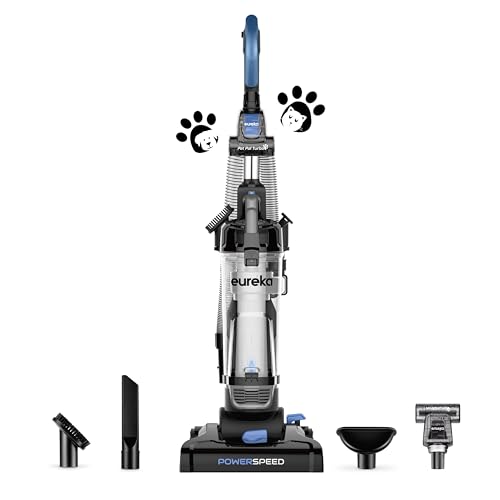
Eureka PowerSpeed Upright NEU181A — Big-cup family value
The PowerSpeed NEU181A argues its value in minutes rather than parts. Its dust cup is genuinely large — the 2.6-litre class — and in a family home that single specification quietly deletes dozens of interruptions a year. Every trip to the bin mid-clean is a small tax on willingness; multiply the tax by two children, a dog and a muddy season, and the difference between a thimble cup and this one becomes the difference between a finished clean and an abandoned one. A vacuum that gets finished with is a vacuum earning its keep.
Eureka also includes a pet turbo brush alongside the usual crevice and upholstery tools, which extends the machine’s value into the jobs households otherwise buy extras for: stairs carpeted in dog hair, the sofa arms, the car footwells on a good day. Five height settings let the brush roll sit properly on everything from a thin hallway runner to the deep pile in the front room, and correct height is an unglamorous form of economy — a brush floating above pile cleans nothing, while one buried in it strains the belt and motor you will eventually pay to replace.
Consider the Saturday this machine is built for. Breakfast debris under the table, a dog that has redistributed the garden across the hall carpet, a sofa that has been shedding into its own seams all week, and guests at four. The PowerSpeed works through that list in one outing: floors at the right brush height for each surface, stairs with the turbo brush, sofa seams with the crevice tool, and the cup emptied once at the end rather than three times along the way. Machines earn their value on exactly such Saturdays, and a guide that ignored them in favour of laboratory tidiness would be describing a product nobody lives with.
The machine is not light in the Endura’s sense, and its size wants a real storage spot rather than a gap. Bagless ownership also means the filter needs its rinsing rhythm kept, or suction fades and the motor works harder than it should. But as a single purchase asked to serve a busy, pet-owning household for years without a second machine joining it, the NEU181A’s arithmetic is hard to argue with. Check price on Amazon when you shop; it sits at the budget end of the tier and earns a mid-tier workload.
- Format: corded bagless upright, carpet and hard floor
- Capacity: 2.6-litre class dust cup
- Adjustment: five brush-roll height settings
- Tools: pet turbo brush, crevice tool, upholstery tool
- Tier: budget at purchase, family-size workload
Strengths
- Large cup cuts emptying interruptions sharply
- Pet turbo brush included for stairs and sofas
- Height range suits mixed carpet depths
Trade-offs
- Bulkier to store than the lightweights here
- Filter rinsing must become a habit
- Heavier push on deep pile carpets
Best for: pet-owning families in houses with mixed carpets who clean whole rooms at a time.
Not suited for: small flats, or owners who know a big upright will simply never come out.

Amazon Basics Upright Bagless Vacuum — Plainest honest cleaner
There is a particular kind of value in a product that refuses to pretend. The Amazon Basics upright is a straightforward bagless machine for carpet and hard floors with a washable filter, a 1.7-litre class dust cup, a long cord in the twenty-five-foot class and a handle that detaches to carry suction above the floor. Nothing on it is exotic, and that is precisely the point: every component is a known quantity with a known replacement path, and the machine’s ambitions stop exactly where its price says they should.
The detachable handle deserves more credit than it usually gets. It turns the upright into a passable stair and upholstery tool without a hose-wrestling session, and in ledger terms it is another small second-machine purchase avoided. The included crevice and upholstery tools cover the standard circuit — skirting boards, sofa seams, the crumbs that live under the toaster — and the washable filter keeps the consumables column of the ledger at zero in most years, provided it is actually washed and fully dried before refitting.
There is also a fleet argument for this machine that single households can borrow. Cleaners, landlords and holiday-let managers buy staples like this in multiples because standardisation is itself a saving: one filter type to stock, one belt, one set of habits for whoever pushes it. A private buyer with a house and a granny flat, or a main home and a workshop, gains the same quiet benefit from owning the same simple machine twice rather than two different machines once each. Spares interchange, knowledge transfers, and the ledger for the pair is simpler than the ledger for either alone.
Where the plainness shows is in finish and finesse: the plastics and fittings feel utilitarian, the steering is a push-and-pull affair rather than a swivel performance, and deep-pile carpet asks more of it than of the Hoover below. None of that matters to the buyer this machine is for — the renter furnishing a first flat, the landlord equipping a property, the household that needs a competent cleaner this week and would rather spend the difference on almost anything else. Bought with clear eyes, it is one of the most defensible purchases in this guide.
- Format: corded bagless upright, detachable handle
- Capacity: 1.7-litre class dust cup
- Cord: twenty-five-foot class reach
- Filtration: washable filter, bag-free ownership
- Tier: budget, positioned as a no-frills staple
Strengths
- Detachable handle stretches one purchase further
- Washable filter keeps running costs minimal
- Honest, widely understood design and parts
Trade-offs
- Utilitarian finish rather than premium feel
- Deep pile is harder work than for rivals
- No swivel steering for tight furniture
Best for: first flats, rental properties and spare-machine duty where plain competence wins.
Not suited for: buyers wanting refined steering, premium filtration or a long feature list.

Bissell CleanView Upright with Extension Wand — Reach without a second machine
The CleanView’s value trick is the wand. Its active extension wand stays attached and stretches upward, so the machine that cleans your floors also cleans the top of the stairs, the cobwebbed corner above the wardrobe and the curtain rail, without a separate handheld entering the household budget. In ledger language, Bissell has bundled two appliances’ worth of coverage into one purchase and one storage footprint, and for homes where the second appliance would have been a cheap, short-lived handheld, that bundling is the bargain.
Underneath the trick, the fundamentals are family-sized: an extra-large dirt tank in the two-litre class, OnePass brush technology intended to gather more in a single forward pass on carpet, and suction that holds its own across hard floors and pile alike. Fewer passes is another quiet economy — of your time most of all, but also of belt wear, brush wear and motor hours, the three currencies every vacuum spends as it works. A machine that finishes the front room in twelve passes instead of twenty is literally ageing more slowly while it cleans it.
Stairs deserve a paragraph of their own, because they are where value calculations quietly go to die. A household without a stair solution either drags a full upright up step by step — a weekly negotiation with gravity that ends, eventually, in the stairs being cleaned monthly instead — or buys a handheld that lives by the steps and disappoints there. The CleanView’s wand dissolves the dilemma at the moment of purchase. The steps get the same suction as the floors, the landing gets the wand treatment around the balusters, and the machine returns to the cupboard having spent no extra money and demanded no extra storage. Multiply that by fifty-two weeks and the wand has repaid its mechanism many times over.
The wand’s convenience carries the usual condition: it is a mechanism, and mechanisms reward owners who keep the seals clean and the joints free of grit. The machine is also a full-size upright in storage, closer to the Eureka’s footprint than the Dirt Devil’s. But for a household with stairs — the classic two-machine trap, one cleaner per floor or a handheld for the steps — the CleanView collapses the whole arrangement into a single line in the ledger, and that is the strongest kind of value there is.
- Format: corded bagless upright with active extension wand
- Capacity: extra-large tank, two-litre class
- Brush: OnePass design for fewer cleaning passes
- Reach: wand covers stairs and high corners
- Tier: lower-mid at purchase, two-job coverage
Strengths
- Wand removes the need for a stair handheld
- Large tank suits whole-house sessions
- Fewer passes means slower wear overall
Trade-offs
- Full-size storage footprint
- Wand joints need occasional cleaning
- Heavier than the featherweight picks
Best for: houses with stairs and high corners, where one machine must cover every level and ledge.
Not suited for: studio flats where the wand’s reach would never be used and size only costs space.

Hoover WindTunnel 2 Whole House Rewind — Built to be kept
Every value list needs one machine bought on the instalment plan of years rather than the discount of the day, and here it is the WindTunnel 2. It is the most substantial upright in this line-up: HEPA media filtration that traps fine dust and absorbs odours, a retractable cord that removes the daily winding chore, and a build that feels like it expects to be repaired occasionally and kept indefinitely rather than replaced on schedule. Its purchase tier is the highest of the five linked picks, and its cost per year, in a busy home, can still finish lowest.
The filtration is the clearest example of spending that returns. Cheaper machines pass fine dust back into the room, where it settles on the shelves you cleaned yesterday and the cycle quietly doubles your work. A sealed-feeling system with HEPA media keeps more of what you vacuumed inside the machine, which means the house stays cleaned longer after each session — value measured in weekends not re-dusted. The WindTunnel name itself refers to Hoover’s multi-channel suction design, intended to keep debris moving toward the cup rather than scattering ahead of the head, and on hard floors that composure is noticeable.
There is a long Hoover tradition behind this machine, and tradition matters to a value buyer for a practical reason: models from established lines accumulate spares, knowledge and repair familiarity in the world. A local repair shop has seen a WindTunnel before. Belts and filters for the family sit on ordinary shelves. Video guides for its strip-down exist in abundance because thousands of owners have needed them. All of that invisible infrastructure is part of what you buy, and it is infrastructure a debut model from an unknown badge simply cannot offer at any tier.
The rewind mechanism is the one deliberate indulgence, and it earns its place by removing friction from every single use; cords left unwound get run over, kinked and eventually damaged, so the rewind arguably protects the machine’s own most vulnerable part. Weight is the honest cost: this is a machine you roll to the cupboard, not carry up two flights for fun. Households that will use its strength weekly for a decade should buy it without hesitation. Households that clean lightly and rarely should save their money and take the Dirt Devil’s lightness instead — which is, in the end, the whole philosophy of this guide in one choice.
- Format: corded bagless upright, WindTunnel design
- Filtration: HEPA media, odour-absorbing
- Cord: retractable rewind for tidy storage
- Build: the most substantial frame in this list
- Tier: lower-mid at purchase, decade-scale intent
Strengths
- Filtration that keeps cleaned rooms cleaner
- Rewind cord removes daily handling wear
- Construction that invites repair, not replacement
Trade-offs
- Heaviest machine among these picks
- Highest purchase tier of the five
- Rewind is one more mechanism to maintain
Best for: busy family homes that clean hard every week and intend to keep one machine for many years.
Not suited for: light, occasional cleaning, where its strength and price would both go unused.
The Five-Year Cost Ledger — Prose-only method pick
The final pick is a habit, and it is the one that makes all future vacuum purchases cheaper. Before buying any machine, write down five lines: the purchase tier; the cost and replacement rhythm of its bags or filters across five years; the belt and brush-roll situation, including whether you can fit them yourself; the price of the second machine the first one makes necessary, if it does; and the resale or hand-down value of a well-kept example, which for durable brands is surprisingly real. Machines that win on line one routinely lose by line four. Machines that look unremarkable on the shelf — corded, simple, widely stocked parts — win the ledger again and again.
Keeping the ledger also changes how you maintain what you own. A filter rinsed on schedule is a motor that never strains; a belt replaced at the first smell of hot rubber is a brush roll and carpet spared; a bag changed before it is drum-tight is suction preserved. None of these acts is expensive. All of them are cheaper than their neglect. The households that get a decade from a budget vacuum are rarely lucky — they are simply the ones who treat small consumables as the price of avoiding large replacements, and the ledger is how that thinking becomes automatic.
- Line one: purchase tier, honestly recorded
- Line two: five years of bags or filters
- Line three: belts, brush rolls, fitting effort
- Line four: any second machine made necessary
- Line five: hand-down or resale value if kept well
Strengths
- Turns value from a feeling into arithmetic
- Exposes hidden second-machine costs early
- Improves maintenance habits on machines owned
Trade-offs
- Asks ten minutes of thought before buying
- Parts pricing varies between retailers
- Cannot predict a genuinely unlucky failure
Best for: every buyer, and especially anyone burned before by a cheap machine that turned expensive.
Not suited for: nobody, honestly — but it will not help a buyer determined to chase the lowest sticker regardless.
How Should You Split Your Budget Between the Machine and Its Upkeep?
A useful rule of thumb in this tier is to hold back a modest reserve from your total budget for the machine’s first two years of life: a spare filter or a pack of bags, a belt, and the small tools that make maintenance pleasant rather than postponed. Buyers who spend the entire budget at the till and then defer a worn belt for six months have not saved money; they have converted a tiny consumable bill into accelerated wear on the motor and brush roll, the two components whose replacement usually ends a budget machine’s life. The reserve does not need to be large. It needs to exist before it is needed, because consumables bought calmly in advance are always cheaper than consumables bought in a panic alongside a repair.
The same logic governs the choice between bagged and bagless at this level. Bagless machines advertise zero bag costs and deliver them, but they bill in filters, wash days and the slow suction fade that follows a neglected filter. Bagged machines bill predictably per bag and reward you with consistently strong suction and cleaner emptying. Neither column is automatically cheaper; the honest answer depends on your household’s debris volume and your own temperament. A meticulous owner makes bagless nearly free to run. A forgetful owner makes a bagged machine the better bargain, because the bag itself announces when it needs changing in a way a clogging filter never quite does.
How Do You Read a Vacuum Listing Like an Accountant?
Product listings in this tier are written to sell the first five minutes of ownership, and the accountant’s skill is reading them for year five instead. Start with the consumables, which listings mention last and smallest: find the filter’s shape and search for it separately, as if you already owned the machine and it were a Sunday evening. If replacements appear from many sellers in standard packaging, the machine has a future. If the filter exists only inside the original listing, you are looking at a disposable appliance wearing a durable costume. Repeat the exercise for the belt and the brush roll. Ten minutes of this detective work, done before purchase, is the highest-value ten minutes in the entire buying process.
Next, read the weight and the cord before the suction claims. Weight is printed honestly because it must be, and it predicts how often the machine will travel between floors. Cord length is likewise a hard number with soft consequences: a generous cord finishes a floor without socket-hopping, and every avoided unplug-replug cycle is a small saving of time and of wear on the plug, the socket and your patience. Suction figures, by contrast, are soft numbers with hard typefaces — measured at the motor, at the head, in a sealed tube, each brand in its own weather — and the accountant discounts them to a single question: is this machine’s design, brush and sealing plausible for my floors? The picks in this guide passed that plausibility test on carpet and hard floors alike.
Then examine the dust path as a plumber would. Where does debris travel, how many bends does it negotiate, and where will a blockage hide when — not if — a sock or a hairball attempts the journey? Machines whose paths can be opened at every joint, with the brush roll lifting out and the hose detaching at both ends, are machines whose blockages cost minutes. Sealed, mysterious paths cost service calls or replacements. Finally, look for the unglamorous evidence of a maker expecting longevity: spare parts listed by name, a model number that has existed across several seasons rather than debuting this quarter, and a manual that explains belt replacement instead of forbidding it. Accountants call this due diligence. Vacuum owners who skip it call it, later, the moment they should have known.
Ownership also has a geography worth pricing. A machine bought for a house with a garage workshop lives differently from one bought for a fourth-floor flat: the workshop household can store spares, perform the two-minute strip-down at a bench, and forgive a heavier frame. The flat household needs the machine to vanish into a cupboard and forgive being carried. Neither context makes a machine better; each makes a different machine better value, and listings will never tell you which household they imagined. You have to supply that reading yourself, which is why two buyers can choose opposite picks from this same guide and both be right.
What Habits Make a Budget Vacuum Last Twice as Long?
Longevity in this tier is mostly a handful of unglamorous rituals. Empty the cup or change the bag before it is packed tight, because a machine breathing through a full container strains everything downstream of the blockage. Rinse washable filters on the rhythm the maker suggests and let them dry completely — a damp filter refitted is a mildew farm and a suction thief in one. Pick hair off the brush roll weekly with scissors kept for the purpose; a roll wrapped in felt forces the belt to slip and the motor to labour. Store the machine out of damp garages and away from radiators, wind its cord loosely or let the rewind do its work, and vacuum up the things vacuums are for — which excludes rubble, screws, coins in quantity and the contents of a spilled toolbox, all of which appear in repair-shop stories with sad regularity.
Finally, learn your machine’s two-minute strip-down: how the brush roll lifts out, where the belt lives, which panel hides the filter. The first time you perform each small job, it takes twenty minutes and a video. The third time, it takes two minutes and no thought at all, and that fluency is the real dividing line between owners who keep machines for a decade and owners who replace them at the first unfamiliar noise. Every pick in this guide was chosen partly for how learnable that strip-down is. Value is not only bought. Increasingly, year by year, it is maintained into existence.
What Does a Cost-Per-Clean Calculation Actually Look Like?
Abstract ledgers persuade nobody, so here is the arithmetic worked in the open, in words rather than figures. Imagine two neighbours buying on the same Saturday. The first chooses the lightest budget upright on the shelf, corded and bagless, and over five years spends its purchase tier once, plus a handful of filters rinsed rather than replaced, plus one belt. The machine cleans a two-bedroom flat weekly — call it two hundred and sixty cleans across the five years — and is still working when the ledger closes. Divide the small total by the large number of cleans and the cost of each clean is measured in pennies, less than the electricity it drew.
The second neighbour chooses a fashionable cordless from the same shelf, drawn by the absence of a cord and a runtime claim in large type. In year two the battery fades; a replacement, where offered at all, costs a substantial fraction of the original machine. In year three a wheel cracks and the part is unavailable, because the model was revised twice in between and its spares were never really stocked. A second machine follows, chosen in the same spirit. Across the same five years and the same flat, the second neighbour has spent roughly double, cleaned with fading suction for much of it, and owns, at the end, one tired machine instead of one sound one. Neither neighbour bought foolishly by the standards of the shelf. Only one of them ran the ledger first.
The variables that decide which neighbour you become are almost boring: whether the machine is corded, whether its filter is a standard shape stocked everywhere, whether its belt can be changed with a screwdriver and ten unhurried minutes, whether the maker expects the model to exist in three years. Excitement is not on the list. Runtime records are not on the list. The machines in this guide were picked by the boring variables, and the worked example above is why a plain corded upright with a rinseable filter can be the most radical value purchase in the entire vacuum aisle.
Which Households Get the Most From Each Kind of Value?
Value wears different faces in different homes, and matching the face to the household is the last skill the ledger teaches. In a small flat with hard floors and one rug, value is lightness and storage: the machine lives in a gap, comes out twice a week for ten minutes, and asks nothing between outings. The Endura Lite and the Amazon Basics upright serve that household best, because every feature beyond their simplicity would be a feature stored, not used. In a family house with carpeted stairs and a shedding dog, value is capacity and coverage: the Eureka’s big cup, the Bissell’s wand, machines that finish the whole job in one outing without a second device or a mid-clean bin pilgrimage. There, minutes saved weekly compound into hours across a year, and hours are a currency too.
In a house with allergy-sensitive occupants, value migrates into the filtration column: the Hoover’s HEPA media stops being a luxury and becomes the reason the cleaned rooms stay comfortable, and its higher tier is repaid in a currency of easier breathing evenings that the ledger can only gesture at. In a rental property or a house-share, value is robustness against varied and sometimes careless hands, plus parts a landlord can source in any town — which is why the plainest machines in this guide may be the wisest purchases in it. And in the home of an older owner living alone, value is a machine light enough to be used without dread and simple enough to be maintained without a family technician on call. Read your own household honestly before the picks, and the right machine usually identifies itself before the comparison table confirms it.
One more household deserves naming: the one that already owns a vacuum it dislikes. The sunk cost of a disappointing machine argues, falsely, for keeping it until it dies. The ledger argues otherwise — a disliked vacuum cleans less often, and a home cleaned less often is a cost paid daily in dust and temper. Replacing a hated machine early with a well-chosen one from this tier, and passing the old machine to a student flat or a garage, frequently produces more total value than either keeping it or having bought perfectly the first time. Value calculations that ignore human behaviour always balance beautifully and describe nobody’s actual home.
What Are the Most Common Mistakes When Chasing Vacuum Value?
The classic mistake is buying the floor of the market twice. The absolute cheapest upright in any season is built to a price that leaves nothing for bearings, seals or spares, and when it fades at eighteen months its replacement — bought in the same spirit — restarts the clock and the spending. Two floor-tier machines in four years cost more than one sensible machine kept for seven, and clean worse throughout. The second mistake is the mirror image: paying for a flagship’s features — screens, lasers, self-emptying towers — while the household’s actual needs are carpet, crumbs and a dog. Features you do not use are not value at any discount; they are weight, complexity and future repair surface bought at full price.
Third comes ignoring the consumables aisle until it is too late: discovering in year two that your bargain’s filter is a proprietary shape stocked by one seller at a confident price. Fourth, treating runtime and suction figures as comparable across brands, when each is measured in its own private weather. And fifth, forgetting the stairs, the car and the sofa at purchase time, then filling those gaps with a procession of cheap handhelds that each disappoint in turn. The ledger in this guide exists to catch all five mistakes on paper, where they are cheap, rather than in the cupboard under the stairs, where they are not.
When in the Year Does a Value Vacuum Become a Better One?
Timing is the last lever in the ledger, and it is worth real money in this tier. Vacuum pricing breathes with the calendar: new model years arrive, retailers clear the outgoing colours and bundle variants, and the spring-cleaning season competes with the autumn one for your attention. A machine’s value does not change when its tier position shifts for a fortnight — the Endura Lite is the same honest appliance in a clearance week as in a launch week — but your ledger improves by exactly the difference. The discipline is to decide the machine first, by the method in this guide, and only then let the calendar choose the week. Buyers who reverse that order, letting a promotion choose the machine, fill the nation’s cupboards with discounted disappointments.
There is also a timing question at the other end of ownership: when to stop repairing and replace. The ledger’s answer is unsentimental. Replace when a single repair approaches the cost of a season’s worth of the machine’s remaining expected life, when parts become genuinely scarce, or when the machine’s cleaning has faded past the point where the home feels cleaned — because a vacuum that leaves a home feeling half-done is taxing you daily in a currency no spreadsheet captures. Until one of those lines is crossed, the boring rituals win: rinse, empty, de-hair, re-belt, and let the years accumulate on the right side of the ratio.
Final Recommendation
Everything in this guide reduces to a single habit: price the years, not the afternoon. If your household cleans weekly and includes carpet, children or animals, the Eureka PowerSpeed NEU181A is the value centre of this list — family capacity, pet tools and years of unremarkable, dependable service for a budget-tier purchase. If your home is smaller or your arms prefer lightness, the Dirt Devil Endura Lite delivers nearly the same years at even lower running cost. The Amazon Basics upright is the clear-eyed choice for rentals and first flats; the Bissell CleanView earns its place wherever stairs would otherwise demand a second machine; and the Hoover WindTunnel 2 is the pick for the household ready to buy once, properly, and stop thinking about vacuums for a decade. Whichever you choose, run its numbers through the five-year ledger before you commit, and keep the small maintenance rituals afterwards. A vacuum’s worth is written across its whole life, in filters rinsed and belts changed and rooms still clean on Thursday — and the buyers who read that whole story before purchasing are the ones who never have to tell a sad one.
Frequently Asked Questions
Is a cheap vacuum ever actually better value than a mid-priced one?
Yes, when the household’s demands are light and the cheap machine is simple, corded and supported by widely stocked parts. A featherweight upright in a small flat can deliver a lower cost per clean than a heavyweight that is oversized for the job. The trap is not cheapness itself but cheapness combined with complexity or orphan parts, which is where short lives begin.
How long should a budget upright realistically last?
With filters kept clean, belts changed when they stretch and debris kept sensible, the machines in this guide are built for a working life measured in many years rather than seasons. Neglect compresses that life brutally — a clogged filter alone can age a motor faster than daily use does — so the honest answer is that the owner, more than the tier, sets the lifespan.
Does bagless always beat bagged on running costs?
Not automatically. Bagless ownership replaces bag spending with filter care, and owners who skip the rinsing rhythm pay in suction and motor strain instead. Bagged machines bill small, predictable amounts and keep their suction consistent. The cheaper system is the one matched to your habits, which is exactly the sort of question the five-year ledger is designed to settle before money moves.
Why does this guide favour corded machines for value?
Because a battery is the one major component in a modern vacuum guaranteed to age on a calendar whether you clean or not, and replacing it — when replacement is even offered — is the largest single bill a budget machine can present. A cord removes that bill entirely and delivers full power in year five identical to year one, which is why corded designs anchor a list judged over years.
What is the first spare part I should buy with a new vacuum?
A belt, if the machine uses one, and a spare filter either way. The belt because its failure is sudden and stops the brush roll entirely; the filter because having the spare turns filter washing from a day without a vacuum into a two-minute swap. Both are small purchases that protect the large one, and both belong in the cupboard from the first week.
Should I buy the extended warranty offered at checkout?
For machines in this tier, usually not — and the ledger shows why. The failures that actually end budget vacuums are overwhelmingly wear items the warranty excludes or consumables it never covered: belts, filters, brush rolls, blockages. The catastrophic failures it would cover are comparatively rare in simple corded designs, and the warranty’s cost often approaches a meaningful fraction of a replacement machine. Money held back as a self-insurance reserve, alongside the spare belt and filter, protects against the failures that genuinely happen rather than the ones that merely frighten at the till.
Can one value vacuum really cover a whole house?
Yes, provided the purchase was made with the whole house in view: cord length for the socket layout, a wand or hose arrangement for the stairs, capacity for the largest room’s debris, and a weight the owner can carry between floors. The Bissell and Eureka in this guide were chosen with exactly that coverage in mind. What defeats whole-house coverage is rarely suction; it is a forgotten staircase, a too-short cord or a cup that fills in the front room.
Related Guides
Value hunting has neighbours worth reading before you commit. Our companion roundup of Best Bargain Vacuums takes the opposite end of the same question — the lowest entry tier and how to shop it safely — while Best Dyson Vacuums for Animal Hair shows what the premium end of pet cleaning buys when budget is not the constraint. For homes where carpet is the main event, Best Canister Vacuums for Carpet covers the format that still sets the deep-clean standard, and the already-published Best Affordable Vacuums gathers the wider budget field in one place.



[…] comparing value should see Best Bang-for-Your-Buck Vacuums for the wider field, Best Beltless Vacuums for lower-maintenance designs, and Best Canister Vacuums […]