What's inside
- Key Takeaways
- Quick Picks
- How Did We Judge Low Dust Without a Laboratory?
- How Do the Picks and Explainers Compare?
- How Should You Clean If Dust Is the Enemy?
- What Mistakes Quietly Defeat a Low-Dust Machine?
- How Do You Maintain the Seal Across Years?
- Where Does Household Dust Actually Come From?
- How Can You Test Your Current Machine’s Exhaust Honestly?
- What Should Happen After Renovation or Building Work?
- How Do Soft Furnishings Act as Dust Reservoirs?
- What Role Do Entranceways Play in a Low-Dust Home?
- How Should You Choose a Filter Schedule You Will Actually Keep?
- How Does Dust Behave Differently Across Seasons?
- What About Workshops, Garages and Utility Spaces?
- How Should a Low-Dust Machine Be Stored?
- Why Do Two Identical Machines Perform Differently in Two Homes?
- How Do You Clean High and Forgotten Surfaces Without Broadcasting Dust?
- What Should New Owners Do in the First Month?
- How Does a Low-Dust Vacuum Fit with an Air Purifier?
- How Should You Evaluate a Vacuum You Already Own Before Replacing It?
- What Does Low Dust Mean for Homes with Babies and Crawling Children?
- How Do You Handle a Machine Shared Between a House and a Dusty Hobby?
- A Note on Reading Filtration Claims in Shops and Listings
- How Long Before a Low-Dust Routine Shows Itself?
- What About Open Fires, Wood Stoves and Candle Soot?
- How Should Landlords of Furnished Homes Approach Dust?
- A Closing Note on Proportion
- How Do You Teach the Rest of the Household the System?
- What If Your Home Is Mostly Hard Floors?
- Final Recommendation
- Frequently Asked Questions
- Related Guides
As an Amazon Associate I earn from qualifying purchases. This post may contain affiliate links at no extra cost to you.
cottageverdict.com is reader-supported. When you buy through links on our site, we may earn an affiliate commission.
Where to buy: the four linked vacuums below are sold on Amazon, and each linked name leads to its listing, where you can check price on Amazon and confirm the filter set included before ordering.
Every vacuum moves dust twice: once off the floor, and once — if its filtration is careless — back into the room through its exhaust. The best bagged vacuums for low dust are the machines engineered to make the second movement as close to nothing as engineering allows. Their secret is not a single miracle filter but a sealed chain: a bag that captures the overwhelming share of what enters, joints and gaskets that give air no shortcut around the filters, and an exhaust stage that polishes the stream before it rejoins the room. This guide is about that chain, link by link, and about the four machines that forge it best.
A note on honesty before the picks. This is a guide about dust containment and household comfort — about floors cleaned without a visible haze, shelves that stay cleaner longer, and emptying a vacuum without a cloud at face height. It is not a medical guide, and no vacuum in it is a medical device. Filtration keeps a home’s dust where it belongs; questions about health conditions belong to clinicians, and readers managing such conditions should treat a good sealed vacuum as one sensible household measure among the ones their clinician advises.
Within those honest limits, the differences between machines are real and large. A bagless cup emptied indoors releases a measurable puff of its finest contents at exactly the moment of emptying, and a leaky bagged machine quietly dusts its own motor while polishing nothing. The four linked picks here — two Miele and Sebo flagships of sealed design, a Kenmore Elite with a full HEPA path, and a small Simplicity with certified filtration — each close the chain in a different way and at a different scale. Two prose-only sections then explain the science generically: how sealed systems work, and what exhaust filtration can and cannot do, so you can judge any machine, listed here or not, by its air path rather than its adjectives.
Key Takeaways
- Low dust is a system property: bag, seals and exhaust filter must all hold, because air exploits the weakest link.
- The Miele Complete C3 Marin pairs a sealed body with an electrobrush for carpet; the Sebo K3 adds S-class filtration and an airbelt exhaust bumper.
- The Kenmore Elite 700 brings a full HEPA bagged path and powered pet tooling at a friendlier tier.
- The Simplicity Jill proves certified HEPA filtration fits in a lightweight, small-home machine.
- Emptying is half the battle: self-sealing bags remove the dust-cloud moment that bagless cups cannot avoid.
Quick Picks
| Pick | Badge | Why it earns its place |
|---|---|---|
| Miele Complete C3 Marin Canister | Sealed-System Benchmark | Miele’s flagship C3 with an electrobrush floorhead, GN bags and an exhaust path designed as one sealed system. |
| Sebo AIRBELT K3 Premium Canister | Filtration Engineering Pick | S-class filtration, an ET-1 powerhead and an airbelt bumper that filters the exhaust as it leaves. |
| Simplicity Jill Bagged Canister | Lightweight Low-Dust Pick | Certified HEPA filtration in a featherweight canister for smaller, dust-conscious homes. |
| Kenmore Elite 700 Series Bagged Canister | HEPA Path with Pet Power | A two-motor HEPA bagged system with a Pet PowerMate, built for carpet, hair and careful exhaust. |
| Sealed-System Science | Prose-Only Explainer | How bags, gaskets and air paths combine to keep dust in, explained generically for judging any machine. |
| Exhaust Filtration Explained | Prose-Only Explainer | What the final filter stage does, what HEPA means in practice, and where its honest limits lie. |
How Did We Judge Low Dust Without a Laboratory?
We judged by architecture, because architecture is what a buyer can verify. A low-dust machine must show a complete chain: a multi-layer bag with a sealing collar, a body whose joints and hose connections are gasketed rather than merely fitted, a motor protected from the dust stream, and a specified exhaust filter stage — HEPA-grade or S-class — that the maker names and sells replacements for. Any break in that description is a break in the chain, whatever the brochure’s adjectives claim.
We also judged the disposal moment, which laboratory figures ignore entirely. A machine can filter beautifully while running and still return its finest dust to the room when its cup is emptied over a bin, so self-sealing bags counted heavily in every pick’s favour. Finally, we favoured systems whose filters are on a sane replacement rhythm — because a superb filter run three years past its schedule is, in practice, no filter at all.
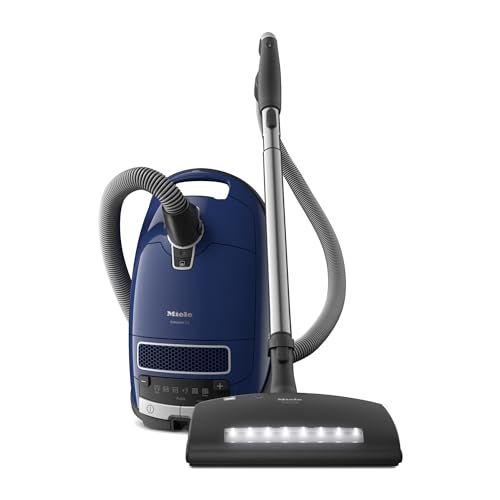
Miele Complete C3 Marin Canister — Sealed-System Benchmark
The Marin is the C3 Miele builds when the brief includes both deep carpet and a dust-tight exhaust, and it shows in the completeness of the design. An electrobrush floorhead gives it genuine carpet authority that suction-only sealed machines lack, the GN bag provides the large first filtration stage, and the body’s sealed construction keeps the air on its intended path through the exhaust filter rather than leaking it at the seams. The marine-blue body is the handsome face of a serious piece of air-path engineering.
Owners of sealed flagships describe a particular satisfaction: the machine can run at full power in a sunlit room — the cruellest test, where a dusty exhaust shows as a visible shimmer — and the beam stays clean. The Marin is built for that test. It costs accordingly, in the machine and in its genuine bags and filters, and for households that have decided dust containment is the point of the purchase, it is the most complete answer in this guide.
- Format: bagged canister with electrobrush floorhead
- Bag system: GN bags, self-sealing collar
- Design: sealed body and exhaust filtration path
- Best flooring: carpets and hard floors
Strengths
- Complete sealed chain from floorhead to exhaust filter.
- Powered electrobrush means no compromise on carpet cleaning.
- Large GN bags keep filtration consistent across long intervals.
Trade-offs
- Flagship pricing in machine, bags and filters alike.
- Substantial body for small storage spaces.
- More machine than hard-floor-only homes require.
Best for: dust-conscious households with real carpet wanting the complete sealed system. Not suited for: tight budgets or hard-floor minimalists.

Sebo AIRBELT K3 Premium Canister — Filtration Engineering Pick
Sebo approaches filtration the way its German engineering culture approaches everything: as a specification to be met at every joint. The K3’s S-class filtration standard governs the whole air path, its bags are part of that rated system rather than an accessory, and the famous airbelt — the soft bumper encircling the body — doubles as the exhaust’s final diffuser, releasing cleaned air gently around the machine instead of jetting it at the room. Even the machine’s manners serve the low-dust brief.
The ET-1 powerhead gives the K3 carpet performance to match its filtration, the thirty-seven-foot operating radius keeps the body settled while you work, and the build promises the decades over which a filtration system must be maintained to mean anything. Buyers who think in systems — chain, seals, schedule — will recognise the K3 as the machine designed by people who think exactly that way.
- Format: bagged canister with ET-1 powerhead and parquet brush
- Filtration: S-class system filtration, airbelt exhaust diffusion
- Reach: thirty-seven-foot operating radius
- Origin: made in Germany, long motor warranty
Strengths
- Filtration treated as a rated whole-system standard.
- Airbelt diffuses exhaust gently while protecting furniture.
- Decades-grade build keeps the sealed system sealed for years.
Trade-offs
- Premium tier across purchase and consumables.
- Utilitarian appearance beside the Miele’s polish.
- Heavier carry than the lightweight picks.
Best for: system-minded buyers wanting rated filtration and lifetime build. Not suited for: buyers seeking the lowest purchase or running costs.

Simplicity Jill Bagged Canister — Lightweight Low-Dust Pick
The Jill’s presence in a filtration guide surprises people who equate low dust with large machines, and that is precisely its lesson: the chain matters, not the size. Its certified HEPA filter sits behind a proper bagged path, its adjustable suction handles the delicate surfaces where dust loves to settle, and its featherweight body means the machine comes out often — and frequent, thorough cleaning is itself a low-dust strategy no specification can replace.
Small homes generate the same fine dust as large ones, in closer quarters, and the Jill serves them with a sealed disposal moment and filtration that punches far above its weight class. For a flat-dweller who wants the dust argument settled without storing a flagship, it is the guide’s most efficient answer.
- Format: lightweight bagged canister
- Filtration: certified HEPA filter in the bagged path
- Suction: adjustable for floors, rugs and soft furnishings
- Best use: smaller homes and frequent cleaning rhythms
Strengths
- Certified HEPA filtration in the lightest body here.
- Frequent use, enabled by the light carry, is itself dust control.
- Sealed bag disposal keeps the emptying moment clean.
Trade-offs
- Deep carpet is beyond its design brief.
- Smaller bags suit smaller debris volumes.
- Fewer tools than the full-kit Kenmore below.
Best for: smaller, dust-conscious homes wanting certified filtration without flagship bulk. Not suited for: deep wall-to-wall carpet or very large houses.

Kenmore Elite 700 Series Bagged Canister — HEPA Path with Pet Power
The Elite 700 Series is the low-dust pick for homes whose dust arrives with animals attached. Its two-motor system drives a powered head through thick carpet while the HEPA bagged path keeps the exhaust disciplined, and the Pet PowerMate extends the same combination — agitation plus contained filtration — to the stairs and upholstery where pet dust concentrates. Kenmore’s Ultra Plush positioning aims the machine at exactly the homes where carpet, hair and dust concerns overlap.
It brings the sealed argument to a tier below the German flagships without surrendering the chain’s completeness: proper bags, HEPA filtration, powered cleaning, honest tools. For a carpeted family home with pets and a dust-conscious brief, it is the most balanced purchase in this guide, and its presence here is a reminder that low dust is an engineering discipline, not a price bracket.
- Format: bagged canister, two-motor system
- Filtration: HEPA filter in the bagged path
- Pet tooling: Pet PowerMate for hair on stairs and upholstery
- Best flooring: thick carpet, hard floors and stairs
Strengths
- Full HEPA bagged path with powered carpet cleaning.
- Pet tooling serves the homes whose dust load is highest.
- Flagship filtration discipline at a friendlier tier.
Trade-offs
- Heavier and larger than the Jill by design.
- Refinement and quiet sit below the Miele flagship.
- More kit to store than minimalist homes may want.
Best for: carpeted pet homes wanting a complete HEPA bagged system. Not suited for: small hard-floor flats or the tightest budgets.
Sealed-System Science — Prose-Only Explainer
A vacuum’s air path is a chain of custody for dust, and it holds only if every link does. The bag is the first link and does the heaviest work: its layered walls trap the bulk of the incoming debris while still passing air, and the dust cake that builds inside it becomes part of the filter medium itself. The second link is geometry — the bag’s collar must seat against its gasket, the body’s lid must close on its seal, and the hose cuffs must click home — because air under pressure treats any gap as an invitation to skip the filters entirely.
The third link is protection: a motor filter keeps the surviving fines out of the machinery, so the motor neither coats itself in dust nor redistributes it. The fourth is the exhaust stage, covered in the next section. When a machine is described as sealed, the claim is that this entire chain was designed and tested as one path with no sanctioned leaks. The practical test at home is simple: a sealed machine’s body stays clean inside its bag compartment, its exhaust does not smell of the dust it just ate, and its performance depends on its filters’ condition rather than on luck. Explained generically, because the science belongs to every buyer, not to any brand in this guide.
- Chain: bag capture, gasketed joints, motor protection, exhaust stage
- Key idea: air exploits the weakest seal, so systems beat components
- Home test: clean bag compartment, neutral exhaust smell
- Tier positioning: an explainer, not a product — no purchase applies
Strengths
- Gives buyers a verifiable checklist beyond marketing adjectives.
- Explains why one cheap substitute bag can undo a flagship system.
- Clarifies the maintenance that keeps a sealed system sealed.
Trade-offs
- True sealing costs money in gaskets, tolerances and testing.
- Owners must maintain seals and seats, not just filters.
- Architecture can be judged at home, but not measured precisely.
Best for: any buyer comparing filtration claims across brands. Not suited for: readers wanting a product pick rather than a framework.
Exhaust Filtration Explained — Prose-Only Explainer
The exhaust filter is the chain’s last link and its most advertised. HEPA — high-efficiency particulate air — names a filtration grade designed to capture the finest fraction of airborne particles, the fraction ordinary media passes and the fraction that stays airborne longest in a room. In a vacuum, a HEPA exhaust stage polishes a stream the bag has already cleaned, which is why it lasts: it is a finishing filter, not a front line, and systems that ask it to do the bag’s work clog it into irrelevance.
Honest limits matter as much as the grade. A HEPA filter in an unsealed body polishes only the air that bothers to pass through it; a HEPA filter years past its replacement date is a label, not a function; and no exhaust stage does anything for the dust that never entered the machine — the settled dust on high shelves is a dusting problem, not a filtration one. Kept in proportion, exhaust filtration is the difference between a vacuum that returns its finest catch to the room and one that retires it. That is a household-comfort difference, genuinely worth having, and it is the whole of the claim this guide makes for it.
- Role: final polishing stage for the finest particles
- Dependency: works only within a sealed, well-bagged path
- Maintenance: replacement on the maker’s schedule, without exception
- Tier positioning: an explainer, not a product — no purchase applies
Strengths
- Demystifies the most marketed term in vacuum filtration.
- Places HEPA correctly as a finishing stage, not a magic word.
- States the honest limits buyers rarely hear.
Trade-offs
- Genuine HEPA media adds purchase and replacement cost.
- Benefits depend entirely on the system around the filter.
- It addresses airborne fines, not settled dust or sources of dust.
Best for: buyers weighing HEPA claims and filter schedules. Not suited for: readers seeking medical guidance, which this guide does not offer.
How Do the Picks and Explainers Compare?
| Element | Type | Filtration character | Ideal home |
|---|---|---|---|
| Miele Complete C3 Marin Canister | Linked vacuum | Sealed body, GN bag, exhaust stage | Carpeted, dust-conscious homes |
| Sebo AIRBELT K3 Premium Canister | Linked vacuum | S-class system filtration, airbelt exhaust | System-minded long-term owners |
| Simplicity Jill Bagged Canister | Linked vacuum | Certified HEPA in a light body | Smaller homes, frequent cleaning |
| Kenmore Elite 700 Series Bagged Canister | Linked vacuum | HEPA bagged path, two-motor power | Carpeted pet homes |
| Sealed-System Science | Prose-only explainer | The chain principle | Every buyer |
| Exhaust Filtration Explained | Prose-only explainer | The final stage, honestly bounded | Every buyer |
How Should You Clean If Dust Is the Enemy?
Technique decides how much dust becomes airborne before any filter meets it. Work slowly, because a rushed head throws debris ahead of its suction and a rushed operator raises dust from every surface they brush past. Clean from the top of the room downwards across a session — shelves and rails with the dusting brush first, floors last — so gravity delivers the room’s dust to the one pass equipped to retire it. Keep the machine’s body behind you and its exhaust pointed away from the surface you have just finished.
After cleaning, give the room a settling interval before judging it, and resist dry dusting with a cloth that merely relocates the problem into the air; a damp cloth or the vacuum’s own brush keeps the transfer one-directional, into the bag. The sealed machine is half the system; the unhurried operator is the other half, and together they produce the stillness in a sunbeam that this guide’s readers are actually shopping for.
What Mistakes Quietly Defeat a Low-Dust Machine?
- Fitting bargain bags that leak at the collar and dust the supposedly clean side.
- Running the exhaust filter years beyond its schedule because the machine still sounds fine.
- Emptying or shaking anything dusty indoors, undoing the sealed system’s whole purpose.
- Choosing a HEPA-labelled machine with an unsealed body and trusting the label alone.
- Cleaning at a sprint, raising more dust than the session retires.
- Ignoring a worn lid gasket or hose cuff because the part seems too small to matter.
How Do You Maintain the Seal Across Years?
Seals age quietly, so inspect them on the filter schedule: the lid gasket for flattening or cracks, the bag collar’s seat for dust tracks that betray a leak’s path, the hose cuffs for the wobble that means air is entering — or leaving — where it should not. A dust track inside the bag compartment is the system’s own handwriting, telling you exactly which link failed; read it at every bag change and the machine will never surprise you with a dusty motor.
Replace filters by the calendar note you wrote when fitting them, not by appearance, because the finest loading is invisible. Keep spare genuine bags and the next exhaust filter in the cupboard together, so the service happens in one opening of the machine. A sealed system is a promise the owner renews a few times a year, in about ten minutes, and every pick in this guide was chosen because its maker sells the parts that let you keep renewing it.
Where Does Household Dust Actually Come From?
A low-dust strategy starts with knowing the enemy’s supply lines. Household dust is a mixture: skin flakes and fabric fibres from the occupants, hair from the animals, soil and grit tracked through doors, pollen and outdoor particles that entered on air and clothing, and the slow disintegration of the home’s own soft furnishings. Each source has its own season and its own stronghold — fibres in the bedrooms, grit at the entrances, hair wherever the dog is adored — and the vacuum programme that works is the one mapped to those strongholds rather than spread evenly like jam.
Interception beats extraction wherever it is available. Mats at doors retire grit before it becomes floor dust; shoes-off habits cut the soil line at its source; bedding washed hot and often removes the bedroom’s largest fibre reservoir at the laundry rather than the filter. The sealed vacuum then handles what interception missed, and because the incoming load is smaller, its bags and filters live their full, effective lives. Dust control is a whole-house system of which the machine is the final, most visible component.
How Can You Test Your Current Machine’s Exhaust Honestly?
Use the sunbeam. Clean a hard floor in a room where low sunlight crosses the space, and watch the air in the beam behind the machine: a dusty exhaust announces itself as a glittering drift that no specification sheet would confess to. Repeat the observation at the emptying moment, over the bin, where bagless cups and careless bag changes produce their characteristic puff. The test costs nothing, requires no instruments, and tells you which link of your current chain is failing.
Follow it with the hand test: run a clean fingertip inside the bag compartment or cup housing. A grey film there is dust that bypassed its intended path — the signature of a leaking seat or an over-full bag — and it names the repair precisely. Households shopping this guide often discover their old machine was not weak but leaky, which reframes the purchase: you are buying a chain that holds, not merely a motor that pulls.
What Should Happen After Renovation or Building Work?
Building dust is a different substance from household dust: finer, more abrasive and produced in quantities that can choke a domestic machine’s bag in a single room. Protect a good sealed vacuum by sequencing the cleanup — builders’ bulk removal first, with sweeping and damp wiping of the heavy deposits, and the household machine reserved for the finishing passes once the load resembles ordinary dust again. Change its bag immediately afterwards regardless of how full it feels, because plaster and cement fines load filter media invisibly and permanently.
Households facing serious works should consider whether the flagship machine should sit the project out entirely while a sacrificial older vacuum takes the abrasive weeks. The sealed system’s precision is an asset worth protecting, and renovation dust is the one opponent this guide advises meeting with a substitute player.
How Do Soft Furnishings Act as Dust Reservoirs?
Curtains, upholstered furniture, mattresses and carpets hold dust the way sponges hold water, releasing a little at every disturbance. A low-dust home therefore treats its soft furnishings as part of the filtration problem: the vacuum’s upholstery tool walks them on the same rhythm as the floors, curtains get their gentle suction pass rather than a shake at the window, and bedding meets hot water weekly so the largest reservoir nearest the sleeper is regularly emptied by the laundry instead of the air.
The adjustable suction on the Jill and the dials on the Miele and Kenmore picks exist for exactly this territory. Worked slowly, the tools lift the reservoir’s surface load without driving it deeper or broadcasting it into the room, and over months the whole home’s dust baseline — measured in how long a shelf stays clean — steps down noticeably.
What Role Do Entranceways Play in a Low-Dust Home?
Every gram of grit stopped at the door is a gram no bag must hold and no filter must polish. A serious entrance — a stiff mat outside, an absorbent one inside, a bench that encourages shoe removal, and a hard floor that can be vacuumed in ninety seconds — is the cheapest filtration stage in the entire house, and it never needs replacing on a schedule. Pet homes should add the paw wipe to the ritual, since paws are the household’s most efficient dust importers.
Vacuum the entrance zone at a frequency the rest of the house would call excessive. It is the one area where daily attention pays compound interest, because grit that migrates inwards becomes every room’s dust, while grit retired at the threshold stays a one-room, one-minute problem forever.
How Should You Choose a Filter Schedule You Will Actually Keep?
The best schedule is the one written down where the machine lives. Note the exhaust filter’s fitting date on its frame, set the replacement month in the same diary that holds the household’s other annual chores, and keep the next filter in the cupboard so the date triggers an action rather than an order. Bag changes follow the suction signal; motor filters follow their own longer rhythm in the manual; and a two-line note after each service keeps the whole history visible at a glance.
Households that keep this tiny administration find their sealed machines still performing to specification in year five. Households that rely on memory find, at year five, that they own a HEPA-labelled machine whose filter predates a house move. The difference is not diligence of character; it is a marker pen and a cupboard shelf, deployed once.
How Does Dust Behave Differently Across Seasons?
Spring and summer open the windows and import the outdoors: pollen, road dust and the fine soil of dry months ride the same breezes the household welcomed. Autumn tracks in leaf mould and grit on wet shoes, and winter seals the house and concentrates the occupants’ own fibre and skin dust in recirculated air. A low-dust household adjusts its rhythm rather than its standards — entrance zones and soft furnishings get extra passes in the open-window months, bedding and upholstery carry the winter programme, and bags fill on different schedules that the cupboard stock should anticipate.
None of this requires anxiety, only calendar awareness. The sealed machine’s contribution is constant: whatever the season imports, the chain retires it without returning the fines. Households that notice the seasons in their dust stop being surprised by a fast-filling June bag, and surprise, in maintenance as in much else, is the mother of neglect.
What About Workshops, Garages and Utility Spaces?
Draw a border at the workshop door. Sawdust, metal filings and the abrasive grit of utility spaces are hard on a sealed domestic system and pointless to filter to a domestic standard; a rugged utility vacuum belongs out there, and the flagship belongs in the house. The border protects both machines and keeps the home’s dust programme honest about what it is for.
The transition zone — the utility room, the boot area, the garage’s inner door — deserves the entrance treatment at double strength, because it is where the two worlds exchange their dust. A mat, a ninety-second pass rhythm and shoes that live on the utility side will do more for the living rooms’ air than any upgrade to the machine itself.
How Should a Low-Dust Machine Be Stored?
Store it empty of excuses: bag checked, tools brushed clean, cord looped loosely, and the body in a dry cupboard where its seals rest uncompressed and its filters stay dry. A machine stored with a full bag after a dusty project carries that load’s smell and fines into its next month of service; a machine stored serviced starts every session at specification. Keep the spare bags and the next exhaust filter on the same shelf, so storage itself reminds you of the schedule.
Small homes without a cupboard to spare should favour the Jill’s footprint or plan the C3’s corner honestly before purchase. A machine that lives in the open gets used more and serviced more visibly, which for dust purposes is a respectable second-best arrangement — the schedule written on the filter matters more than the cupboard’s existence.
Why Do Two Identical Machines Perform Differently in Two Homes?
Because filtration is a practice, not a possession. One household changes bags on signal, honours filter dates, cleans top-down at a walking pace and intercepts grit at the door; the other sprints, overfills, substitutes and shakes. The machines are identical; the dust outcomes are not, and the gap between them is the true subject of this guide. The picks above were chosen to reward the first household’s habits with hardware that can keep up with them.
That is also the hopeful reading: a household does not need the flagship to improve. The Jill, run with discipline, will out-filter a neglected Marin, and the explainers in this guide are free. Buy the best chain your budget allows, then become the operator the chain deserves.
How Do You Clean High and Forgotten Surfaces Without Broadcasting Dust?
The tops of wardrobes, door frames, picture rails and ceiling-fan blades hold the home’s oldest dust, and the amateur’s error is to disturb them dry, at height, with a cloth — manufacturing a slow snowfall over the cleaned room. The low-dust method keeps the vacuum in charge: the dusting brush on the wand, worked along each surface with the suction drawing the load directly into the bag, the operator below the work rather than in it. Where a surface cannot be reached by the wand, a damp cloth folded and re-folded keeps the dust captured rather than airborne.
Schedule these heights into the seasonal sessions rather than the weekly ones, and always before the floors in the same room. A home whose high dust is retired twice a year stops re-seeding its shelves between cleans, and the weekly programme’s results last visibly longer — the quiet arithmetic by which low-dust homes are actually made.
What Should New Owners Do in the First Month?
Learn the machine’s signals while they are still new-machine crisp: how the suction feels with a fresh bag, how the exhaust smells — which is to say, of nothing — and how the bag compartment looks when every seal is holding. Photograph that clean compartment; it is your reference image for every future inspection. Fit the first filter-date note, stock the spare bags, and run one deliberate top-down session to set the home’s baseline.
Then simply keep the rhythm for a month and watch the shelves. The low-dust difference announces itself not in the session but in the interval — surfaces staying cleaner longer, the sunbeam staying emptier — and a month of that evidence converts a purchase into a conviction the household will maintain for years.
How Does a Low-Dust Vacuum Fit with an Air Purifier?
As partners with separate shifts. The vacuum works actively, in sessions, retiring the dust it can reach at floors and furnishings; the purifier works passively and continuously on the room’s airborne fraction between sessions. Neither substitutes for the other, and the household that runs both notices the purifier’s filters loading more slowly once the vacuum’s chain is sealed — the two systems divide the dust by phase, settled and airborne, and each makes the other’s job smaller.
Sequence them sensibly: vacuum first, let the room settle, and let the purifier clear what the session stirred. Readers building the combination will find the purifier side of the argument in the related guide below, written with the same insistence on honest, non-medical framing.
How Should You Evaluate a Vacuum You Already Own Before Replacing It?
Run the two home tests this guide described — the sunbeam at the exhaust and the fingertip inside the dust compartment — and add a third: fit a fresh genuine bag and a new exhaust filter, then repeat both tests after a full session. Many machines condemned as dusty are simply overdue for exactly that service, and a household that revives its current vacuum for the price of consumables has bought information money cannot usually purchase: whether the architecture was ever sealed at all.
If the serviced machine still leaks at its joints, still puffs at emptying it cannot avoid, or never had a specified exhaust stage to replace, then the case for a pick from this guide is made by evidence rather than advertising. Replace on that evidence and you will know precisely which link of the new chain you are paying for.
What Does Low Dust Mean for Homes with Babies and Crawling Children?
It means the floor is a lived surface, inspected at hand height daily, and the household’s standard rises accordingly — stated as a cleanliness and comfort matter, which is the honest frame. Sealed disposal keeps the collected dust out of the room’s air at emptying, frequent gentle passes keep the play surface’s load low, and the entrance discipline keeps the outdoor fraction at the door. Parents running this system are not buying a medical promise; they are buying a floor they are content to put a crawling child on, which is a perfectly sufficient reason.
Choose the machine whose use feels sustainable at parental frequency — for many, the Jill’s lightness at daily intervals — and keep its tools washed and its bags changed on the rhythm the household actually keeps. In this season of life, the best filtration system is the one that survives contact with the calendar.
How Do You Handle a Machine Shared Between a House and a Dusty Hobby?
Home workshops, craft rooms and potting sheds generate dust loads that sit between the household and renovation categories: not abrasive enough to banish the good machine, but heavy enough to punish its filters if the hobby shares it weekly. Compromise by task rather than by machine where possible — bulk hobby debris swept and damp-wiped first, the sealed vacuum finishing — and by schedule: a bag change after any heavy hobby session, treated as the cost of the double life.
Households whose hobbies are truly dusty at volume should graduate to the two-machine border described earlier, because filter media consumed by sawdust are filter media stolen from the bedrooms. The sealed system rewards specialisation, and the kindest thing a hobbyist can do for a flagship is give it a cheaper colleague for the shed.
A Note on Reading Filtration Claims in Shops and Listings
Read for the chain, not the adjective. A listing that names its bag type, its exhaust filter grade and its replacement parts is describing a system; a listing that repeats a single filtration word beside photographs of cyclones is describing a mood. Check that the exhaust filter is a stocked, priced part — a filter nobody sells is a filter nobody replaces — and that the bag’s collar and the body’s seals appear in the design’s own description of itself.
Then check price on Amazon through the links in this guide and compare like with like: machine plus a year of genuine bags and filters, which is the true unit of low-dust ownership. The arithmetic occasionally surprises, and it always informs better than the headline figure alone.
How Long Before a Low-Dust Routine Shows Itself?
Give it a month of honest rhythm. The first sessions retire the accumulated load — the shelves’ backlog, the furnishings’ reservoirs, the carpet’s deep fraction — and only after that backlog clears does the maintenance standard become visible: dust reappearing slowly, in smaller quantities, and mostly at the known strongholds. Households that judge in week one are measuring the old regime’s debts, not the new one’s performance.
Keep a small evidence habit if motivation needs feeding: wipe one shelf with a white cloth on the same day each week and note the difference across the month. Low-dust living is a gradient, not an event, and gradients reward the households that can see them. The machines in this guide make the gradient steep; the operator’s patience lets it show.
What About Open Fires, Wood Stoves and Candle Soot?
Homes that burn wood or candles manufacture a special dust: extremely fine, dark and produced exactly where the household gathers. Ash must be cold — genuinely, days cold — before any household vacuum approaches it, and bulk ash belongs to a metal bucket and a shovel, with the sealed vacuum finishing the hearth’s edges rather than swallowing the fire’s remains. Candle soot on walls and ceilings is a damp-wipe task first, since dry vacuuming smears it, and the machine’s role is the floor beneath.
These homes should treat their exhaust filters as consumables on a shorter rhythm and their bags likewise, because combustion fines load media faster than ordinary dust. In exchange, the sealed chain earns its keep most visibly here: a leaky machine in a wood-stove house perfumes every clean with the last fire, while a sealed one retires each session’s ash-grey harvest in silence.
How Should Landlords of Furnished Homes Approach Dust?
Furnished rentals accumulate the dust of other people’s soft furnishings, and the turnover clean is where a sealed bagged machine quietly protects the next tenancy’s first impression. Run the full top-down circuit between tenants — high surfaces, upholstery, mattresses with their protectors washed, floors last — with a fresh bag at the start and the bag retired at the end, so one household’s dust never becomes the next household’s welcome. The practice is the rental pattern from our upright guide, translated into the key of dust rather than hair.
Hosts of short-stay properties should keep the same discipline at higher frequency and simpler depth: the visible strongholds every changeover, the full circuit on a monthly rhythm, filters dated and stocked like linen. Guests may never name what they are noticing, but they reliably notice it, in reviews that praise a place as fresh without knowing why.
A Closing Note on Proportion
Dust is not an enemy to be abolished but a by-product of living in a house with people, animals, fabric and weather. The low-dust household this guide describes is not sterile and does not aspire to be; it is simply a house where cleaning retires more dust than it relocates, where the air in a sunbeam stays mostly empty, and where the machine’s bag fills with the evidence that the system works. Keep the goal at that human scale and the programme stays pleasant enough to keep for years — which is, in the end, the only filtration specification that truly compounds.
How Do You Teach the Rest of the Household the System?
A sealed system maintained by one person and abused by three others is a part-time system. Teach the household’s few rules at the machine itself: bags changed on the softening signal and never shaken, the filter dates written on the frame, the top-down order, and the entrance treated as sacred ground. None of it takes ten minutes to pass on, and a machine whose every user knows its chain stays sealed in practice as well as in design.
Children old enough to vacuum are old enough for the sunbeam test, which teaches the whole philosophy in one glittering glance better than any lecture. Households that share the understanding share the result, and the result — the shelf that stays clean, the beam that stays empty — becomes a small collective pride rather than one person’s chore.
What If Your Home Is Mostly Hard Floors?
Hard floors change the dust problem’s shape without shrinking it. Dust that carpet would have trapped stays mobile on timber and tile, migrating to corners and under furniture, and it becomes airborne at the slightest disturbance — which is why hard-floor homes often feel dustier than carpeted ones despite holding less. The sealed machine’s answer is frequency and gentleness: a parquet-headed, unhurried pass that gathers rather than scatters, run often, with the exhaust discipline mattering more, not less, because so much of the load is already airborne-prone.
The Jill and the C1-class machines serve this life gracefully, and the flagships’ parquet heads match them when carpet also features. Judge by your mobile dust, and the low-dust brief may be the most relevant one a hard-floor household ever reads.
Final Recommendation
The Miele Complete C3 Marin is the complete sealed argument: powered carpet cleaning inside a body whose air path leaks nothing it can prevent. The Sebo K3 matches it with rated system filtration and the engineer’s choice of exhaust diffusion, and will suit the buyer who thinks in decades. The Kenmore Elite 700 brings the same chain discipline to carpeted pet homes at a friendlier tier, and the Simplicity Jill proves a small, light machine can hold certified filtration and a sealed disposal moment for smaller homes. Read the two explainers before you buy anything, and you will be able to defend whichever choice you make on architecture rather than adjectives.
Run the winner gently, feed it genuine bags, honour its filter dates, and the reward is a home where cleaning visibly settles the air instead of stirring it — dust retiring into a sealed bag, session after quiet session, in every season of the house’s life, for many years to come, without fanfare.
Frequently Asked Questions
What does sealed system actually mean on a vacuum?
It means the air path from floorhead to exhaust is designed as one gasketed route with no intended leaks, so all the air the machine moves must pass through the bag and filters. Think of it as plumbing for air: the specification is not that any single joint is impressive, but that every joint holds, all the way from the floor to the final filter, for the whole of the machine’s working life. An unsealed machine may carry the same filters yet let a share of its air — and dust — slip around them at every joint.
Is HEPA filtration worth paying for in a vacuum?
Within a sealed, well-bagged system, yes: it polishes the finest fraction that other media pass, and it is the finishing stage that makes the exhaust genuinely clean. The value shows itself cumulatively rather than dramatically — in shelves that grey more slowly, in a sunbeam that stays emptier, in the absence of the fine film that used to settle on the television screen between cleans. As a lone label on an unsealed machine, it is worth very little, which is why this guide scores whole chains rather than filter badges.
Why do bagged machines put out less dust than bagless ones?
Two reasons. The bag is a large, effective first filter that keeps the downstream stages lightly loaded, and disposal is sealed: the bag leaves closed, while a bagless cup must be emptied openly, releasing a puff of its finest contents at face height, usually indoors, usually directly above a bin that then holds the loosest fraction unsealed. Running filtration can be good in both formats; the emptying moment is where bagged wins outright.
How often should exhaust filters be replaced?
On the maker’s schedule for your model, which is commonly annual for household use, and sooner in high-dust or pet homes, in wood-stove houses, and in any home where the machine works daily rather than weekly. When in doubt, replace early: a filter changed a month ahead of its need costs little, while one changed a year late has quietly resigned from the system. Write the fitting date on the filter frame when you install it. A filter’s finest loading is invisible, so appearance is no guide — the calendar is the honest instrument.
Can a vacuum replace an air purifier?
They do different work. A vacuum retires the dust it captures during cleaning sessions; a purifier treats room air continuously while you live in it, including the hours when nobody is cleaning and the dust is simply settling and resuspending with the household’s movements. Homes serious about dust usually conclude they want both shifts covered rather than asking either machine to work the other’s hours. Dust-conscious homes often run both, each at its own task, and this guide’s related reading covers purifiers for readers building that combination.
Will a low-dust vacuum help my health condition?
This guide cannot answer that, and no vacuum should ever be sold to you on that basis by anyone, anywhere, at any price point whatsoever, full stop, end of discussion. Sealed filtration is a household dust-containment measure that many dust-conscious homes value for comfort and cleanliness. For anything concerning a diagnosed condition, follow your clinician’s advice and treat the vacuum as housekeeping, not treatment.
Related Guides
Readers building a low-dust home should compare Best Bagless Upright Vacuums for Pet Hair with the disposal question in mind, read Best Vacuums for Bed Bugs for containment under pressure, and browse Best Canister Vacuums for Pet Hair and Messes for more canister options. Our earlier guide to Best Air Purifiers for Allergies covers the continuous-air partner to these machines.


