What's inside
- Key Takeaways
- Quick Picks
- How did we choose these picks?
- Comparison Table
- How do you size a robot to your pool without overbuying?
- What does a good weekly robot routine look like across a season?
- What mistakes do new robot owners make in the first month?
- How do robots handle leaves, sand and fine silt differently?
- When does a pump-powered cleaner beat a robot?
- How should you handle the first clean of a newly opened pool season?
- What pool features most confuse or defeat a cleaning robot?
- How do corded and cordless robots differ across a whole season of ownership?
- How can a robot extend the life of your pool’s surfaces and equipment?
- What should you check before the first swim party of the summer?
- How do you store a pool robot through winter?
- How does water chemistry interact with robotic cleaning?
- What is the honest energy and cost picture of automatic cleaning?
- How should you supervise a robot around children and pets?
- What separates a pool that always looks ready from one that almost does?
- How do you troubleshoot a robot that suddenly cleans poorly?
- Why do some owners run two different automatic cleaners?
- A note on robotic cleaners and pool covers
- How should renters and new pool owners approach their first automatic cleaner?
- What does a robot see at the bottom of your pool?
- The quiet economics of a pool that is always swimmable
- How do you keep a robot’s brushes and tracks in fighting condition?
- One decision to make before the season starts
- What should you do during a heatwave, when the pool works hardest?
- A last look at the three families before you choose
- The first swim test
- Final Recommendation
- Frequently Asked Questions
- Related Guides
As an Amazon Associate I earn from qualifying purchases. This post may contain affiliate links at no extra cost to you.
cottageverdict.com is reader-supported. When you buy through links on our site, we may earn an affiliate commission.
Where to buy: every linked robot below points to its Amazon listing, where you can check price on Amazon and confirm pool-size ratings, included brushes, filter baskets and charging or cable arrangements for your own basin before ordering.
The best automatic pool vacuums share one promise with every robot in this batch of guides: the work happens without you standing over it. A pool, however, is a harsher workplace than a living room. Water hides debris until it stains, walls and waterlines grow films that floors never attempt, and a cleaner must navigate a three-dimensional basin while dragging its own power supply or battery through an element that ruins ordinary electronics for a hobby.
Automatic in this category covers three families, and honesty requires separating them. Robotic cleaners, the four linked models here, carry their own motors, filtration and navigation, scrubbing floors and often walls with no help from the pool’s plumbing. Suction-side and pressure-side cleaners, discussed as prose-only picks, borrow power from your pump or a booster and collect into bags or the pool’s own filter. Each family suits a different pool, budget temperament and appetite for involvement, and this guide keeps the boundaries visible.
Robots have taken the conversation because they clean independently of the circulation system, filter finely in their own baskets and, in the better designs, climb to scrub the waterline where sunscreen and pollen draw their tide mark. Their compromises are retrieval, charging or cord management, and baskets that must be rinsed by a human who was promised automation. The four robots below span the category’s honest range, from a corded wall-climbing classic to cordless models for above-ground and in-ground pools.
Choose by your pool’s shape and surface first, its debris second and your habits third. A robot sized for a small above-ground pool will drown in the workload of a large in-ground basin, however impressive its listing photographs, while a flagship in-ground machine is wasted money patrolling a modest round pool. The sections after the reviews explain sizing, cycles and care in the plain language a pool shop would use if it were not trying to sell you the expensive one.
Key Takeaways
- Robots clean independently of the pool pump, filtering debris in their own baskets.
- Dolphin’s Nautilus CC is the corded wall-climbing classic for pools up to 33 feet.
- Aiper’s Scuba S1 adds smart navigation and waterline scrubbing for pools up to 1,600 square feet.
- WYBOT’s C1 offers long cordless runtime and app control for in-ground pools.
- Aiper’s Seagull SE is the cordless specialist for above-ground pools up to 860 square feet.
- Suction-side and pressure-side cleaners remain valid, pump-powered alternatives, discussed honestly.
Quick Picks
| Pick | Badge | Why it made the list |
|---|---|---|
| Dolphin Nautilus CC Robotic Pool Cleaner | The corded climbing classic | Wall-climbing scrubber with top-load filter access for above and in-ground pools up to 33 feet. |
| Aiper Scuba S1 Robotic Pool Cleaner | Best smart navigation | Cordless cleaner with wall and waterline scrubbing and four modes for pools up to 1,600 square feet. |
| WYBOT C1 Cordless Robotic Pool Vacuum | Best long-runtime cordless | Up to 160 minutes of runtime with app control and smart navigation for in-ground pools. |
| AIPER Seagull SE Robotic Pool Vacuum | Best for above-ground pools | Cordless robot with strong suction flow, self-parking and up to 100 minutes for 860 square feet. |
| Suction-Side Cleaners (Prose-Only) | The pump-powered wanderers | Cleaners driven by the pool’s own suction, collecting debris through the skimmer and filter. |
| Pressure-Side Cleaners (Prose-Only) | The booster-driven sweepers | Cleaners pushed by return pressure, sweeping debris into their own bags with venturi suction. |
How did we choose these picks?
Selection began with pool fit, because a robot’s stated maximum pool size and climbing ability decide whether it can do the job at all. Models were matched to the pools they honestly serve: wall-climbing designs for in-ground basins with proper walls, floor-focused cordless designs for above-ground pools whose walls and liners ask for gentler treatment. Filtration access mattered next, since a basket that is miserable to rinse will be rinsed rarely, and a neglected basket quietly converts a fine cleaner into a debris redistribution service.
Navigation claims were read soberly. Smart mapping and systematic patterns genuinely beat random wandering in rectangular pools, while irregular shapes reward persistence and runtime as much as intelligence. Runtime and cycle length were weighed against pool size rather than admired in isolation, and corded designs were credited for their freedom from charging discipline, just as cordless designs were credited for ending the floating cable’s slow tangle across the water.
The prose-only families were included because a buyer comparing automatic cleaners will be offered both at any pool shop, often with commission-flavoured enthusiasm. Their real virtues, low purchase complexity for suction models and powerful debris handling for pressure models, deserve stating alongside their dependence on pumps, plumbing condition and the owner’s willingness to maintain bags and tail sweepers.
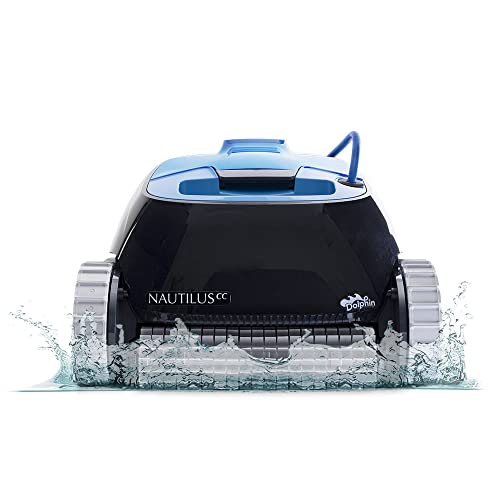
The Nautilus CC is the establishment candidate: a corded robot from the category’s most established name, built to scrub as it climbs, with a wall-climbing brush that treats vertical surfaces and the waterline as part of its territory rather than an accident. Top-load filter access means the basket lifts out from above without inverting the machine and wearing its contents, a small design decision that owners appreciate every single cycle. Its stated territory, above and in-ground pools up to thirty-three feet, covers the great majority of domestic basins.
Corded power buys consistency. There is no battery to fade across a season, no cycle abandoned at eighty per cent because yesterday’s charge was forgotten, and the machine can be scheduled through its power supply’s routine in the rhythm pool owners actually keep. The cord itself demands the usual respect: kept untangled, never used to haul the robot from the water, and given room to float without winding around ladders.
For an owner who wants the proven pattern of robot cleaning without app theatre, the Nautilus CC remains the reference point against which cordless challengers argue. It will not map your pool or report to your phone. It will scrub your walls, filter your water finely and be ready again tomorrow, which is the whole job description written plainly.
Dolphin Nautilus CC Robotic Pool Cleaner — The corded climbing classic
- Format: corded robotic cleaner
- Reach: pools up to 33 feet
- Climbing: wall-climbing scrubber brush
- Filtration: top-load basket access
Strengths
- Proven design from the category’s anchor brand
- Wall scrubbing includes the waterline
- No battery discipline required
Trade-offs
- Cord needs untangling and careful handling
- No app or mapping features
- Retrieval still means lifting a wet machine
Best for: in-ground owners wanting proven, corded reliability
Not suited for: above-ground owners wanting the lightest cordless option

The Scuba S1 argues that a cordless robot should also be a systematic one. Its smart navigation is paired with wall and waterline scrubbing, four cleaning modes for different intentions, and a stated range covering in-ground and above-ground pools up to sixteen hundred square feet. Mode choice is the feature owners actually use: a floor-only pass for the weekly leaf fall, a full climb when the waterline shows its tide mark, and quicker cycles when guests are coming and the pool merely needs to look loved.
Cordless operation changes the poolside choreography completely. There is no cable to lay out, coil or forgive, and the machine can be dropped in for a single basin zone without negotiating with a power supply across the deck. The reciprocal discipline is charging: a robot that lives charged gets used, and the S1’s owner should build its recharge into the same routine as rinsing its filter basket, so the pair of small chores become one remembered act.
Choose the S1 when your pool’s size and shape reward navigation rather than endurance alone, and when waterline scrubbing matters because your pool grows its film where everyone can see it. It is the thinking owner’s robot in this group, priced and positioned accordingly, and its four modes are a promise to match effort to need rather than running one heroic cycle for every occasion.
Aiper Scuba S1 Robotic Pool Cleaner — Best smart navigation
- Format: cordless robotic cleaner
- Coverage: up to 1,600 square feet
- Modes: four cleaning modes
- Scrubbing: walls and waterline included
Strengths
- Systematic navigation suits shaped pools
- Waterline scrubbing tackles the visible film
- Modes match effort to the day’s need
Trade-offs
- Battery must be recharged between cycles
- Premium positioning in this line-up
- Large pools may need more than one cycle
Best for: owners of mid-to-large shaped pools
Not suited for: small above-ground pools needing simplicity

The WYBOT C1 stakes its claim on endurance and control: up to a hundred and sixty minutes of cordless runtime, smart navigation, app control, and a four-in-one robotic brief aimed at in-ground pools while also serving above-ground installations. Long runtime is not a vanity figure in a pool; it is the difference between a cleaner that finishes a large basin in one immersion and one that must be rescued, charged and relaunched while the afternoon escapes.
App control earns its place when it is used for scheduling and mode selection rather than as a novelty remote, and owners who set the C1’s week up in advance report the pool simply staying clean in the background of their lives, which is the automatic ideal this entire category chases. The machine’s suction and scrubbing are asked to cover a lot of water on that long cycle, so filter rinsing after each run is not optional housekeeping but part of the design’s bargain.
Consider the C1 if your pool is large, your debris steady and your patience for mid-cycle interventions short. Its size and ambition are wasted on a small round above-ground pool, where the Seagull below is the honest fit, but for a family in-ground pool that hosts weekends and sheds leaves all week, endurance plus scheduling is the combination that keeps water inviting.
WYBOT C1 Cordless Robotic Pool Vacuum — Best long-runtime cordless
- Format: cordless robotic vacuum
- Runtime: up to 160 minutes
- Control: app control with smart navigation
- Brief: 4-in-1 cleaning for in-ground pools
Strengths
- Longest runtime argument in this guide
- Scheduling keeps pools clean in background
- Suits large basins in a single cycle
Trade-offs
- Filter rinsing is essential after long runs
- App features need a phone-friendly owner
- Oversized for small above-ground pools
Best for: large in-ground pools with steady debris
Not suited for: small pools wanting the simplest robot
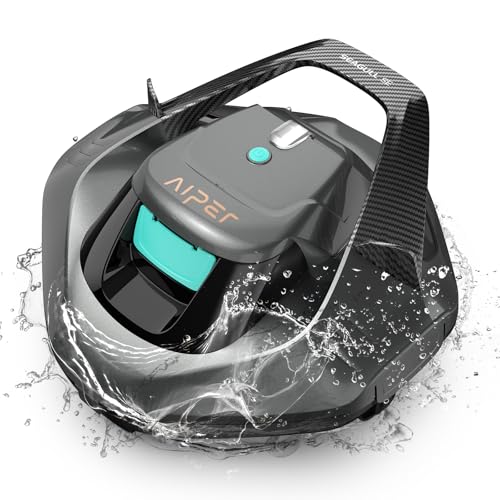
The Seagull SE is the specialist for the pools most robot advertising forgets: above-ground installations up to eight hundred and sixty square feet, cleaned by a cordless machine quoting strong suction flow, smart self-parking and up to a hundred minutes of work. Self-parking is a genuinely kind feature in this setting, bringing the robot to rest where it can be retrieved without a swim or a fishing expedition with the leaf net, and the absence of a cord suits pools whose decks were never designed around cleaner infrastructure.
Above-ground pools ask for floor-focused cleaning and a gentle relationship with liners and walls, and the Seagull’s brief respects that rather than borrowing in-ground ambitions it cannot use. Its cycle suits the debris reality of these pools: leaves, insects, sunscreen film at the surface’s edge and the grit that gathers in the seams of a liner floor. Rinse the filter, recharge the machine, and the routine closes in minutes.
For the owner of a modest above-ground pool who has been hand-vacuuming with a hose and a pole, this is the robot that changes summers. It will not climb an in-ground pool’s walls or map a lagoon, and it does not pretend to. It automates exactly the pool it was built for, at a tier that respects what that pool cost, and honest specialisation of that kind deserves the badge it gets here.
AIPER Seagull SE Robotic Pool Vacuum — Best for above-ground pools
- Format: cordless robotic vacuum
- Coverage: above-ground pools to 860 square feet
- Runtime: up to 100 minutes
- Parking: smart self-parking for retrieval
Strengths
- Purpose-built for above-ground pools
- Self-parking ends retrieval fishing
- Cordless suits simple pool decks
Trade-offs
- Floor-focused rather than a wall climber
- Runtime caps its pool size honestly
- Not intended for large in-ground basins
Best for: above-ground pool owners automating weekly cleaning
Not suited for: in-ground owners needing wall scrubbing
The oldest automatic family plugs into the pool’s own suction, usually at the skimmer or a dedicated line, and wanders the floor driven by the pump’s pull, swallowing debris into the pool’s filter system. Discussed generically, their virtues are simplicity and a low entry tier: no separate motor, no battery, nothing electronic in the water. For a small pool with a healthy pump and modest debris, a suction cleaner can be a perfectly rational automation.
Their costs are dependence and appetite. They only clean while the pump runs, they load the pool’s filter with everything they collect, and their wandering patterns can leave corners loyal to the dirt for weeks. Hose sections, diaphragms and skirts wear and want periodic attention. Owners choosing this family should do so because their pool and pump suit it, not because a robot’s price tag startled them into the first alternative on the shelf.
Suction-Side Cleaners (Prose-Only) — The pump-powered wanderers
- Power: the pool’s pump and suction line
- Collection: into the pool’s own filter
- Strength: simplicity, no electronics in water
- Watch-out: patterns can miss corners
Strengths
- Low-complexity route into automation
- Nothing to charge or programme
- Works whenever the pump runs
Trade-offs
- Loads the main filter with debris
- Cleaning tied to pump schedule
- Random patterns leave quiet corners
Best for: small pools with strong, healthy pumps
Not suited for: owners wanting filtration independent of the pump
Pressure-side cleaners take the opposite plumbing route, driven by water returning to the pool, often through a booster pump, and using venturi jets to sweep debris into their own onboard bag while their tails stir fine particles into suspension for the main filter. Generically, they are the debris heavyweights of the non-robot world, swallowing leaves and acorns that stall lesser cleaners, and their bags spare the pool filter the worst of the load.
Their price is infrastructure: a suitable return line, frequently a booster pump to buy, run and eventually replace, and bags and tail assemblies that wear. Energy costs follow the booster. For a leaf-drowned pool under mature trees, that infrastructure can be entirely justified, and generations of owners have sworn by these machines. For a typical suburban pool, the robot family’s independence from plumbing usually wins the argument on simplicity, which is why the linked picks above are all robots.
Pressure-Side Cleaners (Prose-Only) — The booster-driven sweepers
- Power: return pressure, often a booster pump
- Collection: onboard debris bag
- Strength: large debris and leaves
- Watch-out: infrastructure and energy costs
Strengths
- Handles heavy leaf fall confidently
- Own bag spares the main filter
- Proven over decades of pool seasons
Trade-offs
- Booster pump adds cost and noise
- Bags and tails are wearing parts
- Installation is a plumbing conversation
Best for: pools under heavy tree cover
Not suited for: owners wanting zero plumbing involvement
Comparison Table
| Pick | Format | Standout strength | Watch-out |
|---|---|---|---|
| Dolphin Nautilus CC Robotic Pool Cleaner | Corded robot | Wall-climbing scrub, proven design | Cord management |
| Aiper Scuba S1 Robotic Pool Cleaner | Cordless robot | Navigation plus waterline modes | Charging discipline |
| WYBOT C1 Cordless Robotic Pool Vacuum | Cordless robot | 160-minute runtime, app scheduling | Filter care after long runs |
| AIPER Seagull SE Robotic Pool Vacuum | Cordless robot | Above-ground specialist, self-parking | Floor-focused cleaning |
| Suction-Side Cleaners (Prose-Only) | Pump-powered | Simple, no electronics in water | Loads the pool filter |
| Pressure-Side Cleaners (Prose-Only) | Pressure-powered | Heavy debris appetite | Booster infrastructure |
How do you size a robot to your pool without overbuying?
Start with the maker’s stated maximum, then discount it honestly for shape and debris. A robot rated for your pool’s exact length or area will cope; a robot asked to cover more than its rating will leave the far end permanently under-cleaned, however bravely it starts. Rectangular pools are the easiest territory, while freeform curves, beach entries and attached spas all tax navigation and argue for the longer runtimes and smarter patterns in this guide’s upper picks.
Surface matters alongside size. Smooth fibreglass and vinyl reward climbing brushes differently from rough plaster, and above-ground liners deserve the gentler, floor-focused machines built for them. Steps, ladders and benches interrupt every robot’s map, so expect to brush those features by hand weekly regardless of the badge on the box. Sizing honestly, with a margin for your pool’s personality, is worth more than any single feature upgrade.
What does a good weekly robot routine look like across a season?
Run the robot often enough that each cycle is light work: twice weekly suits most pools in season, more under trees or heavy use, fewer in screened enclosures. Lift it out by its handle, never its cable, rinse the basket or filter until the water runs clear, and let the machine dry before storage or charging. A basket rinsed in two minutes after every run keeps filtration fine and suction honest; a basket ignored for a month teaches the robot to stir debris rather than collect it.
Once a month, inspect brushes for wear and trapped string or hair, check wheels and tracks for grit, and look over a corded model’s cable for twists that shorten its reach. Store robots out of the pool and out of fierce sun between campaigns, because water chemistry and ultraviolet are both patient enemies of seals and plastics. The routine is light, but it is the difference between a robot that serves five seasons and one that fades in two.
What mistakes do new robot owners make in the first month?
Leaving the robot living in the pool full-time leads the list. Constant immersion in chlorinated water ages seals, cables and housings, and most makers intend their machines to work in cycles and rest out of the water. The second mistake is hauling the machine out by its cord or cable, stressing the one connection that must stay watertight. Third comes neglecting the basket until the robot’s performance visibly sulks, then blaming its navigation for a filtration problem.
Owners also expect the robot to replace all pool care, and it cannot. It does not balance chemistry, brush steps and benches thoroughly, or skim the surface film that a net handles in a minute. Treat the robot as the floor-and-walls department of a small team that still includes the pump, the test kit and ten weekly minutes of your own attention, and the whole system, robot included, will perform as advertised.
How do robots handle leaves, sand and fine silt differently?
Leaves test capacity and intake size: they fill baskets quickly and can bridge across a filter, so leaf-heavy pools benefit from the larger machines and from a surface skim before the robot runs. Sand tests weight and brush contact, gathering in floor seams where a scrubbing pass matters more than raw suction. Fine silt is the filtration examination, passing through coarse baskets to cloud the water again unless the filter grade matches it, which is why some owners keep a finer filter option for spring opening and pollen season.
No robot wins all three examinations equally, and listings rarely confess which they were built for. Match the machine to your dominant debris: the climber for film and general dirt, the long-runtime model for large leafy basins, the above-ground specialist for the grit and insects of a liner pool. A pre-season conversation with your own pool’s debris, honestly inventoried, predicts satisfaction better than any navigation claim.
When does a pump-powered cleaner beat a robot?
When the pool is small, the pump is strong and already running long daily cycles, and the debris is modest, a suction-side cleaner automates cleaning for a fraction of a robot’s commitment, with nothing to charge, lift or store. When leaf fall is enormous and a booster line already exists, a pressure-side machine’s bag and appetite can outwork a robot that would need emptying twice a cycle. These are real cases, and this guide’s prose sections exist to honour them.
The robot’s counter-argument is independence: it cleans without running the main pump, filters in its own basket rather than the pool’s, and arrives as a single box rather than a plumbing project. Most modern buyers, facing no existing booster infrastructure, find that argument decisive. The honest chooser prices the whole system, pump hours and parts included, rather than comparing a robot’s ticket with a cleaner’s ticket and calling the difference savings.
How should you handle the first clean of a newly opened pool season?
Do not ask any robot to open a pool alone. A winter’s worth of settled debris, algae film and possibly a small ecosystem should meet a net, a manual brush and, where needed, a waste vacuum session first, with chemistry balanced before fine cleaning begins. Once the water is clear enough to see the floor and the bulk is gone, the robot takes over brilliantly, scrubbing the film from walls and lifting the fine remainder that manual work leaves suspended.
Run the first robot cycles back to back with basket rinses between them, because opening debris fills filtration at several times the normal rate. Inspect what the basket catches; it is a free audit of what winter did to your pool. From that clean baseline, the weekly routine in this guide takes over, and the season’s remaining robot work becomes the light, background maintenance the machines were designed for.
What pool features most confuse or defeat a cleaning robot?
Beach entries and tanning ledges give climbing robots shallow water their sensors read as the end of the world, while steep steps and swim-out benches interrupt patterns and collect debris in their shelter. Ladders shadow the wall behind them from every brush. None of this is a verdict against robots; it is a map of where your own brush must visit weekly, in the two minutes after the robot finishes, while the water is already stirred and the debris is loose.
Very irregular freeform pools reward runtime and persistence over clever mapping, since no pattern survives contact with a lagoon shape unchanged. If your pool is a sculpture, choose endurance, run longer cycles, and judge the robot by the basin’s overall condition across a week rather than by the geometry of any single pass. Owners who grade fairly, by outcomes rather than choreography, are consistently the satisfied ones.
How do corded and cordless robots differ across a whole season of ownership?
The corded machine’s season is one of sameness: same readiness, same cycle, no charging diary, with the cable’s slow tendency to twist as its only recurring chore, answered by laying it straight in the sun occasionally. The cordless machine’s season is one of rhythm: charge, run, rinse, charge, a small liturgy that suits owners who like their equipment docked and accounted for, and punishes only the forgetful week when guests arrive to a robot at rest with an empty battery.
Battery ageing belongs in the cordless ledger too, spread over seasons rather than weeks, and it argues for buying runtime with margin rather than exactly enough. Corded ageing is gentler and mostly mechanical: brushes, tracks and eventually the cable’s own insulation. Neither ledger is damning. They are simply different maintenance personalities, and the right choice is the one whose small chores you will actually perform in August, not the one that sounds lightest in May.
How can a robot extend the life of your pool’s surfaces and equipment?
Regular scrubbing interrupts the biofilm that dulls plaster, stains liners and gives algae its foothold, so surfaces stay brighter with less chemical drama. Debris removed promptly cannot decompose in the water, which steadies chemistry and reduces the filter’s burden, and a pool filter that is not doubling as a leaf trap lasts longer between deep cleans. The robot’s quiet contribution is prevention, spread across every week it runs.
That prevention only compounds if the robot itself is maintained, which returns this guide to its recurring sermon about baskets and brushes. A clean robot cleans pools; a neglected one becomes another surface for film to colonise. Five minutes of rinsing and inspection per cycle is the premium on an insurance policy that pays out in water clarity, surface life and Saturday mornings that belong to swimming rather than to rescue operations.
What should you check before the first swim party of the summer?
Run a full robot cycle the day before, not the morning of, so any stirred fine material has a night of filtration to clear. Brush the steps, ledges and ladder shadow yourself, skim the surface an hour before guests arrive, and confirm the water’s chemistry with a test rather than with optimism. Check the robot’s basket is rinsed and the machine itself is out of the pool and stored, because a cleaner lounging in the water during a party is both an obstacle and an undignified look for the host.
After the party, run the robot again. Sunscreen, grass and the joyful debris of a crowd settle overnight, and a prompt cycle returns the pool to its resting state before films establish. Hosts who adopt the day-before and day-after pattern find their pools photograph well all season, and the robot, used as an event teammate rather than a daily apology, finally delivers the lifestyle its box promised.
How do you store a pool robot through winter?
Clean it as if the season were watching: basket rinsed and dried, brushes freed of hair and string, housing wiped, and the whole machine dried before it goes wherever it will winter. Store it indoors, out of freezing standing water and fierce sun, with a corded model’s cable loosely coiled rather than tightly wound, and a cordless model’s battery left at the partial charge its manual recommends rather than brimmed or empty.
Midwinter, give the machine a glance for pests, damp and forgotten moisture, and resist lending it to a neighbour’s winter project. In spring, inspect seals and tracks before the first immersion, run the opening routine described earlier, and the robot begins its second season as a maintained tool rather than a survivor. Seasonal machines reward seasonal owners, exactly as the ash vacuums elsewhere in this batch reward theirs.
How does water chemistry interact with robotic cleaning?
A robot removes material; chemistry manages what is dissolved and alive. When chemistry drifts, algae colonises surfaces faster than any brush schedule, and the robot gets blamed for green water it was never hired to prevent. Keep sanitation and balance in their ranges and the robot’s scrubbing becomes prevention rather than combat, interrupting films before they establish and lifting the organic load that consumes sanitiser.
Conversely, a diligently run robot steadies chemistry by removing debris before it decomposes, which is why pools with robots often report calmer test results across a season. The two systems are partners with separate jurisdictions, and the owner is the manager who keeps each doing its own job. Test the water weekly, run the robot on rhythm, and neither will be asked to perform the other’s miracles at short notice before guests arrive.
What is the honest energy and cost picture of automatic cleaning?
Robots sip electricity compared with running a main pump for cleaning, drawing modest power for a cycle measured in hours, and they spare the pump and filter the wear of debris duty. Pump-powered cleaners invert that picture: their purchase can be gentle while their running depends on pump hours and, for pressure models, a booster’s appetite. Honest comparison totals the system across seasons, including bags, tails, diaphragms, replacement brushes and the occasional basket, rather than admiring a single ticket.
None of the families is ruinous, and all are cheaper than a pool service’s weekly visits for the vacuuming portion of care. The buyer’s real decision is where the money sits: in a self-contained machine, in plumbing infrastructure, or in an ongoing service relationship. This guide’s linked robots concentrate the spend in the machine, which is why they suit owners who want their automation portable, understandable and theirs.
How should you supervise a robot around children and pets?
Treat a running robot as pool equipment in motion: interesting, climbable in a child’s imagination and entirely unsuitable as a toy. Most households run cycles when the pool is not in use, which also happens to be when cleaning works best, and store the machine out of reach and out of the water between runs. Cables and charging leads deserve the same respect as any electrical equipment near water, kept dry at their connections and inspected for damage.
Dogs vary: some supervise robots with grave attention from the coping, others attempt retrieval. Introduce a curious dog to the machine at rest, discourage interference early, and never let an animal’s game involve a powered cleaner in the water. The robot’s job is to make the pool calmer for everyone, and a household that sets its boundaries in week one will never have to negotiate them in week ten.
What separates a pool that always looks ready from one that almost does?
Almost always, it is the edges: the waterline’s film, the steps’ dusting of silt, the corner behind the ladder. Robots exist to own the broad territory so the owner’s ten minutes can own the edges, and pools whose owners accept that division gleam. Pools whose owners demand the robot do everything, including the impossible corners, look ninety per cent clean forever, which reads as uncared-for in a way that eighty per cent plus finished edges never does.
Build the edge habit into the robot’s own rhythm: while it runs, skim; when it finishes, brush its blind spots; then rinse its basket and put it away. Fifteen minutes of partnership outperforms an hour of either party working alone, and the pool settles into the condition this category promises on its boxes, ready at the moment a hot afternoon suggests a swim rather than a cleaning project.
How do you troubleshoot a robot that suddenly cleans poorly?
Work from the basket outwards. A full or filmed basket strangles flow, so rinse it and, if the film persists, wash it as the maker allows. Check brushes for hair, string and wear, wheels and tracks for grit that steals traction, and intakes for the leaf or stone that explains everything. On a corded model, straighten the cable so the machine can actually reach the far wall it has been accused of ignoring.
If the robot wanders drunkenly or stops early, consult its manual’s error signals before assuming death, because sensors fouled by scale or algae lie to the machine about its world. A gentle clean of sensors and a restart in clear, balanced water cures more robots than any parts order. Only after the simple liturgy fails should the conversation turn to motors and boards, ideally while the machine is still within its maker’s support.
Why do some owners run two different automatic cleaners?
Leaf country makes the argument: a pressure-side veteran with its bag handles the autumn deluge while a robot keeps the weekly finish, each doing the work its physics prefers. Other households pair a robot with the pool’s built-in systems or keep a suction cleaner as the spare that covers a robot’s repair week. Redundancy sounds excessive until a heatwave arrives during a breakdown, when a pool without any automation becomes a daily emergency.
For most homes one well-matched machine is enough, and this guide’s picks are chosen to be that machine across the common pool types. Buy the second cleaner only when your debris or your calendar has proven the need across a full season, not in anticipation of a catastrophe that a rinsed basket and a spare brush would have prevented. Equipment should follow evidence around a pool as faithfully as chemistry follows testing.
A note on robotic cleaners and pool covers
Robots and covers are allies with a scheduling problem: the cover keeps debris and heat in their proper places, while the robot needs open water to work. Run the robot before covering for a stretch of days, and lift the cover for a cycle whenever the pool rests long enough for film to start. Solar covers in particular can hide a quietly greening pool from an owner who assumes cleanliness from stillness.
Never trap a running robot under a cover unless the maker explicitly blesses the arrangement, and keep cables and charging gear clear of cover reels and rollers. Managed in turns, the pair delivers the lowest-effort pool of all: covered and clean, opened to water that needs nothing but a swimmer. That, ultimately, is the condition every automatic cleaner in this guide is working towards.
How should renters and new pool owners approach their first automatic cleaner?
Start with the pool you have rather than the pool in the listing photographs. Measure it, note its surface and shape, inventory a week’s real debris, and choose the family whose demands match your tenancy: a robot asks nothing of the plumbing and leaves with you when you move, which makes it the natural first purchase for renters and new owners alike. Confirm with a landlord before any plumbed cleaner is installed, because suction and pressure systems touch the property’s infrastructure in ways a robot never does.
Keep the first season simple and observant. Run the machine on a rhythm, rinse its basket without exception, and learn where your pool hides its dirt. By the second season you will know whether your pool wants more runtime, finer filtration or merely the same faithful service, and any upgrade will be bought from evidence. Pools reward owners who learn them, and an automatic cleaner, properly kept, is the best teacher a new owner can hire.
What does a robot see at the bottom of your pool?
Less than you hope and enough to work. Sensors read walls, depth changes and sometimes little else, while patterns, timers and traction turn those few facts into coverage. This is why runtime and persistence rival intelligence in real basins, and why a robot’s second cycle often cleans what its first merely mapped. Owners who understand the machine’s modest senses stop expecting choreography and start valuing the steady accumulation of passes.
It also explains the blind spots this guide keeps assigning to your brush. The robot cannot know that the corner behind the ladder matters to you, or that the step where everyone sits deserves a daily polish. Your ten minutes supply the meaning; the machine supplies the hours. Automatic cleaning, honestly understood, is that partnership, and pools kept by partners stay ready.
The quiet economics of a pool that is always swimmable
A pool that is always ready gets used on weekday evenings and spontaneous afternoons, which is where its value actually lives. A pool that needs a cleaning project before each swim gets used on planned occasions, and its cost per swim climbs quietly until the owners wonder why they keep it. Automatic cleaners are therefore not really bought with money alone; they are bought against the alternative of a beautiful, expensive, rarely entered rectangle of water.
Seen that way, the right robot pays for itself in Tuesdays. Choose it by your pool’s honest measurements, keep its basket rinsed and its brushes sound, and the water will be waiting whenever the day suggests it, which is the entire point of having a pool at all.
How do you keep a robot’s brushes and tracks in fighting condition?
Brushes are the robot’s hands, and hands wear. Inspect them monthly for thinning, tearing and the hair and string that wind around their ends, and clear the axles where grit grinds quietly. Tracks and wheels deserve the same glance, because a robot that cannot climb or track straight will be accused of bad navigation when its real problem is footwear. Replacement brushes are a normal seasonal cost in a hard-working pool, not an admission of failure.
Between cycles, a quick freshwater rinse of the whole machine, where the maker permits it, slows the chemical ageing of everything the pool water touches. Dry the robot in shade rather than fierce sun, since ultraviolet is as patient an enemy as chlorine. Machines kept this way hold their performance across seasons in a way that startles owners who previously stored their cleaner wet, in the pool, under the sun, and wondered at its decline.
One decision to make before the season starts
Decide your rhythm now, while the water is still cold: which days the robot runs, who rinses the basket, where the machine lives between cycles, and what your own ten minutes will cover. Written on the pool shed door or kept in a shared phone note, that small rota prevents the diffusion of responsibility that leaves robots sitting charged and pools quietly filming over. Automation automates the cleaning, not the remembering, and the households that thrive with these machines are the ones that automate the remembering too, with a rhythm simple enough to survive a busy July.
What should you do during a heatwave, when the pool works hardest?
Heat multiplies everything: bather load, sunscreen, algae ambition and the debris of long evenings outdoors. Answer with frequency rather than heroics, adding an extra robot cycle in the week and testing chemistry more often, because a pool that slips during a heatwave takes days of work to recover while a pool held steady asks only for rhythm. Rinse baskets after every cycle without exception, since the loads will be heavier and the filtration’s margin thinner.
Shade the stored robot, keep its charging or power gear dry and ventilated, and brush the waterline yourself if the film advances faster than the climbing schedule. Heatwaves are when automatic cleaning earns its entire purchase price in a fortnight, provided the small human duties around it are kept. Let them slip, and no robot, however intelligent, can hold a pool alone against August.
A last look at the three families before you choose
Stand at your pool and ask three questions. Does my plumbing invite a cleaner, or would I rather keep the systems separate? Is my debris mostly fine and film, mostly leaves, or mostly the grit of an above-ground floor? And which small chores will I genuinely perform in the eighth week of summer: rinsing a basket, emptying a bag, or untangling a hose? The family that answers those questions kindly is your family, and the model within it is a detail.
Most readers will land, as this guide did, on a robot matched to their basin: corded and proven, cordless and clever, enduring, or specialised for above-ground water. Land there with your eyes open about baskets and blind spots, and the machine will keep the promise that brought you to this page, quietly, in the background of every swim.
The first swim test
When the machine has run its first full week, judge it the way a guest would: water clarity at the deep end, the feel of the floor underfoot, the waterline’s honesty in afternoon light. If those three pass, your sizing and rhythm are right, and the rest of the season is maintenance rather than shopping. If one fails, adjust the rhythm before questioning the robot, because frequency cures more pool complaints than features ever will.
Keep that guest’s-eye judgement as your standard all season, and resist grading the robot by the elegance of its paths across the floor. Pools are for swimmers, not for choreography critics, and a cleaner that leaves water inviting has done everything its designers promised, whatever route it took to get there.
Set the rota, rinse the basket, brush the ladder’s shadow, and then go and use the pool, because a summer spent administering a cleaner instead of swimming in front of it would miss the point of every page above.
The water will keep its side of the bargain from there, clear and patient, ready on the ordinary evenings that turn out to be the ones a family remembers.
Choose once, choose by measurement, and then let the season belong to swimming.
That restraint, after a careful purchase, is the final skill this guide can teach.
Everything else is filtration and sunlight.
Final Recommendation
Pick the robot your pool would choose: the Dolphin Nautilus CC for proven corded wall-scrubbing in pools up to thirty-three feet, the Aiper Scuba S1 when navigation and waterline modes suit a shaped mid-to-large pool, the WYBOT C1 when a big in-ground basin rewards endurance and scheduling, and the Seagull SE when an above-ground pool deserves a specialist of its own. Respect the pump-powered families where plumbing and debris argue for them, rinse every basket like you mean it, and the automatic promise stops being a slogan and becomes the ordinary, week-after-week condition of a pool that is always ready to swim in.
Frequently Asked Questions
Can one robot clean both my pool’s floor and its walls?
Yes, if it is a climbing model like the Dolphin Nautilus CC or the Aiper Scuba S1, which scrub walls and the waterline as part of their cycles. Floor-focused cordless models such as the Seagull SE are built for above-ground pools and clean the floor thoroughly without climbing, so match the machine’s brief to your pool’s construction.
How long should a robot stay in the pool?
Run it for its cycle, then take it out, rinse its filter and store or charge it out of the water. Leaving a robot immersed full-time ages its seals, cable and housing in treated water. Frequent complete cycles with proper rest between them serve both cleanliness and the machine’s lifespan far better.
Do robots work in above-ground pools with soft walls?
The right ones do: choose a floor-focused model designed for above-ground pools, such as the AIPER Seagull SE, sized to your pool’s area. Avoid sending a heavy wall-climbing in-ground robot into a liner pool whose walls were not built for climbing traffic.
Will a robot replace my pump and filter?
No. A robot cleans surfaces and collects debris in its own basket, independently of the circulation system, but the pump and filter still turn over and polish the whole water volume and support sanitation. Think of the robot as replacing your manual vacuuming, not your pool’s life-support.
How often should I rinse the robot’s filter basket?
After every cycle, until the water runs clear. It takes about two minutes and preserves the fine filtration and suction the machine was bought for. A neglected basket is the most common cause of a robot that seems to have lost its ability, when it has only lost its breath.
Related Guides
Owners comparing across water and floor care may also enjoy Best Automatic Vacuums for Pet Hair for automation indoors, Best Bagged Vacuums for High-Pile Carpet for a very different kind of deep surface, and Best Affordable Vacuums for value thinking generally, while Best Robotic Vacuums for Above-Ground Pools goes deeper on the above-ground specialism.



[…] out your reading with Best Automatic Pool Vacuums for tools of a very different element, Best Vacuum Bags and Bag Filter Systems for the consumables […]