What's inside
- Where to Buy a Large-Capacity Dishwasher, and How to Tell Real Room From a Big Number
- Key Takeaways
- Quick Picks
- How Did We Measure “Large” for This Guide?
- The Capacity Field, Compared
- Why Do Two Machines With the Same Settings Count Hold Different Dinners?
- How Should a Big Household Load a Big Tub So It Washes Like One?
- How Does Capacity Interact With an Open-Plan Evening?
- What Does a Big Tub Ask of the Plumbing and the Floor?
- How Should a Household Grow Into a Big Machine Across Its First Month?
- Capacity Buying Errors, Named Before You Make Them
- How Does Capacity Planning Change at the Holidays?
- What Is the Unloading Test, and Why Do Showrooms Fail It?
- How Do Drawer and Split Formats Reframe the Whole Question?
- How Does a Big Machine Change the Household’s Water Story?
- What Should a Buyer Ask a Previous Owner of the Same Model?
- How Does the Big-Tub Decade End?
- Why Do Restaurants and Serious Hosts Think About Capacity Differently?
- What Does the Second Load’s Disappearance Actually Buy a Household?
- How Should the Crockery Fleet Grow to Match the Machine?
- What Is the Kindest Way to Retire the Machine This One Replaces?
- A Note on Measuring the Opening Before the Machine Charms You
- Final Recommendation
- Frequently Asked Questions
- Related Guides
As an Amazon Associate I earn from qualifying purchases. This post may contain affiliate links at no extra cost to you.
cottageverdict.com is reader-supported. When you buy through links on our site, we may earn an affiliate commission.
Where to Buy a Large-Capacity Dishwasher, and How to Tell Real Room From a Big Number
The best large-capacity dishwashers are bought by households whose sink keeps a second shift: the load washed, and the load that waited. Capacity, in that kitchen, is not a luxury statistic but the difference between one cycle and two, between a cleared counter at bedtime and a draining board’s worth of overflow greeting the morning. This guide compares five verified machines whose titles state capacities of fourteen to sixteen place settings — one of them as a flexible 14–16 range — plus a premium panel-ready machine discussed without a capacity claim, and a class-level look at what lies beyond the domestic ceiling.
The discipline matters more here than in any other dishwasher category, because place settings are the most gameable number in the industry: a standardised setting assumes standardised plates, and households eat from neither. So this guide quotes settings only from listing titles, treats racking — third racks, adjustable racks, drying systems — as capacity’s honest half, and refuses one number entirely: the Asko in this list carries no capacity figure in the pool’s verified design, so none is claimed for it, however its badge tempts a writer. What a large tub cannot swallow, no adjective will fit.
From any linked name you can reach its Amazon listing to check price on Amazon and set the listing’s rack dimensions against your largest pan. No prices, no fixed ratings — capacity is a measurement, and measurements should be made against your own cookware.
Key Takeaways
- Titled capacities in the linked set run from fourteen settings to sixteen, with one machine stating a flexible 14–16 range.
- Third racks appear on the Sharp, the Kenmore Elite and implicitly in the class logic — they convert cutlery volume into plate room.
- The Asko DFI776 is covered without any capacity number, because the verified pool design states none for it.
- Adjustable racks, named in the Sunvivi title, are capacity you can reshape rather than merely own.
- Quiet figures are titled on three picks — 49, 42 dBA and the class spread between them — because big machines run through family evenings.
- Water volume per load is the counter-argument, weighed for septic households in Best Dishwashers for Septic Systems.
Quick Picks
| Pick | Badge | Why it stands out |
|---|---|---|
| Sunvivi 24-Inch Built-In Dishwasher | Flexible 14–16, Adjustable Racks | A titled capacity range, eight programs and racks that reshape around the load. |
| Sharp SDY6735DNS Dishwasher (16 Place Settings) | Sixteen, Door-Open Drying | Sixteen settings, a third rack and auto door-open drying at a titled 49 dBA. |
| Asko DFI776 Panel-Ready Dishwasher | Premium Panel-Ready | A built-in, panel-ready machine covered on design and format — no capacity claimed. |
| Kenmore Elite 24-Inch Dishwasher (15 Place Settings) | Fifteen at 42 DBA | TotalFlex third rack, TurboDry and the set’s quietest titled figure. |
| BLACK+DECKER BDW400MS Dishwasher (14 Place Settings) | Designer Series Fourteen | Fourteen settings, a steel tub and a Smart Wash system in the designer line. |
| Beyond sixteen: the oversize class (class discussion) | Ceiling-Breakers | What households beyond domestic capacity should plan instead, at class level. |
How Did We Measure “Large” for This Guide?
By titles first and by racking second. A machine entered the linked set on a stated capacity of fourteen settings or more — the Sunvivi’s 14–16 range, the Sharp’s sixteen, the Kenmore Elite’s fifteen, the BLACK+DECKER’s fourteen — with the Asko admitted on a different passport entirely: it is a premium panel-ready built-in whose pool design carries no capacity number, and it is reviewed for format and finish with the number left blank rather than borrowed. The prose slot then covers the class beyond the linked set, for households whose arithmetic exceeds even sixteen.
Racking was the second measure because it decides how much of a titled capacity a household can use. A third rack converts the cutlery population from a space claim into a solved problem; adjustable racks let a tub change shape between the pan day and the glassware day; and drying systems decide whether a full load emerges cupboard-ready or towel-first. Two machines can share a settings count and differ by a whole evening’s labour in these details, which is why the reviews below spend as long on racks as on numbers.
Noise was the third measure, quoted only where titled: big machines serve big households, and big households live in their kitchens while the machine runs. A capacity that cannot be used during waking hours is capacity at half value, and the titled figures — 42 dBA at the quiet end — are therefore reported as capacity facts, not acoustic trivia.

Sunvivi 24-Inch Built-In Dishwasher — Flexible 14–16, Adjustable Racks
The Sunvivi’s title contains the most honest capacity statement in this guide: 14–16 place, a range rather than a point. That range is how capacity actually behaves — fourteen settings of the household’s largest dinner service, sixteen of its everyday one — and a manufacturer willing to print the range understands the statistic better than one printing a heroic maximum. Behind the number sit adjustable racks, eight wash programs and an Energy Star certification stated in the title, in a stainless steel machine.
There is a temperament match hiding in this pick: the household that reads a capacity range and nods is the household that cooks by feel, whose loads are weather rather than timetable. Fixed-number machines suit fixed-number families; the Sunvivi’s range suits the improvisers, and it is to the manufacturer’s credit that the title admits the truth every owner discovers — that a dishwasher’s capacity is a negotiation between the tub and the day, settled nightly at the rack.
Adjustable racks are the feature that turns a big tub into a shapeshifter. The load after a roasting day and the load after a baking day are different geometries, and a racking system that moves — heights shifting to admit the stockpot below or the tall glasses above — lets one machine be both days’ answer. Eight programs is a repertoire sized for that variety, and the designation matters at this scale precisely because large machines run large appetites: efficiency per setting is the only honest way to run a big tub, and the title’s certification is the machine’s claim to it.
Sunvivi is a newer name in many markets, and this guide’s method — trust the titled, verifiable facts — serves its buyers well: capacity range, rack adjustability, program count and designation are all on the record. Households that entertain in waves, whose loads swing between fourteen and sixteen settings by the calendar, will recognise their own arithmetic in this machine’s title more readily than in any fixed number in the set.
- Format: 24-inch built-in, stainless steel
- Capacity: 14–16 place, large capacity per the listing title
- Racks: adjustable racks
- Programs: 8 wash programs
- Designation: Energy Star Certified, per the listing title
- Where to buy: the Sunvivi 24-Inch Built-In Dishwasher listing on Amazon — check price on Amazon
Strengths
- An honest capacity range instead of a maximum dressed as a promise.
- Adjustable racking reshapes the tub around each day’s geometry.
- Designation stated for a machine of family scale.
Trade-offs
- A newer badge asks buyers to weigh specifications over reputation.
- No titled noise figure for evening-running comparisons.
- The flexible range needs the listing’s rack dimensions to interpret.
Best for: households whose loads swing in size and want a tub that swings with them.
Not suited for: buyers who want a single fixed capacity number and nothing to interpret.

Sharp SDY6735DNS Dishwasher (16 Place Settings) — Sixteen, Door-Open Drying
Sixteen place settings, stated plainly, with a third rack and a feature this guide wants to single out: auto door open drying. At the cycle’s end the door releases and opens a crack, letting the tub’s steam escape and room air finish the drying — a method that suits large loads particularly, because a sixteen-setting load holds a great deal of stored heat and moisture, and venting it passively dries the many at the cost of none. In a big household’s rhythm, where the machine is loaded again within hours, a load that dries itself while the family eats is a genuine labour saving.
Door-open drying has a household-politics dimension worth one sentence: a machine that finishes by opening itself asks the kitchen to tolerate a warm, steaming doorway for a while, and in a small flat that negotiation is real. In the large households this machine targets — big kitchens, many hands, constant traffic — the open door is simply the machine exhaling before its next shift, and the dry load it produces by morning is the argument that ends the negotiation.
The third rack at this capacity is not a garnish; it is what makes sixteen achievable, since sixteen settings of cutlery in a basket would colonise the lower rack’s best floor. The top-control handle format keeps the panel hidden and the grip honest, a combination this site’s top-control guide praised in a sibling Sharp. At a titled 49 dBA the machine is the set’s loudest on paper — a figure to weigh if the kitchen is also the evening’s living room, and to forgive if the machine runs behind a door or after bedtime.
Sharp’s presence across this batch’s guides — family, stainless, top-control and now capacity — reflects a range built around racking and honest numbers, and this model is its capacity flagship in the verified pool. Households whose binding constraint is sheer settings, and whose drying pain is the morning’s damp load, should start their shortlist here and make the others argue against it.
- Format: 24-inch built-in, top control handle
- Capacity: 16 place settings, titled by the maker
- Racks: third rack included
- Drying: auto door open drying
- Noise: 49 dBA, per the listing title
- Where to buy: the Sharp SDY6735DNS listing on Amazon — check price on Amazon
Strengths
- The joint-largest titled capacity, with the rack to make it usable.
- Door-open drying finishes big loads without a heating element’s spend.
- A handle on a hidden-control door suits busy family hands.
Trade-offs
- 49 dBA is the set’s highest titled figure.
- Door-open drying needs clearance and a household that welcomes it.
- Sixteen settings punishes half-load habits at scale.
Suits best: large households that load once, fully, and unload to cupboards.
A poor fit for: open-plan minimalists who rank silence above settings.

Asko DFI776 Panel-Ready Dishwasher — Premium Panel-Ready
The Asko requires this guide’s most careful paragraph, so here it is first: the pool design verified for this article states no capacity number for this machine, and therefore this review claims none. What the record does support is the format — a 24-inch built-in, panel ready, from Asko, a Scandinavian maker whose reputation in the premium tier rests on steel construction and longevity — and the machine is reviewed on exactly those terms: as the design-led, cabinet-integrated option in a capacity guide, for households whose large kitchen is also a designed one.
Asko’s wider reputation, stated carefully at class level, rests on an engineering-first culture — steel where others use plastic, service lives discussed in decades — and buyers drawn to the brand usually arrive through a designer or a previous owner’s evangelism rather than through a comparison table. That route into a purchase is legitimate, provided the verification habit travels with it: reputation may open the conversation, but the listing’s own specification should close it, capacity included.
Panel-ready at this end of the market is a philosophy as much as a finish: the dishwasher disappears into the cabinetry run, controls styled to the door’s edge, and the kitchen’s largest washing machine becomes its least visible appliance. Households planning a serious kitchen — where the dishwasher will wash for a decade behind a panel that matches the island — shop this format deliberately, and they verify the full specification, capacity included, on the model’s own listing before committing, as this guide instructs for every quiet title.
Why include a machine in a capacity guide without quoting its capacity? Because excluding it would misrepresent the premium shelf, where large kitchens are actually built, and because the guide’s rule — numbers only from verified titles — is worth more than any single pick. Readers who need the figure know where it lives: on the listing, in the manufacturer’s own words, one click from this page. Readers who need the format have found their machine’s shape here.
- Format: 24-inch built-in, panel ready
- Controls: style controls, per the pool record
- Capacity: not claimed in this guide — verify on the listing
- Maker: Asko, premium Scandinavian line
- Door: accepts a custom cabinetry panel
- Where to buy: the Asko DFI776 listing on Amazon — check price on Amazon
Strengths
- Premium panel-ready integration for designed kitchens.
- A maker’s reputation built on construction and long service.
- Disappears visually while serving a full-size kitchen.
Trade-offs
- Capacity must be verified by the buyer on the listing.
- The panel is an additional project with its own cost in effort.
- Premium lines price their design as part of the appliance.
Ideal for: design-led renovators who will verify the full specification themselves.
Not the right match for: the buyer who wants every number settled inside the guide.
Kenmore Elite 24-Inch Dishwasher (15 Place Settings) — Fifteen at 42 DBA
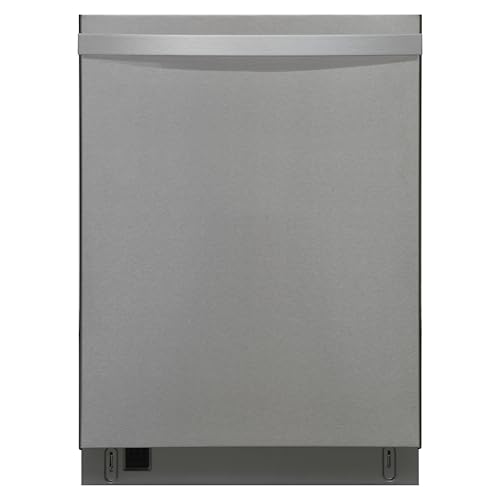
The Kenmore Elite pairs the set’s second-largest titled capacity — fifteen place settings — with its quietest figure, 42 DBA, and that pairing is the pick’s whole argument. Large machines usually ask households to choose between room and hush; this one declines the choice, adding a TotalFlex third rack, a suite of named wash systems — UltraWash Plus, TurboDry, QuietWash, SmartWash — and an ENERGY STAR certification, all stated in the title, behind a fingerprint-resistant stainless door.
Kenmore’s Elite line carries a particular weight in American kitchens — a badge generations of households have bought on the strength of the service network behind it — and in a capacity machine that weight is practical: a fifteen-setting family workhorse is precisely the appliance a household cannot afford to have orphaned by its maker. The title’s density of named systems reflects the line’s position; this is the guide’s most decorated specification, and unusually, every decoration is a working system rather than a colour.
TotalFlex is the racking headline: a third rack designed to flex around the load’s odd shapes rather than admit only flatware in rows. At fifteen settings the cutlery-and-utensil population is a small crowd, and a rack that flexes keeps the crowd orderly without evicting the serving spoons to the sink. TurboDry addresses the big load’s other tax — drying volume — actively, while the 42 DBA figure, the province elsewhere in this batch of a Samsung flagship in the families guide, lets the whole operation run through a family evening unnoticed.
Elite is Kenmore’s upper line, and the title reads like it: this is the capacity guide’s confluence pick, where the settings, the silence, the drying and the designation arrive in one machine. Households that have been nodding at separate sections of this guide — yes to fifteen, yes to quiet, yes to a real third rack — will find this is the pick those nods were pointing at, and its review the shortest argument in the article: everything, titled, at once.
- Format: 24-inch built-in, fingerprint-resistant stainless steel
- Capacity: 15 place settings, per the listing title
- Racks: TotalFlex 3rd rack
- Systems: UltraWash Plus, TurboDry, QuietWash and SmartWash, per the title
- Noise and designation: 42 DBA, ENERGY STAR Certified
- Where to buy: the Kenmore Elite 24-Inch Dishwasher listing on Amazon — check price on Amazon
Strengths
- Fifteen settings at the set’s quietest titled figure.
- A flexible third rack for utensils beyond flatware.
- Designation and active drying complete the confluence.
Trade-offs
- Feature depth is wasted on one-button households.
- Fifteen is one short of the set’s maximum for the very largest tables.
- Upper-line positioning prices the confluence accordingly, in qualitative terms.
Pick it for: the household that refuses to choose between capacity and quiet.
Poorly suited to: minimalists who want a machine with nothing to learn.

BLACK+DECKER BDW400MS Dishwasher (14 Place Settings) — Designer Series Fourteen
Fourteen place settings is where large capacity begins, and the BLACK+DECKER BDW400MS holds that threshold with a stainless steel tub, six wash programs, a Smart Wash system and an Energy Star certification, in the brand’s Designer Series frame. Fourteen is a considered size: it clears a family of five’s day with serving ware, yet it is the smallest tub in this guide, which makes it the most honest entry point for households graduating from a twelve and wondering whether the large class is for them. It is — at fourteen, gently.
Threshold sizes have a psychology: the household stepping from twelve to fourteen often fears it is buying a cavern, and discovers instead that two settings is exactly the serving-ware margin it was missing. The BDW400MS is sized for that discovery — large enough to end the nightly overflow, small enough that a weekday load still fills it honestly. In a guide of maximums, it is the pick that understands the word enough.
The steel tub matters at this end of the guide for the reason the stainless article on this site develops: large machines wash large volumes hot and often, and the cavity that resists staining and odour under that workload is steel. The Smart Wash system senses soil and meters the cycle accordingly — at fourteen settings, where loads vary wildly between a weekday’s plates and a Sunday’s production, a sensor is the difference between capacity used wisely and capacity merely used. Six programs is a working repertoire around it.
Designer Series is the brand’s dressed-up line, and in a capacity guide the dressing is not irrelevant: a 24-inch door is a large piece of kitchen furniture, and a household will look at this one for a decade. Buyers who want the large class’s substance at its threshold size, with the tub material and the designation both titled, have their machine — the sensible first step into big-tub ownership.
- Format: 24-inch built-in, Designer Series
- Capacity: 14-place setting capacity, per the listing title
- Tub: stainless steel construction, per the title
- Programs: 6 wash programs, Smart Wash System
- Designation: Energy Star Certified, per the listing title
- Where to buy: the BLACK+DECKER BDW400MS listing on Amazon — check price on Amazon
Strengths
- The large class’s threshold size with steel and designation included.
- Sensor washing suits wildly variable family loads.
- A dressed-up door for a decade of looking.
Trade-offs
- Fourteen is the floor of this guide — the biggest tables will overflow it.
- No third rack is claimed in the title.
- No titled noise figure for the evening comparison.
Made for: households stepping up from twelve settings into the large class.
A weak match for: feast-scale entertainers, who should start at fifteen or sixteen.
Beyond Sixteen: The Oversize Class — Ceiling-Breakers
The closing slot is a class discussion for the households this guide cannot fit: the ones whose honest arithmetic exceeds sixteen settings — multi-generational homes, serious entertainers, small food businesses washing at domestic scale. Beyond the domestic ceiling, the market’s honest answers change shape: the widest domestic tubs sold through appliance channels, drawer formats that split the load across two smaller cavities, and the two-machine kitchen that serious cooks quietly regard as the real solution. No model is linked here, because none was verified for this guide; the class is mapped so the question is answered truthfully.
Kitchens planned at this scale usually think in suites rather than singles — the big dishwasher beside serious cooking capacity, specified with the same measure-first discipline. The planning habit is the same everywhere in the room: measure the real load, then size the appliance, never the reverse.
Two-machine thinking deserves its sentence, because it reframes capacity entirely: two standard machines give thirty-ish settings of flexible room, the ability to wash the delicate load and the pan load simultaneously at different programmes, and redundancy when one machine is down. Against that, the single giant offers simplicity and one installation. Households at this scale should plan with a kitchen designer rather than a product page, and should treat this guide’s five linked machines as the benchmark their plan must beat.
Planning at this scale also has a paperwork virtue: a designed kitchen keeps its measurements, and a household that has measured once — opening, pan, plate, doorway — owns a document that serves every appliance purchase for a decade. The oversize conversation, even when it ends in a standard machine, leaves that document behind, and it may be the most durable thing the project produces.
There is also a storage echo to the oversize life: the households washing at this volume are usually storing at it too, freezing in bulk and shelving in systems — the world of our guide to Best Freezers With Drawers, where capacity is likewise a racking question before it is a number.
- Format: widest domestic tubs, drawer formats, two-machine kitchens — at class level
- Capacity character: beyond the sixteen-setting domestic ceiling
- Planning route: kitchen design consultation, benchmarked against this guide
- Availability: appliance channels; no listing linked in this guide
- Key trade: flexibility and redundancy versus single-machine simplicity
- Where to buy: appliance retailers handle this class — no listing is linked here
Strengths
- The only honest answer past the domestic ceiling.
- Two-machine layouts wash two programmes at once.
- Redundancy keeps a big household washing through a breakdown.
Trade-offs
- A kitchen project, not a purchase.
- Double installation and double maintenance at the two-machine end.
- Most households, honestly audited, do not need it.
Strongest for: households whose counted loads genuinely exceed sixteen settings daily.
Weakest fit: everyone tempted by headroom they will fill twice a year.
One suite note completes the class picture: kitchens built at this scale usually settle their cooking wall in the same project, and readers speccing a compact or secondary oven run within it will find the measure-first method applied to that category in our guide to Best 24-Inch Wall Ovens.
The Capacity Field, Compared
| Machine | Settings as titled | Racking signature | Drying as titled |
|---|---|---|---|
| Sunvivi 24-Inch Built-In Dishwasher | 14–16 | Adjustable racks | Not stated |
| Sharp SDY6735DNS Dishwasher (16 Place Settings) | 16 | Third rack | Auto door open |
| Asko DFI776 Panel-Ready Dishwasher | Not claimed here | Verify on listing | Verify on listing |
| Kenmore Elite 24-Inch Dishwasher (15 Place Settings) | 15 | TotalFlex 3rd rack | TurboDry |
| BLACK+DECKER BDW400MS Dishwasher (14 Place Settings) | 14 | Steel tub, Smart Wash | Not stated |
| Beyond sixteen: the oversize class | Above 16 | Designer’s choice | Per design |
Why Do Two Machines With the Same Settings Count Hold Different Dinners?
Because a place setting is a standardised fiction — a dinner plate of a set diameter, a side plate, a bowl, a cup, cutlery — and real households eat from pasta bowls the width of steering wheels and mugs that hold a pint. Two tubs rated identically diverge the moment a real load arrives: rack tine spacing decides whether the pasta bowls stand or sprawl, the third rack decides whether cutlery costs floor space, the tub’s height decides the stockpot’s fate. This is why the guide weighs racking as capacity’s honest half, and why the single most useful pre-purchase act is measuring your own largest plate and pan against the listing’s rack dimensions.
The fiction is not useless — it ranks machines roughly, as this guide’s table does — but it is a ranking, not a room measurement. Treat the number as the beginning of the capacity conversation and the racks as its conclusion, and the machine that arrives will hold the dinner its number promised.
How Should a Big Household Load a Big Tub So It Washes Like One?
Large tubs forgive volume and punish chaos at scale: sixteen settings loaded carelessly shadow each other in regiments. The principles are the families guide’s, enlarged — scrape, face the soil to the spray, give the pan its seat first — plus two that belong to size alone. Distribute weight and soil across both racks rather than front-loading the bottom with every pan; a top rack of glasses above a floor of cookware washes both better than a mixed jumble. And use the third rack as the load’s manifest: cutlery laid in rows is not merely cleaner, it unloads in seconds, which at sixteen settings is the difference between a chore and a ritual.
Finally, run the big machine like a big machine: full, on the programme the soil earned. A sixteen-setting tub run at half on its fiercest cycle is the category’s most expensive habit, spending family-scale heat to wash a couple’s breakfast — the energy guide’s warning, arriving by the capacity road.
How Does Capacity Interact With an Open-Plan Evening?
Big machines serve the households least able to exile them: the large family lives in its kitchen, cooks in company and washes in public. That is why this guide treated titled decibels as capacity facts. A sixteen-setting load that must wait for bedtime is, in lived terms, a load and a half — the dishes queue on the counter, the counter crowds the cooking, and the kitchen’s evening degrades in ways no specification sheet records. The Kenmore Elite’s 42 DBA at fifteen settings is therefore not a luxury statistic; it is the feature that makes its capacity usable at the hours the capacity is created.
Households should perform the evening test mentally before ordering: picture the machine running through homework, a phone call and a film, and ask which titled figure in this guide survives the picture. If none does, the answer is a delayed start and a smaller evening load — capacity planning again, conducted in the imagination before it is conducted in the kitchen.
What Does a Big Tub Ask of the Plumbing and the Floor?
Nothing exotic, but the details scale with the machine. A large tub drains a large volume; an elderly drain that coped with a compact may gulp at a sixteen-setting emptying, and the installer’s check of the drain run is worth more on a big machine than on any other. Levelling matters doubly: a deep, heavy door hung out of true shows its seam against the cabinetry and works its seal unevenly across a wider span. And the floor under a fully loaded big machine carries a serious, shifting weight of water and stoneware — sound in any sound kitchen, worth a thought in a tired one.
None of this is a reason to buy small; it is a reason to install large properly, once, with the same care the purchase itself received. Capacity bought and badly seated is the category’s saddest waste.
How Should a Household Grow Into a Big Machine Across Its First Month?
Week one belongs to the census load: the household’s real big day, loaded deliberately, inspected honestly. Weeks two and three belong to the racking experiments — the adjustable heights on the Sunvivi, the TotalFlex’s flexions on the Kenmore — because a big tub’s geography is learned by loading it wrong a few times in low-stakes conditions. By week four the household should know its machine’s true capacity in its own crockery, a number no listing could have given it, and the second-load problem should be a memory with a date on it.
Keep the loading diagram for that month, however confident the household feels at day three. Big tubs reward system, and systems are built in the first month or not at all — after that, habit takes the pen, and habit writes whatever it likes.
Capacity Buying Errors, Named Before You Make Them
The first is the unmeasured pan, this batch’s recurring villain: a large tub whose racks refuse the household’s roasting pan has failed its only exam. The second is buying the maximum for the annual feast and living with half-loads for the other fifty weeks — headroom is rented nightly, in heat and water. The third is ignoring the door’s swing and the rack’s reach in a deep tub: capacity you cannot comfortably load is capacity on paper, and shorter loaders should test any tall, deep machine in person where possible.
Fourth, households forget the second shift’s other half — unloading. Sixteen settings is a quarter-hour at the cupboard, and a machine whose racks fight the unload will be run less, which is capacity lost by the back door. Judge the whole cycle of ownership, load to cupboard, before the number seduces you.
How Does Capacity Planning Change at the Holidays?
The feast is the capacity buyer’s annual audit, and it should be conducted honestly rather than emotionally. Note, this year, what actually overflowed: was it settings, or was it the serving-ware shapes — the platter, the gravy boat, the bowl that fits nowhere? Most households discover the overflow is geometry, not count, which is why the Sunvivi’s adjustability and the class discussion’s racking sermon recur through this guide. A household that buys sixteen settings to solve a platter problem has purchased the wrong fourteen inches.
For the genuine count-overflow — the twenty-top table, the three generations — the holiday protocol beats the oversize purchase: a dedicated glassware run before the feast, the main load after it, the roasting pan granted its ceremonial soak. Two planned runs across a celebration cost an hour; a too-big machine costs a decade of half-loads. The calendar, consulted honestly, is the capacity expert.
What Is the Unloading Test, and Why Do Showrooms Fail It?
Capacity is usually judged at the load, but households live it at the unload: sixteen settings is a long, hot quarter-hour of cupboard traffic, and a machine whose racks release their cargo gracefully — cutlery in a tray that lifts, glasses that do not clink in a thicket of tines — will be run oftener than a marginally larger machine that fights back. Showrooms cannot stage an unload, which is why the test belongs to the first fortnight at home, inside any return window, with the household’s real crockery.
Buyers should therefore treat delivery day as the start of the decision, not its end: run the census load, time the unload, and let that quarter-hour vote. A machine that passes the unload test disappears into the household’s rhythm; one that fails it becomes the appliance everyone routes around, whatever its number said.
How Do Drawer and Split Formats Reframe the Whole Question?
Briefly, because they belong to the class discussion’s family: a two-drawer machine divides capacity into two independent small tubs, which inverts the large-capacity logic — instead of one big load washed once, two small loads wash at their own programmes, the delicate above and the pans below. For households whose loads arrive in incompatible pairs, the split can outperform a single sixteen-setting tub in everything except the single giant load. The format’s absence from this guide’s linked set is a pool fact, not a judgement; readers whose kitchens suit drawers should shop them with this guide’s racking-first method in hand.
The deeper lesson is that capacity is not a line but a shape: total volume, divisibility, rack geometry and drying, arranged differently by every format. The five linked machines arrange it one way — the big single tub, perfected — and the class routes arrange it others. The household’s load, counted and shaped, chooses among them.
How Does a Big Machine Change the Household’s Water Story?
Volume cuts both ways, and this guide has promised the counter-argument its hearing since the Key Takeaways. A sixteen-setting load moves a great deal of water at once; households on private water systems, and those who simply count, should weigh the per-load volume against the per-setting efficiency with both eyes open. The arithmetic that acquits the big machine is the single run: one large load replacing two medium ones spends less in total, because every cycle carries fixed costs — the fill, the heat-up, the drain — that a second cycle pays again in full.
The household that runs its big machine full is therefore the water-frugal household, and the one that runs it at a third is the spendthrift, whatever the badges on either door. Capacity is a multiplier: it multiplies the virtue of full loads and the vice of partial ones with perfect impartiality.
What Should a Buyer Ask a Previous Owner of the Same Model?
Three questions, in this order. What is the largest thing you own that still does not fit — because every tub has one, and knowing yours in advance is the whole game. What do you run it on, actually — the programme that became the household default, which reveals the machine’s real character better than its menu. And what would you check on delivery that you did not — the levelling, the rack glide, the door’s balance — because owners’ regrets are the most underpriced data in the category.
Communities of owners exist for every line in this guide, and an hour in their company teaches the racking geography, the quirks and the genuine virtues at a resolution no listing reaches. This guide’s method — titled facts first — and the owners’ method — lived facts first — are complements; a buyer who uses both is very hard to disappoint.
How Does the Big-Tub Decade End?
With the machine either still clearing the family’s day in one run, or demoted to a cautionary tale about a number. The difference is rarely the machine’s quality; it is whether the household’s counted load and the tub’s real geometry were ever honestly introduced. Introductions are this guide’s entire trade — of Sunvivi’s range to the swinging household, of the Sharp’s sixteen to the feasters, of the Kenmore’s quiet fifteen to the open-plan family, of the threshold fourteen to the graduates, of the Asko’s format to the designers, and of the class beyond to the few who truly live there.
Make the introduction properly — census, pan, plate, evening — and the decade takes care of itself, one cleared counter at a time.
Why Do Restaurants and Serious Hosts Think About Capacity Differently?
Because for them the load is not a by-product of the meal but part of its production: courses cannot wait for a second cycle, and glassware turns over within the evening. Domestic buyers borrowing that urgency should borrow it honestly — a household that hosts monthly is not a restaurant, and sizing for service tempo it does not keep is the feast fallacy in a taller hat. But households that genuinely entertain weekly, in courses, will recognise the professional logic as their own, and for them the top of this guide’s table, or the class above it, is not indulgence but equipment.
The professional habit worth stealing at any size is the staging: racks loaded by course, the next load composed while the current one runs, the machine treated as a station in the evening’s work rather than its epilogue. Capacity, in the professional kitchen, is a rhythm before it is a volume — and rhythm, unlike volume, is free.
What Does the Second Load’s Disappearance Actually Buy a Household?
Price it in the household’s true currencies. Twenty minutes an evening, returned. A counter clear at bedtime, which is a kitchen that greets the morning instead of accusing it. A sink empty enough to cook in without a preliminary excavation. Across a year those returns compound into something households describe, when a big machine is finally right, with a word they rarely use about appliances: relief. The second load was never really about dishes; it was about the day refusing to end, and capacity — the right capacity, honestly counted — is how the day learns to end on time.
That is the standard the five linked machines should be held to at the till: not whether their numbers are the largest in the shop, but whether the second load, in your kitchen, on your counted evidence, disappears. The machine that makes it disappear is the large-capacity dishwasher. The others are merely large.
How Should the Crockery Fleet Grow to Match the Machine?
A large tub exposes a quiet shortage in many kitchens: not enough everyday crockery to let a full load accumulate without the household running out of plates by lunch. The fleet and the machine must be sized together — a sixteen-setting tub paired with eight dinner plates is a sports car with a thimble of fuel. Households stepping up in capacity should budget, in the same breath, for the extra everyday settings that let the big load form naturally across the day; the crockery costs little beside the appliance and unlocks the whole of its arithmetic.
The same logic governs the pan fleet: one great roasting pan that fits the racks is worth more to a big household than three that do not. Buy cookware with the dishwasher’s dimensions in the phone, the way travellers buy luggage with the cabin gauge in mind, and the capacity you purchased becomes the capacity you use.
What Is the Kindest Way to Retire the Machine This One Replaces?
A working replaced dishwasher has a second life waiting in the economy of narrow kitchens and first flats — the very households this batch’s other guides serve — and passing it on, honestly described, is better housekeeping than the scrap run. If it is truly finished, its steel and motors belong to the recycling stream rather than the landfill’s slow geology. Either way, measure the new opening before the old machine leaves: kitchens settle, floors rise, and the cavity that held a dishwasher for a decade is not guaranteed to be the cavity drawn on any plan.
And keep the old machine’s manual until the new one’s first month is done. Households are surprised how often a question about the household — a cycle habit, a load rhythm — is answered by the document of the machine that taught them the habit.
A Note on Measuring the Opening Before the Machine Charms You
Every machine in this guide is a 24-inch built-in, and every one of them has been refused by a 23-and-a-half-inch reality somewhere. Cabinet openings shrink behind new flooring, settle out of square, and hide a water line exactly where the deeper tub wants to be. The tape measure is therefore the first capacity tool: width at three heights, depth to the back panel, the door’s swing against the opposite run. A household that measures first shops the five linked machines as certainties; a household that measures on delivery day shops them as hopes.
Delivery route deserves the same respect — the big machine must travel hallways and turns that the old one entered when the house was emptier. Walk the route with the tape as well, and the largest appliance in the kitchen will arrive like a guest expected, rather than a piano in a cottage doorway.
Final Recommendation
One more word of method before the verdicts, because this category above all rewards it: bring your own evidence to the purchase. A photograph of your worst ordinary load, the diameter of your largest plate, the diagonal of your roasting pan — three facts that fit in a phone — will do more to choose correctly among the five machines below than any afternoon of showroom impressions. Capacity is the most measurable virtue in the appliance world; measure it, and the guide’s work is done.
Choose by your counted load, not your feared one. Households at the large class’s door belong with the BDW400MS’s fourteen and its steel tub; swinging loads with the Sunvivi’s honest range and adjustable racks; the full sixteen with the Sharp, whose door opens to dry what it washed; and the household that wants fifteen in near-silence with the Kenmore Elite, this guide’s confluence. Design-led renovators should take the Asko’s format seriously and its specification to the listing, and the genuinely oversize should plan a kitchen, not a purchase. Buy the smallest tub that clears your ordinary big day in one run — because capacity, honestly bought, is not the biggest number on the door but the evening the second load never happens.
Frequently Asked Questions
How many place settings does a family of six need?
Fifteen or sixteen covers a family of six’s full day plus serving ware in one run, which is why the Kenmore Elite’s fifteen and the Sharp’s sixteen anchor this guide. Fourteen serves the same family if the largest pan goes to the sink or a second short run handles glassware on cooking-heavy days.
Why does this guide give no capacity for the Asko?
Because the verified pool design for this article states no capacity number for it, and the guide quotes numbers only from verified titles. The figure is the manufacturer’s to state, on the listing — check it there, alongside the full specification, before ordering.
Is a third rack worth it at this size?
At fourteen settings and above, it approaches essential: the cutlery of fifteen settings overwhelms a basket, shadowing itself and stealing lower-rack floor. The Sharp and the Kenmore Elite in this guide carry third racks for exactly that arithmetic; the Sunvivi answers with adjustability instead.
Do large-capacity machines use much more water?
A full large load uses more than a full small one and less than two small ones — the comparison that matters is per setting washed. Run full, the big machine is the efficient one for a big household; run half-empty, it is the wasteful one. Size the machine to the load and the water follows the same rule as the energy.
Does a large-capacity machine take longer to run?
Programme lengths are set by soil and temperature targets rather than by tub size, so a full large load takes roughly what a full standard load takes — which is precisely the saving: one large cycle instead of two standard ones, with the evening’s second hour returned to the household. Partial large loads are where time and water leak away, which is why this guide keeps returning to the counted load as the purchase’s foundation.
Should I trust a capacity range like 14–16 more or less than a fixed number?
Slightly more, as the Sunvivi review argues: the range admits that capacity depends on the size of your own settings, which is true of every machine in this guide whether its title admits it or not. Read a fixed number as the top of its range and a stated range as an honest pair of bookends, and compare machines on their lower numbers when the decision is close.
Are adjustable racks just a gimmick?
No — they are the mechanism that lets one tub serve the pan day and the glassware day, and the Sunvivi’s title states them as a headline feature for that reason. Fixed racks force the load to fit the machine; adjustable racks let the machine fit the load, and in a large tub, whose loads vary most, that flexibility is capacity in its most usable form.
What if even sixteen settings is not enough?
Then the honest answers change shape, as the closing class discussion describes: the widest domestic formats, drawer systems, or a two-machine kitchen planned with a designer. Audit the load first — most households that count discover they needed racking, not volume — and let the count, not the fear, commission the project.
Related Guides
Large-capacity kitchens tend to be planned whole, and readers speccing the cold wall of the same room may enjoy Best 36-Inch Column Refrigerators as a companion read.